
Dentist in Korea for Foreigners: Seoul Dental Clinic Safety Checklist
A practical guide for foreigners visiting a dentist in Korea, including language support, treatment planning, cost checks, and how to choose a clinic in Seoul.

When booking a dental appointment abroad, the biggest worry is a bit more specific than "Will the treatment be safe?" People wonder whether they will be able to fully understand the explanation, whether the price and treatment scope are clearly defined, and what to do if problems come up after they return home.
This article is a checklist of what foreign travelers need to verify before booking, created for those using a dental clinic in Korea for the first time.
Before you book, check these three things first
- Experience treating international visitors and real reviews
- Language support and whether pre-visit communication is possible
- Post-treatment precautions and whether a follow-up visit is needed
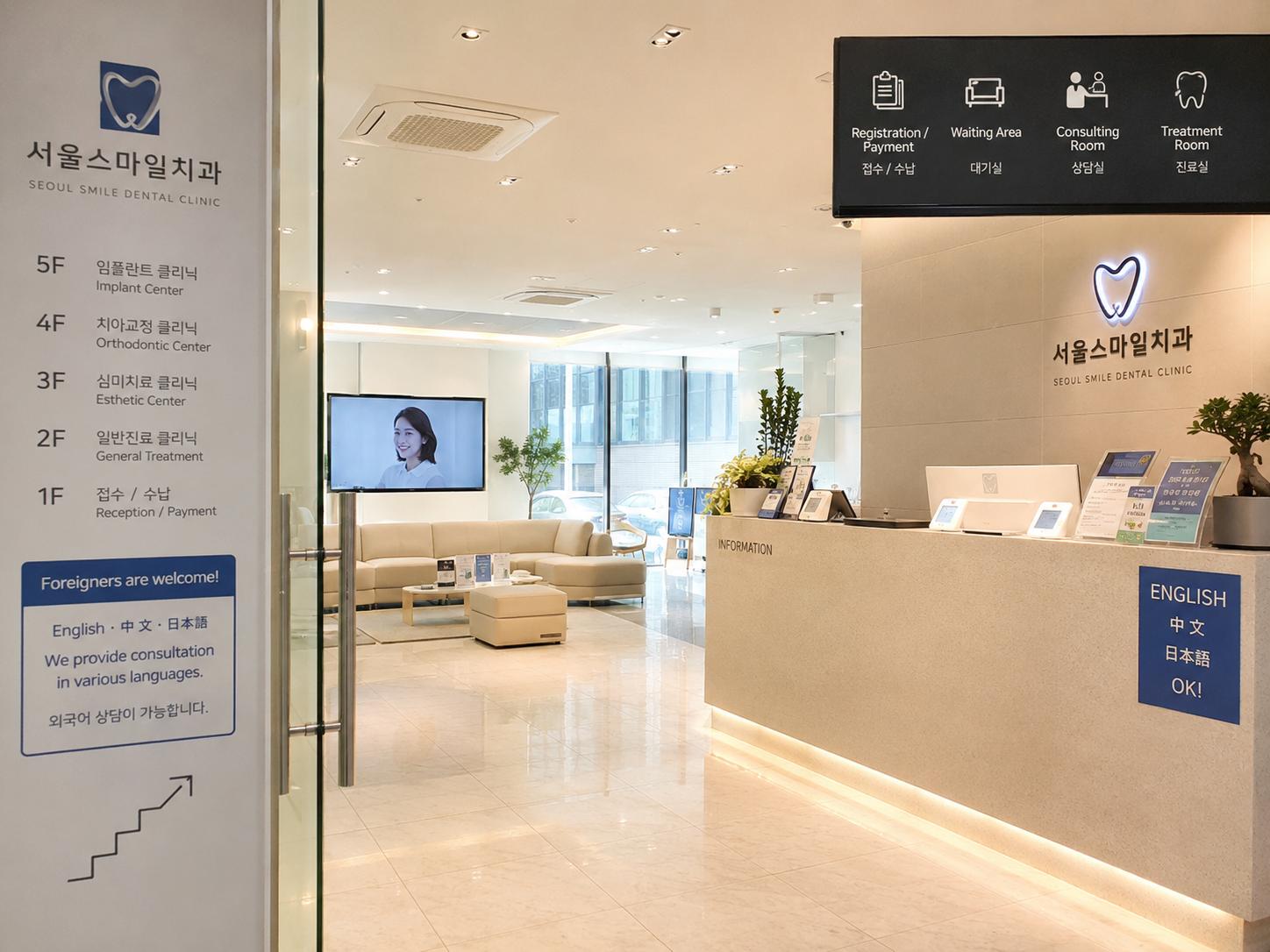
Why dental treatment in Korea is getting attention from travelers
Korea has strong demand for both cosmetic dentistry and general dental care, and clinics are generally well equipped with well established treatment systems. There are also many procedures that can be done in a short amount of time, such as teeth whitening, scaling, laminates, and simple cavity treatment.
For travelers, what matters most is not just the level of care itself, but these three things:
- Whether it is a trustworthy dental clinic
- Whether language support is available
- Whether you can understand the aftercare guidance
Checking these three points in advance can greatly reduce the stress of visiting a dentist abroad.
Another reason Korean dental clinics appeal to travelers is cost. In particular, cosmetic dentistry services like whitening, scaling, and laminates are in high demand, and competition between clinics is active, so there are many different package options. Many clinics also offer digital scanning, in house lab work, and fast consultation and fabrication processes, so depending on your cosmetic goal, you may be able to explore options at relatively reasonable prices compared to other countries.
Of course, you should not decide based on price alone. To compare the total cost accurately, you also need to check what is actually included, the warranty period, whether a return visit is required, and the clinic's aftercare policy.
Checklist 1: Make sure the dental clinic is verified
Rather than rushing to book an unfamiliar dental clinic overseas, it's better to choose one that has experience treating international visitors and has been basically vetted.
What to check:
- Whether the medical staff and clinic information are clearly provided
- Whether there are real reviews and price information
- Whether they have experience assisting international patients
- Whether there is a pre-treatment explanation and consent process
- Whether the equipment and hygiene management are trustworthy
Dental clinics listed on Creatrip are introduced after checking things like convenient locations for international visitors, whether communication is possible, and how appointments are handled.
Checklist 2: Confirm Language Support
The biggest barrier at an overseas dental clinic is language, since you need to clearly explain your pain, the results you want, and your past treatment history.
Creatrip partner dental clinics are introduced with a focus on places that can provide guidance in English, and some clinics also offer Japanese or Chinese support. If you organize your requests and share them in advance, your consultation will go much more smoothly.
The table below is organized not by which languages the Creatrip page exists in, but based on whether actual language support or the available interpreting coverage is confirmed within each clinic's detailed information. However, the availability of interpreters and the scope of consultation can vary depending on the date and time of your visit, so the safest option is to leave your preferred language first when you make a reservation.
Dental clinic | Confirmed language support | What to check |
Near-native Chinese and English, conversational Japanese | Chinese and English consultants on-site. Foreign-language support provided across consultation, treatment, aftercare, payment, and post-treatment precautions. Confirmed that they provide written precautions in Simplified Chinese, Japanese, and English | |
Near-native Japanese, basic English communication available | Japanese and English interpreting staff on-site. Support provided from consultation through discharge instructions. Written precautions available in English, Chinese, and Japanese | |
Native interpretation in Chinese, Taiwanese, Hong Kong Chinese, Mongolian, and Japanese, plus English, etc. | They state that multilingual interpretation is available from consultation through post-treatment precautions | |
English, Chinese, Mongolian, Vietnamese, etc. | Wording confirming multilingual service is available. Interpretation level and details should be reconfirmed when booking | |
Stated to have on-site interpreters by country | They note that interpreters are stationed by country, but we recommend confirming the actual available languages and proficiency level when booking |
In particular, medical consultations require accuracy more than simple booking guidance. It is best to share details such as pain, current medications, allergies, previous treatment history, and reference images of your desired results in advance during the booking stage, and if anything is hard to understand on-site, ask to confirm it again right away.
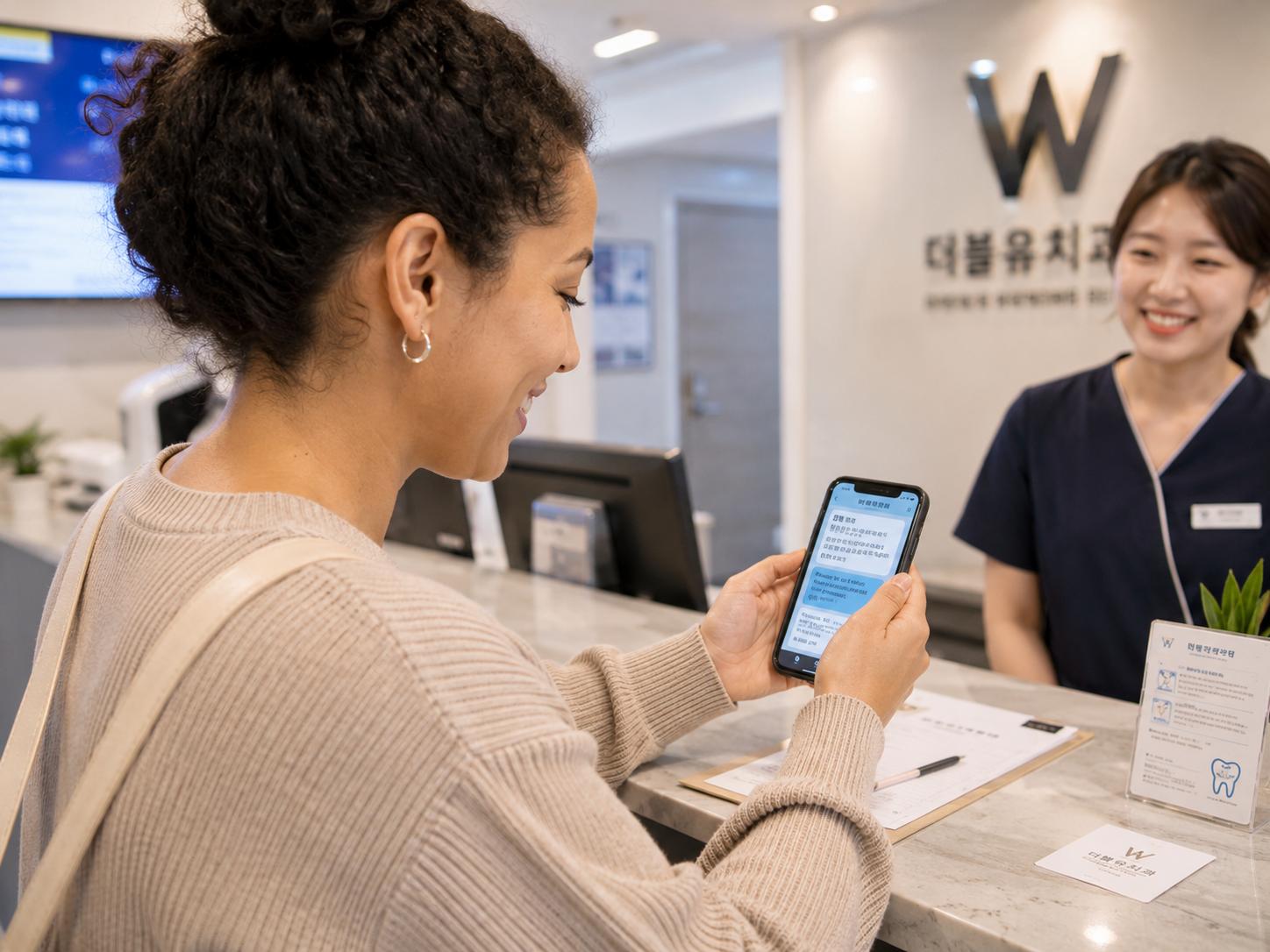
Checklist 3: Make a follow-up care plan
For dental treatment, aftercare is just as important as the procedure day itself. Especially for whitening, veneers, and cavity treatment, you need to clearly understand the post-procedure precautions.
Helpful questions to ask before booking:
- Are there any foods or activities I should avoid after the procedure?
- How much pain or sensitivity is considered normal?
- Will I need a follow-up visit?
- If an issue comes up after I return home, what records should I bring?
Simple whitening or scaling usually does not affect your travel itinerary much, but veneers or more complex treatment may require some extra time in your schedule.
Checklist 4: Book early in your trip
It is better to schedule your dental appointment early in your trip rather than right before you fly home. This gives you time to handle anything that requires a quick follow-up visit.
For example, you might have tooth sensitivity after whitening, or need a bite adjustment after cavity treatment. Most cases are not a big issue, but if it happens the day before your departure, it can feel stressful.
Dental procedures that are relatively easy to fit into a short trip can be grouped like the examples below. However, depending on your dental condition and the examination results, same-day treatment may not be possible, so it is best to think of this not as a "guaranteed schedule," but as an "estimated range that will be confirmed after your consultation."
Treatment/Consultation | Expected timeline during your trip | What to check |
Scaling | Usually available same day | Gum condition, possible bleeding, sensitivity |
Teeth whitening | Same day to 1 day | Number of whitening sessions, whether scaling is included, possible sensitivity |
Oral spa, oral care | Same day to 1 day | Whether the program includes scaling, an exam, and preventive care |
Simple cavity/resin consultation | Same day to 1 to 2 days | Scope of treatment and whether bite adjustment is needed |
Veneers/Lucinate consultation | Consultation may be available same day, fabrication and placement vary by case | Amount of tooth reduction, temporary teeth, warranty period, whether a follow-up visit is needed |
Implants, complex prosthodontic work | Often difficult to complete within a trip itinerary alone | Whether the process is split into diagnosis, surgery, recovery, and prosthetic stages |
Checklist 5: Pack what you need
- Passport
- Booking confirmation
- Previous dental records or photos
- Information on any medications you are taking
- Allergy information
- On-site payment method
If you have a history of crowns, implants, or orthodontic treatment, photos or records can be helpful during your consultation.
Positioning of Creatrip Partner Dental Clinics
Dental clinic | Why we recommend it |
A good fit for those in Busan who value the peace of mind that comes with JCI accreditation. | |
Great for travelers with a Busan itinerary who also need Japanese language support. | |
Convenient access from Gangnam Station, and a good choice if you want to consider both cosmetic and general consultations. | |
Recommended for those who want a consultation with an exam included in the Sinnonhyeon area. | |
A helpful reference for international visitors who want to consider consultations for laminate veneers and Lucinate as well. |
Since every dental clinic has different strengths, you can choose based on your destination, language needs, and the treatment you want.
The Key to Using a Dental Clinic Abroad Safely
For dental treatment abroad to be safe, rather than choosing a place that "looks good", you should choose a clinic that explains things thoroughly, that you can understand, and that does not push you beyond what fits your schedule.
Creatrip helps with communication before and after your appointment so international visitors can feel more at ease when visiting a dental clinic.
Diagnosis and treatment decisions must always be made between you and a licensed medical professional. Creatrip is a platform that helps with reservations and communication, and it does not provide medical advice.
What to check when booking with Creatrip
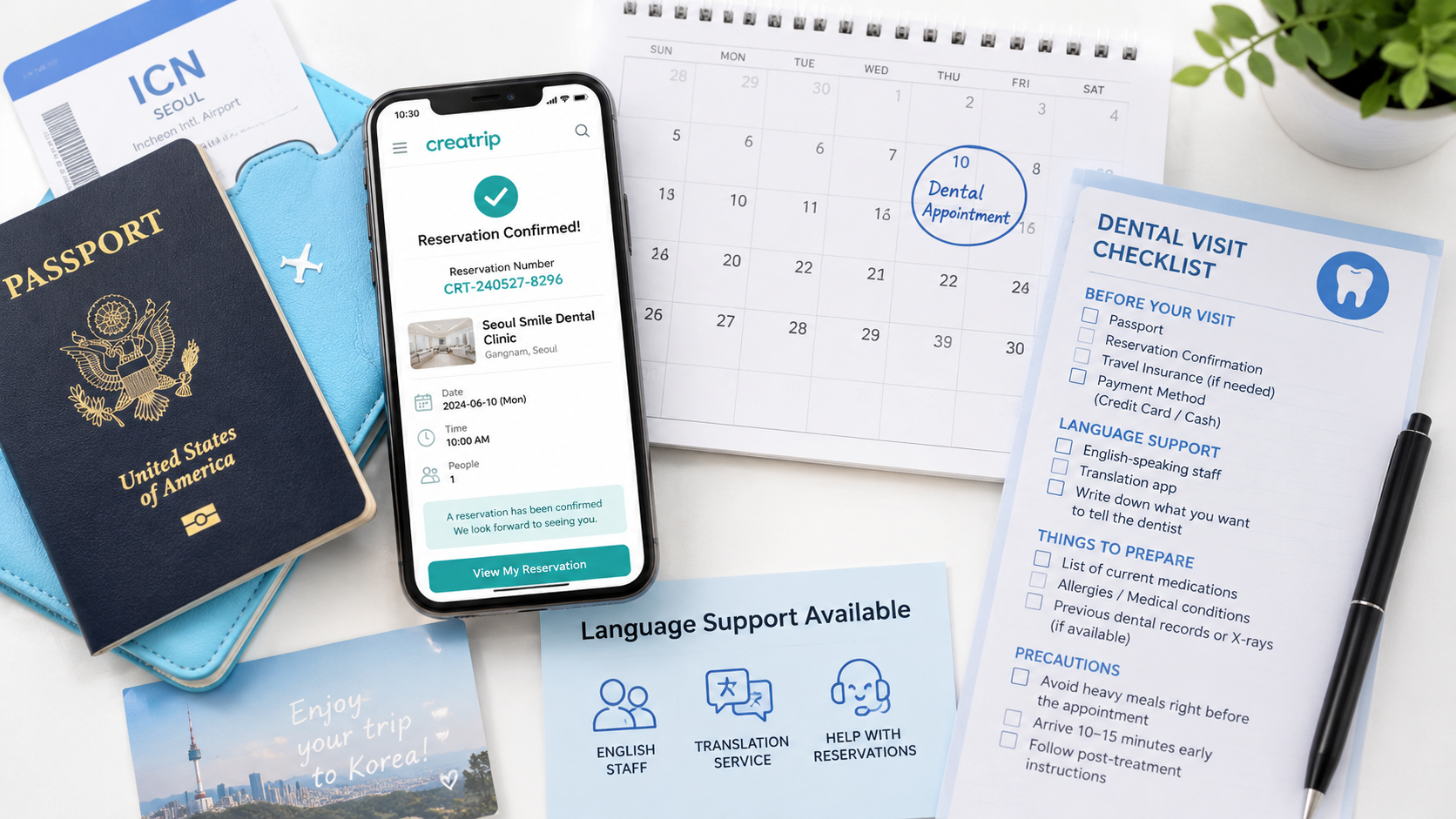
Creatrip does not make medical decisions for you, it serves as a bridge to help travelers communicate clearly with the dental clinic. The key is to share your desired treatment and questions before booking, confirm your finalized appointment and directions when you visit, and receive post procedure instructions in a language you can understand.