

Perfect for solo travelers! Day trip to Seoraksan National Park & Naksansa Temple.

m
Affiliate
7 months ago
I love traveling and I'm interested in regional areas, but since I only speak a little Korean I was nervous about going to the countryside alone, and because access from Seoul can be difficult I joined a tour to Seoraksan (Seoraksan National Park) and Naksansa Temple, choosing an English-speaking guide who turned out to be a Korean person who also spoke Chinese.
I thought I might get lost finding the meeting spot, so I left the hotel early, and I arrived near Hongdae Entrance Exit 4 at 6:40 AM without getting lost. I thought the bus was from the same tour company and started talking to the guide, but it turned out to be a different tour’s bus, oops
After a short while the tour guide arrived. We were told to wait a bit. At the meeting time the guide checked that all the participants had gathered, then we boarded the bus that had been parked a short distance away.
After that, we picked up other passengers at Myeongdong and Dongdaemun History & Culture Park, then departed. (When booking you choose one of three stations. Photos show how to get to the meeting point.)
There were about 20 people on the bus tour, with a few solo travelers and several families and friends, and most looked Asian but there were also some Europeans.
We stopped for about 15 minutes at Honcheon (Yangyang) rest area around 9:45 for a restroom break. After going to the restroom I was a bit hungry, so I bought a hodugwaja, a snack similar to the Japanese walnut bun. It’s a fluffy, castella-like cake filled with red bean paste and walnuts, and the walnuts add a nice crunchy contrast.
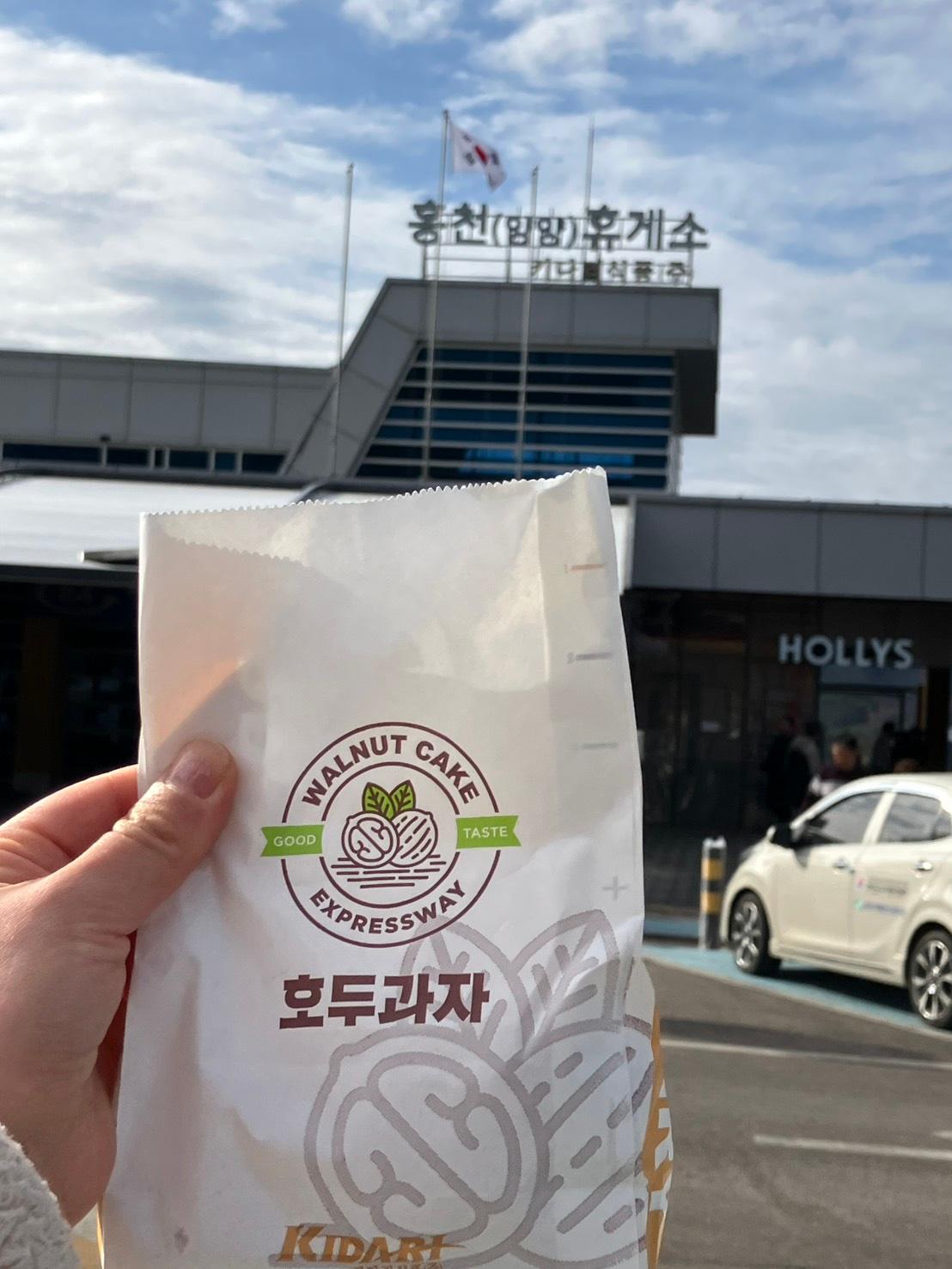
We got back on the bus and headed to Seoraksan (Seoraksan National Park). I was sleepy, so I slept on the bus. The seats could recline, so it was comfortable.
Arrived around 11:10. When I stepped outside it was windy and it had started to drizzle, so it felt colder than Seoul. I forgot, but you’ll probably want a scarf and gloves.
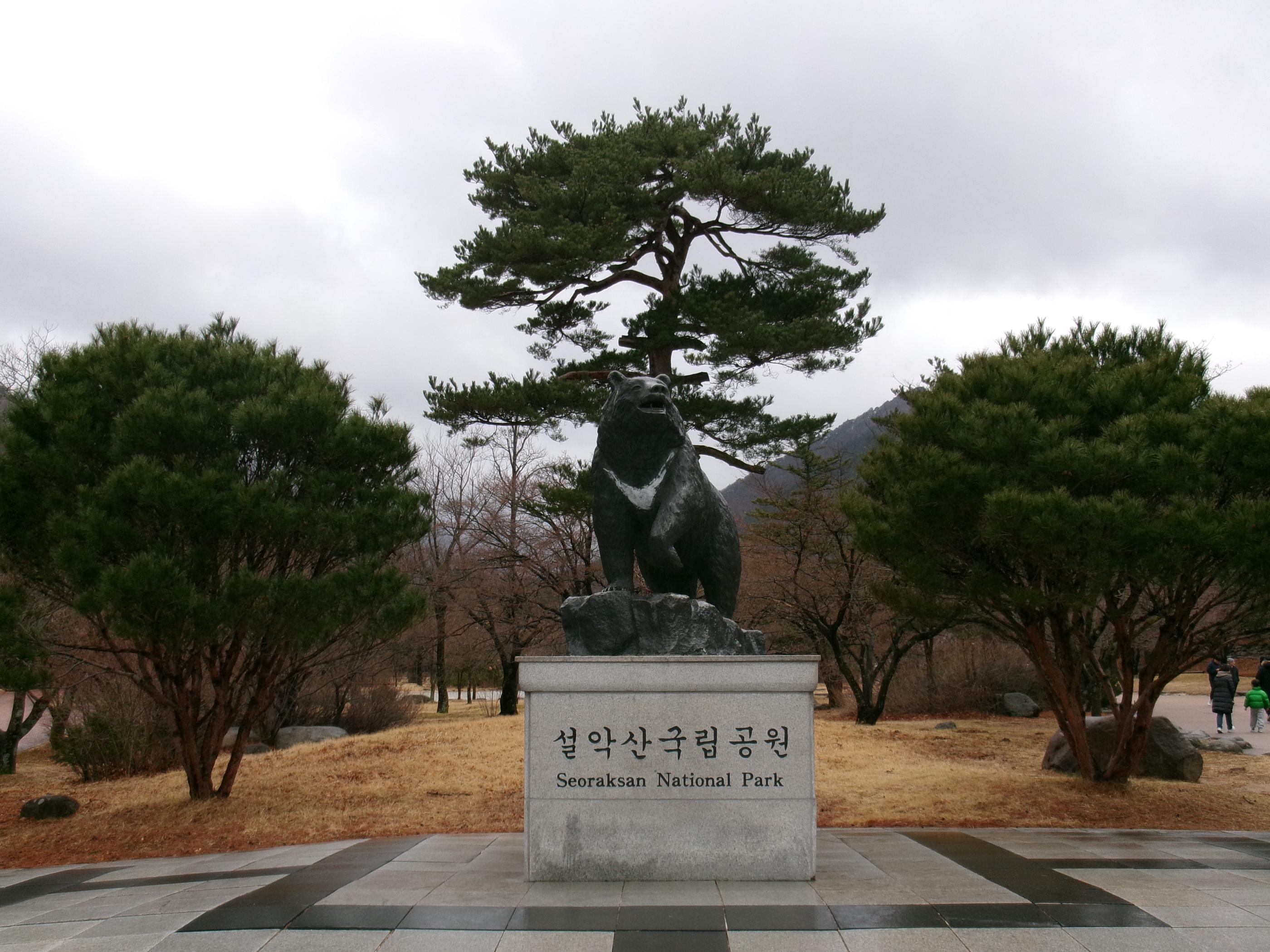
With the guide leading the way we entered Seoraksan (Seoraksan National Park), took photos in front of the park's iconic bear, then walked a short distance before being given free time. (They told us the meetup time and place on the bus. I was fine even though I only understood a little English. They also had us download a smartphone app when confirming the tour, and they contacted us through messages there.)
Seoraksan (Seoraksan National Park) spans a vast mountainous area across four cities: Sokcho, Yangyang, Inje, and Goseong. In 1982 it became the first UNESCO Biosphere Reserve in Korea, and it's also listed on the IUCN Green List. The park is divided into Naeseorak, Namseorak, and Oeseorak, and on Oeseorak stands Daecheongbong, the third-highest peak in Korea (the highest is Hallasan at 1,947 meters, the second is Jiri Mountain at 1,915 meters), with an elevation of 1,708 meters. About 3.6 million hikers visit each year, and the autumn foliage season is especially popular.
In addition to the full multi-day ridge route that crosses the 'Dinosaur Ridge,' there are a variety of hiking options offering grand granite mountain views, including beginner and intermediate trails accessible from Sokcho city, and a cable car.
I took the cable car up to Gwongeumseong (Gwongeumseong Fortress / cable car station). (The cable car ticket isn’t included in the tour price. 1 adult 1200 won.) You can see the mountain slopes much closer than usual, it was very dramatic. Because the elevation is high, the rain down below felt like sleet. After getting off the cable car, snow remained on the mountain surface. After walking a bit the footing was steep and hard to walk on, and though the fog kept the view from being clear, you can still enjoy the mountain scenery.
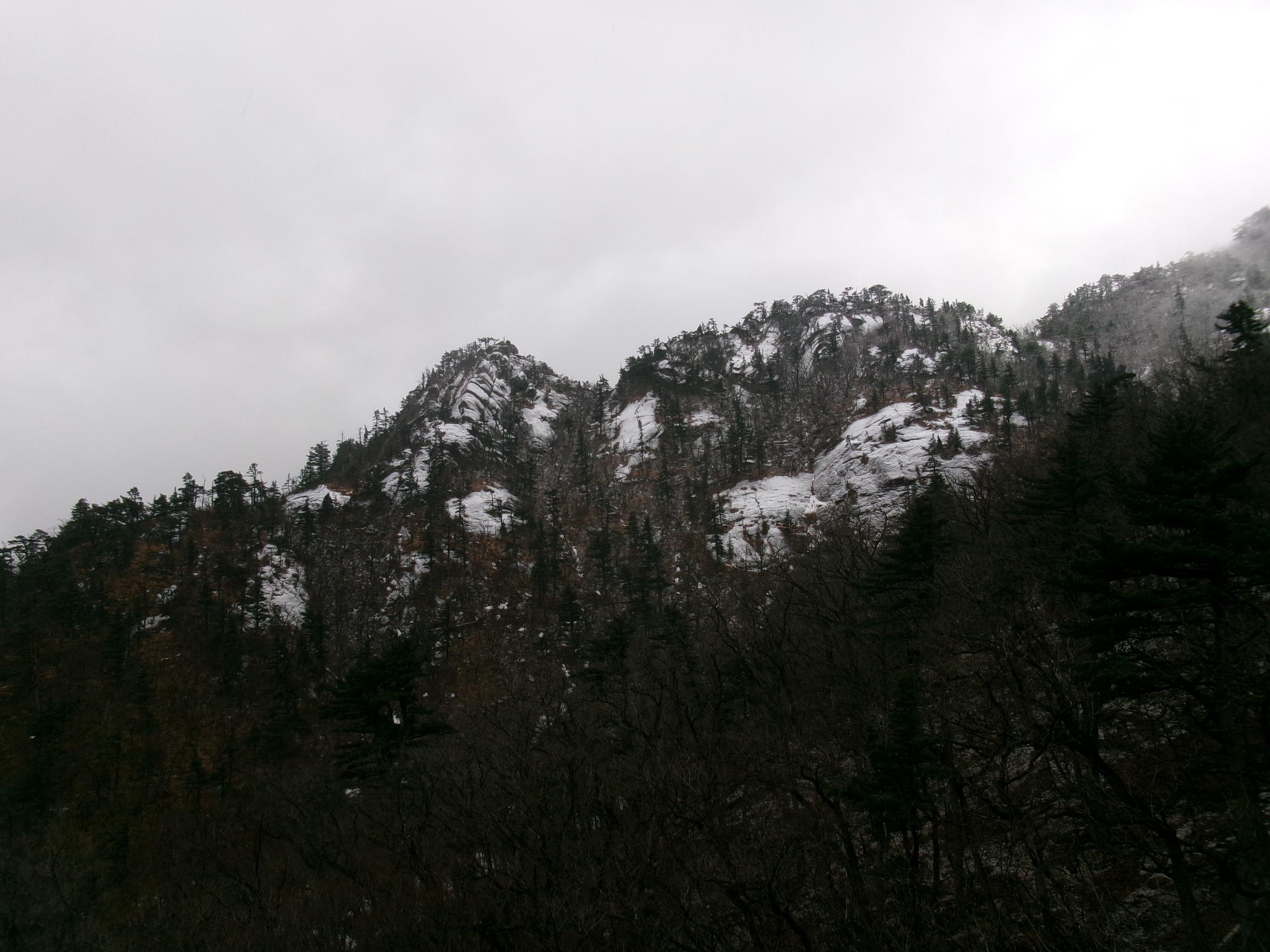
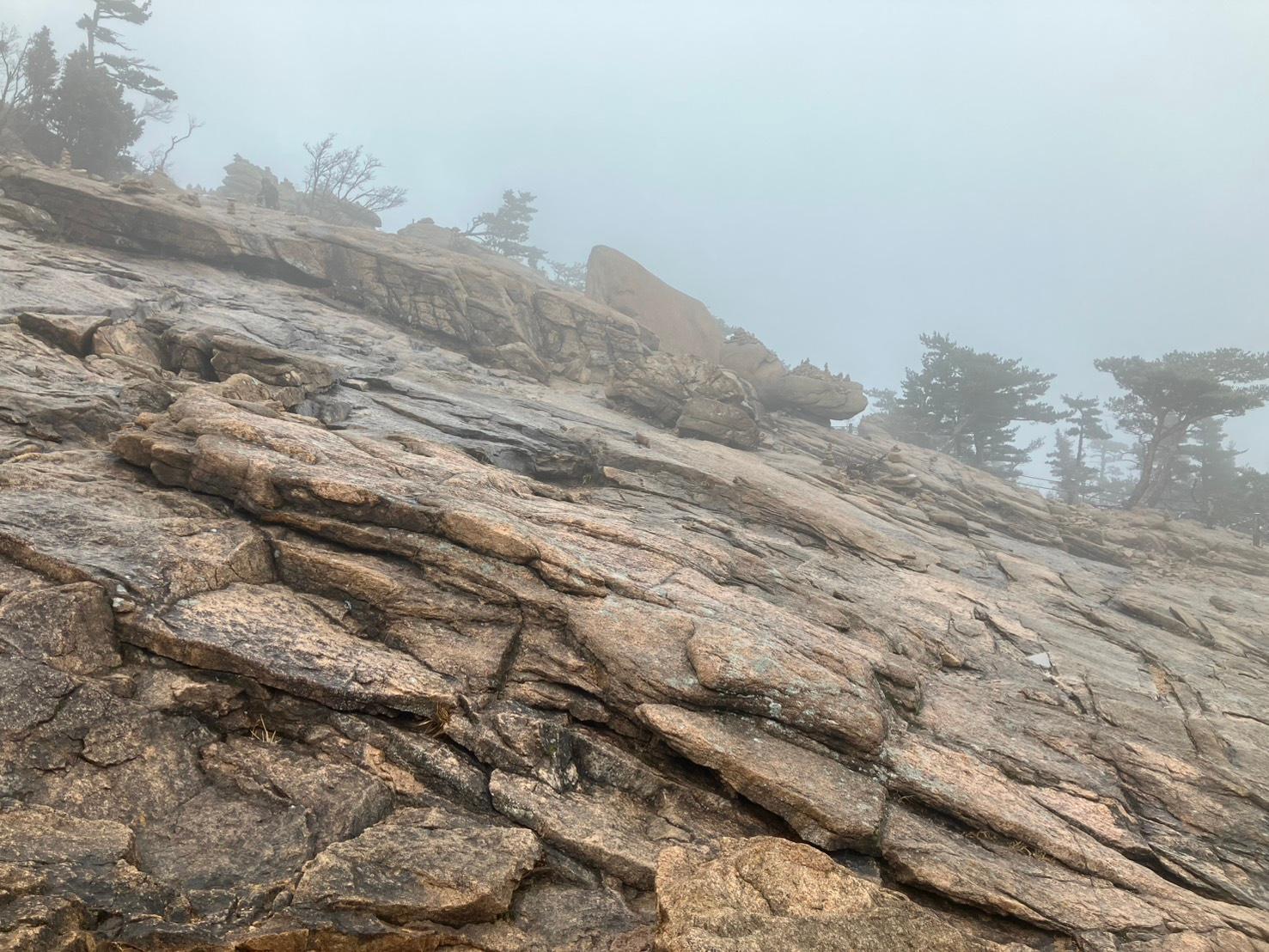
After that, we went back down to the ground and walked around the park. I wasn't very hungry, so I skipped lunch, but there were many cafés and other places to eat.
According to the bus guide, Yangyang is famous for matsutake mushrooms, so matsutake bibimbap and matsutake hot pot are recommended.
By the way, Yangyang is known as Korea’s largest producer of matsutake, and its wild matsutake grow beneath pine trees over 30 years old, giving them a very strong pine-needle aroma unique to matsutake. For that reason, every September the Yangyang Matsutake Festival (formerly the Yangyang Matsutake Festival) is held, where you can enjoy the pine-scented Yangyang matsutake and the salmon that swim upstream in the Namdae River.
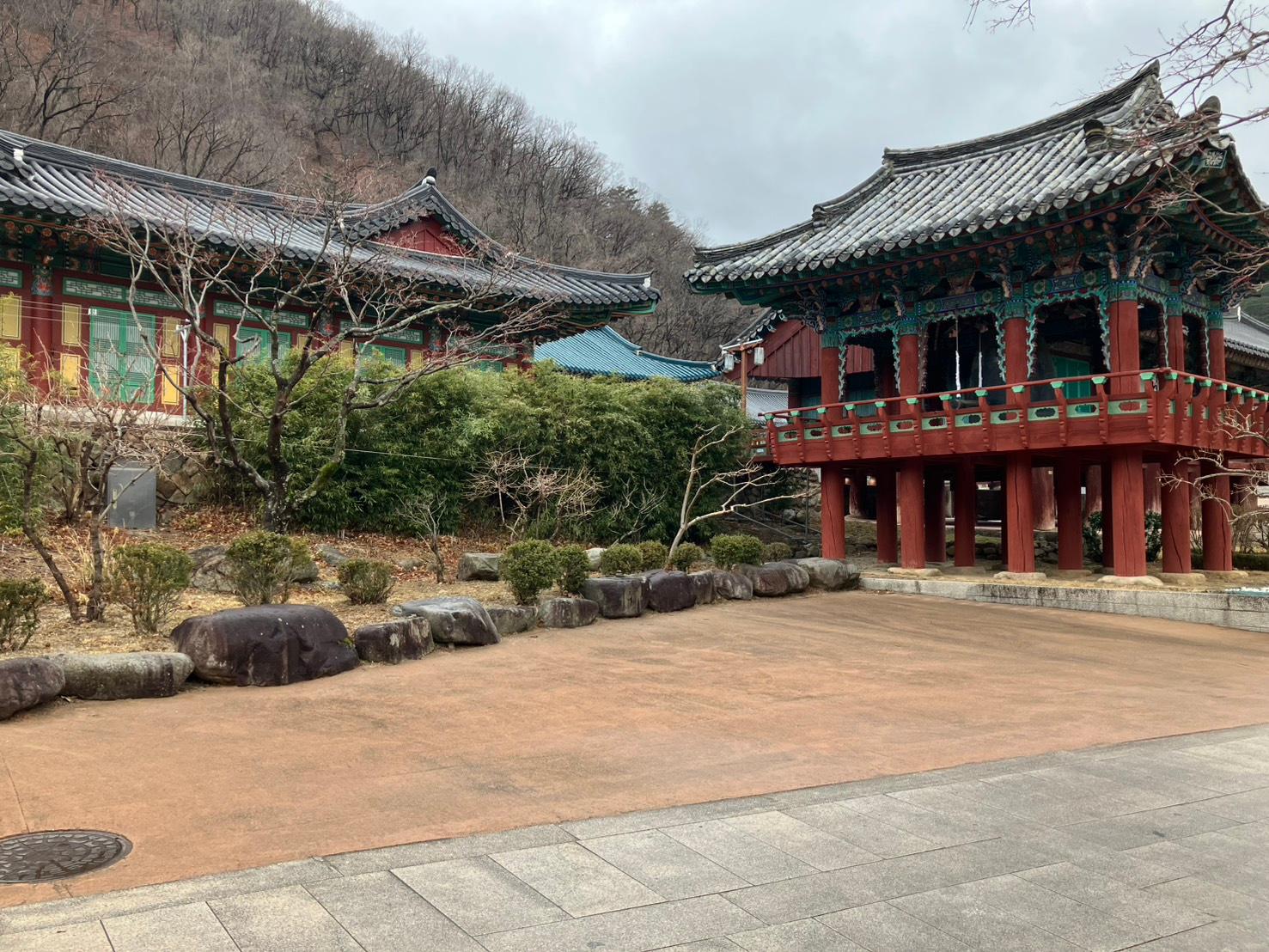
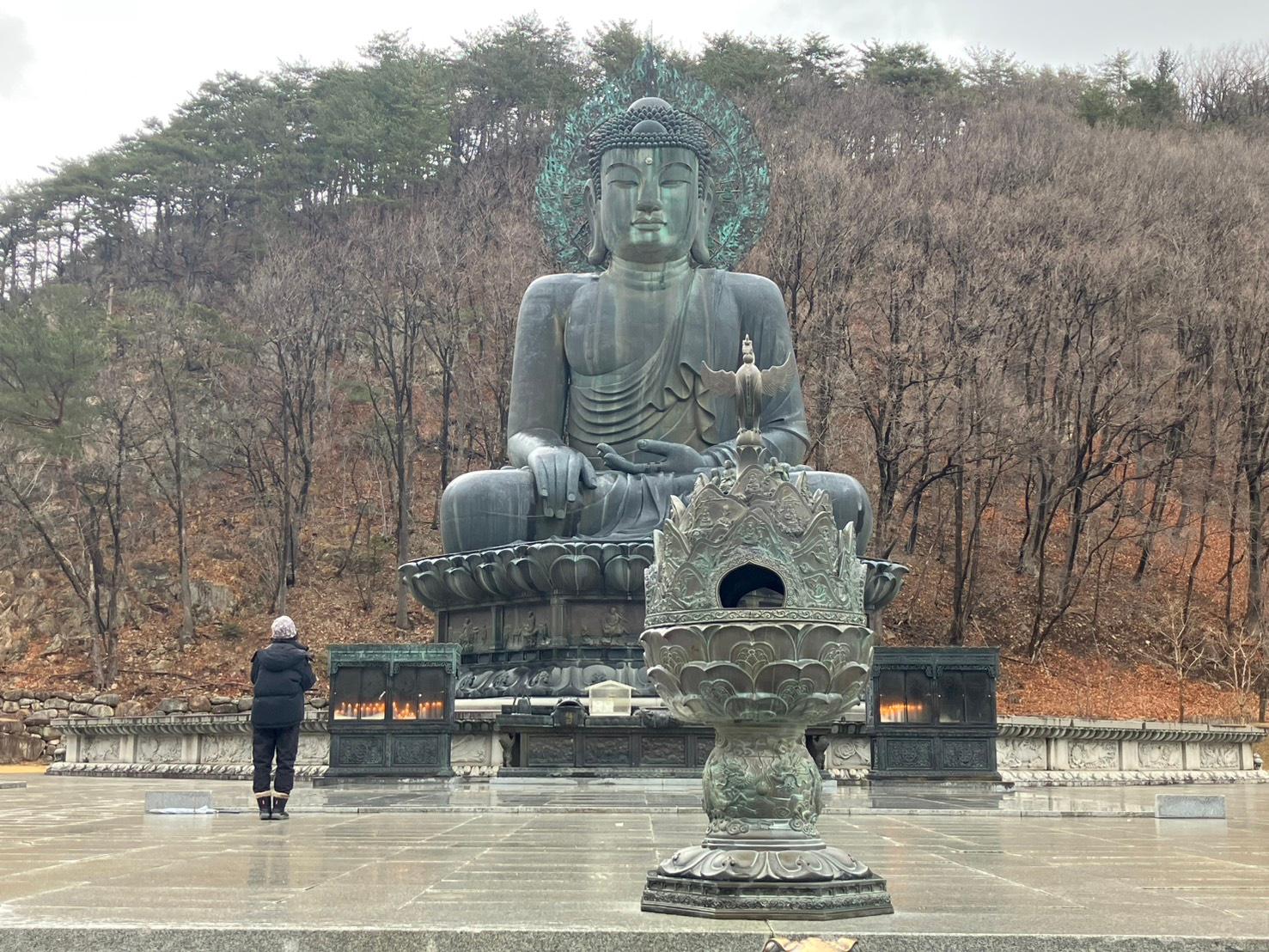
Located near the Seoraksan (Seoraksan National Park) small park, Sinhungsa Temple is marked by the huge Unified Great Buddha (Bronze Maitreya Buddha). Along with the 1,400-year-old temple bell made when the temple was founded and a bronze vessel bestowed by King Sunjo of Joseon, the temple preserves the Paradise Hall, wooden sutra printing blocks, Pojereung, the site of Hyangseongsa Temple’s three-story stone pagoda, three Buddha statues, the Underworld Hall, and the Seven Stars Pavilion. There were many roof tiles with wishes written on them, like Japan’s ema.
The grounds were very large, and I couldn’t see everything before the meeting time. I wanted to go to Ulsanbawi, so I was disappointed.
When I had time I talked with the bus guide, but even when they spoke English I hardly understood. The guide asked me in English, 'Have you eaten?' and when I answered, 'Not yet,' they laughed and asked, 'Are you saving money?' I’ve been studying Korean, so I tried speaking a little Korean, and simple words got through, but my pronunciation was poor, so the bus guide sometimes tilted their head in confusion.
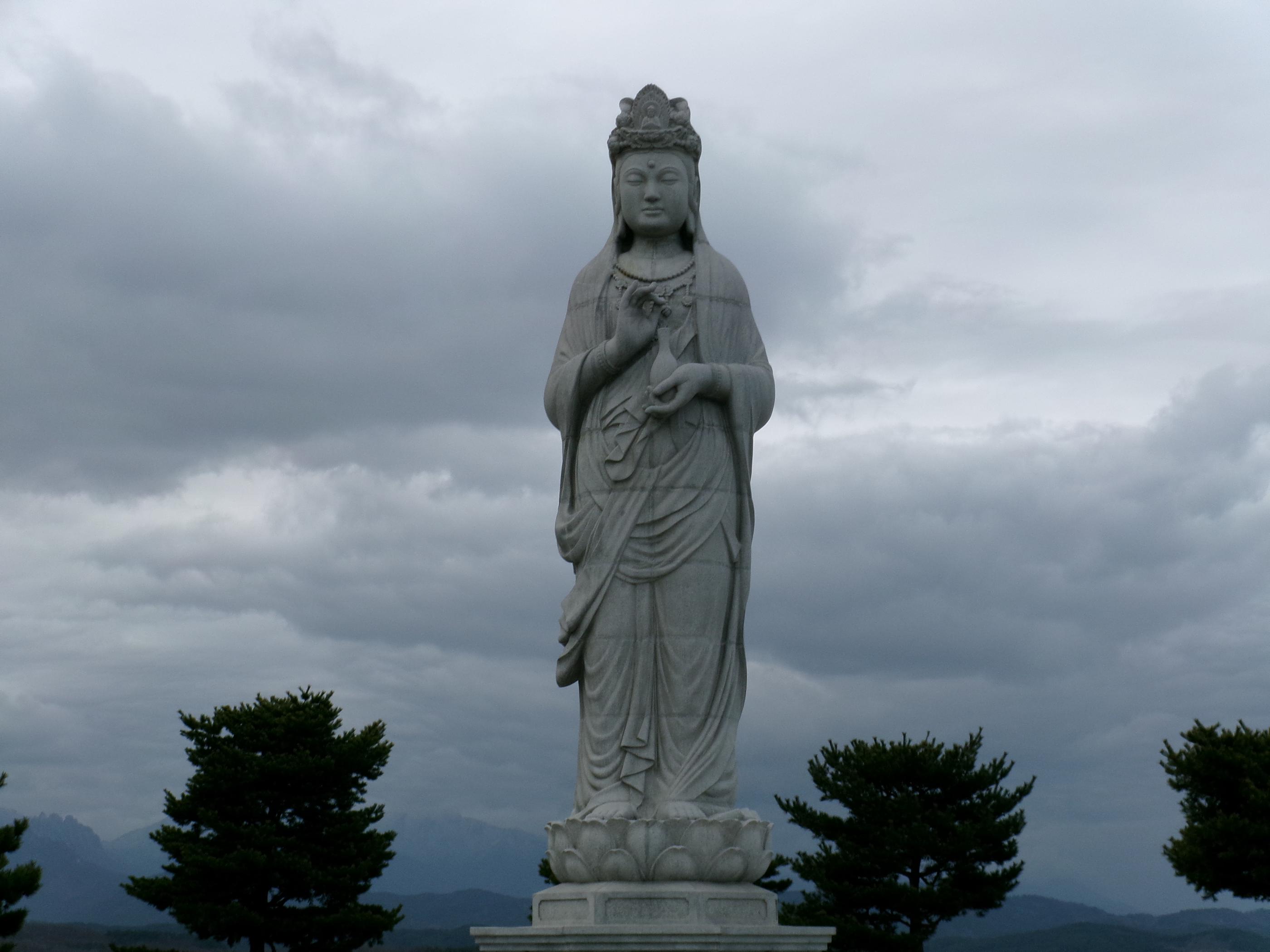
About 40 minutes after getting back on the bus and being rocked along, we arrived at our other destination, Naksansa Temple. Naksansa Temple was founded in 671 during the Silla period at the foot of Obongsan (Nakseong), when the eminent Silla monk Uisang received a revelation from Gwaneum and built the temple. Uisang heard that Gwaneum was present in a seaside cave near Naksansa Temple, so he visited the cave. After praying for days on the coastal cliff, Uisang received a wish-fulfilling gem from a dragon that emerged from the sea, and a crystal rosary from Gwaneum, and he enshrined these at Naksansa Temple. Later, a pavilion was built on the cliff where Uisang practiced asceticism, and it came to be called Uisangdae. Also, a temple was established beside the spot where Gwaneum arrived ashore on a crimson lotus flower from the sea, and it was named Hongryeon Hermitage. This hermitage, along with Pumun Temple (Ganghwa) and Geumsan Bodai Hermitage (Namhae), is one of Korea’s three major Gwaneum pilgrimage sites visited by many Buddhists. The Seawater Gwaneum (Sea Gwaneum Bodhisattva statue) stands at the highest point in the temple grounds, and the temple itself is designated as one of Korea’s 33 Gwaneum sacred sites.
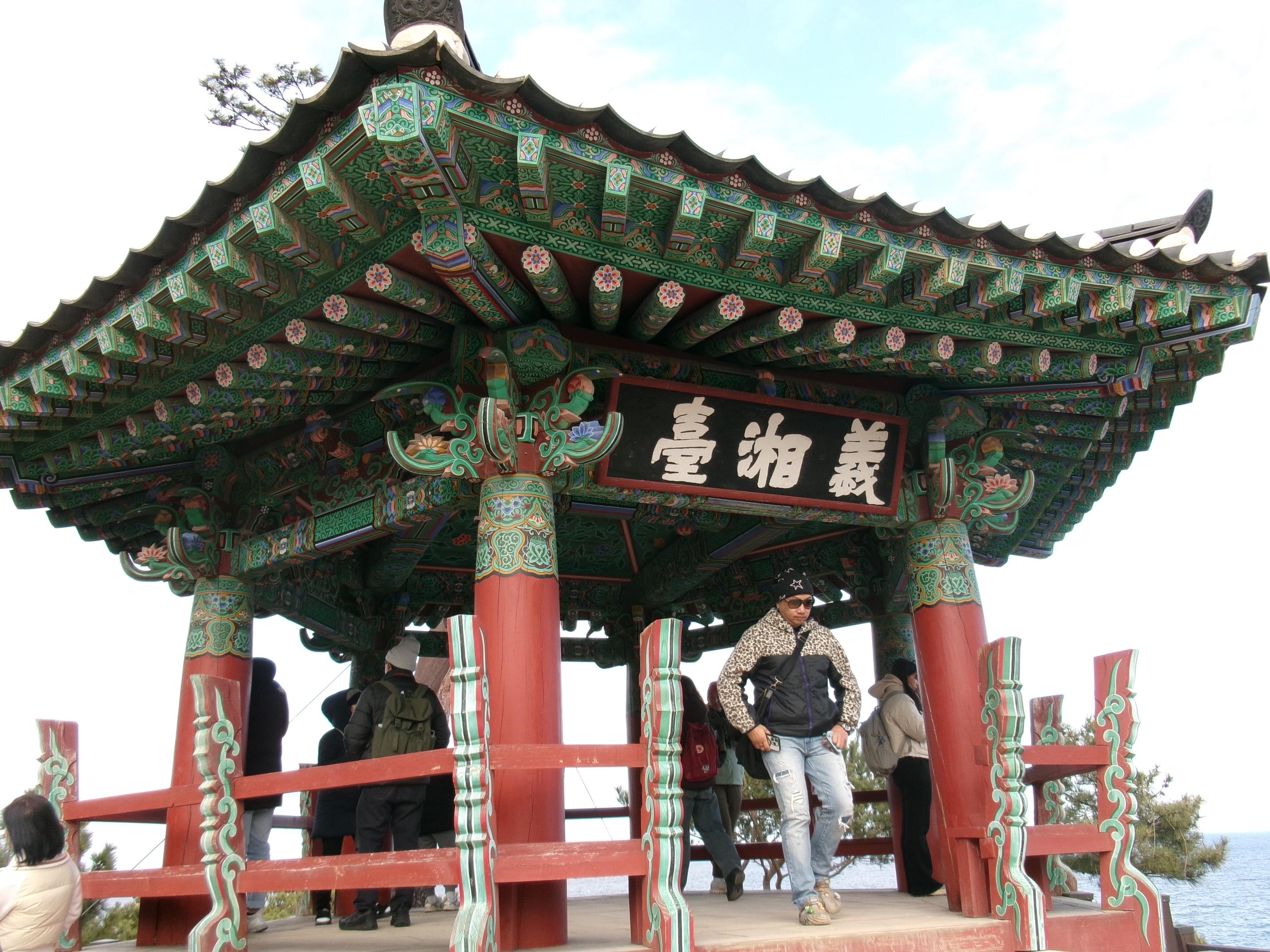
Uisangdae is a pavilion on the seaside cliff above Guryeonam’s Avalokitesvara Cave on the way from Naksansa Temple, it’s listed among the Yangyang Eight Views and is famous as a spectacular spot overlooking the East Sea and the coastline. It’s also known as one of the Eight Views of the Northeast, introduced in Songgang Jeongcheol’s “Gwandongbyeolgok.”
There is a bell near the Seawater Gwaneum (Sea Gwaneum Bodhisattva statue), and people ring it while making a wish, so I rang it too. This bell was restored in 2011. The bronze bell that had been designated a national treasure in December 1968 was destroyed by a wildfire in 2005.
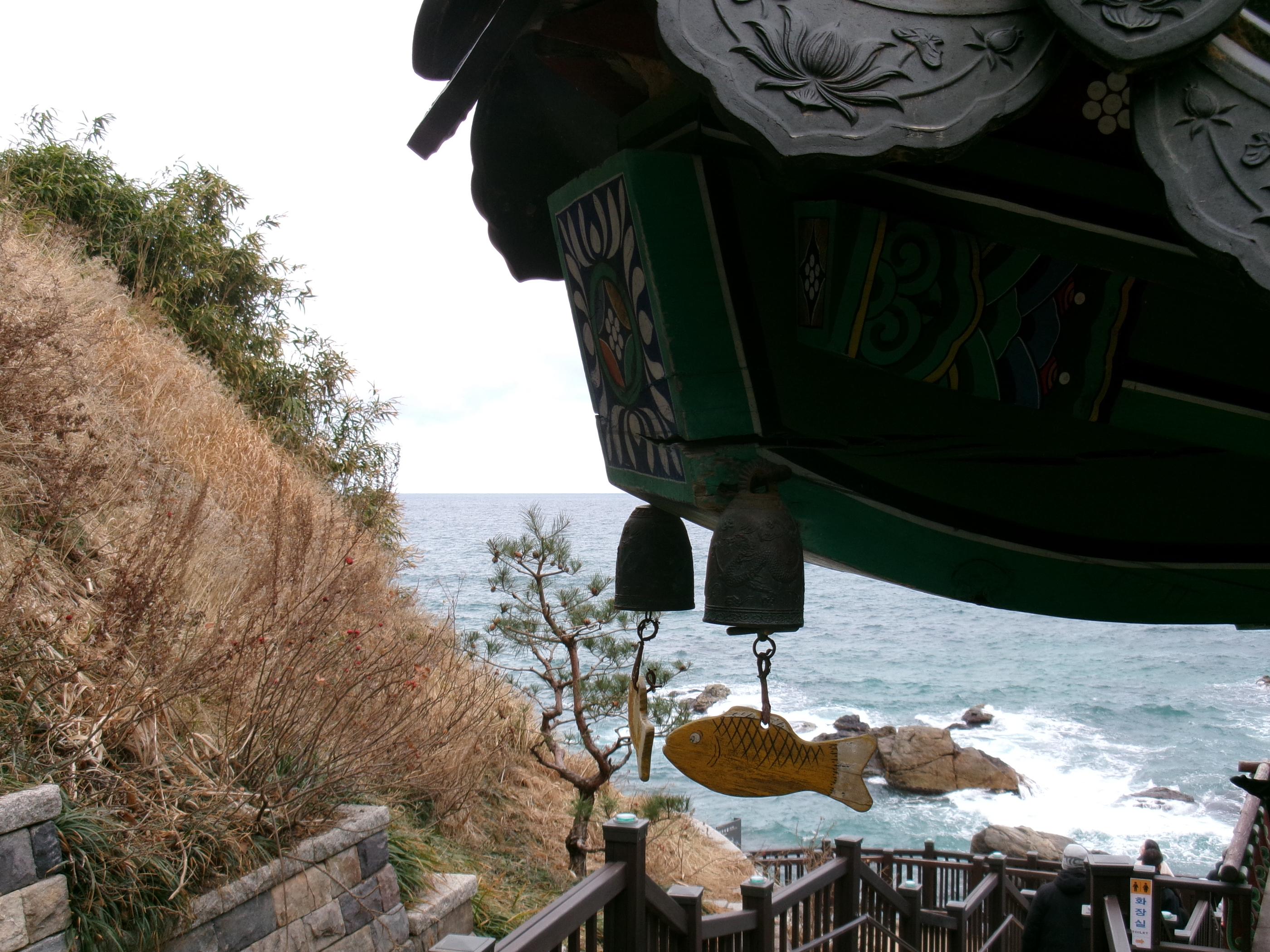
Also, under the eaves in the temple grounds, fish-shaped wind chimes are hung, swaying in the sea breeze and producing a cool, pleasant sound. Their fish shape is said to come from the 'fish drum,' which symbolizes practicing diligently like a fish that never closes its eyes even while sleeping. When I passed by, they were ringing with a refreshing tone.
There’s also a spot called Path Where Dreams Come True, a powerful wish-making place with stunning views that stretches from Wontongmun to the seaside statue of the Bodhisattva. It’s said that Lee Know from the hugely popular Korean idol group Stray Kids visited, so it’s also great for supporting your favorite idols.
https://www.youtube.com/watch?v=y19Ae0CDZU4
Around 4:20 PM we left Naksansa Temple. On the way back there was a roughly 10-minute bathroom stop at a rest area in Gapyeong, and I arrived back near Hongdae Entrance Exit 4 around 8:00 PM.
With a Creatrip membership you can book everything you need for a trip in one place, from tickets and tours to beauty experiences. Plus, when you sign up for the first time you get 50% of your fee back in points, and you earn double points on bookings, purchases, and review posts.
This time, the 'Seoraksan (Seoraksan National Park) + Naksansa Temple Day Trip (from Seoul)' I took normally costs ¥10,202, but with a membership discount it was ¥1,079 cheaper at ¥9,123!!
Please, everyone, try it for yourselves!