



Seoul's Library With No Building: My Free Night Tour of the

Victoria Solart
5 days ago
If you're planning a trip to Seoul and you've already hit the obvious spots, like palaces, markets, themed cafés, here's a very different suggestion: a library with no building. Really. No façade, no fixed shelves, no library card. It's scattered across the city's squares and parks, and the reason behind it is a great lesson in rethinking public space.
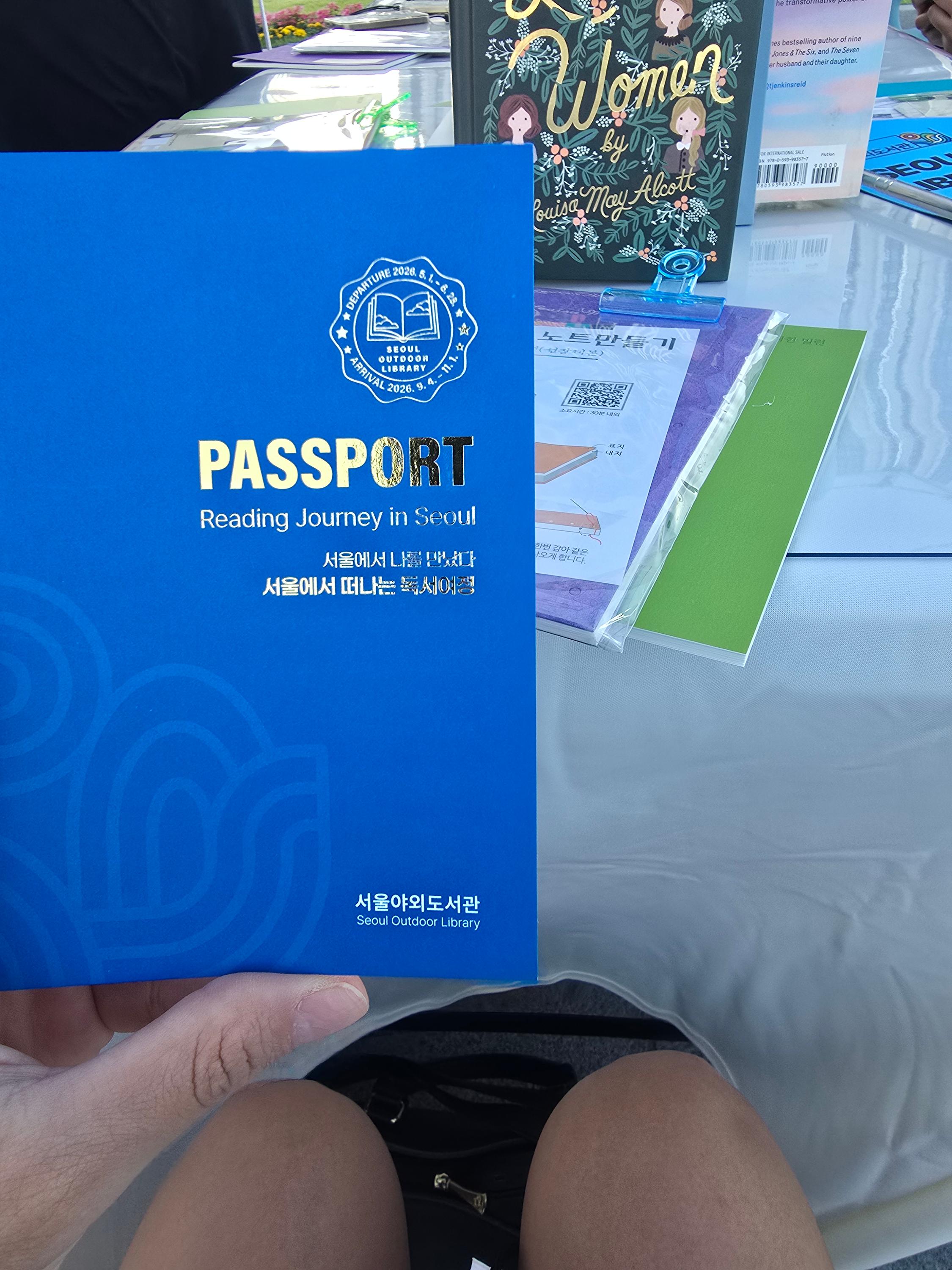
Back in 2022, the Seoul city government noticed a shift across the whole population: people were reading less and less, losing the fight for attention to phones, social media, and increasingly packed schedules. On top of that, many people said traditional libraries felt intimidating, as if those spaces were reserved for students or researchers only. The city decided to flip the idea on its head: what if the library left the building? That's how the Seoul Outdoor Library was born — beanbags scattered across the grass, books organized by theme, and zero red tape between you and reading. No library card, no checkout process, and nobody minds if you spend the whole afternoon in the same spot. It's even considered a sustainable model, since it repurposes existing public space instead of putting up new construction.
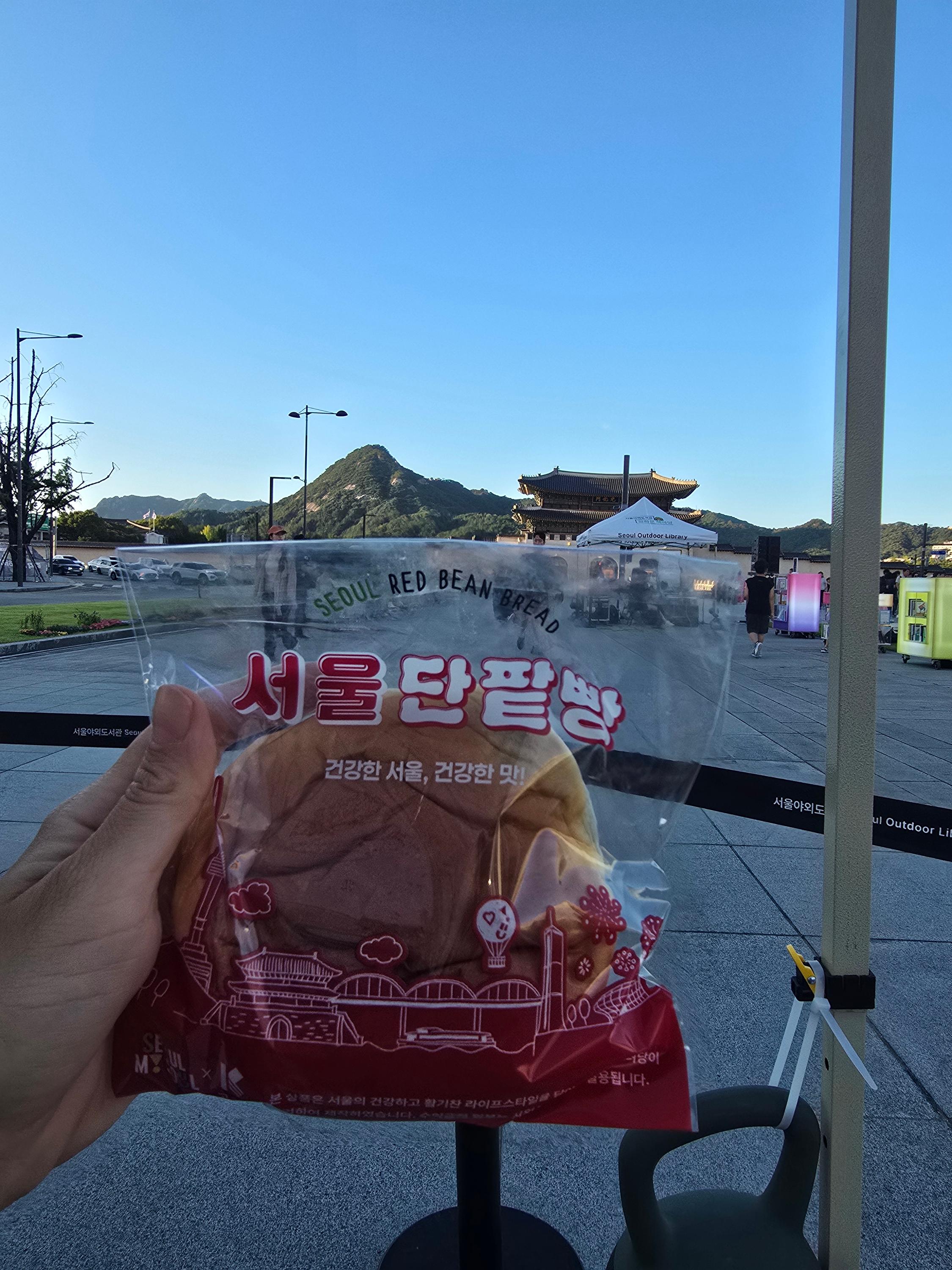
The numbers are impressive: since 2022, the project has welcomed more than 6 million visitors, and this year alone it has already passed 8 million. In August, Seoul presented the initiative at the world's largest library congress, held in Busan — quite a showcase for an idea that started as a simple answer to an everyday problem.
I already knew this "open to everyone" version of the project, but this time I tried something more complete: a free, guided night tour, booked through Creatrip. Registration doesn't cost anything — you just need to reserve a spot in advance and arrive at the meeting point between 17:00 and 17:50, since the tour starts right on time at 18:00 and runs until around 20:00.
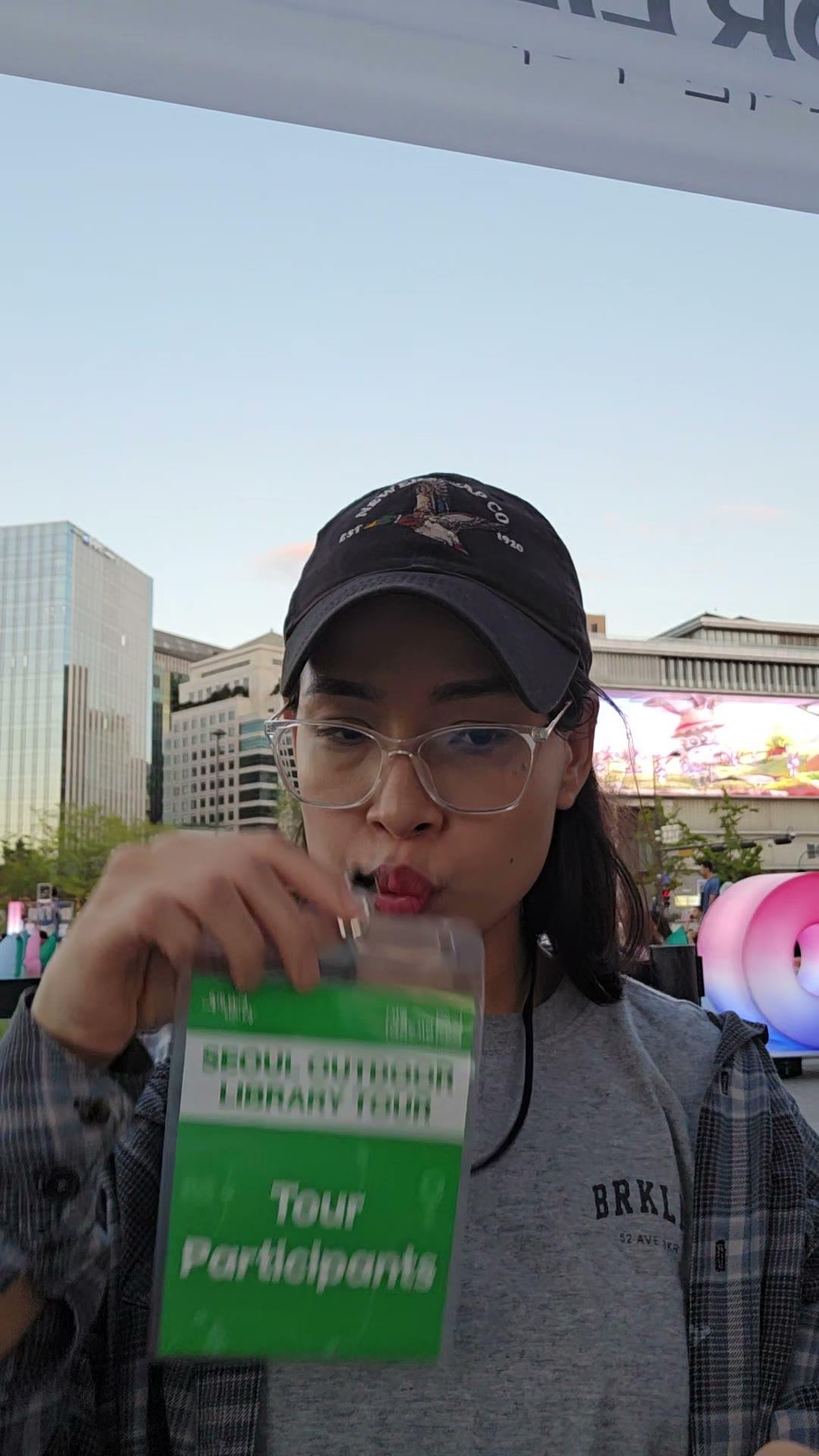
Arrival and welcome I got there a little before 18:00, with the low evening sun lighting up the square in front of Gwanghwamun Gate. We were given an ID badge and a personalized Seoul Outdoor Library tote bag full of little treats: Korean snacks, water, stickers, and a keychain. Along with it came two small notebooks: one meant for practicing traditional Korean bookbinding, and another with Korean poems and sayings, designed for anyone who wants to practice writing Hangul while getting a little closer to the local culture.
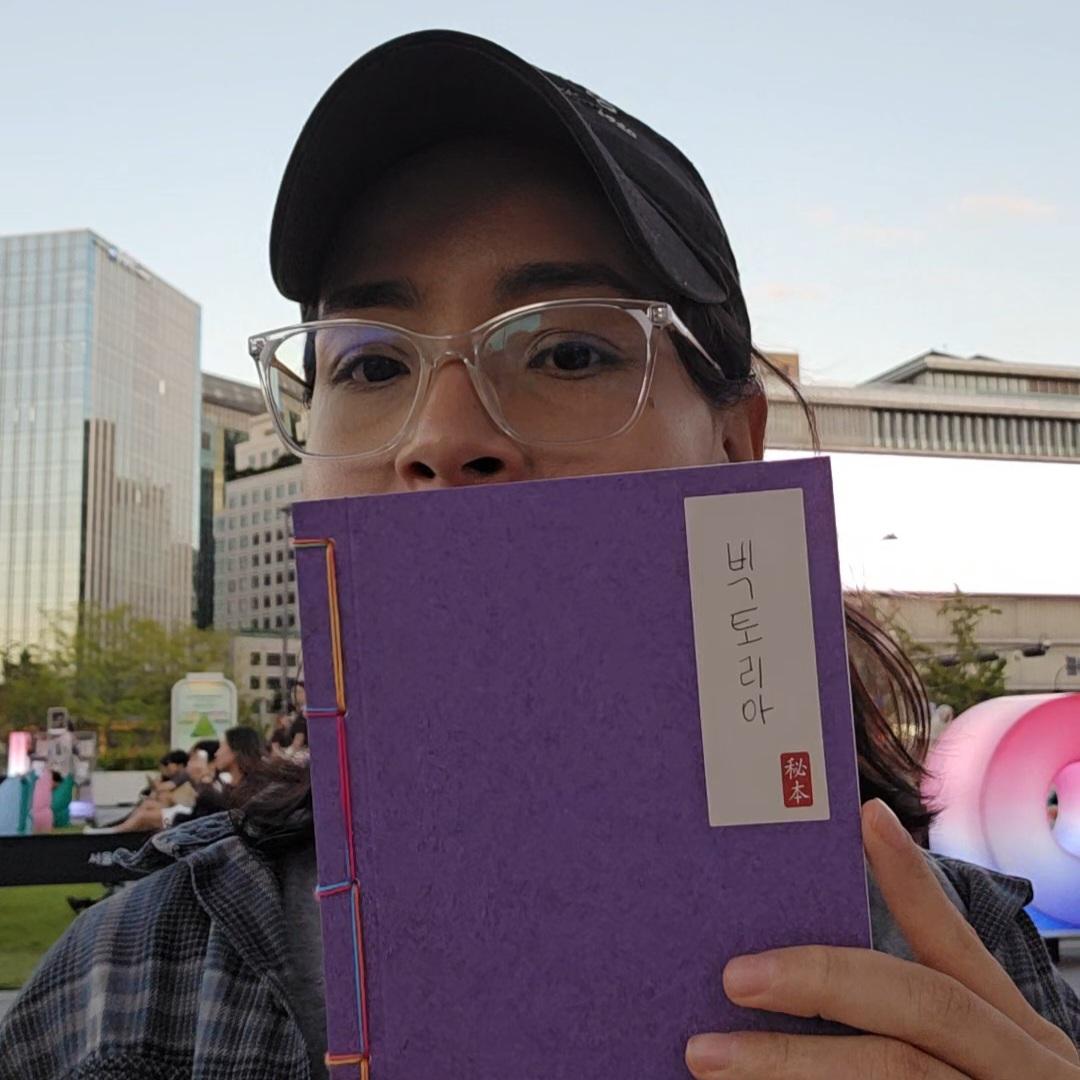
The bookbinding workshop The tour's first activity was surprisingly hands-on: using a needle and colorful thread, we each put together our own notebook in the traditional Korean bookbinding style. While we sewed, the guide told us the history of how paper used to be made by hand in the country centuries ago. The result turned out beautiful — a handmade notebook with a personalized cover that, in my case, even had my name printed in Korean.
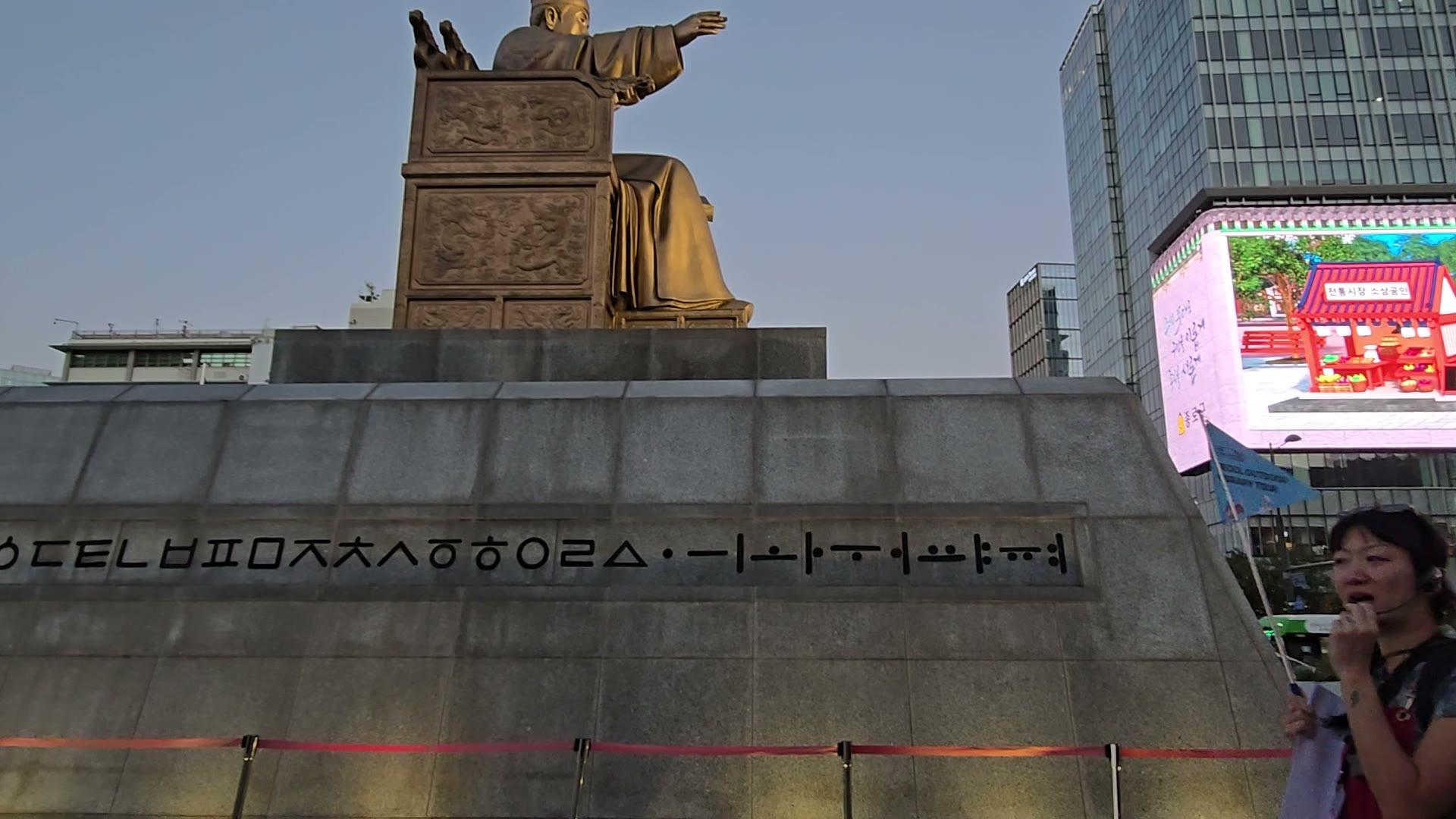
King Sejong's statue From there, we walked as a group to the statue of King Sejong, the monarch responsible for creating Hangul, the Korean alphabet still used today. Standing right at the foot of the statue, we listened to the guide tell that story — one of the most important chapters of Korean cultural identity, explained in one of the city's most symbolic places for it.
The reserved spot by Cheonggyecheon We kept walking until we reached a stretch of Cheonggyecheon, the famous illuminated stream that cuts through downtown Seoul, where a space had been reserved just for our group. There, we were handed a small bag with headphones and a tiny mp3 player loaded with a curated playlist, to enjoy while reading the books laid out next to the benches or eating the snacks that had come in our welcome kit. I sat there for about twenty minutes, just listening to music, reading a little, and watching the illuminated water flow right in front of me — one of the most peaceful moments of the whole trip.

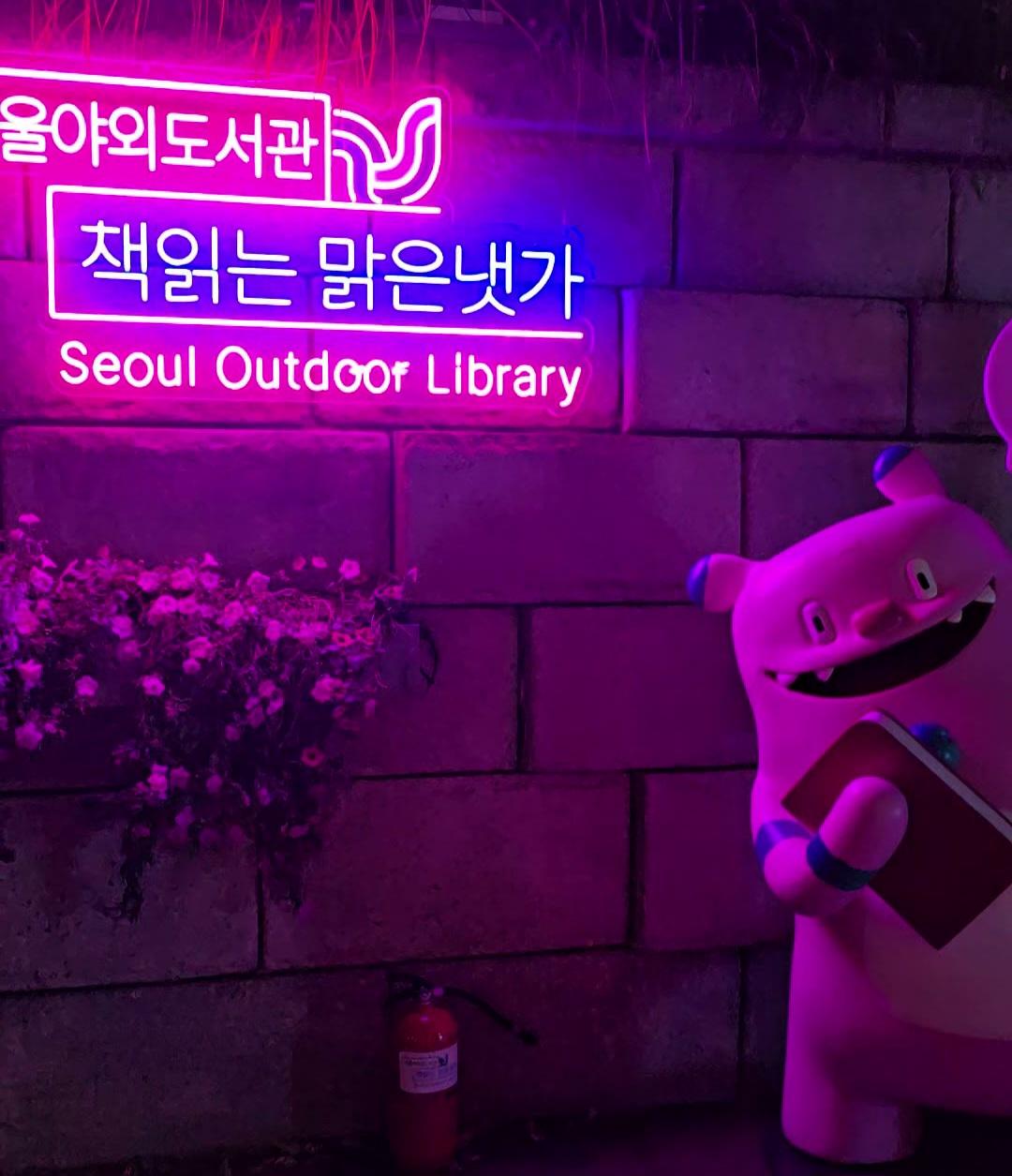
Wrapping up To close things out, we walked over to the Seoul Outdoor Library's official sculpture for a group photo — the perfect memento of the experience. One practical note: the full tour route is usually a bit longer than what I did; in my case, part of the route was adjusted because of other events happening in the city that week. Even so, the experience felt complete and didn't leave anything to be desired.
Practical tips if you want to do this tour
- Registration is free and done through Creatrip; book ahead, since spots tend to fill up fast.
- Arrive during the check-in window (17:00–17:50) — the group heads out right at 18:00.
- The tour is conducted in English, so you don't need to speak Korean.
- Wear something comfortable, since a good chunk of the time is spent sitting on the ground or on beanbags.
- It's a great option for solo travelers: the group is small and the atmosphere is really welcoming.
- It's right by Gwanghwamun subway station, so it's easy to fit in alongside other sights in the area on the same day.
Is it worth it? I'd recommend it without a second thought. It's free, runs for about two and a half hours, and delivers a lot more than I expected: a good dose of history, a hands-on activity to take home as a keepsake, and a genuinely beautiful reading moment by the water, in a setting I'd have been unlikely to find on my own. If Seoul is on your itinerary, it's worth booking the tour through Creatrip.com