

Jeju With Kids Without Driving: Our Family Trip

BAppa
2 months ago
Before going to Jeju, I kept hearing that we needed to rent a car. We were travelling with our seven- and four-year-old, and neither of us wanted to deal with driving, parking and navigation in an unfamiliar place.
We still travelled mainly by car, but someone else handled the driving. We stayed in Jeju City, used regular taxis for shorter trips and booked a private eight-hour taxi tour for our main sightseeing day. It gave us most of the convenience of a rental car without having to drive ourselves.
That arrangement worked extremely well. Jeju gave us a mix of history, volcanic scenery, beaches, museums and good food. Some of our strongest memories came from places we had not expected to love quite so much, especially the National Museum of Jeju, its outstanding children’s museum and the surreal landscape framed through one of its windows.
Staying in Jeju City
We stayed at Hotel Shalom Jeju. It was not a resort, but it was comfortable, practical and well located for what we wanted to do.
Being in Jeju City meant we were close to the airport, restaurants, convenience stores, museums and Dongmun Traditional Market. With young children, that was useful because every outing did not need to become a full-day expedition.
The trade-off is that Jeju’s attractions are spread across the island. Places that look close on a map can still require a fair amount of driving. For our family, staying in one hotel and booking a private taxi tour made more sense than changing accommodation or trying to cross the island by public transportation every day.
Exploring Jeju by Private Taxi
For our main sightseeing day, we booked an eight-hour tour with Jeju Happy Taxi.
The driver picked us up from our hotel and took us between the places we had chosen. We did not have to study bus routes, manage transfers or repeatedly explain where we were going. We could leave bags in the vehicle and cool down in the air conditioning between stops, which mattered during the summer heat.
The main advantage was flexibility. With children, even a carefully planned itinerary can change quickly. Someone becomes hungry, someone needs a washroom, or everyone simply runs out of energy. Having a private driver meant we could adjust the day without creating a logistical problem.
A private taxi tour costs more than public transportation, but for a family the cost may be easier to justify. It also saves a considerable amount of time.
Before booking, it is worth confirming the total number of hours, whether parking and tolls are included, whether entrance fees are separate, and how overtime is charged.
We found that two or three substantial attractions were enough for one day. Jeju is more enjoyable when there is some breathing room in the schedule.
Jeju Folk Village
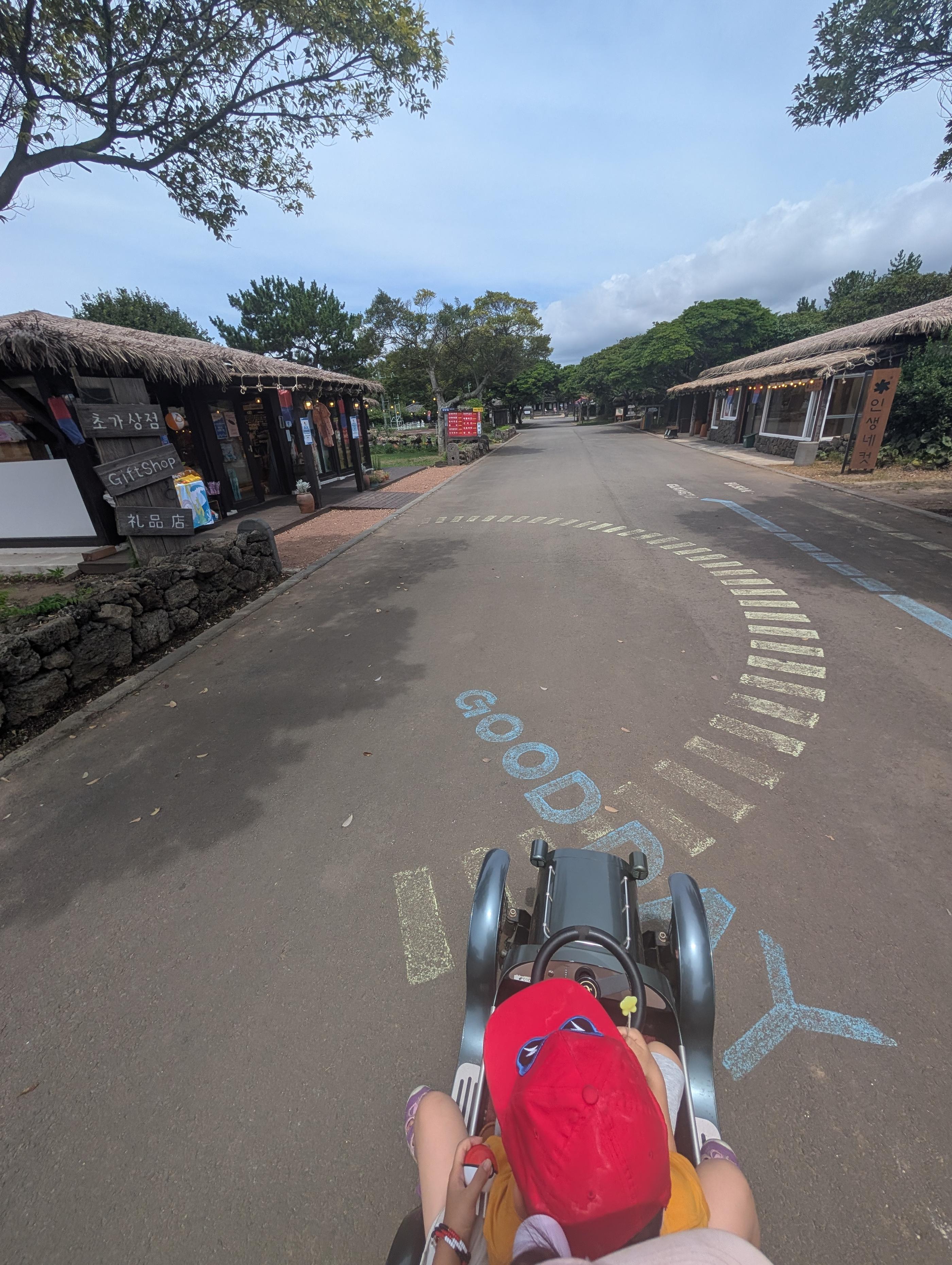
Jeju Folk Village was fascinating, but it was much larger than we expected. During summer, the electric vehicle was absolutely necessary for our family.
The grounds are spread out across a large outdoor area, with traditional homes, workshops, stone walls and village buildings. Walking the entire route with young children in the heat would have been miserable. Without the electric vehicle, our children might have melted before we reached half the exhibits.
The vehicle allowed us to move between the main areas without exhausting everyone. We could get off where we wanted to explore, then ride again instead of walking long stretches under the sun. It made the difference between enjoying the village and simply trying to survive the heat.
The village itself is worth visiting. Its traditional homes, low stone walls and thatched roofs show how Jeju’s architecture developed in response to the island’s strong winds and volcanic environment.
Our children could enter buildings and look closely at objects instead of spending the entire visit inside a quiet gallery. The site gave us a much clearer sense of how people historically lived on Jeju and how different island life was from life on mainland Korea.
For families visiting in summer, my strongest advice is to use the electric vehicle. Bring water, hats and sunscreen as well. The site is too large to underestimate, and saving the children’s energy will make the rest of the day much easier.
Exploring a Jeju Lava Tube Cave
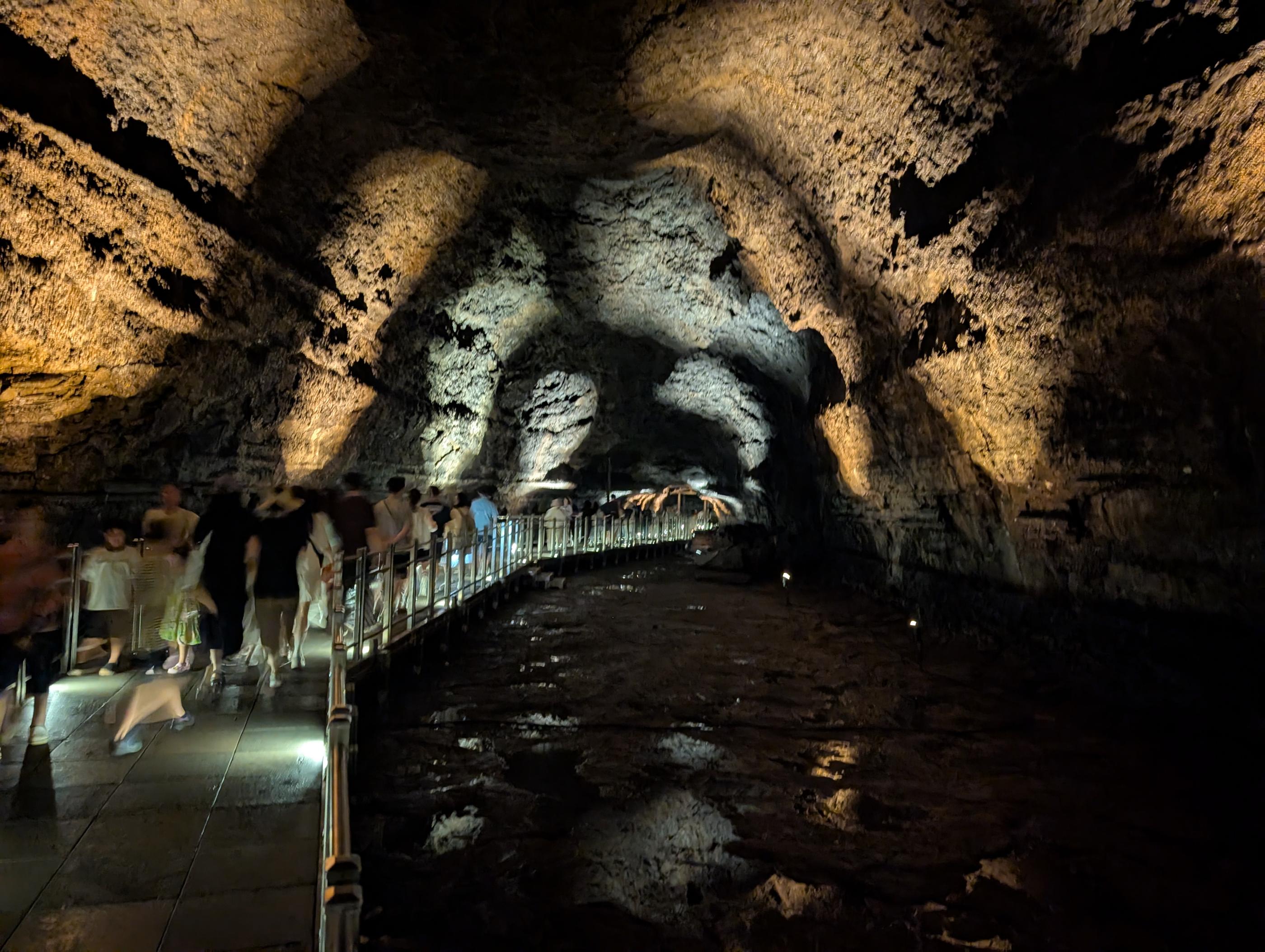
The lava tube cave was one of the most memorable parts of the trip.
Jeju is famous for beaches and cafes, but its volcanic landscape is what makes the island physically distinct from the rest of Korea. Going underground made that history much easier to appreciate.
The temperature dropped as soon as we entered, which felt wonderful after the summer heat. The cave was dark, damp and uneven. For the children, it felt more like an adventure than a formal sightseeing stop.
Comfortable shoes are necessary because the ground can be slippery. A stroller would not be practical, and visitors with mobility concerns should check the conditions before visiting.
Our children enjoyed the experience, but we kept them close. The cave was not difficult in the same way as a long hike, but the darkness and uneven floor required attention.
Hamdeok Beach
Hamdeok Beach gave us a completely different side of Jeju.
The water was clear, shallow and an almost unreal shade of blue. Even without spending an entire day swimming, it was worth visiting for the coastline alone.
Hamdeok is popular rather than secluded, but that made it easier with children. Restaurants, cafes, convenience stores and washrooms were all nearby.
It can become crowded during summer, and shade may be limited. Water shoes can also be useful because parts of Jeju’s coastline have volcanic rocks.
After the folk village and lava cave, Hamdeok gave everyone space to slow down. The children could enjoy the water, while the adults could rest without needing to follow another schedule.
National Museum of Jeju
The National Museum of Jeju ended up being one of the best places we visited.
The museum covers the island’s archaeology, maritime history and regional culture. It helped connect what we had already seen at the folk village and around the island.
The exhibits made it clear that Jeju has its own distinct history and identity. It is much more than Korea’s beach destination.
The museum itself was spacious, calm and comfortable, which was welcome after several outdoor attractions.
Then we reached the large window.
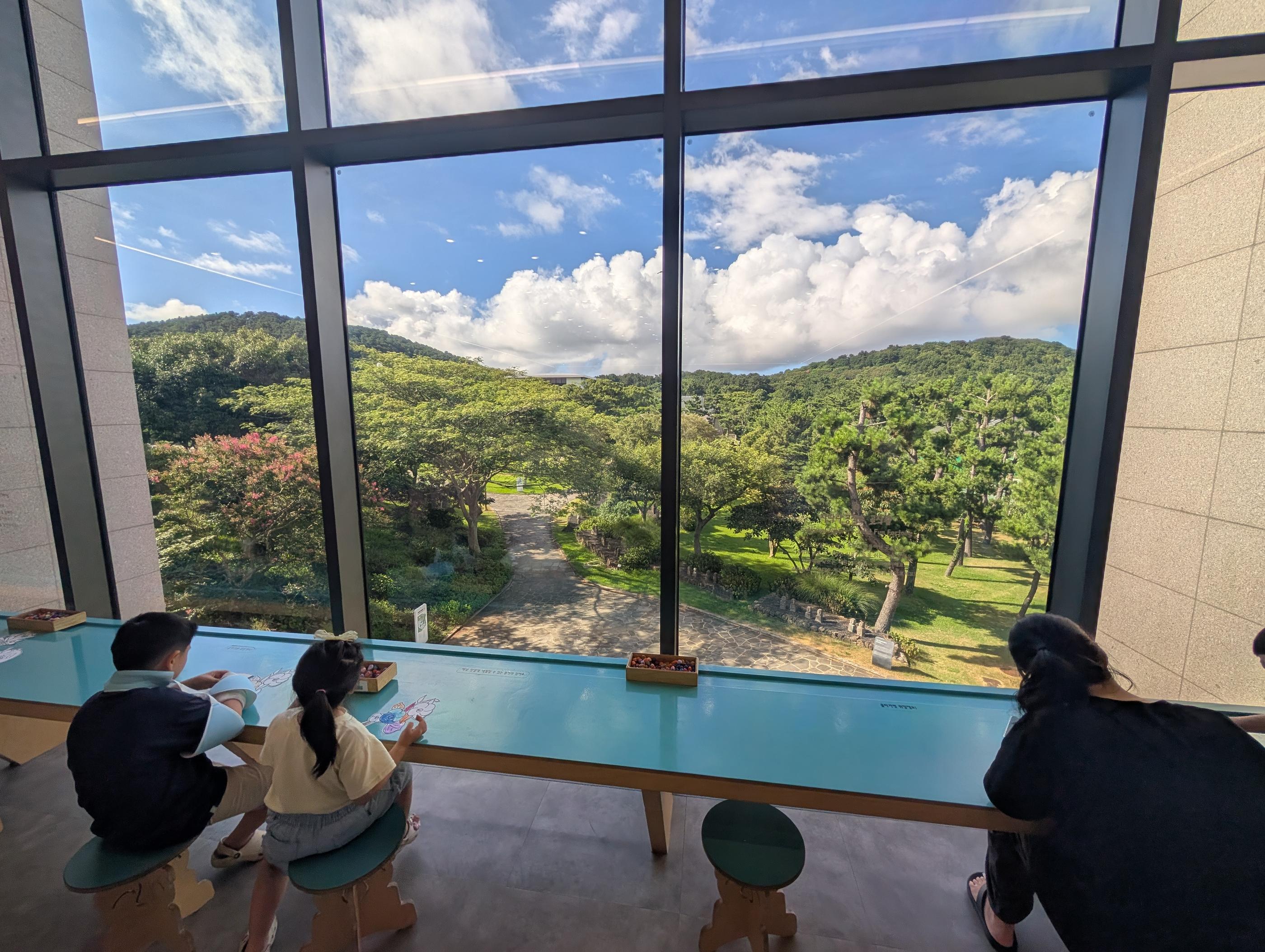
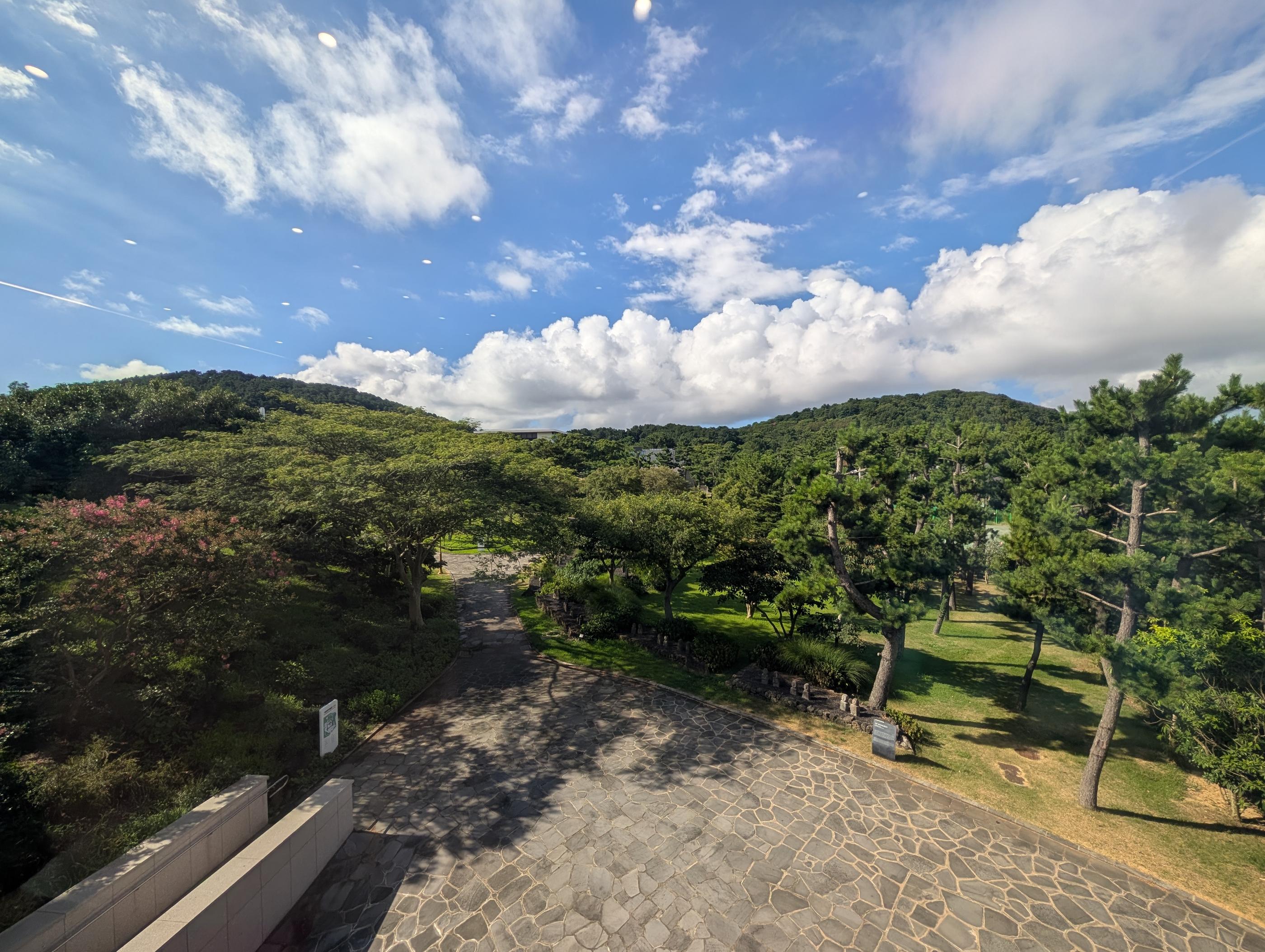
The view outside was utterly surreal. The green landscape, distant hills and enormous clouds looked like a painting placed inside the museum. It was framed so perfectly that it barely seemed real.
That view became one of the images I remember most clearly from the entire trip. It was not something we had researched or planned to see. We simply looked outside and stopped.
The Children’s Museum Was Outstanding
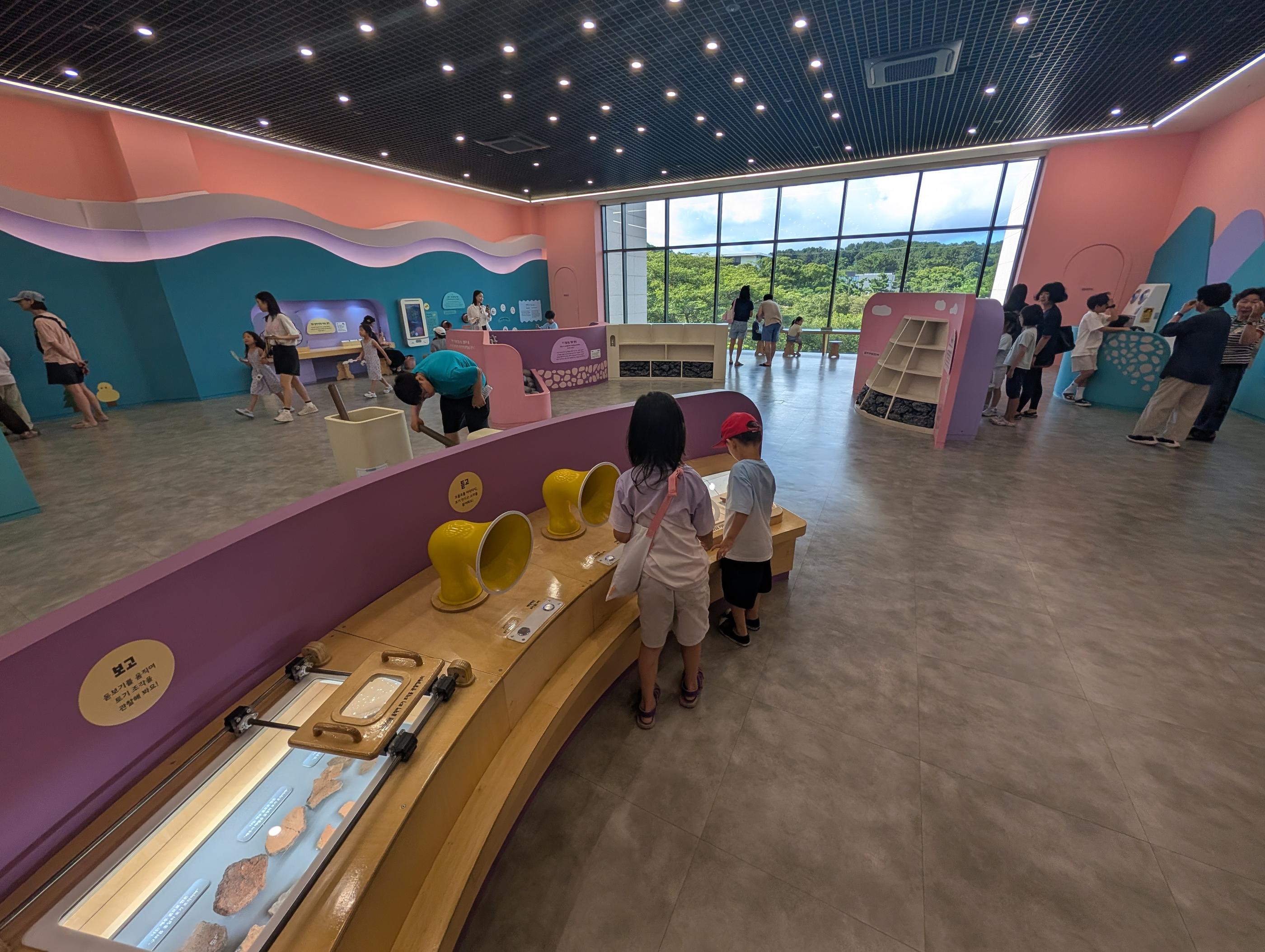
The children’s museum at the National Museum of Jeju was outstanding.
Some museums call themselves family-friendly because they have a colouring sheet or one interactive screen. This was different. The space was genuinely designed for children to touch, explore and participate.
Our children were fully engaged. We did not have to keep telling them to be quiet or stop touching things. They were learning about Jeju through play, while the adults could still appreciate the historical ideas behind the activities.
It was one of the rare attractions that worked equally well for everyone in the family.
I would not treat the children’s museum as a backup option for rain. It deserves to be part of the itinerary, especially for families with younger children. It is also an excellent place to visit during the hottest part of the day.
Between the main museum, the children’s museum and the surrounding grounds, a family could comfortably spend several hours there.
Dinner at Dongmun Traditional Market
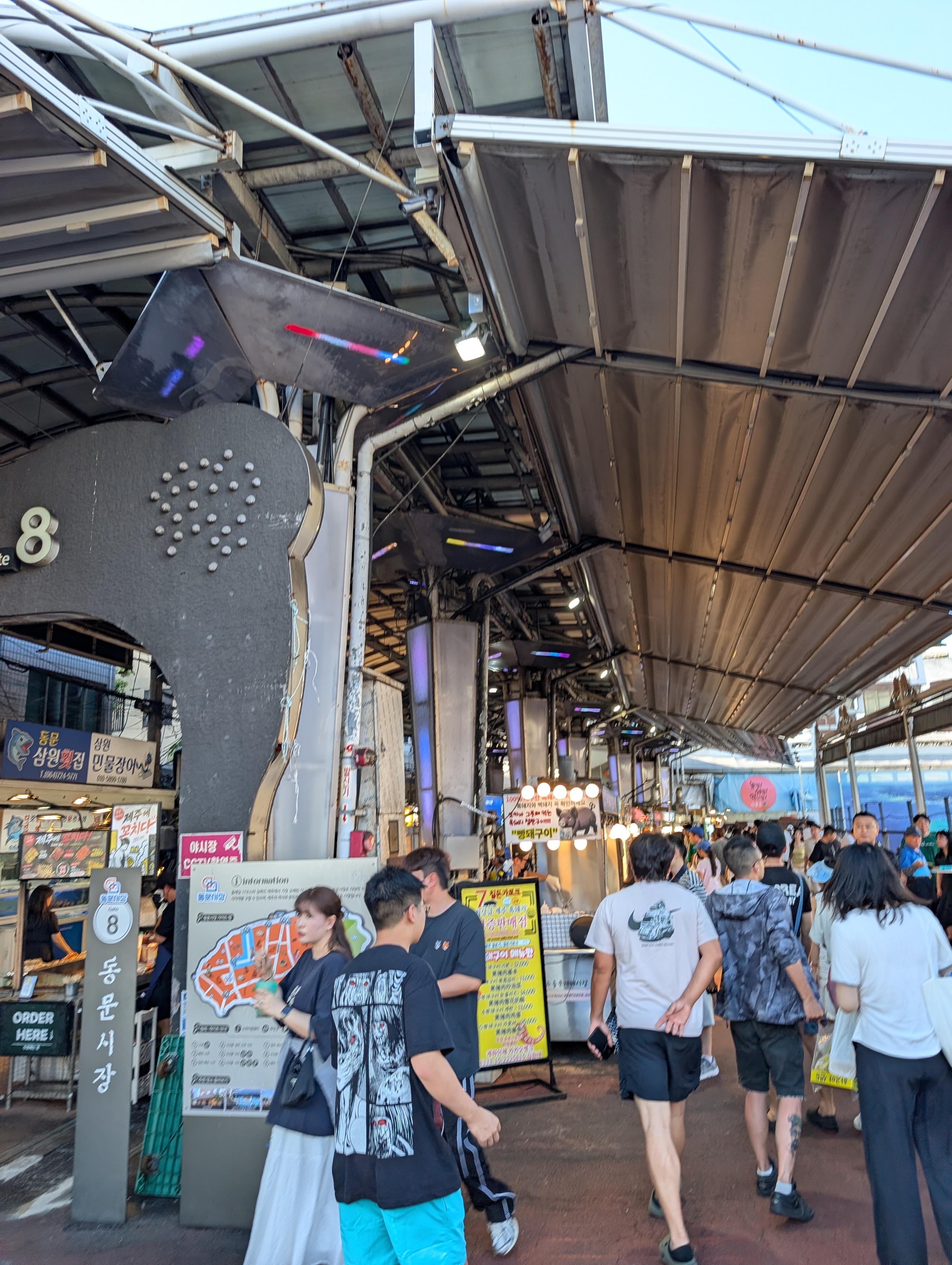
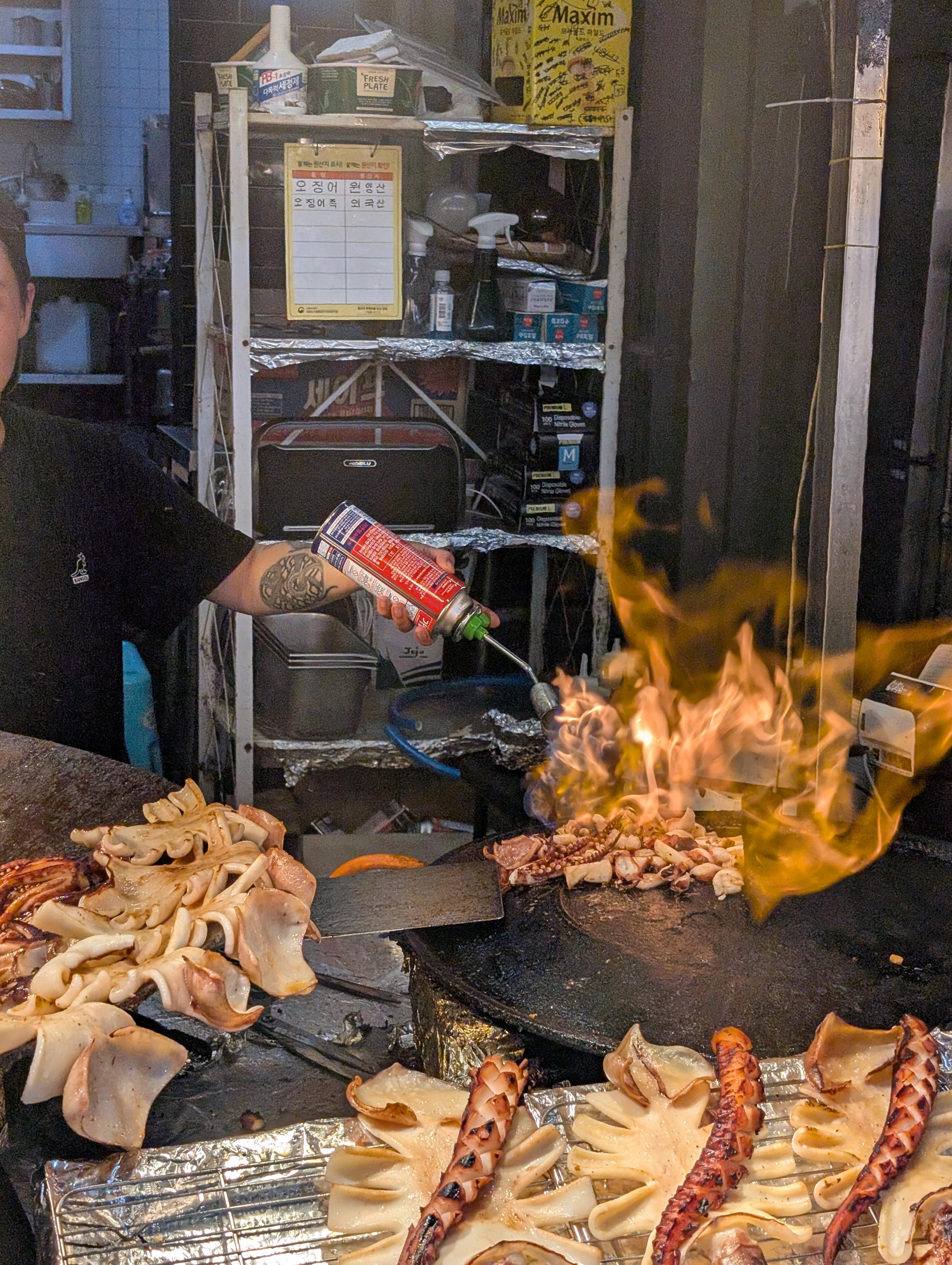
Dongmun Traditional Market was one of the most enjoyable places we visited for dinner.
The market was busy, noisy and full of food. There were seafood stalls, grilled dishes, snacks, fruit and Jeju specialties. Instead of choosing one restaurant, we walked around and shared different foods as we found them.
That worked well with the children because choosing what to eat became part of the evening. They could see the food being prepared and help decide what the family should try.
The atmosphere was a major part of the experience. Smoke rose from the grills, vendors called out orders and every aisle seemed to offer something different.
My main advice is to order slowly. It is easy to buy too much from the first few stalls and then discover something more interesting farther inside.
Dongmun also worked well at the end of a full sightseeing day because it did not require a reservation or a strict schedule. We could eat, browse and leave once everyone became tired.
Jeju Black Pork
We also made sure to try Jeju black pork.
The meat was grilled at the table and eaten with vegetables, sauces and side dishes. It was rich, savoury and much more substantial than a quick market meal.
Portions can be large, so it may be better to order conservatively and add more later. Some restaurants also serve several cuts or unfamiliar side dishes, and the staff can usually show visitors how everything should be eaten.
It was one of our more traditional sit-down meals and felt completely different from the casual energy of Dongmun Traditional Market.
Fresh Seafood and Korean Sashimi
Jeju’s seafood was another highlight.
We tried Korean-style sashimi, which came with a wider selection of side dishes and seafood items than the Japanese-style sashimi meals we were accustomed to.
Our children already enjoy raw fish, so this was an easy meal for our family. Families with less adventurous eaters will still find many cooked options, including grilled fish, soups, noodles and meat dishes.
Eating seafood in Jeju felt closely connected to the island itself. It was one of those meals where the location made a real difference.
What Worked Best for Our Family
The best part of the trip was the variety.
Jeju Folk Village gave us history and outdoor exploration. The lava cave felt adventurous. Hamdeok Beach gave the children time to play. The National Museum helped us understand the island, while its children’s museum gave them something designed specifically for their age. Dongmun Traditional Market finished the day with food and energy.
No single attraction had to carry the whole day.
That made Jeju easier with children. When one place became tiring, the next part of the day felt completely different.
How Long to Stay in Jeju
I would recommend at least three nights for a family trip. Four nights would be even better for a slower pace.
A simple itinerary could look like this:
Day 1: Arrive, check in and have dinner at Dongmun Traditional Market.
Day 2: Take a private taxi tour to Jeju Folk Village, a lava tube cave and Hamdeok Beach.
Day 3: Visit the National Museum of Jeju and the children’s museum, then enjoy a relaxed afternoon or dinner in Jeju City.
An additional day could be used for another beach, a different part of the coast or a slower morning without a fixed plan.
I would avoid repeatedly crossing the island. Grouping attractions by area makes the trip much less tiring.
Practical Tips for Visiting Jeju With Kids
Wear comfortable shoes. Both Jeju Folk Village and the lava cave have uneven surfaces.
Use the electric vehicle at Jeju Folk Village, especially during summer. The site is enormous, and walking the full route with young children in the heat would be exhausting.
Carry water, sunscreen and hats. Jeju’s outdoor attractions can become extremely hot during summer.
Do not overload a private taxi tour. Two or three major stops are enough for eight hours.
Visit the National Museum during the hottest part of the day. It is worthwhile on its own and gives everyone a break from the weather.
Go to Dongmun Traditional Market hungry, but do not buy everything from the first stall.
Leave room for unplanned moments. The museum window became one of the most memorable parts of our trip, and it was not on any itinerary.
Final Thoughts
Jeju was much easier to explore without driving ourselves than we expected.
Staying in Jeju City and using regular taxis and a private taxi tour gave us the convenience of travelling by car without the stress of renting, navigating or parking one.
More importantly, the trip never felt like we were forcing the children through an adult itinerary.
The beaches and volcanic scenery were beautiful, but some of our strongest memories came from quieter or less obvious moments: riding through the enormous folk village in the electric vehicle, watching the children lose themselves in the museum activities, standing in front of that surreal window view and walking through Dongmun Traditional Market wondering what we still had room to eat.
Jeju gave us history, nature, good food and enough flexibility to travel at the children’s pace. For our family, that combination worked extremely well.