



First time in Jeju Island!

m
Affiliate
2 months ago
Right now, I’m studying at the language institute at Yonsei University, and since the spring semester ended, I met up with my mom who lives in Japan and we went to Jeju Island from 5/26 to 5/30. Unlike Seoul where I live, Jeju Island doesn’t have a subway, so getting around is mainly by car, like taxis and buses. I don’t have an international driver’s license, and after looking into it, the sightseeing spots are also spread out across the island, so I figured transportation would be pretty tough.
Also, my mom suddenly said, “I want to go to Jeju Island,” but when I asked what places she wanted to see, she said, “I don’t know,” and she wasn’t going to plan anything herself, so I booked the “Southern Jeju Tour (Departing from Jeju)” on Creatrip. This tour only runs on Mondays, Wednesdays, and Fridays, and if you’re staying at a hotel in Jeju City, the vehicle will pick you up at your hotel, which is really convenient. You coordinate with the guide in advance, and they tell you the meeting time and pickup location. My mom and I joined on the 27th (Wed), and a couple from Switzerland joined as well. The guide also served as the driver, and we traveled in a mid-sized vehicle.
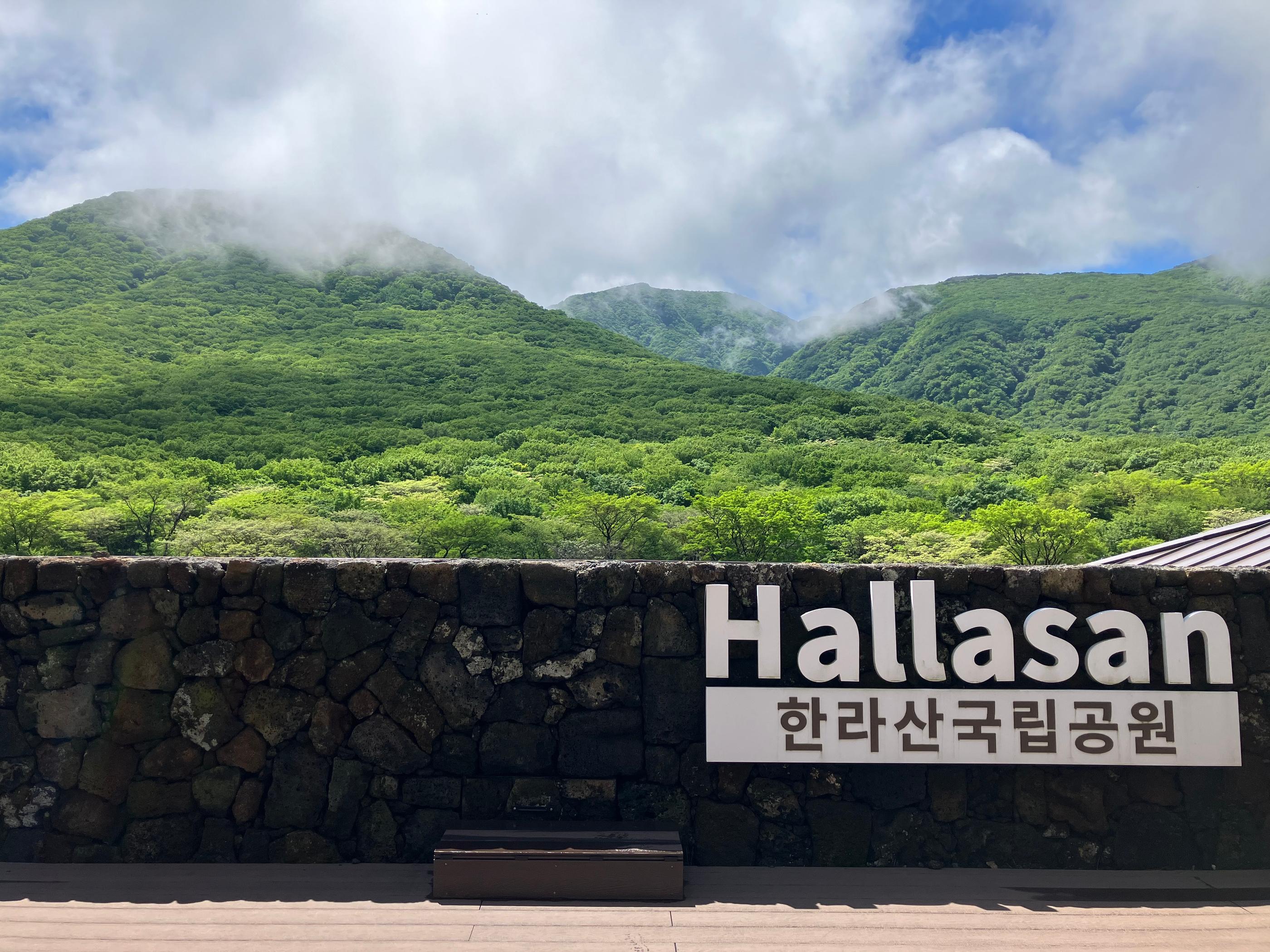
First, we went to Hallasan. Hallasan is Korea’s highest active volcano at 1,950m, and it was registered as a UNESCO World Natural Heritage site in 2007. You can do serious hiking there, but since tour time is limited, you can walk along the trekking course until the meeting time (within an hour), or check out exhibits at the foot of the mountain about Hallasan’s history, and more. My mom is in her 50s and doesn’t have much stamina, so we came down early and looked around the exhibits. According to the itinerary, lunch was next, but we went to see the columnar joint cliffs first. We arrived around 11:40, but the parking lot was already full. After circling once, a car left and we were able to park. Columnar joints are stone pillars formed when lava flows out from a crater and cools rapidly, contracting as it solidifies. Seeing so many pillars lined up like a wall felt surreal, and it really made me think again, nature’s power is incredible. After sightseeing, the guide asked us, “Jeju Island is famous for black pork, and I recommend black pork noodles (guksu), how about that for lunch?” Since none of us had allergies, we all decided to go. It was a busy lunchtime, but the guide made a reservation and even placed the order after we arrived. I didn’t recognize any celebrities, but there were lots of autographs displayed inside. The Swiss couple seemed not to be comfortable with chopsticks, and they ate their noodles with forks. After lunch, I talked with the guide in Korean, and when I said, “I understand Korean better than English,” they explained everything in Korean from then on. I understand Korean better than the English I learned at school because I study it daily, but my level is still low, so I couldn’t understand about half of what was said. The guide told us they lived in Singapore as a child, then tried to study abroad in Japan, but because it was expensive, they studied in China instead. They said they didn’t use Chinese afterward, so they’ve forgotten it.
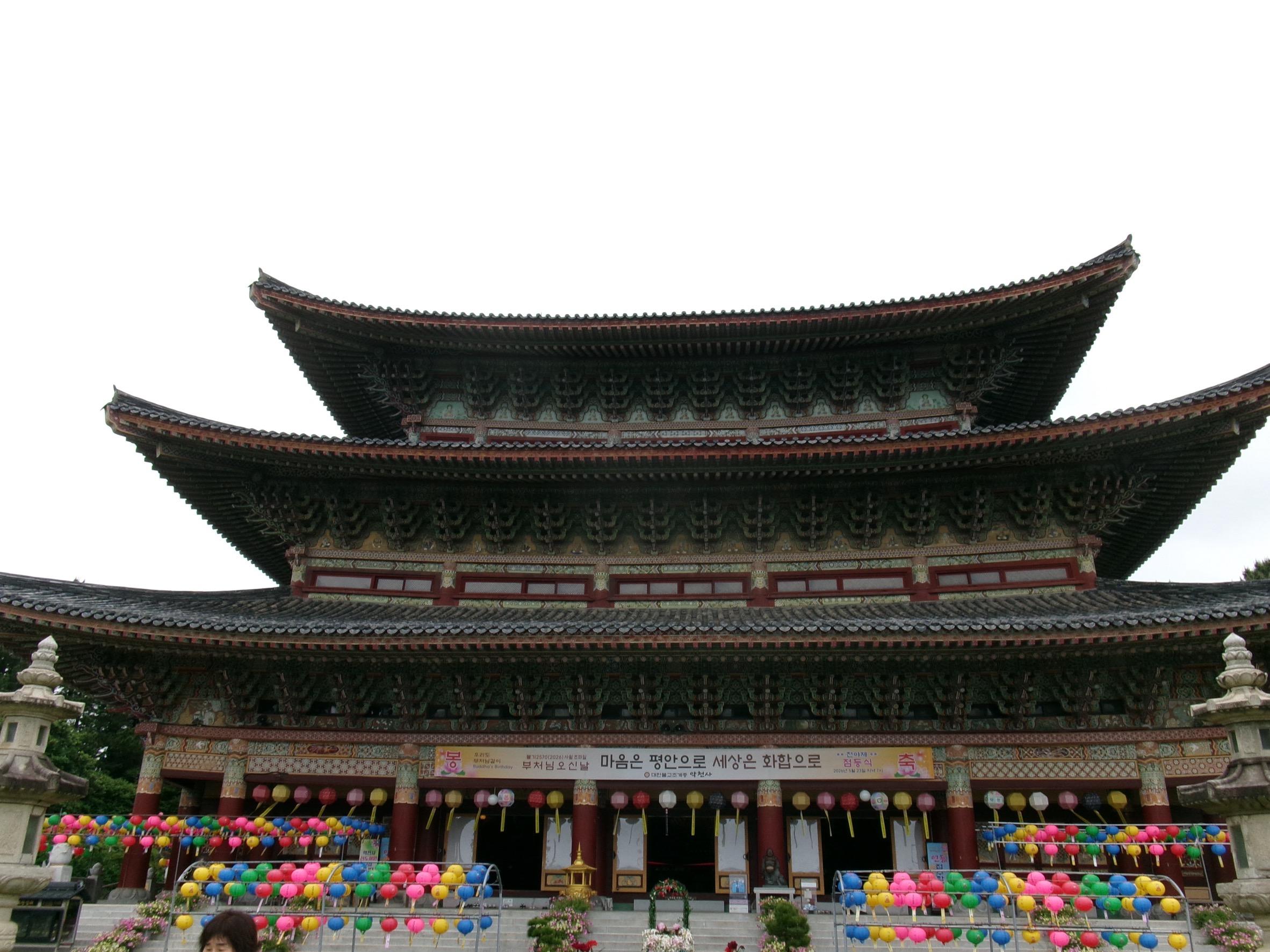
When we went to Yakcheonsa Temple, there were impressive religious remains. Inside, there was a huge Buddha statue, it was really powerful and awe-inspiring.
According to the itinerary, the next stop was Oedolgae Rock, but we didn’t stop there. At Oedolgae Rock, we were supposed to see a rock formed by volcanic activity known as “Lonely Dog.”
Around Cheonjiyeon Waterfall, there were lots of souvenir shops, and we also saw groups of students (a school trip?). Cheonjiyeon Waterfall is one of Jeju Island’s 대표 waterfalls, and it’s 22m tall. The guide was thoughtful and took photos of me and my mom. Since the group was small, we moved through the sights quickly, and we arrived at Cheonjiyeon Waterfall around 1:30 p.m.
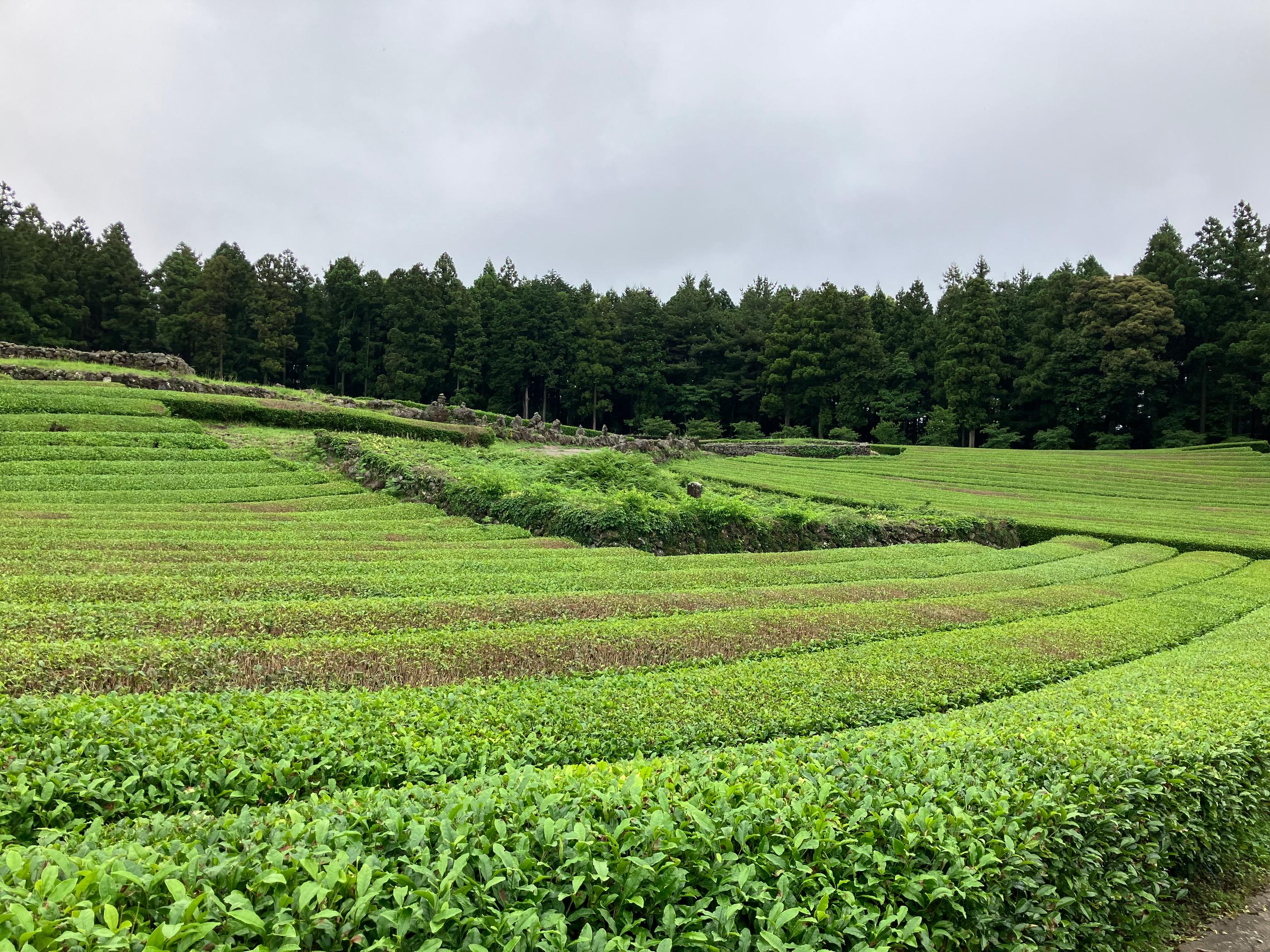
We arrived at the last stop, a green tea farm cafe, around 2:20 p.m. There, we tasted two types of green tea made through different processes, one was a green-colored green tea where freshly picked leaves are steamed to apply heat and stop oxidation enzymes from working, and the other was a brown-colored green tea where the leaves and stems are roasted at high temperature, and we ate yakgwa served as a tea snack. Both teas had no strong aftertaste and were very easy to drink. Around the cafe, there were vast tea fields. However, there were lots of bugs flying around and it was annoying, so I wanted to take a slow walk around the tea fields but gave up. We left the green tea farm cafe at 3 p.m., dropped off the Swiss couple at their hotel first, and arrived at our hotel around 5 p.m.
Jeju Island is large, and many of the sightseeing spots are far apart, so I’m glad we were able to sightsee efficiently with the tour. That day, it drizzled on and off and the weather was gloomy, but only Hallasan was sunny.
The next day, my mom said she wanted to go horseback riding, so we took a taxi to Jeju Horse Riding Park. There are three experience courses, 15, 30, and 45 minutes, but since it was drizzling, we did the 15-minute course. I’ve ridden a camel in Morocco before, and I felt like sitting on a horse was more stable than a camel.
After the horseback riding experience, we went to the OSULLOC Tea Museum. The driver was using a smartphone for navigation, but they kept going over the speed limit, and the screen often turned red (speeding alert). I chose the OSULLOC Tea Museum as a destination without researching much, so from the word “museum” I imagined something like a traditional museum, but there was a cafe selling matcha-based sweets, tea for sale, and in a separate area, there were restaurants using tea and an Innisfree store. We had matcha sweets at the cafe, and they were really delicious. It was very lively inside, and there were many foreign visitors, but I didn’t see any Japanese customers.
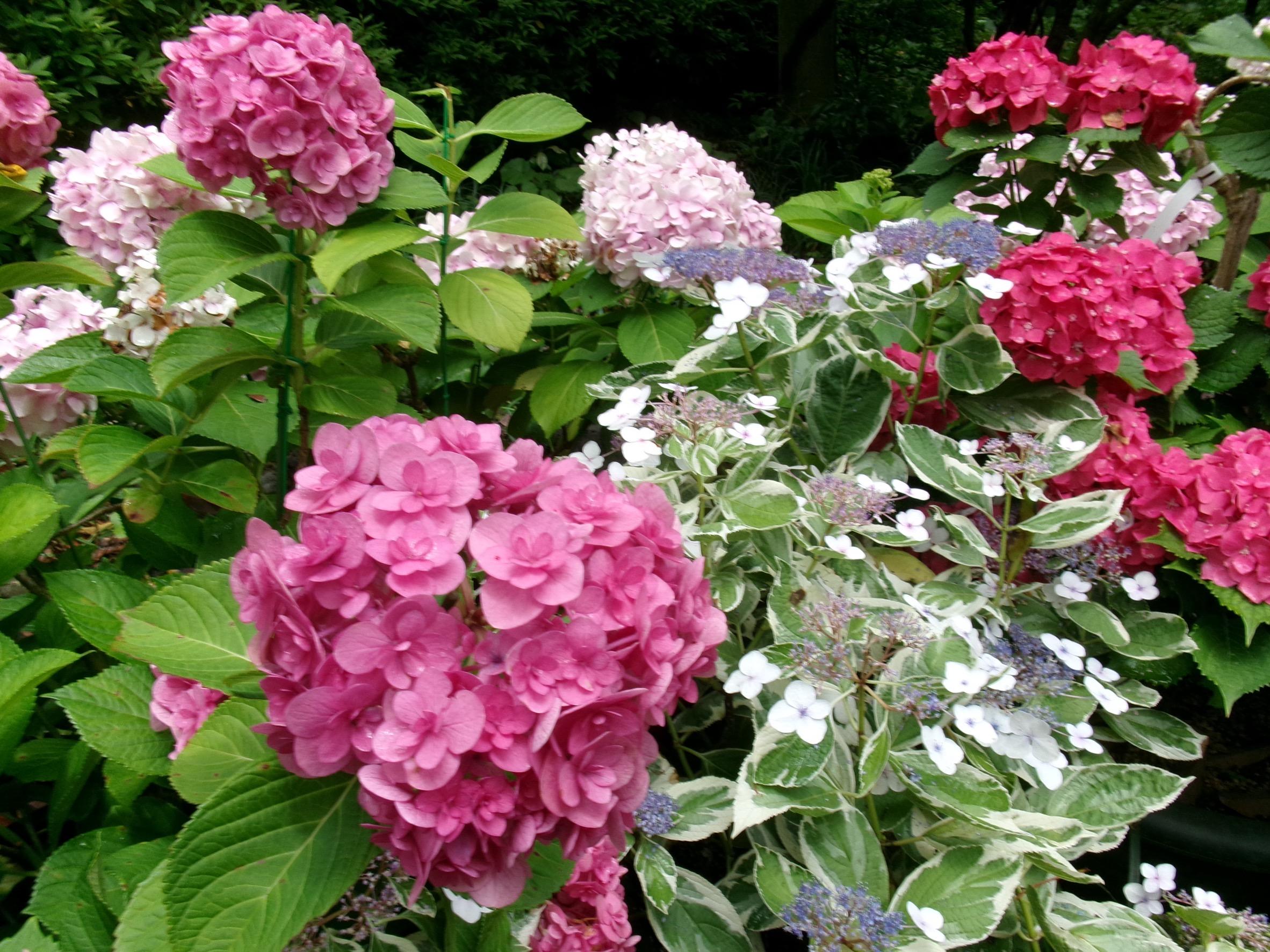
Next, we went to Camellia Hill. At Camellia Hill, over 6,000 camellia trees of 500 varieties are planted, including the world’s largest camellia flowers, the earliest-blooming camellias, fragrant camellias, and more. In addition to camellias, there’s also an arboretum with trees like palm trees. Around this time, colorful hydrangeas were in bloom, and there were lots of photo spots throughout the grounds. It’s also a place where Juwon and Yujeong enjoyed a date on the popular Korean variety show “Transit Love 3,” making many viewers’ hearts flutter. While sightseeing around Jeju Island, there were places where hydrangeas hadn’t bloomed yet, but here they got plenty of sunlight and seemed well maintained, so they were blooming beautifully. On the taxi ride back, I spoke with the driver in Korean. My Korean is clumsy, but they complimented me and said I was good. According to the driver, in the past there were many Japanese tourists visiting Jeju Island, so they learned Japanese in high school, but now there are more Chinese tourists, so people learn Chinese instead. My language institute teacher also said, “There are many Chinese people living on Jeju Island.” The driver said they learned Japanese as a student, and although they’ve mostly forgotten it, they can still understand a little. We got dropped off at Dongmun Market and bought dinner from street stalls. We ate a black pork roll, dakgangjeong, and rice balls with abalone. For the black pork roll, there were sauce options like spicy, teriyaki, and (I forgot the name of the other one), and I chose the recommended spicy, but it was a bit hot, so I ended up eating it while drinking water.
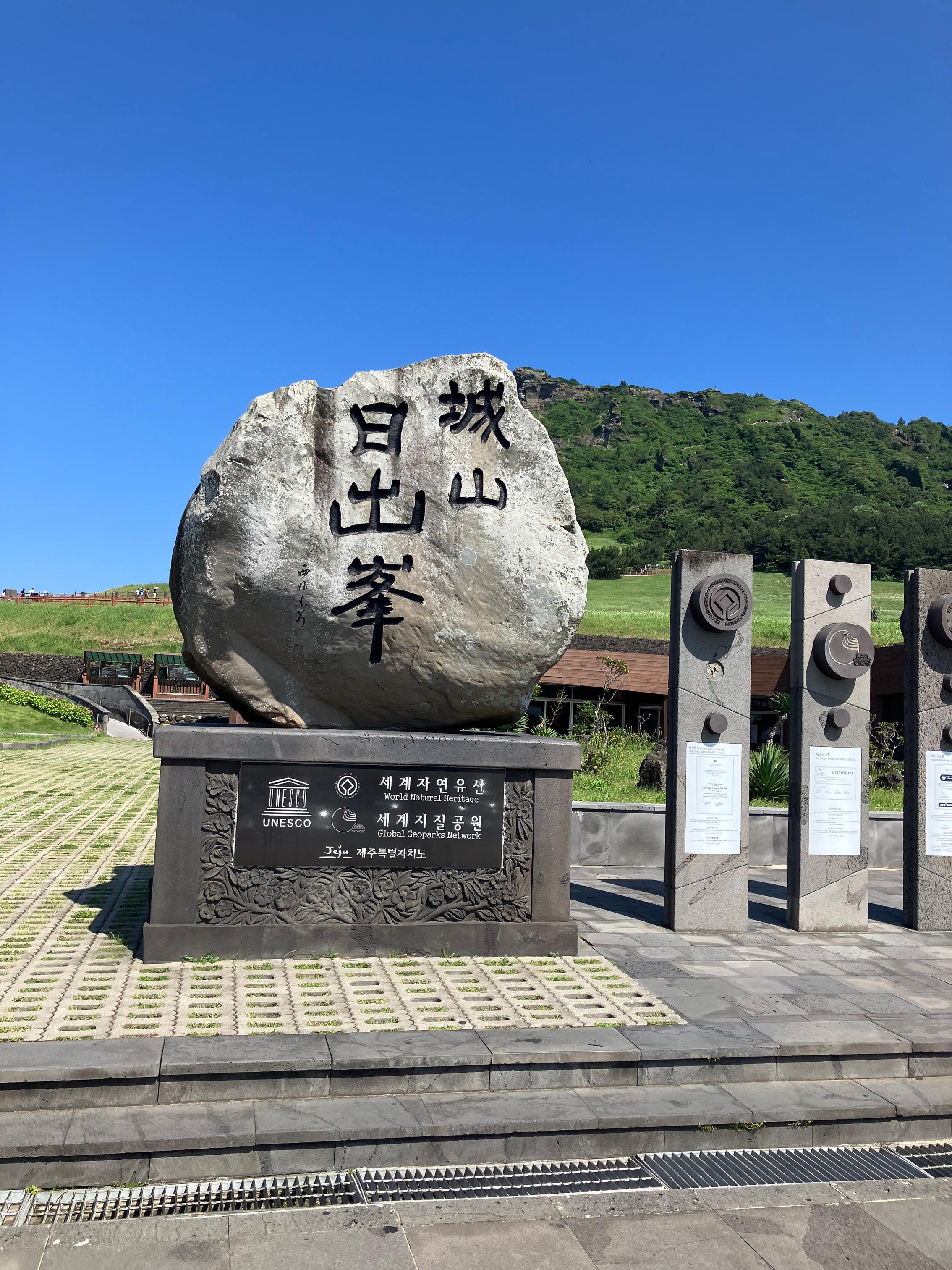
On another day, we also went to Seongsan Ilchulbong, Manjanggul Cave, Jeju Folk Village, and beaches. There were days when we toured individually by taxi, but getting around is still tough no matter what, so I think using a tour is efficient and also better financially. Jeju Island had such beautiful, clear seas, it was a gorgeous place!! If I get the chance to go again, I want to hike Hallasan.