



Trip to Korea - Hwaseong Fortress

Haneul
19 hours ago
I still remember the first time I caught sight of the ramparts of the Suwon Hwaseong Fortress from the bus heading to Suwon. Something about the silhouette of those stone walls winding along the hillside instantly made me want to get off and explore. That day, with no real plan, I discovered one of the most impressive sites I have visited in Korea.
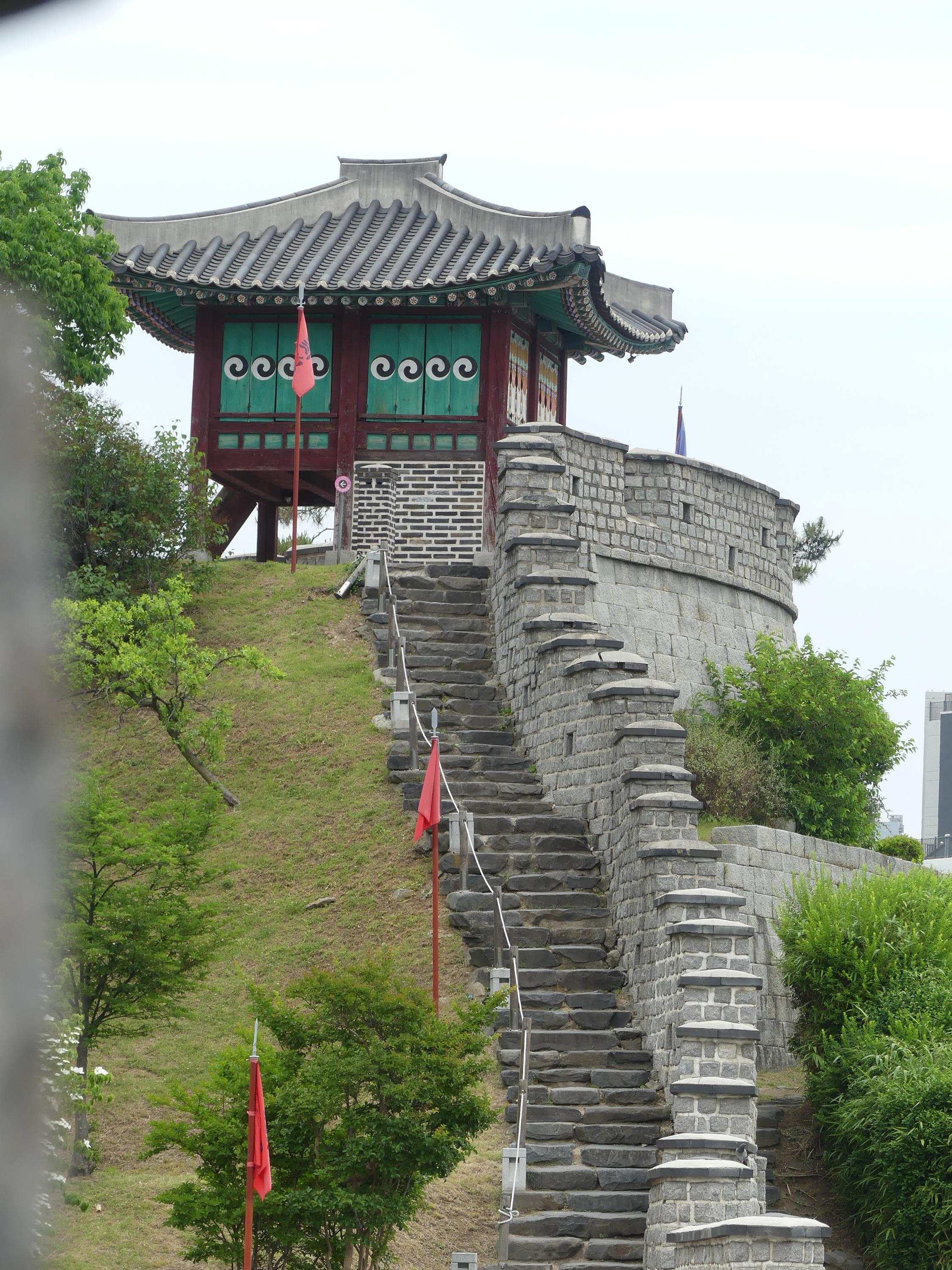
A few details about the fortress
Listed as a UNESCO World Heritage site since 1997, Hwaseong is one of the best-preserved fortresses on the Korean Peninsula. It was built between 1794 and 1796 on the orders of King Jeongjo, the fourth monarch of the latter half of the Joseon Dynasty. The king wanted both to honor his father, Crown Prince Sado, who died tragically, and to establish a new capital capable of rivaling Seoul.
The project mobilized tens of thousands of workers and called on the brightest engineers of the time, including Jeong Yakyong, one of the leading thinkers of the Silhak movement, a Korean intellectual current that promoted a pragmatic, scientific approach. The result is a 5.7-kilometer wall that follows the curves of the land with remarkable precision, integrating hills, valleys, and waterways into a coherent defensive complex.
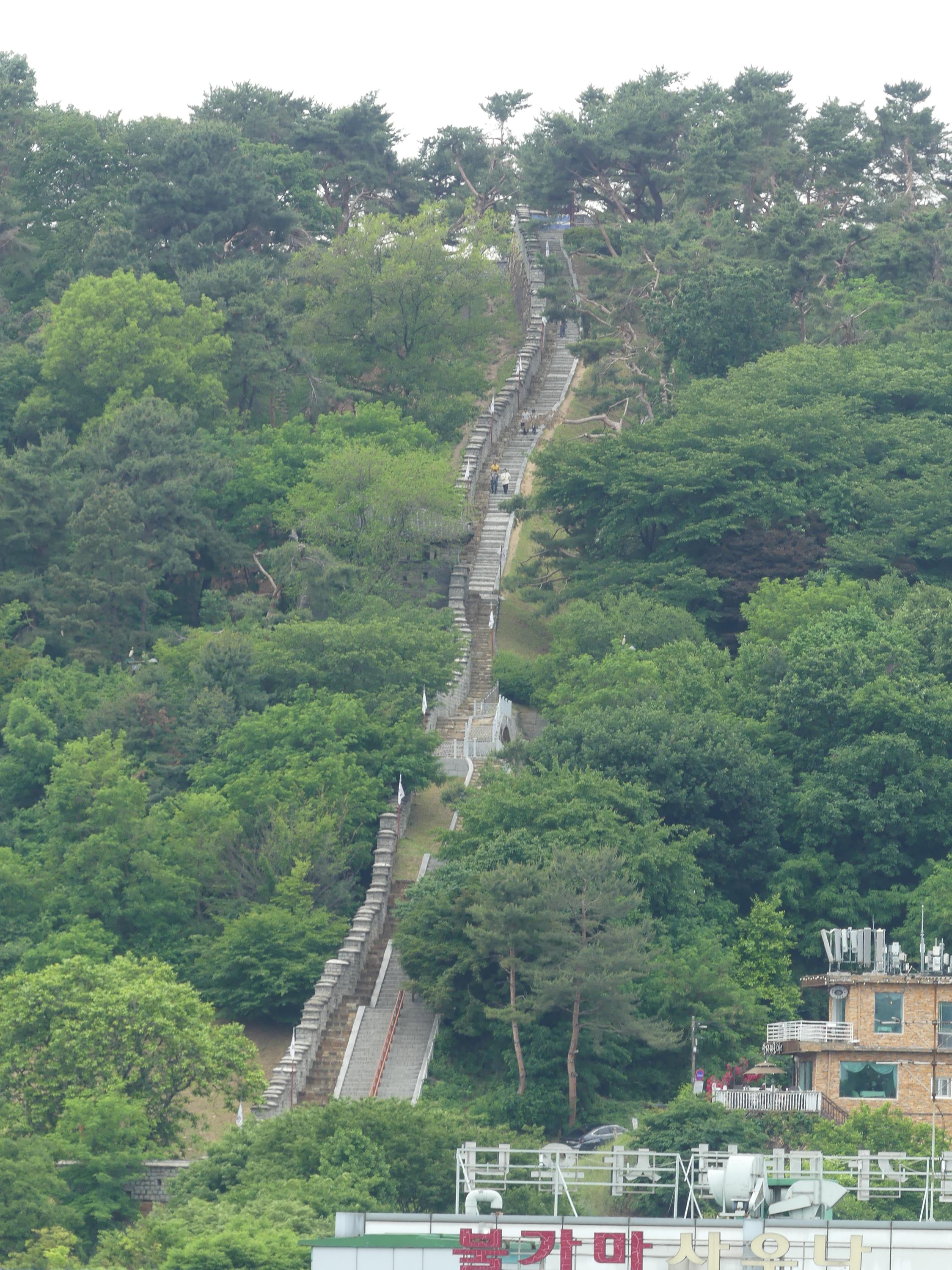
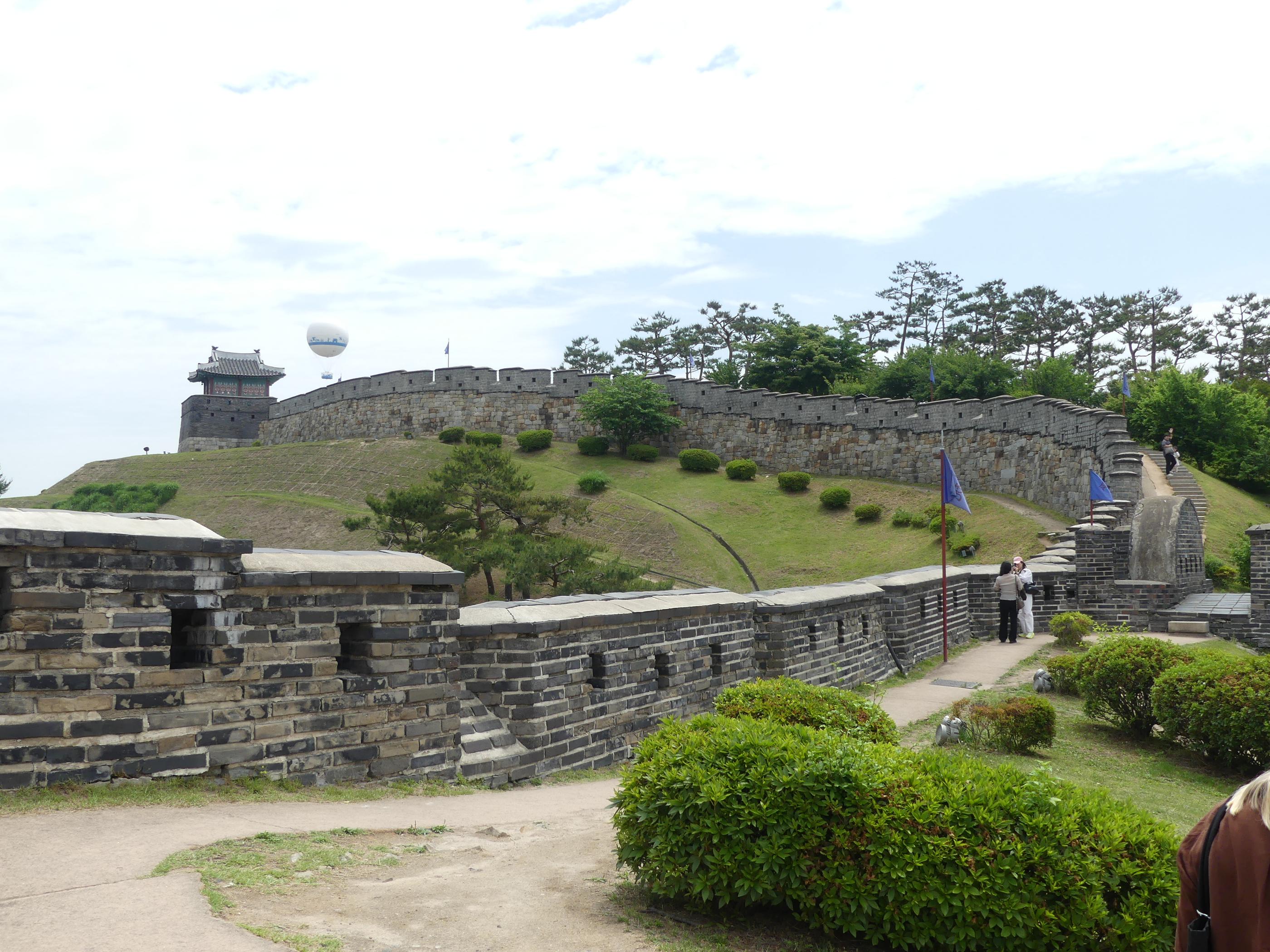
What sets Hwaseong apart from other Korean fortifications of the period is its hybrid character. The architects combined Chinese and Japanese fortification techniques with local traditions, creating a defensive system that was especially sophisticated for its time.
You can see this in the variety of structures along the route: rectangular watchtowers, circular bastions called gongsimdon fitted with openings that allow surveillance and firing in every direction, arrow slits in different shapes depending on the weapons used (bow, musket), secret gates hidden in the wall for surprise sorties, and perfectly designed drainage systems to prevent the foundations from suffering during monsoon rains. Every element has a precise function, and as you walk along the ramparts, you start to read defensive architecture like a language.
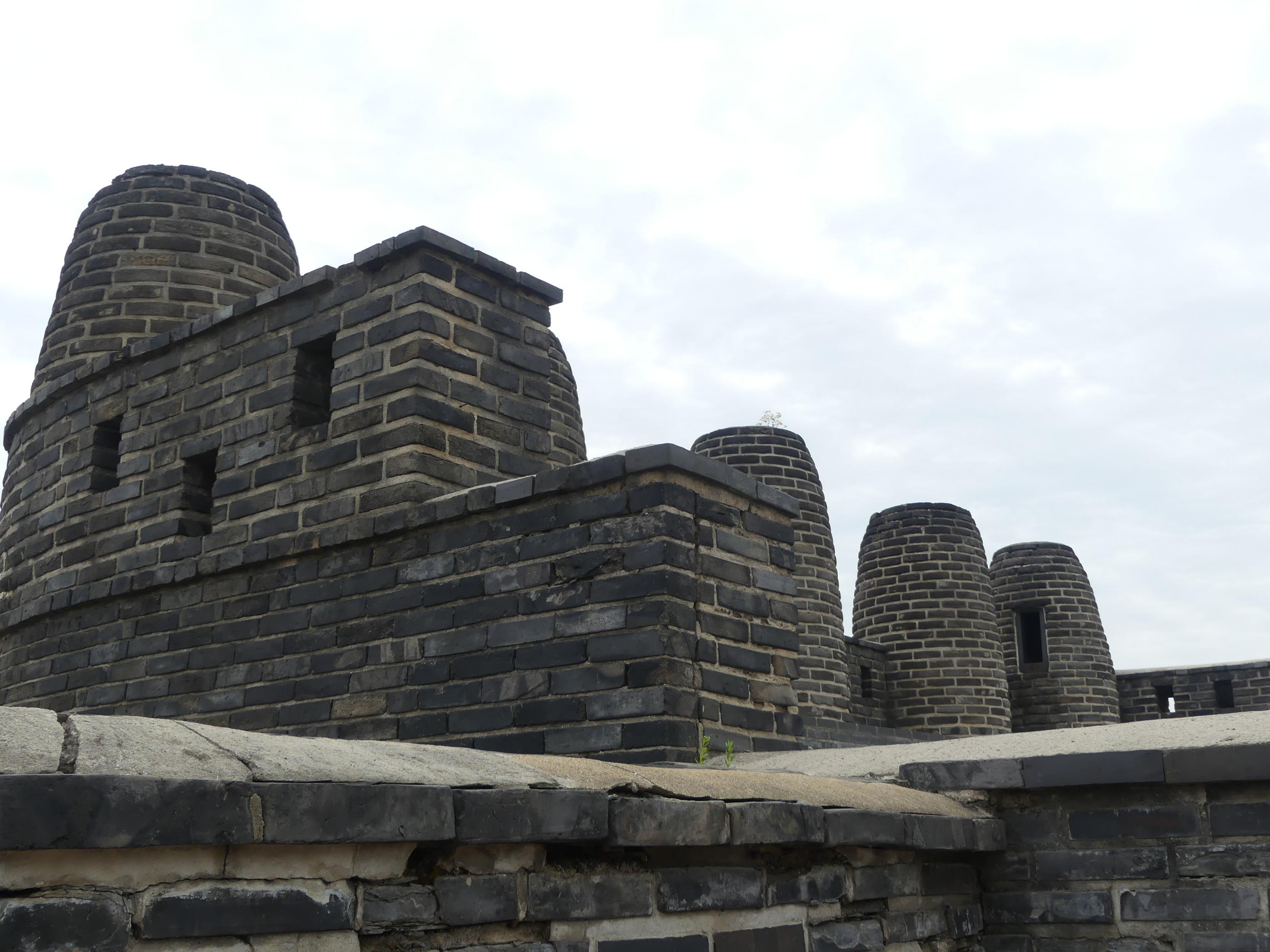
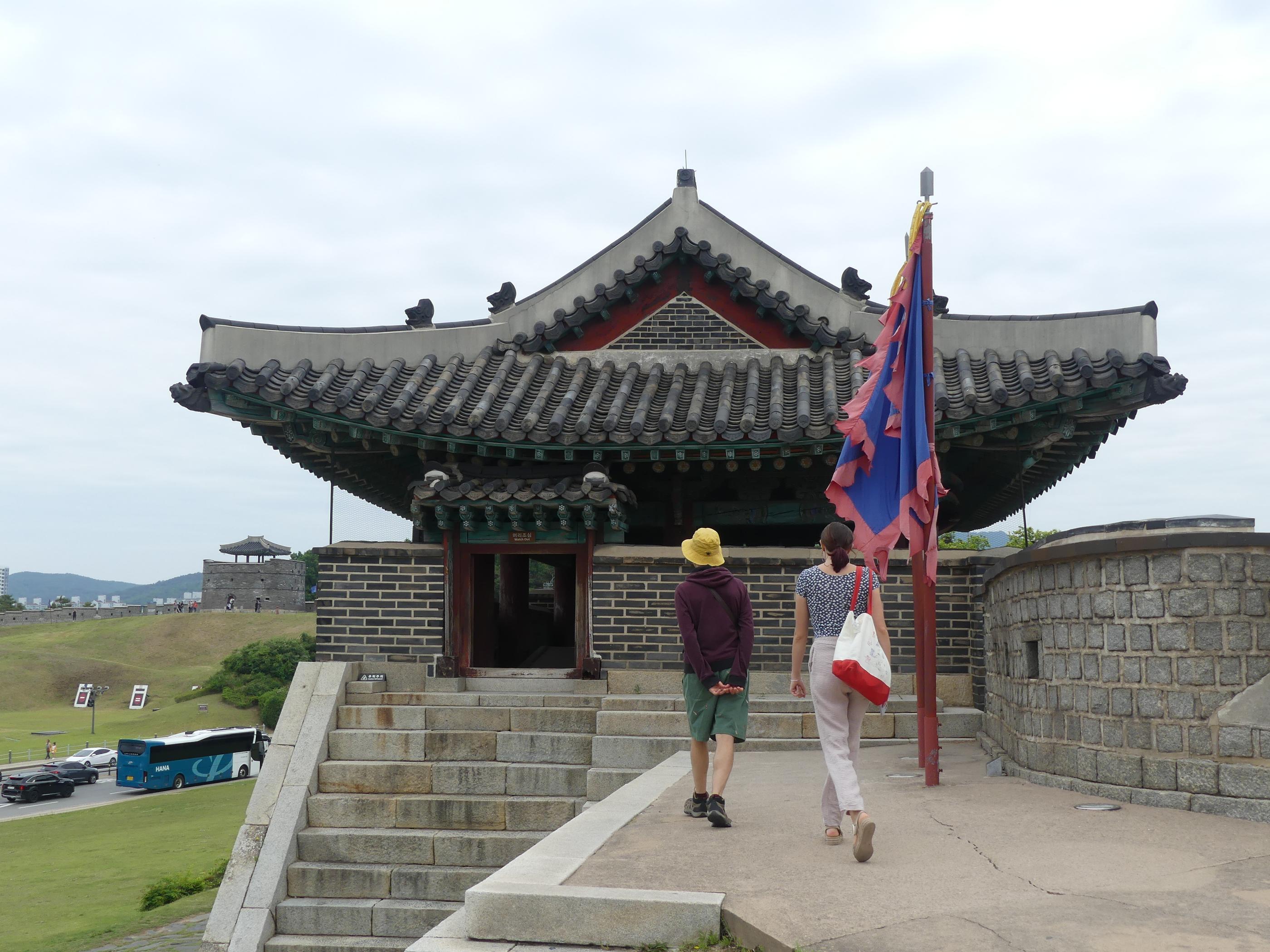
The full route naturally breaks into two sections depending on the terrain.
The western section runs alongside residential areas and offers a striking contrast between the ancient stone walls and Suwon’s modern apartment blocks. It’s a strange and fascinating urban experience, where you are literally walking between two eras.
The eastern section, on the other hand, climbs along the hillside and offers open views over the entire city. This is where you will find the most photogenic stretches and the most architecturally interesting parts.
The route
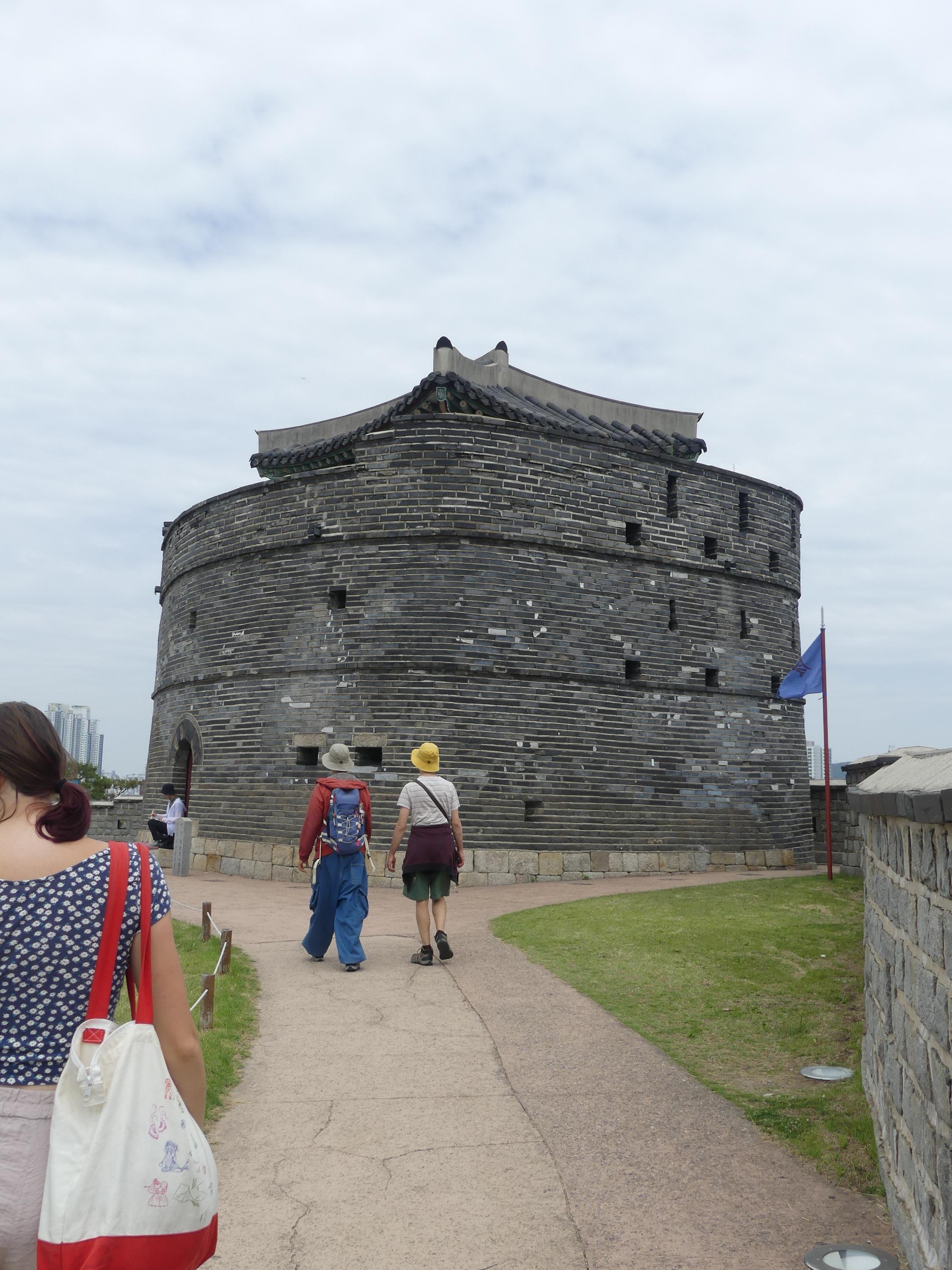
I started the walk heading up toward the northeast, and reached Dongbuk gongsimdon, one of the fortress’s best-preserved and most iconic watchtowers. It’s a two-story circular tower, pierced with dozens of openings in different shapes, set on a massive stone base. From afar it almost looks like a European medieval tower, but up close you can see the uniquely Korean sophistication of its design. The openings are not decorative, each shape corresponds to a type of weapon and a specific firing angle. This is where I spent the most time, studying the details and walking around the structure to understand its logic.
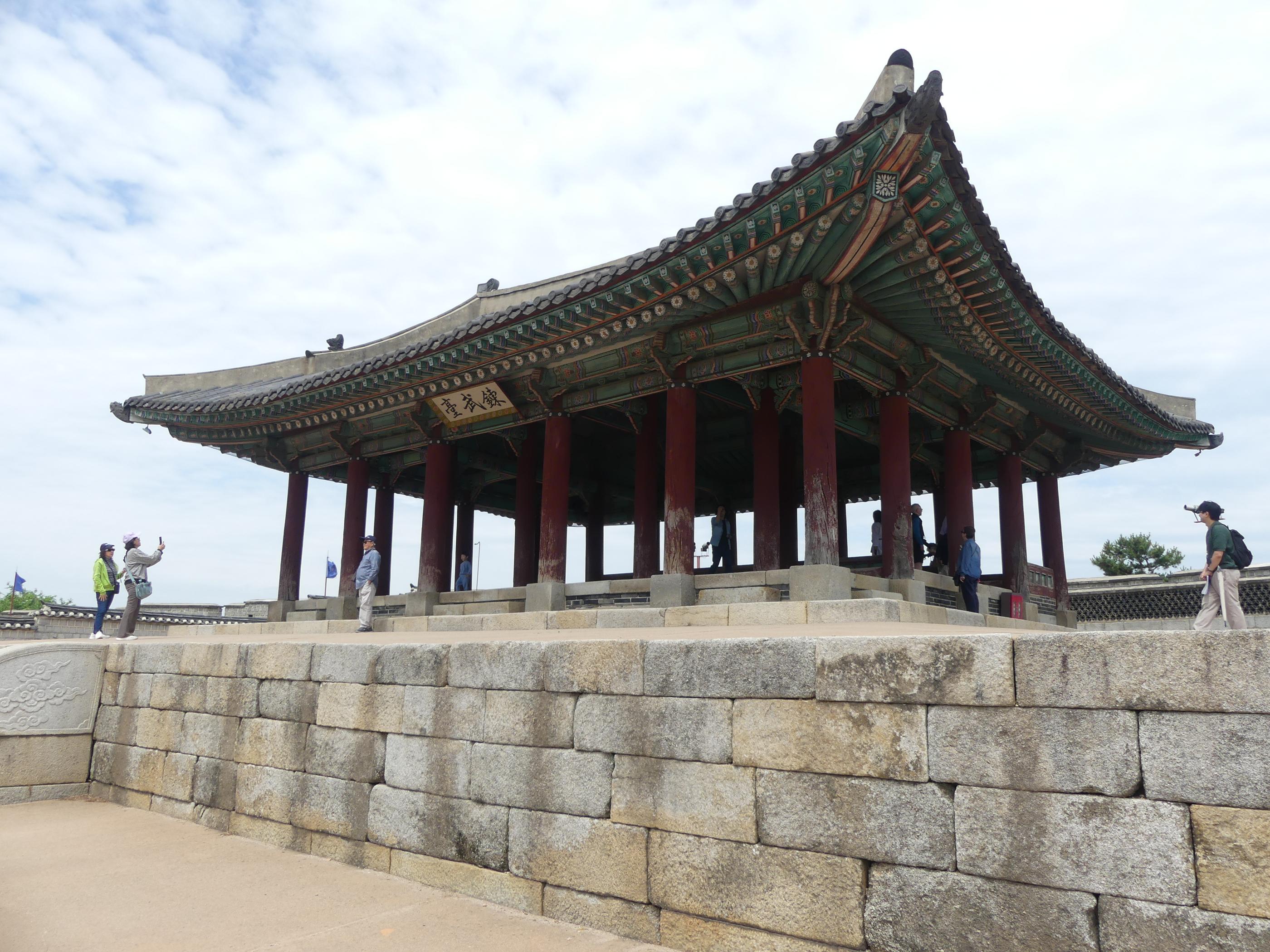
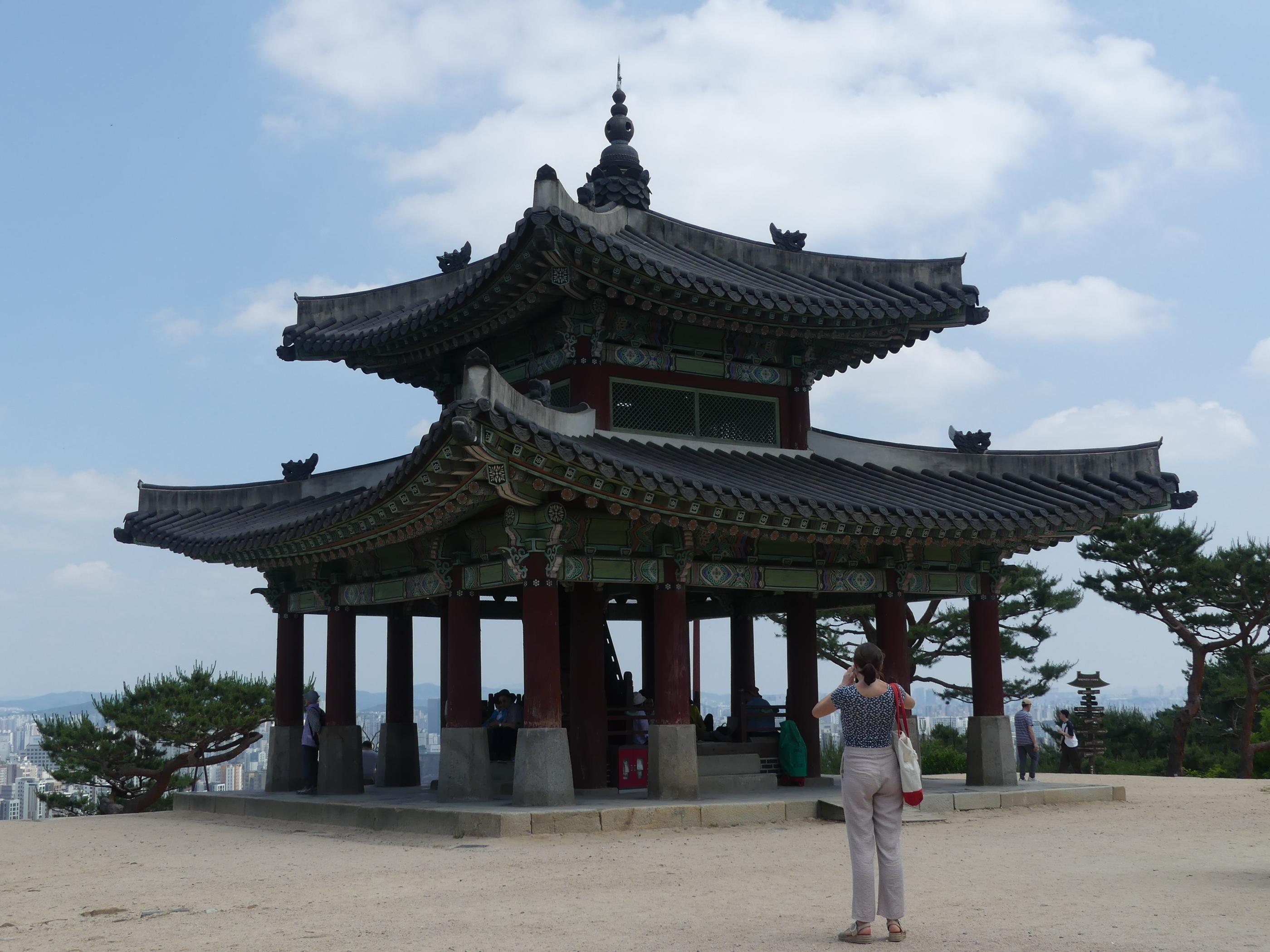
Continuing north, you arrive at Seojangdae, the fortress’s military command post, perched at the highest point of the route. It’s a large wooden pavilion on a stone platform, where the general could survey the entire area and coordinate the defense. The view from here is outstanding, on a clear day you can see the full expanse of Suwon and, on the horizon, the first outlines of Seoul. It’s also the perfect place to take a break, sit on the steps, and take in the sheer scale of what this fortress represents.
The descent toward the west follows sections of wall that have been especially well restored, with detailed explanations of the construction techniques. You learn that the stones were cut with unusual precision for the time, that some parts of the wall incorporate blocks of different sizes depending on their position in the structure (the foundations in cut stone, the upper parts in smaller stones to absorb shocks), and that the whole complex was built in barely two years thanks to the use of a hydraulic crane invented specifically for this project.
The fortress suffered significant damage during the Korean War, especially during the bombings of the 1950s. A large part of what you see today is the result of restoration work carried out since the 1970s, based on the original plans and construction records, which were miraculously preserved in a document called Hwaseong Seongyeok Uigwe. This record details every expense, every material, every worker involved in the project, an exceptional historical source that made an extremely faithful reconstruction possible.
Practical information
How to get there : from Seoul, take Subway Line 1 (toward Suwon or Cheonan) to Suwon Station. The trip takes between 50 minutes and 1 hour 10 minutes depending on the train type. From Suwon Station, Paldalmun Gate is a 15 to 20 minute walk toward downtown, or you can take a local bus (including lines 11, 13, and 36). By taxi from the station, allow about 5 minutes and 4,000 to 5,000 won.
Recommended duration : allow at least 2 hours for a quick tour of the highlights, and more like 3 to 4 hours to walk the full ramparts at your own pace with photo stops and time to read the information panels.
Clothing and gear : comfortable walking shoes are essential. Some sections, especially around Seojangdae, include fairly steep climbs with uneven stone steps. In summer, bring sunscreen and a bottle of water, shaded areas are rare on the higher parts. In winter, the stones can be slippery.
Best season : spring (late March to early May) for cherry blossoms, and autumn (October to November) for fall colors are the two best times. Summer is hot and humid, but the fortress is less crowded on weekdays. Winter has a stark, very photogenic atmosphere, especially under snow.