



Trip to Korea - Celebrating Buddha's Birthday

Haneul
a day ago
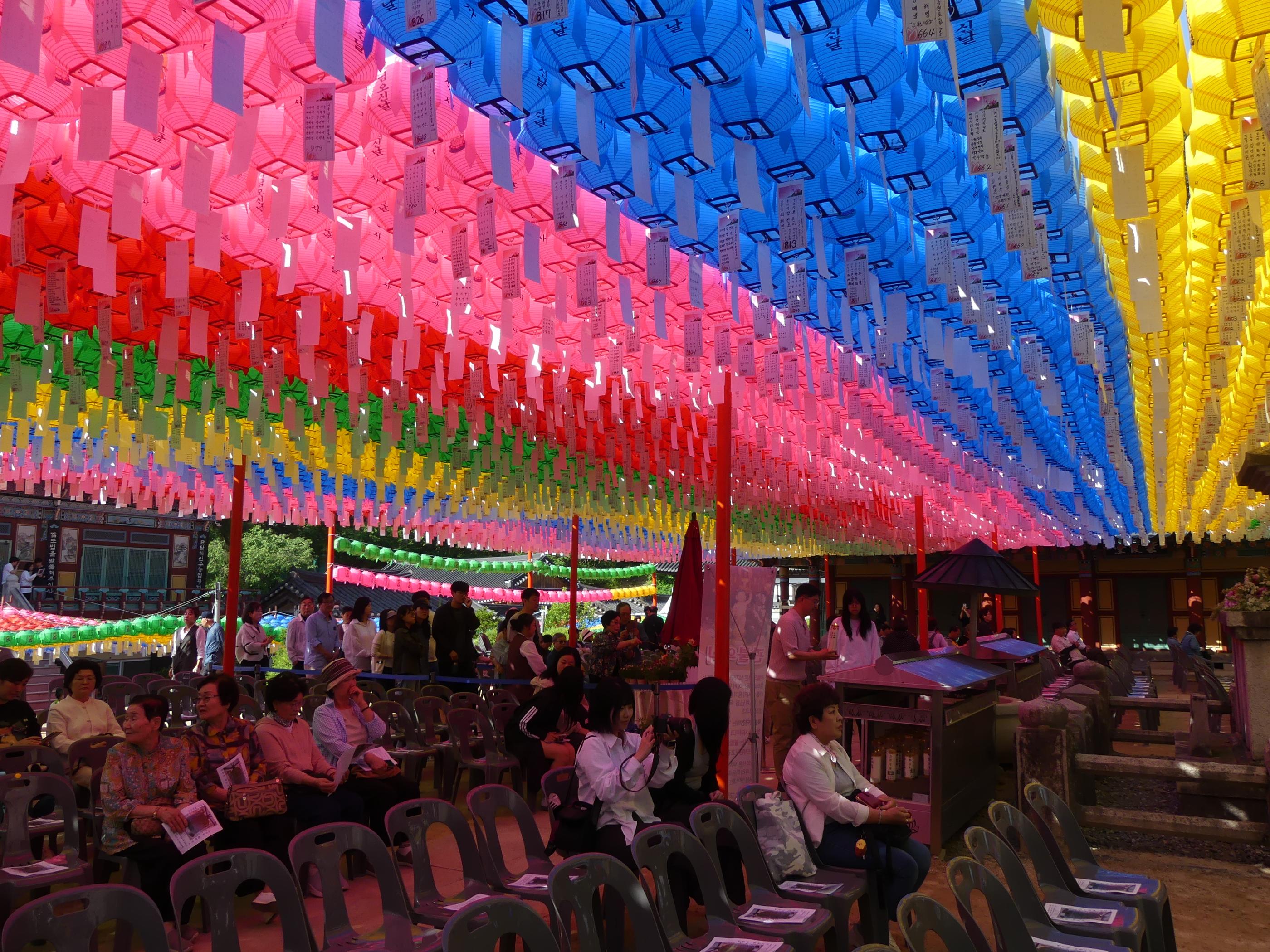
Some trips change you. And my visit to Bongseonsa Temple for Buddha’s Birthday is the perfect example! Hundreds of paper lanterns hanging between centuries-old trees, the scent of incense mixed with the forest air of Namyangju, and a feeling of absolute serenity I had never experienced before in Korea.
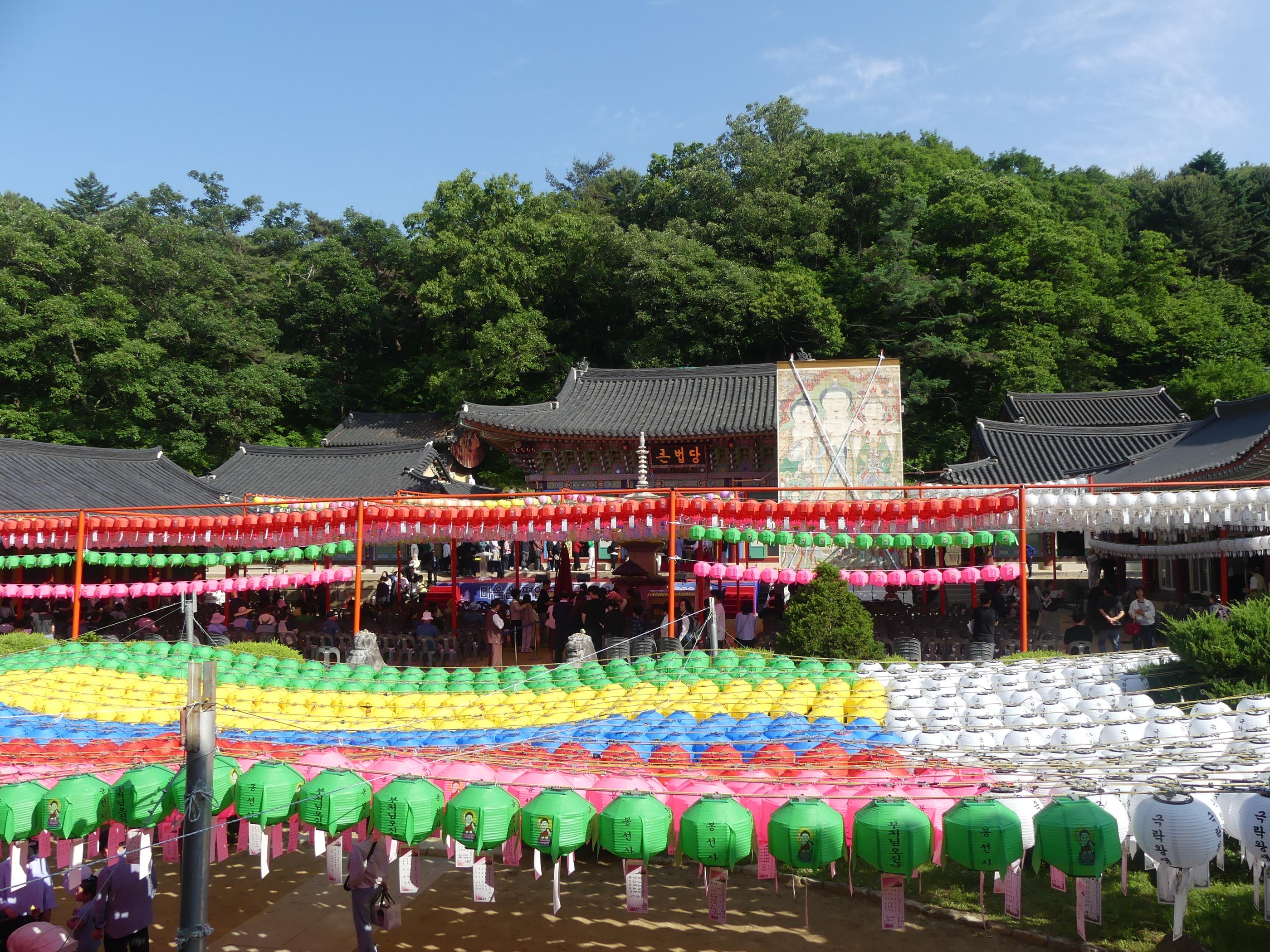
Bongseonsa Temple (봉선사) is located in Namyangju, in Gyeonggi-do, about an hour from Seoul. Getting there by public transportation is surprisingly easy, you just need to take Line 4, toward Onam. Then take a local bus, and you’ll arrive right at the temple entrance!
For Buddha’s Birthday, special shuttle buses are often organized from major stations. I recommend checking the temple’s announcements on their official website or on the Kakao Maps app a few days before your visit, because these services are not always the same from one year to the next.
The ceremony and the atmosphere of the day
Bucheonim Osinnal (부처님 오신 날) is a national public holiday in Korea. At Bongseonsa Temple, the celebration begins well before dawn with the first prayers, but most visitors arrive in the morning to attend the day’s ceremonies.
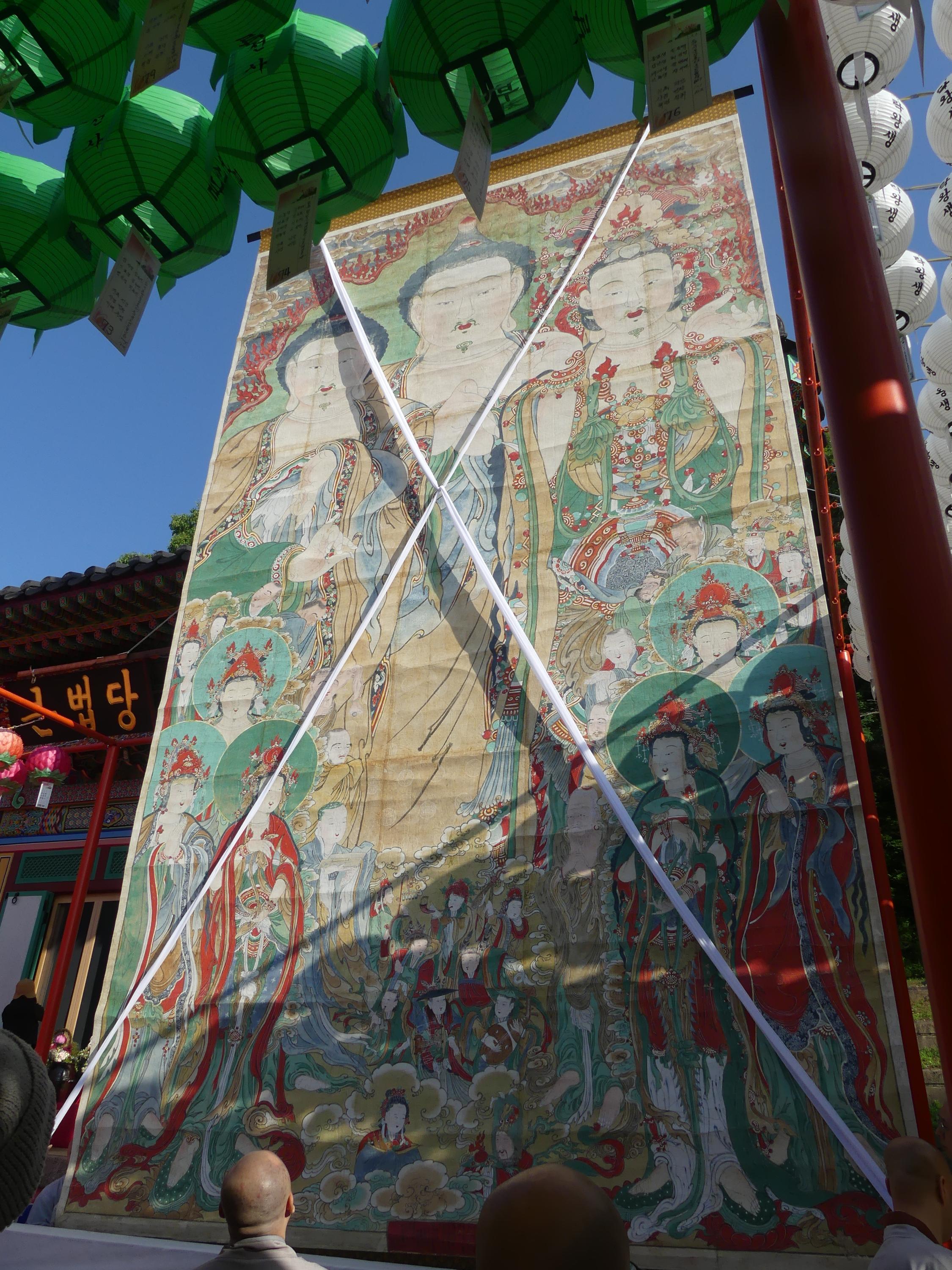
Among everything I discovered during my visit to Bongseonsa Temple for Buddha’s Birthday, it’s probably the large outdoor Buddhist painting, called tangeunghwa (탱화), that left the strongest impression on me.
Hung on the exterior facade of the main hall, this enormous painted canvas depicts the triad of Medicine Buddha (Yaksa) surrounded by his bodhisattvas. The colors, though softened by centuries, still shine with deep intensity, cobalt blue, burgundy red, malachite green, and gold. It was commissioned by the royal family during the Joseon period, and today it is classified as a National Treasure.
On Buddha’s Birthday, the large painting is unfolded outdoors in front of the main hall so that all devotees can pay their respects, a striking sight that blends sacred art with the open sky.
At Bongseonsa Temple, a small statue of the newborn Buddha is placed at the center of a shallow basin. It represents Siddhartha Gautama just after his birth, according to tradition, the child took seven steps, and with each step, a lotus flower bloomed beneath his feet.
Devotees line up, sometimes for long minutes, to approach the basin. Each person takes a small ladle, dips it into the water, and slowly pours it over the statue’s shoulders. This gesture is both an offering and a purification, by purifying the statue, you purify yourself. It symbolically washes away dark thoughts, grudges, and the burdens of the past year.
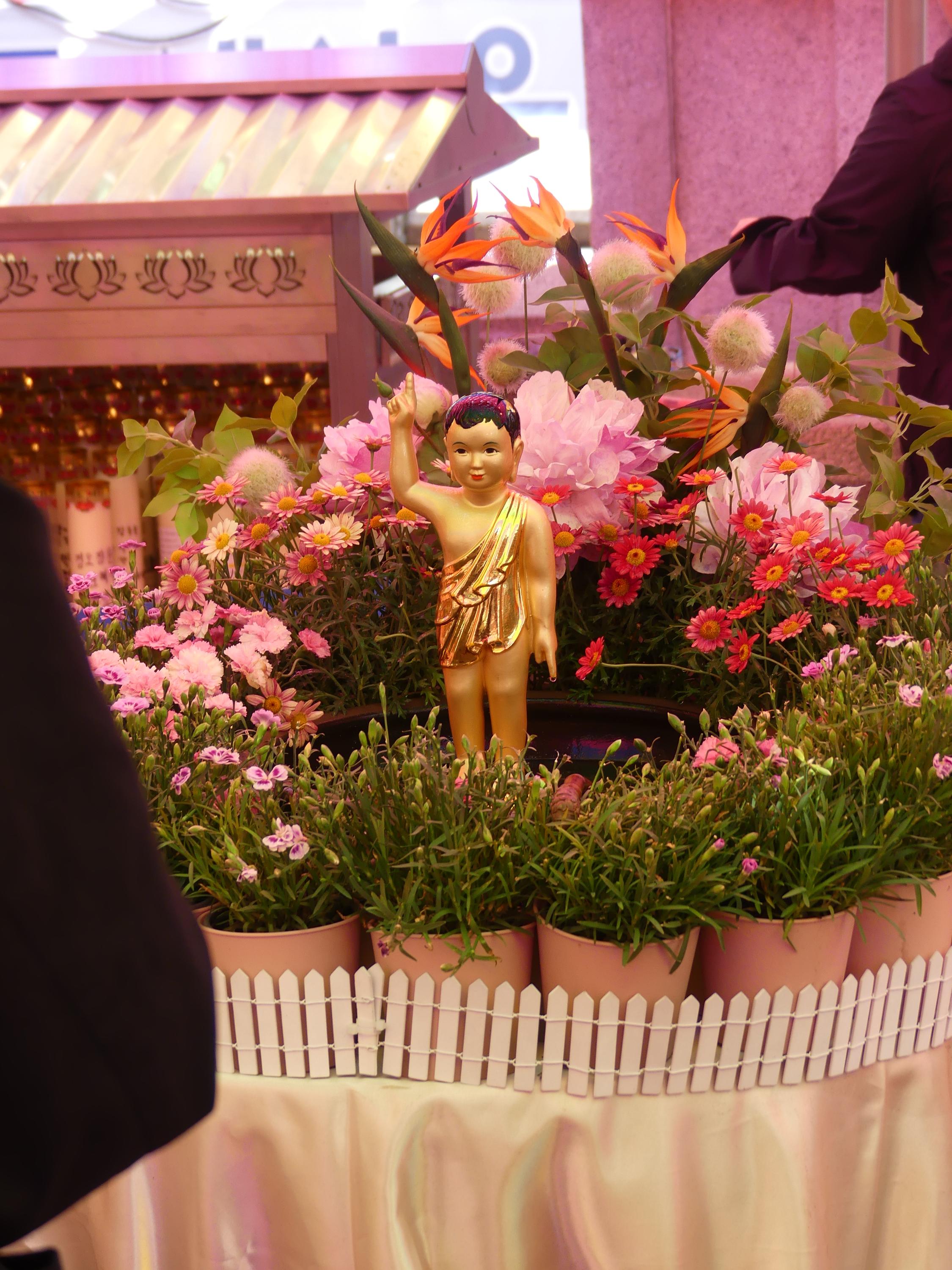
What stays with you is the silence surrounding this ritual despite the crowd. Each person pours their water with remarkable slowness and care, as if this simple act were, for a few seconds, the most important thing in the world. I watched children, elderly couples, young women in pastel hanbok, all equally absorbed in front of this small golden statue. Korean Buddhism has that rare gift of making the sacred accessible to everyone, without hierarchy or exclusion.
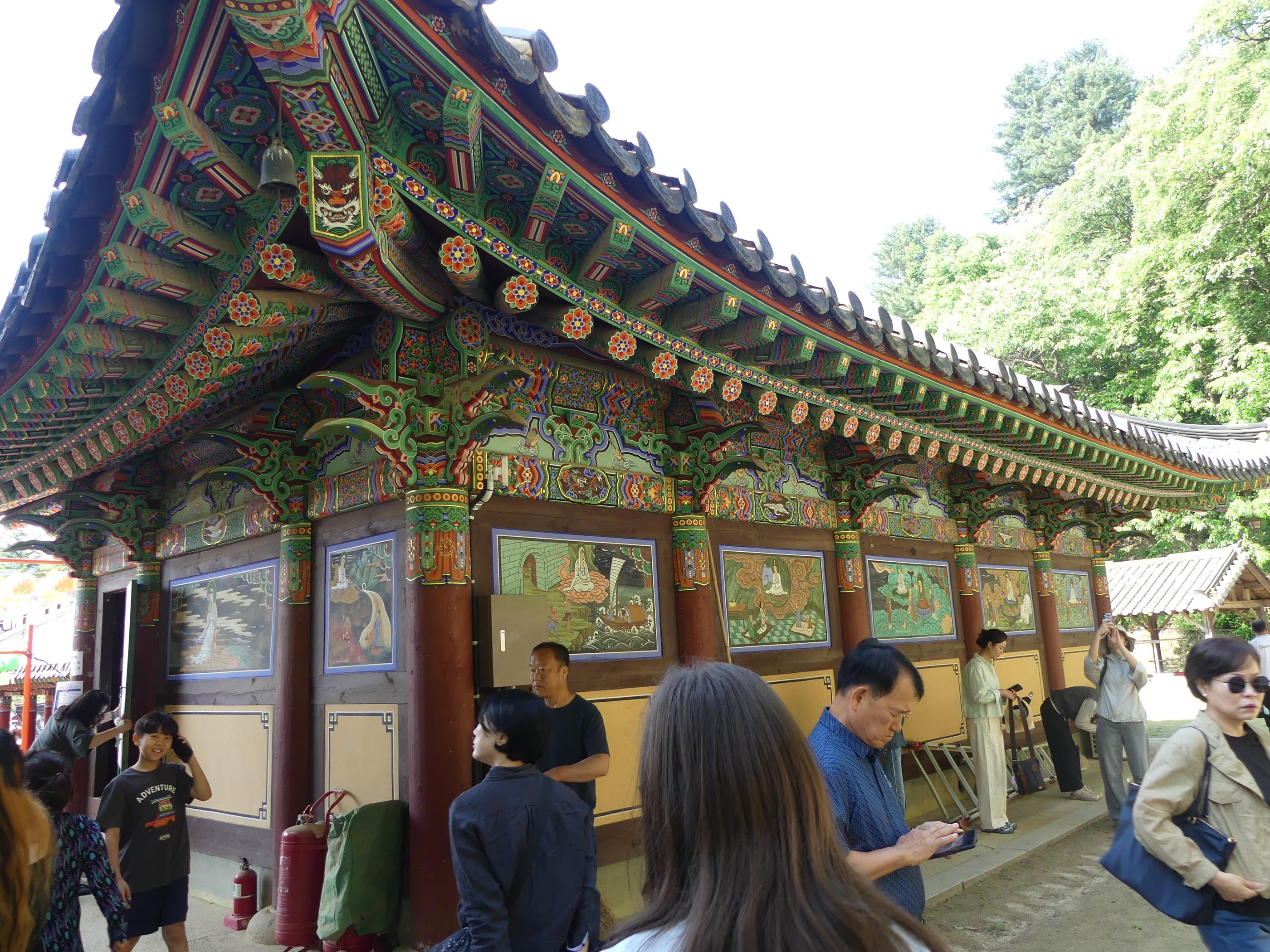
Whether you’re Buddhist or simply curious, this celebration touches something universal, the beauty of sharing, peace, and contemplation.
I truly hope you’ll one day have the chance to experience it with your own eyes, to lose yourself in a procession of colorful lanterns and feel that special softness in the air on that day. With this event, South Korea offers one of its most beautiful gifts, and it would be a shame to miss it!
✅ Must-know info
Date: Bucheonim Osinnal falls on the 8th day of the 4th lunar month, usually in May on the Gregorian calendar. In 2026, it was May 24.
Outfit: Dress modestly (shoulders covered, avoid very short shorts). Wear shoes that are easy to take off.
Cameras: Photography is allowed outdoors, but forbidden during religious ceremonies. Please respect this rule.
Crowds: Arrive before 10 a.m. for the best photos and the best atmosphere. In the afternoon, the temple can get very crowded.
Language: There is little signage in English, so ideally, download Naver Maps in advance.