



Smile Pro

Nicole
2 months ago
I had been wanting to get LASIK for a while, but the price in Taiwan is really expensive. I happened to see on Instagram that Creatrip was holding an information session in Taipei in September with a doctor from Mingmu Eye Clinic, and Creatrip had an exclusive booking discount. Attracted by the price, I decided to go and listen. Mingmu Eye Clinic is one of the clinics certified by Zeiss with 100,000 successful SMILE procedures, and Director Qian was very patient answering questions during the consultation. The staff were also very patient and helpful, so I immediately decided to book the surgery with the director for November.
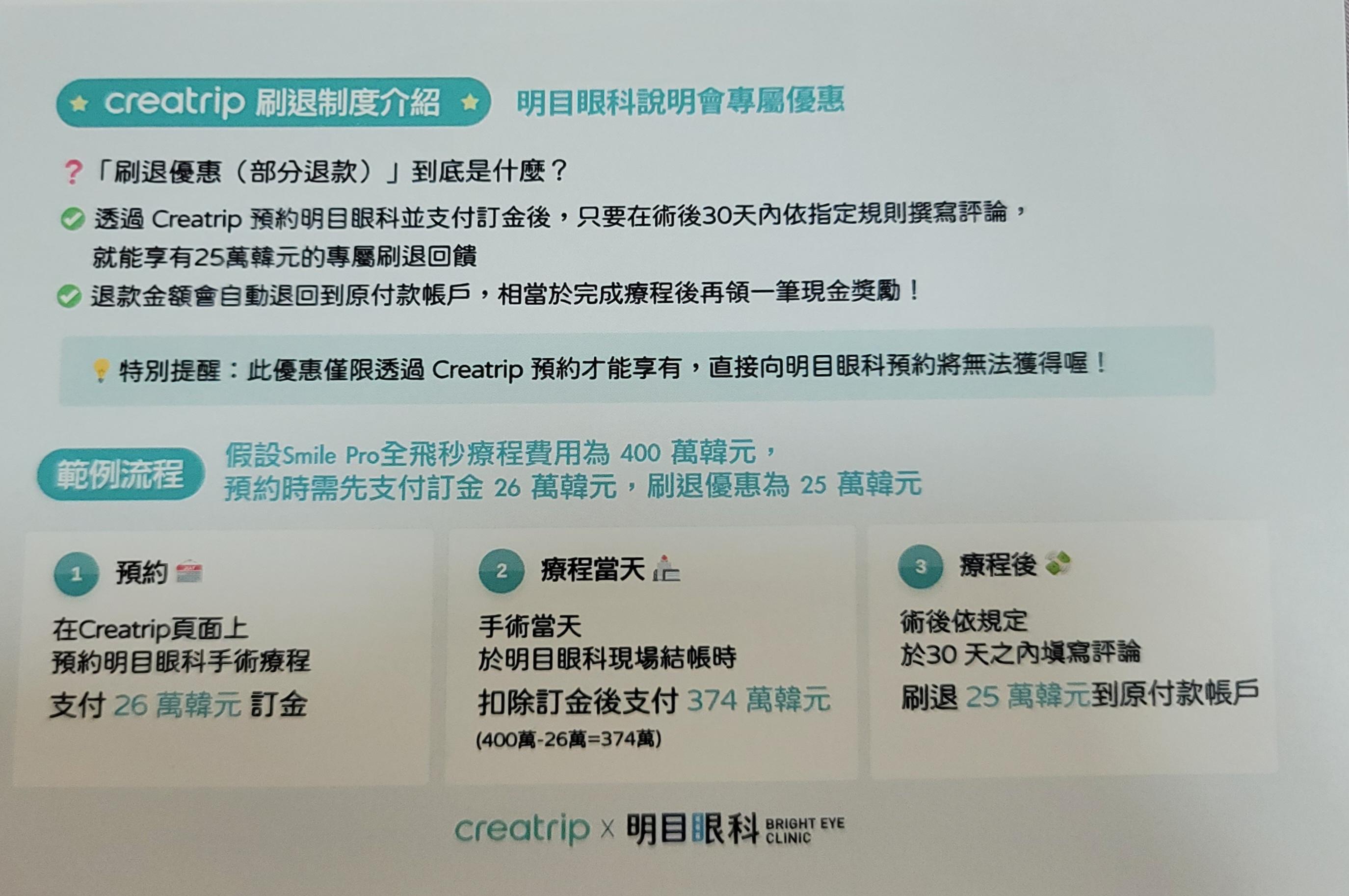
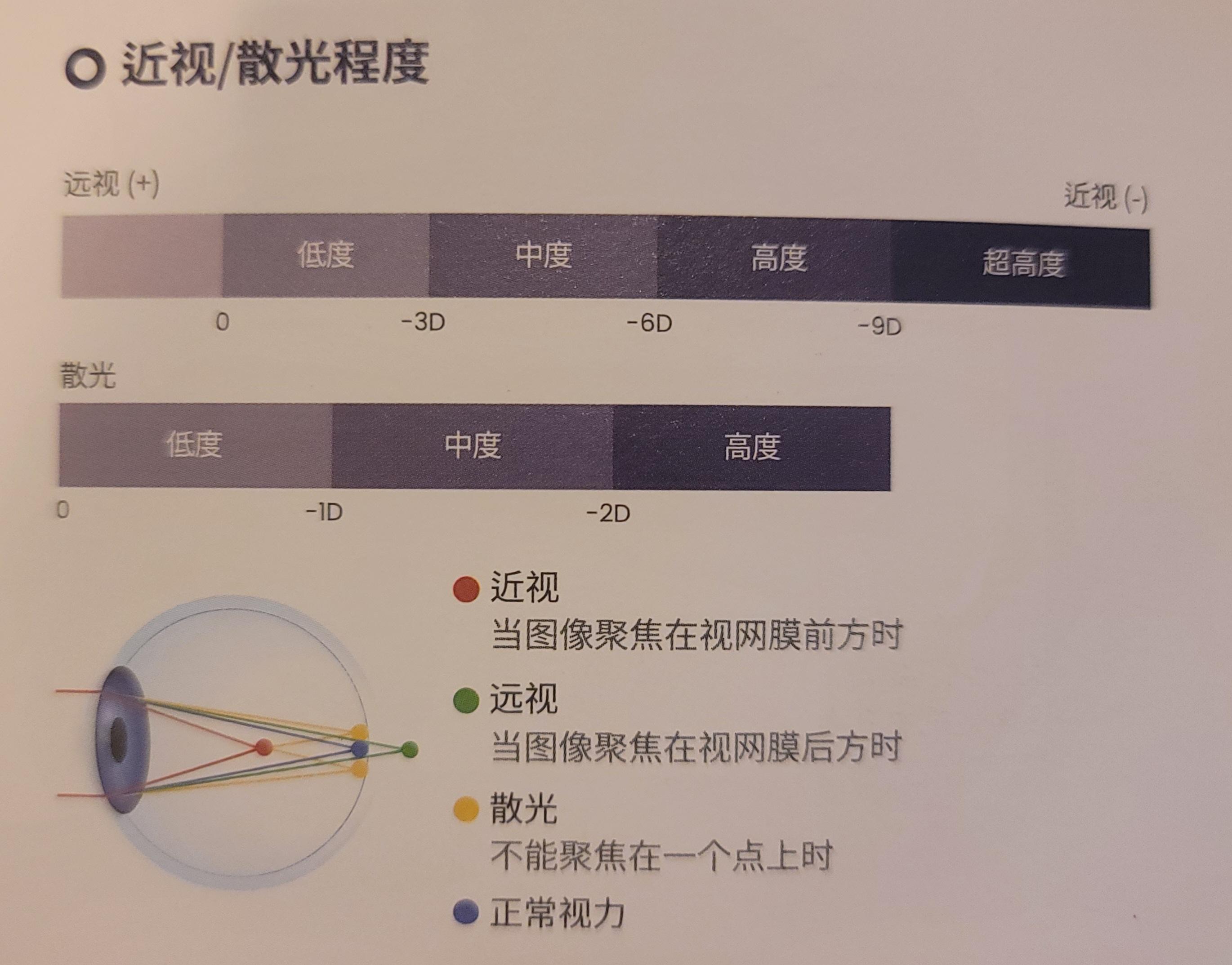
Because there are no actual eye examination data, only that the eyes had about -4.75 diopters of myopia and -1.50 diopters of astigmatism three years ago, after listening to the explanation I went online to look up literature and others’ experiences; I’m mainly considering SMILE Pro and ICL lens implantation surgeries.
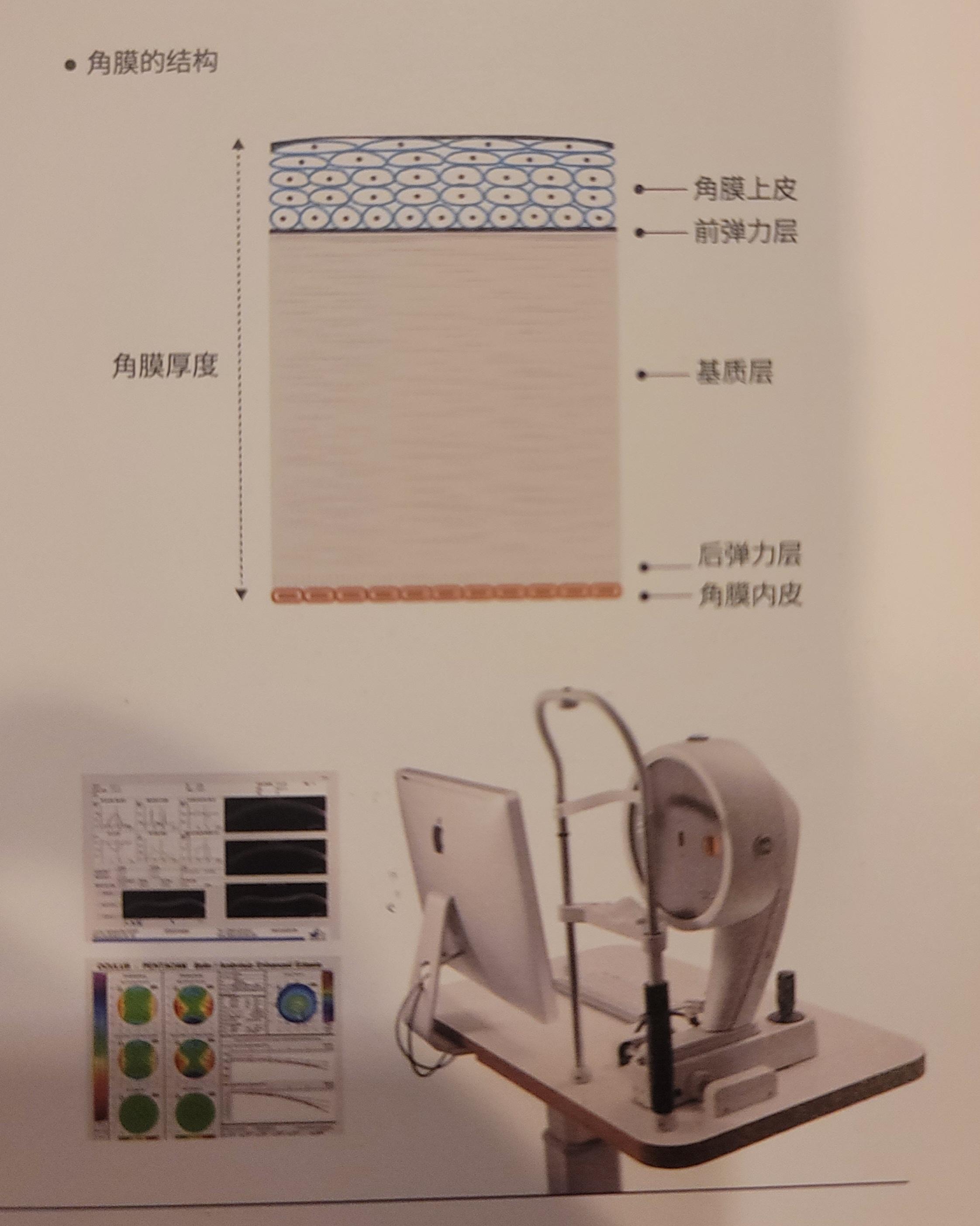
I booked around 9:30 AM for a detailed eye examination. A translator accompanied me throughout. Midway they asked if I wanted a test to check whether the cornea was nutritionally deficient (if there were any dark spots); it involves taking cells and sending them to a lab, which costs an additional 100,000 KRW. The doctor can also usually tell without that test; I chose to have the doctor look first and only do the extra test if there was a problem. The final results showed my corneal thickness was within the normal range; left eye myopia -4.75 with 1.00 cylinder, right eye myopia -4.75 with 1.75 cylinder; all other measurements were normal, just very dry eyes, so I was eligible for the SMILE Pro procedure. During consultation they strongly recommended adding a dry eye treatment (punctal occlusion to retain tears). In the end I was too nervous to stay on the operating table longer and I don’t usually feel very dry, so I chose to just have SMILE Pro. Remember to stop wearing soft contact lenses one week before surgery, rigid lenses one week before, and orthokeratology lenses one month before.
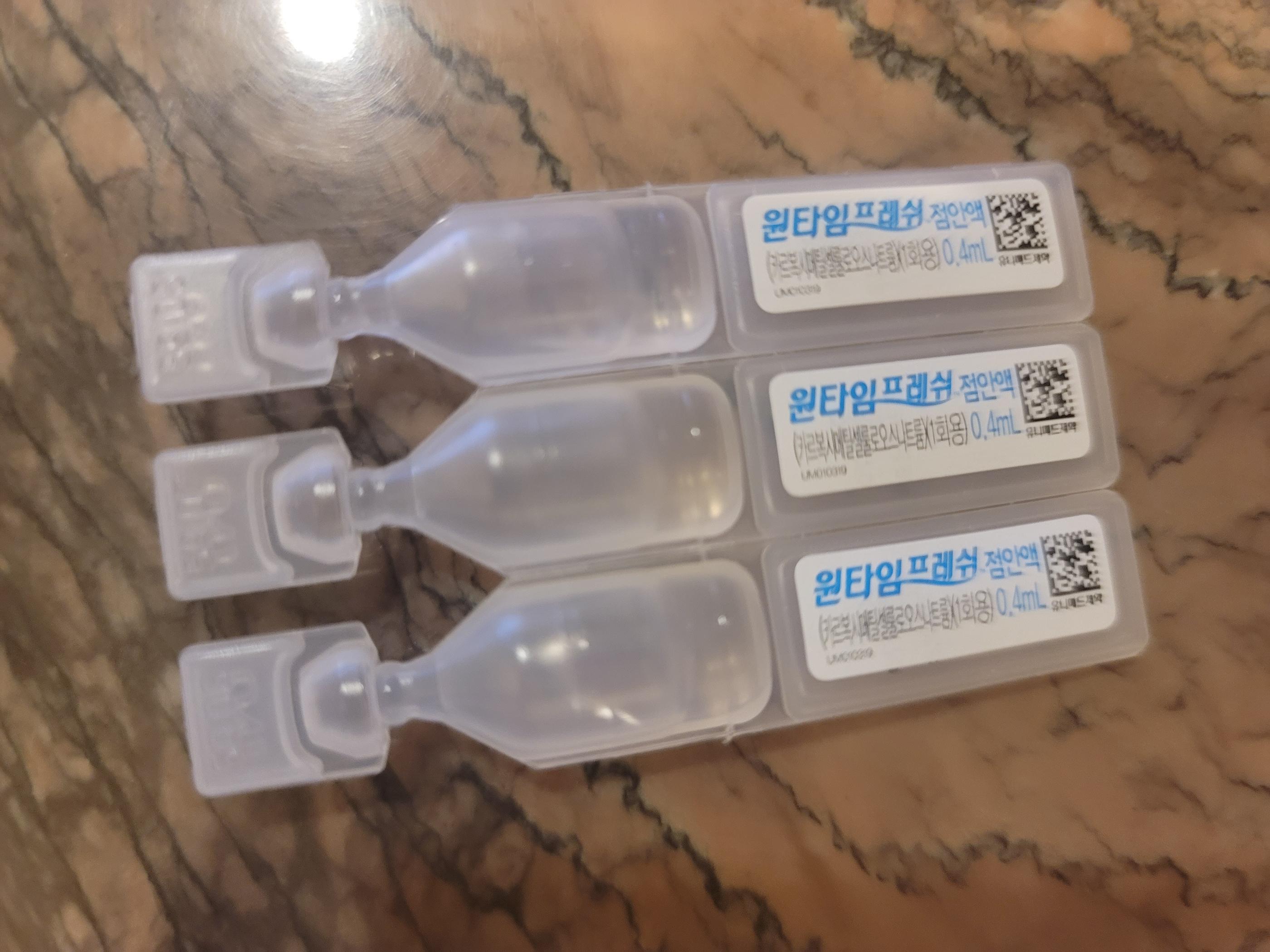
The surgery took about 8 seconds and was over quickly. During the procedure the translator sister kept holding your hand to comfort you, and after it ended the doctor checked again and then you could go. The whole process took about three and a half hours. Right after it was done my eyes were very dry and itchy, the world looked like a heavy fog, and they gave you two boxes of artificial tears to use. After one or two hours when the anesthesia wore off the eyes were very light-sensitive and uncomfortable, but you had to stay up until midnight, so you could only keep using artificial tears. You can shower that day but not wash your hair or rub your eyes, and you can't wear makeup for a week. The next day at the follow-up my left eye was 0.7 and my right eye was 0.5; Director He said it was because my eyes were very dry — if you originally use six bottles you should use eight, and if you originally use eight bottles you should use ten (so cute XDD). It should improve in about three weeks. Filling out the survey got me two more boxes of artificial tears. Later follow-ups cost about 15,000 KRW for the registration fee. On the morning of the second day after surgery things were foggier and harder to see when I first woke up, but using more artificial tears helped a lot. By about the third day after surgery vision was clearer, though it's still recommended not to use screens too much so your eyes can rest. It's been one week after the surgery now and it feels similar to not wearing contact lenses very often.
Finally, I highly recommend considering getting LASIK eye surgery in Korea. The surgeons there generally have more experience, are very friendly, and the cost is significantly lower. I spent a week in Korea this time, which allowed me to travel a bit and ensure my eyes were fine. If you only have the surgery, you can return home the day after the follow-up check. I share this experience for your reference.