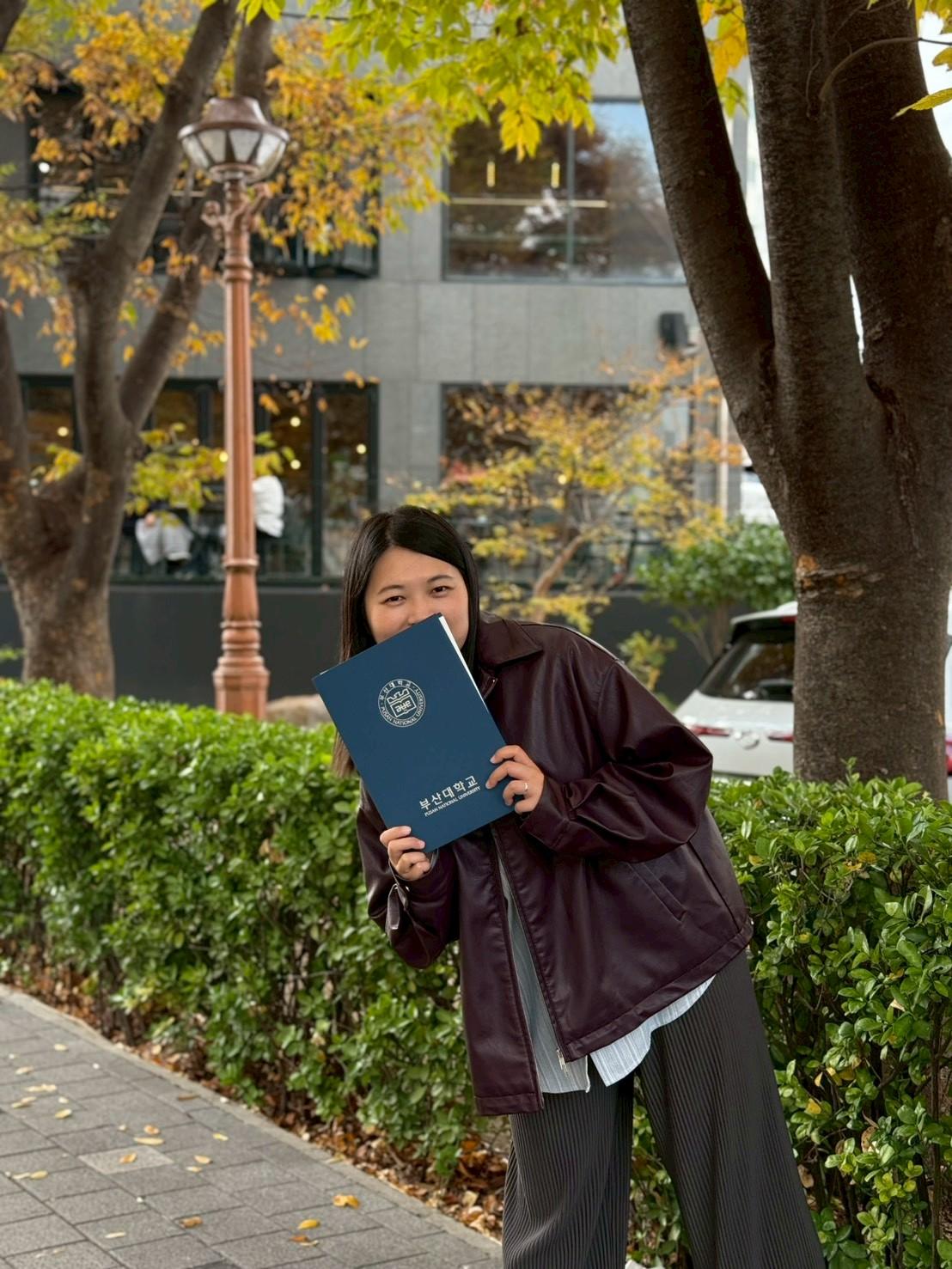



Reflections on the 2025 Busan University Fall Language Program
황이브
9 months ago
At 34, after quitting my job without another lined up, I enrolled in Pusan National University's fall language school program. Beforehand I compared Seoul and Busan language school applications, tuition costs, and whether they offered dormitories, and ultimately chosePusan National University Language Schoolto attendLevel 2—I also highly recommend it for anyone who isn't interested in celebrity fandoms and wants to save on living expenses.
For overall satisfaction, I give 9 out of 10. I’m very pleased with the teacher’s class content and materials, but friends have also encountered other teachers who don’t teach well — it’s rather a matter of luck. I’ve heard teachers draw lots each semester to find out which grade and class they’ll teach.
The only real drawback is that the school's administrative processes are extremely slow; they often wait until the last minute to notify us, or the system isn't set up in time for applications. For example, the buddy program application system was delayed, they didn't clearly explain the process, and I ended up losing my eligibility. But if too few students from Pusan National University apply for buddies, there wouldn't be any buddies anyway. Also, I initially registered the wrong email in the system, so I didn't receive any notifications at first; fortunately, after I wrote to the administrative staff, they fixed it successfully.
Application process
Apply to Pusan National University Language Institute through CreatripNo application feeI think this is great. If you have any questions about application documents and ask customer service, you’ll get a reply by the next day at the latest, and the prompt responses make for a good experience. Below are the items where you may need assistance:
1. Bank balance proof:Go to the bank counterto apply for an English deposit certificate. Remember the certificate will only record the balance up to the day before you go to the bank. If you transferred money from another account, you need to wait until the next day to apply at the bank!
2. Proof of overseas insurance:Because I am only attending the fall term for three months, I applied directly online for Want Want Insurance Company,and the insurance period covers the dates from when I arrive in Korea early until I return to Taiwan. I did not purchase any additional travel insurance; you can choose English in the application. If you are going for a year, there seem to be other student insurance plans that may be more suitable, so you can check those out.
3. Study plan:The original application documents did not include this item. Customer service emailed asking me to add a study plan, so I briefly wrote in English the reason for attending the language school, one A4 page is sufficient.
4. Dormitory application:Application documents are available for download. Female students can apply for on-campus and off-campus dormitories. On-campus rooms are all double occupancy. Off-campus single rooms are available but limited, and you can indicate your preference. On-campus dormitories provide three meals a day in the dormitory dining hall, included in the housing fee — I think that's great, but I was one of the people who didn't get a dorm...
I registered in advance, so the paperwork was submitted quickly. After Busan National University finishes the registration deadline and review, they will notify you in the system to pay the tuition. Tuition can be paid by credit card, so you don’t need to go to a bank to wire transfer in USD or KRW — very convenient! I originally thought paying early might make it easier to get a dorm, but it looks like it’s still by lottery. After the dorm results are announced you will receive a Creatrip | Busan National University Language Institute agency completion notification email, which will include your student ID and password for the Busan National University Language Institute. You can then log in to the school website to check related information. This email will also include school-recommended housing options for your reference.
Depart for Korea
Because I didn't get a dorm, I went to Busan one week before the placement exam, booked a few days of accommodation in advance, and hoped to find a rental during that time.
Luggage contents:The departing flight has two pieces of luggage: one contains summer clothes plus three or four long-sleeve shirts and stationery and other things you usually bring when traveling abroad; for women, be sure to bringTaiwanese sanitary pads! The second piece of luggage contains bedding (pillow + comforter); the dormitory will not provide them, and rental places won't either, so be sure to bring your own or buy them at a market in Busan.
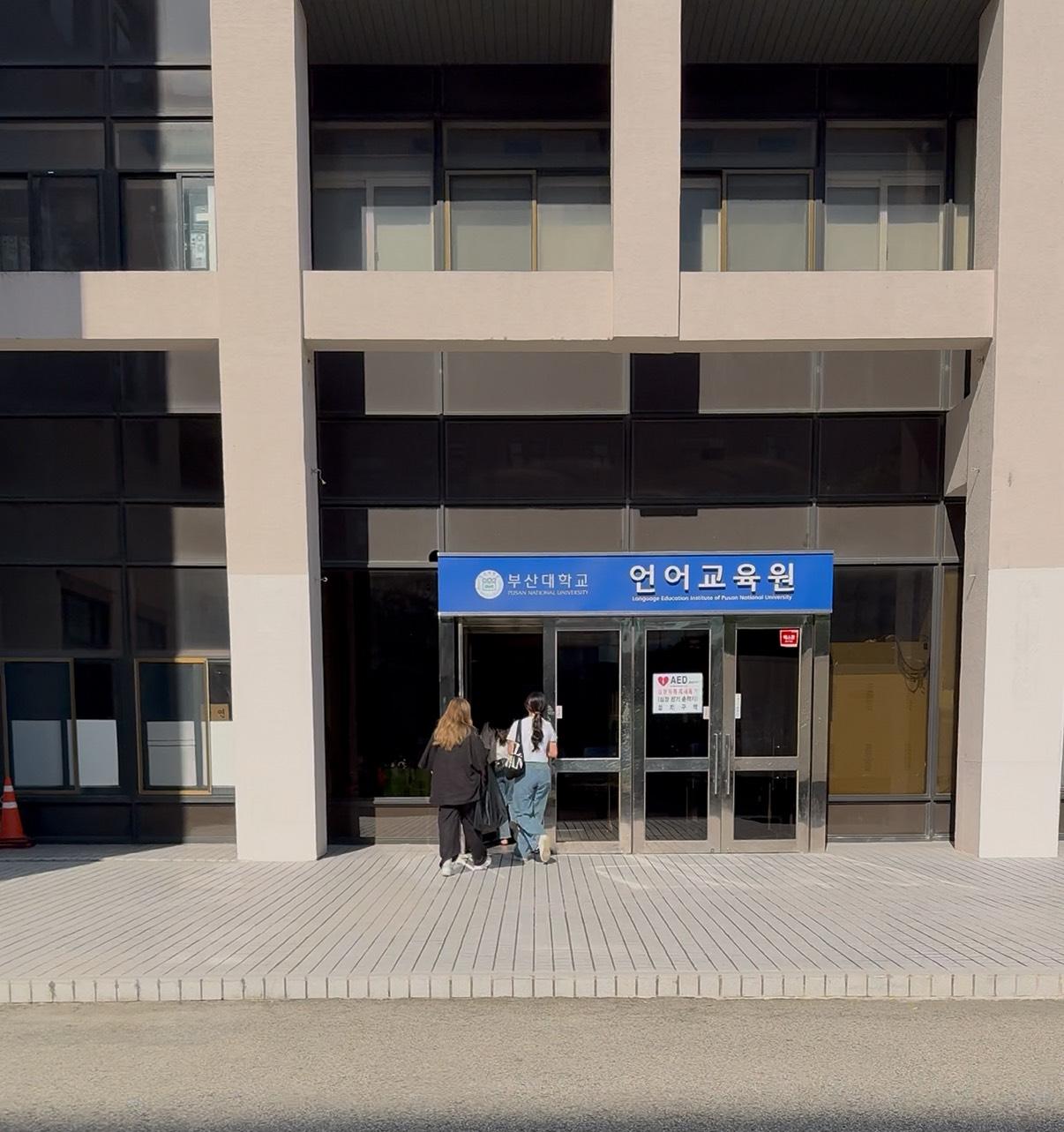
First visit to Pusan National University:To take the placement test and look for directions together with friends you met in Taiwan who will also be studying in the fall, it’s recommended to get off at Jangjeom Station, the stop before Pusan National University on the subway, and exit through Exit 1. It’s about a 10-minute walk to reach the Language Education Institute; the slope along this route is a bit easier. The language school classrooms are farther from the other university department buildings, and this area is quieter. If you want to eat or buy things, head over to the area near Pusan National University Station!
Looking for a place to rent:I first searched Naver for listings near the examination hall and bookmarked ones that looked good from the photos, then went in person to each location to ask around, but landlords are rarely there, so I recommend to anyone looking for a placeyou must have a Korean phone number you can calland call the landlord from the Naver listing to arrange a viewing first; otherwise you might end up waiting in the heat under the sun.
I looked at about 5–6 places in total, including shared rooms and studio apartments, and one near Busan National University Station. In the end I chose Jun Exam House at Jangjeom Station, which was also on the school's recommended list. It’s a one-room studio of about 5 pyeong, with a private bath that doesn’t have a door, just a shower curtain. There’s a cabinet under the desk for storage, plus a wardrobe and drawers, so storage space is plenty. The room also has floor heating and a refrigerator. Living there for three months was pretty great! They allow month-to-month leases; I signed for three months at the start. When I moved in the cost was a security deposit of 100,000 won and a monthly rent of 380,000 won; when moving out you have to pay a cleaning fee of 50,000 won, so you get 50,000 won of the deposit back. On Mondays, Wednesdays, and Fridays the landlord prepares some Korean soups or side dishes for tenants to enjoy, so to save money you can come back to the exam house after class to have lunch. Looking back, I’m really glad I chose this place — it’s close to the bus stop and the subway, and for an 8 a.m. class in Taiwan time it’s just right: leaving 10 minutes early gets me there on time.
Placement test and class content
Normally after I register the school would send me information about the placement test directly, but I didn't receive it. A friend I know who also used an agency received the school's email directly, and then Creatrip relayed the school's message to me. I'm very thankful to Creatrip.
Placement test:On the day, the test is held in the large conference room on the second floor before the gathering time. There will be an empty seat between each person. The seats have fold-up writing surfaces, but the space is fairly small. Before the test, the teacher will ask if anyone does not want to take the written test and would rather go straight to the speaking assessment; afterwards, speaking will be done in the order papers are turned in. Then the test papers are handed out. The written test includes multiple-choice questions and a writing section. I felt the question types were very similar to the TOPIK I took not long before. I personally skipped the writing and handed in my paper after finishing the multiple-choice questions.
During the speaking portion there will be two teacherswho will evaluate your written test score and the speaking assessmentThe speaking questions include why you want to study Korean, why you came to Busan, and similar questions to get a basic understanding of your motivation to learn. Because my speaking was very poor but the teacher said my written score was pretty good and I happened to get Level 3, the teacher finally asked which level I would prefer to attend. Here I want to urge everyone tostate the level you truly want to attendThe teachers will base placement mainly on your answer. You will receive your level and class assignment before formal classes begin. The information will be available for everyone in the autumn language program to verify, and the school website will also have a record. I saw my level on the website before I received the class assignment result.
Class content:Each class willhave two teachers, one of whom the school calls the head teacher (homeroom teacher) and the other a part-time teacher who teaches 2–3 days a week. Since I was in Level 2 and already had a basic foundation in Korean, the teachersteach entirely in Koreanunless something is difficult to explain, in which case they’ll use English to help. If you speak your native language during class you’ll be scolded by the teacher (you can speak it during break time); the teacher wants the class to use a language everyone can understand so some students won’t be left out. On the first day you’ll be given a personal information form to fill out, and the teacher will schedule a 10-minute one-on-one conversation after class to learn your motivation for taking the course and the areas you want to strengthen, then give you some study suggestions.
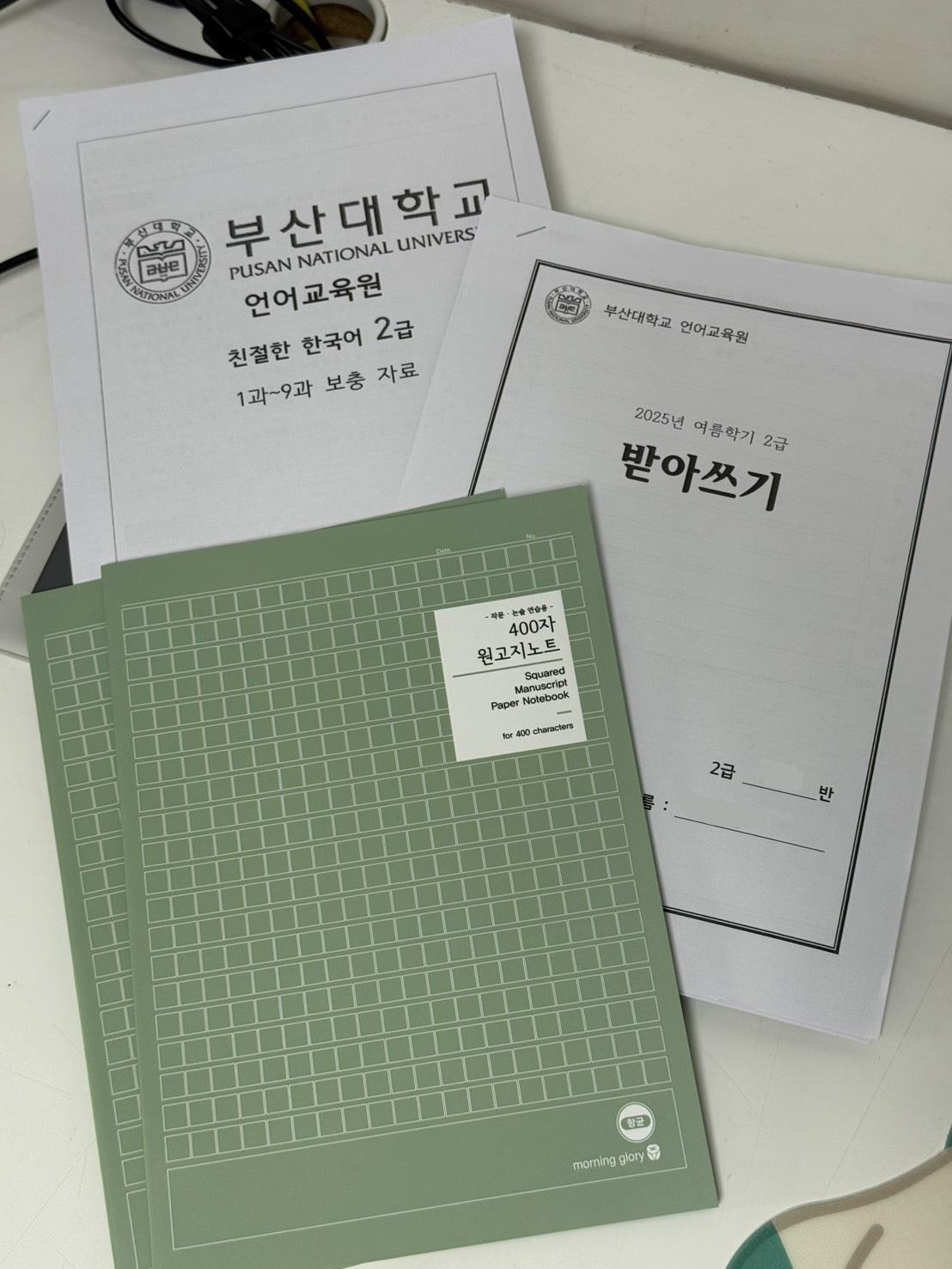
The textbook already includes grammar, listening, speaking, reading, writing, and supplementary materials, sothe proportions of listening, speaking, reading, and writing are all quite balanced. In addition to the textbook, the teacher also provides extra photocopied practice booklets; for the writing portion you need to check the required word count and purchase a workbook at a stationery store yourself. The school also offersan additional speaking course, six classes each semester, about one hour every Tuesday afternoon, taught with classmates at the same level. After each class I always feel that one hour is so short.
According to the teacher's teaching pace, almostthere is homework every day(exercise book and composition), and there is a dictation test every two days, mainly writing down the sentences the teacher reads aloud; after midterms it will be writing sentences or words from the textbook recordings. This part is probably not included in the exam grade. The teacher changes seats every week so you can practice speaking with different people in class.
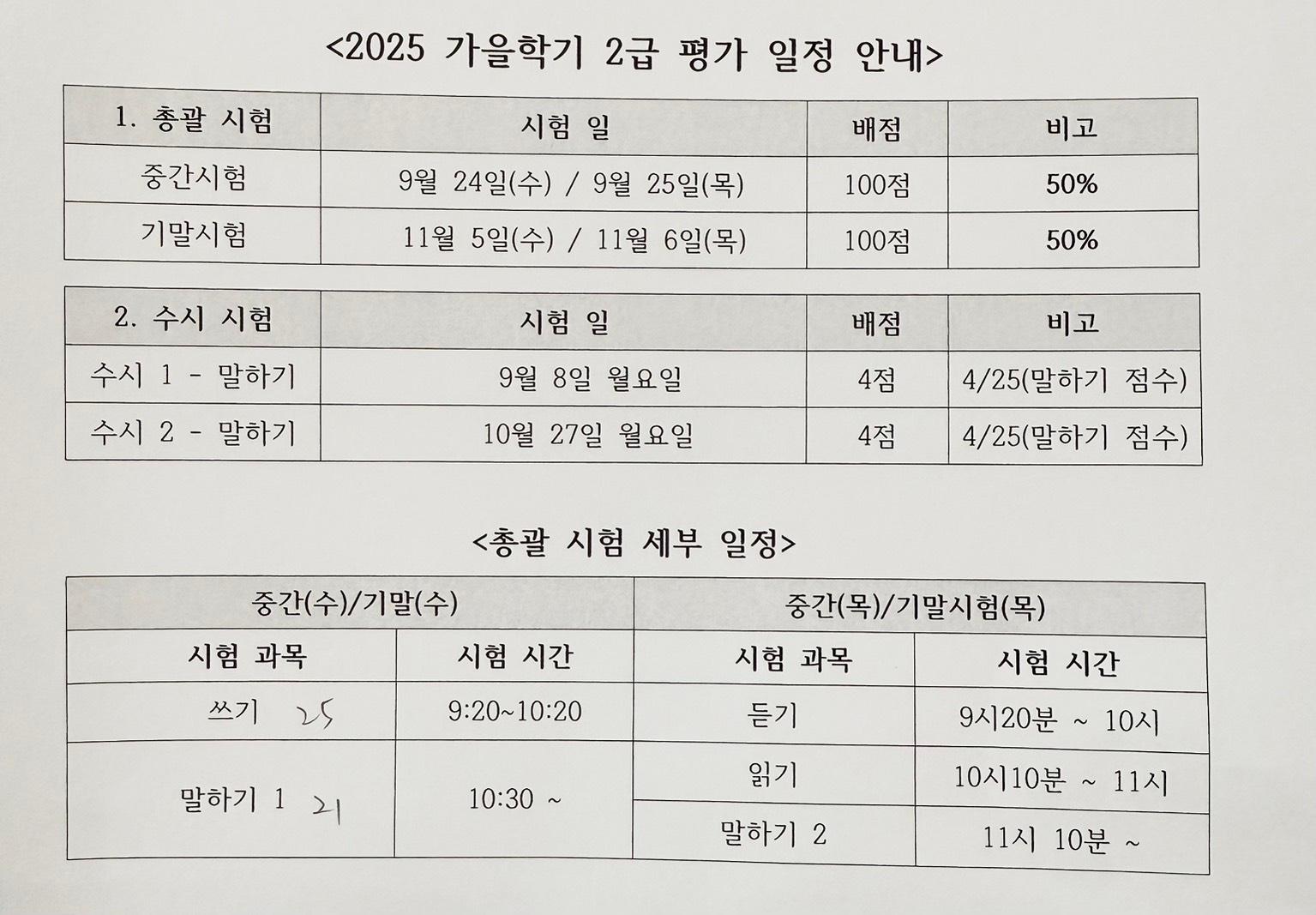
Midterm and final exams: each hastwo days of written tests plus oral exams,the order for midterm and final exams is determined by drawing lots, the number you draw decides which classroom you take the exam in and your oral exam order. If you draw an early number for the midterm, the final’s order is reversed, so you’ll become the last person to take the oral exam. On a certain Monday before both the midterm and the final there will be an in-class oral quiz counting for 4 points of the exam grade; the first time you introduce a favorite celebrity, and the second time you draw lots to pair with a classmate to perform a fable from the textbook—the stories are drawn as well, and there are two stories to memorize.
The teacher will explain the question types and answer instructions the day before the midterm,the question types are the same as TOPIK,the first day is writing + Speaking 1, the second day is listening & reading + Speaking 2, after finishing the first part and before the speaking exam everyone will gather in the main conference room, then the teacher will call numbers to go to each classroom to prepare; once you leave the conference room you can no longer open your textbook. The speaking exam will have two teachers; after answering the first teacher’s questions you move on to the second stage. The content will include an essay prompt and picture-based storytelling, and responsesneed to use level-2 grammar to earn extra points. If the written exam’s essay is not given, it will be included in the speaking prompts.
living expenses
My living expenses are about the same as when I lived in Taipei, rent plus food and entertainment.You can budget around 30,000–40,000 TWD per monthto be on the safe side. You can save quite a bit if you avoid entering beauty stores or Daiso, but honestly,for one semester you really need to save a few hundred thousandTWD to be sufficiently covered when coming to Korea.
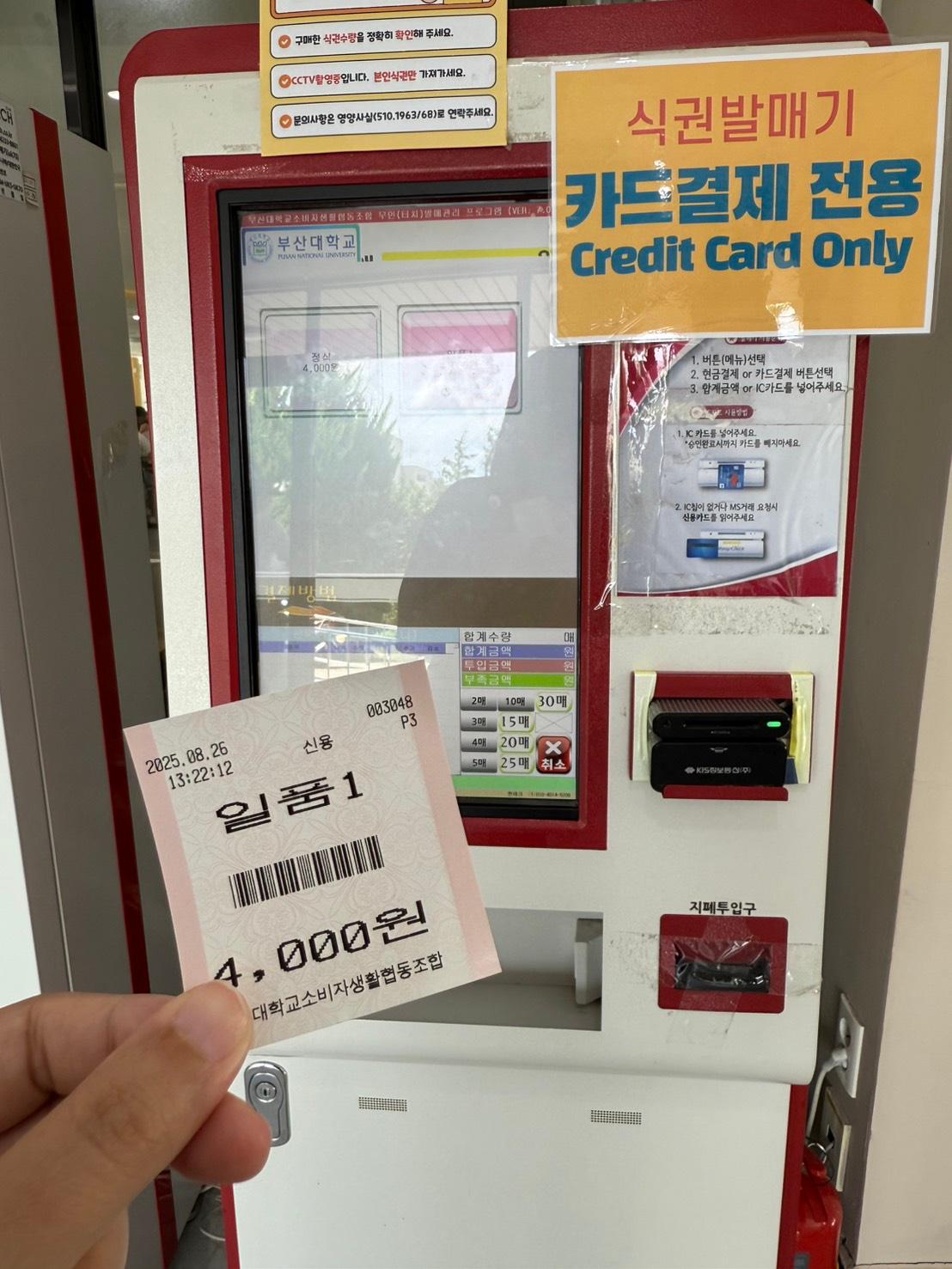
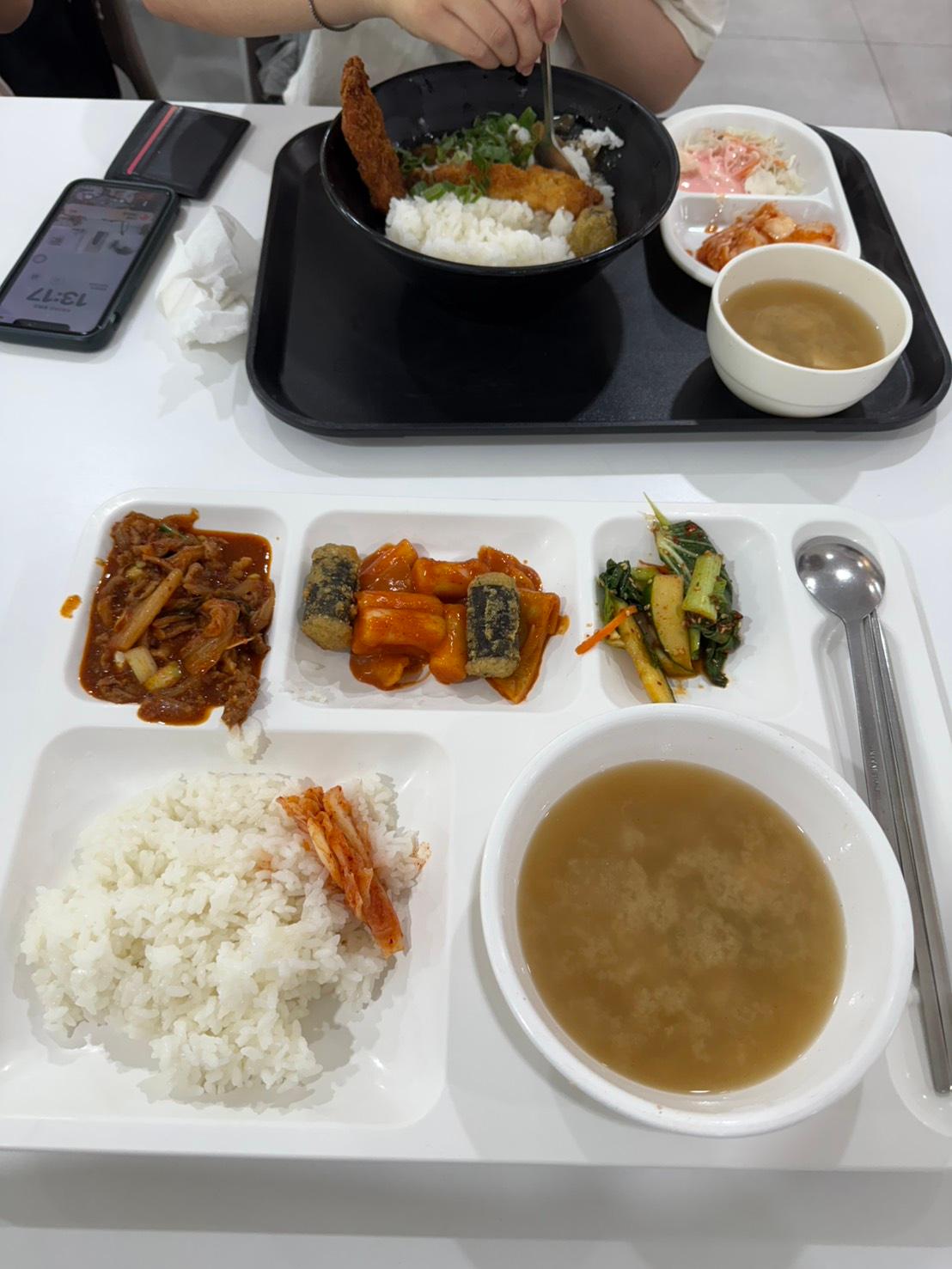
If you want to save money on food, I recommend eating at the school cafeteria. A meal is 4,000 won or 5,500 won, which is really much cheaper than buying food outside. The dishes are mostly the same, so it's easy to get tired of them, and there really aren't many greens — usually just shredded cabbage in the salad, but it's not tasty and is quite tough. One thing to note is that bok choy in Korea is usually served raw... cooked bok choy is something you'll only see in spicy hotpots, so don't be too surprised.
Reflections on the Busan Language School
Coming to study the language in that country really helped me improve quickly, because you have to speak in Korean. Although Pusan National University has many foreign students, conversations are still mostly in Korean. I really didn't dare speak before, but when you are abroad you can only take care of yourself. Also, I lived alone without roommates, so I had to do many things by myself. The teacher's instruction and one-on-one talks were also very helpful. What I regret is not having saved enough money and only coming for one semester. I could have advanced to level 3 based on my final grades — I really wanted to take level 3 with my classmates. I hope that anyone who wants to come to the language institute in the future will study for at least half a year; otherwise it will feel like such a shame.
The school has four cultural experience activities which are pretty good, but you have to be quick — you apply using a Google Form and each session only has 20 spots, so you might not get in. Still, you can go along with classmates. It's just that some free experiences might not be available.
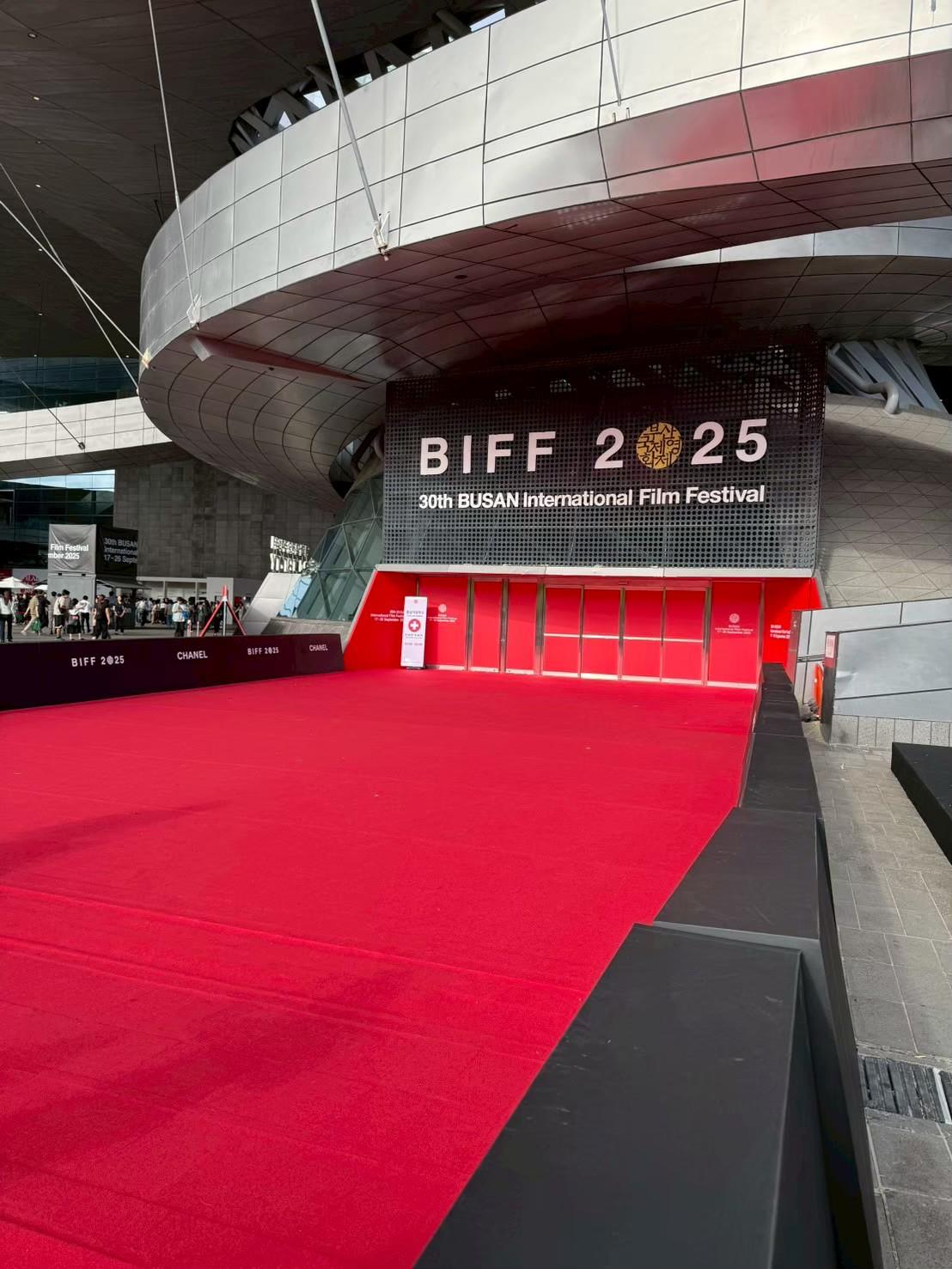
(BIFF Busan International Film Festival cultural experience)
Busan's transportation is very convenient, and there aren't many subway lines; everyone should definitely downloadNaver maporKakao map—they're super useful for seeing which subway car to get off in to transfer fastest. I really want to use them again when I return to Taiwan XD
Also, for those of us without a language partner, I recommend downloadinga language learning appwhere you can find native Korean speakers who want to learn Chinese. You can practice conversations and sentences there, and if you actively make friends you can even become real friends. Having Korean friends is the fastest way to learn the language!
The above is my sharing; I hope it helps those who want to study at Pusan National University Language School!