



Jongmyo Jeryeak [Rare traditional culture experience]
slowpace_korea
7 months ago
This performance was part of the 2025 Spring K-Royal Culture Festival in Seoul and it was a rare opportunity for foreigners to observe a performance deeply rooted in Korean history.
I tried booking other events in the past but I had to use the same booking services and go through the same process as Korean nationals, which was inconvenient even if my Korean language skills are fairly good. So I was pleasantly surprised to see so many of the Royal Spring Culture Festival events available for booking in English, on Creatrip. I hope they will do it again next year.
Event time and date
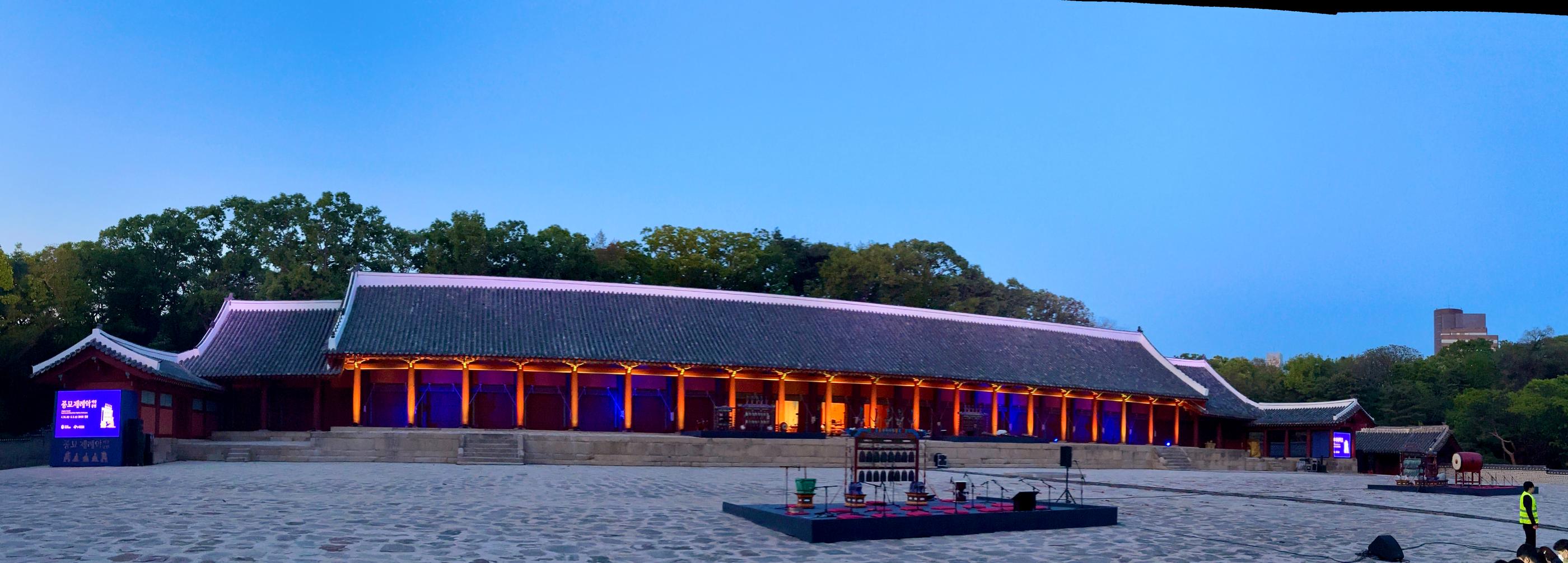
The Jongmyo Jeryeak ceremony is traditionally performed on the 2nd of May each year, usually during daytime. However, to make it available to a larger public, booking was available on multiple days. In addition, this time it was an evening event, for the sake of the atmosphere, I imagine. I managed to book a spot on April 29th at 8 p.m. and wow… The atmoshphere was so otherworldly! It makes total sense why they made it an evening event.
It lasted for an hour but the performance is originally longer. They omitted some parts in order to make it suitable for a cultural event that can be easily enjoyed by wider audiences.
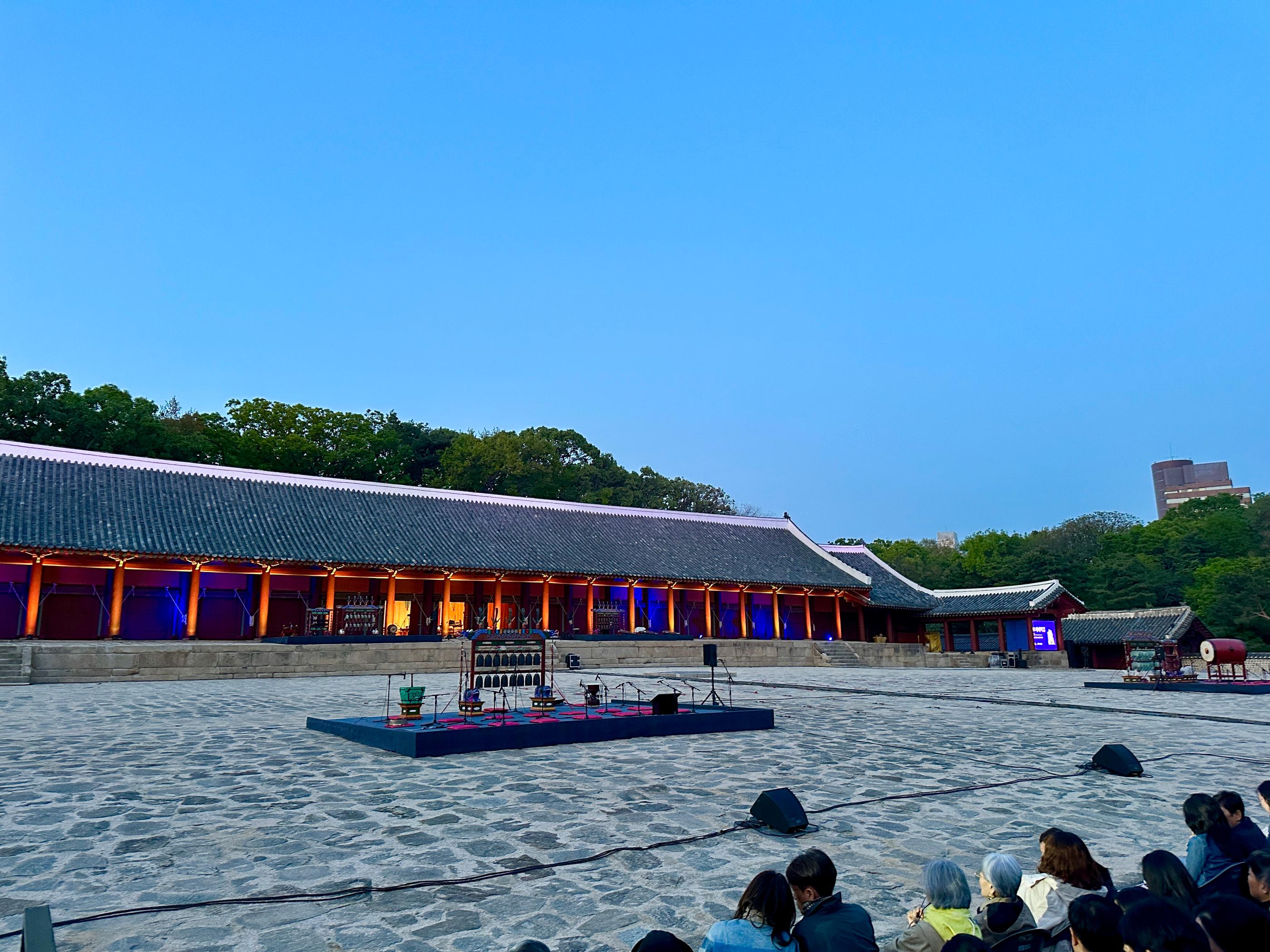
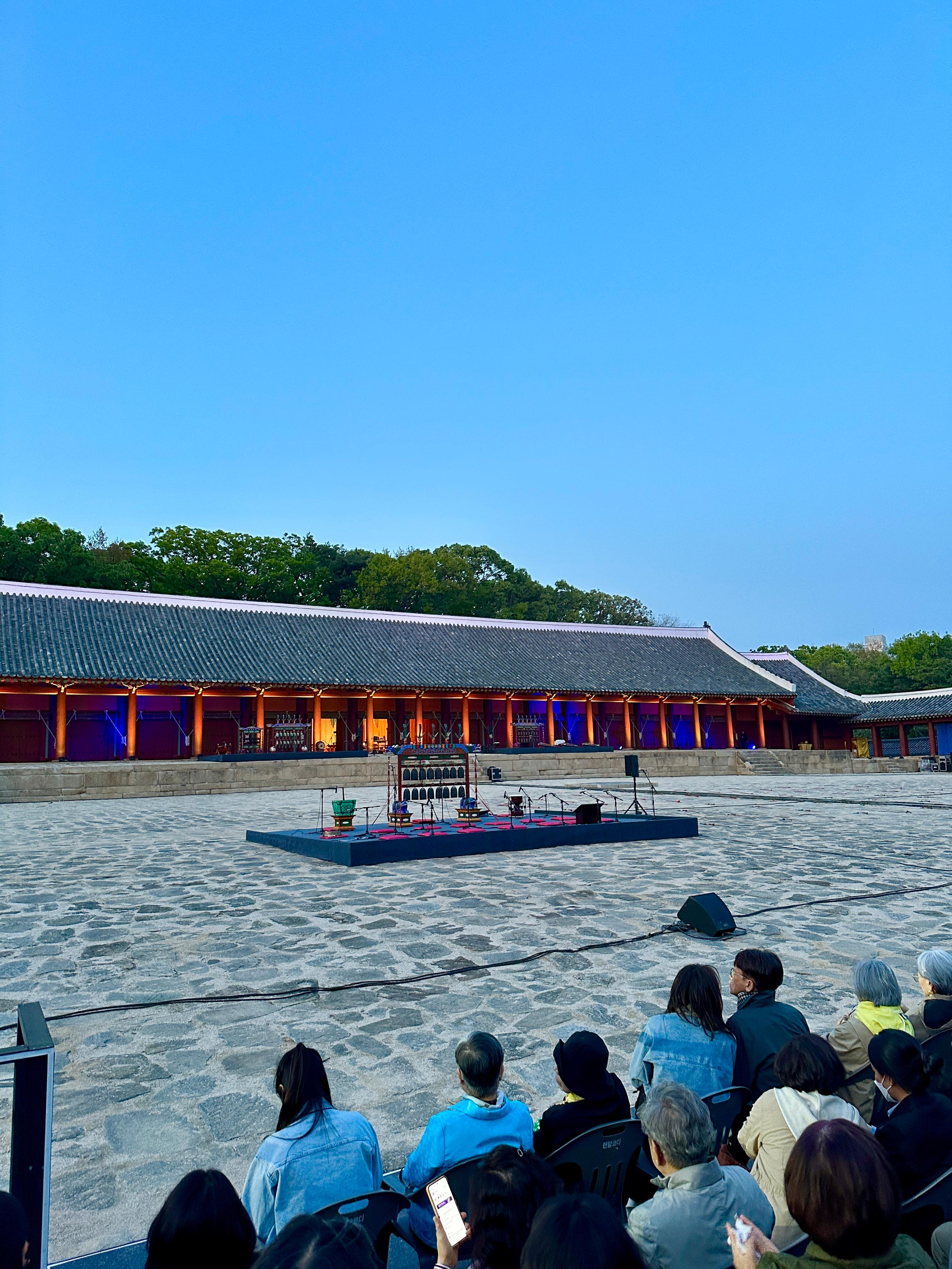
Best time to arrive: As soon as possible! I entered the performance venue around 7:30 p.m. and the best seats were alredy taken. (Check-in started from 7 p.m.)
It was first-come first-served seat allocation.
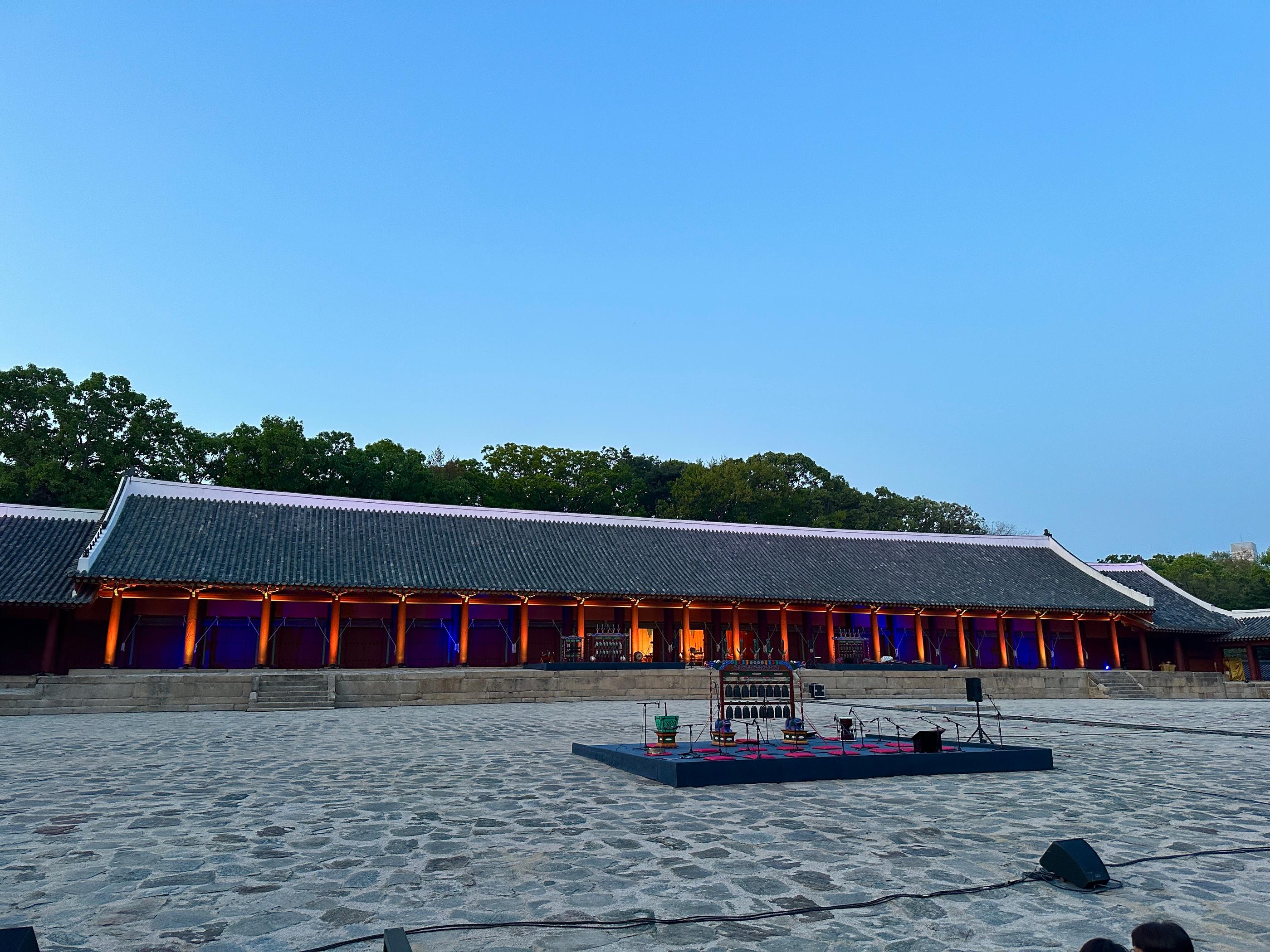
(Picture taken at 7:30 p.m. from the left side of the venue)
Overall impression
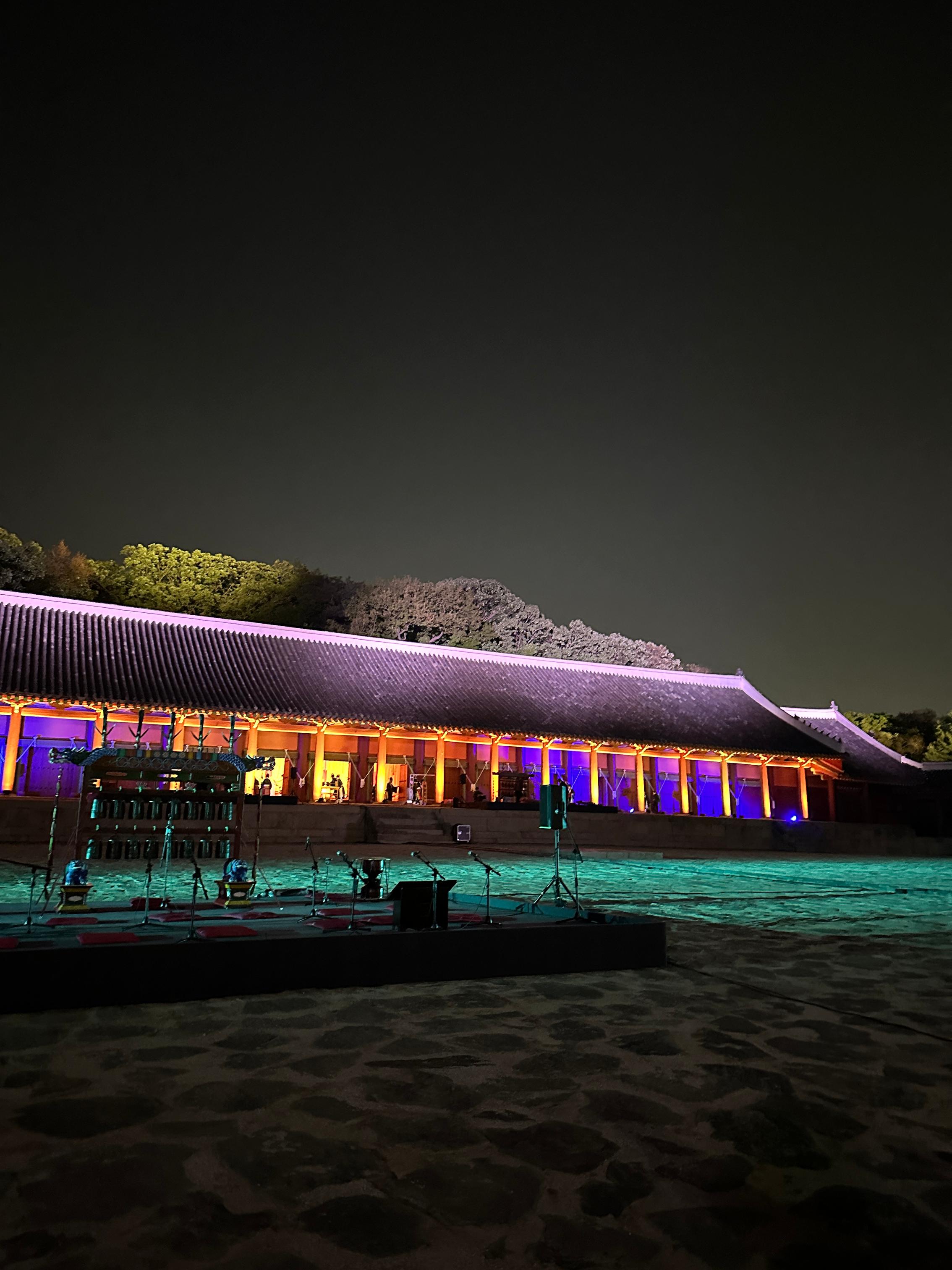
Absolutely bewitching! As it got darker and darker and the performance time was getting closer, a bird in the surround mountains started singing so peacefully, for a moment I felt like a was living a scene of a Korean hisorical drama. If you’re also a fan of this type of dramas, you’ve probably heard this bird before too. According to my research, it’s the Eurasian Scops owl. Just listening to it is so calming and soothing in general. But together with the ceremonial atmosphere, it was like a momentary time travel into Korea's past.
Must-know facts
💡Jongmyo Jerye is the Royal Ancestral Ritual in the Jongmyo Shrine and Jongmyo Jeryeak is the Royal Ancestral Ritual Music in the Jongmyo Shrine. The title of the event was 'Royal Ancestral Ritual Music Nighttime Performance at the Jongmyo Shrine' and the focus was on the music indeed.
💡Jongmyo Jerye is a ritual of paying respect to the late kings and queens of the Joseon dynasty according to the Confucian rules.
💡The royal ancestral ritual is the most prestigious and grand ritual performed by the king himself, and it is attended by the ritual officers, the crown pricnce, the royal family, and the state officials.
💡Jongmyo Jerye and Jongmyo Jeryeak were listed as UNESCO Intangible Cultural Heritage in May 2001.
💡The instruments Jongmyo Jeryeak include some royal court music instruments which are rarely or never used in other types of Korean traditional music. Therefore, it was a precious opportunity to see them in real life.
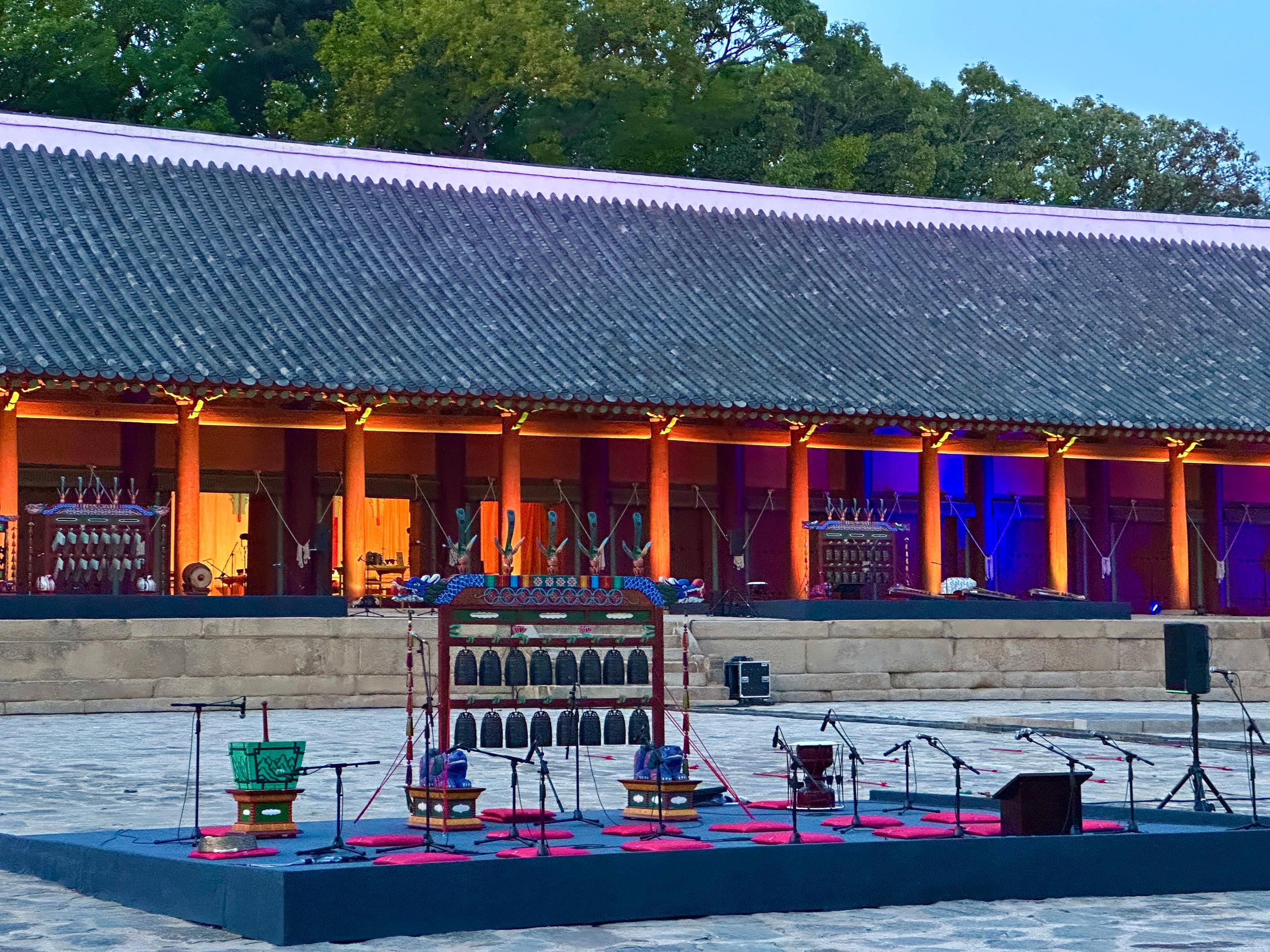
(Pyeonjong - bell chime with sixteen bronze bells)
💡The music is accompanied by two types of dance: civil dance (munmu) and military dance (mumu). They are both slow and solemn in comparison to the modern image we have about 'dance'.
(source: https://royal.khs.go.kr/ENG/contents/E105040000.do)
Strengths of the event
👏 I must mention the atmosphere again. Including lights and sound, everything was so beautiful and harmonious! It was so immersive that for a few a while I felt it was only me and the performers on the shrine grounds.
At some point some insects were flying into the colorful lights, which made everyone think they were fireflies. Later on, a bird flew above the performers on its way to the mountain forest. What a view, what an experience!
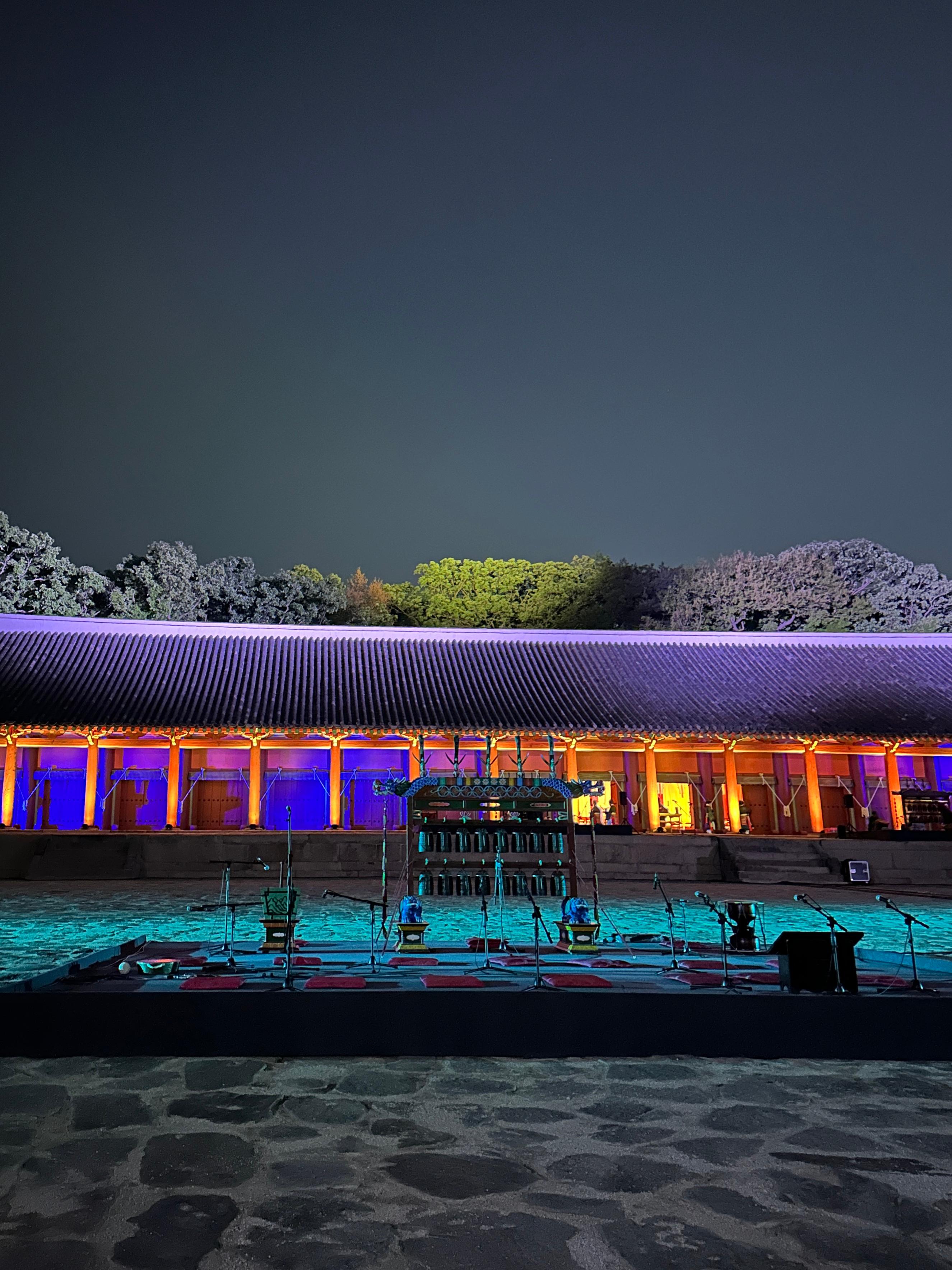
👏The courtyard ensamble was quite close to the audience, and it was very nice to observe the instruments and the performers up close (There was also a terrace ensamble farther in the back).
👏At the entrance, the staff provided us with an information leaflet, a hotpack (which was so useful, as it did get a bit cold during the event) and some stickers to keep the mosquitos away (thankfully, there was no need to use them). Very thoughtful and considerate!
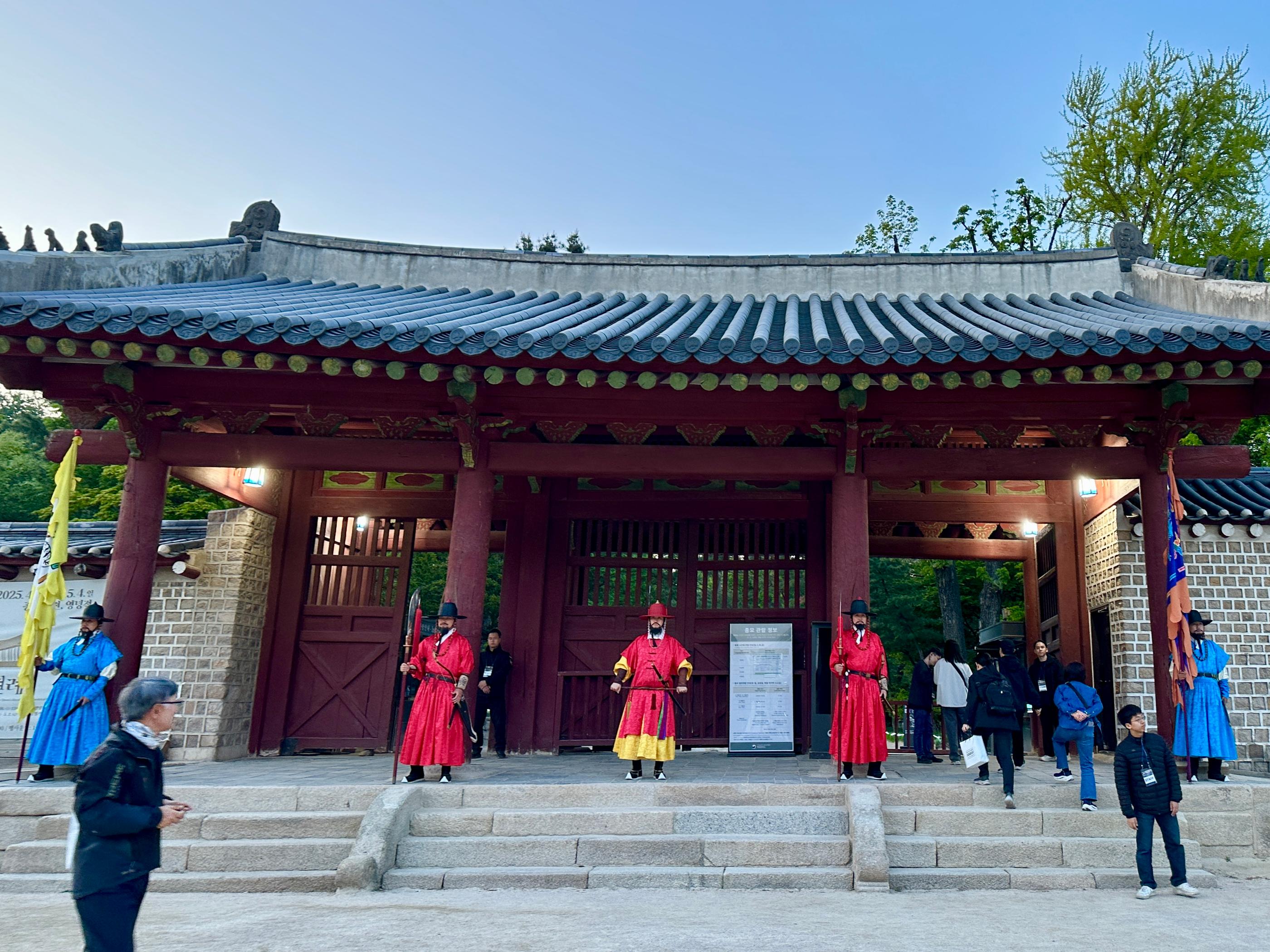
(The hotpacks are just behind these doors! Then there's a little walk until the performance site.)
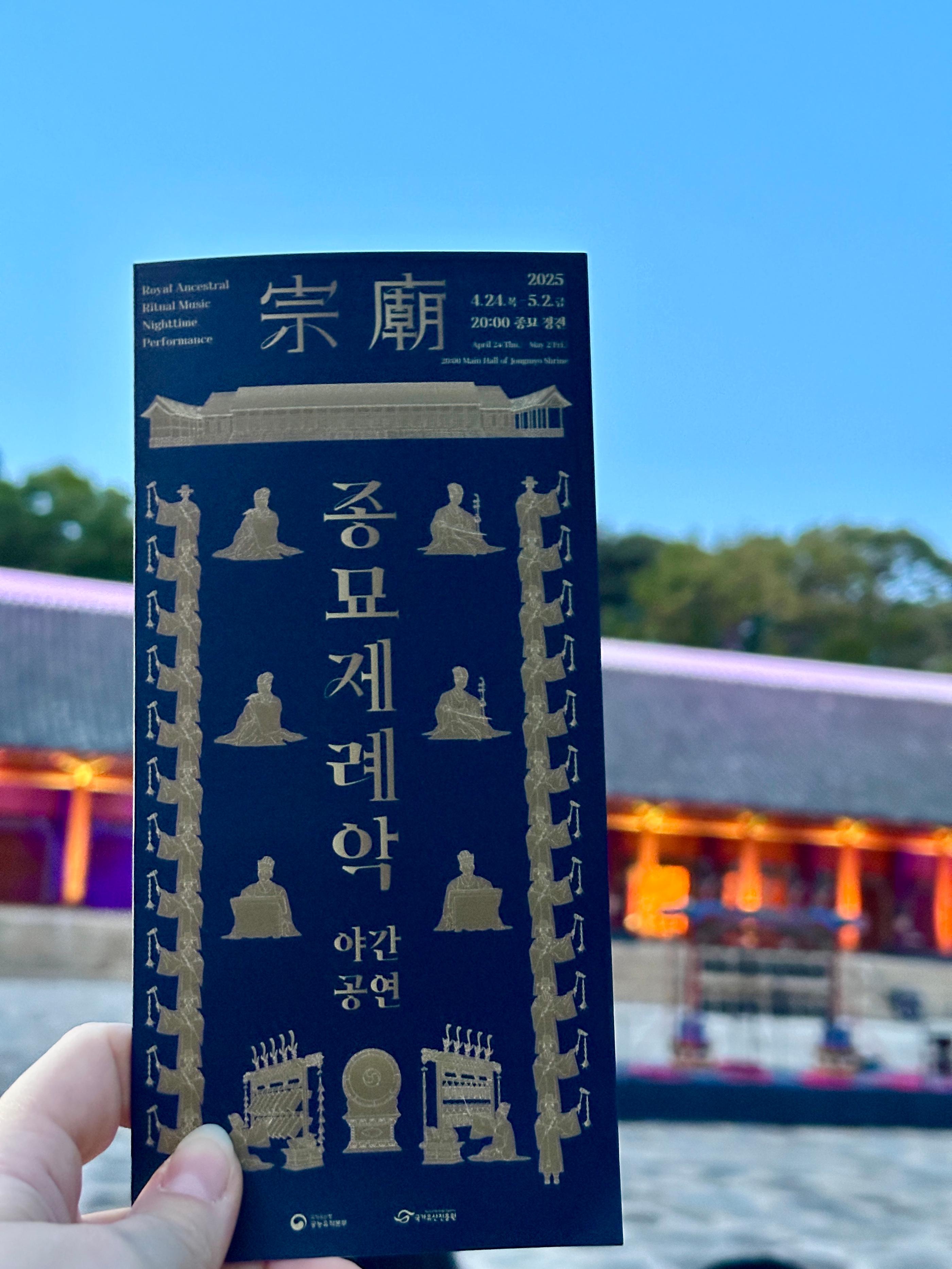
(This is the information leaflet. The content inside was in English.)
Recommendations for future improvements
🫶As the event focused on the musical aspect of the ritual, I thought it would have been interesting to add some information about the instruments, either on the leaflet, or in the digital content which could be accessed by the audience through the QR code on the back of the leaflet.
As far as I remember from my Korean traditional music class in Seoul National University, the instruments and music both have symbolic meanings. It would have been nice to provide the public with just a few interesting facts about them.
🫶Although the focus of the event was the music, it would be nice if the public could also see the ritual itsef. Although the royal ancestral ceremony unfolded in the back, I was not able to see what was happening behind the instruments and performers of the courtyard ensamble.
Captions of the vocal part of the ceremony were shown in three languages (Korean, English, Chinese) on two screens (one on the right and one on the left side of the venue). However, the screens were too far for me to be able to read the captions (I was sat somwhere in the middle rows). Although the captions were available through the QR code, I realized that too late and they did not seem to help understand what was going on in the ritual.
Therefore, I hope next time they could show the ritual on the screens, rather than the captions.
🫶Another thing that could be improved is announcements in English. All spoken announcements and information on the performance (some of which were not included in the leaflet) were in Korean. If time restrictions make it difficult for multi-lingual anncouncement, then this would be a good time to use the screens and show subtitles accordingly.
🫶Finally, filming or taking pictures during the event was prohibited. I totally understand this, as we wouldn't want disturbing flash lights or sounds (in Korea, you cannot take pictures or film without the specific recording sounds) during such a dignified event.
However, the presece of the performers made the view waaay more colorful and mesmerizing. Therefore, it would be very much appreciated if the organziers provided the audience with official images and/or videos after the event, for personal use or to promote the event and/or Korean culture in general.
Just to be clear, these are just personal recommendations and NOT critique. The event was fantastic as it was and I would go again any time!
If you want to know more about Korean traditional music and instruments
Check out the official materials provided by the National Gugak Center ('Gugak' means Korean traditional music).
https://www.gugak.go.kr/site/program/board/basicboard/view?currentpage=2&menuid=001003002005&searchselect=&searchword=&pagesize=10&boardtypeid=24&boardid=13150&lang=en
Images and names of Korean traditional instruments here:
https://www.gugak.go.kr/synap/skin/doc.html?fn=9c1956fc83b96b61e1a654ef4408fe9b&rs=/synap/sn3hcv/result/upload/download/data/
Conclusion
It was a truly impressive performance and a precious opportunity for foreigners to attend a ceremony with such long history and deep cultural significance! Not to mention that it was rather affordable and it was worth every cent!
I have participated in two other events of the 2025 Spring K-Royal Culture Festival and so far, this was my favorite. I could deffinitely recommend it to anyone interested in Korean culture!
And I will keep an eye on Creatrip for more events related to Korean traditional culture!