



Blue House - official office for Korean Presidents
Olga
4 months ago
In the center of Seoul, right behind the Gyeongbokgung Palace, there is another sight of Korea, the former residence of the Korean presidents. It is best known as the Blue House. This is an iconic place in Korean history, where many important state decisions were made. Therefore, I highly recommend this place to anyone interested in the history of Korea.
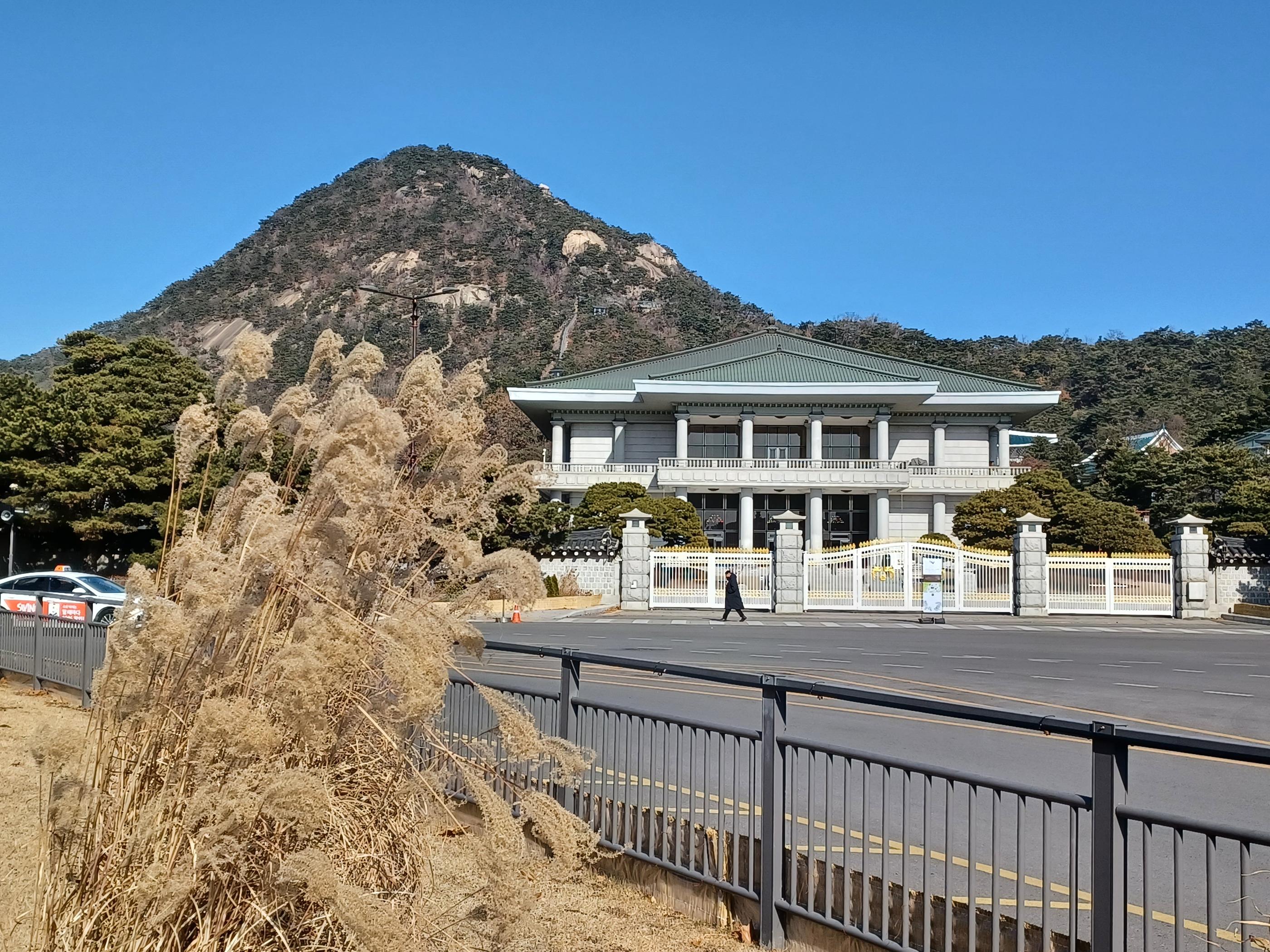
Located with Bugaksan Mountain in the background, Cheong Wa Dae (or Blue House) is the official office and residence for Korean Presidents from 1948 to 2022. Since the establishment of the Republic of Korea in 1948, it has accommodated President Syngman Rhee to President Moon Jae-in.
On 10 May 2022, following the relocation of the presidential office to the defence ministry building in Yongsan District, Cheong Wa Dae was opened to the public for the first time in 74 years, on the day of inauguration of President Yoon Suk-yeol.
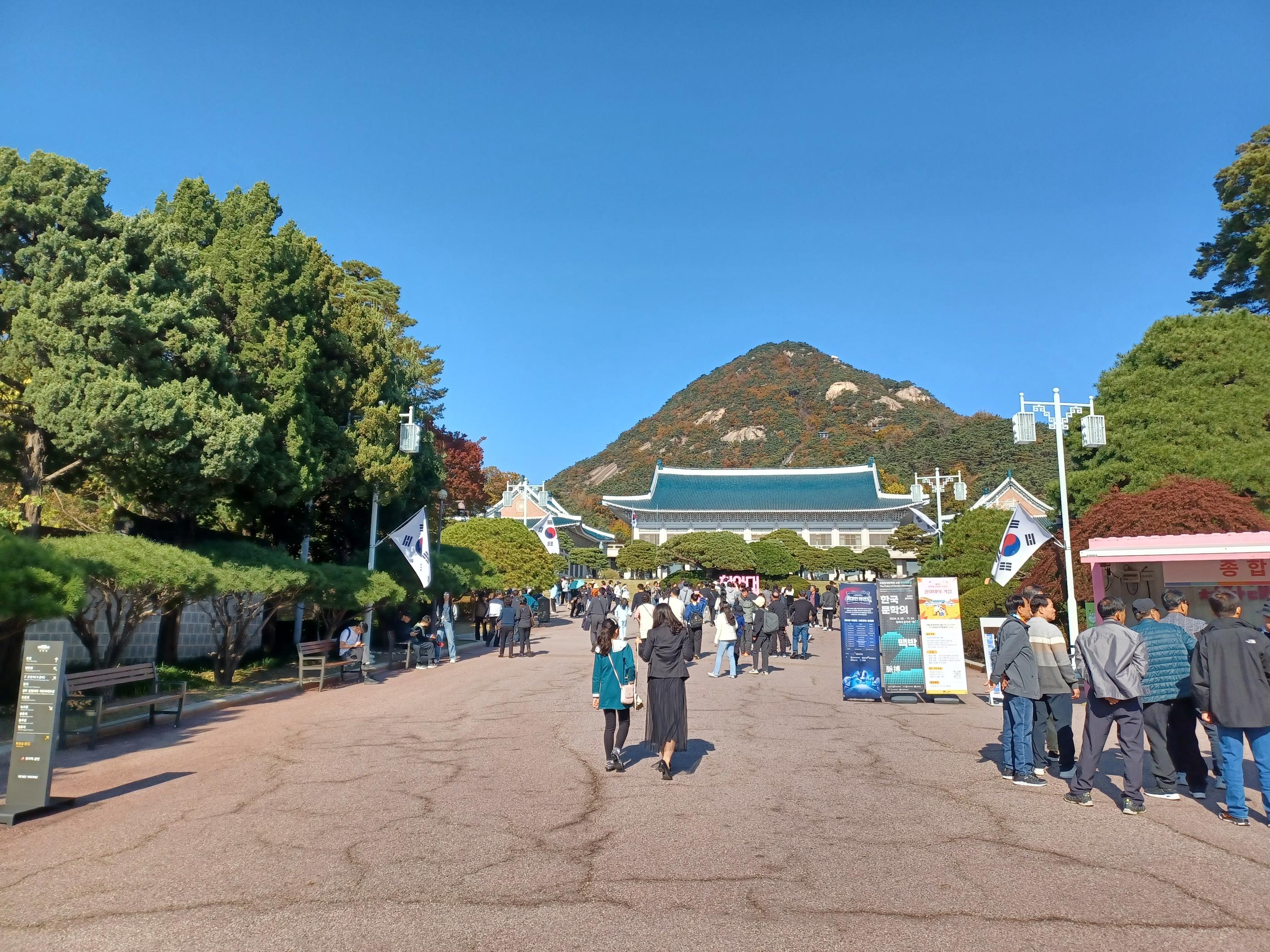
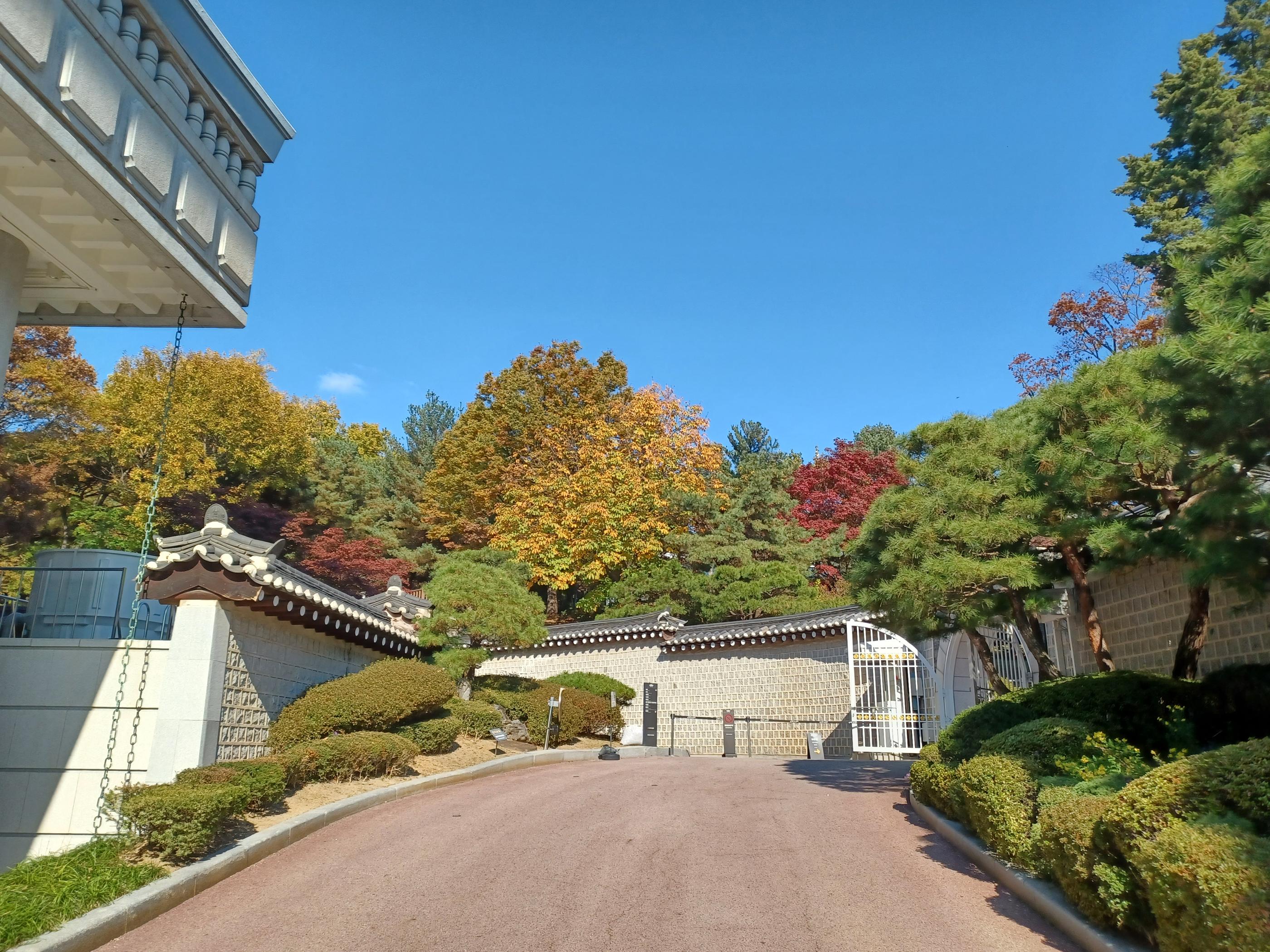
The Blue House is very popular among both locals and foreigners. There are always a lot of people here. You can get into the territory through 3 gates. After passing through the gates, a huge territory with many buildings opens up before us. You can determine the order of visiting the buildings of the complex yourself.
First I first turned right and saw the Yongbingwan. The Yeongbingwan Hall, nicknamed “Welcome Guest House,” was used as an official event hall when state guests visited. Yeongbingwan Hall is carved out of granite, making it splendid and majestic. The stone pillars supporting the hall are said to have been carved out of granite quarried in Hwangdeung township, in the city of Iksan, North Jeolla Province, which is the highest quality among Korean granite sources. The four central stone pillars, which extend to and are connected to the second floor, express the grandeur of Yeongbingwan Hall.
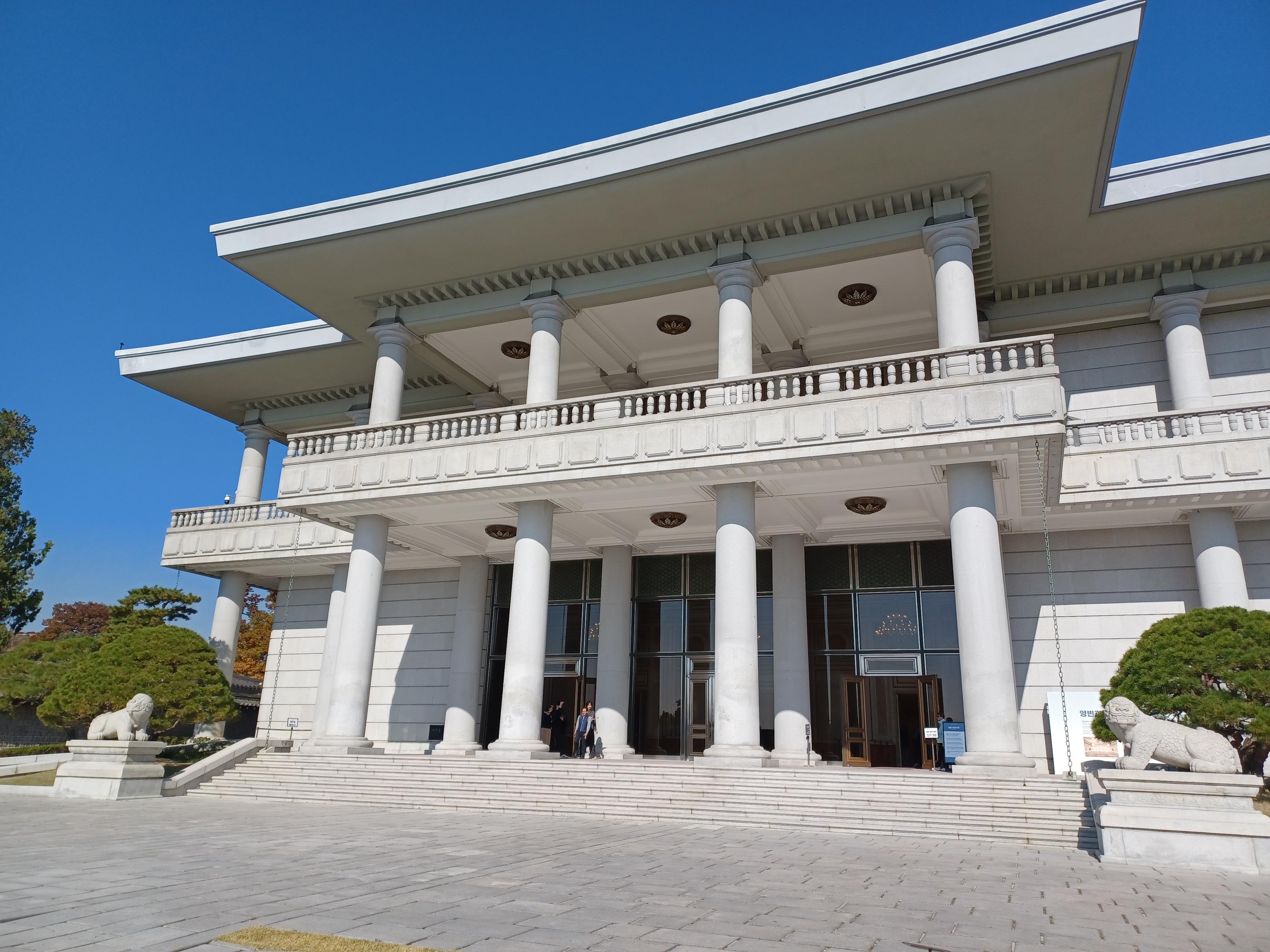
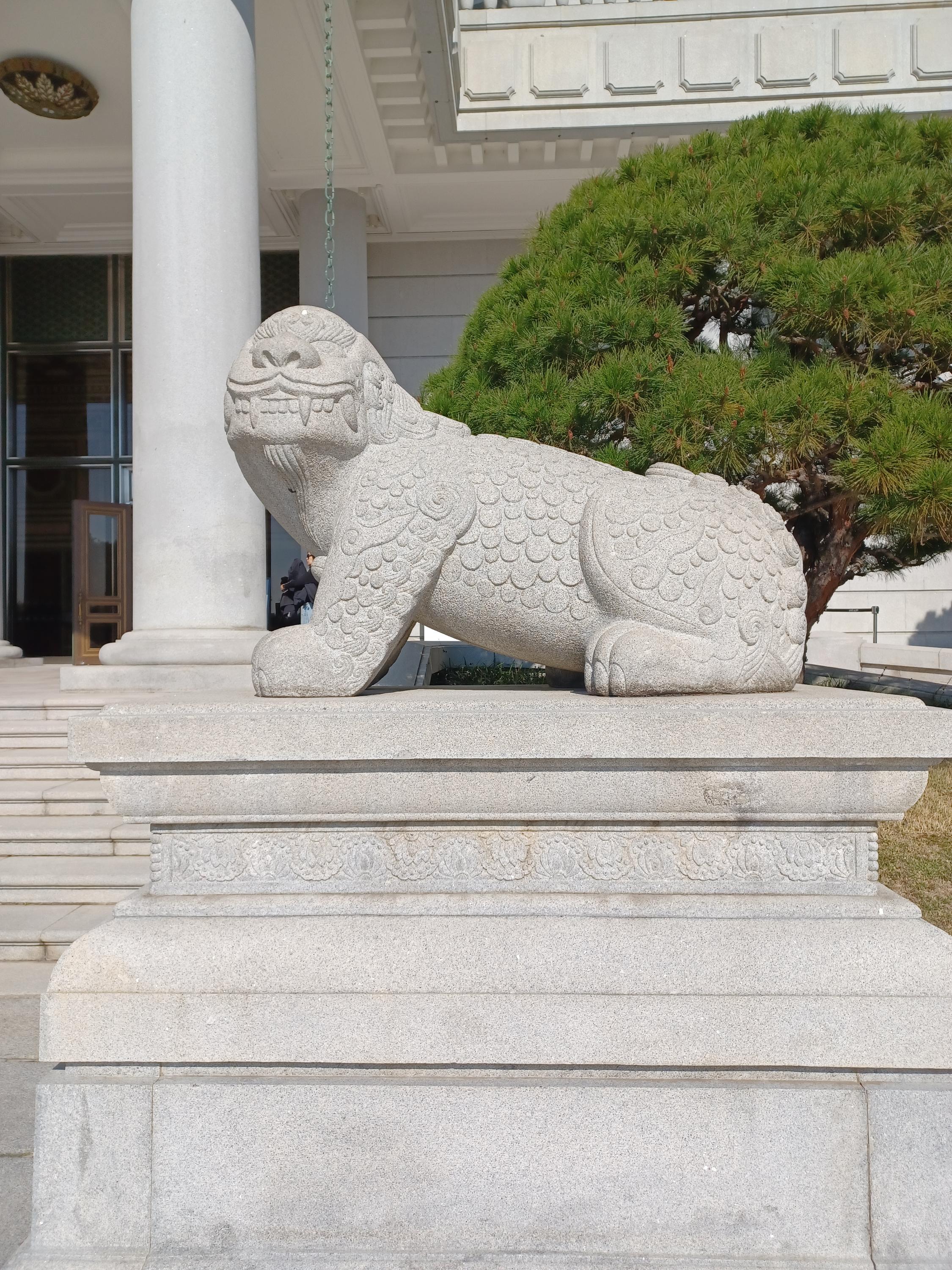
On both sides are traditional haechi, a mythical creature that distinguishes good and bad, what is right and what is wrong. This gives the building a traditional Korean style.
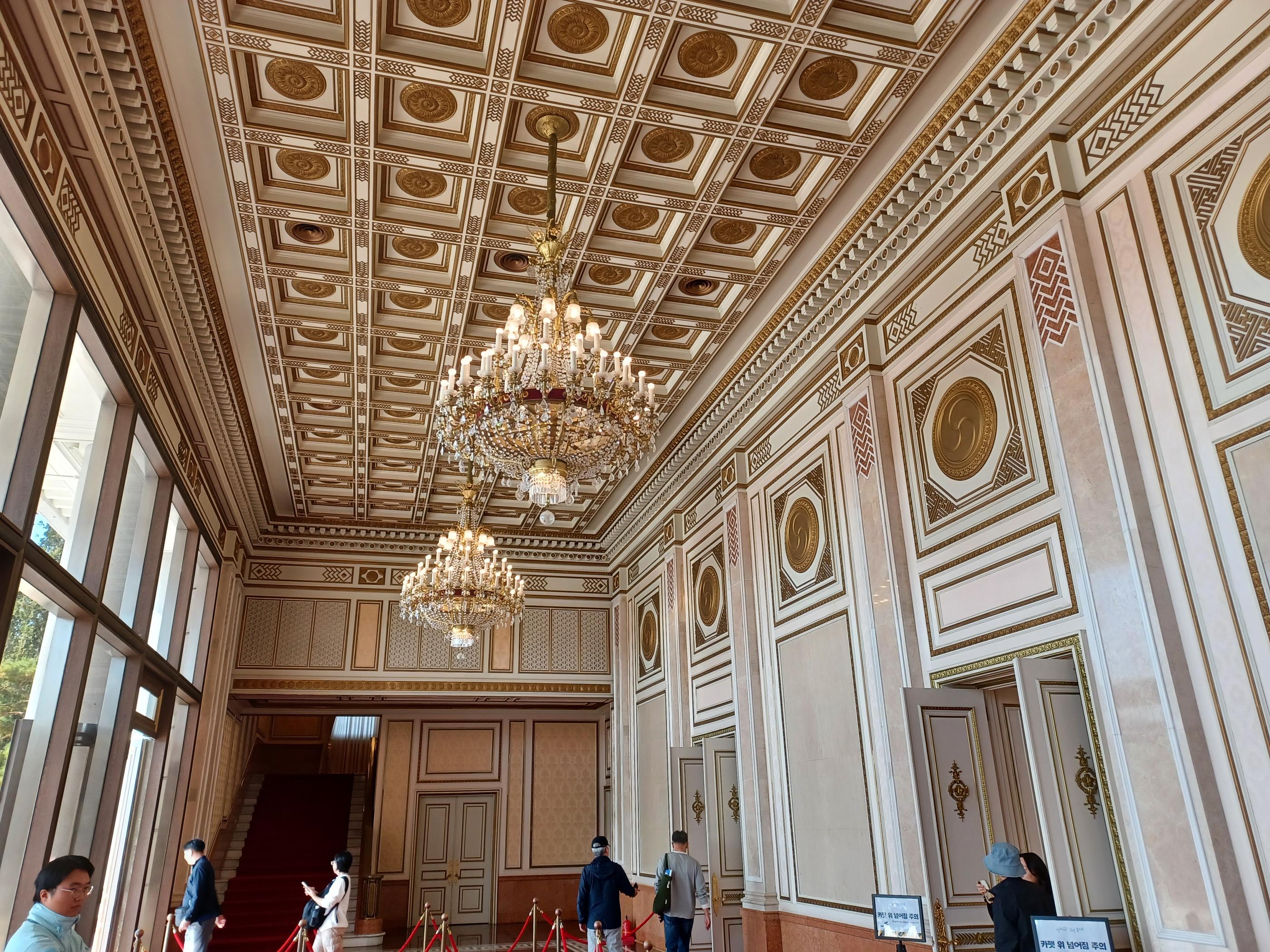
Immediately from the threshold, beautiful interiors of the corridor open up. The style is laconic, classic, with elements of Korean traditional style. I really liked the ceiling, decorated in a very unusual way. All this gives the building an elegant and solemn appearance. But at the same time, there is no excessive pathos.
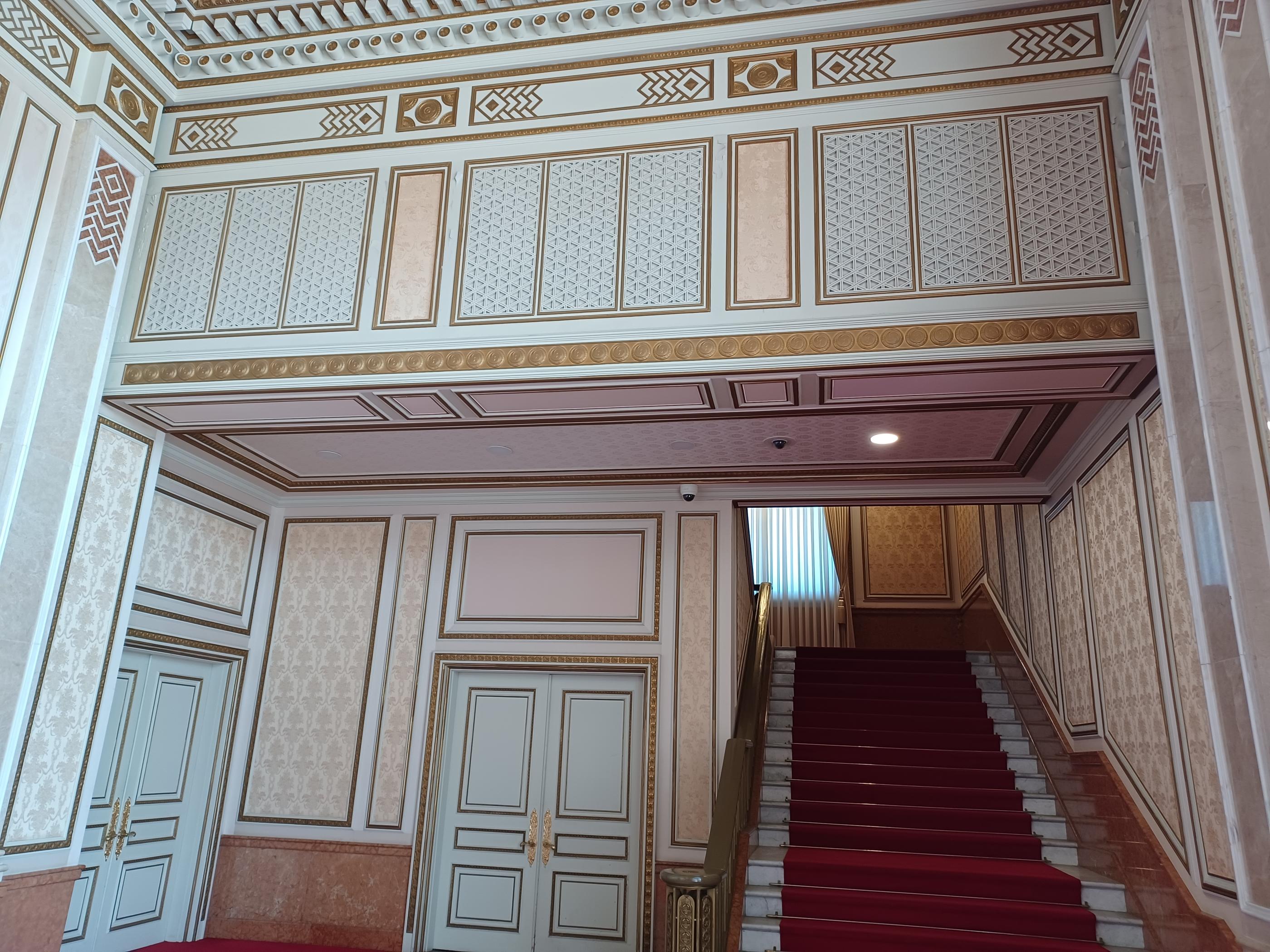
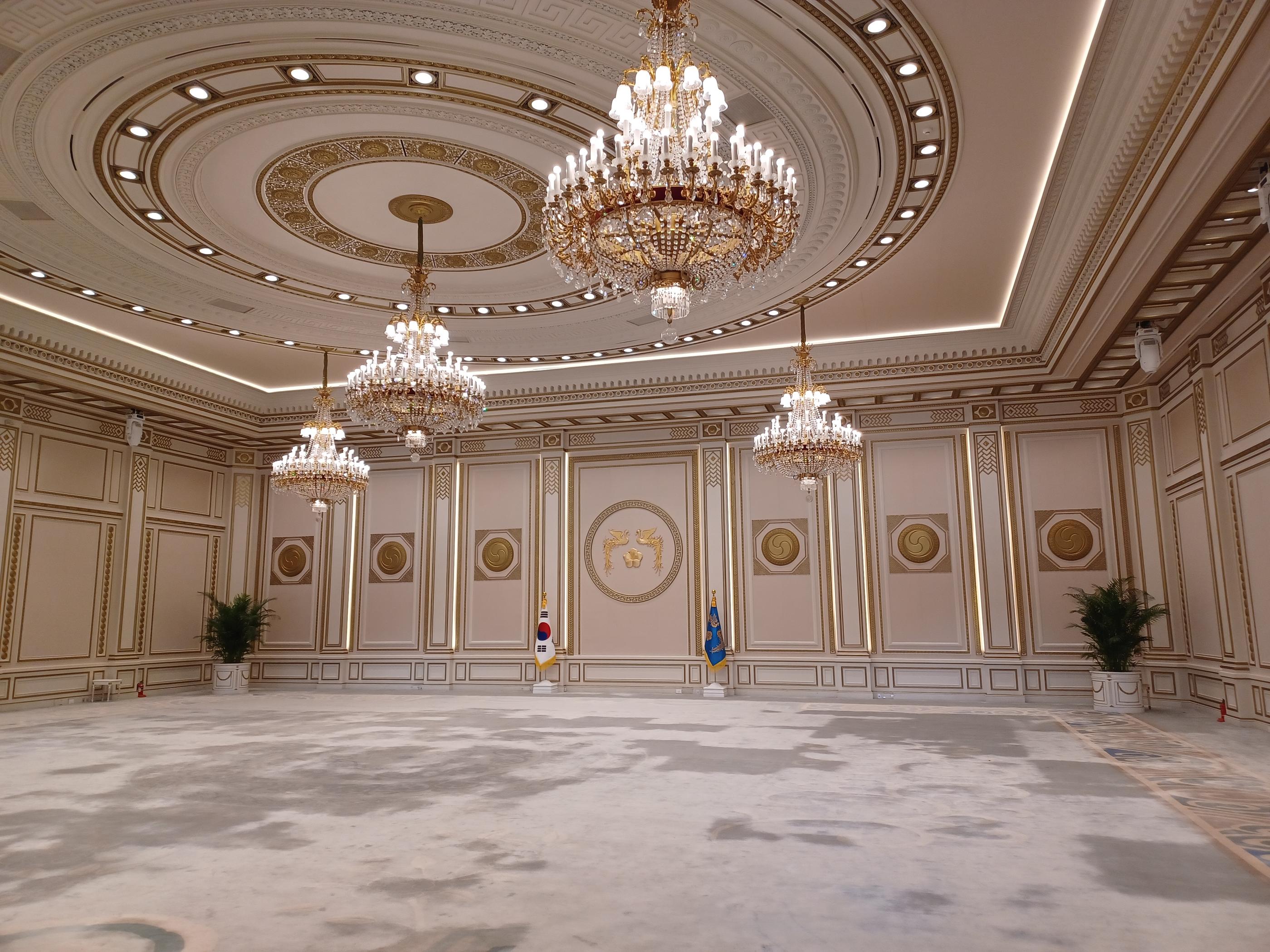
We look into the wide open doors of the room on the first floor (unfortunately, you can’t go inside).
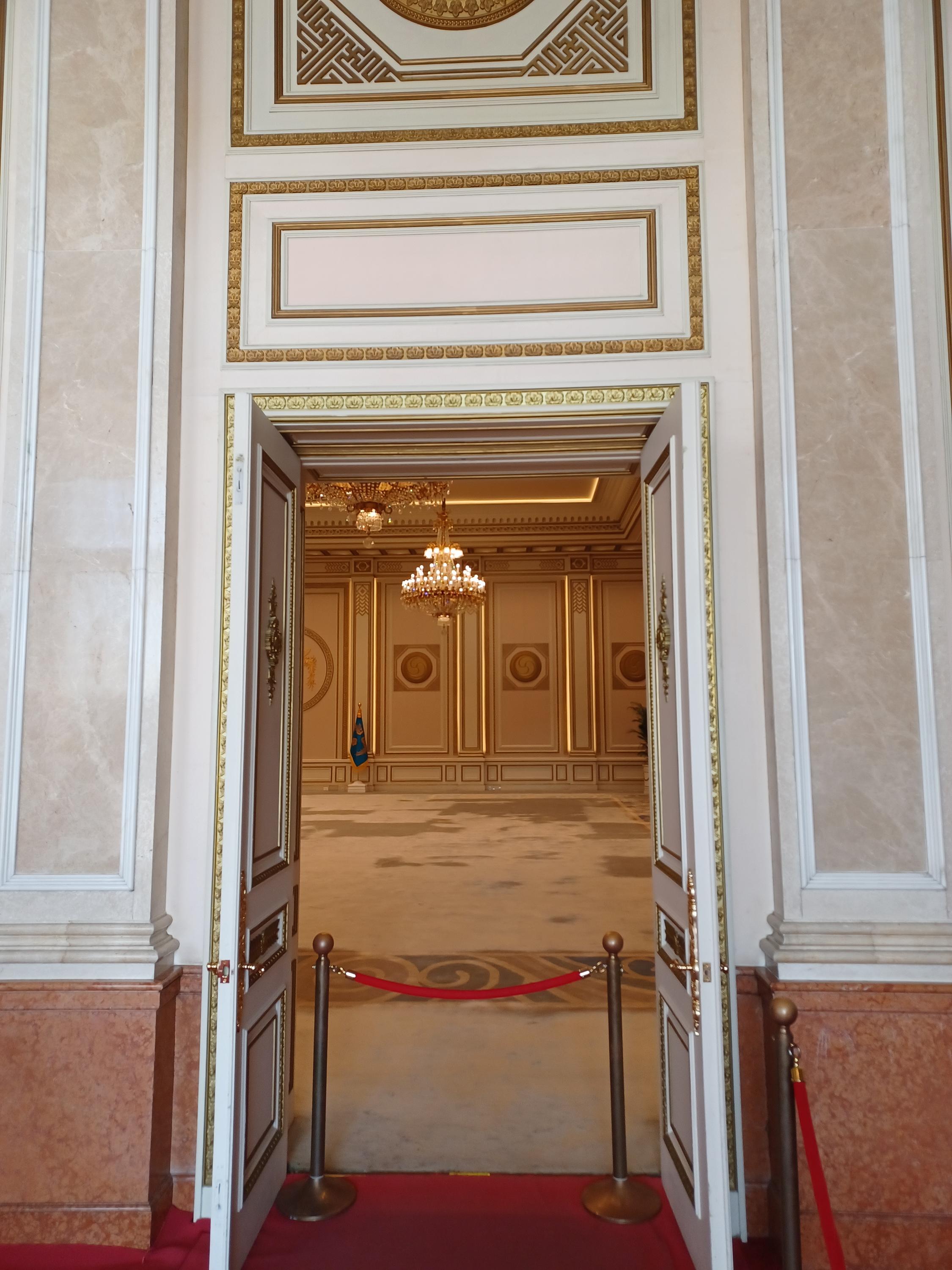
The first floor of Yeongbingwan Hall is a reception room, with Mugunghwa, laurel, and Taegeuk patterns symbolizing Korea on the wall.
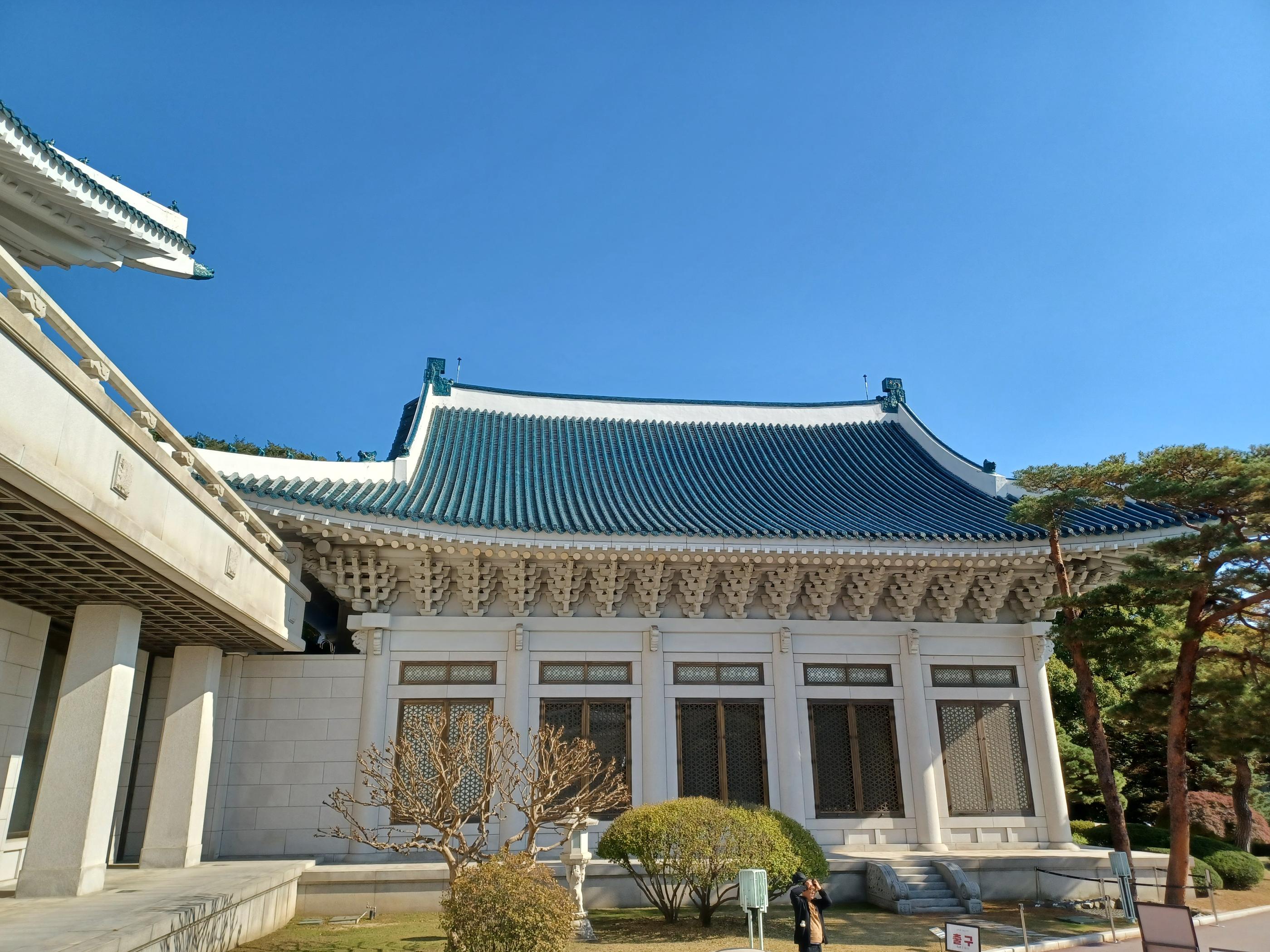
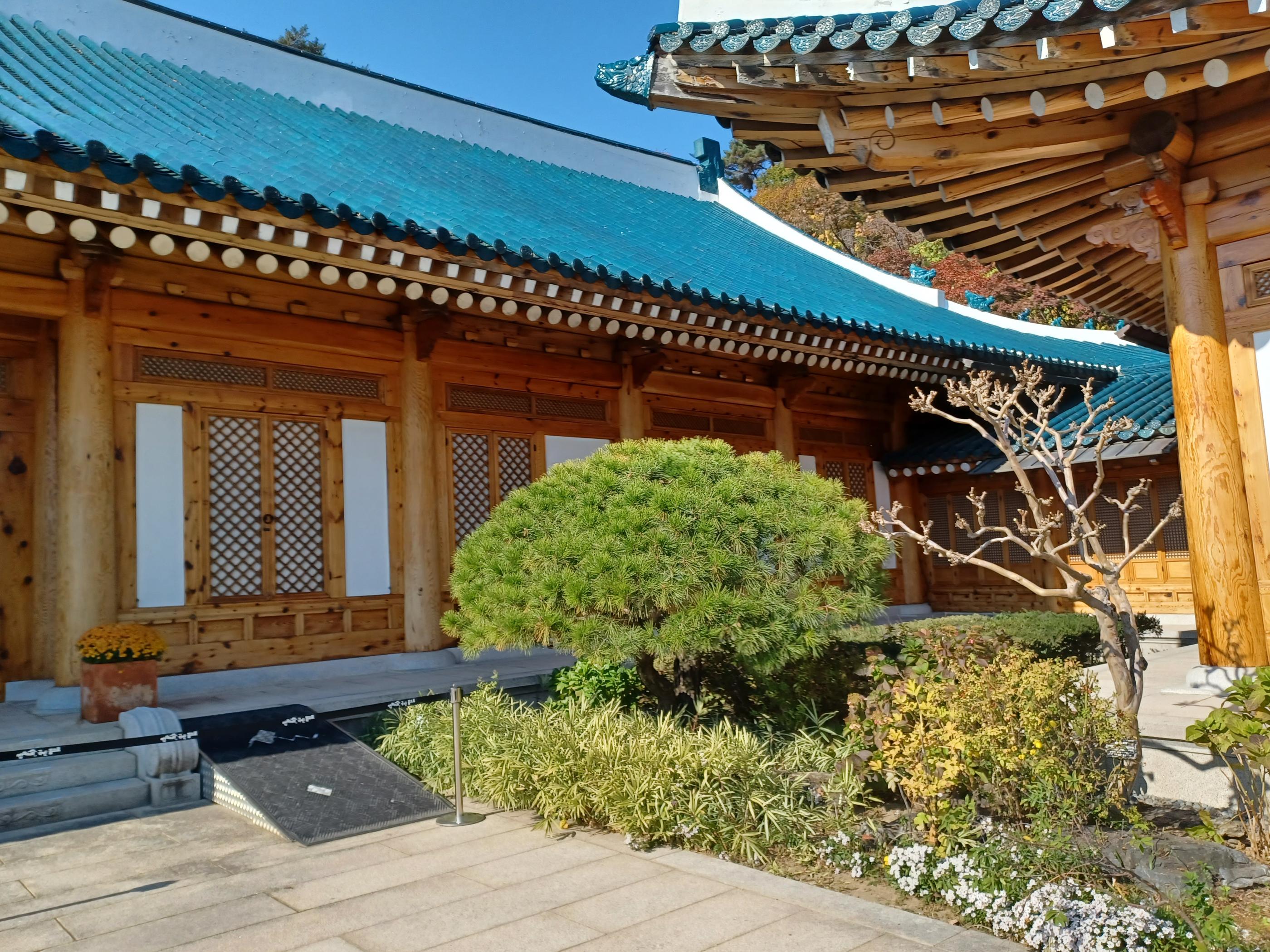
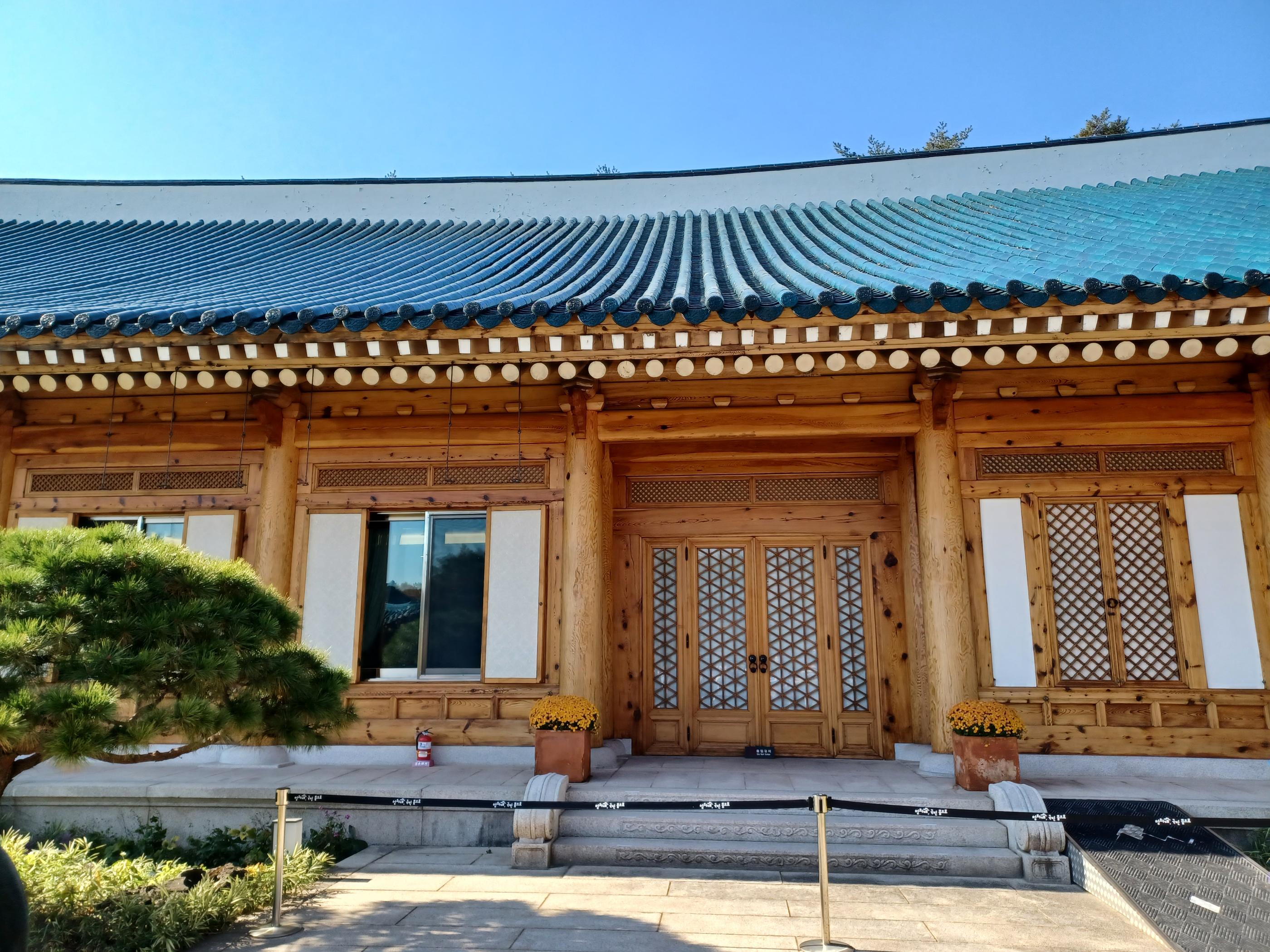
After the Yongbingwan, I went to see the Main building. This is the largest building in the complex, and it is thanks to it that the residence got its name, the Blue House. The signature markings of the Cheong Wa Dae are its blue tiles on the Main Office; it is the first thing to catch one's attention upon viewing the premises.
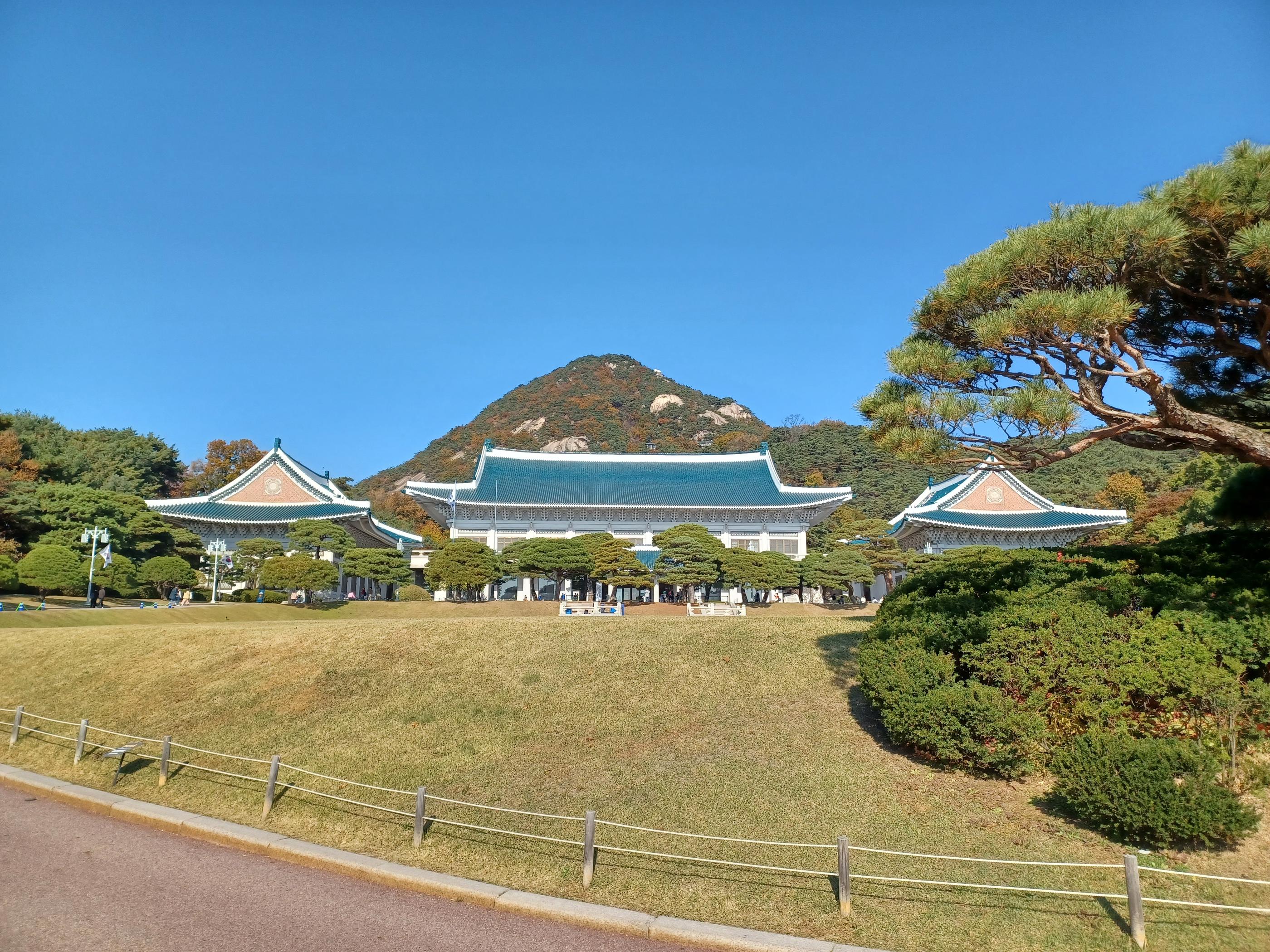
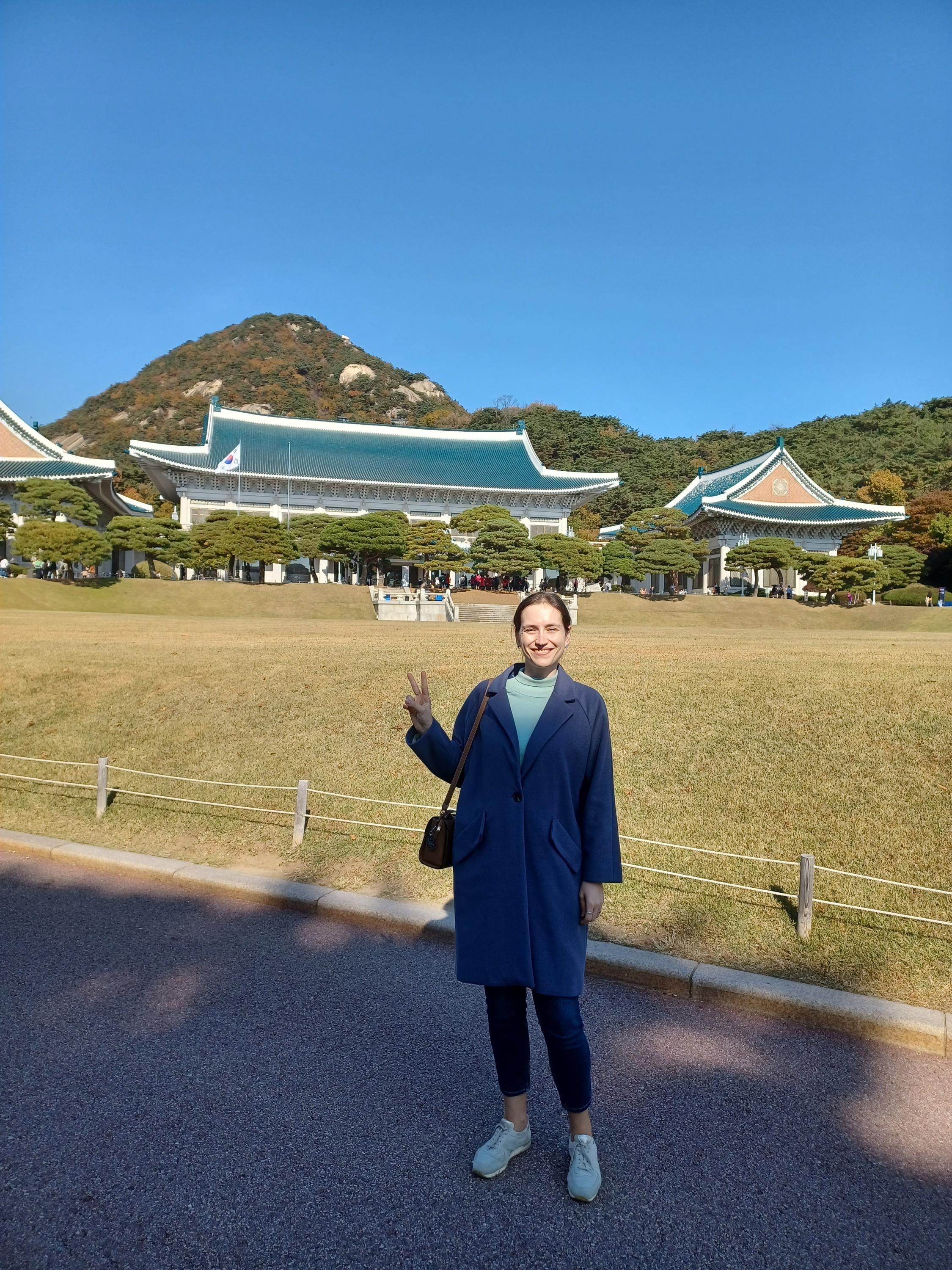
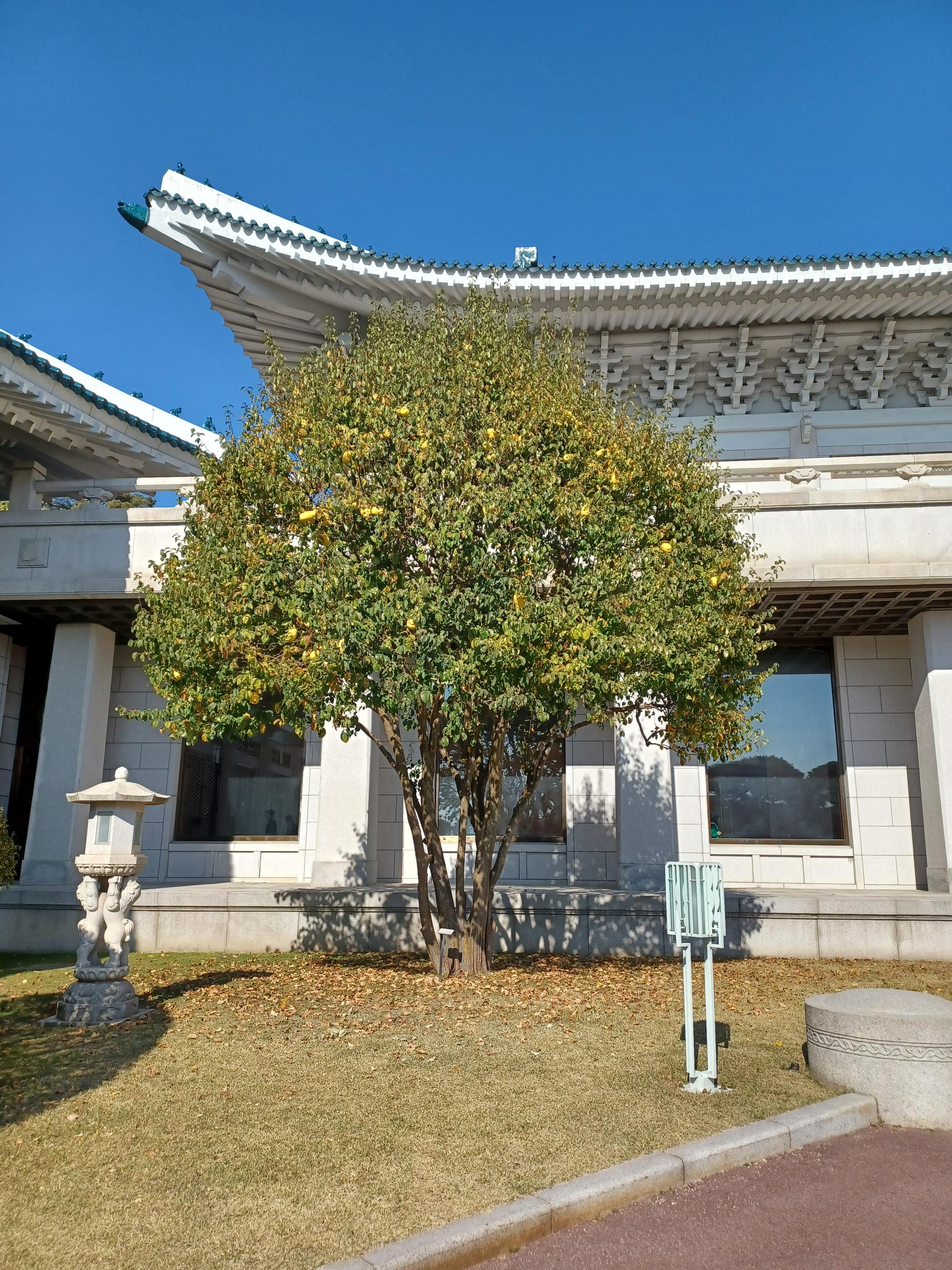
This building is very reminiscent of a traditional Korean hanok, only not made of wood. The same curved roof, beautiful carved ornament, like in Korean palaces. But the columns are rather influenced by the classical style. This combination looks very interesting, beautiful and colorful. As if in one building the features of Asia and Europe are combined. The surrounding landscape with pine trees and grass harmonizes with traditional Korean architecture.
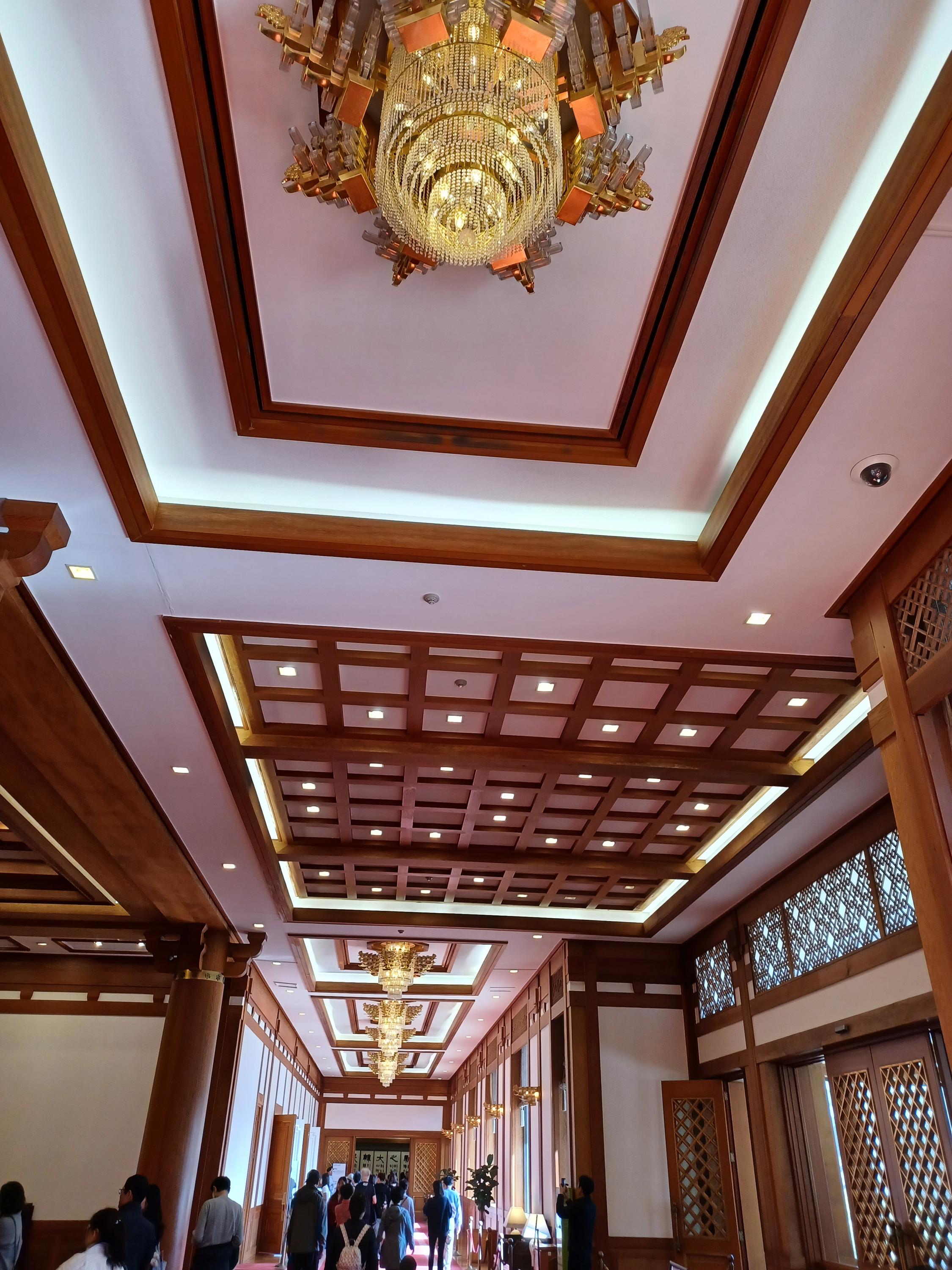
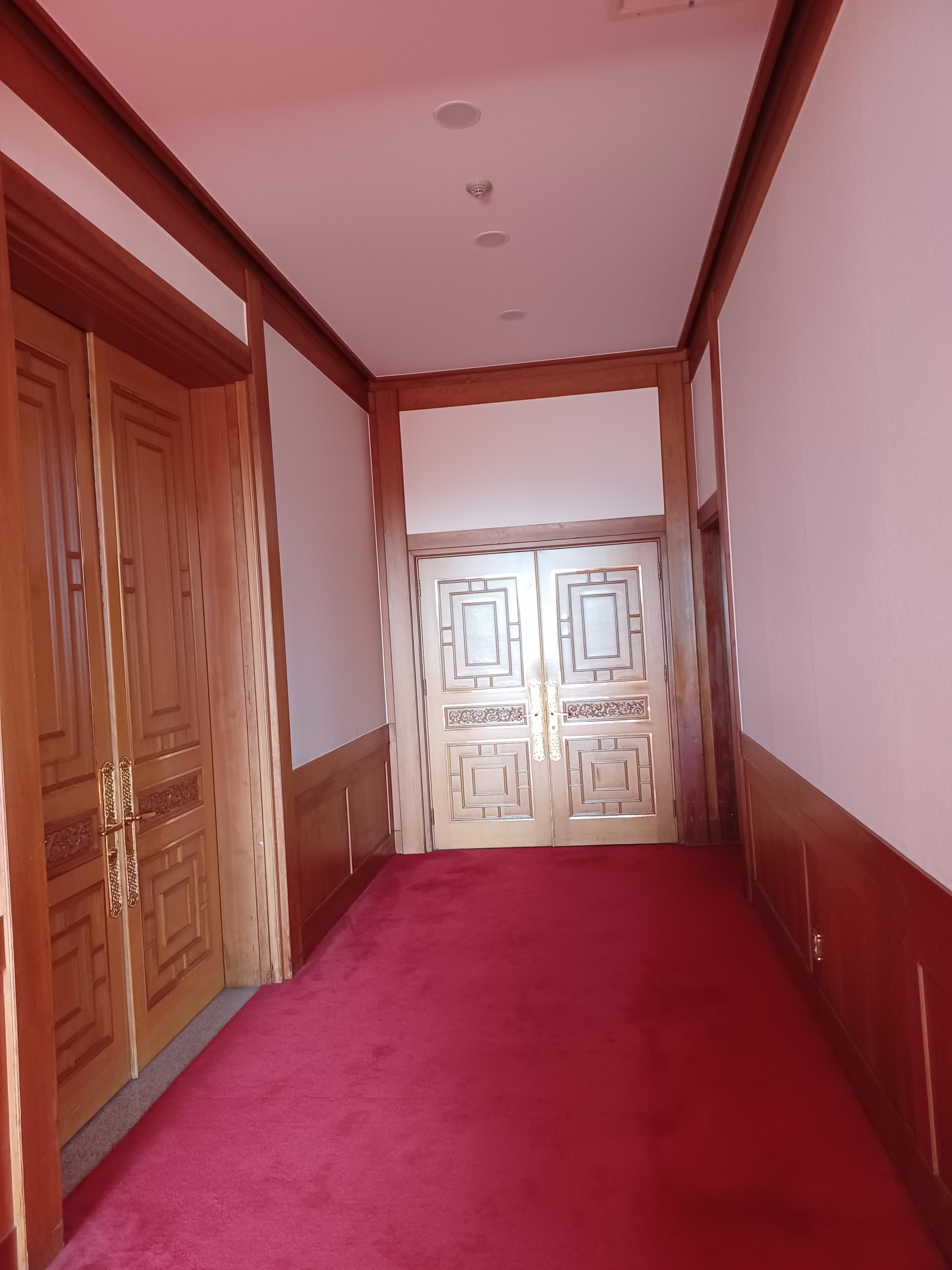
Immediately upon entering the building, the eye is drawn to a large corridor with an unusual design. The walls and ceiling are decorated with carved wooden lattices, which should make the building even more similar to a hanok. I also really liked the lamps on the ceiling, whose decor repeats the traditional carvings on the roofs of palaces and temples!
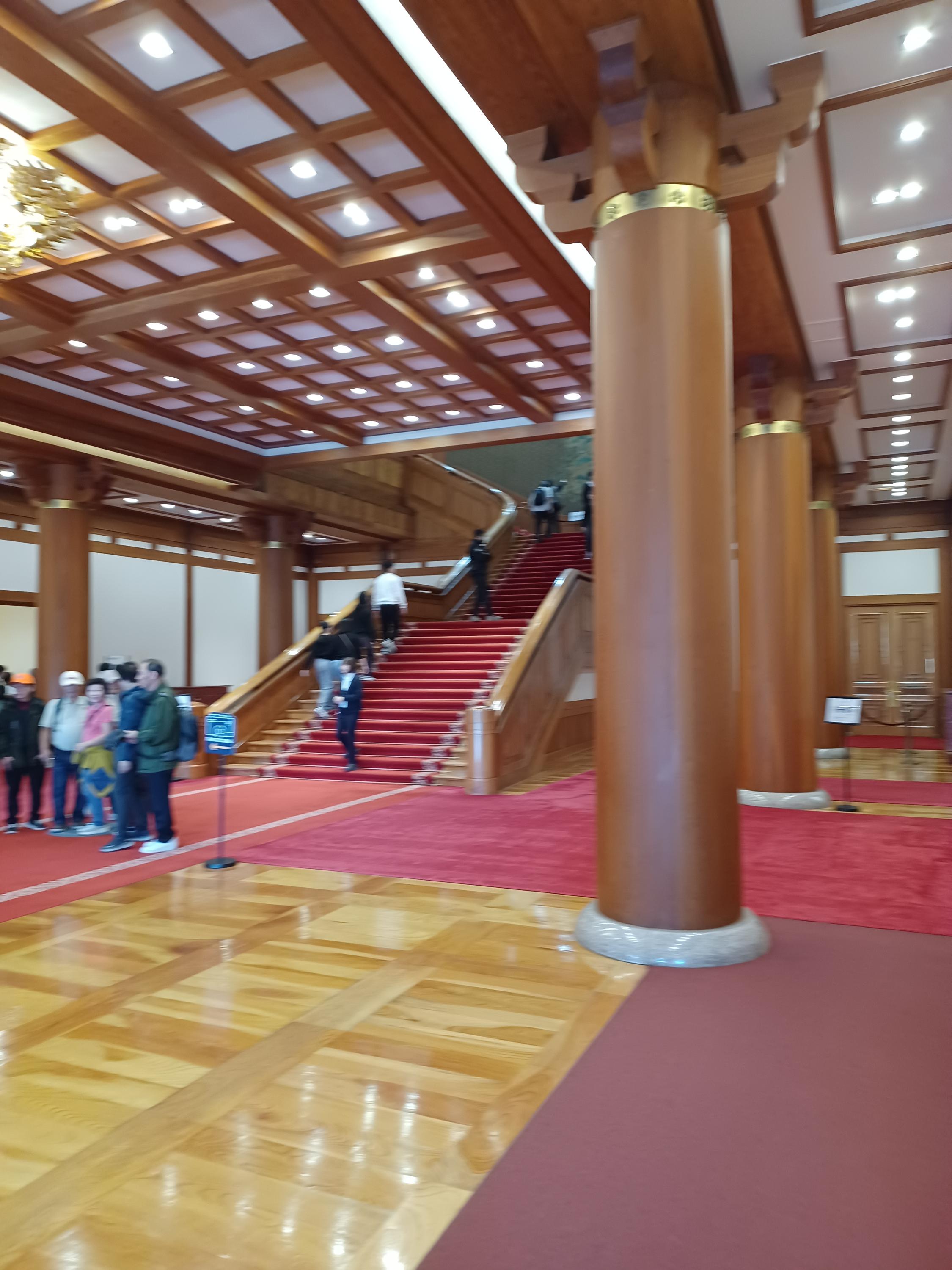
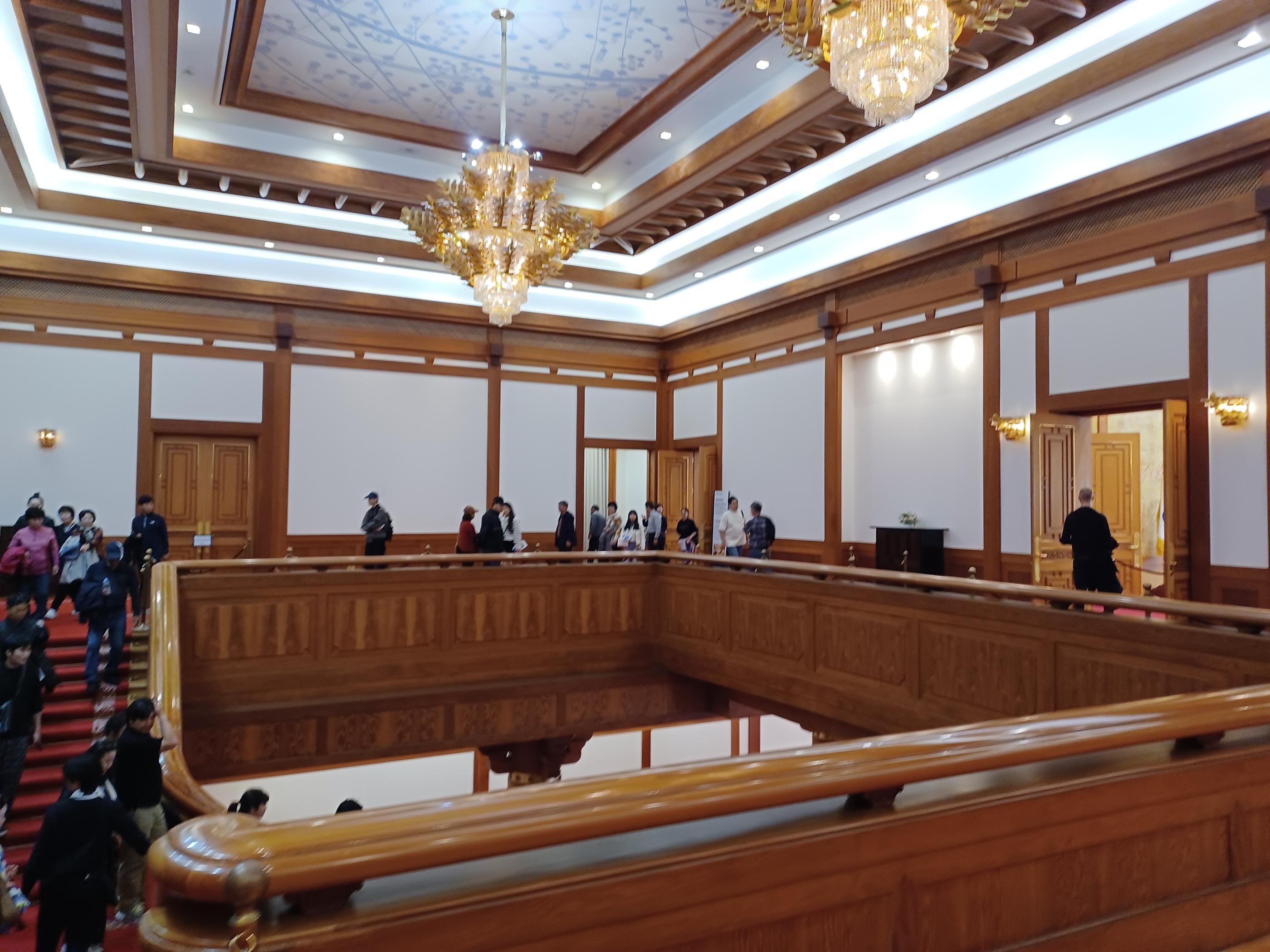
In the center of the first floor there is a lobby with a huge staircase. Large columns with traditional carving, a red carpet - all this is very solemn and monumental!
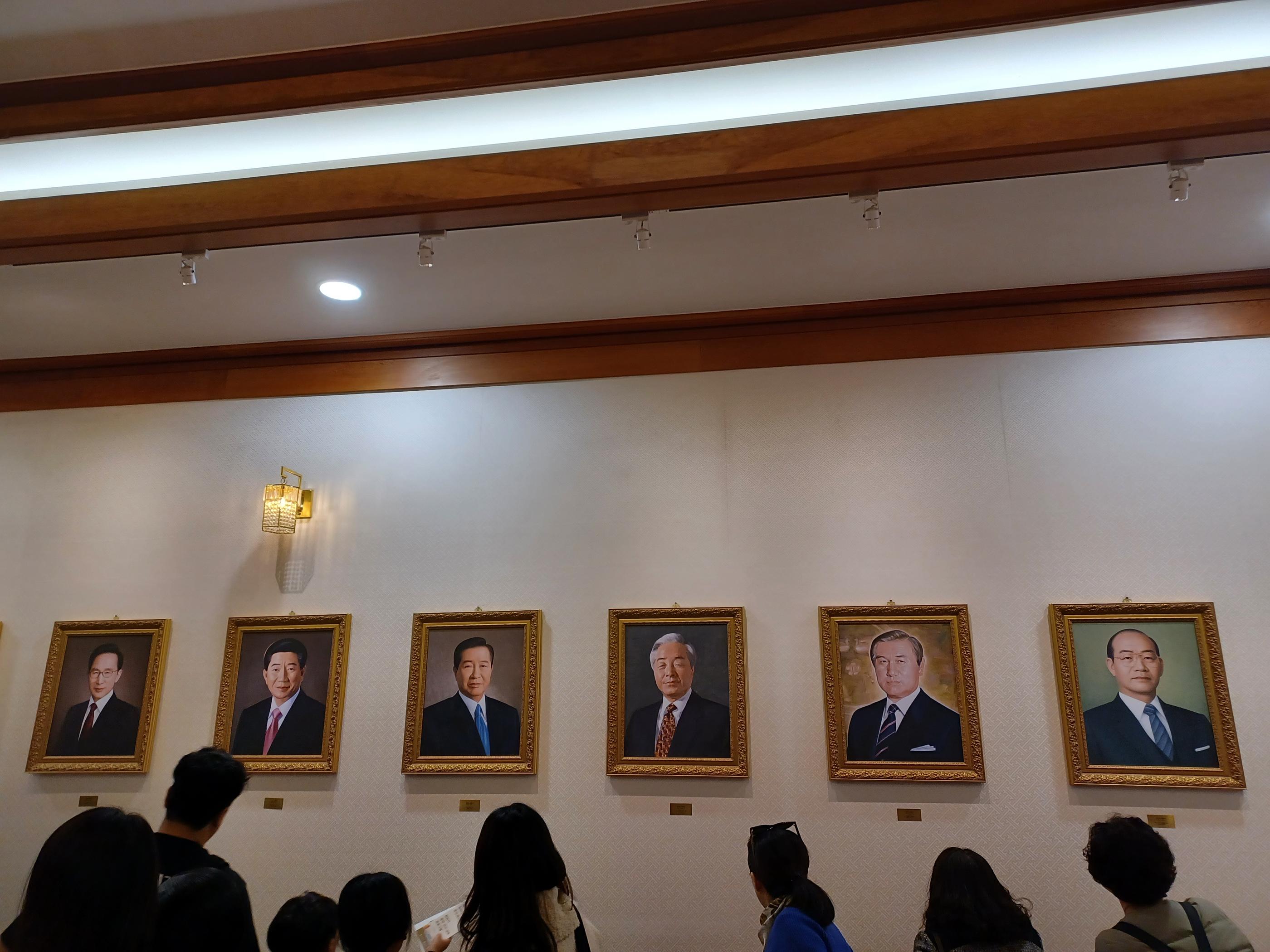
To the left is Sejong Hall. It's a space where the Cabinet meetings to deliberate on important government policies were held. Portraits of the twelve korean previous presidents hang all the walls on the front room at the entrance to the Sejong room.
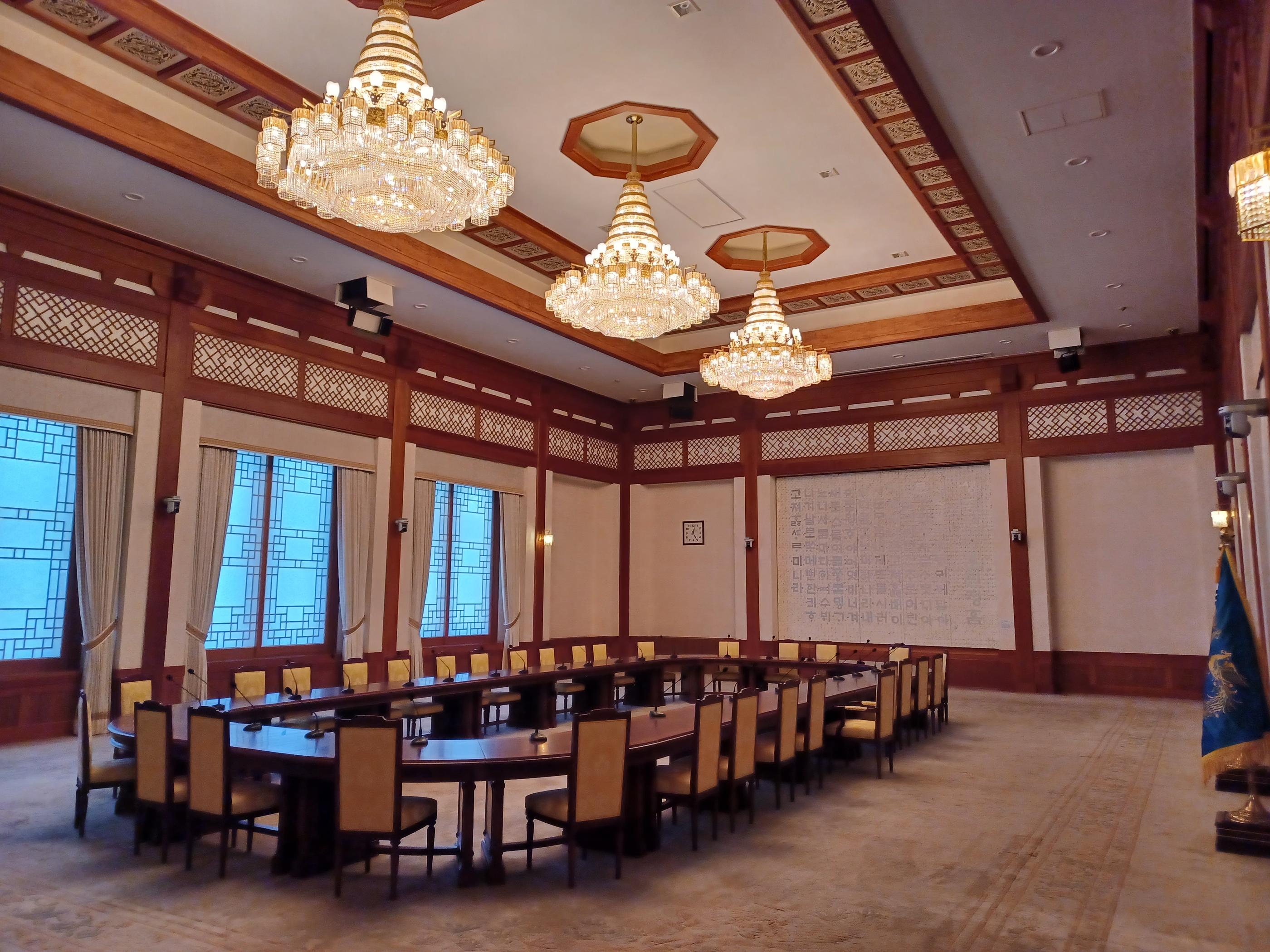
Sejong Hall is named after King Sejong, the fourth king of the Joseon Dynasty, who created Hanguel and developed a spirit of affection. To emulate his spirit, a carpet with the consonants and vowels of Hanguel is on the floor. This means that it is a place to reflect on love for the people as it is where the state council was held. The chandelier in the room resembles the upper part of a pagoda and is decorated with patterns of clouds and crane motifs.
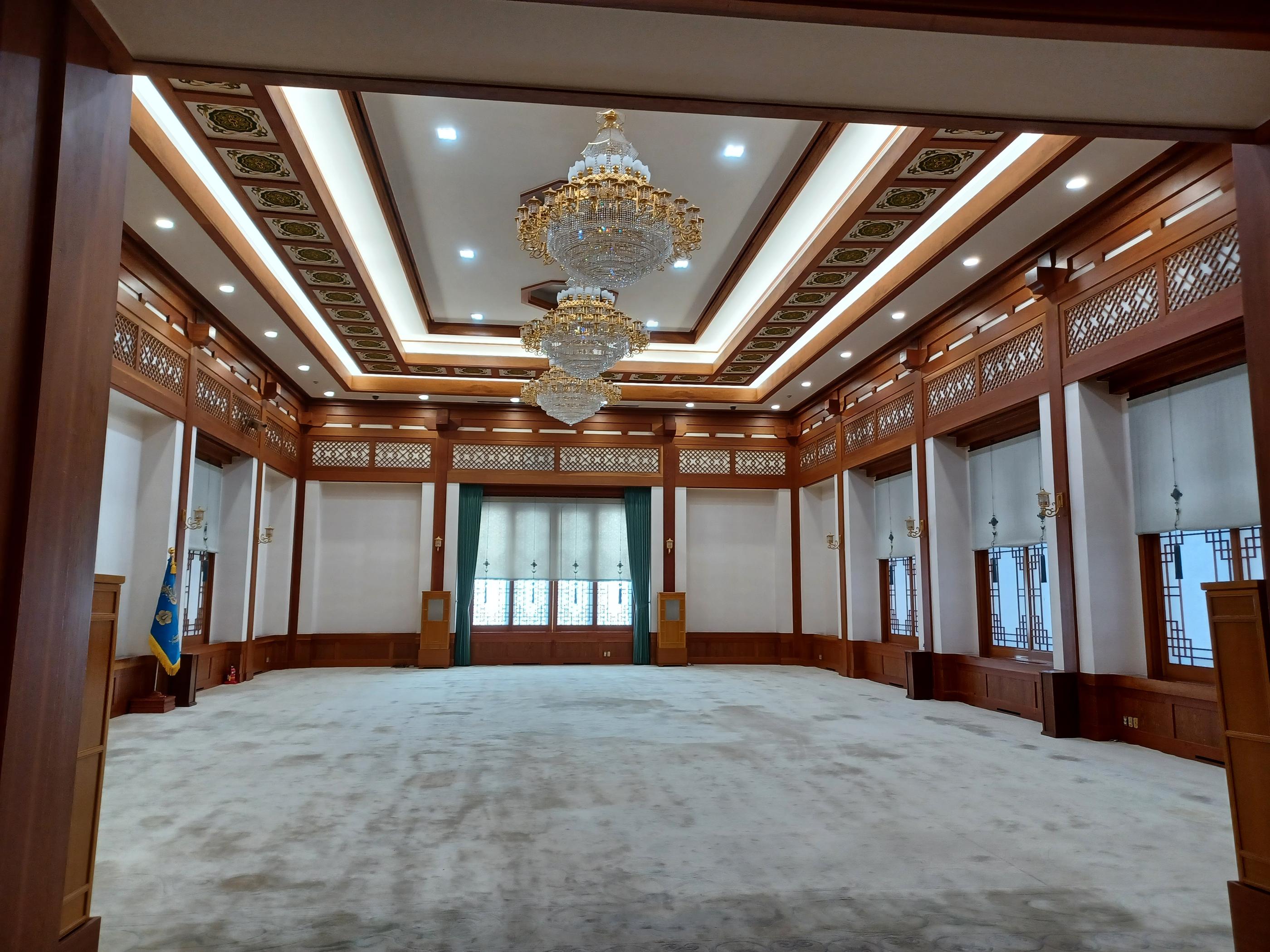
To the right along the corridor is another large room. This is Chungmu Hall on the east side of the Main Building borrowed the name of Admiral Yi Sun Shin posthumously to honor his patriotic spirit. Chungmu Hall has a high ceiling, so visitors have to look up; this high ceiling seems to express the grand spirit of Admiral Yi Sun Shin. Having a high ceiling and a large space, it was used for Korean traditional cultural performances for visiting foreign guests and for award ceremonies involving large numbers of people.
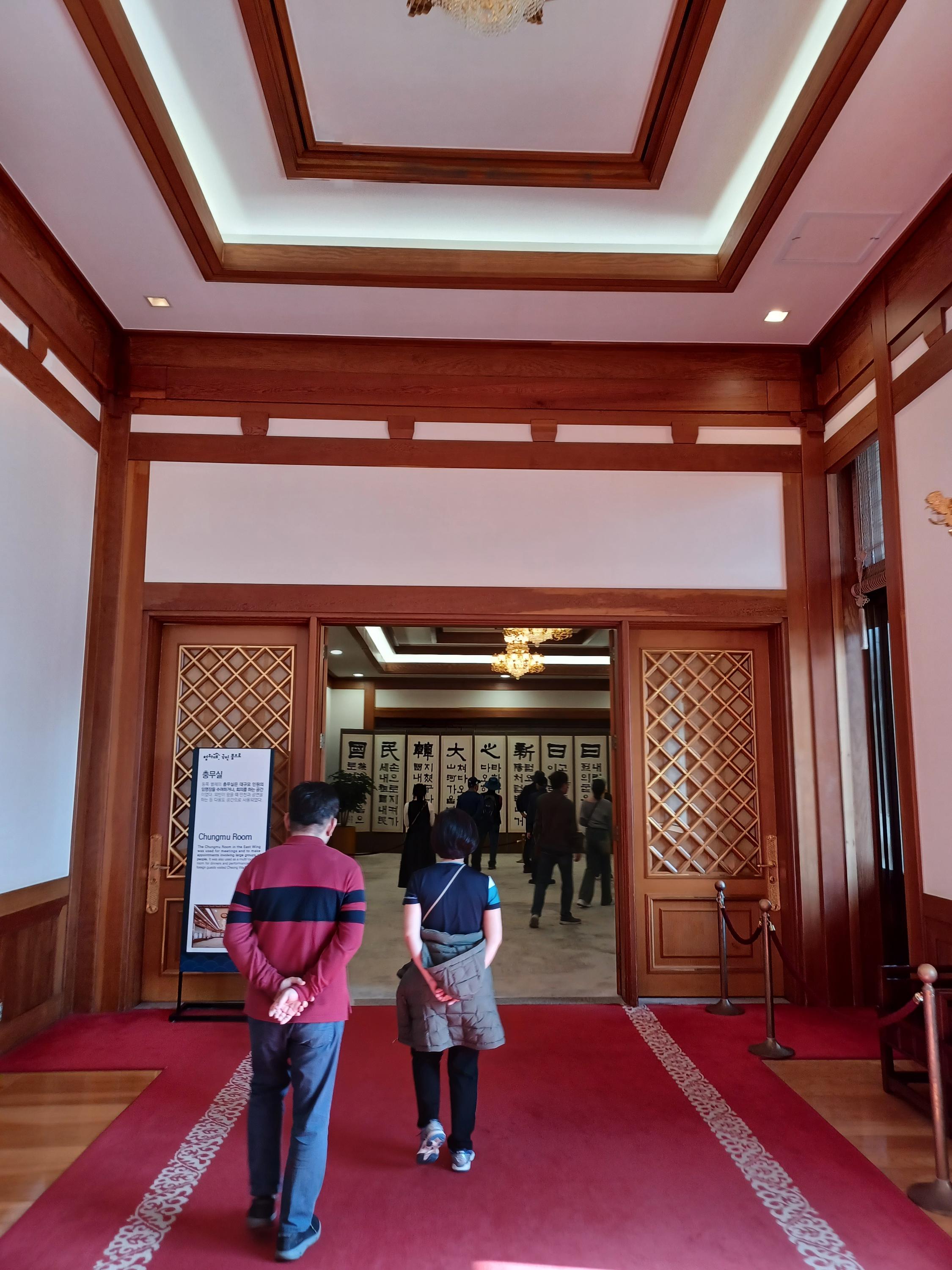
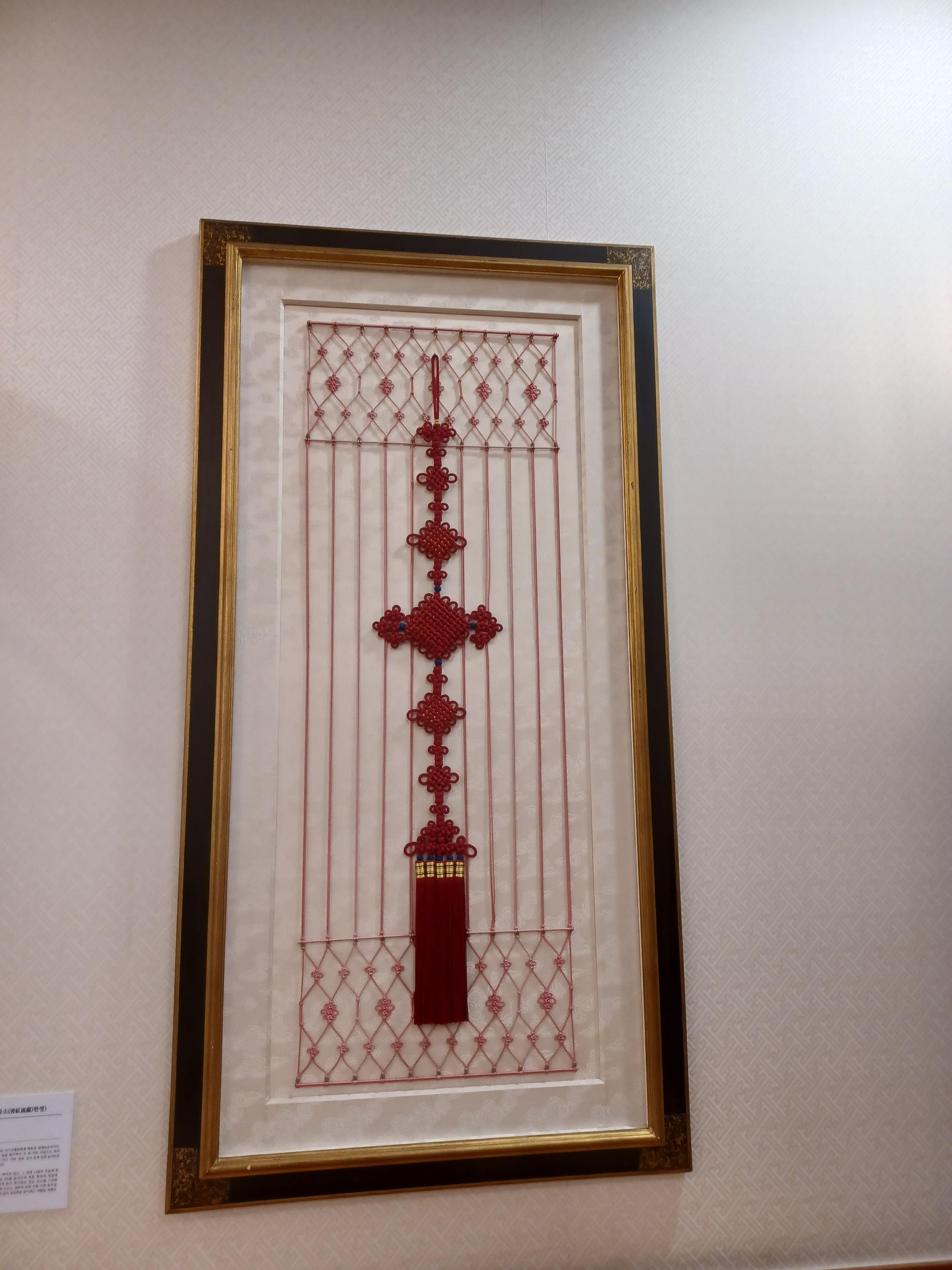
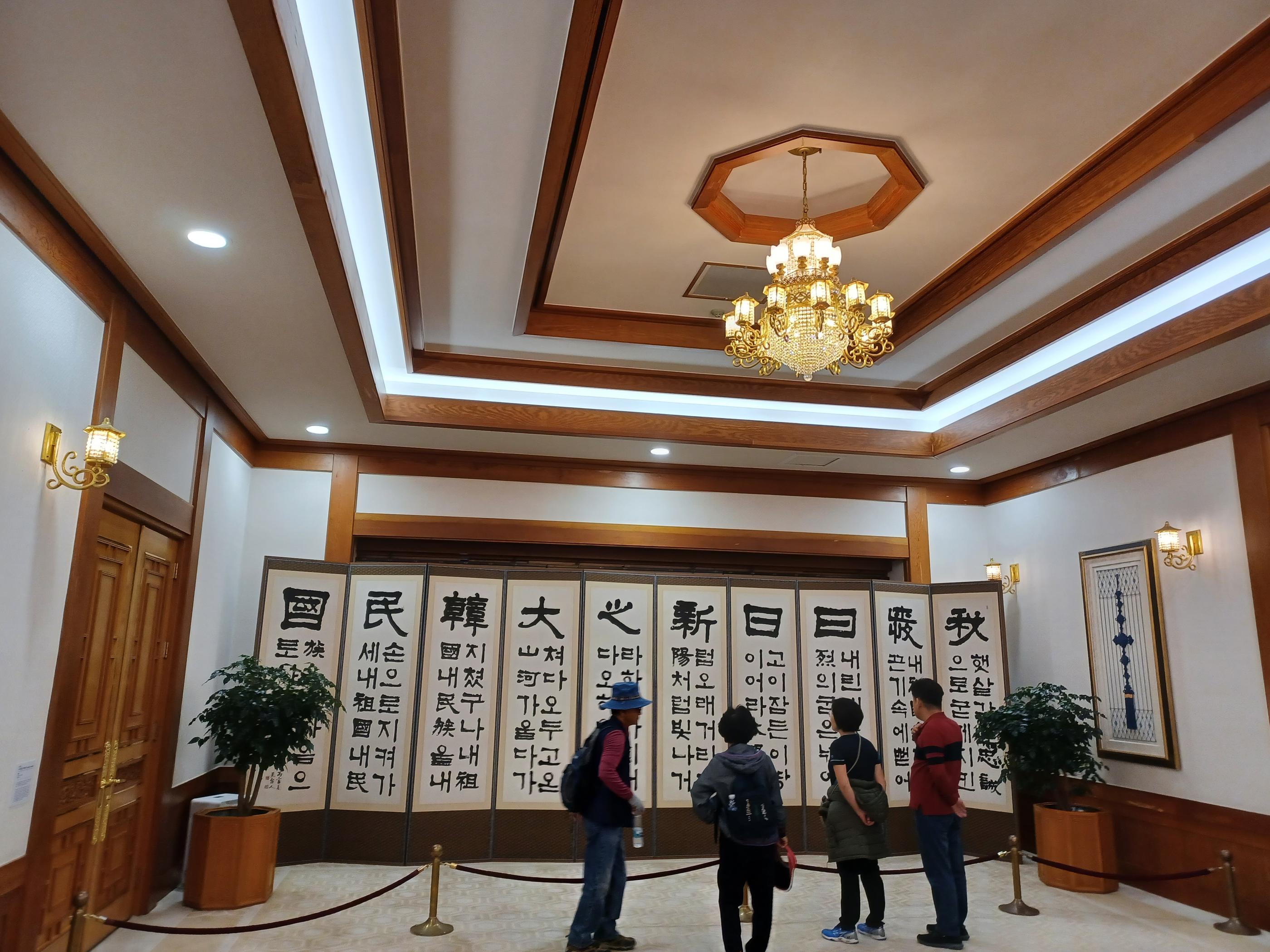
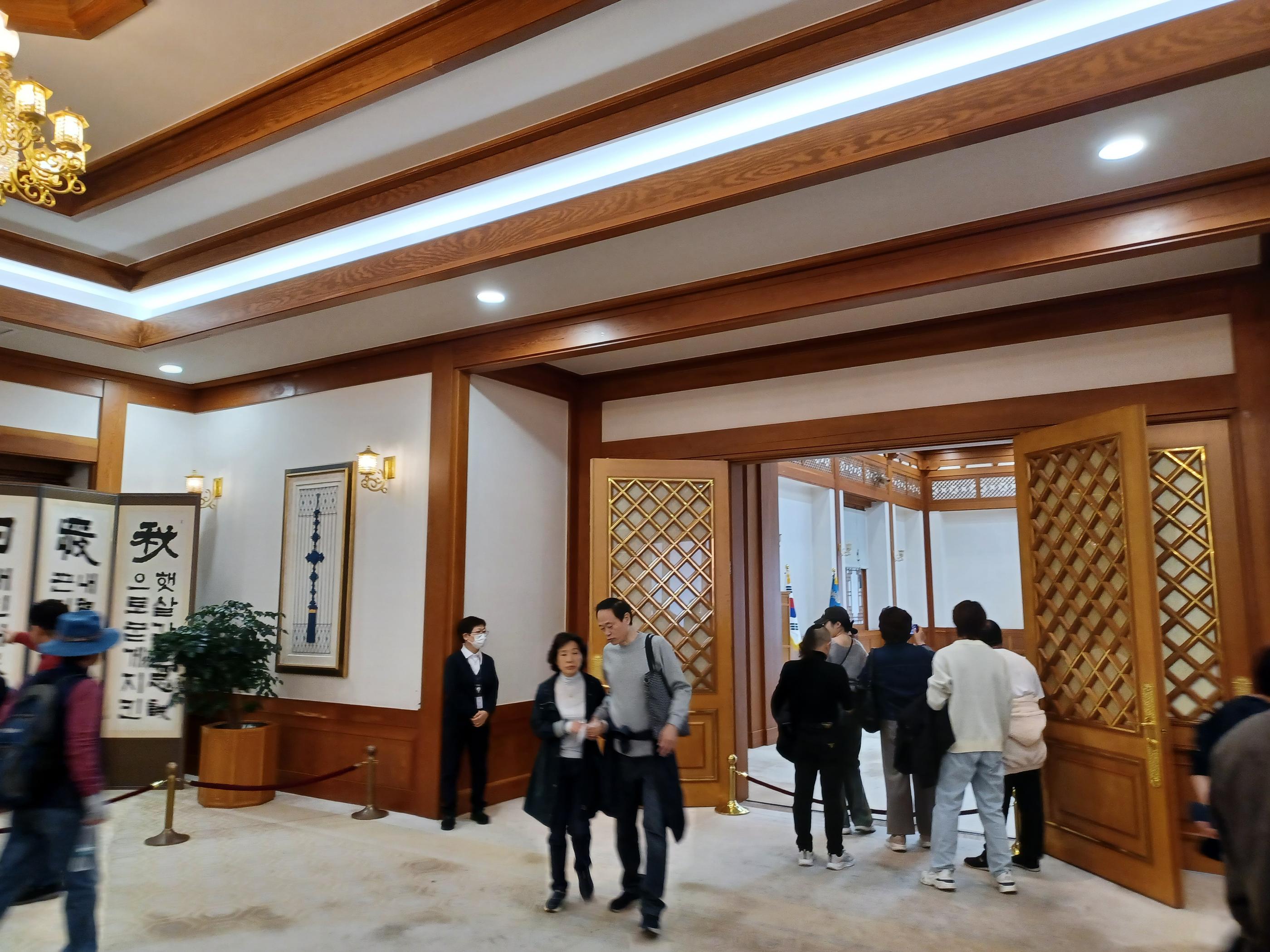
Its exterior windows are lined with Korean paper and decorated with the Buddhist cross symbol (卍), which represents good fortune. The chandelier in the Chungmu Room embodies the shape of a traditional stone lantern, while the wall lamps replicate the hipped ornament of a stone lantern roof with a hexagonal cone shape.
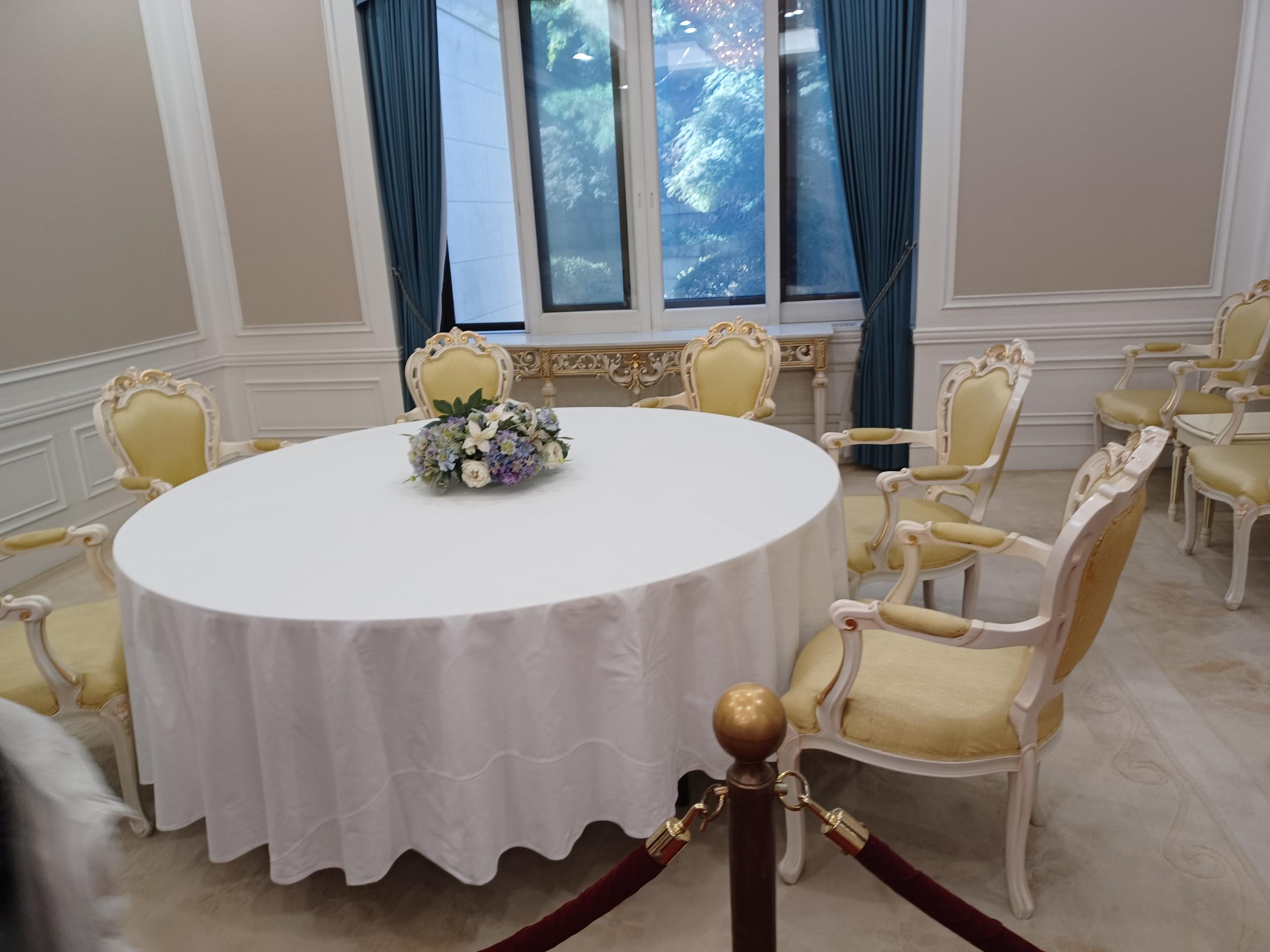
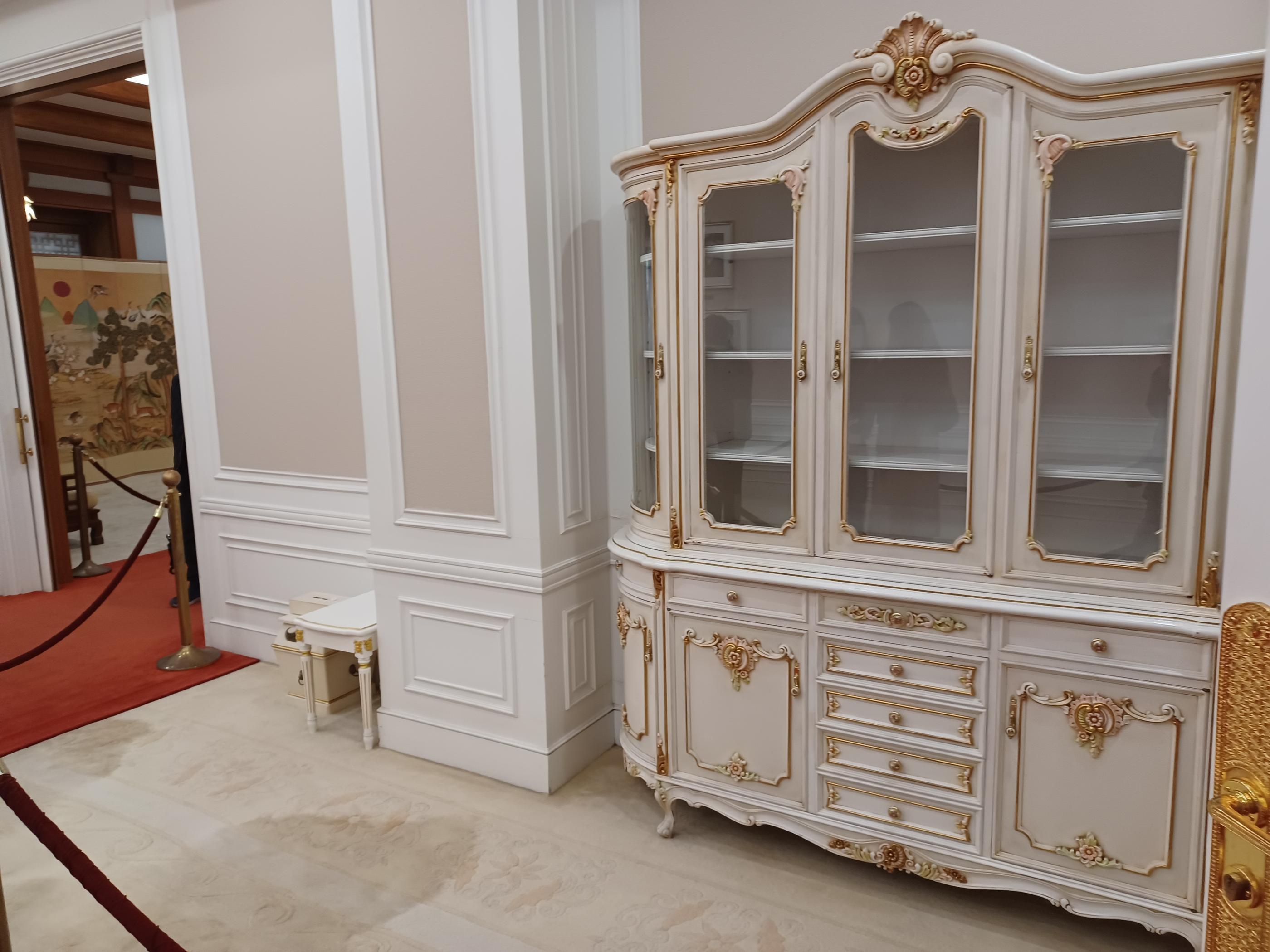
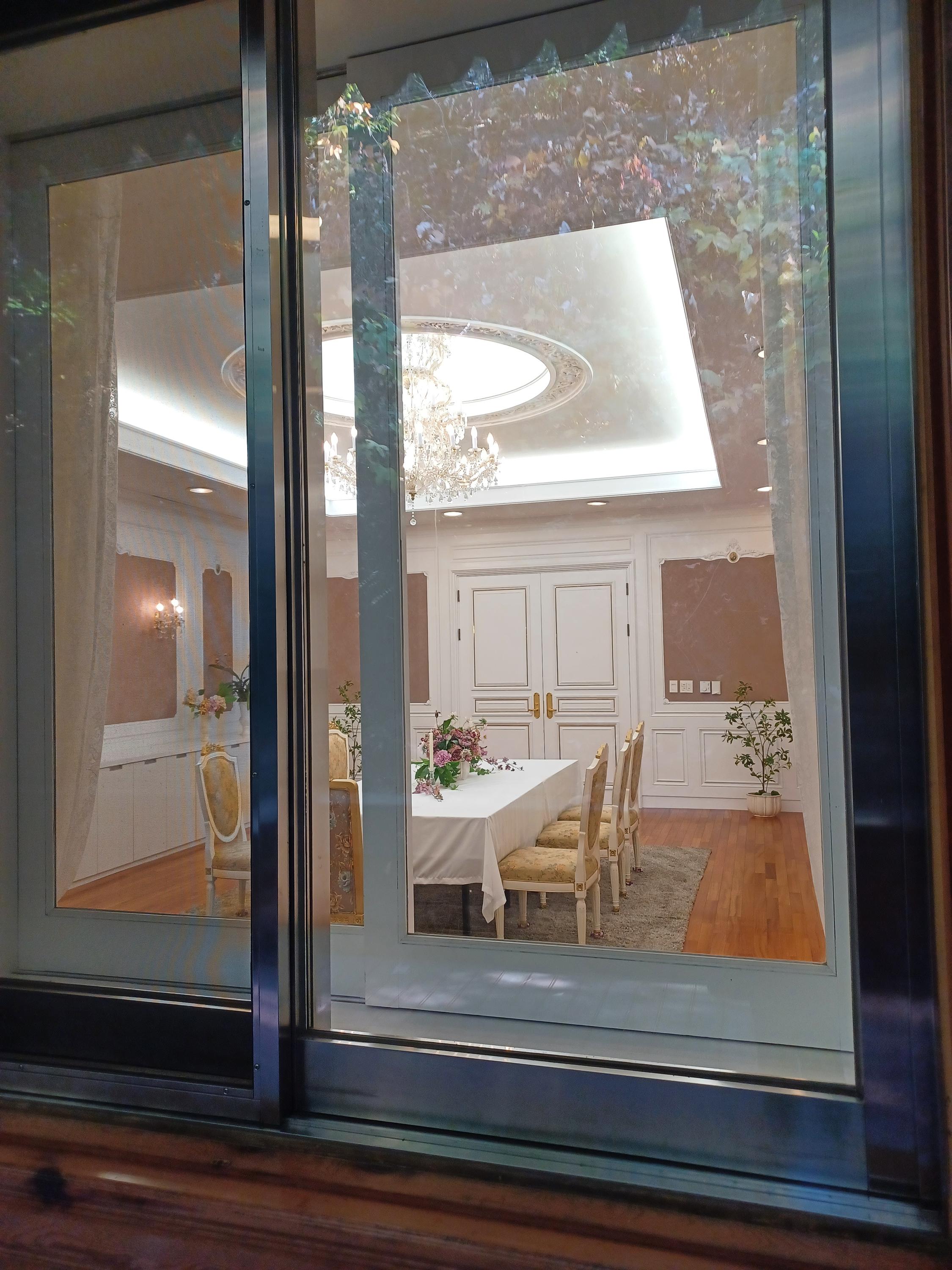
Another room on the first floor that is worth seeing is the Inwang Hall. The Inwang Room, where luncheons and small scale banquets were held, exhibits a harmonious use of ivory white on the walls, ceiling, and carpet. Visitors can experience the distinctly elegant European ambience of the hall with a candelabra style chandelier mounted on the ceiling.
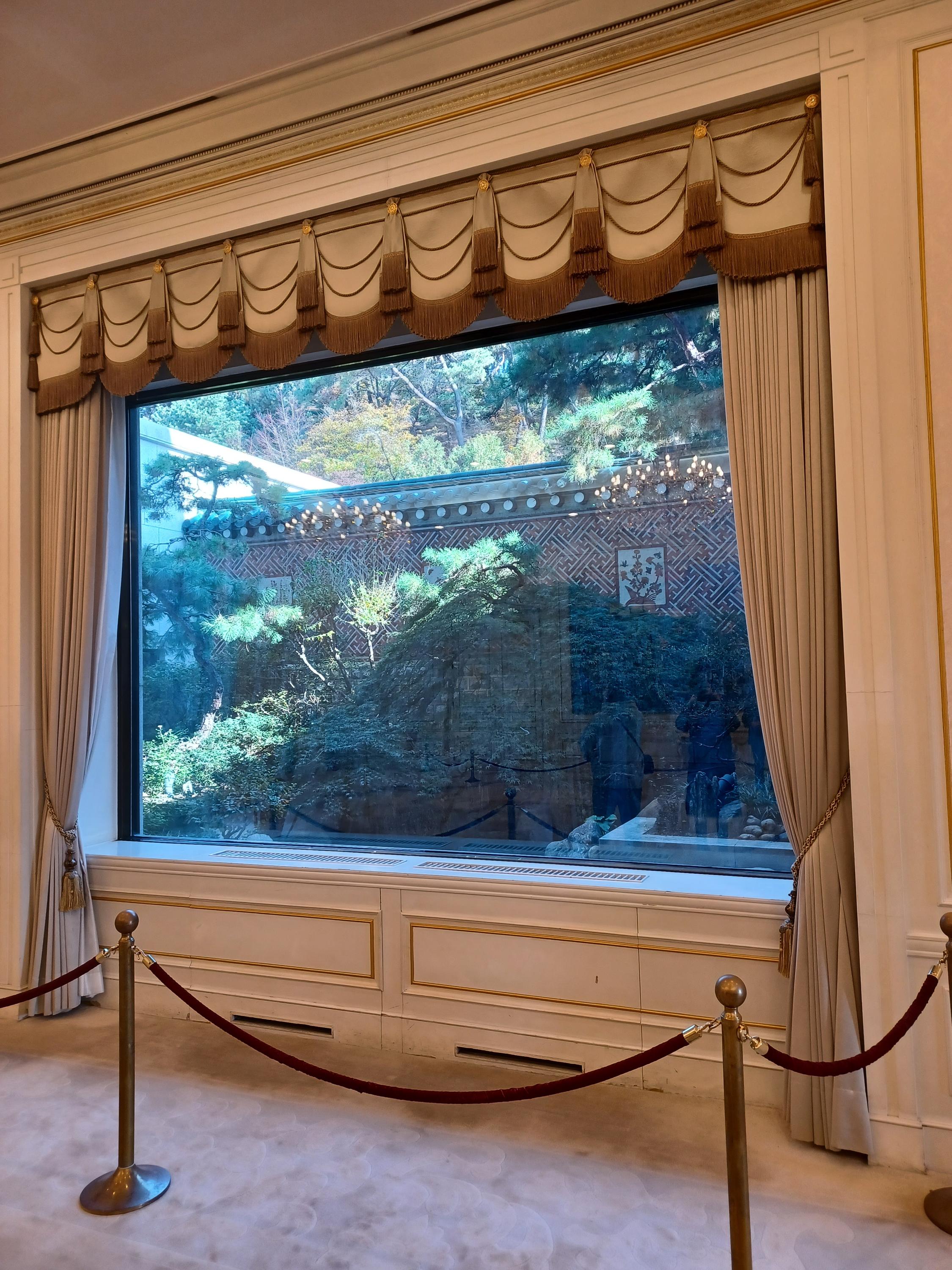
Large eastern windows open up to a courtyard for a view that contrasts the Western interior with traditional Korean landscaping. This courtyard features a small pond, flower walls, decorative rocks, and a stone tower.
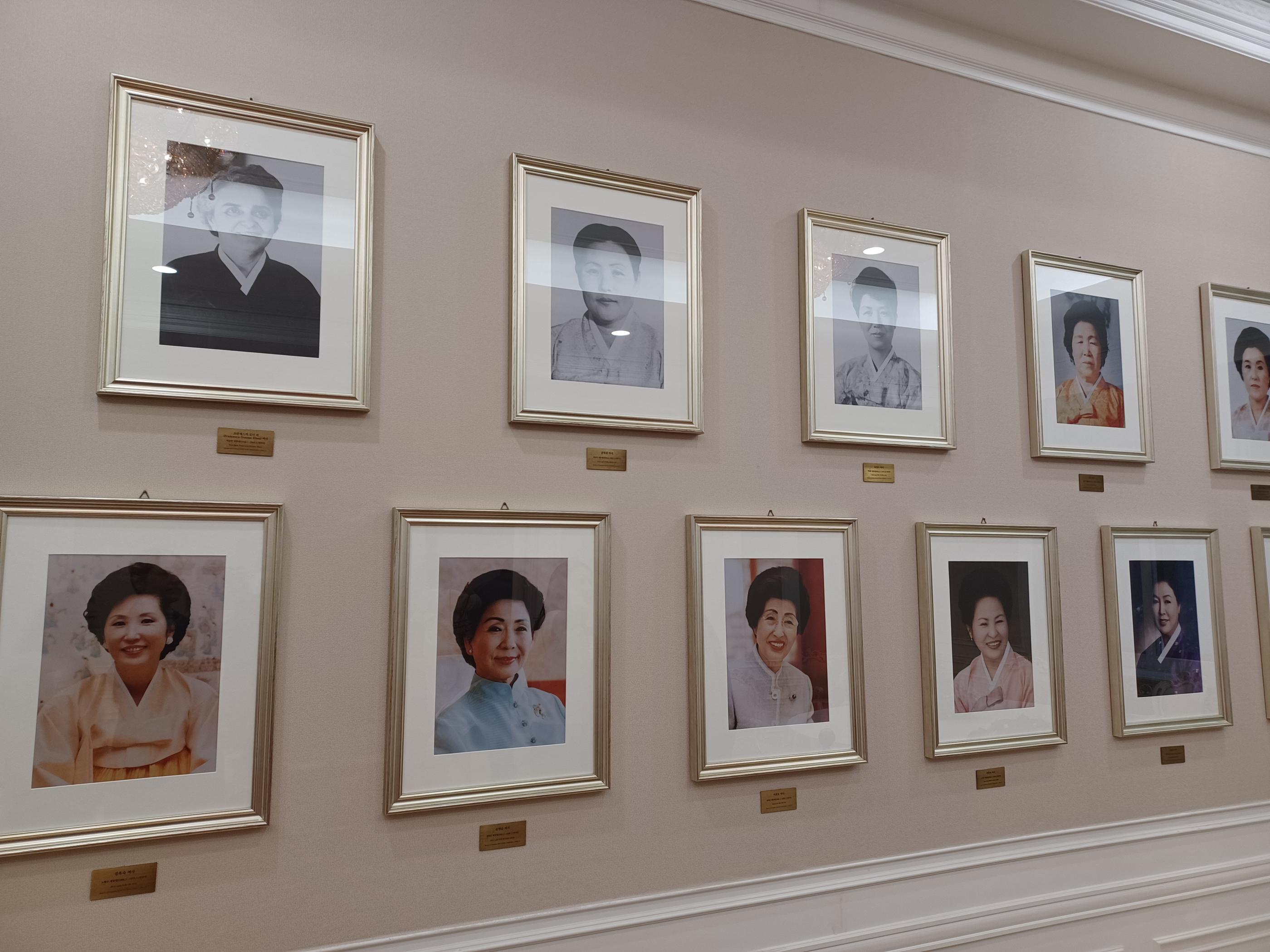
What interested me most was the Mugunghwa Room. Mugunghwa Room on the first floor of the Main Building has the first lady's office and a reception room. Portraits of former first ladies grace its walls. A very interesting and new fact for me: the very first "First Lady" was a foreigner, not Korean! Along with the Inwang Room, its interior is decorated in the Western style.
The floor has a carpet designed after flowers, and a butterfly decorated chandelier hangs from the ceiling.
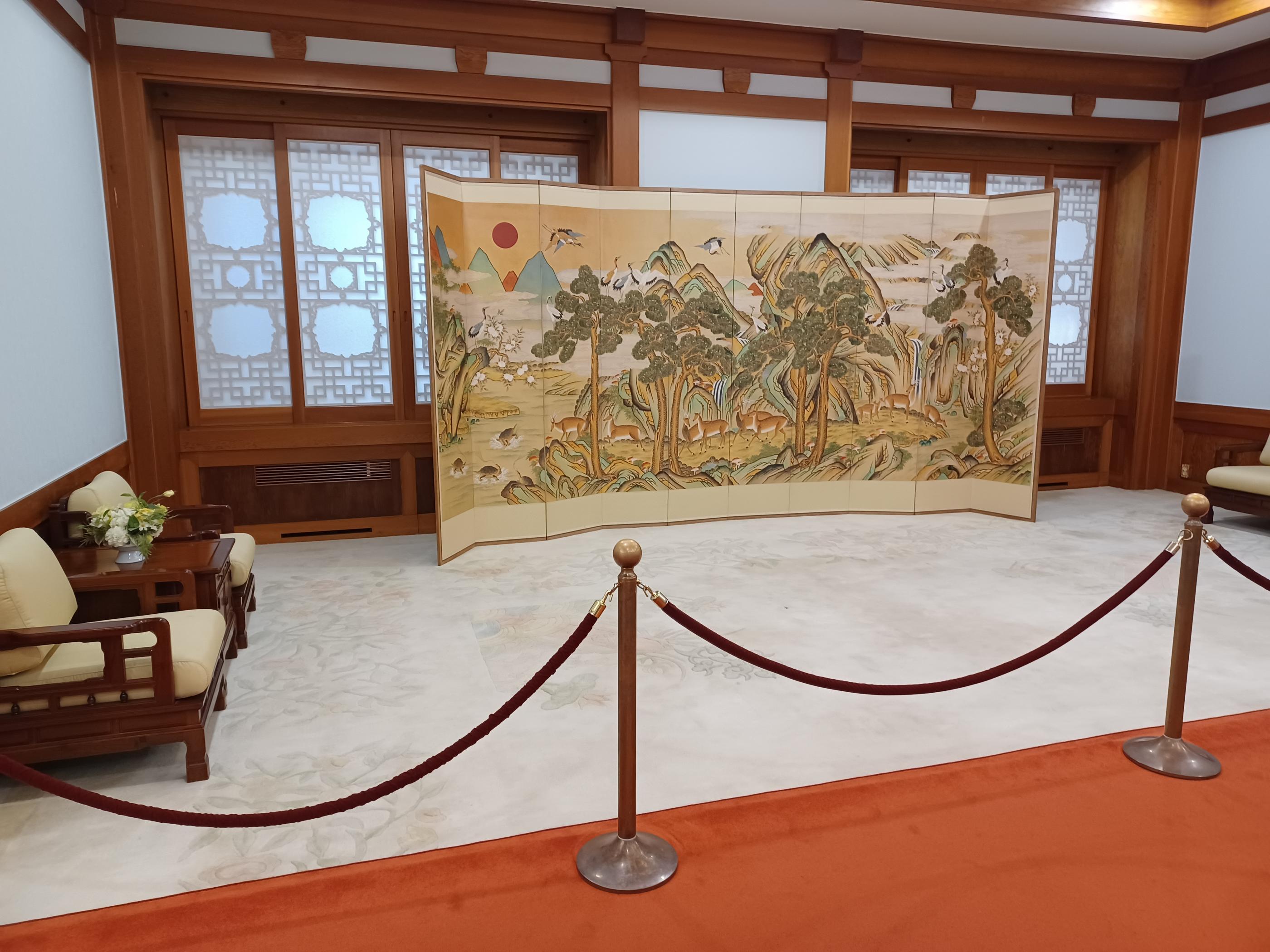
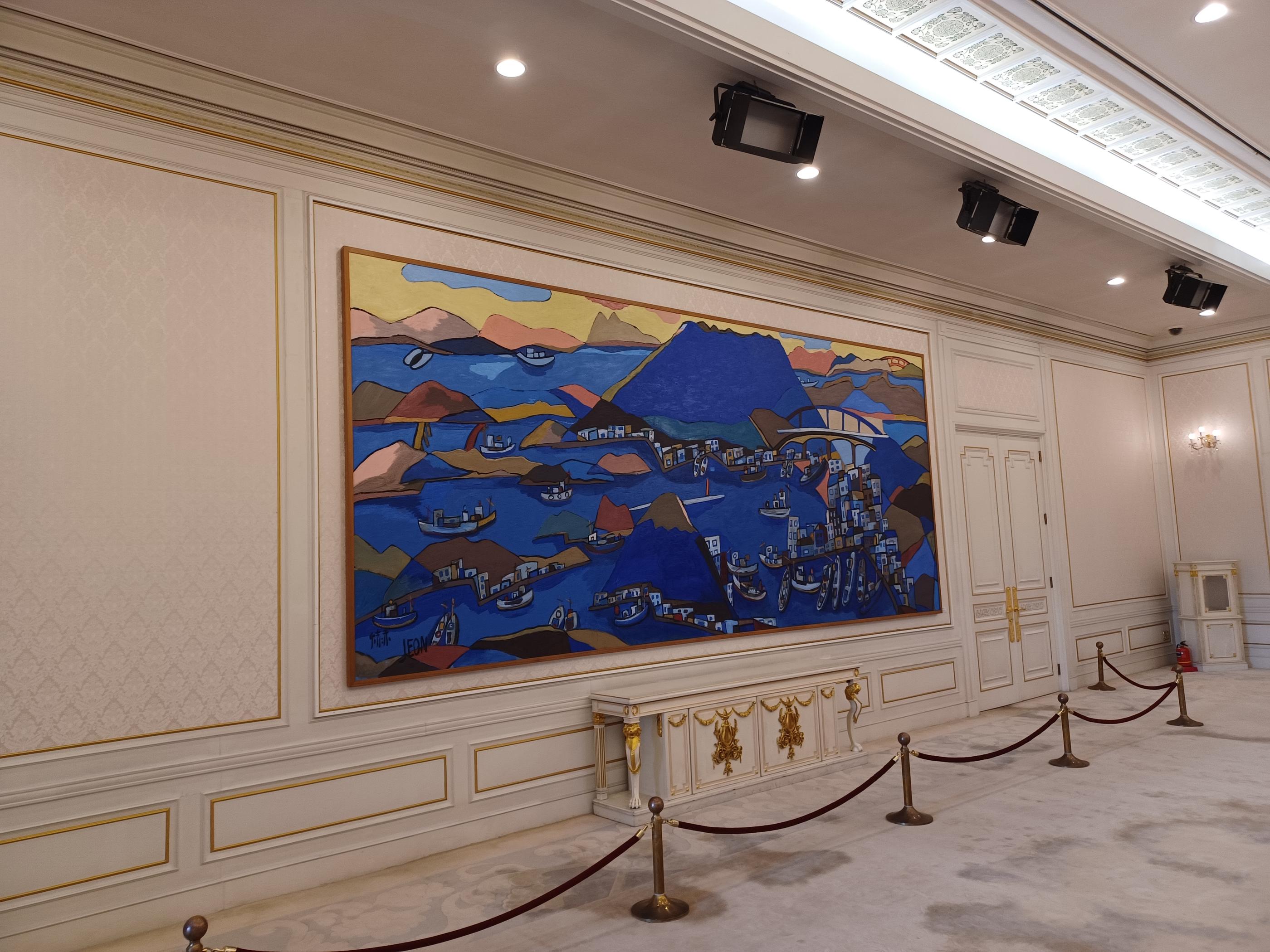
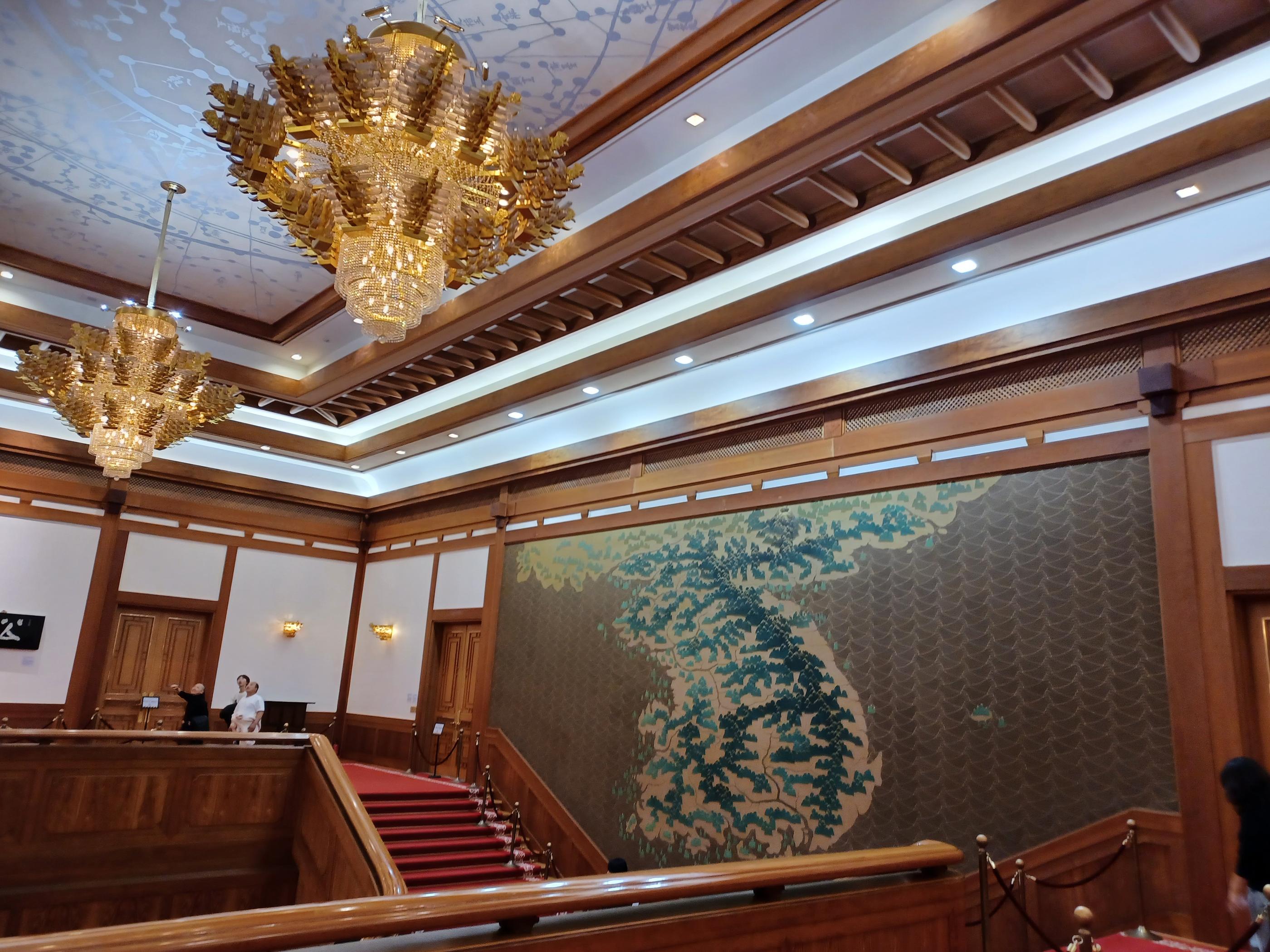
Going up the red carpeted central stairs to move to the second floor of the Main Building, the Geumsugangsando, which embodies the Korean Peninsula by painter Kim Shik, is on the wall. The magnificent size of more than 11 meters wide and 5 meters tall overwhelms visitors viewing it. The painting with green colored mountain ranges and beautiful places, including Dokdo, represents peace on the Korean Peninsula.
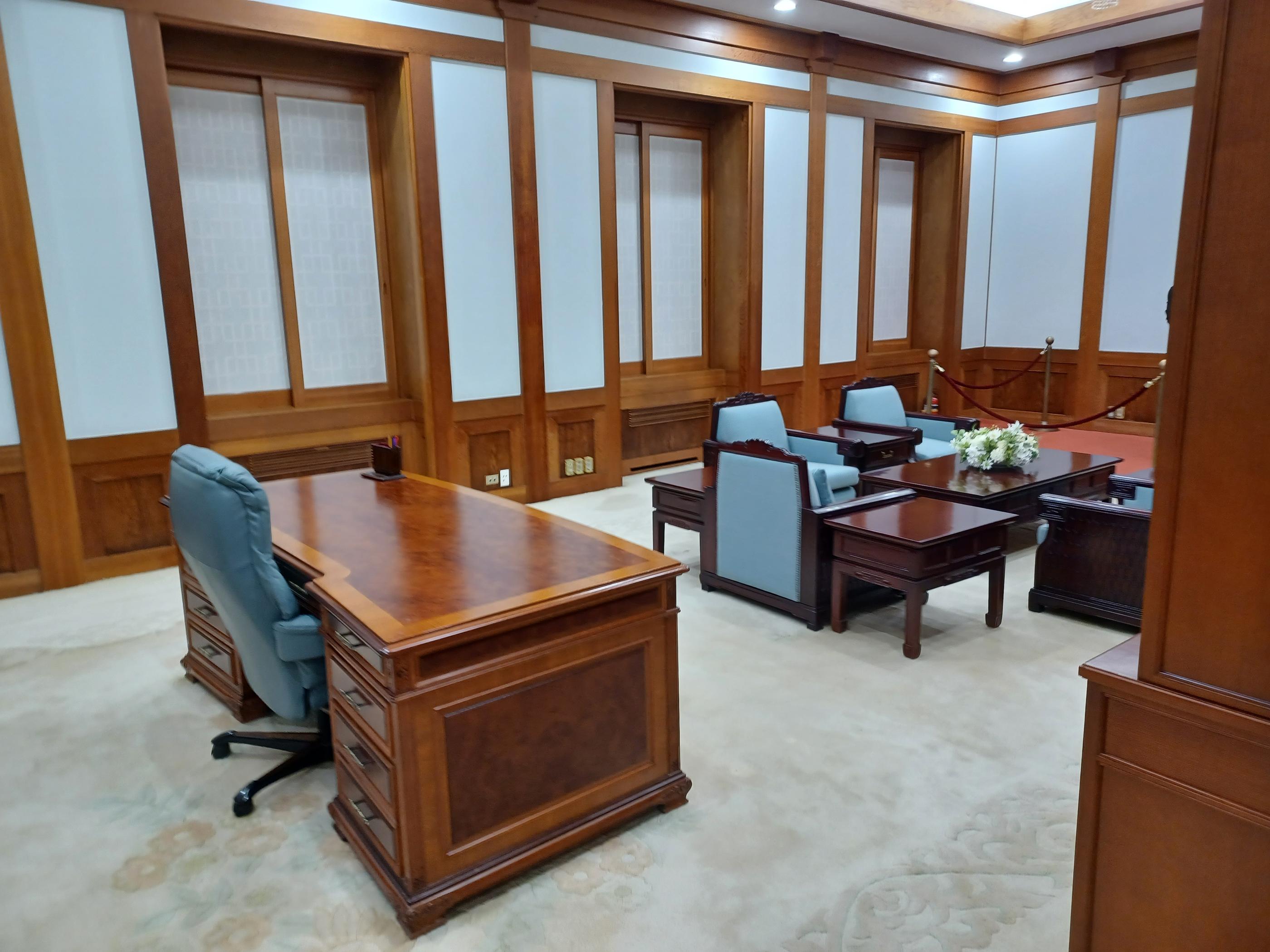
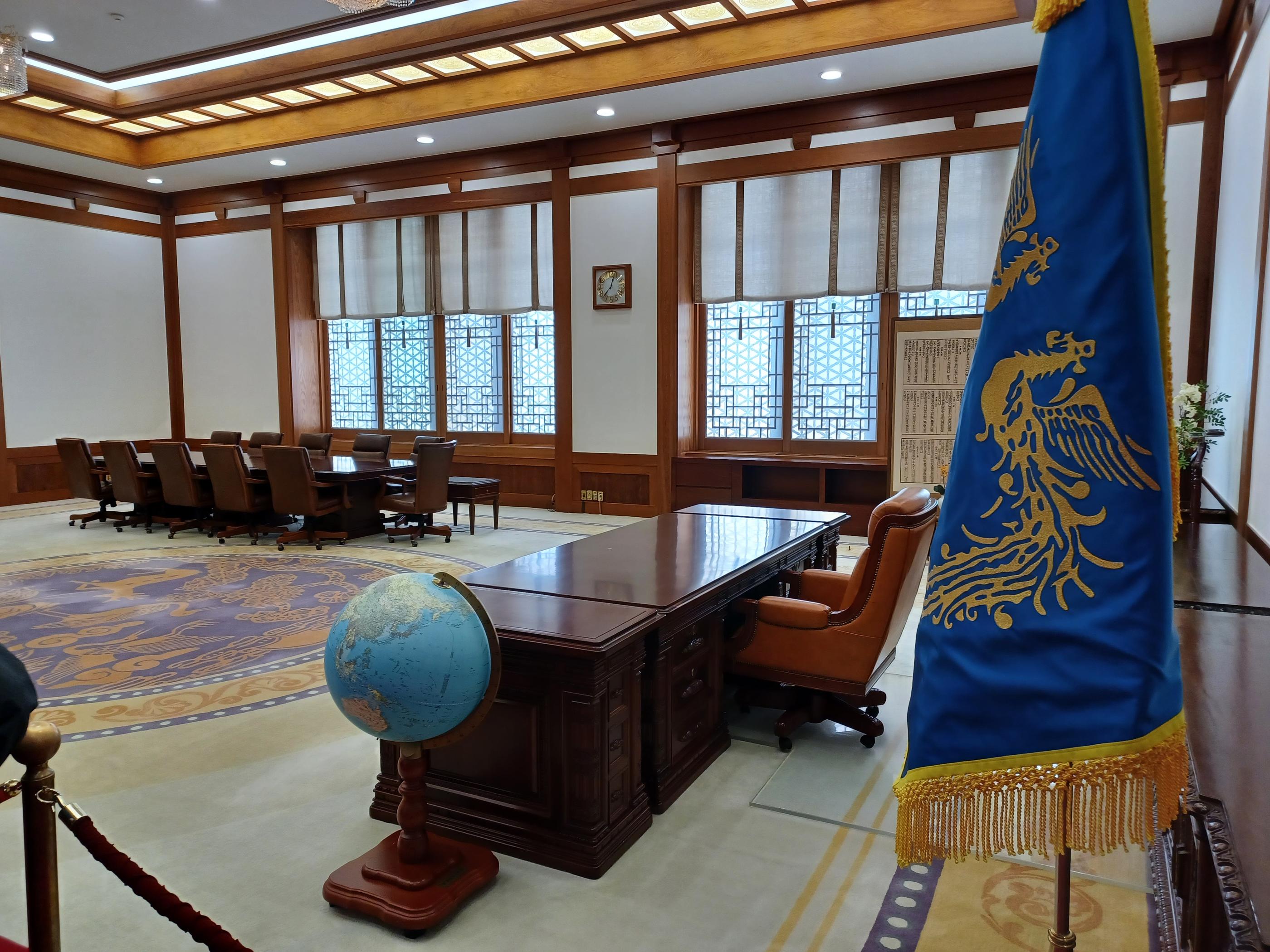
There are several rooms on the second floor. The first and most important one is the Executive Office. The Executive Office was where the president of the Republic of Korea presided over national affairs. The presidential insignia is attached behind the executive desk, and the national flag and presidential standard are placed side by side.
The office floor is covered with a carpet decorated with the Songhakdo pattern, which symbolizes longevity with images of cranes and pine trees. There is a lattice patterned band decorated with phoenix motifs around the perimeter of the ceiling.
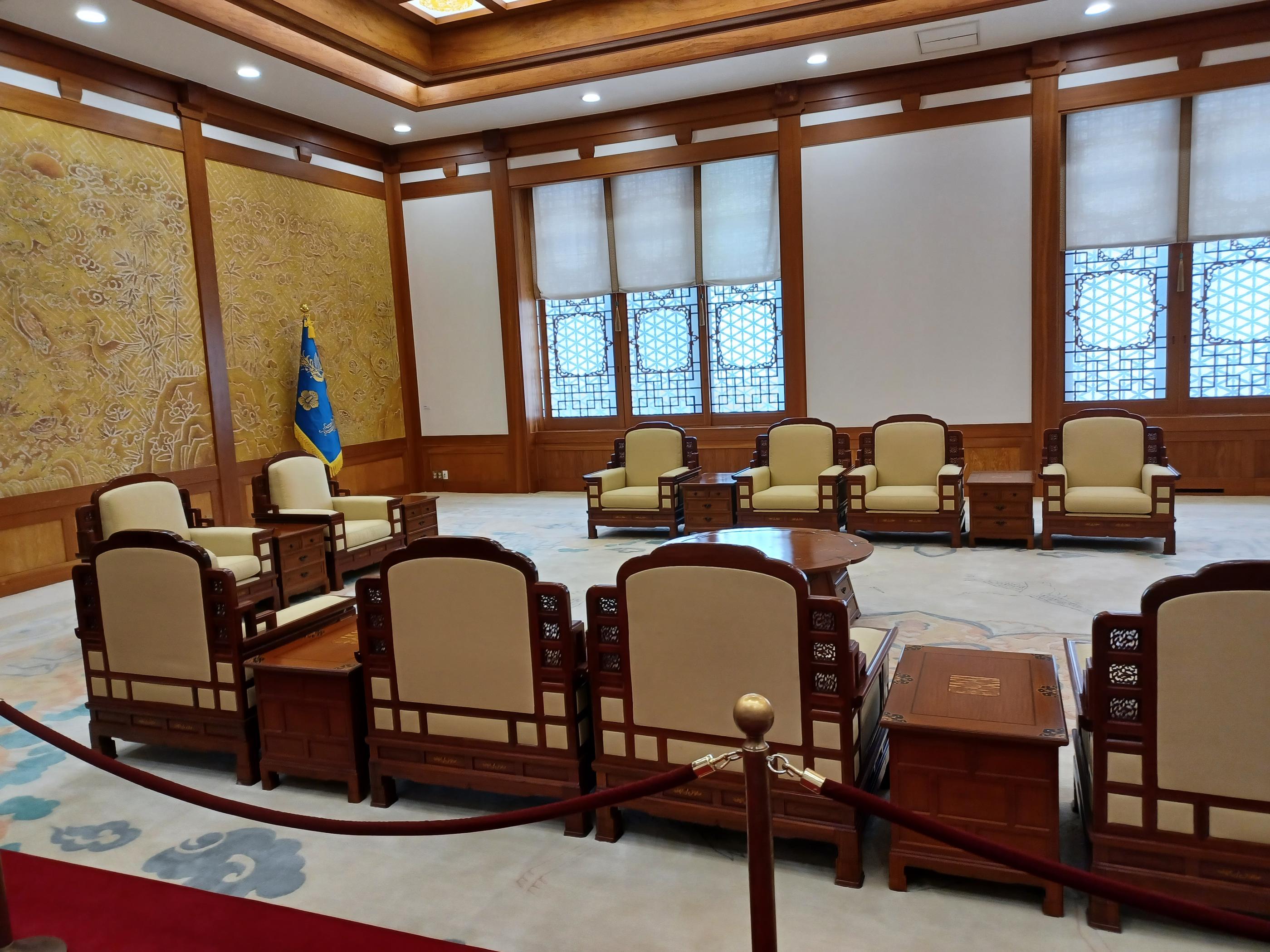
And the last room of the Main Building is the Meeting Room, where the president and dignitaries met, has witnessed significant national events, including summit meetings.
The floor has a carpet inspired by traditional Korean landscape paintings, while the eastern wall boasts a golden 'Sipjangsaengmunyangdo' pattern, symbolizing eternal life. The meeting room's ceiling is decorated in a grid pattern, reminiscent of the decorated ceilings found in Joseon Dynasty palaces. The chandelier also follows a two tiered lattice design, harmoniously complementing the ceiling.
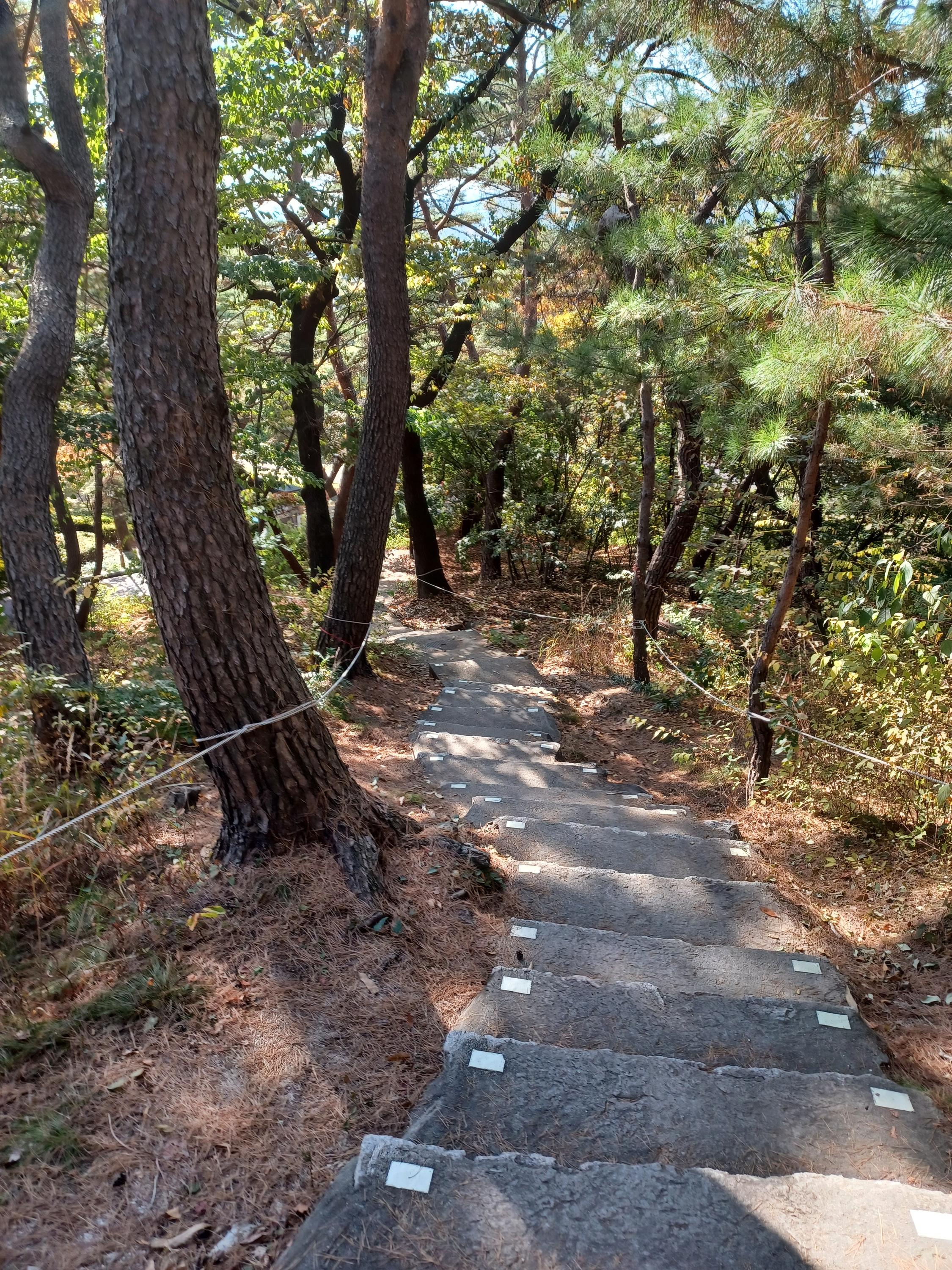
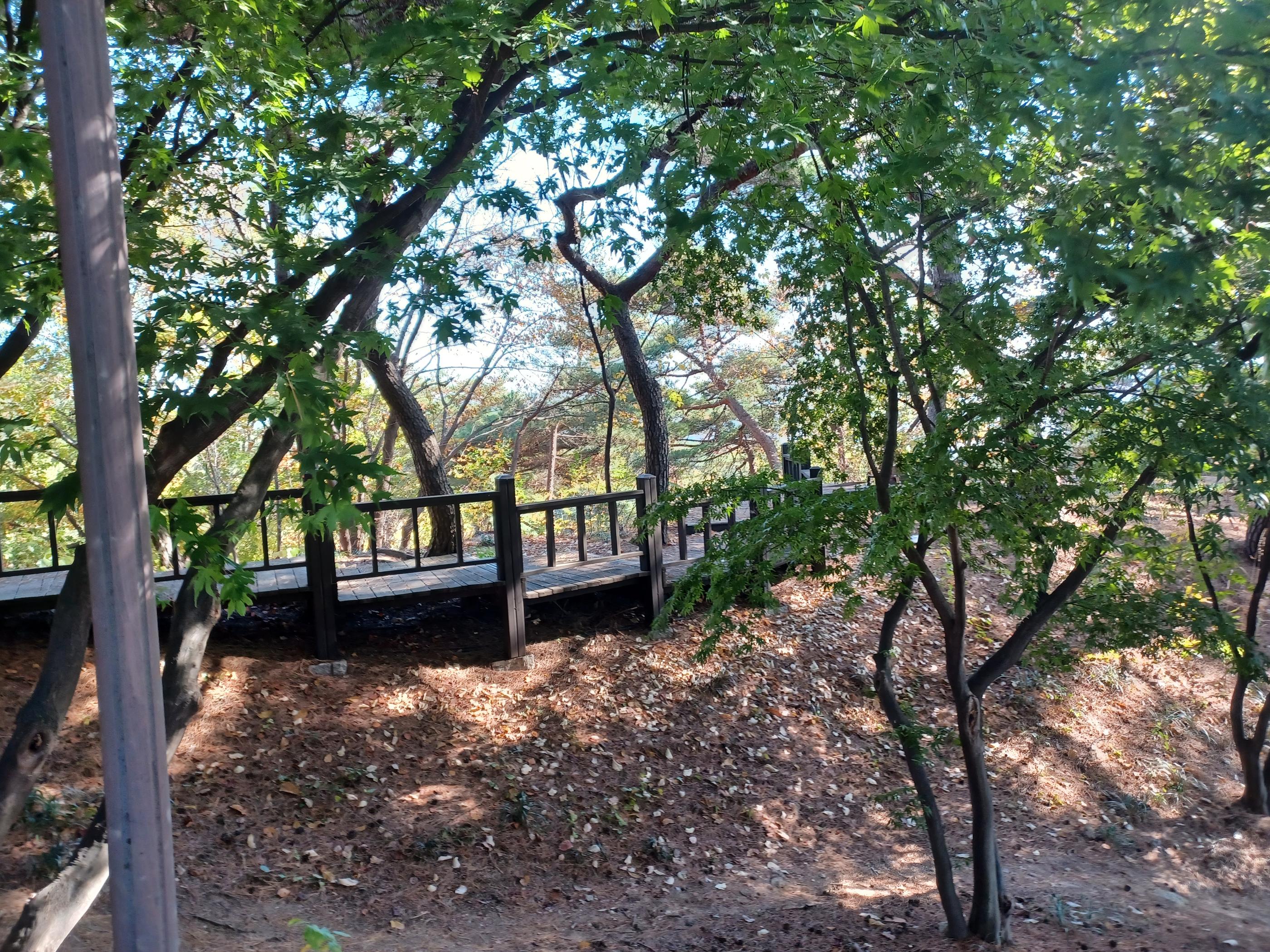
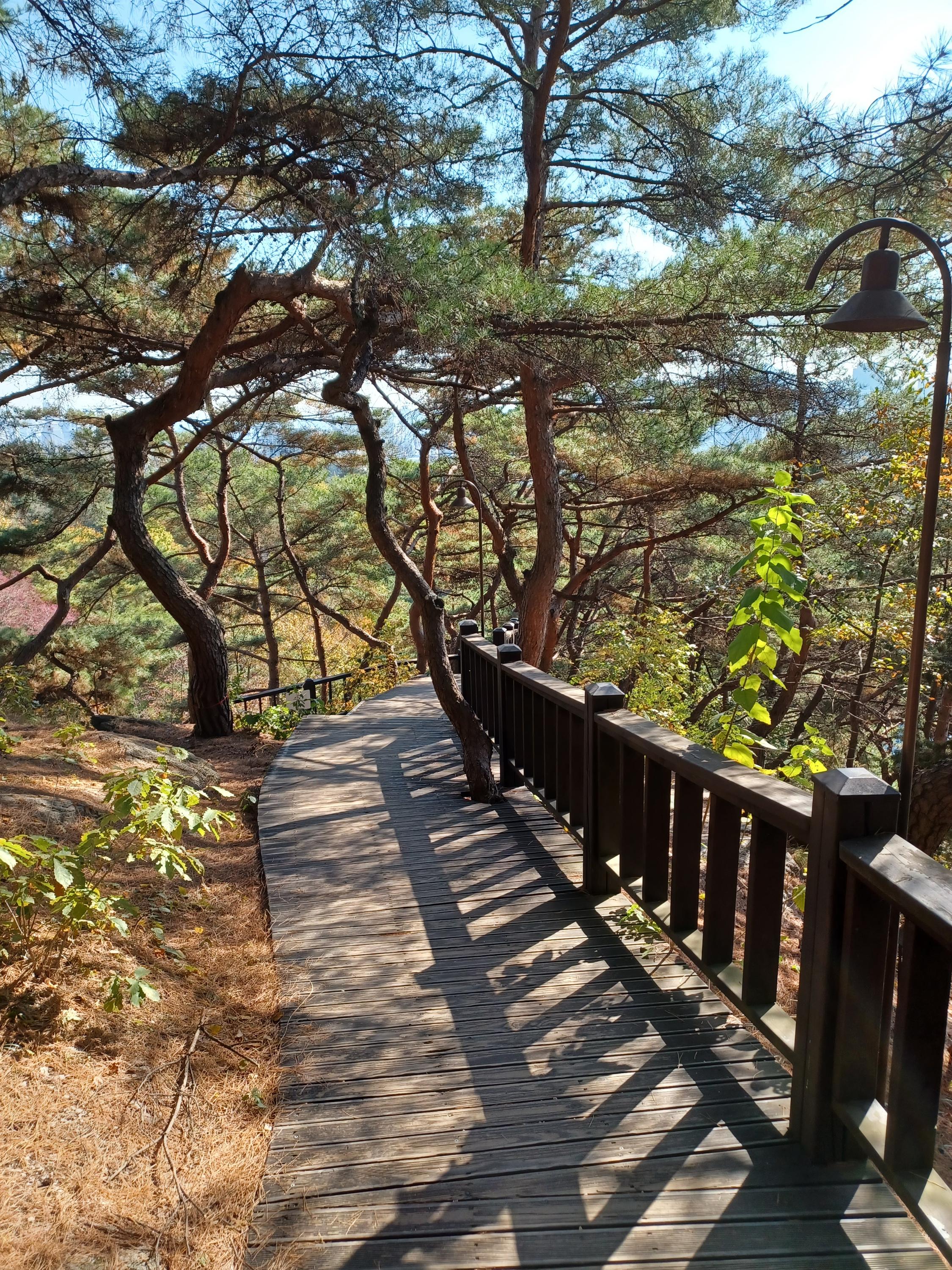
After the Main Building, I walked further along the complex. Along the way, I saw stone steps leading up the mountain. Beautiful autumn landscapes, birds singing, a sunny day: all this was conducive to a walk, although the path is long and very steep. This ia a hike the Once forbidden Bugaksan Mountain (Southern). With the opening of Cheong Wa Dae, the southern hiking trails of Bugaksan Mountain behind Cheong Wa Dae was also opened to the public for the first time in 54 years, on 6 April 2022.
The short loop trail starts from behind the Presidential Residence back to Cheong Wa Dae compound. It is simply amazing that right on the territory of the complex you can calmly climb a mountain without leaving its territory.
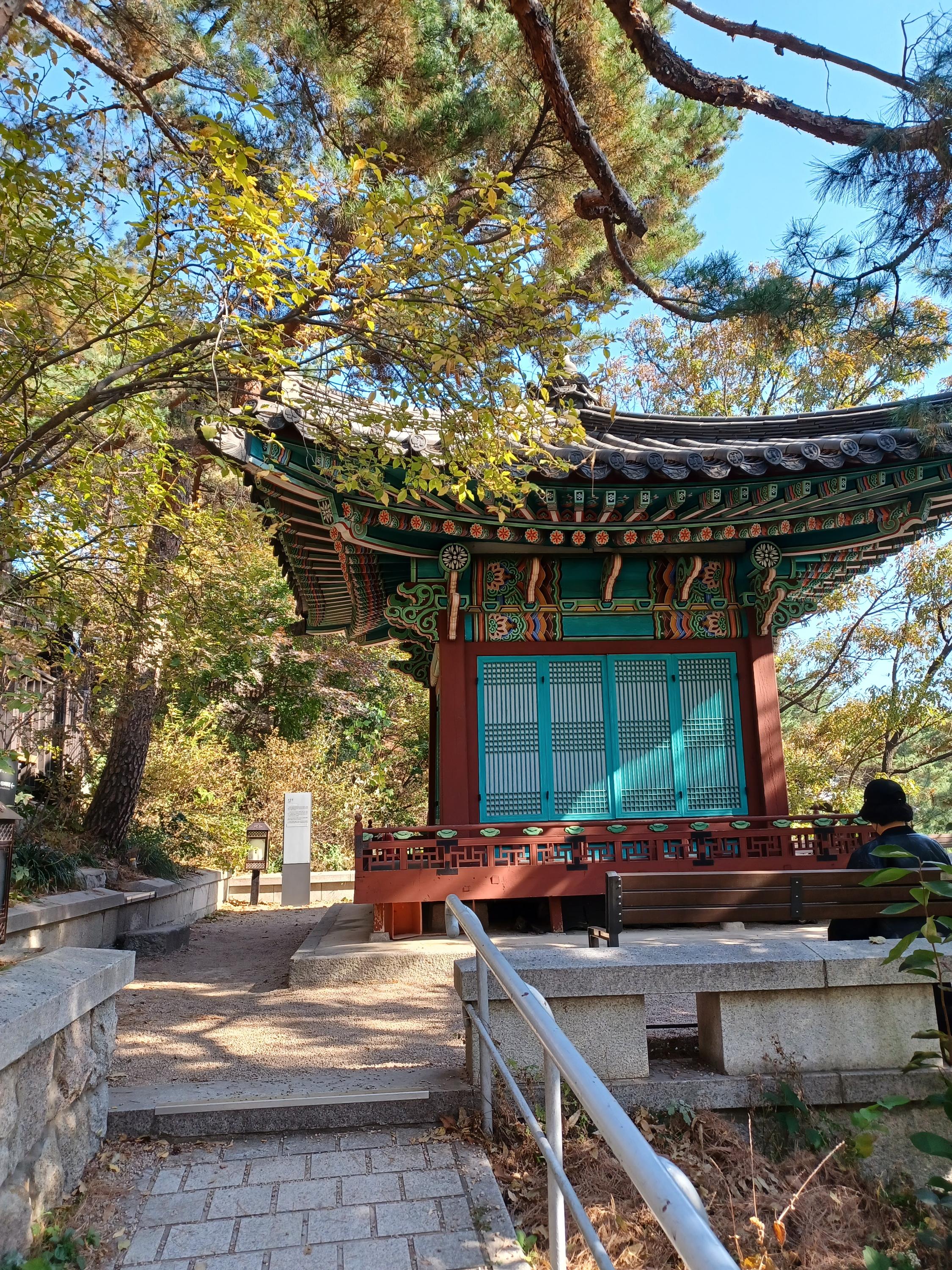
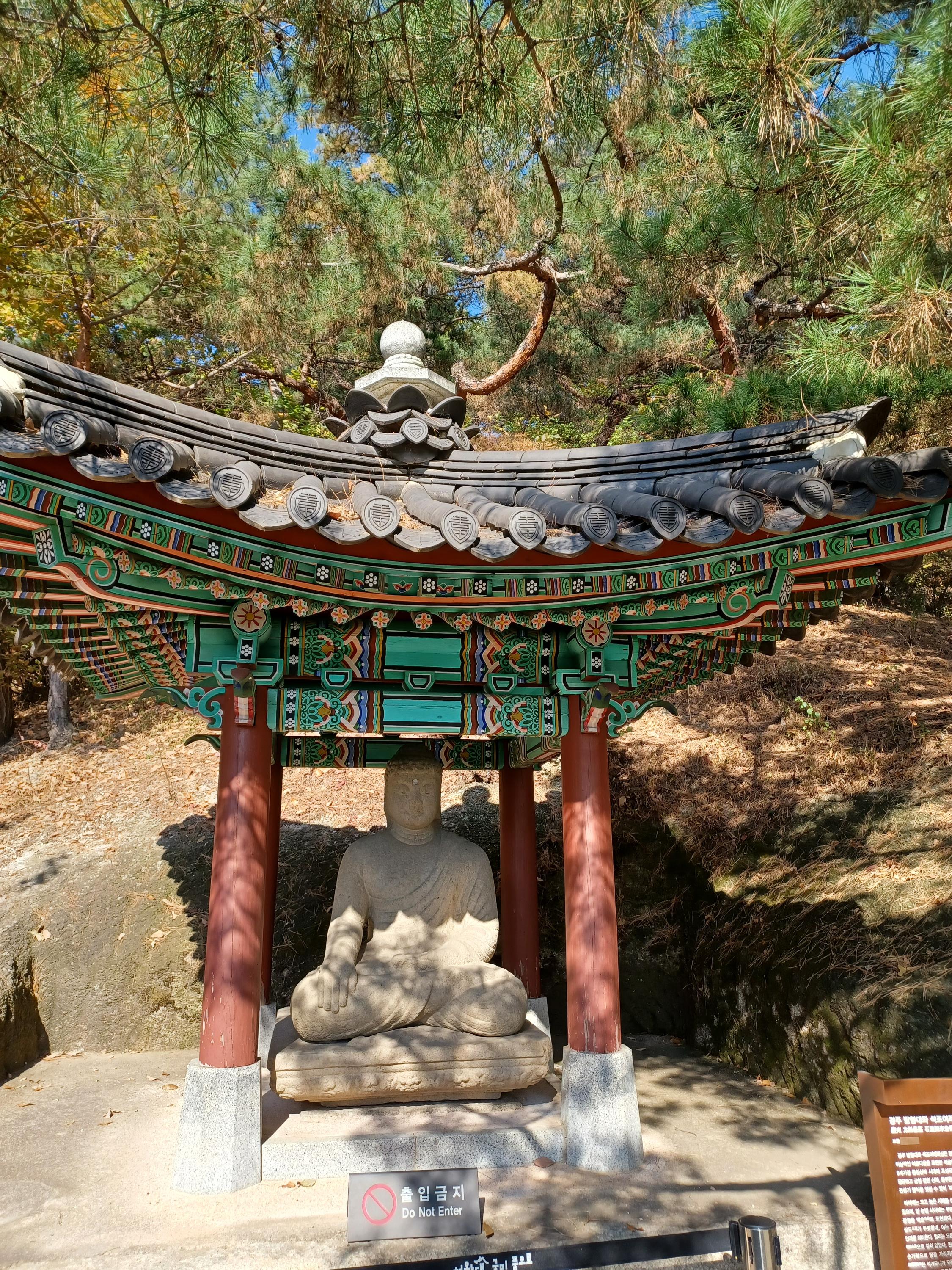
Key highlights along the trail include the Stone Buddha Seated on a Square Pedestal from Gyeongju and Ounjeong Pavilion.
The path descends directly to the Presidential Residence. The Presidential Residence, where the president and his or her family lived, was built to delineate between the president's official and private duties. The residence embodies traditional Korean wooden architecture with a hipped-tile roof crowned with Korean blue tiles.
Its living quarters and guest meeting areas are arranged in a “giyeok” (ㄱ) shape, and a traditional Korean courtyard and annex are located in the front yard. The main gate is built as a three doored entrance and accentuates the ambience of a traditional Korean house.
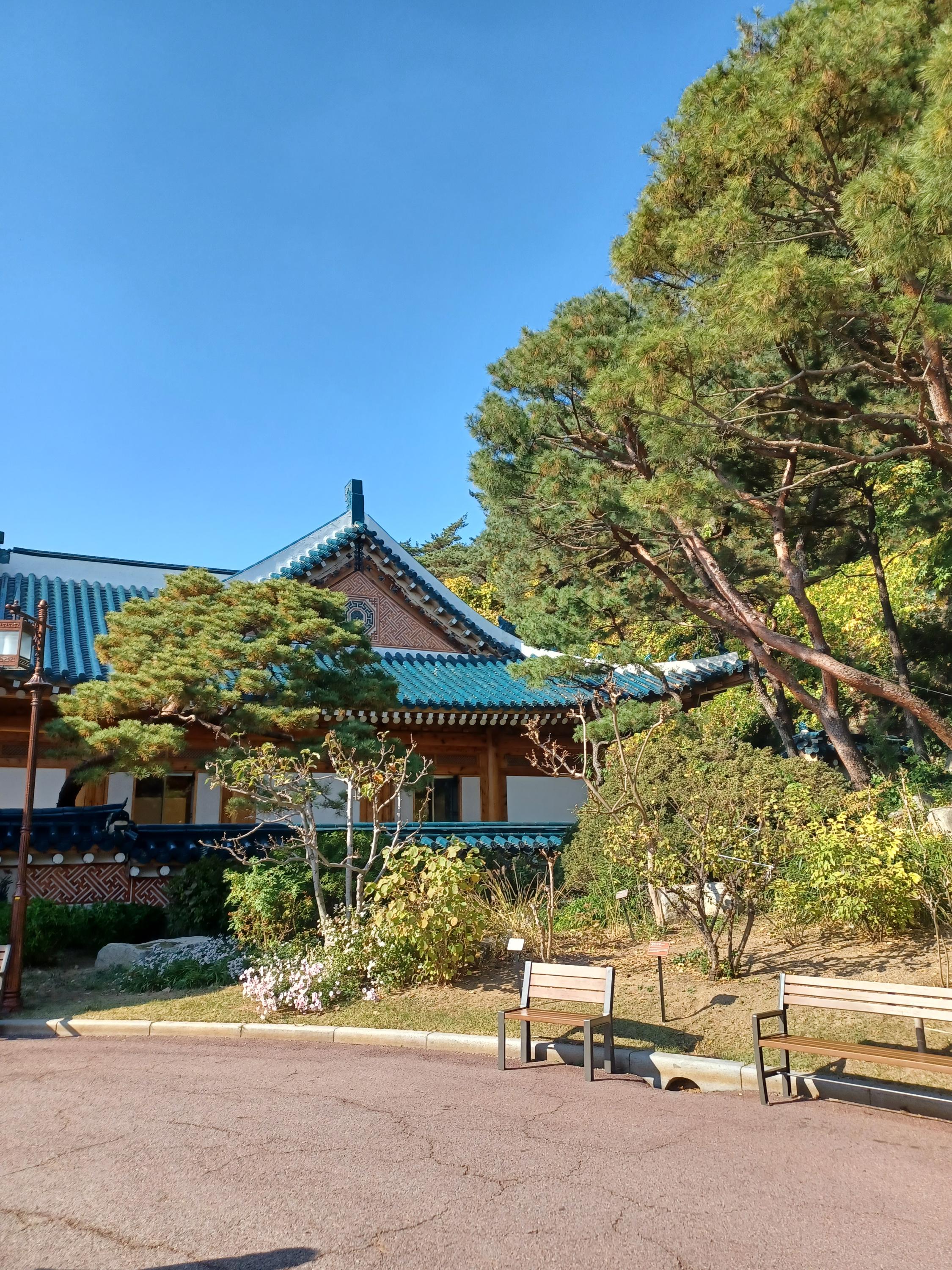
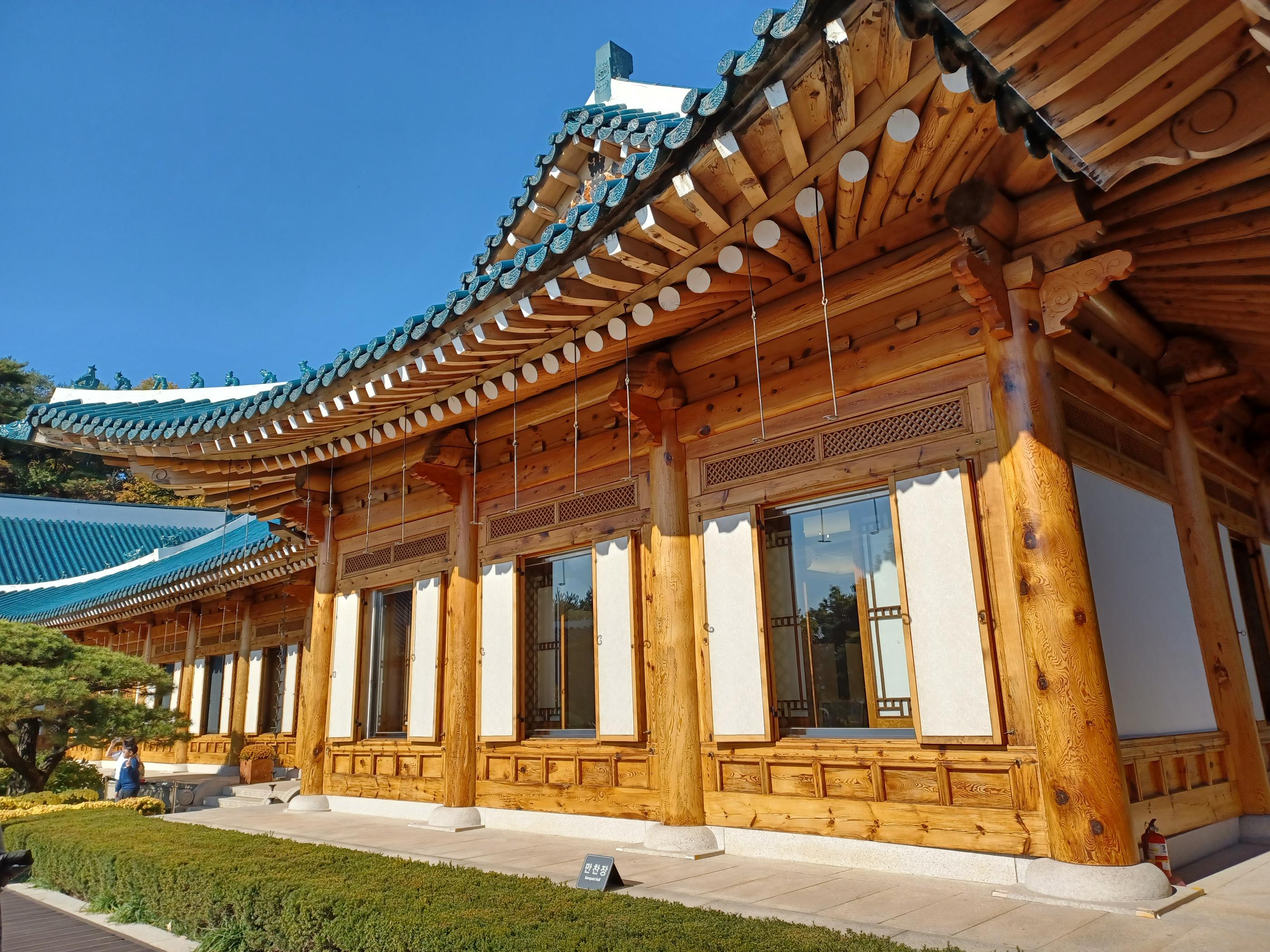
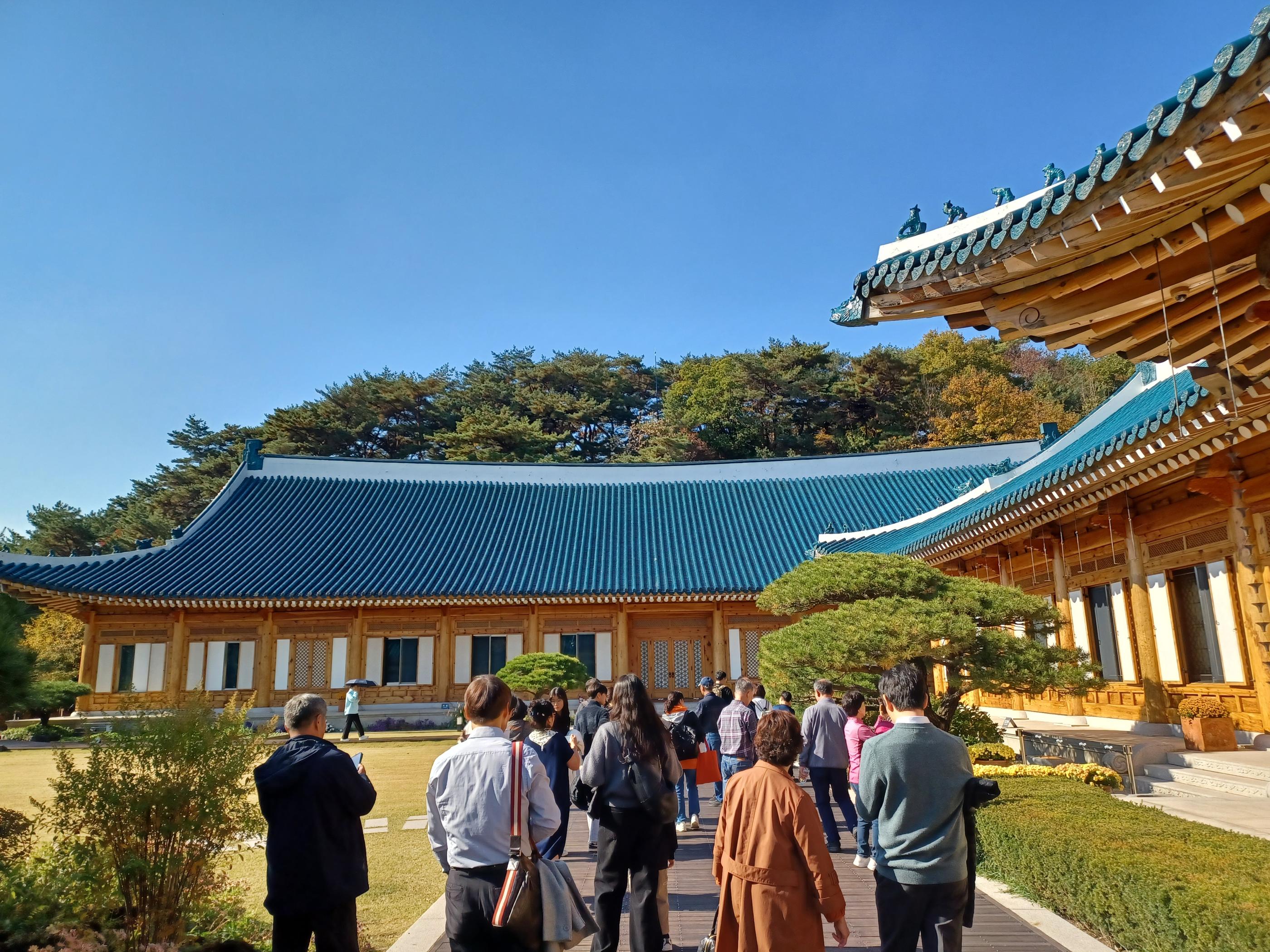
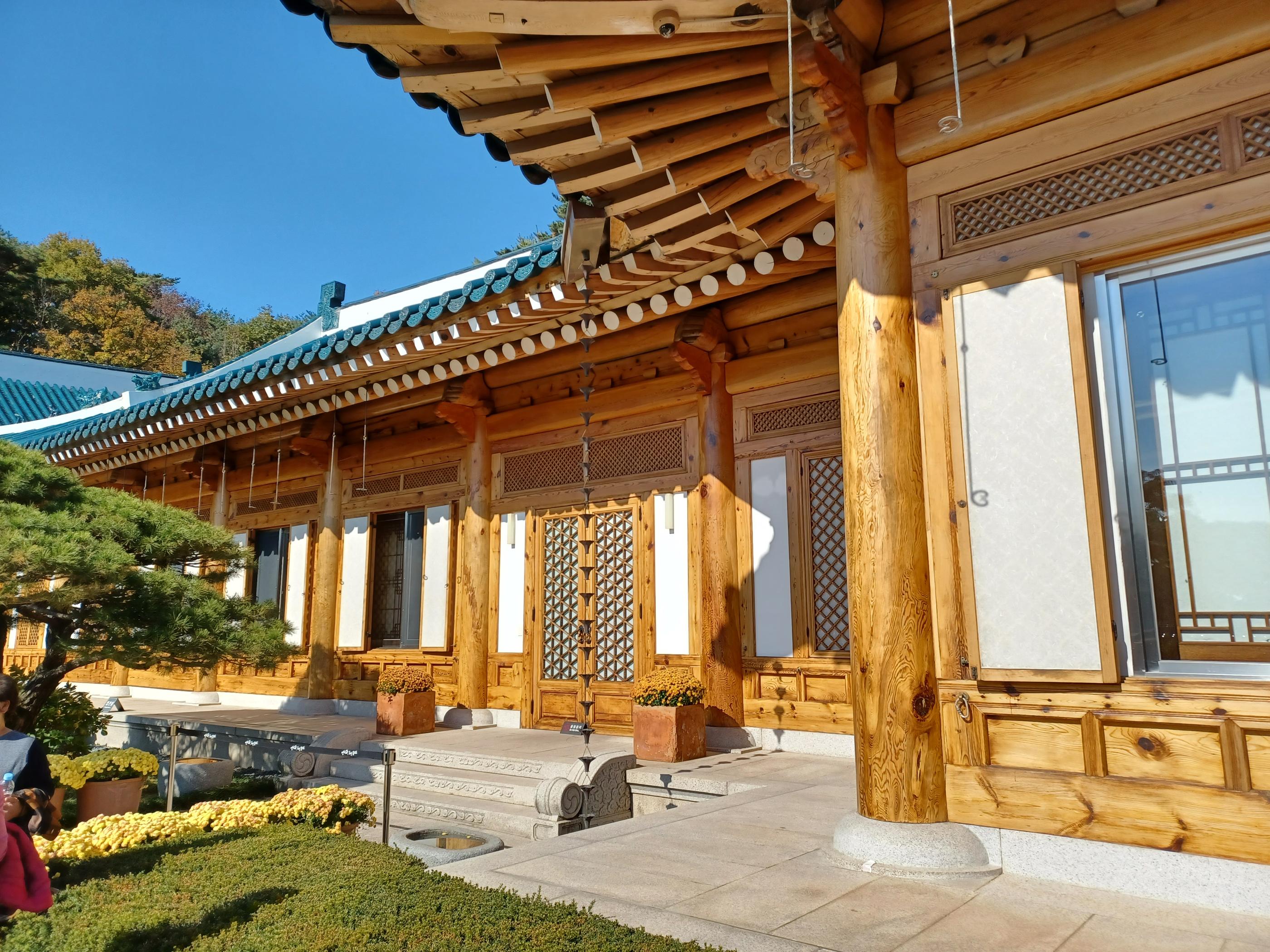
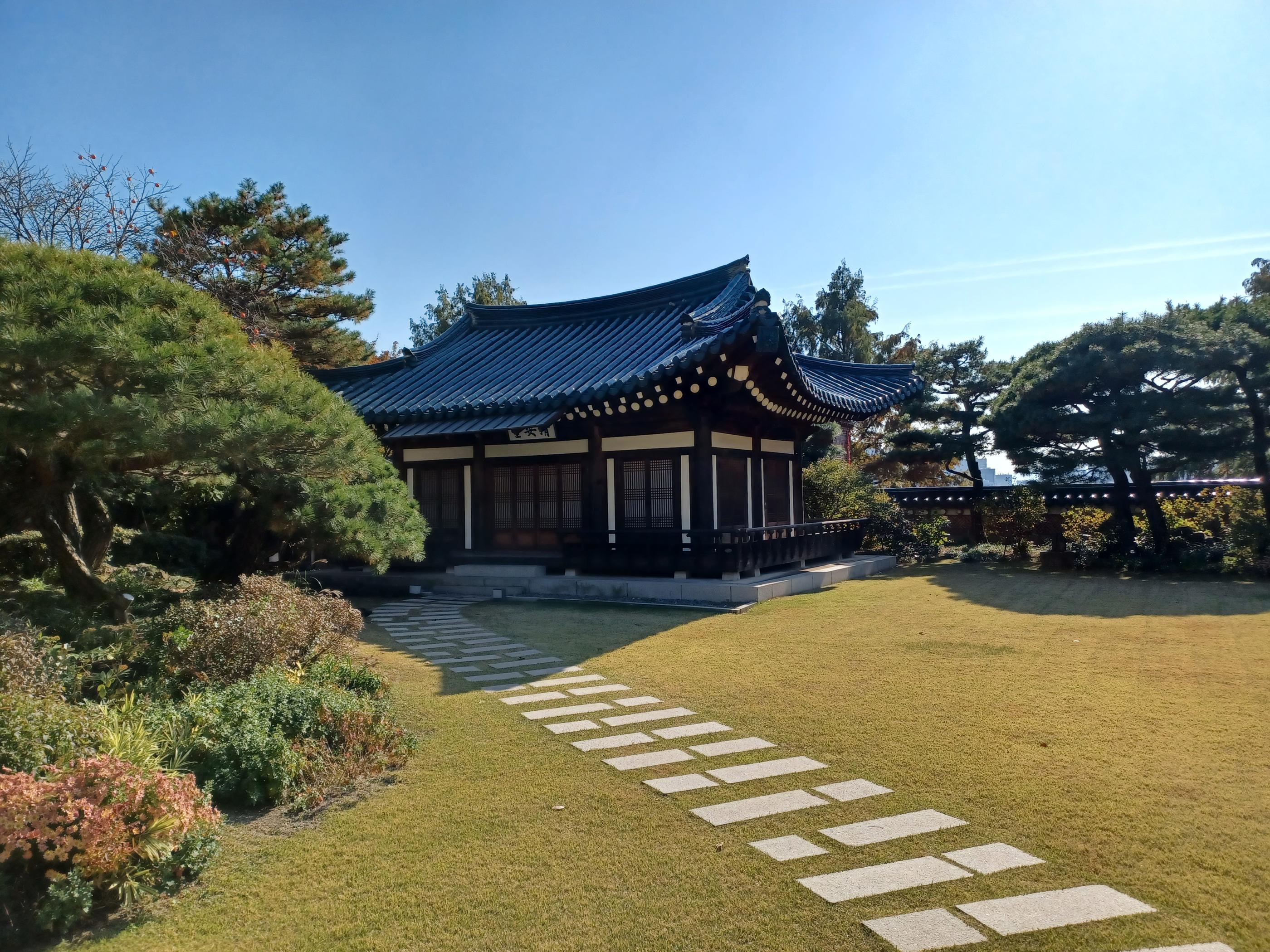
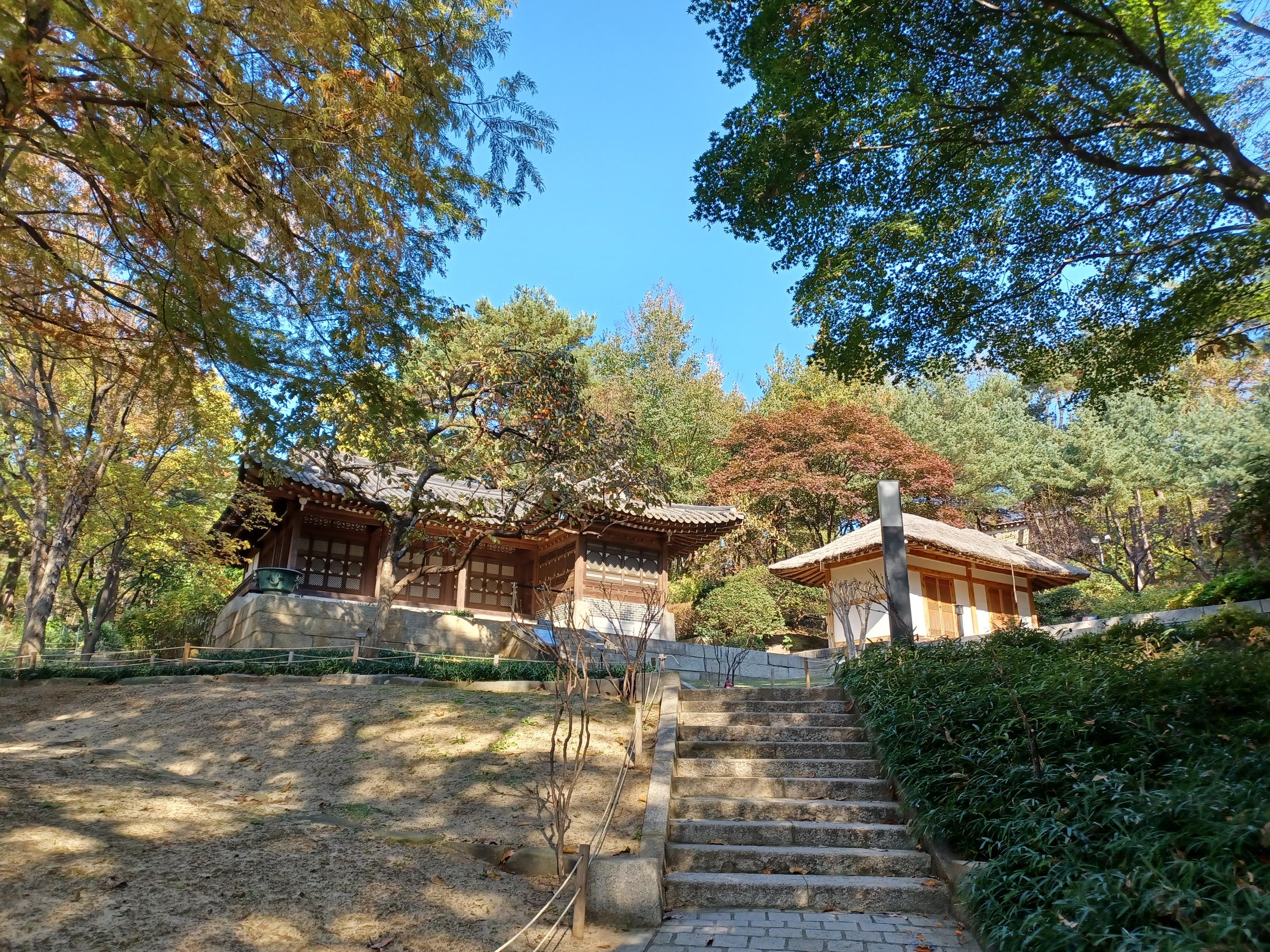
It is impossible to enter the Residence building. Therefore, we continue walking along the territory. Ahead, among the trees, a building in traditional Korean style can be seen. It is the Chimnyugak, which means "using flowing water as a pillow," was originally located near the current Presidential Residence but was moved to its current location in 1989 when the residence was rebuilt.
The structure resembles traditional Korean houses from the early 1900s, with an external shape similar to the number eight or the character "八." The left side of the interior features a two room open porch, while the right has a three room space with a raised wooden floored area in front.
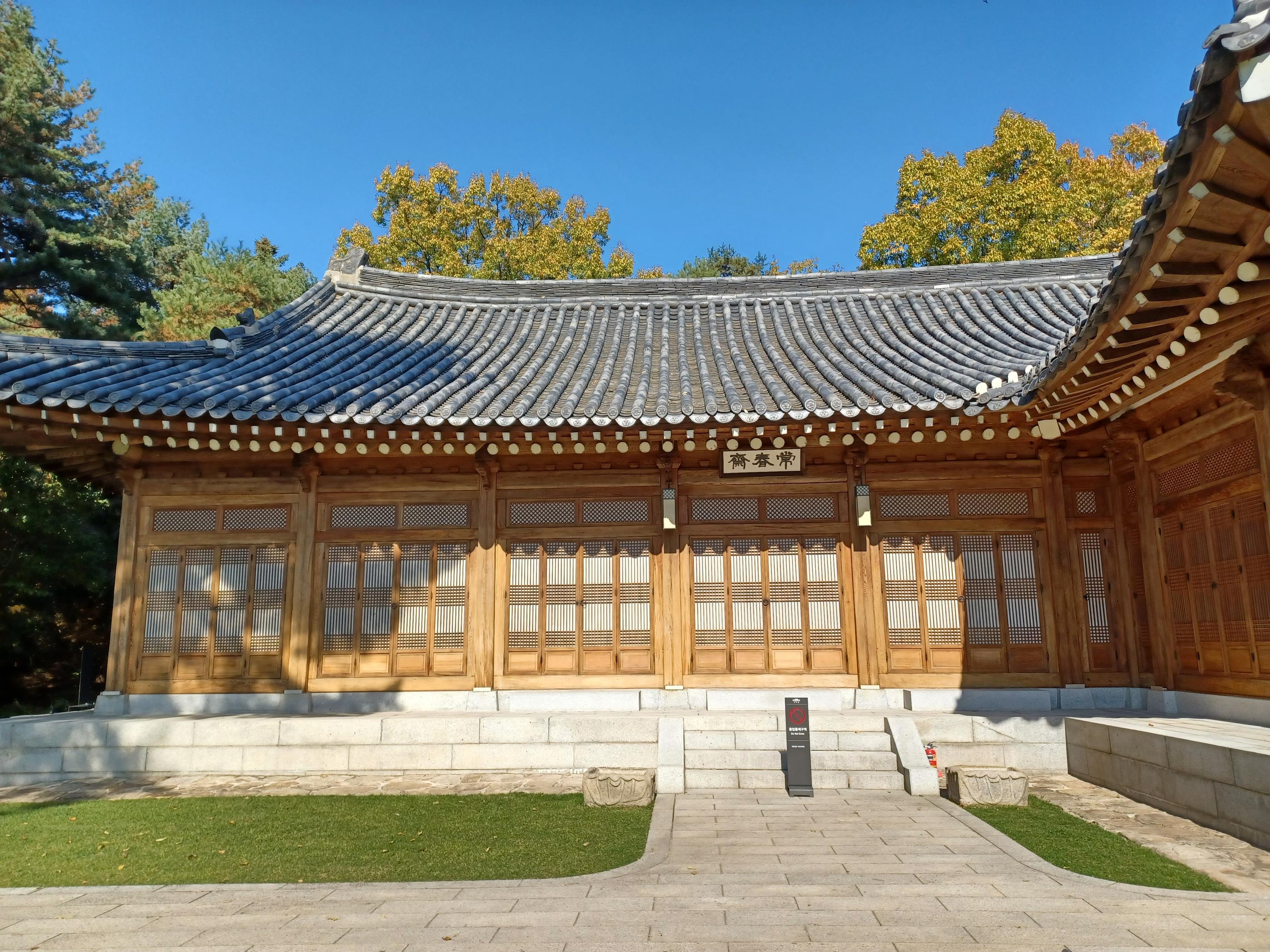
Not far from the Chimnyugak there is another beautiful building, Sangchunjae. Sangchunjae, which means “a house where spring permanently resides,” is the reception hall for foreign dignitaries visiting Cheong Wa Dae and a venue for informal meetings.
During the Japanese colonial period, the residence of the governor general of Korea, called Maehwasil, stood here. It was renamed Sangchunsil during President Syngman Rhee's tenure and was rebuilt in March 1978 as a Western style wooden structure with a natural slate roof.
Later, it was renamed Sangchunjae and in April 1983 it was rebuilt as a traditional Korean house with an area of 417.96㎡, where it stands today in its current form.
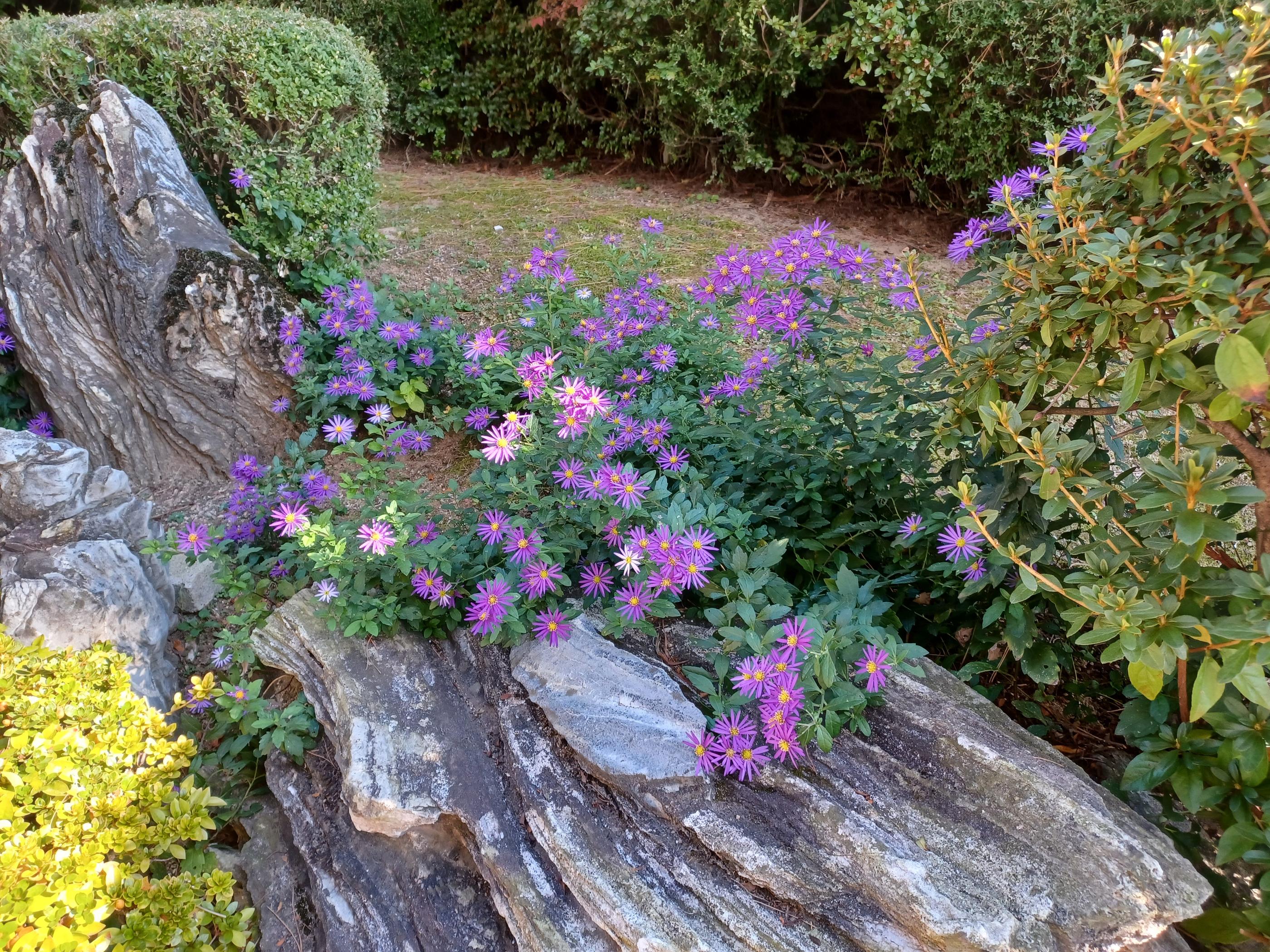
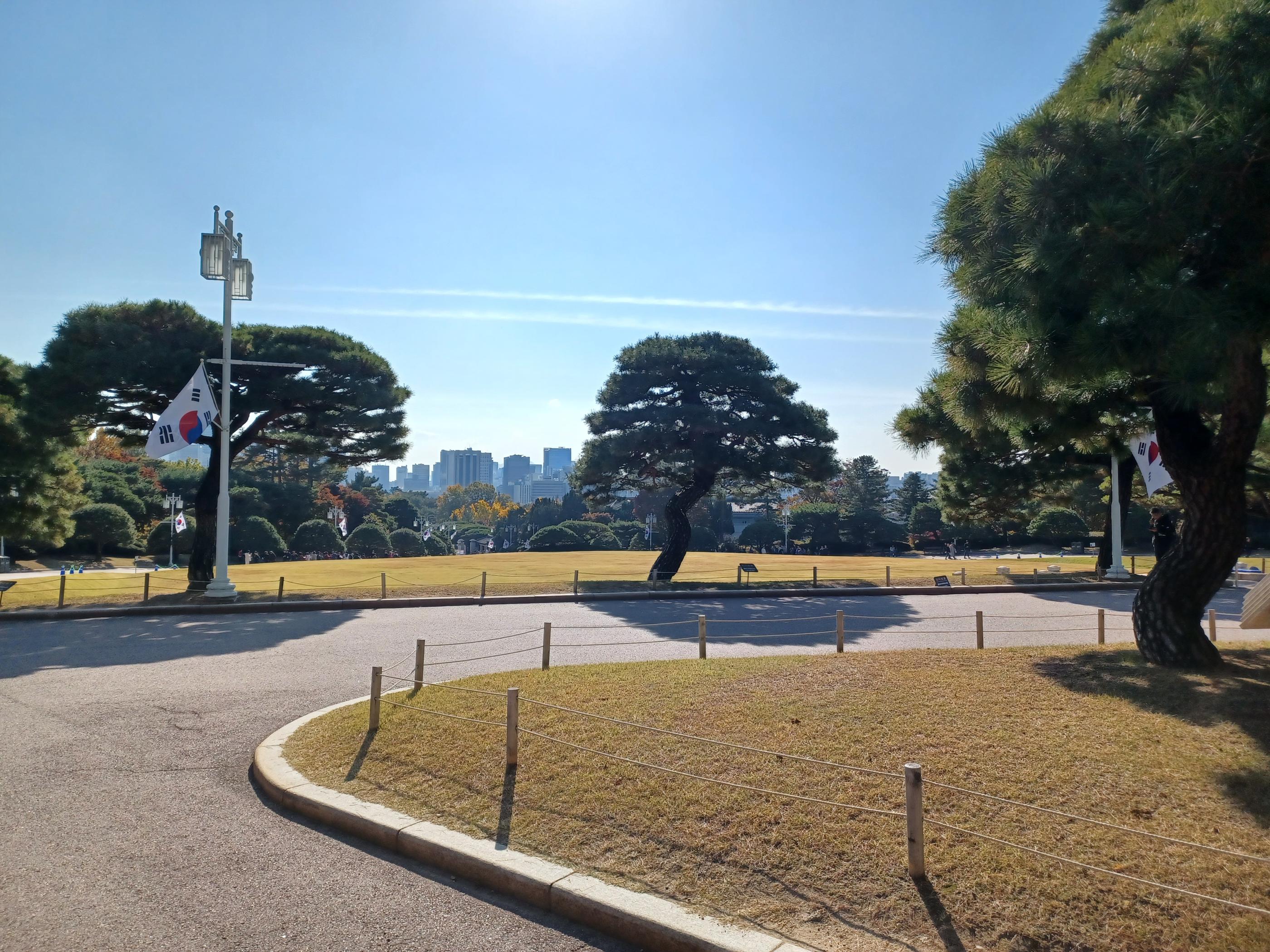
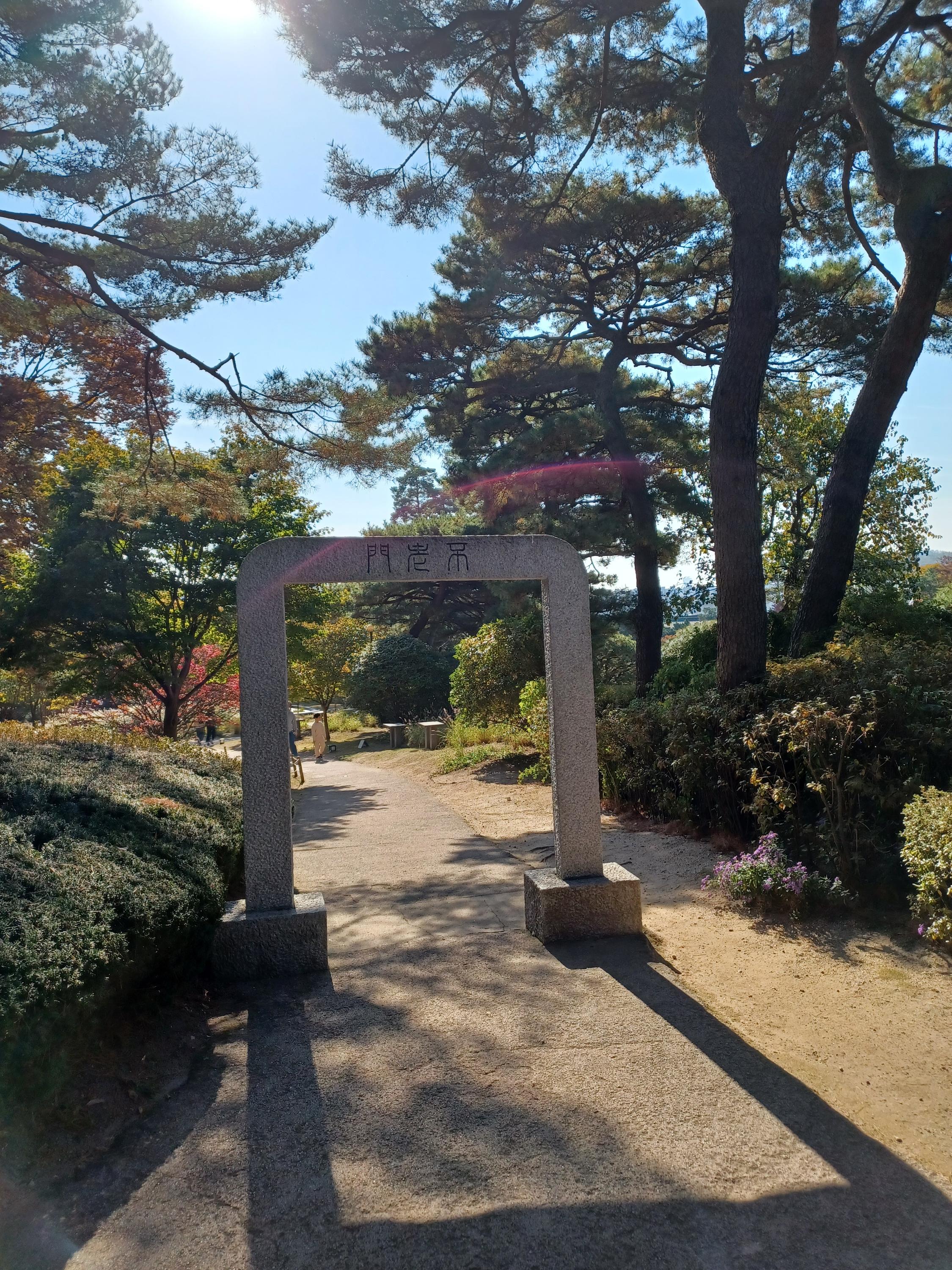
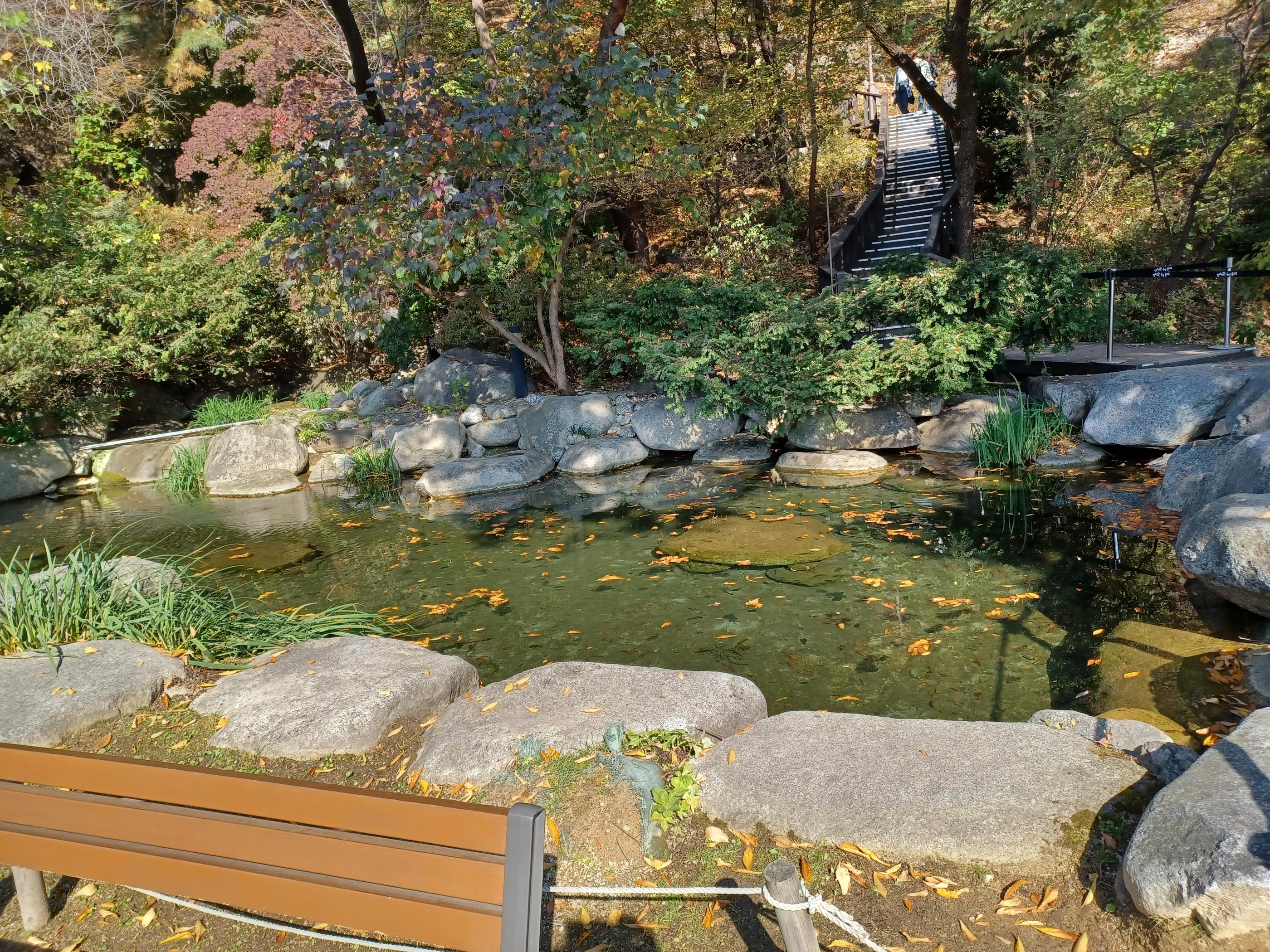
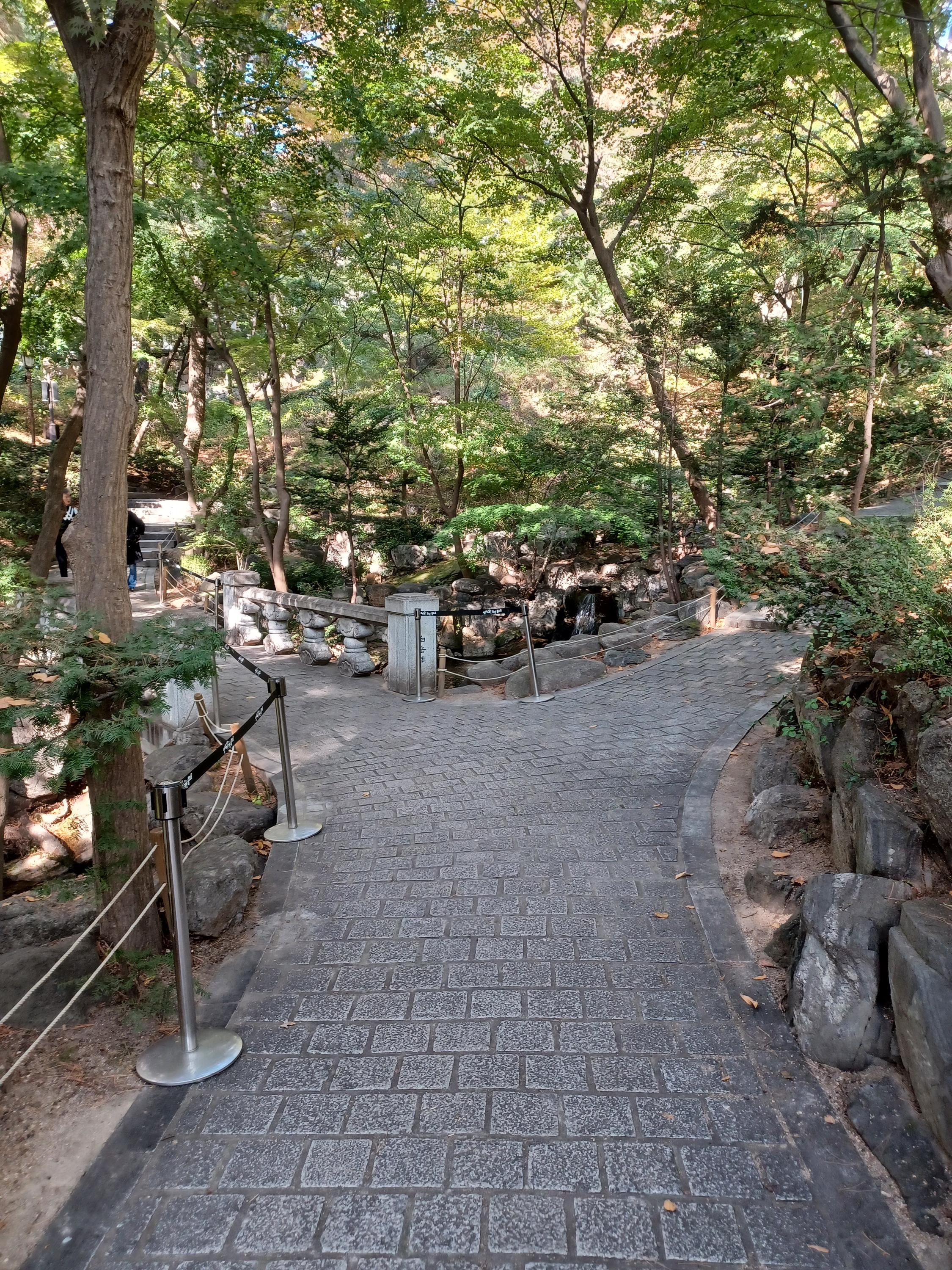
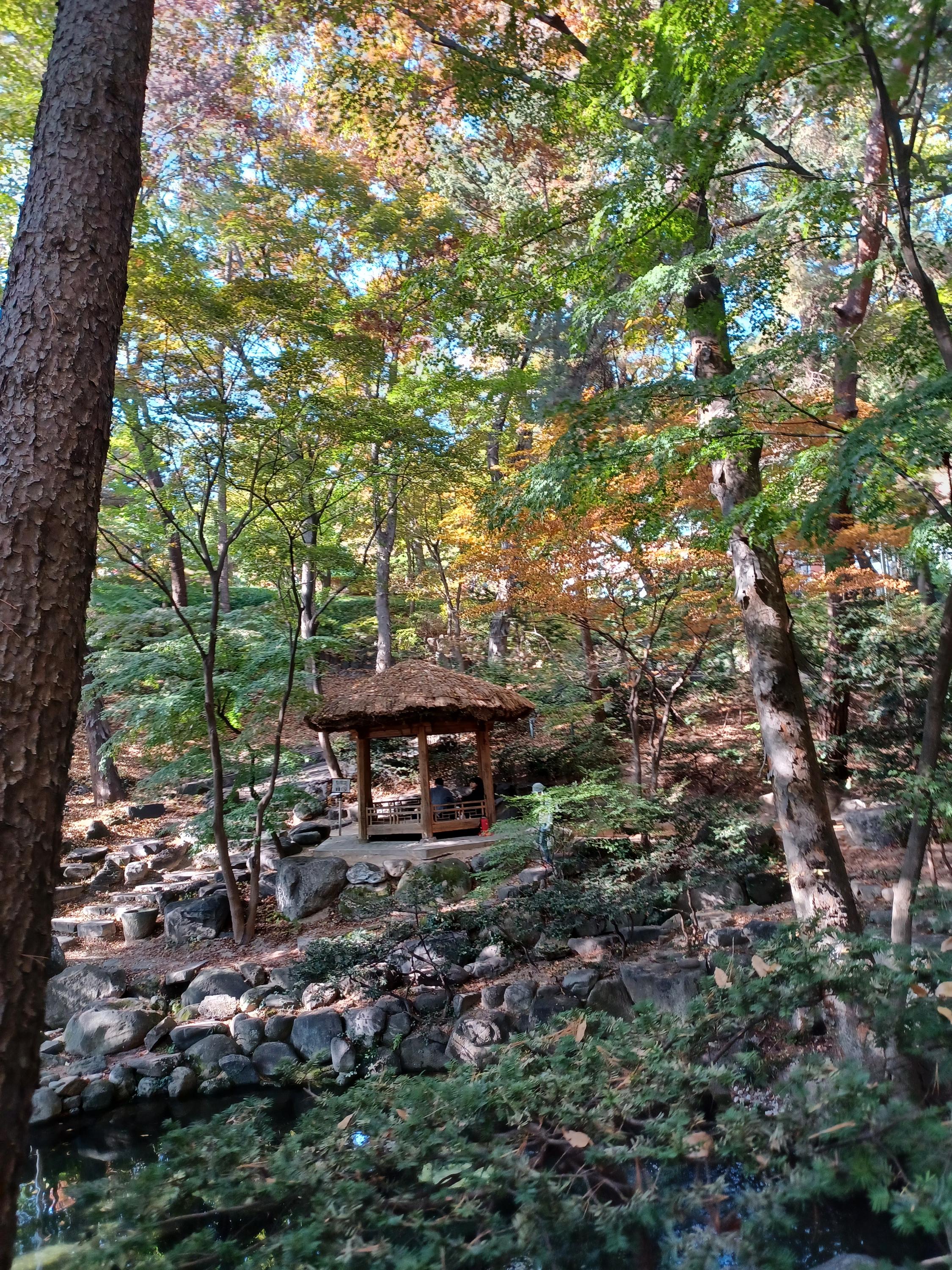
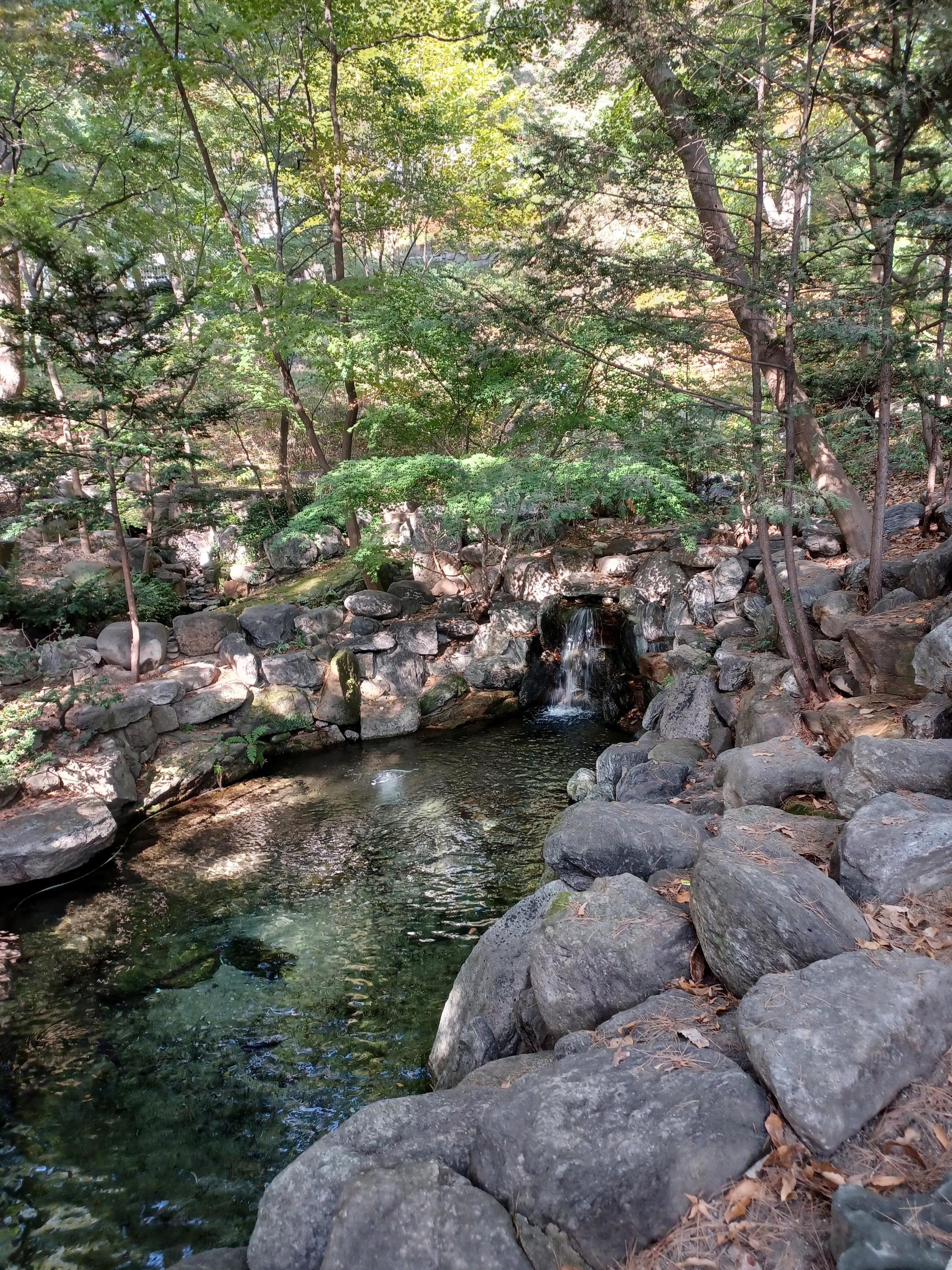
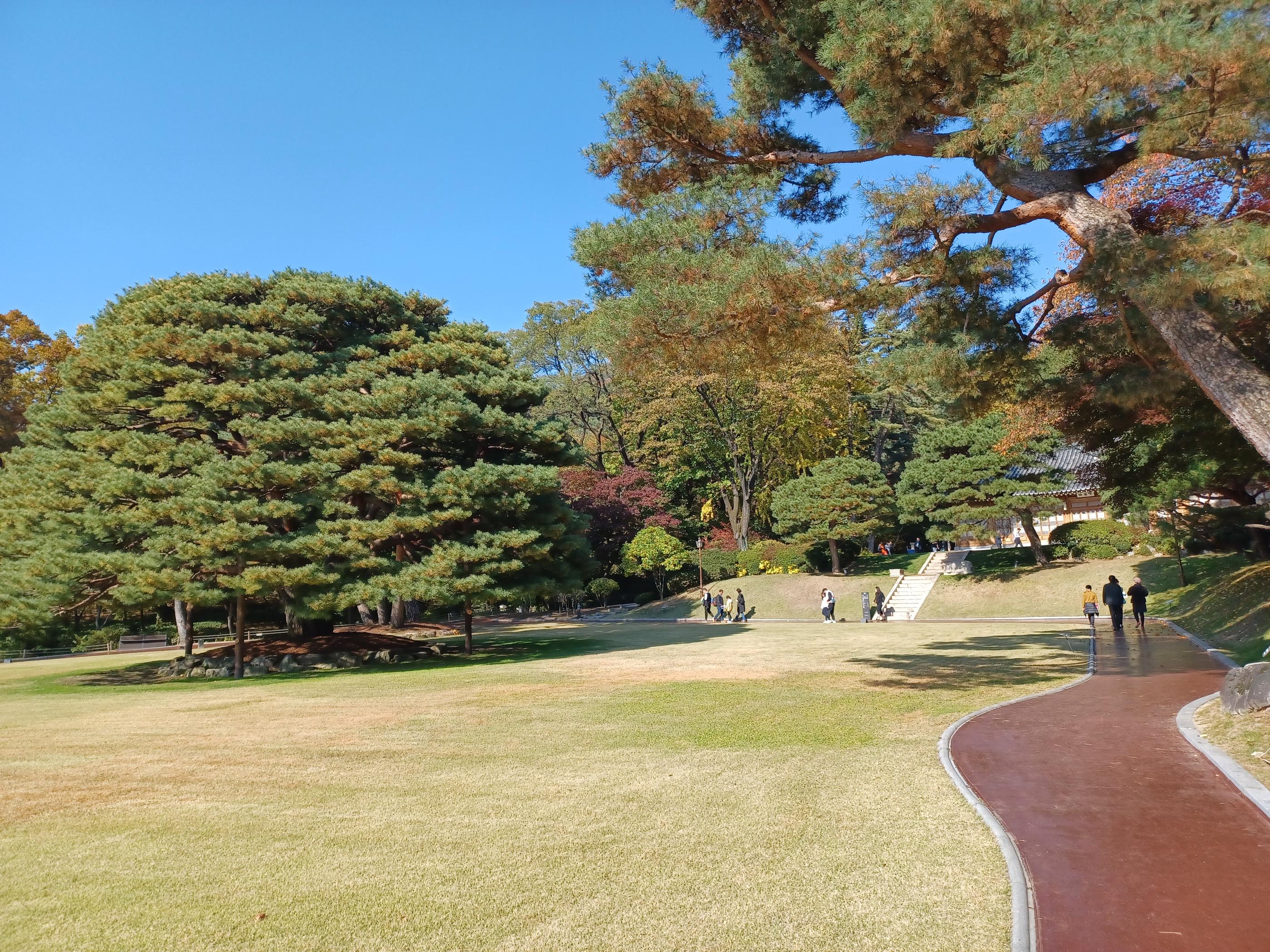
I also really liked the beautiful nature on the territory of the Blue House. Many trees, streams, flowers, mountain slopes, all this creates a peaceful atmosphere, as if you are outside the city, and not in the center of Seoul. I think it's very beautiful here in spring when the trees are in blossom.
Visitors can freely tour Cheong Wa Dae by making an appointment online or via on site application. Admission is free. Thanks to this, you can visit the Blue House an unlimited number of times, admiring its beauty at different times of the year.