



Seokjojeon-a meeting place of Korean and Western traditions
Olga
8 months ago
The most unique of Seoul’s five palaces, Deoksugung is a must see destination when visiting the city. The palace served as the home of various royals throughout history and played its most significant role at the turn of the 20th century, when it became the royal seat of King Gojong and the Daehan Empire. It was during this period that Korea underwent a tumultuous time of change, opening itself up to foreign influence and developing diplomatic relations with the West.
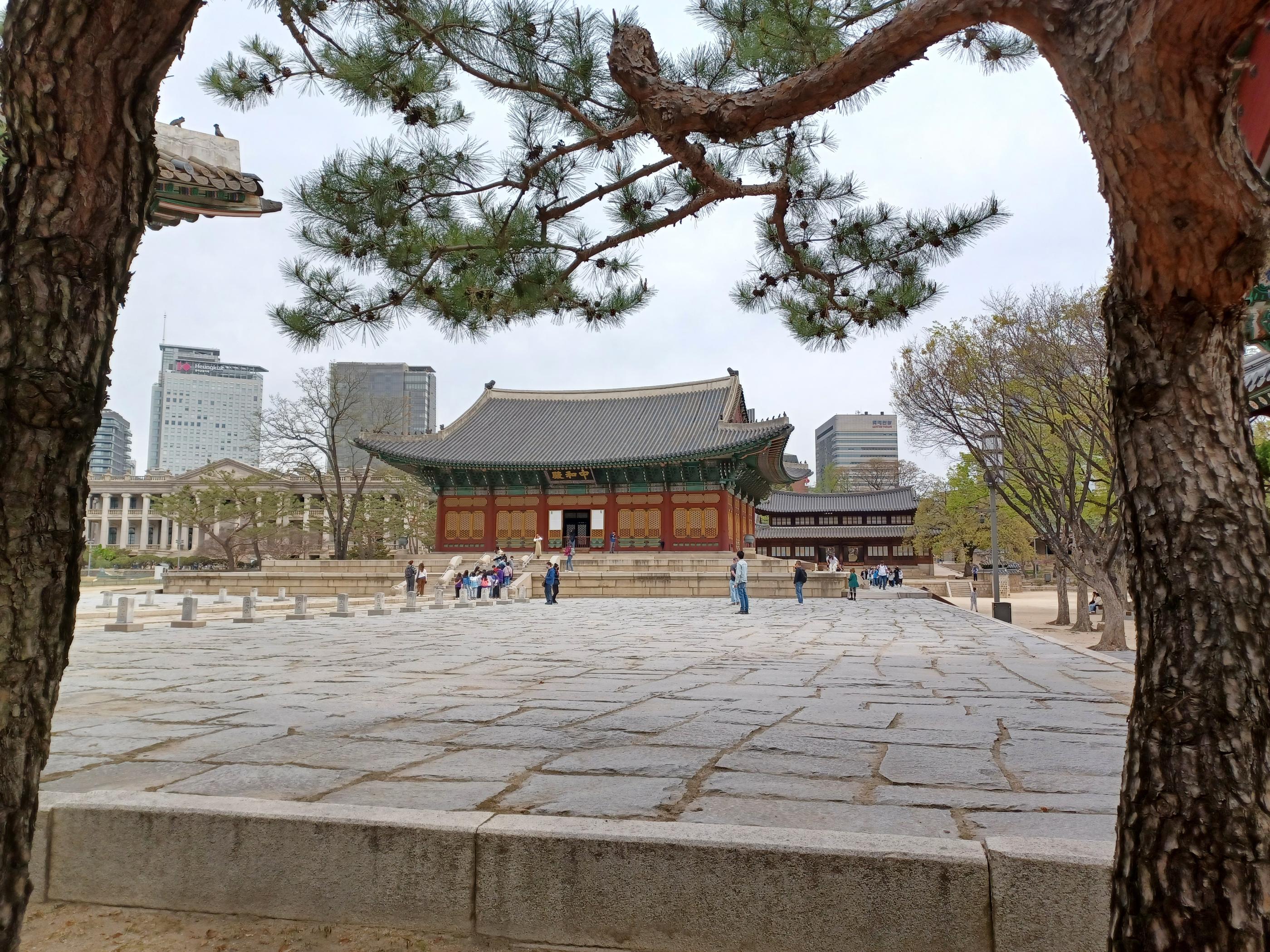
I visited Deoksugung several times at different times of the year. But I could not get into the amazing Western style building that immediately stands out among the traditional architecture of palace buildings - Seokjojeon.
This building houses as the Daehan Empire Historical Museum, which, unlike the other buildings of the palace, can only be visited as part of a guided tour. For foreigners, a free tour is provided in English only twice a day: 11:50, 14:50. Booking required, you need to sign up a name on the waiting list at the entrance of the museum (1F) for the scheduled tour. It is on a first-come-first served basis (maximum 20 persons per tour).
And so one day I came to the palace specifically with the goal of finally visiting this museum. A small group of us gathered, about 6 people from different countries.
At 11.50 we were let into the room and asked to take off our shoes. Then our guide began the tour in excellent English.
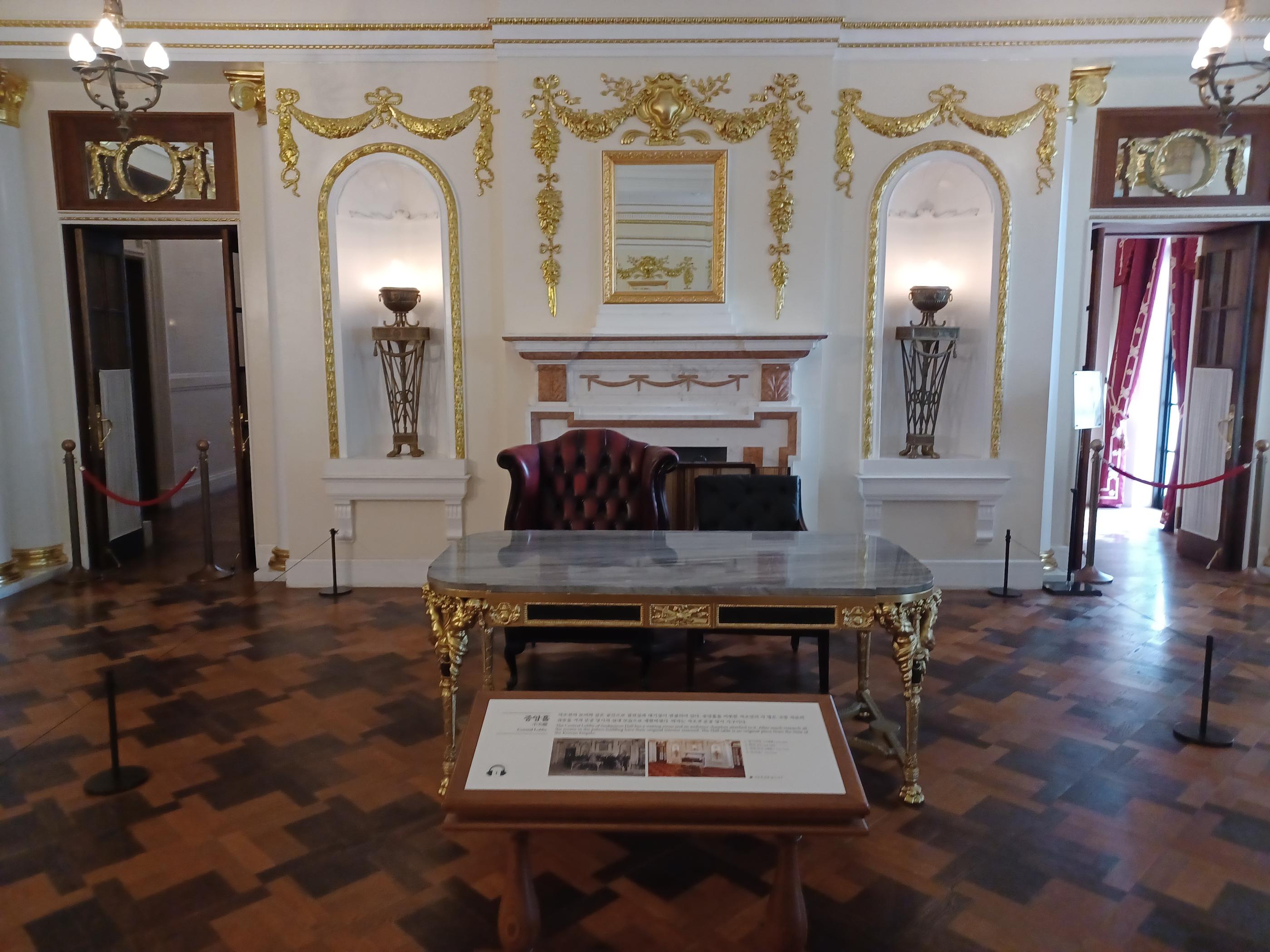
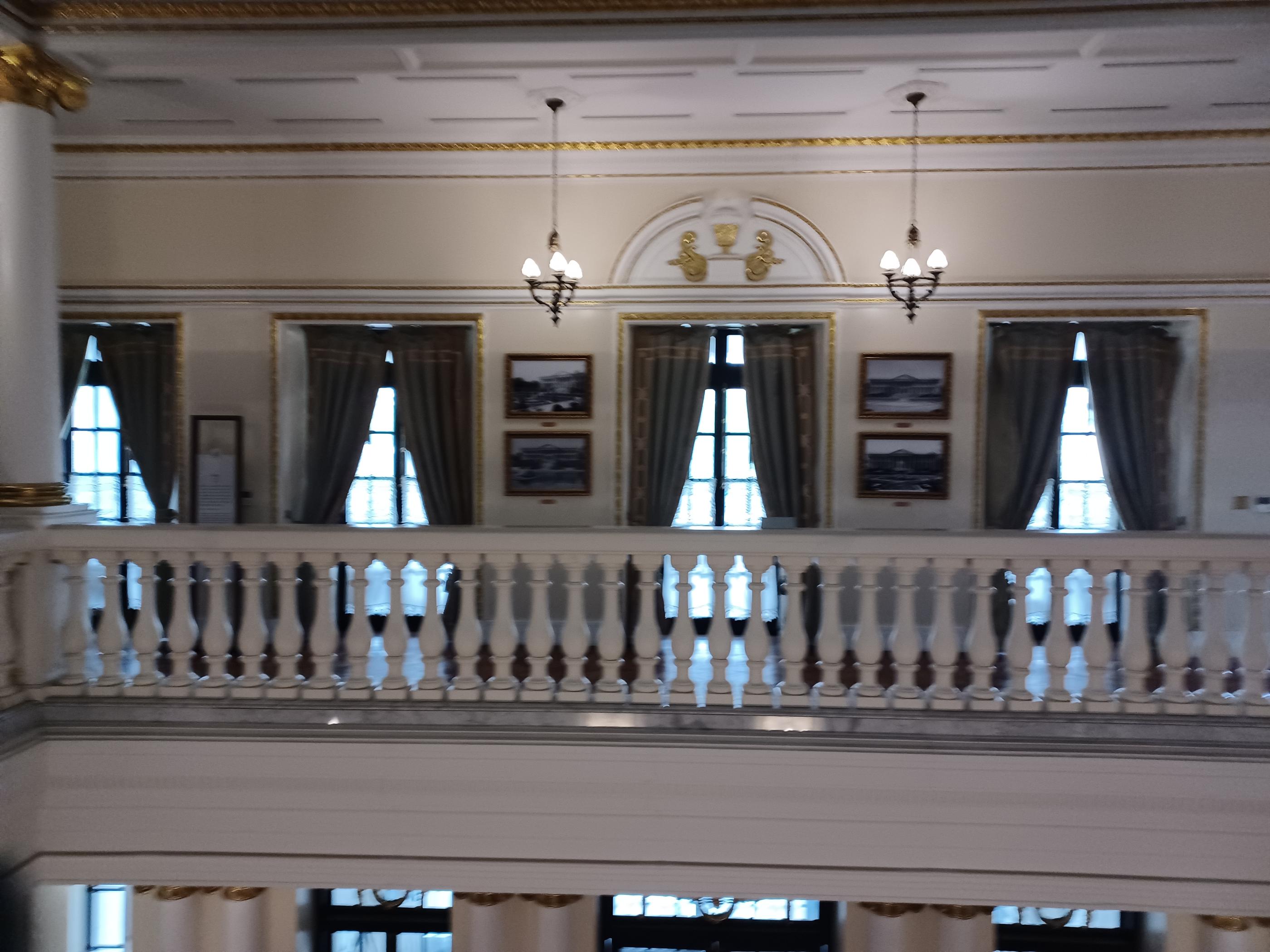
First we entered the central hall on the 1st floor. The central hall is a two story space. There are 16 Ionic columns with gilded capitals that seem to support the corridor like hallway on the second floor. The interior decoration of the walls is a British neoclassical interior with white walls decorated with gilded iron ornaments. There are also neoclassical furniture, such as tables and chairs with marble tops, armchairs, and standing tables. All these details give the room a solemn and majestic look.
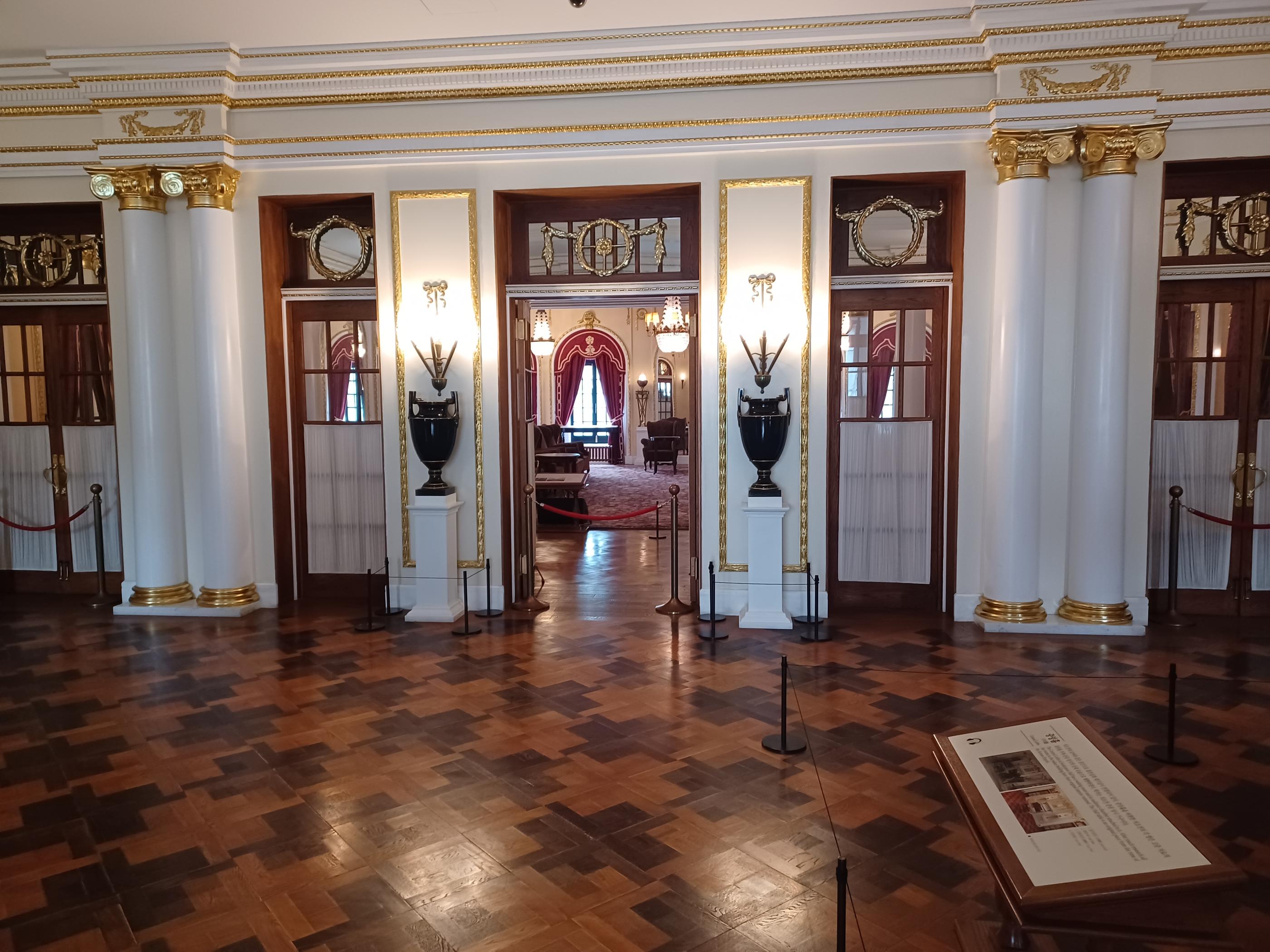
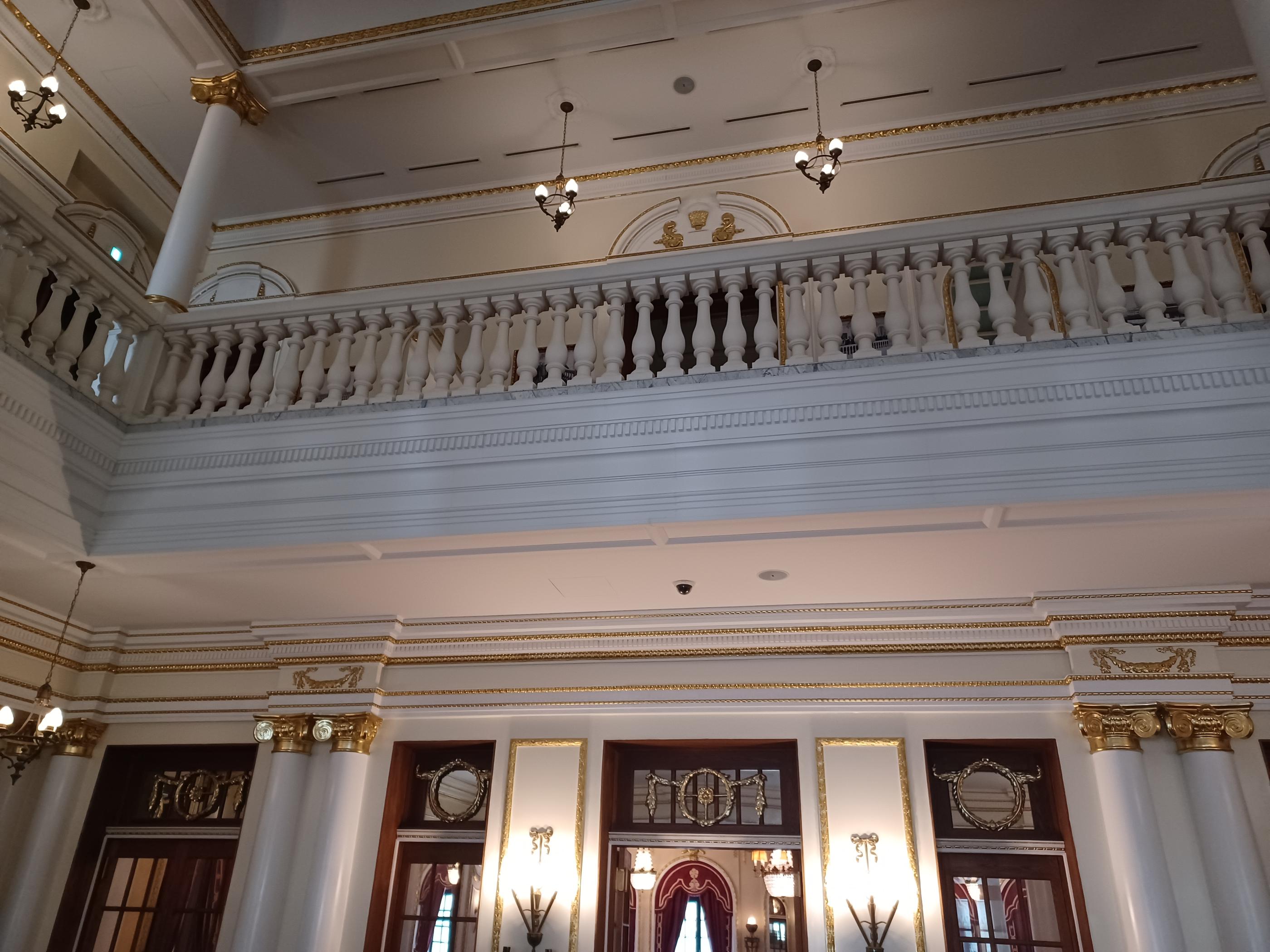
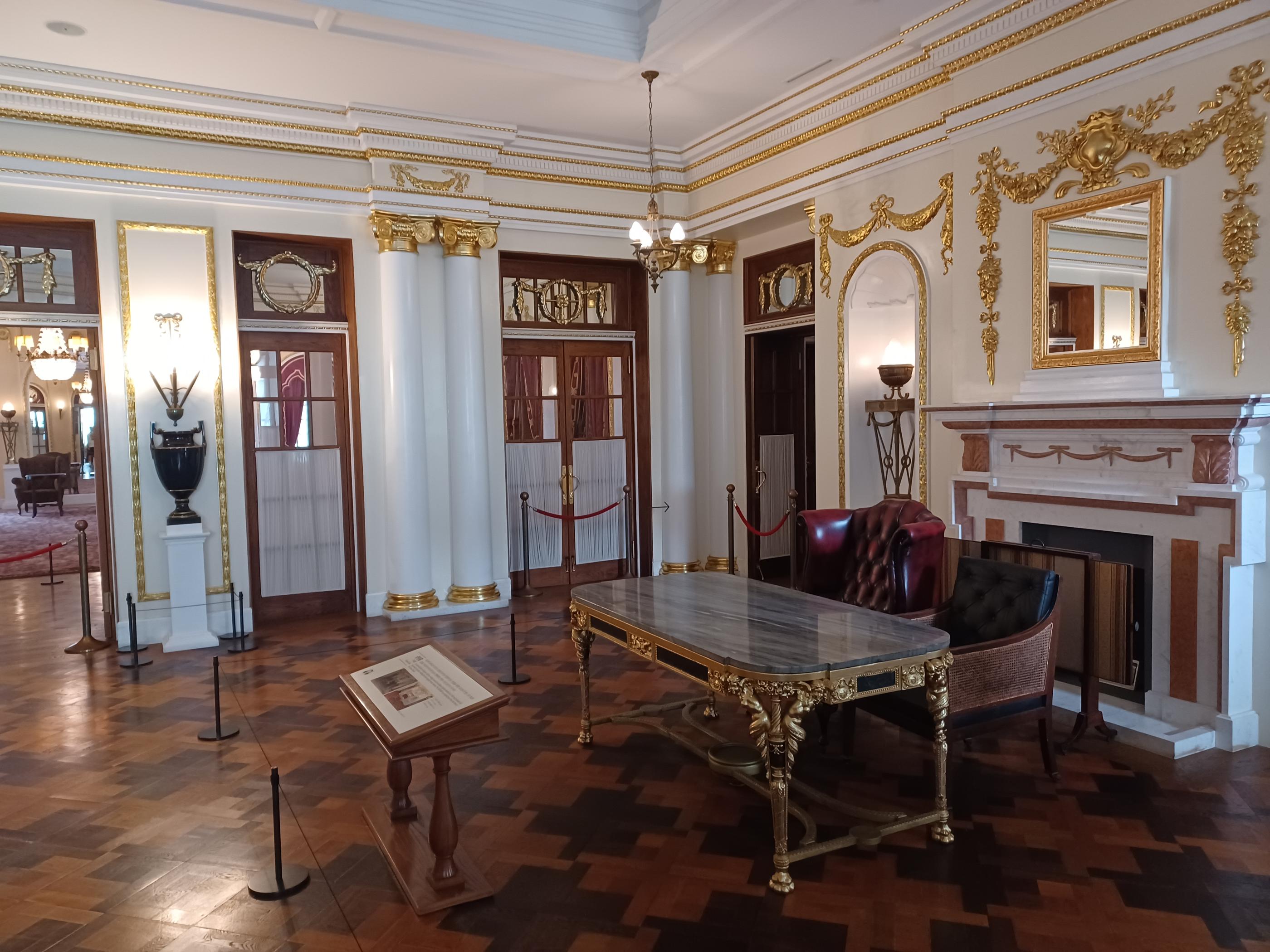
The table was originally a piece of furniture from the Seokjojeon that remained until the present day.
Then we head to the room on the right side of the central hall, the VIP waiting room. It is the room where the guests waited to meet the emperor, and except for the absence of pillar decoration, the interior design is basically the same as the central hall. The left door is a fake to strictly adhere to the British neoclassical interior style.
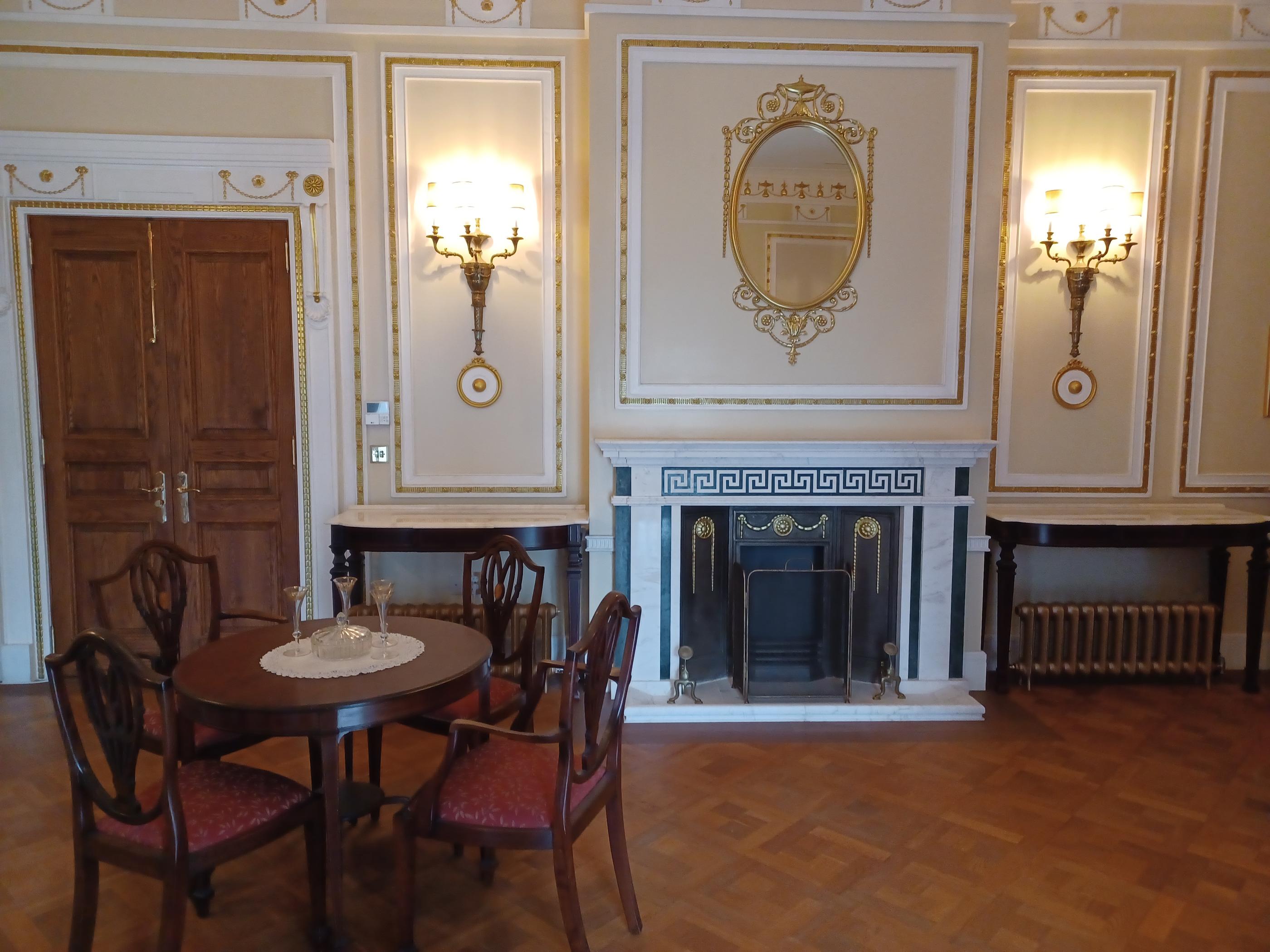
It is said that the guests mostly waited for the emperor's abdication while eating biscuits, sweets, champagne, etc. served at the imperial court.
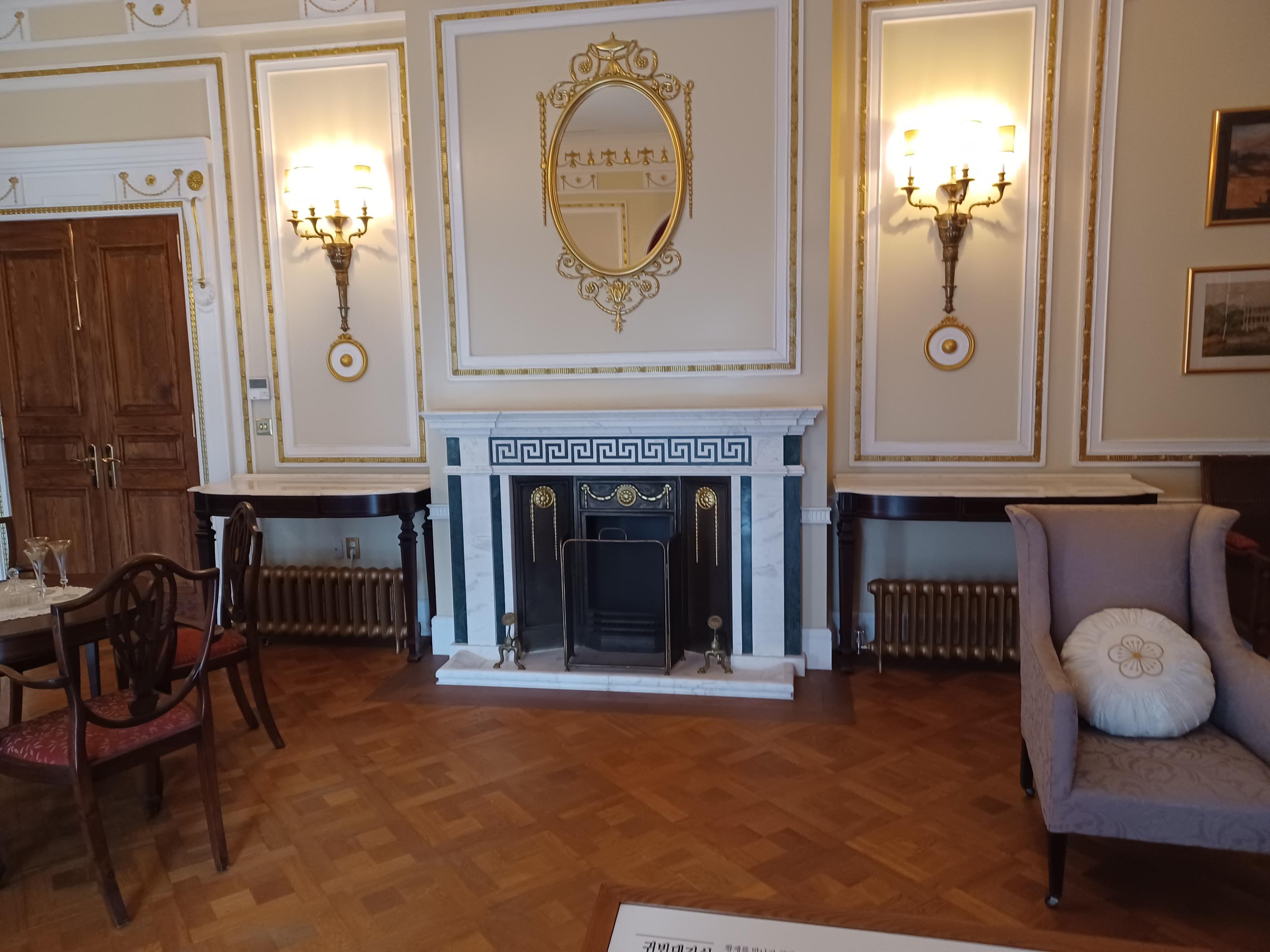
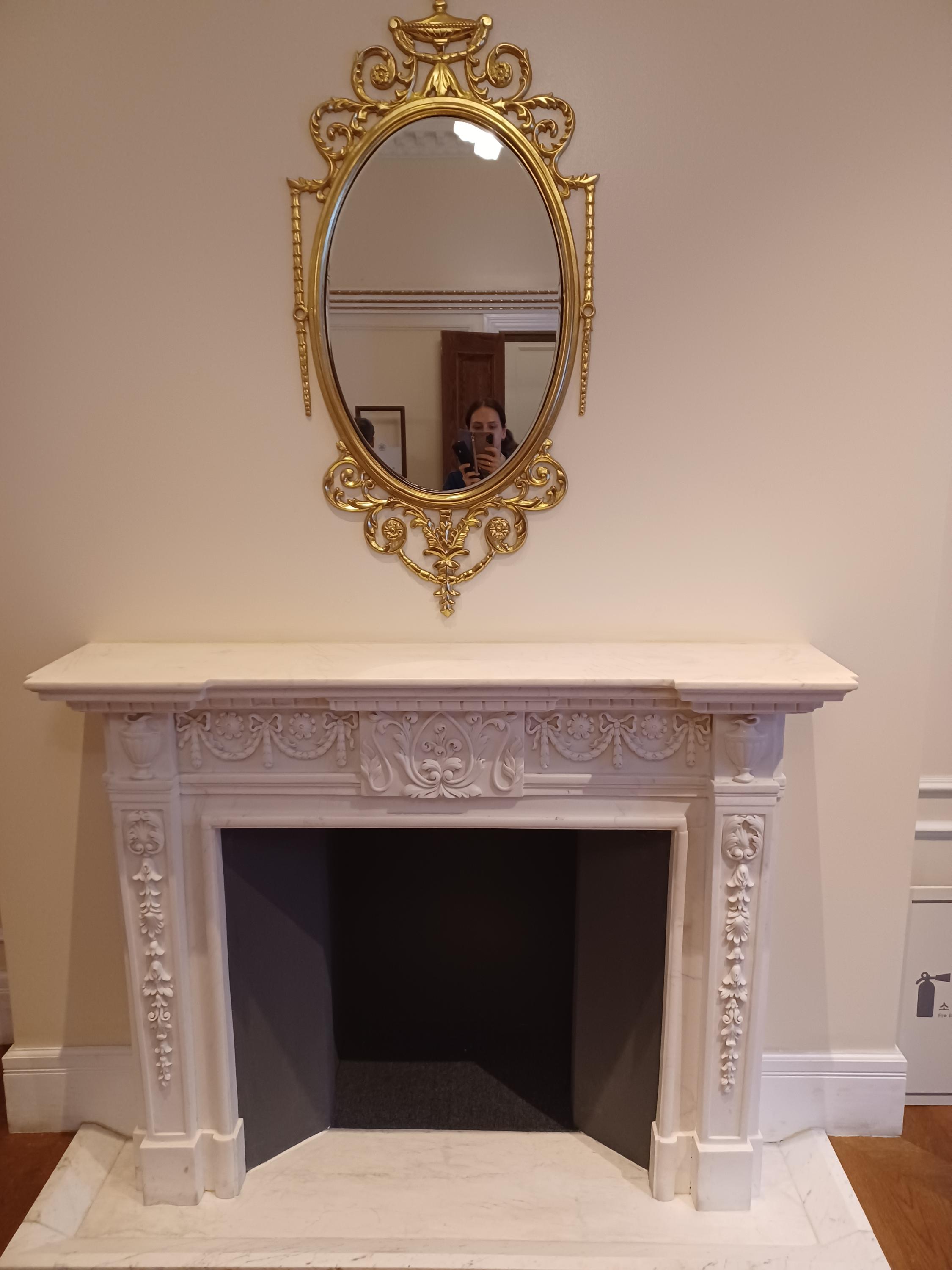
The waiting room has a different kinds of furniture. The stool and the dresser are original furniture, the rest are all replicas.
The mirror above the fireplace is quite high, not tall enough for a person. This is to reflect light and brighten the building by placing the mirror high up. Electric lights were used during the Korean Empire, but the light was not as bright as it is today.
The next room is the reception room, located above the central hall. It is the largest room on the first floor. Our guide brought to our attention that since this room was a place where the emperor is deposed, and unlike other rooms, it is characterized by the use of the imperial emblem, the Ihwamun (plum blossom), in the furniture and interior.
It has the same interior as the central hall, but it differs in that it has two pairs of false gilded pillars and two pairs of real gilded pillars. Several chairs, armchairs, a long chair, two side tables, two round tables, and standing lamps are placed on the carpet.
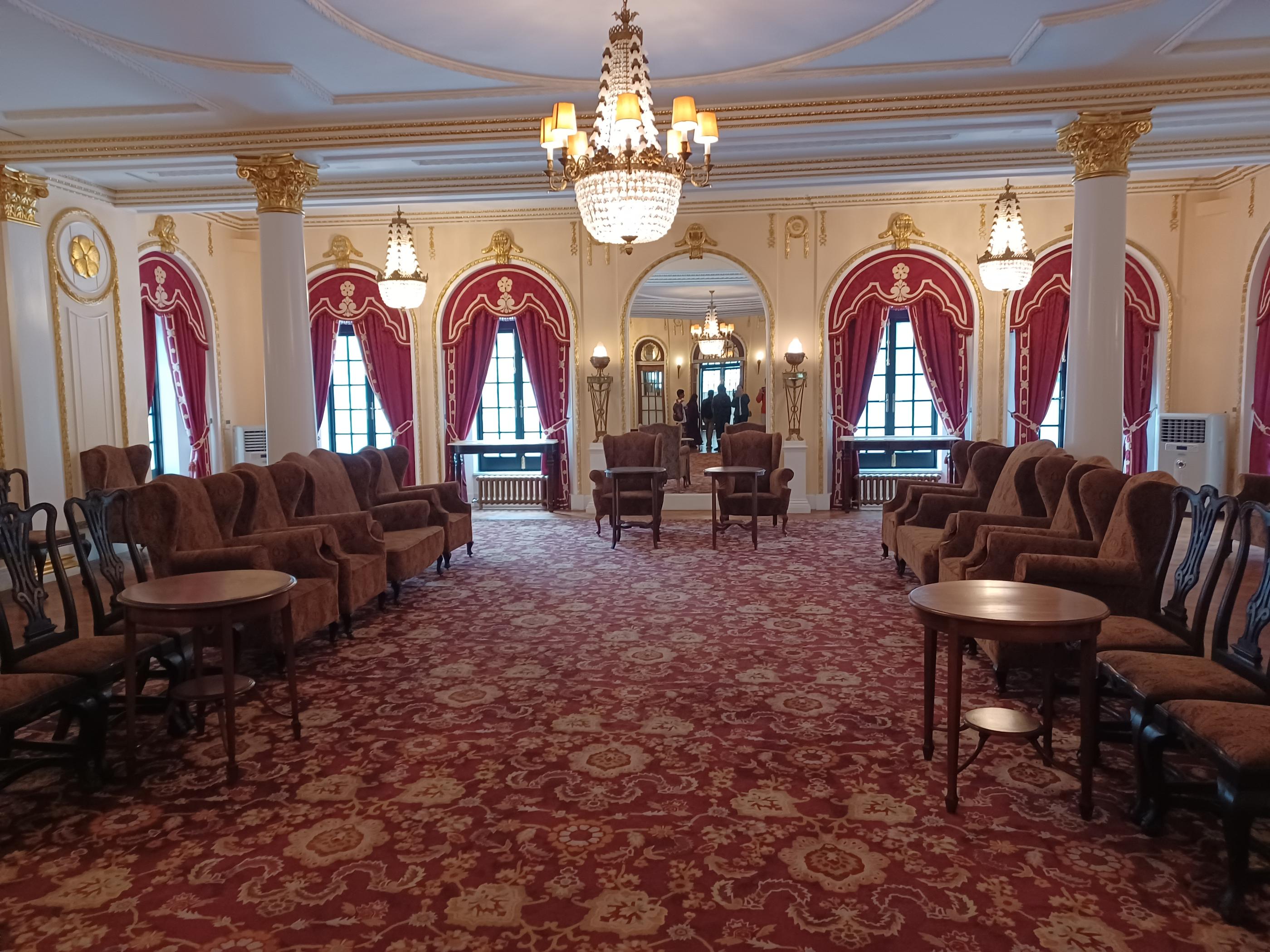
The most expensive item in the reception room was a wall mirror imported from Europe. According to our guide, mirrors were extremely expensive and luxurious items at the time. This was a sophisticated political device to suppress the spirit of foreign envoys.
After the reception room, we went into a small room. In the center of it is a portrait of Emperor Gojong (1864-1907), on whose initiative Seokjojeon was built.
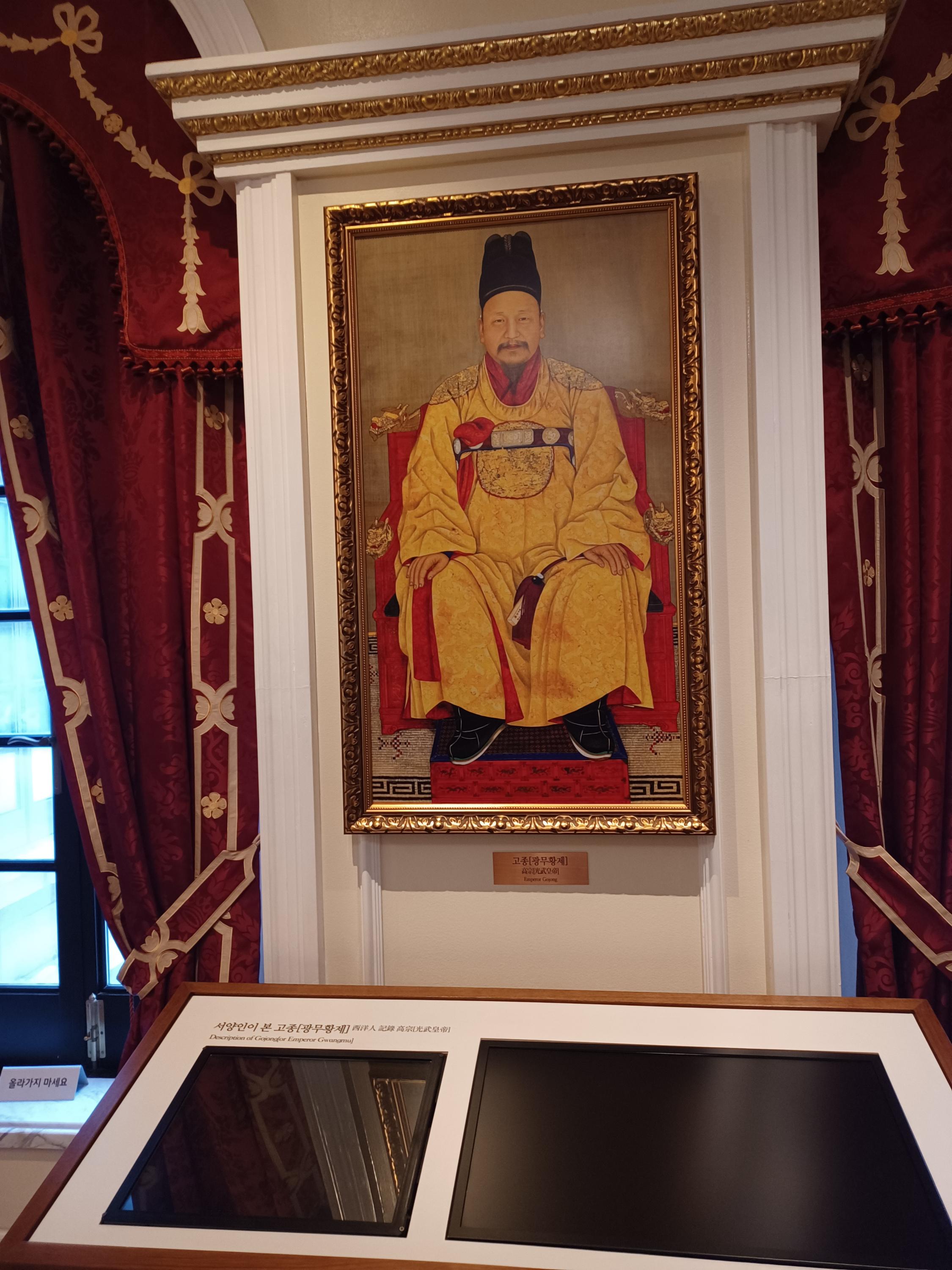
Here our guide told us about the tragic fate of the last emperors of Korea, which is directly connected with Seokjojeon. According to the guide, after the assassination of Queen Myeongseong by the Japanese, King Gojong was forced to hide in the Russian Legation for a year and then moved to Deoksugung Palace, since the embassies of Russia, England and the United States were located in close proximity and, if necessary, Gojong could quickly take refuge in any of them.
In 1897 Gojong declared himself emperor and changed the name of the kingdom from “Joseon” to the “Korean Empire”. Deoksugung Palace became the main imperial residence.
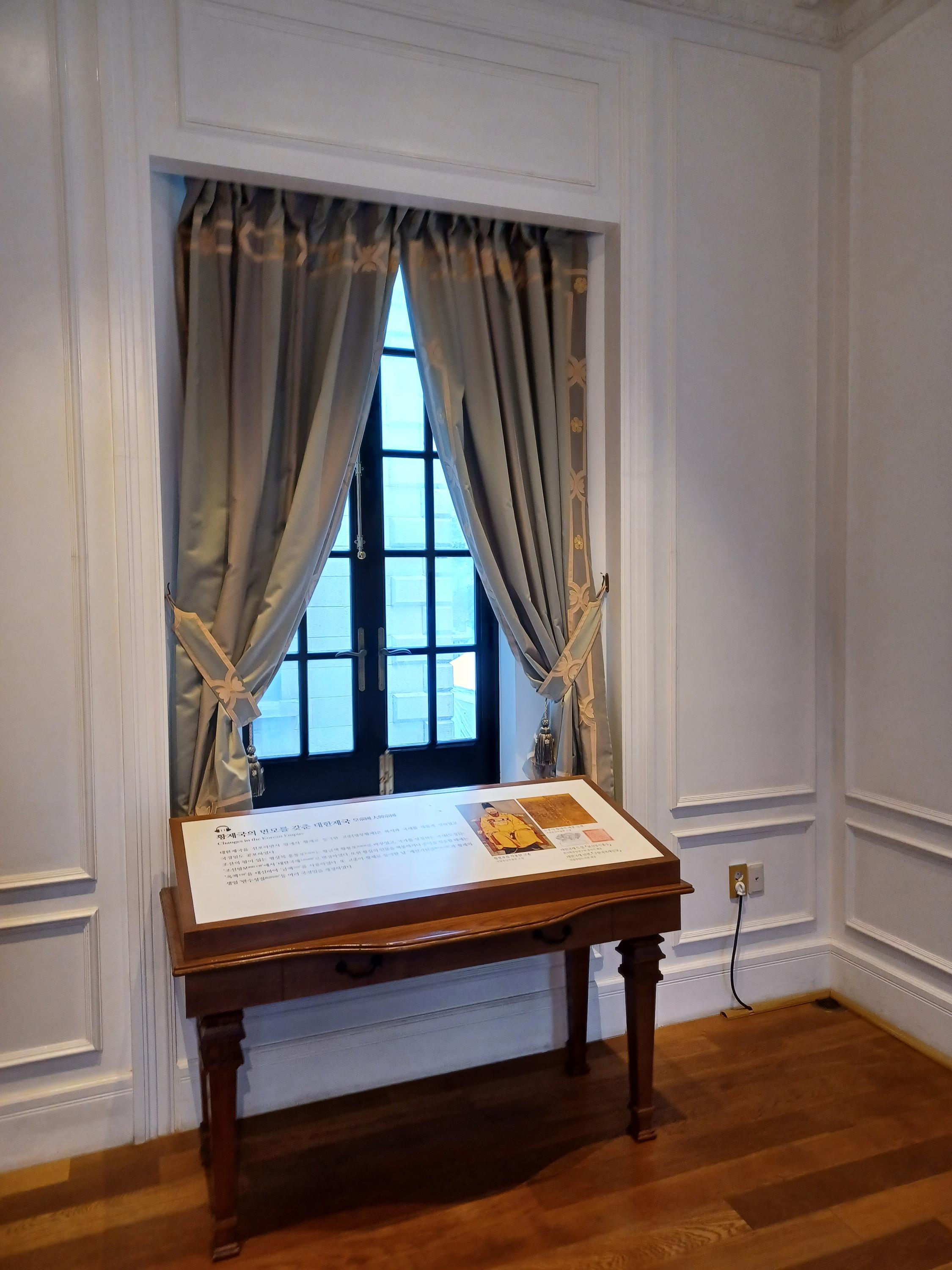
The Western style Seokjojeon (“hall of stone”) was built in 1900-1910 on the initiative of Emperor Gojong as a royal residence and for entertaining foreign diplomats and guests.
After hearing the story of Seokjojeon, we returned to the central hall and climbed the stairs to the 2nd floor.
The second floor housed the living space of the emperor and empress. On the left side of the western stairs we saw the emperor's bedroom.
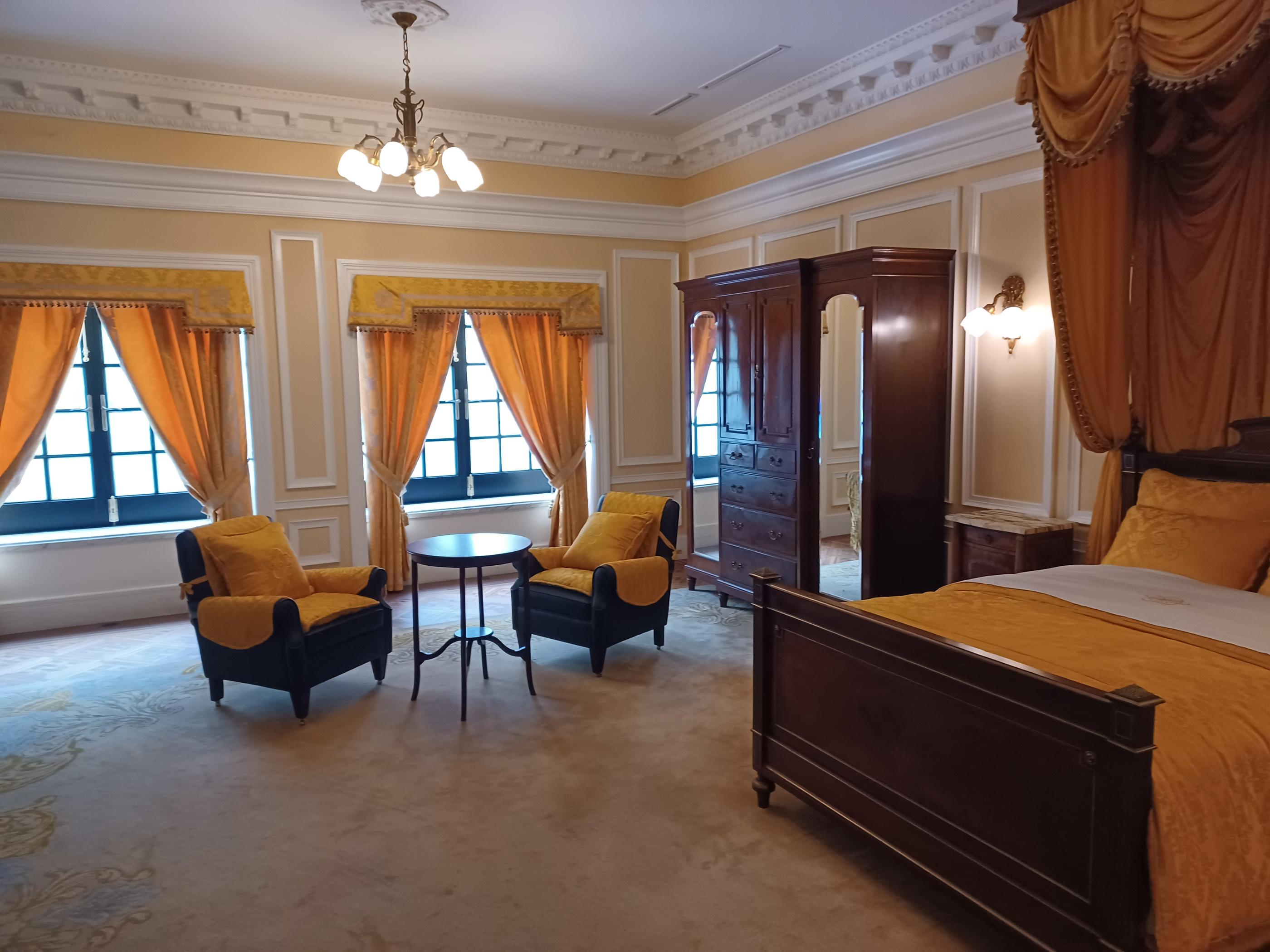
The interior of the wall is the same, and above the carpet are a bed, a wardrobe, a washbasin, a chair, an small chair, a side table, etc. Among these, the wardrobe and the washbasin were originally placed in the bedroom and rearranged. Also, because it is the emperor's bedroom, the curtains, sofa covers, and bed covers are yellow.
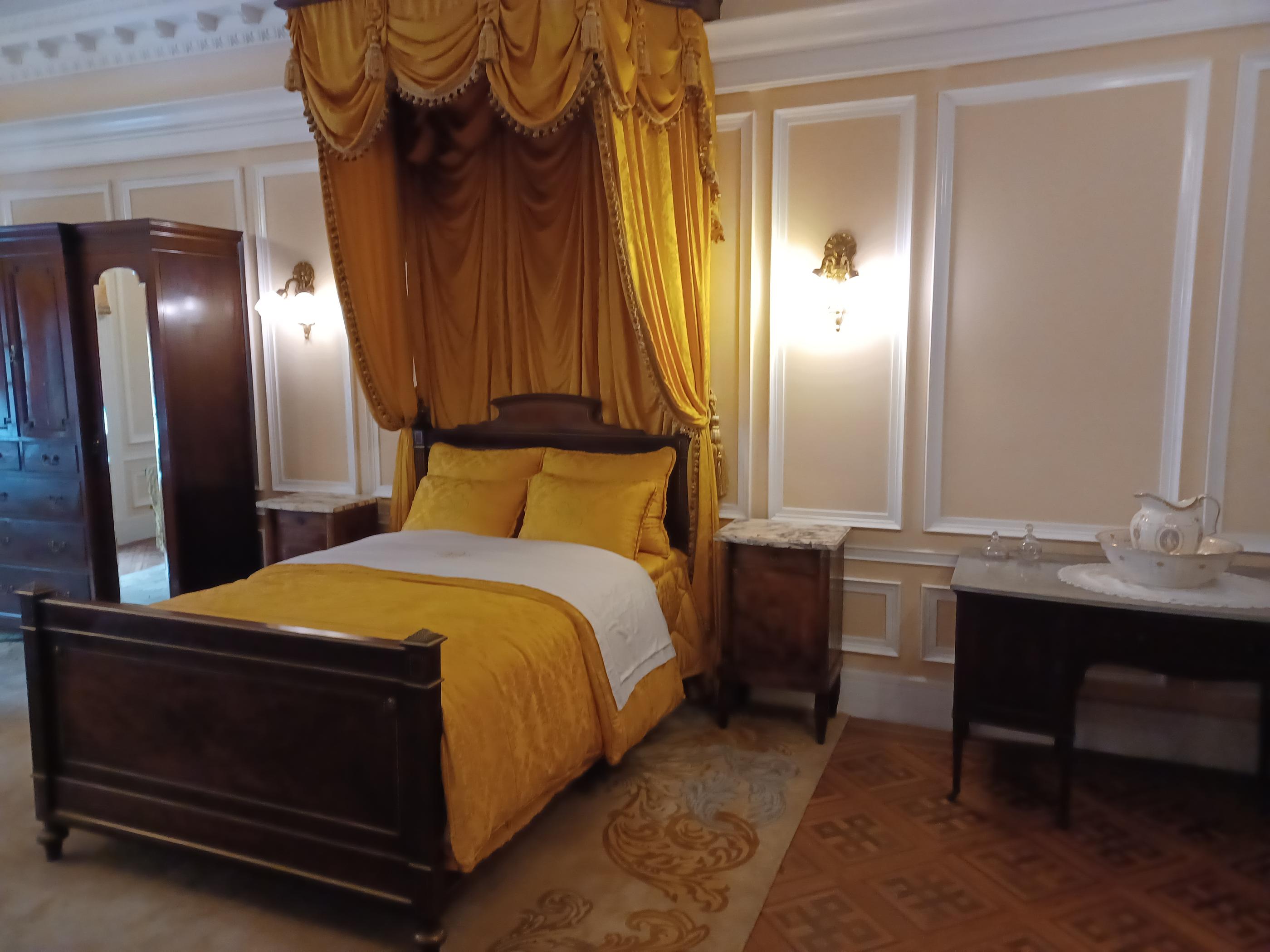
The surprising thing was that the emperor's bed turned out to be small. But even in Europe, beds of the time were custom made and made slightly larger than the height of the person using them, so they were small.
The emperor's bedroom was connected to the emperor's study, the empress's boudoir, the empress's bedroom, and the central hall on the second floor. This is an apartment style structure commonly seen in European palaces. Many of the European castles I've been to have had the same layout.
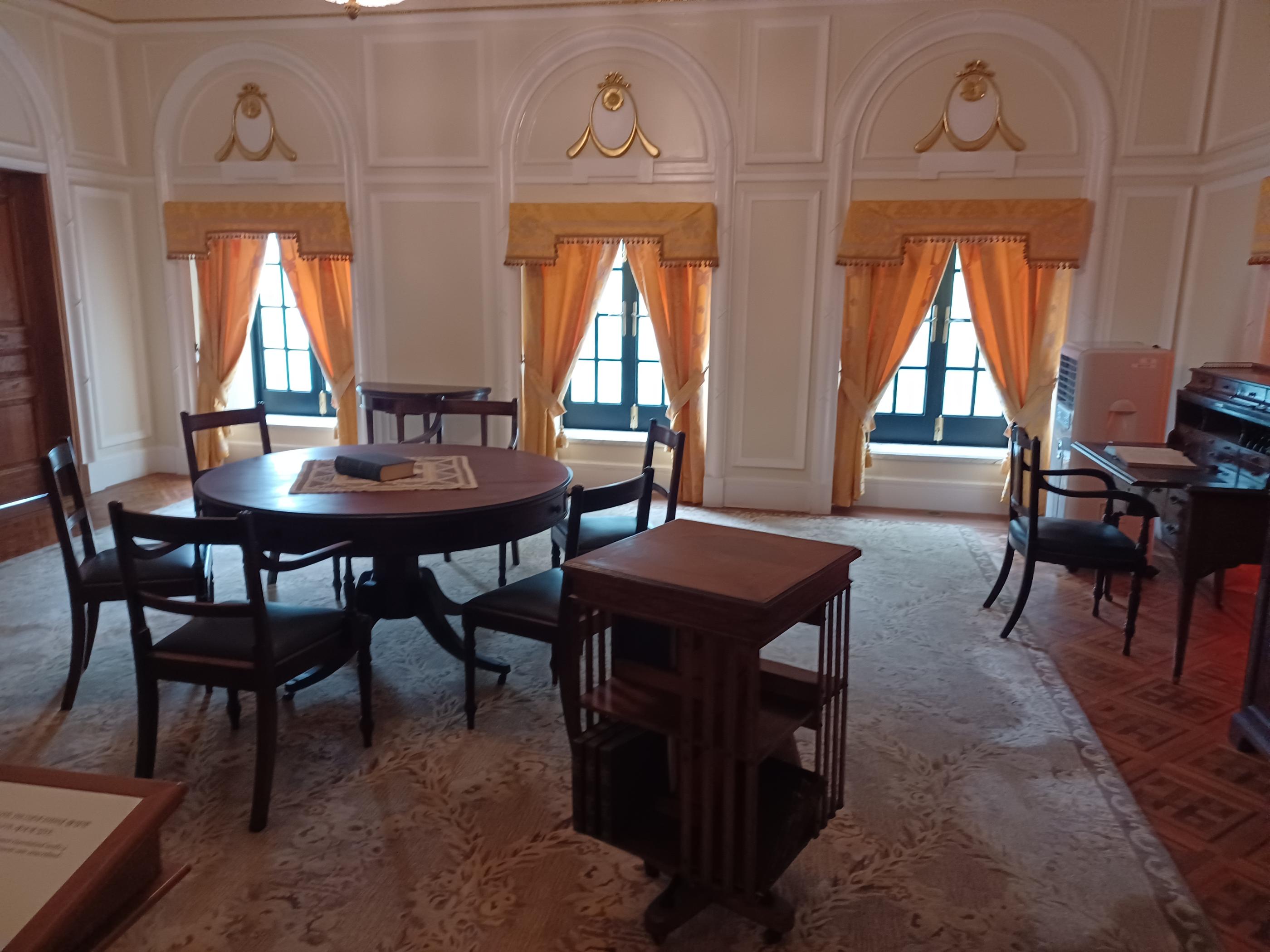
To the left of the emperor 's bedroom it is located Emperor's Study room. It was a place where the emperor read books or separately received guests. A bookshelf, a revolving bookshelf, a game table, a round table, and a desk were placed on the carpet.
Next to the emperor's bedroom is also the empress's bedroom.
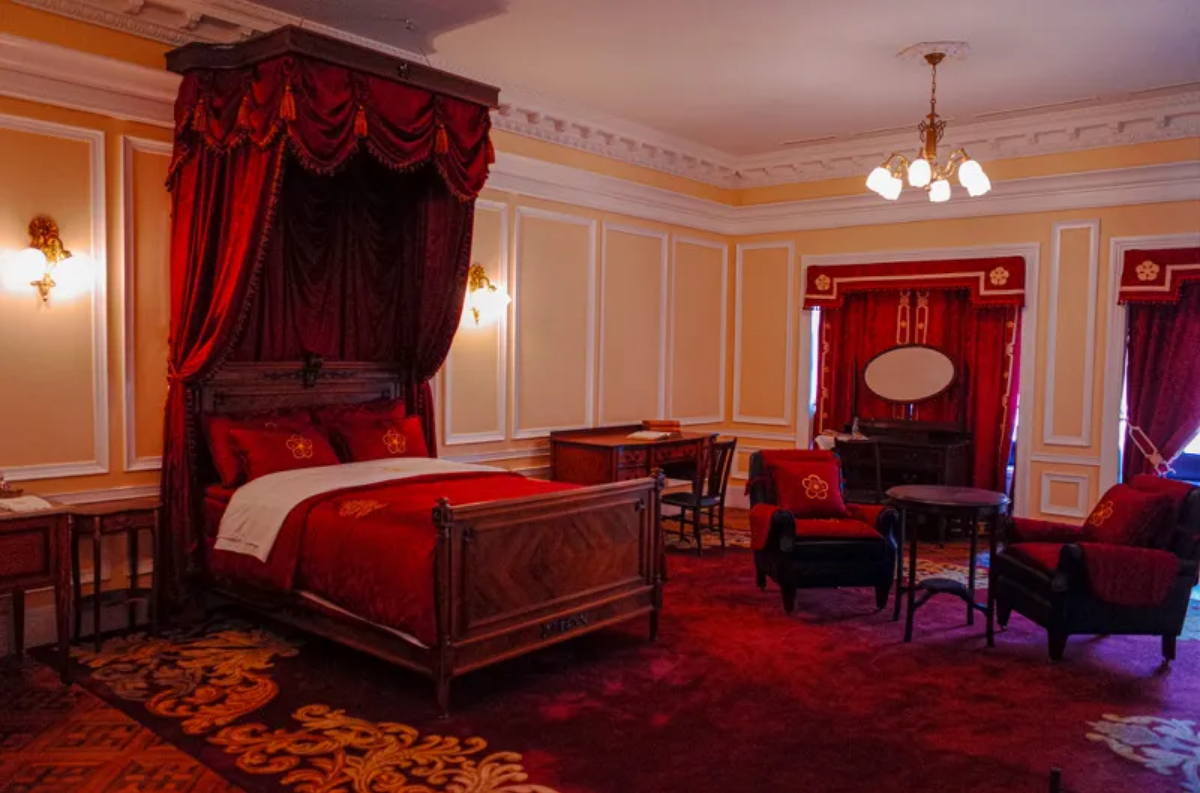
The furniture arrangement is almost the same as that of the emperor's bedroom. However, since it is the empress' bedroom, there is a dressing table on the carpet and the curtains and cushions are purple. The wardrobe, washstand, dressing table, and desk that were placed after the completion were put back when they were restored.
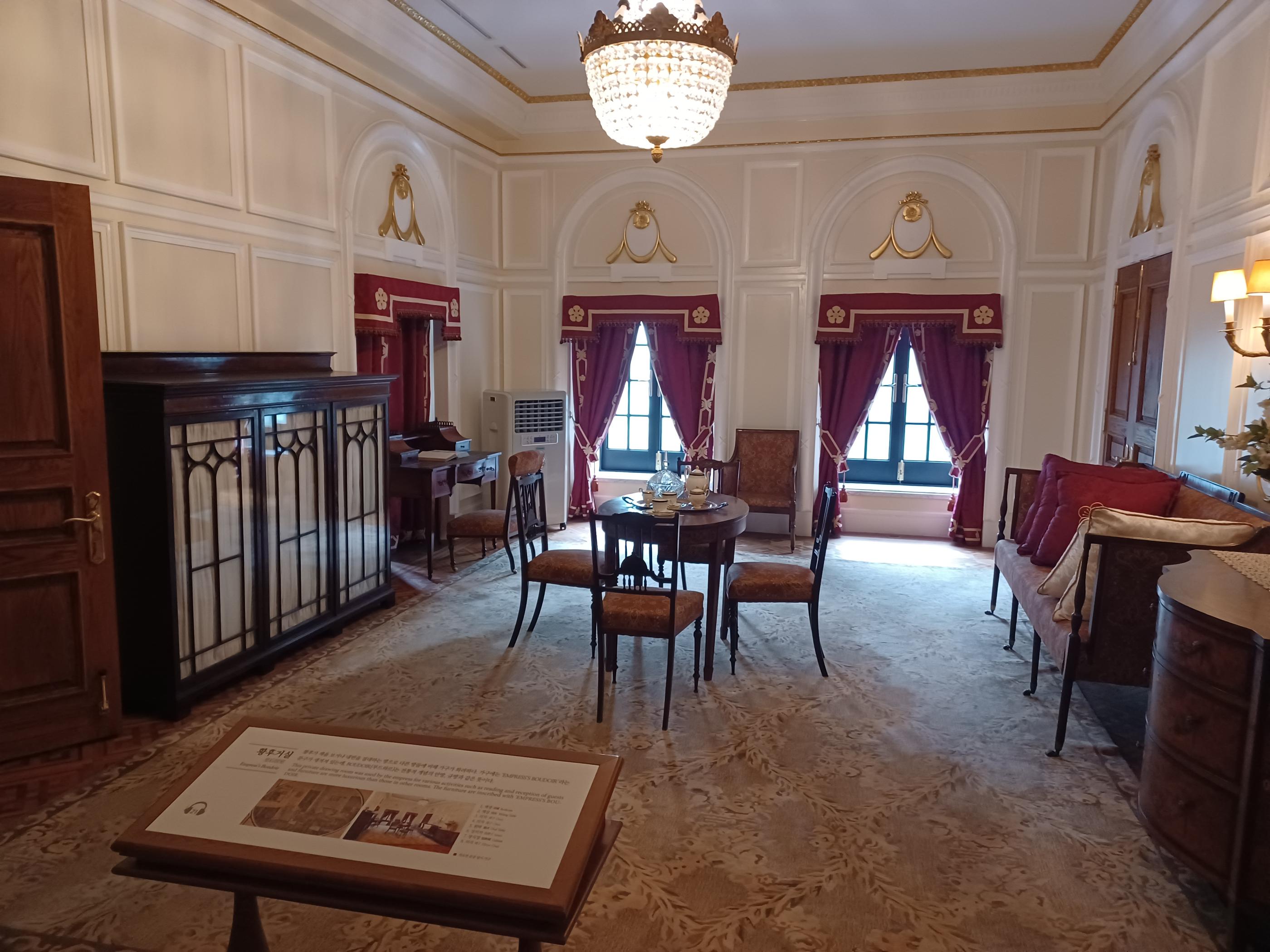
Then we move on to the Empress's boudoir. This is the room where the Empress reads books or entertains guests. It is a space that replaces the traditional inner room, and since it is the space used by the Empress, the furniture is more ornate than other rooms. It is located on the left side of the Emperor's living room and is slightly smaller than the Emperor's study. The interior is similar to the Emperor's living room, with a bookshelf, desk, round table, chair, stool, and dresser on the carpet. Of these, the furniture at the time of completion is the bookshelf, desk, round table, and dresser.
It was interesting to see the toilet and bathroom of the imperial family. These are the spaces located below the Emperor's study and the Empress's living room. The Emperor and Empress had separate rooms, and the toilet and bathroom were also separated into separate spaces.
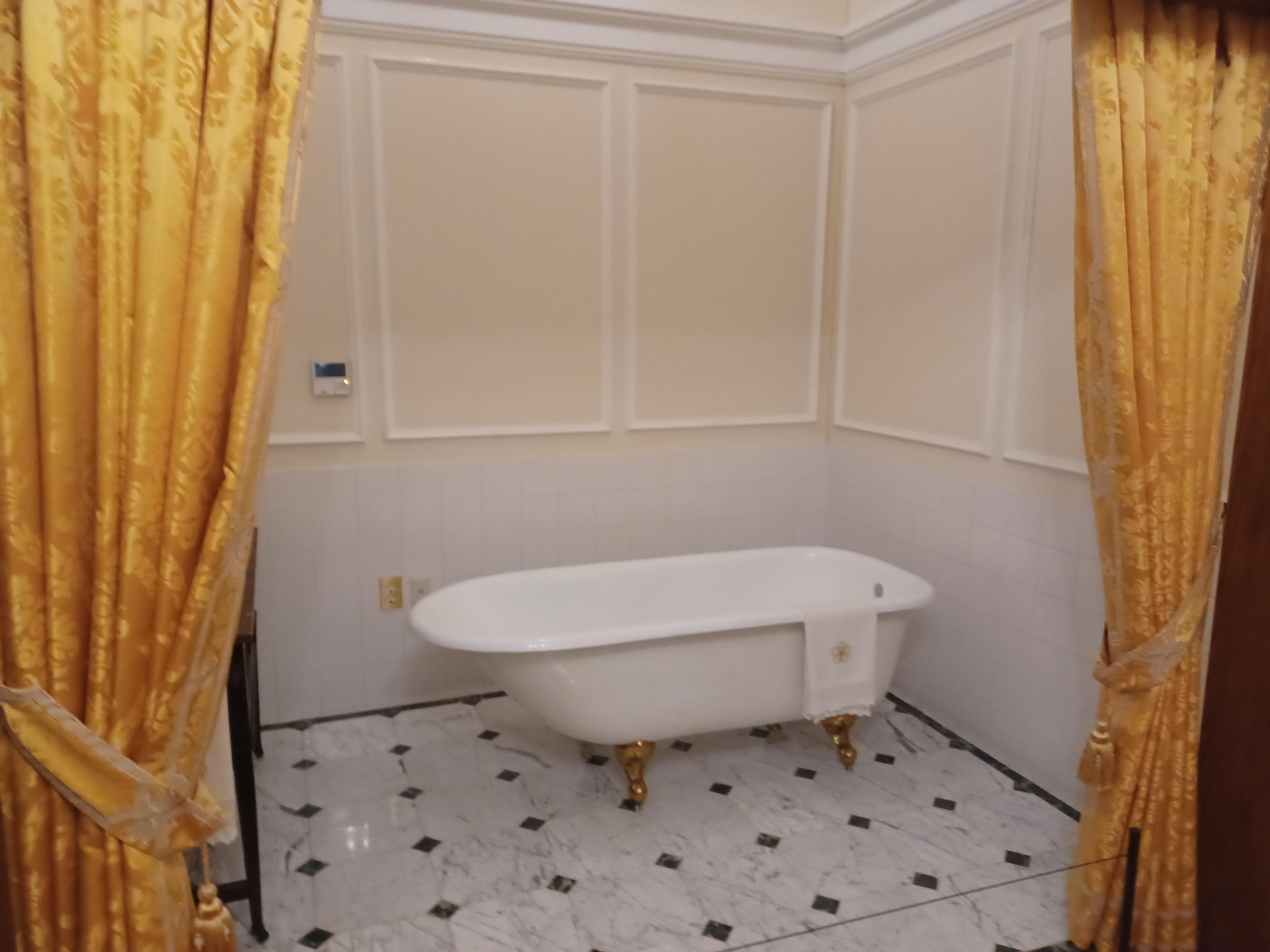
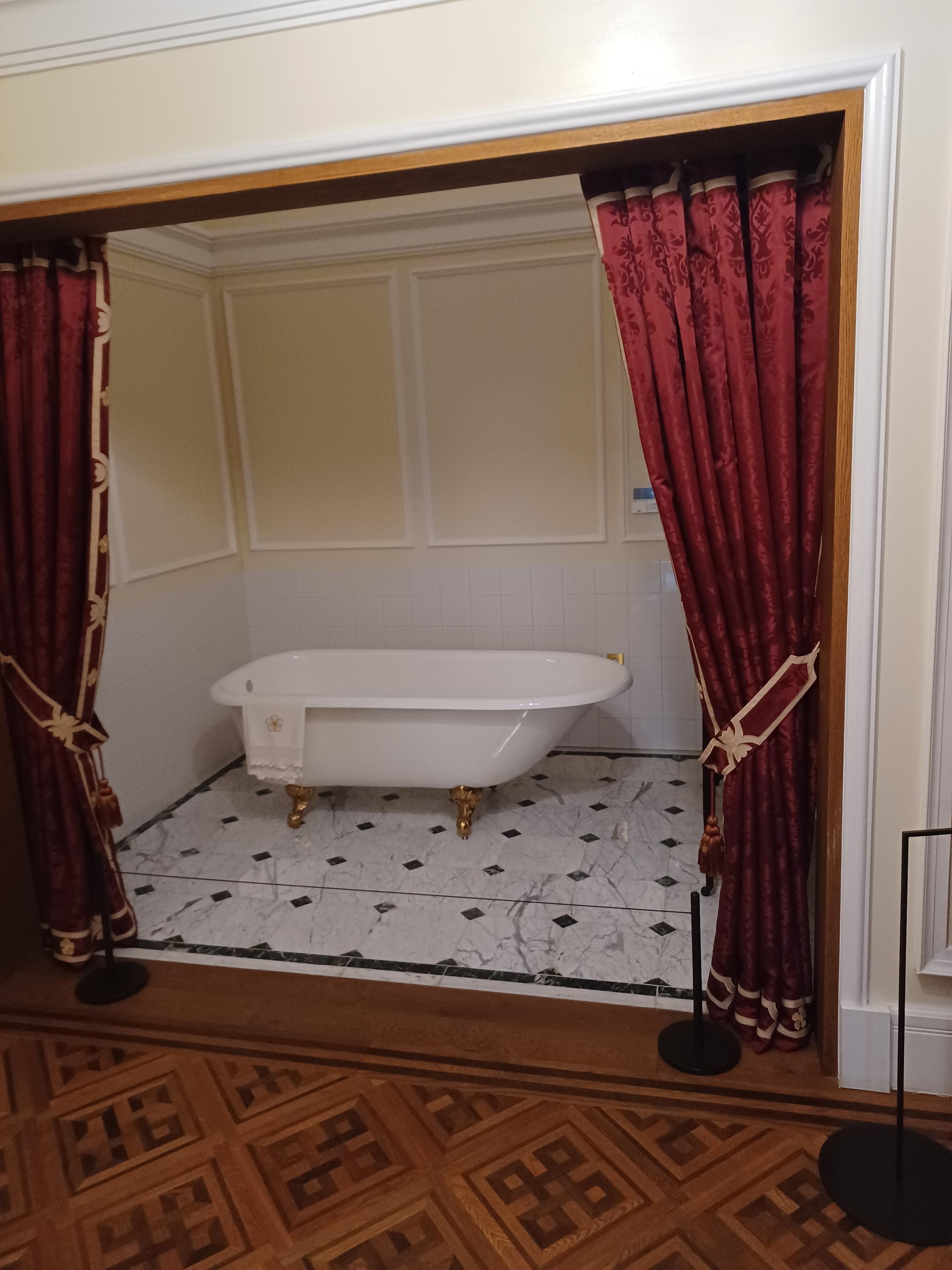
The flush toilet was first installed in the Korean Empire. At that time, a British-style flush toilet was installed in the building used as the imperial residence of Emperor Gojong.

The Emperor and Empress's toilet and bathroom designs are generally the same. The toilets, bathtubs, and sinks are the same as those used in the late 19th and early 20th centuries.
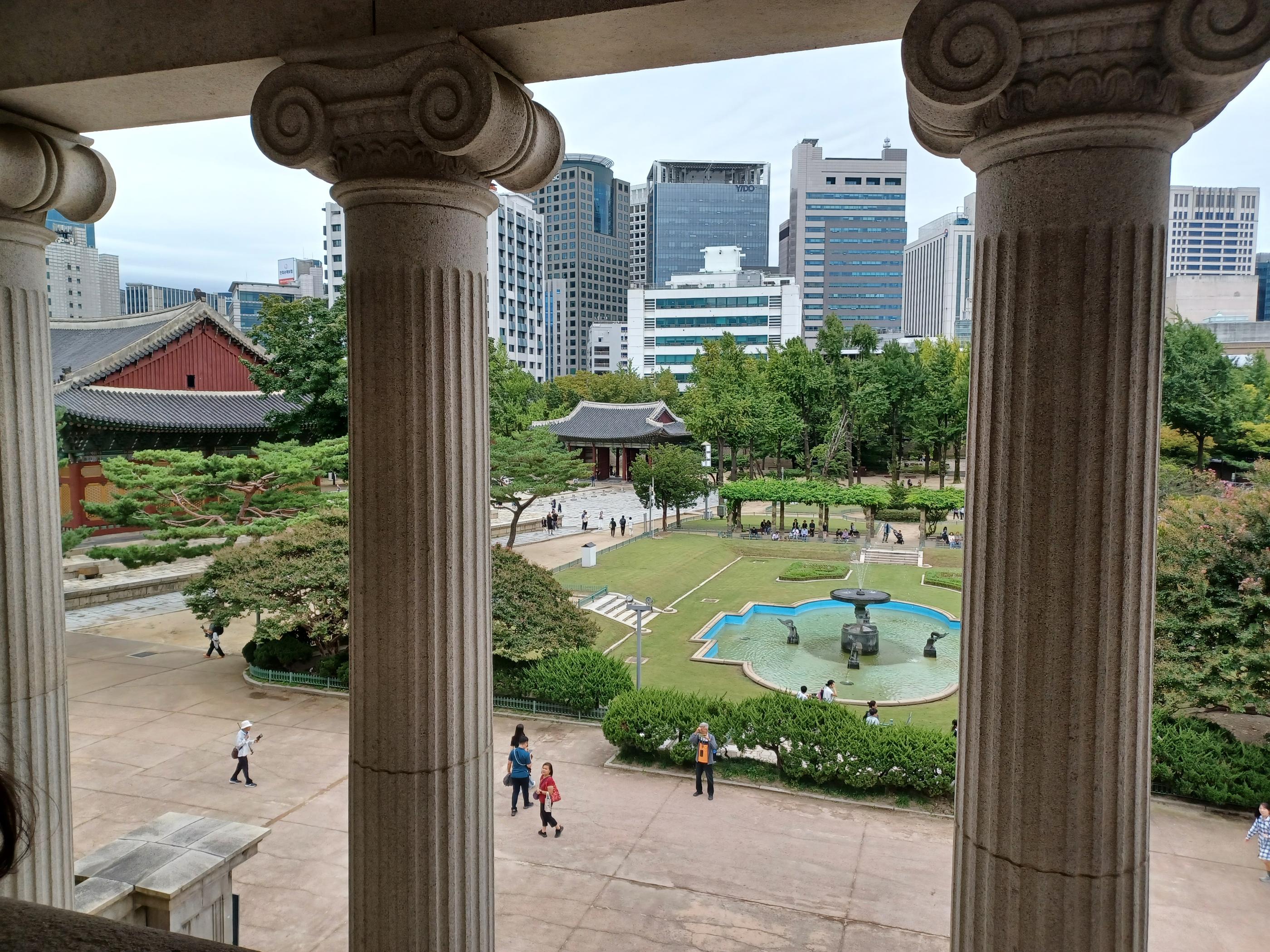
Then we went out onto the terrace, which offered a magnificent view of the palace grounds. This view is especially beautiful in the spring, when the trees are in bloom.
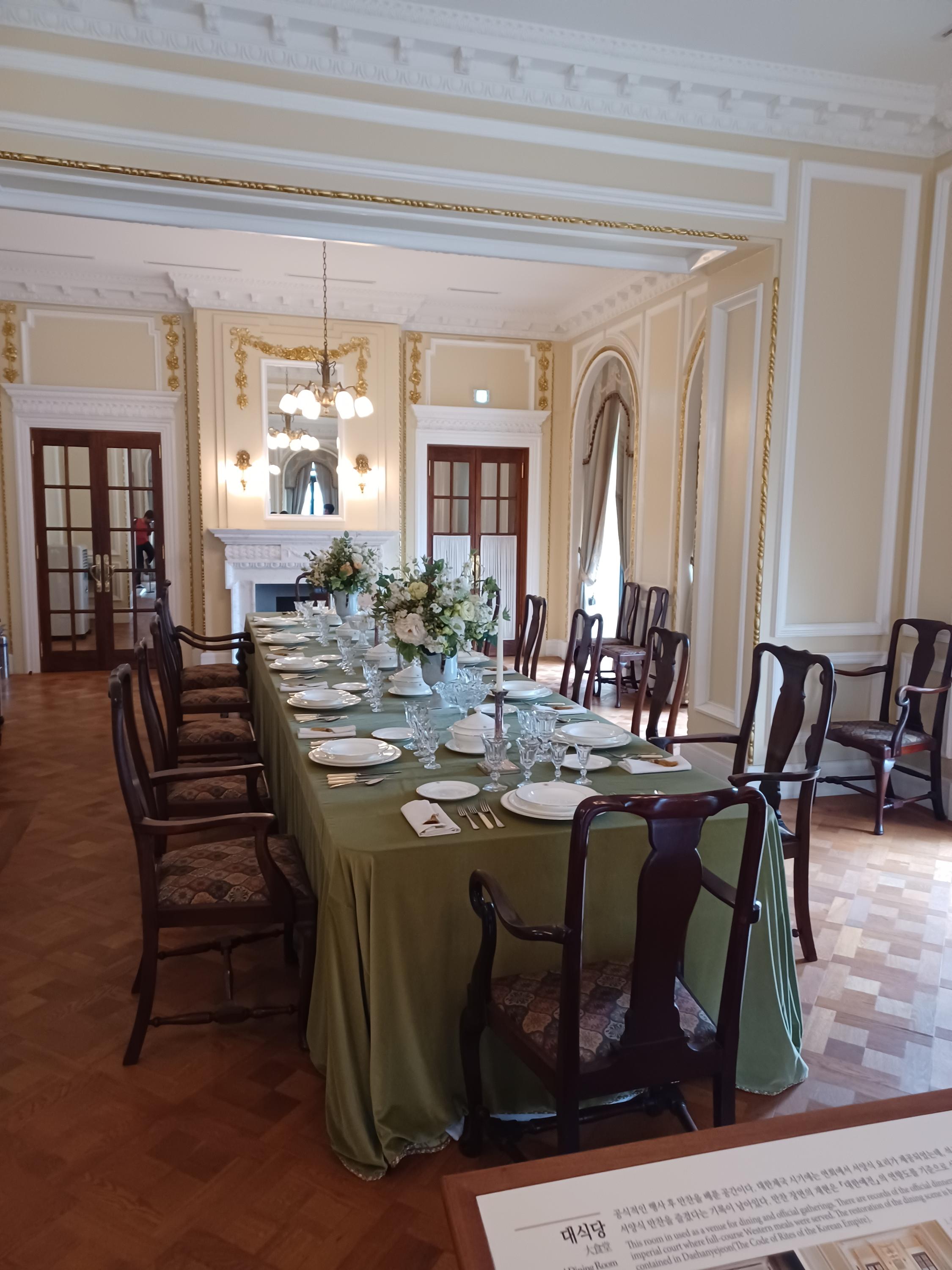
At the end of our tour we went down to the 1st floor again and visited the last room of our tour, the Dining hall. It is a gorgeous room that attracts the attention of visitors with its crystal chandelier, luxurious tablecloths, and tableware. This is the room on the left side of the central hall where a Western style dinner was served to participants after the official event. There was a long dining table and several chairs.
This was the end of our tour. I was very impressed. It was an extraordinary experience, very different from visiting other royal palaces in Seoul. From the stories of the tour guide, I learned a lot about the history and culture of Korea, while enjoying the sight of the luxurious royal interiors.
I highly recommend this tour to anyone interested in Korean history. Deoksugung Palace is open every day between 9:00 a.m. and 9:00 p.m., except Mondays. But Seokjojeon is open only between 09:30~17:30. For more information, visit the Deoksugung Palace website (https://royal.khs.go.kr/ENG/contents/E104010000.do).
Visitors will be able to see the building for free as long as they pay the entrance fee of KRW 1,000 for the palace grounds. Free admission for those wearing a Hanbok and in the Culture day (the last Wednesdays of every month).