



One of the best places in Seoul for a relaxing holiday

Olga
5 months ago
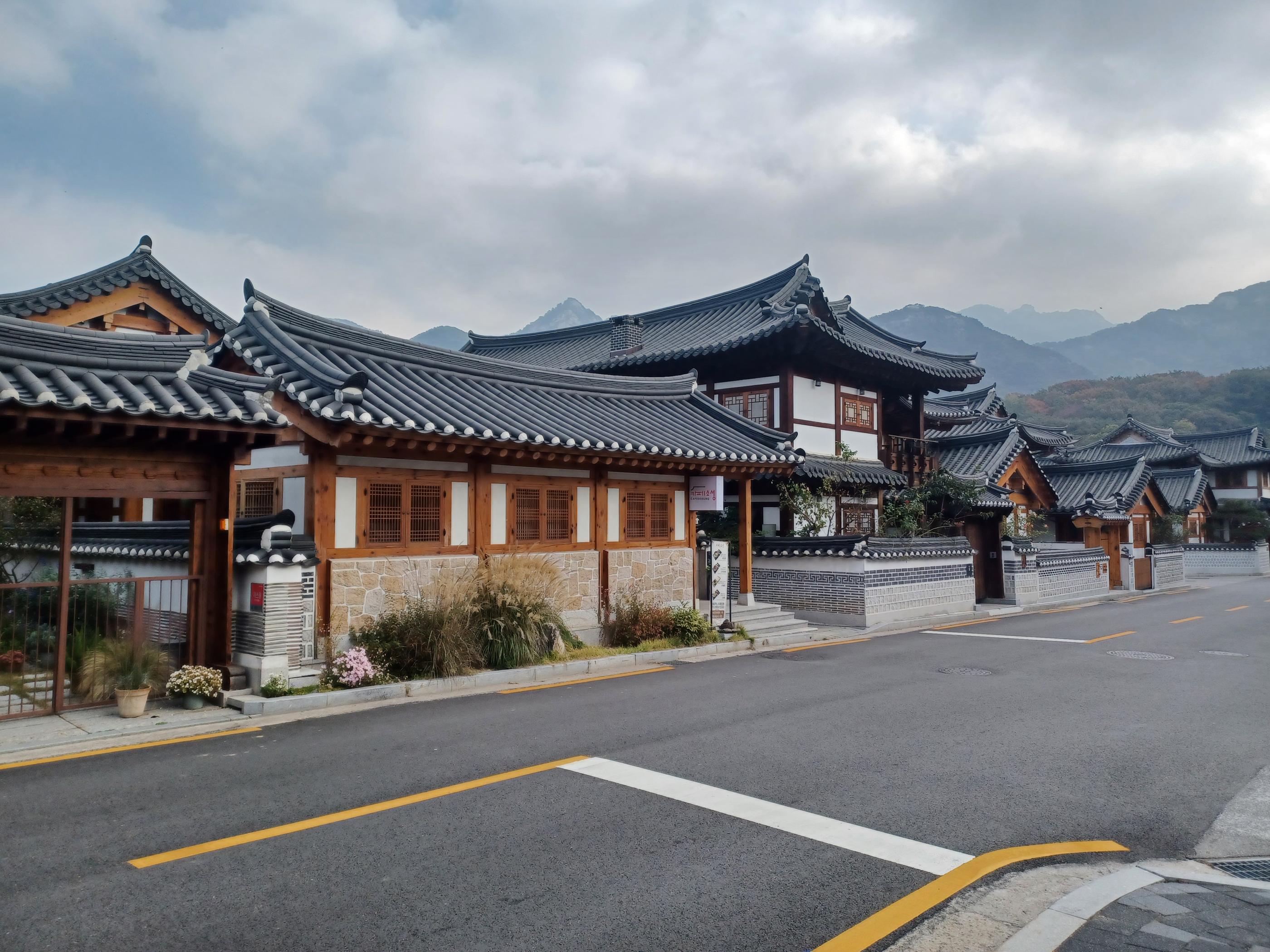
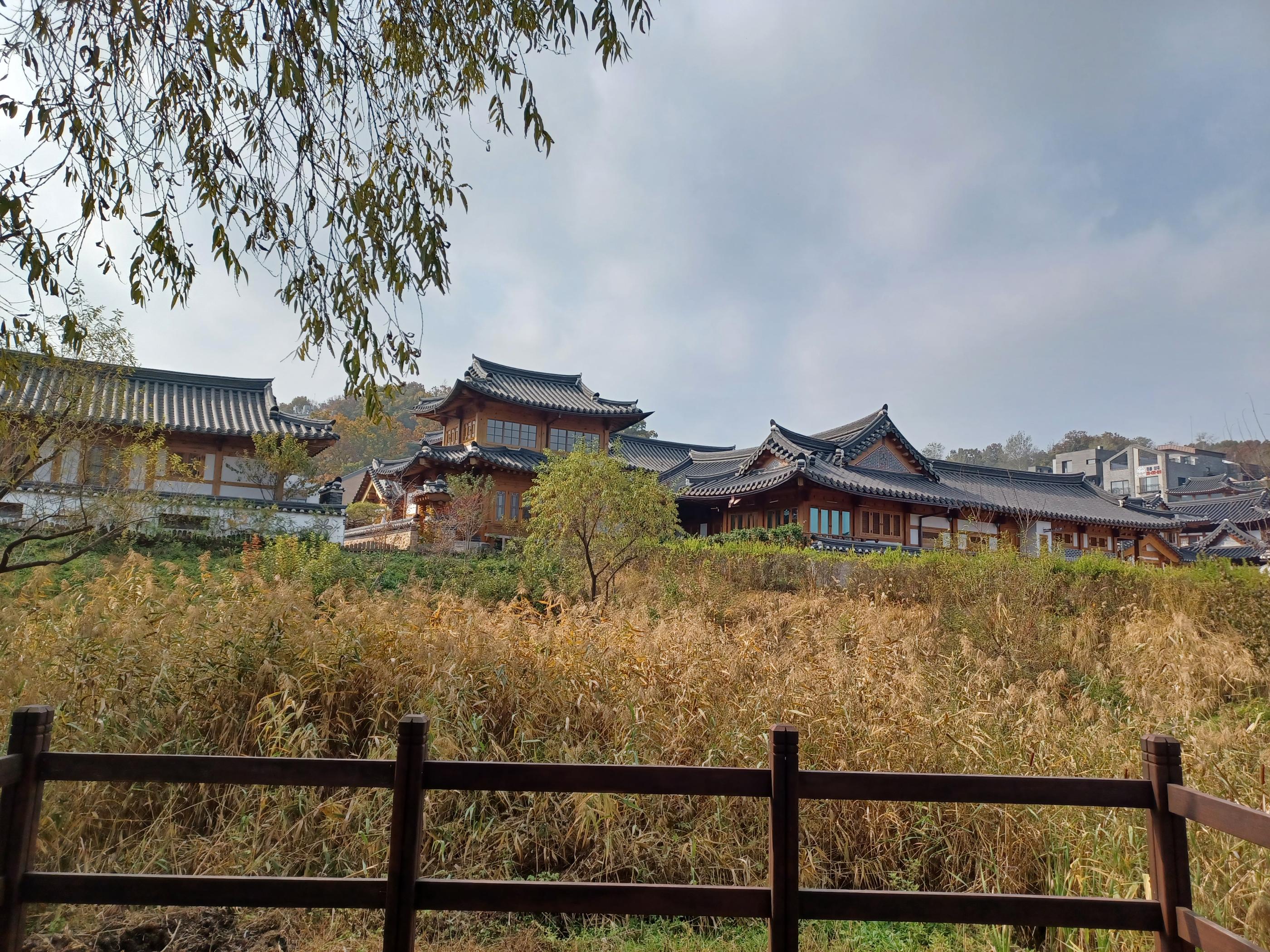
Hanok villages attract many travelers with their indescribable beauty and charm. If you have visited the Hanok village in Bukchon, this time I invite you to admire the splendour of traditional architectural buildings in Eunpyeong-gu.
The Hanok village in Eunpyeong was founded at the foot of the Bukhansan mountains in December 2014. This is the largest living complex of Hanok buildings in Seoul, consisting of newly built, not restored, old traditional houses.
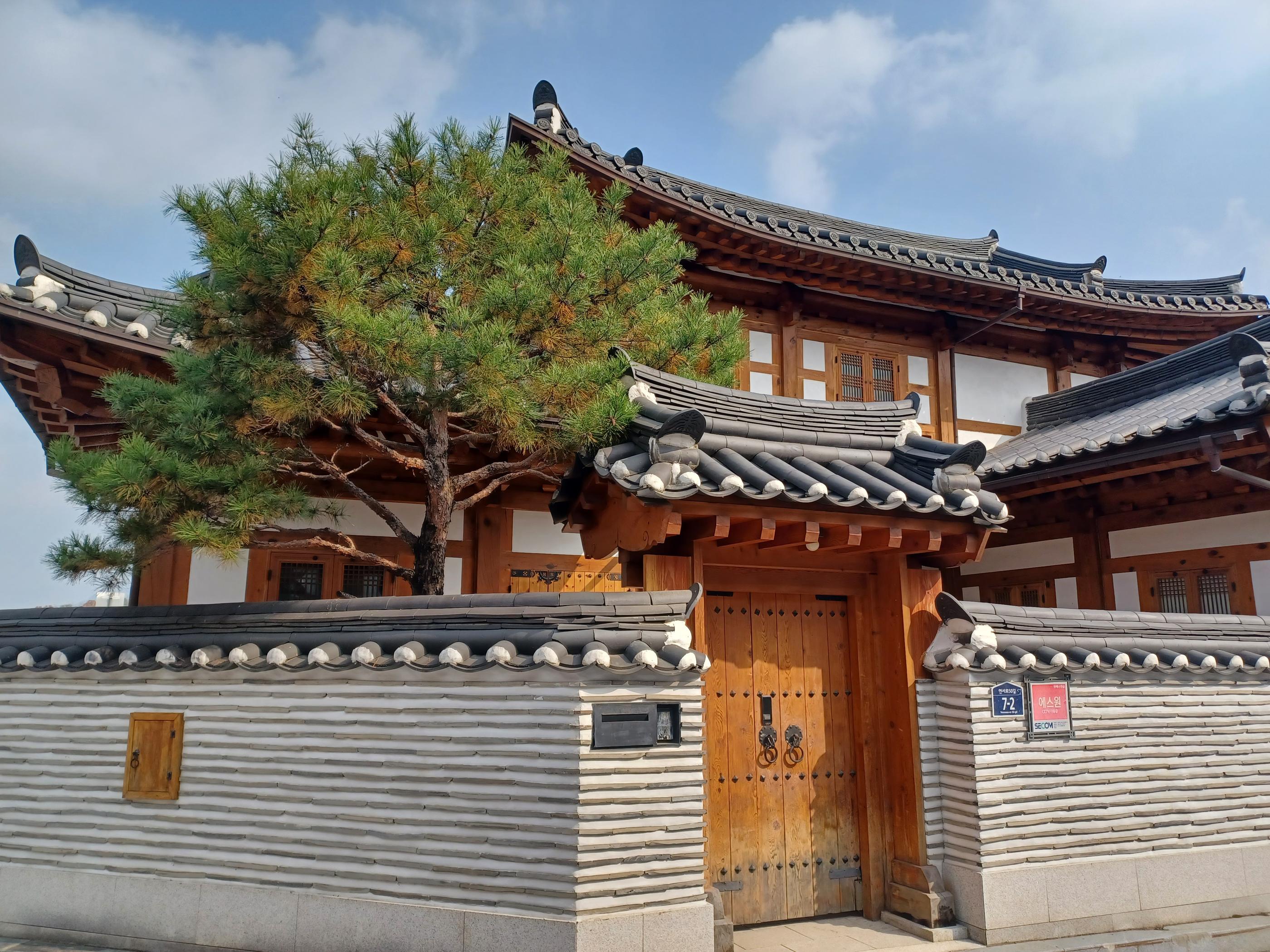
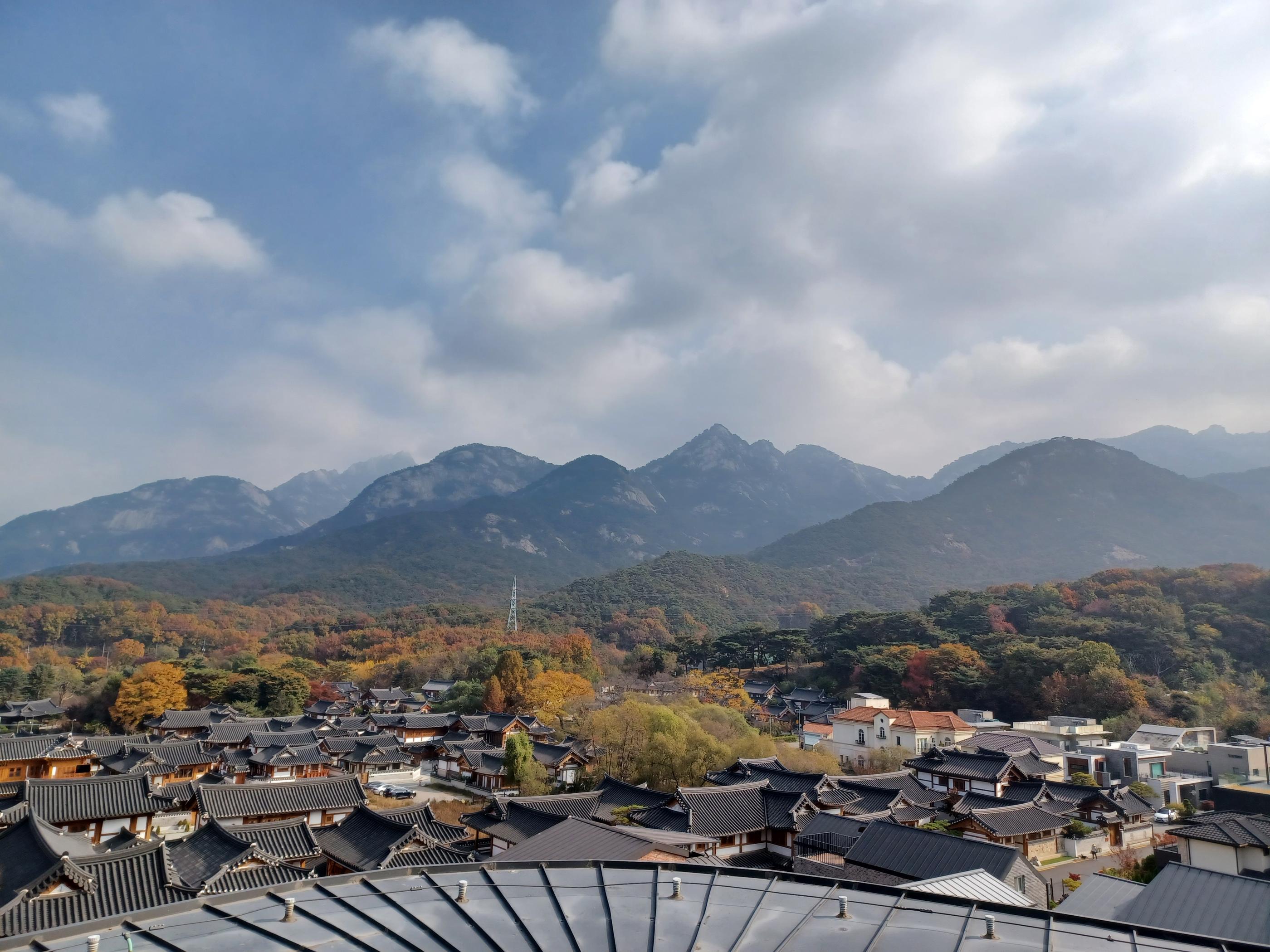
Because the Village is located near Bukhansan National Park, the Eunpyeong Hanok Village captures a quaint, serene landscape with the Bukhansan Mountain serving as the backdrop for the modern, neatly-built hanoks.
If you take a snapshot from the middle of the road between the tall hanok structures, it'll give you the feeling of standing on the set of some historical film set during the Joseon Dynasty.
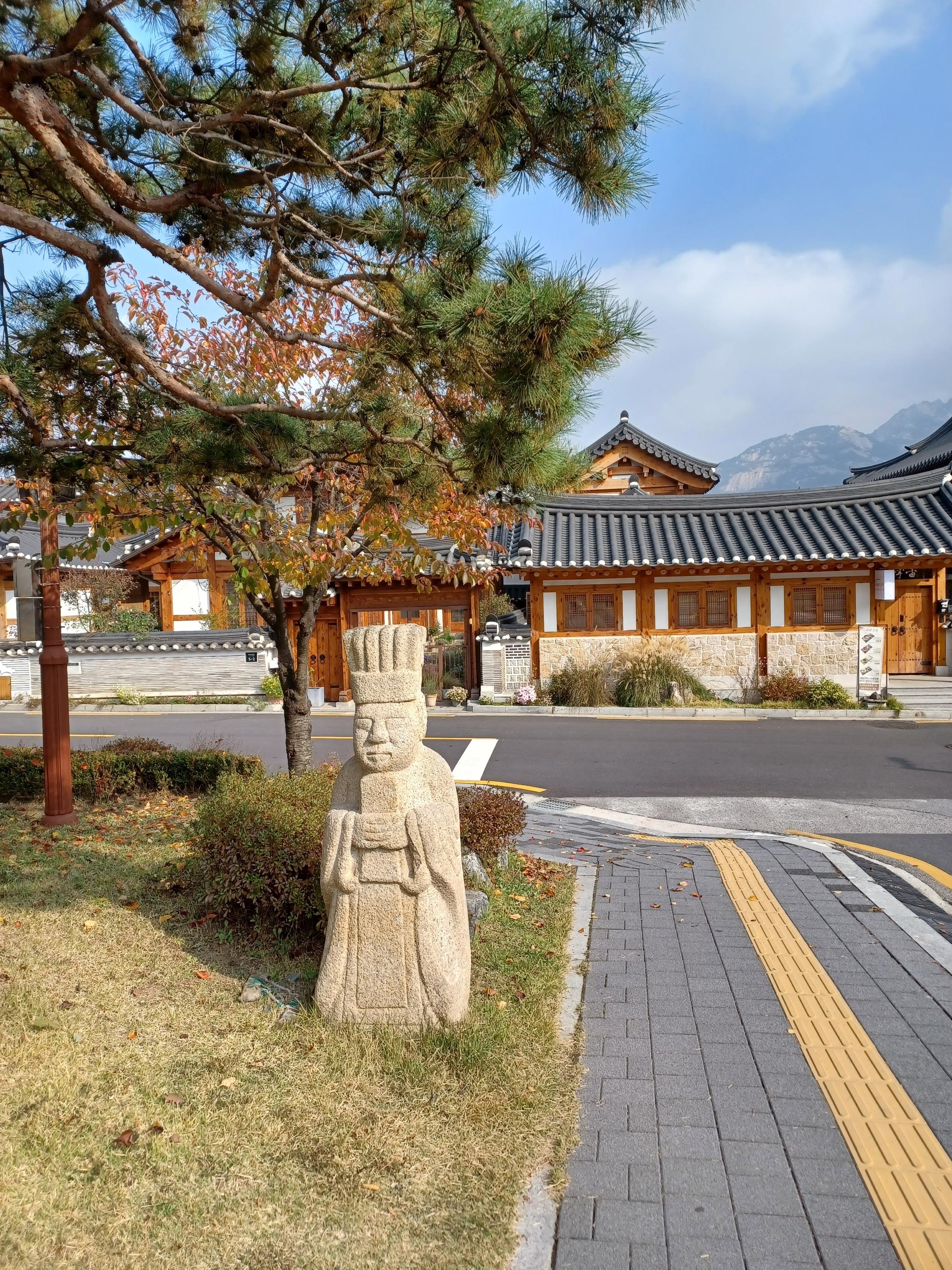
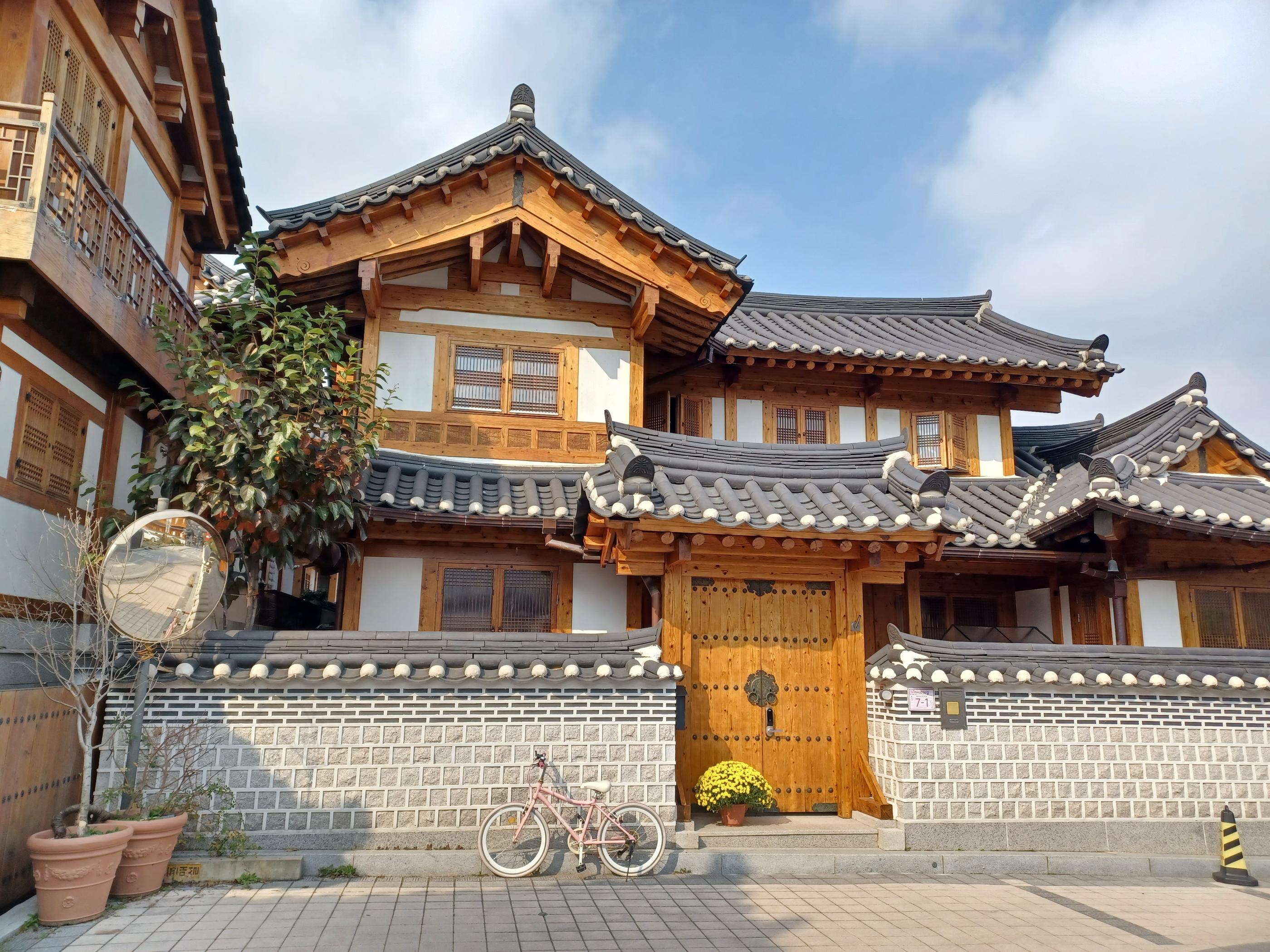
Walking through the Eunpyeong Hanok Village is characterized by calm, measuredness and ease, there are no crowds, the streets are completely peaceful!
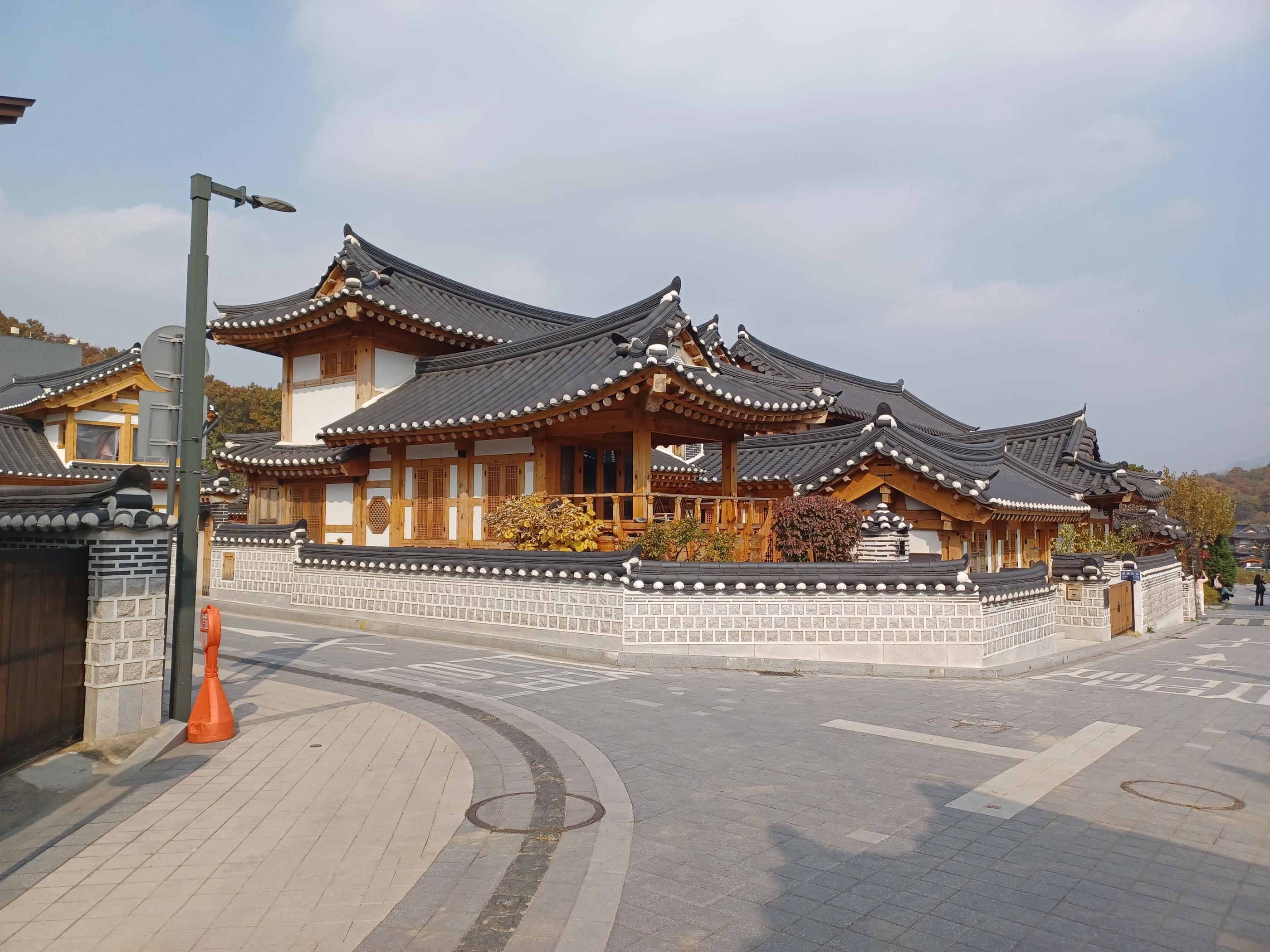
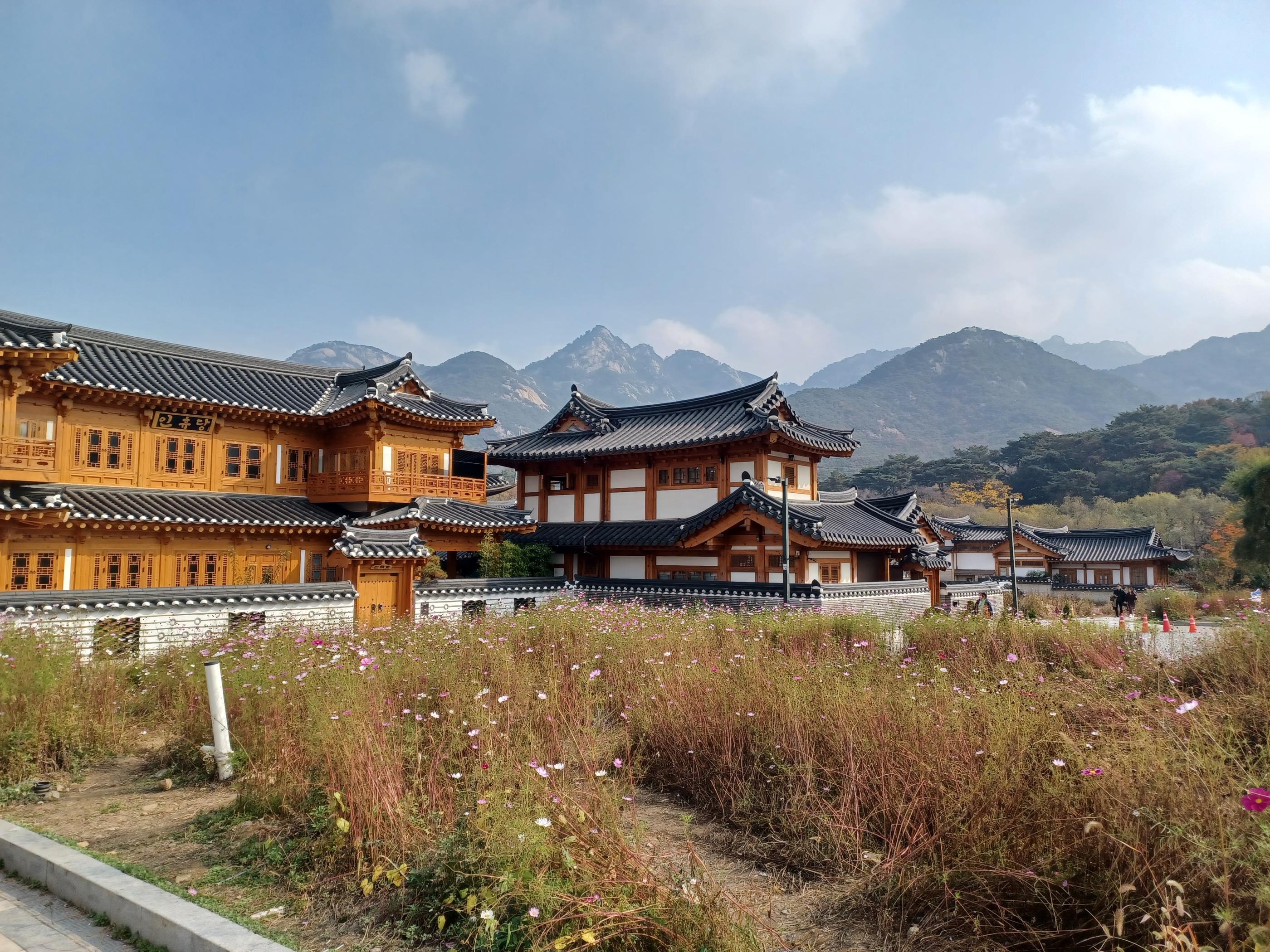
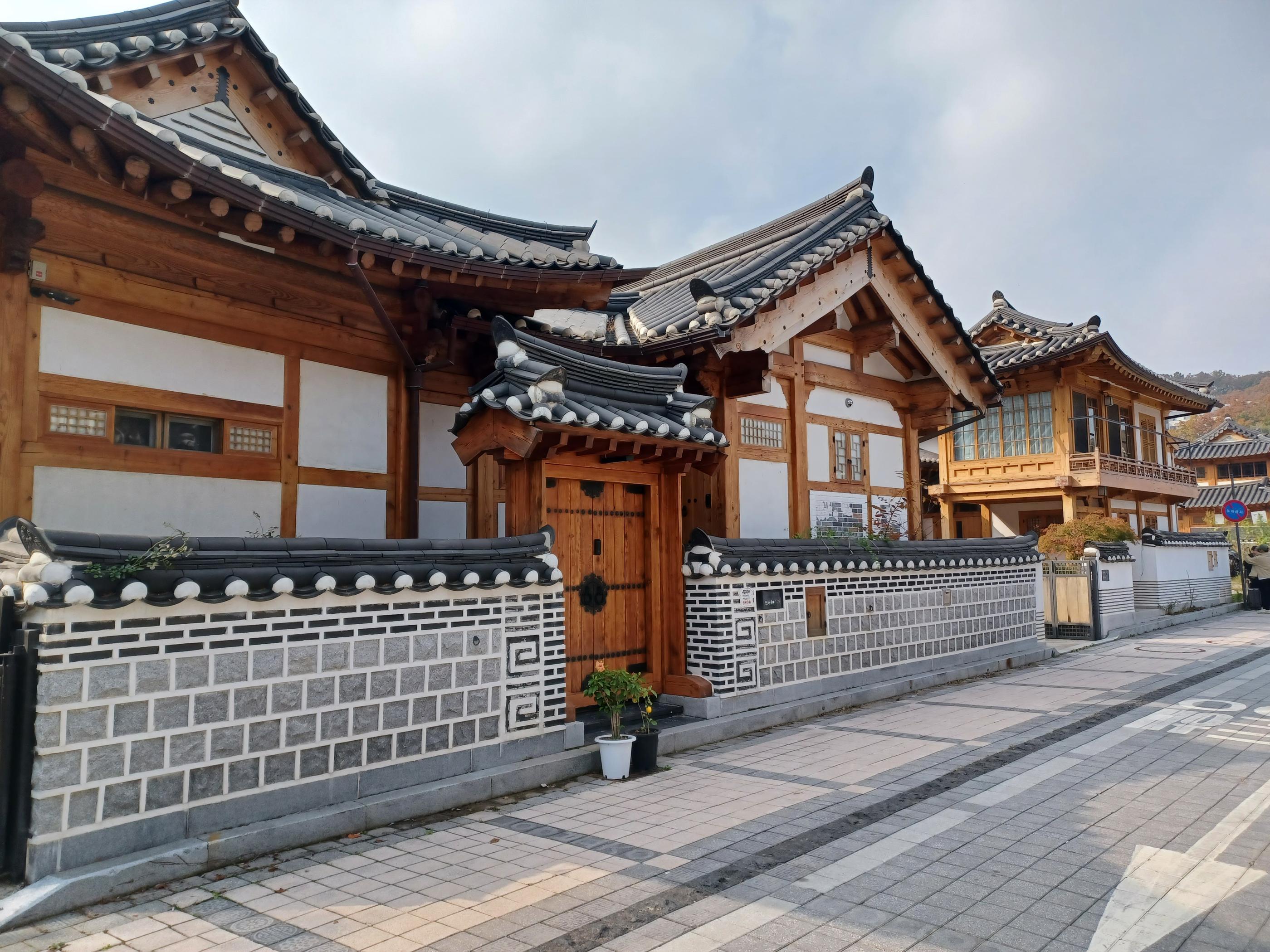
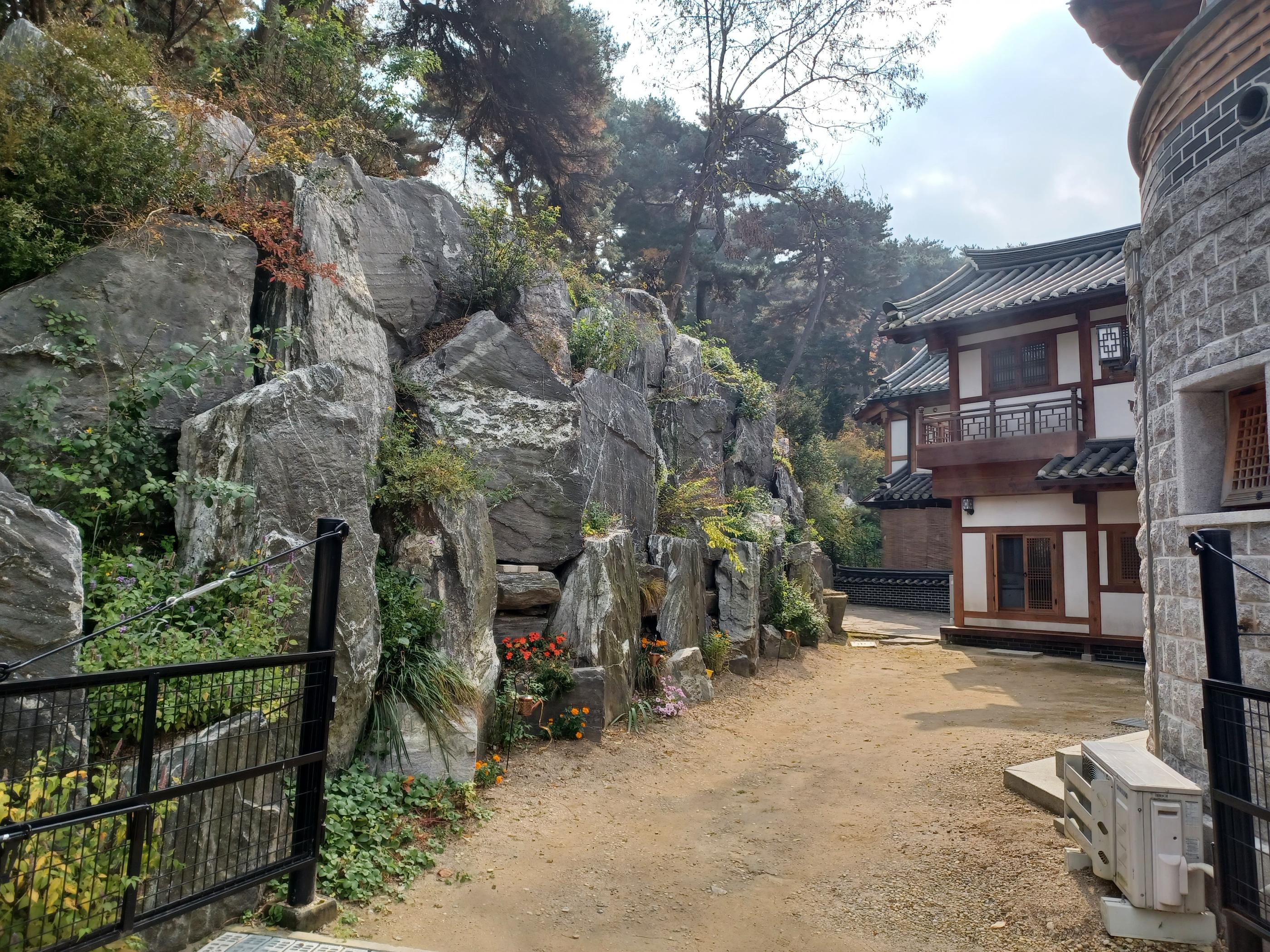
The village is easily accessible by public transport, as it is located in Seoul.
Address: 127-27 Jingwan-dong, Eunpyeong-gu, Seoul (서울 은평구 진관동 127-27)
From Seoul Station, take bus 701 headed north. The bus goes 23 stops and takes about 41 minutes and drops off right in front of Eunpyeong Hanok Village. Or From Gupabal Station, go out exit 4 to bus stop 12112 and take bus 7723. The bus goes 7 stops and takes about 10 minutes and stops right in front of Eunpyeong Hanok Village.
There are plenty of attractions in the area to fill a day itinerary, from hiking the forest trails of Bukhansan Mountain to visiting a temples and museum, followed by a break at a cafe or restaurant with a stunning view.
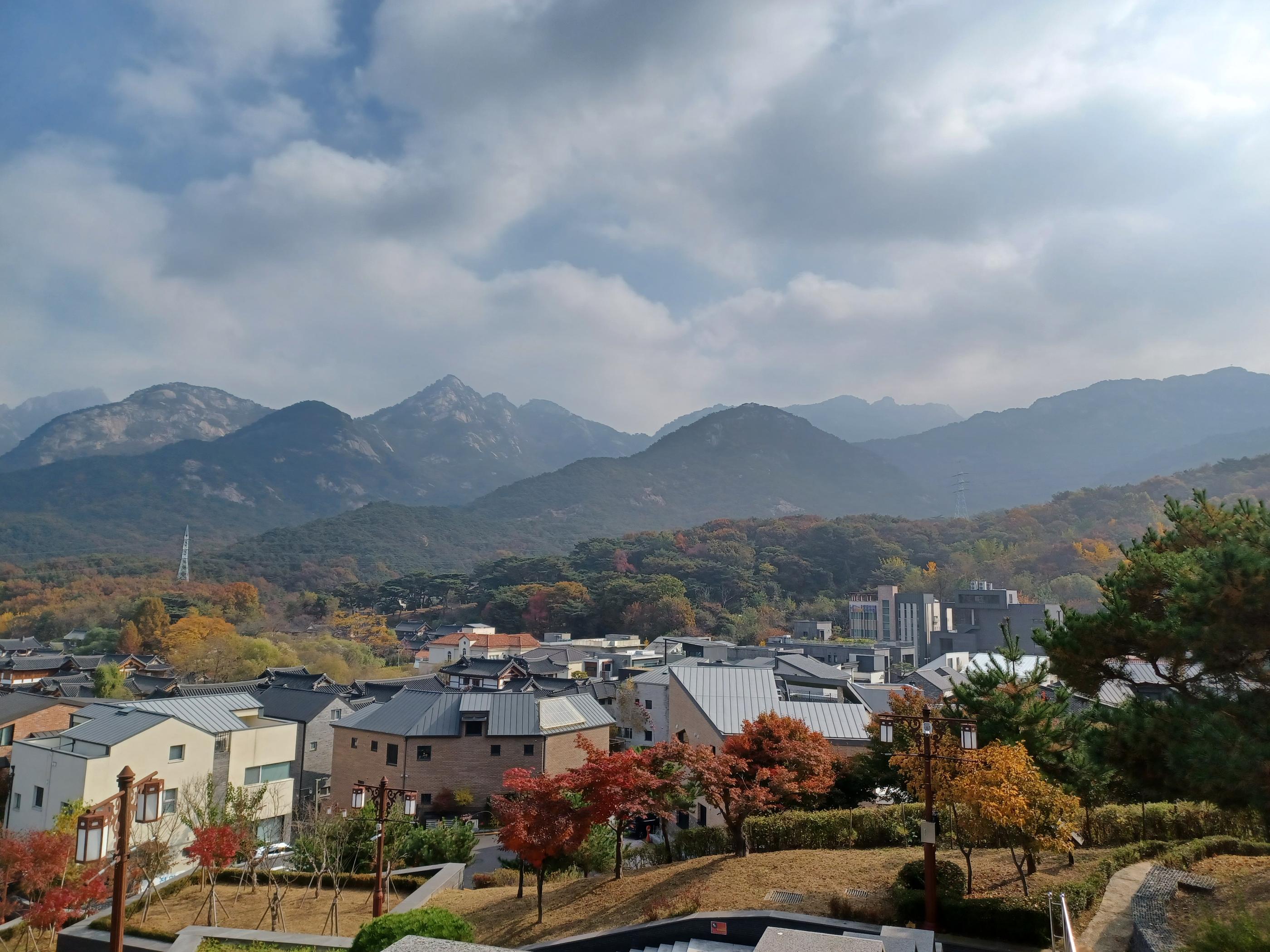
The terrace of the traditional dessert cafe "1인1잔" offers magnificent views.
Another observation deck is located at the nearby Museum of the History of Hanok Houses and Eunpyeong. The entrance fee is symbolic, less than a dollar, but the observation deck on its roof is free and open to everyone!
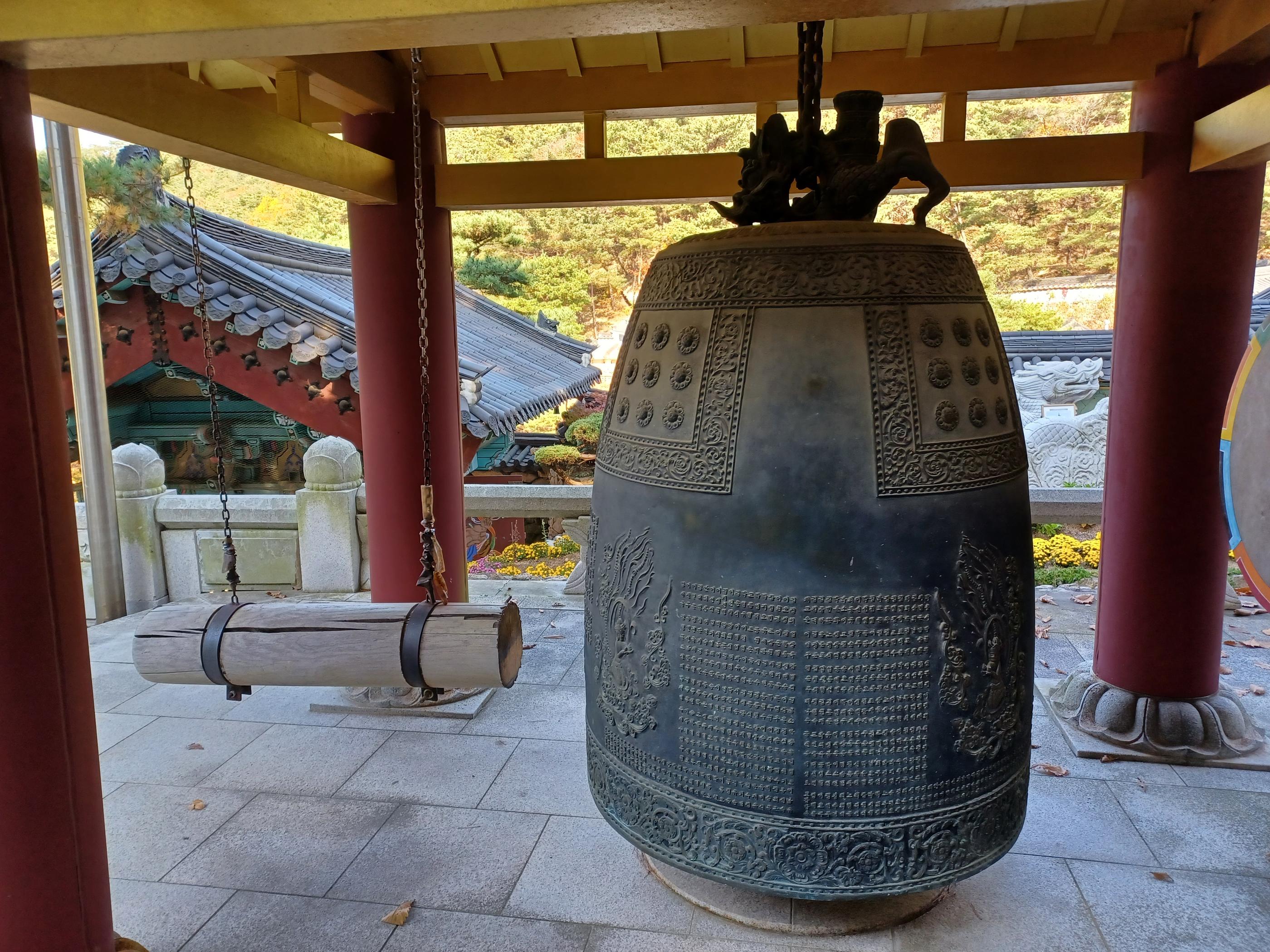
Another sight that I recommend visiting is the Jingwansa Buddhist Temple, hidden in the forest. It is one of four major temples in Seoul. This temple was originally dedicated to Preceptor Jingwan in 1010BC by King Hyeongjong, the 8th King of the Goryeo Dynasty. The temple was destroyed during the Korean War but has been restored and rebuilt over the past fifty years to be what it is today.
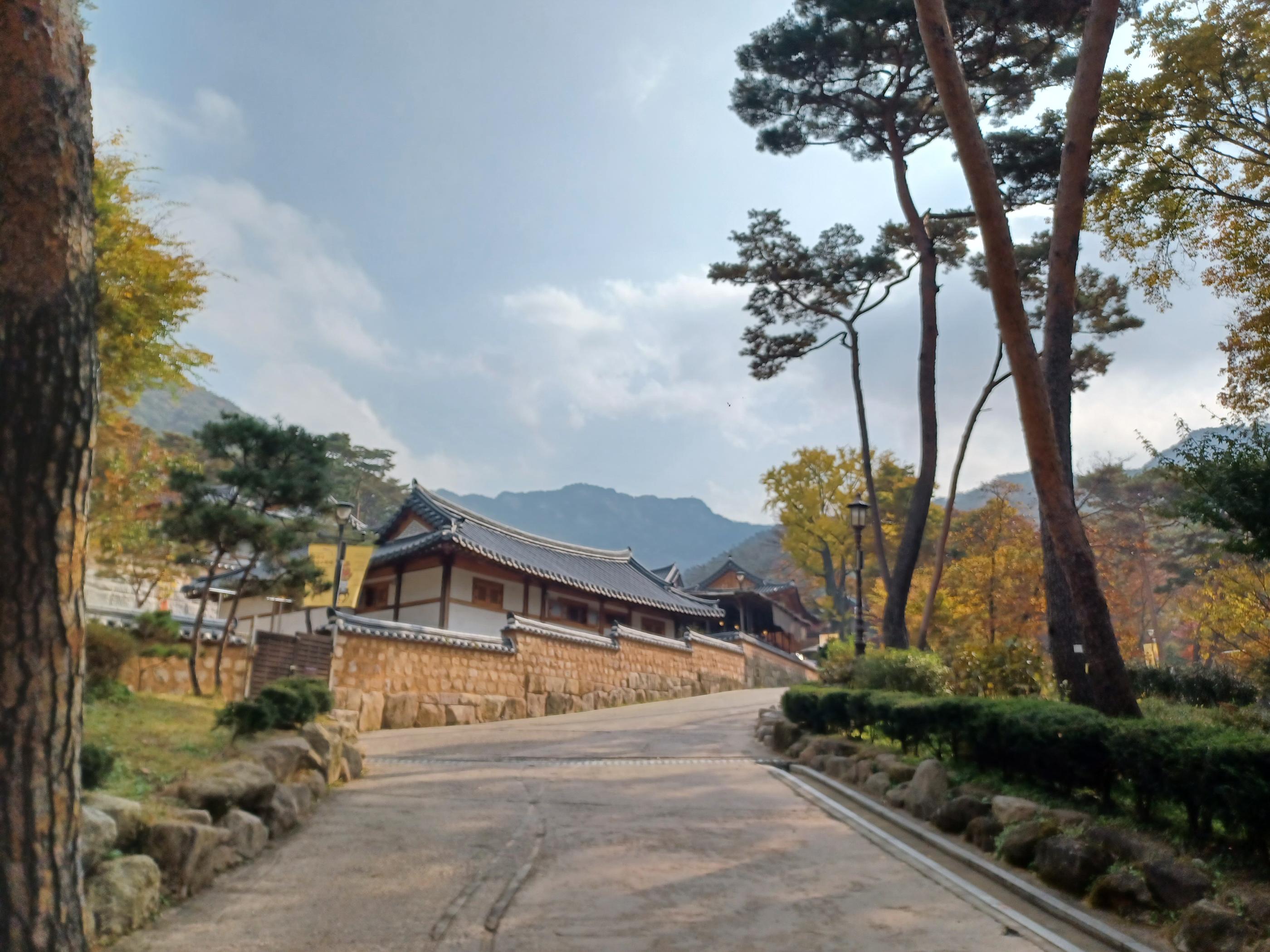
The walk from the village to the temple takes about 15 minutes, during which time you will be treated to incredible, breathtaking views.
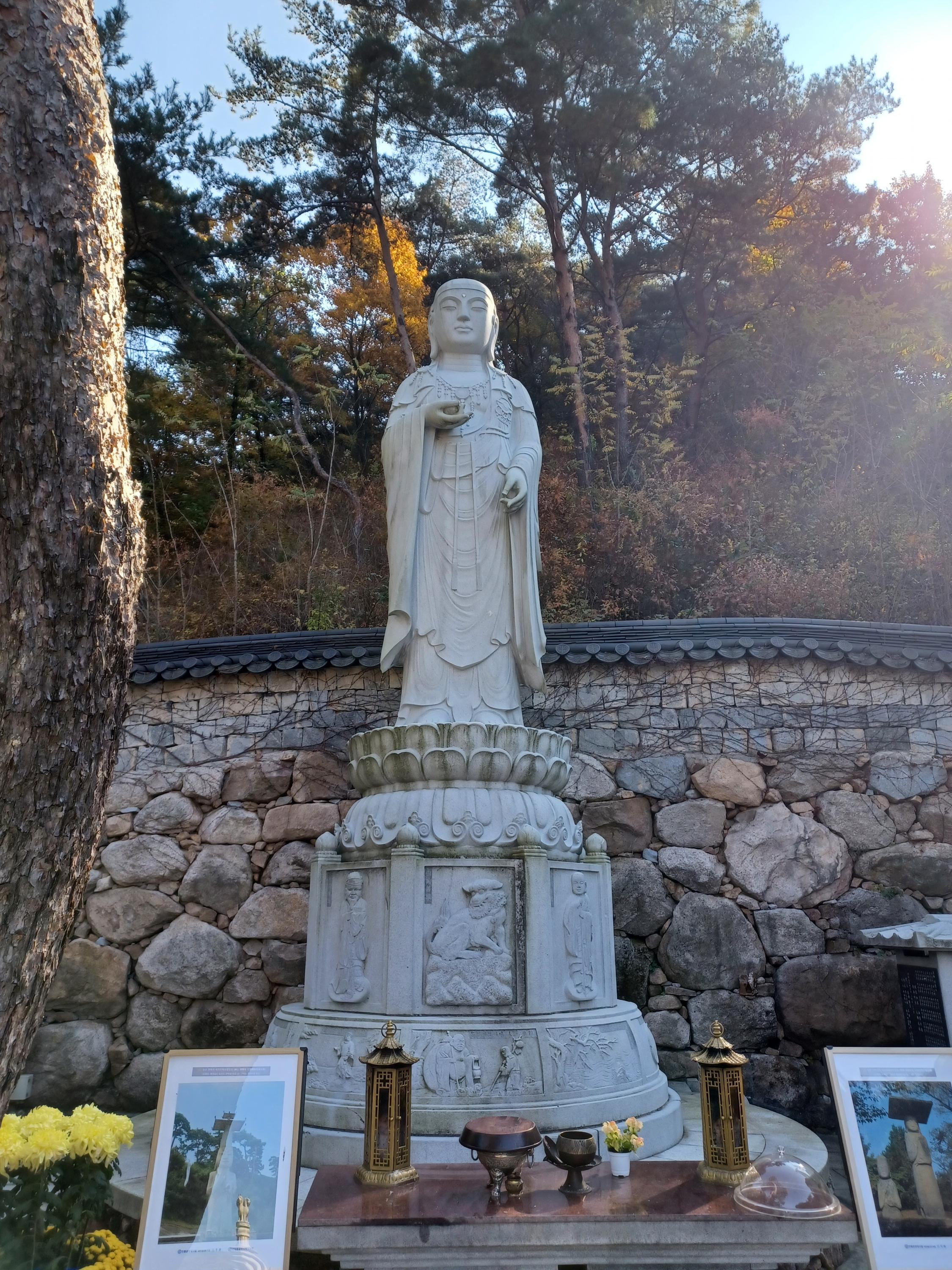
Painted gates at the entrance, a sculpture of Buddha carved on stone, small huts on small meadows, a babbling brook, which is an invariable companion of those going to the temple.
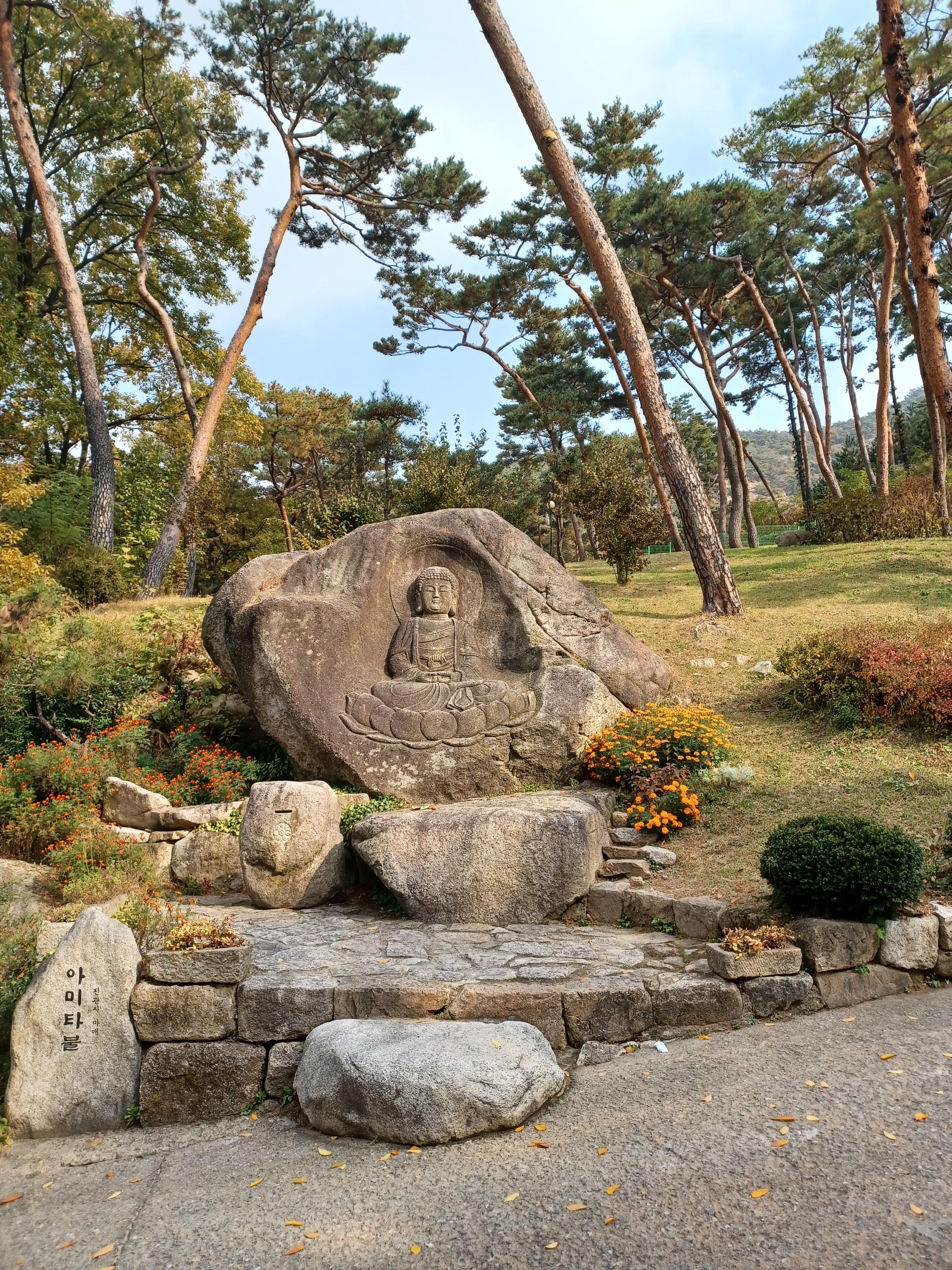
The temple's garden is perfect for clearing your mind and recharging yourself with the energy of nature. There are several cafes and a souvenir shop on the territory of the temple complex.
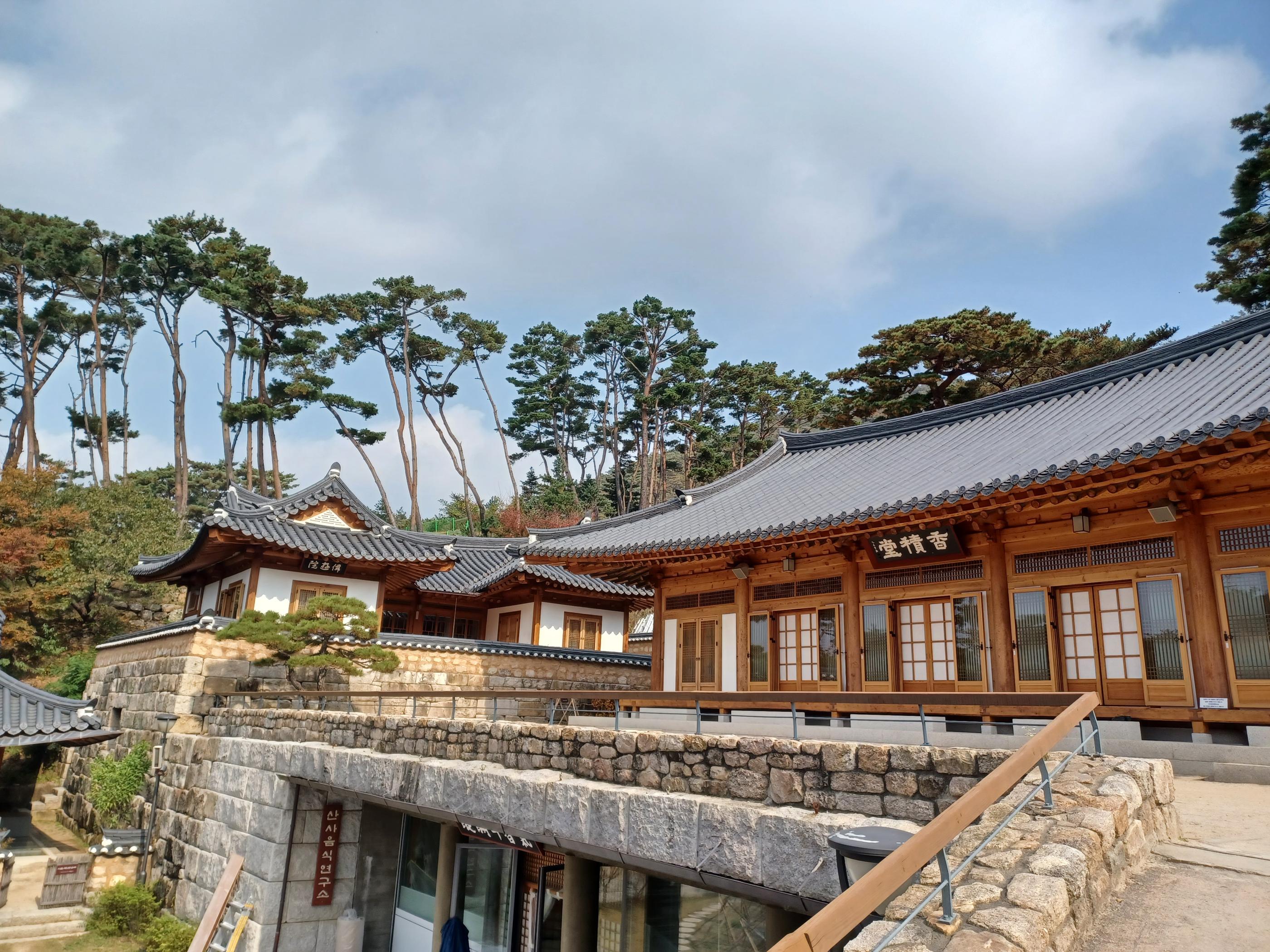
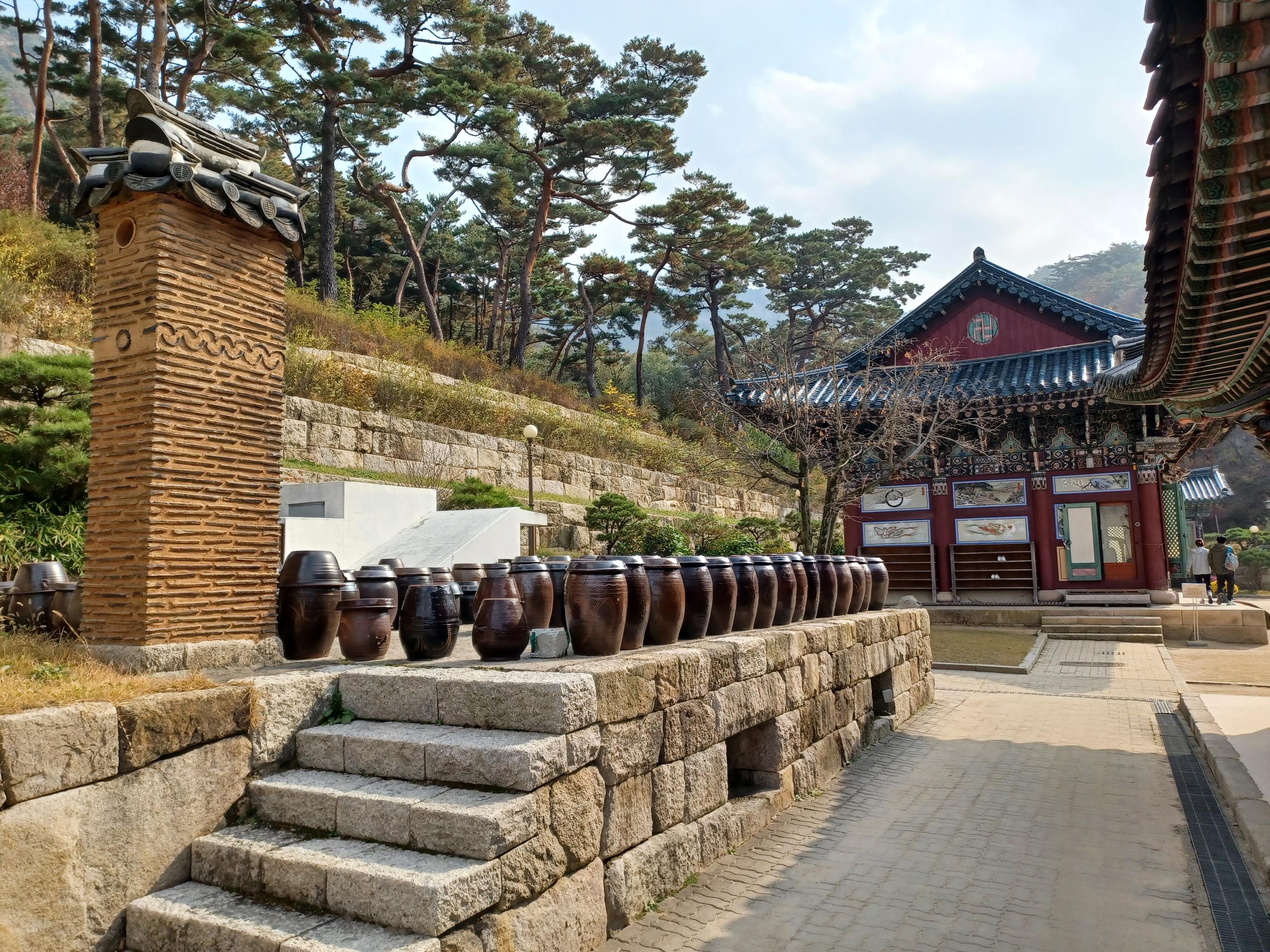
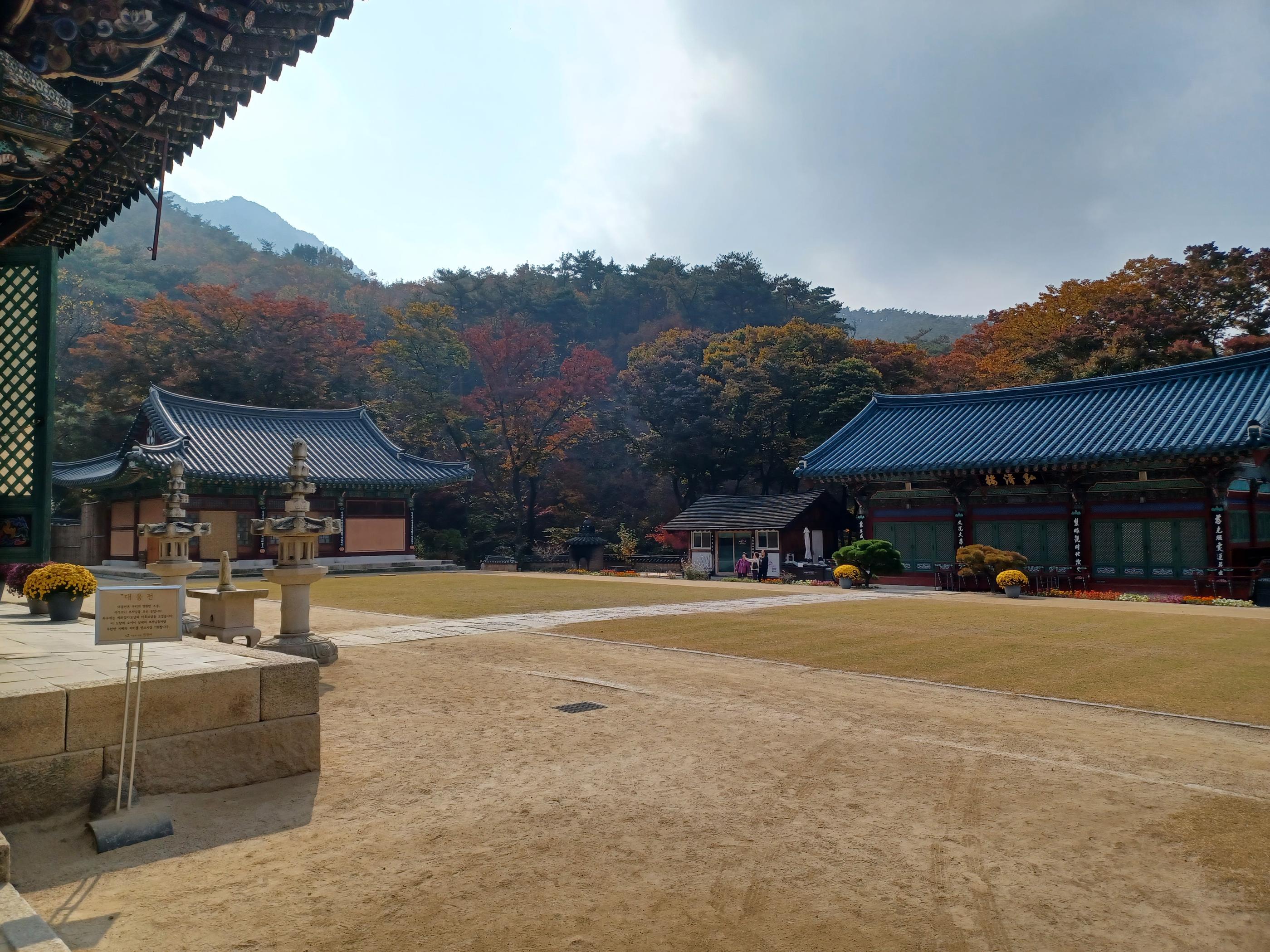
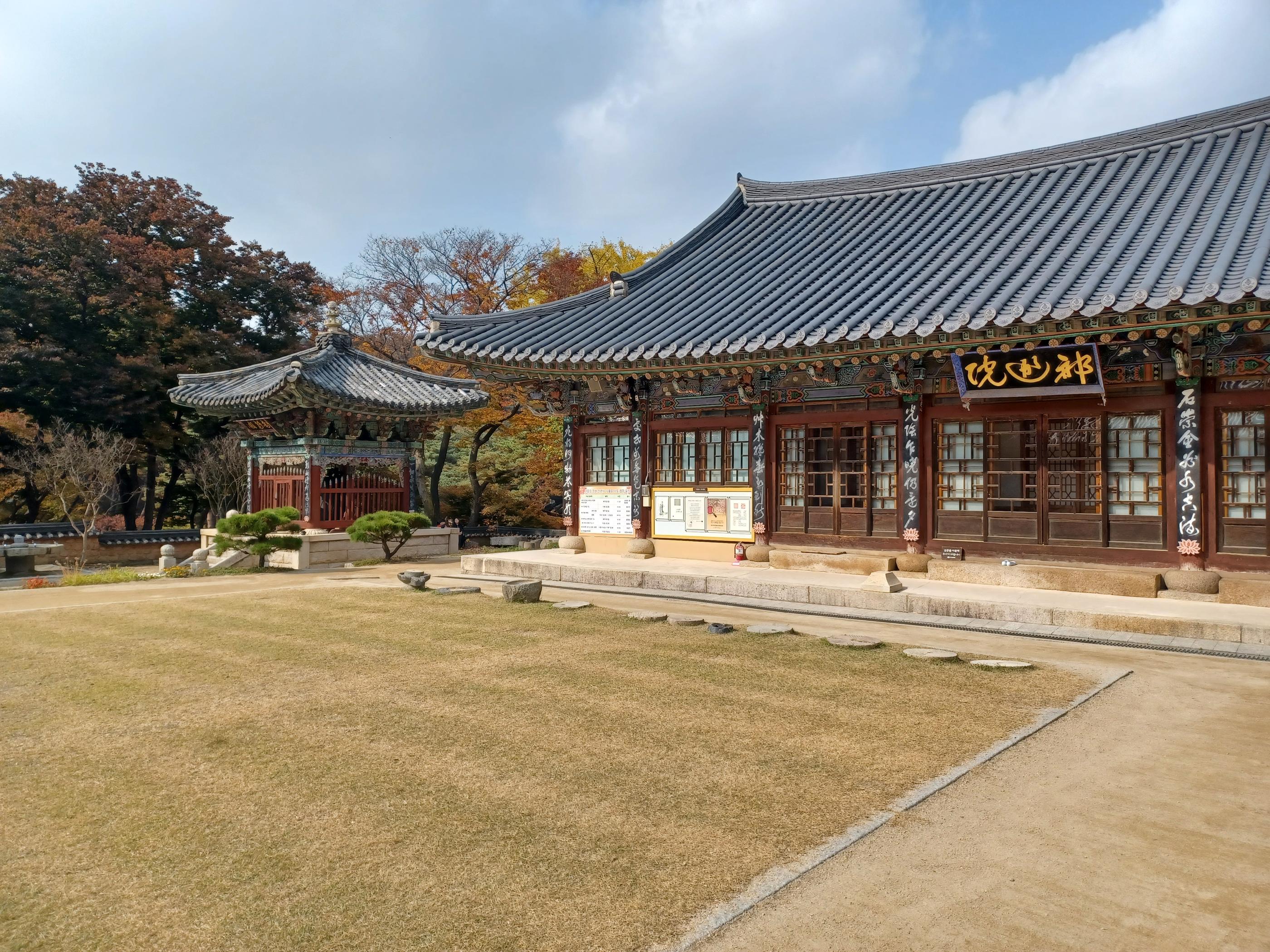
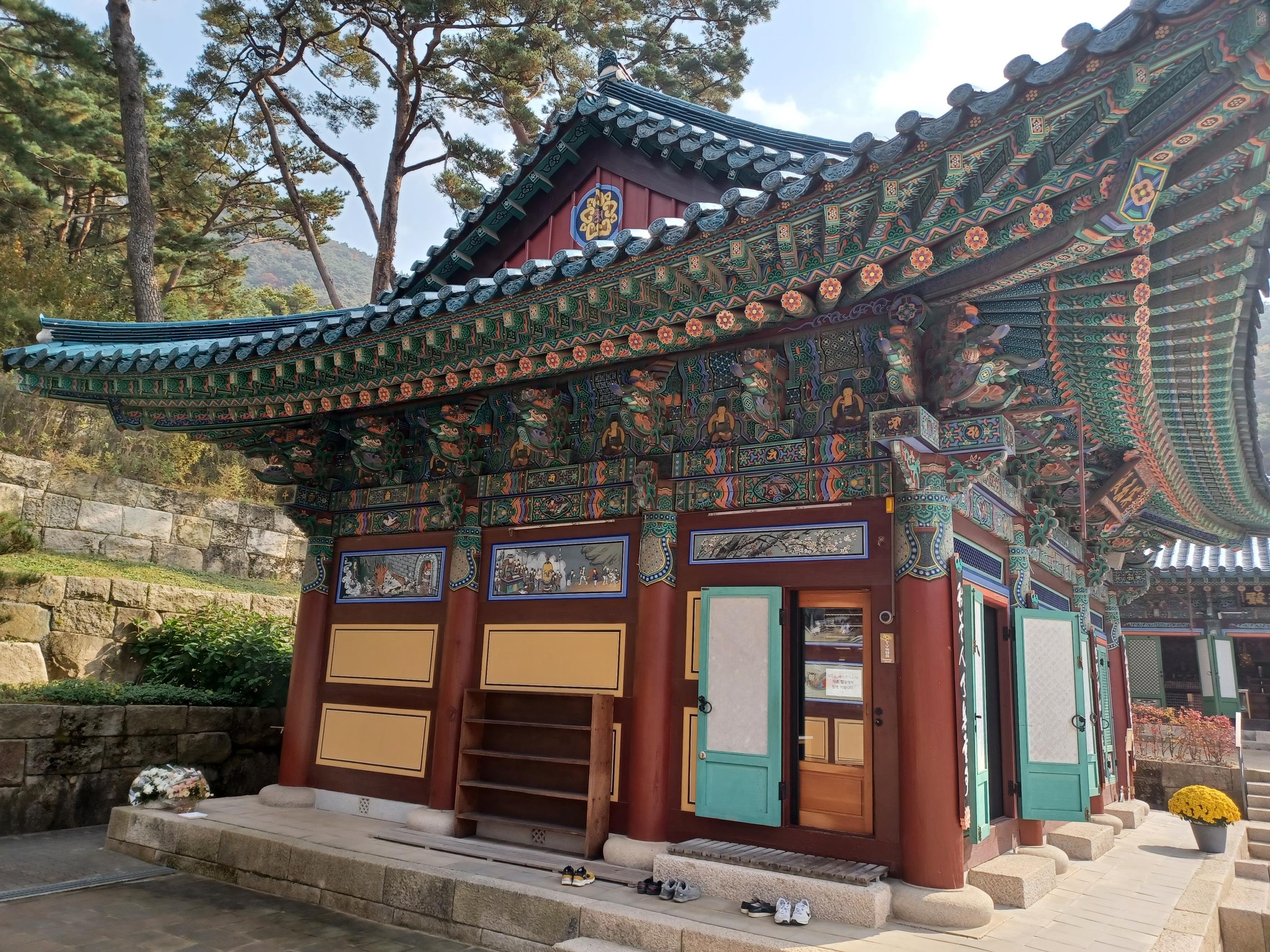
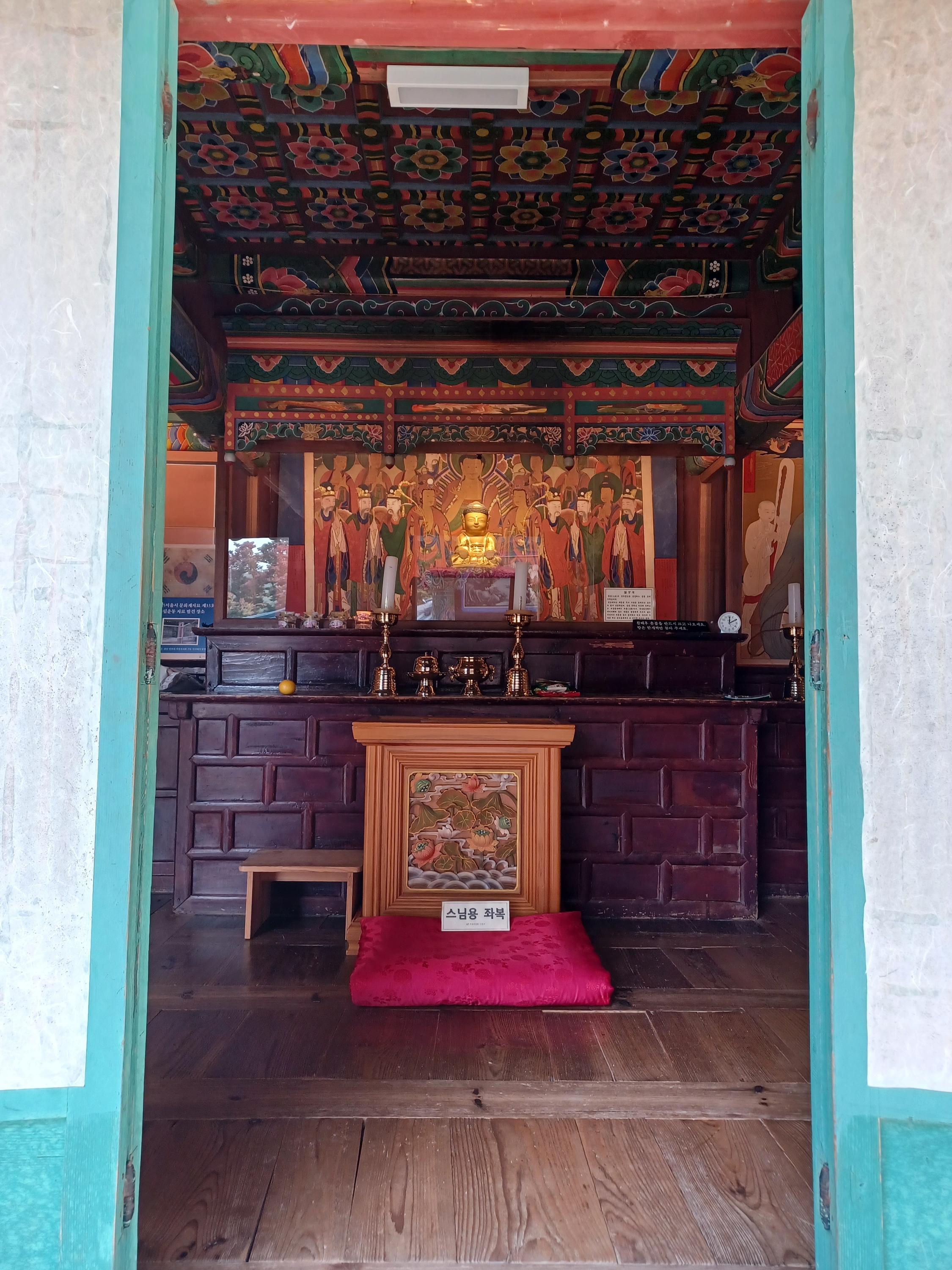
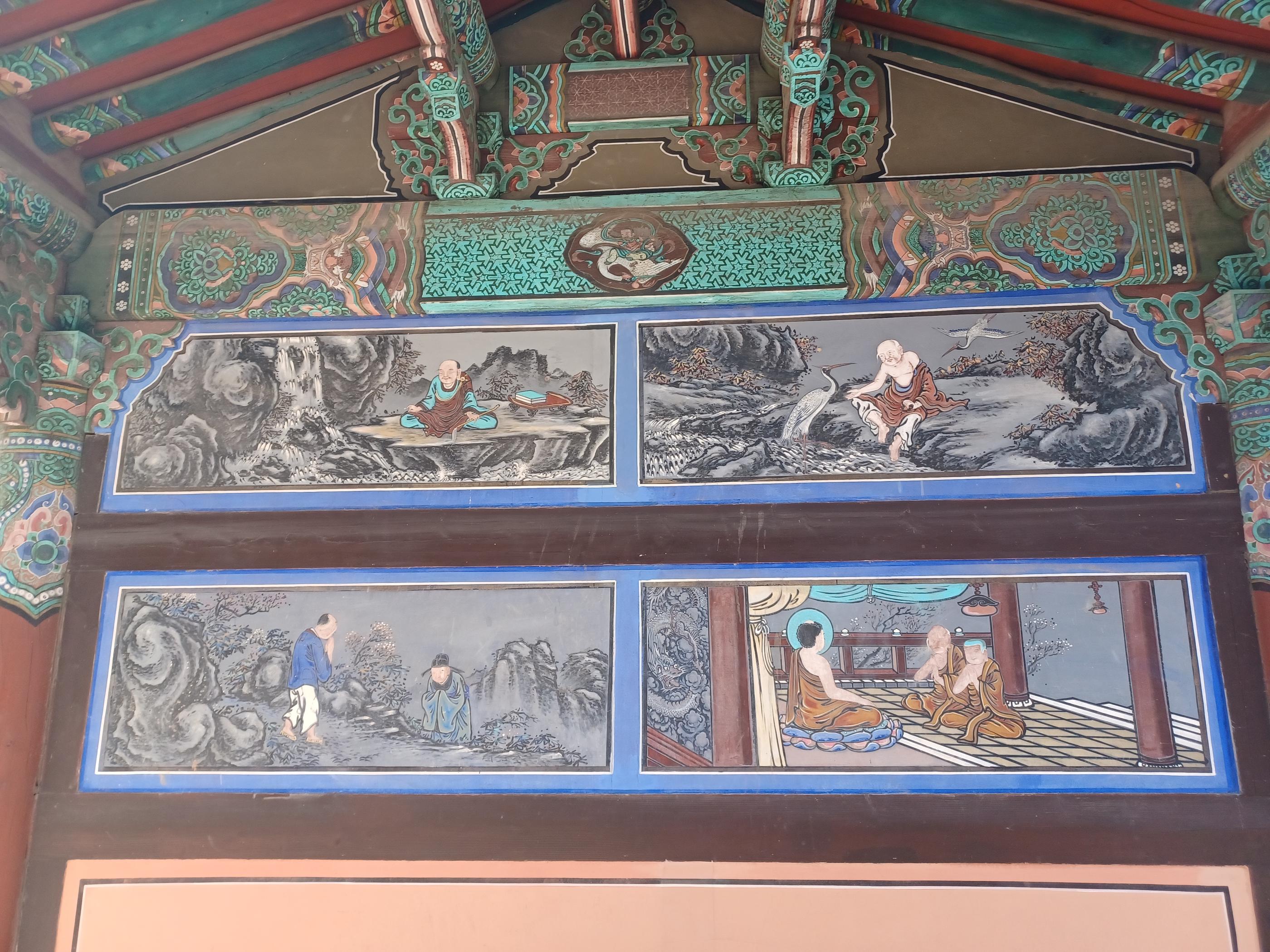
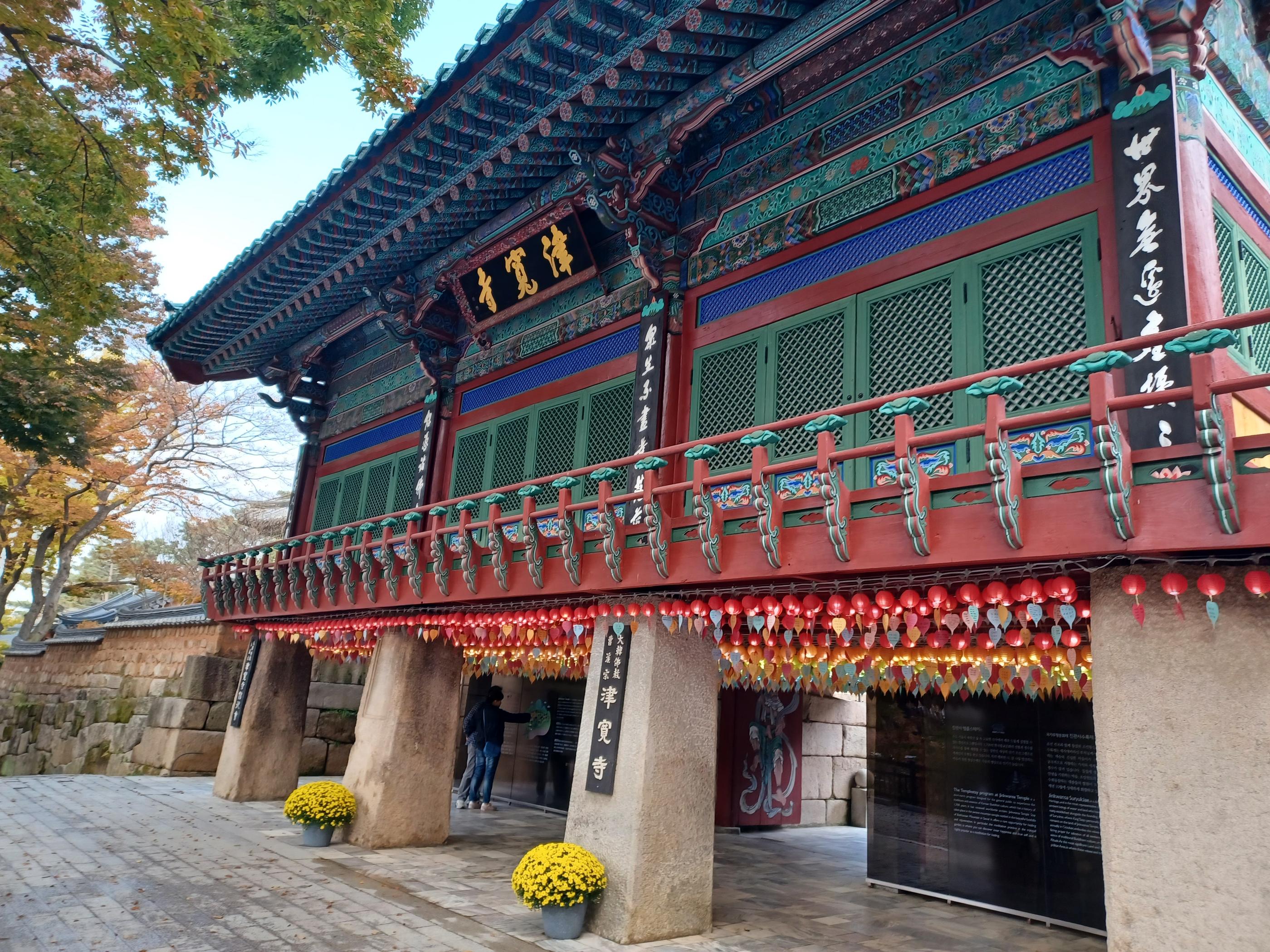
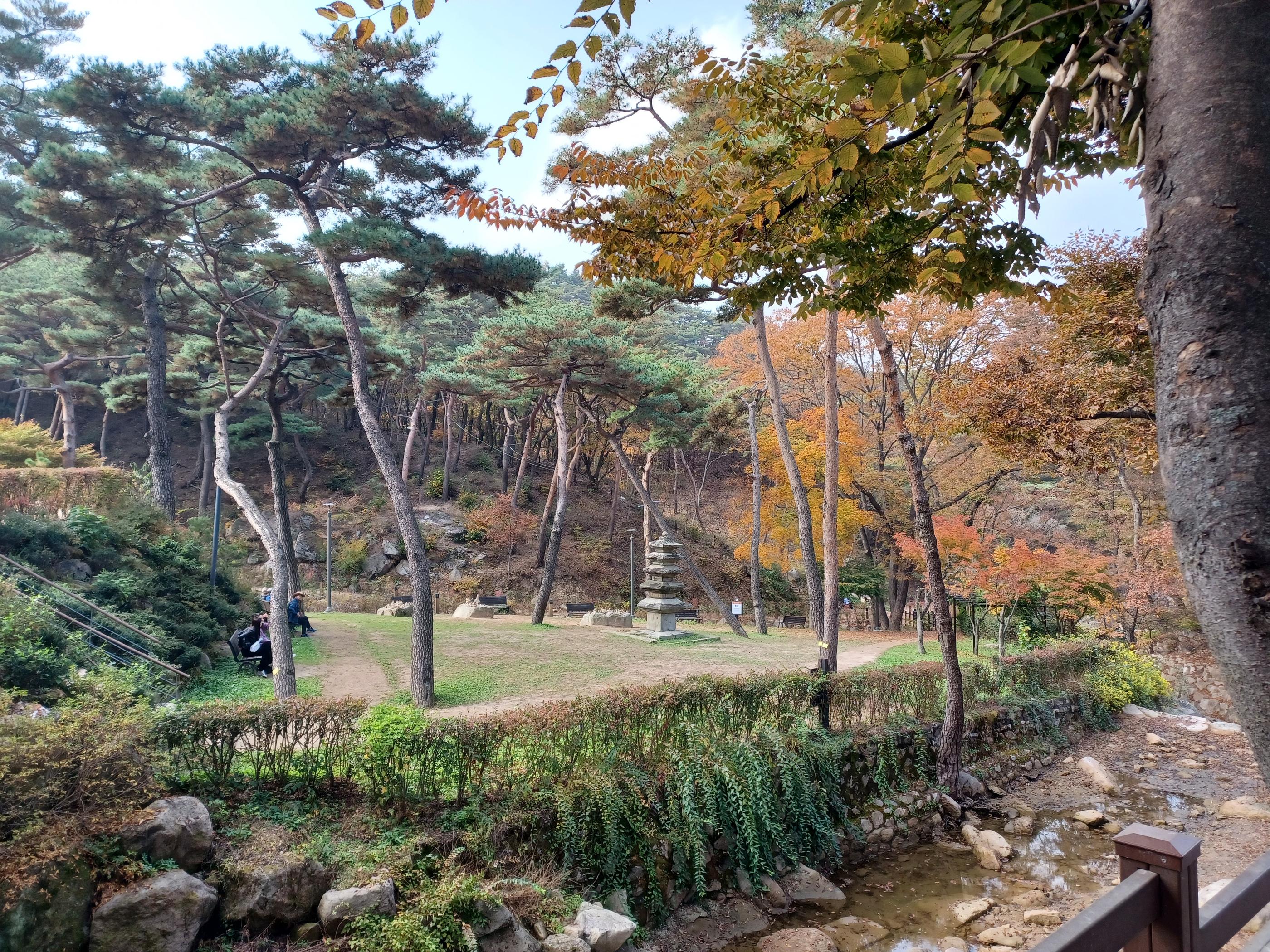
In one of the cafes you can enjoy drinks and desserts, sitting on the floor in the comfortable rooms of the hanok buildings.
Address: 73 Jingwan-gil, Eunpyeong-gu, Seoul (서울 은평구 진관길 73)
Another treasure of the Eunpyeong is the ancient Buddhist temple Samcheonsa located next to Jingwansa Temple. It is located about 30 minutes walk from the Village. The road runs along the foothills of the mountains and pleases with magnificent landscapes, birds singing, babbling streams.
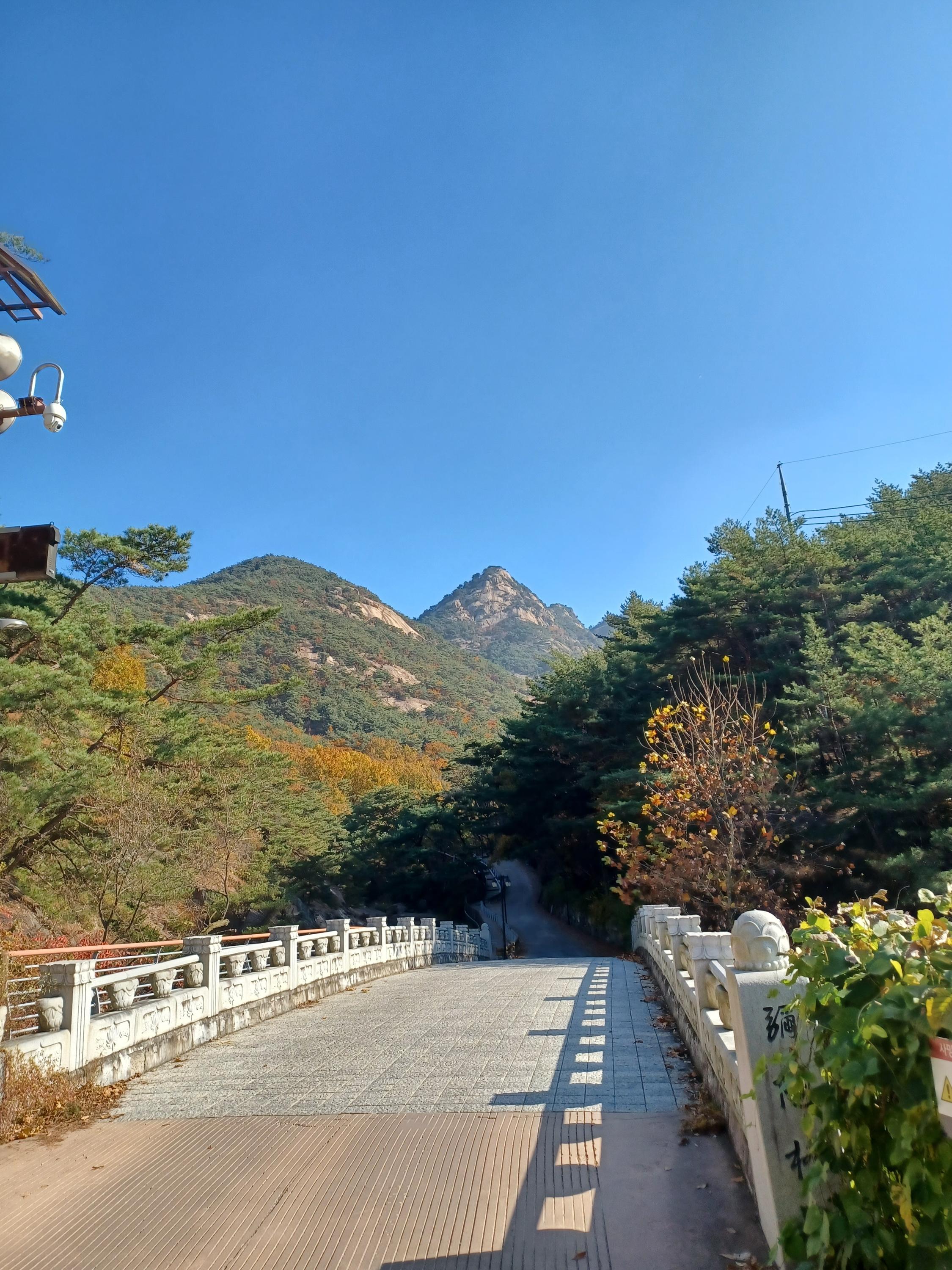
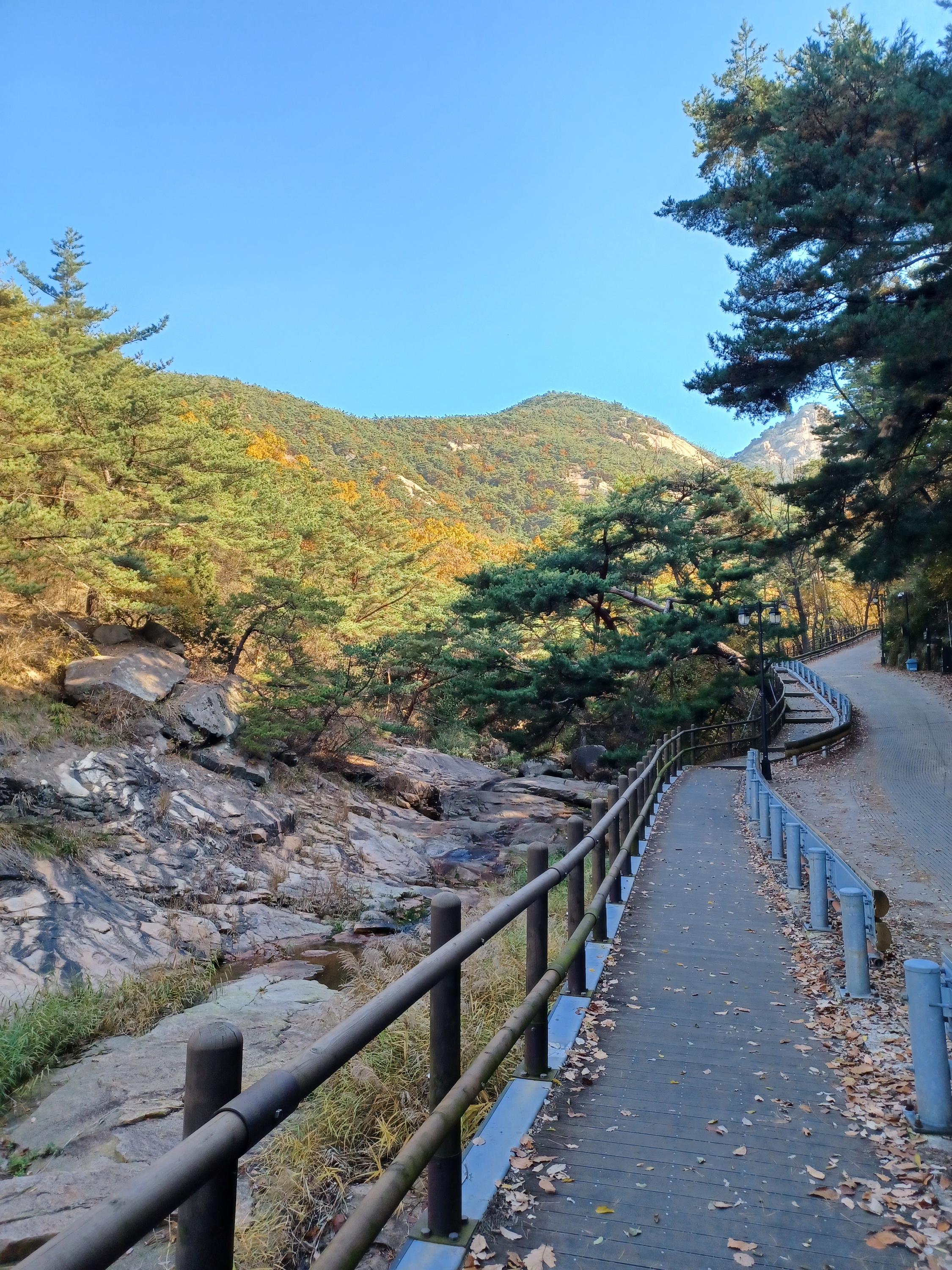
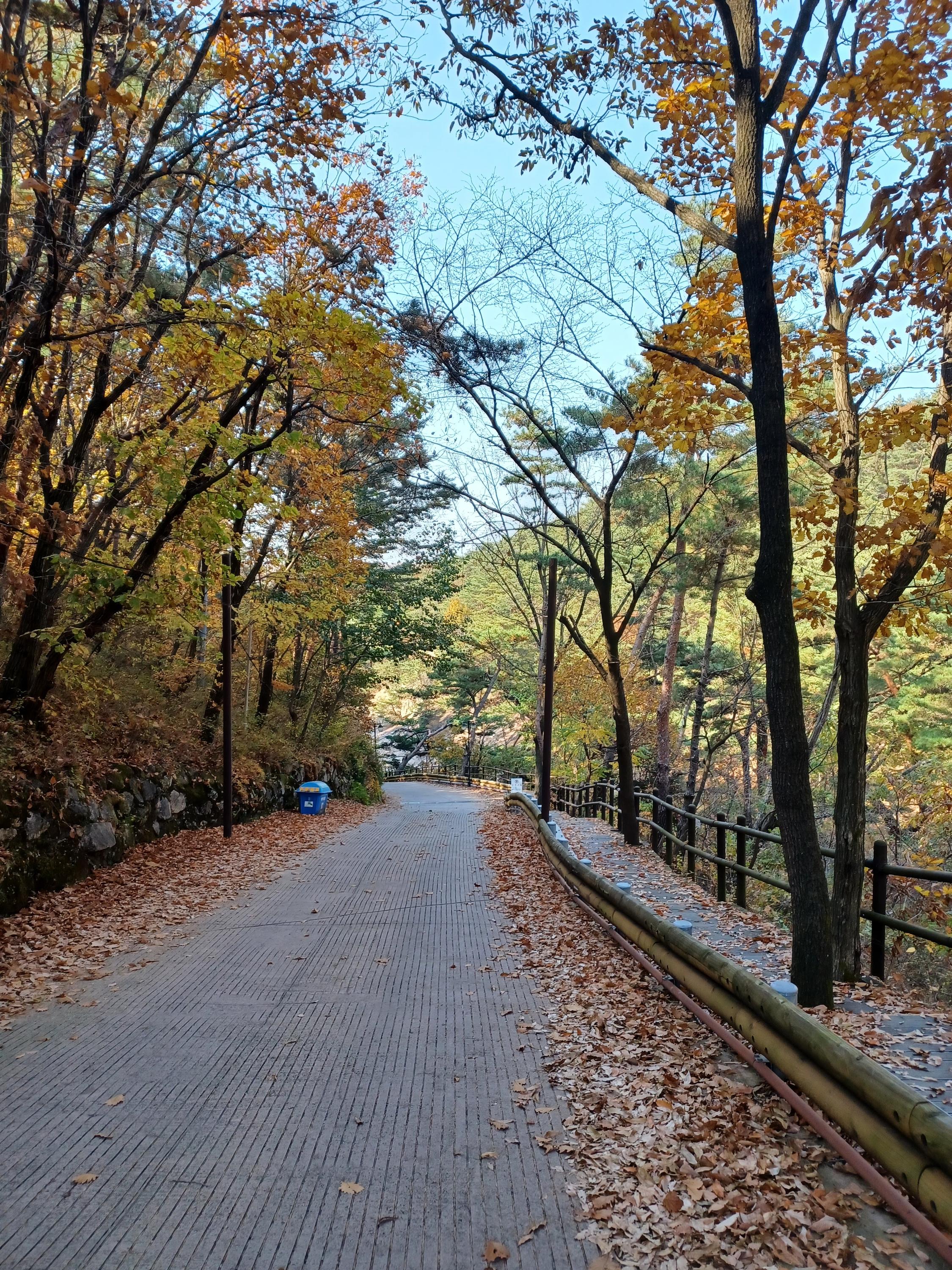
Address: 127 Yeonseo-ro 54-gil, Eunpyeong-gu, Seoul (서울 은평구 연서로54길 127)
There are very few historical records about Samcheonsa Temple, so it’s difficult to pinpoint an exact date as to when the temple was first founded; however, it’s claimed that Wonhyo-daesa (617-686 A.D.) first founded the temple in 661 A.D.
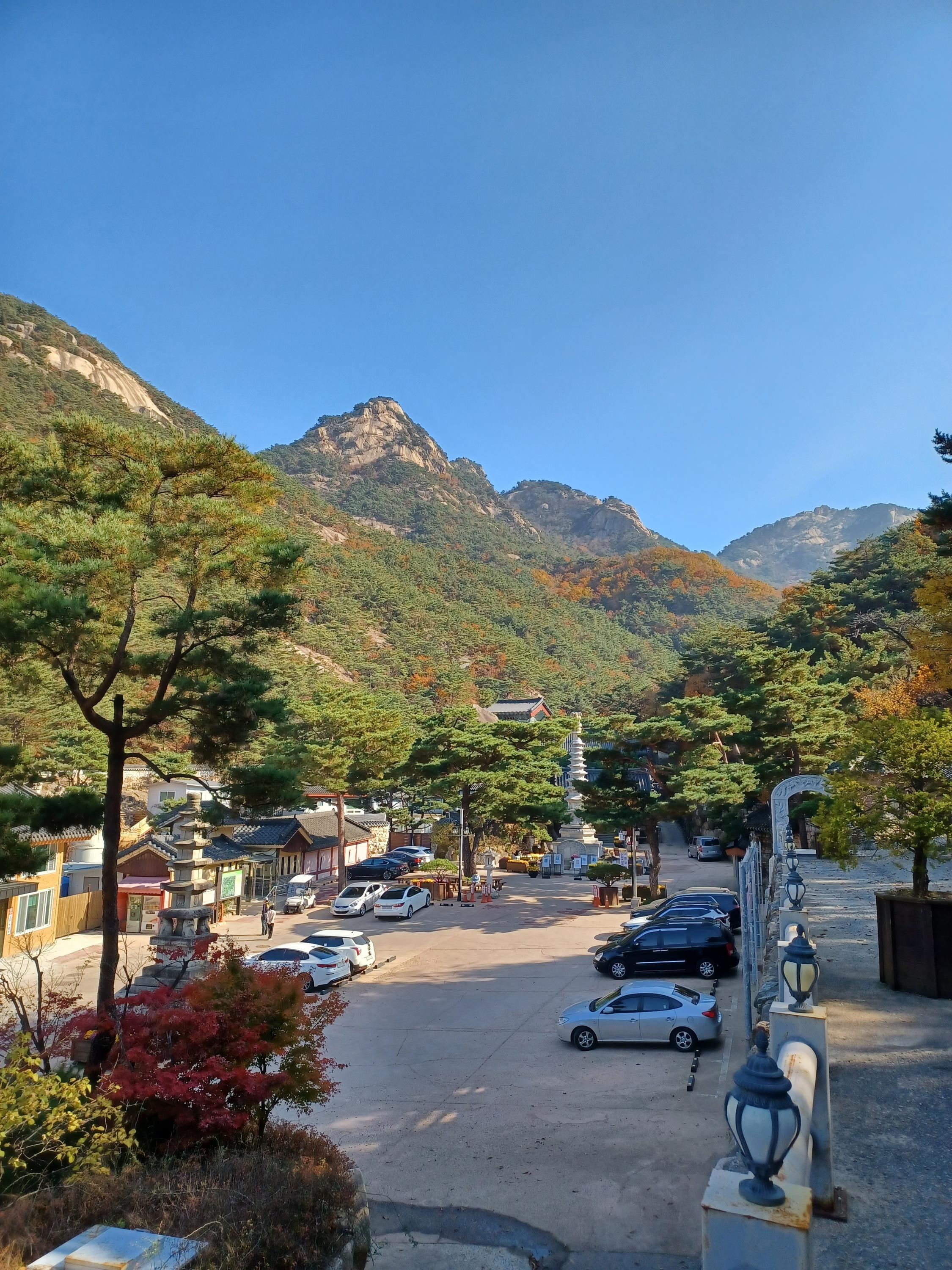
Samcheonsa Temple is home to one Korean Treasure, the “Rock Carved Standing Buddha at the Samcheonsa Temple Site”.
Walking to the temple, you will first see the nine story stone pagoda that houses the sari of the Historical Buddha. Crowning this pagoda is a replica of a golden “Lion Capital of Ashoka.”
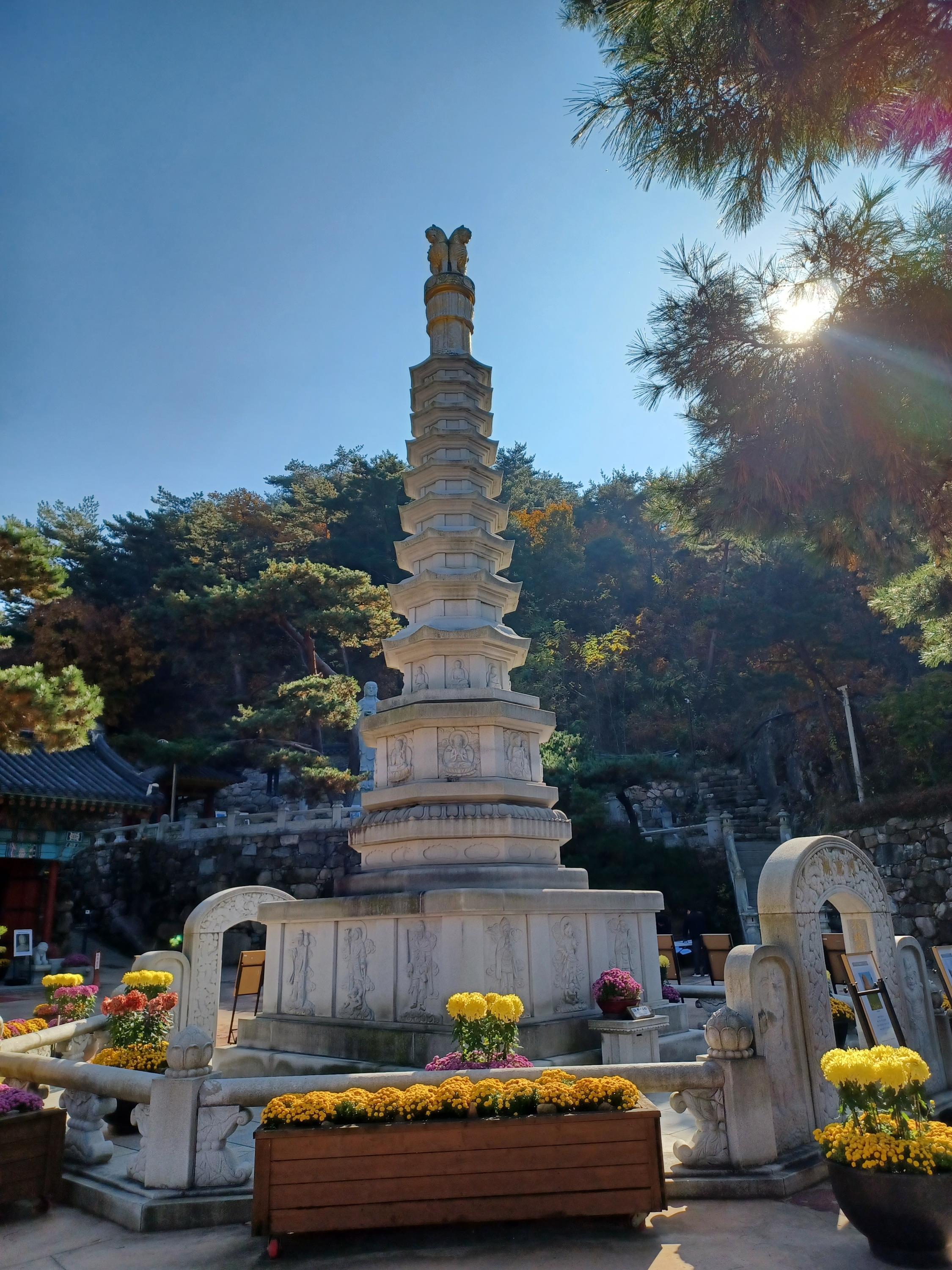
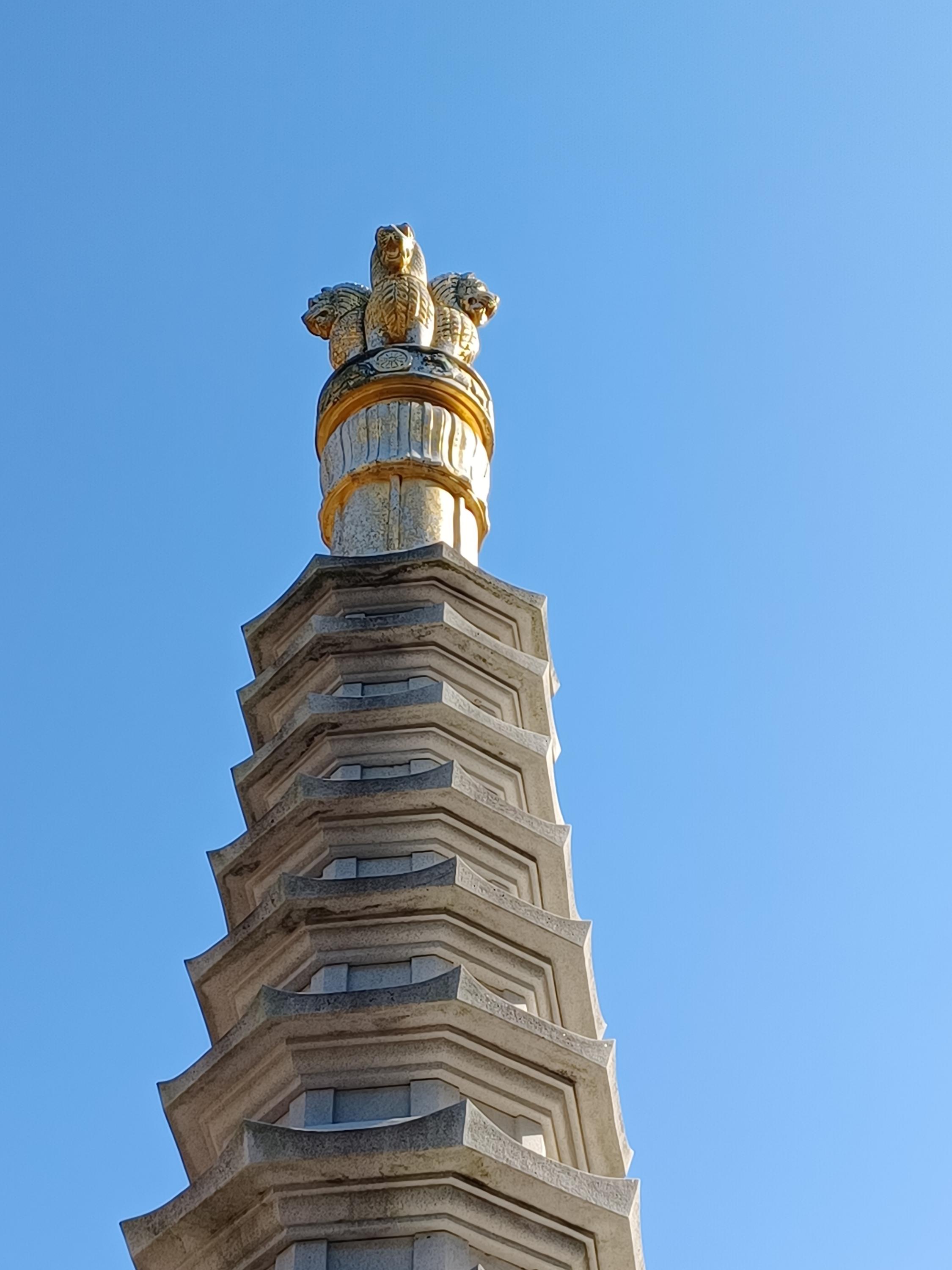
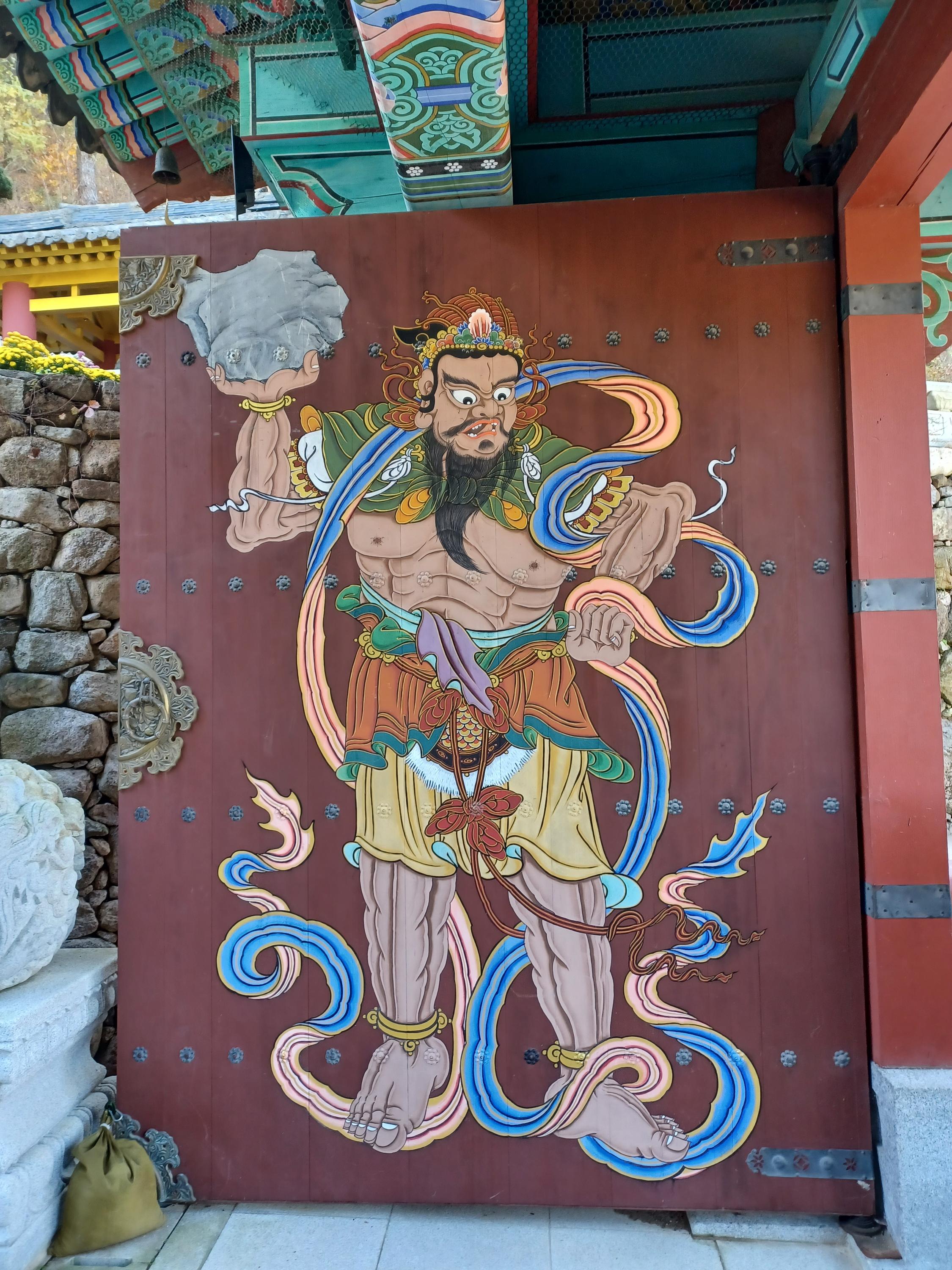
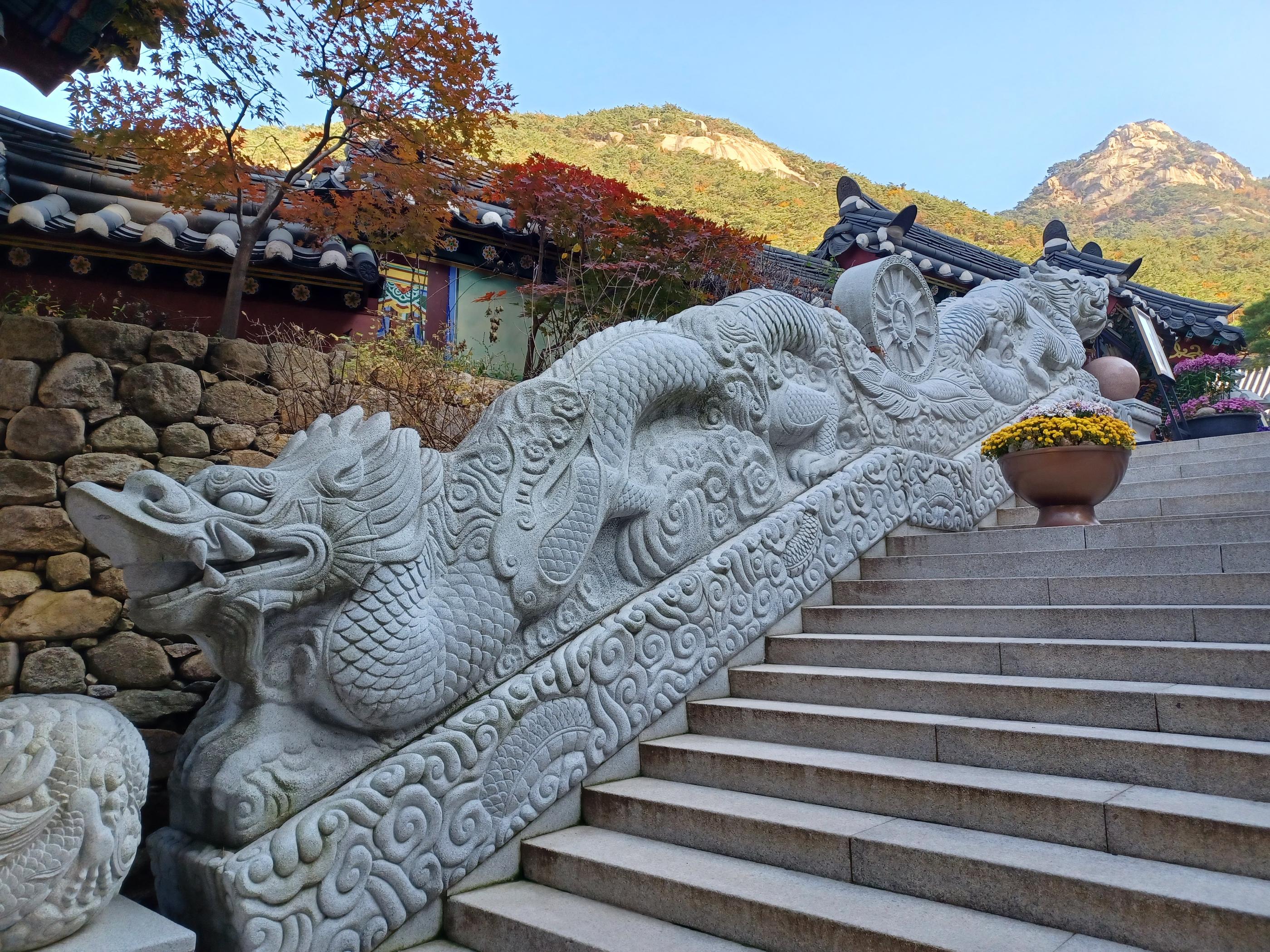
Beyond this ornate pagoda you’ll come to the Iljumun Gate. The doors to this entry gate are adorned with wonderful paintings. Mounting the stone stairs, you’ll find stone sculptures bookending the flight of stairs. At the front of these sculptures are images of fierce dragons. And to the rear of these dragons are images of the Dharmachakra (Wheel of the Dharma).
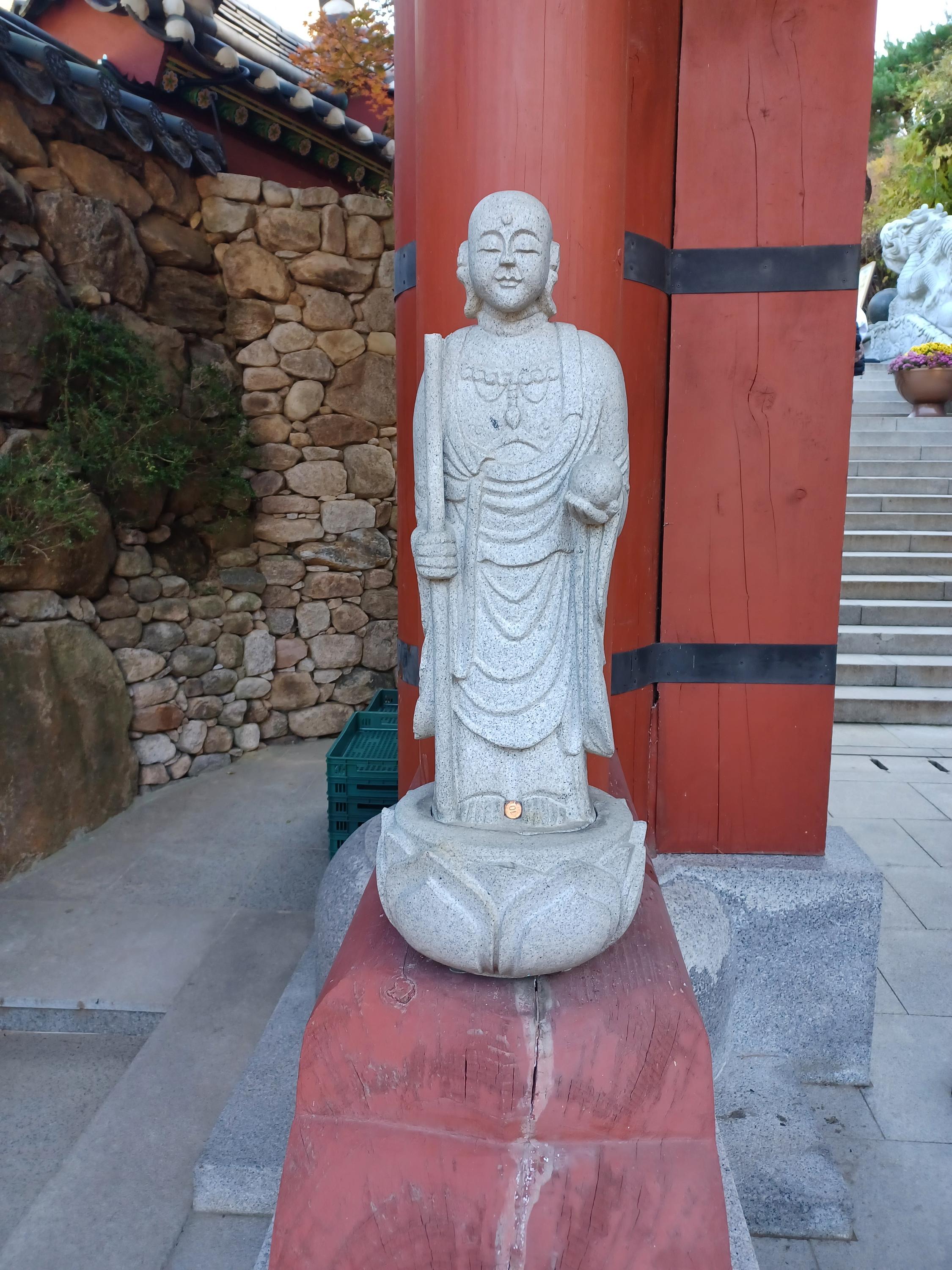
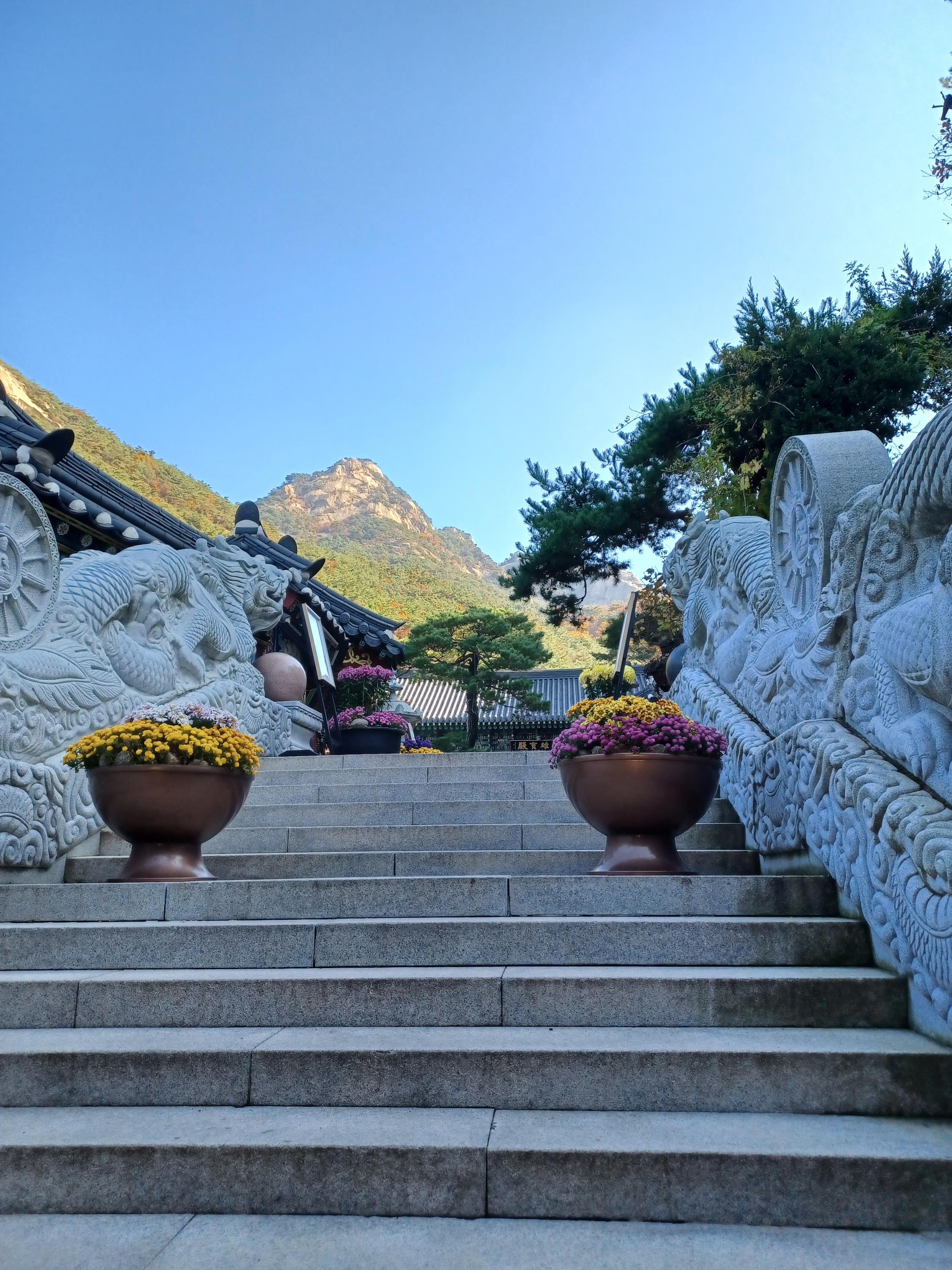
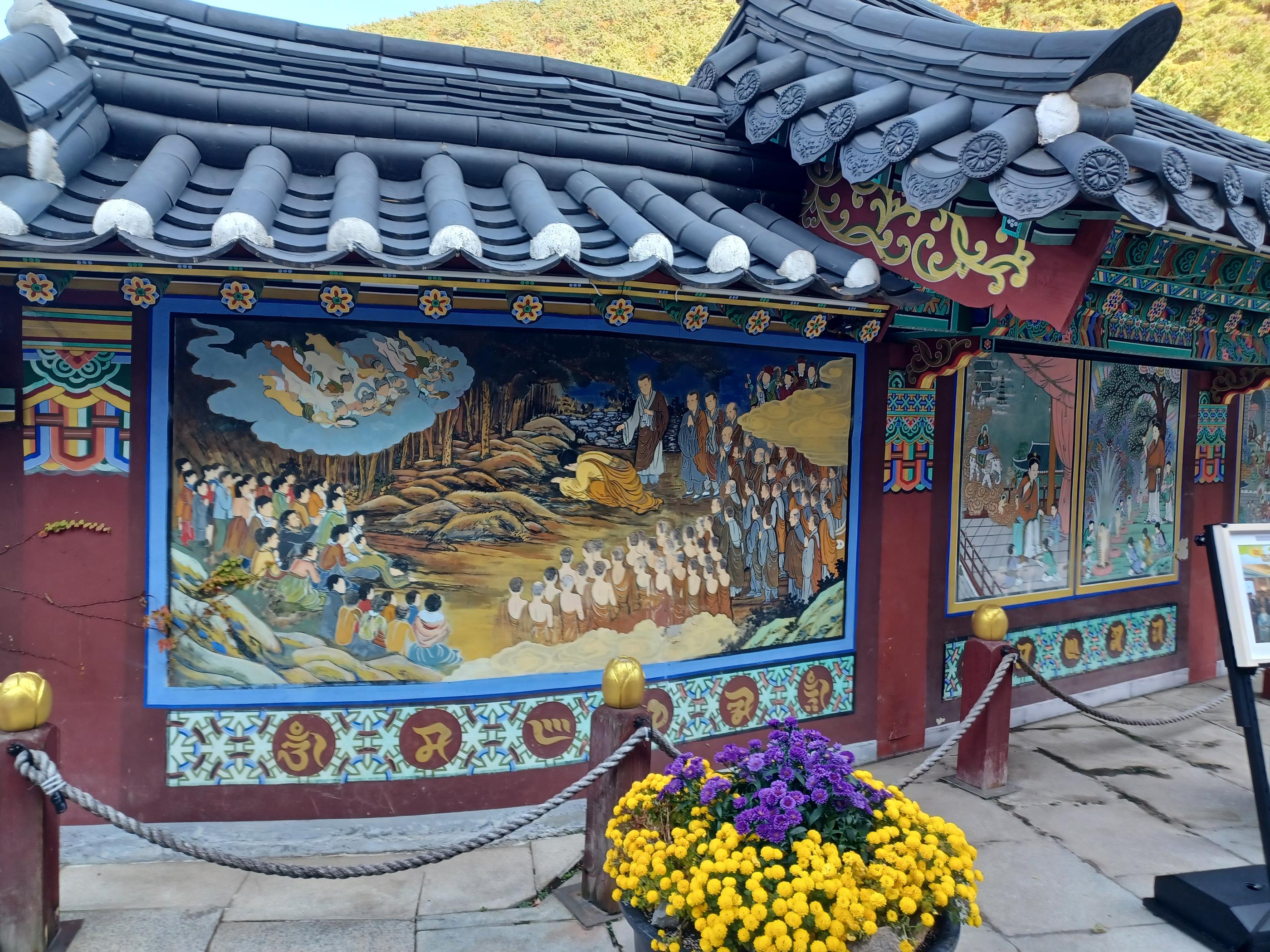
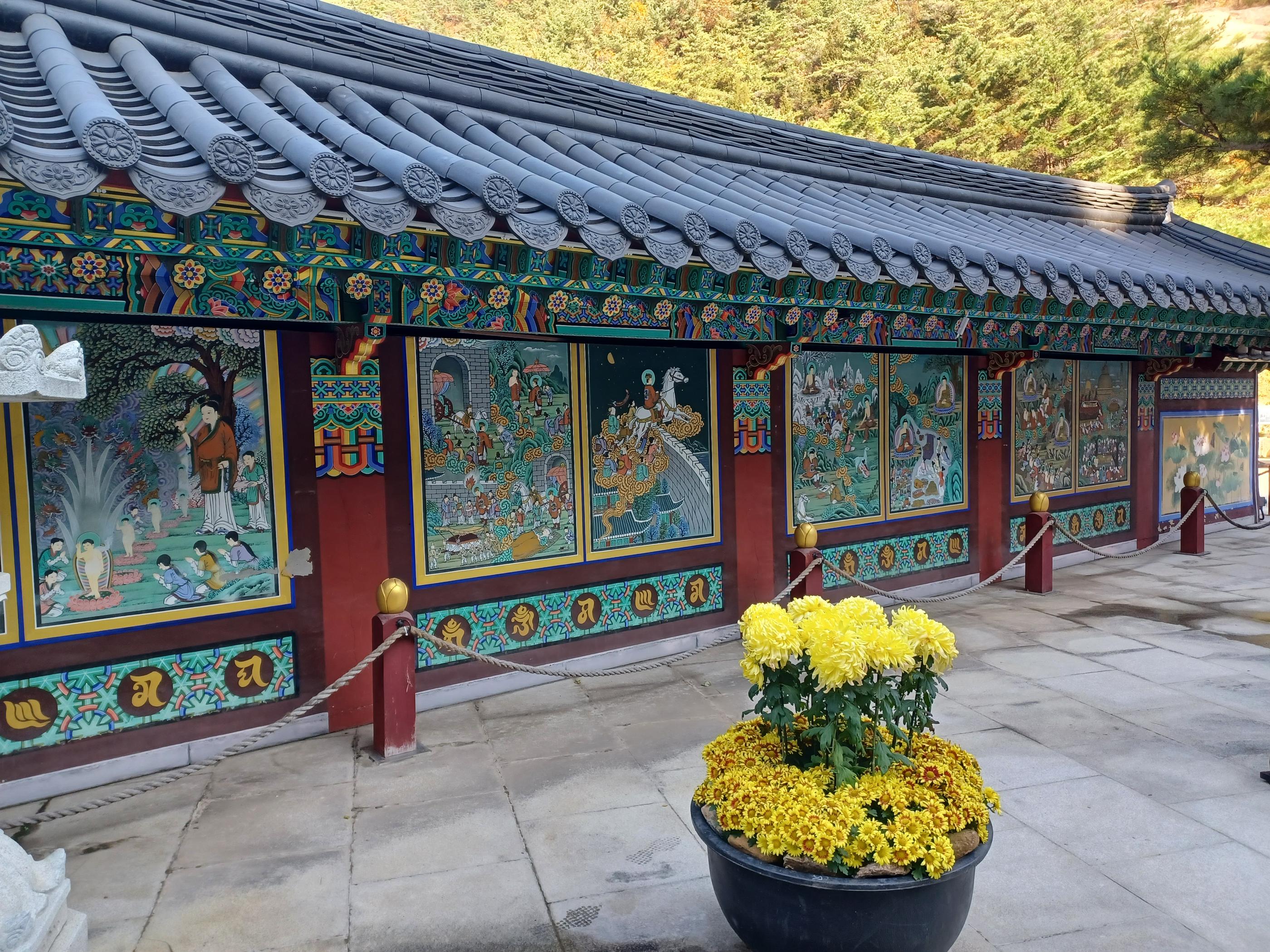
Having mounted the stairs, you’ll find a lower courtyard filled with beautiful lotus flowers and a wall filled with Palsangdo (The Eight Scenes from the Buddha’s Life Murals).
To the right of these paintings is the administrative office and gift shop at Samcheonsa Temple.
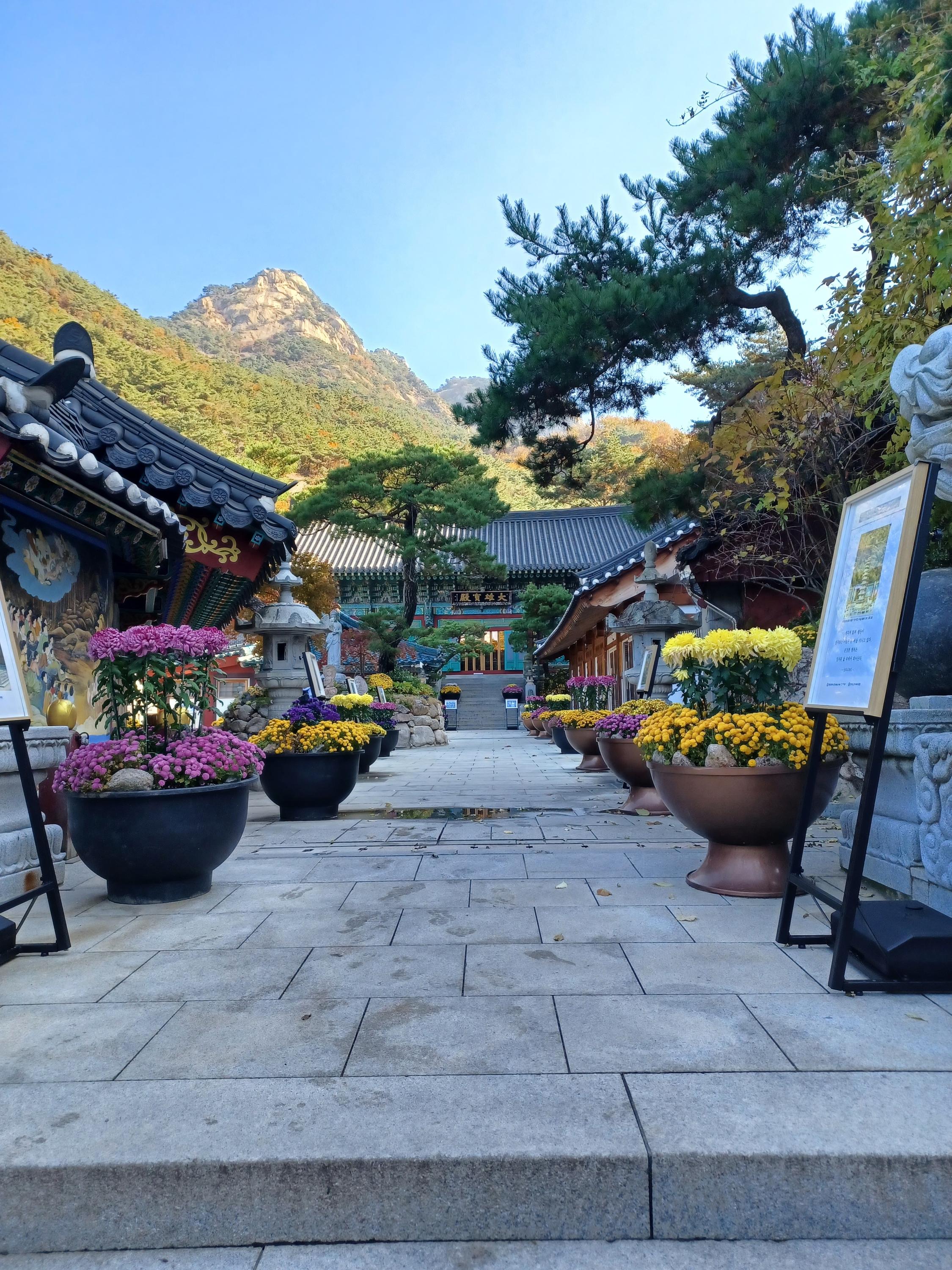
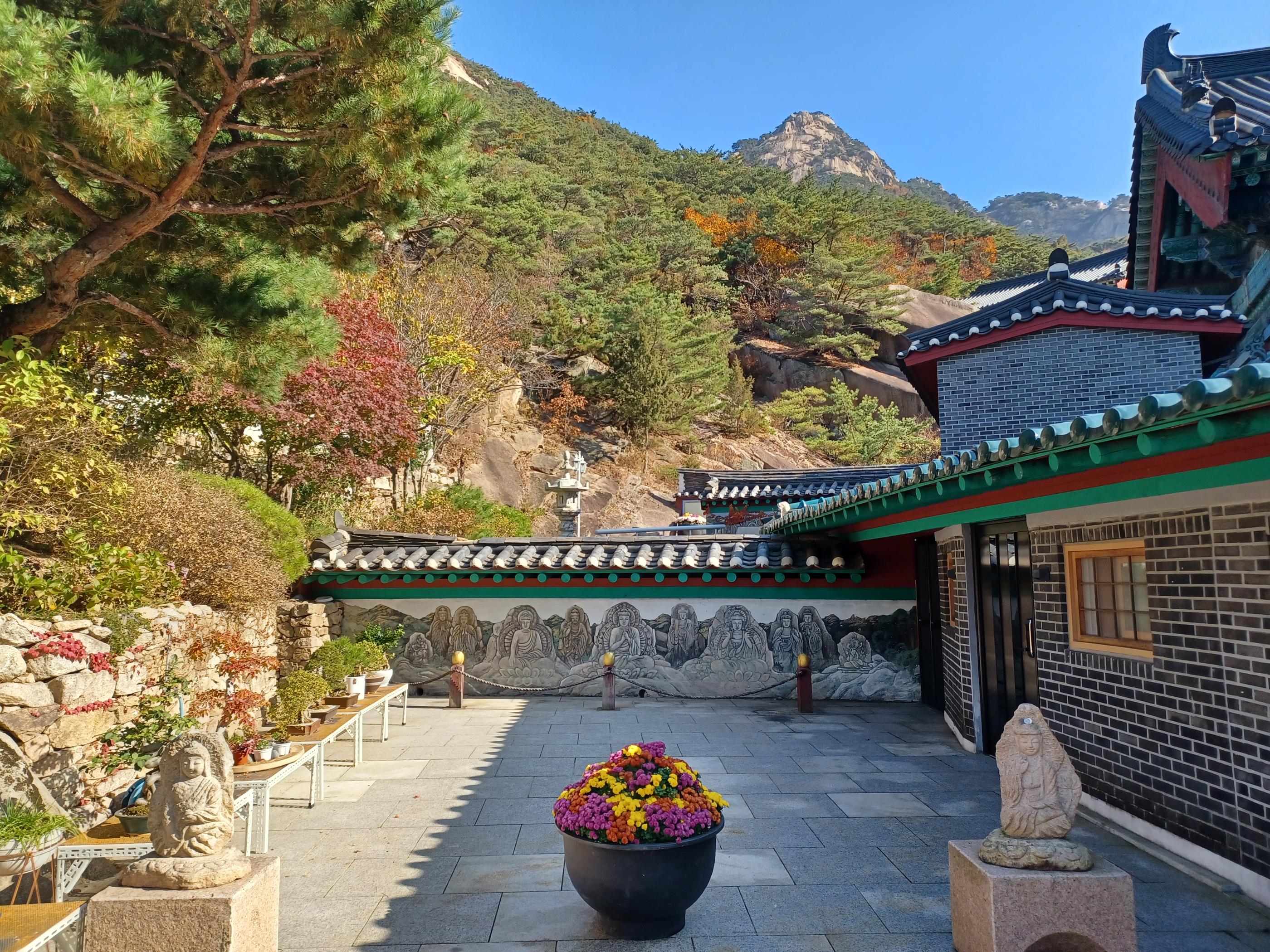
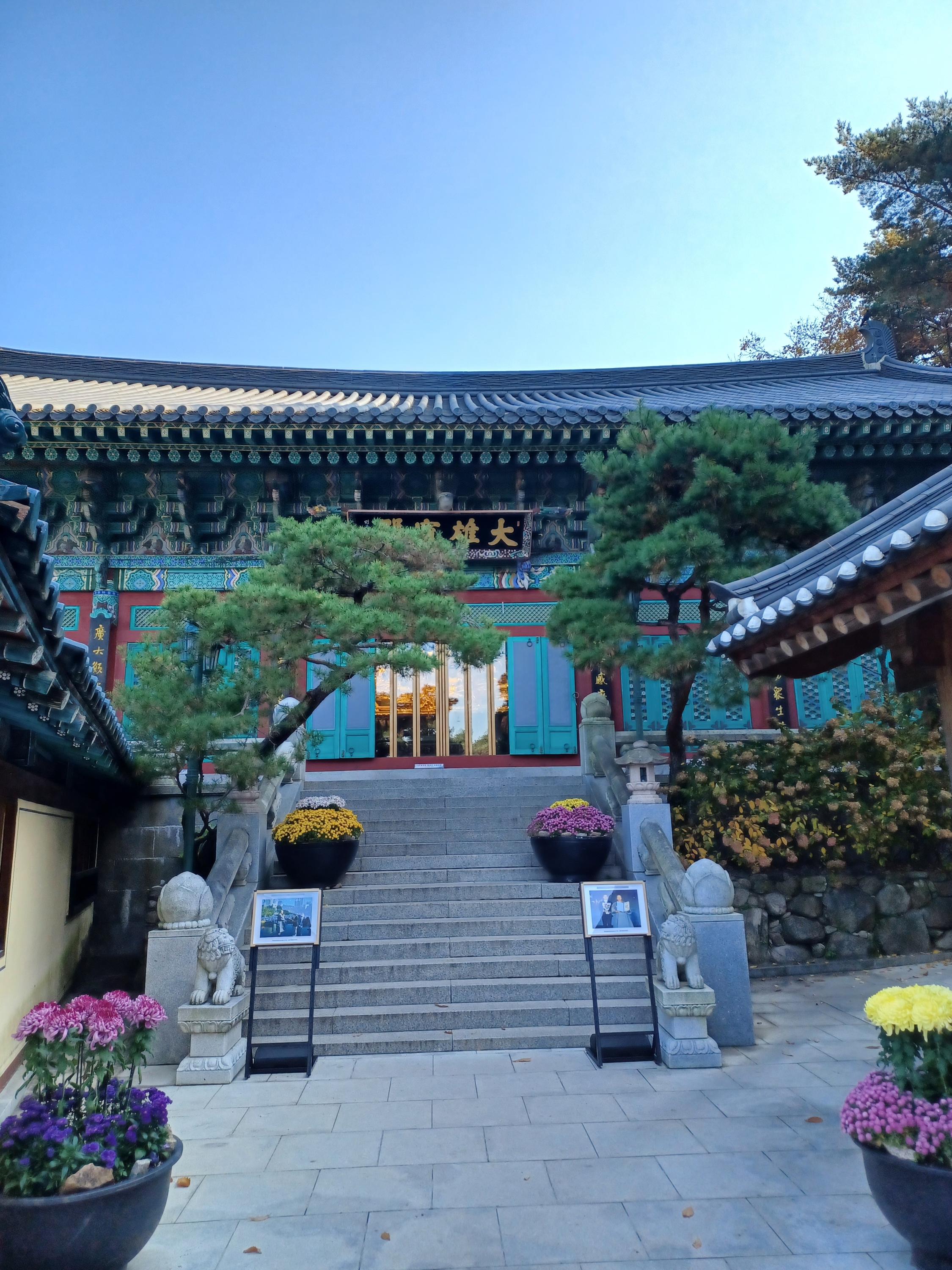
Climbing another set of stairs, you’ll finally arrive at the Daeungbojeon Hall at Samcheonsa Temple.
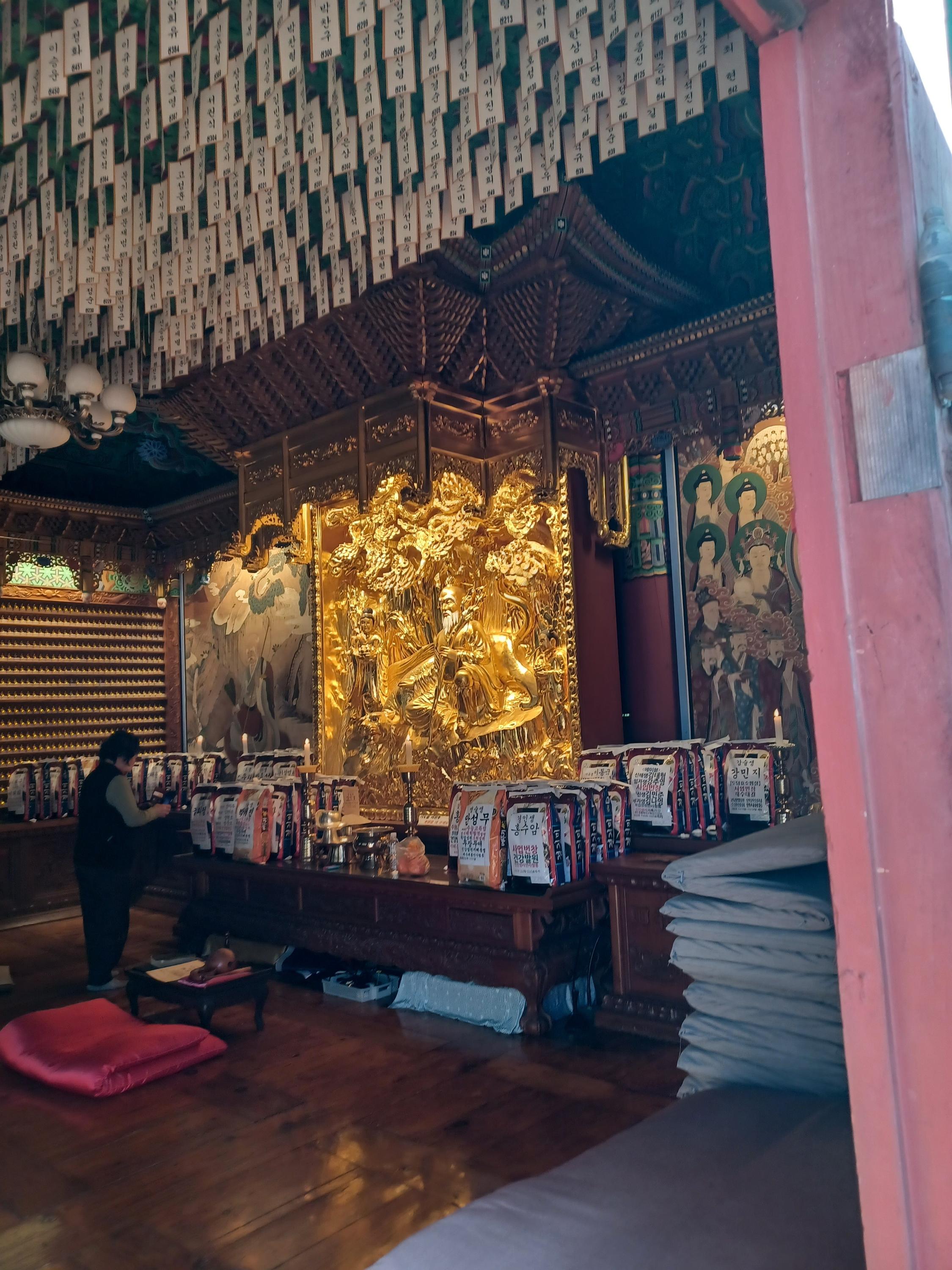
Stepping inside the Daeungbojeon Hall, you’ll find a golden altar. In the centre of this main altar triad is an image of Seokgamoni (The Historical Buddha), who is backed by an ornate golden relief.
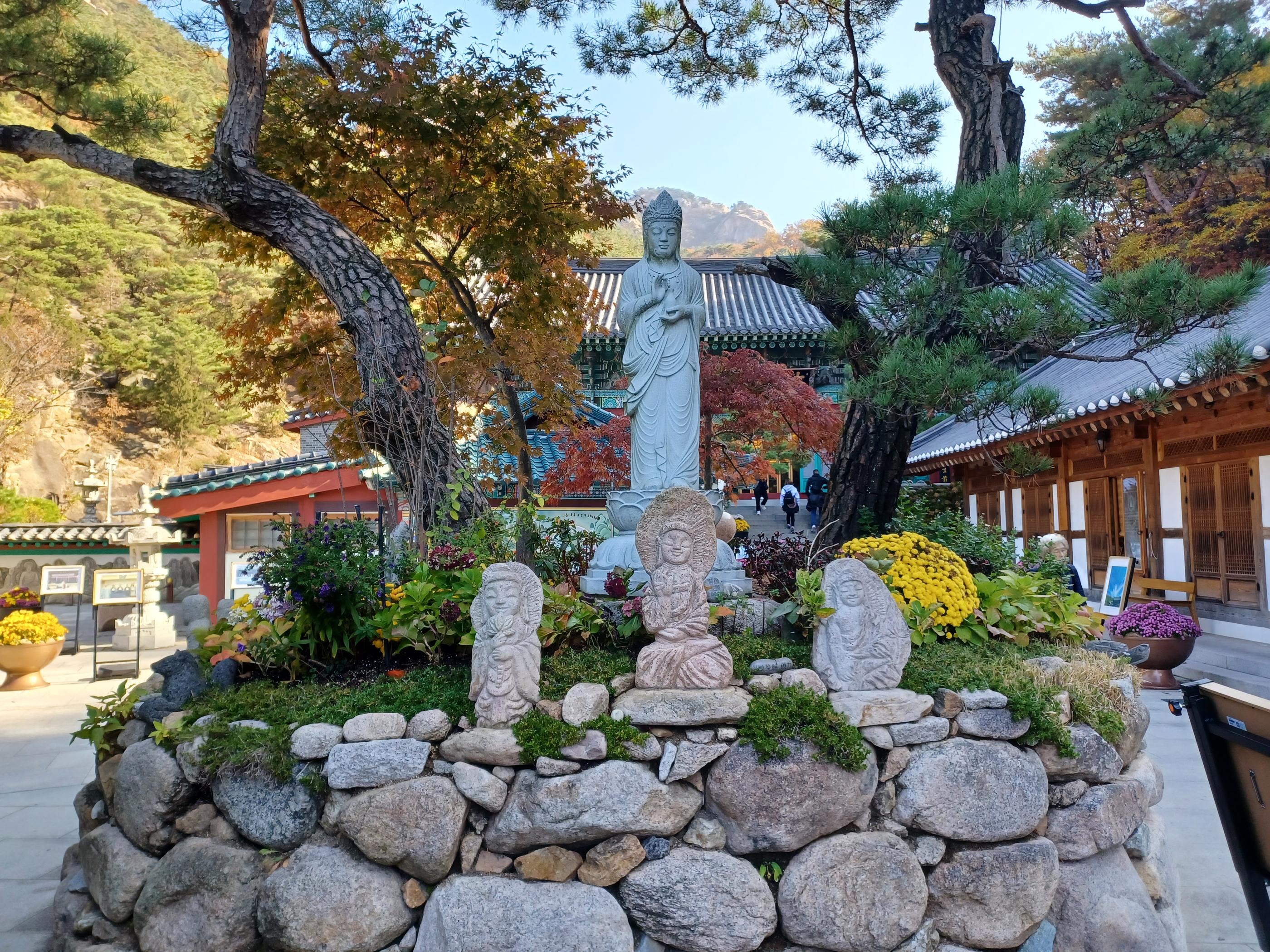
Up another set of stairs, you’ll enter into the upper courtyard that houses the historic “Rock Carved Standing Buddha at Samcheonsa Temple Site”. This carving to the right is carved from the face of a granite outcropping. It’s presumed to date back to the early part of the Goryeo Dynasty (918-1392). The rock image measures 3.03 metres in height.
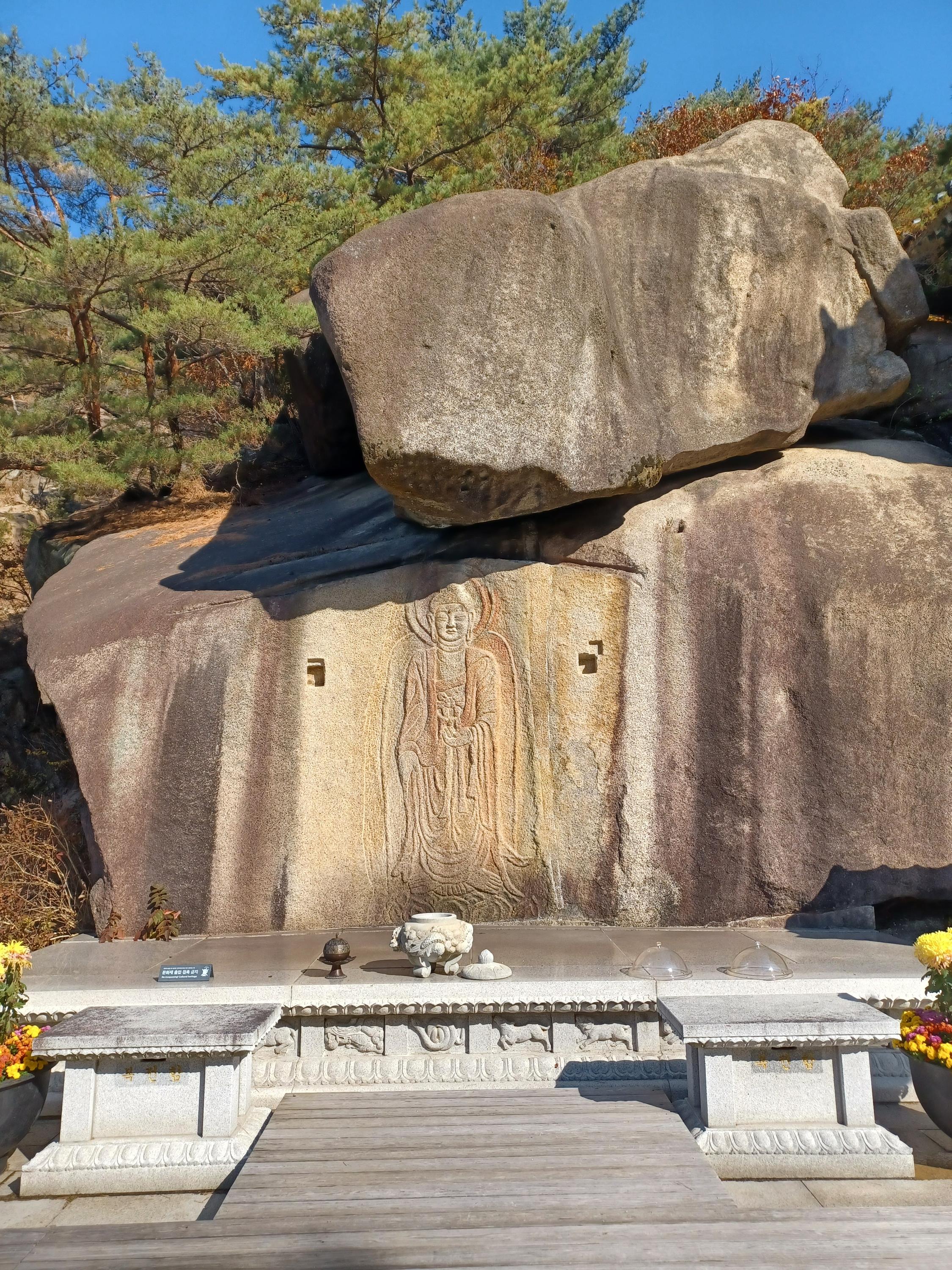
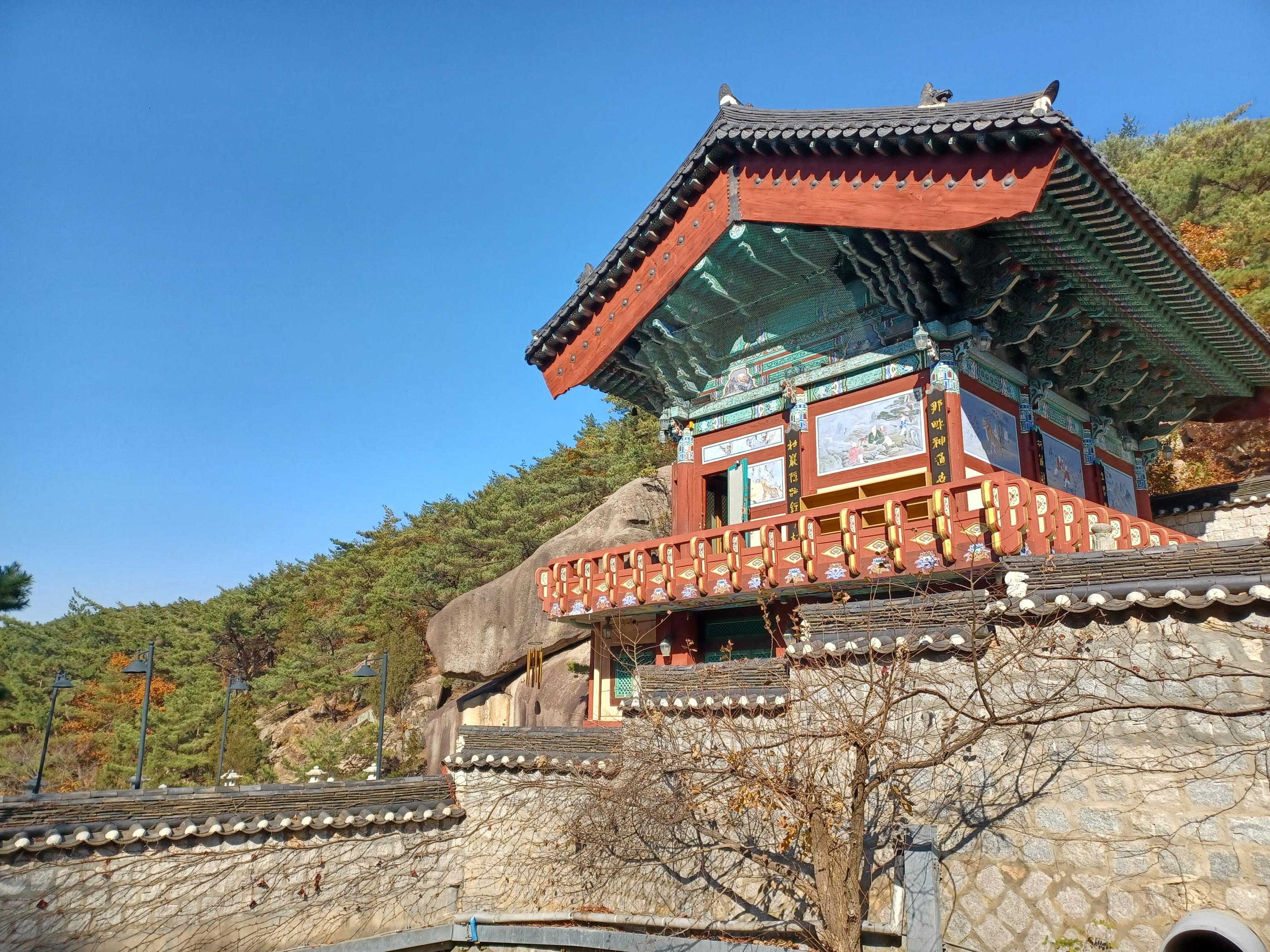
To the right of the “Rock Carved Standing Buddha at Samcheonsa Temple Site” are a cluster of shrine halls. Nearly perched over top of this Korean Treasure is a two story structure.
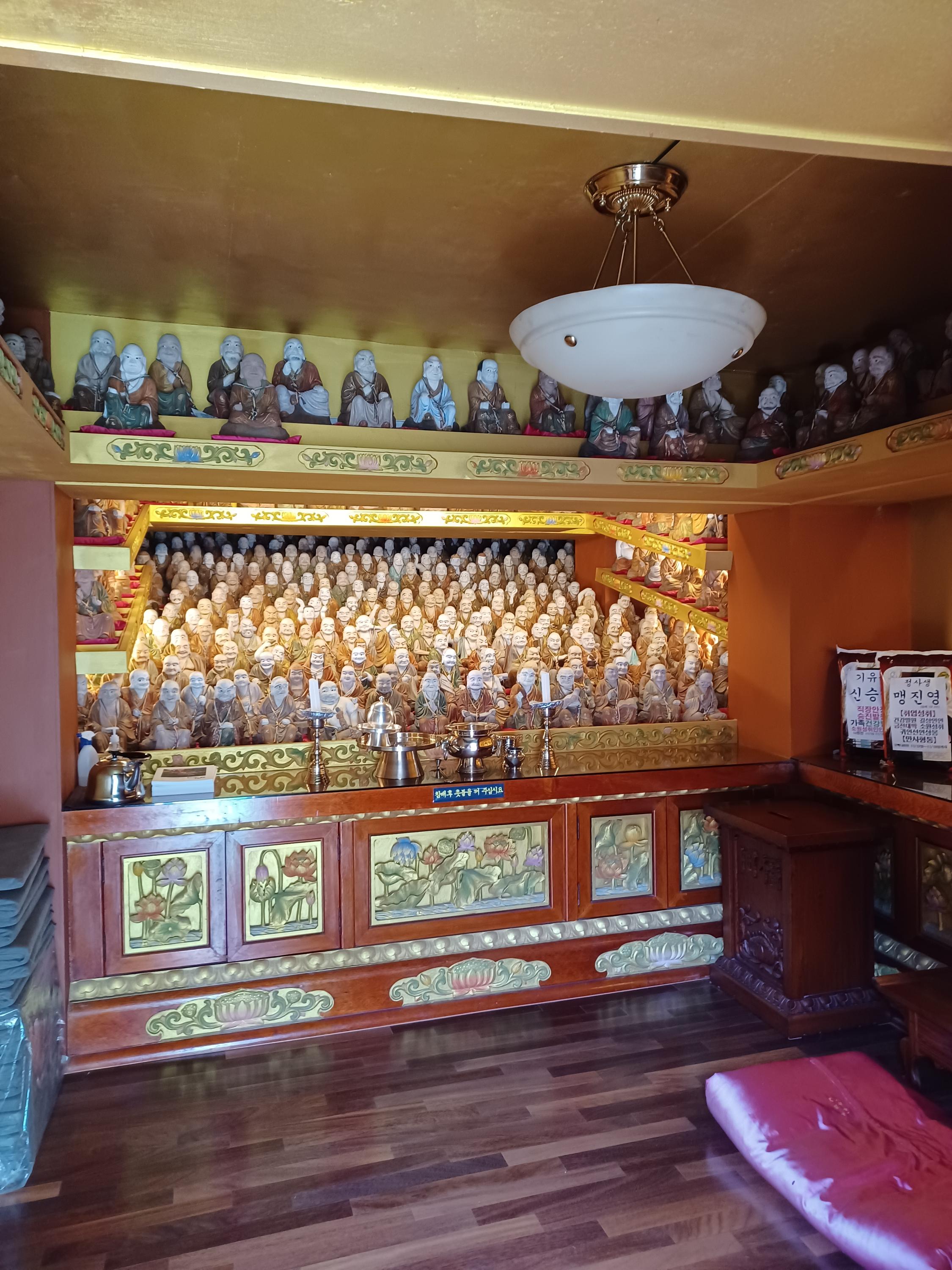
The first story of the structure is one of the nicest Nahanjeon Halls in Korea. The five hundred statues of the Nahan (The Historical Disciples of the Buddha) inside are stunning.
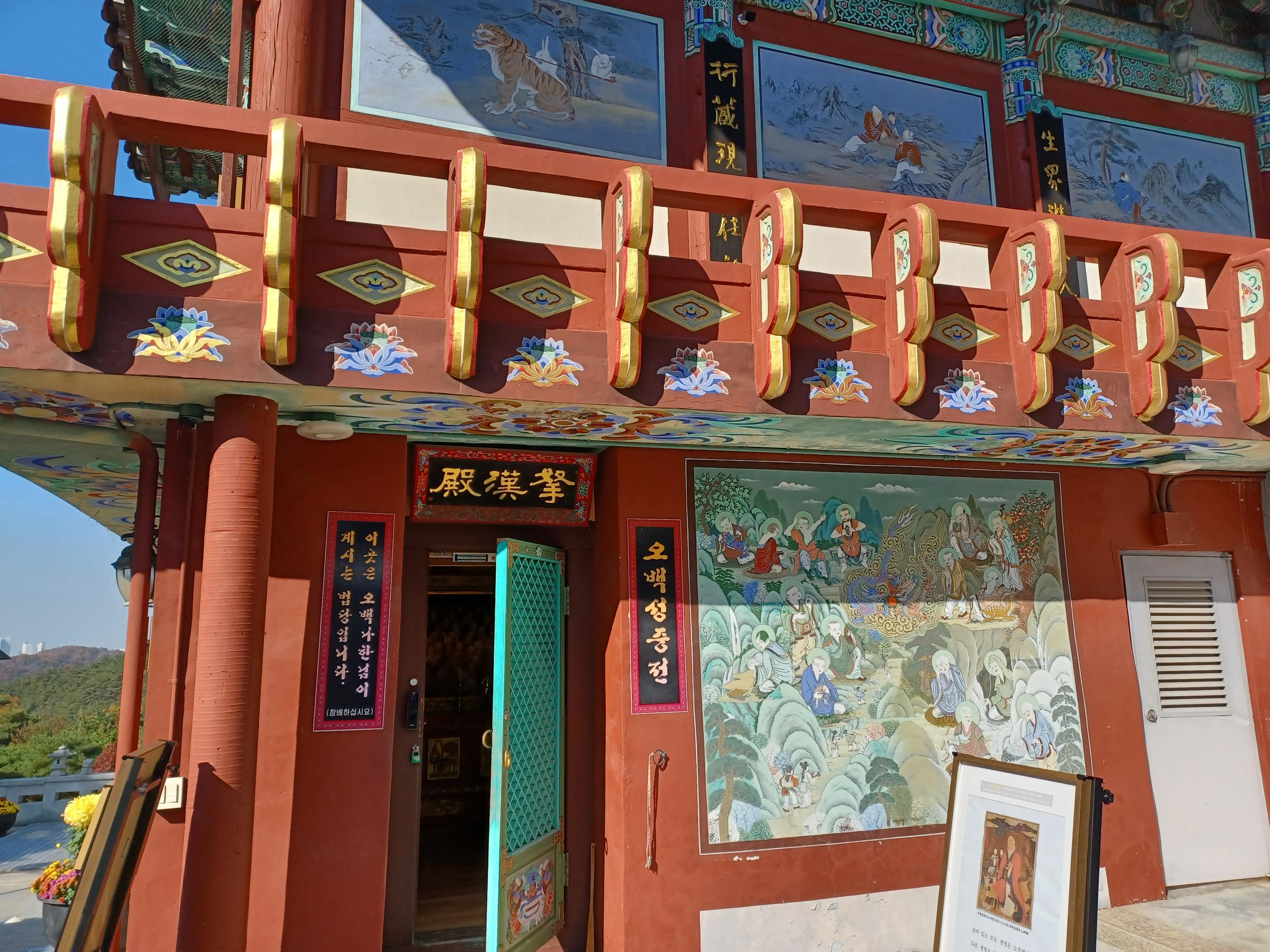
As for the second story of this structure, you’ll find an equally impressive Sanshingak Hall. The exterior walls are adorned with murals. Stepping inside the Sanshingak Hall, you’ll find a stunning, golden relief dedicated to Sanshin (The Mountain Spirit) in the centre of the main altar.
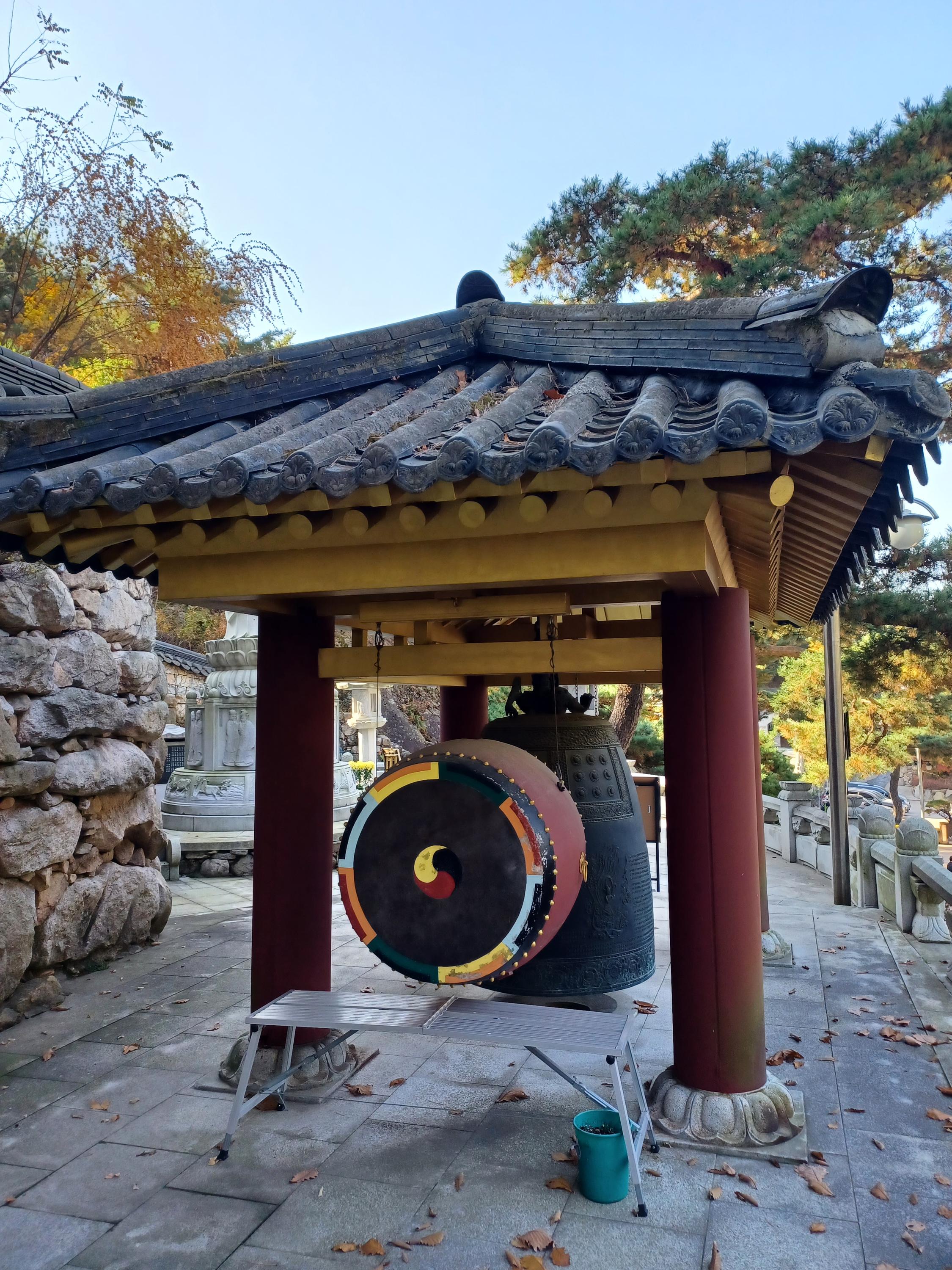
The final shrine hall that visitors can explore at the temple is the Dokseonggak Hall. Stepping inside this shaman shrine hall, you’ll find a stone image of Dokseong (The Lonely Saint) on the main altar.
Spend a great day in Eunpyeong, enjoying the charm of ancient Korean temples, traditional hanok houses and stunning scenery!