




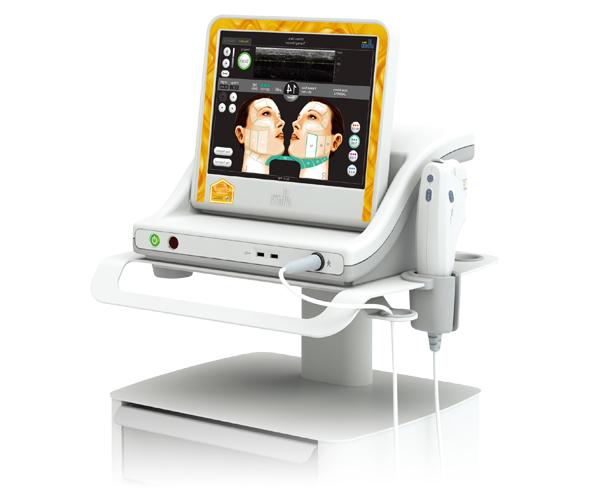
As we age, sagging and loss of firmness become more noticeable—especially around the brows, jawline, and cheeks. Ulthera (Ultherapy®) is a non-surgical lifting treatment that uses ultrasound energy to tighten the skin from deep within. In this blog, we’ll take a closer look at how Ulthera works, who it’s best for, and why many people choose to get it done in Korea.
Thinking about getting a skin procedure in Korea?
Compare clinics below!
How to Save on K-beauty Treatments?
Tax refunds for beauty & medical treatments will not be available starting January, 2026. Bad news for travelers, but Creatrip users still have a way to save that 10% back! If you got a beauty or medical treatment recently, here is how 10% Beauty Cashback Event works:
✅ Upload your receipt on Creatrip & write a review about your experience
✅ Get the 10% of the total amount back as Creatrip points
✅ Use your points like cash to book other travel experiences (beauty&medical, photoshoots, tours & more!)
Check out more details below!

What is Ulthera (Ultherapy®)?
Ulthera, also known as Ultherapy®, is a U.S.-developed lifting treatment that uses high-intensity focused ultrasound (HIFU) to tighten and lift the skin from deep within.
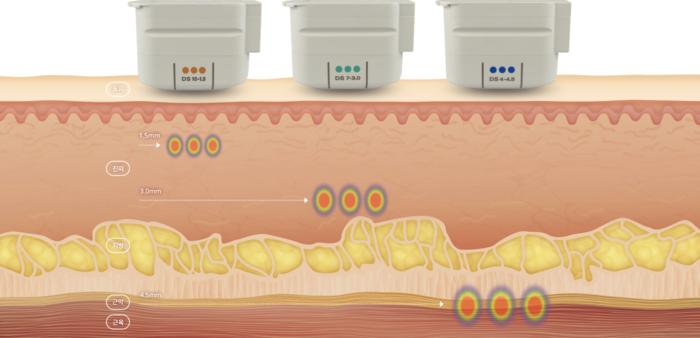
The key technology behind Ulthera is its ability to precisely deliver ultrasound energy to specific depths beneath the skin. During treatment, focused ultrasound creates tiny microthermal coagulation points at temperatures of approximately 65–70°C. This process does not damage the skin’s surface, but instead triggers deep tissue contraction and collagen regeneration, leading to gradual lifting and firming over time.
Ulthera uses three main treatment depths, selected based on facial structure and skin laxity:
- 1.5 mm for the superficial dermis
- 3.0 mm for the deep dermis
- 4.5 mm for the SMAS layer, the same structural layer targeted in surgical facelifts
By switching between these probes during treatment, doctors can tighten the skin from the inside out, rather than simply improving surface firmness. This depth-controlled approach is what sets Ulthera apart from many other non-invasive lifting treatments.
Effects
When people talk about Ulthera (Ultherapy®), two features are mentioned most often: its real-time ultrasound imaging system and the stability of energy delivery and heat distribution. But what do these actually mean?
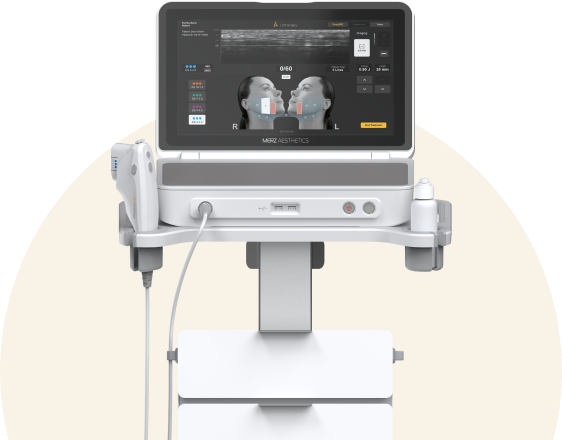
During treatment, Ulthera uses a built-in ultrasound imaging system that allows the physician to see the actual structures beneath the skin in real time, including the dermis, fat layer, and SMAS layer. This makes it possible to adjust each ultrasound shot precisely, while avoiding major blood vessels, nerves, and bone. As a result, the energy can be delivered more accurately and safely to the intended depth.
Ulthera also creates evenly spaced, consistently shaped thermal coagulation points at preset depths. These controlled heating zones stimulate new collagen production in a structured way, leading to a more focused and predictable lifting effect rather than uneven tightening.
Over the following 3 to 6 months, as collagen continues to regenerate and reorganize, facial contours gradually become firmer and more defined—often compared to re-weaving a loose net so it becomes tight again.
Difference Between Ulthera and HIFU
Ulthera (Ultherapy® – U.S.) | Korean HIFU (e.g. Ultraformer, Shurink) |
|---|---|
Developed in the United States | Developed in Korea |
FDA-cleared and widely certified | Certified and widely used in Korea and other countries |
Built-in real-time ultrasound imaging | Some models include imaging, but clarity varies |
Allows clear visualization of the SMAS layer | SMAS targeting depends on device and practitioner skill |
Mainly used for the face and neck | Suitable for both face and body |
Results often last 12 months or longer | Results typically last 3–6 months |
Commonly performed once a year | Requires regular maintenance sessions |
Delivers strong, focused energy | Uses gentler energy delivery |
Treatment can feel more painful | Generally less painful and more comfortable |
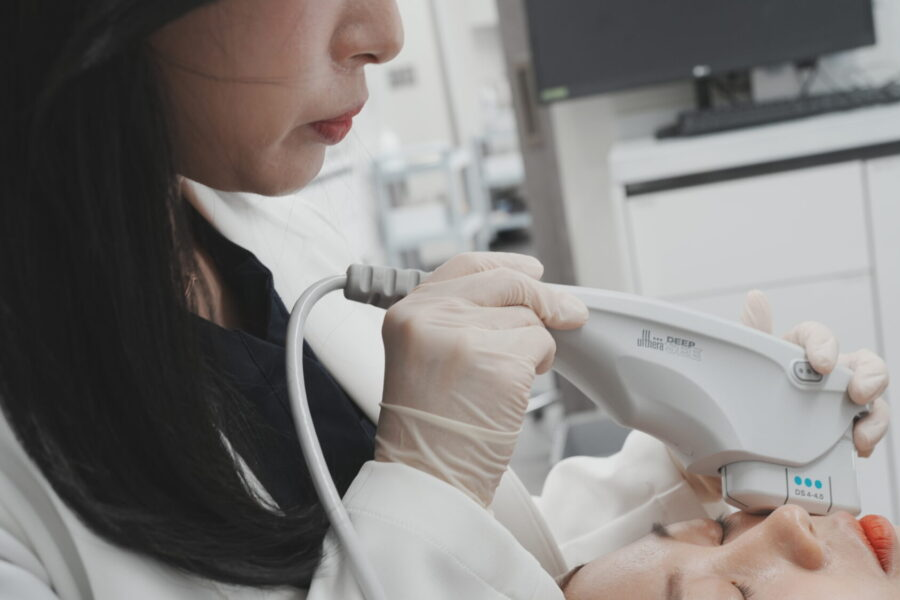
In the U.S., Ulthera (Ultherapy®) is considered the mainstream ultrasound lifting treatment. In Korea, HIFU-based treatments are more common, with various devices available, including options beyond standard HIFU systems.
That said, many people still choose Ulthera because they are looking for a more noticeable lifting effect, longer-lasting results, and the added reassurance of precise targeting before each shot. This ability to visually confirm treatment depth and positioning is often seen as the key difference between U.S. and Korean ultrasound lifting treatments.
If the main goal is overall skin tightening rather than deep lifting, radiofrequency treatments may also be a suitable alternative, depending on individual skin concerns.
[Blog] The difference/guide between Korean medical aesthetic "firming/lifting" treatments
Who Is It Suitable For?
Ulthera is generally best suited for people who are starting to notice visible sagging in their facial contours. Common concerns include brows and outer eye corners that appear lower and more tired, increasingly noticeable jowls or a double chin, and overall loss of firmness in the face.
If you’re not ready for a surgical facelift but want more lifting power than injectables or fillers can provide, Ulthera (Ultherapy®) can be a good middle-ground option.
That said, Ulthera does have its limits. If there is significant excess fat or advanced skin laxity, results may be more subtle. In these cases, Ulthera is often combined with other treatments—such as radiofrequency for surface tightening and skin texture, thread lifting, or injectable treatments—to achieve more balanced and noticeable results.
What to Expect During Procedure?
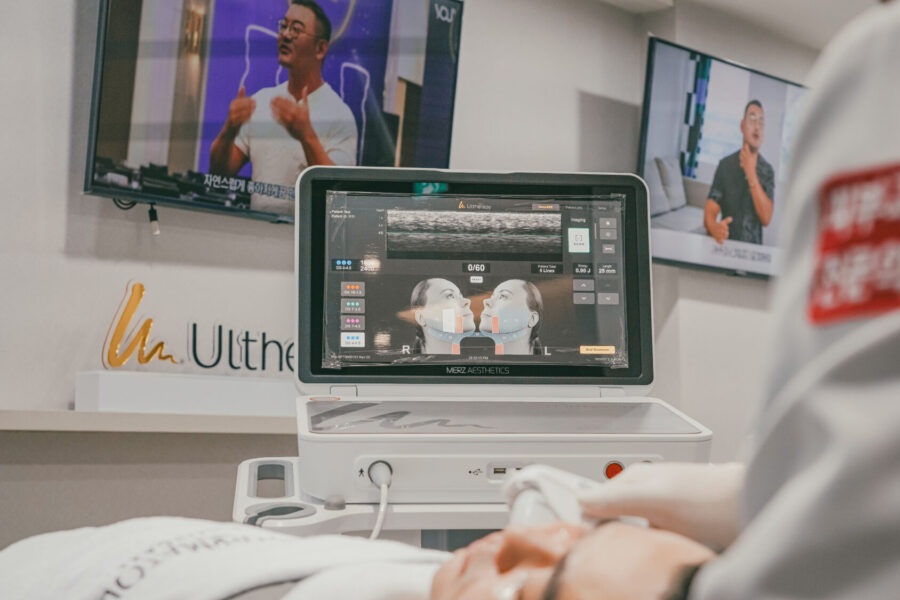
More advanced aesthetic clinics typically perform an ultrasound scan before treatment to confirm the exact depth and position of the SMAS layer. Based on this imaging, the doctor creates a customized treatment plan tailored to your facial structure and degree of laxity.
Pain management is also an important part of the Ulthera procedure. While the treatment is not completely painless, the discomfort is generally manageable and does not reach an intolerable level. The deep, warm sensation you feel during treatment is a sign that energy is being delivered to the deeper lifting layers of the face.
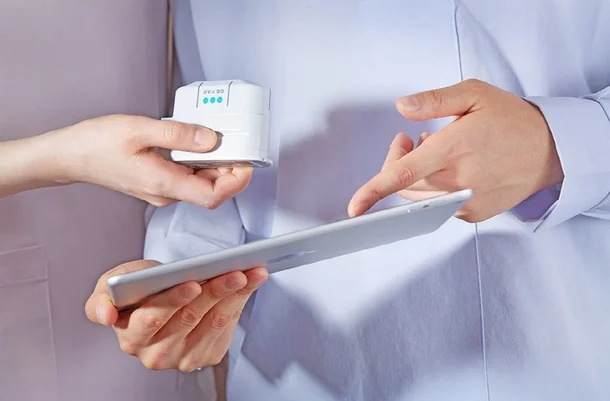
Guided by real-time imaging on the screen, the doctor treats the face section by section. Each ultrasound line creates a series of thermal coagulation points at a precise, fixed depth, ensuring consistent and targeted lifting.
In general, deeper areas such as the cheeks and jawline tend to be more sensitive. Mild redness or swelling may occur after treatment, but these effects usually subside within a few days and rarely interfere with daily activities.
Ulthera Price Differences: Korea vs. the U.S.
In Korea, Ulthera (Ultherapy®) is widely available and generally more affordable. As a rough guide, jawline or lower-face treatments often start around ₩800,000–₩1,500,000 KRW, while a full-face treatment typically ranges from ₩1,500,000 to ₩3,000,000 KRW.
In comparison, Ultherapy in the U.S. is usually priced much higher, with full-face treatments commonly costing around $2,500–$4,500 USD or more, depending on the clinic and location.
Because of this difference, many people choose to get Ulthera in Korea—sometimes combining it with radiofrequency or injectables during the same trip—to maximize results while keeping overall costs more reasonable.
Ulthera treatments in Korea are generally more affordable, but Ultherapy® (the U.S. version) is still very popular. This is largely because Korean doctors have a lot of experience, and the medical aesthetics field in Korea is highly developed.
If you’re looking for trusted clinics in Korea that offer Ultherapy®, you can check the information below. The clinics are certified and well-reviewed, and reservations are free, so there’s no pressure. Creatrip simply helps you explore your options and choose with more confidence.
Still not sure which treatment to get?
Reserve for free now, pay later!
Book all things trending in Korea on Creatrip! If you have any questions or concerns, please leave a comment below or send us an email at help@creatrip.com! You can follow us on Instagram, TikTok, Threads, and Youtube to stay updated on all things Korea!
Book all things trending in Korea on Creatrip! If you have any questions or concerns, please leave a comment below or send us an email at help@creatrip.com! You can follow us on Instagram, TikTok, Threads, and Youtube to stay updated on all things Korea!