Korean Researchers Develop Room-Temperature Polymer Membrane to Replace 100-Year-Old Oil Distillation
Creatrip Team
a month ago
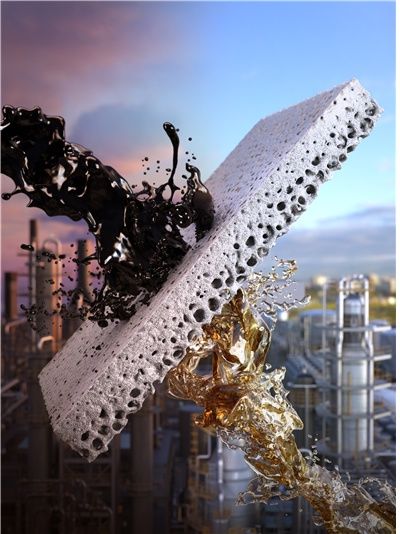
KAIST researchers led by Prof. Ko Dong-yeon have created a cheap polymer membrane that can precisely filter crude oil at room temperature, replacing traditional high-temperature (350°C) distillation. Using porous PAN (polyacrylonitrile) membranes—normally an inexpensive synthetic fiber support—the team found heavy residues spontaneously deposit on pore walls to form self-assembled nanochannels (~2 nm) that let light fractions (e.g., gasoline) pass while retaining heavier fractions. The membrane works 23 times faster than previous top membranes, ran stably for a month, and can be retrofitted as a "snap-in" unit before existing distillation towers. Simulations suggest energy use drops 31.6%, cooling water use 20.7%, CO2 emissions 37.6%, and operating costs 36.0%, potentially cutting ~10 million tons of CO2 annually (equivalent to emissions from 4 million cars). Challenges remain: validating performance with diverse crude types, scaling to much larger membrane areas, and multi-year durability. The work was published in Nature and could extend to plastic waste refining, battery solvent recovery, and other chemical separations. (PAN: polyacrylonitrile, a common synthetic fiber)