
Hotels Near Incheon Airport: Choosing the Right ICN Hotel Without the Booking Mistakes
At ICN, the best hotel is not always the closest one. Immigration status, checked baggage, and Terminal 1 vs. Terminal 2 matter more than most travelers expect.

Search results for “hotels near Incheon Airport” can look deceptively simple. A room is a room, ICN is ICN, and anything with “airport” in the name sounds like it should be easy after a long flight.
At Incheon International Airport, the real question is not whether a hotel is close. It is whether the hotel is airside or landside — and, for the airside transit hotel, whether it matches Terminal 1 or Terminal 2.
That one detail can decide whether you get a shower and a proper nap between flights, or arrive tired at a front desk you cannot legally access.
The airport hotel split that matters at ICN
Incheon Airport hotel listings usually fall into three very different categories, even when booking sites show them side by side.
Airside transit hotel inside ICN
This is the Incheon Airport Transit Hotel. It sits inside the secure international transit area, after security and before Korean immigration. It is made for eligible international transfer passengers who are staying within the airport’s airside zone.
This is not a normal arrivals hotel. You do not use it after entering Korea, collecting your suitcase, or leaving the secure area.
Landside airport hotels near or connected to ICN
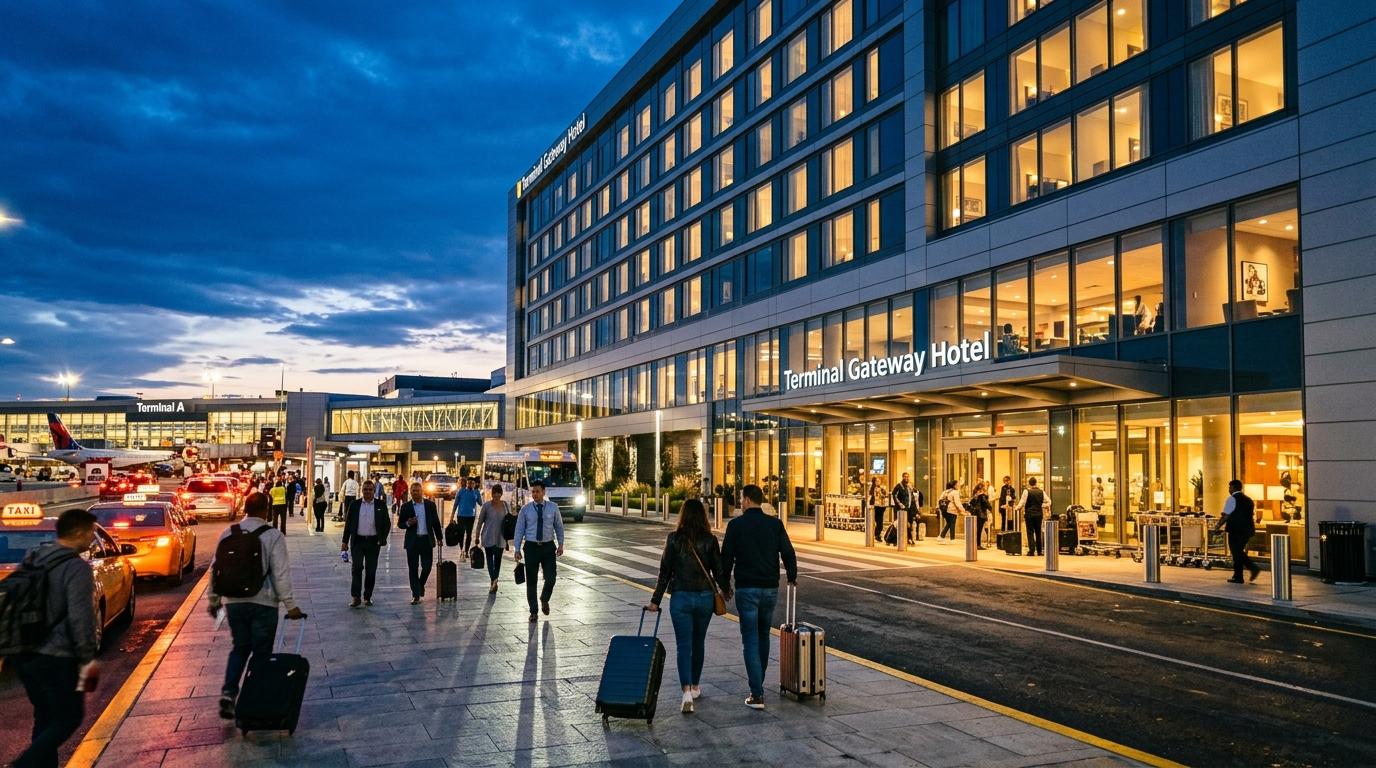
These are regular hotels outside the secure transit zone. You reach them after passing immigration and entering Korea. They are the better match when Korea is your destination, when you need to collect checked baggage, or when your onward flight is on a separate ticket.
For many travelers, this is the safer and more flexible “airport hotel” choice, even if it means leaving the terminal.
Incheon city or Seoul hotels with airport access
Some hotels in Incheon or Seoul market themselves around airport convenience. They can be more spacious or better value, especially for a proper overnight stay, but they make less sense for a short layover. Immigration, baggage, transport, morning return time, and security all add up quickly.
A Seoul hotel may be lovely. It is rarely the calmest choice for a tight overnight connection at ICN.
What the Incheon Airport Transit Hotel actually is
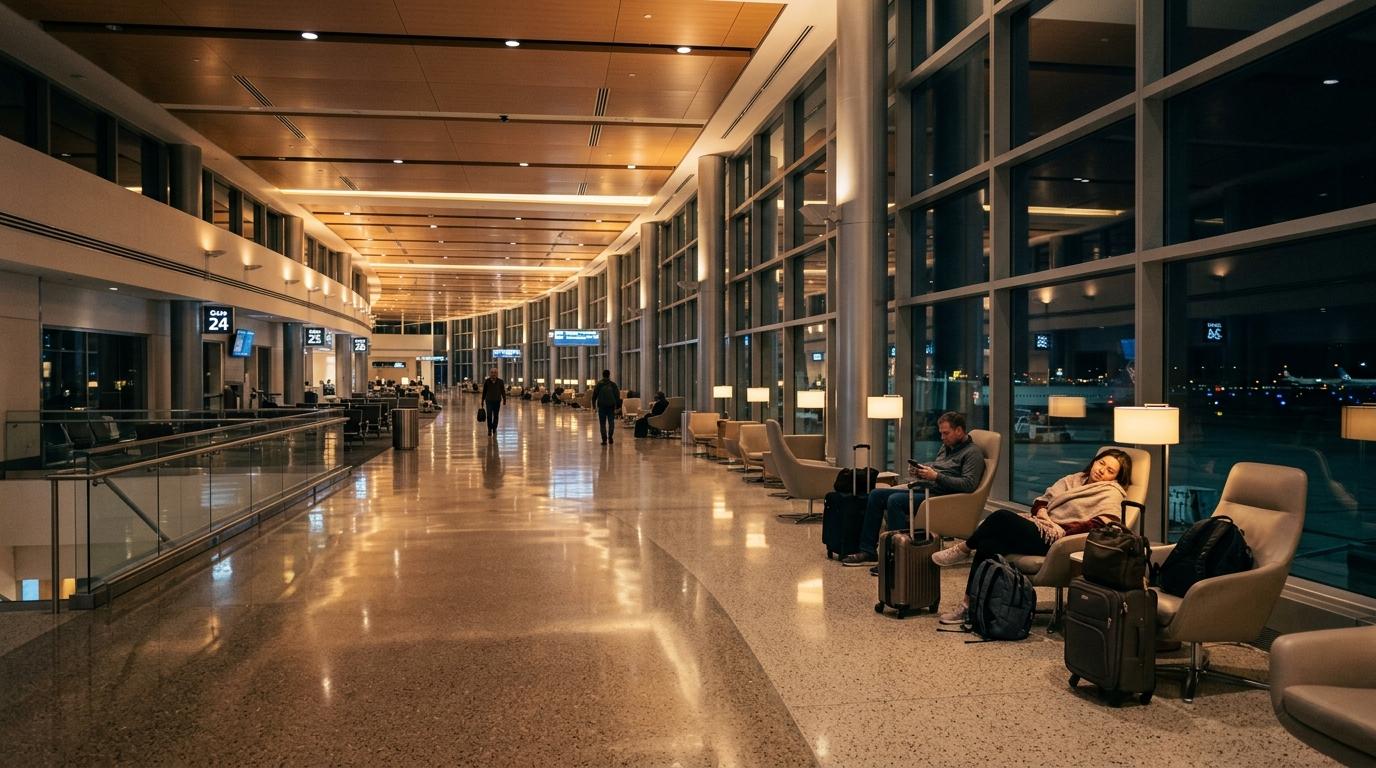
The Incheon Airport Transit Hotel is best understood as a practical sleep-and-shower stop inside the airport, not a leisure hotel. Its strongest feature is location: you stay inside the international transit zone, close to departure gates, without entering Korea.
That convenience comes with strict access rules.
A transit hotel room usually makes sense when all of this is true:
- You are connecting international flight to international flight at ICN.
- Your onward flight leaves from the same terminal as the transit hotel you booked.
- You will not pass Korean immigration.
- Your checked baggage is tagged through to your final destination.
- You care more about sleep, privacy, and a shower than space or hotel-style facilities.
It is a poor fit when you need to collect luggage, enter Korea, meet someone outside arrivals, change to a domestic itinerary, or deal with a separate onward booking that requires landside check-in.
Airside means you cannot collect your checked bag
This is where many bookings go wrong.
If your suitcase is checked through to your final destination, great — that is exactly the kind of transit setup the airside hotel is built for. But if you need to pick up your bag at ICN, you will have to pass immigration and go landside. Once you do that, the airside transit hotel may no longer be accessible.
The same goes for travelers on separate tickets. Even if both flights are international, your baggage may not transfer automatically. If the first airline only checks your bag to Seoul/Incheon, a landside hotel is usually the more realistic option.
A good little travel habit: before leaving your origin airport, ask the check-in staff whether your checked bag is tagged to the final destination, not just to ICN.
Terminal 1 and Terminal 2 are not interchangeable
ICN has transit hotels in both terminals, but that does not mean you can freely choose either one. Access depends on your actual flight and terminal.
Terminal 1 Transit Hotel location
The Terminal 1 transit hotel is located on the 4th floor inside the secure area. Access is via escalators near Gate 11 East and Gate 43 West.
This is the one to look at only if your eligible international transit itinerary lines up with Terminal 1.
Terminal 2 Transit Hotel location
The Terminal 2 transit hotel is also on the 4th floor, near Gate 252. A common route is to go to Gate 252 on the 3rd floor and take the escalator up to the 4th floor.
Again, this is for eligible passengers using Terminal 2. If your onward flight departs from Terminal 1, a Terminal 2 airside hotel booking can become a very expensive misunderstanding.
Do not book from airline memory
A surprisingly risky move is booking based on an old idea of which airline uses which terminal.
Terminal assignments can change. For example, recent airport-related guidance has noted Asiana Airlines’ move to Terminal 2 in January 2026, while older booking descriptions and traveler posts may still reflect past terminal patterns. The practical lesson is simple: do not rely on memory, screenshots, or old forum comments.
Before booking any airside transit hotel, check the terminal for your exact flight date through your airline or Incheon Airport’s latest flight information. Then make sure the hotel terminal matches your onward departure terminal.
Terminal 2 Transit Hotel: what to expect
The Terminal 2 property is the better-documented of the two, and it gives a good sense of what an ICN transit hotel stay is really like.
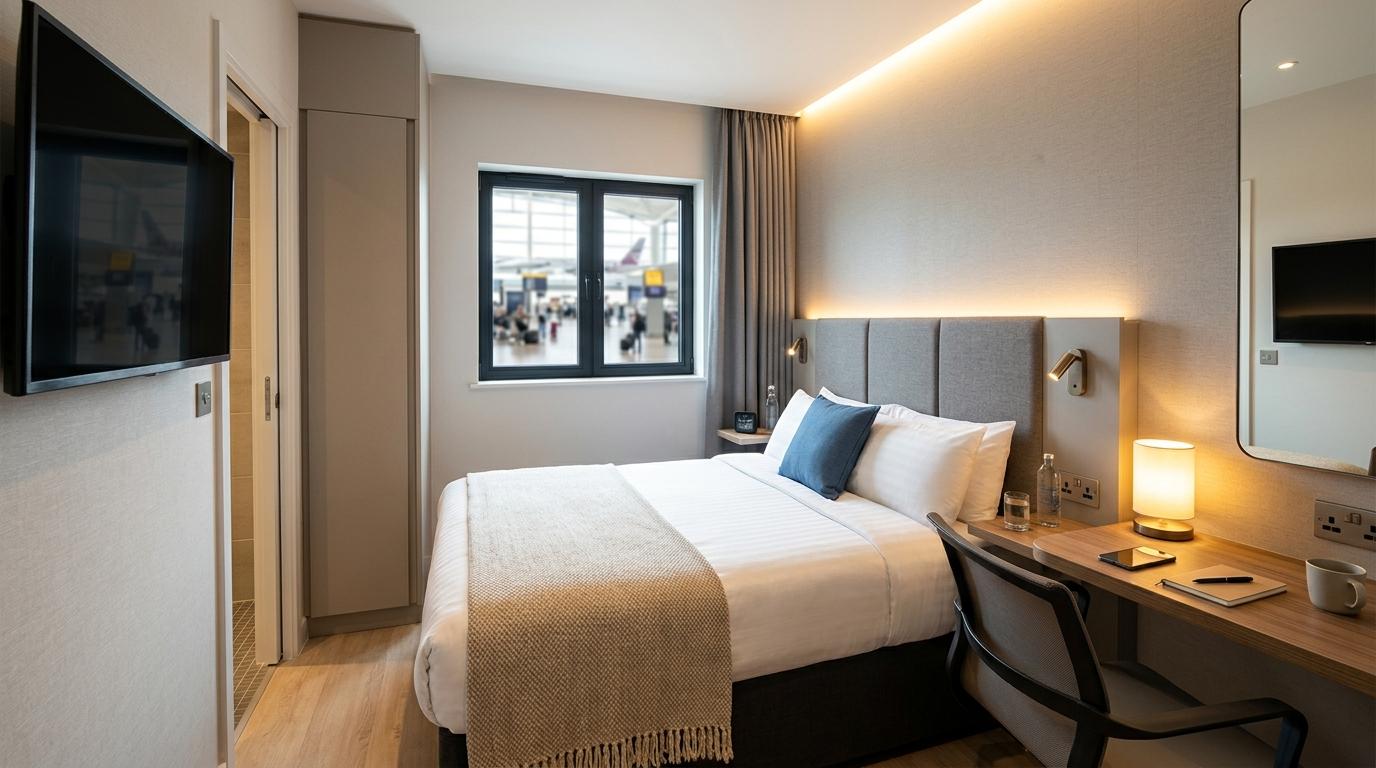
This is a compact, functional property inside the duty-free/transit area near Gate 252. It has 50 rooms and offers 12-hour and 24-hour room products. Room types include single, double, and twin options, with most rooms described as windowless.
Room sizes are modest: roughly 13–14 square meters for many single and double rooms, while twin rooms are listed at around 172 square feet. That is enough for sleeping, showering, reorganizing a carry-on, and feeling human again before the next flight — not enough for spreading out like a resort guest.
Facilities are simple, and that is the point
Typical listed amenities include free Wi-Fi and a 24-hour front desk. Some listings note that Terminal 2 does not offer breakfast or a swimming pool, which fits the whole purpose of the hotel: it is an efficient rest stop inside the secure airport zone.
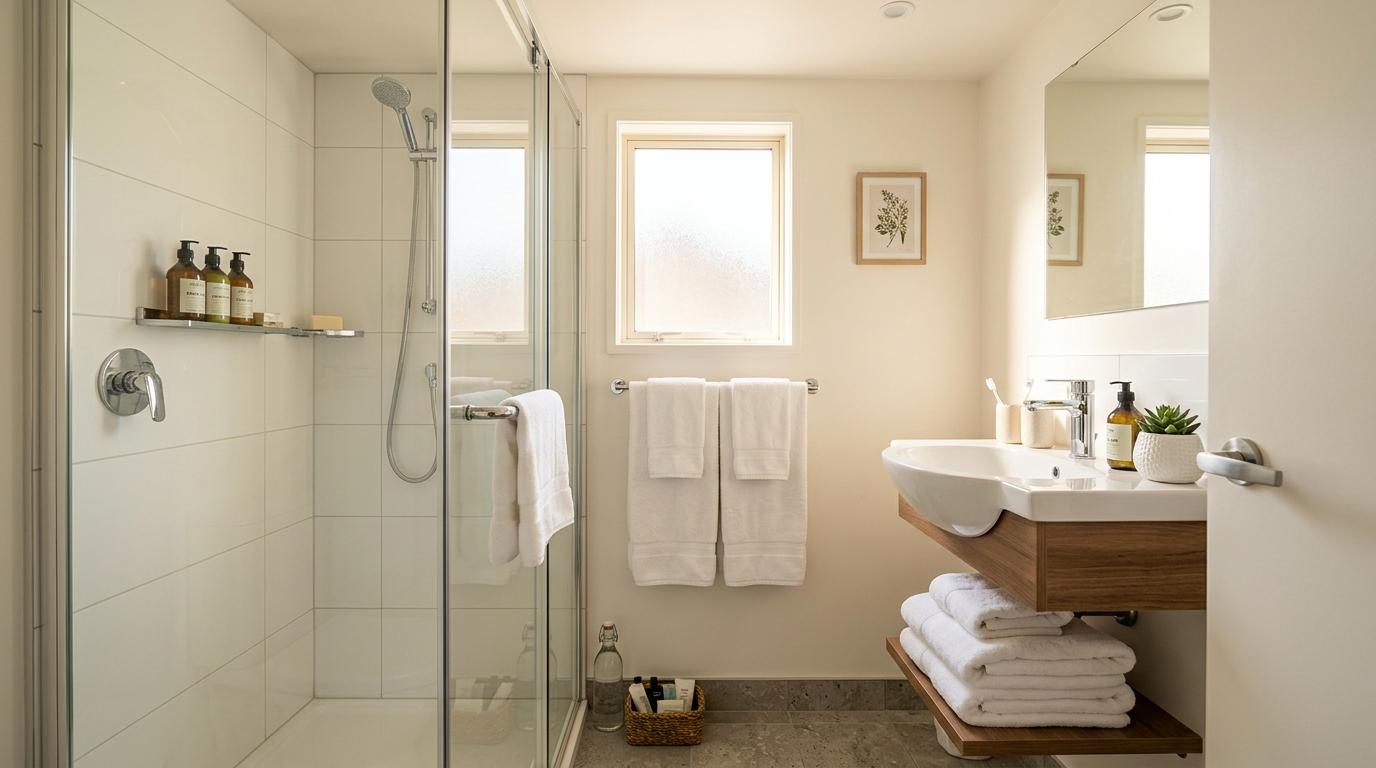
Travelers generally rate the Terminal 2 transit hotel well for convenience and cleanliness. Recent platform scores have commonly landed in the low-to-high 8s or around 9 out of 10, with location scoring especially strongly. The recurring trade-offs are just as important: small rooms, limited facilities, occasional noise, and some mentions of bathroom odor or mildew smell in reviews.
For a six- to twelve-hour overnight layover, that trade-off may be completely worth it. For a traveler expecting a full airport hotel experience with breakfast, space, and a window, it may feel too bare-bones.
Terminal 1 Transit Hotel: the notes to read carefully
The Terminal 1 transit hotel follows the same core rule: it is inside the secure area and intended for eligible international transit passengers, not travelers who have entered Korea.
Published booking information for Terminal 1 has listed check-in around 15:00 to 23:30 and check-out before 12:00, with a minimum check-in age of 19. Some listings also state no pets, no cribs, and no rollaway beds. These details can change, so treat them as items to verify before you lock in a reservation.
One extra reason to read carefully: Terminal 1 review scores have appeared lower on some platforms than Terminal 2’s. For example, Expedia has shown Terminal 1 at around 7.6/10 from over 1,000 reviews. That does not mean it is a bad choice for the right transit passenger, but it does suggest checking recent comments, room type, arrival time rules, and cancellation terms before booking.
The timing trap: 12-hour rooms and late-night arrivals
Transit hotels sound like they should work perfectly for awkward layovers, but booking systems do not always show the nuance clearly.
Standard hotel-style times may appear on booking pages — often check-in around mid-afternoon and check-out before noon. At the same time, transit hotels may sell 12-hour room blocks, and some traveler-facing information suggests these blocks can be counted from the actual check-in time when arranged or noted in advance.
That difference matters a lot if your layover looks like 00:30 to 08:00.
For late-night arrivals, exact 12-hour stays, or anything outside the posted check-in window, the safest move is to contact the hotel or booking channel before arrival. Save written confirmation showing your flight details, requested check-in time, requested check-out time, and the terminal.
It is not the most glamorous travel admin, but it is much better than reaching the transit area half-asleep and discovering the timing is not what you imagined.
Which ICN hotel choice fits your trip?
The right answer changes depending on your itinerary. At Creatrip, we would think of it less as “closest hotel” and more as “least friction.”
For a true international layover: airside transit hotel
Choose the Incheon Airport Transit Hotel when your baggage is checked through, your onward international flight leaves from the matching terminal, and you do not need to enter Korea.
This is the cleanest setup for sleep between flights. No immigration queue, no taxi or train, no early-morning return to security. The room may be small, but the time saved is real.
For separate tickets or baggage collection: landside airport hotel
If your bag needs to come off the plane at ICN, or your onward flight is on a separate booking, skip the airside transit hotel and look for a regular landside airport hotel.
This gives you access after immigration, and you can handle baggage, check-in counters, and any airline desk issues without worrying about being trapped on the wrong side of the airport process.
For Korea as your destination: landside hotel
Arriving in Korea and staying overnight before heading into Seoul or another city? You need a normal hotel, not the transit hotel.
The transit hotel is inside the international transfer area, so it is not designed for travelers who have completed arrival procedures.
For an early flight after a Korea trip: airport-area hotel
If you are already in Korea and flying out of ICN early the next morning, a landside hotel near the airport is usually the practical choice. You will still need to go through airline check-in, departure immigration, and security before your flight.
The airside transit hotel is not a shortcut for pre-departure travelers coming from Seoul or Incheon city.
For comfort, breakfast, or space: regular hotel
The airside transit hotel wins on efficiency. Regular hotels win on room comfort, facilities, and flexibility.
If you want breakfast, more space, extra bedding, a proper hotel lobby, or a less boxed-in room, it may be worth entering Korea and staying landside — as long as your layover gives you enough time.
Common booking mistakes around Incheon Airport hotels
The mistakes are easy to make because booking pages often flatten very different hotel types into one search result. A few details deserve extra attention.
Booking the wrong terminal
Terminal 1 and Terminal 2 transit hotels are separate products. If your onward flight leaves from Terminal 2, do not book Terminal 1 because it looks cheaper or has a better room type. The reverse is just as risky.
Passing immigration before going to the transit hotel
Once you enter Korea and leave the secure transit area, the airside hotel may no longer be reachable. If you booked the transit hotel, stay in the international transfer flow unless airport or airline staff tells you otherwise.
Assuming checked baggage is available
At the airside hotel, your checked bag should already be on its way to your final destination. Pack your carry-on as if you will not see checked luggage until after the next flight.
That means sleepwear or a clean shirt, essential toiletries, medication, chargers, and anything you need for the next morning.
Expecting a full-service hotel
No pool, no big room, often no window, and possibly no breakfast. The airside transit hotel is valuable because of where it is, not because it behaves like a city hotel.
Ignoring late arrival rules
For arrivals after midnight or tightly timed 12-hour stays, written confirmation is worth the small effort. Published check-in details can vary by platform and may not fit every layover neatly.

A practical pre-booking check
Before paying for an ICN transit hotel room, line up these details in one place:
- Your ICN arrival flight and terminal.
- Your ICN departure flight and terminal.
- Whether your onward boarding pass is available or can be issued airside.
- Whether checked baggage is tagged to the final destination.
- Whether you need to pass Korean immigration for any reason.
- The exact hotel terminal: Terminal 1 or Terminal 2.
- Your expected arrival time at the hotel, especially for late-night flights.
- Written confirmation for 12-hour or non-standard timing.
- Recent reviews for your room type and platform.
- The latest official airport or airline terminal information.
This list may look a little fussy, but it protects the part of travel where mistakes feel worst: late at night, after a long-haul flight, with another flight still ahead.
Small details that make the transit stay better
A transit hotel room is only as useful as the carry-on you bring into it. Since checked baggage should be traveling onward, keep the next few hours in mind when packing.
Earplugs are helpful if you are sensitive to hallway or airport noise. A fresh shirt, basic skincare, toothbrush, medication, and a charger can make the difference between “I survived the layover” and “I actually reset.” If breakfast is important, do not assume the hotel will provide it; check the latest listing and consider eating before you settle in for the night.
Also keep your boarding pass, passport, and reservation confirmation easy to reach. You are still inside an airport transit environment, and the hotel’s convenience depends on keeping documents simple.
Creatrip’s take
For the right traveler, the Incheon Airport Transit Hotel is one of the smoothest ways to handle a long ICN layover. It removes the biggest time drains — immigration, baggage, transport, and re-entering security — and gives you the rare airport luxury of a private room and shower without leaving the terminal.
But it is not a universal “hotel near Incheon Airport.” It is a very specific airside product. The room is compact, the facilities are limited, and access depends on your terminal, your baggage, and whether you remain in the international transit zone.
If your bags are checked through and your onward flight matches the terminal, the transit hotel can be a smart splurge. If you need to enter Korea, collect luggage, check in again, or simply want a more comfortable hotel stay, go landside instead.
At ICN, the best hotel is not the one that sounds closest in the search results. It is the one that matches the airport path you are actually allowed to take.