
KMI Health Checkup Review in Korea: My 3-Hour Full-Body Screening Experience
Affordable health screening in Seoul: $350 comprehensive checkup at KMI with English support, gastroscopy, ultrasound, blood tests, and same-day booking guide for foreigners

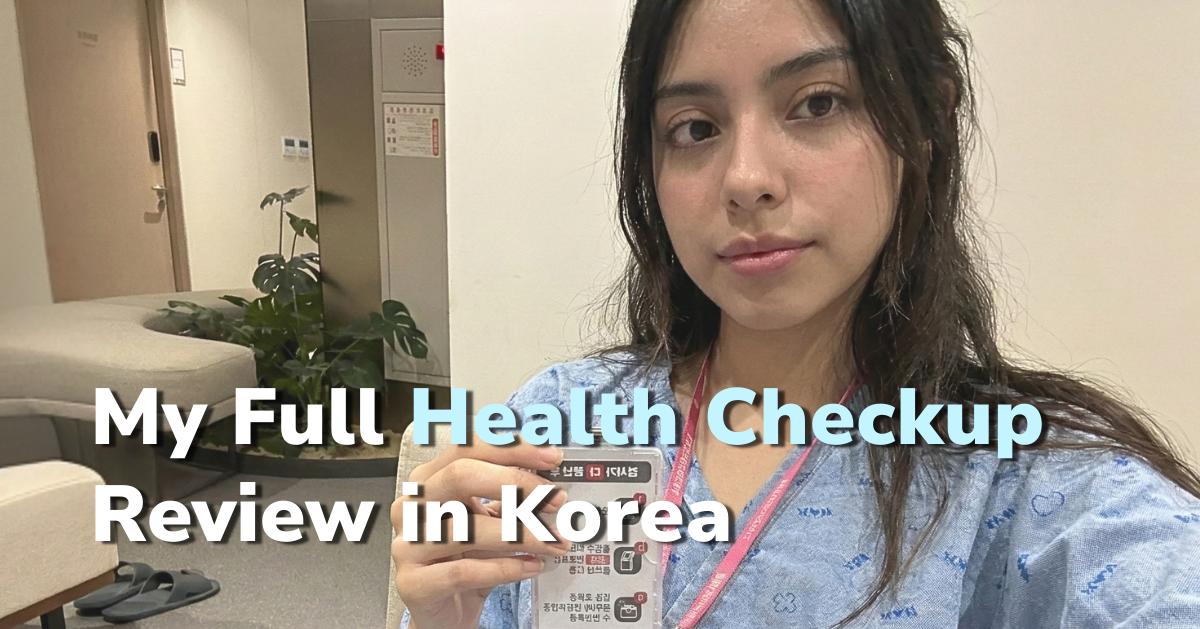
- Today’s topic: a full-body health checkup in Korea1

- 1. The reason I decided to get a full-body checkup in Korea
- 2. Why I Chose KMI for My First Screening
- 3. Essential Prep Tips for Your Health Checkup
- 4. My 3-Hour KMI Health Checkup Day + Results
- 5. How to reserve a Health checkup in Korea?
- 6. Why book KMI on Creatrip?
- 7. FAQ. What foreigners ask most about health checkups in Korea
Hi—I'm Millie, a Creatrip editor.
I only share Korean medical tourism updates that I’ve personally tried and verified.
People already know Korea has great medical tech and usually more reasonable prices than the U.S. But if you’re a foreigner, the real questions are different:
Can I get support in English
Can I actually book this easily as a non-Korean resident
If reviews are everywhere… how do I know what’s legit
That’s why I try clinics and programs myself and then pull together the info foreigners actually need, as objectively as possible.
Before you lose another weekend digging through Reddit threads and half-translated Instagram posts, I want you to have a shortcut: what I personally confirmed on the ground in Korea, so you can choose faster and with less risk.
* If there’s a hospital or clinic you want me to try (or a place you’re unsure about), email me anytime: hyeeum.kim@creatrip.com
Today’s topic: a full-body health checkup in Korea
In January 2026, I visited KMI for a comprehensive health screening in Korea.
Based on my experience, I 'll cover the following today:
- The reason I decided to get a full-body checkup in Korea
- Why I chose KMI for my first screening
- Essential prep tips for your health checkup
- My 3-hour KMI checkup day + results
- How to reserve a health checkup in Korea (as a foreigner)
- FAQ: What foreigners ask most about health screenings in Korea
If you already know you want a tourist-friendly health checkup center in Seoul, you can check available programs and reservation options here:
April promo note (April 1 ~ 30)
For April only, Creatrip bookings at KMI Gwanghwamun/Busan/Jeju come with a FREE MRI or CT add-on at no extra cost—available exclusively for Creatrip reservations.
[스팟] Korea’s Leading Health Checkup Center KMI | Exclusive Benefits Only on Creatrip
1. The reason I decided to get a full-body checkup in Korea
It had been about nine months since I started my first full-time job, and I was honestly running on fumes. I felt tired all the time and my digestion was off. At first, I didn’t even consider a health screening. I’m in my 20s, no major family history, and I assumed I was “too young” for that kind of thing.
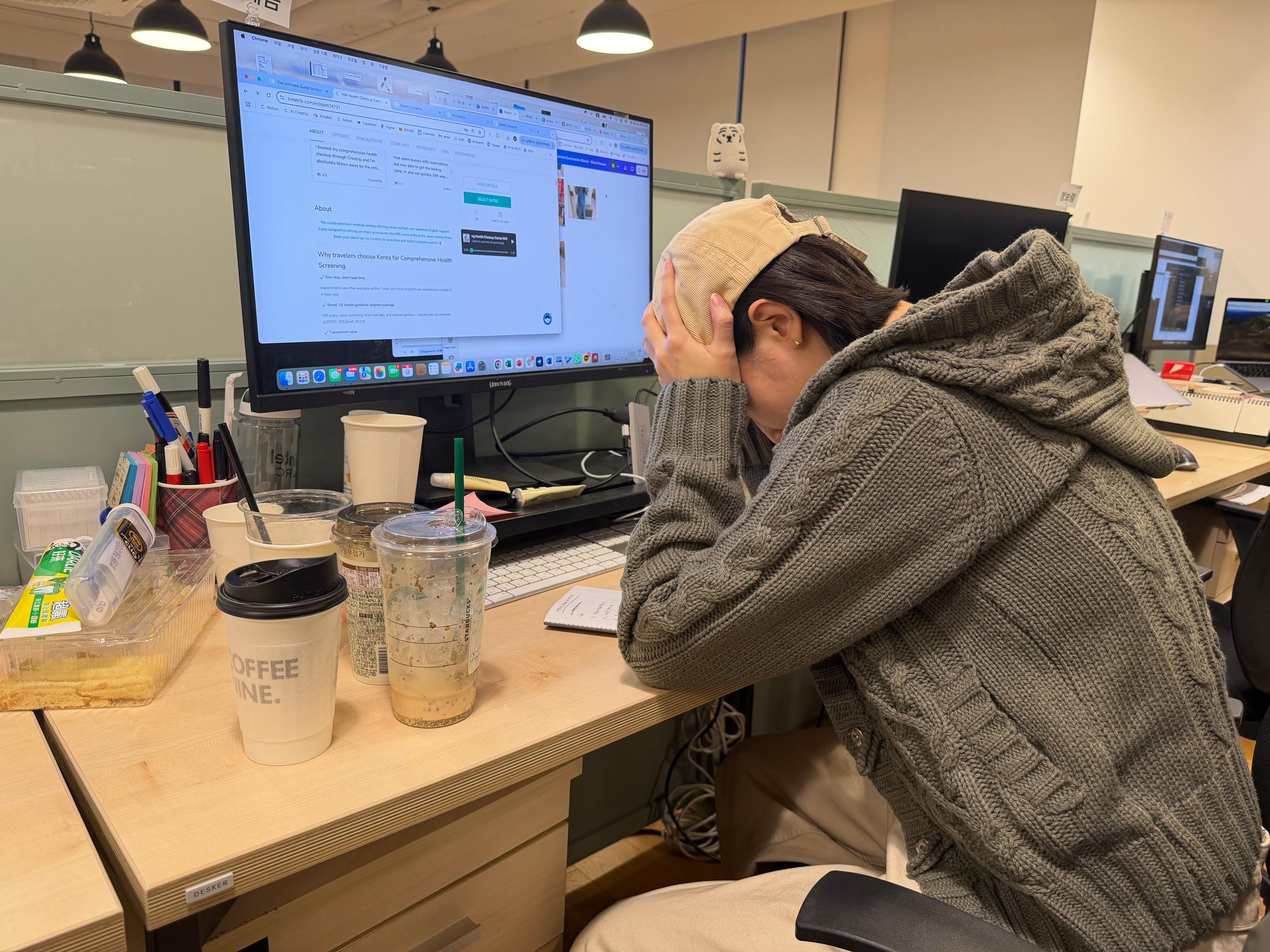
I think all the coffee at work has been upsetting my stomach.
What changed my mind? The price.
When I told my coworkers I’d been feeling exhausted and kind of “off,” they immediately said, “Just get a checkup.” I had no idea what to choose, and I expected it to be expensive—so I asked what people usually pay in Korea.
Their answers genuinely shocked me. Compared to the U.S., a lot of common tests in Korea can be 3 to 10 times cheaper depending on the exam. For example, using KMI pricing as a reference, MRI is around $300 and Colonoscopy is around $150.
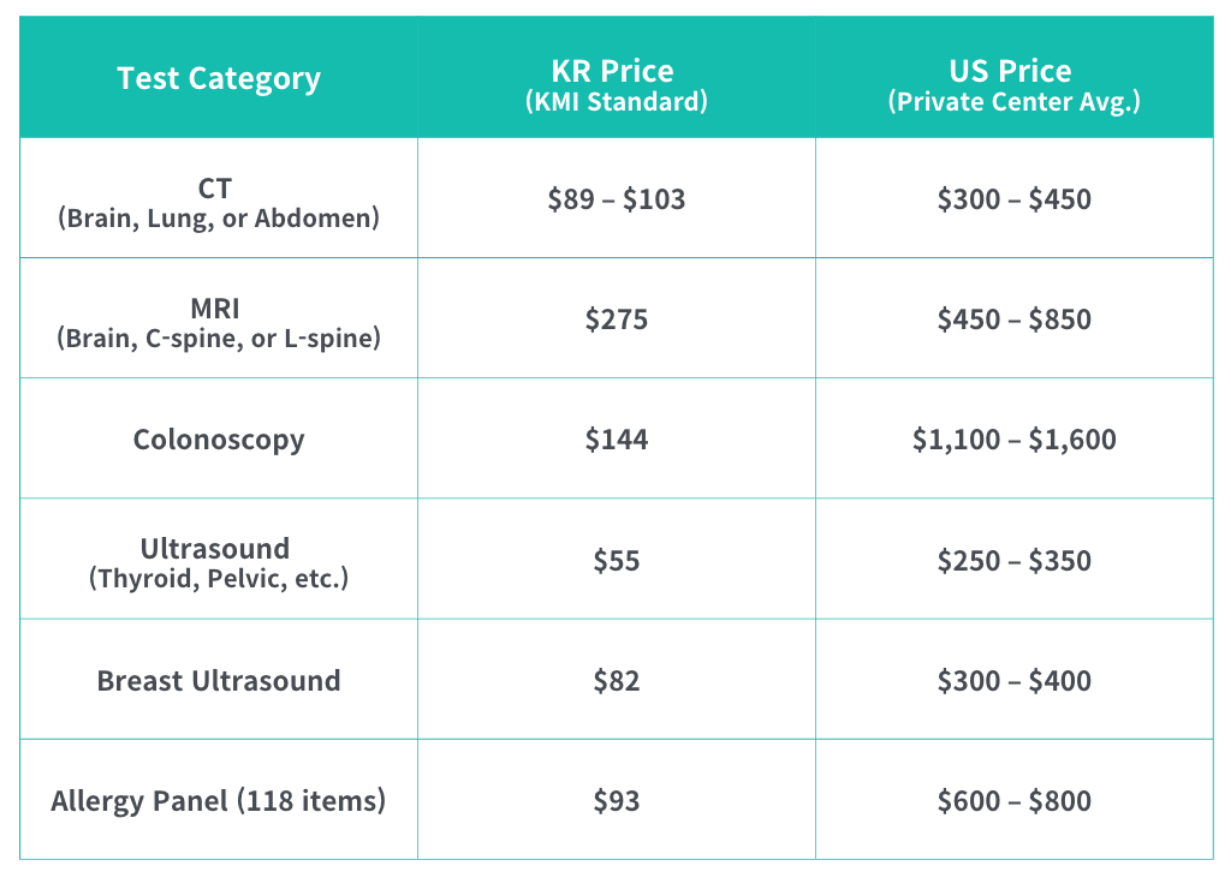
The KR price is based on KMI, a health checkup center in Korea.
In Korea, people often don’t book single tests one-by-one. Instead, comprehensive screening packages are more common. One coworker recommended a $350 full-body screening.
I originally thought I’d only do an upper endoscopy, but the full package cost was still cheaper than what an endoscopy alone can cost back home, so I decided to go for it.
What $350 covered: KMI Standard Health Checkup Package (what I received) :
Basic Tests |
|
Laboratory (Blood & Urine) |
|
Heart & Lungs |
|
Imaging & Scans |
|
Specialized Exams |
|
2. Why I Chose KMI for My First Screening
Let’s be real—when prices are that reasonable, it’s normal to wonder: “Is this actually trustworthy?”
I had the exact same concern, so I did a lot of research before booking.
Here were my top 3 criteria:
- I needed my results in English
- I wanted a place locals actually go to
- It had to be easy to reach by subway (especially if sedation is involved)
1) English Results
If anything showed up on my screening, I knew I’d want to bring the report to a doctor back in the U.S. An English report makes that possible. Before booking, I contacted KMI and asked if they could issue results in English. They shared a sample—and honestly, it was more detailed than I expected.
[이미지 슬라이더] 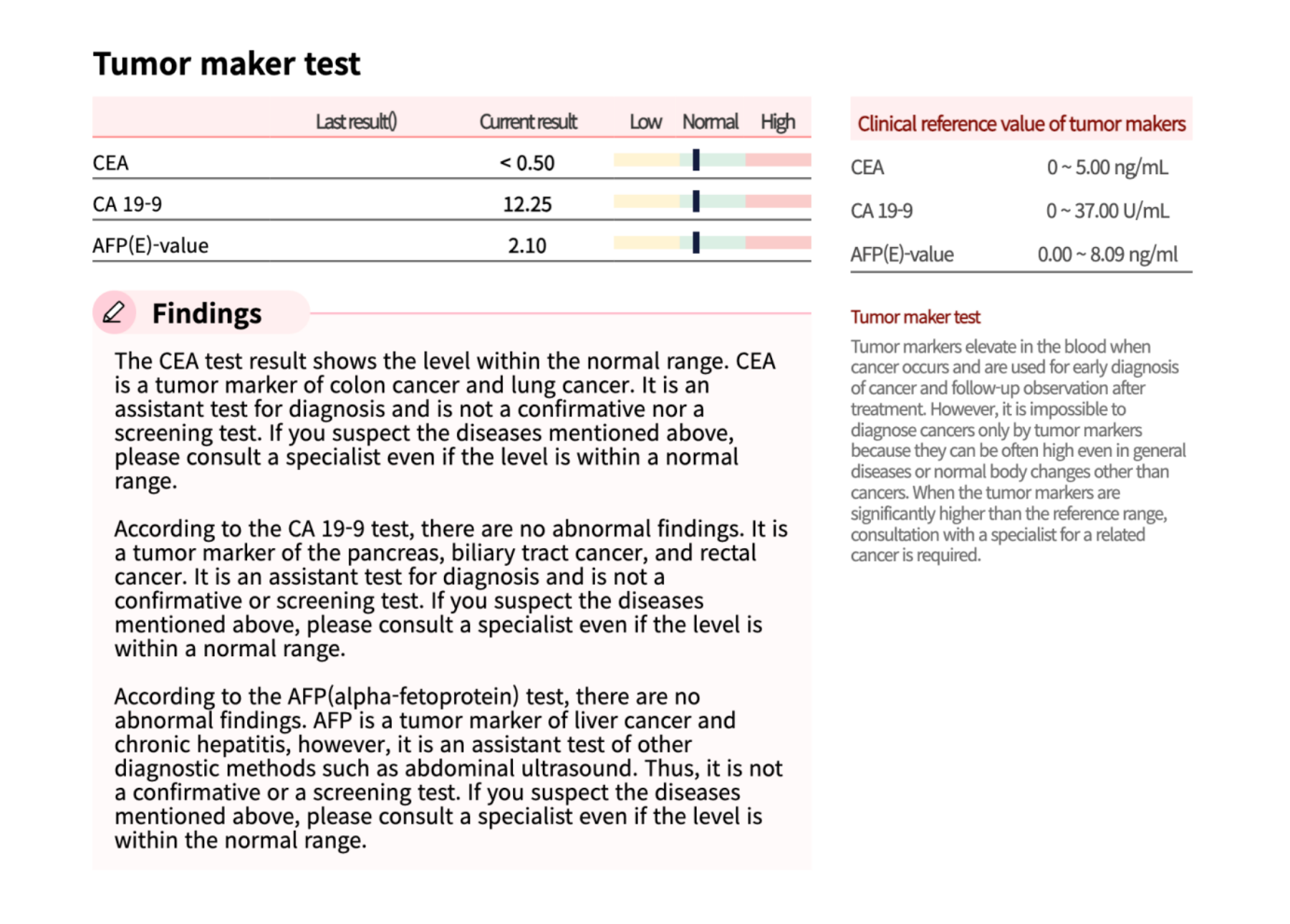
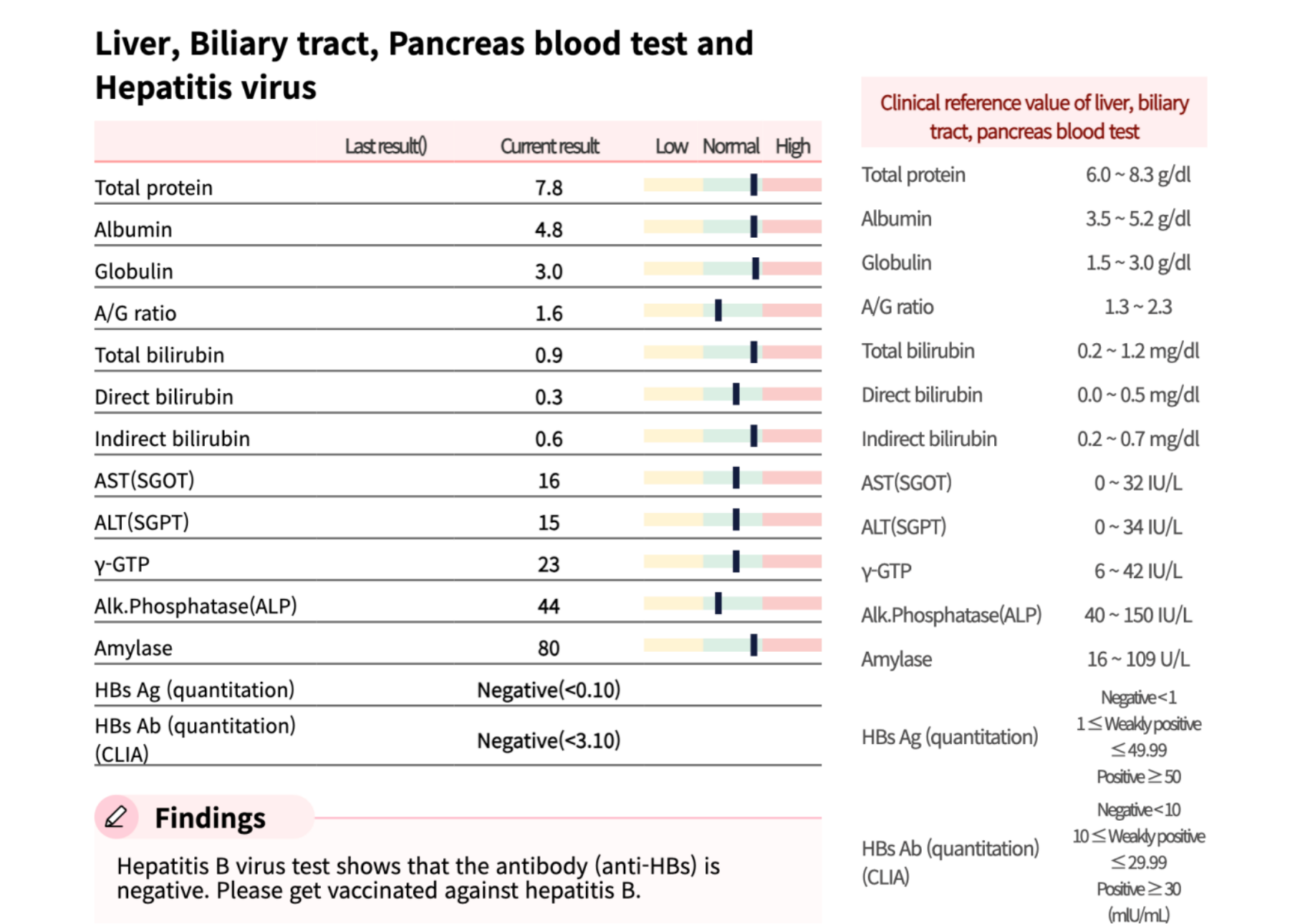
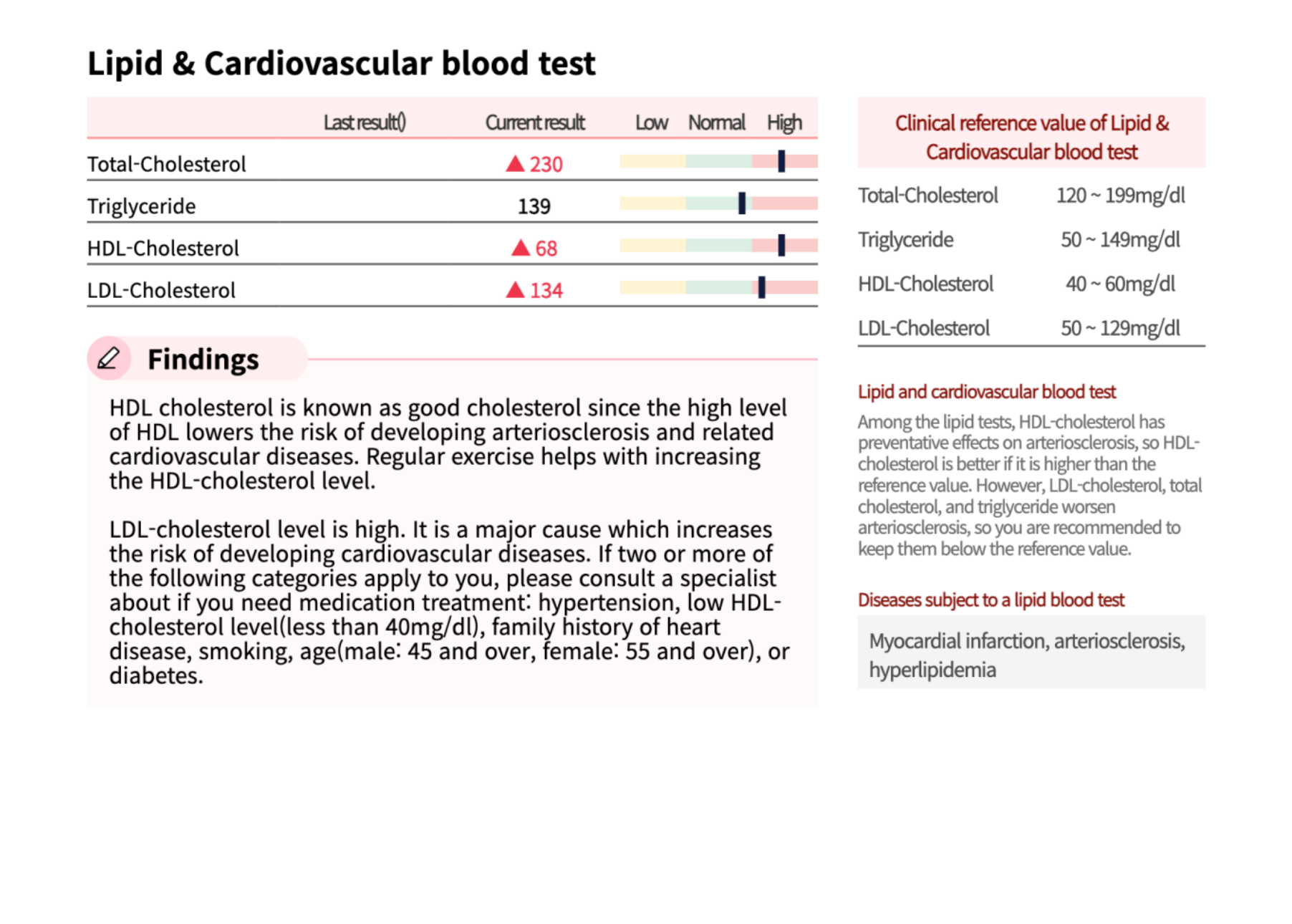
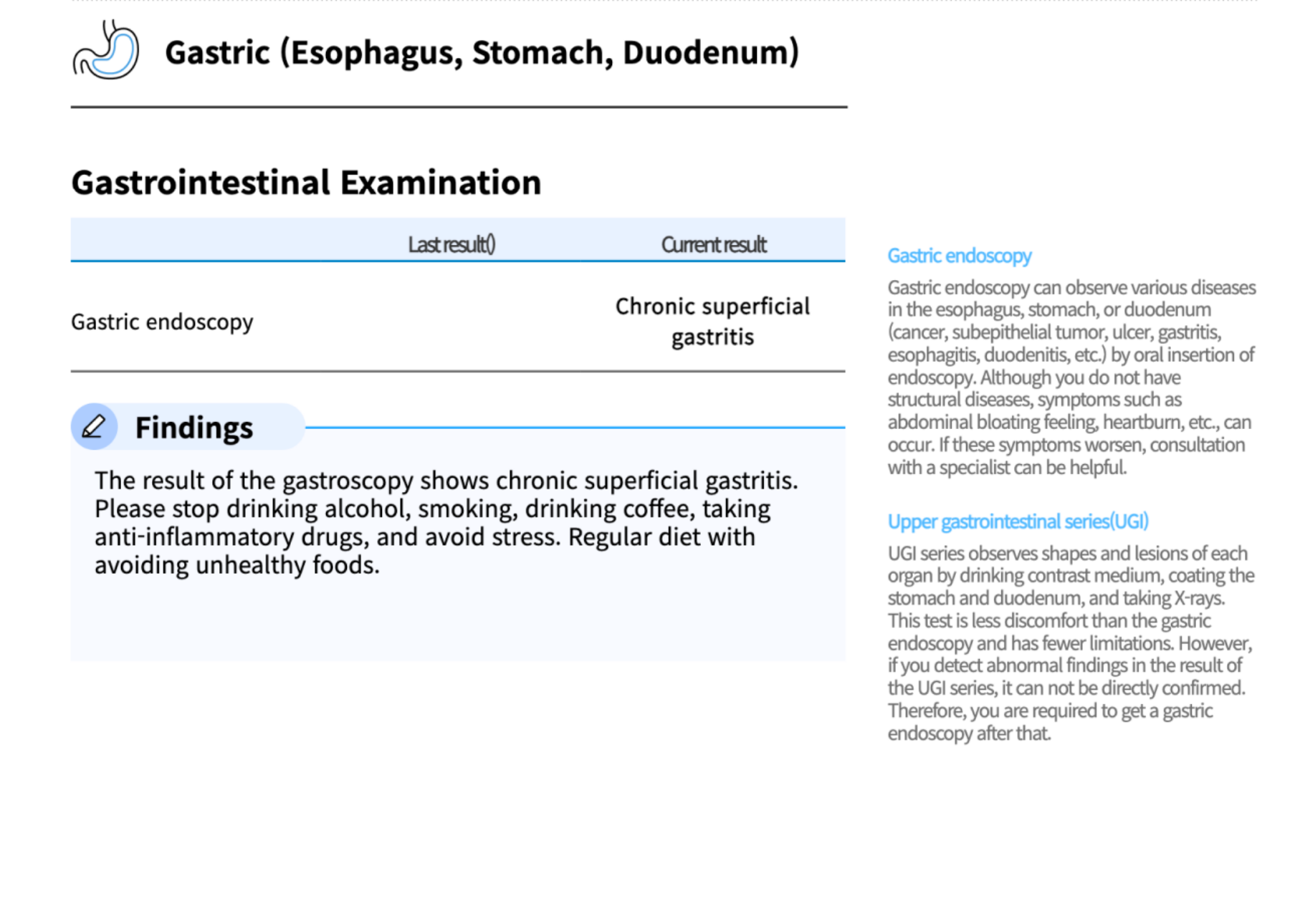
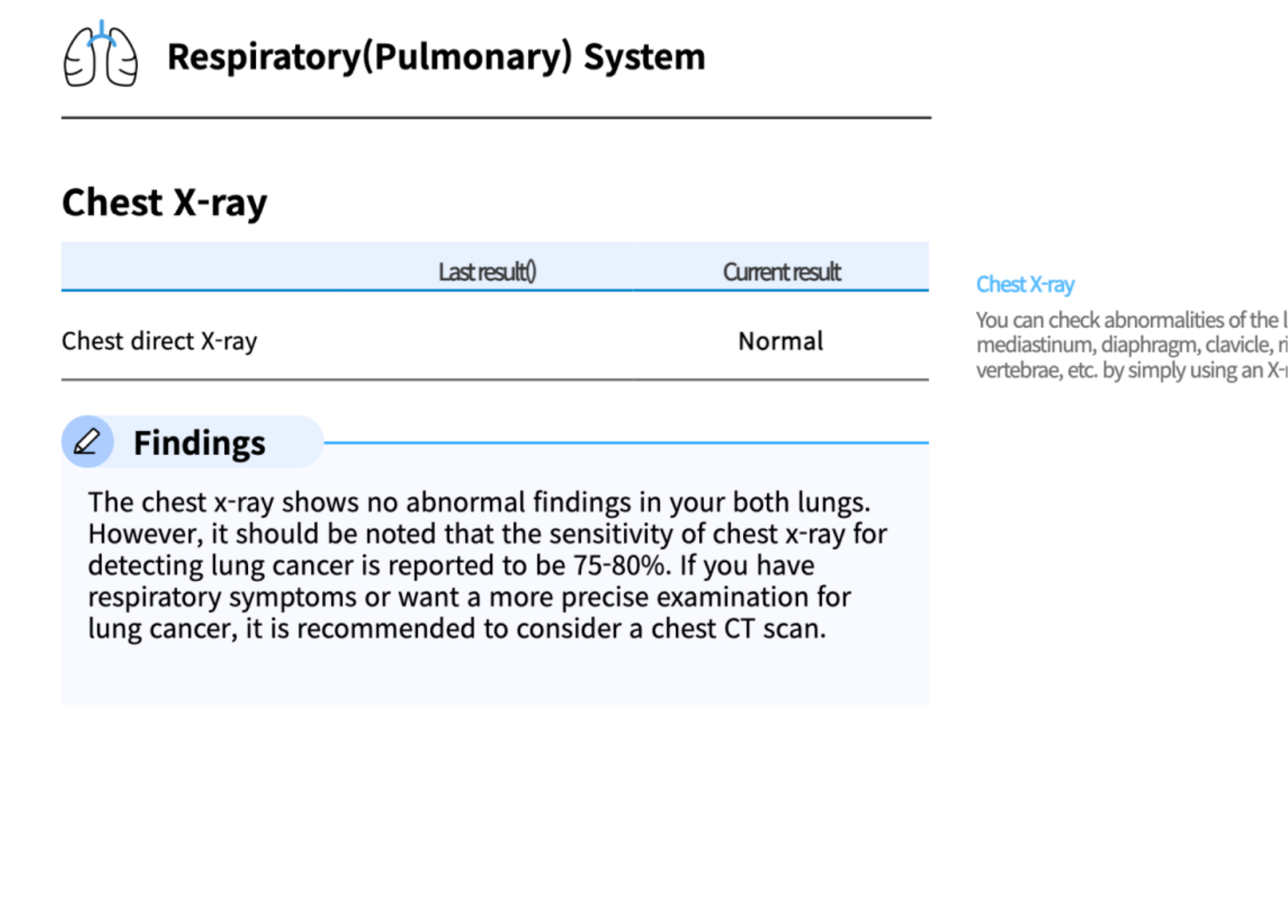 These are parts of my KMI English test results.
2) Lots of Korean locals + multiple branches
Several of my coworkers had been to KMI, which immediately made it feel less like a “tourist-only” option. When I looked into it, I learned KMI has multiple branches (around 8 locations) and a strong reputation as a major health screening center. When I visited, the majority of patients were Korean locals.
The facility was clean, and the entire testing system was extremely efficient—like, you can tell it’s optimized for people who just want to get in, get it done, and get results.
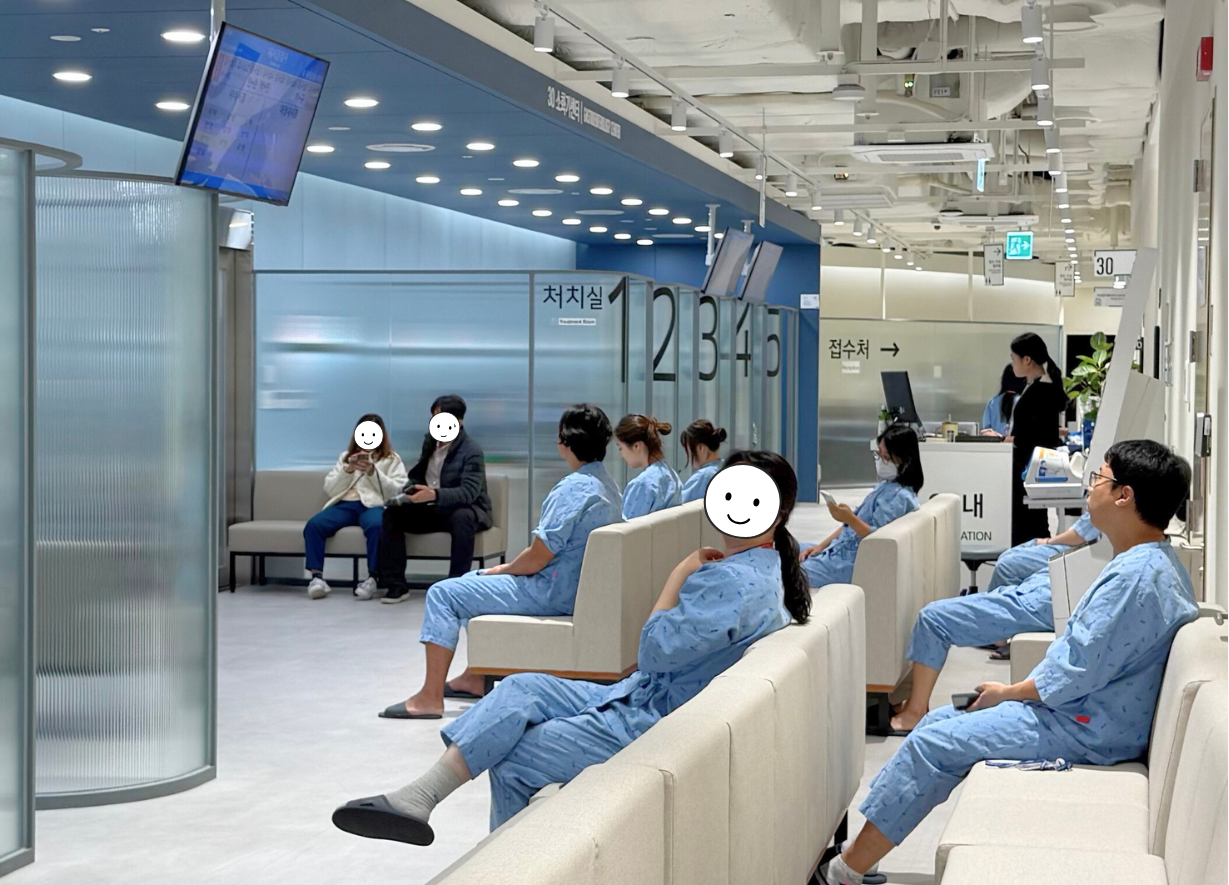 I was worried because the endoscopy line looked long, but I got in within 10 minutes.
3) Subway access (important if you’re going alone)
I chose KMI Gwanghwamun because it’s right by the station. If you do sedation for an endoscopy, you shouldn’t drive afterward—and I didn’t have family in Korea to pick me up. At the Gwanghwamun Center, if you exit Gwanghwamun Station Exit 6, you can basically see the KMI sign immediately.
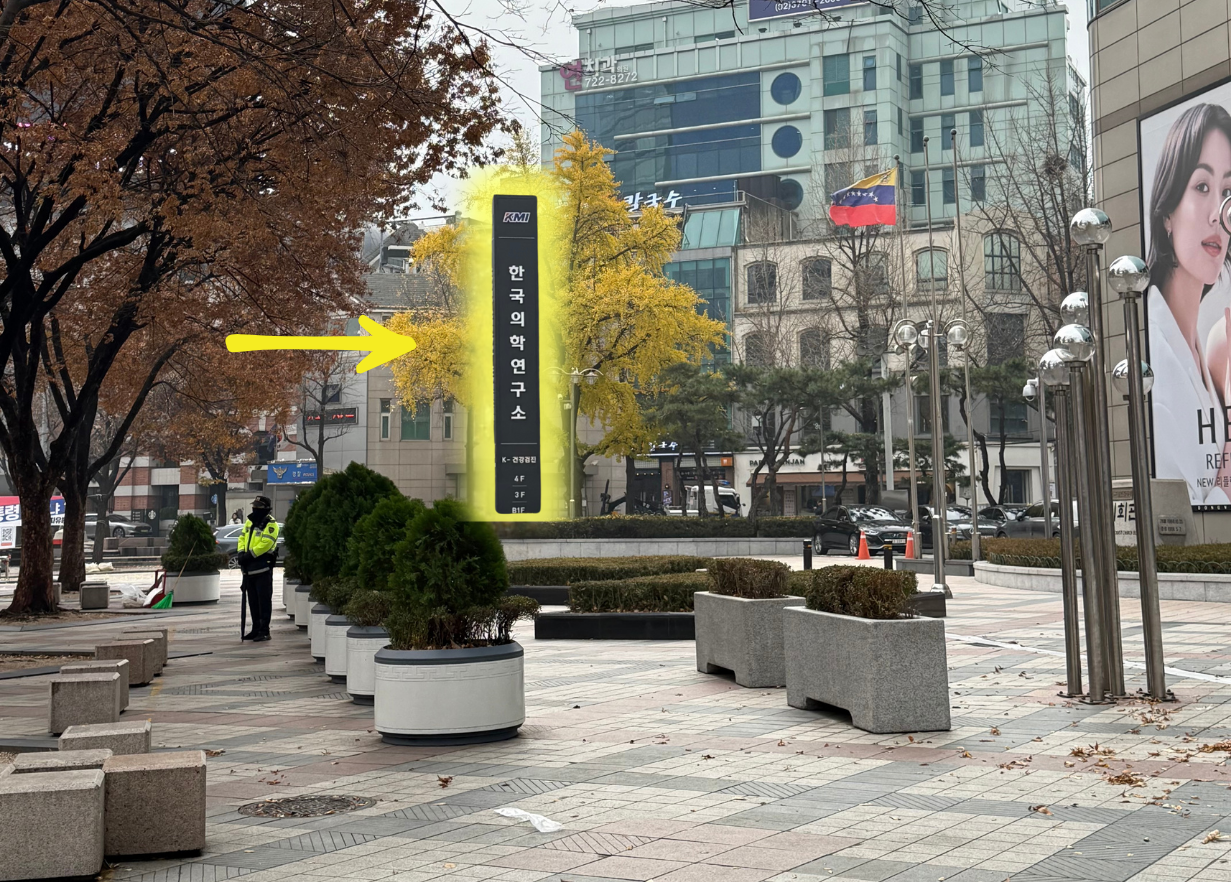 When I came out of Exit 6 at Gwanghwamun Station, I could see the KMI sign right away.
3. Essential Prep Tips for Your Health Checkup
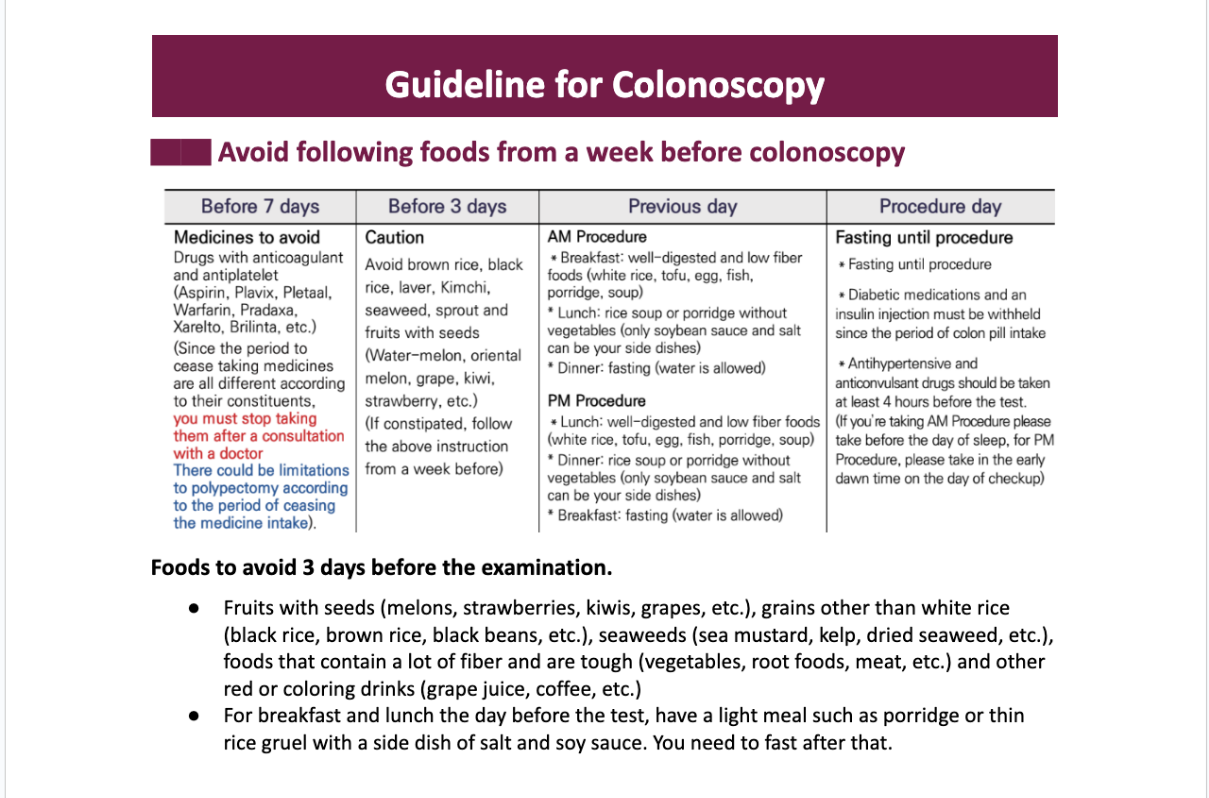
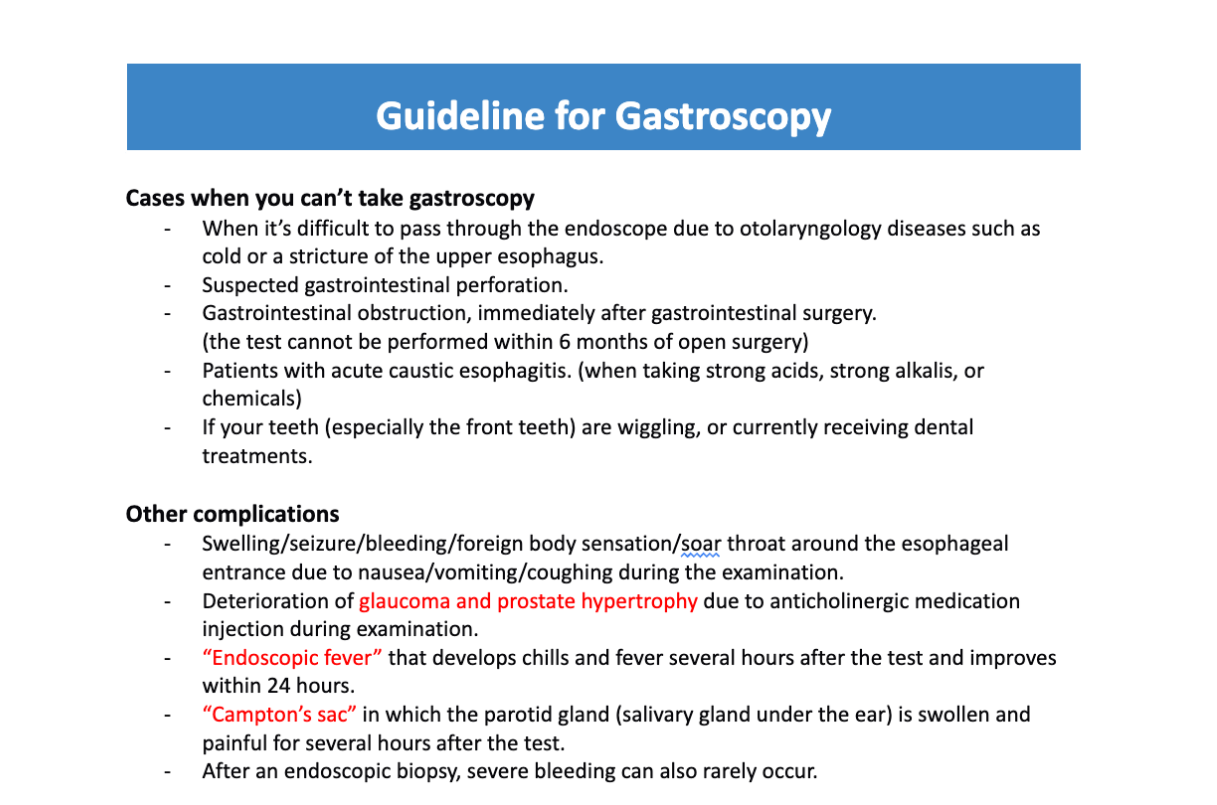
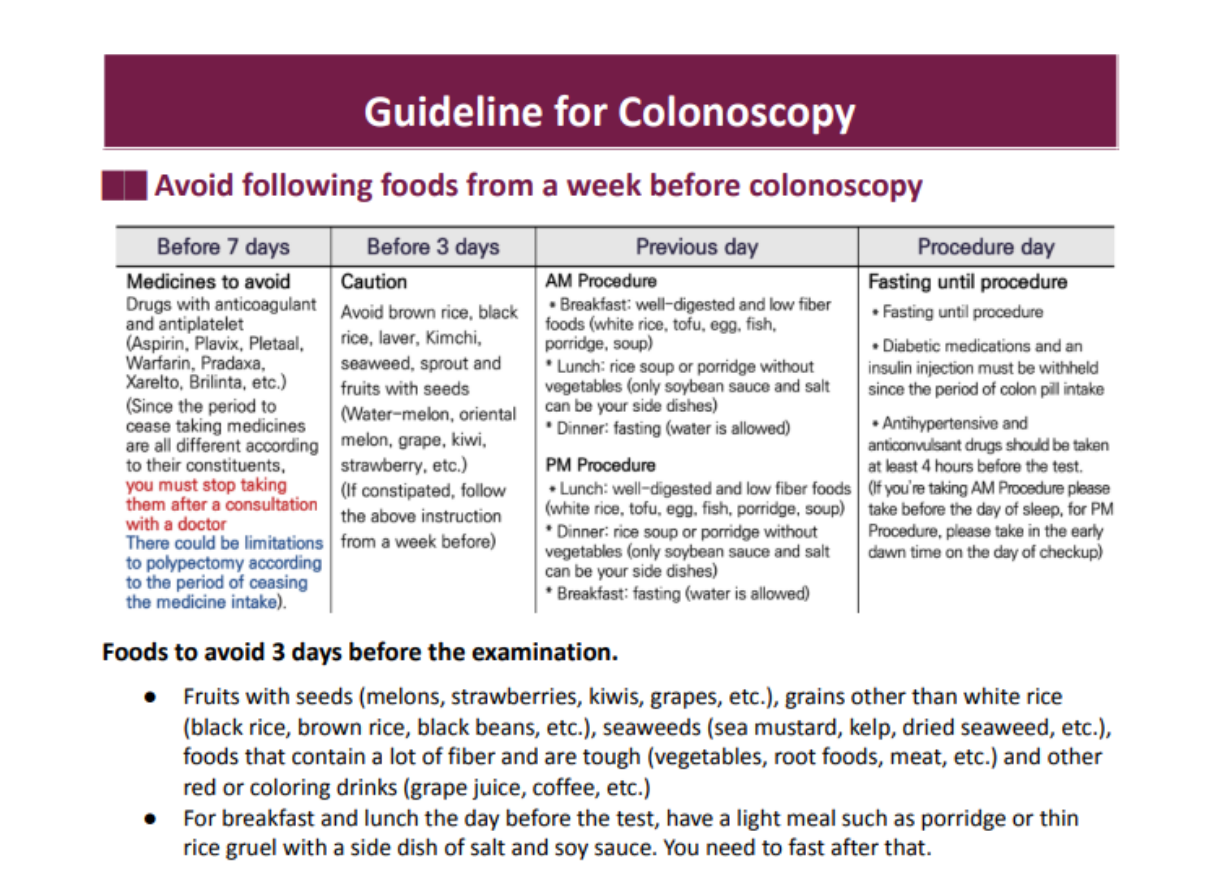
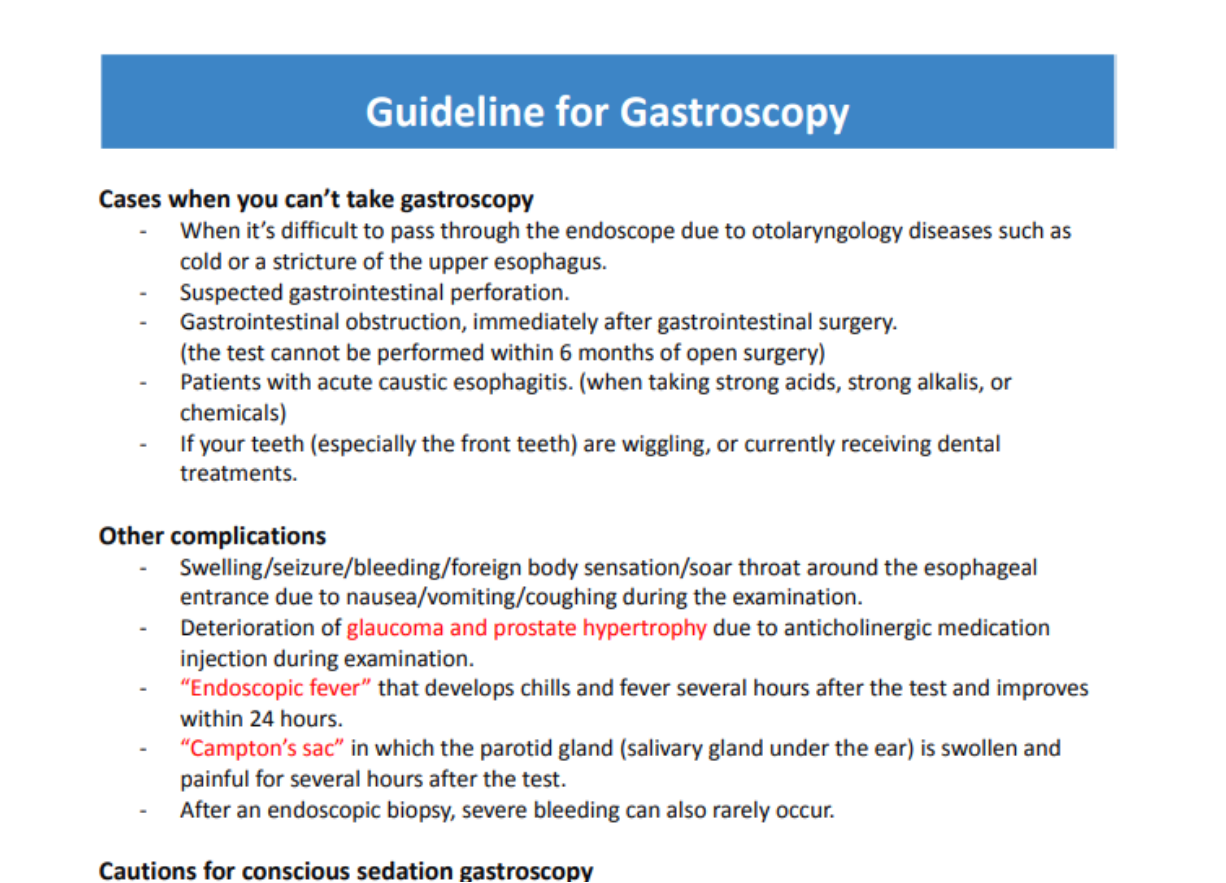
If your program includes exams like gastroscopy (upper endoscopy) or colonoscopy, prep matters more than people expect. My package included gastroscopy, so I had to follow diet restrictions the day before.
*Fasting rule:
- From 8 hours before the exam: no food and no water
- The day before: avoid things like water (during fasting window), gum, candy, cigarettes, colored beverages, and dairy products
For me, the hardest part was honestly skipping coffee because of a habit. Just be extra careful not to accidentally drink coffee the day before!
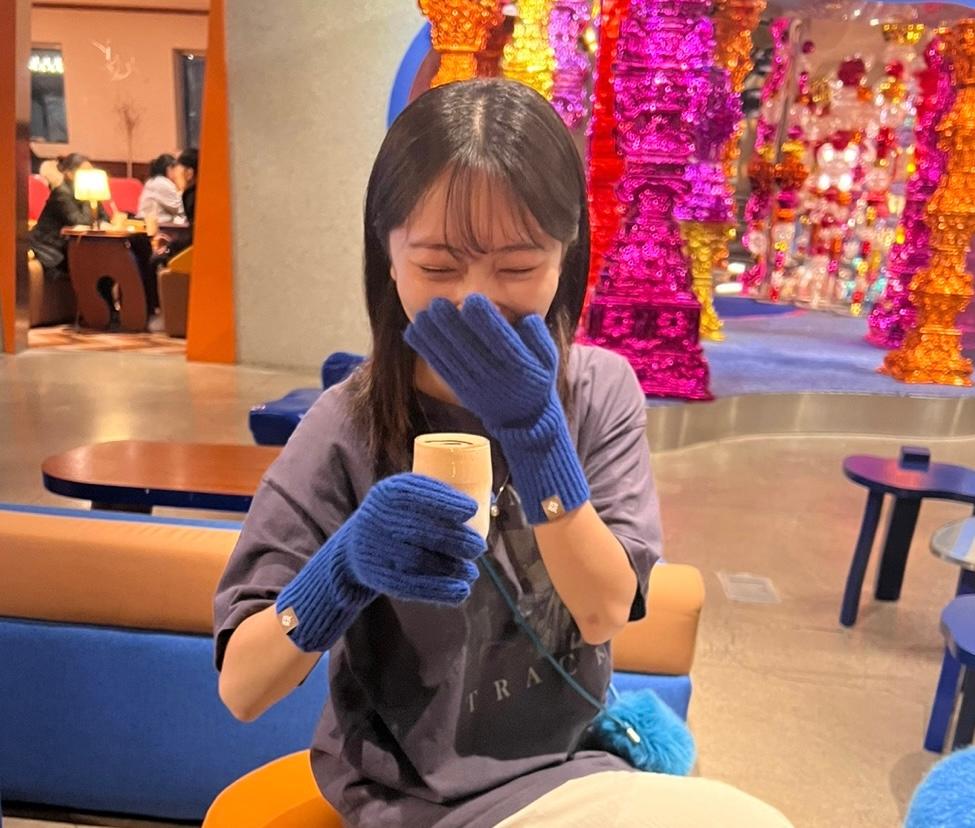
Try not to accidentally drink coffee out of habit the day before your checkup.
There are a few other things to keep in mind—I'll quickly go over them.
* for Women
- Women’s urine tests and gynecological exams are usually possible 7 days after your period ends.
- If you are pregnant (or might be) or currently breastfeeding, some tests may not be allowed (X-ray, endoscopy with sedation, radiation-based exams, etc.). Please confirm with the center.
* Medication
- If you take daily medication, ask your doctor about what to do on exam day. When you book, you can also list your medications so the clinic can advise you properly.
Health checkup prep can feel surprisingly complicated, so please actually read the instructions carefully. Because I found KMI so foreigner-friendly, I worked with my team to bring it onto Creatrip and I created a guide specifically for foreigners.
* If you book through Creatrip, you’ll receive my foreigner-focused KMI guideline.
I’ll share a small preview below:
[이미지 슬라이더] 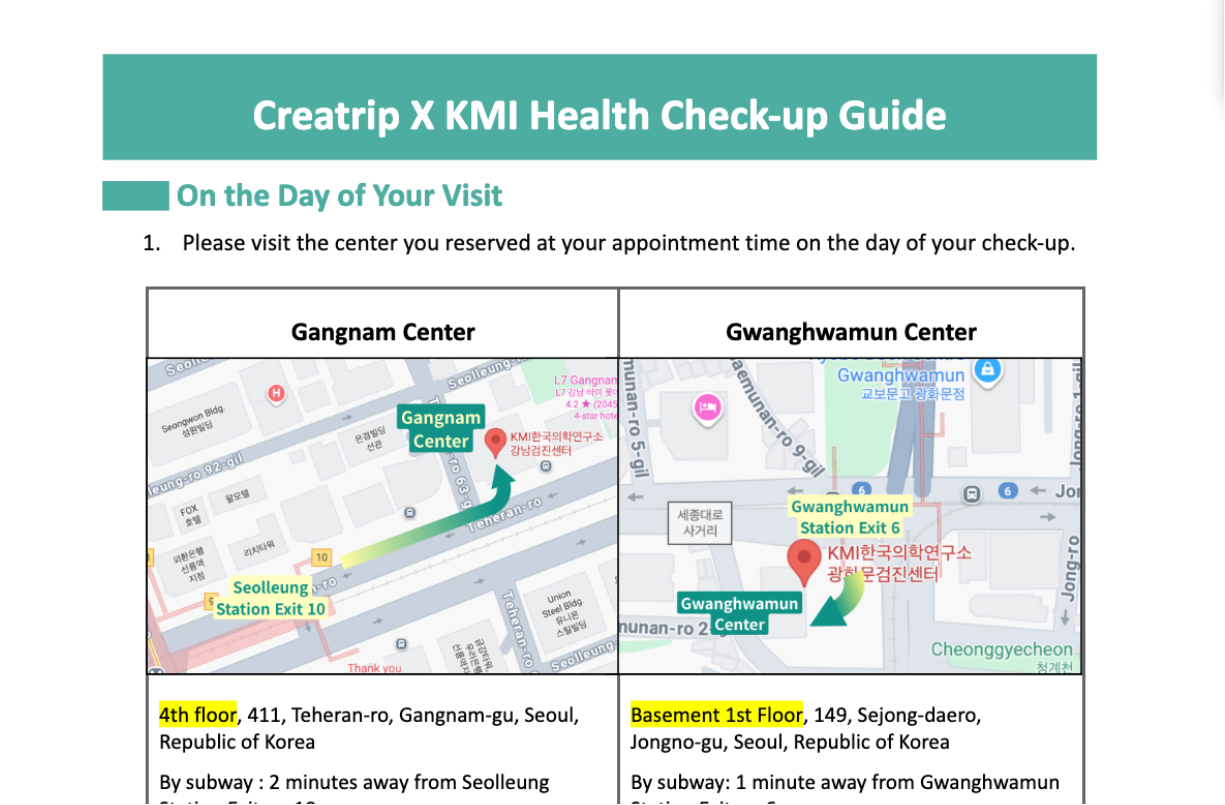
4. My 3-Hour KMI Health Checkup Day + Results
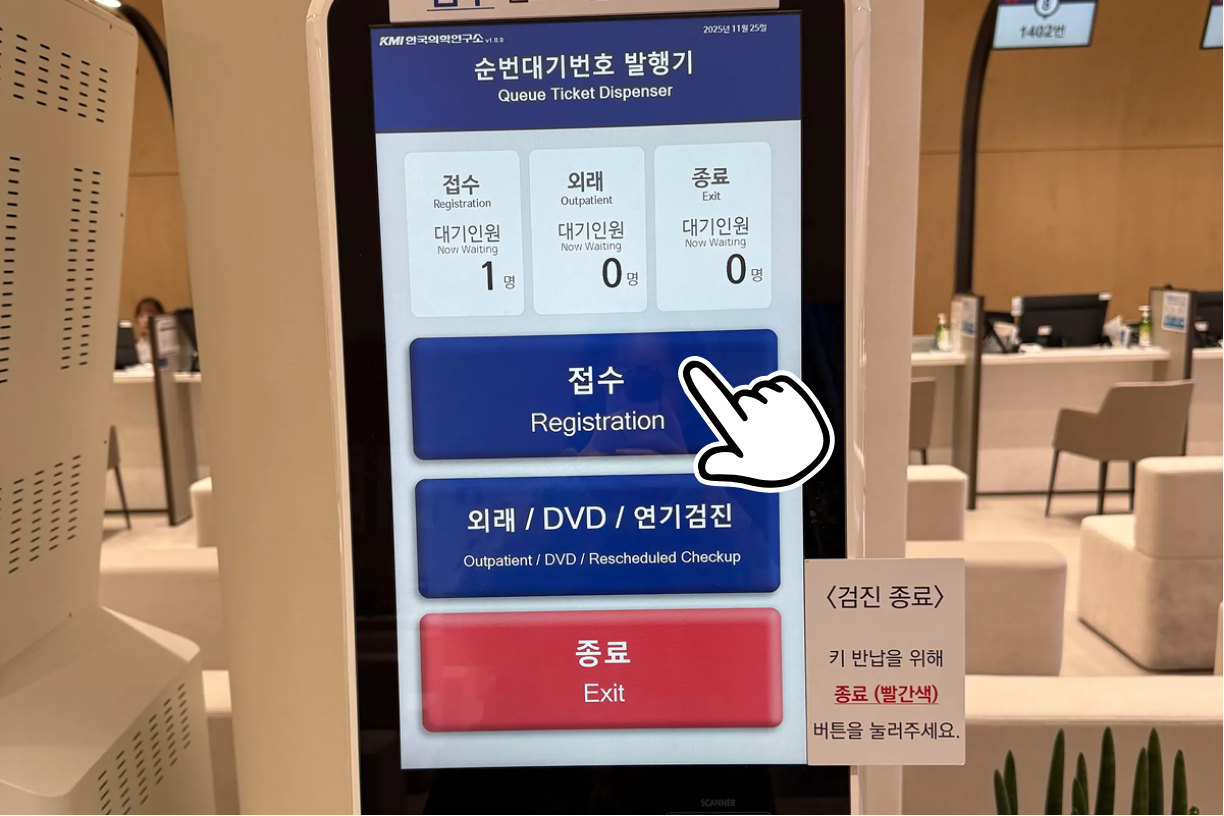
When I arrived at the Gwanghwamun Center, I went straight to the kiosk and tapped the "Registration" button to get a number. Once my number showed up over the reception desk, the staff checked my passport, explained the process clearly, and handed me a locker key and a pink RFID necklace tag. This tag is super important—you’ll tap it at every test station so the system knows who you are and what you've completed.
[이미지 슬라이더] 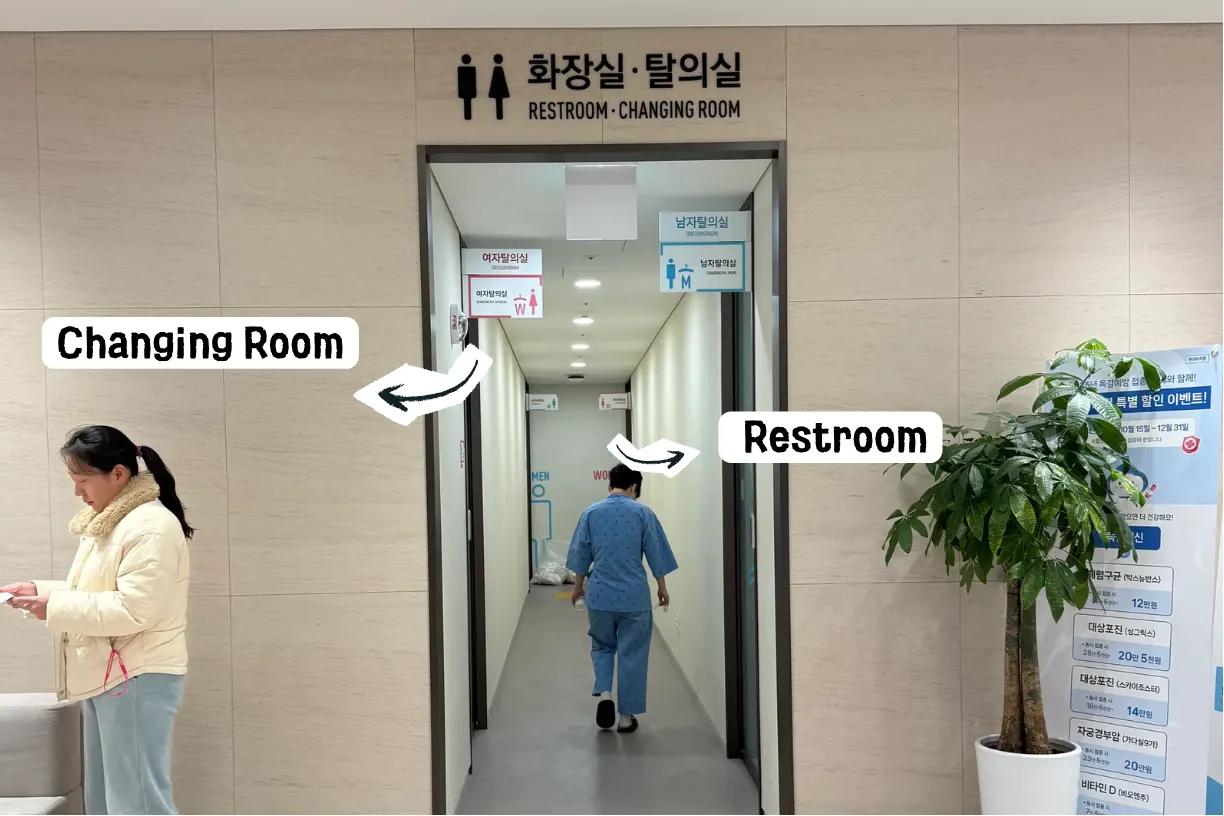
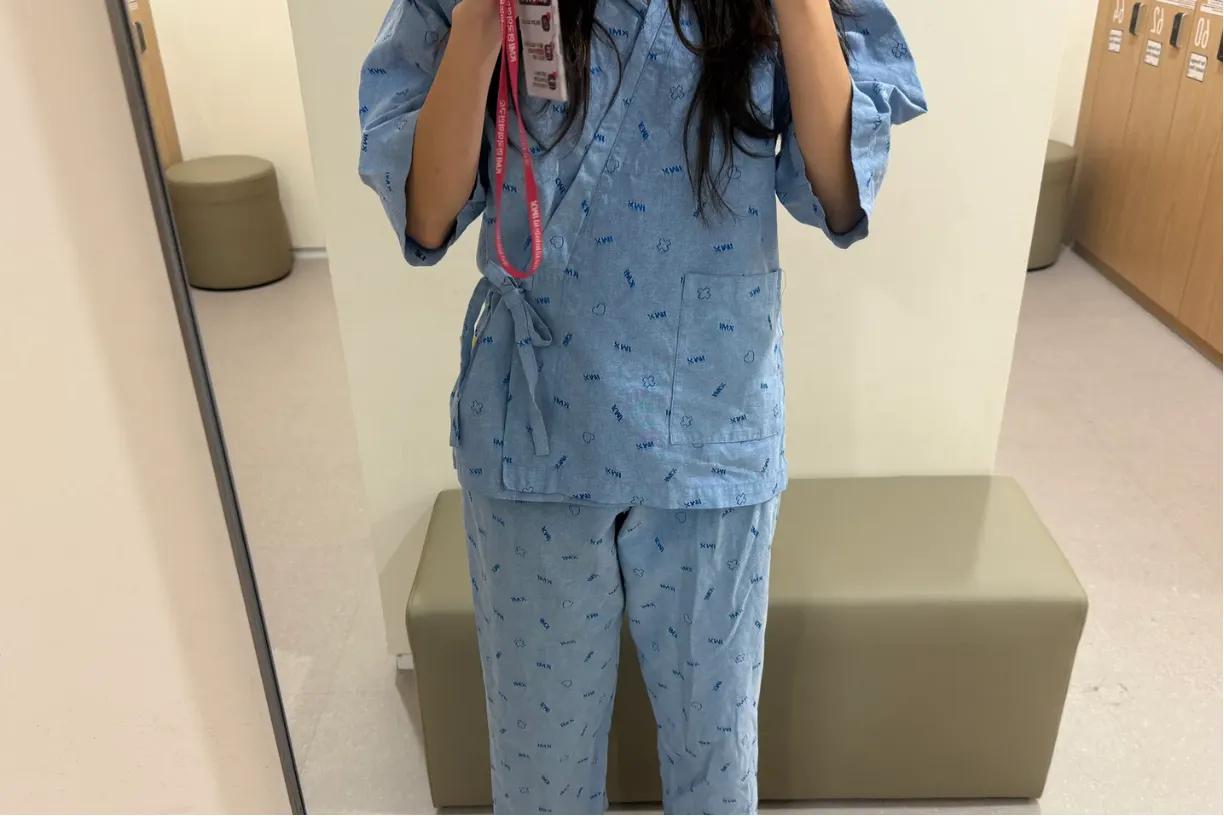
The changing rooms and restrooms are in the same area. I found the locker matching my key number on my key, then changed into the gown and slippers.
*Tip: Leave your necklaces and earrings in the locker. You’ll have to take them off for imaging tests anyway, and it's just easier.
[이미지 슬라이더] 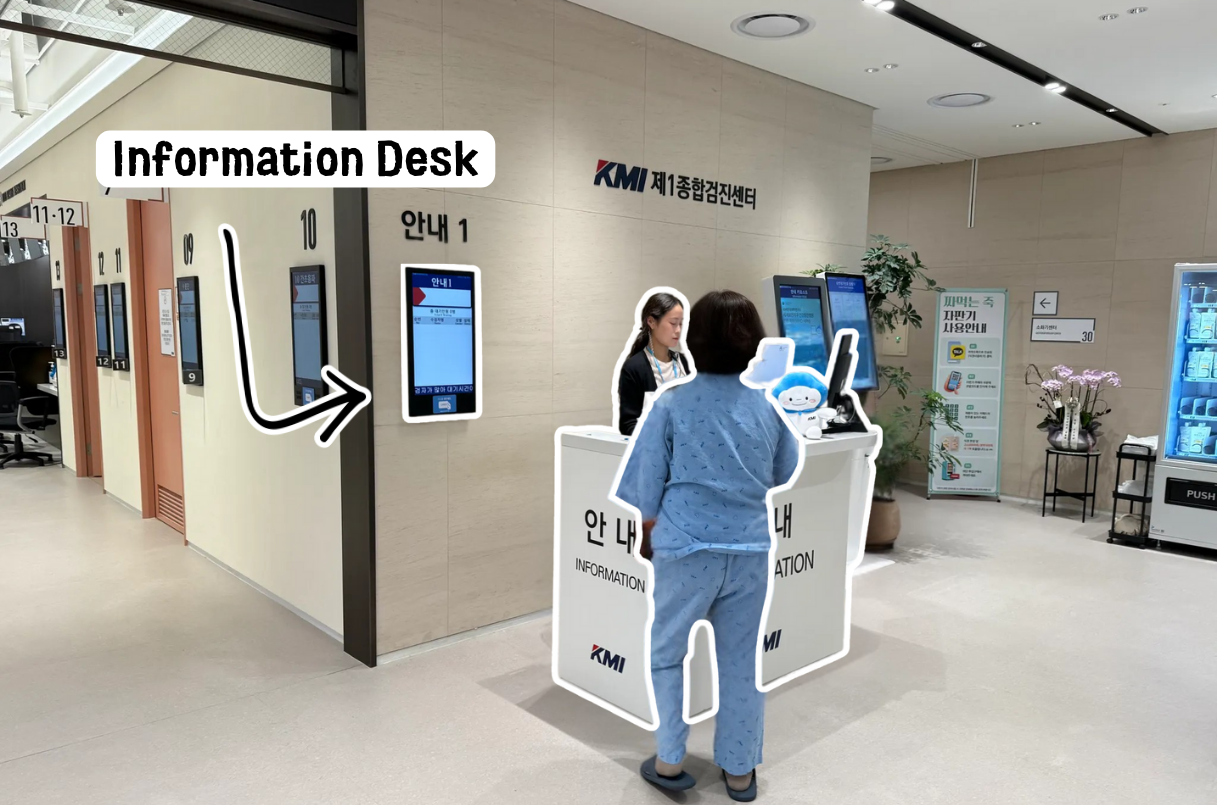
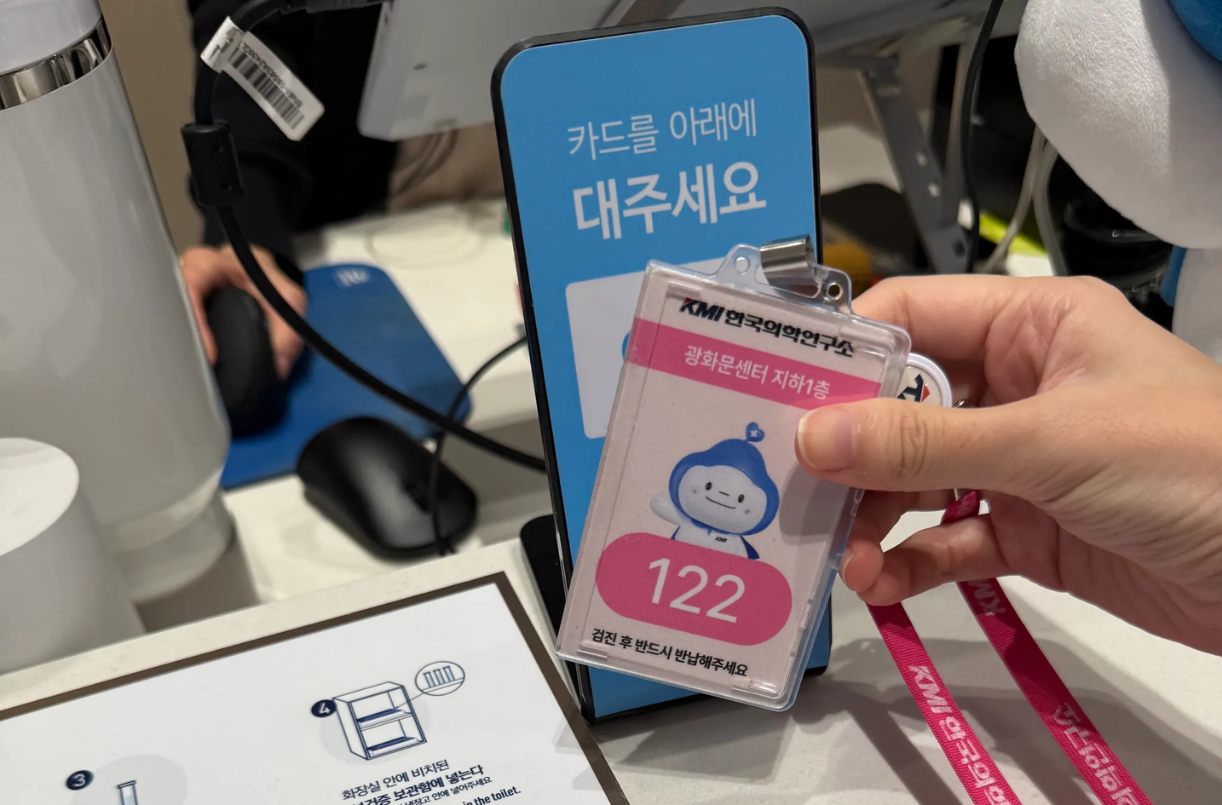
After changing, I went to the information desk and tapped my pink RFID tag on a reader to log into the system. They told me which room to go to first. Every room was clearly numbered, so it was honestly hard to get lost.
[이미지 슬라이더] 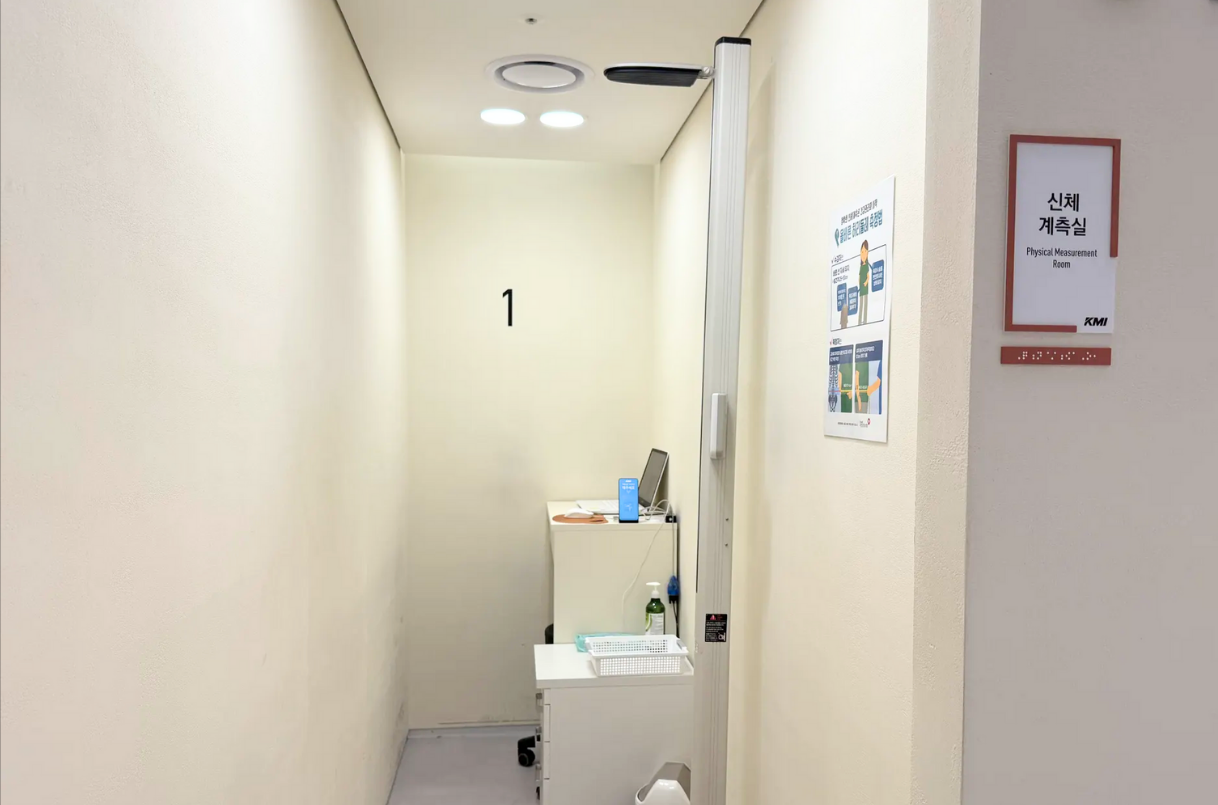
I started with physical measurements and a vision test. (I had LASIK five years ago, and my vision is still surprisingly great.) After each test, the staff or doctor would tell me exactly where to go next.
[이미지 슬라이더] 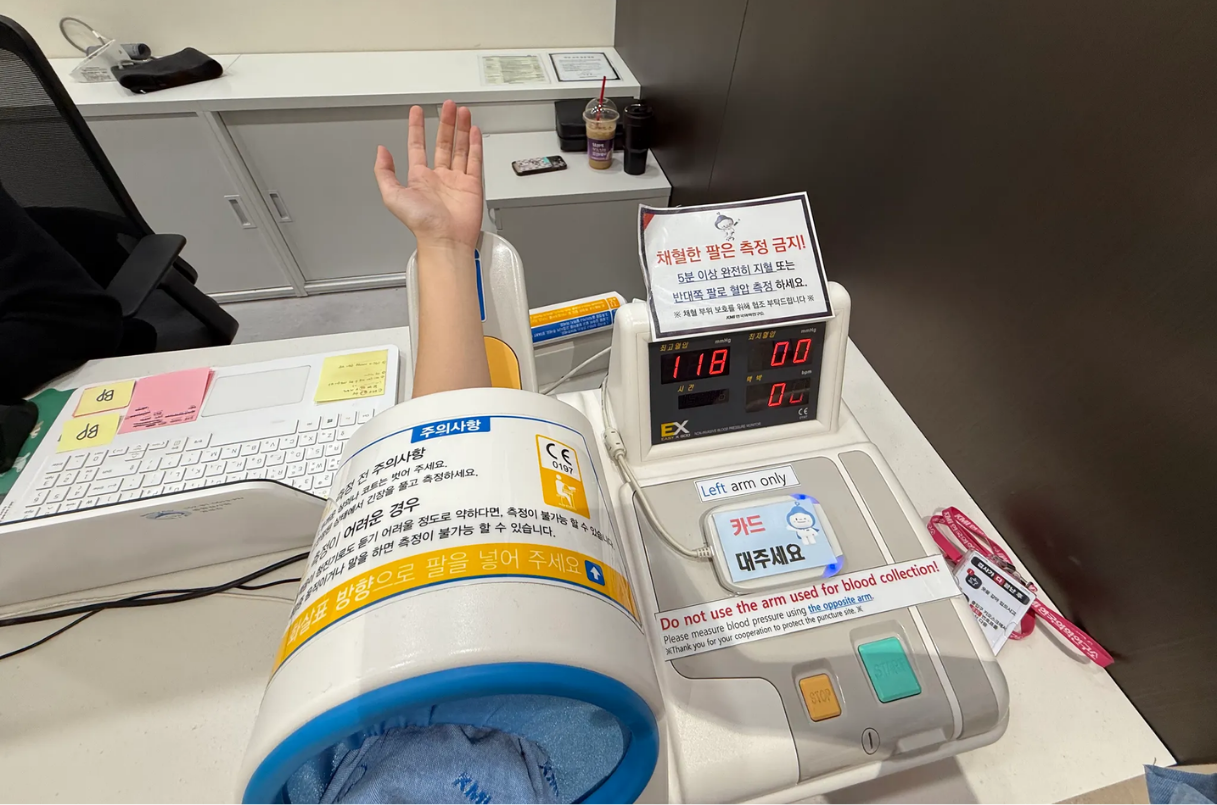
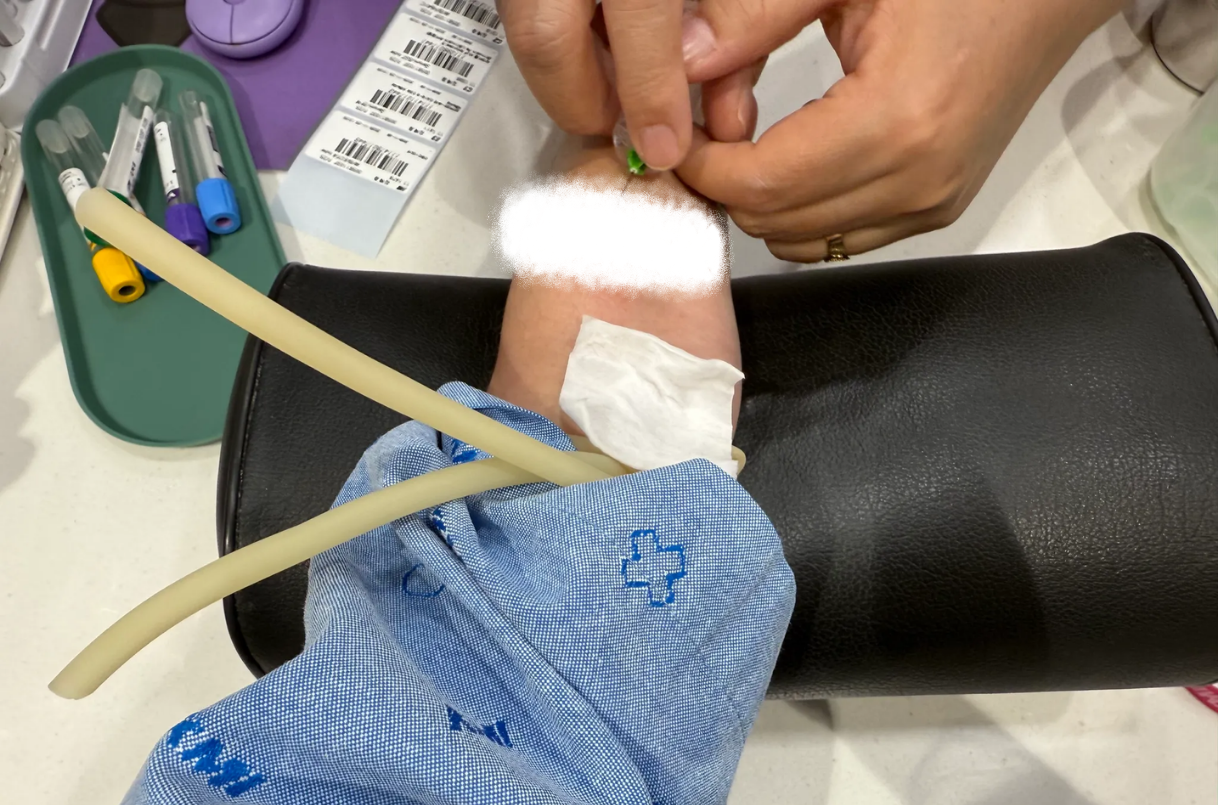
Room 13 is for Blood Pressure, and right next to it is the blood collection area. Since the Standard Program covers a lot, they drew about five vials of blood.
* Blood Test Items included:
- liver and pancreas function
- hepatitis B screening
- cholesterol/lipids + diabetes markers
- kidney function + uric acid (gout risk)
- iron/anemia panel + CBC
- thyroid function
- tumor markers (AFP, CEA)
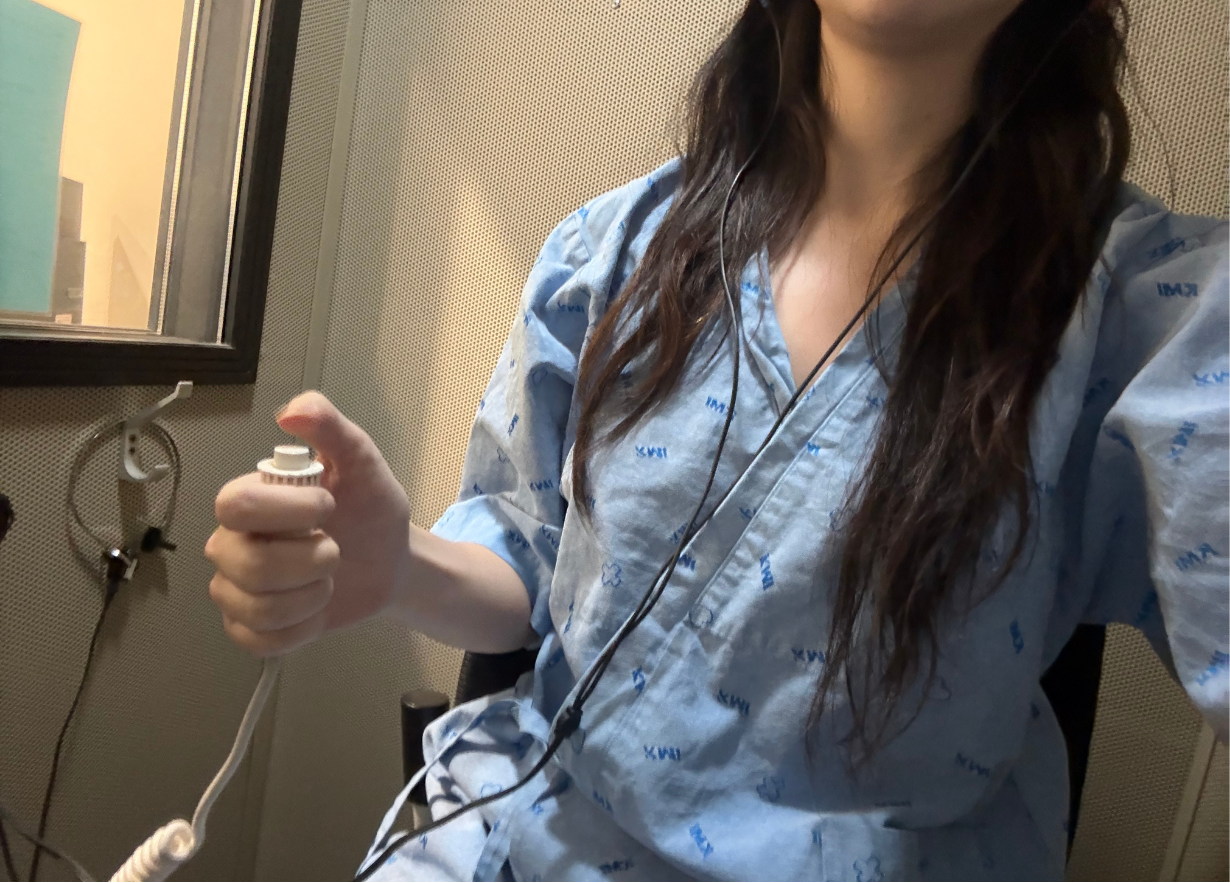
The hearing test was in a small booth - press a button when you hear a beep.
[이미지 슬라이더] 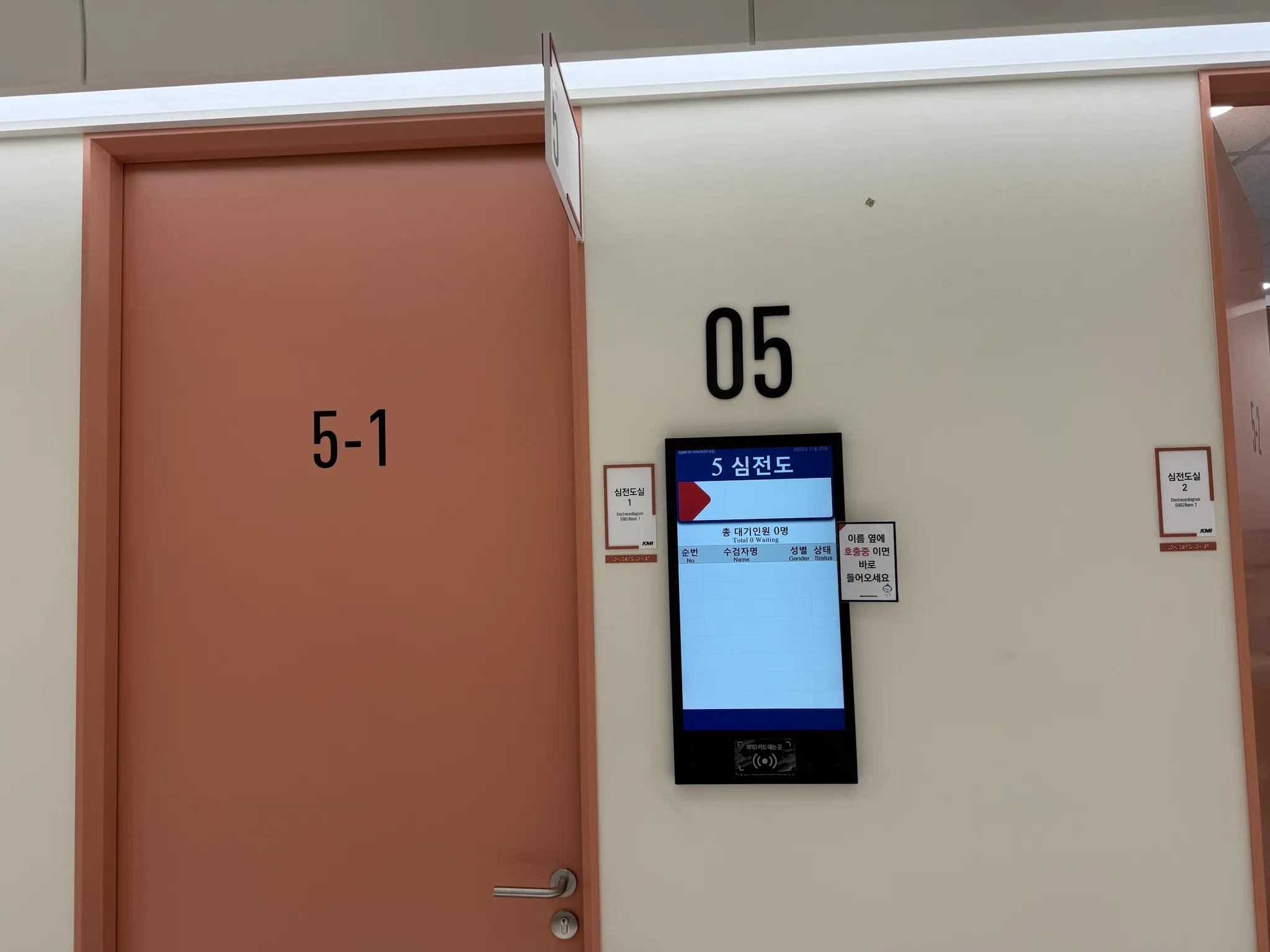
Then I did an Electrocardiogram (ECG) in Room 5. I personally skipped the bone density test because of my age, though it's included in the standard program.
[이미지 슬라이더] 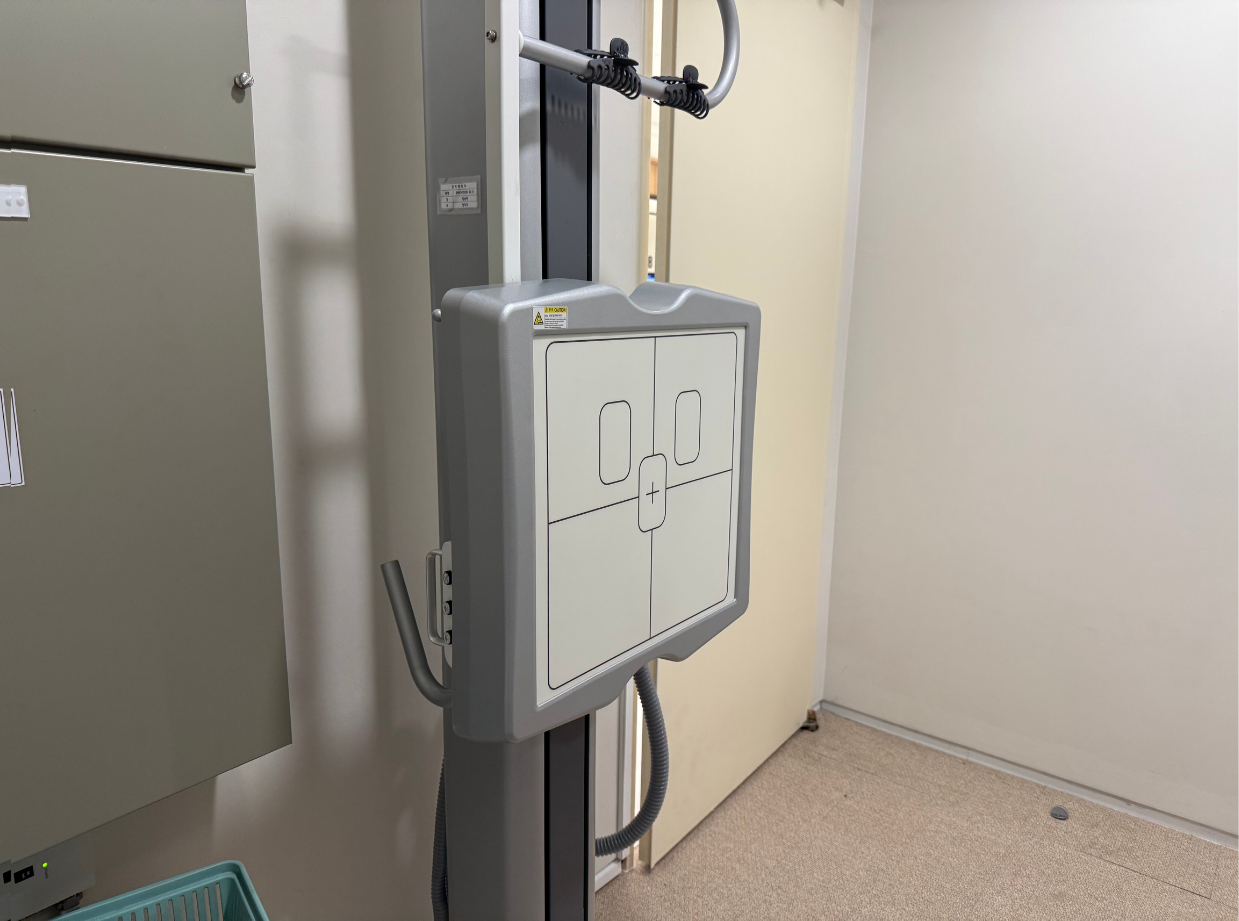
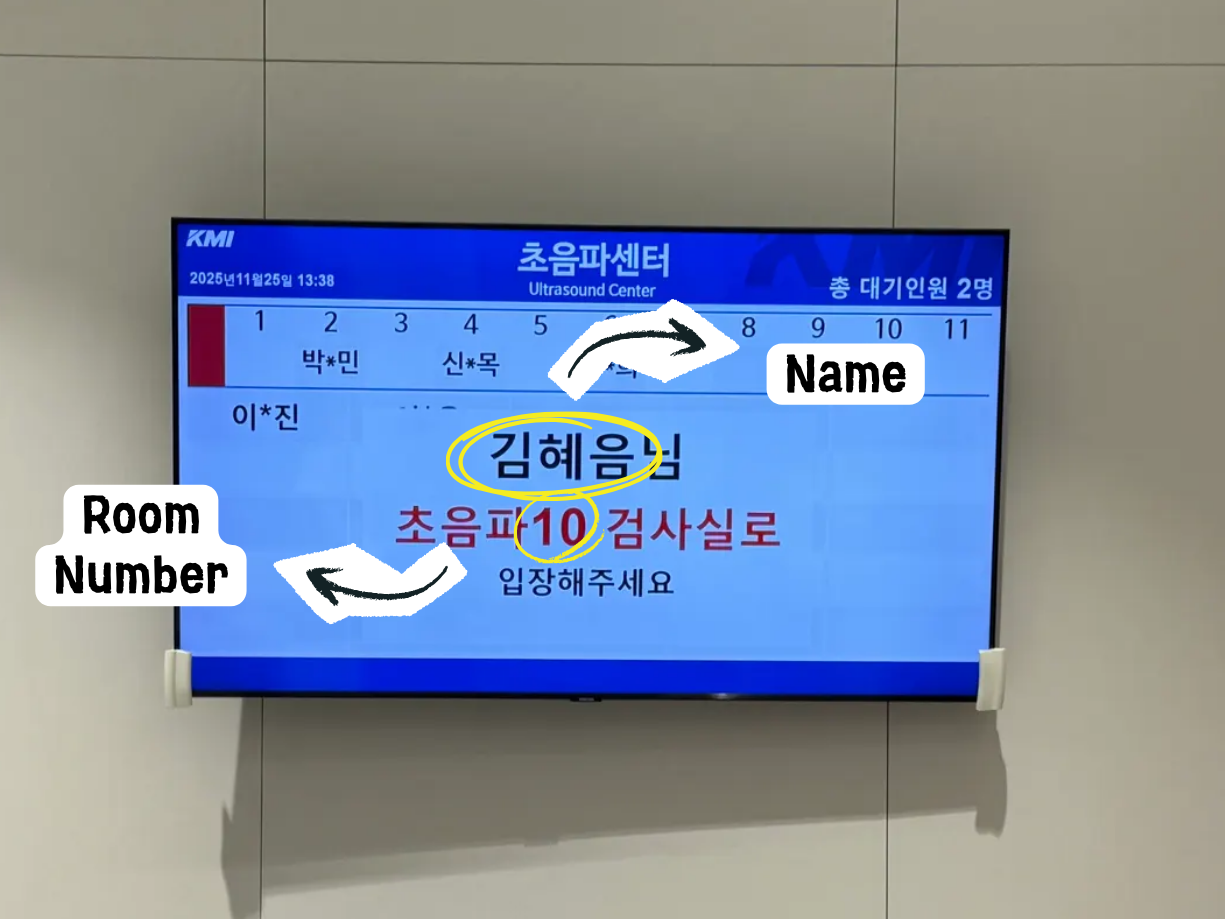
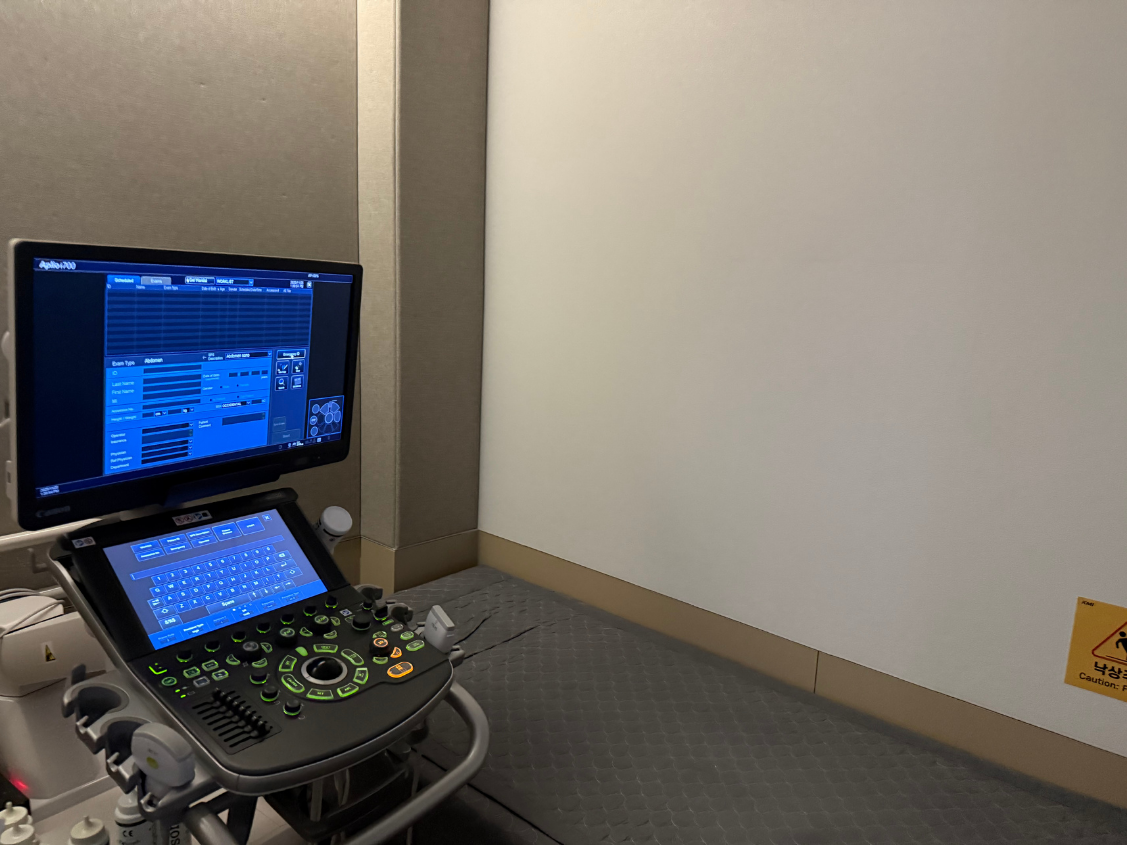
For the Ultrasound and Chest X-ray, you need to remove your bra. I forgot and had to run back to my locker—I recommend just leaving your bra in the locker from the start. There was a short wait for ultrasound, and my name/room number appeared on the screen when it was my turn. The sonographer was very thorough, which felt reassuring.[이미지 슬라이더] 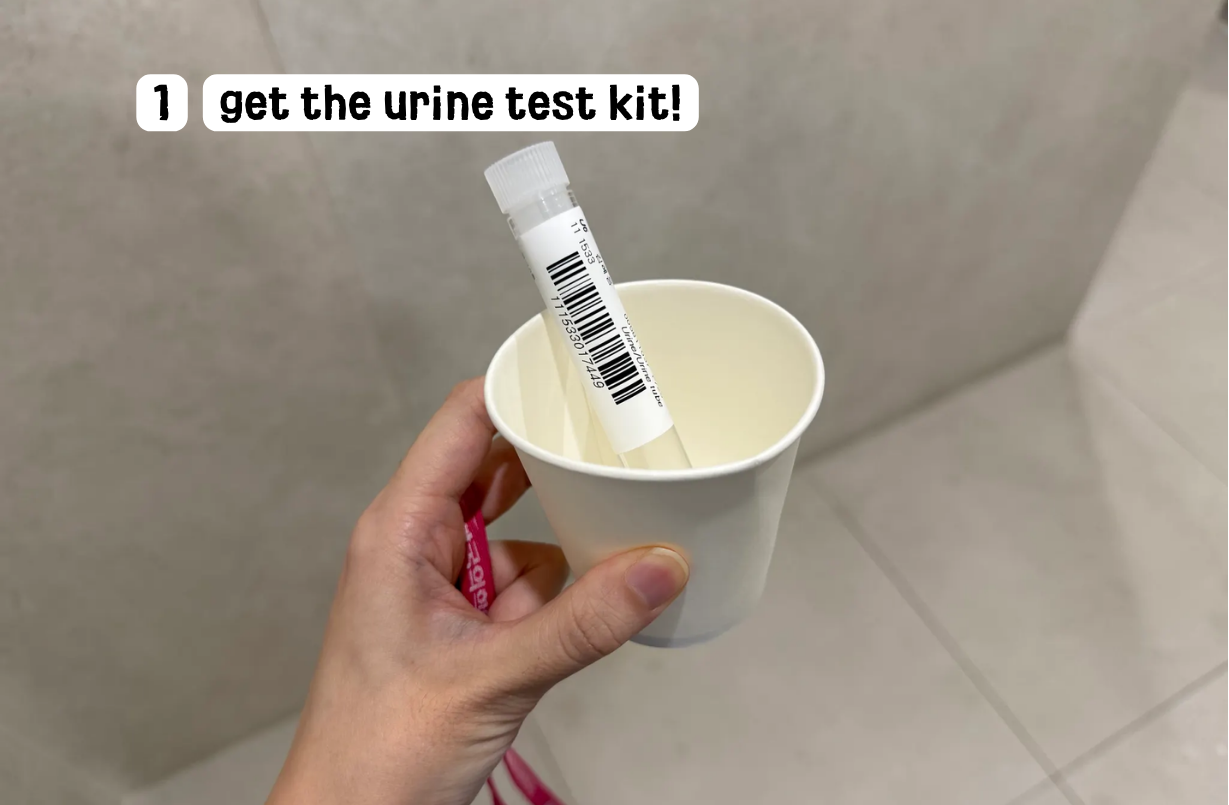
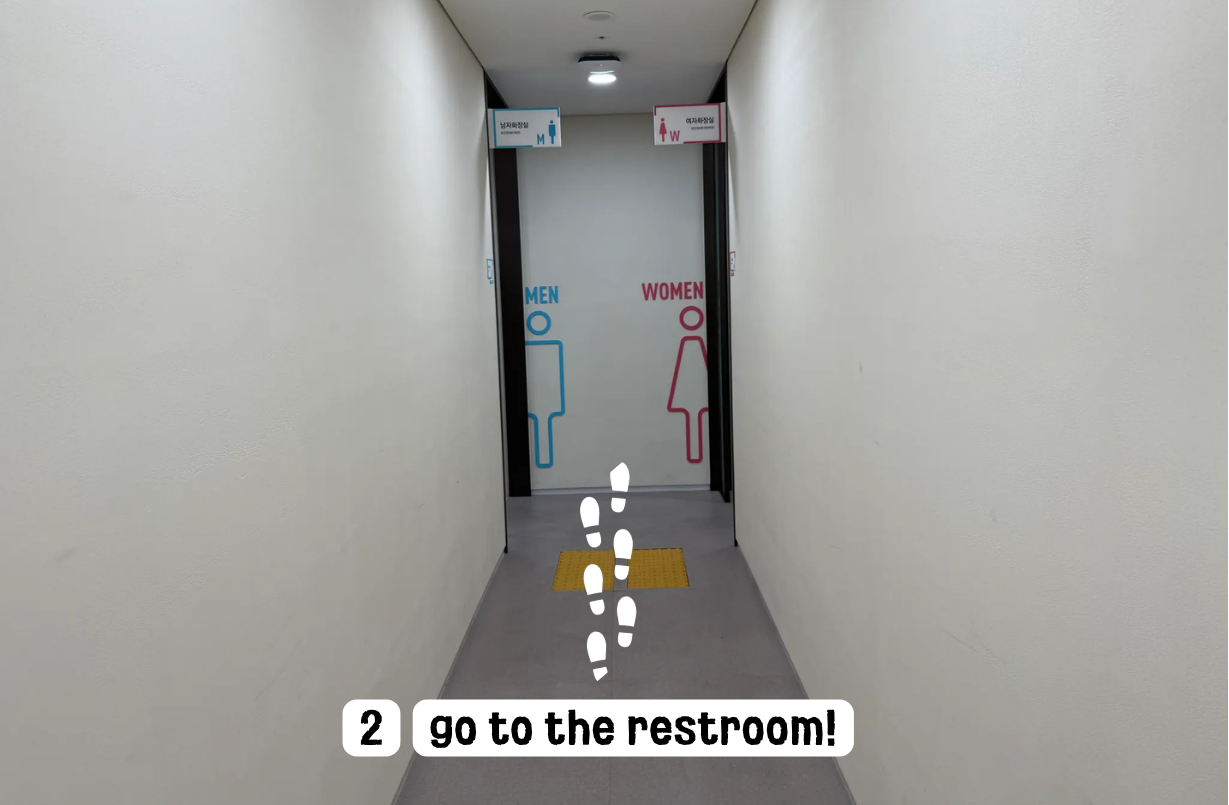
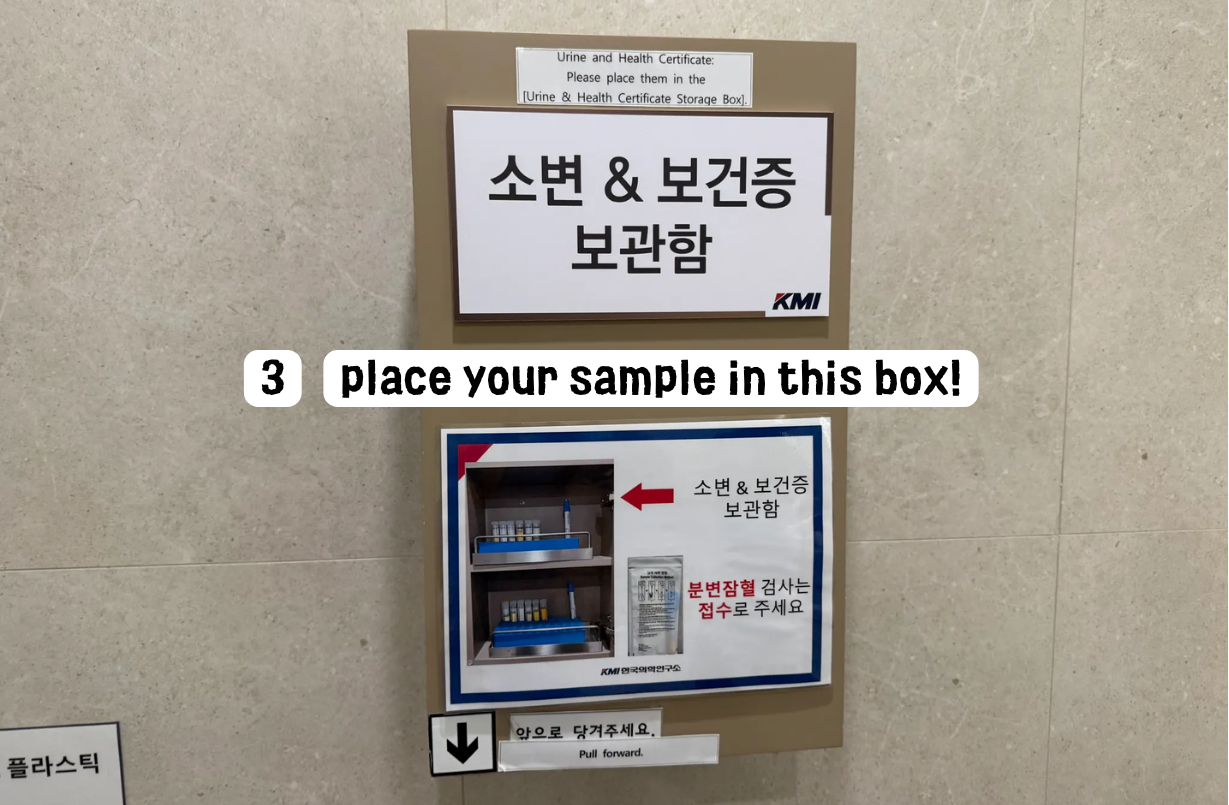
Almost done! I picked up the urine test kit from the desk, collected the sample, and placed it in the designated box in the restroom.
[이미지 슬라이더] 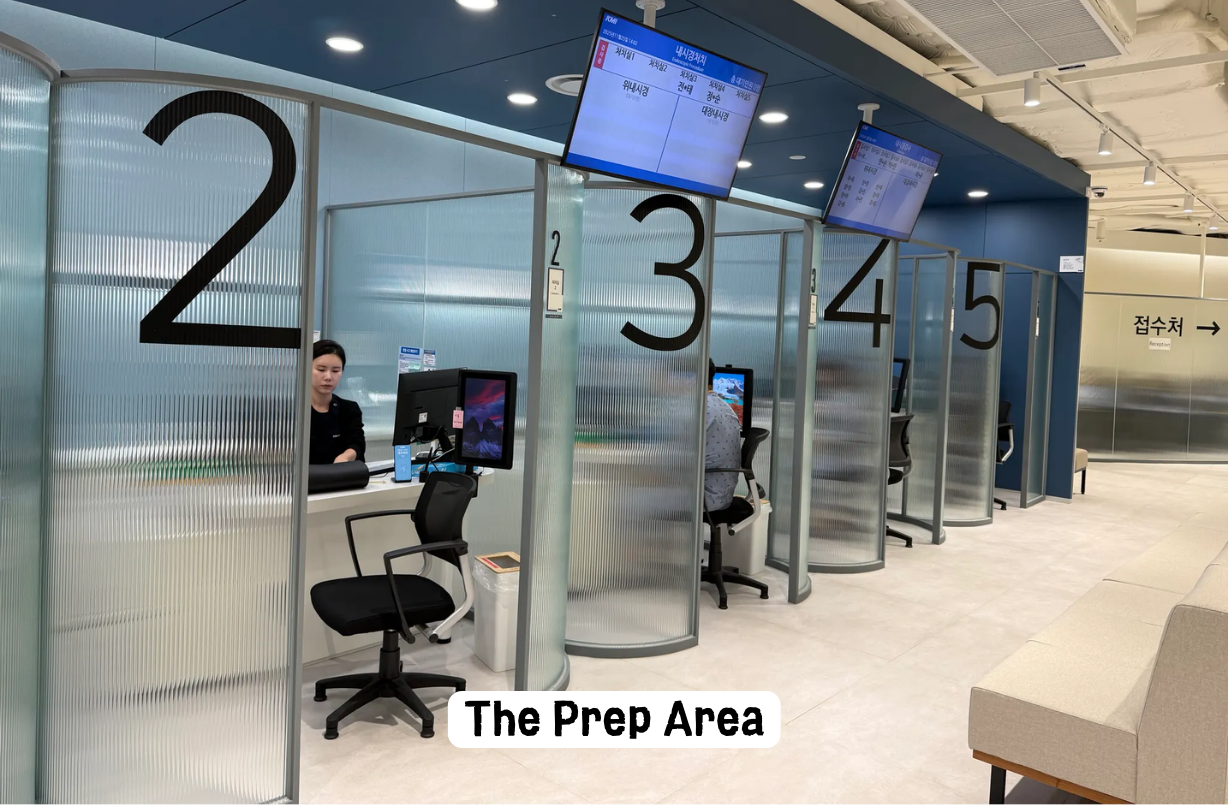
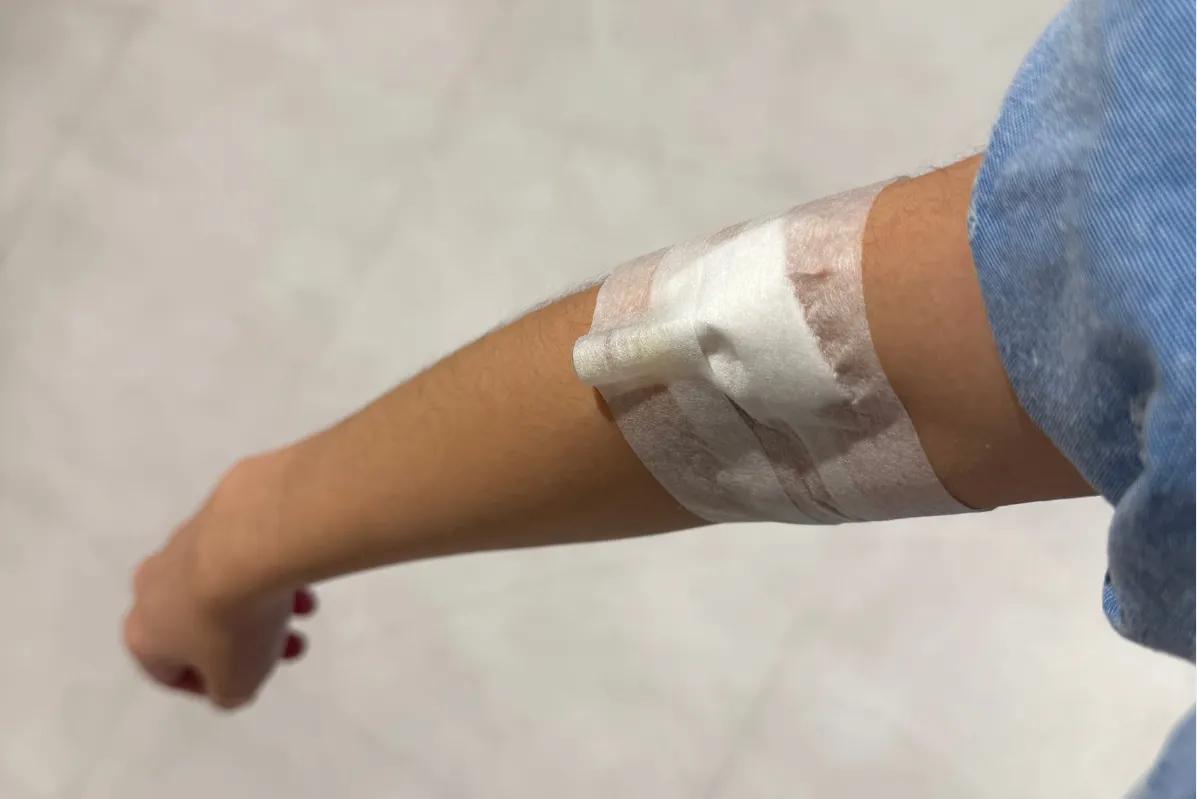
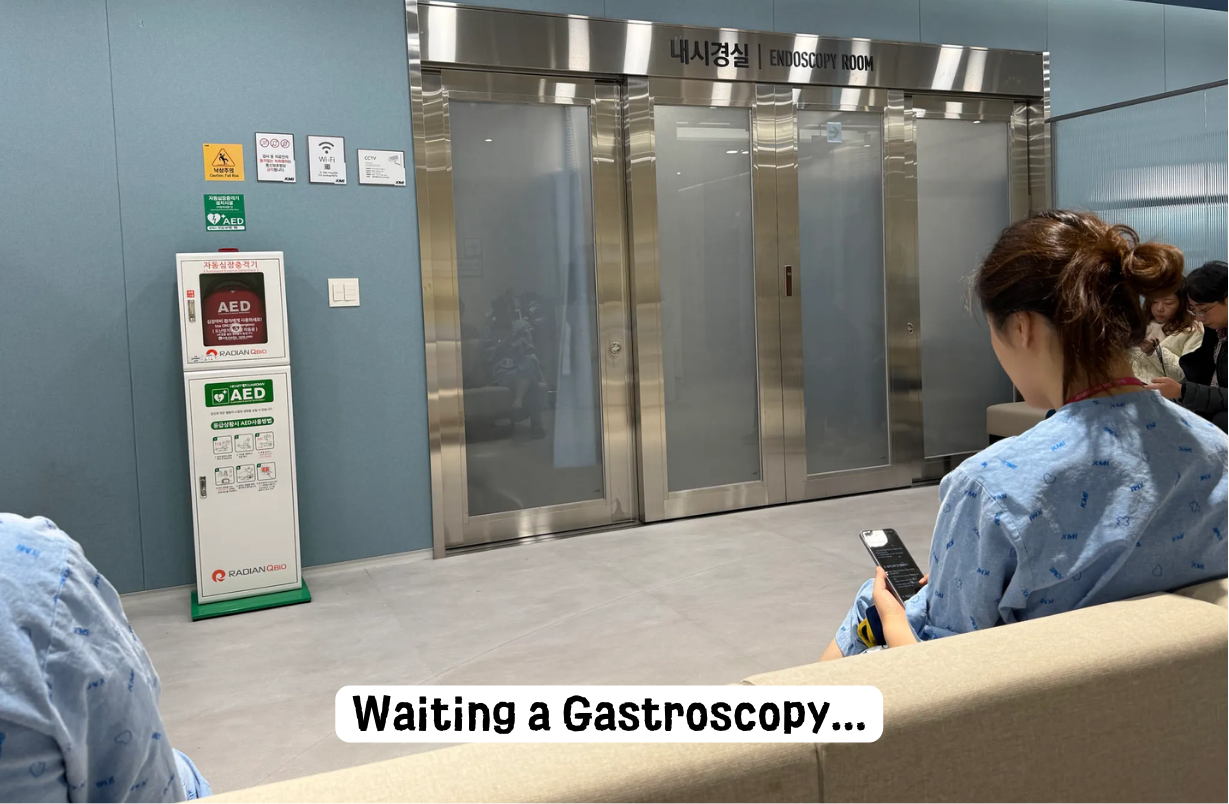
Finally, the last test is the Gastroscopy. By this point, I was starving because my appointment was in the afternoon and I hadn’t eaten in forever. If you can, I recommend booking an early morning slot.
Here’s how the gastroscopy went:
I went to the prep area to have an IV line inserted for the anesthesia.
I waited on the sofa until they called my name.
Once inside, a doctor did a sedation and I fell asleep instantly.
Results..
I honestly expected everything to be normal. But my report said otherwise.
I received my detailed results by email about two weeks after the appointment, and it turned out I have chronic gastritis and high cholesterol.
Now, I can confidently say that your mid-20s is definitely not too young to start getting comprehensive health checkups. If you've been worried about your health lately and healthcare costs are high in your home country, I recommend considering a checkup in Korea.
5. How to reserve a Health checkup in Korea?
Creatrip shares Korea travel content, but we also help foreigners book experiences and services that are difficult to access without Korean language support.
After going through this checkup myself, I really wanted foreigners to be able to book a high-quality health screening in Korea without the usual stress. After internal coordination, we officially opened KMI health checkup reservations on Creatrip.
Find a Location That Fits Your Travel Itinerary
KMI has centers in major cities and popular tourist areas, so you can easily schedule your checkup wherever you're staying. Click on the branch below to view details and book your session:
Seoul Area:
Outside of Seoul:
[KMI Busan Branch] - You can find more detailed information in the blog below!
[블로그] KMI Busan Health Checkup Center: Why It Might Be Even Better Than Seoul for Foreigners
Also—please read the booking page carefully. I wrote it with foreigner confusion points in mind, so it should answer most questions before you even arrive.
6. Why book KMI on Creatrip?
1) Creatrip x KMI Foreigner Guide
Comprehensive screenings come with a long list of prep rules. I got confused too—so I created a guide that puts everything in one place.
Here are excerpts from the English health checkup guide I created :
[이미지 슬라이더] 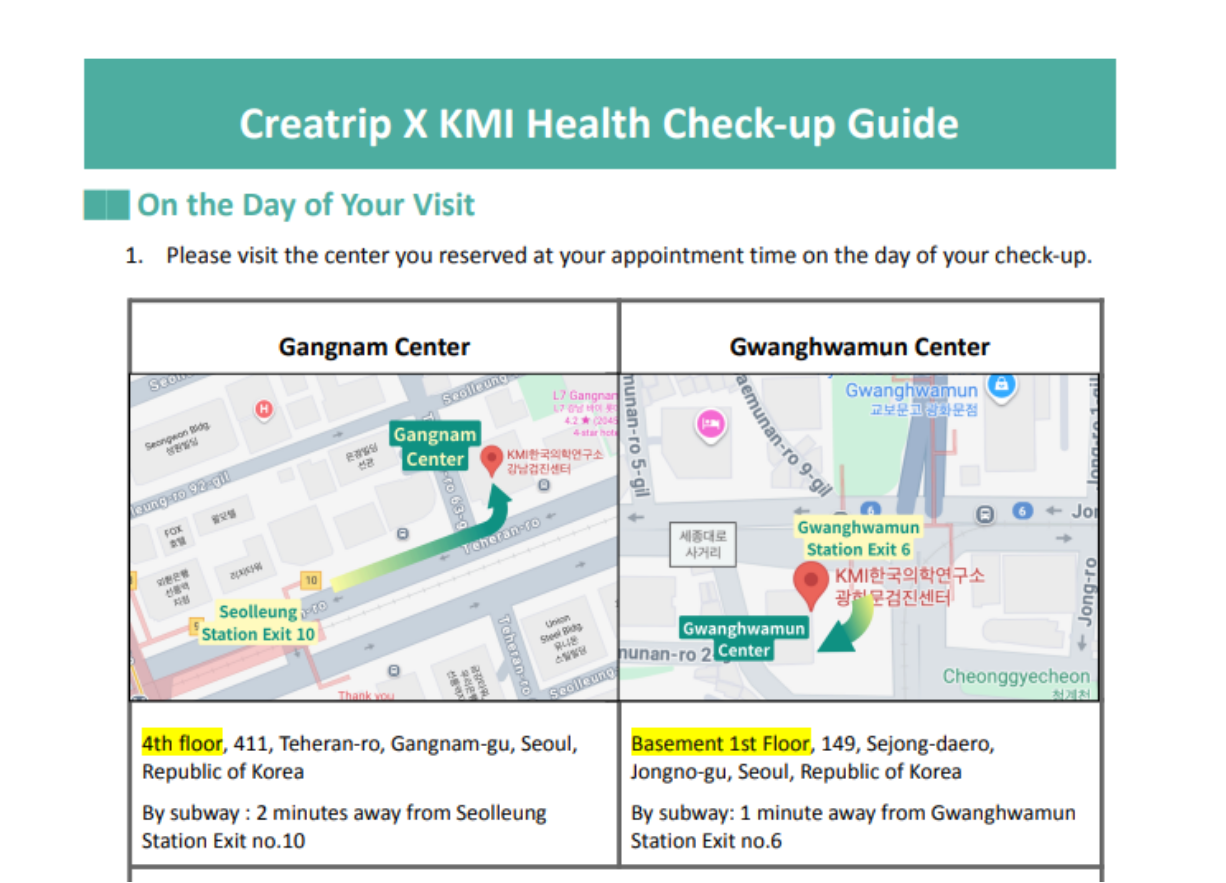
2) 1:1 Buddy Service (14 days)
Even with good info, getting medical tests in another country can be stressful. This service is for people who want extra peace of mind.
A Creatrip buddy can support you 1:1 from pre-booking questions to the checkup day to post-checkup follow-up over 14 days.
>>> More details about Buddy service here!
3) 20,000 Creatrip points
If you book here, you’ll receive 20,000 points after your checkup. You can use them on any Creatrip product—so after fasting all day, you can literally go treat yourself.
>>> Book food with 20,000 points here!
7. FAQ. What foreigners ask most about health checkups in Korea
Q1) How much does a health checkup cost in Korea for foreigners?
A comprehensive health checkup in Korea typically costs around USD 340–1,370 depending on the program at KMI:
- Standard: about USD 340 (about 3 hours)
- Signature: about USD 680 (about 4 hours, includes Standard + colon exam option + CT/ultrasound options)
- Noble: about USD 1,370 (about 4 hours, includes Signature + MRI + genetic test + additional options)
You can also add extra tests on your program. You can check the price of each test and more detailed information here.
Q2) When is the best time to do a health checkup in Korea?
In Korea, many office workers are required to get routine checkups (often every 2 years), so clinics get especially busy around November–December.
If you want a more relaxed experience, I recommend January–October.
Q3) How long does a full-body checkup take at KMI?
In my case, the Standard Program took about 3 hours.
Programs that include a colonoscopy or MRI (like Signature/Noble) often take around 4 hours.
Q4) When will I receive my KMI results, and how?
KMI results are typically sent by email within 2–3 weeks after your appointment.
Q5) What should I eat after an endoscopy?
It depends on your body, but I’d avoid anything super spicy, greasy, or heavy right away.
I ate samgyetang (ginseng chicken soup) and it felt gentle enough for my stomach.
Book all things trending in Korea on Creatrip! If you have any questions or concerns, please leave a comment below or send us an email at help@creatrip.com! You can follow us on Instagram, TikTok, Threads, and Youtube to stay updated on all things Korea!
Considering other centers too? See the full health checkup center comparison for foreigners.