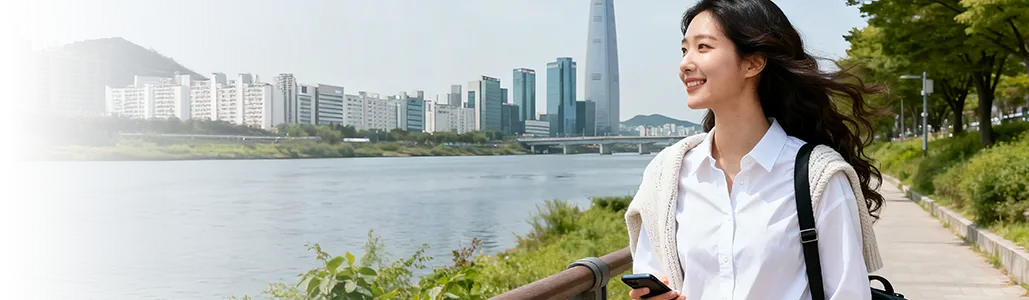
Why Korea Is Leading the Global Capital of Skincare Tourism: Cheaper, Safer & More Advanced Than Anywhere Else in the World
A deep dive into why there are so many skincare clinics in South Korea and why they're leading the world in medical tourism.

- The First Thing I Noticed Wasn't K-Pop. It Was Everyone's Skin.
- My First Korean Dermatology Experience (And Why I Almost Cried)
- Why Korean Clinics Can Charge So Much Less (Without Compromising)
- The Training Behind the Results
- What I Wish Someone Had Told Me as a Foreigner
- What I've Seen Change in the Past Few Years
- For Anyone Thinking About It
- Consultation & Booking Information
I still remember the first time a Korean friend casually said, "I'm going to the dermatologist during lunch . Want to come?"
I thought she was sick. In Canada, you don't just "go to the dermatologist." You wait weeks for a referral from your family doctor, then wait months for the actual appointment. And when you finally get in, you're mostly there because something is medically wrong — not because you want better skin.
I grew up in Vancouver with a face full of freckles. I didn't hate them, but I was always curious — what would my skin look like without them? In Canada, I looked into laser treatment once. The consultation alone was over $200 CAD, the quoted treatment price was somewhere around $1,500–$2,000, and the waitlist was three months long. I dropped the idea immediately.
Then I moved to Korea.
The First Thing I Noticed Wasn't K-Pop. It Was Everyone's Skin.
I've been living in Seoul for several years now, and the culture shock that hit me hardest wasn't the food or the subway system. It was how normal skincare clinics are here.
My Korean coworkers talked about their dermatologist the way my Canadian friends talked about their hairstylist. "I got a quick laser touch-up this weekend." "I'm doing Rejuran next month." "Have you tried the new lifting treatment at that clinic near Gangnam Station?"
At first, I thought this was a rich-people thing. It's not. University students go. Office workers go on their lunch break. My friend's mom goes every other month. Skincare clinics in Korea aren't luxury — they're infrastructure. They're as common as coffee shops, and in neighborhoods like Gangnam, Hongdae, and Myeongdong, they literally are on every block. This competition is exactly what pushed Korea forward into becoming the world’s top skincare clinic destination.
In 2024, Seoul alone had 571 dermatology clinics, with 170 concentrated in the Gangnam area. That density would be unimaginable in any North American city.
[블로그] Beauty Salons & Clinics In Korea | Creatrip Locals' Guide
My First Korean Dermatology Experience (And Why I Almost Cried)
About a year after I moved here, I finally booked my first appointment at a dermatology clinic in Seoul. I went in expecting the same process I knew from Canada — referral, wait, brief consultation, maybe a follow-up in six weeks.
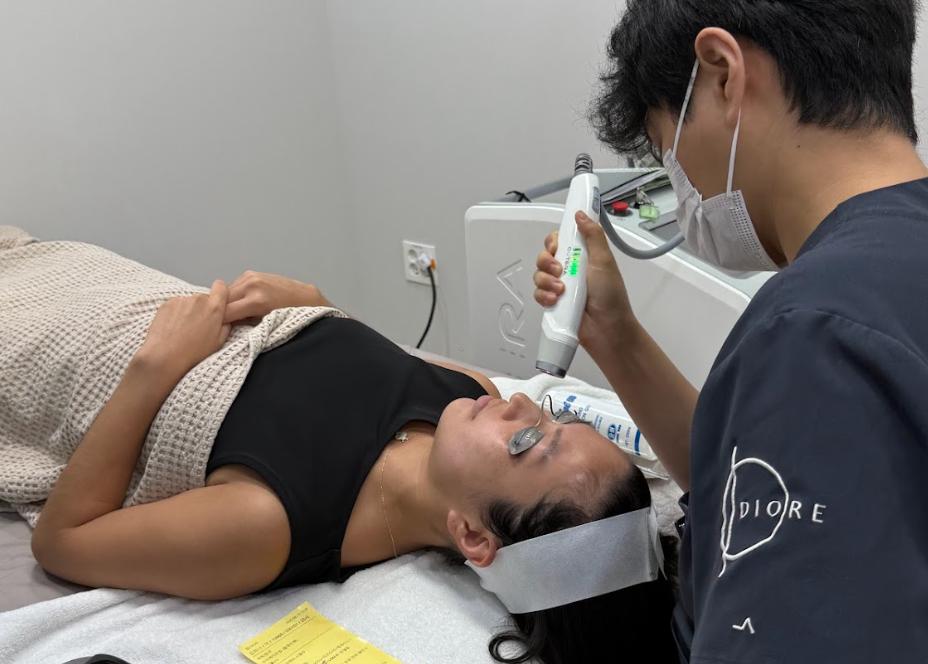
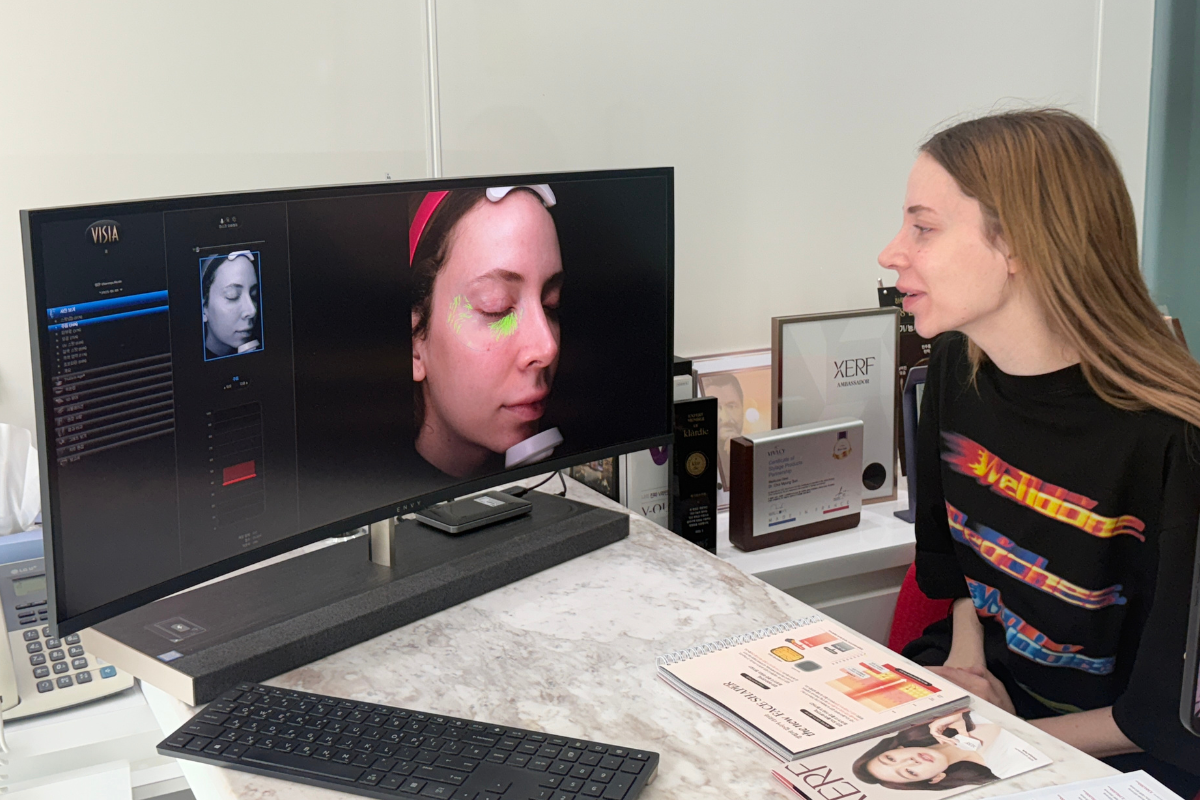
Instead, this is what happened: I walked in, got a skin analysis done with a diagnostic device I'd never seen before, sat down with the doctor who spent 20 minutes looking at my skin and explaining what each freckle was (some were sun spots, some were actual freckles, some were early-stage pigmentation), and then was told I could start a laser session that same day if I wanted to.
The price? For a full-face pigmentation laser session, I paid less than what the consultation alone had cost me in Vancouver.
I'm not exaggerating. I sat in the recovery room afterward with a cooling mask on my face, and I genuinely got emotional. Not because of the treatment, but because I realized I'd spent years assuming this kind of care was out of reach, and here it was just Tuesday!
Why Korean Clinics Can Charge So Much Less (Without Compromising)
After that first experience, I became obsessed with understanding why. I asked doctors. I asked Korean friends. I read everything I could find.
Here's what I learned, and it comes down to competition and volume.
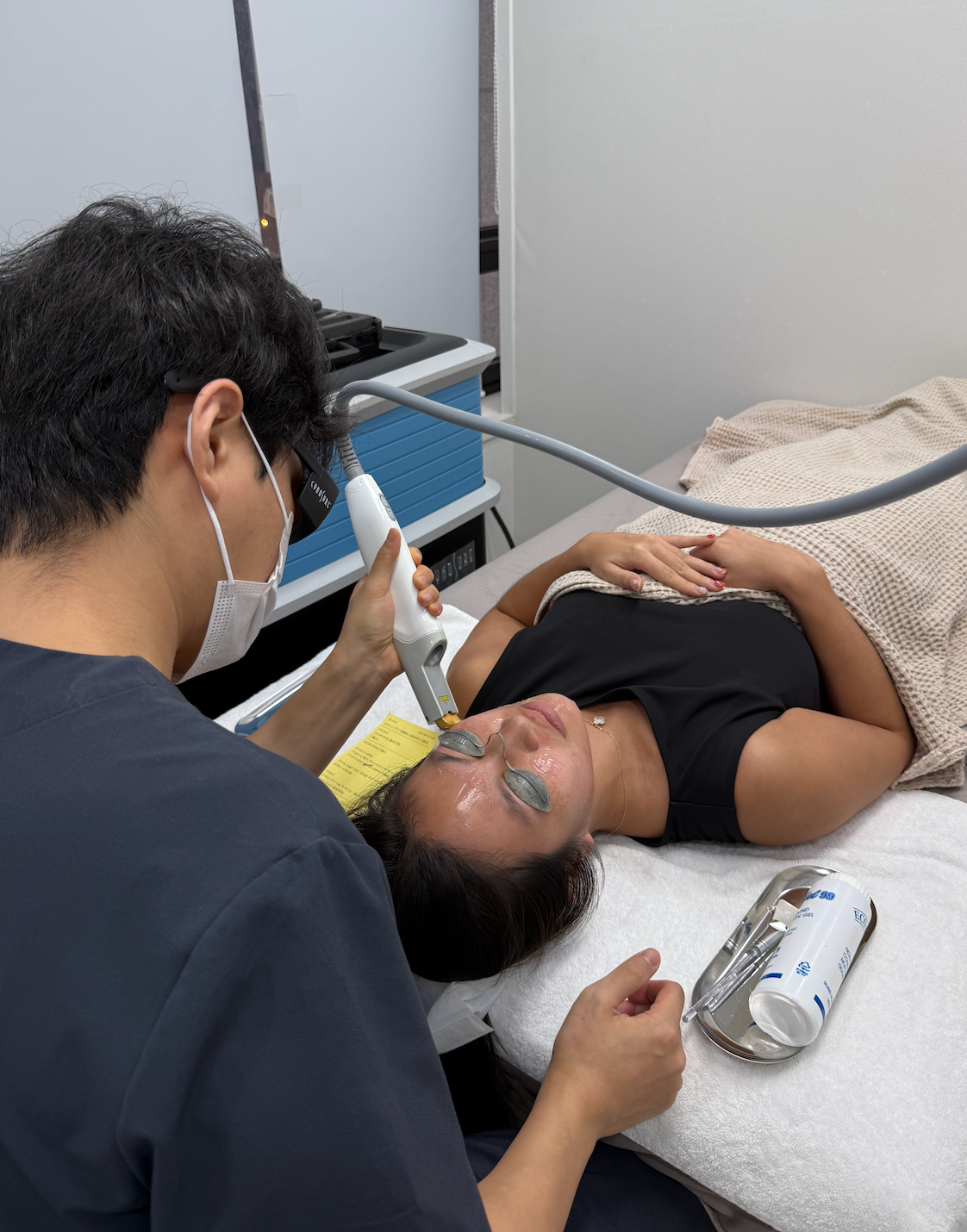
Korea has an extraordinary concentration of dermatology clinics in a very small geographic area. Seoul alone packs hundreds of clinics into a city smaller than Los Angeles. That means every clinic is competing. Not just on price, but on technology, technique, and patient experience. If one clinic falls behind on equipment, patients simply walk next door.
This competition drives something remarkable: Korean clinics adopt new technology faster than anywhere else in the world. When a new laser, lifting device, or regenerative treatment launches globally, Korean clinics are typically among the first to acquire it. Treatments like Rejuran Healer, Thermage FLX, Ultherapy, ONDA lifting, and Pico lasers are standard here. In Canada or the U.S., many clinics still run older-generation machines because upgrades are expensive and demand is lower.
 Everything was so affordable!
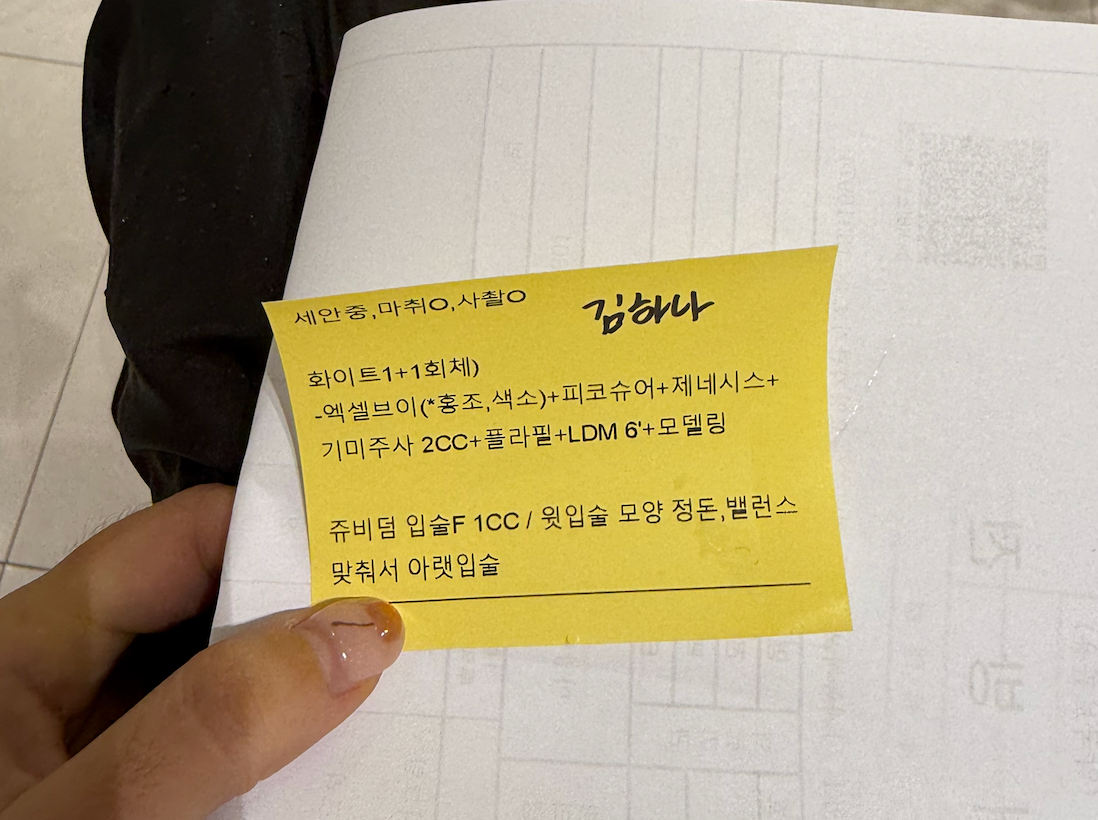
The numbers tell the story clearly. A treatment like Ultherapy that might cost $1,500–$4,000 in the United States can be $200–$1,000 in Korea. Same machine, often performed by a doctor with more experience because they're doing higher volumes daily.
In 2024, Seoul saw just under one million international medical tourists coming specifically for skincare and aesthetic treatments. That volume, combined with domestic demand, means Korean clinics operate at a scale that keeps costs low while maintaining quality.
Walk around any major area in Seoul (Gangnam, Hongdae, Myeongdong) and you’ll see skincare clinics stacked in the same building. This high-density competition means:
- Clinics must offer lower prices
- Treatments need to be high-quality
- Clinics are motivated to create a great foreigner experience
- Technology upgrades happen quickly
It’s a buyer’s market. You're not getting a discount version of the treatment. You're getting the same treatment in a market where efficiency and competition have made excellence affordable.
[블로그] 2026 Korean Skin Clinic Guide | Best Treatments for Every Skin Concern
[블로그] Korean Beauty Terms & Treatments: English-Friendly Guide for First-Timers
[블로그] Top 10 Most Popular Skincare Treatments Foreigners Book in Korea (2025 Edition)
The Training Behind the Results
One thing that reassured me as someone from a Western medical system: Korean dermatologists go through an incredibly rigorous training path. Six years of medical school, a one-year internship, a four-year dermatology residency, and then additional specialized training in aesthetic procedures, lasers, and injectables.
More importantly, Korean regulations require that only licensed physicians perform laser treatments, injections, lifting procedures, and any high-energy skincare device work. In many other countries, including parts of the U.S. and Canada, some of these procedures can be performed by nurses or aestheticians. In Korea, it's the doctor every time.
Many Korean dermatologists also publish research, develop proprietary techniques, and participate in medical societies focused on aesthetic medicine. This isn't a side business for them. It is their primary expertise, refined over years with thousands of patients.
That level of specialization, combined with the sheer volume of procedures performed daily, means Korean dermatologists have a depth of hands-on experience that's genuinely hard to match elsewhere.
Korean dermatologists (or doctors in general) typically go through:
- 6 years medical school
- 1-year internship
- 4-year dermatology residency
- Additional specialized aesthetic training
The emphasis on skin science is intense. Many doctors even publish research on lasers, lifting technologies, and regenerative treatments.
Plus, Korean medical regulations require that only doctors handle:
- Lasers
- Injections
- Lifting devices
- High-energy treatments
This reduces risk and ensures consistent quality, and it's one of the biggest reasons foreigners trust Korean clinics over clinics in their own countries.
What I Wish Someone Had Told Me as a Foreigner
Now, here's the part where I have to be honest about something: Korean skincare clinics are incredible, but navigating them as a foreigner is not always easy.
My Korean is conversational but not fluent. During my first few clinic visits, I nodded along during consultations without fully understanding the details. I wasn't sure how much I was supposed to pay versus how much Koreans paid. I couldn't read the aftercare instructions. I didn't know which clinics were genuinely good and which ones were just good at marketing to foreigners.
I learned over time, through trial and error, through Korean friends translating for me, through slowly figuring out which clinics took foreign patients seriously versus which ones saw us as one-time transactions.
That learning curve is real, and it's the biggest barrier between international visitors and the incredible skincare Korea has to offer.
What I've Seen Change in the Past Few Years
The good news is that this barrier is getting smaller. When I first arrived, booking a clinic as a foreigner meant a lot of guessing and hoping for the best. Now, there are platforms that handle English support, transparent pricing, and clinic curation, which makes a massive difference.
I work at Creatrip now, and I'll be transparent about this: one of the reasons I joined was because I recognized the problem from personal experience. The gap between "Korea has amazing skincare clinics" and "I, as a foreigner, can actually access them confidently" is exactly what needed to be bridged.
What I've seen from the inside is that not every clinic gets listed. There's a selection process based on quality, doctor credentials, and track record with international patients. That matters because in a market with 571 clinics in Seoul alone, the range in quality is real. The best clinics are world-class. But not every clinic is the best, and a foreigner visiting for the first time has no way to tell the difference.
The approach I've seen isn't about putting as many clinics on a platform as possible or making them compete against each other on price. It's about finding the clinics that are actually good, verifying their credentials, and then making them accessible to people who don't speak Korean.
For Anyone Thinking About It
If you're reading this from Canada, the U.S., Europe, Australia, or anywhere else, and you've been curious about Korean skincare treatments, I understand the hesitation. I had it too. The idea of getting a medical procedure in a foreign country sounds intimidating.
But I can tell you from years of living here: the quality is real, the pricing is real, and the experience doesn't have to be stressful if you plan it right.
My freckles? Most of them are gone now. It took a few sessions over several months. The total cost was a fraction of what one session would have been in Vancouver. And the doctor who treated me had performed that specific laser procedure thousands of times before I ever sat in his chair.
Korea earned its reputation as the global leader in skincare for real reasons: decades of competition, rigorous medical training, rapid technology adoption, and a culture that treats skin health as a normal part of life. As someone who grew up outside that culture and then stepped into it, I can tell you — the difference is not hype. It's measurable.
Consultation & Booking Information
If you're considering booking a skincare treatment in Korea, Creatrip offers real-time consultation and booking support in multiple languages. You can ask about specific treatments, get exact pricing, and schedule appointments in advance.
- English support
- Transparent pricing
- Discounted packages
- Safe, curated clinic choices
- Easy appointment scheduling
Korean clinics, especially the popular ones, book up quickly, so planning ahead is strongly recommended.
- WhatsApp: +82 10-8818-2915 (English, click to connect)
- LINE: @creatrip (the '@' is required) (Japanese & Chinese, click to connect)
- Email: help@creatrip.com
Check out more of Creatrip's K-Beauty & Medical services! From booking hair salon appointments with exclusive deals, to even 100% safe LASIK surgeries, we have it all!
[블로그] How to Book Korean Beauty & Medical Treatments Online Safely with Creatrip
Local Tip! Book your appointment for the beginning of your trip, upload a photo of your receipt on Creatrip and earn 10% back in Creatrip points to use for the rest of your trip!
Use the Creatrip points for photo studio sessions, personal color analysis, makeup classes, head spas & more!
Learn more here! 👇
Book all things trending in Korea on Creatrip! If you have any questions or concerns, please leave a comment below or send us an email at help@creatrip.com! You can follow us on Instagram, TikTok, Threads, and Youtube to stay updated on all things Korea!