Beautiful Places to Photograph Seoul: Skyline Views, Hanok Streets, River Nights and Retro Alleys
A Creatrip editor’s photo-friendly map of Seoul, from Namsan and Bukchon to Banpo, Achasan, DDP, Euljiro and Mullae.

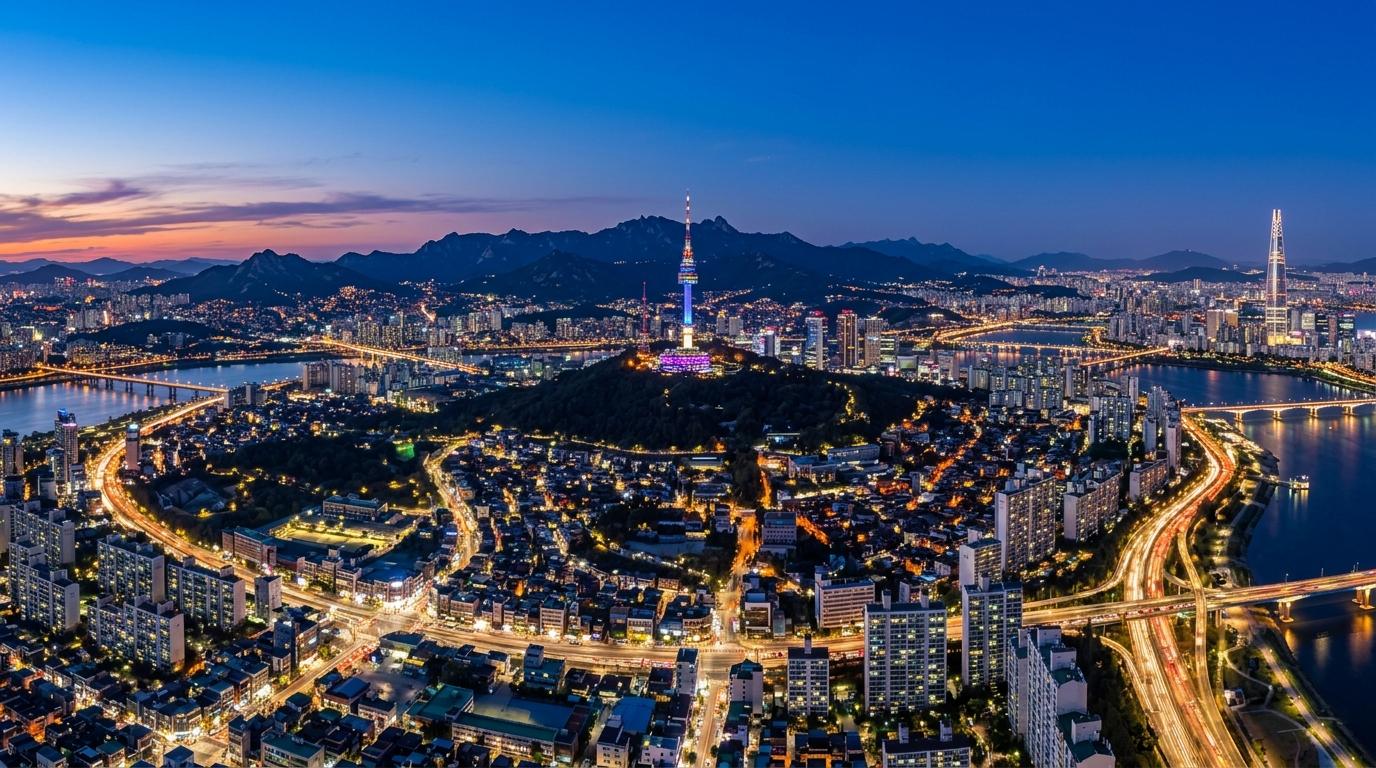
Seoul is one of those cities that looks different depending on where you stand. From Namsan, it spreads out in soft gray-blue layers. From Bukchon, it folds into tiled roofs and narrow residential lanes. Along the Han River, the skyline gets wider and flashier, especially when bridge lights start reflecting on the water. Then there are the alleys: Euljiro’s neon, Mullae’s metal shutters, Seongsu’s warehouse cafés, Ikseon-dong’s lantern-lit hanok corners.
For travelers who love taking photos, the best Seoul itinerary is not just one famous viewpoint. It is a mix: one skyline, one old-Seoul street, one river night, one neighborhood with texture. That gives your album the real Seoul feeling — polished and chaotic, traditional and hyper-modern, quiet in the morning and glowing by evening.
A quick way to choose your Seoul photo spots
If your time is short, match the place to the kind of photo you actually want. Seoul has plenty of beautiful corners, but they do not all suit the same mood.
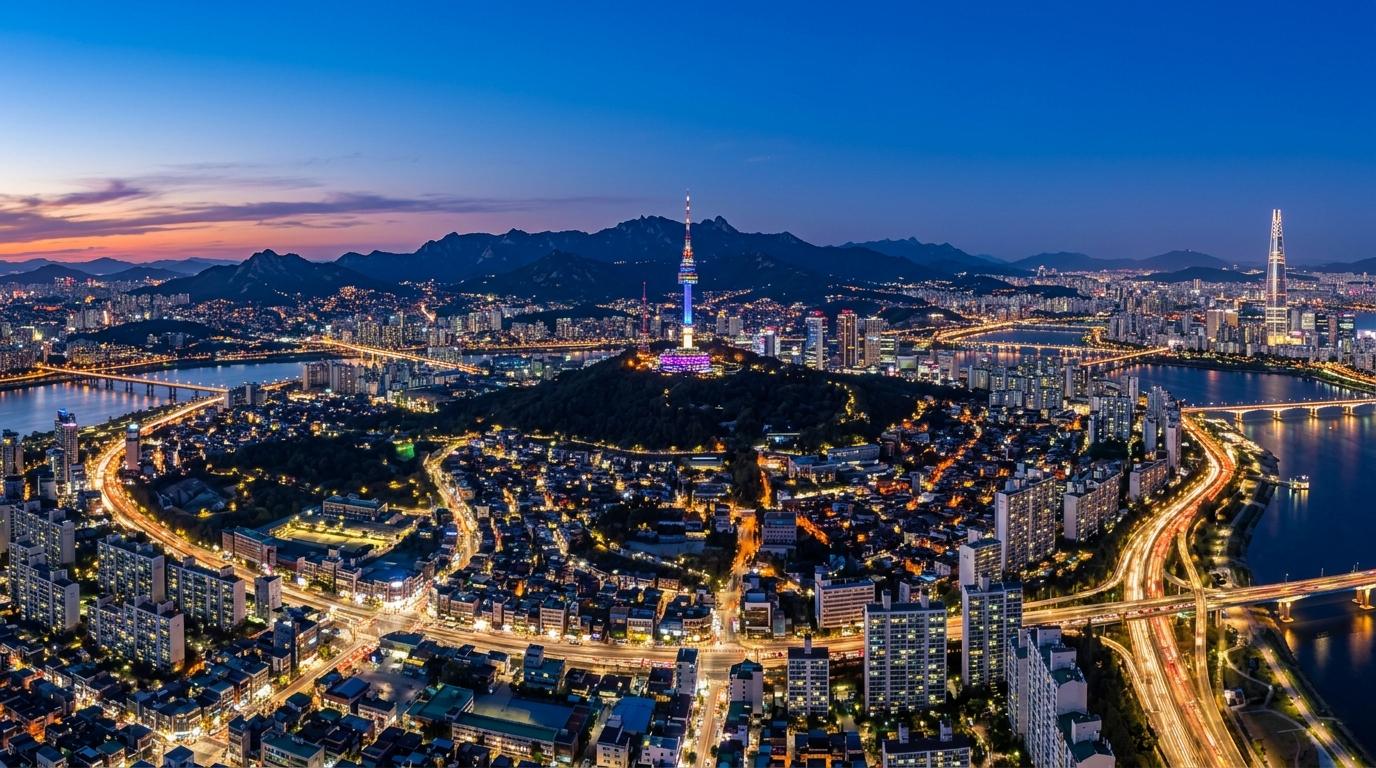
- Classic skyline and night view: Namsan Seoul Tower, Namsan Park, SEOUL SKY at Lotte World Tower
- Traditional tiled roofs: Bukchon Hanok Village, with strict daytime and quiet-tourism rules
- Hanok cafés and easier street photos: Ikseon-dong
- River lights and reflections: Banpo Hangang Park, Seokchon Lake, Nodeul Island, Eungbongsan
- Lower-crowd panorama: Achasan and Gwangjin Sunnaru in eastern Seoul
- Free night walk with Seoul City Wall: Naksan Park and Naksanseonggwak-gil
- Futuristic architecture and media art: Dongdaemun Design Plaza, better known as DDP
- Retro-industrial Seoul: Euljiro, Sewoon Plaza, Mullae-dong Art Village
- Trendy warehouse and pop-up scenes: Seongsu-dong
The sweet spot for most skyline photos is blue hour, roughly 10 to 40 minutes after sunset. The sky still has color, building lights are on, and Seoul’s haze feels more cinematic than flat. For observatories, arrive 60 to 90 minutes before sunset so you are not stuck in entry lines when the light turns good. For riverside spots, wind and rain matter more than you think — reflections disappear quickly, and fountain shows can be cancelled.
Namsan Seoul Tower and Namsan Park: the Seoul skyline everyone recognizes
Namsan Seoul Tower is the postcard version of Seoul for a reason. The tower rises about 236.7 meters on top of Namsan, a 243-meter mountain, placing the observatory around 479 to 480 meters above sea level. From up here, Seoul feels almost circular: mountains on the edges, dense neighborhoods below, the Han River cutting through the city.
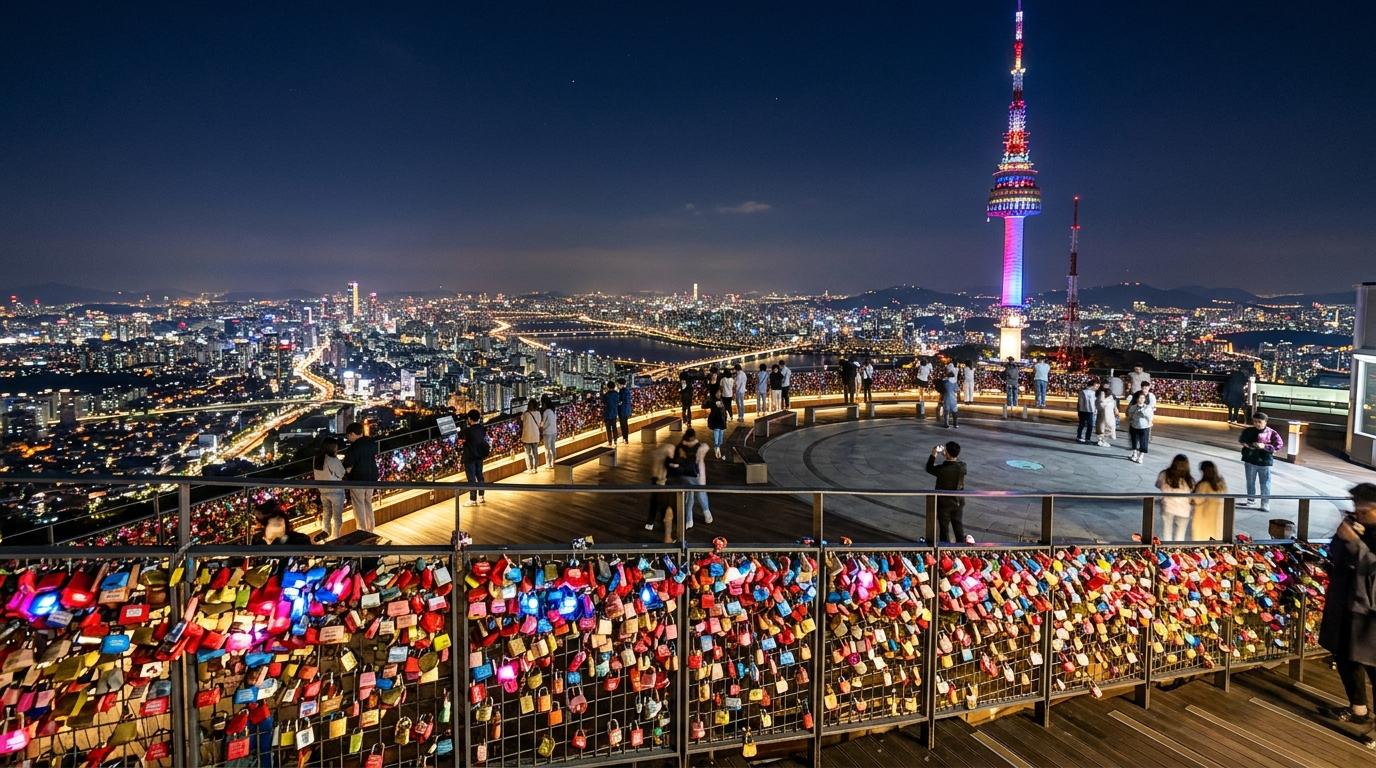
The tower area is also full of recognizable photo details: the viewing decks, the city below, and the colorful love locks clustered around the plaza. At night, the tower itself becomes part of the shot, especially if you photograph it from the park paths instead of only from the observatory.
The best way to photograph it
For first-time visitors, the easiest plan is to go up before sunset, take daytime skyline shots, then stay through blue hour and night. The observatory generally operates around 10:00 to 22:30 year-round, though some sources list later closing on certain days and last entry rules can vary. Check the official N Seoul Tower information before you go, especially around holidays.
Access is part of the experience. The Namsan Cable Car is convenient and photogenic, with round-trip fares listed in city tourism information at KRW 15,000 for adults and KRW 11,500 for children. You can also use Namsan Circular Bus 01 from areas such as Chungmuro or Dongguk University Station. Prices and bus details can change, so verify the latest route and fare on the day.
The trade-off is crowds. The tower plaza is popular with couples, families, tour groups and everyone carrying a camera. For a calmer angle, Creatrip would pair the tower with Namsan Dulle-gil, the 7.5 km walking loop around the mountain. The North Circular Road section is about 3,420 meters, barrier-free, and much quieter than the main tower plaza. It works well for travelers with strollers or wheelchairs, and for anyone who prefers a slower skyline walk before heading up to the tower.
Good for: classic Seoul views, couples, first-time visitors, night photography beginners
Watch out for: crowds right at sunset, paid observatory costs, changing last-entry rules
SEOUL SKY at Lotte World Tower: the highest, cleanest city view
For the highest observatory-style photo in Seoul, head to SEOUL SKY inside Lotte World Tower in Jamsil. The tower stands 555 meters tall, and the observatory occupies floors 117 to 123. Compared with Namsan’s mountain-and-city feeling, SEOUL SKY gives you a more vertical, glassy, mega-city view. It is especially dramatic when you want to photograph the Han River curves, apartment towers, and the eastern skyline from above.
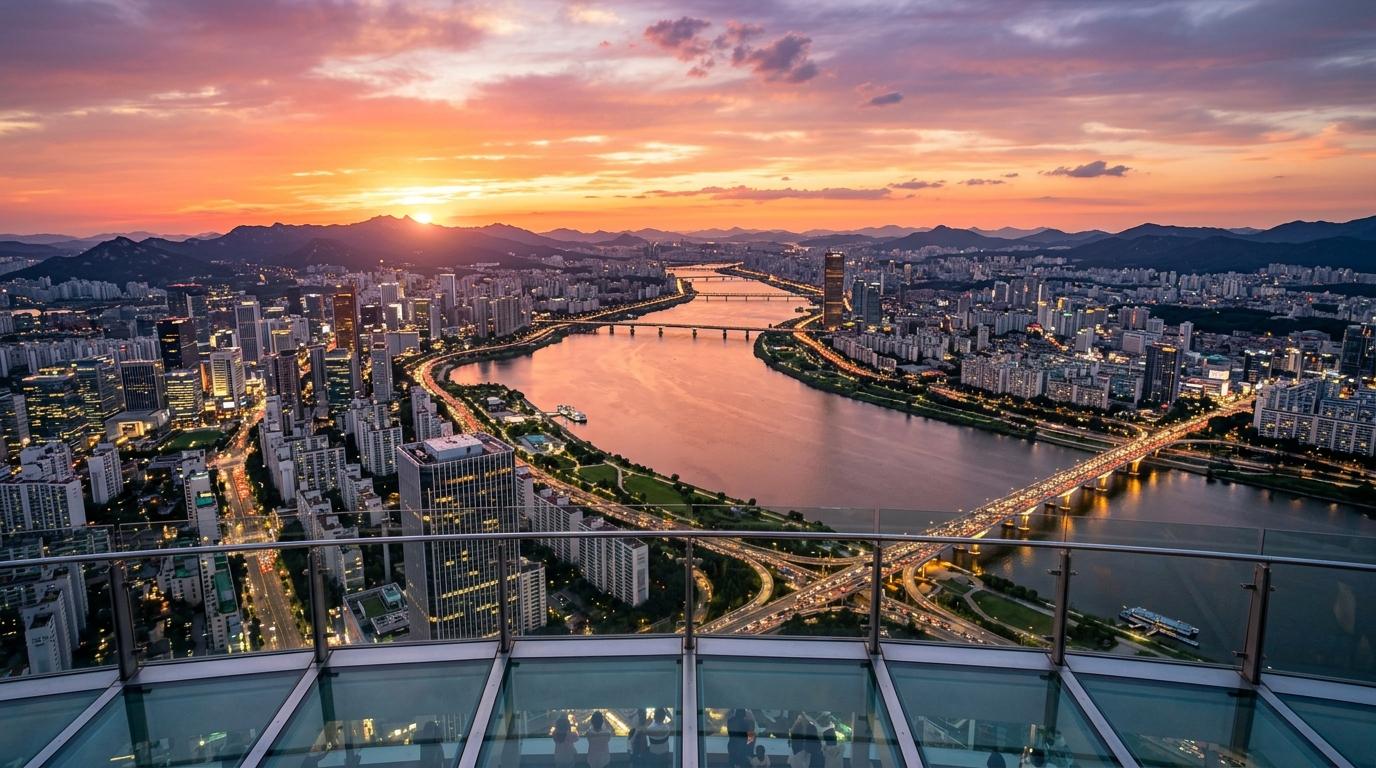
SEOUL SKY usually operates around 10:30 to 22:00 or 23:00, with ticketing closing before the observatory itself closes. Adult general admission has been listed at around KRW 31,000, with Fast Pass options around KRW 62,000, but always confirm current prices and hours through the official channel before booking.
The catch is the glass. Indoor observatories are comfortable, but reflections can ruin a night photo. Wear dark clothing, press your lens close to the window, and avoid shooting with bright screens behind you. Tripods are often restricted in these kinds of spaces, so do not build your entire plan around long exposures inside.
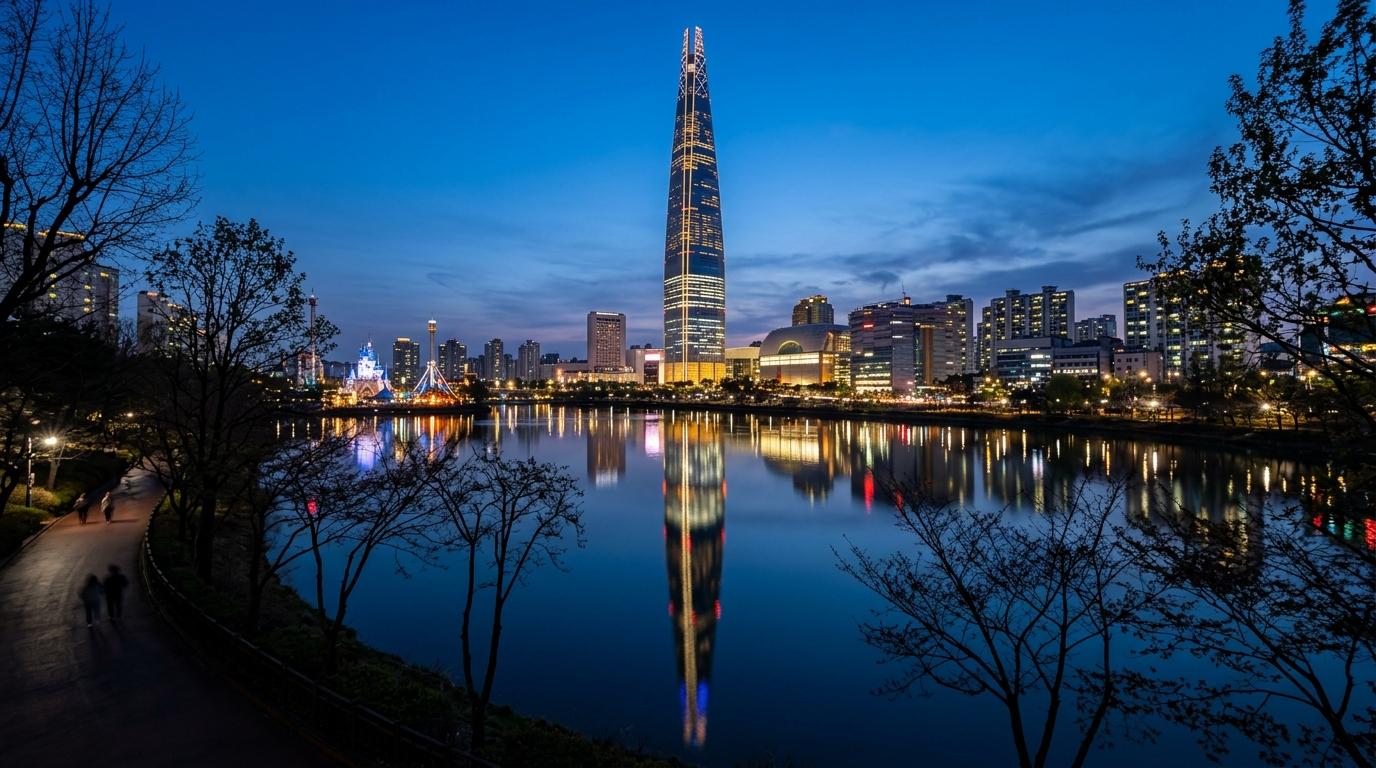
A lovely alternative is to photograph Lotte World Tower from outside at Seokchon Lake. The lake loop is about 2.5 km and is open 24 hours, making it a flexible blue-hour or night option. You will not get the same height, but you get water reflections, trees, and the tower as a clean vertical subject.
Good for: high-altitude skyline shots, rainy-day observatory plans, dramatic city scale
Watch out for: glass reflections, tripod restrictions, higher ticket price than Namsan
Bukchon Hanok Village: beautiful, but no longer a casual photo playground
Bukchon Hanok Village is one of Seoul’s most photographed neighborhoods, sitting between Gyeongbokgung Palace and Changdeokgung Palace. The lanes of Gahoe-dong, including well-known areas around 31 and 33, give you the classic Seoul hanok composition: dark tiled roofs, narrow slopes, city buildings peeking in the distance.
It is gorgeous. It is also a real residential neighborhood, and the rules have changed sharply because of overtourism.
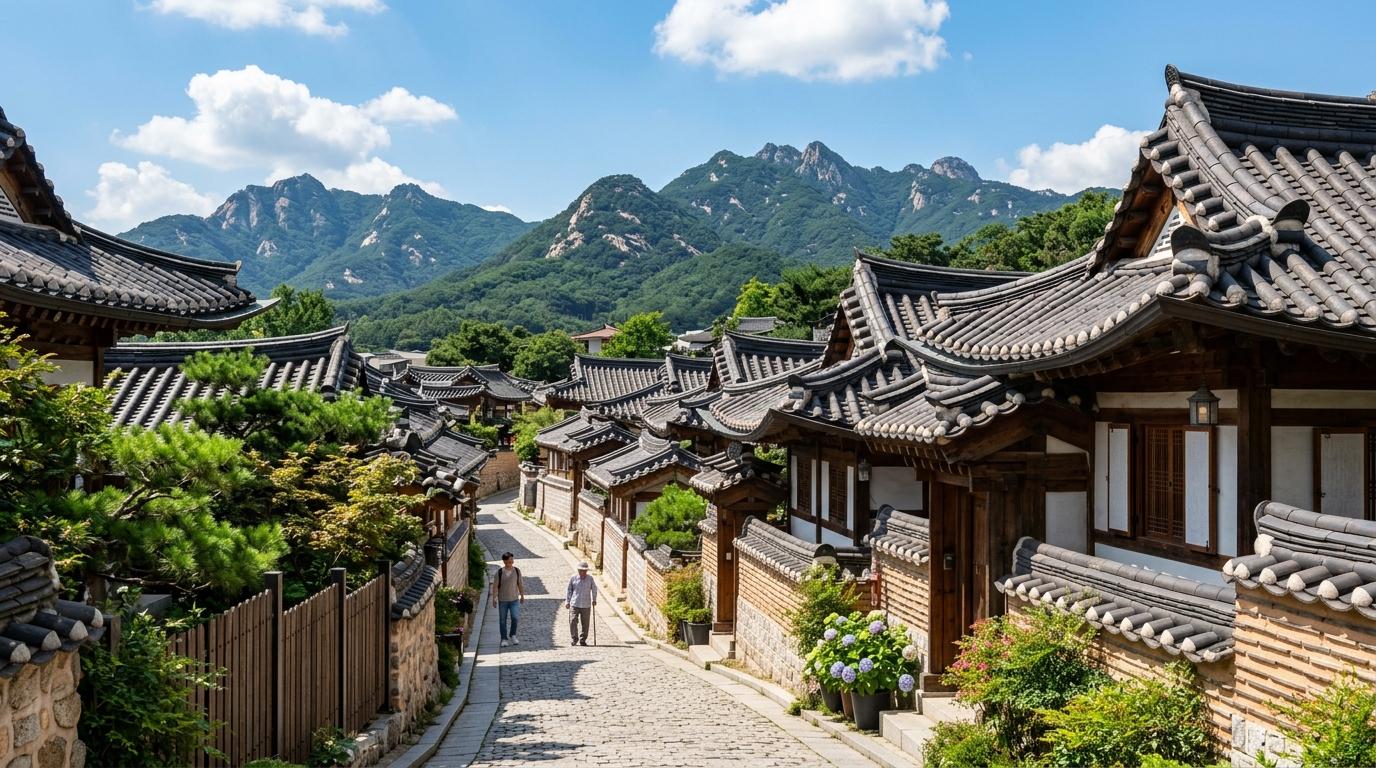
As of July 1, 2024, Bukchon became Korea’s first tourism Special Management Area. The most sensitive Red Zone around Bukchon-ro 11-gil covers about 34,000 square meters, and tourist visits there are restricted to 10:00 to 17:00. After a guidance period, full enforcement began on March 1, 2025, with a KRW 100,000 fine for tourism-related presence such as sightseeing, photography, or purposeless wandering between 17:00 and 10:00.
Bukchon is also managed by zones. The Red Zone has time restrictions and fines. Orange Zone streets such as mixed residential-commercial areas are monitored for noise and behavior. Yellow Zone areas are monitored with daytime quiet visits encouraged. Group visits are capped at 10 people, and the neighborhood follows strict silent tourism rules: no loud filming, no intrusive behavior, and no interior photography.
The best way to photograph Bukchon now is simple and respectful: go during allowed daytime hours, keep your group small, take fewer but better photos, and leave the doorways alone. This is not the place for tripods, outfit changes, loud reels, or long photo sessions on someone’s front steps. If you are visiting a shop, museum, café, or accommodation after 17:00, follow the official exemption guidance and go directly to your destination — do not turn it into an after-hours photo walk.
Regulations may keep evolving, and the exact restricted streets matter. Check the official Jongno-gu or Seoul guidance before visiting.
Good for: traditional rooflines, quiet daytime photography, travelers who can follow residential etiquette
Watch out for: legal visiting-hour restrictions, fines, noise rules, group limits
Ikseon-dong: hanok charm with a more casual café mood
If Bukchon feels too restricted for the kind of photos you want, Ikseon-dong is an easier alternative. Near Jongno 3-ga, this compact 1920s hanok grid has narrow alleys, cafés, restaurants, boutique shops and ceramics studios tucked into old houses. The lanes are roughly 2 meters wide, and the area is small enough to photograph slowly between coffee, dessert and dinner.
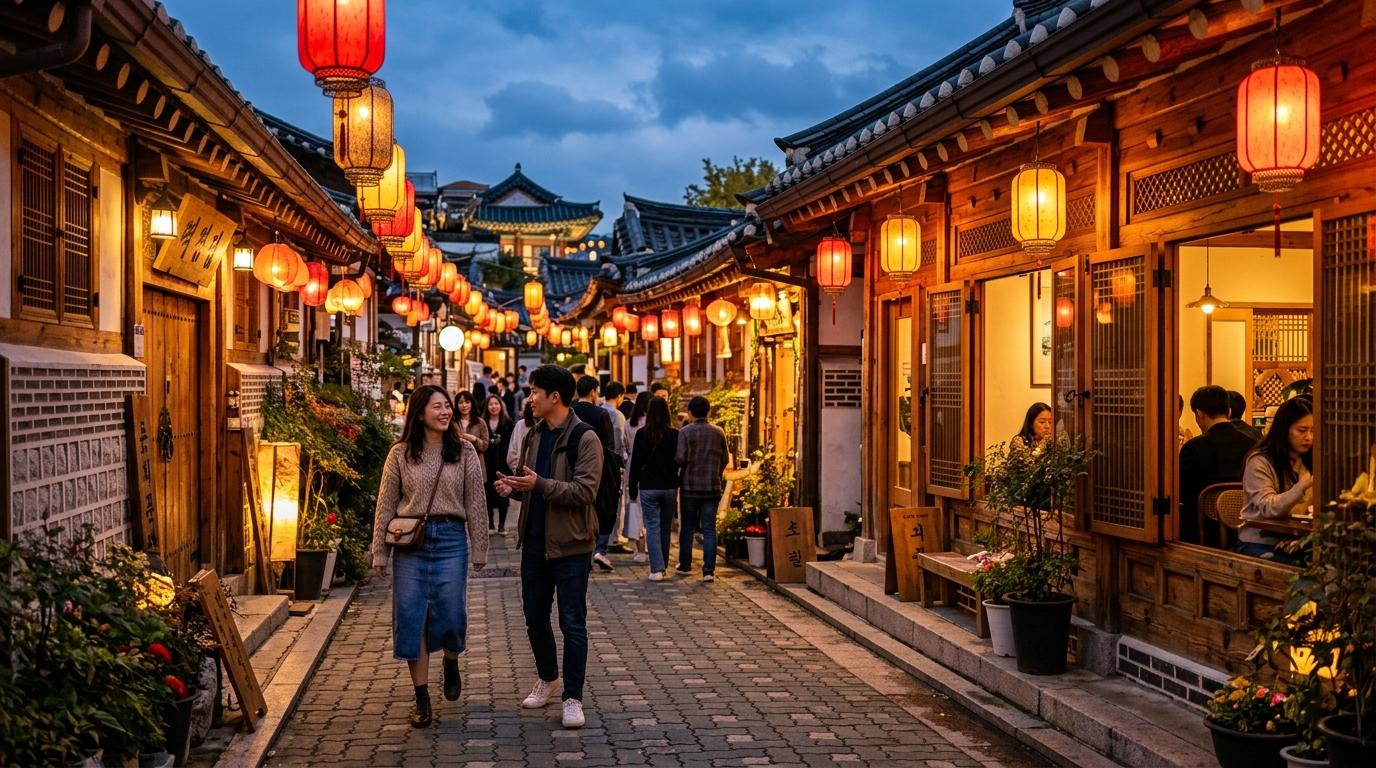
The mood is less traditional-residential and more playful. Weekday mornings are better for clean architectural photos. Evenings are better for warm lanterns and date-night atmosphere, though the alleys can become tight once dinner crowds arrive.
Ikseon-dong will not give you Bukchon’s sweeping roofline view, but it gives you plenty of close-up details: wooden doors, tiled eaves, dessert plates, window reflections and glowing alley corners. It is also a good choice when you want hanok-style photos without feeling like you are trespassing into a quiet neighborhood.
Good for: café photos, couple shots, warm evening scenes, easier hanok-style images
Watch out for: narrow alleys, weekend congestion, lots of people in the frame
Banpo Hangang Park and Moonlight Rainbow Fountain: Seoul’s most theatrical river night
For river photos, Banpo Hangang Park is the dramatic one. The Moonlight Rainbow Fountain on Banpo Bridge is recognized as the world’s longest bridge fountain, stretching about 1.14 km with 380 nozzles. When it runs at night, streams of water and colored lights sweep over the Han River, with the city glowing behind it.
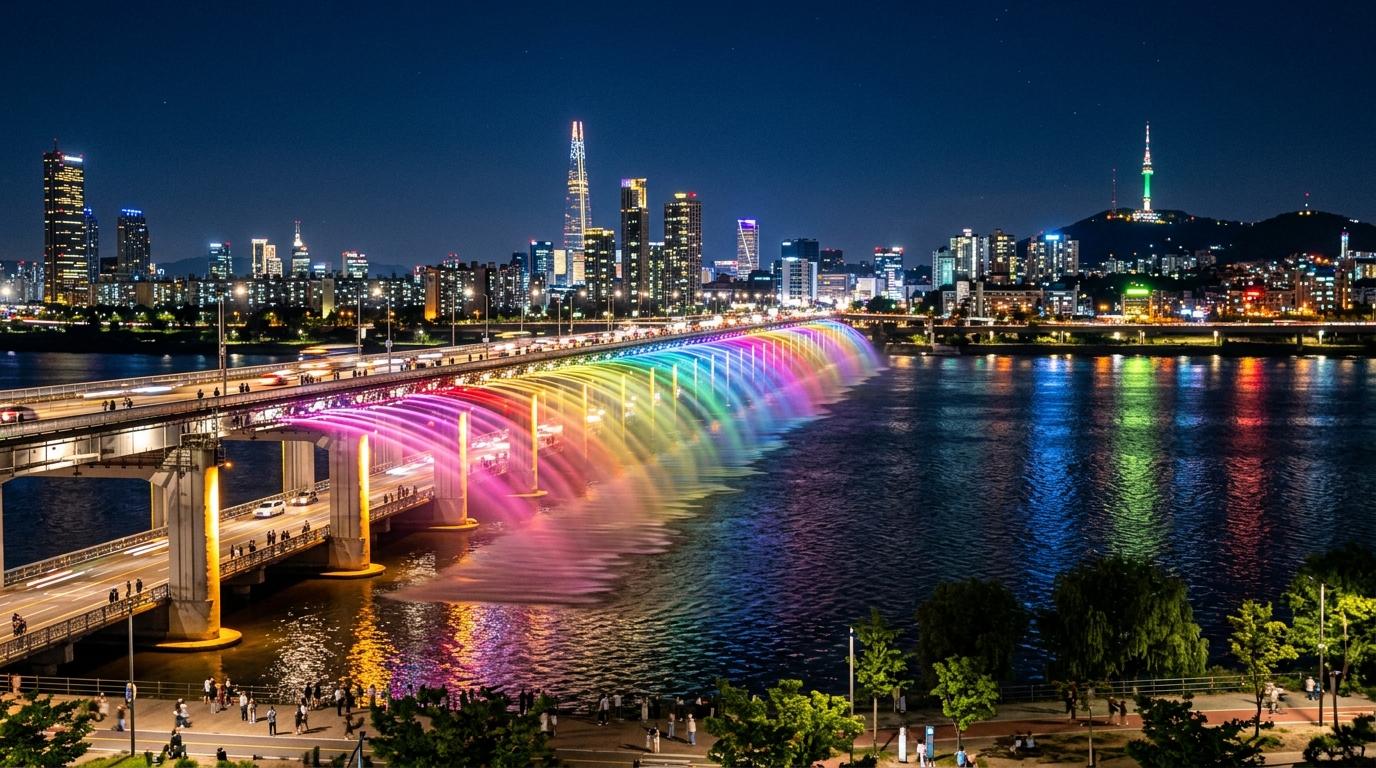
The fountain is seasonal, usually running from March or April through October. For 2026, schedules list March 16 to October 31, with 20-minute shows around 12:00, 19:30, 20:00, 20:30 and 21:00, plus an extra 21:30 show in July and August. Weather is the big variable. Shows are often cancelled for rain, strong wind or severe heat, so check same-day updates before crossing the city for it.
For photos, arrive before the first evening show and settle somewhere around the Banpo or Jamwon lawns, or near Sebitseom. Blue hour into full night, roughly 19:30 to 21:30 in fountain season, is the most forgiving window. A tripod helps for long water trails, but keep it out of busy paths — riverside parks are for everyone, not just photographers.
Good for: colorful night photos, long exposure, river reflections, easy evening plans
Watch out for: seasonal schedule, weather cancellations, crowds during pleasant months
Achasan and Gwangjin Sunnaru: a quieter eastern Seoul panorama
Namsan is famous, but Achasan is one of the loveliest choices when you want a free viewpoint with a little breathing room. The mountain is 295.7 meters high, and it gives wide views over the Han River, Jamsil’s Lotte World Tower, Namsan, Bukhansan and Dobongsan. At night, local photo guides often praise it for its clear river-and-skyline composition.
From Gwangnaru Station Exit 1 on Line 5, it is about a 15-minute walk to the trailhead, then roughly 2.3 km and around 52 minutes on foot to the Haemaji Square night-view point. The summit and Goguryeojeong area offer broader 360-degree views. There is also a 1,380-meter barrier-free decked forest path, useful for a lower-effort sunset or blue-hour walk.
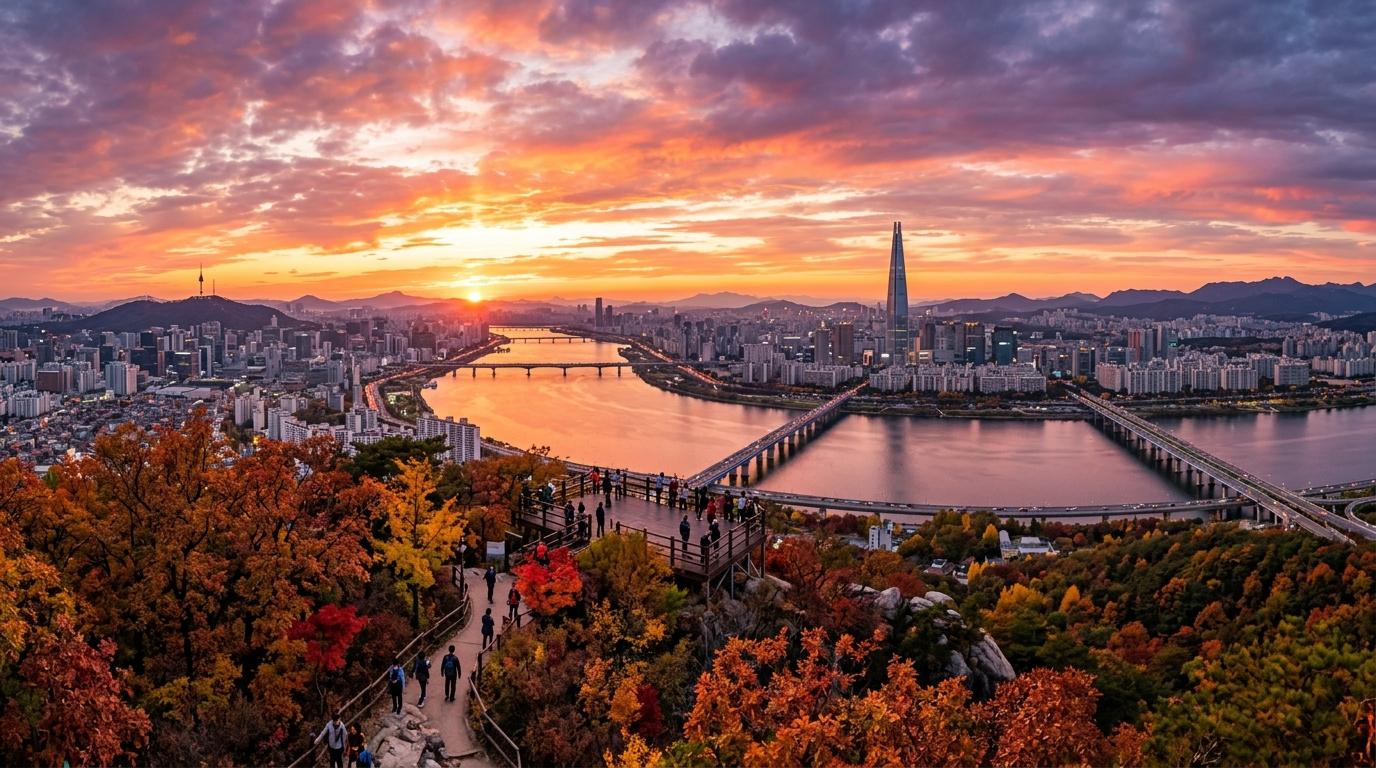
At the foot of Achasan, Gwangjin Sunnaru adds a more urban-green photo stop. Located around 175-1 Guui-dong on Cheonho-daero, it has layered green space, an observation deck, the public artwork Growing Forest, Naru Falls and ground fountains that operate in multiple daytime sessions between about 12:00 and 17:00. It connects into the Achasan section of Seoul Dulle-gil, so you can turn a simple lookout visit into a stitched route: riverside view, forest trail, ecological park and library area.
This eastern route is especially nice for travelers who have already seen central Seoul. It has fewer international tourist crowds than Namsan or the central Han River parks, and the photos feel more local.
Good for: free panorama, sunset, night skyline, repeat visitors, walkers
Watch out for: trail conditions after rain, footwear, darker paths after nightfall
Naksan City Wall: free night views with old stone in the foreground
A skyline photo gets much more interesting when the foreground has a story. That is why Naksan and the Hanyangdoseong Seoul City Wall work so well at night. The Naksan section, often called Naksanseonggwak-gil, runs about 2.1 km between Heunginjimun near Dongdaemun and Hyehwamun, taking around one hour on foot. The summit area is only about 124 meters high, but the softly lit stone wall gives your photos texture that observatories cannot.
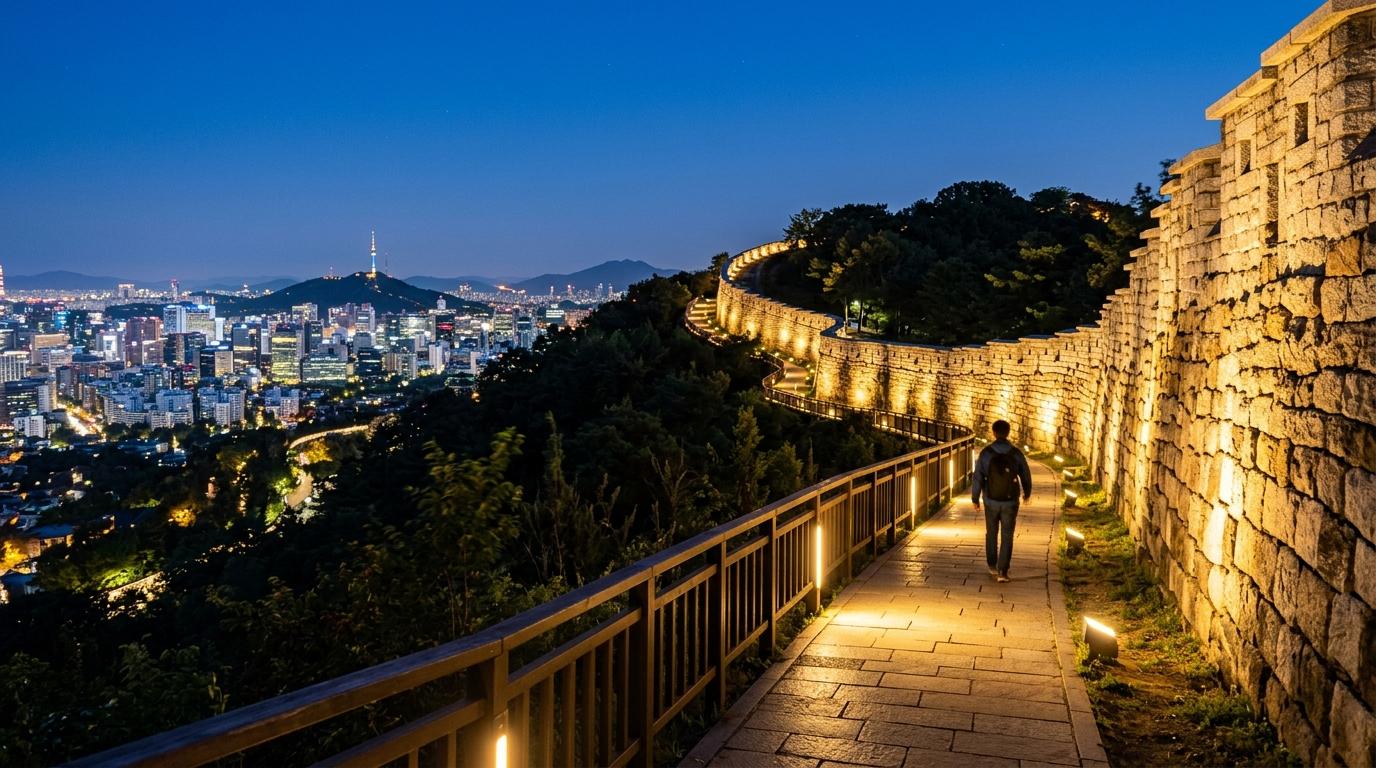
This is not a soaring aerial view. It is better than that for certain photos: old wall, city lights, neighborhood rooftops and a gentle walking path. Blue hour through early evening is the nicest time, and the route feels more romantic than technical. Use a compact camera or phone with night mode, and keep moving if the path is narrow.
Good for: free night walks, city wall photos, couples, atmospheric skyline shots
Watch out for: slopes, narrow sections, less dramatic height than observatories
DDP: futuristic Seoul when the weather is not cooperating
When the riverside is windy or the sky is dull, Dongdaemun Design Plaza is a dependable night-photo choice. The silver curves of DDP catch light beautifully, and the surrounding Dongdaemun area gives you a clean futuristic look without needing a ticket.
DDP’s permanent night lighting program Dream in Light is scheduled in 2026 from January 9 to December 31, generally running between 18:00 and 22:00 on the hour. Seasonal editions, including BTS Music Light programs, may run more frequently after sunset during certain periods. The building also hosts larger media-art events: Seoul Light DDP 2026 Fall is scheduled for September 3 to 13, 2026, with free nightly shows from 19:30 to 22:30.
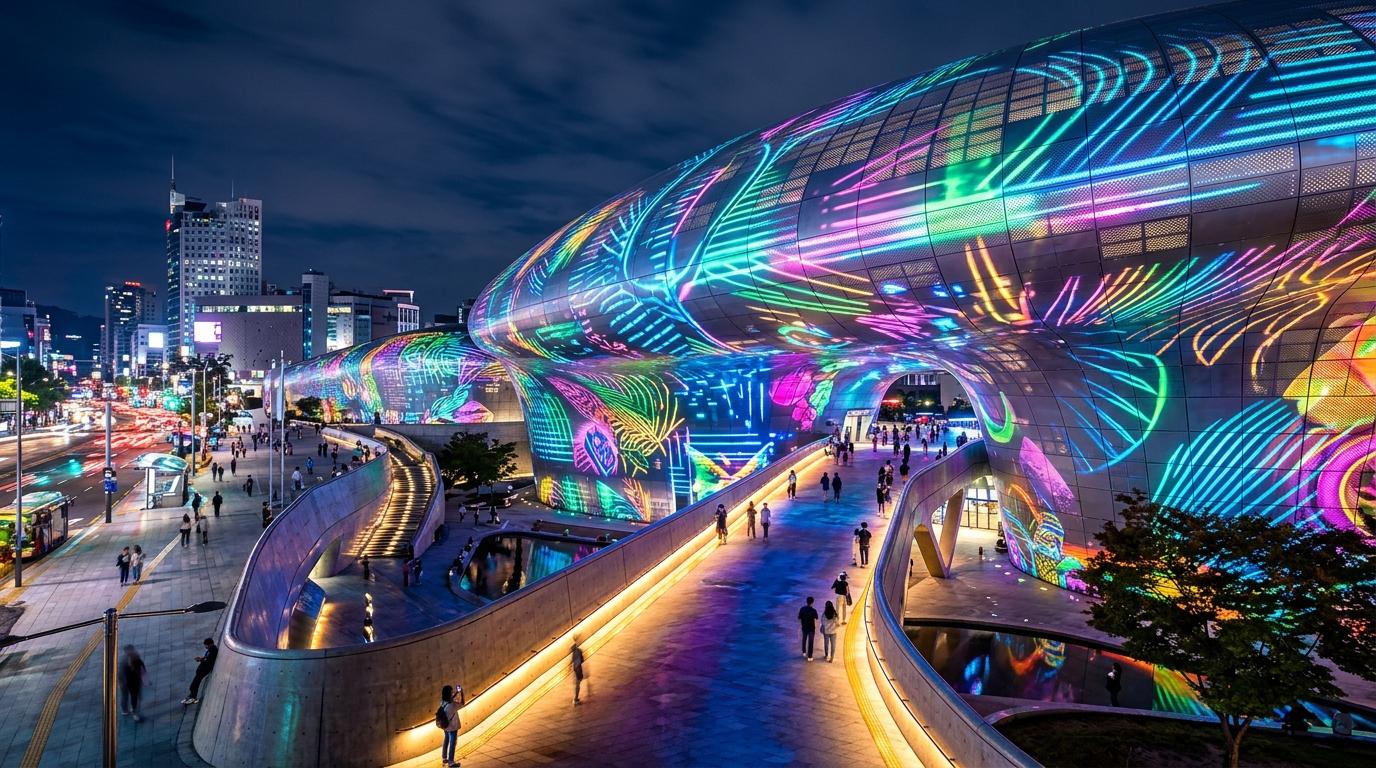
The regular lighting is easygoing. Festival periods are another story. Prior Seoul Light seasons have attracted huge crowds, and the 2026 fall edition includes live electronic and club-style performances connected to real-time projections. Go for energy, not emptiness.
Good for: rainy-day night plans, architecture, media art, futuristic city photos
Watch out for: event crowds, schedule changes, special-event access control
Euljiro and Sewoon Plaza: neon, rooftops and retro-industrial texture
Euljiro, often nicknamed Hipjiro, is one of the best neighborhoods for travelers who like city texture more than postcard views. Around Euljiro 3-ga and 4-ga, you will find printing shops, metal workshops, old signs, narrow alleys, rooftop cafés and neon beer streets all packed within a very walkable area.
The Sewoon Plaza rooftop and elevated walkways give a layered view of Cheonggyecheon, older commercial buildings and the city beyond. Some nearby rooftops around Daerim Sangga are also known for that cyberpunk-Seoul feeling. Because parts of the Sewoon and Cheonggye area have faced construction, deck changes and access adjustments, check current conditions before building your whole evening around one rooftop.
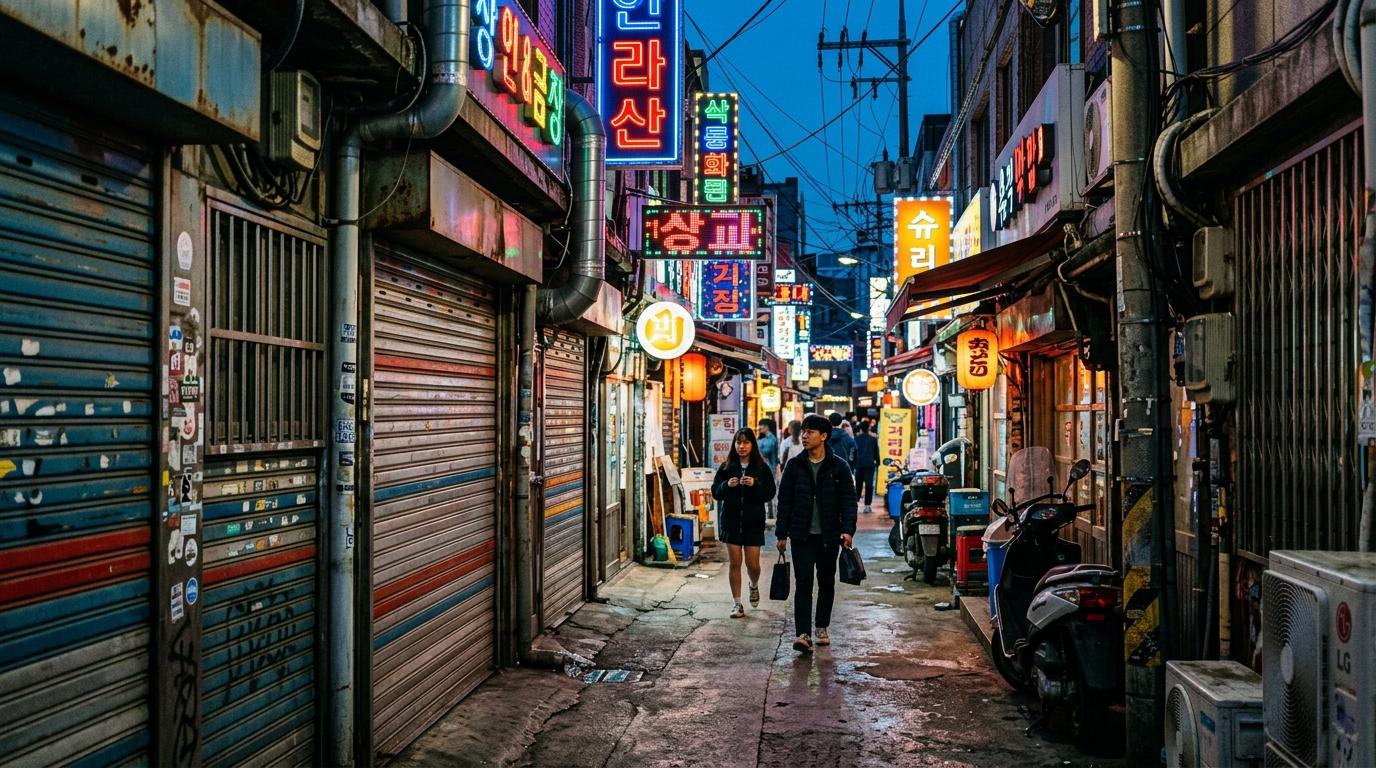
For street photos, the narrow alleys around cafés such as Coffee Hanyakbang and Eulji Dabang are famous for a reason: you slip from busy central Seoul into one-meter-wide lanes that feel like another decade. Nogari Alley is best from roughly 17:00 to 20:00, when outdoor beer tables start filling and neon lights switch on.
Euljiro is photogenic because people still work there. Do not block workshop entrances, avoid photographing workers too closely without permission, and remember that many businesses are not sets — they are making, printing, cutting and repairing things in real time.
Good for: neon nights, retro alleys, rooftop angles, rainy-evening atmosphere
Watch out for: active businesses, narrow alleys, changing rooftop access
Mullae-dong Art Village: metal workshops, murals and real creative grit
If Seongsu is polished industrial, Mullae-dong Art Village is still rough around the edges in the best way. The neighborhood grew from an active 1970s ironworks cluster, with artists gradually moving in from the early 2000s. It was officially named Mullae-dong Art Village in 2004, and as of 2021 the area had around 150 studios and 350 artists working among metal shops, small galleries and cultural spaces.
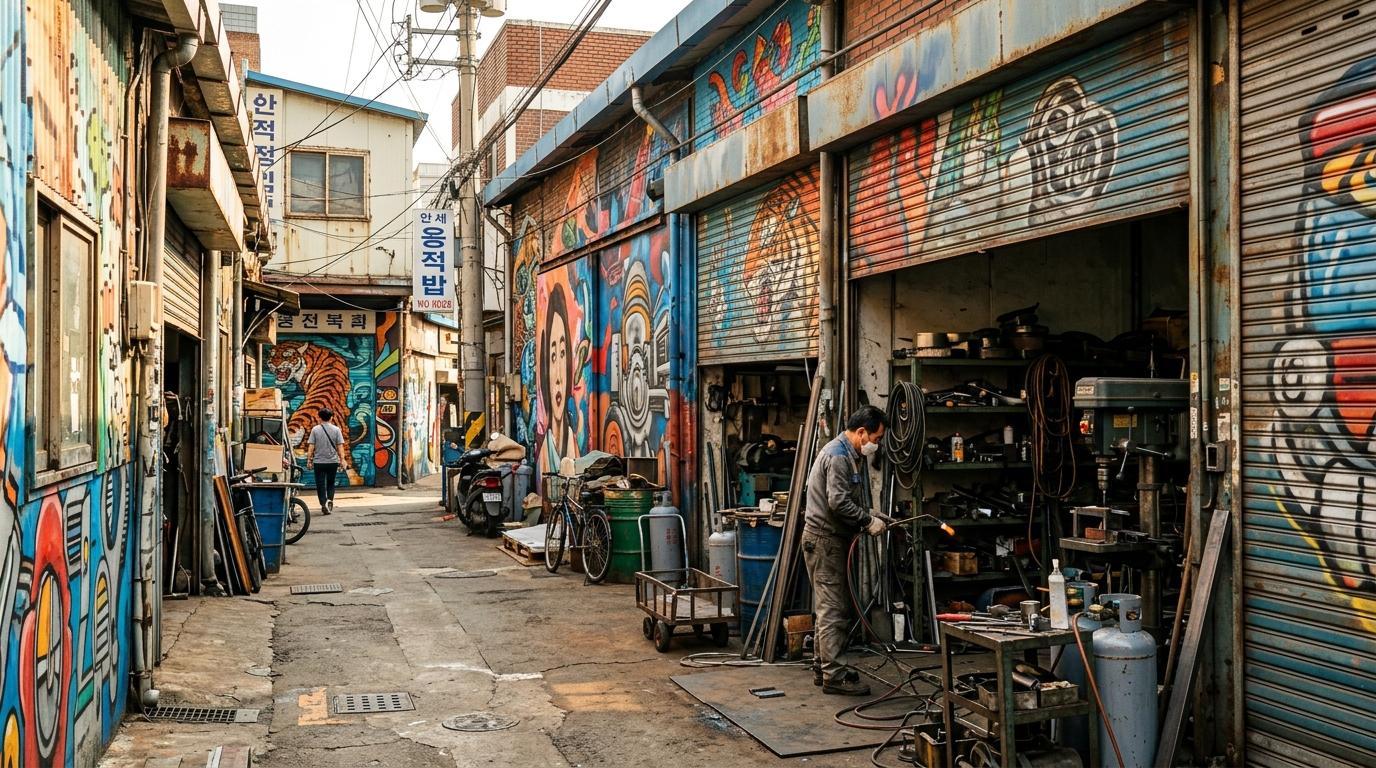
The main photo area is about 5 to 10 minutes on foot from Mullae Station on Line 2, especially around the alleys near Dorim-ro 128ga-gil 13-8 and the Mullae-dong Post Office. Weekdays are best if you want the actual industrial side: welding sparks, open workshops, machinery and workers moving through the lanes. Weekends are quieter and better for shutter murals, metal sculptures and café-hopping.
The neighborhood also has a small but strong café and bar scene, including industrial-frame cafés, craft beer spots and low-key creative spaces. Some craft workshops, such as pottery, leather or woodworking, require reservations and commonly run for 2 to 3 hours with prices around KRW 30,000 to 50,000, depending on the program.
Good for: industrial street photography, murals, makers’ spaces, less polished Seoul
Watch out for: working factories, weekday noise, uneven sidewalks, private studio boundaries
Seongsu-dong: warehouse cafés and pop-up Seoul
Seongsu-dong is the more curated side of Seoul’s industrial revival. Around Seongsu Station on Line 2 and streets such as Yeonmujang-gil, old shoe and printing factory zones now sit beside major pop-up stores, vintage markets, design shops and huge industrial cafés like Onion, Daelim Warehouse and Anthracite.
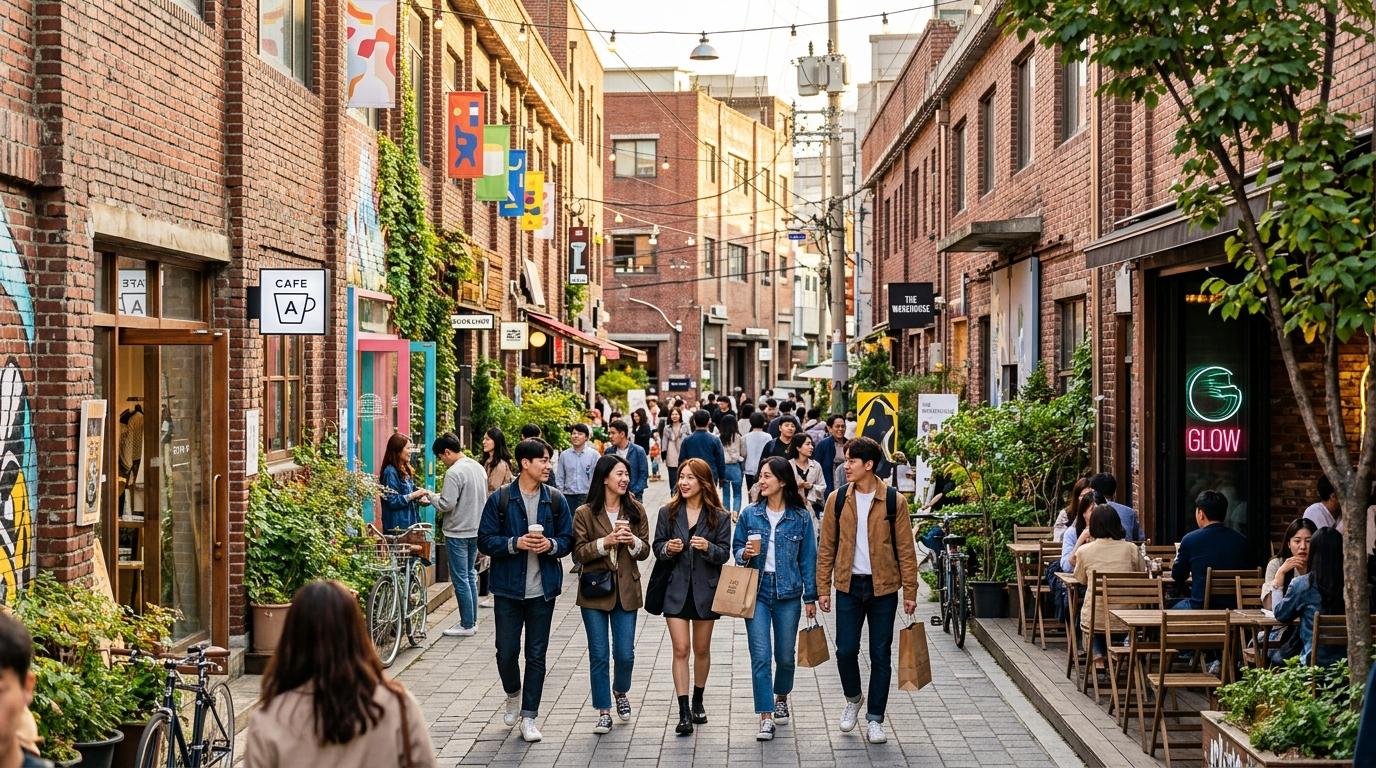
The fun of photographing Seongsu is that it changes constantly. A wall that held one fashion pop-up a few months ago might be a beauty brand installation today. That makes it great for travelers who like contemporary Seoul, but less reliable if you are chasing one exact background from social media.
Go in the afternoon for café interiors and street shots, then stay toward evening if you want lit storefronts and a more energetic crowd. Compared with Mullae, Seongsu is easier, cleaner and more shopping-friendly. Compared with Euljiro, it is less gritty and more designed.
Good for: cafés, fashion, pop-ups, modern industrial interiors
Watch out for: fast-changing installations, weekend lines, branded spaces with photo rules
Nodeul Island, Eungbongsan and Seokchon Lake: extra spots for water and reflections
If you love reflection photos, Seoul has several smaller spots worth adding around your main plans.
Nodeul Island sits on the Han River and works nicely with nearby bridges for layered skyline shots. Opening hours can shift by season — winter schedules have included Tuesday to Sunday, 10:00 to 20:00 — so check before going at night.
Eungbongsan Palgakjeong is another strong blue-hour viewpoint, especially for river and bridge compositions. It is less about one famous landmark and more about Seoul’s dense lines of roads, water and lights.
Seokchon Lake, mentioned above as the best free companion to Lotte World Tower, is one of the easiest places to get a clean reflection composition. The 2.5 km loop lets you adjust your angle until the tower, trees and water sit well together.
Three photo routes that work beautifully in Seoul
Classic Seoul skyline evening
Start with a slower walk on Namsan Dulle-gil, then head up toward Namsan Seoul Tower before sunset. Stay through blue hour, take the love-lock and skyline shots, then come down by cable car or bus. This route is easy to understand, iconic, and works well for a first Seoul night.
Best for: first-time travelers, couples, anyone who wants the Seoul skyline without overcomplicating the day.
Hanok and alley day
Visit Bukchon only during the allowed daytime window and keep it quiet. Focus on rooflines and wider street views, not doorways. Afterward, move to Ikseon-dong for cafés, dessert, shopping and warmer evening photos. This pairing gives you both the traditional-residential Seoul and the playful hanok-café version, without overstaying in Bukchon.
Best for: travelers who want hanok photos but also want a relaxed café stop.
Eastern river and mountain sunset
Begin at Gwangjin Sunnaru, then continue toward Achasan for sunset and blue hour. If you want to build a slower content day around the area, Gwangjin-gu also has hanok-inspired rooftop cafés such as Cafe de Novo and Who Moon, though opening hours and availability should be checked before you go. This side of Seoul feels less crowded than the central river parks and gives you a fresh angle on the Han River.
Best for: repeat Seoul visitors, walkers, skyline photographers who do not want the usual Namsan-only route.
Futuristic-retro night walk
Start at DDP for architecture and light shows, then move toward Euljiro for alleys, neon, Sewoon-area rooftops if accessible, and Nogari Alley atmosphere. This is the best route when the sky is not special but the city itself is glowing.
Best for: street photographers, rainy evenings, travelers who like Seoul after dark.
Photo mistakes that are easy to avoid
The biggest mistake is treating every famous spot the same. Seoul’s photo places have very different personalities and rules.
Do not treat Bukchon like an open-air studio. It is beautiful because people live there, and the current restrictions are real. Visit during the legal window, stay quiet, and leave quickly if a street feels too residential.
Do not go to Banpo Fountain without checking the weather. A perfect schedule means very little if wind or rain cancels the show.
Do not pay for an observatory on a bad visibility day unless you are comfortable with a softer, moodier result. Seoul can be hazy, and glass reflections are part of the observatory bargain.
Do not chase only one viral background. Some of Seoul’s best photos happen in the transition between places: a hill path before Namsan Tower, a shuttered workshop in Mullae, a small alley behind Euljiro, a quiet lake angle near Jamsil.
And finally, do not overpack. A phone with good night mode can do a lot in Seoul. If you bring a tripod, save it for riversides and open viewpoints, not tight residential lanes or crowded observatory spaces.
The Creatrip take
For the prettiest Seoul photo story, choose one spot from each layer: Namsan or SEOUL SKY for height, Bukchon or Ikseon-dong for hanok texture, Banpo or Achasan for the river, and Euljiro or Mullae for street character. That mix feels far more like Seoul than a folder full of the same skyline angle.
Seoul rewards timing, patience and a little courtesy. Arrive before the light peaks, keep an eye on changing schedules, and remember that the most photogenic parts of the city are often still lived in, worked in and loved by locals every day.