Is South Korea Safe for Visitors? Seoul, North Korea Tensions, and Typhoon Season Travel Advice
A practical Creatrip safety guide for enjoying Korea with calm expectations, smart weather planning, and fewer travel-day surprises.

So, is South Korea safe for visitors right now?
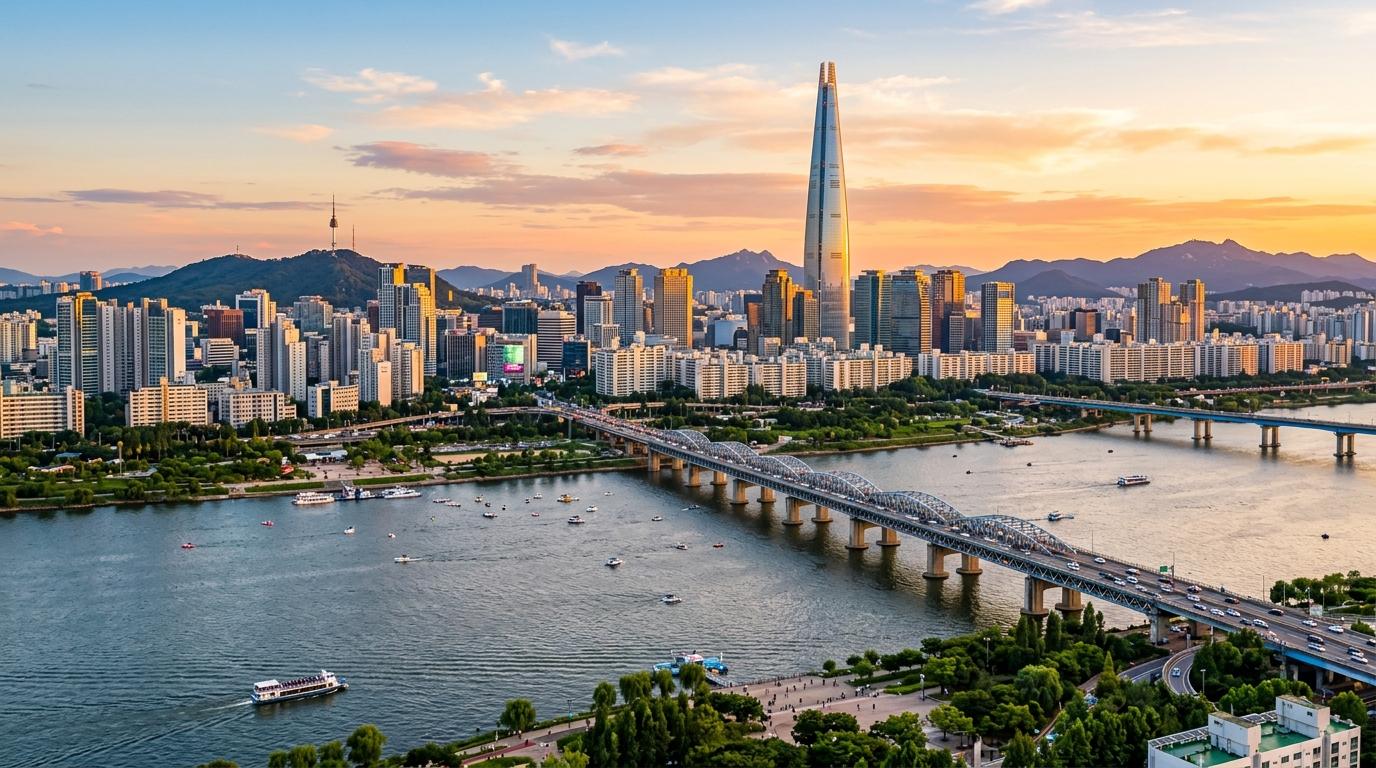
South Korea is one of the easier countries in Asia to travel independently: public transport is reliable, violent crime against tourists is uncommon, and Seoul feels very workable even for first-time visitors who do not speak Korean. The major English-language government advisories currently place South Korea in their lowest or normal-precautions tier: the U.S. State Department lists it as Level 1, Canada advises normal security precautions, Australia says to exercise normal safety precautions, and the U.K. has no overall advisory against travel.
That does not mean Korea is a bubble. The real safety picture is more specific: North Korea-related tension can flare quickly, summer rain can be intense, scams aimed at foreign K-pop fans are rising, and big-city nightlife needs the same common sense you would use anywhere. For most travelers, these are planning details rather than reasons to cancel a trip.
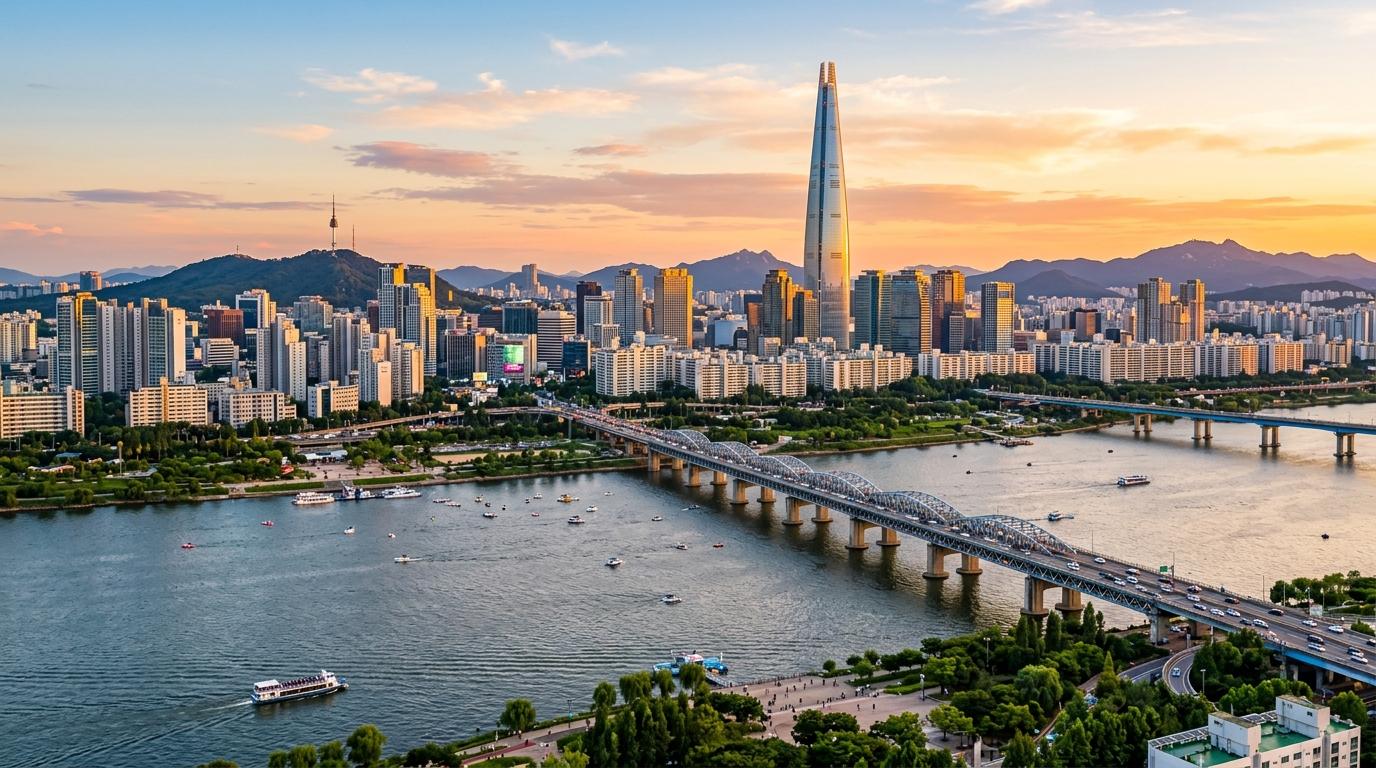
At Creatrip, we would describe Korea as safe for normal travel, but not a place to ignore alerts. The good news is that Korea’s emergency systems are improving for foreigners, especially in Seoul and Busan. The less convenient news is that some alerts still arrive mostly in Korean, and weather disruptions can move faster than your itinerary.
Seoul feels safe, but the risks are not zero
Seoul is generally low-risk for visitors. Independent safety indexes often rate South Korea highly, including for solo female travelers, and violent crime against tourists is considered rare. The issues most visitors actually run into are usually smaller but still frustrating: overcharging, fake ticket sales, nightlife scams, protest-related road closures, sudden weather alerts, and airport or transport delays.
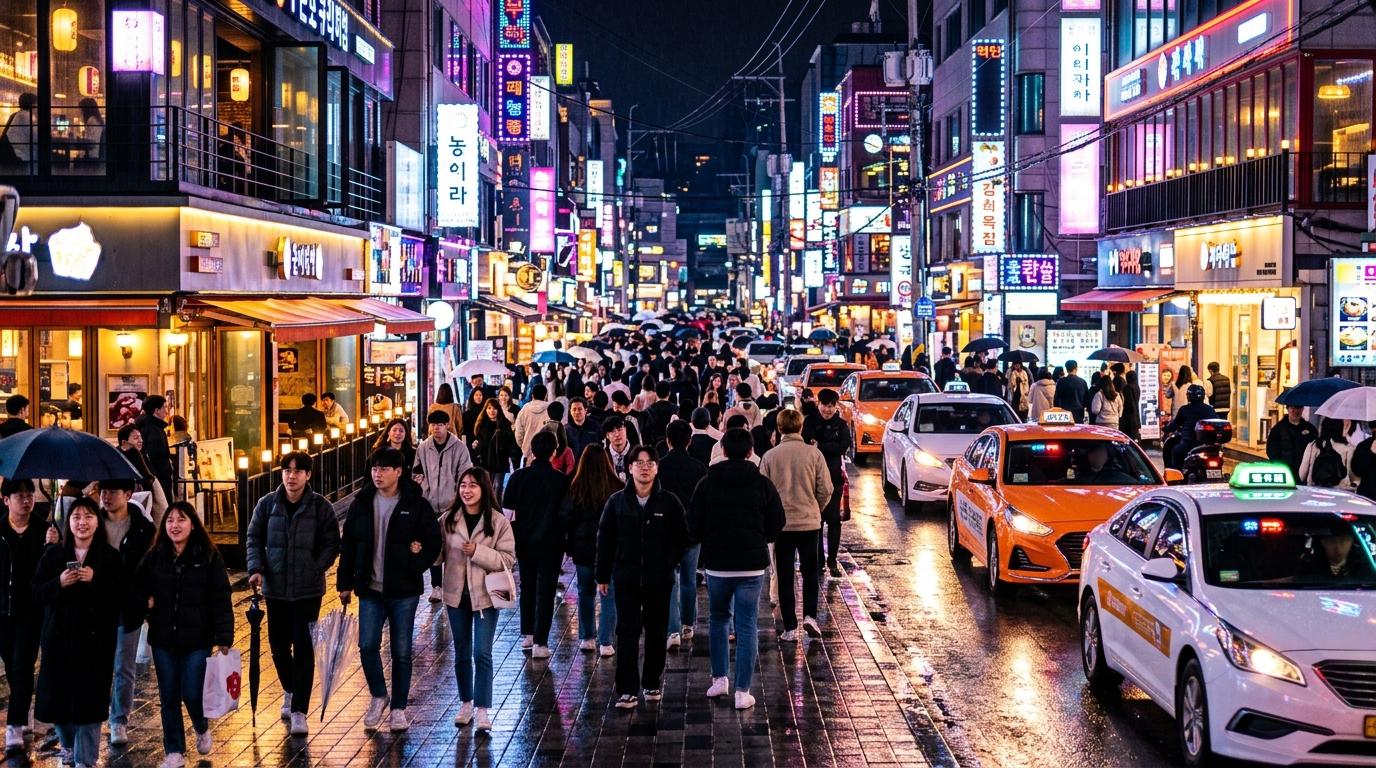
The places where travelers tend to relax their guard are also the places where problems become more likely: late-night areas such as Itaewon, Hongdae, and Gangnam; crowded concert or fan-event zones; and social media marketplaces where someone is selling a ticket that feels just a little too convenient.
A good Seoul safety mindset is simple: enjoy the city freely, but keep your travel decisions boring when money, transport, or official alerts are involved.
What normal precautions look like in Korea
You do not need to walk around Seoul worried, but a few habits go a long way:
- Use licensed taxis or well-known ride-hailing/taxi apps where possible, especially late at night.
- Check the meter, route, and receipt if taking a taxi from busy tourist areas.
- Keep an eye on your bill in nightlife districts, particularly where staff are aggressively pulling people inside.
- Avoid buying concert tickets, fan meeting passes, or limited-edition goods through strangers on social media.
- Give demonstrations a wide berth, even when they look peaceful.
- Take government emergency alerts seriously, even if locals around you seem calm.
Seoul has been tightening enforcement around taxi overcharging and ride refusals targeting foreigners, including multilingual QR-style reporting and clearer receipt information. That is encouraging, but it does not replace basic caution at airports, hotels, and nightlife streets.
North Korea concerns: what travelers actually need to understand
North Korea is the question that sits in the background of almost every Korea safety conversation. The honest answer is: yes, tensions matter, but they rarely interrupt ordinary travel in Seoul. Locals commute, meet friends, shop, and go to concerts through periods of missile tests and military rhetoric. Most visitors will not feel the peninsula situation in daily life unless there is an alert, a drill, a DMZ tour change, or a news headline that makes family back home nervous.
Still, tension can spike quickly around missile launches, nuclear activity, border incidents, or large South Korea–U.S. military exercises. Areas closer to the DMZ, including parts of Gyeonggi and Gangwon provinces, naturally carry more operational sensitivity than central Seoul, Busan, Jeju, or other major tourist hubs.
Recent incidents show why alerts matter
North Korea-related activity has not been only symbolic. Since 2024, North Korea has launched large numbers of trash and waste balloons toward South Korea, with landings reported across the country and especially in Gyeonggi Province. GPS spoofing and jamming incidents traced mostly to North Korea have also increased sharply, causing temporary runway shutdowns at Incheon International Airport. No major aviation accident has resulted from these incidents, but they show how non-kinetic activity can still create delays or operational caution.
There have also been border incidents involving North Korean soldiers crossing near the Military Demarcation Line and being repelled by South Korean warning shots. Separate false-alarm or coordination-related alerts near the border have triggered civilian evacuation messages. These events are not part of the average Seoul sightseeing day, but they explain why Korea takes alert systems seriously.
For travelers, the practical takeaway is not to obsess over every headline. It is to stay reachable, pay attention to official messages, and avoid treating sirens or emergency texts as background noise.
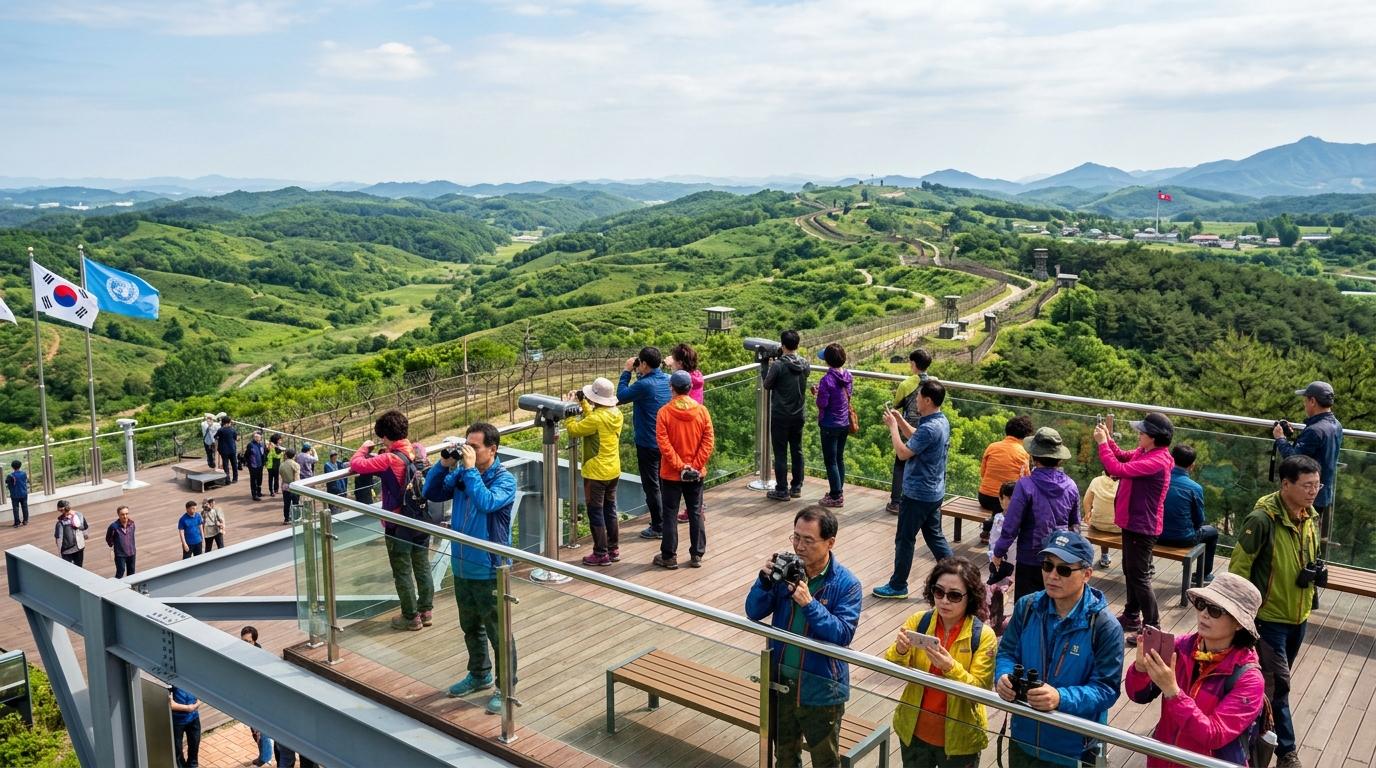
DMZ tours need extra flexibility
DMZ tours can be fascinating, but they are more sensitive to security conditions than a palace visit or cafe day in Seoul. Access can change with little notice due to military activity, border tension, weather, or official restrictions.
If the DMZ is important to your trip, avoid saving it for the very last day. Book with a reputable operator, keep your passport ready, and accept that cancellations or route changes are not unusual when conditions shift. It is also worth checking the latest travel advisory from your own government before heading to border-adjacent areas.
Protests and political activity: easy to avoid, important to respect
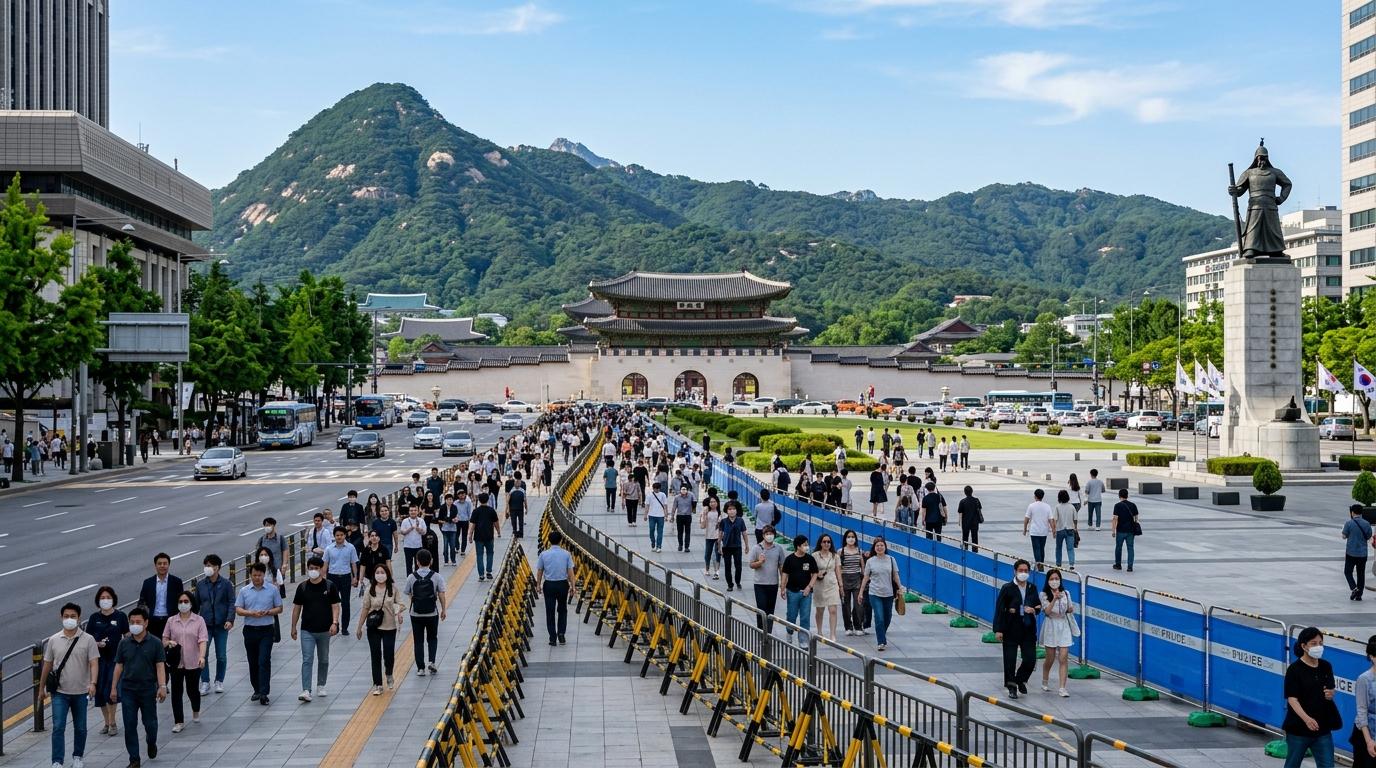
Demonstrations are common in Seoul, especially around Seoul City Hall, Gwanghwamun, the U.S. Embassy area, military-related sites, and major public squares. Many are orderly, but some can become tense or cause sudden road closures and heavy police presence.
Foreigners in South Korea are legally restricted from political activity. Short-stay travelers are unlikely to run into trouble by simply passing through an area, but joining, chanting, holding signs, or getting involved is a different matter. The best approach is unromantic but effective: take a different street, do not linger for photos if police are moving crowds, and let the local situation pass.
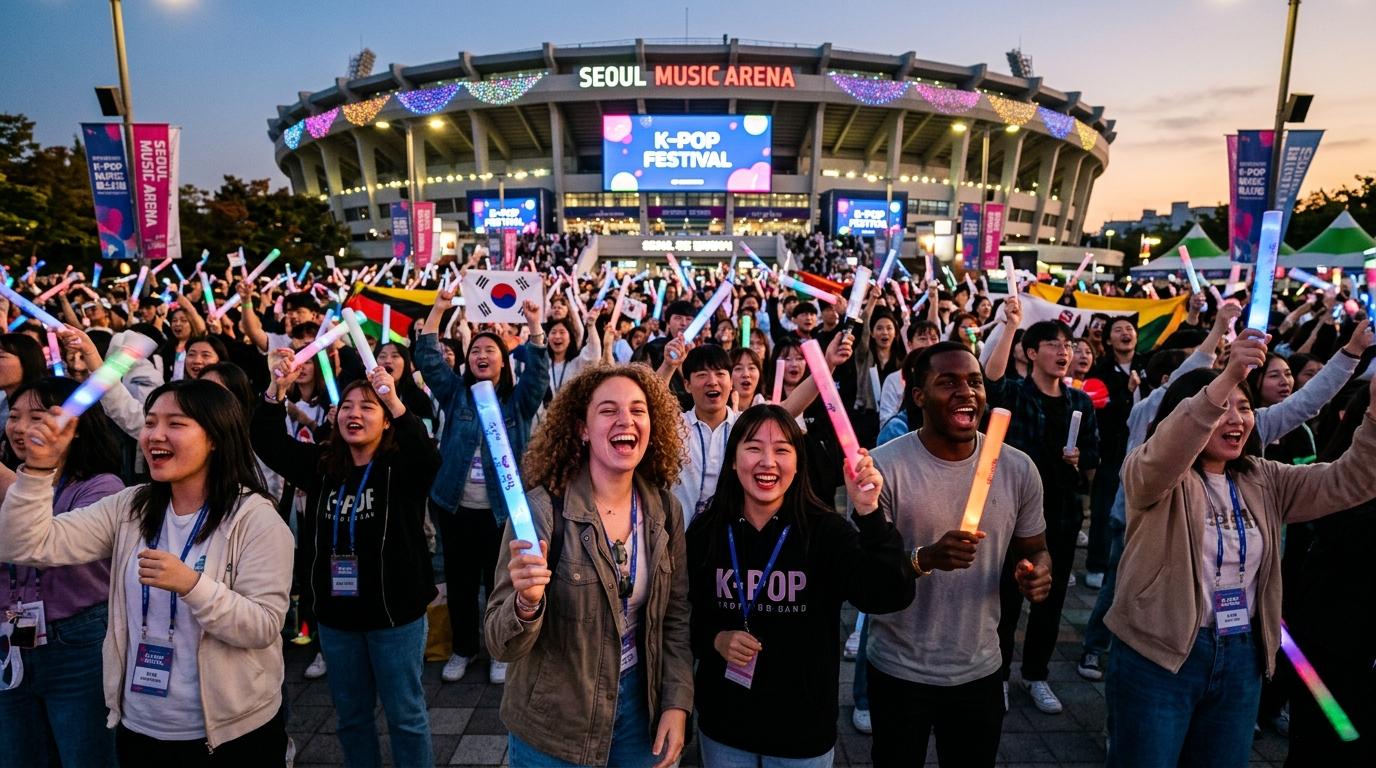
The scam risk that has grown fastest: K-pop tickets and proxy buying
Korea’s tourism boom has brought more foreign visitors, and scams have followed the crowd. Police figures show that foreign fraud victims in Korea rose sharply from 2023 to 2025, with a noticeable cluster around K-culture tourism.
The common pattern is painfully familiar: someone on X/Twitter or a secondhand platform offers concert tickets, fan meeting passes, rare merchandise, or proxy shopping for limited-edition goods. They send a convincing-looking reservation screenshot or mobile ticket image. Then come extra payment requests, transfer fees, delivery excuses, or silence.
Large events can concentrate this risk. Reports around major K-pop concerts have shown scams making up a significant share of crimes involving foreigners at the venue.
A safer way to buy tickets and goods
When possible, stick to official or widely used global ticketing channels such as NOL World, YES24 Global, or Melon Ticket Global, depending on the event. Availability and rules vary by concert, fan club, and organizer, so always confirm through the artist, venue, or ticketing platform’s official notice.
For merchandise, be especially cautious with proxy purchases that require repeated direct transfers. If someone keeps asking for extra money after the first payment, that is a bright red flag. Screenshots are easy to fake; official purchase history, platform protection, and traceable payment methods matter much more.
Entry paperwork scams: boring, but worth getting right
Korea’s entry rules are fairly traveler-friendly for many nationalities, but the details are easy to misunderstand. Visa-free short stays are available for many visitors, and K-ETA exemptions have been extended for some countries through the end of 2026. For example, U.S. and Australian short-stay travelers have had the K-ETA requirement suspended through December 31, 2026, with the requirement scheduled to resume from January 1, 2027. Canadian tourists have separate conditions, including visa-free stays of up to 180 days and K-ETA exemption through the end of 2026.
Because these rules differ by nationality and can change, check the official Korean immigration or K-ETA site before departure. Most foreign arrivals also go through biometric collection, including fingerprints and facial scan.
One small but real scam issue: Korea requires an e-Arrival entry declaration, online or paper, and there has been documented scam activity around lookalike sites. The e-Arrival form itself is free. Avoid unofficial pages that charge unnecessary processing fees or make the form look more complicated than it is.
Summer safety: Korea’s rainy season is beautiful, messy, and sometimes serious
Korea’s summer has two personalities. One is iced coffee, green palace gardens, beach trips, and late sunsets over the Han River. The other is sudden rain so heavy that umbrellas feel decorative.
The rainy season, called jangma, usually arrives from late June into July, with regional differences. Based on Korea Meteorological Administration climate normals, Jeju’s rainy season averages around June 19 to July 20, the southern region around June 23 to July 24, and central Korea, including Seoul, around June 25 to July 26. Those windows are not guarantees. Some years are relatively mild, while others bring long, heavy, disruptive rain.
Recent seasons have shown how intense summer weather can become. Korea has seen localized downpours of 50 to 100 mm per hour, severe flooding events, evacuations, and major transport disruptions. Typhoons can also cause flight cancellations, ferry suspensions, coastal closures, and national park restrictions.
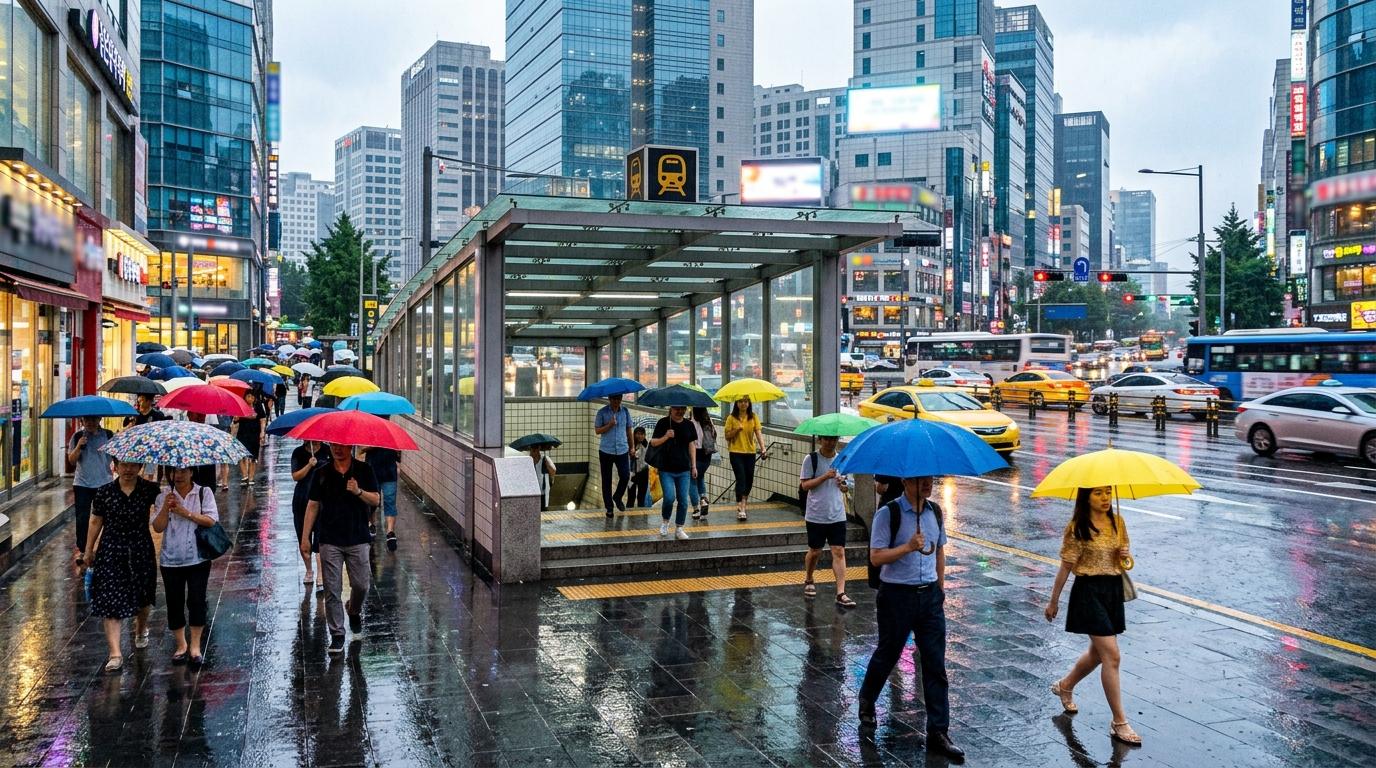
The main trade-off of visiting during jangma
Traveling during rainy season is not a bad idea by default. Hotels can be easier to book than peak holiday periods, the city looks lush, and indoor Korea is genuinely fun: museums, department stores, cafes, spas, shopping complexes, aquariums, beauty clinics, and restaurants can fill rainy days very naturally.
The trade-off is flexibility. Outdoor plans such as Han River picnics, palace hanbok photos, hiking, island ferries, beach days, and night markets can become weather-dependent. A tightly packed itinerary with no indoor backup will feel more stressful than the rain itself.
For Seoul, rainy-season travel is easiest when your hotel is close to a subway station and your plans are clustered by neighborhood. For Jeju or coastal Busan, build in more patience: wind, waves, and flight or ferry changes can matter as much as rainfall.
What Korea’s weather warnings mean for travelers
Korea’s weather alert system is quantitative and fast-moving. The exact wording may vary, but these are the thresholds that matter for travel decisions:
- Heavy-rain advisory: at least 60 mm in 3 hours or 110 mm in 12 hours.
- Heavy-rain warning: at least 90 mm in 3 hours or 180 mm in 12 hours.
- Typhoon warning: issued when strong wind, high waves, storm surge, or heavy rain criteria are met, or when total expected rainfall reaches at least 200 mm.
- Heatwave advisory or warning: based on feels-like temperatures of around 33°C or 35°C for at least two consecutive days.
There is also an urgent disaster SMS trigger for very intense rain when 50 mm in 1 hour and 90 mm in 3 hours are observed together. These alerts can lead to the closure of riverside parks, underpasses, trails, beaches, national parks, and outdoor events.
A heavy-rain warning is not just a suggestion to bring a bigger umbrella. It is the point where low-lying areas, underground spaces, mountain trails, and road travel deserve a rethink.
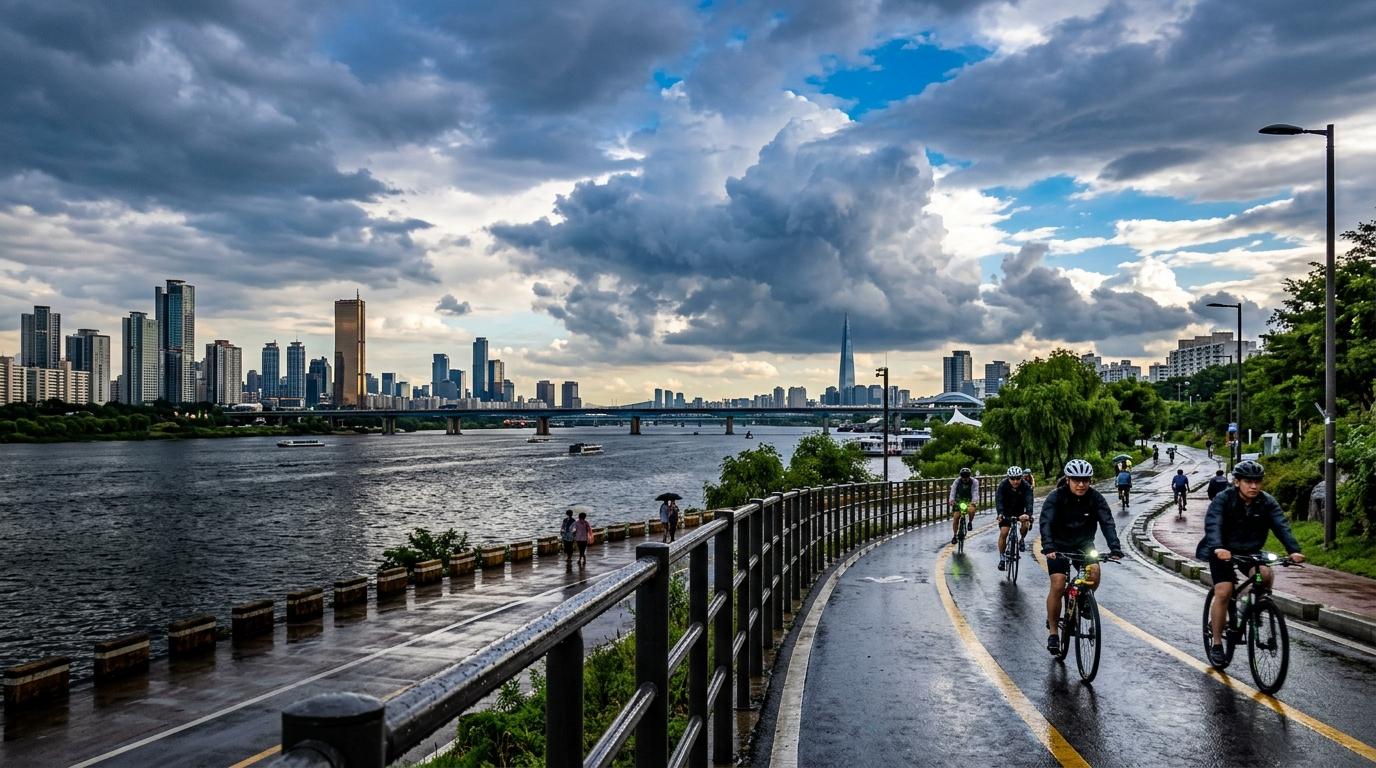
The places to be most careful during heavy rain
Heavy rain in Korea is rarely dangerous everywhere at once. The risk is local and physical: water collects quickly in certain spaces, and conditions change by neighborhood.
Underpasses and low roads
Do not walk or drive into flooded underpasses. Korea has been paying closer attention to underground and low-road flood risk after serious flooding incidents, but the safest choice as a traveler is still to avoid them entirely during heavy rain.
Basement and semi-basement rooms
Korea’s semi-basement housing, often called banjiha, has a specific flood risk. Safety guidance notes that once outside water reaches roughly knee height, around 50 cm, doors can become extremely difficult to open. Travelers are less likely to stay in banjiha than long-term residents, but budget lodging, guesthouses, or older urban buildings can still have basement-level rooms.
If you are booking during late June, July, or typhoon periods, ground-floor or upper-floor accommodation is the calmer choice. Long-stay visitors living in basement or semi-basement housing should take heavy-rain warnings seriously and evacuate early rather than waiting to see whether water enters.
River parks and streams
Seoul’s riverside parks are lovely on clear days, but they can close quickly when rain raises water levels. Avoid stepping past barriers or walking along streams during alerts. The photos are not worth the risk.
Mountains and coastal areas
Hiking trails can close due to landslide risk, slippery paths, high winds, or lightning. On Jeju and along the southern coast, typhoons can also bring dangerous waves and ferry cancellations. Even when the sky looks briefly clear, official closures are there for a reason.
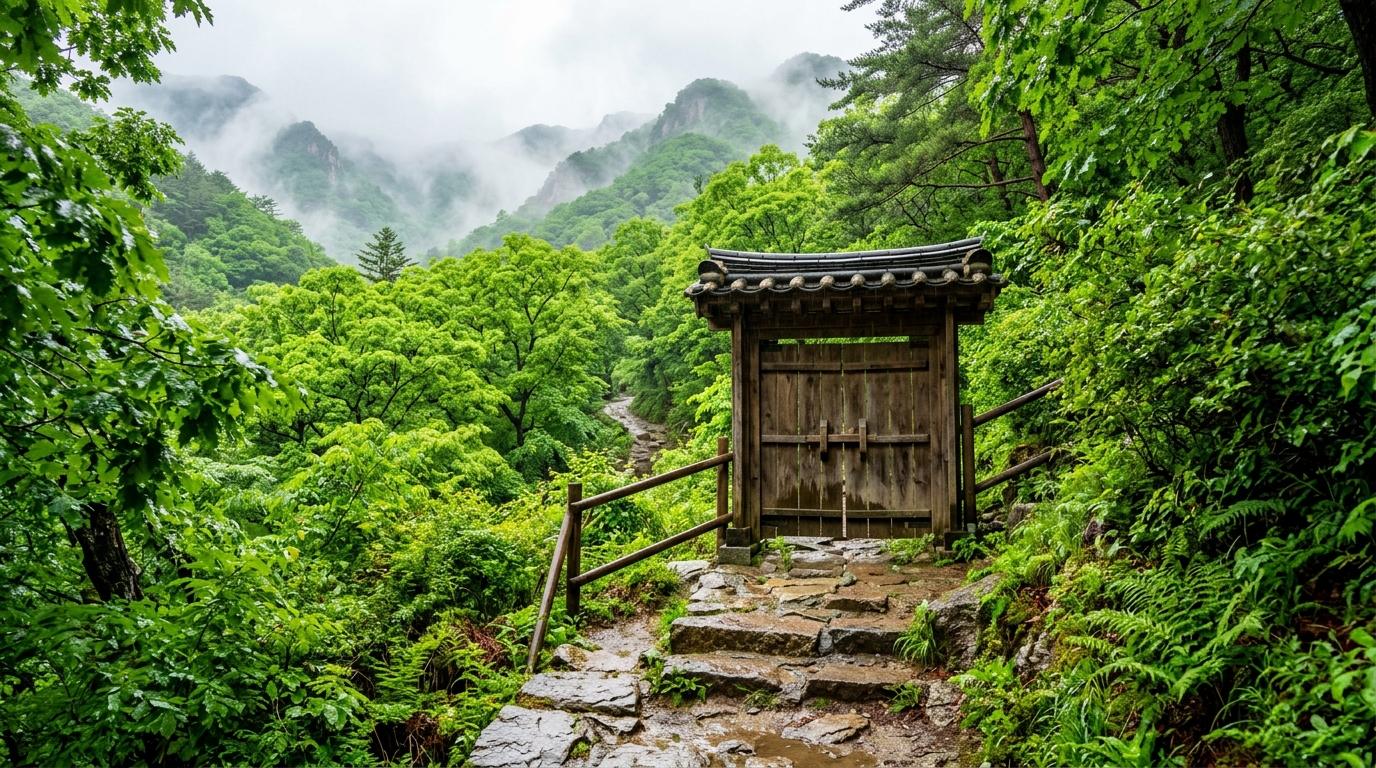
Typhoon season: how much should it affect your trip?
Typhoons do not hit every itinerary, but when they do, they can dominate travel for a day or two. The biggest visitor-facing problems are usually canceled flights, delayed domestic travel, suspended ferries, closed beaches, and outdoor event cancellations. During Typhoon Khanun, for example, hundreds of flights were canceled nationwide, including cancellations at Incheon.
For Seoul-only trips, typhoons often mean heavy rain, wind, closures around parks, and slower transport rather than a total shutdown. For Jeju, Busan, coastal resorts, or island plans, the impact can be much bigger because wind and waves affect flights, ferries, beaches, and coastal roads.
A smart summer itinerary leaves breathing room around domestic flights, island transfers, and prepaid outdoor activities. If you need to return to Incheon for an international flight, avoid placing a weather-sensitive domestic flight or ferry on the same day whenever possible.
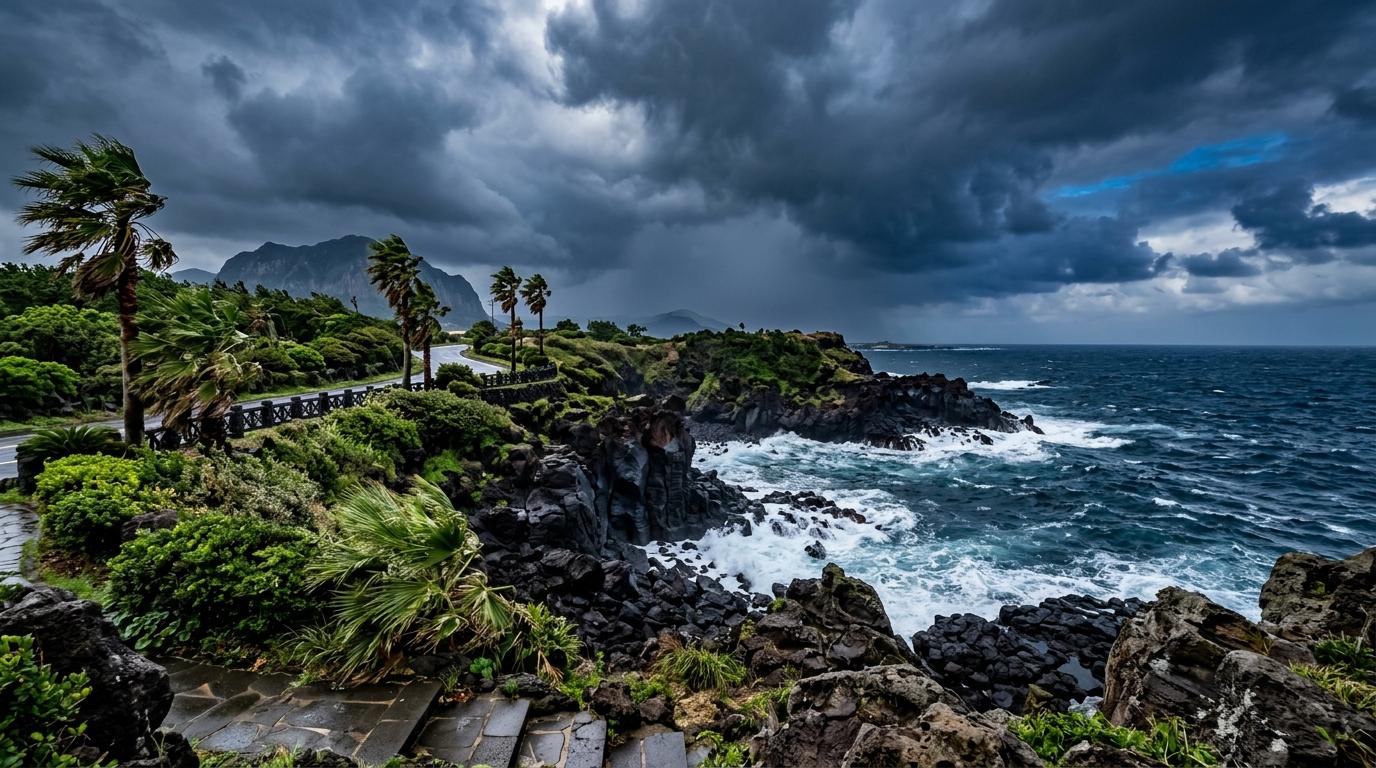
Heat after the rain can be its own problem
After jangma, Korea can turn intensely hot and humid. Heatwave alerts are based on feels-like temperatures, which is exactly what matters when you are walking palace grounds, shopping streets, and outdoor markets.
The most practical summer rhythm is to do outdoor sightseeing earlier in the day, move indoors during peak heat, and save evening for neighborhoods that come alive after sunset. Carry water, do not underestimate subway staircases, and be kinder to your feet than your itinerary wants you to be.
Local public-health advice during jangma also includes caution around raw seafood because of Vibrio vulnificus risk. Korea’s seafood culture is wonderful, but during long humid rain periods, choose reputable places and be especially cautious if you are sensitive to foodborne illness.
Emergency alerts and apps: useful, but not perfect
Korea’s emergency alert system is strong, but language access is still catching up with the reality of record foreign visitor numbers. Since February 2024, cell-broadcast disaster messages have included English keywords for certain disaster types, such as heavy rain or earthquake, alongside Korean text. The detailed instructions, however, may still arrive mostly in Korean.
The Emergency Ready App is the main foreigner-focused disaster safety app. It provides disaster alerts, shelter and hospital locations, police and fire station information, embassy contacts, safety guides, and a direct 119 emergency call function. Language support has been expanding, with key alert services covering languages such as English, Chinese, Japanese, Vietnamese, and Thai, and broader government systems moving toward wider multilingual coverage.
The app can also be set to receive alerts for selected regions, which helps reduce noise if you are moving between cities. Shelter and medical maps may be partly usable offline, but alert reception still depends on connection and can lag behind Korean cell-broadcast alerts.
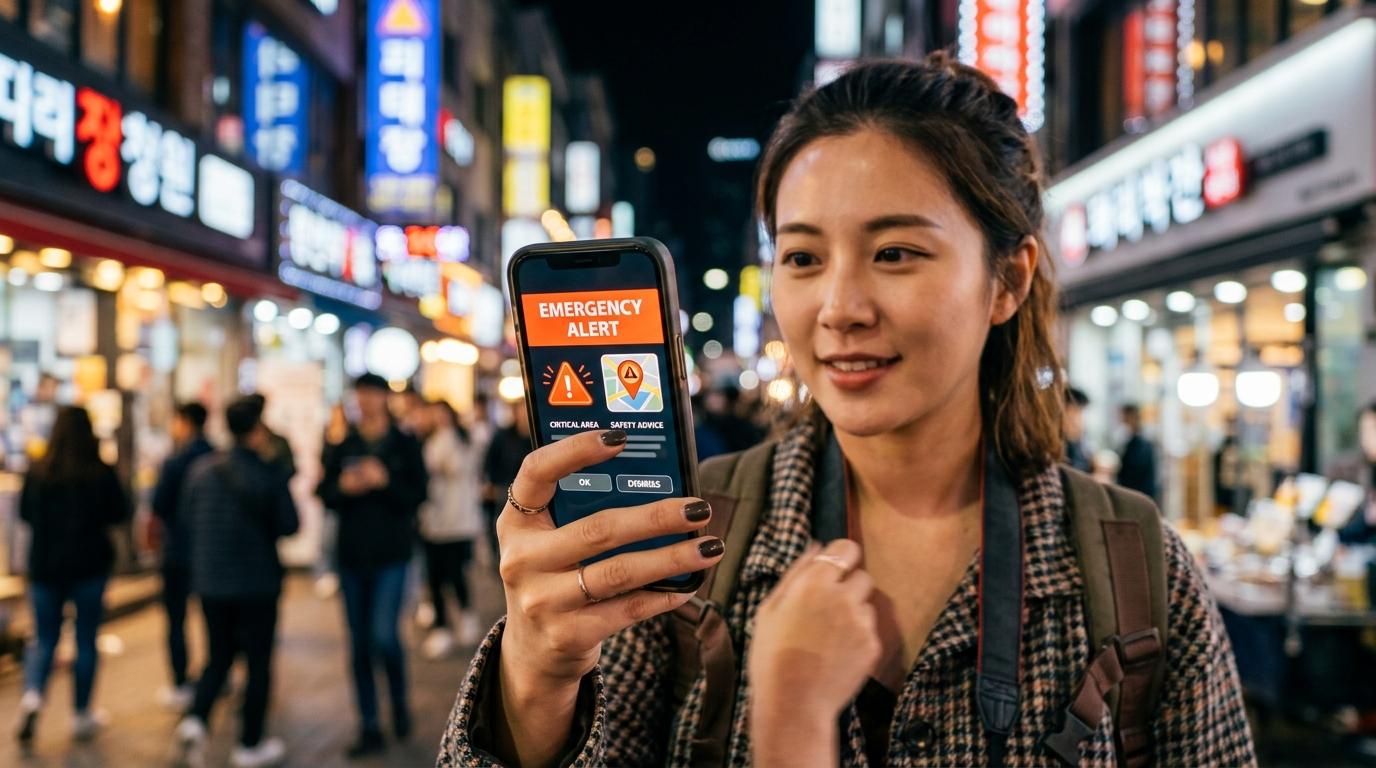
Seoul also offers city-level safety information through platforms such as Safety Nuri, with disaster and accident updates, shelter information, and action tips. Busan has been expanding multilingual disaster support as well, including interpreter support efforts for foreign residents and visitors. Central Seoul’s Jung District introduced a dedicated disaster response manual for foreigners after a serious lodging fire, covering translation, embassy coordination, logistical support, and compensation procedures.
These upgrades matter. They also do not mean every message will be instantly clear in English. If you receive an alert you cannot understand, ask hotel staff, station staff, a nearby information desk, or a Korean-speaking contact to interpret it. In an emergency, call 119 for fire, rescue, or medical help.
What to do when an emergency alert comes through
The tone of Korean emergency alerts can feel intense, especially if your phone suddenly screams in a language you cannot read. Locals may glance at their phones and continue walking, but visitors should still check what the alert says.
A calm response usually looks like this:
- Look for the English keyword: heavy rain, typhoon, earthquake, air raid, fire, or evacuation.
- Check your exact location, not just the city name. Alerts can be highly local.
- Avoid riversides, underpasses, mountains, beaches, and basement spaces during weather alerts.
- Follow instructions from transport staff, hotel staff, police, or event organizers.
- If the alert relates to North Korea or civil defense, stay indoors or follow local evacuation guidance until clarified.
The mistake is not panic. The mistake is assuming an alert is irrelevant because everyone else seems used to them.
Where safety planning differs by destination
Seoul
Seoul is the easiest summer base because it has excellent subway coverage and endless indoor options. The main issues are heavy-rain flooding in low-lying areas, crowd control at large events, protest-related road closures, nightlife scams, and heat. Staying near a subway line gives you more control when rain makes taxis scarce or traffic slow.
Busan
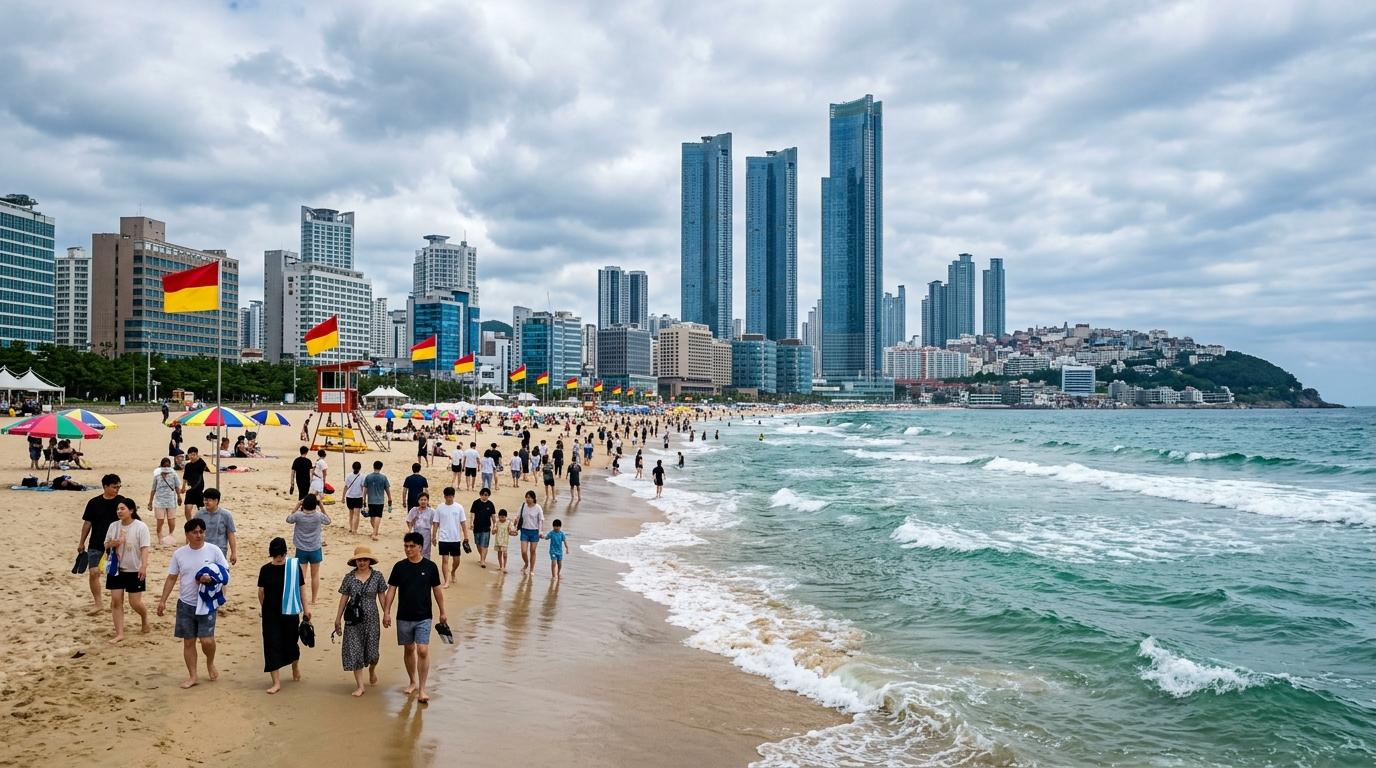
Busan adds coastal weather to the mix. Beaches, coastal walks, bridges, and ferries can be affected by typhoon winds and waves. The city has been building stronger multilingual disaster support, which is helpful, but visitors still need to respect beach and coastal closures.
Jeju
Jeju is stunning in summer, but weather has more power over the schedule. Flights, ferries, coastal roads, boat tours, and mountain trails are all sensitive to wind and rain. If Jeju is part of a bigger Korea trip, avoid making your Jeju-to-Incheon connection too tight before your international departure.
Gangwon and mountain areas
Mountain scenery is one of Korea’s great pleasures, but summer rain changes the calculation. Trails can become slippery, streams can rise, and landslide risk can close routes. During heavy-rain or typhoon warnings, indoor hot springs, cafes, markets, or city museums are the better call.
A few small choices that make Korea feel much safer
Good safety planning in Korea is rarely dramatic. It is the quiet stuff: choosing a hotel near transit, leaving space around flights in storm season, buying tickets from official channels, and actually reading the emergency alert instead of swiping it away.
For summer trips, pack light rain gear but do not rely only on an umbrella. Shoes with grip matter. A compact power bank helps if alerts, maps, and translation apps are doing heavy work. Keep your passport photo page saved offline, and know your embassy contact details through the Emergency Ready App or your own notes.
For events, screenshot official booking confirmations, check the organizer’s entry rules, and leave more time than usual. Seoul has started using bilingual safety alerts for major crowd events, including large concerts and road closures, and that trend is likely to continue. Still, crowd routes can change quickly when police or city staff adjust movement.
The Creatrip bottom line
South Korea, including Seoul, is safe for most visitors using normal travel sense. North Korea tensions are real but usually sit in the background of daily travel. The risks that more often touch visitors are practical: scams around K-pop and tickets, taxi or nightlife overcharging, protest detours, summer downpours, typhoon delays, and alerts that may not be fully translated.
Come with flexibility, not fear. Let Seoul be easy when the weather is clear, move indoors when the sky turns heavy, and treat official alerts as part of the local rhythm. That balance is what makes Korea feel not only exciting, but comfortably travelable.