Where to Get a T-money Card for Korea’s Subways
Convenience stores, airport counters, subway stations, and the small cash-only details that still catch travelers off guard

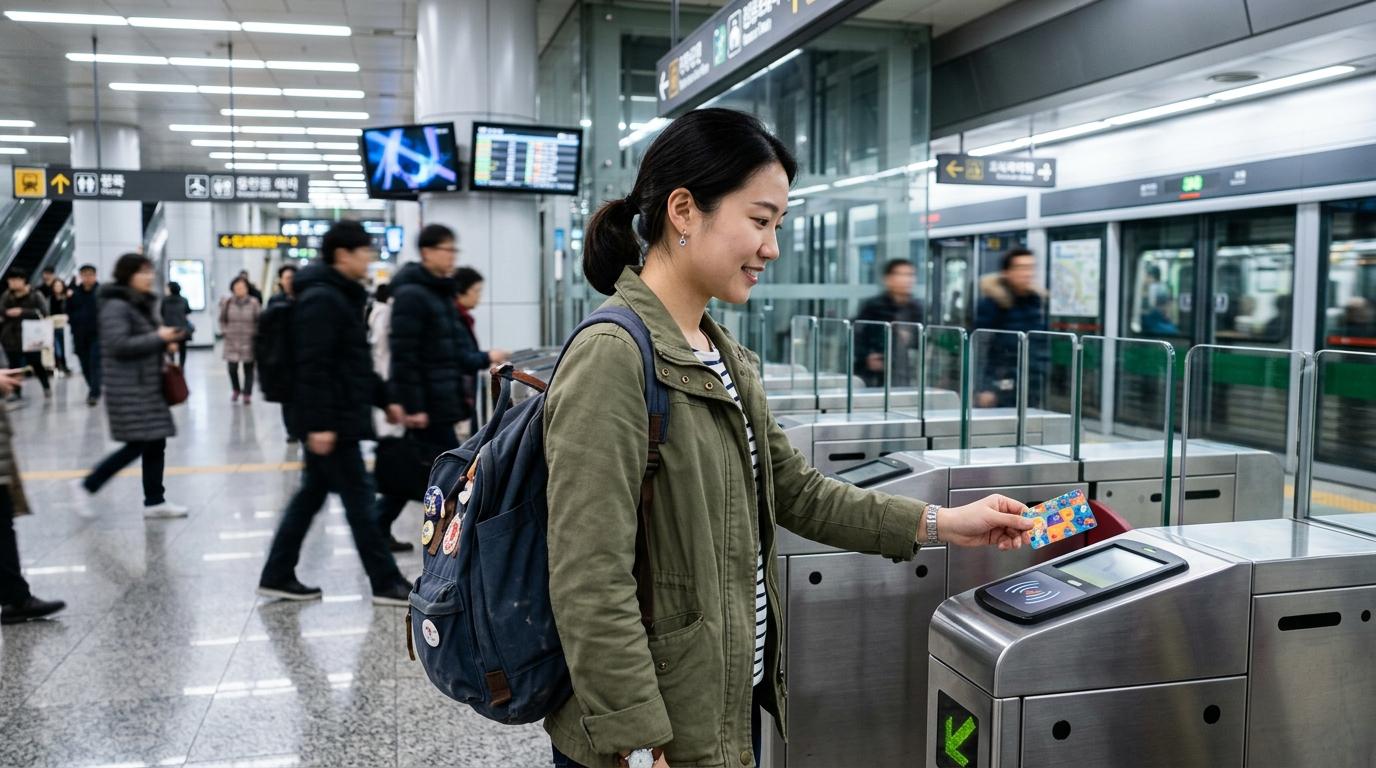
T-money is still the little card that makes Korea’s subway system feel much easier than it looks on the map. Tap in, tap out, transfer between subway and bus, grab a convenience store drink with the remaining balance if the store accepts it — simple, familiar, and not tied to a Korean bank account.
The only slightly annoying part is the first 30 minutes after arrival, when you’re standing in front of a convenience store, airport machine, or subway kiosk trying to figure out which card is actually T-money, whether your overseas card will work, and why everyone keeps saying “cash.” Let’s make that part smoother.
The fastest answer: where to buy a T-money card
For most travelers, the easiest places to get a physical T-money card are:
- Convenience stores nationwide: GS25, CU, 7-Eleven, emart24, StoryWay, and similar chains
- Seoul subway stations: customer centers or transit card machines, especially around Lines 1–8
- Incheon Airport: availability depends on the terminal, so don’t assume every arrival-floor store sells T-money
- Tourist counters and bundled products: telecom counters, airport bus ticket offices, AREX-area vending machines, and foreigner-focused cards such as Tmoney Travel Card or WOWPASS
A basic physical T-money card usually costs around ₩2,500–₩5,000, often around ₩3,000–₩4,000, and that price is just for the card itself. You still need to add balance before riding.
The important detail: the card purchase fee is not refundable, and in many places, especially convenience stores, T-money purchase and top-up still require Korean won cash. Korea has become much friendlier to overseas cards in recent years, but cash is still the safest backup for transit cards.
Convenience stores: the easiest choice once you’re in the city
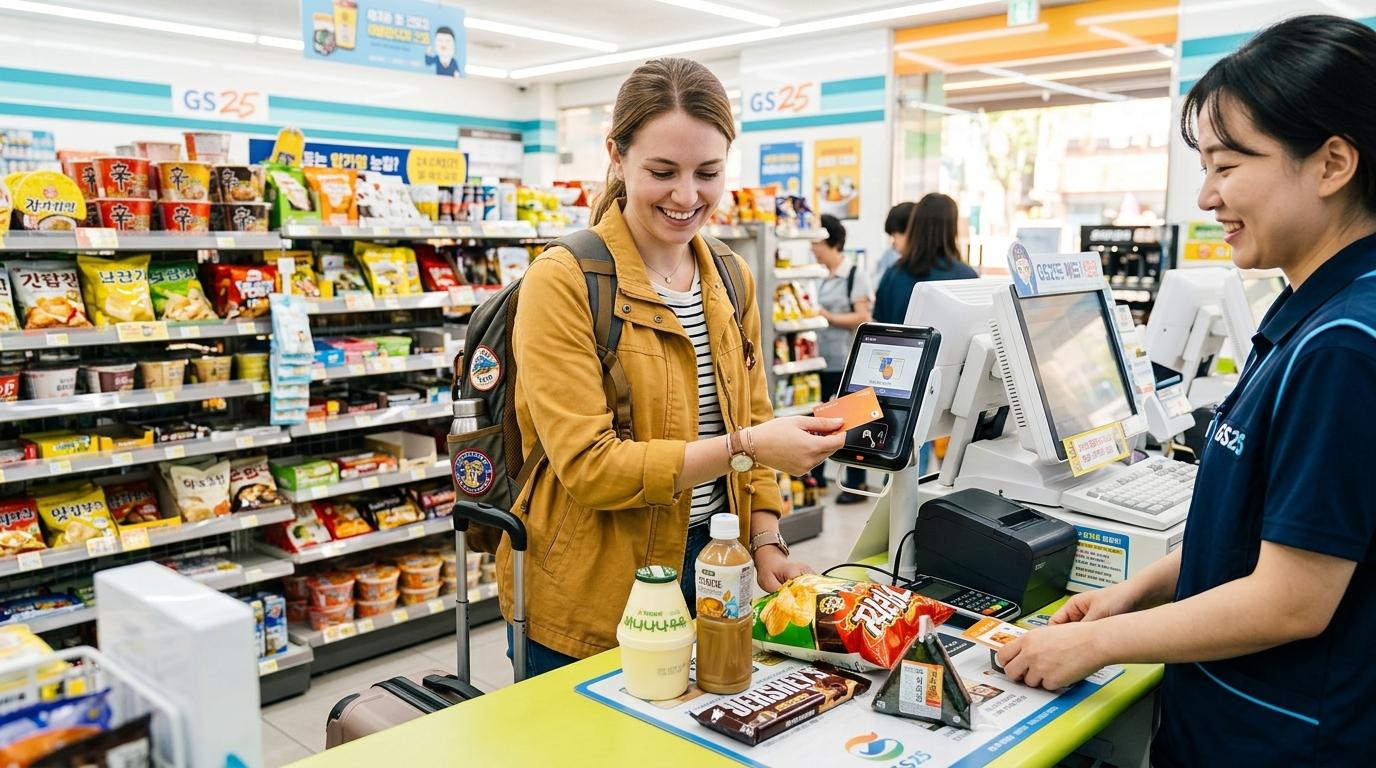
If you’re already in Seoul, Busan, Daegu, or another major city, a convenience store is usually the most painless place to buy T-money. Walk into a GS25, CU, 7-Eleven, emart24, or StoryWay and ask for a “T-money card.” Most stores keep them behind the counter or near the register, often with character designs, simple designs, or tourist card versions.
The card itself normally costs a few thousand won, and you can top it up at the same counter. Tell the staff the amount you want to load — for example, ₩10,000 or ₩20,000 — and pay in cash.
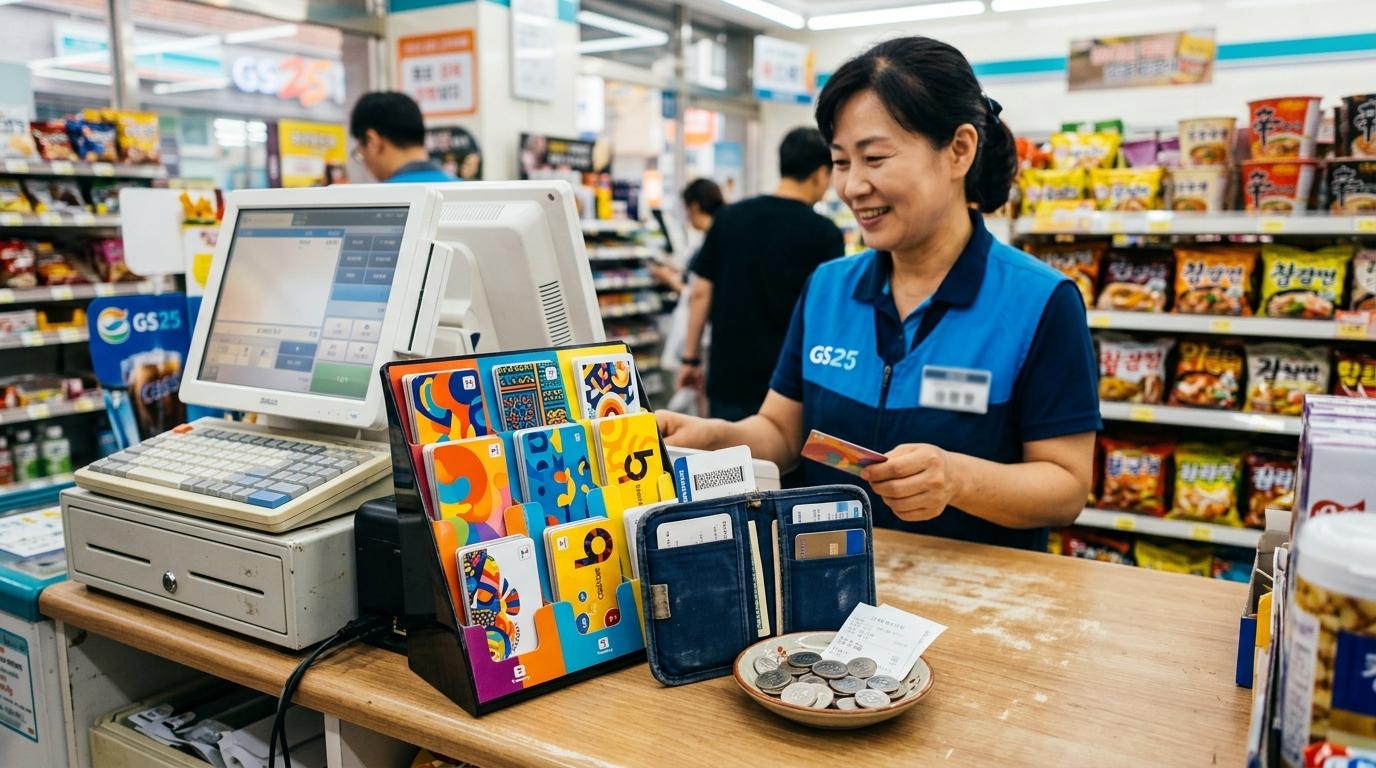
This is the classic Korea travel rhythm: buy the card at a convenience store, recharge it whenever you buy water or snacks, and use the same card for subway and local bus rides. It works beautifully as long as you remember one thing.
At convenience stores, expect T-money top-ups to be cash-only. Even if the store accepts your foreign credit card for snacks, that does not mean it can use the same card to recharge T-money.
Subway stations: good for Seoul, but the machine type matters
Seoul subway stations are another practical place to deal with transit cards, especially around tourist-heavy stations like Seoul Station, Hongdae, Myeongdong, and major transfer hubs.
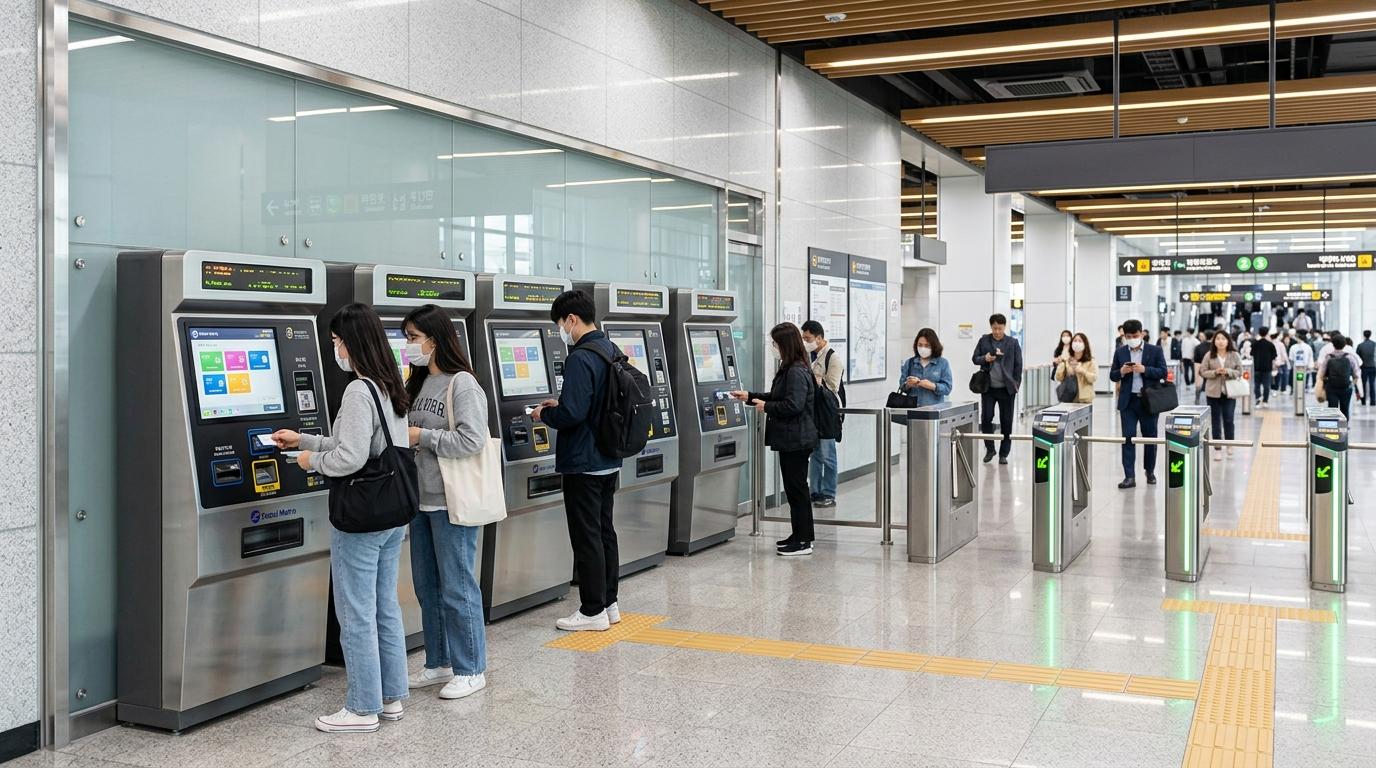
On Seoul Subway Lines 1–8, customer centers and station machines have traditionally been a reliable option for transit cards and single-journey tickets. Newer ticket machines in Seoul also accept overseas-issued cards for certain products, which is a welcome change for visitors who arrive with little cash.
As of 2026, Seoul has been rolling out newer transit card kiosks across many stations on Lines 1–8. These machines support overseas-issued cards such as Visa and Mastercard for selected purchases, including single-journey tickets and short-term Climate Card passes. Some traveler-facing guides also describe broader foreign-card support for T-money-related services as the system expands, but availability can vary by machine, station, and product.
So our practical take is this: try the newer station machines if you want to use a foreign card, but don’t build your whole first subway ride around it. Keep a little KRW cash ready for a standard T-money top-up.
Incheon Airport: Terminal 1 and Terminal 2 are different
Incheon Airport is where many travelers expect T-money to be easiest — and it can be, but the terminal makes a real difference.
Incheon Airport Terminal 1
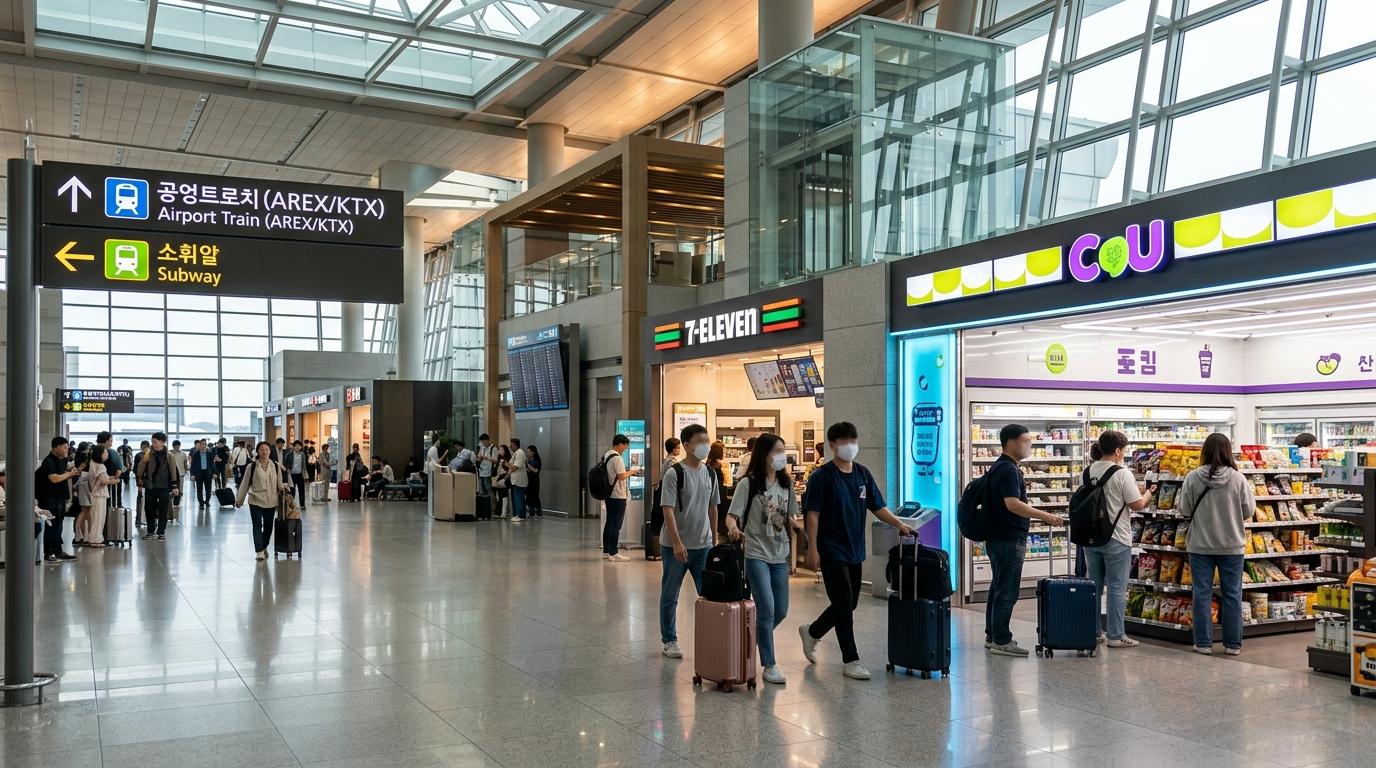
At Terminal 1, the CU convenience stores on the arrivals level have often been associated with Cashbee rather than T-money. Cashbee is also a Korean transit card and can be useful, but if you specifically want T-money, don’t be surprised if the first convenience store you see does not sell it.
For T-money at Terminal 1, look toward the B1 Transit Centre / AREX area, where tourist transit card vending machines and airport transport counters are usually the better bet. Older signs and older travel information may mention Korea Tour Card, but that legacy tourist product has been discontinued and replaced in practice by the newer Tmoney Travel Card. Existing Korea Tour Cards still work, but new visitors are more likely to see Tmoney Travel Card branding.
Bring cash if you’re buying or loading a standard physical T-money card at the airport. Airport products and bundles can change, so it’s worth checking the latest airport or Tmoney information if you’re arriving late at night or relying on one specific counter.
Incheon Airport Terminal 2
At Terminal 2, it is generally easier to find T-money right away. Arrival-level convenience stores such as GS25 and 7-Eleven are commonly listed as places where travelers can buy T-money cards directly.
Terminal 2 is the smoother terminal for the simple “land, buy T-money, ride into Seoul” plan. Still, carry some Korean won cash for the card purchase and first top-up.
How much to load on your T-money card
For a short Seoul trip, many travelers start with ₩10,000–₩20,000. That is usually enough to cover a handful of subway and bus rides without leaving too much trapped on the card at the end.
T-money cards can hold up to ₩500,000, and typical top-ups are made in amounts from around ₩1,000 to ₩90,000 per charge. For tourists, there is rarely a reason to load a huge amount unless you’re staying a long time or managing several days of heavy transit.
T-money balance can remain valid for years, and the physical card itself does not really “expire” in the way a timed pass does. But for a normal trip, smaller top-ups are neater. You avoid refund errands, and you can always recharge at a station or convenience store.
What T-money works for — and what it does not
A standard T-money card is a stored-value transit card. It is accepted on most public transit in Korea, including many subways and local buses nationwide, and it can also be used at some convenience stores and other affiliated merchants.
It is especially useful in Seoul, Busan, Incheon, Daegu, Daejeon, Gwangju, and other urban transit systems. For ordinary subway travel, it is the card most visitors recognize and the one we’d still call the easiest baseline choice.
But T-money is not a magic pass for every train in Korea.
It generally does not cover:
- KTX or SRT high-speed trains
- AREX Express reserved train between Incheon Airport and Seoul Station
- Many intercity buses and most airport limousine bus services that require separate ticketing
- Tourist attraction entry, unless you bought a separate sightseeing product
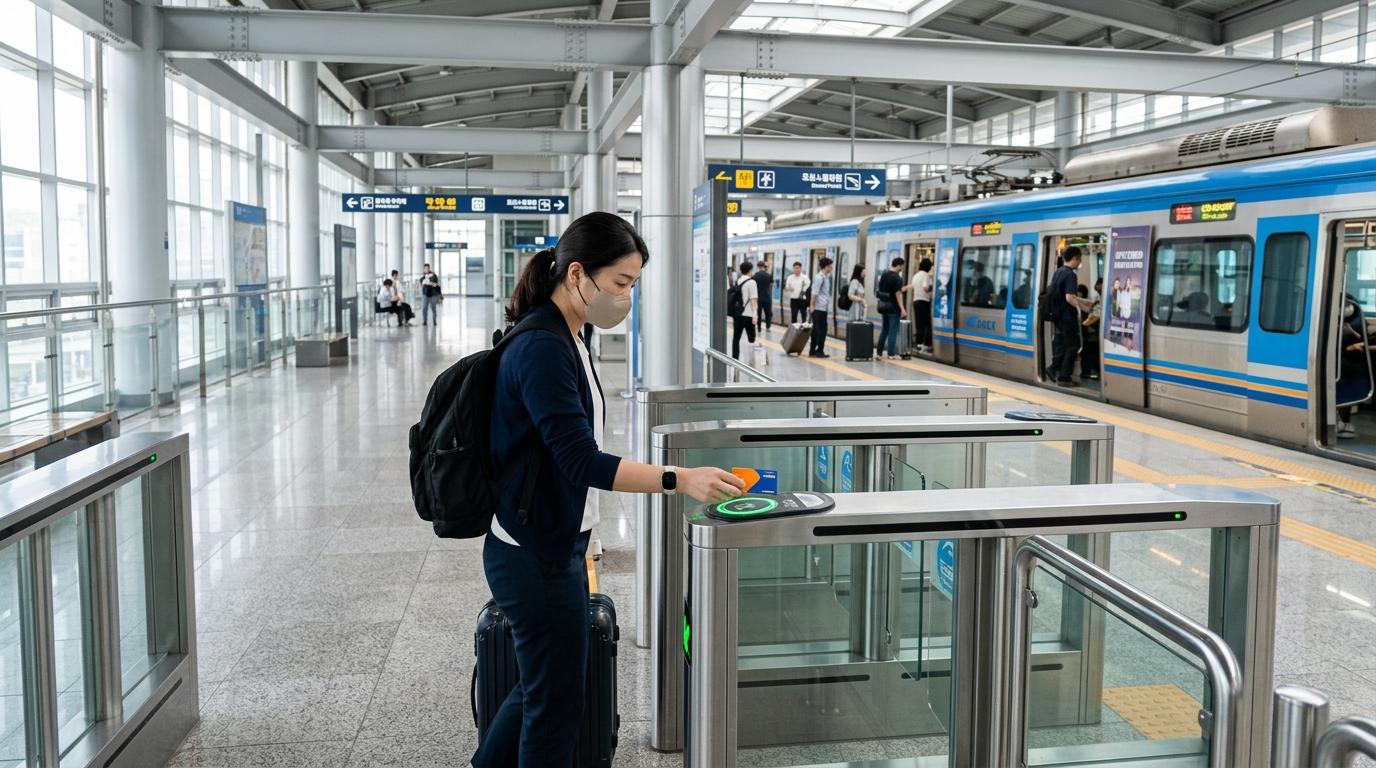
For Incheon Airport rail, T-money works for the AREX all-stop train, not the reserved AREX Express. If you’re heading straight to Seoul Station and want the express train, buy a separate AREX Express ticket.
Standard T-money vs. Tmoney Travel Card
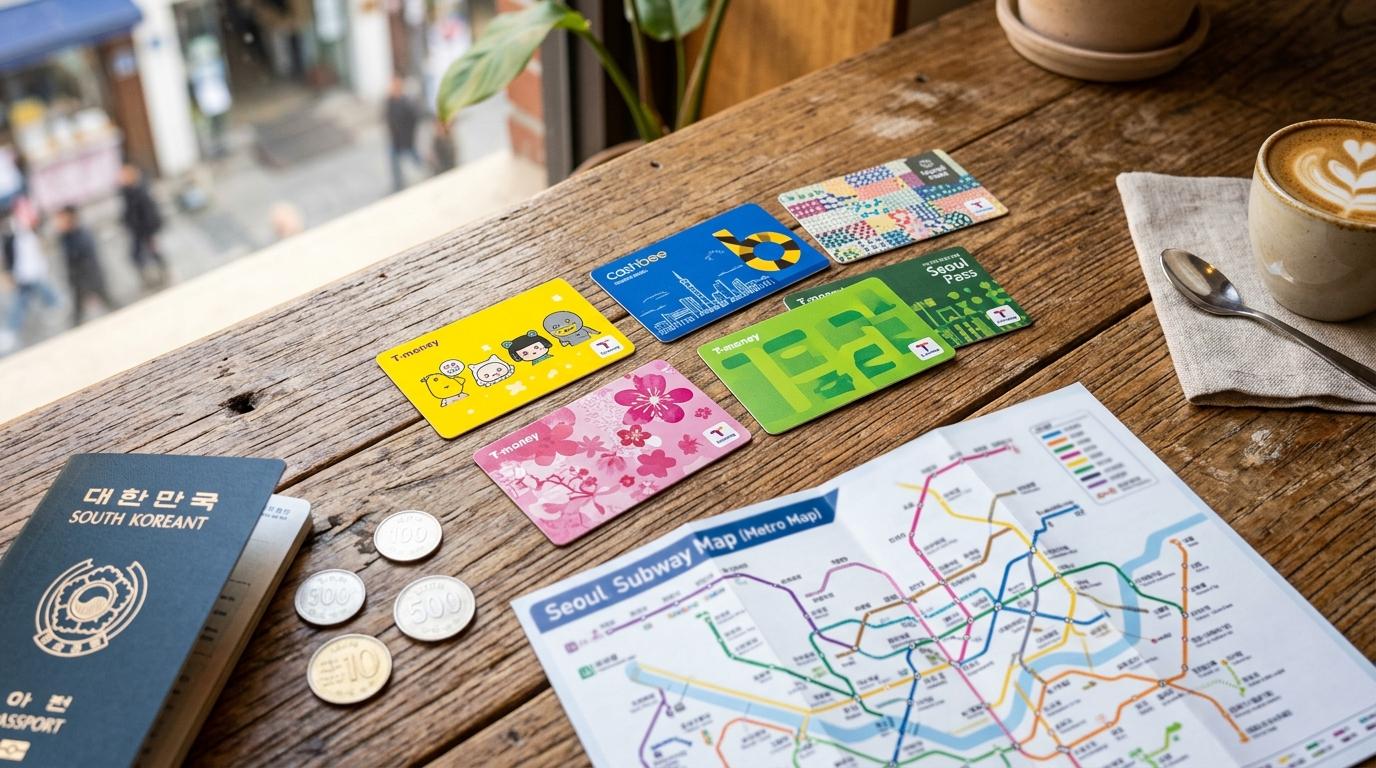
You may see several T-money-looking products, and the names can blur together when you’re tired after a flight. The most useful distinction is simple.
Standard T-money
A plain T-money card is the basic pay-as-you-go option. It is cheap, flexible, and works for most subway and bus travel. If your priority is just getting around without thinking too much, this is enough.
Typical card fee: around ₩2,500–₩5,000
Top-up style: stored balance, usually KRW cash at convenience stores
Best for: almost everyone doing normal city travel
Tmoney Travel Card
The Tmoney Travel Card is the foreigner-focused tourist version that replaced the old Korea Tour Card. It works like a normal T-money card for transit, but adds partner discounts and tourist benefits across places such as Seoul, Gyeonggi, and Busan.
Typical card fee: around ₩4,000, though designs and versions can vary
Top-up style: same basic T-money transit system
Best for: travelers who like having tourist coupons bundled into a transit card
There is also a newer Tmoney Travel Card Plus / TTC+ product connected with WOWPASS-style payment features. It costs more than a basic transit card and adds foreigner-friendly payment, currency exchange, and benefit layers. It can be useful if you want one card for transit plus shopping payments, but it is not necessary if you only need subway access.
WOWPASS with T-money: convenient, but remember the two wallets
WOWPASS is popular with international travelers because it works as a prepaid shopping card and currency exchange tool. It also includes an embedded T-money transit function, which sounds wonderfully simple — until you learn the key detail.
WOWPASS has two separate balances:
- A shopping/payment balance for stores and card payments
- A T-money transit balance for subway and bus rides
Loading money onto WOWPASS for shopping does not automatically mean your transit balance is ready. The T-money side usually needs to be funded separately, often with KRW cash, though app-based transfer options are available in some cases, especially for iOS users.
WOWPASS is a nice fit if you also want foreign-currency exchange and a prepaid card for shopping. If your only goal is to ride the subway, a plain T-money card is simpler and cheaper.
Mobile T-money on iPhone: a good 2026 option, with card-brand limits
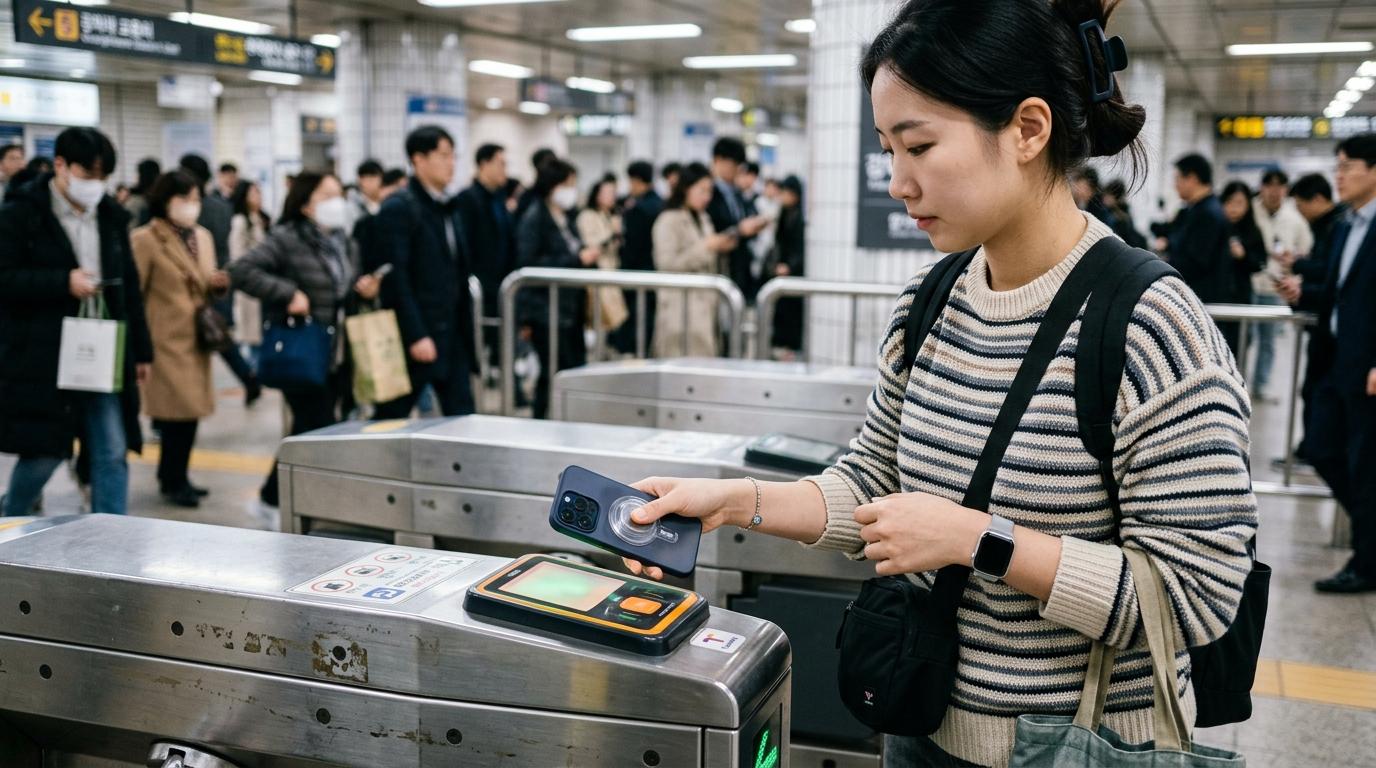
One of the more useful recent changes is mobile T-money access for foreign visitors using iPhone and Apple Wallet. Tmoney’s iOS setup introduced a foreigner login path that avoids Korean ID verification, and travelers can use Apple Pay to top up virtual T-money with certain non-Korean cards.
As of the 2026 rollout, overseas Mastercard, American Express, and UnionPay support has been reported for Apple Pay top-ups, while Visa is not supported in-app. Fees of around the mid-3% range may apply, and unregistered balances carry the usual risk if the device is lost or changed.
For travelers who love tapping their phone or Apple Watch at gates, this can be elegant. For travelers who do not want app setup, fees, or card-brand surprises, a physical card is still the calmest choice.
Should you buy a Seoul Climate Card instead?
Sometimes the best T-money advice is: maybe don’t use T-money for every ride.
The Seoul Climate Card short-term pass is an unlimited-ride transit pass for visitors staying mostly inside Seoul. The physical card costs around ₩3,000, and short-term passes are priced by duration:
| Pass length | Price |
|---|---|
| 1 day | ₩5,000 |
| 2 days | ₩8,000 |
| 3 days | ₩10,000 |
| 5 days | ₩15,000 |
| 7 days | ₩20,000 |
These prices can change, so check current Seoul Metro or official Seoul guidance before buying.
The Climate Card can be excellent if you plan to ride Seoul subways and buses several times a day. It became easier for tourists when short-term passes became available for purchase and recharge with international credit cards at newer machines.
The trade-off is coverage. The Climate Card is not a general Korea transit card. It has strict exclusions, including routes outside its Seoul-area coverage, Sinbundang Line, GTX, KTX/SRT, most intercity or airport buses, and many airport-related journeys. It is also not a proper inbound Incheon Airport solution: travelers generally need a separate ticket or another card when entering from Incheon Airport.
If your trip is mostly Seoul neighborhoods — Myeongdong in the morning, Seongsu in the afternoon, Hongdae at night — the Climate Card can save money and mental math. If you’re moving between Seoul, Busan, airport trains, and regional day trips, T-money is the more flexible baseline.
What about MPASS?
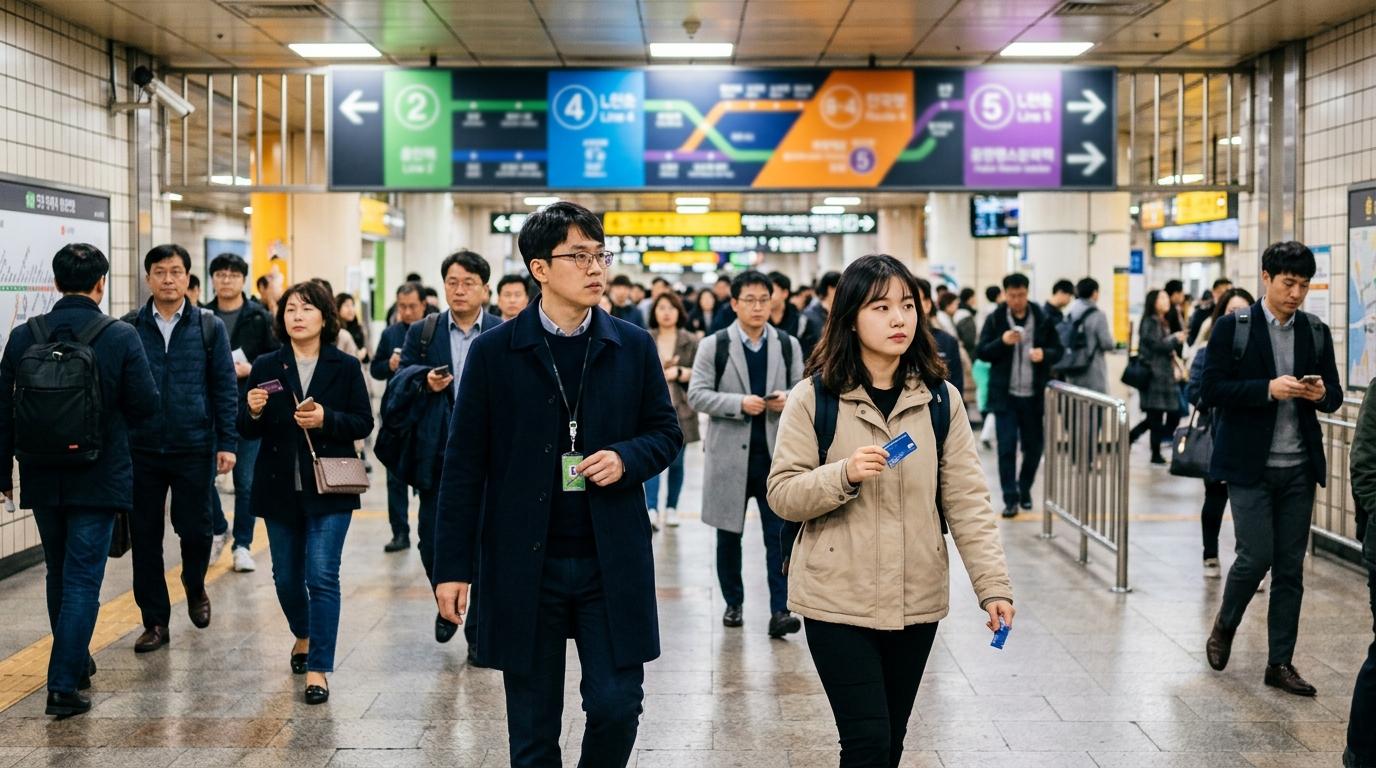
MPASS, sometimes written Mpass, is a foreigner-only timed transit pass that covers up to 20 rides per day within the Seoul metro area, including Seoul subway, buses, and the AREX all-stop train. It is sold in 1–7 day versions and can function like a normal T-money card after the pass period ends.
It can be handy for very transit-heavy Seoul itineraries, but it is more rule-specific and less commonly needed than either plain T-money or the short-term Climate Card. It is also typically tied to specific purchase locations such as Tmoney Town and cash payment, so we would not make it your default unless the pass structure clearly matches your route.
Refunding leftover T-money balance
If you leave Korea with a little money on your T-money card, you have options — but not for the card fee itself.
The card purchase price is non-refundable. Only the remaining stored balance can be refunded, usually with a ₩500 service fee.
Refund channels depend on the balance amount:
- Convenience stores often handle smaller refunds, commonly around ₩20,000–₩30,000, depending on the chain
- Subway customer centers may handle higher amounts, often up to around ₩50,000
- Larger balances may require a visit to Tmoney Town at Seoul Station
Because refund rules and limits can vary by location, the tidiest strategy is to avoid loading too much in the first place. If you have a small amount left, spending it at a convenience store that accepts T-money is often easier than chasing a refund.
Small mistakes that make T-money more annoying than it needs to be
Assuming every airport convenience store sells T-money
Terminal 1 at Incheon is the classic trap. Some arrival-floor stores may sell Cashbee instead. If you want T-money specifically, head toward the B1 transit/AREX area or check tourist card vending machines and counters.
Forgetting that top-up is often cash-only
Korea is very card-friendly for shopping, but transit card top-ups have their own rules. A café may happily accept your overseas Visa, while the convenience store counter still asks for cash to recharge T-money.
Loading too much money
T-money is convenient, but refunds take time and the card fee itself is not returned. Start modestly, especially on a short trip.
Confusing AREX all-stop with AREX Express
T-money works for the all-stop airport train. The AREX Express is a separate reserved service, so buy a ticket if you want that route.
Buying an unlimited pass for a trip that is not Seoul-focused
The Climate Card can be great value inside Seoul, but it is not built for Busan, Jeju, KTX, SRT, or most airport/intercity services. If your itinerary jumps around Korea, keep T-money or another nationwide transit solution in the mix.
Creatrip’s simple pick by travel style
For a first Korea trip, we’d keep the decision simple.
If you want the least complicated option: buy a plain T-money card at a convenience store or subway station, load ₩10,000–₩20,000 in cash, and recharge as needed.
If you land at Incheon Terminal 1: don’t waste time checking every arrival-floor CU for T-money. Go toward the B1 Transit Centre / AREX area and look for T-money or tourist transit card machines and counters.
If you land at Incheon Terminal 2: check GS25 or 7-Eleven on the arrivals level first. It is usually the easier terminal for buying T-money right away.
If you are staying almost entirely in Seoul and riding a lot: compare the short-term Climate Card prices against your expected daily subway and bus use. It may be cheaper than pay-as-you-go T-money.
If you want shopping payments plus transit: consider WOWPASS or Tmoney Travel Card Plus, but remember the transit balance may be separate from the shopping balance.
If you use iPhone and have the right card brand: mobile T-money can be wonderfully smooth, especially with Apple Watch, but check current app support and fees before relying on it at the airport gate.
The bottom line
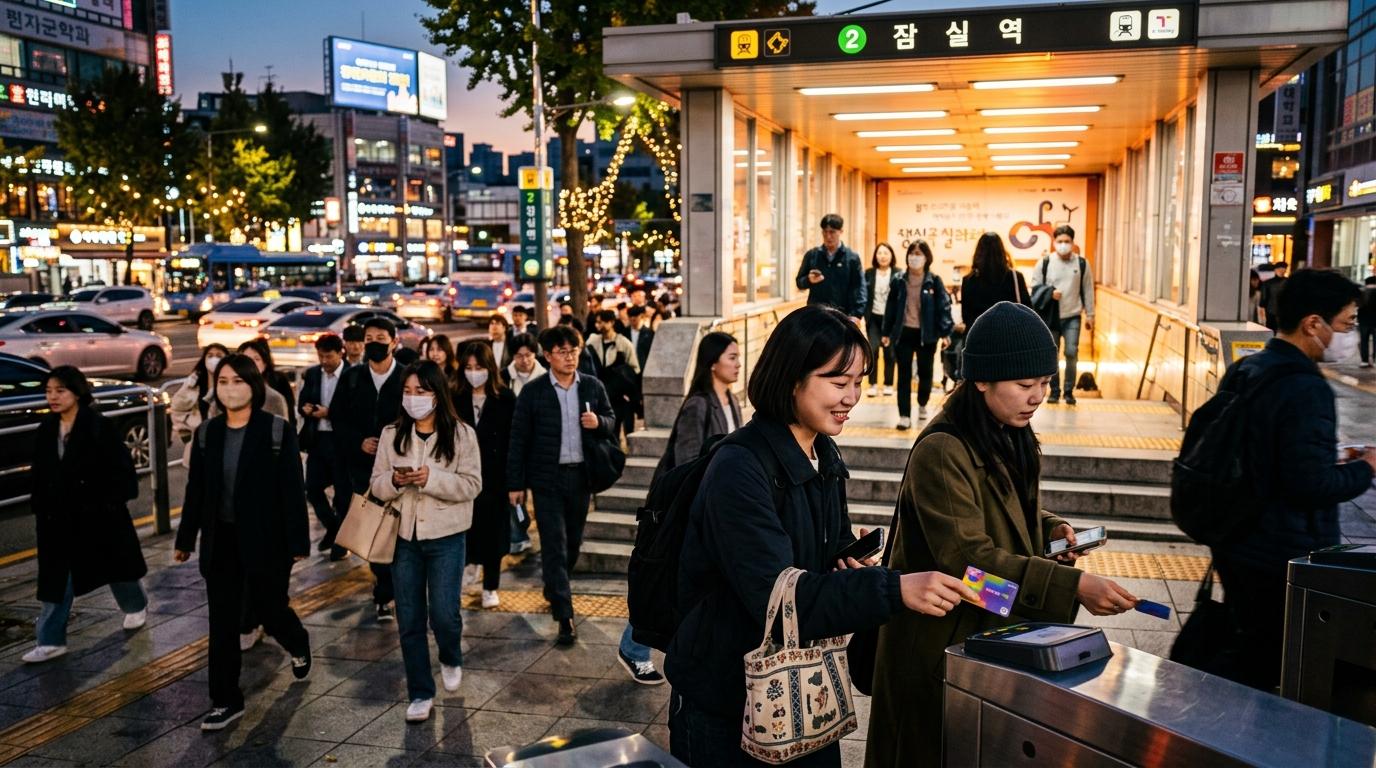
T-money is still the safest everyday transit card for Korea: easy to find, simple to tap, and flexible across most city subways and buses. Buy it at a convenience store, subway station, or the right airport location, keep some Korean won cash for the first top-up, and avoid loading more than you need.
The newer tourist cards and mobile options are genuinely useful, especially if you want foreign-card top-ups or shopping payments in the same system. But for pure subway travel, the humble physical T-money card still does its job beautifully — no Korean phone number, no bank account, no complicated pass math required.