Best Clubs in Seoul for a Night Out, and Where Hongdae Street Actually Is
A Creatrip editor’s friendly map to Hongdae, Itaewon, and Gangnam nightlife — with club picks, costs, door culture, transport tips, and the real feel of Hongdae’s Red Road.

Seoul nightlife is not one scene. It is three very different nights wearing the same city name.
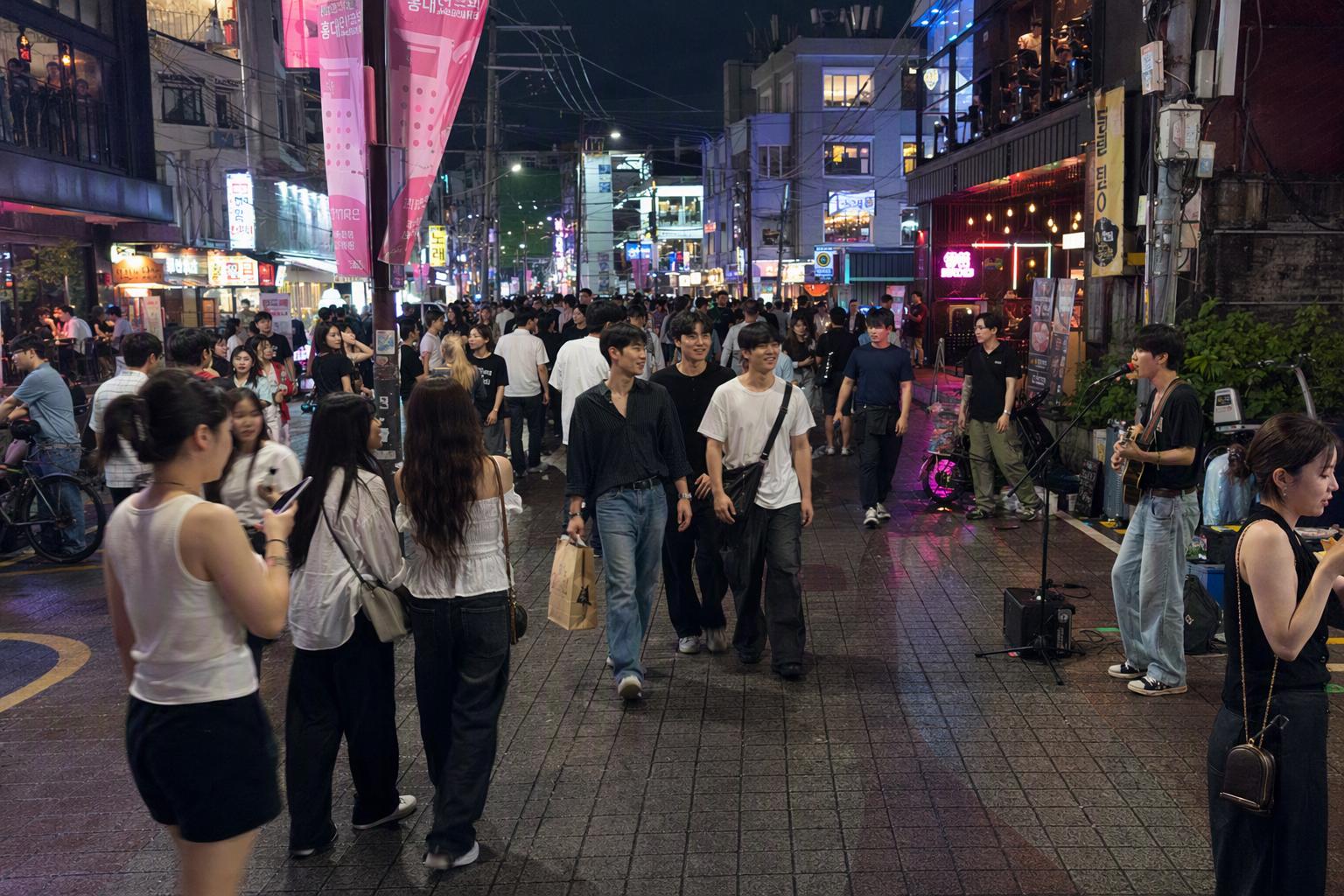
Hongdae is loud, young, messy in the best way, and easy to enter if you want K-pop, hip-hop, EDM, live bands, street performances, cheap drinks, and a crowd that spills naturally from cafés to busking zones to clubs. Itaewon is more international and music-led, with basement rooms, house, techno, LGBTQ+ nightlife, and a crowd that feels less tied to one age group. Gangnam is the glossy side of Seoul clubbing: big EDM rooms, sharper dress codes, higher covers, bottle tables, and a door that can feel less predictable for walk-ins.
For most first-time visitors, Hongdae is the easiest place to start. Not because it is always the “best,” but because it asks the least from you: the area is walkable, foreigner-friendly, packed with food and bars, directly connected to Incheon Airport by AREX, and active long before the clubs fill up.

Seoul’s nightlife map: Hongdae, Itaewon, Gangnam
Seoul clubbing is surprisingly segmented. People do cross districts, of course, but the mood, music, prices, and door policies change fast once you move from one area to another.
Hongdae: young, casual, easy to enter
Hongdae is the student-and-creative side of Seoul nightlife. The crowd leans younger — often late teens to mid-20s, with plenty of university students, exchange students, and travelers — and the music is broad: hip-hop, K-pop, EDM, old-school rap, Latin nights, indie bands, and DJ sets all within a short walk.
Typical Hongdae club covers are often around ₩10,000–30,000, with some smaller or weekday entries lower and many venues including one drink. Beers around the area often sit near ₩5,000–7,000, and cocktails are commonly around ₩8,000–15,000, though prices change by venue and event.
Hongdae is best for:
- A first Seoul club night
- K-pop, hip-hop, EDM, and mixed-genre floors
- Travelers on a moderate budget
- Groups that want to eat, drink, watch busking, and club in one area
- Visitors who do not want Gangnam-style door pressure
The trade-off: some Hongdae clubs are very youth-coded. A few places run unofficial or stated age preferences, including “under 30” policies on peak nights, so mixed-age groups may want to choose venues with clearer music-first positioning.
Itaewon: international, underground, music-focused
Itaewon is where Seoul’s expat, international, LGBTQ+, and underground dance music scenes overlap. The crowd is usually more mixed in age — often mid-20s to 40s — and the music policy is stronger: techno, house, bass, experimental club music, and international headliners.
Covers usually sit around ₩15,000–50,000, depending on the venue and lineup. Cocktails often cost more than Hongdae, commonly around ₩12,000–18,000.
Itaewon is best for:
- House and techno fans
- Mixed Korean-international crowds
- LGBTQ+ nightlife, especially around Homo Hill
- Travelers who prefer smaller clubs over giant EDM rooms
- People who care about sound systems and DJ lineups
The trade-off: Itaewon peaks later. If Hongdae feels busy by midnight, Itaewon’s best energy often arrives closer to 2 AM and can run toward sunrise.
Gangnam: polished, expensive, door-selective
Gangnam is the big-room, table-service, dress-up version of Seoul nightlife. Expect EDM megaclubs, hip-hop lounges, sharper looks, higher covers, and a stronger focus on bottle service. Covers commonly fall around ₩30,000–60,000, and tables can start around ₩300,000 and climb much higher depending on the club, day, and bottle package.
Gangnam is best for:
- Big EDM production and large club rooms
- Dressier nights out
- Bottle service groups
- Travelers who already know they want a premium club experience
The trade-off: Gangnam doors can be strict and sometimes opaque. Smart-casual dress matters, and foreign solo men may find walk-in entry less reliable than in Hongdae or Itaewon. Even when there is no formal “foreigner ban,” internal door judgment can be firm.
Where is Hongdae Street?
“Hongdae Street” usually means the nightlife, shopping, busking, and café district around Hongik University Station in Mapo-gu, west of central Seoul. The name comes from Hongik University, one of Korea’s best-known art universities, and the area grew around student culture, indie music, design shops, live houses, and later K-pop dance crews and clubs.
The easiest landmark is Hongik University Station, served by:
- Subway Line 2
- AREX Airport Railroad
- Gyeongui–Jungang Line
From Incheon Airport, AREX connects directly to Hongdae in roughly 43–66 minutes, depending on train type and timing. That direct airport link is one reason so many travelers base themselves here.
The main pedestrian nightlife axis is Eoulmadang-ro, often called Hongdae Walking Street or Hongdae Shopping Street. It runs roughly between Hongik University Station and the Hongik University side of the neighborhood, with the busiest tourist flow around Exits 7, 8, and 9 and the Red Road / Walking Street area.
On weekends, parts of the street operate as a pedestrian-focused zone. The official car-free timing has been listed as Friday to Sunday, 12:00–23:00, but street operations can shift for events, construction, or crowd control, so local signs matter.

What Hongdae is like: Red Road, busking, clubs, and all-night food
Hongdae is not elegant in the Gangnam sense. It is denser, younger, louder, and more improvisational. A dance crew might be performing near a cosmetics shop, a guitarist might be playing outside a bar, a fried chicken restaurant may have a line at midnight, and someone nearby is probably deciding between a coin karaoke room, a live house, a club, or a 24-hour PC bang.
That is the charm. Hongdae gives you a full night without needing a taxi between stops.
Red Road is the center of the action
The area’s main cultural street has been branded as Red Road, a tourism and performance route connecting Hongdae’s core streets toward Sangsu, Hapjeong, and eventually the Han River side. In the central Hongdae section, Red Road is divided into zones such as R1–R4, with busking, outdoor performances, fashion streets, and festival-style pedestrian space.
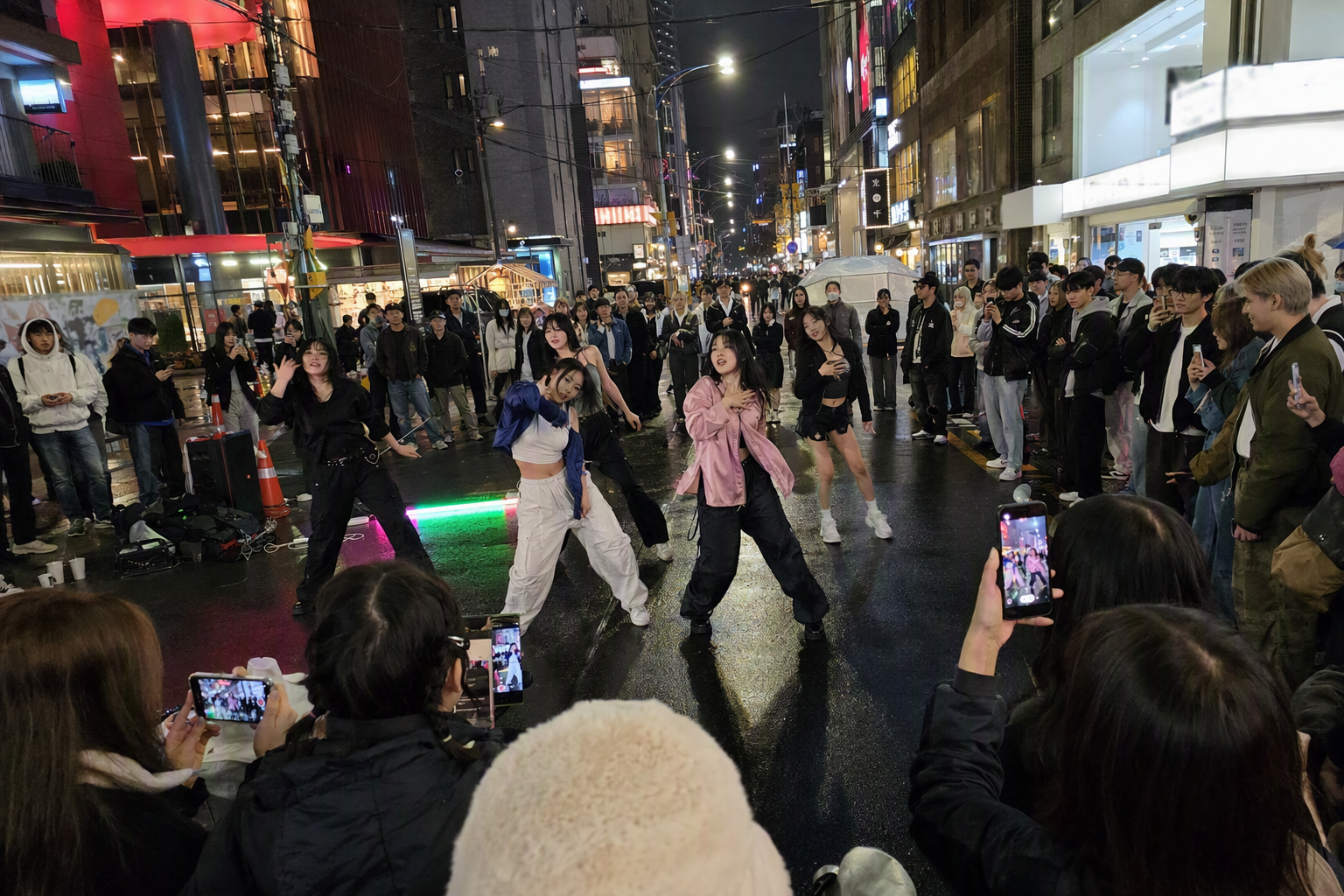
The busiest busking energy usually gathers around the Walking Street and Exit 9 area, especially on Friday and Saturday evenings, often from around 18:00 to midnight. You may see K-pop dance cover teams, indie bands, acoustic singers, hip-hop crews, and street performers rotating through the area.
A nice Hongdae night often starts outside, not inside a club: grab street food, watch a few performances, drift through the fashion shops, then decide which music mood fits the night.
It is easy to walk, but easy to underestimate
Hongdae feels compact, but the nightlife area is not just one street. It stretches through a web of alleys around Eoulmadang-ro, Wausan-ro, Sangsu, and Hapjeong. The densest nightlife pockets sit within a 10–15 minute walking radius, but on busy weekends the crowds can slow everything down.
The common mistake is trying to squeeze Hongdae, Itaewon, and Gangnam into one night. Seoul is large, subway service does not run all night, and taxis get harder once clubs peak. Hongdae works best when you let it be the whole night.
Best clubs in Hongdae
Hongdae is the most forgiving district for international visitors because there are so many options close together. If one club is too packed, too young, or not your music, another is usually nearby.
Prices and hours below are typical ranges from current nightlife listings, but Seoul clubs change policies often. Always check the venue’s latest Instagram, Naver listing, or door notice before committing your night.
NB2: Hongdae’s big hip-hop and K-pop club name
NB2 is one of Hongdae’s best-known club names, strongly associated with hip-hop, K-pop-friendly sets, and a high-energy dance floor. It is often listed with covers around ₩15,000–25,000, depending on the night.
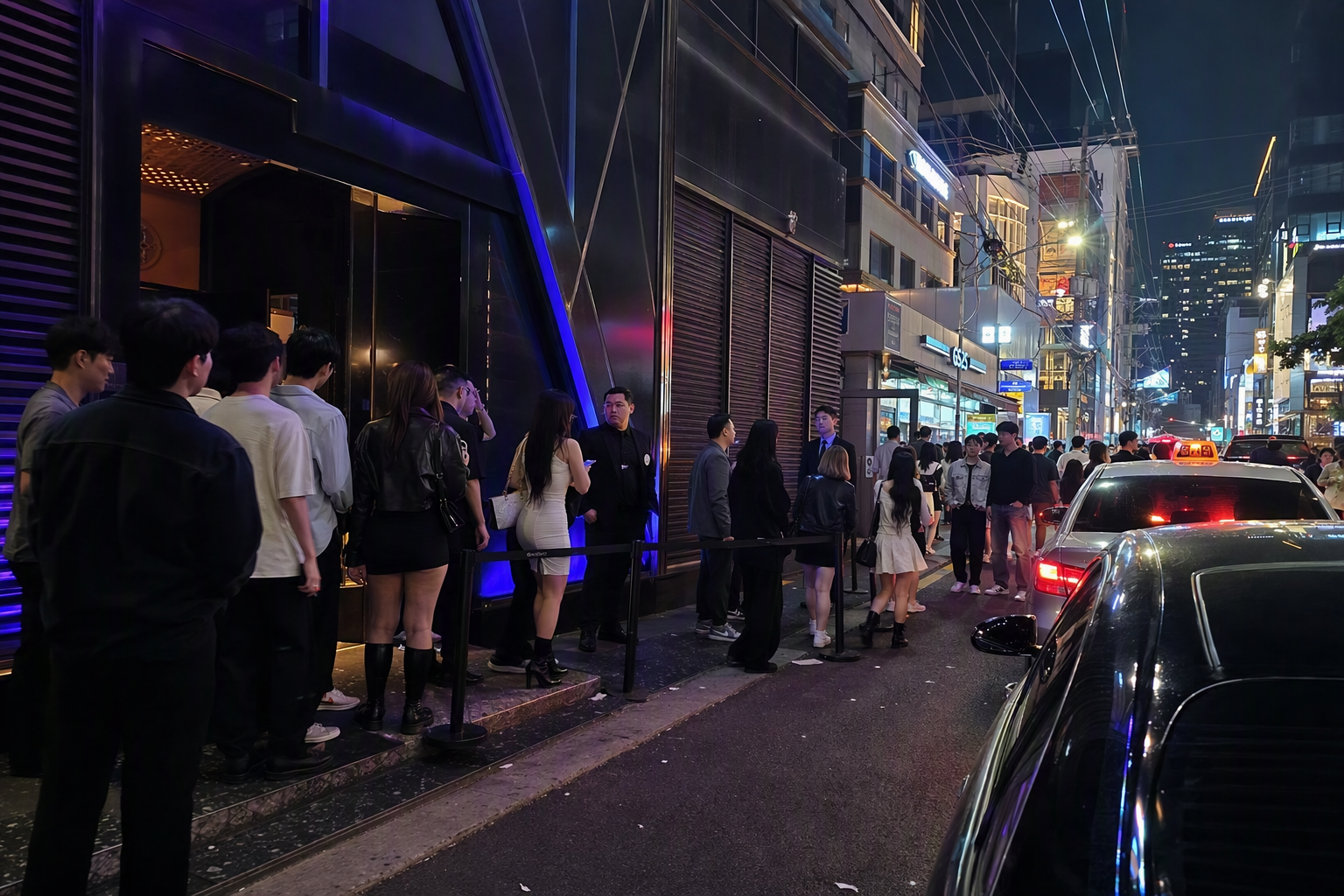
This is a good pick if you want the classic Hongdae club feeling: packed, youthful, loud, and easy to understand even if you do not follow Korean nightlife closely. The crowd can skew young, and weekend lines are very normal.
Best for: first-time Hongdae clubbing, hip-hop, K-pop, groups of friends
Watch for: packed weekend floors, strict ID checks, changing door policies
B1: late-night hip-hop and all-kind energy
B1 is another strong Hongdae name, known for hip-hop, R&B, and mixed “all-kind” club music. It is often mentioned as a place that stays busy deep into the morning, with some listings showing very late operating hours on weekends.
Compared with the most youth-focused party clubs, B1 tends to be a more reliable option for people who care about the music and want to keep dancing after other spots thin out.
Best for: late-night Hongdae, hip-hop/R&B, mixed international crowd
Watch for: basement crowding during peak hours
M2: EDM and K-pop-leaning club night
M2 sits closer to the EDM and big-party side of Hongdae, with K-pop-friendly energy mixed in. Covers are often listed around ₩20,000–30,000.
Pick M2 when the group wants something more polished and high-volume than a bar-hopping night, but still within Hongdae’s casual orbit rather than Gangnam’s bottle-service world.
Best for: EDM, big-room mood without Gangnam prices
Watch for: louder, more commercial sets
Playground: multi-room, easygoing, traveler-friendly
Playground is usually described as a multi-room Hongdae spot with EDM, hip-hop, and K-pop. Some listings put entry around ₩10,000–15,000 with one drink, especially on weekend nights.
It is the kind of venue that works well when your group has mixed taste. One person wants hip-hop, another wants familiar pop hooks, another just wants somewhere fun and not too complicated — Hongdae’s multi-room clubs are useful for exactly that.
Best for: groups with mixed music taste, casual clubbing
Watch for: event-by-event differences in crowd and room setup
Club FF: live bands first, DJs later
For a more Hongdae-original night, Club FF is worth knowing. Hongdae’s roots are not only clubs — the area grew out of indie bands, live houses, and 1990s underground culture. Club FF keeps that thread alive with live performances and DJ sets, often running late on weekends.
Covers vary by event, with many listings around ₩5,000–15,000, though special nights can cost more. It is a better fit for travelers who want something with local music texture, not just a club floor.
Best for: indie bands, live music plus dancing, Hongdae culture beyond K-pop
Watch for: lineup-dependent nights; check the event before going
Rolling Hall and the live-house circuit
Rolling Hall is another important Hongdae live venue, often associated with K-indie and band performances. Covers are commonly listed around ₩20,000–30,000, depending on the artist.
If a club is not the goal but you still want a night out, Hongdae’s live houses can be a better choice. The area’s best nights sometimes move naturally from busking to a live set to a bar, without ever stepping into a large dance club.
Vurt, Sinkhole, and more music-focused options
Hongdae also has more musically specific rooms, including venues listed for techno, house, experimental music, hip-hop, or underground-leaning nights. Names like Vurt and Sinkhole appear in Hongdae late-night listings, but programming can be event-driven, so the lineup matters more than the sign outside.
These are better for travelers who already know what sound they want and are comfortable checking event pages before going.
Latin and mixed-genre spots: La Bamba, Juntos, Candy Shop, Zen, Zigzagg
Hongdae’s range is part of the fun. Latin-focused venues such as La Bamba and Juntos, plus mixed-genre spots like Candy Shop, Zen, and Zigzagg, can be good for a lighter, more social night.
A small caution: some youth-oriented Hongdae venues may enforce age caps or discretionary entry rules on peak nights. For mixed-age groups, music-focused venues such as NB2, B1, FF, or underground-leaning rooms tend to be safer choices than clubs known mainly for a very young party crowd.
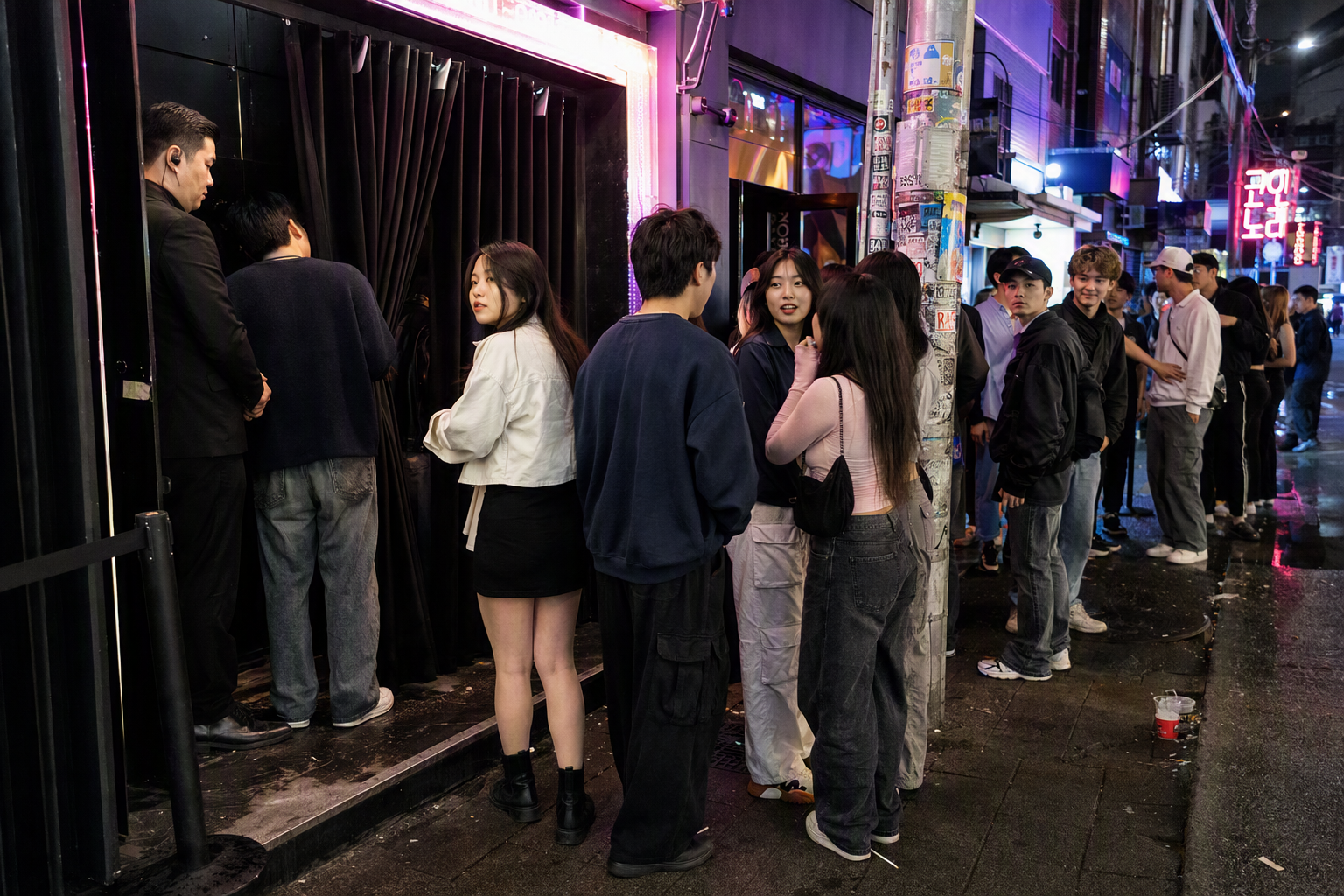
Best clubs in Itaewon
Itaewon is the district we would choose for travelers who care more about the DJ than the selfie wall. The streets feel more international, English is more commonly heard, and door policies are generally more foreigner-friendly than Gangnam.
Cakeshop: small basement, big reputation
Cakeshop is one of Itaewon’s best-known underground club names, a compact basement venue associated with international bookings, bass, house, techno, and alternative club sounds.
It is not the place for a giant LED-wall EDM night. It is better for people who like intimate rooms, close dance floors, and a crowd that came for the music.
Best for: underground club music, international crowd, late nights
Watch for: limited capacity; arrive before the room is full
Soap: Itaewon’s revived mid-size house and techno room
Soap reopened as a permanent underground club at 217 Itaewon-ro on February 26, 2026, bringing back a mid-size house and techno space to the district. Its capacity is around 400, making it larger than small basement rooms like Cakeshop but far smaller than Gangnam megaclubs.
Typical covers are often around ₩20,000–30,000, but international headliners can push entry higher. On busy weekends, Soap can reach capacity from around 11:30 PM, so arriving casually at 1 AM may mean waiting or missing entry.
Best for: house, techno, international crowd, serious but not intimidating clubbing
Watch for: capacity on weekends and headline nights
Faust: hard techno and a strong sound system
Faust is a key Itaewon stop for harder techno and focused dance music. It is often described as a smaller room, around the 250-capacity scale, with a strong audio setup and a crowd that expects a proper night of dancing.
This is not the safest pick for a group that wants familiar K-pop hooks. It is a much better match for travelers who already like techno and want Seoul’s underground side.
Best for: hard techno, sound-system fans, late-night dancers
Watch for: intense music policy; not a casual pop club
Pistol, Pistil, Contra, Tape, and the surrounding circuit
Itaewon’s strength is not only one famous club. The district works as a circuit of underground rooms, listening bars, lounges, and dance floors. Names such as Pistol, Pistil, Contra, and Tape appear around the broader Itaewon club map, with lineups and formats shifting by night.
For Itaewon, the smartest move is choosing by lineup. A quiet-looking basement can be the best room in Seoul on the right night; a famous name can feel flat if the music is not your style.
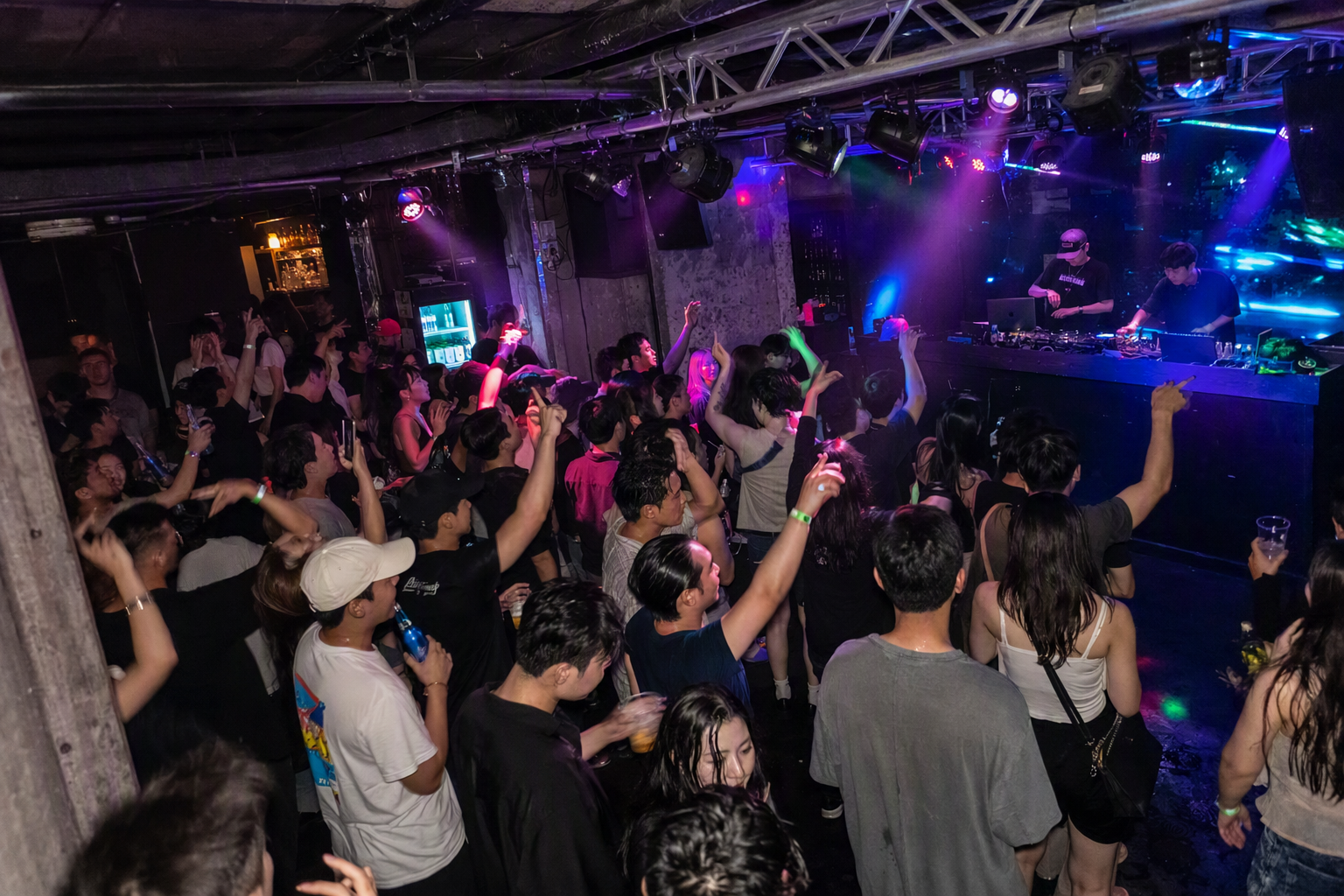
Best clubs in Gangnam
Gangnam is where the price and pressure rise. It can be exciting — especially if your group wants a polished, high-production club night — but it is less spontaneous than Hongdae and less foreigner-easy than Itaewon.
Dress well, bring physical ID, expect higher covers, and do not build the whole night around one door unless you have a backup.
Octagon: large-scale Gangnam clubbing
Octagon is one of Gangnam’s flagship megaclub names, known for large-scale EDM, house, hip-hop rooms, high production, and table service. Covers are often listed around ₩30,000–50,000, sometimes higher depending on the night, while tables commonly start around ₩300,000 and can rise far above that.
Octagon is best when you want the Gangnam club image: dressed-up crowd, big sound, and a venue that feels closer to an international megaclub than a student nightlife street.
Best for: EDM, big-room production, groups planning table service
Watch for: strict dress code, higher spending, unpredictable walk-in entry
Boombar: Gangnam hip-hop and R&B
Boombar is often described as a Gangnam hip-hop and R&B stronghold, with entry commonly around ₩25,000–35,000. It is a better fit for travelers who want Gangnam polish but not necessarily a pure EDM night.
As with other Gangnam venues, appearance, dress, group composition, and the club’s internal policy can affect entry. Smart-casual is the safer baseline.
Best for: hip-hop, R&B, dressed-up lounge-club energy
Watch for: door selectiveness and higher drink costs
About Gangnam door culture
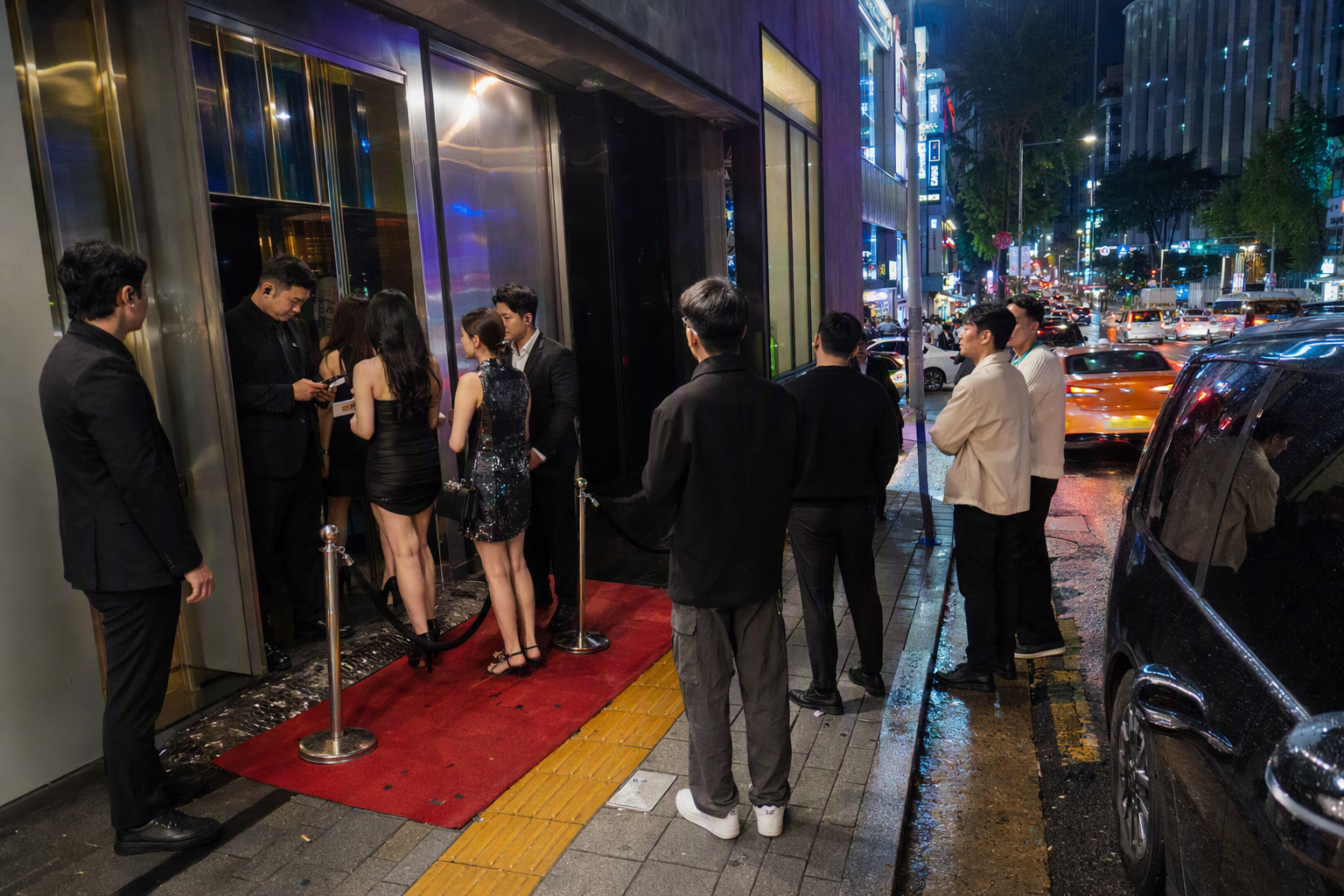
Gangnam clubs can refuse entry for reasons that are not always clearly explained. Dress, age, gender ratio, table reservations, crowd balance, and the door team’s judgment may all matter. Reports from foreign visitors are mixed: some enter with no issue, while others — especially solo men or casually dressed groups — get turned away.
That does not mean Gangnam is off-limits. It just rewards preparation more than Hongdae does. A confirmed table, smart styling, and a flexible backup plan make the night smoother.
How much a Seoul club night really costs
A Seoul night can be surprisingly affordable or very expensive depending on the district.
In Hongdae, a realistic night with food, one club cover, and a few drinks might land around ₩30,000–120,000 per person. A simpler student-style night can stay near ₩50,000, especially if you eat before the club and keep drinks modest.
In Itaewon, a techno or house night often sits closer to ₩75,000 per person, especially with a higher cover and cocktails.
In Gangnam, even without a table, a night can easily pass ₩115,000 per person once you add cover, drinks, taxis, and late-night food. With bottle service, the math changes completely.
Small costs worth remembering:
- Coat check in Hongdae: often around ₩2,000–3,000 per item
- Street food in Hongdae: simple late-night snacks can be around ₩3,000–4,000
- Hangover soups or late meals: often around ₩8,000–12,000
- PC bangs: sometimes around ₩1,000–2,000 per hour, useful if you need a warm place before first train
Prices move quickly in nightlife, especially for special events, holidays, and international headliners, so treat these as planning ranges rather than fixed promises.

Timing your night: when Seoul clubs actually get good
Seoul clubs run late. Very late.
Hongdae may feel active from early evening because of shopping, food, bars, and busking. Clubs generally build from around 11 PM, with peak energy often between midnight and 2 AM, and many venues running until 5–7 AM on weekends.
Itaewon tends to peak later, often around 2 AM or after, especially for underground dance music nights.
Gangnam also builds late, with prime club hours commonly around 1–4 AM, sometimes continuing toward 5–6 AM.
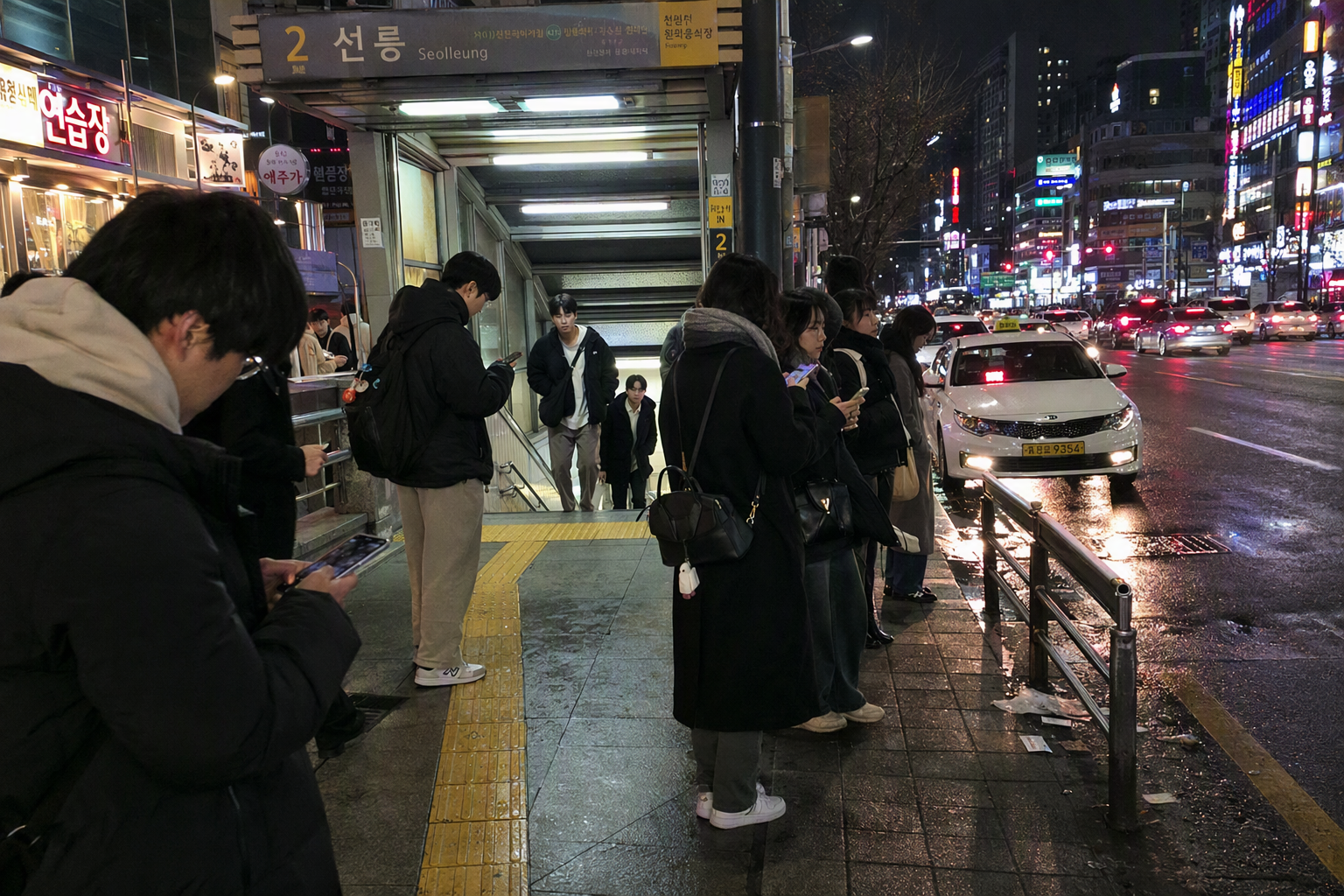
The transport catch is obvious once you are out: Seoul subway service does not run all night. Last trains vary by line, direction, and day, but they often finish around midnight to shortly after 1 AM, then restart around 5:30 AM. Some travelers end up choosing between a taxi surge, staying out until first train, or waiting in a 24-hour café or PC bang.
Kakao T is the standard taxi app to have ready. Late-night taxi surcharges can run around 20–40%, and cross-river rides can become expensive — a late taxi between major nightlife zones can reach around ₩30,000 or more depending on distance and demand.
Creatrip’s practical take: pick one district for the night. Hongdae to Itaewon to Gangnam sounds fun while planning; at 3 AM in a taxi queue, it feels less glamorous.
ID, age rules, and what to bring
Seoul clubs take ID checks seriously because venues face heavy penalties for underage entry.
In 2026, legal nightlife and alcohol eligibility follows Korea’s birth-year system: people born in 2007 or earlier are legal from January 1, 2026. Rules can change by year, and venues may apply stricter internal checks, so verify the current age standard if your birthday or travel year is close to the cutoff.
For foreign visitors, the safest ID is:
- Physical passport, or
- Korean residence card / ARC, if you live in Korea
Hongdae and Itaewon commonly accept ARCs. Some high-end Gangnam clubs may still ask for a passport or apply their own admission rules. A photo of your passport is not always enough.
Dress codes and entry mood by district
Hongdae is casual, but not careless. Sneakers, jeans, skirts, boots, fitted tops, and streetwear are all normal. Some venues may reject slippers, training clothes, or outfits that look too sloppy.
Itaewon is relaxed and individual. Underground clubs usually care more about behavior and capacity than luxury styling, though clean, club-appropriate clothing is still the safe lane.
Gangnam is stricter. Smart-casual is the baseline: neat shoes, intentional styling, no beachwear, no sloppy sportswear. Looking like you planned the night helps.
Entry reliability for foreigners is generally easiest in Itaewon, then Hongdae, then Gangnam. Hongdae is usually friendly to international visitors, though some clubs may enforce age or crowd-balance preferences. Gangnam is where refusals are most common and least clearly explained.
Safety: the unglamorous details that keep the night fun
Seoul is generally a safe city, and violent crime against tourists in major nightlife districts is low. Still, nightlife safety is about small decisions: crowding, drinking, transport, and who you trust.
A few grounded habits go a long way:
- Keep your drink with you, especially in crowded bars or back-alley venues.
- Do not accept unknown pills, powders, “boosters,” or open drinks from strangers.
- Leave crowded alleys if movement slows too much, especially during Halloween, year-end, or major event weekends.
- Use Kakao T or licensed taxis rather than following random ride offers.
- For solo travelers, Hongdae and Itaewon’s busier streets usually feel easier than isolated side bars.
- If a club door feels aggressive or unclear, move on. Seoul has too many options to waste the night arguing with one entrance.
Korea has also strengthened enforcement around nightlife venues, including checks related to drugs, fire safety, youth entry, and crowd management. This is not something visitors need to obsess over, but it explains why ID checks and door controls can feel strict.

Which district fits your night?
For a first Seoul club night: Hongdae
Start with dinner around Hongik University Station, watch busking on Red Road, then choose a club based on the group’s music mood. NB2, B1, Playground, M2, FF, and the surrounding bars give you plenty of room to pivot.
Hongdae is the easiest district to enjoy without a perfect plan.
For serious house and techno: Itaewon
Check the lineups for Cakeshop, Soap, Faust, and nearby underground rooms. Arrive earlier for smaller venues or headline nights, especially at Soap where capacity can fill quickly on weekends.
Itaewon rewards people who choose by sound, not by fame.
For a dressed-up big-room night: Gangnam
Choose Octagon or a Gangnam hip-hop/R&B lounge like Boombar if your group wants a more polished night and is ready for higher spending. Dress well, bring a passport, and keep a backup venue in mind.
Gangnam is fun when expectations are realistic: it is not Hongdae with nicer lighting; it is a different nightlife economy.
For live music before clubbing: Hongdae again
Hongdae’s best advantage is the busking-to-live-house-to-club flow. Catch Red Road performances, look for a Club FF or Rolling Hall event, then end the night at a bar or club. This route feels more local and less like simply checking off a famous club name.
A simple Hongdae night that works well
Start around Hongik University Station Exit 9 or the Red Road / Walking Street area before sunset. Browse the shops, eat something filling, and watch the busking crowd build. Around 10–11 PM, move toward your first bar or club. If the first door is too packed, switch quickly — Hongdae is built for second options.
For a lighter night, stay with busking, bars, coin karaoke, and late-night food. For a full club night, aim for NB2, B1, Playground, M2, FF, or whichever event has the music you actually want.
The nicest Hongdae nights do not feel overplanned. They feel like the area keeps offering another choice five minutes away.

Final Creatrip note
For international travelers, Hongdae is the most convenient nightlife base, Itaewon has Seoul’s strongest international underground identity, and Gangnam is the high-budget, high-selectiveness option.
Hongdae Street itself is not a single narrow strip but a whole cultural district around Hongik University Station, Eoulmadang-ro, and Red Road. Come for the clubs if that is your plan, but leave time for the street: the buskers, food, shops, and late-night wandering are what make Hongdae feel like Hongdae.
Club hours, covers, age policies, and door rules can change quickly in Seoul, especially around holidays and special events. Check the latest official venue channels before going, bring physical ID, and keep your night inside one district once the subway clock starts working against you.