Beautiful Places to Visit in South Korea, From Jeju to Gyeongju
Volcanic coastlines, mountain ridges, hanok villages, tidal flats, and fortress walls worth shaping your Korea route around.

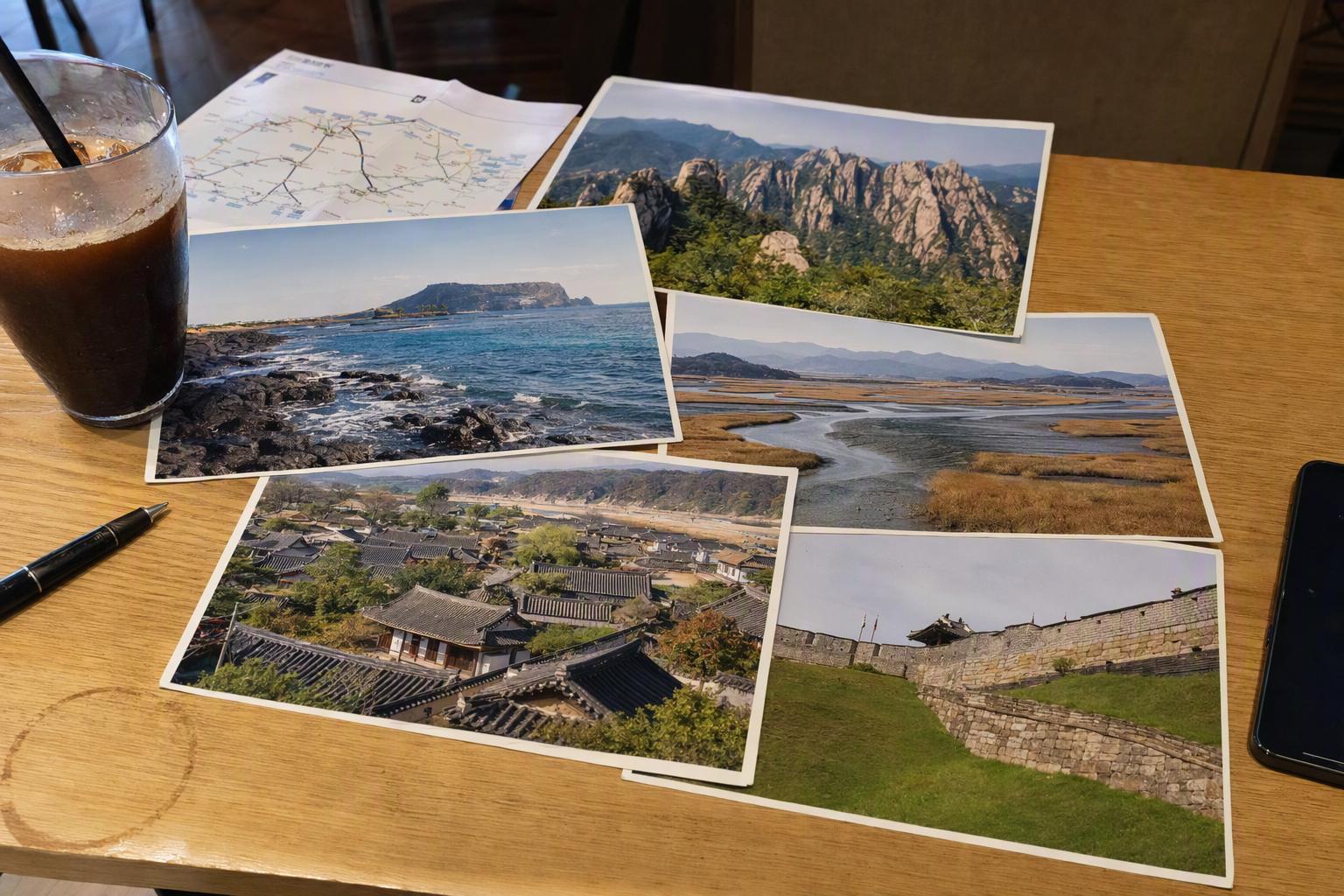
South Korea is compact on the map, but its most beautiful places are surprisingly varied once you leave the Seoul subway map behind. One day can be all granite peaks and temple roofs; another can be volcanic cliffs, tidal flats, old clan villages, or fortress walls glowing over a modern city.
At Creatrip, we like thinking of Korea by mood rather than by checklist. Some places are dramatic right away, like Seoraksan or Jeju’s coast. Others take a slower eye, like Suncheon Bay at low tide or the tiled roofs of Hahoe Village tucked under forested hills. The best route is rarely the one with the most pins. It is the one where each place has enough time to breathe.

A quick way to choose your Korea beauty route
If your trip is short, do not try to collect every famous landscape in one sweep. Korea’s rail network is efficient, and KTX and SRT make cross-country travel much easier than it used to be, but mountains, islands, and heritage towns still reward unhurried pacing.
- For volcanic nature and sea views: choose Jeju Island.
- For mountains and autumn color: choose Seoraksan National Park and nearby Gangwon-do nature spots.
- For temples, royal tombs, and ancient-capital atmosphere: choose Gyeongju.
- For living hanok villages and Confucian heritage: choose Andong Hahoe Village and Gyeongju Yangdong Village.
- For food, hanok rooftops, and an easy urban heritage stay: choose Jeonju Hanok Village.
- For a beautiful day outside Seoul: choose Suwon Hwaseong Fortress.
- For quiet ecological beauty: look toward Suncheon Bay and Korea’s Getbol tidal flats.
- For a meaningful, tightly controlled border landscape: the DMZ can be powerful, but it is not a flexible independent stop.
Jeju Island: Korea’s volcanic showpiece

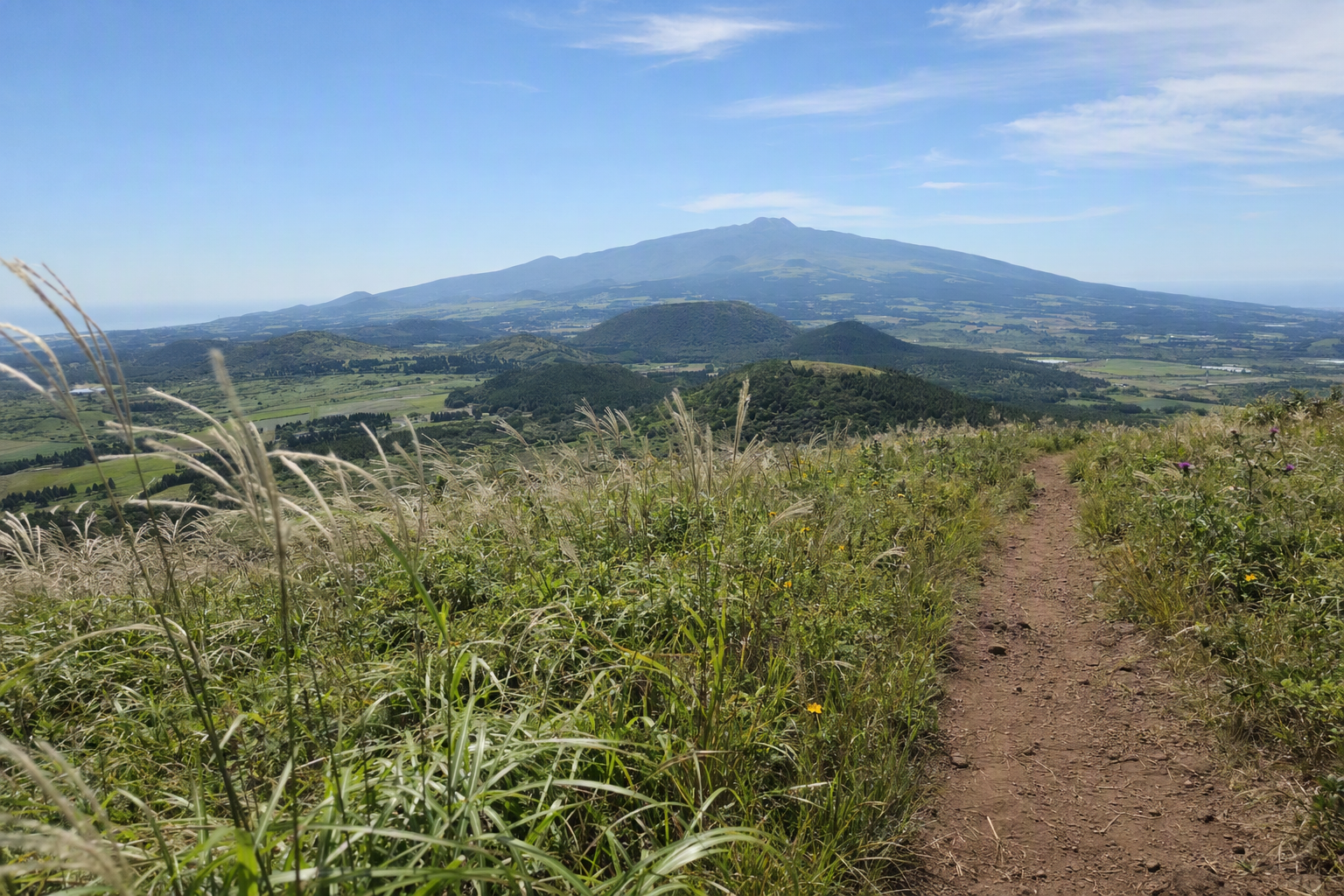
Jeju is the Korean destination that feels most unlike the mainland. The island carries a rare UNESCO triple crown as a Biosphere Reserve, World Natural Heritage site, and Global Geopark, and that recognition makes sense the moment you start moving between black volcanic rock, sea cliffs, oreum cones, and lava caves.
Hallasan, Korea’s highest peak at 1,947 meters, anchors the island from the center. Around it are roughly 360 oreum, the low volcanic cones that give Jeju its soft, rolling silhouette. On the coast, Seongsan Ilchulbong rises like a green crater above the sea, Udo Island adds a bright offshore escape, and areas such as Yongmeorihaean and columnar-joint coastlines show off Jeju’s volcanic edges. Inland, Manjanggul belongs to the Geomunoreum lava tube system, while Bijarim Forest is known for thousands of old bija trees, many aged hundreds of years.
Jeju is not just one pretty viewpoint. It is a whole natural system, from Hallasan to beaches like Hyeopjae and black-sand shores such as Samyang and Hahyo, down to river-mouth scenery like Soesokkak.
What Jeju is best for
Jeju is the strongest choice for travelers who want nature to be the main event: coastlines, volcanic geology, forests, beaches, sunrise points, and wide-open driving scenery. It also works beautifully for travelers who have already seen Seoul and want a destination that feels like a different chapter of Korea.
The trade-off is popularity. Jeju welcomed more than 13 million total tourists in 2025, including over 2 million foreign visitors. With that popularity comes pressure: busy viewpoints, price complaints in recent years, and the need to compare the value of stays and activities carefully. Jeju is still stunning, but it is not a place to book blindly just because everyone says it is beautiful.
Creatrip note: give Jeju multiple days if possible. The island is too layered for a rushed overnight, and natural sites such as caves, trails, and coastal areas can have access changes for weather, safety, or conservation reasons. Check the latest official updates before building a day around any single site.
Seoraksan National Park and Gangwon-do: Korea’s mountain drama

Seoraksan is where Korea turns cinematic. The mountains rise sharply, the valleys feel deep and cool, and the granite peaks have the kind of drama that makes even a short visit feel memorable. Designated a national park in 1970 and a UNESCO Biosphere Reserve in 1982, Seoraksan protects a large mountain area across Outer, Inner, and South Seorak.
The names that come up again and again are Daecheongbong Peak, at 1,708 meters, Ulsanbawi Rock, the Cheonbuldong Valley, and the Seoraksan cable car. Sokcho’s proximity also makes the park easier to fold into a coastal-mountain trip than many first-time visitors expect.
Seoraksan is especially famous for autumn foliage, which is also when crowds become part of the experience. If your Korea trip is centered on fall color, plan with patience. Weather can shift, trails can feel busier than expected, and cable car operations or mountain access may change depending on conditions.
If Seoraksan feels too intense
Gangwon-do has softer alternatives that still feel beautifully Korean. Odaesan National Park offers forested mountain scenery and Birobong Peak, Wondae-ri Birch Forest gives a pale, quiet woodland mood, and the high plains around Daegwallyeong sit more than 700 meters above sea level. These places suit travelers who want fresh air and scenery without making every day a hard hike.
Korea is also preparing for a new kind of walking trip with the Dongseo Trail, a planned coast-to-coast route of roughly 850 kilometers connecting the east and west coasts. Sections are expected to open around 2026 onward, so hikers should verify which parts are officially available before shaping an itinerary around it.
Gyeongju: ancient Korea in one elegant city
Gyeongju is beautiful in a quieter, more graceful way than Jeju or Seoraksan. It does not shout. It stretches out through temple courtyards, grassy royal tombs, stone observatories, pond reflections, and villages where tiled roofs still follow old social and geographic patterns.
The city has one of Korea’s richest concentrations of UNESCO and national heritage sites. Bulguksa Temple and Seokguram Grotto were inscribed as UNESCO World Heritage in 1995. The broader Gyeongju Historic Areas gather key Silla-era remains, while nearby heritage such as Yangdong Village and Oksan Seowon deepens the region’s historical weight.
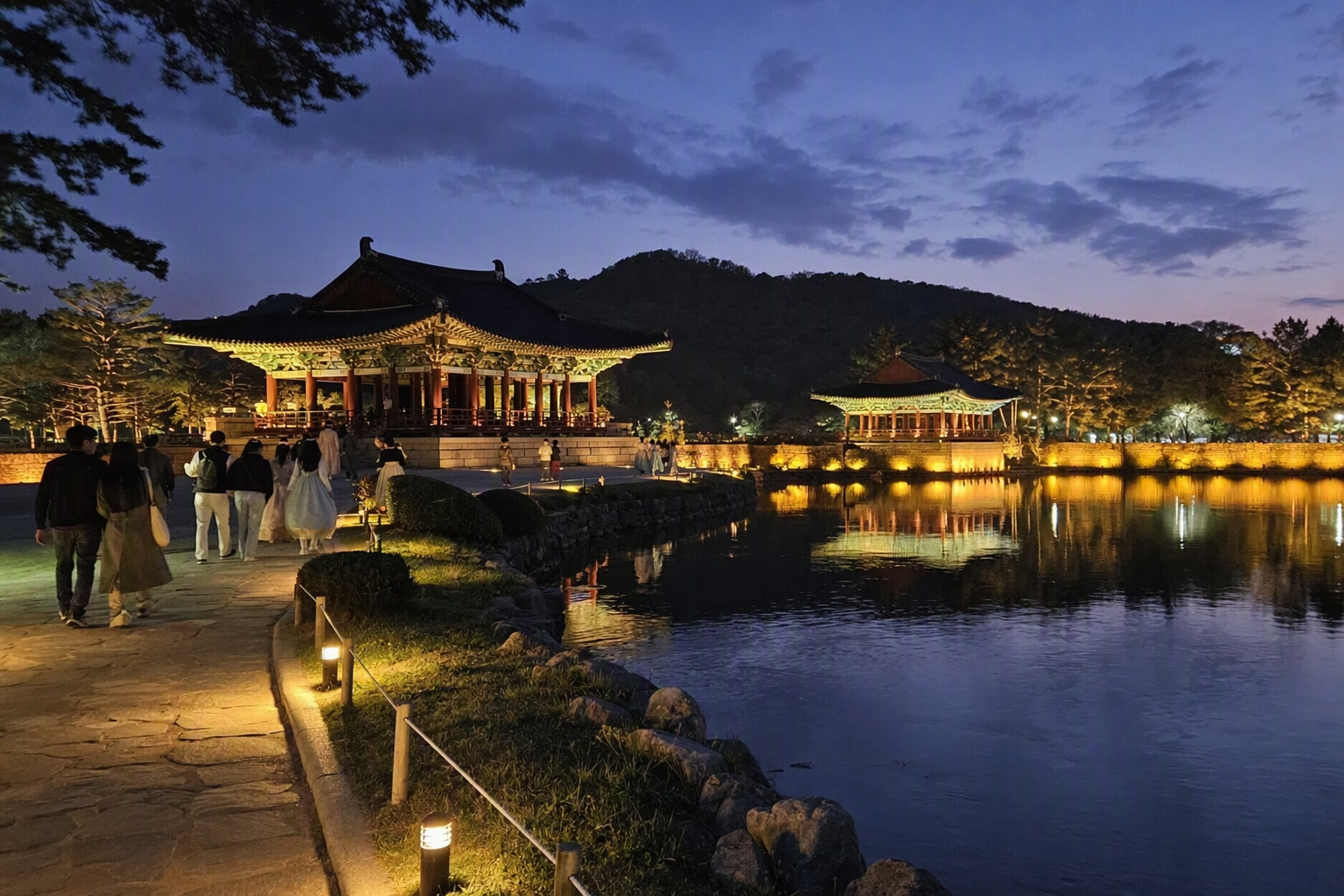
For a classic Gyeongju route, the big visual anchors are Bulguksa, Seokguram, Daereungwon Ancient Tomb Complex, Cheomseongdae Observatory, and Donggung Palace & Wolji Pond after dark. Daereungwon includes more than 20 royal tombs, including Cheonmachong, where thousands of artifacts were excavated. Cheomseongdae is only about 9 meters tall, but its 362 stones and simple cylindrical form make it one of Korea’s most quietly photogenic heritage structures.

Why Gyeongju deserves more than a day trip
Gyeongju can look compact on a map, but its recommended heritage route stretches across roughly 38 kilometers. A rushed day often turns into a blur of temple, tomb, taxi, photo, repeat. Staying longer lets you see the city’s best contrast: golden morning tombs, temple stonework in daylight, and Wolji Pond glowing at night.
Gyeongju has also been growing quickly among international travelers, with more multilingual services and stay-focused programs being developed. It is one of the best choices for visitors who want history without feeling trapped in a museum.
Andong Hahoe Village and Yangdong Village: hanok heritage that still breathes
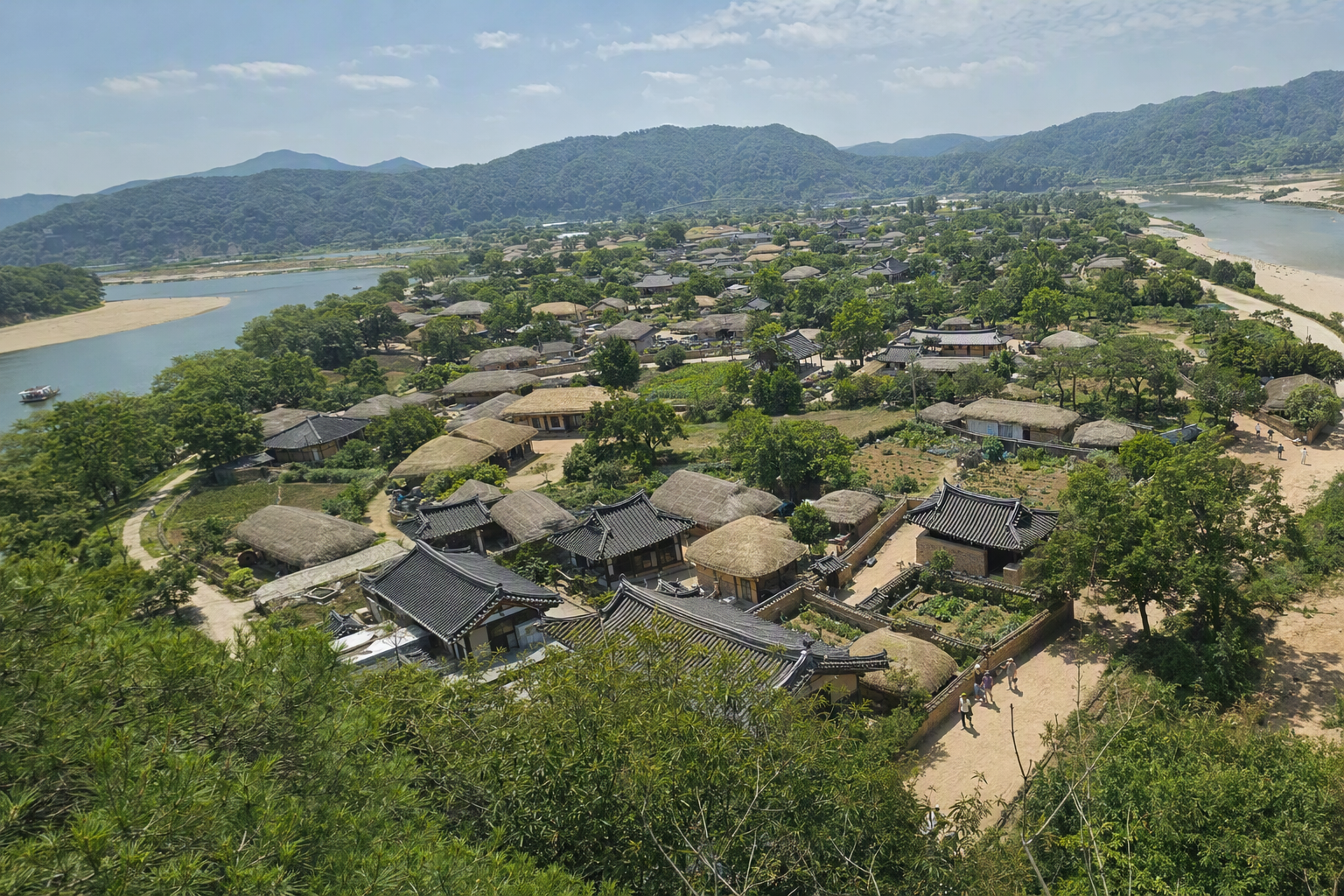
If Gyeongju is monumental, Andong Hahoe Village and Yangdong Village are intimate. These are not simply pretty hanok streets. They are living clan settlements where Joseon-era Confucian hierarchy is still visible in the landscape: aristocratic tiled houses on higher ground, humbler thatched homes below, fields and rivers forming part of the village setting.
Hahoe and Yangdong were jointly inscribed as the UNESCO World Heritage property Historic Villages of Korea in 2010. Hahoe is especially tied to mask dance traditions, and Andong’s International Mask Dance Festival is scheduled for September 24 to October 4, 2026, marking its 30th edition. Festival dates and programming can change, so confirm the final schedule before booking around it.
Yangdong, near Gyeongju, is Korea’s largest traditional rural village, with around 160 old houses and several important clan head houses. Hahoe, in Andong, feels more river-wrapped and village-like, with a strong sense that people still belong to the place beyond its tourism identity.
The traveler trade-off
These villages are less casual than Jeonju Hanok Village. They ask for slower walking, quieter behavior, and more respect for residential space. They are also more rewarding for travelers who care about how architecture, family hierarchy, land, and ritual fit together.
Yangdong has had a paid entry system, with one official listing noting adult admission at KRW 4,000; prices can change, so check the latest information before visiting. More important than the fee is the mindset: Hahoe and Yangdong are beautiful because they are still connected to daily life, not because they were made as photo zones.
Jeonju Hanok Village: rooftops, street food, and slow-city charm
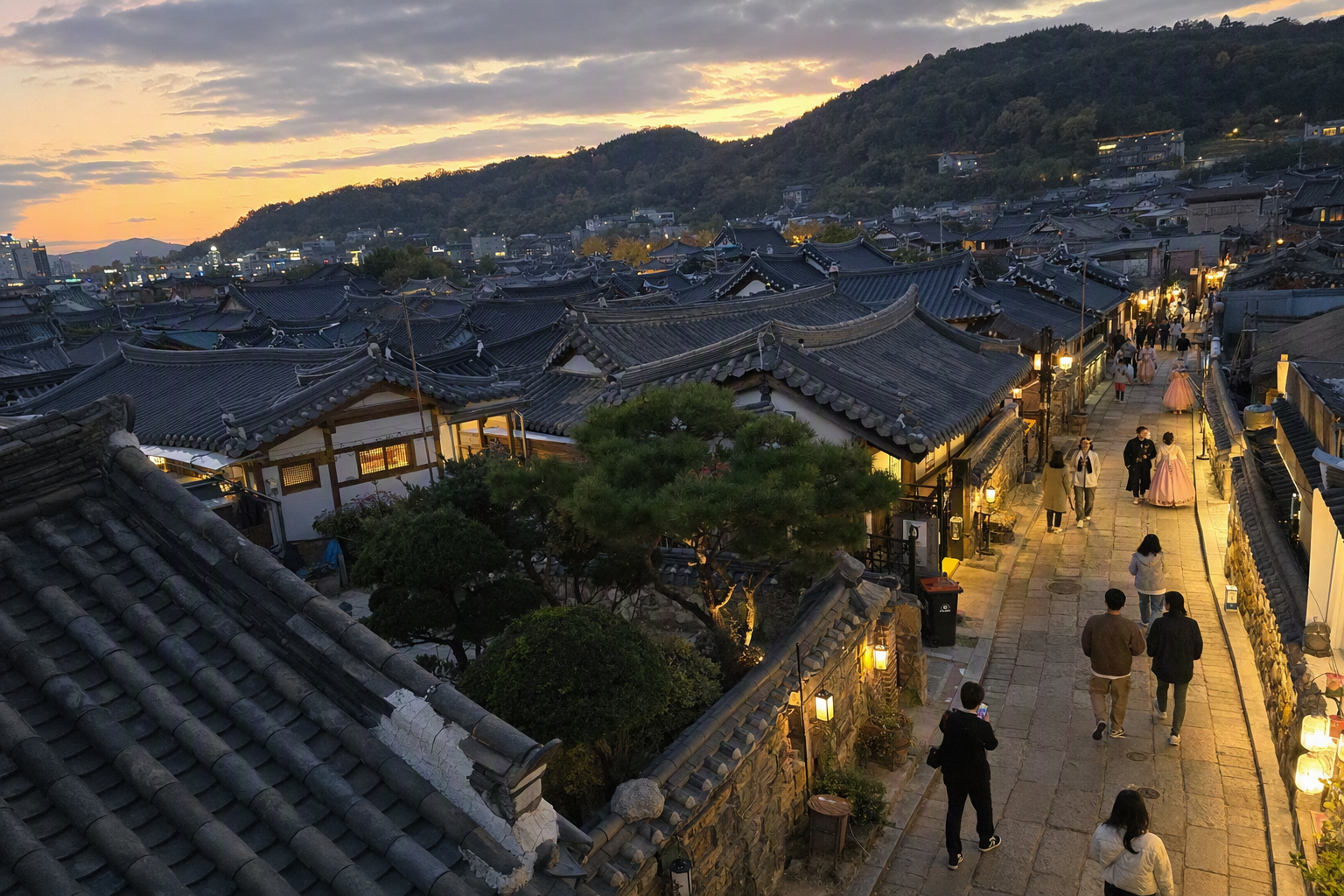
Jeonju is the easiest hanok destination to love on a first trip. Jeonju Hanok Village has more than 700 hanok and is known as Korea’s largest urban hanok cluster. It is also free to enter, easy to walk, and surrounded by the kind of food culture that can happily take over your entire day.
The city is Korea’s first UNESCO Creative City of Gastronomy, and Jeonju’s food reputation is not just a slogan. This is the home ground of Jeonju bibimbap, Jeolla-style hanjeongsik, kongnamulgukbap, and makgeolli alley dining culture. Inside and around the village, you can also visit sites such as Gyeonggijeon Shrine, Jeondong Cathedral, and Jeonjuhyanggyo Confucian School.
Jeonju versus the rural hanok villages
Jeonju is more energetic and commercial than Hahoe or Yangdong. That can be a plus if you want food, shopping, night walks, and an easy atmosphere. It can be a minus if your dream is a quiet rural village with deep historical continuity.
The prettiest time is often when the rooflines catch warm light, especially in the evening when the village’s tiled silhouettes become more dramatic. For travelers who want hanok beauty without worrying too much about residential restrictions, Jeonju is usually more relaxed than Bukchon in Seoul.
Suwon Hwaseong Fortress: stone walls with a city pulse
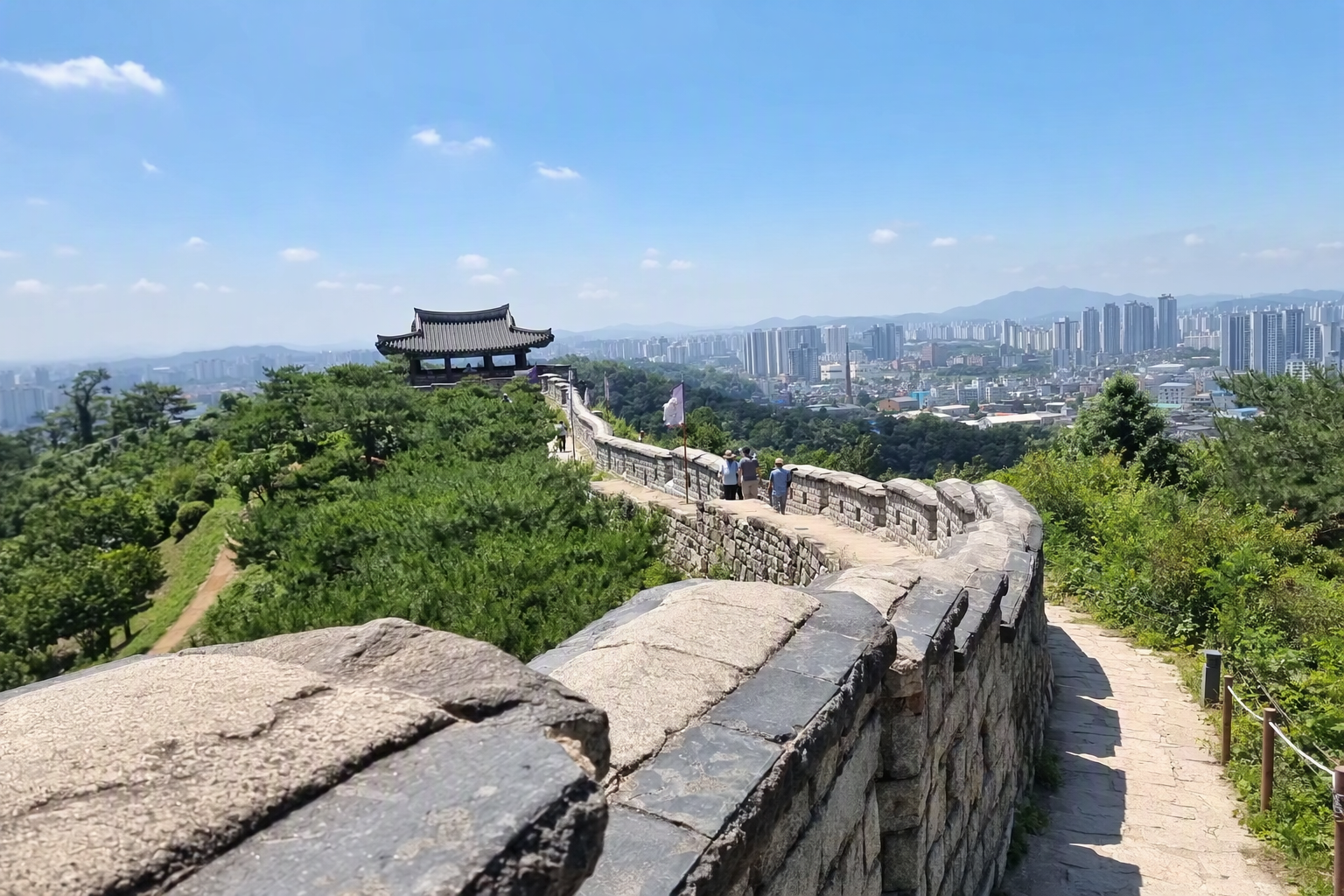
Suwon Hwaseong Fortress is one of Korea’s most satisfying heritage landscapes because it combines architecture, walking, and city views. Built during the Joseon Dynasty under King Jeongjo, the fortress is a UNESCO World Heritage site and part of the Suwon Hwaseong Special Tourist Zone.
Unlike a single palace or temple, Hwaseong gives you movement. The walls run through hills and urban neighborhoods, creating a mix of stone ramparts, gates, open sky, and everyday Suwon life. The Hwaseong Temporary Palace adds another historical layer, while the Suwon Hwaseong Museum helps make sense of the fortress’s story.
Suwon has also leaned into smart tourism around the fortress area, including AR and XR-style experiences, an XR bus concept, and digital reconstructions connected to King Jeongjo’s royal procession. These offerings can be fun for travelers who like heritage with a modern layer, but schedules and availability may change. Check current operations before planning your day around a specific program.
Seoul’s hanok beauty: Bukchon and Namsangol are not the same
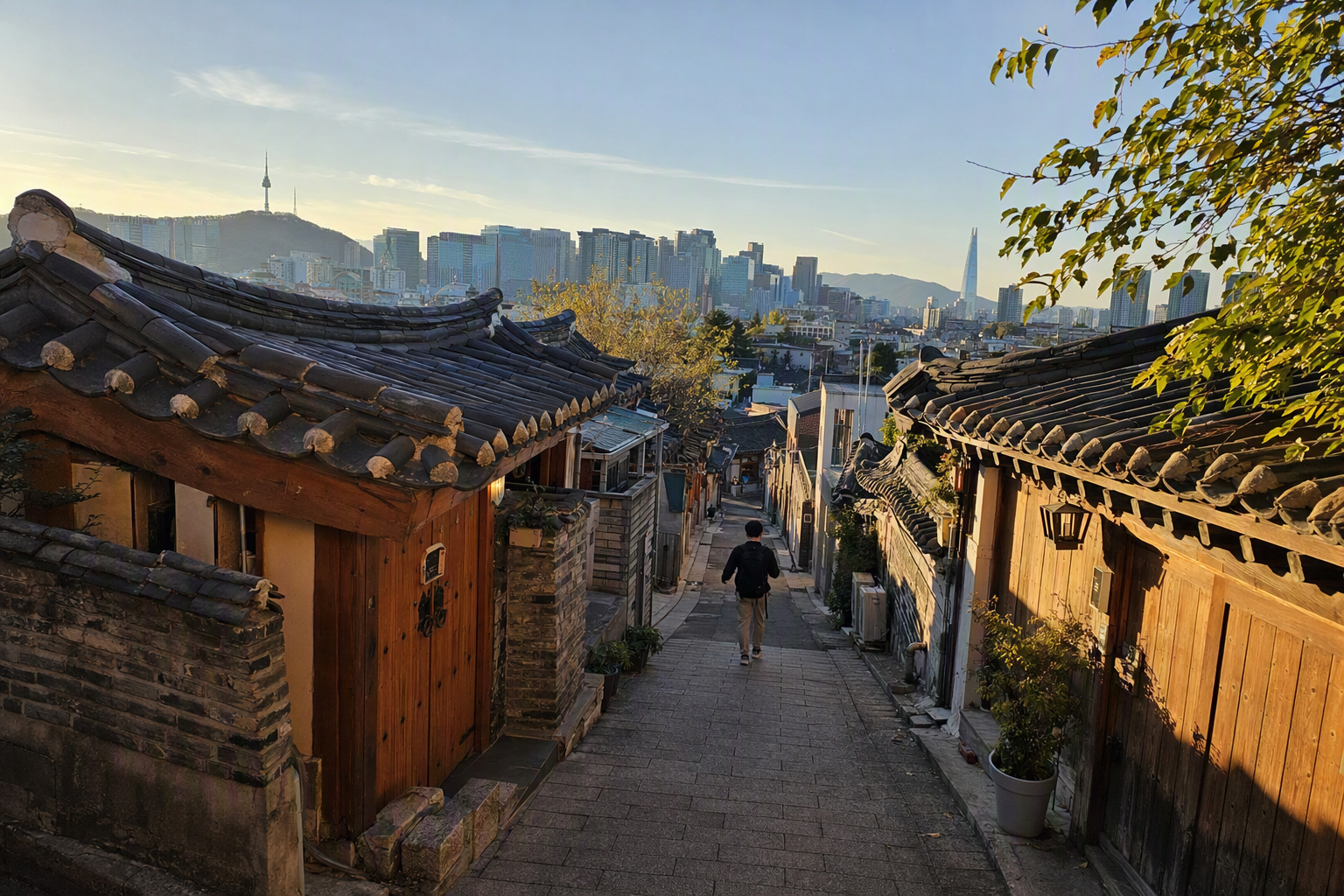
Seoul has some of Korea’s most accessible hanok scenery, but it also shows why beautiful places need boundaries.
Bukchon Hanok Village sits between Gyeongbokgung Palace and Changdeokgung Palace and has a 600-year history as a residential area. It is still inhabited, which is exactly why it feels special and why visiting rules matter. Bukchon’s Special Management Area includes a Red Zone where tourist access is restricted to 10:00–17:00, and group size is limited to 10 visitors. Fines of up to 100,000 won have been reported for violations, and local policies may continue to evolve, so check the latest official notices before going.
Bukchon is not a place for late-night wandering, loud group photos, or treating doorways like props. Go quietly, keep the visit short, and let the neighborhood stay livable.

Namsangol Hanok Village, by contrast, is a reconstructed cultural complex that opened in 1998 with five relocated aristocratic Joseon houses. It has cultural programming and a more visitor-oriented layout, so it is often the better choice if you want hanok photos and activities without worrying about residential privacy. It even has a time capsule buried in 1994 for Seoul’s 600th anniversary, planned to be opened in 2394.
The simple comparison: choose Bukchon for a short, respectful look at a living neighborhood; choose Namsangol for easier cultural viewing in central Seoul.
Suncheon Bay and Korea’s Getbol tidal flats: beauty at low tide
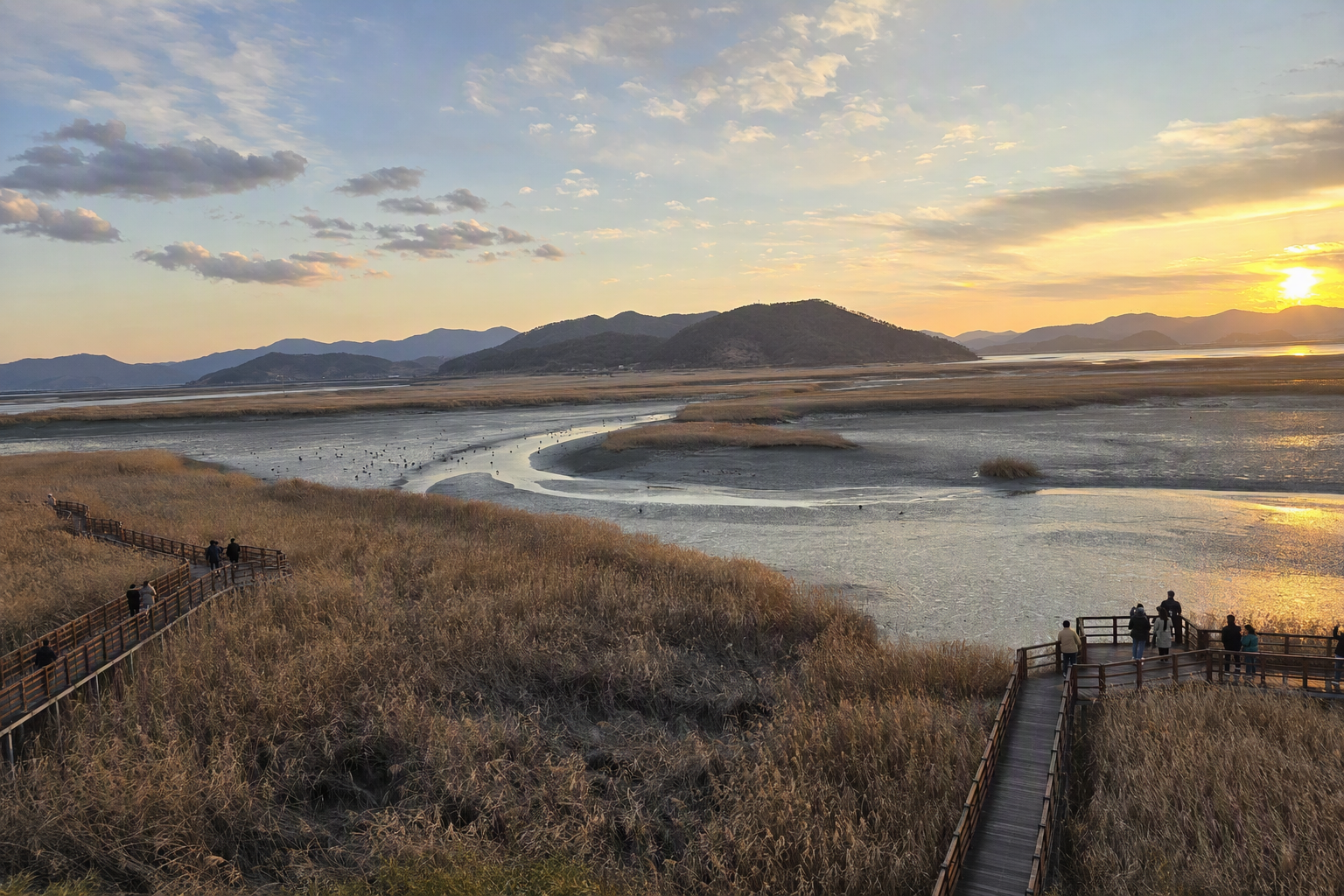
Not every beautiful Korean landscape rises upward. Some of the country’s most important scenery spreads flat across mud, reeds, tide channels, and bird habitats.
Korea’s Getbol tidal flats were inscribed as a UNESCO World Natural Heritage site in 2021. The core areas include Seocheon, Shinan, Gochang, and Boseong–Suncheon. These tidal flats are part of a vast island-studded macrotidal mudflat system and serve as critical habitat for migratory birds along the East Asian–Australasian Flyway.
Suncheon Bay is especially meaningful for travelers because it combines wetland scenery with strong ecological status: it has Ramsar recognition and belongs to a UNESCO Biosphere Reserve area. The Boseong–Suncheon tidal flat supports salt marshes, halophyte communities, and birdlife including endangered hooded cranes.
Who will love this landscape
Suncheon Bay is not flashy in the way Jeju cliffs or Seoraksan peaks are flashy. Its beauty is rhythmic: reeds moving in wind, water channels shining at low tide, birds cutting across a wide sky. It suits travelers who like slower scenery, photography, ecology, and quieter regional travel.
Because tidal flats are fragile, access and observation rules matter. Stay on designated paths and check local guidance, especially if conservation work, weather, or seasonal bird protection affects viewing areas.
Korea’s island-dotted coasts: Taeanhaean, Hallyeohaesang, and Dadohaehaesang
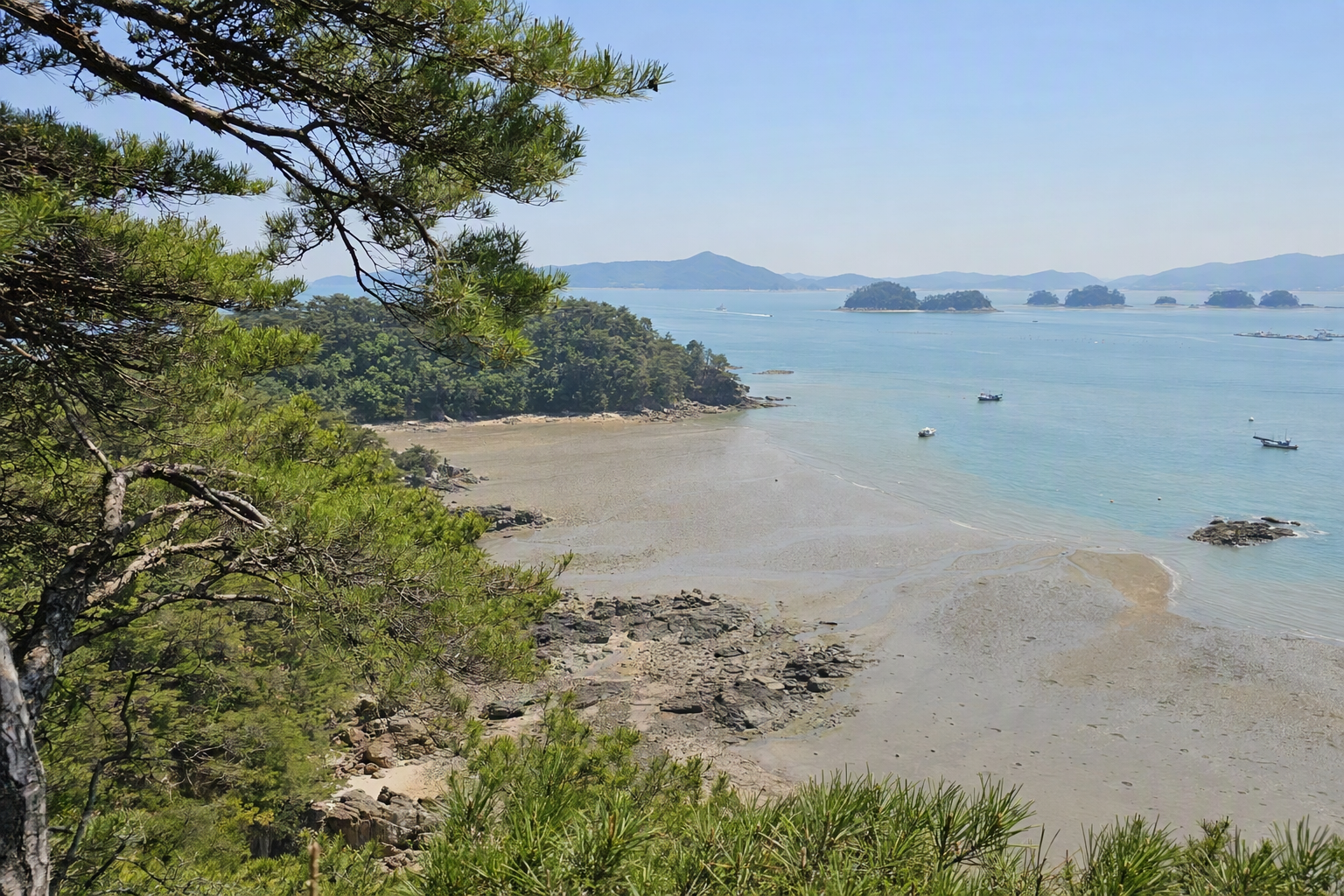
Jeju gets most of the international attention, but Korea’s coastal national parks deserve more space in repeat-trip itineraries. Foreign visitors to Korean national parks have been growing beyond the obvious names, with coastal parks such as Dadohaehaesang, Taeanhaean, and Hallyeohaesang drawing strong interest.
Taeanhaean National Park, designated in 1978, covers coastal scenery with about 130 islands and a rich mix of plant life. The west coast mood here is different from Jeju: less volcanic spectacle, more tidal rhythm, islands, beaches, and broad shorelines. Hallyeohaesang and Dadohaehaesang lean into southern sea views and island landscapes, the kind of places that feel best when you are not rushing from one landmark to the next.
The trade-off is planning. Coastal parks can require more regional transfers and a little more patience than city-based sightseeing. For travelers who have already done Seoul, Busan, and Jeju, that slower pace can be exactly the point.
The DMZ: stark, controlled, and unforgettable
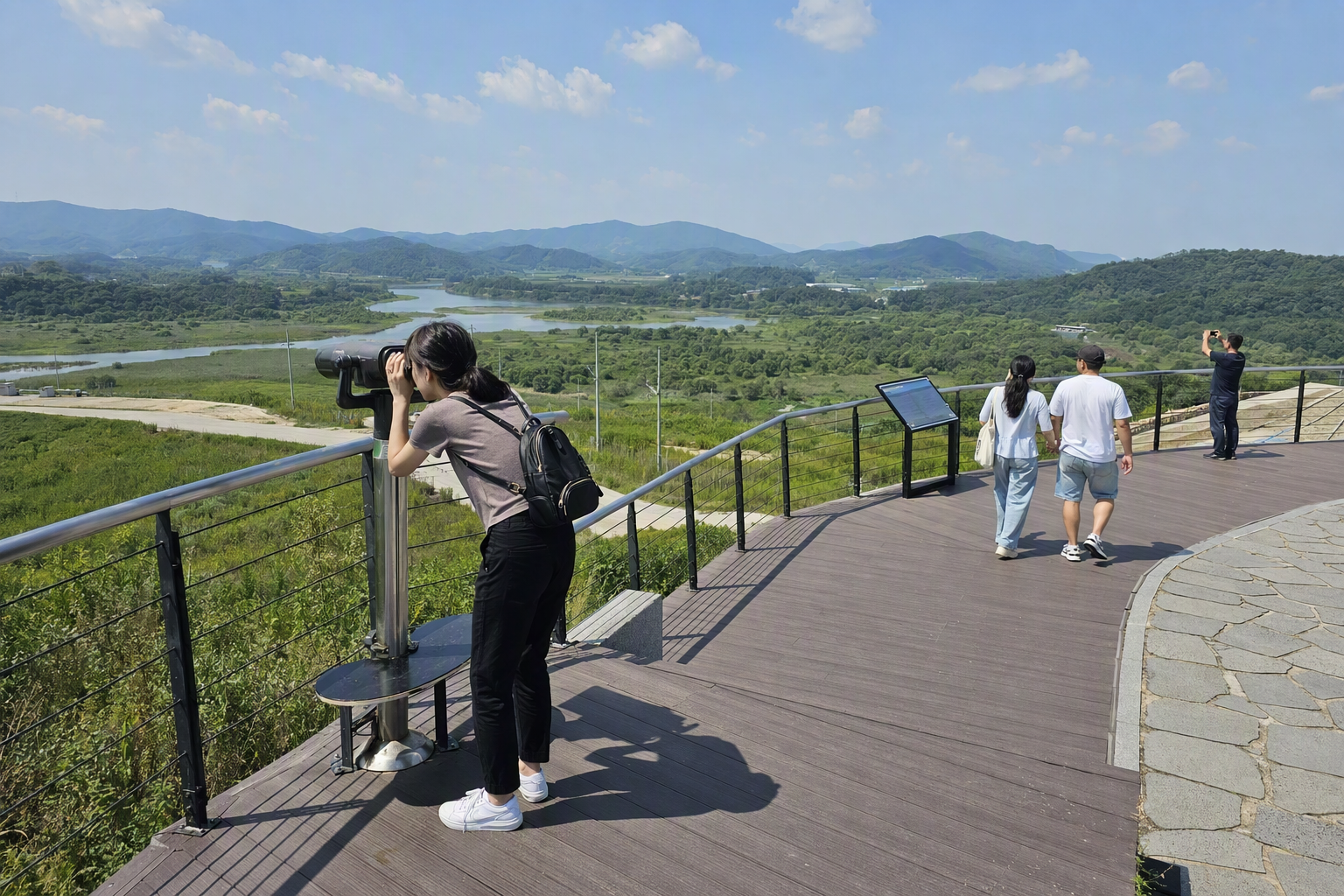
The DMZ is not beautiful in the same way as Jeju or Gyeongju. It is spacious, quiet, tense, and deeply symbolic. The landscape around Paju can feel almost too calm for the history it carries.
Access is strictly controlled. Independent travel is not allowed for standard DMZ visits, and organized guided tours are required. Typical Paju itineraries usually include places such as Imjingak, the Third Tunnel, and Dora Observatory. Panmunjom and the JSA are not automatically included, and their availability depends on security conditions and specific tour permissions.
Bring your passport if your tour requires it, follow the operator’s rules carefully, and verify the latest access status before booking. The DMZ is worth considering if you want a meaningful Korea experience, but it should not be treated like a casual photo stop.
How to pair these places without overloading your trip
Korea’s transport network makes ambitious routes possible, but possible is not always pleasant. The prettiest trips usually come from pairing places with different textures.
For a first Korea trip with limited time
Base yourself in Seoul, then add Suwon Hwaseong Fortress for a heritage day and either Namsangol or Bukchon for hanok atmosphere. If the DMZ matters to you, reserve a guided tour and keep that day flexible around security conditions.
This route keeps logistics simple and still gives you palace-area streets, fortress walls, traditional architecture, and a very different border landscape.
For a culture-focused route
Pair Gyeongju with Andong Hahoe Village or Yangdong Village, then add Jeonju if food and hanok streets are high on your list. This combination shows three different faces of Korean heritage: ancient Silla monuments, Joseon clan villages, and an urban hanok district with a strong food identity.
The common mistake is treating all hanok places as interchangeable. They are not. Jeonju is lively and food-forward, Hahoe and Yangdong are slower and more residential, Bukchon is beautiful but restricted, and Namsangol is designed for cultural viewing.
For a nature-focused route
Choose Jeju or Seoraksan and Gangwon-do as your main nature anchor. Doing both on a short trip can feel like spending too much time in transit between big scenery. Jeju gives volcanic island landscapes and coastlines; Seoraksan gives peak drama, valleys, and classic mountain color.
If your trip is long enough, add Suncheon Bay or a coastal national park for a quieter ecological contrast.
For repeat visitors
Look beyond the famous triangle of Seoul, Busan, and Jeju. Suncheon Bay, Taeanhaean, Hallyeohaesang, Dadohaehaesang, Odaesan, Wondae-ri Birch Forest, and eventually sections of the Dongseo Trail can make Korea feel newly spacious.
These places are especially good for travelers who enjoy regional texture more than constant landmark-hopping.
Small planning notes that make a big difference
- Check official updates for nature sites. Mountain trails, caves, cable cars, wetlands, and long-distance trail sections can change due to weather, safety, or conservation management.
- Respect living neighborhoods. Bukchon, Hahoe, and Yangdong are not stage sets. Quiet voices, small groups, and privacy awareness matter.
- Do not assume the JSA is part of a DMZ tour. Standard DMZ itineraries and JSA access are different, and security rules can change.
- Give Gyeongju a night if you can. Donggung Palace & Wolji Pond is one of the city’s strongest visual moments after dark.
- Compare Jeju prices carefully. The island is gorgeous, but recent concerns around value and pricing make advance comparison worthwhile.
- Do not chase every UNESCO label in one route. Korea has many recognized heritage and nature sites; your trip will feel better if you choose a few and slow down.
Creatrip’s take
The most beautiful places in South Korea are not all beautiful for the same reason. Jeju is elemental. Seoraksan is dramatic. Gyeongju is graceful. Hahoe and Yangdong are layered with living history. Jeonju is warm, tasty, and easy to enjoy. Suncheon Bay is quiet in a way that stays with you.
For a trip that feels rich instead of rushed, choose one nature anchor, one heritage anchor, and one slower place where you can wander without chasing the next transfer. Korea’s beauty is close together, but it still deserves time.