Famous Landmarks and Sights to Visit in South Korea
A Creatrip-style route through Korea’s palaces, heritage cities, seaside icons, volcanic scenery, and UNESCO sites worth planning around.

South Korea rewards travelers who mix its big-name landmarks with a little restraint. The country is easy to move around by KTX, domestic flights, and city transit, but the famous sights are not all the same kind of famous. A palace morning in Seoul feels ceremonial and crowded in the best way; Gyeongju asks you to slow down around tombs and temple courtyards; Busan is all sea air, markets, and cliffside temples; Jeju changes the mood completely with lava rock, forests, and wind.
The smartest trip is not the one that checks off the most pins. It is the one where the landmarks make sense together.
The classic route: Seoul → Gyeongju → Busan → Jeju
For a first Korea trip that balances culture, city energy, coast, and nature, the smoothest route is still Seoul → Gyeongju → Busan → Jeju, usually with a final Seoul buffer before flying home.
A comfortable 10-day version looks like this:
- Seoul: 3 to 4 nights for palaces, hanok neighborhoods, markets, city views, and possibly the DMZ
- Gyeongju: 1 to 2 nights for Silla-era tombs, temples, and night scenery
- Busan: 2 nights for beaches, seafood markets, cliffside temples, and city-meets-sea views
- Jeju: 2 to 3 nights for volcanic landscapes, coastal drives, forests, and Hallasan
The order works because it lets Korea unfold historically before turning toward the sea. Seoul gives you the Joseon dynasty and modern capital energy; Gyeongju takes you much further back into Silla history; Busan opens up the southern coast; Jeju finishes with scenery that feels like another country inside Korea.
KTX makes the Seoul–Gyeongju–Busan portion efficient. Seoul to Singyeongju is roughly 2 hours, and Singyeongju to Busan is usually around 30 to 35 minutes, with fares varying by train and booking timing. Busan to Jeju and Jeju back to Seoul/Gimpo are short flights, often around 50 to 60 minutes. Prices change quickly during cherry blossom, autumn foliage, long weekends, and school holidays, so it is worth checking current fares before locking hotels.
Seoul: royal palaces, hanok lanes, city views, and the DMZ
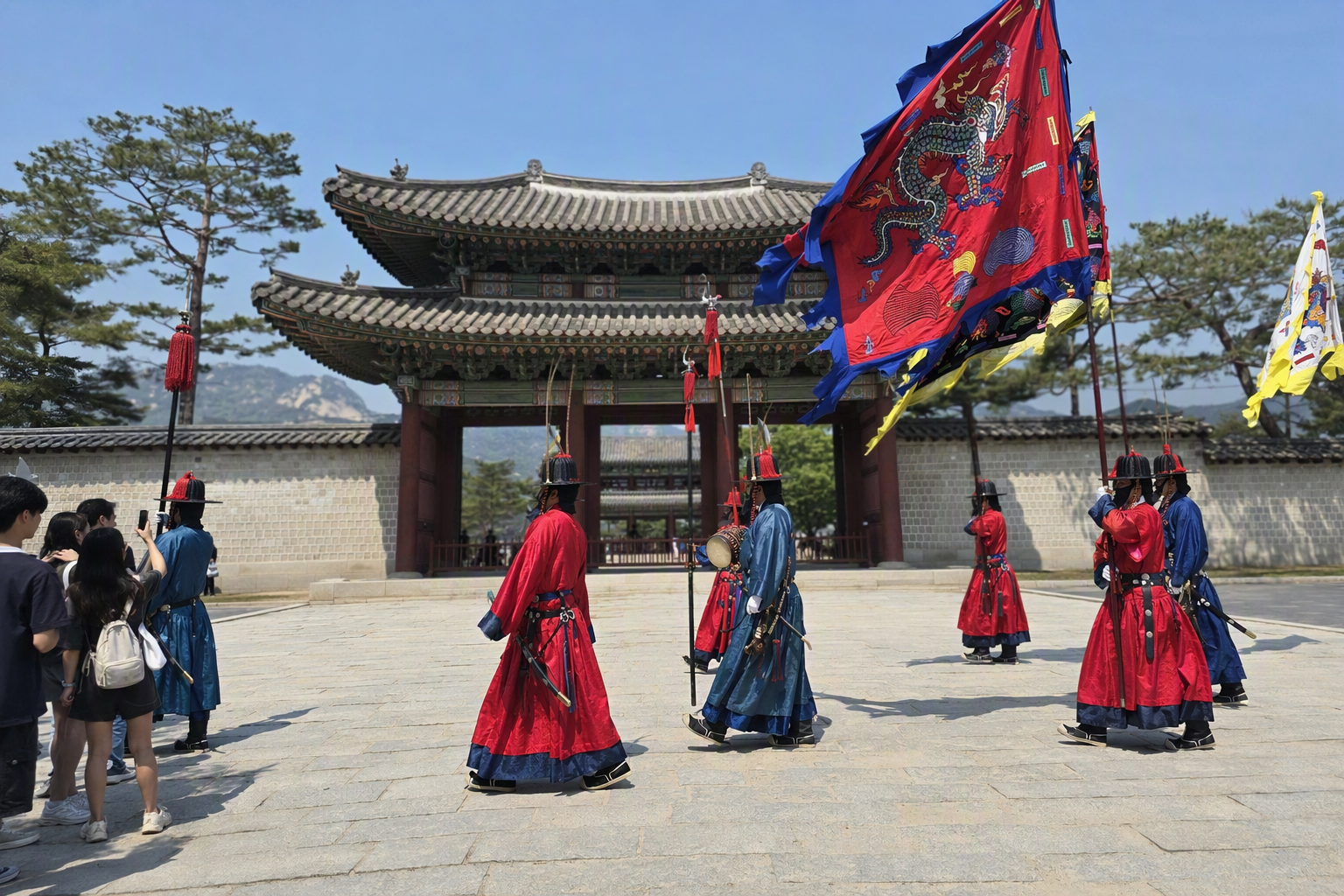
Seoul’s landmarks are famous for good reason, and the palace district is busier than ever. Visits to Korea’s royal palaces, royal tombs, and Jongmyo Shrine reached record highs in 2025, with Gyeongbokgung alone drawing millions of visitors. The upside is atmosphere: hanbok colors in palace courtyards, changing-guard ceremonies, and a very clear sense that these places are part of modern Seoul, not frozen museum pieces.
The downside is obvious by late morning. If a palace matters to you, go early and keep the day focused.
Gyeongbokgung Palace: the grand first impression
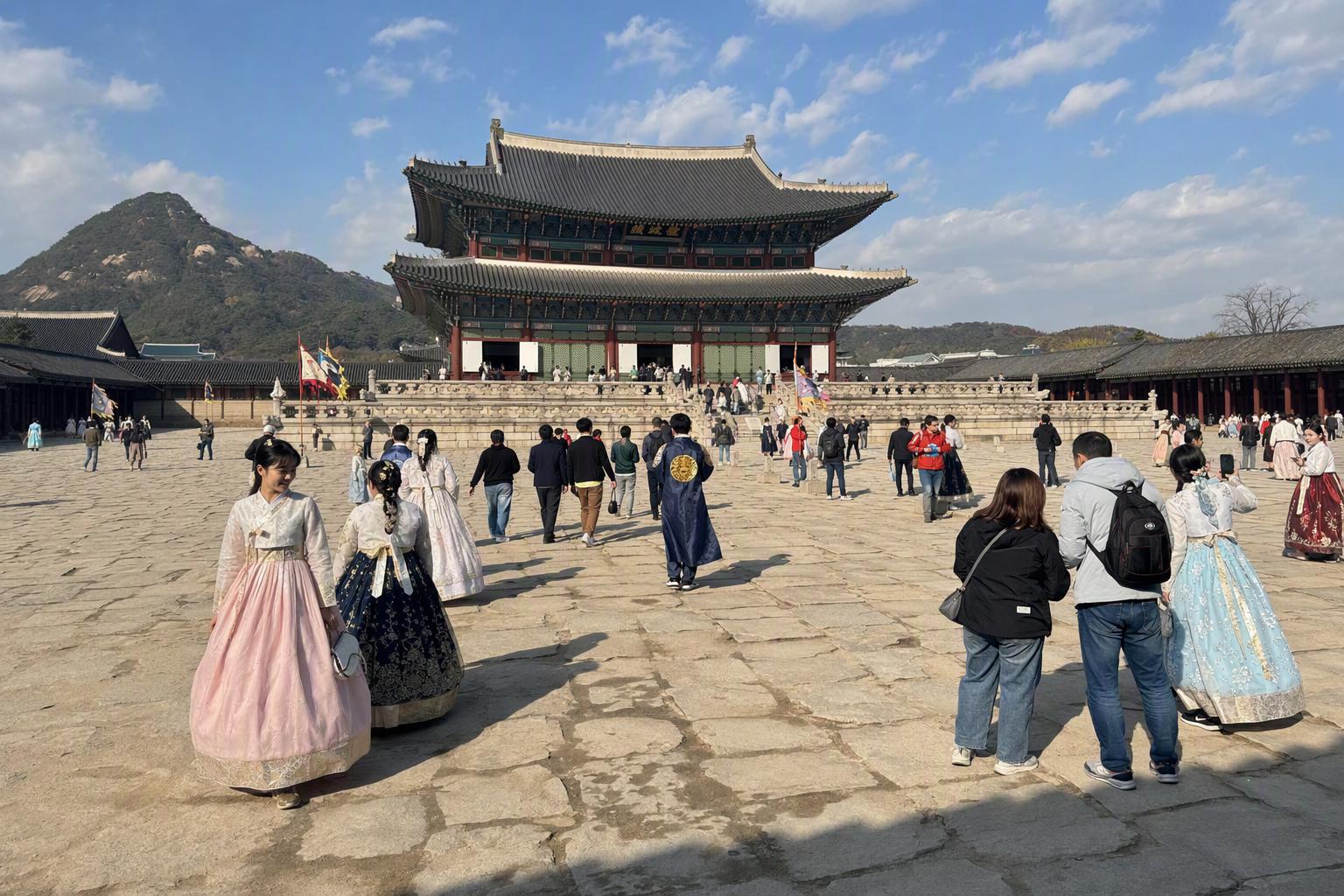
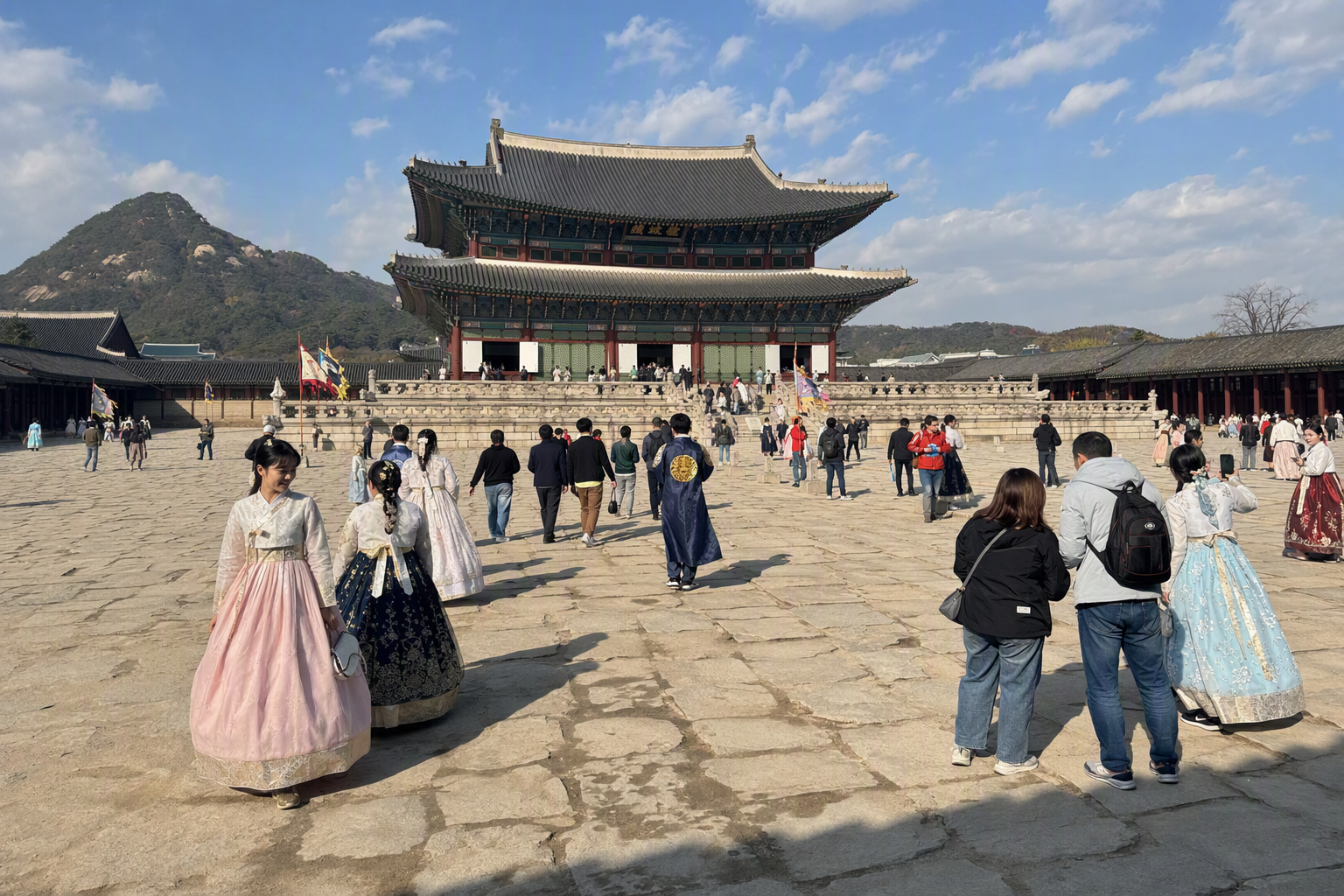
Gyeongbokgung is the palace most first-time visitors picture before arriving in Korea. It is wide, photogenic, and backed by Bugaksan and the mountains north of Seoul, with the changing of the guard usually held at 10:00 and 14:00. Weather, events, and official schedules can affect ceremonies, so check the latest timing before you go.
Palace admission in Seoul is generally inexpensive, often around ₩1,000 to ₩3,000 depending on the site, and many visitors qualify for free or discounted entry. Wearing hanbok can grant free admission at royal palaces, which is part of why the area around Gyeongbokgung is full of rental shops. It is fun and very Seoul, but the better reason to wear hanbok is not the discount; it is that the palace photographs beautifully with traditional clothing and gives the day a little ceremony.
A good palace day does not need all five royal palaces. For most travelers, choose Gyeongbokgung for scale and Changdeokgung for atmosphere. Add Deoksugung if you like the contrast of palace walls next to downtown buildings, or Jongmyo Shrine if you want something quieter, sacred, and deeply tied to royal ritual.
Changdeokgung and the Secret Garden: the one to book ahead
Changdeokgung Palace Complex is UNESCO-listed and often feels more intimate than Gyeongbokgung. Built in 1405 and restored after destruction during the late 16th century, it is especially loved because the palace sits with the natural terrain instead of flattening it. The Huwon, or Secret Garden, is the highlight: ponds, pavilions, old trees, and a style of royal garden that feels deliberately quiet.
This is one of Seoul’s most booking-sensitive heritage sights. Secret Garden and Jongmyo reservations use the royal.khs.go.kr booking system, with online reservations generally opening 6 days before the visit at 10:00 KST. Secret Garden slots commonly have a limited capacity, split between online and onsite tickets, and foreign-language tour slots may have strict eligibility rules. In peak seasons, it can feel a bit like booking concert tickets.
Changdeokgung’s palace entry and Secret Garden ticket are separate, with recent reference prices around ₩3,000 for palace admission and ₩5,000 for the garden, but always verify current fees and schedules on the official site. The garden has seasonal hours and conservation-related access controls, so do not leave it as a spontaneous last stop.

Bukchon Hanok Village and Insadong: beautiful, but still lived-in
Between Gyeongbokgung and Changdeokgung, Bukchon Hanok Village is one of Seoul’s most photographed neighborhoods. The tiled roofs and sloping alleys are lovely, but Bukchon is also a residential area, not a film set. Since March 2025, the core area has had visitor restrictions during 17:00 to 10:00, so keep Bukchon to daytime hours and avoid loud group behavior in the alleys.
Pair it with Insadong, where galleries, teahouses, crafts, and snack stalls make an easy bridge between palace sightseeing and a slower afternoon. This is also a good area to reset after a busy palace morning rather than sprinting to another landmark.

N Seoul Tower and the fortress wall: views with different personalities
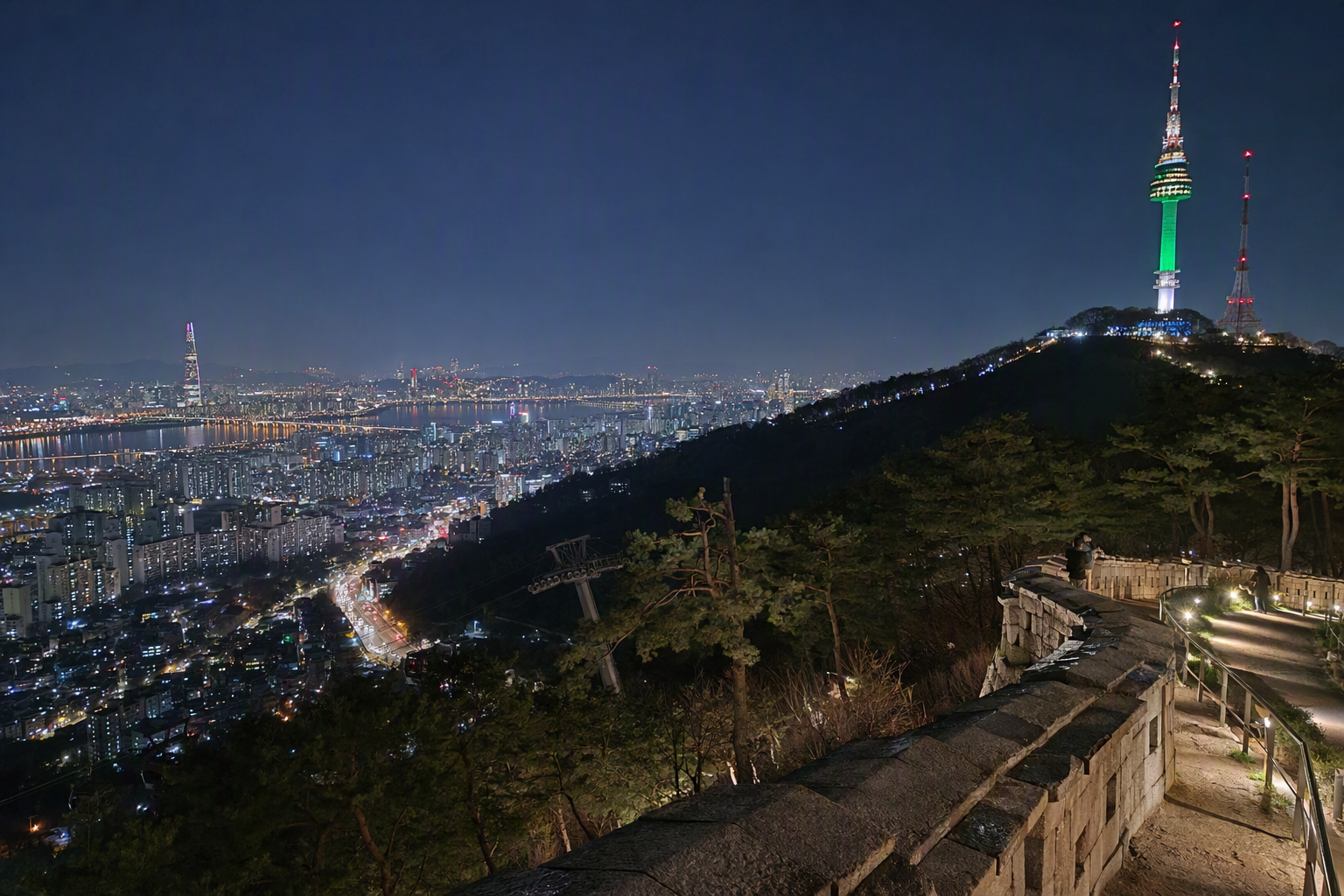
For skyline views, N Seoul Tower is the classic. It is easy to understand why: Seoul spreads out in every direction, and the city looks especially pretty at sunset or after dark. It is also a very popular date and photo spot, so expect crowds on clear evenings.
For a more local-feeling view, work in a section of the Hanyangdoseong Seoul City Wall. Fortress-wall walks connect Seoul’s old defensive landscape with neighborhoods and ridges, and they give you a physical sense of the city’s bowl-shaped geography. This is not a replacement for a palace; it is the piece that helps the palace district make sense.
DMZ day trip: powerful, structured, not casual
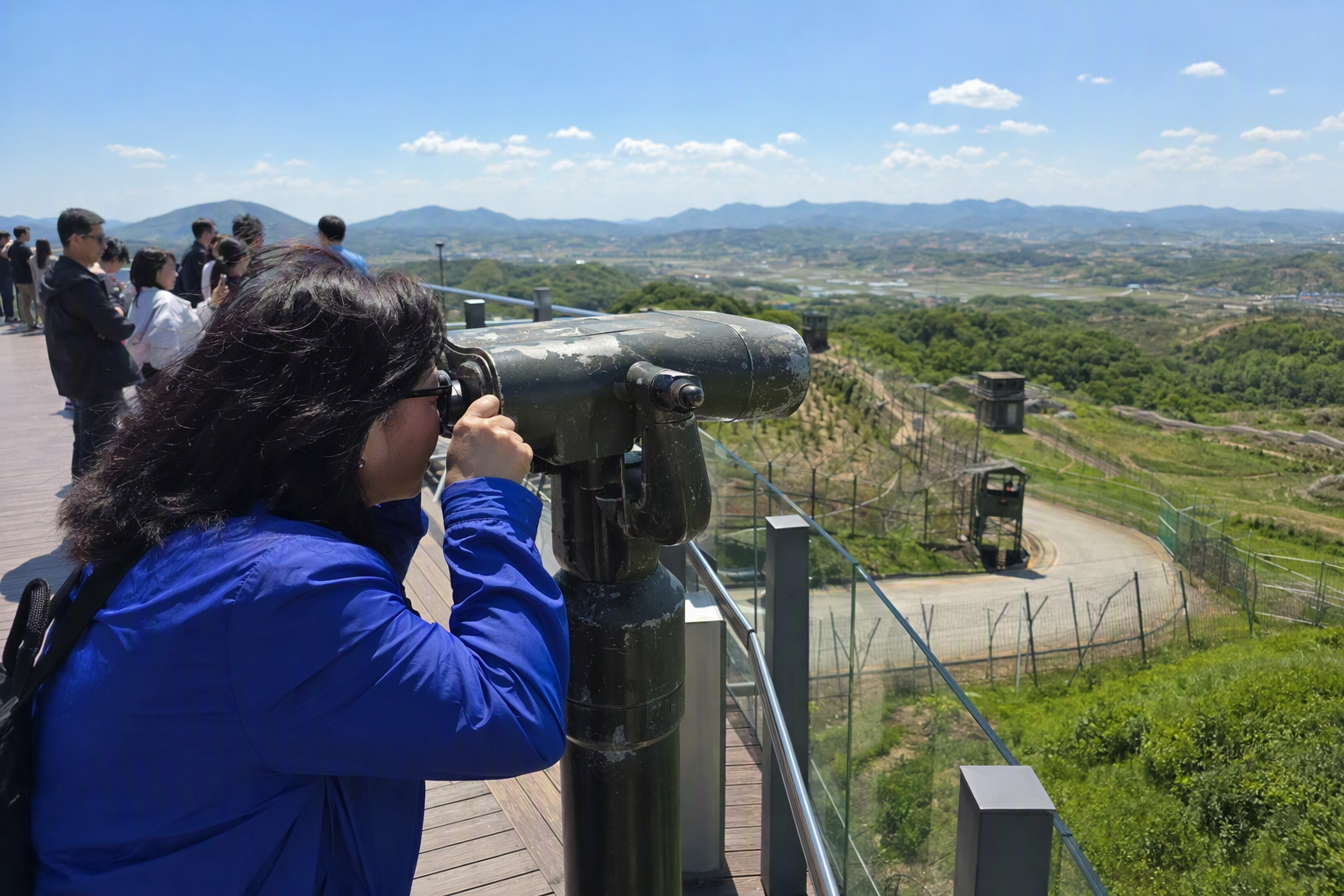
The DMZ is one of the most meaningful day trips from Seoul, usually including places such as Imjingak, the Freedom Bridge area, the 3rd Infiltration Tunnel, and Dora Observatory. Tours commonly cost around ₩55,000 to ₩130,000, depending on route and inclusions, and a passport is mandatory. Access can change based on security conditions, and the JSA is especially variable.
Treat the DMZ as a structured day, not something to squeeze between brunch and a KTX ride. It is a very different kind of landmark: less photogenic in the usual travel sense, but far more memorable than many visitors expect.
Gyeongju: Korea’s open-air history city
Gyeongju is often described as a museum without walls, and for once the phrase fits. This was the capital of the Silla kingdom, and the city has a density of heritage that feels completely different from Seoul. Instead of one palace complex, you move through tomb mounds, observatories, temple sites, bridges, and ponds, many of them close enough to connect in a relaxed day.
The major UNESCO names are Bulguksa Temple, Seokguram Grotto, Yangdong Village, and the Gyeongju Historic Area. Gyeongju also offers free foreign-language cultural tours at several major sites, generally hourly from 10:00 to 16:00 with no reservation, which is a rare treat if you want context without committing to a full guided package. Confirm the current tour list and language availability before going.
Daereungwon, Cheomseongdae, and Donggung Palace and Wolji
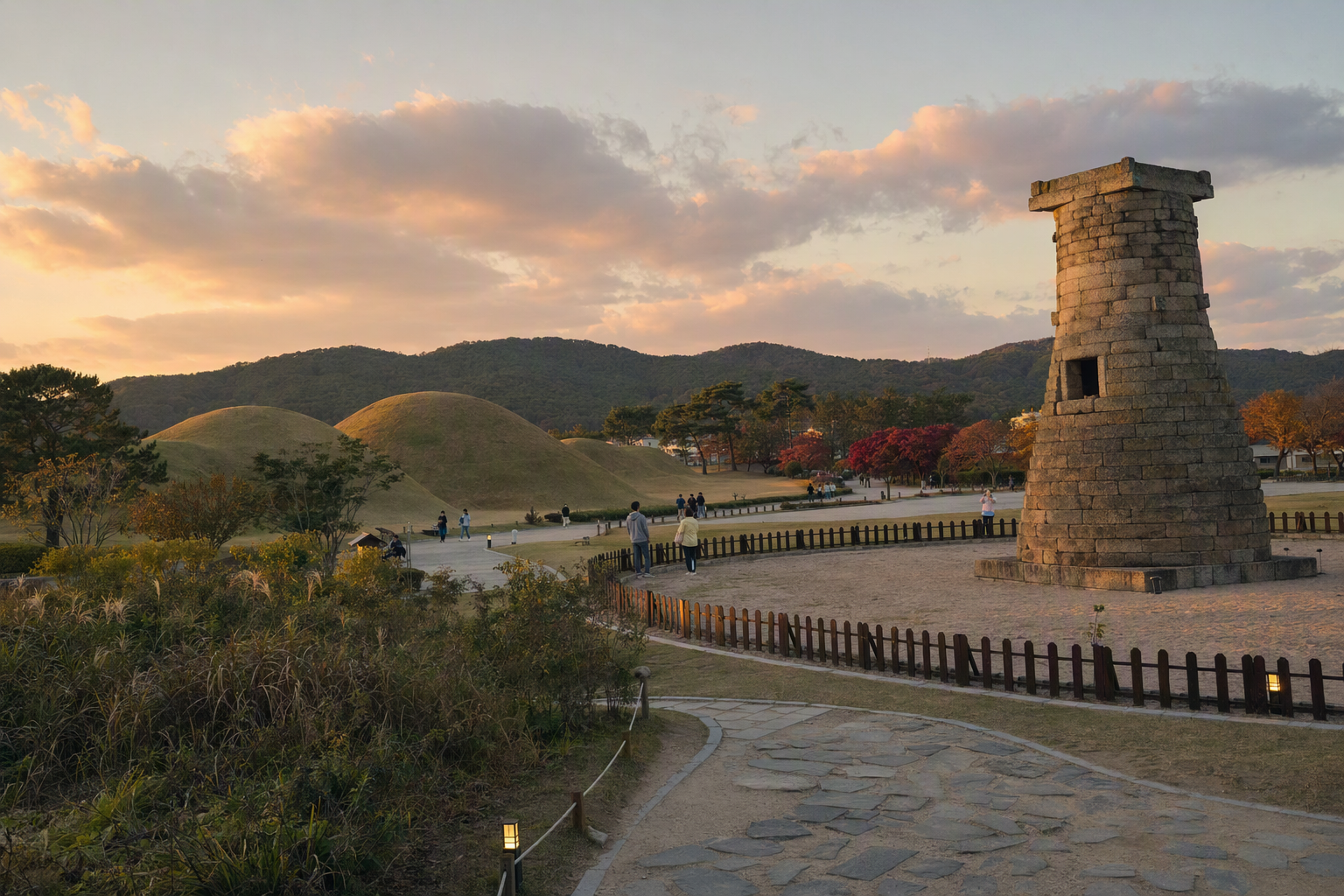
Start with Daereungwon Ancient Tomb Complex, where the grassy royal tombs create Gyeongju’s signature silhouette. Nearby Cheomseongdae Observatory is one of Korea’s most recognizable ancient scientific landmarks, and the area is especially beautiful in soft evening light.
After dark, Donggung Palace and Wolji Pond, also widely known by its former name Anapji, is the night-view stop. Reflections of pavilions on the pond are the reason many travelers stay overnight rather than treating Gyeongju as a rushed day trip. Night illumination commonly runs into the evening, often until around 22:00, but operating times can shift by season.
Bulguksa and Seokguram: worth the extra time
Bulguksa Temple and Seokguram Grotto sit outside the central tomb area and deserve a half day if you care about Buddhist art and architecture. Bulguksa is elegant and layered, while Seokguram is more focused and contemplative. Together, they are among Korea’s earliest UNESCO World Heritage inscriptions and give Gyeongju a depth that the downtown tomb route alone cannot fully show.
The trade-off is time. With only one night, choose between a central Gyeongju day plus Wolji at night, or a more heritage-heavy day that includes Bulguksa and Seokguram. Trying to do every major landmark in one day can make Gyeongju feel like a bus transfer exercise, which is exactly the wrong mood for the city.

Hwangnidan Street and Bomun: the modern pause
Hwangnidan Street is the hanok-based cafe and boutique area where Gyeongju becomes younger and trendier. It is not ancient history, and that is the point. After tombs and temples, a coffee stop in a renovated hanok gives the city a softer rhythm.
Bomun Tourist Complex works better for travelers who want resort-style convenience, lake scenery, or family-friendly spacing. It is less atmospheric than staying near the historic center, but it can be easier for a slower two-night Gyeongju stay.
Busan: Korea’s landmark city by the sea
Busan is not just Seoul with beaches. It is wider, saltier, and more relaxed, with landmarks scattered along the coast and tucked into hillside neighborhoods. The mistake is trying to cross the city too many times in one day. Cluster your sights: one coastal day, one market-and-neighborhood day, or one temple-and-beach day.

Haedong Yonggungsa: temple drama on the rocks
Haedong Yonggungsa is Busan’s postcard temple, built against the rocks with the sea directly below. It is popular and can get crowded, but the setting is genuinely special because most Korean temples are in the mountains, not on the coast. Go early if you want a calmer visit, especially in peak travel seasons.
Haeundae, Gwangalli, and the Blueline Sky Capsule
Haeundae Beach is Busan’s polished beach district, while Gwangalli Beach is all about the view of Gwangan Bridge, especially at night. They are both famous, but they offer different moods: Haeundae feels like a resort-city beach, Gwangalli feels more like a social evening spot.
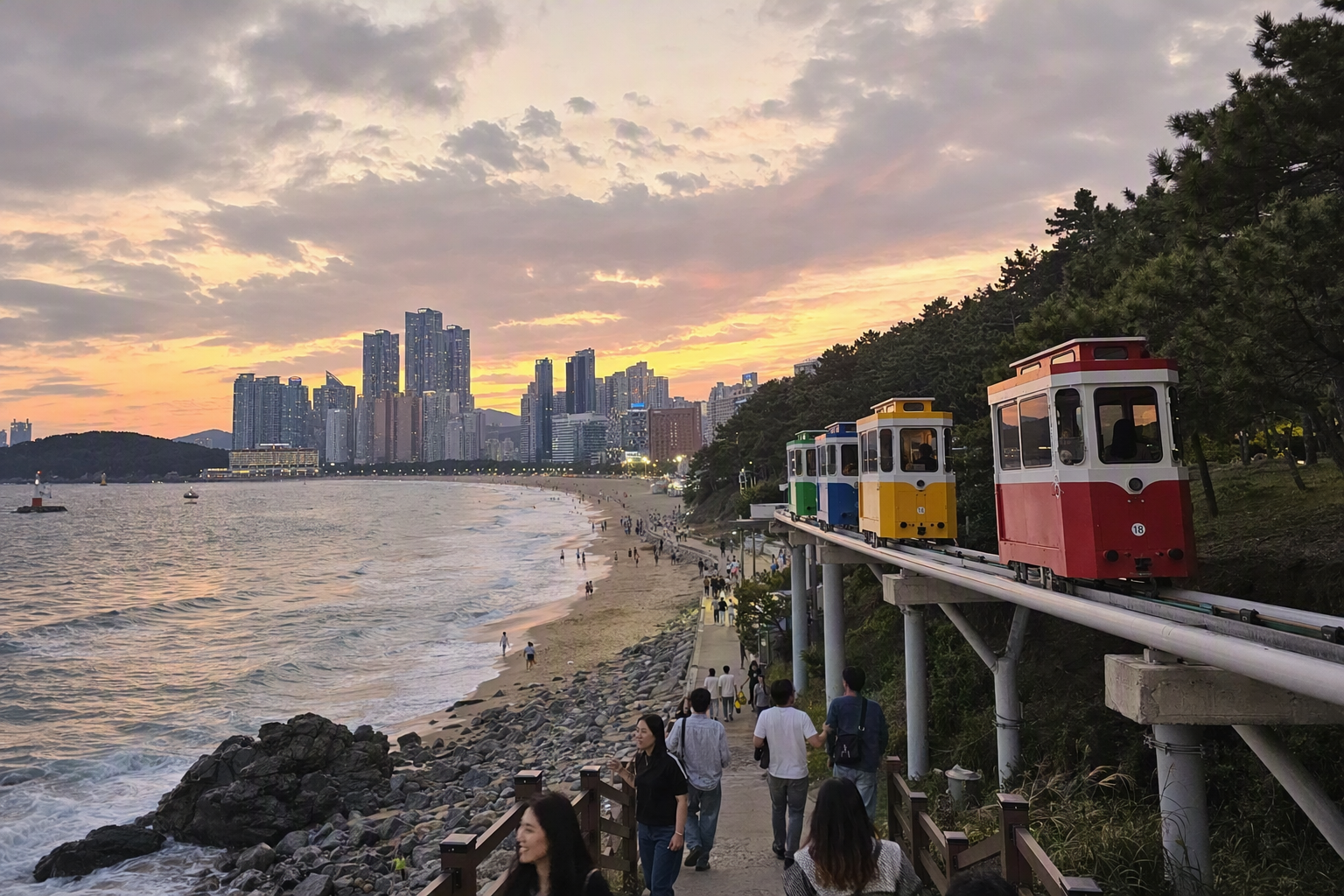
The Haeundae Blueline Sky Capsule, often taken between Mipo and Cheongsapo, is one of Busan’s most photogenic newer experiences. The ride is around 30 minutes, and reference prices are often around ₩35,000 per capsule, though prices and reservation rules should be checked before booking. It is charming, but not essential if your Busan time is tight. For some travelers, a long beach walk and dinner by the water will feel more satisfying than lining up for the capsule.
Gamcheon Culture Village and Jagalchi Market
Gamcheon Culture Village brings color and hillside views, while Jagalchi Market brings Busan back to seafood, workers, tanks, and market noise. They pair well because they show two very different faces of the city.
Gamcheon is pretty, but parts of it are residential, so keep the same respect you would bring to Bukchon. Jagalchi is more functional than polished; go for the market energy, not a perfectly curated dining experience.

Jeju: volcanoes, forests, beaches, and wind
Jeju is Korea’s great change of scenery. It is a UNESCO Biosphere Reserve, UNESCO World Natural Heritage site, and UNESCO Global Geopark, with Hallasan, more than 360 oreum volcanic cones, lava tubes, columnar joints, beaches, forests, and dramatic coastal formations.
It is also the place where logistics matter most. Jeju has buses, tourist circulation routes, city tour buses, and QR-based bus payment options, but a rental car makes the island far easier, especially with 2 or 3 days. Recent reference prices for car rental are often around ₩40,000 to ₩60,000 per day, and international travelers generally need an International Driving Permit with the correct license documents. Check rental rules carefully before arrival.
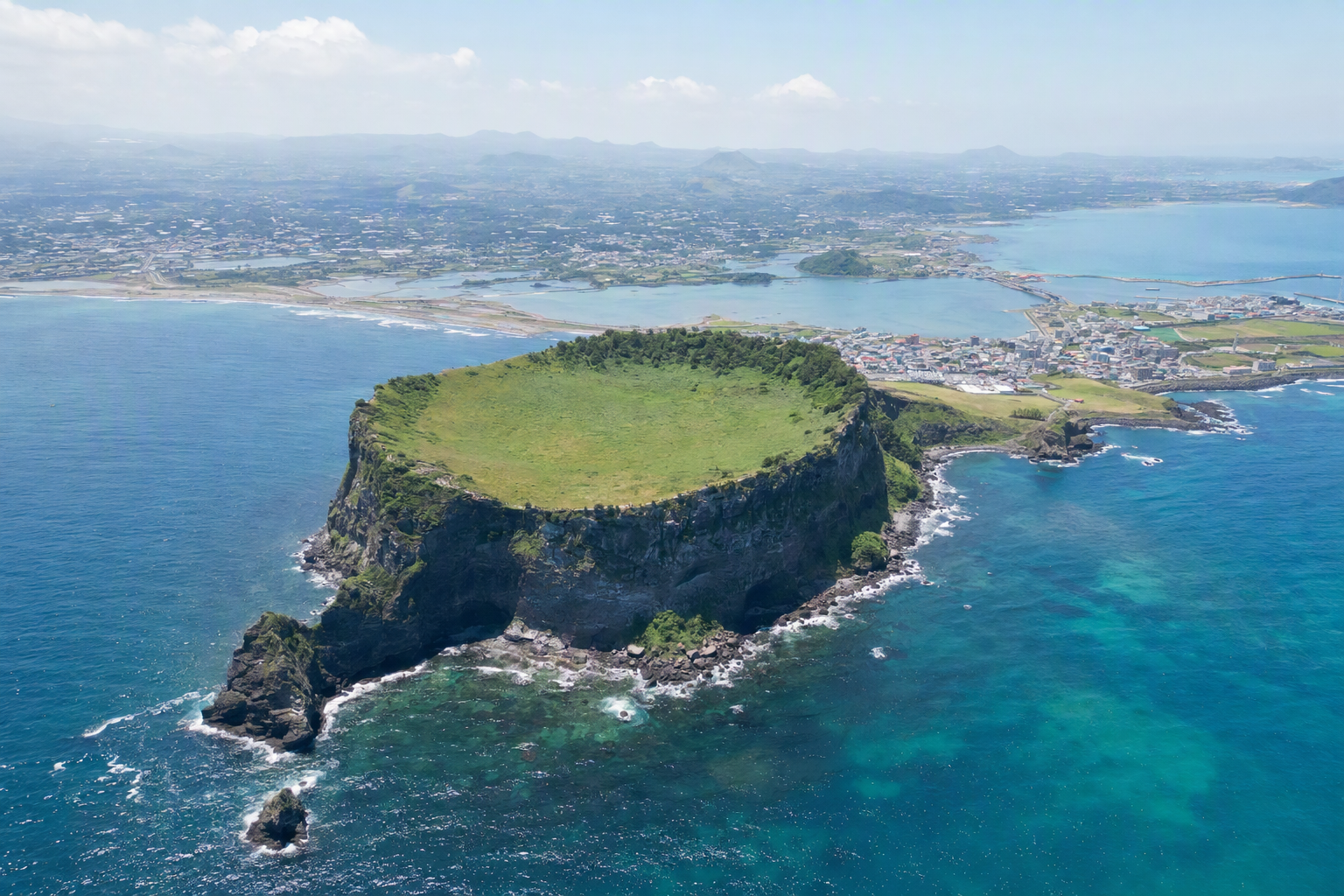
Seongsan Ilchulbong, Udo, and the east coast
Seongsan Ilchulbong, also called Sunrise Peak, is a 180-meter volcanic tuff cone and one of Jeju’s signature natural landmarks. Entry has recently been around ₩5,000, and haenyeo diver demonstrations are often scheduled between late morning and afternoon, but weather and daily conditions can affect the schedule.
Nearby Udo Island works well if you have a relaxed east-coast day, while Seopjikoji gives you open coastal scenery without needing a difficult hike. Hamdeok Beach is another easy favorite, especially for travelers who want bright water and cafe time without going too far off route.
Hallasan: choose your hike honestly
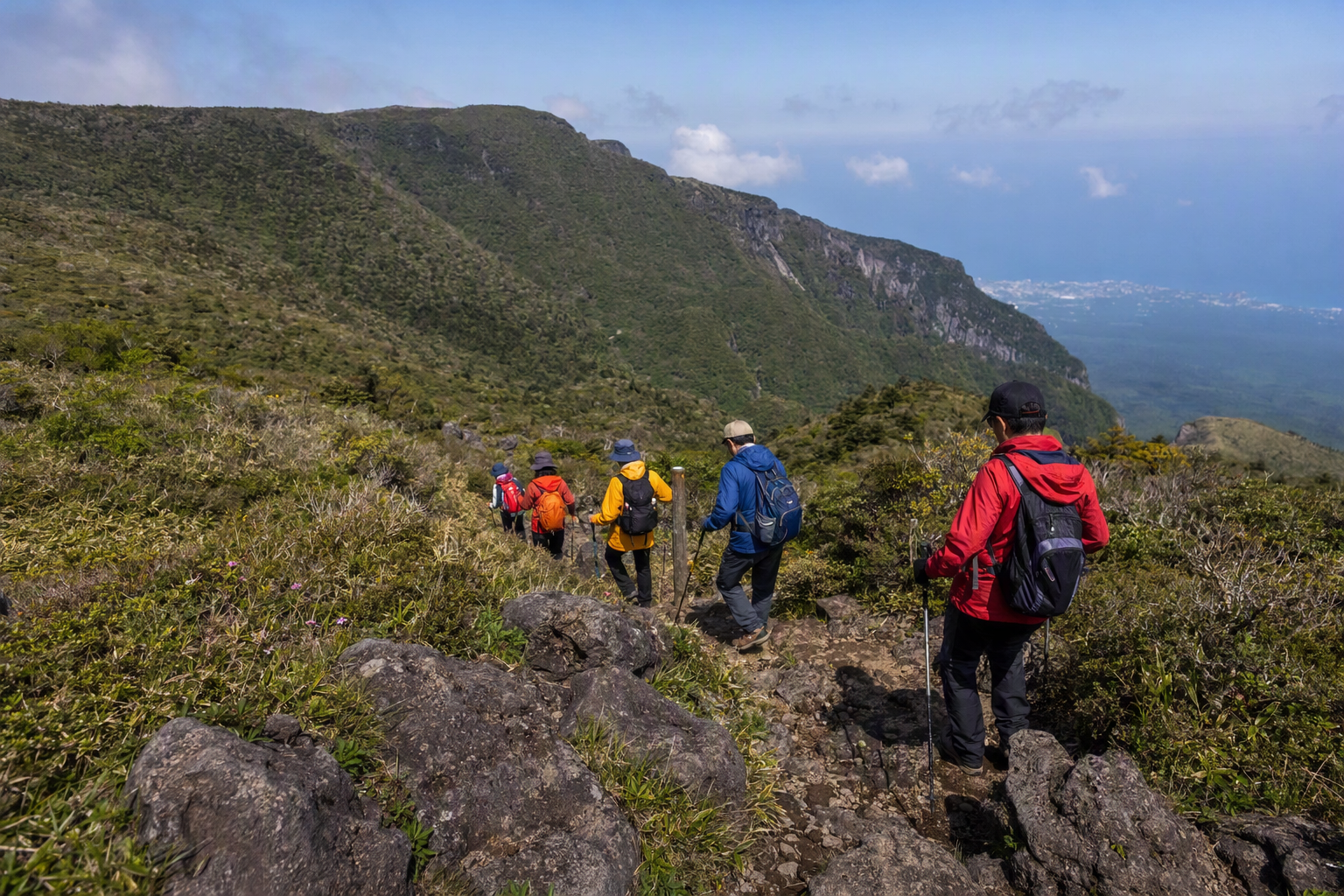
Hallasan National Park is the centerpiece of Jeju, but not every traveler needs the summit. The summit routes via Seongpanak and Gwaneumsa require advance reservations. Reservations open at 09:00 on the first business day of the preceding month, with date-specific quotas, and each person can reserve for up to 4 people. The system also has entry windows and cancellation rules, so read the current Hallasan reservation page carefully.
For a less intense Hallasan day, routes such as Yeongsil and Eorimok are popular alternatives. They still give you mountain scenery without turning the day into a full summit mission. Weather can change fast on Jeju, so avoid building your entire island plan around one mountain day with no backup.
Manjanggul, Jusangjeolli, waterfalls, and forests
Manjanggul Lava Tube is one of Jeju’s classic volcanic sights when open, with a cool cave environment often around 11°C and reference admission around ₩4,000. Cave access can change due to maintenance or conservation, so confirm opening status before routing your day around it.
On the south coast, Jusangjeolli Columnar Joint shows Jeju’s volcanic geometry in a very visual way, while Cheonjiyeon Falls and Jeongbang Falls offer easier sightseeing stops. Yongmeorihaean Coast is dramatic but weather- and sea-condition sensitive.
For a quieter natural landmark, Bijarim Forest is lovely. It has around 2,800 bija trees, many estimated at 500 to 800 years old, spread across a large protected forest area. It is not as instantly dramatic as a crater or waterfall, but it is one of Jeju’s best places to feel the island slow down.

What to eat between landmarks
Jeju’s food is part of the route. Jeju black pork, galchiguk, okdomgui, omegitteok, and the night markets around Dongmun and Seogwipo Maeil Olle keep the island from becoming only a scenic drive. For a short stay, choose meals near your route rather than crossing the island for a single restaurant. Jeju distances are easy to underestimate.
UNESCO landmarks beyond the main route
As of June 2026, South Korea has 17 UNESCO World Heritage properties, including 15 cultural and 2 natural sites. Some are single landmarks, while many are serial sites spread across multiple regions, such as the Royal Tombs of the Joseon Dynasty, Sansa Buddhist Mountain Monasteries, Seowon Neo-Confucian Academies, Gaya Tumuli, Baekje Historic Areas, and Korean Tidal Flats, or Getbol.
For most visitors, Seoul, Gyeongju, Busan, and Jeju cover the strongest first-trip highlights. For a second trip, or for travelers who love history, these UNESCO routes are where Korea becomes much more layered.

Baekje Historic Areas: Gongju, Buyeo, and Iksan
The Baekje Historic Areas connect eight relic sites across Gongju, Buyeo, and Iksan, tracing Baekje’s capital movements and its elegant archaeological legacy. Gongsanseong Fortress in Gongju has a 2.6 km fortress wall, while the Tomb of King Muryeong is famous for the extraordinary number of artifacts discovered in 1971.
This is the perfect complement to Gyeongju if you want to understand more than one ancient Korean kingdom. Gyeongju is Silla-centered; Baekje sites bring a different political and artistic story. The trade-off is that these areas are less frictionless for first-time international visitors than Seoul or Busan, and many trips work best with a carefully chosen day route rather than a rushed multi-city hop.
Andong Hahoe and Yangdong Village: living Joseon landscapes
Hahoe Village in Andong and Yangdong Village in Gyeongju are UNESCO-listed historic clan villages. They preserve traditional house layouts, Confucian spatial order, and the relationship between elite yangban homes, commoner areas, academies, and surrounding nature.
These are living villages, not theme parks. Hahoe still has residents, and both villages are managed with conservation and tourism capacity in mind. They are rewarding for travelers who like slow heritage landscapes, but less ideal for anyone expecting constant shops, nightlife, or easy late-night transport.

Royal tombs, seowon, sansa, and Gaya tumuli
The Royal Tombs of the Joseon Dynasty include 40 tombs across 18 locations, making them a quieter way to connect with royal history beyond the palace crowds. The Seowon Neo-Confucian Academies and Sansa Buddhist Mountain Monasteries are also serial sites, spread across the country, better suited to themed travel than quick landmark collecting.
The Gaya Tumuli, inscribed in 2023, are especially interesting because they represent the Gaya Confederacy, a non-centralized political system often overshadowed by Silla, Baekje, and Goguryeo in popular travel narratives. For travelers who have already done Gyeongju, Gaya sites can make Korea’s ancient history feel less one-note.
Getbol and Bangucheon: nature and deep time
Korea’s Getbol tidal flats are UNESCO natural heritage, recognized for their ecological richness and migratory bird habitats. They are not a casual selfie landmark; they are best approached with the right season, tide awareness, and local visitor information.
The Petroglyphs along the Bangucheon Stream, inscribed in 2025, add another layer entirely: rock art along a 3 km stream landscape with engravings spanning from around 5000 BCE to the 9th century CE. Access and conservation conditions should be checked carefully, especially because the site is tied to major protection and water-management work.

Passes, tickets, and reservations that can actually matter
Korea has a growing ecosystem of city passes and transit cards, but the value depends heavily on your route. Palace tickets are inexpensive, so a pass rarely pays off from palaces alone. Passes make more sense on days with multiple paid attractions, transport perks, observatories, theme parks, or city tour buses.
Seoul passes
The Discover Seoul Pass has offered formats such as 72 hours at ₩90,000, 120 hours at ₩130,000, Pick 3 Basic at ₩49,000, and Pick 3 Theme Park at ₩70,000, with access to 70-plus attractions, many discount coupons, transport benefits such as AREX or K Limousine options, Seoul Bike, city tour buses, and a 5-day unlimited-data eSIM. Physical cards have also offered optional T-money transit or prepaid functions.
Because pass inclusions change, check the current attraction list and calculate your own day. A palace-and-cafe day does not need a pass. A tightly planned day with an observatory, museum, transport perk, and paid experience might.
Busan, Jeju, and Gyeongju passes
The Visit Busan Pass has time-based and count-based options, including 24-hour, 48-hour, BIG3, and BIG5 styles, covering dozens of attractions and many discount partners. Physical card and transit-card functions have changed in 2026, with mobile QR-style passes becoming more important, so verify the latest official sales and usage rules before relying on it for transportation.
Jeju and Gyeongju also have tour pass products sold through platforms such as KKday. These can be useful if your sightseeing route is attraction-heavy, but they are not magic. On Jeju, distance and weather may matter more than the number of discounted entries. In Gyeongju, a 24-hour pass only helps if the included places match the route you genuinely want.
A simple pass test works well: list the paid attractions you will realistically enter on the same day, add the normal prices, then compare. If the break-even requires rushing, skip it.
Booking-sensitive sights and common planning mistakes
Some famous Korean landmarks are easy to visit casually. Others punish late planning.
- Changdeokgung Secret Garden: book online when reservations open, generally 6 days before at 10:00 KST, or be ready for onsite queues.
- Jongmyo Shrine: check guided tour and reservation rules before going, especially for foreign-language slots.
- Hallasan summit routes: reserve Seongpanak or Gwaneumsa in advance through the Hallasan system; quotas are date-specific.
- DMZ tours: bring your passport and expect security-related changes.
- Bukchon Hanok Village: visit during allowed daytime hours and remember people live there.
- Jeju flights: avoid tight Jeju-to-international-flight connections, especially in windy or stormy seasons.
Season also changes the mood completely. Late March to mid-April brings cherry blossom demand, while October to mid-November is prime autumn foliage season. These are gorgeous times to travel, but KTX tickets, Jeju flights, and popular hotels can move quickly. July is often hot, humid, and rainy, especially in Seoul and Busan, and Jeju can see wind-related flight delays.
A final Seoul night before a long-haul flight is not boring. It is smart. Use it for shopping, one last dinner, or a relaxed palace-adjacent walk instead of gambling on a same-day Jeju connection.
How to choose landmarks by trip length
3 to 4 days: Seoul only, done well
Stay in Seoul and focus on Gyeongbokgung, Changdeokgung, Bukchon, Insadong, N Seoul Tower, a market or shopping district, and possibly a DMZ day trip. This is enough for a strong first taste without losing time to domestic transfers.
5 to 6 days: Seoul plus one extension
Choose Gyeongju if heritage is the priority. Choose Busan if you want coast, seafood, and a different city mood. Choose Jeju only if you can give it at least 2 full days and are comfortable with flights, weather flexibility, and possibly driving.
7 to 8 days: Seoul, Gyeongju, Busan
This is a beautiful no-flight route. Do Seoul palaces and city views, take the KTX to Gyeongju for tombs and temples, then continue to Busan for beaches and markets. It is less logistically risky than adding Jeju and still feels varied.
10 days: Seoul, Gyeongju, Busan, Jeju
This is the classic first-timer route for travelers who want the full range: royal Seoul, ancient Gyeongju, coastal Busan, volcanic Jeju. Keep the Jeju portion flexible, and return to Seoul before your international flight when possible.
Second trip or heritage-focused route
Build around Baekje Historic Areas, Andong Hahoe Village, Yangdong Village, selected royal tombs, sansa temples, seowon academies, or newer UNESCO routes such as Gaya Tumuli. These places are quieter than the big four regions, but they ask for more planning and a slower pace.
A final Creatrip nudge
Korea’s famous landmarks are at their best when they are not treated like a race. Pick the palace that matches your mood. Give Gyeongju a night if you can. Let Busan be coastal instead of over-scheduled. Leave Jeju room for weather.
The country is compact, but its best sights have very different tempos. Follow those tempos, and the trip feels less like a checklist and much more like Korea.