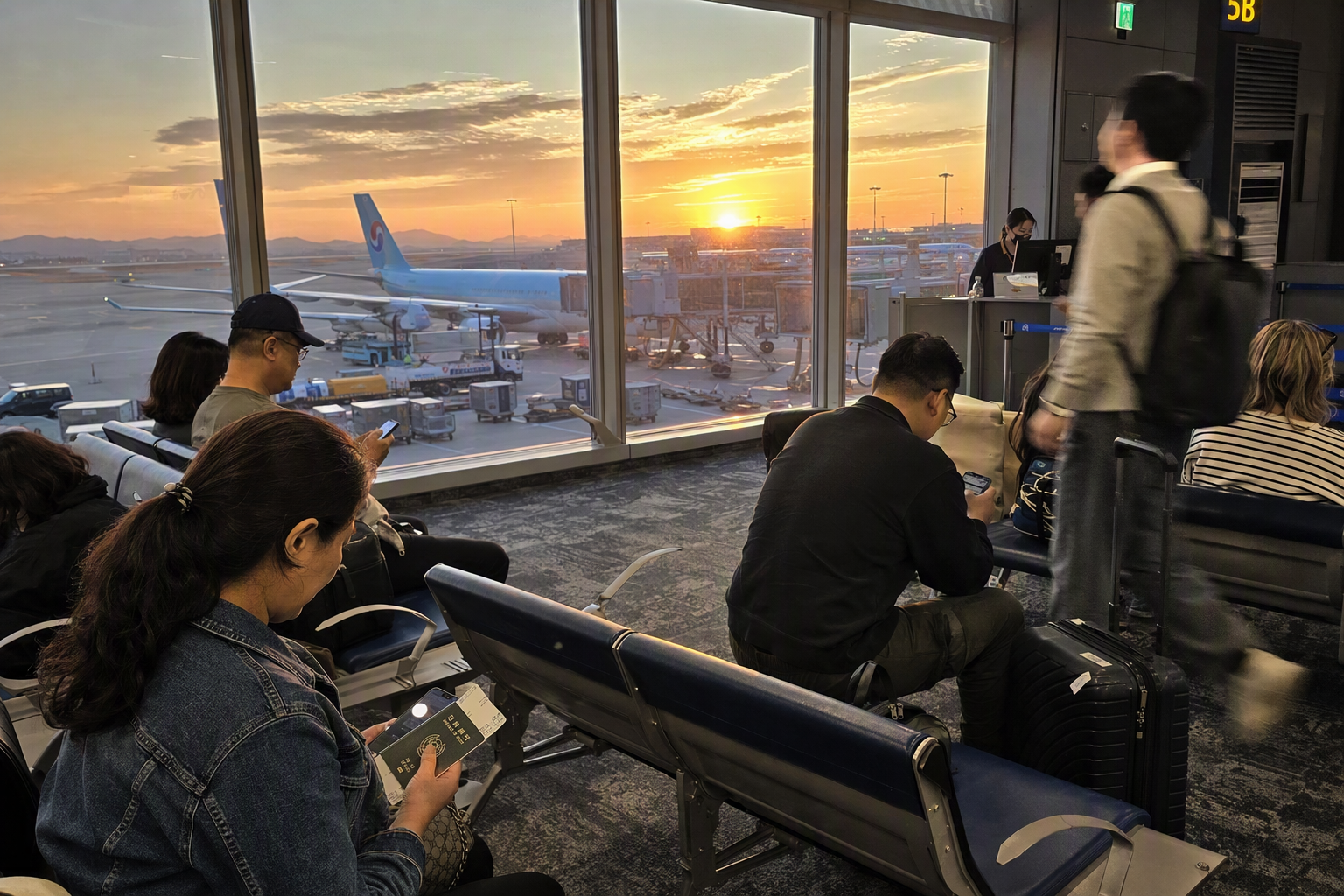
South Korea Entry Requirements for U.S. Citizens: Visa-Free Travel, K-ETA, and Passport Rules
A clear Creatrip guide to the 90-day visa-free stay, the 2026 K-ETA waiver, e-Arrival Cards, and the passport details worth checking before Korea.

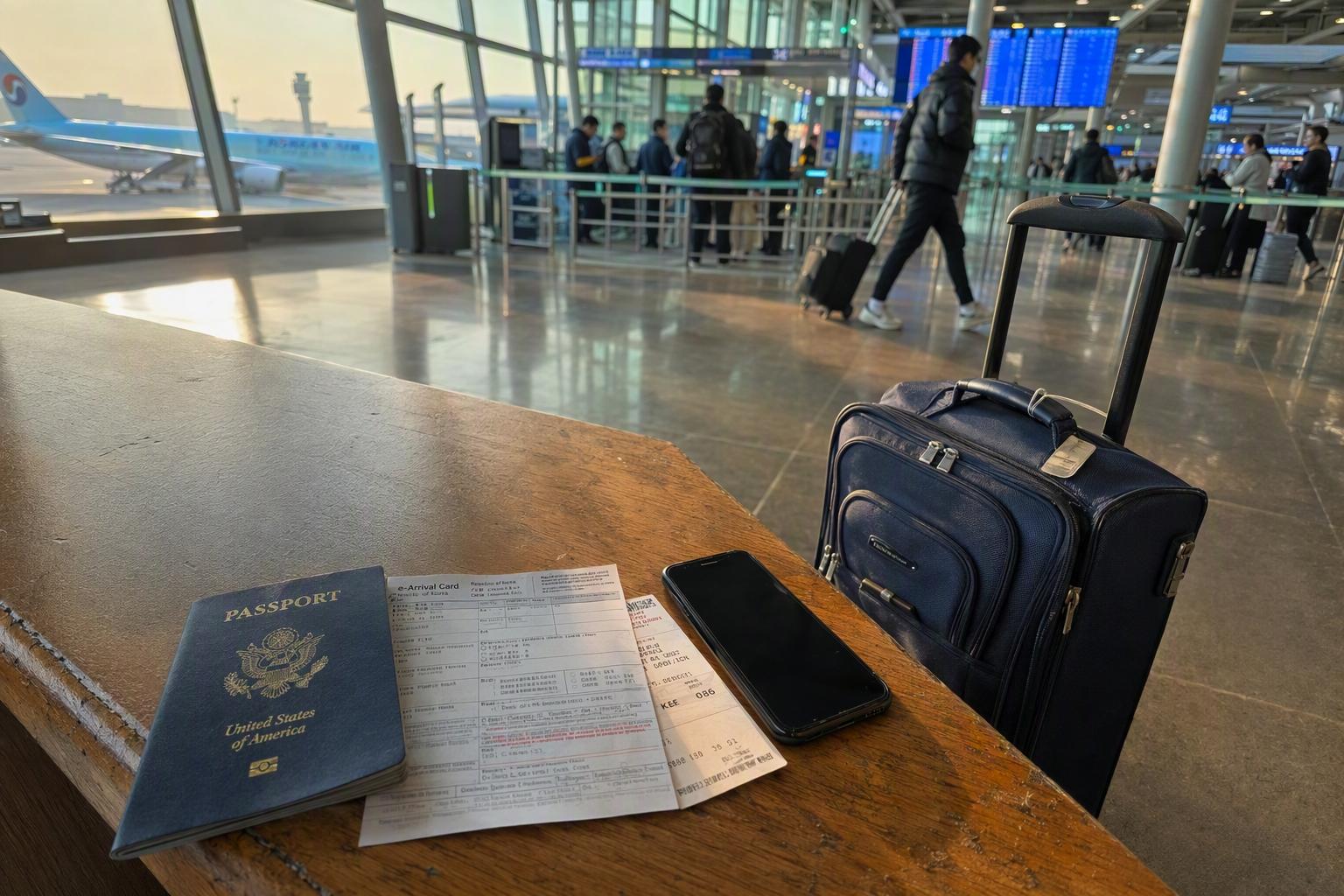
For U.S. passport holders, Korea is refreshingly easy to enter for a short trip: no tourist visa is required for stays of 90 days or less, and K-ETA is temporarily waived through December 31, 2026, Korea Standard Time.
The part that deserves a little attention is the paperwork around that visa-free entry. In 2026, many U.S. travelers can skip K-ETA, but they generally need to submit Korea’s online e-Arrival Card before arrival. Then, from January 1, 2027, K-ETA is expected to become mandatory again for U.S. citizens entering Korea visa-free.
Think of Korea entry planning as a small calendar problem, not a stressful visa maze. The date you arrive, the purpose of your stay, and your passport validity are the details that matter most.

The short answer for U.S. citizens
For a normal vacation, Seoul food trip, family visit, or short business visit, the 2026 rule is simple:
- Visa: Not required for tourism or short business stays of 90 days or less
- K-ETA: Temporarily waived for U.S. passport holders through December 31, 2026, KST
- e-Arrival Card: Generally required in 2026 if you do not hold a valid K-ETA
- Passport validity: Korea does not set a 3-month or 6-month remaining-validity rule for U.S. citizens; your passport must be valid at entry, though airline and transit checks can be stricter in practice
- Work, teaching, study, or stays over 90 days: A Korean visa is required in advance
A small timing note: because the K-ETA waiver ends on Korea time, look at your arrival date and time in Korea, not only your U.S. departure date. A flight leaving the U.S. on December 31 may arrive in Korea on January 1.
What the 90-day visa-free stay actually covers
U.S. citizens may enter South Korea visa-free for tourism or business for up to 90 days per visit. For most travelers, that covers the usual Korea plans: sightseeing, restaurants, shopping, visiting friends or family, attending short business activities, or taking a quick regional trip with Korea as the main stop.
Where people get into trouble is stretching the word business or treating 90 days as a flexible suggestion. Visa-free entry is not for taking a job, teaching English, enrolling in a longer study program, or staying beyond the allowed period. Those require the correct Korean visa arranged before travel through a Korean embassy or consulate.
Overstaying or not having valid immigration status can lead to fines, detention, exit bans, or other immigration problems. Korea is a very organized country at the airport, and that includes tracking dates. If your trip is anywhere close to 90 days, build in a margin rather than booking your departure at the very edge.
Passport validity: Korea’s rule is lenient, but airports can be less charming
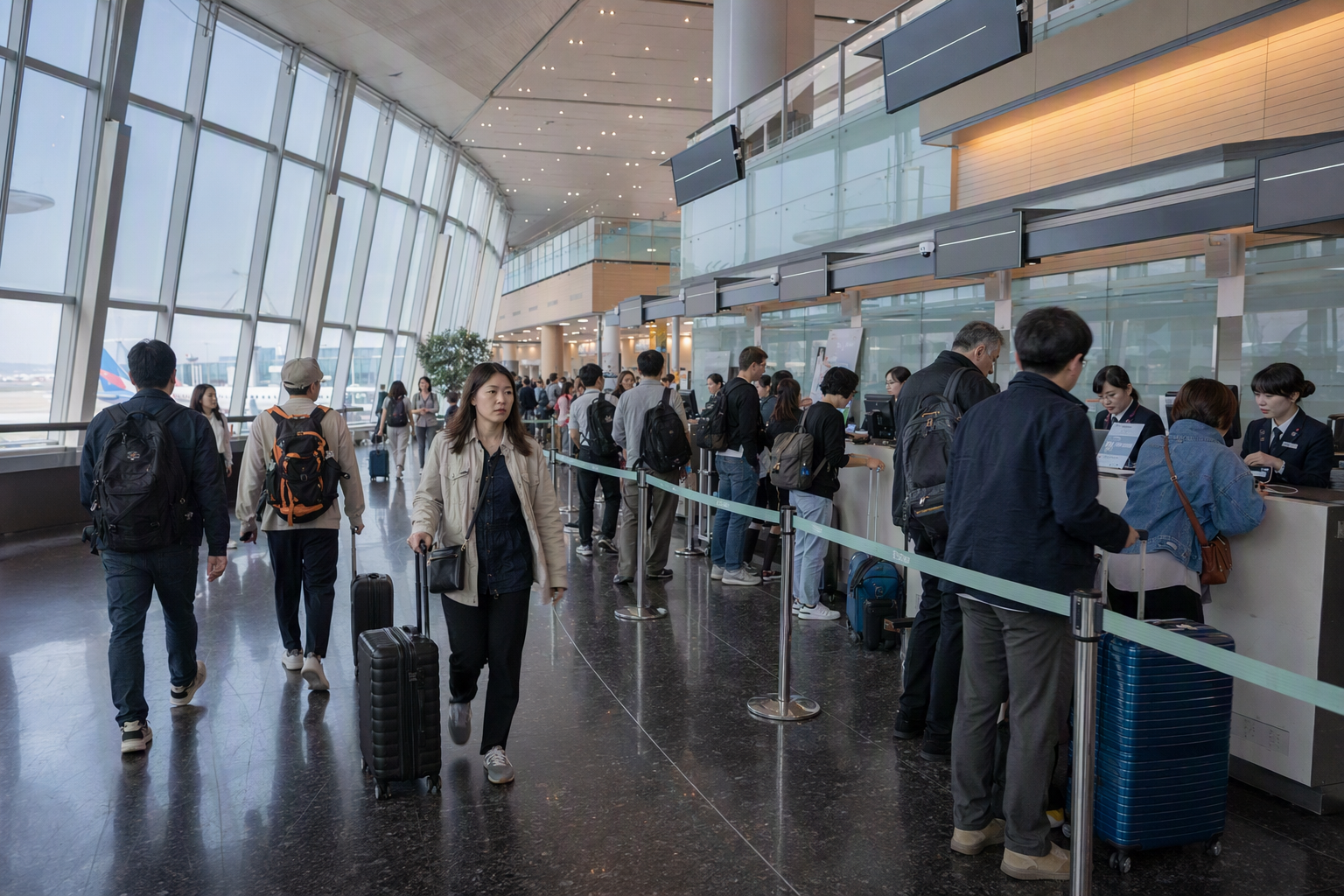
Korea’s official passport-validity rule for U.S. citizens is much lighter than what travelers see for many other countries. There is no official 3-month or 6-month remaining-validity requirement for U.S. passport holders entering Korea for a short stay. Official U.S. guidance states that the passport needs to be valid at the time of entry; some Korea travel guidance phrases this as valid at entry and for the duration of stay.
That sounds beautifully simple, and legally it is. The practical side is a little more annoying. Airlines and transit countries sometimes apply their own document checks, and some non-official systems may still expect six months of remaining validity. Even when Korea itself does not require it, a carrier may ask questions before boarding.
Our Creatrip take: if your passport is close to expiring, check directly with your airline before you rely on the legal minimum. If there is enough time to renew, renewing is often the cleaner option. It removes the awkward check-in counter moment and gives you more flexibility if your travel dates shift.
For long-term visas or extensions inside Korea, passport validity matters more. Korea Immigration Service policy says a granted period of stay cannot exceed the remaining validity of the passport, so a short passport can shorten an otherwise longer extension.

K-ETA in 2026: waived, but not gone
K-ETA, short for Korea Electronic Travel Authorization, is Korea’s pre-travel authorization system for visa-waiver nationals. It is not a visa, and approval does not guarantee final entry; immigration officers still make the final decision at the border.
For U.S. passport holders, the important update is that K-ETA is temporarily waived through December 31, 2026, KST. This exemption applies to a group of 22 visa-waiver countries and regions, including the United States, Canada, Australia, New Zealand, Japan, Singapore, the United Kingdom, several European countries, and others. U.S. travelers attempting to apply during the exemption period may see a K-ETA exempt notice on the official portal.
Previously issued K-ETAs remain valid until their own expiry date, and application fees already paid are non-refundable.
Why would anyone apply for K-ETA voluntarily in 2026?
Because K-ETA still has one nice travel convenience: valid K-ETA holders are exempt from submitting an arrival card or e-Arrival Card.
K-ETA costs 10,000 KRW per applicant, roughly USD 7–8, plus a small online processing fee of around 3%. The fee is non-refundable. When approved, K-ETA is generally valid for up to 3 years or until your passport expires, whichever comes first, and can be used for multiple entries within that validity period. It does not extend the 90-day visa-free stay.
Processing is generally described as within 72 hours, often faster, but we would not leave it for the airport ride. Once the waiver ends, airlines are expected to deny boarding to travelers who need K-ETA but do not have it.

The 2026 choice: free e-Arrival or paid K-ETA
For many U.S. tourists in 2026, the free route is perfectly fine: skip K-ETA and submit the e-Arrival Card before entering Korea. But there are a few cases where paying for K-ETA may feel worth it.
| Option | Good fit for | Trade-off |
|---|---|---|
| Use the 2026 K-ETA exemption + e-Arrival Card | One short Korea trip in 2026 | No K-ETA fee, but you need a fresh e-Arrival Card for each entry |
| Apply voluntarily for K-ETA | Frequent Korea travelers, people who dislike repeated entry forms, travelers expecting another trip in 2027 | Costs 10,000 KRW plus processing fee, non-refundable, and requires personal/passport information |
| Apply for the right Korean visa | Work, English teaching, study, or stays over 90 days | More paperwork, but it is the correct legal route |
One extra point for privacy-conscious travelers: K-ETA is not just a quick boarding pass add-on. It asks for personal and passport information, and Korea’s official privacy policy describes K-ETA application records as retained long-term. For a single 2026 vacation, there is no need to apply voluntarily just because a random travel page says Korea has K-ETA. Check the official K-ETA portal and your actual arrival date.
The e-Arrival Card: small form, real consequence
In 2026, the e-Arrival Card is the form U.S. travelers are most likely to deal with.
Korea’s e-Arrival Card system is available at www.e-arrivalcard.go.kr. It applies to many foreign nationals staying 90 days or less, as well as certain unregistered long-term entrants. Travelers who hold a valid K-ETA are exempt from submitting an arrival card. Registered residents, certain group electronic visa holders, and airline crew are also listed among arrival-card-exempt groups.
For a typical U.S. tourist entering Korea in 2026 without K-ETA, the rhythm is:
- Submit the e-Arrival Card within 3 days before arrival, including the day of arrival
- Do not submit it too early, because each e-Arrival Card is valid once and expires 72 hours after submission
- Submit a new one for each entry into Korea
- Keep your travel details consistent with what you plan to tell immigration
Official guidance says the e-Arrival Card can be submitted up until immigration inspection, but doing it before your flight is calmer. Airport Wi-Fi, low phone battery, and a long arrival line are not the trio anyone wants after crossing the Pacific.

Traveling in 2027 or later: K-ETA returns
From January 1, 2027, U.S. citizens entering Korea visa-free for up to 90 days are expected to need an approved K-ETA before travel again. This is the big date to circle for winter trips, especially because Korea time may push your arrival into the new rule even if your departure begins in 2026.
K-ETA is tied to your passport. If you renew your passport, your old K-ETA will not simply follow you to the new passport number. Apply using the passport you will travel with, and remember that approval does not change the underlying visa-free stay limit.
For trips close to the deadline, check the official K-ETA portal and your airline’s document requirements again before departure. Entry rules can change, and airlines tend to follow the document rules available to them at check-in.

A few realistic trip scenarios
One-week Seoul and Busan trip in 2026
For a U.S. passport holder visiting Korea for tourism for one week in 2026, the usual setup is simple: passport, no visa, no required K-ETA, and an e-Arrival Card submitted within the allowed window before arrival.
The passport does not need six months of remaining validity under Korea’s official rule, but if it is close to expiration, check your airline or renew before the trip.
Multiple Korea trips in 2026
If you enter Korea several times in 2026, the free option still works, but you will need a new e-Arrival Card each time. A voluntary K-ETA may be worth considering if you prefer to avoid repeated arrival-card submissions and your passport will stay valid long enough to make the K-ETA useful.
Late 2026 arrival with a possible 2027 return
This is where the optional K-ETA becomes more interesting. Since approved K-ETAs are generally valid up to three years or until passport expiry, some travelers use a voluntary 2026 application to cover future visa-free Korea trips after the waiver period ends. Verify the latest official validity rules before relying on this strategy, especially if your passport renewal is coming soon.
Teaching English, working, studying, or staying longer than 90 days
Visa-free entry is not the right lane. U.S. citizens need the appropriate Korean visa in advance for employment, teaching English, study, or stays over 90 days. Trying to enter as a tourist for a purpose that requires a visa can create problems at the border and later with immigration.
Traveling with friends who hold different passports
Do not assume everyone in your group has the same rule. The 2026 K-ETA exemption covers 22 listed countries and regions, but not all visa-waiver nationalities and not all passports worldwide. Each traveler needs to check their own nationality, passport, and travel purpose.
Small airport mistakes that create outsized stress
Korea’s entry process is usually smooth, especially at Incheon, but the little details still matter.
Forgetting the e-Arrival Card in 2026
If you are entering without K-ETA, the e-Arrival Card is the form to remember. It is not something to complete a week early; the timing window matters.
Assuming K-ETA is required in 2026 because older blogs say so
K-ETA used to be a standard pre-trip task for many visa-waiver travelers, so old travel checklists may still mention it as mandatory. For U.S. passport holders, it is waived through December 31, 2026, KST.
Booking a trip right on the 90-day line
The 90-day visa-free stay is not a soft target. Leave yourself room, especially if your flight could be delayed or changed.
Using a nearly expired passport without checking the airline
Korea’s official rule is lenient, but airline systems can be less forgiving. A quick carrier check can save a very unpleasant check-in conversation.
Mixing tourism with work
Short business travel is not the same as taking employment in Korea. If money, work duties, teaching, or a long program is involved, look at the proper visa route before travel.

Safety, protests, and consular notes U.S. travelers often overlook
South Korea is listed by the U.S. State Department at Travel Advisory Level 1: Exercise normal precautions as of the latest advisory cited for 2025, with a separate worldwide caution in effect. Day to day, travelers usually experience Korea as orderly, convenient, and easy to navigate. Still, there are a few official notes worth keeping in your back pocket.
Large-scale demonstrations can happen in Korea, especially around major public squares or government areas. Foreign nationals, including U.S. citizens, are prohibited under South Korean immigration law from participating in political activities such as protests. Watching from a distance and joining are not the same thing; avoid getting involved.
Tensions with North Korea remain a standing security issue on official advisories. This does not usually affect ordinary Seoul travel plans, but it is one reason to check current official notices close to departure.
For passport emergencies or U.S. citizen services, consular services are centralized at the U.S. Embassy in Seoul. There are no U.S. consular services in Busan, so travelers heading straight to the south of Korea should keep that in mind.
Dual U.S.-Korean male nationals may have separate obligations, including possible South Korean military service. That is a specialized situation, but it is important enough not to ignore if it applies to you or someone in your family.
A quick note on medication and special pharmaceuticals
Most travelers think about passports and K-ETA first, but medication can become an entry-related headache if it involves special drugs, rare-disease treatment, or imported pharmaceuticals.
Korea’s Ministry of Food and Drug Safety designates the Korea Orphan & Essential Drug Center, known as KOEDC, to help supply orphan drugs, national essential drugs, and certain imported pharmaceuticals for personal use. For imported pharmaceuticals for personal use through KOEDC, listed documents include a prescription, medical certificate, purchase agreement, and consent for collection and use of personal information. Application channels include in-person, fax with originals mailed afterward, and online application through KOEDC after membership registration.
That process is not something to improvise after landing. If you travel with uncommon medication, check the latest MFDS or KOEDC guidance before departure, and keep your medical documentation organized.
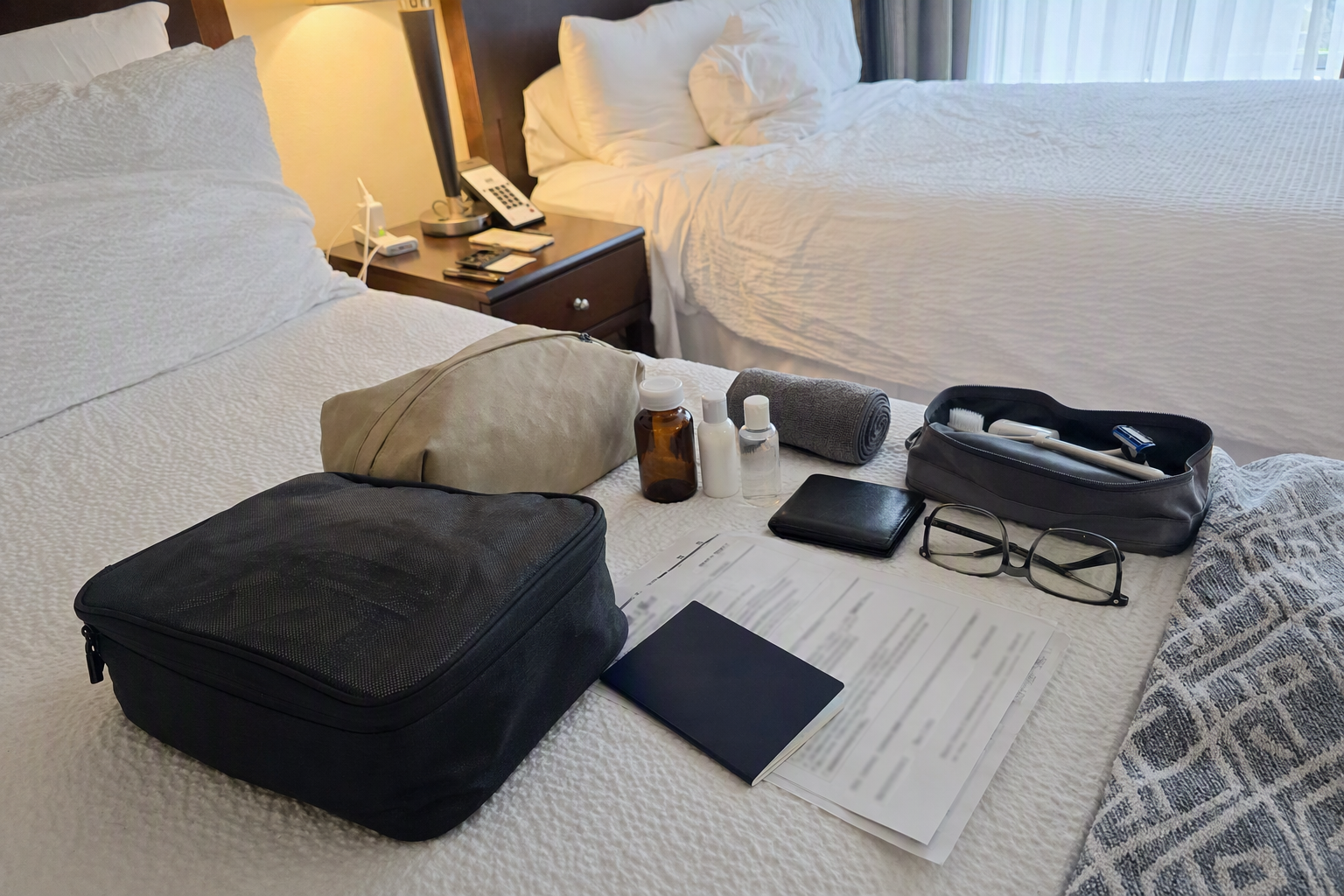
Our practical Creatrip take
For a straightforward U.S. tourist trip to Korea in 2026, we would keep it simple: do not pay for K-ETA unless it actually helps your travel pattern. Use the exemption, submit the e-Arrival Card within the allowed window, and make sure your passport and itinerary match your stay.
A voluntary K-ETA makes more sense for repeat Korea travelers, people who strongly prefer skipping arrival-card forms, or anyone expecting another visa-free Korea trip after the K-ETA requirement returns in 2027. Even then, use the official portal, check the fee, and remember that K-ETA is not a visa and not a promise of entry.
For anyone working, teaching, studying, or staying over 90 days, the answer is different: get the proper visa before travel. Korea’s short-stay entry is generous, but it is not designed to cover long-term life admin.
Before you fly: the calm final check
A few days before departure, line up the basics:
- Your U.S. passport is valid for the trip, and you have checked your airline if it is close to expiring
- Your stay is 90 days or less and matches tourism or short business travel
- For 2026 entry without K-ETA, your e-Arrival Card is submitted within the 3-day window
- For 2027 entry, or any date after the waiver ends, your K-ETA is approved before travel
- Your name, passport number, and travel details match across forms and bookings
- Any special medication paperwork is handled before departure
- You have checked official pages close to travel, because entry rules can change
Useful official pages:
- U.S. State Department South Korea travel page
- Official K-ETA portal
- Official e-Arrival Card portal
- Visit Korea travel information