How to Use Public Transportation in Korea: Seoul Subway, Buses, T-money, and Transit Passes
A friendly Creatrip guide to riding Korea’s trains and buses without losing money on transfers, airport trips, or the wrong pass.

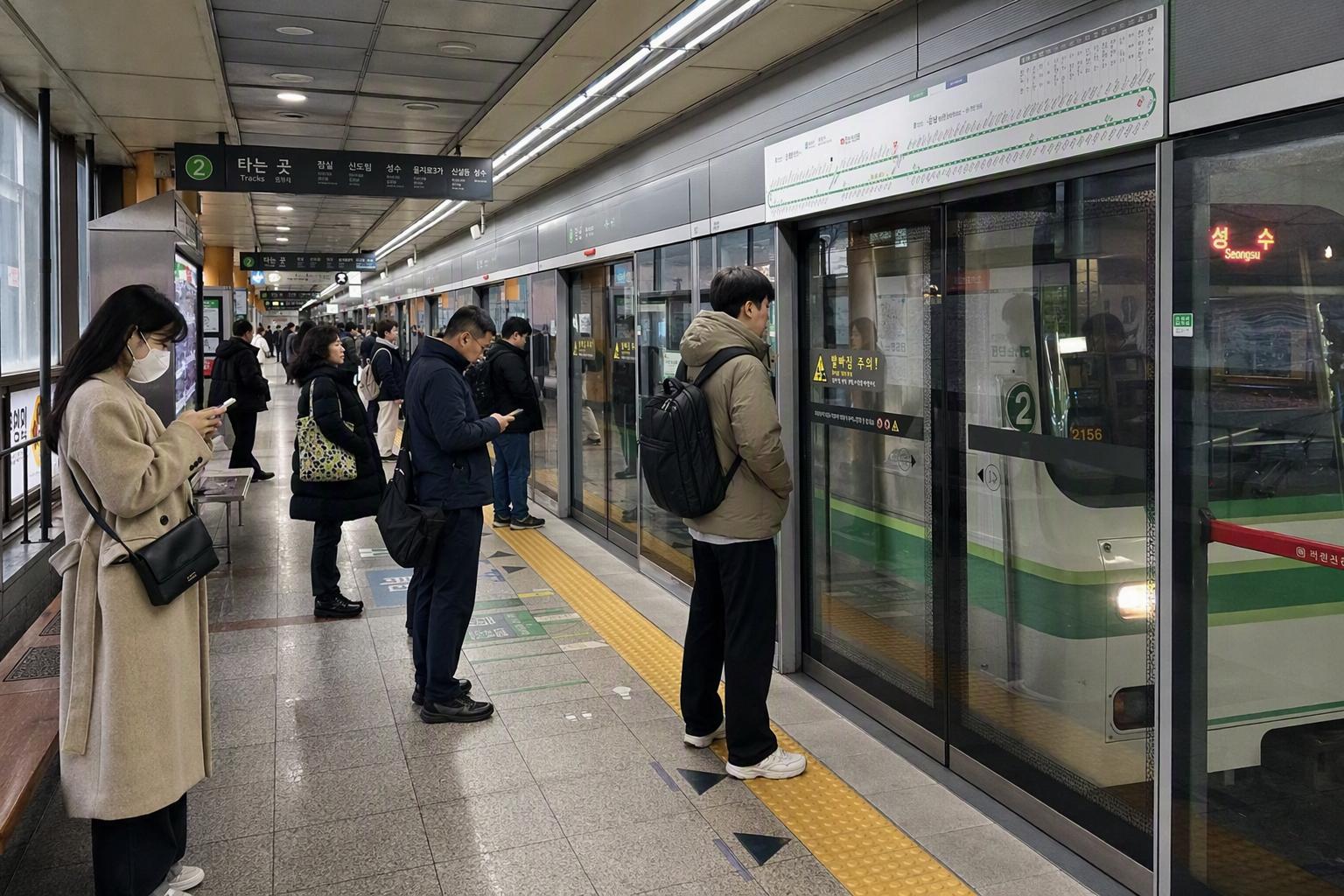
Korea’s public transportation is one of the easiest parts of travel here once the rhythm clicks: tap, ride, transfer, tap again. The Seoul subway is clean and wide-reaching, buses fill in the neighborhoods beautifully, and one prepaid transit card can carry you across most major cities.
The only catch is that Korea’s fare system rewards people who use it correctly. A missed tap-off, the wrong pass at the airport, or assuming every route is included in an unlimited card can quietly cost more than expected. Nothing dramatic, just the kind of small travel friction we would rather help you avoid.

The simple version: most visitors should start with T-money
For a first trip to Korea, T-money is still the safest default. It is the prepaid transit card used across Seoul and in many other Korean cities, and it works on most subways, city buses, and taxis nationwide. You can also use it like small e-cash at convenience stores and some traditional markets.
A regular T-money card usually costs around ₩2,500–₩4,000 for the card itself, then you add balance separately. You can buy one at major convenience stores such as CU, GS25, and 7-Eleven, or at subway station kiosks. Card design and price vary a little, so do not be surprised if a character card costs more than a plain one.
T-money is practical because it gives you three big advantages over cash:
- A small fare discount, usually around ₩100 compared with cash or single-use tickets
- Transfer discounts between subway and bus when you tap correctly
- Nationwide flexibility, especially useful if your trip includes Busan, Jeju buses, taxis, or day trips outside Seoul
If you are traveling with children or teenagers, ask when buying the card whether it needs to be set for the correct age category. Youth and child fares only apply properly when the card is registered or configured for that fare type.
Seoul subway fares: easy at first, distance-based after that
Seoul subway fares are based on distance, not a flat one-price-anywhere system. As of the latest Seoul fare information available for 2025–2026, the adult base subway fare is around ₩1,550 with a transportation card and ₩1,650 by cash or single-use ticket for the first 10 km. After that, distance surcharges are added, typically ₩100 per extra 5 km, and after very long distances, ₩100 per 8 km beyond 50 km.
Fares can change, so check the latest official fare notice if you are budgeting tightly. For normal city sightseeing, though, most central Seoul rides stay close to the base fare.
Single-use tickets are fine, but not ideal
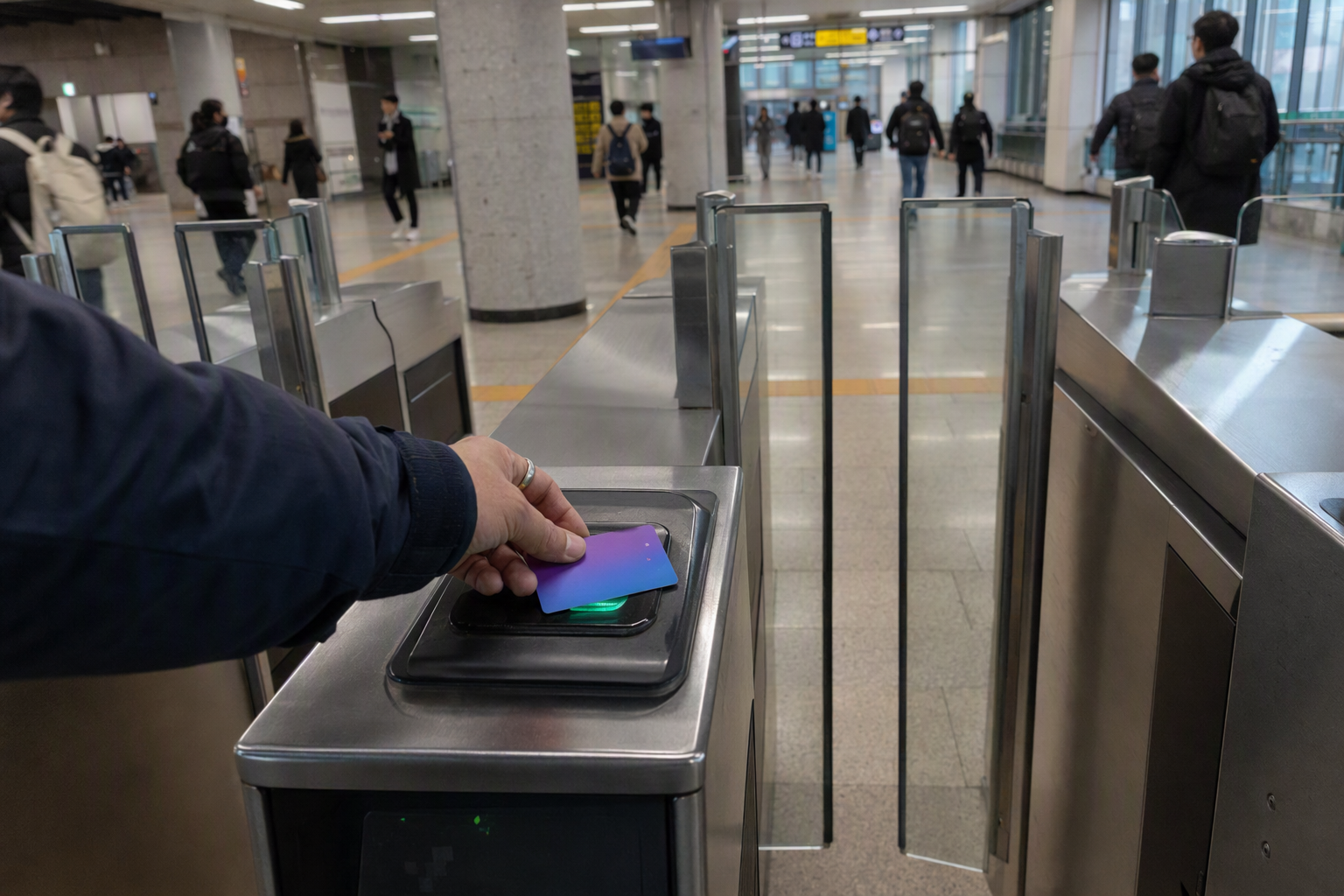
Single-journey subway tickets exist, and they work if you are only taking one ride. But for visitors, they are usually less convenient than T-money. You lose the easy transfer benefit, you pay a little more, and you spend extra time buying tickets again and again.
A single-use ticket can make sense if you are leaving Korea and have already refunded or used up your T-money balance. For almost every other day, a transit card is smoother.
How to ride the Seoul subway without overthinking it
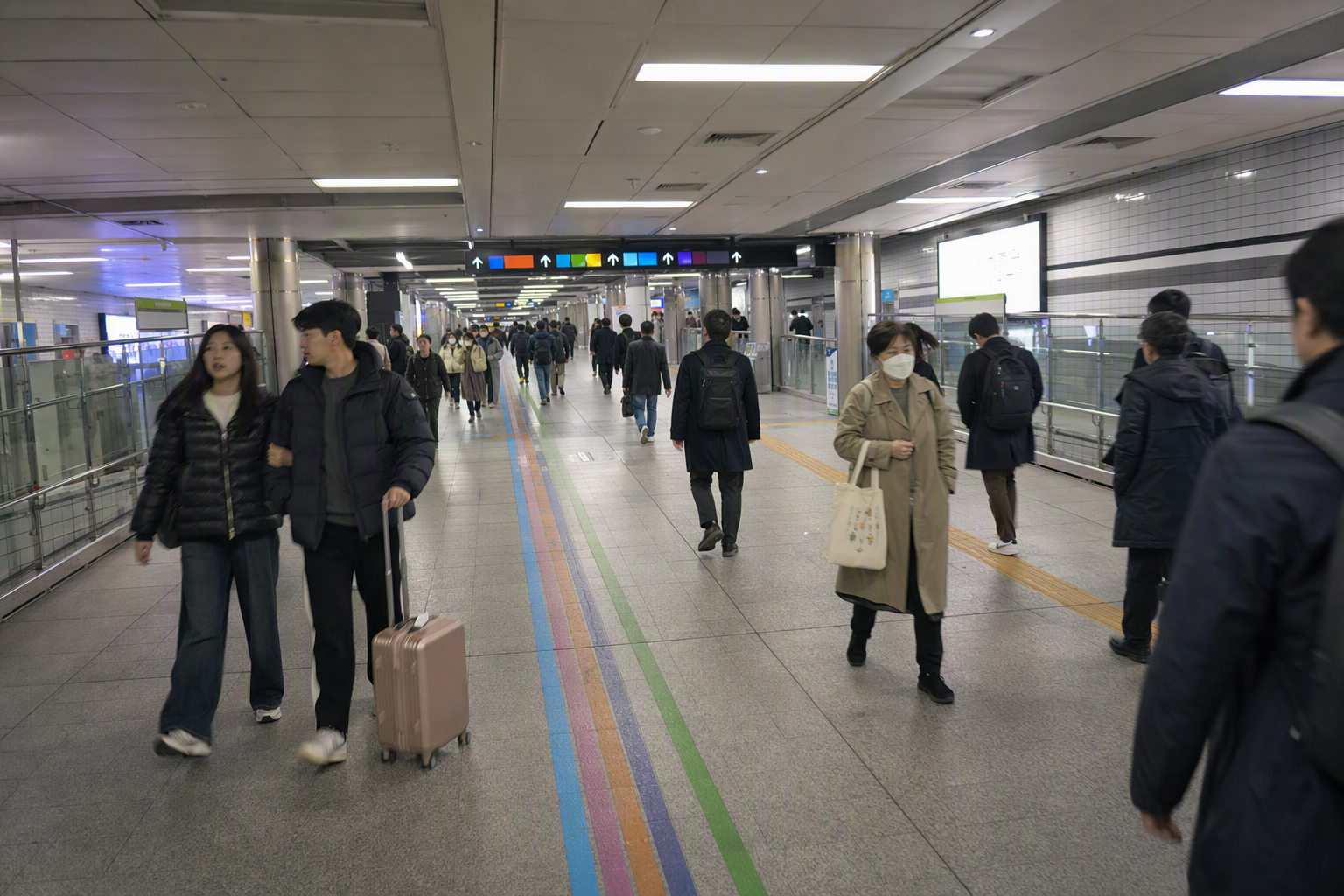
Seoul subway lines are numbered and color-coded, and stations are generally well marked. The part that takes a little getting used to is direction. Instead of thinking only by north or south, look for the terminal station or major station in your direction. At larger stations, the same line may have platforms on different sides, so pause before tapping through if you are not sure.
Once inside, transfers can involve long walks. Stations like Jongno 3-ga, Seoul Station, Express Bus Terminal, and Hongdae area stations can feel more like underground neighborhoods than simple platforms. Build in a few extra minutes when changing lines, especially with luggage.
A small but useful habit: check the exit number before leaving the station. Seoul subway exits can place you on completely different sides of a wide road or intersection. Choosing the right exit is often the difference between a two-minute walk and a confused loop around the block.
Seoul buses: the colors actually mean something
Seoul’s buses look intimidating at first because there are so many of them, but the color system is genuinely helpful.
Blue buses
Blue buses are trunk routes. They usually connect outer areas with central Seoul and often run along major roads. They are useful for longer city routes when the subway path is awkward.
Green buses
Green buses are branch and local routes. They connect neighborhoods to subway stations or nearby districts. Many of the buses you take for cafes, residential neighborhoods, universities, or smaller shopping streets will be green.
Yellow buses
Yellow buses are circulation routes, often moving around a specific district or central area. They can be convenient for short hops, depending on the route.
Red buses
Red buses are metropolitan or rapid buses linking Seoul with Gyeonggi and Incheon areas. They cost more than regular city buses and are not always included in Seoul-only passes.
N buses
Buses marked with N are late-night routes, often called owl buses. They are more expensive than daytime city buses, but very useful when the subway has stopped running.

Bus fares in Seoul: know the rough range
Seoul bus fares depend on bus type. Recent official Seoul fare information lists adult transportation-card fares around:
| Bus type | Typical adult card fare |
|---|---|
| Blue or green city bus | About ₩1,500 |
| Yellow circulation bus | About ₩1,400 |
| Local town bus | About ₩1,200 |
| Red metropolitan bus | About ₩3,000 |
| Late-night N bus | About ₩2,500 |
Cash fares are usually higher, and cash does not give you the same transfer benefits. If you are staying more than a few hours in Seoul, using a transit card is the cleaner choice.
The golden rule: tap when you get on and tap when you get off
This is the part that matters most.
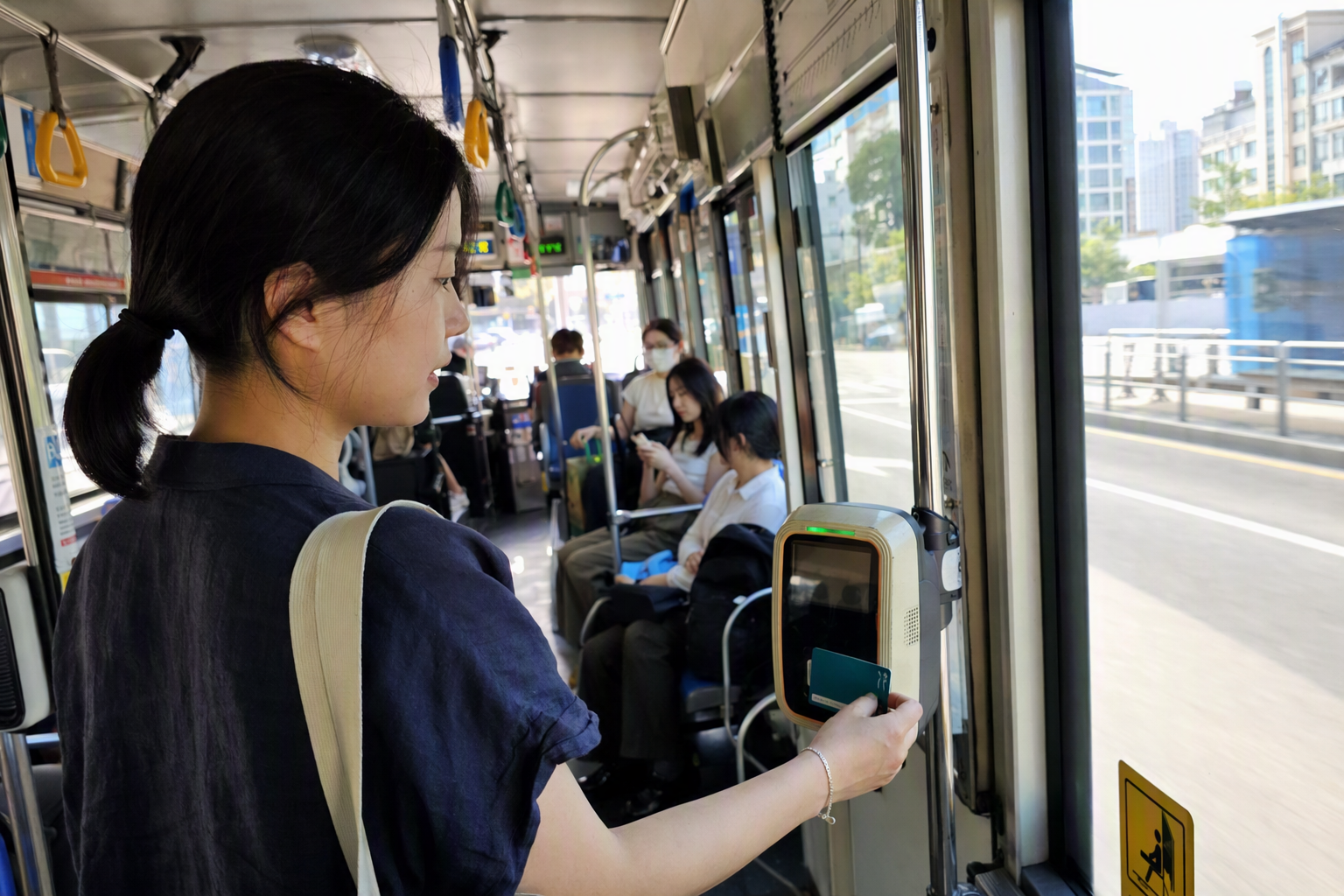
Korea’s transfer discount system works only when the system can track your trip distance. That means you need to tap your card when boarding and tap again when getting off, especially on buses. On the subway, you naturally tap in and out through the gates.
With T-money or another compatible transit card, Seoul’s integrated transfer system can treat a subway-bus or bus-bus chain as one connected trip. You are not simply paying a brand-new base fare every time, as long as the transfer conditions are met.
The usual transfer window is:
- Within 30 minutes during most of the day
- Within 60 minutes between about 21:00 and 07:00
- Up to 4 transfers total, meaning up to 5 ride segments
There is one common trap: you cannot get the transfer discount by re-boarding the same bus route number. If you hop off a bus, grab something, and board the same numbered bus again, the system treats it differently from a normal transfer.
Another easy mistake is forgetting to tap off the bus. That can break the transfer chain or trigger a maximum-distance fare. Even if everyone around you is rushing, make the tap-off a reflex.
T-money vs Climate Card vs Tmoney Mpass
Seoul has several transit card and pass options, and the best one depends less on personality and more on geography. Are you staying inside Seoul all day, or are you going to airports, Suwon, Incheon, Gyeonggi, and random cafe neighborhoods beyond the city line? That difference matters.
T-money: best all-around choice
Choose T-money if your trip includes:
- Seoul plus other Korean cities
- Airport rail or airport-related travel
- Taxis
- Gyeonggi or Incheon day trips
- A relaxed itinerary with only 2–3 rides a day
- Any route where you are unsure whether a special pass applies
It has no daily pressure. You only pay for what you use, and the balance does not expire quickly. For many travelers, this is still the most comfortable option.
Climate Card short-term passes: good for dense Seoul-only days
The Climate Card was originally known for its 30-day unlimited Seoul transit pass, but the long-term product is being phased out in 2026. For short-term visitors, the more relevant option is the 1–7 day Climate Card tourist-style pass, which remains the useful version for Seoul-heavy travel.
Recent Seoul information lists short-term pass prices around:
| Climate Card short-term pass | Pass price |
|---|---|
| 1 day | ₩5,000 |
| 2 days | ₩8,000 |
| 3 days | ₩10,000 |
| 5 days | ₩15,000 |
| 7 days | ₩20,000 |
A physical Climate Card costs about ₩3,000 separately. Prices and product details can change, especially during the 2026 transition, so check the latest official Seoul notice or the station kiosk before buying.
The Climate Card starts to make sense when you are taking roughly 4 or more rides per day inside Seoul. It is especially handy for packed days like hotel → palace → lunch neighborhood → shopping district → cafe → dinner → late return.
But it is not magic. The Climate Card is geographically limited and excludes several routes that visitors commonly assume are included.

Tmoney Mpass: another visitor pass, but check the math
The Tmoney Mpass is a visitor-oriented pass available in 1–7 day versions, with prices in the range of about ₩15,000–₩64,500 and a limit of up to 20 rides per day. It can work for travelers taking a lot of rides, but it is not automatically cheaper than T-money or the short-term Climate Card.
Before buying, compare your real itinerary. If you are doing two subway rides a day and spending the rest of the time walking through Seongsu, Ikseon-dong, or Hongdae, pay-as-you-go T-money may be cheaper.
The Climate Card exclusions visitors need to know
The Climate Card is useful, but its boundary rules are strict. It does not cover every train or bus that appears on a Seoul-area map.
As of 2026, the Climate Card excludes:
- Shinbundang Line
- GTX
- Many subway sections outside the defined Seoul service area
- Airport buses
- Many metropolitan red buses
- Some private or special lines and out-of-area services
- AREX Express service
For AREX, the rule is especially easy to misunderstand. The Climate Card covers the Seoul Station–Gimpo International Airport section, and has limited exit-only handling at Incheon Airport terminals when coming from Seoul. You generally cannot board at Incheon Airport using the Climate Card. If you are arriving at Incheon, plan on using T-money where accepted or buying the proper airport rail ticket.
A very Creatrip-style warning, because this one catches real travelers: do not buy a Seoul-only unlimited pass and then use it for a suburban cafe day in Gyeonggi. If you board inside the Climate Card area and exit outside the valid area, the card may be rejected at exit and you may need to pay the full fare for that ride. A missed tap-off type record can also be created. Exceptions exist on limited sections, but this is not something to improvise with luggage and a dinner reservation waiting.

What is happening to the 30-day Climate Card in 2026?
For longer-stay visitors, this is worth noting. Seoul’s 30-day Climate Card products are being wound down in 2026. Current guidance says 30-day recharges are available only until August 31, 2026, with use continuing for a limited period afterward depending on the product. Seoul is shifting toward a reimbursement-style system often described through Everyone’s Card or Climate Card Plus.
That new reimbursement system is mainly designed for residents and generally requires a Korean bank account, which means it will not be practical for most short-term foreign visitors.
For tourists, the realistic choices remain:
- T-money for flexible pay-as-you-go travel
- Short-term Climate Card passes for busy Seoul-only days
- Tmoney Mpass if your ride count and route coverage make sense
Because pass policies are actively changing, it is worth checking the latest Seoul transportation notice right before travel if you are visiting after September 2026.
Airport travel: do not assume your Seoul pass covers it
Airport trips are where transit assumptions get expensive or annoying.
For Incheon Airport, keep T-money balance or buy the correct airport rail ticket. The Climate Card cannot be used to board at Incheon Airport terminals, and airport buses are outside Climate Card coverage. If your first ride in Korea is from Incheon into Seoul, a Seoul-only unlimited pass is not the card to rely on at the gate.
For Gimpo Airport, the situation is easier because it sits within Seoul’s urban rail network and is included in more normal Seoul movement patterns. Even then, check your exact line and pass validity if you are using a special pass instead of T-money.
For most visitors, the smoothest airport setup is simple: use T-money or a separate airport ticket for arrival and departure, then use a Seoul pass only if your city days are ride-heavy enough.
A note on Shinbundang Line: fast, convenient, and pricier
The Shinbundang Line is useful for parts of Gangnam and trips toward areas like Pangyo, Jeongja, and Gwanggyo, but it carries extra segment-based surcharges on top of the normal metropolitan fare. It participates in the broader integrated distance-based system, but it is not priced like an ordinary subway ride.
It is also excluded from the Climate Card. If your accommodation or itinerary relies on Shinbundang, T-money is the cleaner option, and your per-ride cost may be higher than a standard Seoul subway trip.
Buying and topping up cards: bring a backup payment plan
Korea is card-friendly in daily life, but transit card top-ups have their own quirks.
For T-money, many official visitor materials still describe top-ups as cash-based at station machines and convenience stores. More recently, some convenience stores and newer station kiosks have started supporting foreign-issued cards in certain cases, but it is not perfectly uniform.
Seoul Metro has also introduced newer transit card kiosks at many stations on Lines 1–8 that accept overseas-issued credit and debit cards for items like short-term Climate Card passes and single-journey tickets. Some machines may charge a service fee for international card payments, reported around 3.7% on average. Mobile payment support is also expanding.
That said, foreign card success can vary by machine, card network, and payment security settings. Prepaid travel cards can be especially unpredictable. We would still keep a little Korean cash for transit top-ups, even if you prefer paying by card everywhere else.
A practical balance is:
- Keep T-money for flexible travel
- Load enough for the next few days, not your entire trip budget
- Use newer station kiosks for foreign-card Climate Card purchases when available
- Keep cash as the backup for convenience store or machine top-ups
- Avoid overloading short-term passes because refunds can be inconvenient
One card per person is the least stressful setup
Some buses allow multi-passenger payment by telling the driver before tapping, as long as the group has the same origin and destination. But for travelers, one card per person is much simpler. It keeps transfers clean, avoids confusion on the subway, and makes it easier to split up naturally.
If you are traveling with young children, Seoul transit rules allow up to three accompanied children under six to ride free with an adult in many cases. For older children, prepare a child or youth fare card properly rather than using an adult-configured card all week.
How to choose the right transit setup for your trip

If it is your first time in Korea
Buy T-money. Use it for everything at first. Once you understand your daily rhythm, add a short-term Climate Card only for the Seoul days packed with rides.
This is the lowest-stress setup and works especially well if your itinerary includes airport rail, taxis, Busan, Jeju, Suwon, Incheon, or any uncertain day trip.
If you are staying only in Seoul and moving constantly
Consider a short-term Climate Card. The 3-day, 5-day, and 7-day versions can be good value if you are taking several subway and bus rides daily within the valid Seoul network.
It works best for travelers who like to jump between neighborhoods: Gyeongbokgung in the morning, Seongsu after lunch, Gangnam for a clinic or shopping stop, Hongdae at night, then back across town.
If your hotel is near a boundary or special line
Be careful with unlimited passes. If your hotel route uses Shinbundang, GTX, red metropolitan buses, or subway sections outside Seoul’s covered area, T-money may be better even if a pass looks cheaper on paper.
If you are in Korea for a month or longer
Do not assume the old 30-day Climate Card is available. In 2026, the monthly pass system is changing, and resident-focused reimbursement products generally require Korean banking. Short-term visitors and many long-stay tourists will still need to rely on T-money or short-duration passes unless they qualify for local services.
The small mistakes that cost the most
Most transit mistakes in Korea are not disasters. They are small, mildly annoying, and very avoidable.
Forgetting to tap off the bus
This is the big one. Tap when you get off so the system can calculate your trip and preserve your transfer discount.
Trying to transfer to the same bus route number
The discounted transfer system generally does not apply when you re-board the same bus route.
Using the Climate Card outside its valid area
A Seoul-only pass is not a 수도권 all-access pass. Check airport routes, red buses, Shinbundang, GTX, and suburban exits.
Buying a pass for a walking-heavy itinerary
Seoul neighborhoods are often best enjoyed slowly. If your day is mostly one area plus dinner nearby, T-money may be cheaper than an unlimited pass.
Expecting foreign cards to work at every top-up point
Payment support is improving, especially at newer Seoul Metro kiosks, but it is not universal. Keep cash for backup.
Putting too much money or too many days on a card
Refunds and unused pass value can be inconvenient, especially without Korean banking. Load what you realistically need.
A smoother way to move through Seoul
The best way to use public transportation in Korea is not to memorize every fare table. It is to understand the logic.
T-money is your dependable everyday key. The subway is best for longer cross-city movement. Buses are wonderful for neighborhood-to-neighborhood trips and places the subway does not quite touch. Transfers are generous when you tap properly. Unlimited passes can be excellent, but only when your route stays inside their borders.
Once those pieces settle, Seoul becomes much easier to enjoy. You stop planning around transportation and start using it almost casually: one tap into the morning crowd, one bus ride to a quieter street, one late train home with shopping bags at your feet.
That is when Korea’s public transit feels less like a system to figure out and more like part of the trip itself.