Downtown Seoul: How to Read Korea’s Capital City on Your First Trip
A Creatrip-style map to Myeongdong, Gwanghwamun, Namsan, Insadong, Bukchon, Dongdaemun, and the historic heart of Seoul.

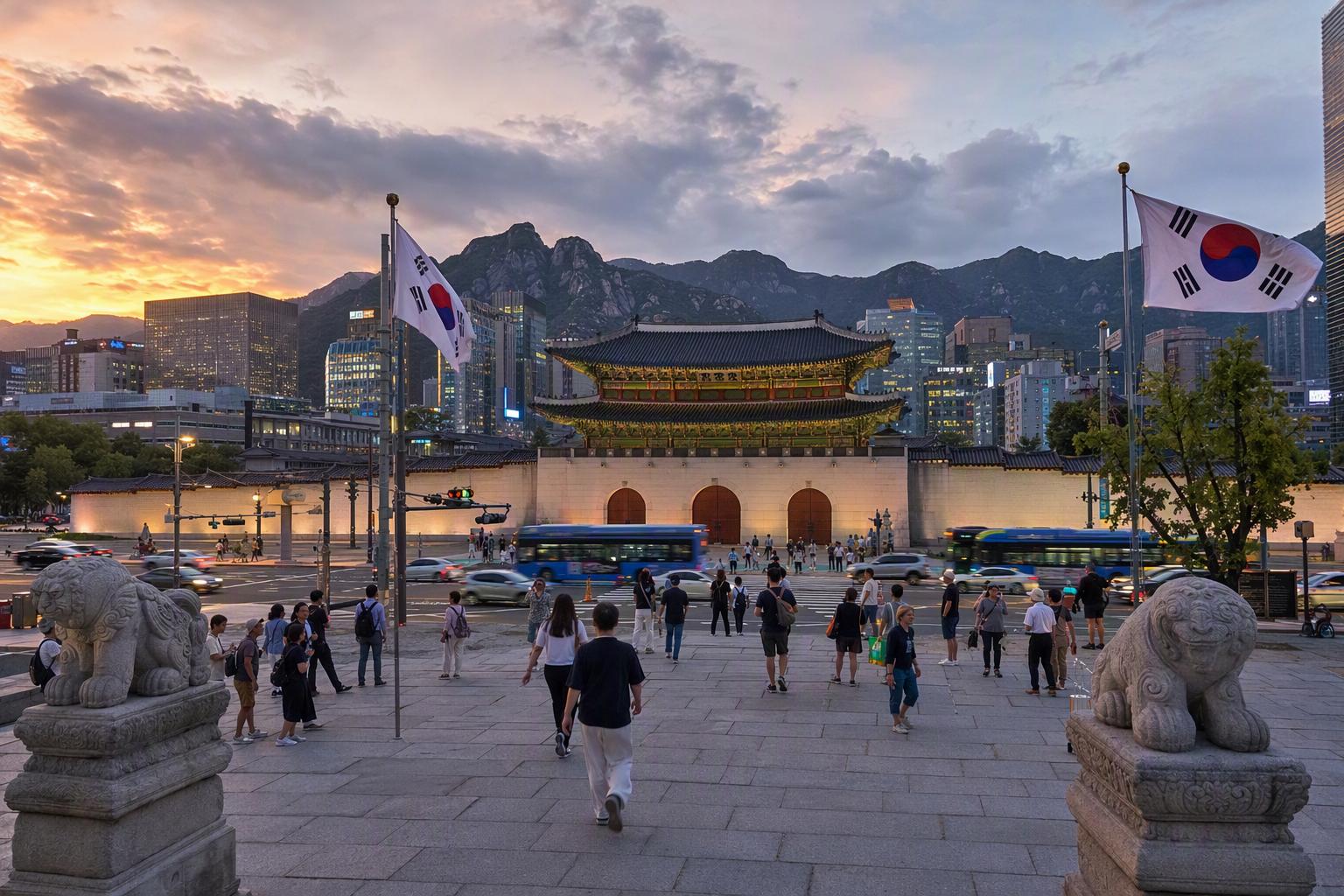
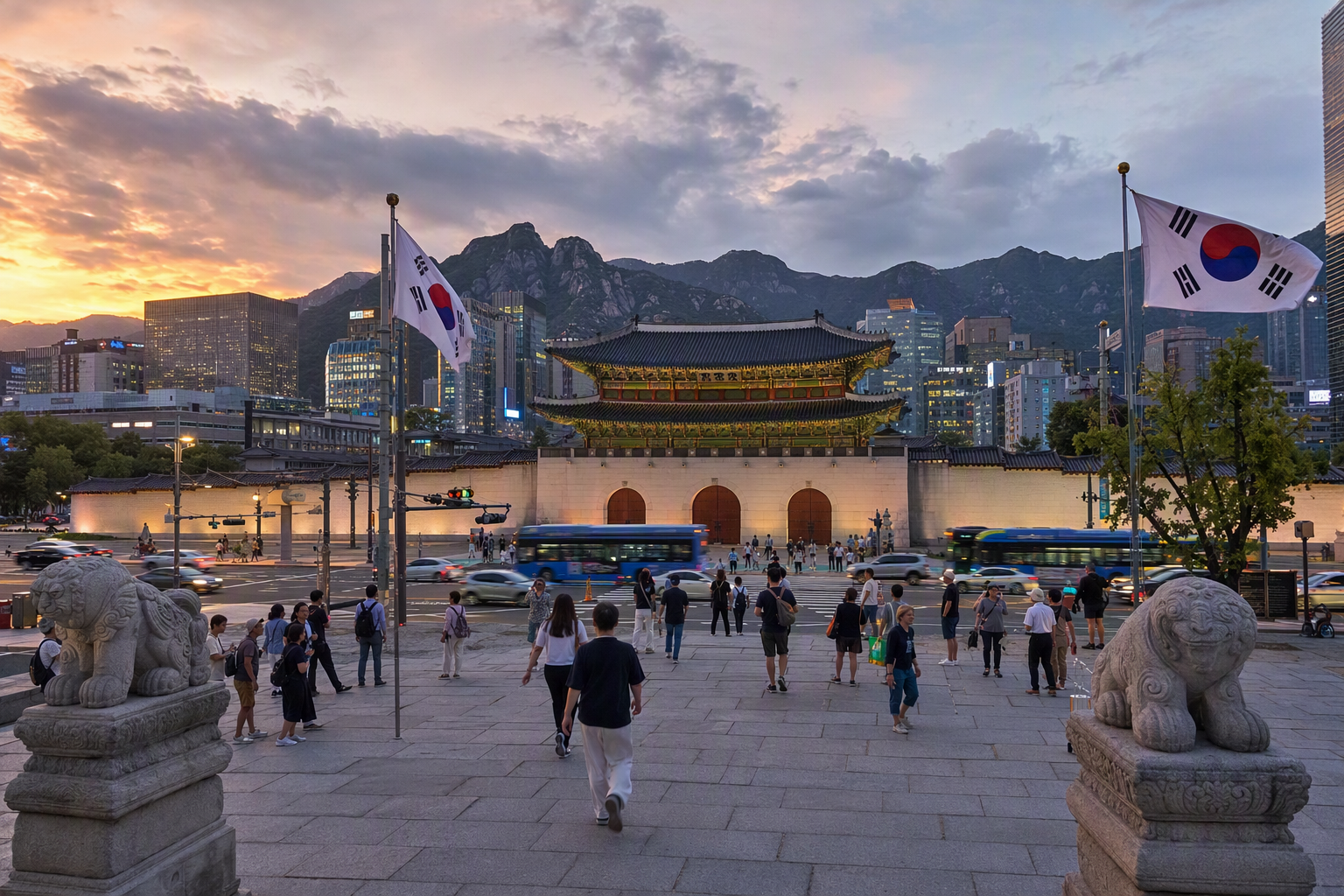
Downtown Seoul is less like a neat postcard and more like a layered conversation. One minute you are standing in front of a royal palace gate with Bugaksan Mountain behind it; a few subway stops later, you are in Myeongdong comparing sheet masks under neon signs; after dinner, you might be walking beside Cheonggyecheon Stream or watching the city lights from Namsan.
That is the charm of Korea’s capital city. Seoul is huge, fast, and sometimes wonderfully chaotic, but its central neighborhoods are surprisingly close together. For travelers, the trick is not trying to see everything. It is learning which pieces belong together.
Seoul is a capital city with several centers
Seoul has around 9.58 million residents in the city proper as of 2026, spread across 25 districts over about 605 square kilometers. The wider Seoul metropolitan area, including Incheon and Gyeonggi Province, has roughly 26 million people. That scale matters when traveling here: rush hour is real, subway transfers can be long, and a place that looks close on a map may sit on the other side of a mountain, river, or very busy road.
Still, the historic and symbolic heart of the city sits north of the Han River, inside and around the old capital of Joseon-era Hanyang. This is where Seoul’s royal palaces, government axis, traditional markets, older commercial streets, and major transport nodes overlap.
When locals and official tourism guides talk about central or downtown Seoul, they usually mean a cluster rather than a single dot:
- Jongno and Gwanghwamun for palaces, civic history, major squares, and classic Seoul scenery
- Insadong and Bukchon for traditional culture, hanok streets, crafts, tea houses, and palace-side wandering
- Jung-gu, including City Hall, Namdaemun, Myeongdong, Euljiro, and Dongdaemun, for shopping, business districts, markets, and dense urban energy
- Namsan and N Seoul Tower for views and a natural break from the streets
- Itaewon, slightly to the south, for international dining and nightlife within easy reach of central Seoul
This is why a downtown day can move from Gyeongbokgung to Insadong, Myeongdong, Namdaemun, and Namsan without feeling like a cross-country expedition. It is also why overpacking is so tempting.
The best way to picture downtown Seoul
Think of downtown Seoul in three overlapping bands.
The historic palace belt
This is the Jongno side: Gwanghwamun, Gyeongbokgung, Changdeokgung, Changgyeonggung, Jongmyo, Insadong, Bukchon, and Seochon. The streets are older and more textured here. You get palace walls, tiled hanok roofs, temple courtyards, small galleries, and alleys that do not behave like a grid.
It is the best area for travelers who want Seoul to feel visibly old and present-day at the same time.
The commercial downtown belt
This is the Jung-gu side: City Hall, Deoksugung, Namdaemun Market, Myeongdong, Euljiro, Cheonggyecheon, Dongdaemun, and Seoul Station nearby. Jung-gu is Seoul’s smallest district by area, but it carries a lot of weight: major roads, subway lines 1 through 6, department stores, hotels, offices, markets, historic sites, and the AREX terminus at Seoul Station all sit close together.
This is the most convenient area for first-time visitors who want easy transport and late-night food or shopping options.
The view and nightlife edges
Namsan rises between central Seoul and Itaewon. N Seoul Tower, the cable car, Namsan Park, and the walkable fortress-wall areas give the city a breather. Itaewon then adds a more international, after-dark layer to the central route.
These places are not always in the strict old-city core, but they are close enough to belong in a downtown plan.
Myeongdong: convenient, bright, and very much made for visitors
Myeongdong is compact, roughly a 1-square-kilometer grid between Namsan and Cheonggyecheon. It is one of the easiest neighborhoods to understand on arrival: pedestrian shopping streets, beauty stores, department stores, currency exchange signs, street-food carts, and hotels packed into a walkable pocket.
For international visitors, Myeongdong works because it removes friction. Myeongdong Station on Line 4 connects easily to Seoul Station, Dongdaemun, and the palace side with a transfer. Lotte Department Store and Lotte Duty Free are nearby. Olive Young and major K-beauty brands are everywhere. Namsan Cable Car is also reachable from the area, which makes a shopping-and-view evening very natural.
The trade-off is obvious once you are there: Myeongdong is commercial and touristy. That is not automatically a bad thing. It is practical, lively, and easy at night, especially for a first Seoul stay. But it is not the neighborhood to choose if you want quiet local backstreets or slow traditional atmosphere.
Street-food carts are most active in the evening, especially around 18:00–22:00, with many snacks usually in the ₩3,000–₩8,000 range. Prices and vendors change, so treat that as a useful planning range rather than a fixed menu.

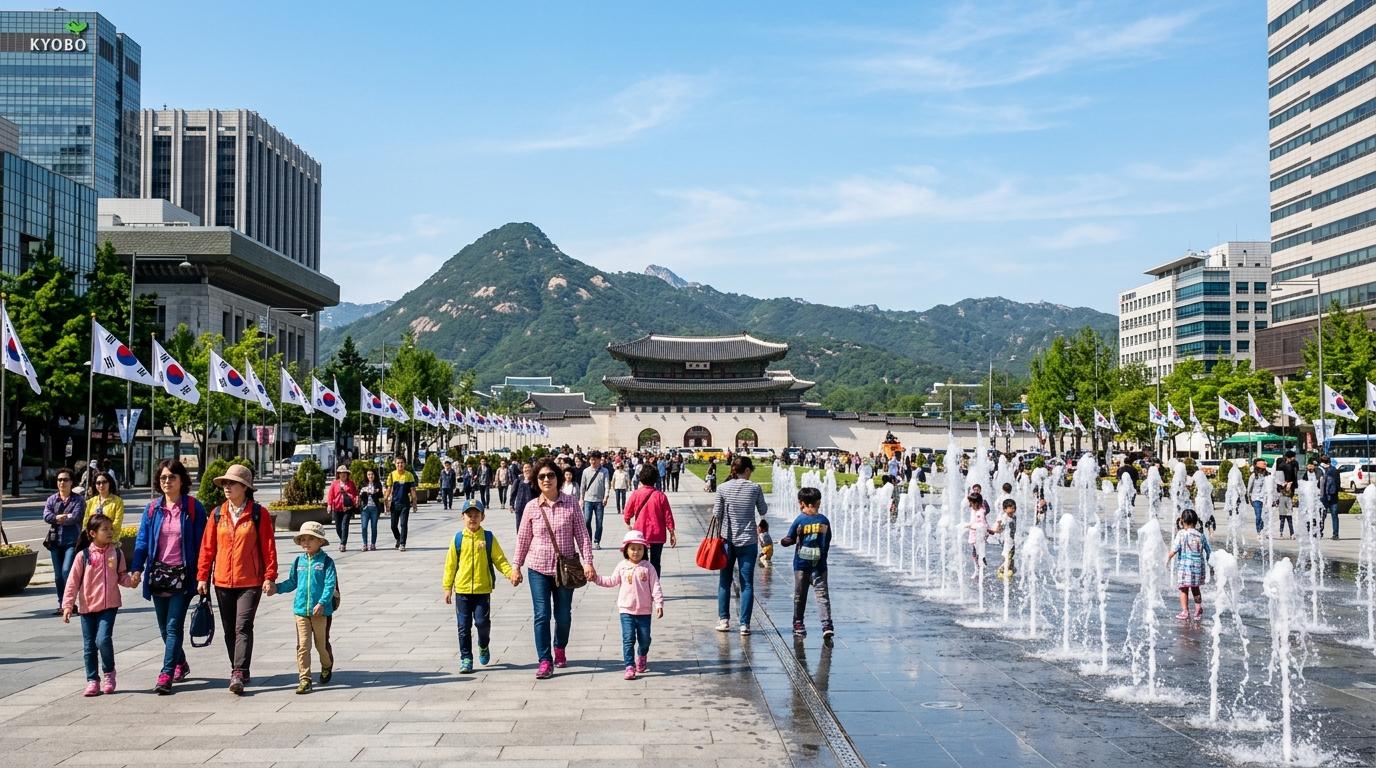
Gwanghwamun: where Seoul feels like a capital
Gwanghwamun is not just a pretty gate in front of a palace. It is one of Korea’s most symbolic civic spaces.
The area in front of Gyeongbokgung was historically tied to the Joseon state, with the old Six Ministries District along the main axis. In the modern era, Gwanghwamun Square has been repeatedly reshaped by colonial history, postwar rebuilding, heritage restoration, public demonstrations, memorial gatherings, and large cultural events. The gate itself was moved and rebuilt over time before being restored in wood and returned to its original position in the late 2000s.
For travelers, this means Gwanghwamun is both scenic and politically alive. On a normal day, it is a grand urban axis with palace views, statues, museums nearby, and easy subway access via Gwanghwamun Station on Line 5, Gyeongbokgung Station, or City Hall. On major rally or event days, it can become crowded, partially controlled, or difficult to cross.
That unpredictability is part of the city’s character, but it is worth checking local notices if visiting on a weekend or public holiday.
Palaces: low admission, high reward, and a few details that matter
Seoul’s royal palaces are some of the best-value sights in the city. Admission is low compared with most major capital cities, and wearing full hanbok grants free entry to paid palaces. Details can change, so confirm current ticket information on the official palace websites before going, especially in 2026 and beyond.
As currently listed for Seoul’s five Joseon royal palaces:
- Gyeongbokgung: ₩3,000 general admission for adults; free in full hanbok; closed every Tuesday
- Changdeokgung: ₩3,000 palace admission; Secret Garden requires a separate ticket
- Changgyeonggung: ₩1,000
- Deoksugung: ₩1,000
- Gyeonghuigung: free
Visitors aged 18 and under, seniors 65 and older, and visitors on Culture Day, the last Wednesday of each month, may receive free entry to the paid palaces under current rules.
Gyeongbokgung is the largest and most famous. Built in 1395 at the heart of Hanyang, it sits directly behind Gwanghwamun Square and gives that classic Seoul image of palace roofs against mountains and city roads. Free English guided tours have been offered daily at 11:00, 13:30, and 15:30, except Tuesdays, but schedules can shift, so check the palace website if the tour matters to your day.

Changdeokgung Secret Garden needs more planning
Changdeokgung is beloved for its atmosphere, and its Secret Garden, Huwon, is one of the most controlled palace experiences in Seoul. It is not something to casually add five minutes before arrival during peak spring or autumn.
The Secret Garden ticket is usually ₩5,000 for adults, on top of the ₩3,000 Changdeokgung palace admission. Sessions are capacity-controlled, with reported caps of 100 visitors per session, split between online reservations and on-site tickets. Late arrivals may be refused entry without refund.
If Huwon is high on your list, reserve ahead and build the rest of your day around that entry time. If not, Gyeongbokgung plus Insadong or Bukchon will feel smoother for a first downtown route.
Be careful with palace combination tickets
The Royal Palace Pass or combination ticket can be useful for travelers visiting several palaces and Jongmyo Shrine, but published details have not always been perfectly consistent, especially around whether Changdeokgung Secret Garden is included. Treat the pass as something to verify officially at the time of purchase, not as an automatic bargain.
For many short-stay visitors, single palace tickets are already inexpensive enough that flexibility may be worth more than squeezing out a small saving.
Insadong: traditional Seoul without leaving the city center
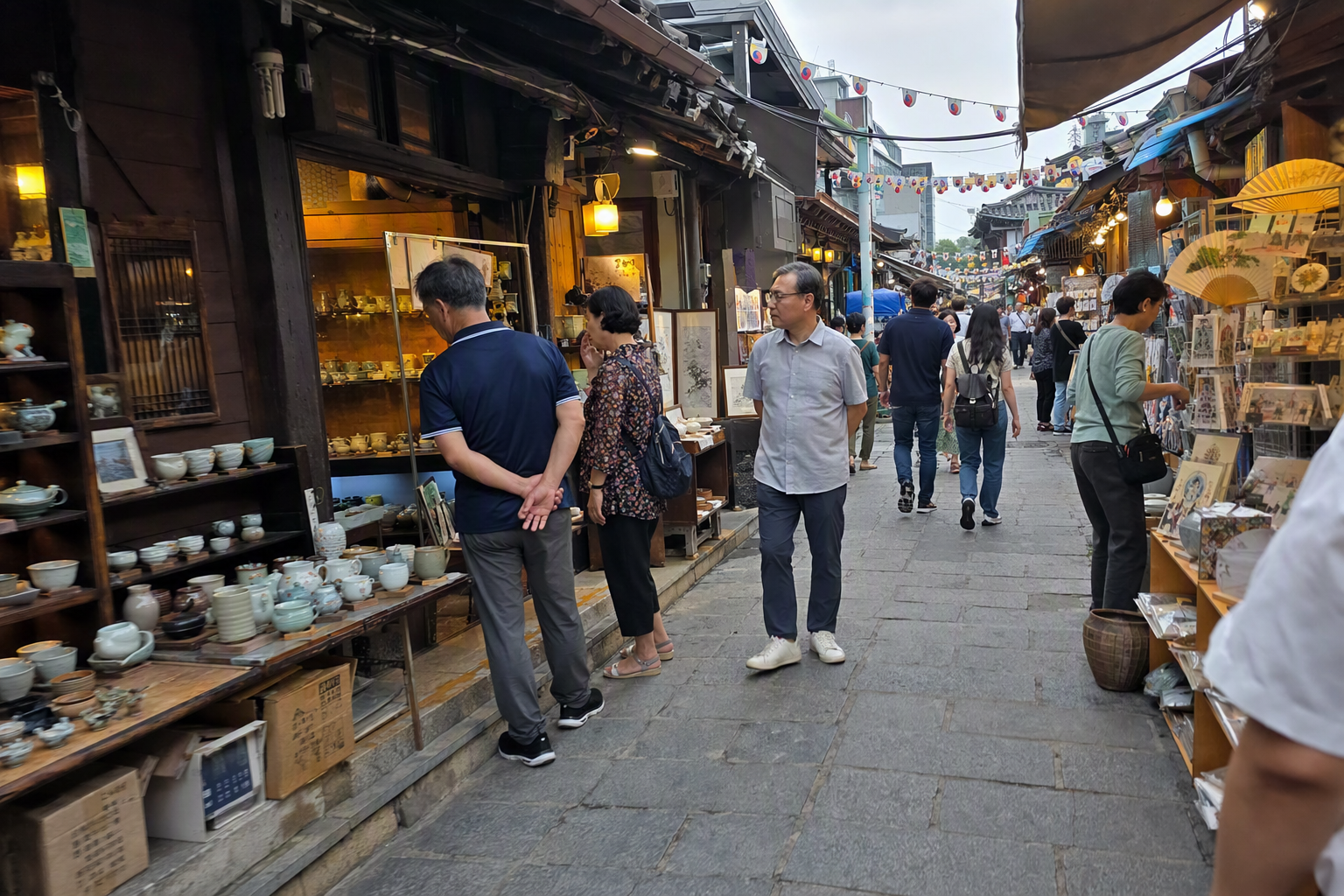
Insadong sits in Jongno-gu, close to Anguk Station on Line 3. Its main street, Insadong-gil, runs about 700 meters, with smaller alleys branching off into tea houses, craft shops, galleries, and restaurants.
The neighborhood is known for traditional culture: antique shops, calligraphy materials, pottery, hanji paper goods, and art spaces. Ssamziegil, the spiral-ramp craft mall with dozens of artisan shops, is an easy stop when the weather is cold, rainy, or too hot. Jogyesa Temple nearby adds a calm religious anchor, especially when lanterns or seasonal decorations are up.
Insadong is also a good connector. From here, it is easy to move north to Bukchon, west to Gyeongbokgung, east toward Changdeokgung, or south toward Jongno and Cheonggyecheon.
The area can feel polished in parts, and long-time traditional shops have faced pressure from rising rents and standard retail. Still, if you choose smaller galleries, tea houses, and craft stores instead of only the most obvious souvenir stops, Insadong has more texture than a quick walk down the main street suggests.
Bukchon: beautiful, residential, and now tightly managed
Bukchon Hanok Village is one of the most photographed areas in Seoul, but it is not a theme park. It is a living residential district between Gyeongbokgung and Changdeokgung, with around 600 years of history and a very real overtourism problem.
The core residential area around Bukchon-ro 11-gil has been designated a Special Management Area. Since November 2024, the Red Zone has restricted tourism activity to 10:00–17:00, with full enforcement from March 1, 2025. Fines of ₩100,000 per violation may apply, including to foreign visitors. Silent tourism rules are also emphasized, with small-group limits in sensitive alleys and guidance against loud talking, intrusive photography, and photographing home interiors.
For a smoother and more respectful visit, keep Bukchon short and daytime. Pair it with Anguk, Insadong, or a palace, not a late-night stroll. If you arrive too early or too late, change course rather than trying to slip through quiet residential lanes.
From 2026, large charter buses are also being restricted on key Bukchon roads, another sign that the neighborhood is being managed for residents first.

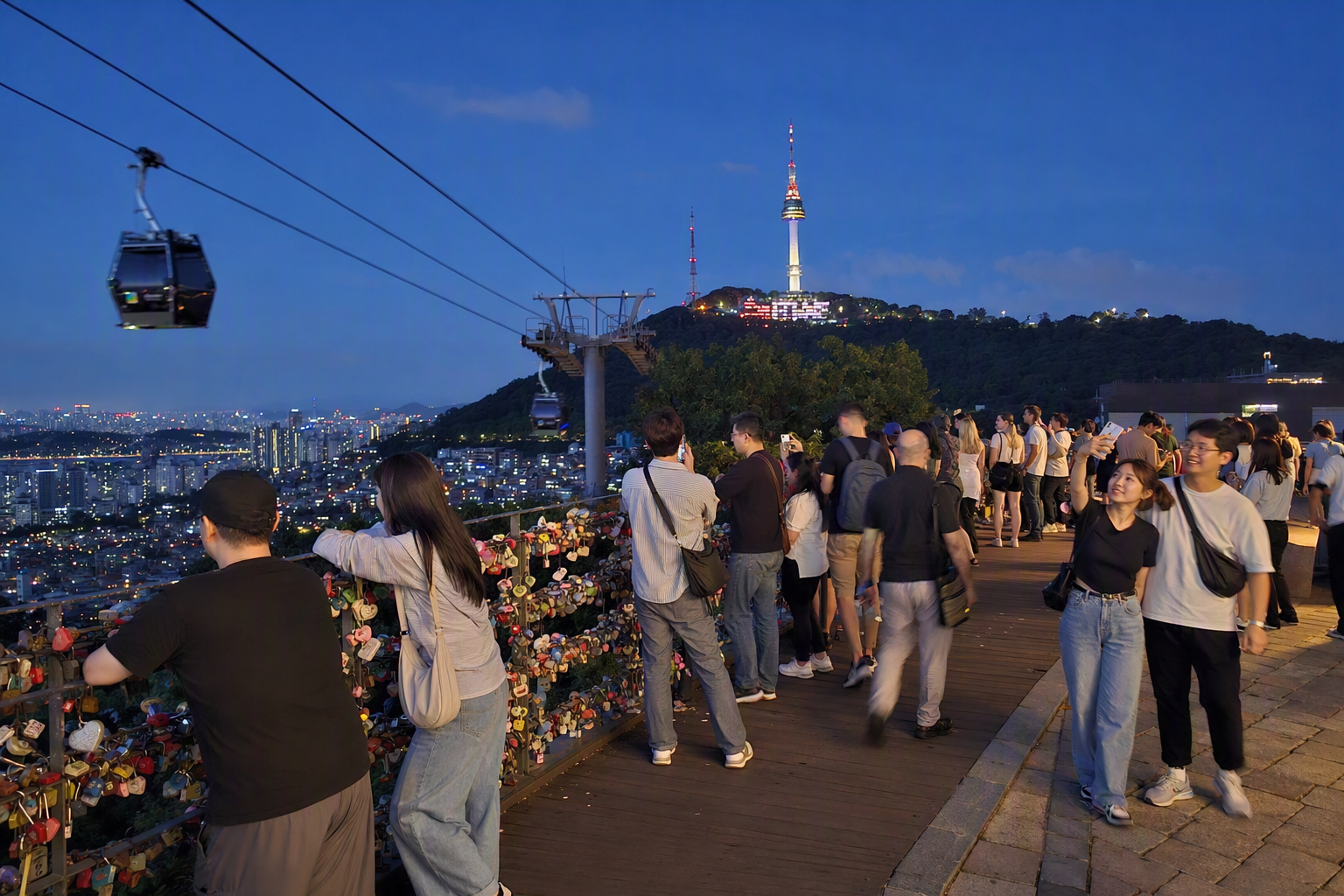
Namsan and N Seoul Tower: views cost money, the mountain does not
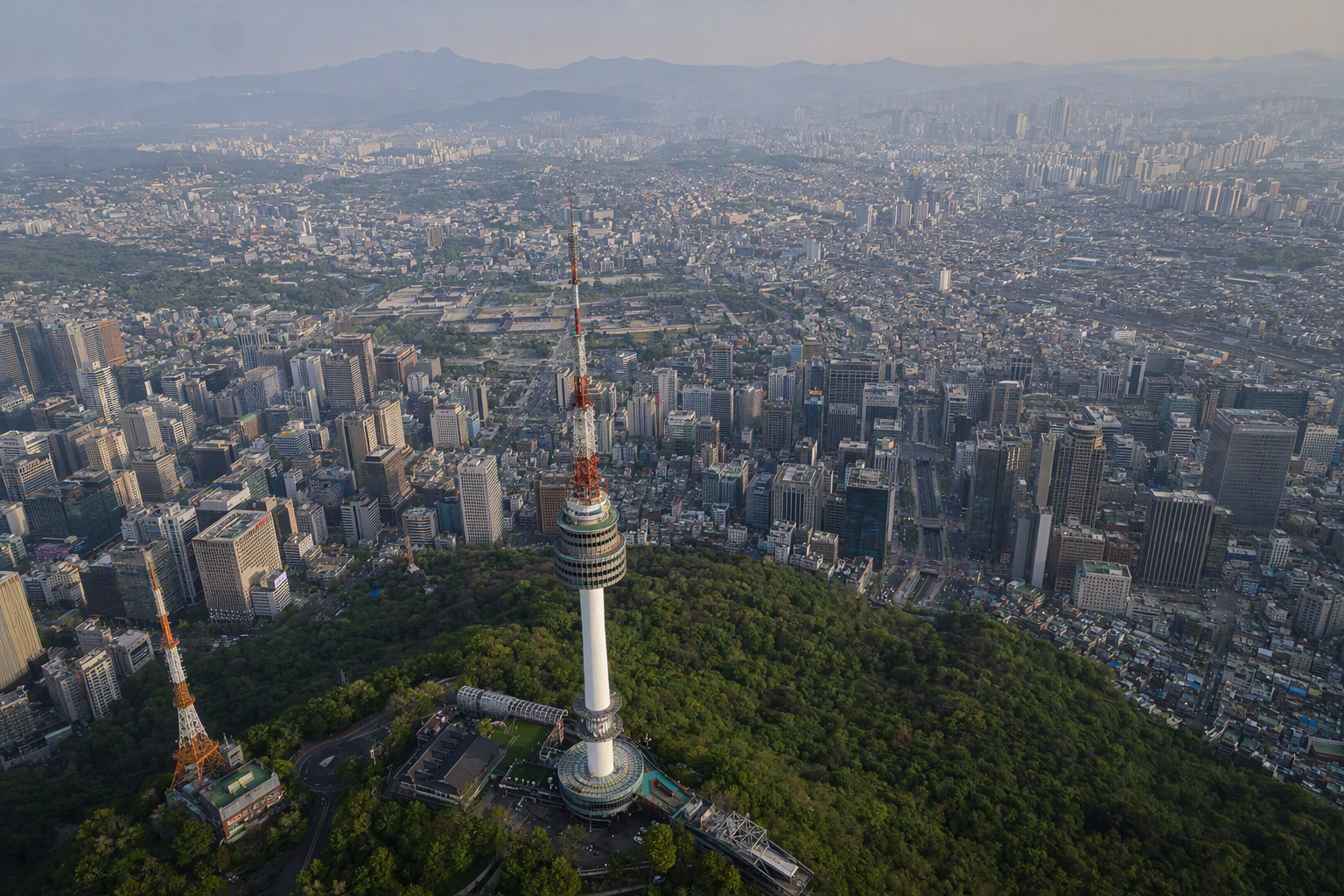
Namsan is the easiest way to feel Seoul’s geography. The city suddenly stops being a shopping grid and becomes hills, walls, towers, and layers of apartment blocks stretching outward.
The famous paid route is the Namsan Cable Car plus N Seoul Tower Observatory. Recent listed prices put the Namsan Cable Car round trip at ₩15,000 for adults and ₩11,500 for children. N Seoul Tower Observatory adult ticket prices have been reported in the ₩21,000–₩29,000 range depending on source and ticket type, so check the official website or your booking platform before deciding.
For some travelers, both are worth it. For others, the better choice is one paid view and one free walk. Namsan Park itself, fortress-wall sections, and outdoor viewpoints can be lovely without paying for the observatory. This is especially true if the weather is hazy, rainy, or if you already have another skyline plan.
A nice downtown rhythm is Myeongdong in the late afternoon, Namsan around sunset, then dinner back in Myeongdong or Itaewon.
Namdaemun Market: old-school shopping beside the modern city
Namdaemun Market sits close to City Hall, Seoul Station, Myeongdong, and Deoksugung, which makes it very easy to add to a downtown day. It is one of those places where Seoul’s commercial history feels practical rather than curated: clothing, accessories, kitchenware, souvenirs, snacks, imported goods, and alleys that seem to specialize in everything at once.
Compared with Myeongdong, Namdaemun feels less polished and more local-market busy. It is better for browsing and small finds than for a perfectly aesthetic stroll. The streets can be crowded and confusing, so it works best when you are not rushing to a timed palace ticket right after.
A simple pairing is Deoksugung and City Hall in the morning, Namdaemun before lunch, then Myeongdong or Namsan later.

Dongdaemun and DDP: design, night markets, and late energy
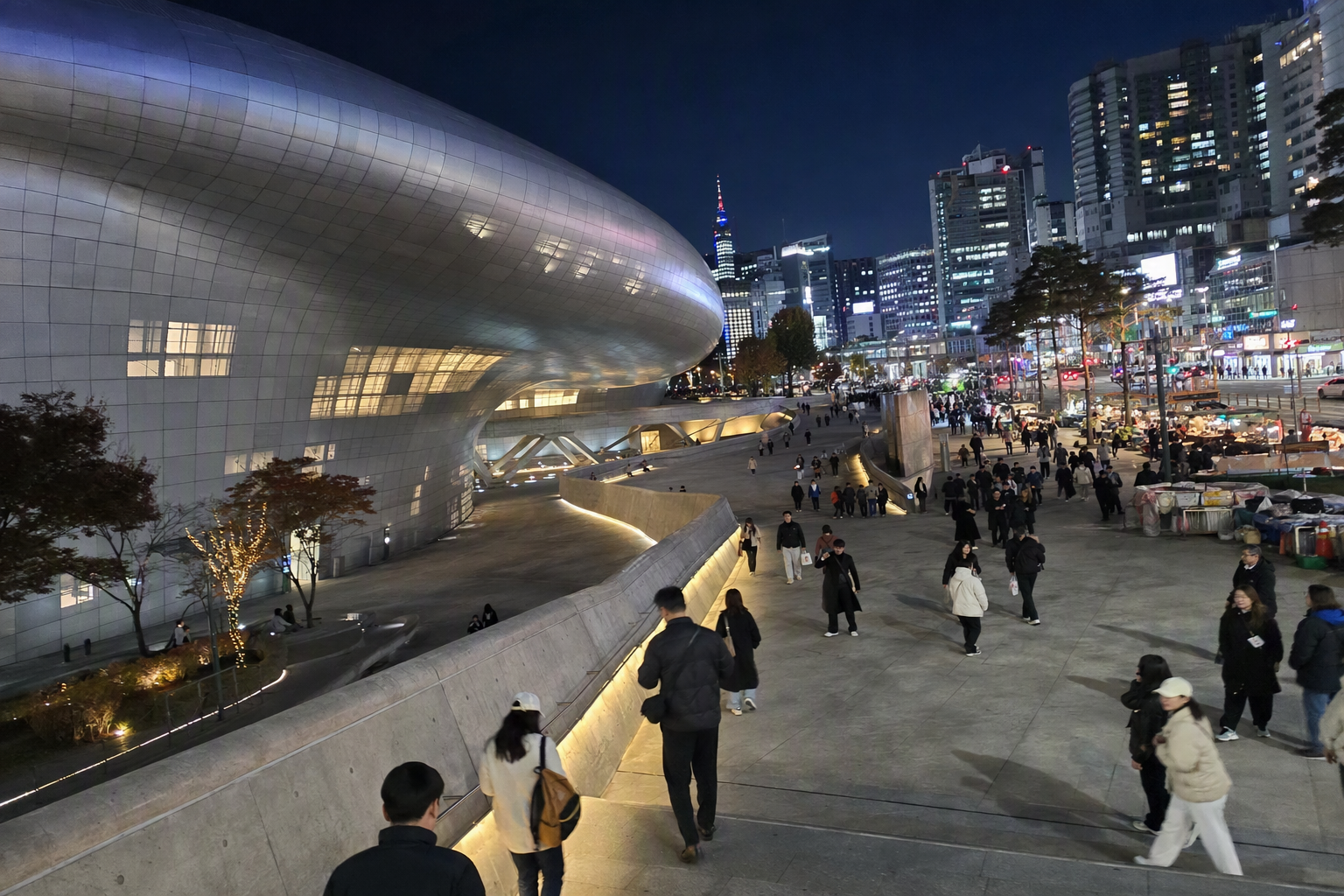
Dongdaemun sits on the eastern edge of the downtown shopping belt. For visitors, the area usually means two things: Dongdaemun Design Plaza, often shortened to DDP, and the surrounding market-fashion district.
DDP gives a futuristic contrast to the older market streets nearby. It is especially photogenic in the evening, when the curves of the building and surrounding lights feel more dramatic. The market side can run late, though exact operating patterns vary by store and building, so avoid assuming every place will be open just because the district has a night-shopping reputation.
Dongdaemun pairs well with Cheonggyecheon Stream, Euljiro, or Naksan Park. A high-energy evening might start with dinner near Euljiro or Dongdaemun, continue to DDP after dark, and end with a walk along Cheonggyecheon or toward Naksan if you still have comfortable shoes and weather on your side.
Cheonggyecheon, Euljiro, and Naksan: the free evening anchors
Not every memorable Seoul moment needs an admission ticket.
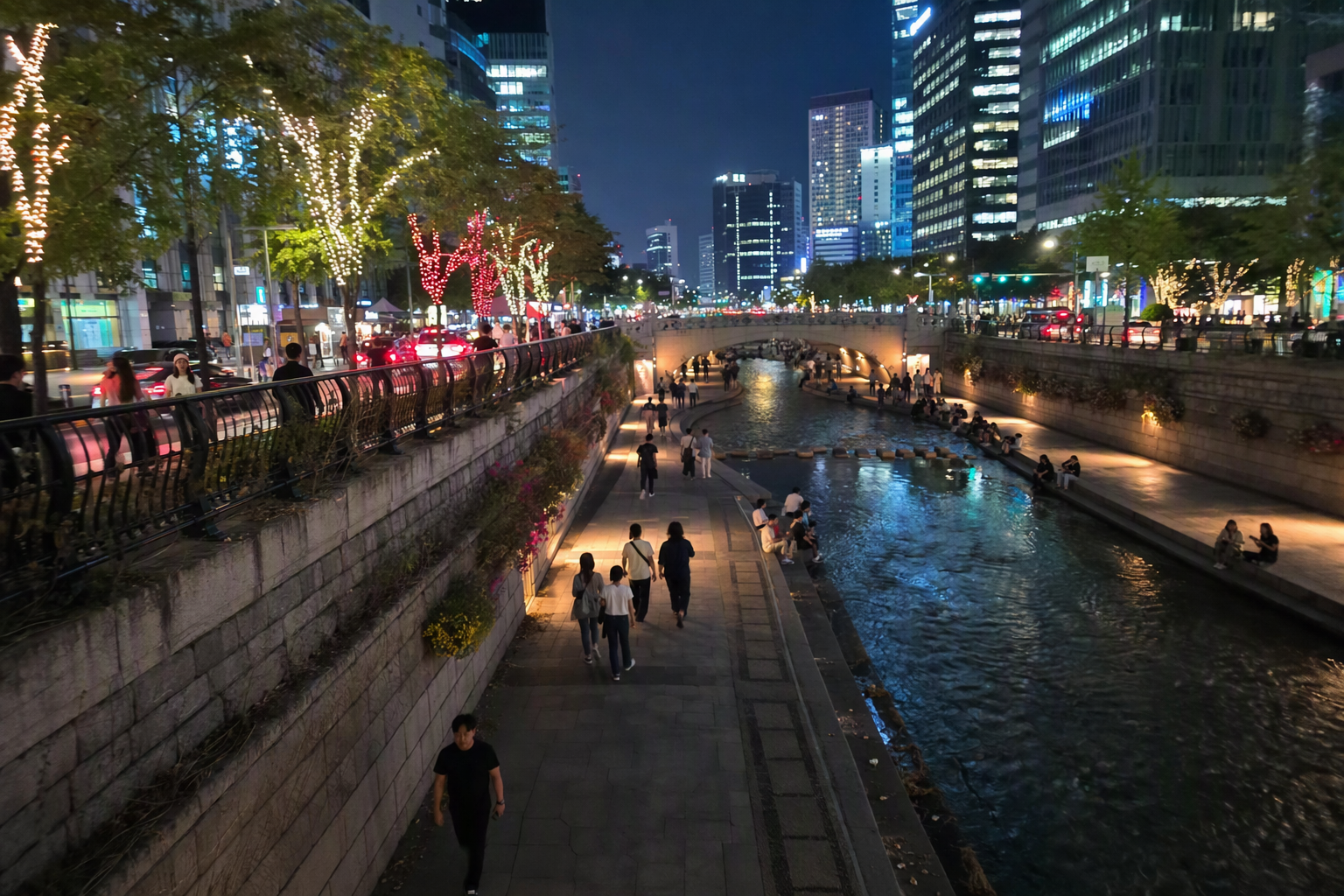
Cheonggyecheon Stream cuts through downtown and is one of the easiest places to reset after shopping or palace crowds. It is free, central, and especially pleasant at night, when office workers, couples, and travelers drift along the water below street level.
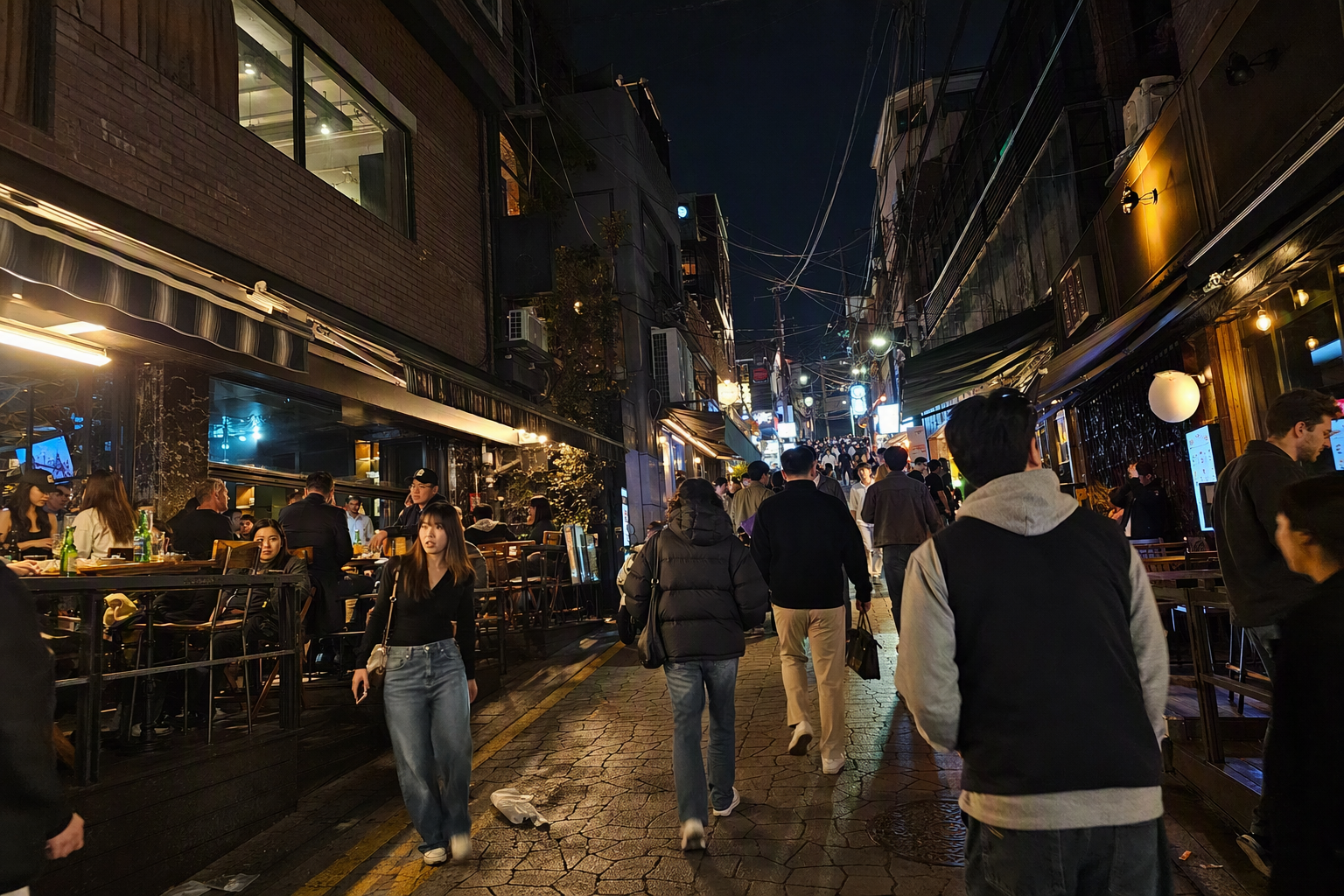
Euljiro, nearby, has become known for its old industrial alleys, small bars, restaurants, and mixed-use character. It is not as instantly readable as Myeongdong, and that is part of the appeal. Go with a flexible mood rather than a strict shopping list.
Naksan Park and nearby Seoul Fortress Wall sections give another free option, with hillside views over the old city. These free late-day anchors are useful because downtown Seoul can get expensive quickly once you stack cable cars, observatories, cafes, and shopping.
Itaewon: close enough to join a downtown day
Itaewon is not usually the first neighborhood people picture when they say historic downtown Seoul, but it often appears in central travel routes because it sits conveniently between Namsan and the Han River side of the city.
It is best used as an evening or food-focused addition rather than forced between palace stops. After Namsan, Itaewon makes sense for dinner or drinks. Before a palace morning, less so.
The area’s strength is international dining and nightlife, not traditional sightseeing. That makes it a good contrast after a day of palaces, markets, and shopping streets.
A realistic one-day downtown route
A full official-style downtown course can chain together Namsan Tower → Itaewon → Myeongdong → Namdaemun Market → DDP → Naksan Park → Cheonggyecheon Stream, with an estimated spend of roughly ₩59,000–₩120,000 per person excluding shopping depending on paid attractions and meals.
It is possible. It is also a lot.
For a first visit, we would only recommend that pace for travelers who genuinely enjoy long city days, quick stops, and late finishes. Seoul rewards wandering, and downtown streets can be crowded on weekends, especially in shopping and market areas where people naturally stroll.
A gentler one-day route looks like this:
-
Morning: Gyeongbokgung and Gwanghwamun
Start with the palace before the day gets too full. Avoid Tuesdays, when Gyeongbokgung is closed. -
Lunch and early afternoon: Insadong or Bukchon
Choose Insadong for crafts, tea, and galleries. Choose Bukchon only during allowed visiting hours and keep it quiet and brief. -
Late afternoon: Myeongdong or Namdaemun
Myeongdong is easier for beauty shopping and street food. Namdaemun is better for market browsing. -
Evening: Namsan, Cheonggyecheon, or DDP
Pick one main finish. Namsan for views, Cheonggyecheon for a free walk, DDP for architecture and night photos.
That version leaves space to eat properly, take photos without sprinting, and recover from the subway stairs that somehow always appear at the wrong moment.
A better two-day downtown split
If you have two days for central Seoul, split the city by mood.
Day 1: Palaces, hanok, and old Seoul
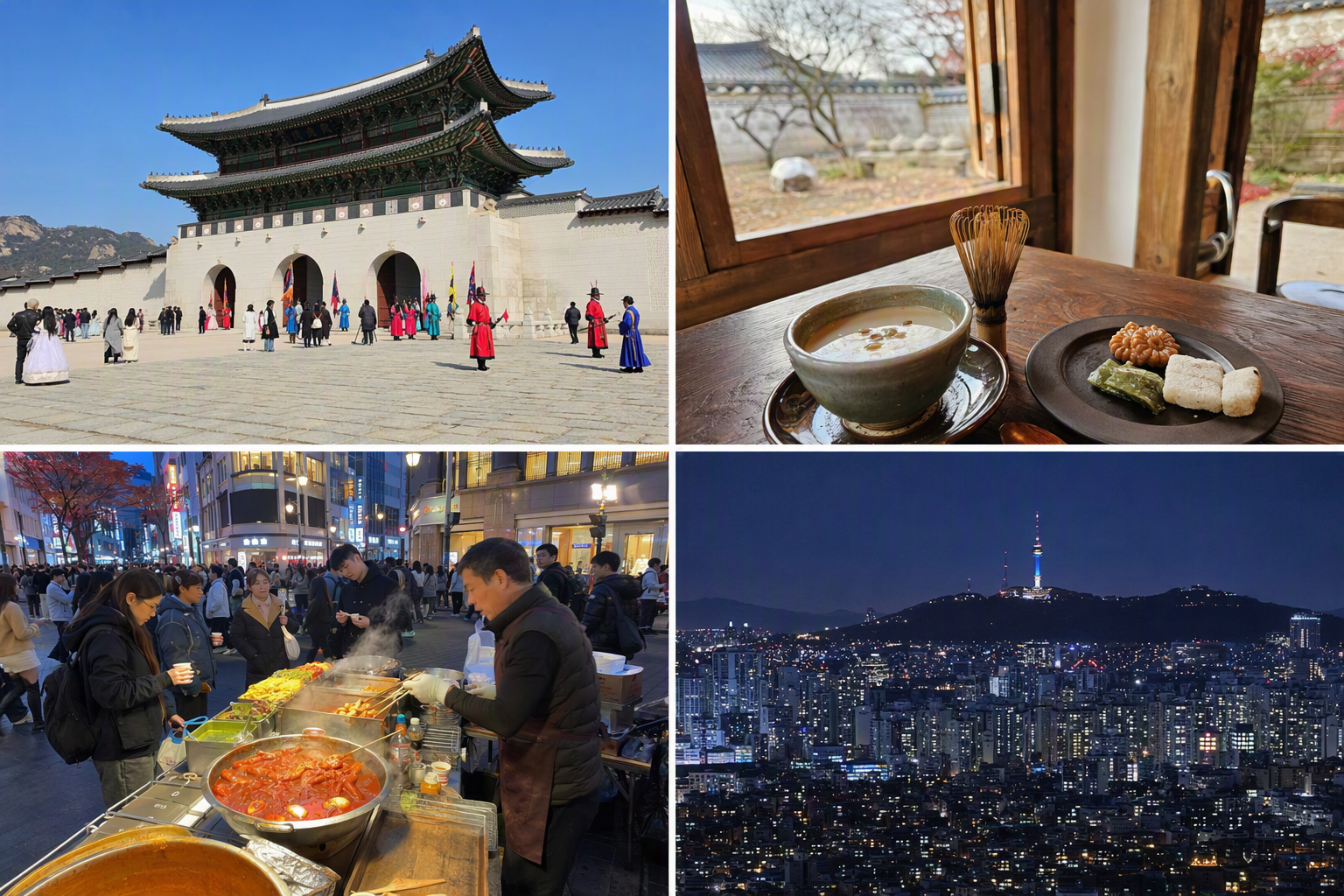
Start around Gwanghwamun and Gyeongbokgung, then move toward Insadong for lunch, tea, galleries, and craft shopping. If Bukchon is on your list, visit during the 10:00–17:00 window and keep noise down. If you prefer a less residential route, continue to Changdeokgung or Deoksugung instead.
End around Cheonggyecheon or Jongno for an easy evening walk.
Day 2: Shopping, markets, views, and night Seoul
Begin around Namdaemun Market or Myeongdong, depending on whether you want local-market browsing or beauty shopping. Move to Namsan before sunset. Later, choose Dongdaemun and DDP for night architecture, or Itaewon for dinner and nightlife.
This split keeps the historic core from blurring into the commercial core. It also helps with palace closures, timed tickets, and Bukchon restrictions.
Where to stay in downtown Seoul
There is no single best base, but there are clear personalities.
Myeongdong is the most convenient for first-time travelers who want shopping, street food, familiar hotel options, and easy subway access. It is lively and practical, but not quiet.
City Hall and Euljiro work well for travelers who want central transport and a slightly less tourist-heavy feel than Myeongdong. They are good for connecting west to Gwanghwamun, east to Dongdaemun, and south toward Namsan.
Jongno and Anguk are better for palace mornings, Insadong, Bukchon, and traditional atmosphere. Nights can feel calmer in some pockets, though main roads stay busy.
Dongdaemun suits night-shopping energy and late returns, but it can feel farther from the palace side if your plans lean historic.
Seoul Station is practical for airport and train connections, especially with AREX access, but the immediate surroundings are more transport-focused than charming.
Transport: T-money or Climate Card?
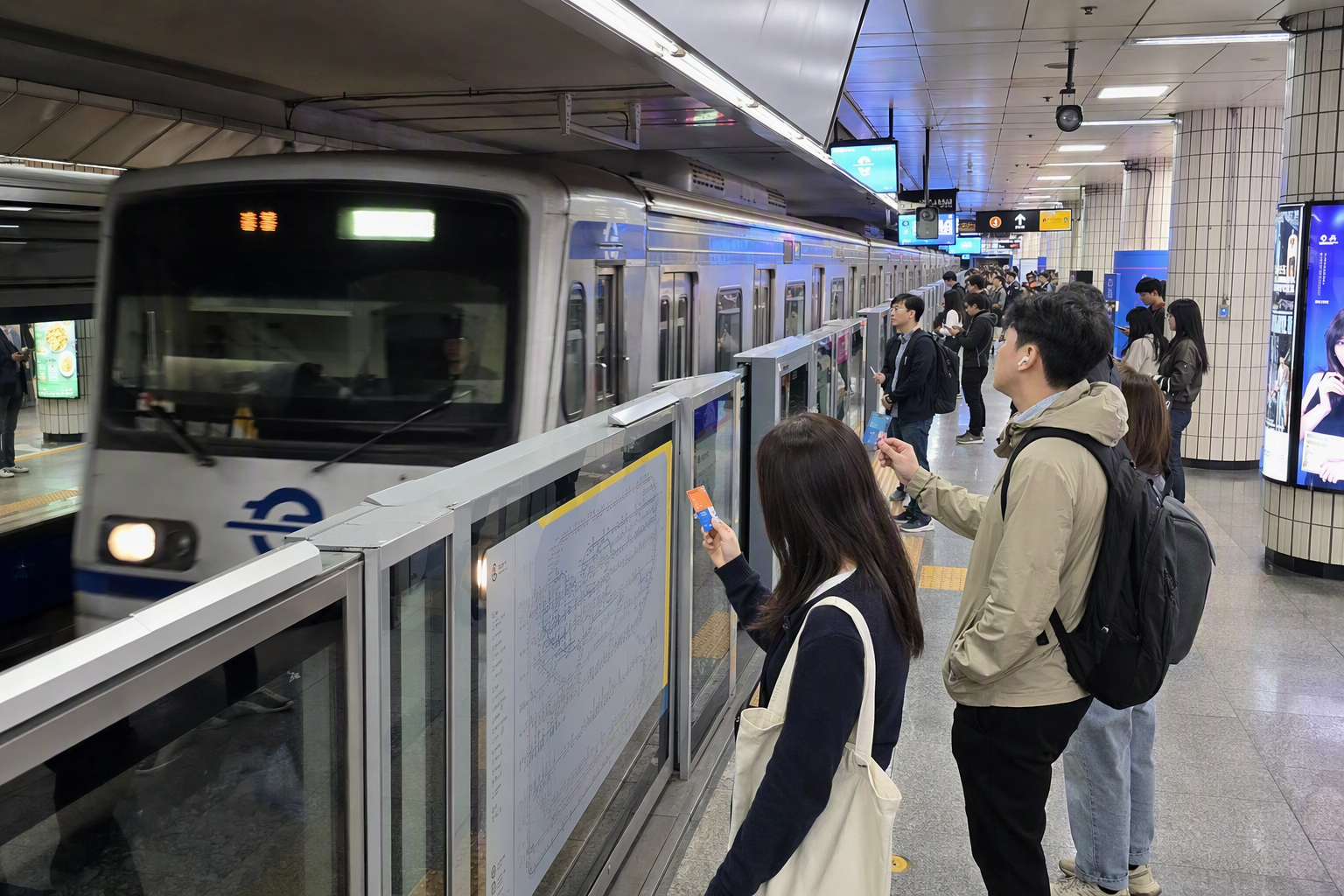
Seoul’s subway and bus system is one of the easiest reasons to stay central. Most downtown neighborhoods are only a few subway stops apart, and buses fill in the hillside gaps around Namsan, Bukchon, and older streets.
For most visitors, the choice is between a normal transport card such as T-money and the short-term Climate Card Tourist Pass.
Current short-term Climate Card Tourist Pass prices are listed as:
- 1 day: ₩5,000
- 2 days: ₩8,000
- 3 days: ₩10,000
- 5 days: ₩15,000
- 7 days: ₩20,000
- Physical card fee: ₩3,000
It tends to make sense if you ride often: roughly 4 or more rides in one day, 3 or more rides per day for 2–3 day passes, or around 2–2.5 rides per day for 5–7 day passes, based on typical base subway and bus fares around ₩1,400–₩1,550.
The important part is coverage. The Climate Card is mainly for Seoul-based subway sections and Seoul-licensed buses. Major exclusions include AREX Express, boarding at Incheon Airport terminals, Sinbundang Line, GTX, KTX/SRT, intercity buses, and out-of-Seoul subway sections where extra fares may be charged at exit. Partial airport-related rules have changed before, so verify the latest official guidance before relying on it for airport travel.
Short-term tourist passes remain available and have been purchasable with international cards since 2025. The older 30-day Climate Card products are being phased out by October 2026, but that mainly affects longer-stay and local riders. For short-stay travelers, the tourist pass is the one to compare.
Our simple take: if your trip is mostly downtown and you like walking, T-money may be easier. If your days include multiple subway and bus rides across Seoul, the Climate Card can be satisfying and cost-effective. Do not buy it only for airport travel.
Budget notes that actually change your day
Downtown Seoul can be surprisingly affordable or surprisingly expensive depending on where you spend.
The palaces are inexpensive: ₩1,000–₩3,000 for most paid palace admission, with hanbok free-entry benefits. Cheonggyecheon, Naksan Park, Seoul Fortress Wall sections, and many outdoor city walks are free. This makes the historic core a strong choice for budget-conscious travelers.
Namsan is where costs can climb. A round-trip cable car plus observatory ticket can become one of the bigger sightseeing expenses of the day. If the sky is clear and you love city views, go for it. If visibility is poor, consider skipping the observatory and enjoying the park or outdoor viewpoints instead.
Myeongdong street food is easy to overspend on because each snack feels small. A few ₩3,000–₩8,000 stops add up quickly, especially if dinner is still coming. The same goes for K-beauty shopping; Myeongdong is convenient precisely because temptation is everywhere.
Timing mistakes to avoid
A few small timing choices can make downtown Seoul feel much smoother.
- Do not put Gyeongbokgung on Tuesday. It is closed every Tuesday under current schedules.
- Do not treat Bukchon like a 24-hour photo zone. The Red Zone allows tourism activity only from 10:00 to 17:00, with fines possible.
- Do not assume Changdeokgung Secret Garden is walk-in friendly. Reserve ahead in peak seasons and arrive on time.
- Do not stack every paid viewpoint. Namsan Cable Car, N Seoul Tower Observatory, cafes, and taxis can turn a simple evening into a pricey one.
- Do not buy a Climate Card without checking your routes. Airport trips, non-Seoul subway sections, and certain lines are not covered the way visitors often expect.
- Do not underestimate weekend crowds. Myeongdong, Namdaemun, Jongno, and Dongdaemun are built for walking, shopping, and lingering, which is exactly why they get busy.
- Do not ignore Gwanghwamun event days. Protests, ceremonies, festivals, and large gatherings can affect road crossings, buses, and walking routes.
What downtown Seoul says about the capital as a whole
Seoul is still the legal and symbolic capital of South Korea, even though some administrative functions have moved to Sejong City. The capital question has a complicated constitutional and political history, but travelers feel it in simpler ways: Gwanghwamun remains the symbolic front stage, central districts still hold national institutions and media power, and Seoul’s transport network continues to pull people from across the metro area every day.
The city is also under pressure. Seoul’s population has declined from its earlier peak, while housing demand and apartment prices remain high. Many residents have moved outward to Gyeonggi and Incheon, but commute, work, culture, and education still orbit Seoul. The Gangbuk-Gangnam divide also shapes how the city feels: older northern districts hold palaces, markets, and historic streets, while southern districts like Gangnam, Seocho, and Songpa are associated with higher property values, business clusters, and newer commercial development.
For travelers, this is not background trivia. It explains why downtown Seoul feels so dense, why old markets sit beside polished retail, why alleys change quickly, and why neighborhoods like Bukchon are now actively limiting tourism. Seoul is not a museum city. It is a living capital trying to balance heritage, commerce, residents, visitors, and constant redevelopment.
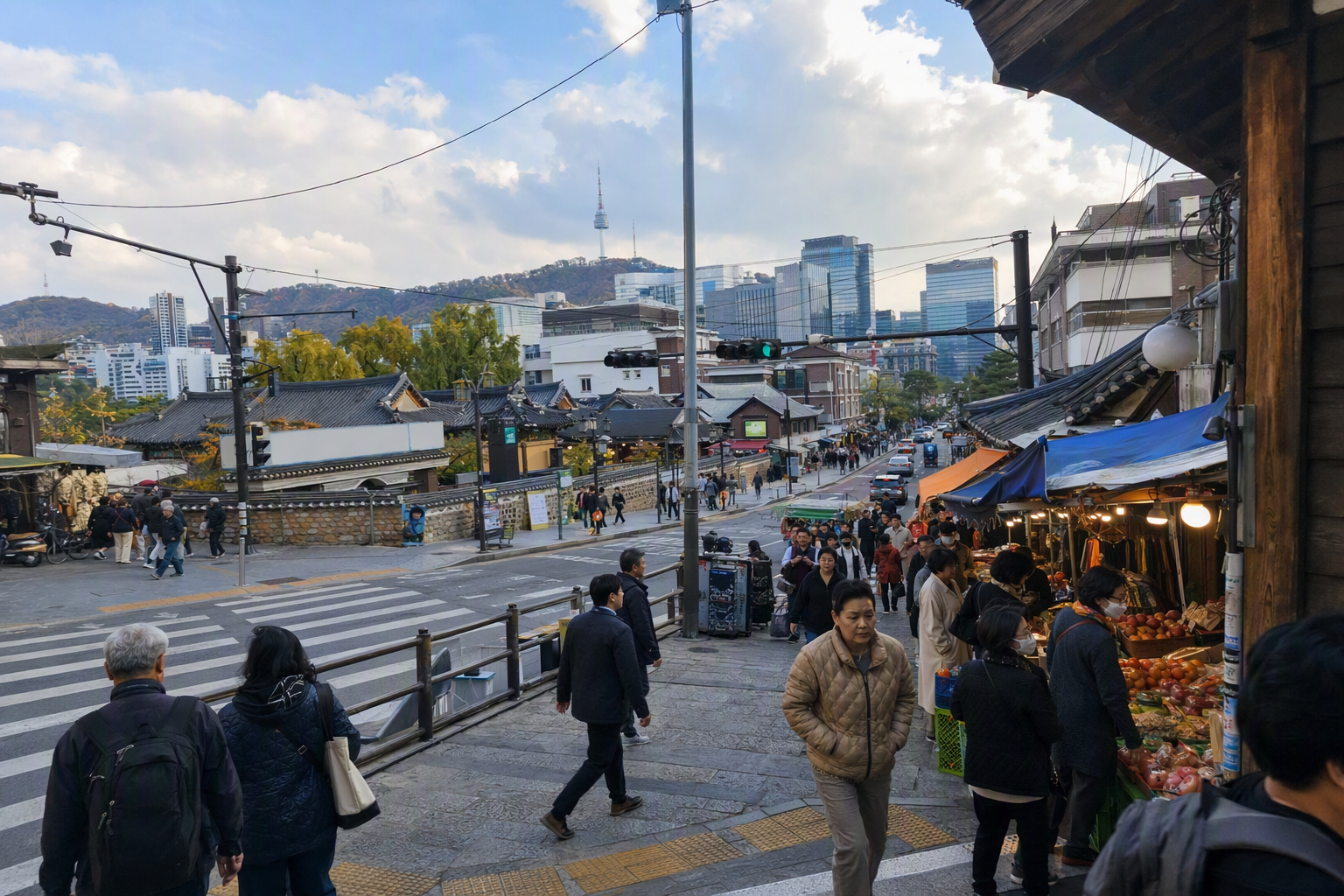
Creatrip’s downtown Seoul edit
For a first downtown Seoul experience, we would keep the plan elegant:
Choose one palace, not three. Add Insadong for texture. Visit Bukchon only if you can do it respectfully during the allowed hours. Use Myeongdong for convenience and evening energy, but do not expect it to represent all of Seoul. Save Namsan for a clear day or a romantic night view. Let Cheonggyecheon or Naksan be your free, no-pressure ending.
The best downtown days have contrast: a palace courtyard in the morning, a tea house or market at lunch, beauty shopping or street food at dusk, and a quiet stream or hilltop view after dark.
That mix is what Seoul does beautifully. The capital is old and new, formal and playful, crowded and calm within the same afternoon. Once you stop trying to pin downtown to one neighborhood, the city starts to make much more sense.