Affordable Hotels in Seoul and Across Korea: Where to Stay for Better Value in 2026
Myeongdong is easy, but Hongdae, Mapo, Chungmuro, Gangnam, and familiar Korean chains can stretch your hotel budget further.

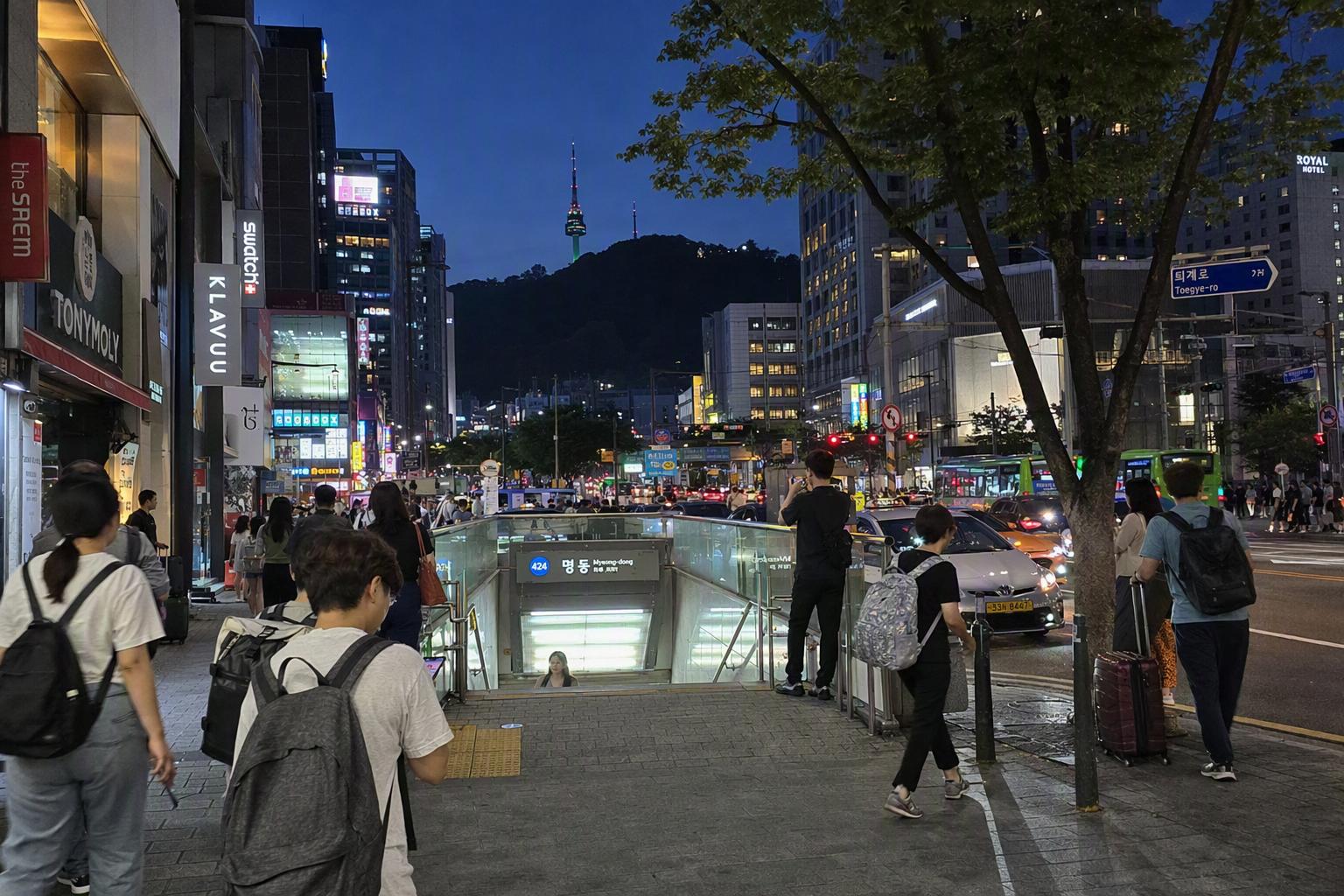
Seoul has always rewarded travelers who choose their neighborhood carefully, but the difference feels sharper now. Myeongdong is still wonderfully convenient. It is bright, central, packed with food and shopping, and easy to understand on a first night in Korea. The catch is that everyone knows this, so hotel prices often reflect the address as much as the room itself.
For 2026 travel dates, the better value story is spreading west and slightly outward: Hongdae, Mapo, Gongdeok, Chungmuro, Insadong, and a few carefully chosen business districts can give you cleaner rooms, better airport access, or more space for the same money. Gangnam, meanwhile, is not bad value on paper, but it only really makes sense when your trip is actually based south of the Han River.
At Creatrip, we would frame Seoul hotel planning like this: pay for the neighborhood that saves you time, not just the one that looks famous on a map.
Seoul hotel value in 2026: the short version
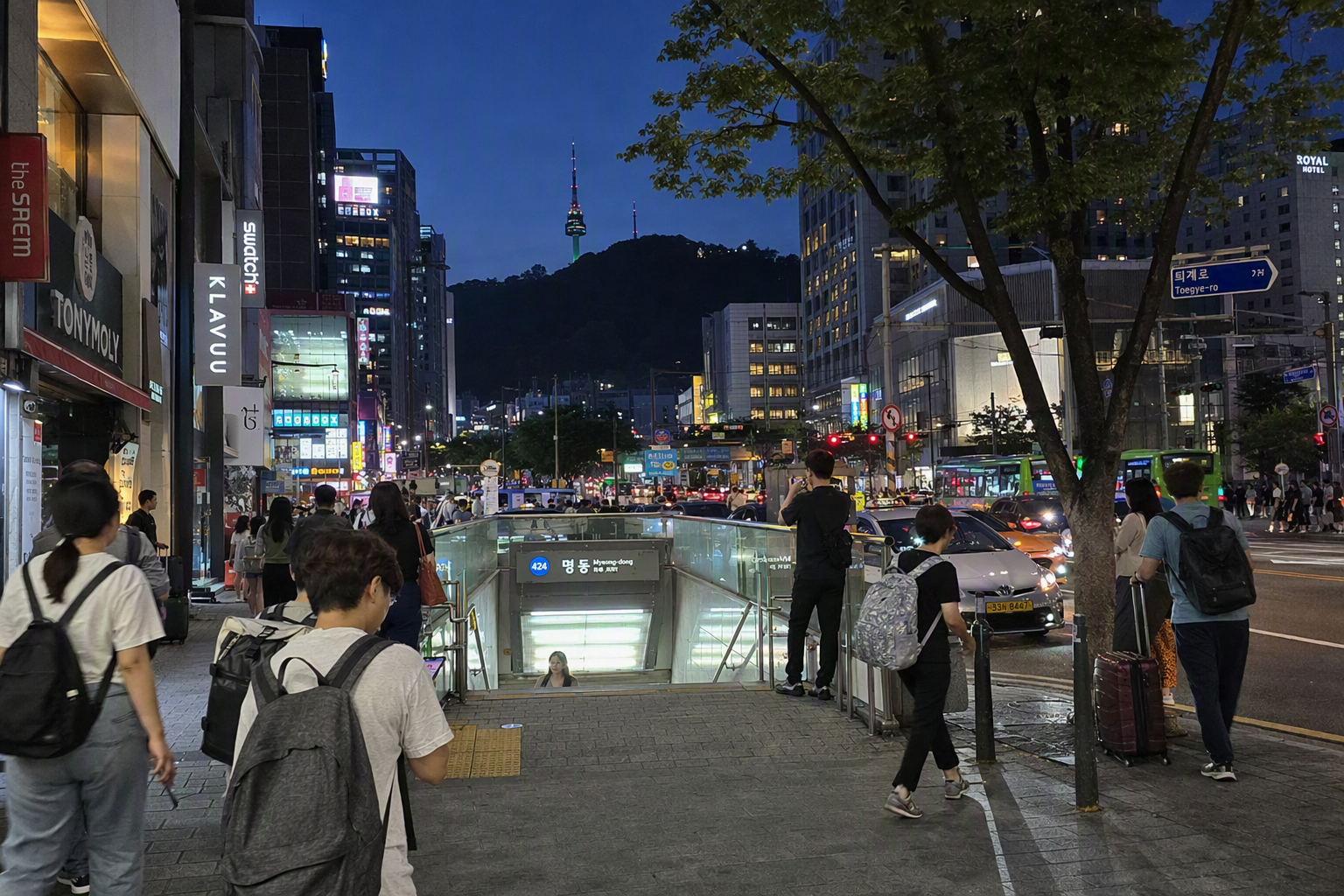
Myeongdong still carries the classic tourist premium. Recent typical 4-star rates often sit around US$110–160, and some booking markets show a wider band around NT$4,500–8,000 per night. There are exceptions, of course, including budget guesthouse-style picks, but the area is no longer the automatic best-value answer.
Hongdae and nearby Mapo or Gongdeok now feel especially strong for travelers who care about both price and movement. Top-rated 4-star options in this zone have recently appeared around US$90–130, with examples like Mercure Ambassador Hongdae around US$124 with a 9.1 rating and Roynet Mapo around US$105 with a 9.0 rating. Rates move constantly by season, weekday, and booking platform, so treat these as useful benchmarks rather than fixed prices.
Gangnam is the most divided market. It can be surprisingly cheap at the business-hotel level, with Toyoko Inn Seoul Gangnam appearing around US$62–64 and a rating around 8.6, but the same district also includes ultra-luxury hotels such as Josun Palace, where rates can climb close to US$948. The bigger issue is not only price. For a palace, Bukchon, Insadong, Myeongdong, and Hongdae-heavy itinerary, Gangnam can quietly add a lot of subway time.
The neighborhood match: where your money works hardest
| Area | Best for | Value pattern | Watch for |
|---|---|---|---|
| Myeongdong | First-timers, shopping, street food, easy central base | Very convenient, but often priced higher | Smaller rooms, tourist premium, busy streets |
| Hongdae / Yeonnam / Hapjeong | Airport access, nightlife, cafes, friend groups, budget stays | Strong guesthouse and apartment value | Club-strip noise, especially late night |
| Mapo / Gongdeok | Airport rail access, calmer evenings, business-leisure mix | Modern hotels with good transport value | Less tourist buzz right outside the door |
| Chungmuro | Central sightseeing without staying in core Myeongdong | Good subway access and competitive mid-range hotels | Some properties may have soundproofing issues |
| Insadong / Jongno | Palaces, Bukchon, traditional streets, slower mornings | Historic-area access with practical prices | Less late-night shopping energy than Myeongdong |
| Gangnam / Yeoksam / COEX | Business, clinics, COEX, south-of-river plans | Cheap business hotels to luxury towers | Inefficient for many first-time sightseeing routes |
| Songpa / Jamsil | Lotte World, Olympic Park, family-oriented stays | Useful when attractions are in the southeast | Farther from old Seoul and Hongdae |
Myeongdong: still easy, just not always the bargain
Myeongdong remains the safest answer when convenience matters more than shaving every dollar. Walk out and you are close to cosmetics shops, casual restaurants, street snacks, currency exchange, department stores, and subway lines that make central Seoul simple. For a short stay, a first visit, or a late-arrival trip where nobody wants to decode the city at midnight, Myeongdong still earns its popularity.
The trade-off is room value. Many hotels here are compact, and the same nightly budget may buy more space in Mapo or Hongdae. That does not mean skipping Myeongdong. It just means choosing carefully.
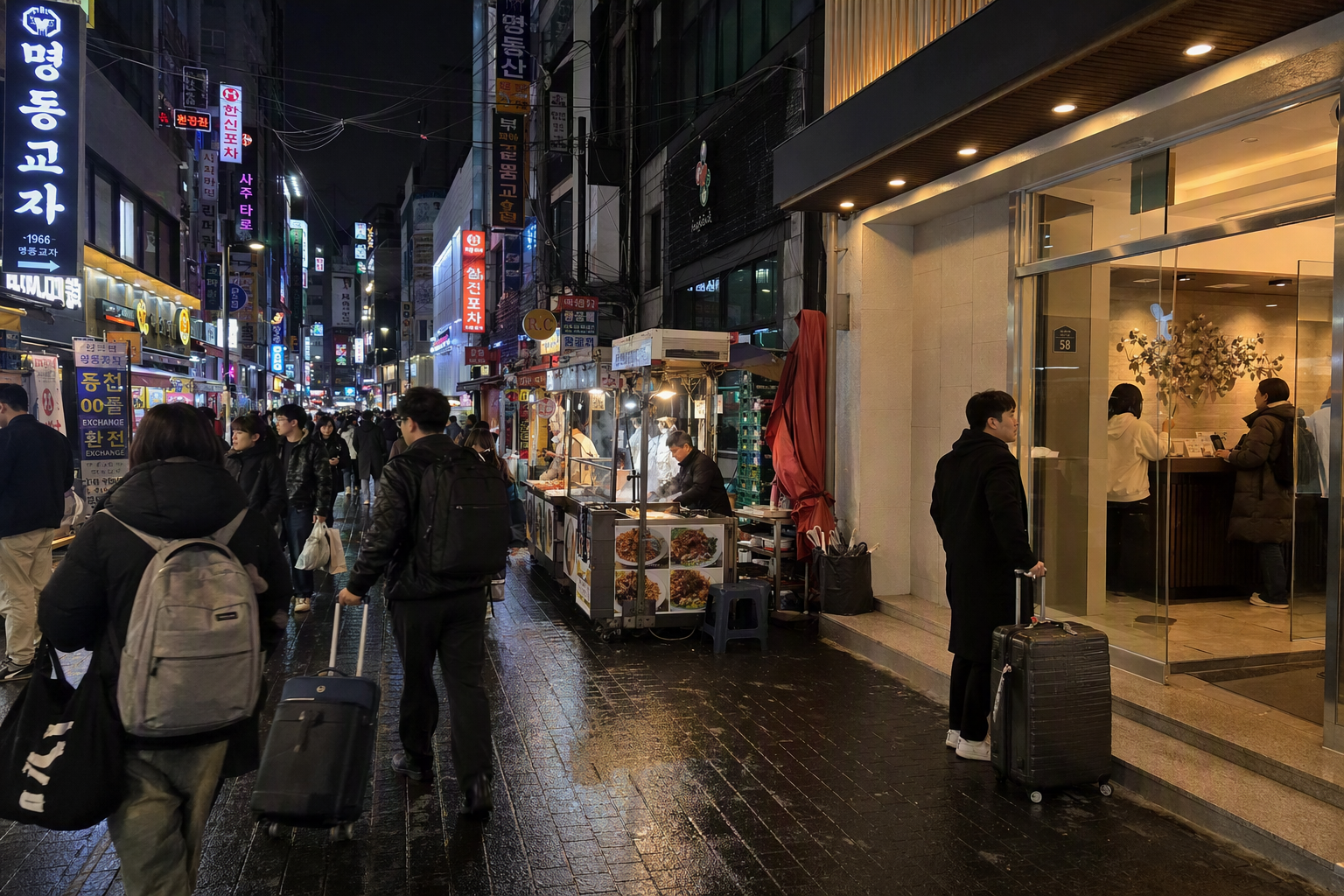
Metro Hotel Myeongdong
Metro Hotel Myeongdong is one of the better examples of why Myeongdong can still be worth paying for. It is a 3-star property with 78 rooms, an Agoda score around 9.0, and a very strong 9.6 location score. Its position between Euljiro 1-ga and Myeongdong Stations puts it right in the retail core, with hundreds of walkable places nearby.
The appeal is practical rather than flashy: renovated and clean interiors, work-friendly room layouts, bedside outlets, strong Wi-Fi, and unusually good noise resilience for such a busy location. Rooms are not huge, with categories such as Standard Queen around 18 m² and Deluxe Queen around 22 m², but the hotel works nicely for travelers who want to step directly into central Seoul.
The small print matters here. The building itself is older, some rooms may have AC noise or bright device lights, hallway sound can happen, and bathroom amenities are limited compared with larger 4-star hotels. Some rooms are shower-only, so tub-lovers and families with small children may want to check room details before booking.
Days Hotel by Wyndham Seoul Myeongdong
Days Hotel Myeongdong is the more budget-conscious name to keep on your list. It has been seen advertised from around £42 on some platforms, though prices can swing widely. Its Agoda score sits around 8.6, with a strong 9.5 location score, and it is close to Myeongdong Station.
Room sizes are especially useful for the price category: Standard Double around 21 m², Standard Twin and Deluxe Twin around 25 m², and Standard Triple or Family around 27 m². For travelers trying to stay central without paying a full 4-star premium, that combination of location and room configuration is worth checking.
Sotetsu Hotels The Splaisir Seoul Myeongdong
Sotetsu The Splaisir Seoul Myeongdong sits slightly away from the most intense shopping lanes, closer to the Namdaemun and City Hall side. That gives it a calmer feel at night while staying roughly within a 5–10 minute walk of Myeongdong and City Hall areas.
It is a 4-star hotel with consistent scores across major platforms, including around 8.5 on Agoda, 8.6 on Booking.com, and 4.2 out of 5 on Tripadvisor. Travelers often like the multilingual staff, breakfast variety, Wi-Fi, and family-friendly LINE Friends themed rooms. Its quieter position makes it a good compromise for people who want Myeongdong access but not the loudest address.
The weaker points are the kind that matter more on longer stays: some rooms can feel dark, pillows may be soft, fridges are small, and a few bath areas have privacy layouts that are not ideal for friends sharing a room. It is still a solid Myeongdong-adjacent choice, but room photos are worth inspecting closely.
Hongdae: the best value mix of airport access, space, and evenings
Hongdae is where Seoul hotel value becomes more fun. The area has airport rail access, indie shops, cafes, late-night food, clubs, busking streets, and the softer residential edges of Yeonnam and Hapjeong nearby. It is younger and less polished than Myeongdong, but for many travelers, that is exactly the point.
The transport advantage is real. Hongik University Station is on the Airport Railroad line, and regular AREX service from Incheon Airport to this area is commonly around 43–52 minutes, with local fares around KRW 4,150 in recent fare references. Express airport services use different stop patterns and higher fares, often closer to KRW 9,500, so check that the train actually matches your destination before boarding.
Budget guesthouses and hostels in Hongdae often cluster around KRW 30,000–100,000 per night, roughly US$22–75, mostly in the 1-star to 2.5-star range. That is where Hongdae can beat Myeongdong very clearly, especially for solo travelers, friend groups, and longer stays.

Do not only sort by the cheapest room
Hongdae has some very low-priced names, including Jun Guesthouse Hongdae and Kimchee Hongdae Guesthouse. Jun has appeared at an average around KRW 25,535, dramatically below a cited city average of KRW 134,228, while Kimchee is also known as one of the cheaper choices and carries an overall rating around 7.7.
Cheap can be perfectly fine when the goal is simply a bed and a shower, but the review gap is important. Higher-satisfaction Hongdae options such as ZZZIP Guesthouse in Hongdae, Jeongstay Hostel, Hongdae Guesthouse, and apartment-style stays around Hongik University Station often sit around 9.1–9.6 on major booking platforms. Cleanliness and value ratings are much stronger too, with examples like ZZZIP cleanliness 9.2 and value 9.3, Jeongstay cleanliness 8.9 and value 9.1, and Hongdae Guesthouse cleanliness 9.2 and value 9.3.
For a two-night backpacking stop, the cheapest dorm may be enough. For five nights with luggage, winter coats, shopping bags, or a friend who needs sleep, paying a little more for cleanliness and layout usually feels smarter.
Hongdae is also better for space
A quiet advantage of Hongdae is that some budget-friendly apartments and guesthouses are much roomier than typical compact hotel rooms. Hongdae Guesthouse duplex and family units run around 34–51 m², If House Hongdae has a one-bedroom apartment around 32 m², and Jeongstay family rooms are around 33–43 m².
Compare that with Gangnam dorm-style rooms around 25–30 m² shared by multiple guests, or compact hotel rooms like Dormy Inn Gangnam standard categories around 14–21 m². For families, friend groups, or anyone staying under roughly US$80 when prices align, Hongdae apartment-style rooms can be one of Seoul’s most sensible choices.
The Hongdae noise question
Hongdae has one real catch: micro-location. The club-strip area can stay loud from around midnight to 4am, especially on weekends. Noise-sensitive travelers will usually be happier toward Yeonnam, Hapjeong, or the Mapo side, rather than directly beside the busiest nightlife streets.
That said, central does not always mean impossible. Several properties right by Hongik University Station exits 1–2, including options such as Hongdae Guesthouse Exit 1, If House Hongdae, Jeongstay, and ZZZIP, are praised for ultra-convenient airport rail access, tour pickup convenience, and surprisingly low street noise inside. The best move is to read recent reviews for exact phrases about street noise, hallway noise, and windows rather than judging by map distance alone.
Mapo and Gongdeok: Seoul’s grown-up value pick
Mapo and Gongdeok are excellent for travelers who want Seoul to feel easy without staying in the busiest tourist streets. This area is close to Hongdae, connected to airport rail and multiple subway lines, and calmer at night. It is especially good for repeat visitors, business-leisure trips, early airport departures, and people who prefer a modern hotel over a guesthouse.

GLAD MAPO is the standout benchmark here. It scores around 9.0 on Agoda and 9.2 on Trip.com, with a strong 9.5 location score and a position around 100 m from Gongdeok Station. The rooms are larger than many central Seoul hotels: Standard Double around 26 m², Deluxe Double or Twin around 28–28.9 m², and GLAD House around 54.8 m².
The hotel leans modern and business-friendly, with quiet rooms, very comfortable bedding, a 24-hour gym, a lobby convenience store, and a breakfast spread that has been noted for Asian options, even including DIY instant noodles. It tends to cost more than the cheapest Myeongdong choices, but the room size and airport connectivity help justify the gap.
The personality is a little different from a warm boutique stay. Some guests mention dim in-room lighting, occasional front-desk stiffness, and small housekeeping or charging-cable issues. For travelers who prioritize bedding, transport, and room size over a neighborhood full of cosmetics shops, GLAD Mapo is one of Seoul’s most balanced options.
Roynet Mapo is another name to compare in this zone, with recent references around US$105 and a rating around 9.0. When Mapo prices undercut Myeongdong by a meaningful amount, this neighborhood becomes one of the easiest ways to upgrade the room without upgrading the whole budget.
Chungmuro, Insadong, and Jongno: central Seoul without the shopping premium
Chungmuro is one subway stop from Myeongdong, which makes it a neat solution for travelers who want central access but do not need to sleep in the shopping district itself. It also connects well to palace days, Namsan, Dongdaemun, and older neighborhoods.
G3 Hotel Chungmuro is the key mid-range name here. It is a 4-star hotel with aggregate scores around 8.9, praised for being right by Chungmuro Station on Lines 3 and 4, with room types such as Standard Double around 21 m² and Standard Twin or Deluxe Twin around 22 m². Travelers like the clean rooms, comfortable beds, friendly staff, luggage storage, rooftop garden, and family twin or quad configurations.
The trade-off is not location but atmosphere inside the building. Complaints include slow Wi-Fi, weaker soundproofing, construction or adjacent-room noise, dry rooms, and occasional sewer smells. For a short stay, the location may outweigh those concerns. For light sleepers, recent reviews matter.
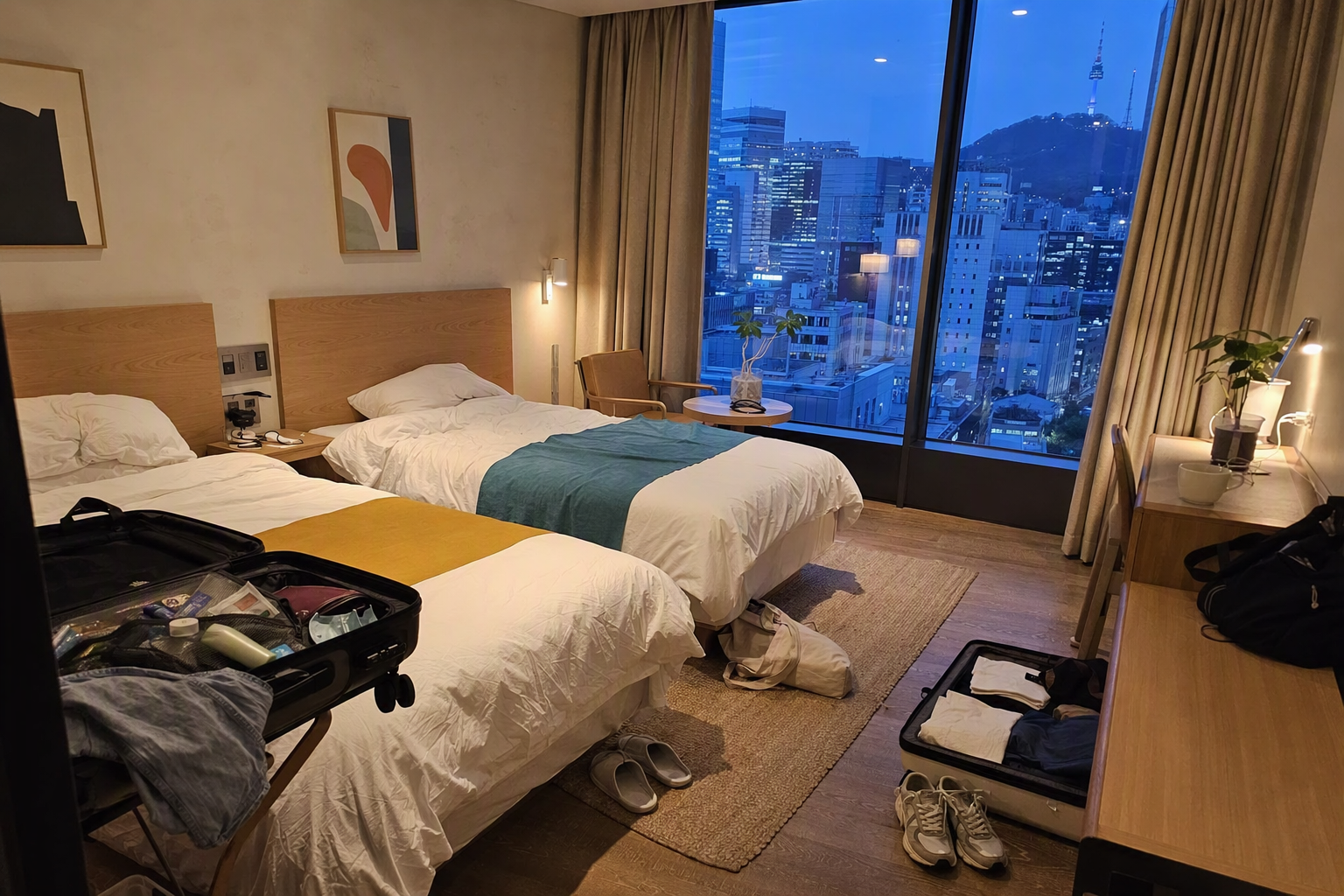
For travelers drawn to traditional streets, ibis Ambassador Seoul Insadong is a strong historic-area base. It has an overall rating around 8.8, a value score around 8.6, and a location score around 9.2, with Insadong around 400 m away and Bukchon around 560 m away. It is less about shopping bags and more about palaces, hanok lanes, galleries, tea houses, and slow walks through old Seoul.
Gangnam: good hotel deals, but only for the right trip
Gangnam is famous, polished, and full of business hotels. It is also easy to book for the wrong reason. Many of Seoul’s classic tourist stops, including Gyeongbokgung, Bukchon, Insadong, Myeongdong, and Hongdae, sit north of the river. From Gangnam, those areas often take around 30–45 minutes by subway. Across a 5-day stay, that can add roughly 5–7.5 hours of extra transit compared with a better-matched Gangbuk or west Seoul base.
That does not make Gangnam a bad choice. It makes it a specific choice. Stay here for COEX, clinics, offices, meetings, south-of-river dining, or a trip centered around Gangnam itself. For a first Seoul sightseeing trip, Hongdae, Mapo, Myeongdong, Chungmuro, or Jongno usually saves more time.

Budget and mid-range names in Gangnam
Toyoko Inn Seoul Gangnam is the practical budget name. Recent rates around US$62–64 make it one of the clearer value options in the district, and breakfast is included from 7:00–9:30, with a simple buffet style that may include items like bulgogi, salad, bread, and fruit. It is around a 7-minute walk from Gangnam Station, with standardized hotel timing around 15:00 check-in and 10:00 check-out.
For budget travelers who do not mind compact rooms and chain-hotel simplicity, Toyoko Inn can make a lot of sense. The early check-out time is worth noting, especially after a late flight or a night out.
Hostel-style options such as YaKorea Gangnam and Hostel KW Gangnam also show why Gangnam can look attractive on price. YaKorea has an overall rating around 8.2, with value and location around 8.6, while Hostel KW sits around 7.7, with value around 8.1 and location around 8.6. These are useful for keeping costs low, but facilities scores in this ultra-budget segment can be weaker, so expectations should be realistic.
Dormy Inn Gangnam is a different kind of value. Rooms are compact at roughly 14–21 m², and its location score around 8.7 is not the absolute closest to a major station. In exchange, guests often value the quieter surroundings, breakfast, and onsen-style bathing facilities. For solo business travelers, that can feel more comfortable than a noisier budget room right beside the busiest strip.
Shilla Stay Yeoksam is more seasonal and price-sensitive. Recent booking references show weeknight averages around US$142 and weekend averages around US$251, with August tending cheaper and May much higher. Tuesday and Wednesday stays are often cheaper, while Friday can be the priciest. Shilla Stay’s own package from KRW 160,600 for selected 2025–2026 dates bundles breakfast for two, Wi-Fi, fitness access, and a small gift, but package availability and cancellation rules should always be checked directly before booking.
Songpa and Jamsil: for Lotte World, Olympic Park, and family days
Songpa is not the classic base for old Seoul sightseeing, but it is convenient when the trip is built around Lotte World, Olympic Park, or southeastern Seoul. Families in particular may find better value by sleeping closer to the day’s main activity instead of commuting across the city with tired kids.
Hotel ParkHabio is one property that stands out in this family-friendly category, with an overall score around 8.2 and a value score around 8.3. Its appeal is not just the room. The property is associated with a large indoor water park and Korean sauna, which can turn a hotel day into part of the itinerary. As always with family facilities, check current opening status, access rules, and any extra fees before counting on them.
Hotel chains worth recognizing around Korea
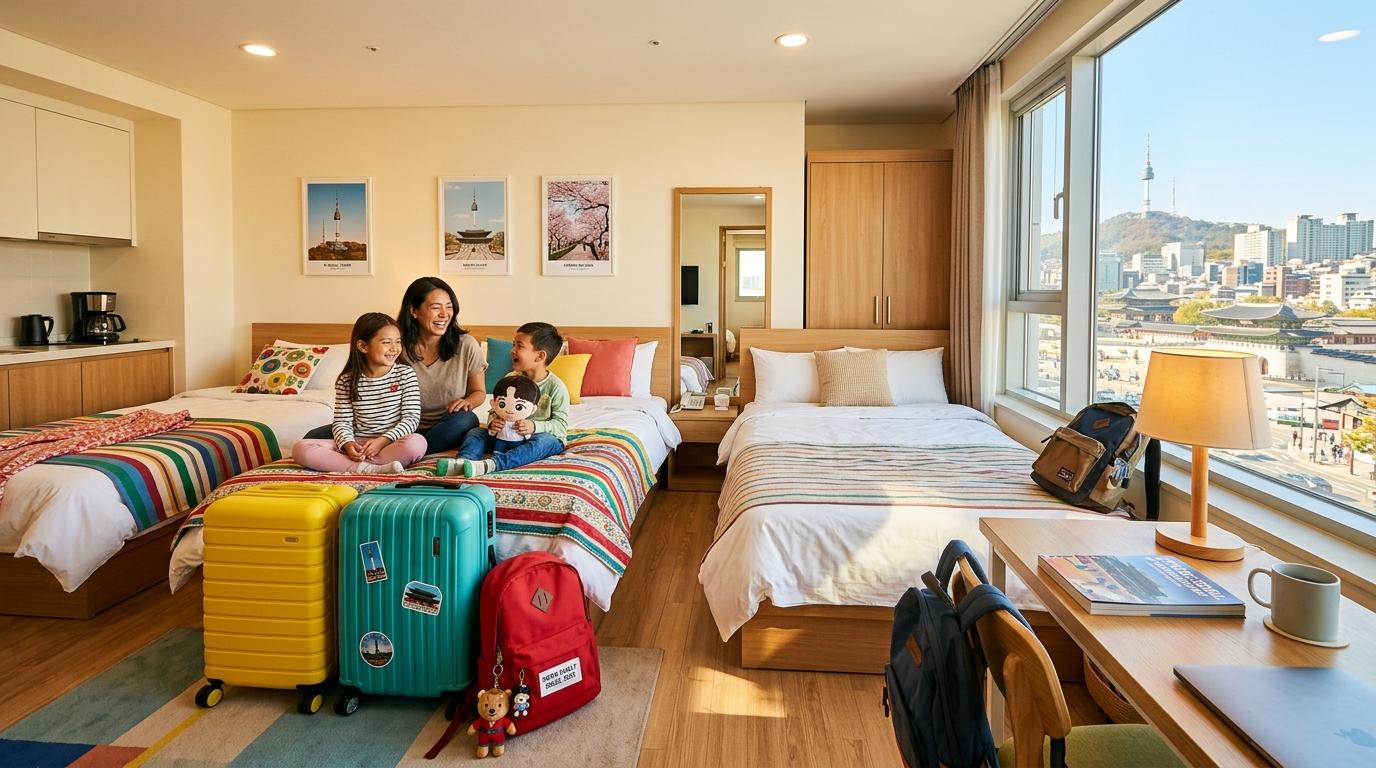
Once the trip moves beyond one Seoul neighborhood, brand recognition becomes helpful. Korea has a large chain-hotel scene, and Seoul alone has hundreds of hotels across dozens of chains. For travelers moving between Seoul, Busan, Gwangmyeong, or other city stops, familiar mid-range names can reduce guesswork.
L7 Hotels by Lotte
L7 is Lotte’s 4-star lifestyle brand, launched in 2016 and aimed at travelers who want a trendier feel than a traditional business hotel. In Korea, L7 operates in locations including Myeongdong, Gangnam, Hongdae, Haeundae, Chungjang, and Gwangmyeong, with additional overseas properties as well.
The brand is usually not the cheapest option, but it can be a good fit for travelers who want design, reliable facilities, and a more youthful mood. L7 Hongdae, for example, has Standard Double pricing that has often appeared around KRW 226,065–290,050, with lower weekday or seasonal dips possible, while breakfast is typically charged separately at around KRW 25,000 per adult for a 7:00–10:00 buffet. That makes it stylish and convenient, but not automatically budget.
Lotte City Hotels and Shilla Stay
Lotte City Hotels and Shilla Stay are two names that appear often in Korea’s mid-range conversation. In Seoul, Shilla Stay is one of the largest chains by room count, while Lotte City Hotels carries a strong average guest rating around 8.6 in chain-level references.
The usual pattern is business-friendly: efficient rooms, predictable service, decent bedding, and good transport locations. They may not feel boutique or deeply local, but they are useful when consistency matters, especially for multi-city itineraries or work trips.
Toyoko Inn and ibis Styles
Toyoko Inn is for travelers who like simple, compact rooms and very clear value. The Seoul Gangnam property illustrates the appeal: modest rates, free breakfast, and predictable rules. Toyoko Inn also has its own paid membership system, which can be useful for repeat stays.
ibis Styles Ambassador properties in Seoul show how the same brand can feel different by location. ibis Styles Myeongdong has compact Standard rooms around 16–17 m² and limited paid parking, while ibis Styles Gangnam is slightly larger at 19–20 m². ibis Styles Yongsan is roomier at around 24–27 m² and offers free on-site parking. Accor’s ALL loyalty program applies, while Ambassador-managed properties may also connect to local Ambassador Club benefits.
The lesson is simple: brand names help, but the neighborhood and room category still decide the real comfort level.
The details that quietly change the total cost
A room rate is never the full story. Seoul hotel value often comes down to the small practical things: breakfast, room size, luggage space, noise, and how many subway rides the location creates.

Breakfast: included or a daily add-on
Breakfast can create a big gap between hotels that look similar at first glance. Toyoko Inn Gangnam includes breakfast in rates around the low US$60s, while L7 Hongdae charges around KRW 25,000 per adult. For two people over four mornings, that difference becomes real money.
Mid-range hotels may have better buffet variety, but travelers who usually grab coffee, kimbap, or bakery items outside may not need to pay for hotel breakfast every day. In Korea, a convenience store breakfast can be perfectly acceptable on early travel days.
Room size: check the square meters, not just photos
Hotel photos can make a 16 m² room look graceful until two open suitcases appear. Some useful comparisons:
- Metro Hotel Myeongdong: Standard Queen around 18 m², Deluxe Queen around 22 m²
- G3 Hotel Chungmuro: Standard Double around 21 m², Twin categories around 22 m²
- Days Hotel Myeongdong: Double around 21 m², Twin around 25 m², Triple or Family around 27 m²
- GLAD Mapo: Standard Double around 26 m², Deluxe categories around 28–28.9 m², GLAD House around 54.8 m²
- ibis Styles Myeongdong: Standard rooms around 16–17 m²
- ibis Styles Yongsan: Superior Double rooms around 24–27 m²
- Hongdae apartment-style stays: often around 32–51 m² for selected family or duplex units
For two travelers with large luggage, a few extra square meters can matter more than a higher star rating.
Noise: map distance is not enough
Myeongdong is busy but some hotels, such as Metro, are praised for staying quiet inside. Hongdae can be lively until early morning, but certain station-adjacent guesthouses still receive good noise comments. G3 Chungmuro has a great location, but soundproofing complaints appear often enough to be worth checking.
Recent reviews are more useful than neighborhood reputation alone. Look for specific mentions of street noise, hallway noise, construction, club noise, and window quality.
Seasonality: the cheapest district changes by month
Seoul prices do not move in one neat pattern. In Gangnam, Shilla Stay Yeoksam has shown lower August pricing and much higher May pricing. In Myeongdong, some midscale hotels show January as low season and December as high season. Weekends are not always more expensive either: ibis Styles Myeongdong has shown higher Sunday–Thursday averages than Friday–Saturday in some recent pricing references, while L7 Myeongdong can be pricier on weekends.
That is why flexible travelers should compare several date combinations before committing. A one-day shift can sometimes move a hotel from overpriced to perfectly reasonable.
Creatrip picks by traveler type
Best first Seoul trip with minimal friction
Stay in Myeongdong, Chungmuro, or Jongno/Insadong. Metro Hotel Myeongdong is strong when walkability matters most. Days Hotel Myeongdong works when central price matters. G3 Chungmuro is practical for subway-heavy sightseeing, while ibis Insadong is better for palace and hanok-focused days.
Best value for airport access and nightlife
Choose Hongdae, especially near Hongik University Station, Yeonnam, Hapjeong, or the Mapo edge. Guesthouses and apartments here can offer the best mix of price, space, and movement. ZZZIP, Jeongstay, Hongdae Guesthouse, and If House-style apartment options are worth comparing when cleanliness and space matter more than the absolute lowest nightly rate.
Best calmer base with modern hotel comfort
Choose Mapo or Gongdeok. GLAD Mapo is the polished option with larger rooms and strong airport/subway access. Roynet Mapo is another useful comparison when prices are favorable. This area is especially nice for repeat visitors who do not need Myeongdong outside the lobby.
Best for Gangnam business or COEX-centered stays
Choose Gangnam, Yeoksam, or nearby business districts. Toyoko Inn Gangnam is the budget-friendly pick, Dormy Inn Gangnam is comfortable for compact business stays, and Shilla Stay Yeoksam works when rates are favorable. Just avoid choosing Gangnam only because the name is famous.
Best for families who need space
Look at Hongdae apartment-style rooms, Jeongstay family rooms, Metro family suites, G3 family twin or quad rooms, and Songpa options when the itinerary includes Lotte World or Olympic Park. Room layout matters more than star rating for families, especially in winter when everyone has bulky coats.
Best chain-hotel comfort across Korea
For multi-city trips, compare L7, Lotte City Hotels, Shilla Stay, Toyoko Inn, and ibis Styles or other Accor/Ambassador properties where available. L7 is more lifestyle-focused, Lotte City and Shilla Stay lean business-friendly, Toyoko Inn is compact and value-driven, and ibis Styles varies a lot by location and room size.
Booking mistakes worth avoiding
- Paying the Myeongdong premium for every night. A split stay can work well: one or two nights in Myeongdong, then a better-value base in Hongdae or Mapo.
- Sorting only by lowest price. In Hongdae especially, the cheapest guesthouse may trail better-rated options by a large margin in cleanliness and comfort.
- Ignoring subway time. A cheap Gangnam room can become less attractive when most sightseeing is 30–45 minutes away.
- Forgetting room size. A 4-star hotel with a 16 m² room may feel less comfortable than a lower-priced apartment-style stay.
- Assuming breakfast is included. Some budget chains include it; many stylish mid-range hotels charge separately.
- Skipping recent noise reviews. Seoul changes quickly, and construction, club noise, or hallway sound can affect even well-located hotels.
- Trusting old prices too much. Hotel rates, package rules, breakfast fees, and cancellation policies change often. Always confirm the latest details on the booking page or hotel website before paying.
Final thoughts: spend where it improves the trip
The best affordable hotel in Seoul is not always the cheapest room. It is the room that saves the right kind of energy. For some travelers, that means Myeongdong convenience and no mental math. For others, it means Hongdae space, Mapo airport access, Insadong mornings, or a simple Gangnam business hotel with breakfast included.
Myeongdong is still the classic. Hongdae and Mapo are the smarter value plays. Chungmuro and Insadong are quietly practical. Gangnam is excellent when the trip truly belongs there. Across Korea, recognizable chains like L7, Lotte City, Shilla Stay, Toyoko Inn, and ibis Styles can make booking feel less risky, but the exact neighborhood and room size still deserve the final vote.
A good Seoul hotel should make the city feel closer, not just cheaper. That is the sweet spot worth booking.