
How to Get from Incheon Airport to Seoul in 2026
AREX train, airport bus, taxi, or private transfer — the best choice depends on your arrival time, luggage, and Seoul neighborhood.

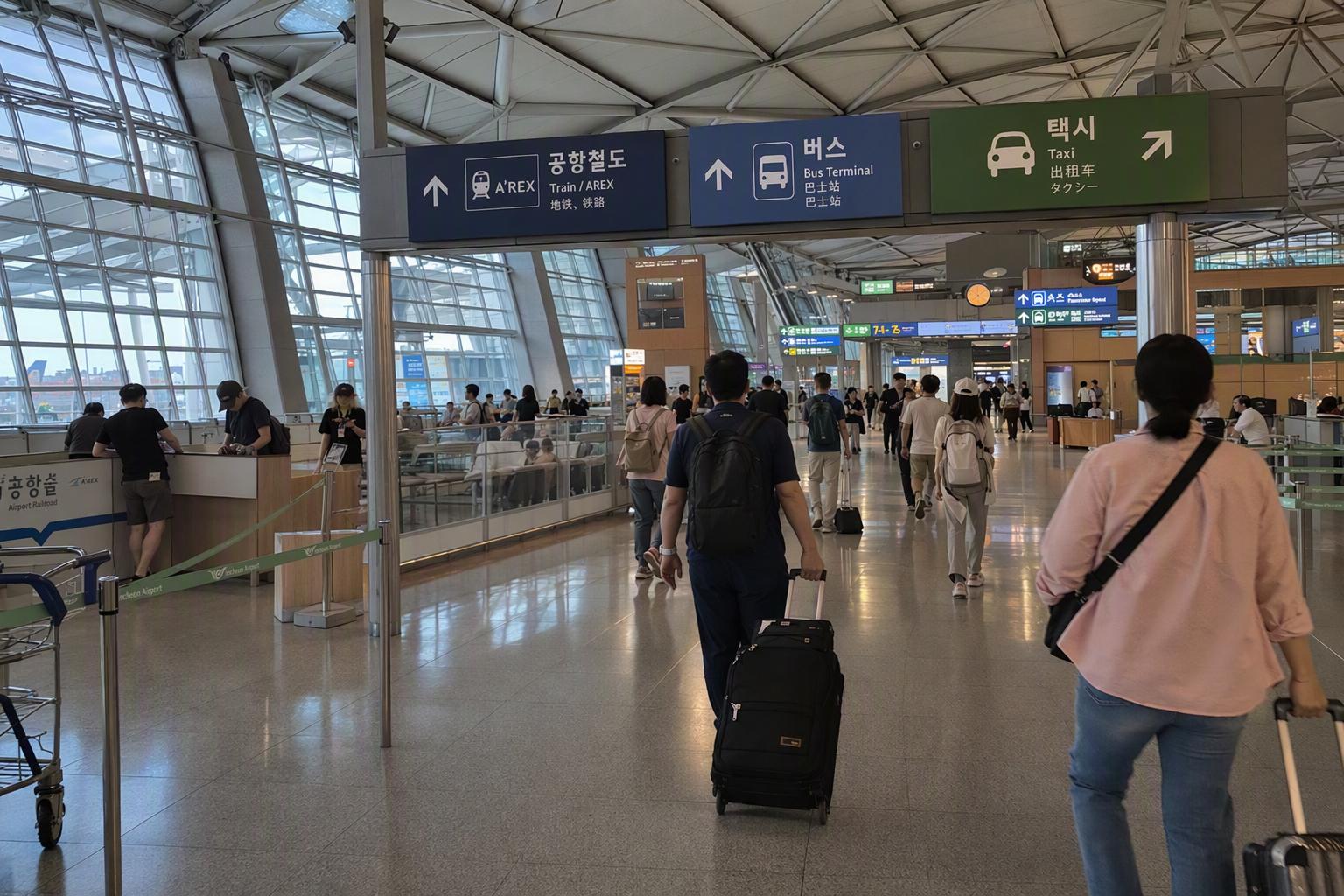
Seoul starts a little before you reach it. After the long walk from the arrival gate, the SIM card counter, the first convenience store coffee, and the luggage carousel, there is still one more choice to make: train, bus, taxi, or transfer.
Incheon Airport sits west of Seoul, roughly 50 km from the city center, so the ride is not a quick hop. The best option is less about which one is famous and more about where your hotel is, how much luggage you have, and whether your flight lands at 15:00 or 01:00.
At Creatrip, we usually think of the airport transfer as the first real itinerary decision of a Korea trip. A smooth one makes the whole arrival day feel easier.
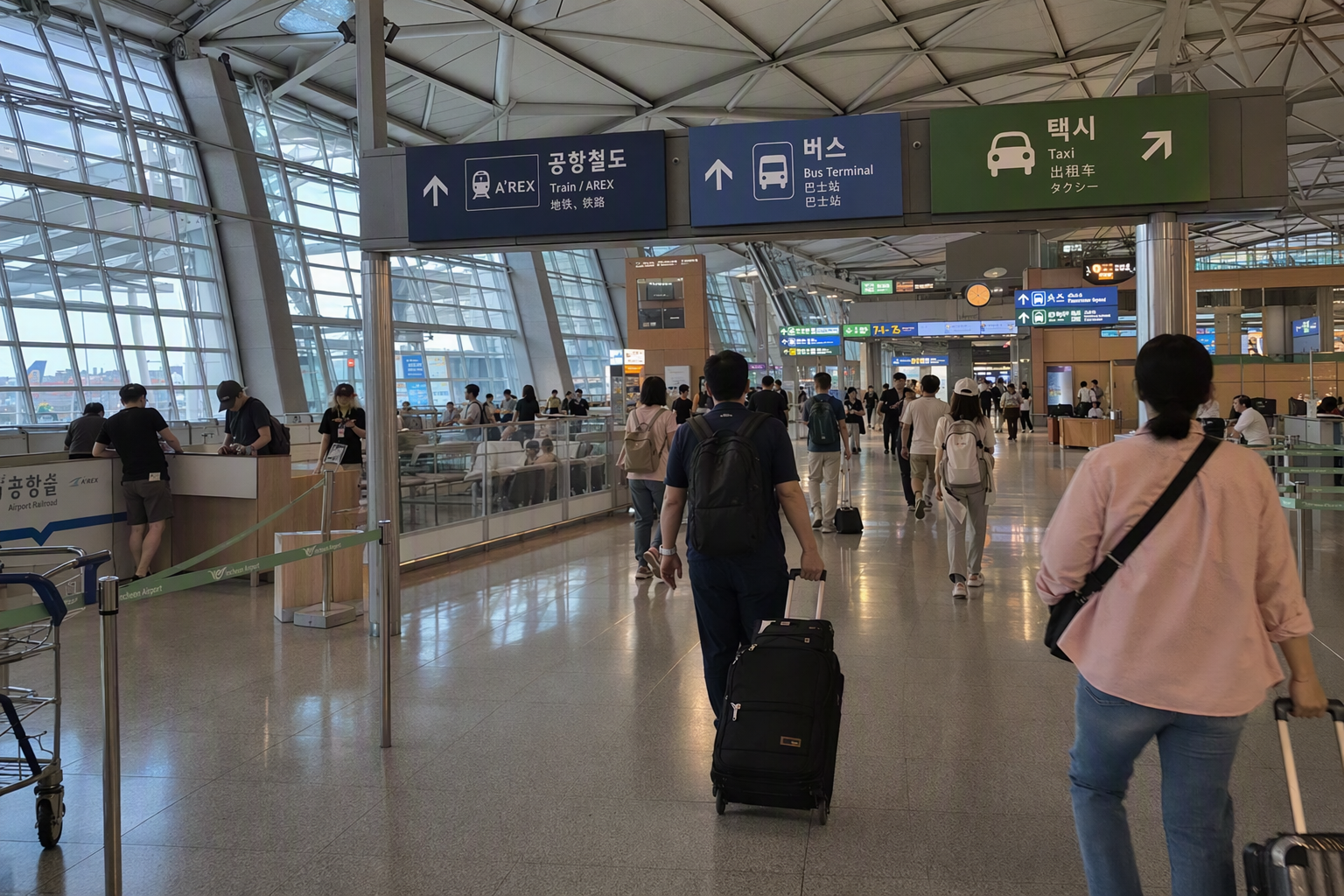
The short version: choose by your first stop in Seoul
| Best for | Option | Typical time to Seoul | Typical fare | Creatrip take |
|---|---|---|---|---|
| Fastest public transport to Seoul Station | AREX Express | 43 min from T1, 51 min from T2 | Around ₩13,000 adult one-way, online discounts often lower | Clean, fast, reserved seat. Best if Seoul Station works for your route. |
| Cheapest public transport | AREX All-Stop | About 59–66 min | Roughly ₩4,000–₩5,500 with T-money or IC card | Great for Hongdae, Digital Media City, Gimpo, and budget travelers. |
| Easiest for hotel districts | Airport limousine bus | Usually 60–90+ min | Mostly ₩17,000, some ₩16,000–₩18,000 | Best balance for luggage and direct access to Myeongdong, Dongdaemun, Gangnam, Jongno, City Hall, and more. |
| Late-night arrivals, families, groups | Taxi or private transfer | Often 60–90+ min depending on traffic | Standard taxi often ₩60,000–₩100,000+, private transfer about ₩90,000–₩160,000+ | More expensive, but door-to-door can be worth it after midnight or with heavy luggage. |
Prices and schedules in Korea can change quietly, especially airport buses, so treat these as realistic 2026 ranges and check the latest official airport, AREX, or bus operator page before travel day.
AREX Express: the fastest clean line into Seoul
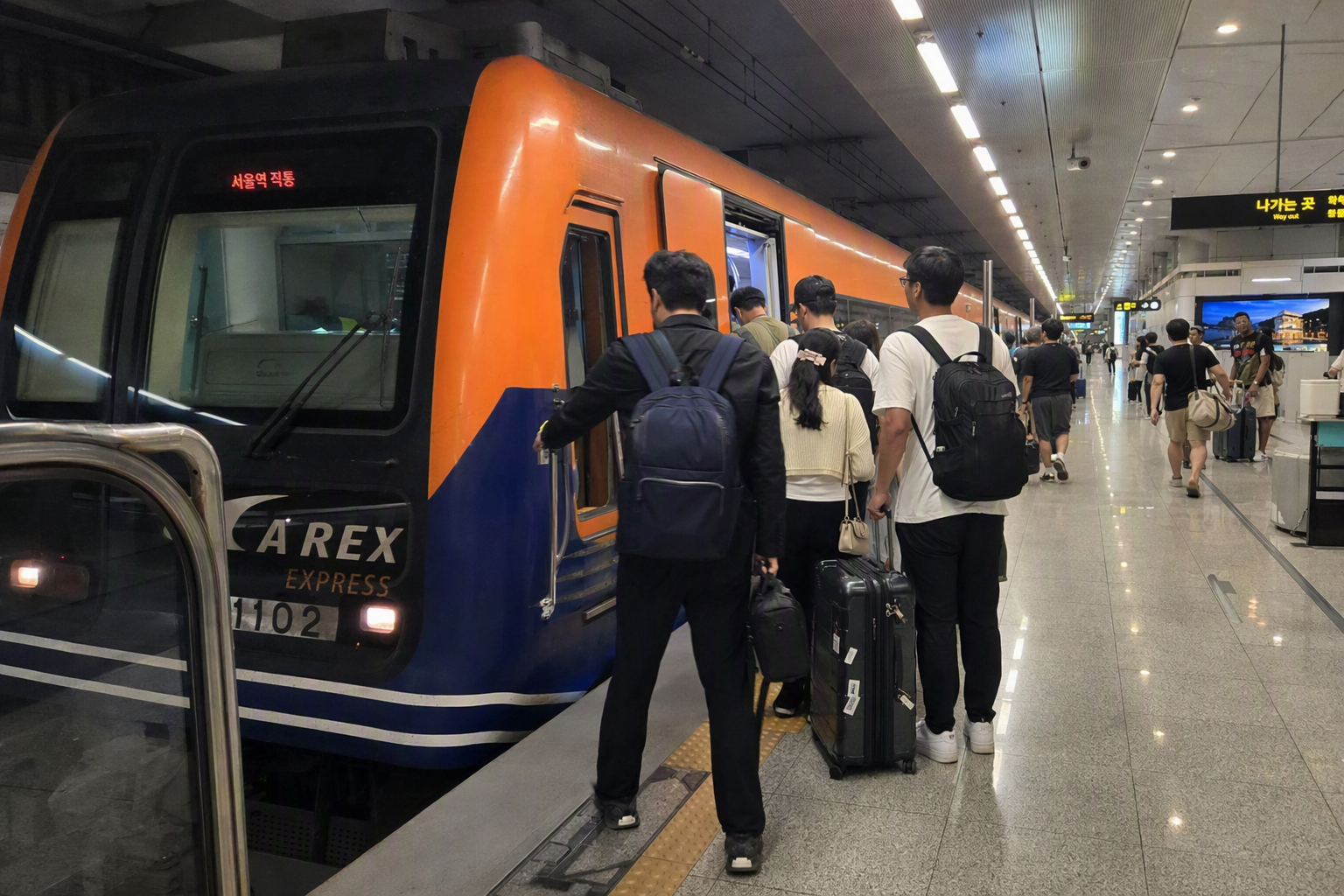
The AREX Express is the non-stop airport railroad between Incheon Airport and Seoul Station. It is still the fastest standard public option from ICN to central Seoul: 43 minutes from Terminal 1 and 51 minutes from Terminal 2.
The ride itself is tidy and calm. Express trains have reserved seats, luggage racks, free Wi-Fi, power or USB outlets, and onboard toilets. If you are landing after a long-haul flight and want one predictable ride without traffic, this is the neatest version of arriving in Seoul.
Where to find it at the airport
AREX stations are on B1 at both Terminal 1 and Terminal 2. The airport railroad area is split by service type:
- AREX Express: orange gates and separate ticketing
- AREX All-Stop: blue gates and regular transit-style entry
That color difference matters. The Express and All-Stop trains use different ticketing systems, and the wrong gate can turn a simple arrival into a small airport maze.
Fare and operating hours
For 2026, the adult one-way Express fare most travelers will see is around ₩13,000, with children around ₩9,500. Online travel platforms often sell discounted tickets, commonly around ₩11,400–₩11,500, and occasional promotions may be lower.
You may still see older references quoting ₩9,500–₩11,000. Use the fare shown on the official AREX site, airport kiosks, or your booking platform at the time of purchase.
Trains generally run from early morning to late evening, roughly around 05:15–22:40 from Terminal 2 and 05:23–22:48 from Terminal 1, with headways of about 20–40 minutes. Late-night arrivals usually need a bus, taxi, or private transfer instead.
The small ticket detail people get wrong
Online AREX Express tickets are convenient, but the voucher itself is not the boarding ticket. Most platforms issue a QR voucher and a 13-digit code. That code needs to be redeemed on the AREX website or at an orange AREX ticket kiosk for a specific departure time and seat.
A few practical notes make this easier:
- T-money does not work on AREX Express.
- Climate Card is not valid on AREX.
- The online voucher cannot simply be scanned at the Express gate.
- Express tickets are tied to a departure time and seat.
- Missed-train changes can involve fees, and tickets may become non-refundable once the train reaches its destination.
If immigration and baggage claim are unpredictable, it can be nicer to redeem after you actually reach the station rather than locking in an overly tight train time before landing.
Who AREX Express is best for
AREX Express is a great fit when your first destination is Seoul Station, a nearby hotel, or a KTX connection. It also works well for Myeongdong or City Hall if you are happy to transfer by subway or take a short taxi from Seoul Station.
It is less elegant if your hotel is deep in Gangnam, Jamsil, or a narrow street far from a subway exit. The train may win on speed to Seoul Station, then lose some of that advantage during the final transfer with suitcases.
AREX All-Stop: slower, cheaper, and surprisingly useful
The AREX All-Stop train is the regular airport railroad service. It stops at around 13–14 stations, including Hongik Univ., Digital Media City, and Gimpo Airport, before reaching Seoul Station.
Travel time is about 59–66 minutes, depending on terminal and destination. From Incheon Airport to Seoul, fares are distance-based and usually land around ₩4,000–₩5,500 when paid by T-money or another compatible IC transit card. From Terminal 2, expect the fare to be a little higher than from Terminal 1.

This is the best-value ride from the airport, and it is especially good for Hongdae and Yeonnam-dong. If you are staying near Hongik Univ. Station, the All-Stop train saves you from going all the way to Seoul Station just to backtrack.
It also makes sense for travelers connecting through Gimpo Airport or staying around Digital Media City. The trade-off is comfort: no reserved seat, more stops, and more everyday commuters. With one suitcase, it is usually fine. With two large bags at rush hour, the limousine bus starts looking much more attractive.
Airport limousine buses: the soft landing for hotel districts
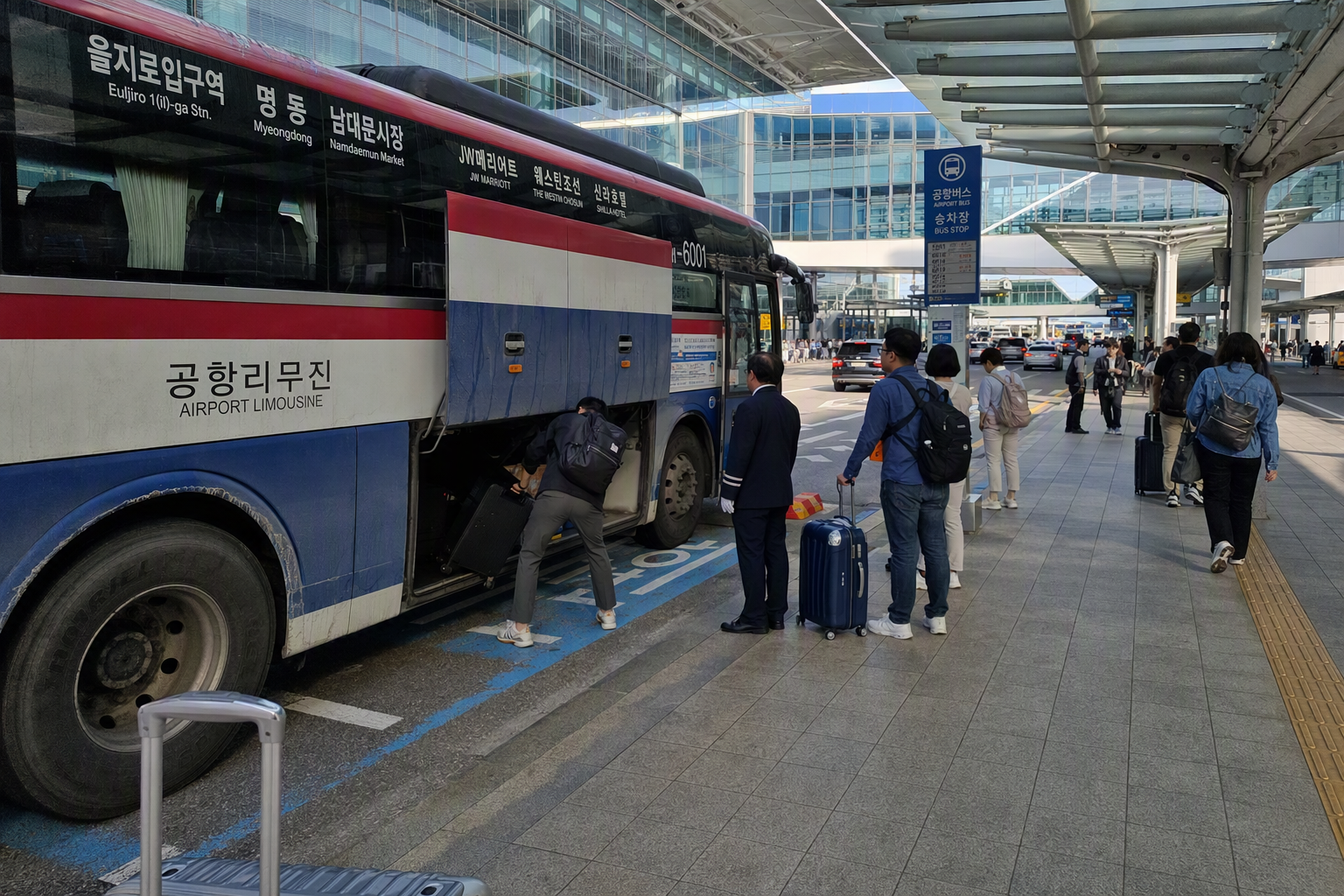
Airport buses are slower than the Express train on paper, but they often feel easier because they bring you closer to where travelers actually stay. Myeongdong, Dongdaemun, Jongno, City Hall, Hongdae, Gangnam, COEX, Jamsil, and other hotel districts are covered by a mix of standard airport limousine routes and premium K-Limousine routes.
Instead of dragging luggage through Seoul Station transfers, you sit down, stow your suitcase under the bus, and get off near a major hotel area or subway station. On a first arrival day, that comfort has real value.
Main routes travelers often use
Routes change over time, but these are the kinds of buses international visitors commonly look at:
- 6015: Myeongdong area
- 6001: Dongdaemun, central Seoul, and major hotel zones
- 6002: Cheongnyangni, Jongno, and Hongdae direction
- 6009 / 6020: Gangnam, COEX, and southern Seoul areas
- 6701: City Hall, central hotel districts, and premium K-Limousine service
- 6703: Gangnam and eastern/southern hotel areas on K-Limousine service
- 6030 and other routes: useful depending on exact hotel location
The route number matters less than the actual stop nearest your accommodation. Some buses pass through the same district but stop on different main roads, and a 12-minute walk with luggage can feel very different from a 2-minute walk.
Fare, timing, and comfort
As of 2026, standard airport limousine buses are generally ₩16,000–₩17,000 for adults, with many key routes at ₩17,000. Premium K-Limousine routes and some night routes are usually around ₩18,000. Children aged 6–12 are often around ₩12,000, depending on route and operator.
Travel time is usually 60–90 minutes, but traffic can push that longer, especially into Gangnam or during Seoul commute hours. Main daytime routes often run from around early morning to late evening, with intervals that can be as short as 10–35 minutes on popular routes, but quieter routes may be less frequent.
Boarding from Terminal 1 and Terminal 2
From Terminal 1, airport buses board outside on the 1F arrivals level, commonly around exits 3–7 and 10–13, depending on route.
From Terminal 2, buses board from the B1 Transportation Center.
The airport signs are clear, but it is still worth checking the bay number on the airport website, operator site, or airport screens on the day you arrive. Recent years brought several route and schedule changes, including night-bus adjustments, so older blog screenshots can be unreliable.
Ticketing is stricter from the airport
This is one of the biggest airport bus differences foreign travelers miss.
For Incheon Airport → Seoul, buses generally operate on a ticket-first, no-standing system. Buy a ticket at the airport counter or kiosk before boarding. Airport kiosks and counters are commonly credit-card based, and tapping T-money at the bus door from the airport is generally not the system to rely on.
For Seoul → Incheon Airport, many standard airport bus routes allow T-money tap-on at city stops. Some routes also offer a family-of-three discount on the Seoul-to-airport direction only, where one fare may be free on specified lines such as 6001–6019, 6030, and certain night buses. Check the current operator notice if that discount affects your budget.
And one more Seoul pass detail: Climate Card does not cover airport limousine buses.
Luggage rules
Airport buses are the most luggage-friendly public option, but not unlimited.
A common allowance is two suitcases per passenger, each up to about 28 inches and 20 kg, or a total of two pieces within the operator limit. Extra or oversized luggage can cost around 50% of the bus fare, often about ₩8,000 per extra item.
Golf bags, large boxes, oversized migration bags, and bulky sports gear are where rules can vary. For those, check with the bus operator before travel day rather than gambling at the curb.
Late-night arrivals: when the tidy options get thinner
After around 23:00, the airport transfer mood changes. AREX Express stops before midnight, daytime airport buses wind down, and the choice usually narrows to night bus, taxi, or private transfer.
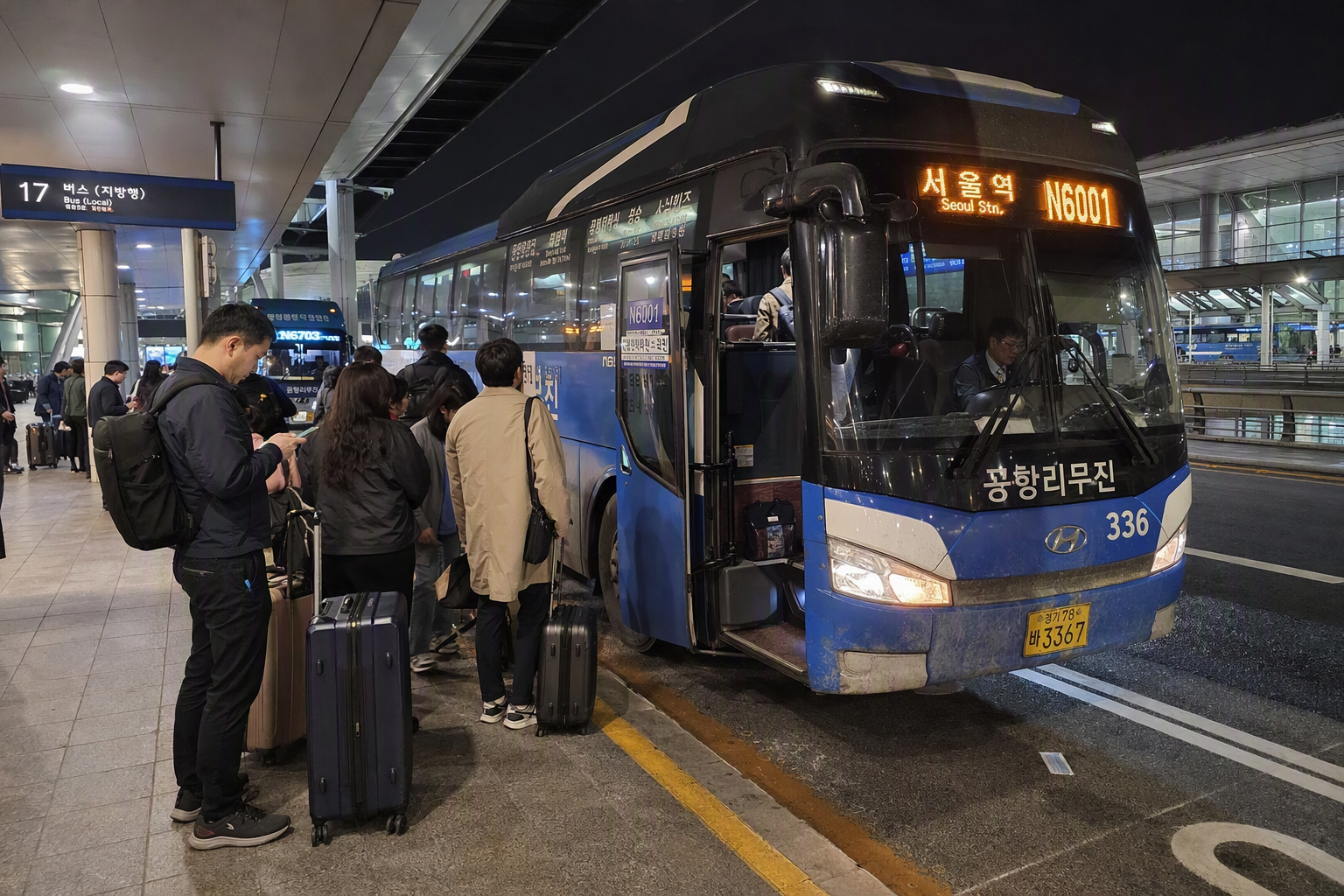
Incheon Airport has Seoul-bound night buses on several key routes, including:
- N6000: toward Gangnam Express Bus Terminal
- N6002: toward Cheongnyangni
- N6701: toward Dongdaemun Design Plaza
- N6703: toward Gwangnaru and eastern Seoul areas
Typical adult fares are around ₩17,000–₩18,000, though some official notices may show segment-based pricing for certain night services, so verify the exact fare for your route. Departures are generally spread from around 23:00 to 04:50, with route-dependent gaps that can be wide, sometimes 40–130 minutes. End-to-end rides usually take about 70–105 minutes.
The night bus is a good choice when your hotel is near a stop and you are comfortable waiting. If your flight lands at 01:10 and the next bus is not for another hour, a taxi or pre-booked transfer may feel much more reasonable.
Night bus bays also differ by terminal and route family. At Terminal 1, for example, some N6000-family services use the 1F bus stop area around 6A, while K-Limousine night buses such as N6701 and N6703 use a different stop area. At Terminal 2, night buses use numbered bays in the B1 Transportation Center. The airport route page and live terminal screens are the safest reference on the night itself.
Taxis and private transfers: expensive, simple, and sometimes the smartest choice
A taxi from Incheon Airport to Seoul is not cheap, but it solves three problems at once: late arrival, heavy luggage, and hotel-door access.
For a standard taxi to central Seoul, a realistic 2026 estimate is often ₩60,000–₩100,000+, depending on destination, traffic, taxi type, and time of day. Typical examples including tolls may land around ₩55,000–₩70,000 to Hongdae, ₩60,000–₩75,000 to City Hall, and ₩65,000–₩85,000 to Gangnam. The expressway toll is usually around ₩7,900–₩8,000 on top of the metered fare or included in the final total, depending on how the fare is presented.
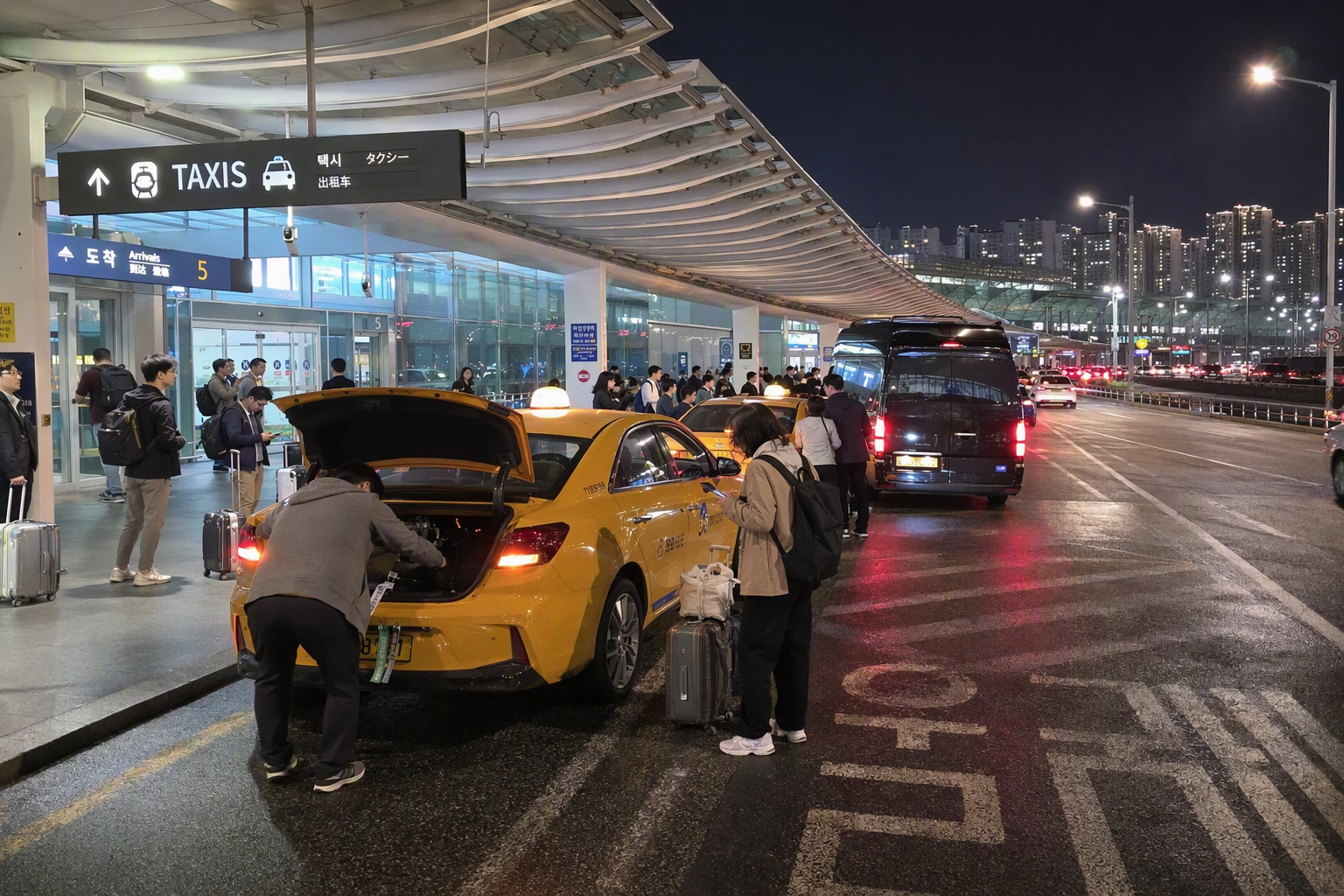
Late-night surcharges apply between 22:00 and 04:00, and can range roughly 20–40% by time and region. The most expensive window is often around the deep-night hours, so a taxi that feels borderline during the day can jump noticeably after midnight.
Deluxe, jumbo, and international taxis cost more. International taxis usually charge around 20% above regular taxis, but offer fixed fares and language support in English, Japanese, or Chinese. For travelers who are nervous about communication or arriving very late, that premium can feel less painful than expected.
Private transfers and jumbo taxis often run around ₩90,000–₩160,000+ depending on vehicle size and destination. For one solo traveler, that is a splurge. For 3–7 people, especially with children or large luggage, the math changes. Four airport bus tickets at ₩17,000 already total ₩68,000 before the final walk or taxi from the bus stop to the hotel.
Our take: for one or two light packers arriving during the day, public transport is usually better. For a family landing after midnight, a group staying in Gangnam, or anyone carrying too much luggage for subway transfers, a private ride can be the least stressful start.
Use official airport taxi stands or pre-booked transfer meeting points. Skip unsolicited ride offers inside the terminal.
Luggage delivery and lockers: a small trick for awkward arrival days
Seoul has a luggage service called T-Luggage that can move bags between Incheon Airport and selected city locations such as Seoul Station, Hongik Univ., Myeongdong, Gimpo Airport, Gangnam, and Jamsil. It usually operates around 09:00–21:00.

For airport-related delivery, prices vary by size and route. A common Incheon Airport–Hongdae–airport price range is around ₩18,000 for small or medium luggage, ₩23,000 for large, and ₩28,000 for extra-large. Other city logistics routes may be priced differently.
This can be handy when your hotel check-in is late but you want to go straight into the city, or when the cheapest train route makes sense for your body but not for your suitcase. It is not a fix for every situation, especially after 21:00, but it is worth knowing.
Seoul Metro also has T-Locker unmanned lockers at hundreds of stations across Lines 1–9. Availability and size can vary, so it is better as a flexible backup than a guaranteed plan for oversized bags.
The best option by Seoul neighborhood
Seoul is big enough that airport advice only works when it respects geography. A fast train to Seoul Station is perfect for some travelers and oddly inconvenient for others.

Seoul Station, Namdaemun, KTX connections
Pick AREX Express if speed matters. Seoul Station is the Express train endpoint, so this is the cleanest public transfer. If your hotel is nearby, you can walk or take a short taxi. If you are catching a KTX, leave enough buffer for airport delays, ticket exchange, and station navigation.
Myeongdong, Euljiro, City Hall
Both AREX Express plus a short transfer and airport limousine bus work well. The bus is nicer with luggage if it stops near your hotel. The train is better when traffic is heavy or you are comfortable transferring at Seoul Station.
For many first-time visitors staying in Myeongdong, we like the bus when the hotel is close to a stop and the flight lands during regular bus hours.
Hongdae, Yeonnam, Digital Media City
The AREX All-Stop is often the smartest choice. It stops at Hongik Univ. and Digital Media City directly, which saves backtracking from Seoul Station. If your accommodation is far from the station exit or you have large luggage, compare it with a route like 6002 or a taxi for the final stretch.
Dongdaemun
Airport buses are strong here, especially routes serving Dongdaemun hotel areas and DDP. Late at night, N6701 toward Dongdaemun Design Plaza can be useful if the timing lines up. AREX Express can still work, but you will need another subway or taxi ride from Seoul Station.
Gangnam, COEX, Jamsil
This is where the fastest train is not always the fastest door-to-door option. AREX Express gets you to Seoul Station quickly, but Gangnam and Jamsil are across the river and require a longer onward trip.
For daytime arrivals, look closely at airport bus routes such as 6009, 6020, or K-Limousine services depending on your exact stop. For late-night arrivals, groups, or hotels not close to a bus stop, taxis and private transfers become more appealing.
Jongno and Cheongnyangni
Airport buses such as 6002 can be very useful for Jongno and Cheongnyangni-side stays. AREX plus subway is possible, but the bus may reduce station transfers with luggage.
Terminal details that matter more than they sound
Incheon has two passenger terminals, and your terminal affects both travel time and boarding location.
- AREX Express takes 43 minutes from T1 and 51 minutes from T2 to Seoul Station.
- The All-Stop train also takes longer from T2 than T1.
- Airport buses serve both terminals, but bay numbers differ.
- Inter-terminal rail transfer takes about 6 minutes and costs around ₩1,050.
Airline terminal information can change. One important 2026 note: Asiana Airlines moved to Terminal 2 on January 14, 2026, which makes older Terminal 1 airline lists easy to misread. Always confirm your airline terminal through Incheon Airport or your airline before departure.

Common airport-transfer mistakes to avoid
A little airport transfer friction is normal. These are the ones that create unnecessary stress.
Trying to use a Climate Card for the airport ride
Climate Card is not valid on AREX or airport limousine buses. Keep T-money or a separate ticket plan ready.
Buying an AREX Express voucher and walking straight to the gate
Online vouchers usually need to be redeemed for a timed seat ticket first. The orange Express kiosks are your friend.
Choosing AREX Express when your hotel is nowhere near Seoul Station
The train is fast, but the final subway or taxi transfer still counts. For Gangnam, Jamsil, or hotel streets far from subway exits, compare door-to-door time.
Assuming airport buses accept tap-on boarding from ICN
From Incheon Airport to Seoul, buy a ticket first. Seat-managed boarding and no standing are the norm.
Ignoring luggage limits on buses
Two normal suitcases are usually fine. Extra-large bags, boxes, golf clubs, and multiple heavy suitcases deserve a quick operator check.
Cutting the AREX Express timing too close after landing
Immigration, baggage claim, and the walk to B1 can vary a lot. A slightly later reserved train is often calmer than sprinting through the terminal.
Trusting old bus route screenshots
Airport bus routes and night services have changed in recent years. Check the airport page, operator website, KakaoMap, Naver Map, or terminal screens close to your travel date.
Our Creatrip pick for most travelers
For a simple first arrival, we would choose like this:
- Solo traveler, light luggage, Seoul Station or KTX: AREX Express
- Budget traveler or Hongdae stay: AREX All-Stop
- Myeongdong, Dongdaemun, Jongno, City Hall hotel with luggage: airport limousine bus
- Gangnam, COEX, Jamsil: airport bus by day, taxi or transfer by night or group
- Arrival after midnight: night bus only if the stop and timing fit; otherwise taxi or private transfer
- Family or group of 3–7: compare private transfer against total bus fares and the final walk to your hotel
The best airport transfer is not always the cheapest or the fastest on paper. It is the one that leaves you with enough energy to enjoy your first meal in Seoul — whether that is a quiet bowl of kalguksu near the hotel, convenience store snacks in pajamas, or a late-night taxi ride through the glowing Han River bridges.