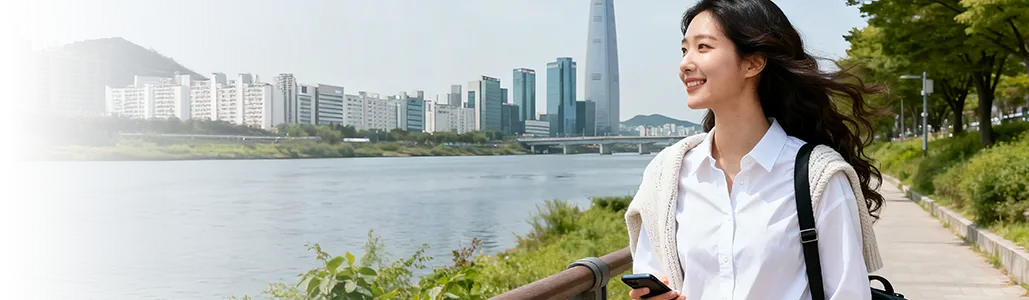
What South Korea Is Famous For: Places, Food, Culture, and Trip Ideas
A Creatrip-style look at Korea’s classic sights, UNESCO heritage, K-culture moments, coastal cities, and the routes that make sense for international travelers.

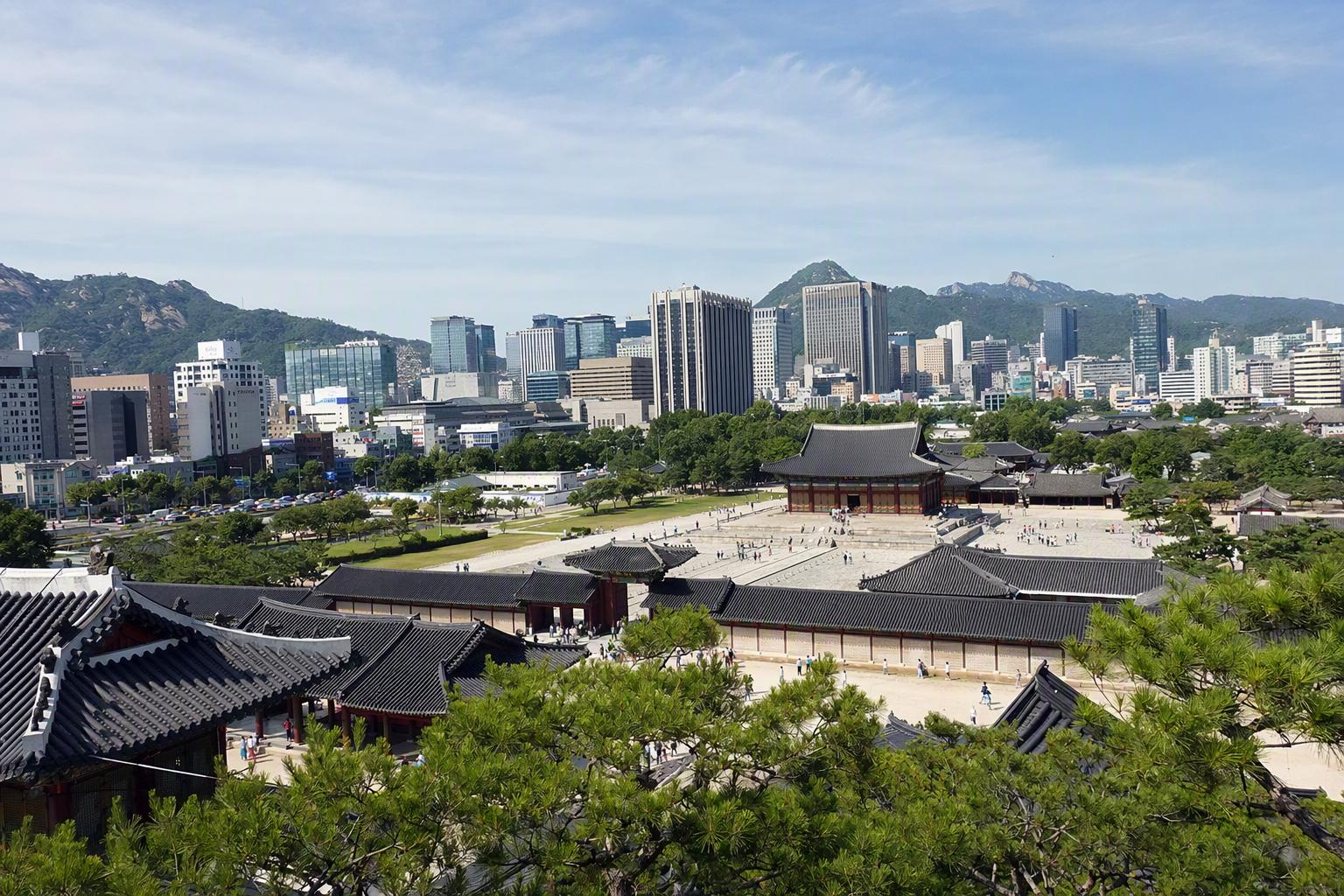
South Korea is one of those places where the famous things are not all in one category. A first trip can move from a 600-year-old palace gate to a K-pop-inspired photo booth, from a seaside Buddhist temple to a lava tube, from royal tombs in Gyeongju to fried chicken and ramyeon after dark. That mix is exactly why Korea keeps pulling travelers back.
For international visitors, the trick is not trying to see every famous spot in one sweep. Korea is compact and well connected, but the best trips still have rhythm: a few days in Seoul, a heritage pause in Gyeongju, sea air in Busan, and—if time allows—Jeju’s volcanic landscapes. Add food, beauty shopping, and a DMZ tour around the edges, and Korea starts to feel less like a checklist and more like a country with many different moods.
So, what is South Korea famous for?
Korea is globally known for K-pop, K-dramas, Korean food, skincare, fast city life, royal palaces, Buddhist temples, volcanic Jeju Island, mountain and coastal scenery, and deeply preserved heritage sites. The Korean Wave has made the country feel familiar before many travelers even arrive—through BTS, Blackpink, Squid Game, Crash Landing on You, Parasite, webtoons, beauty products, and Korean restaurants abroad.
But the real charm of traveling here is how quickly those global images turn into actual places. Seoul gives you palaces, shopping streets, hanok villages, nightlife, and trend-led neighborhoods in one metro map. Gyeongju slows everything down with Silla-era tombs and UNESCO temples. Busan opens the trip toward beaches, cliffs, fish markets, and sea-view temples. Jeju feels like a different chapter altogether, shaped by lava, wind, stone walls, and long walking trails.
Korea is also very practical for travelers. KTX high-speed trains make the Seoul–Gyeongju–Busan route smooth, city transport is affordable, and many of the country’s most famous sights are either free or low-cost. The trade-off is popularity: peak cherry blossom and autumn foliage seasons can be busy, and places like Jeju and palace districts need a little more timing than they used to.
Seoul: palaces, hanok streets, towers, and the start of most Korea trips
Seoul is usually the first answer to “what is South Korea famous for,” and for good reason. It is the country’s capital, the center of K-culture travel, and home to several of Korea’s best-known historic landmarks.
Gyeongbokgung Palace: Korea’s classic royal palace moment
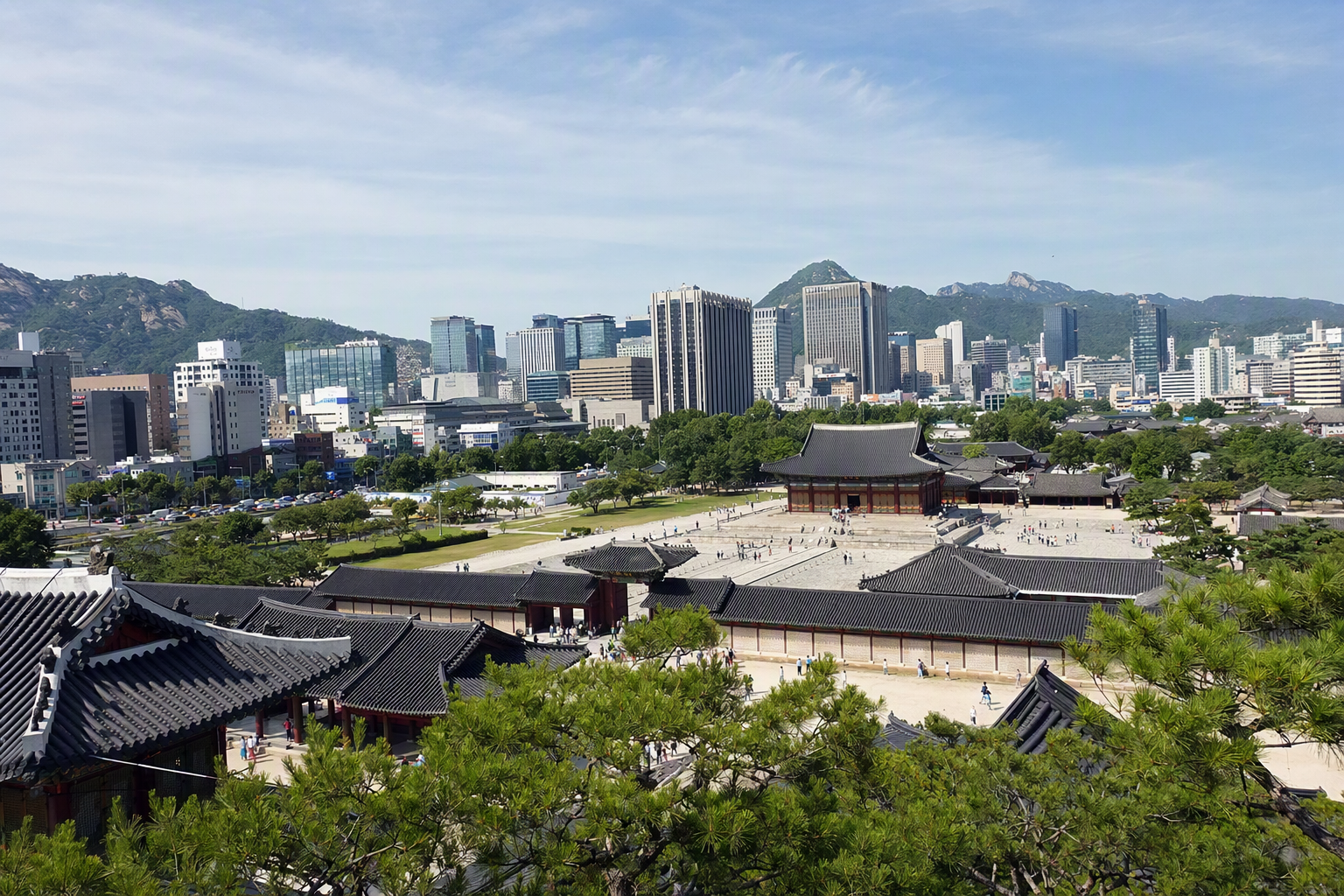
Gyeongbokgung Palace is the most iconic of Seoul’s Joseon royal palaces. Built in 1395, it was the first and largest royal palace of the Joseon Dynasty, and it still carries that grand, ceremonial feeling—wide courtyards, painted wooden halls, mountain views, and palace guards moving through the gates.
Standard adult admission for foreign visitors is commonly listed at KRW 3,000, and entry is free for visitors wearing a complete hanbok. English guided tours are usually offered several times a day, and the palace is typically closed on Tuesdays, but palace schedules can shift around holidays and seasons, so it is worth checking the official palace website before going.

Gyeongbokgung is especially lovely during cherry blossom season in late March to early April and autumn foliage in October to November. The palace is famous enough that crowds are part of the experience, but mornings tend to feel cleaner and less rushed. If photos matter, give yourself time rather than squeezing it between café stops.
Changdeokgung Palace and Huwon: the softer, greener palace choice
If Gyeongbokgung is Seoul’s grand royal face, Changdeokgung Palace is the palace with depth and quiet elegance. Built in 1405 and listed as a UNESCO World Heritage Site, it served as the main royal residence for around 270 years after its reconstruction in 1610.
The palace’s Huwon, often called the Secret Garden, takes up about 60% of the site and is one of the most atmospheric historic gardens in Korea. It requires a separate guided tour and separate ticket; adult Huwon admission is commonly listed at KRW 5,000, in addition to the palace ticket. Tours are capped by language session, with a mix of online and on-site availability, so spontaneous visits do not always work out.

For travelers choosing between the two palaces, Gyeongbokgung is the stronger first-time landmark. Changdeokgung is better for travelers who like gardens, architecture, and a slower pace. Visiting both in one day is possible, but it can make palace architecture blur together; pairing one palace with Bukchon or Insa-dong usually feels better.
Bukchon, Insa-dong, Namsan Seoul Tower, and the city icons
Seoul’s famous spots are not only palaces. Bukchon Hanok Village, Insa-dong, and Namsan Seoul Tower regularly appear in traveler searches and official tourism rankings. Bukchon is known for traditional hanok houses set on hilly lanes between palace districts. Insa-dong is tied to crafts, galleries, tea culture, and souvenir browsing. Namsan Seoul Tower gives the city its postcard skyline moment.
These areas are close enough to combine without making the day feel overplanned. A classic Seoul day might look like palace in the morning, Bukchon or Insa-dong in the afternoon, and Namsan after sunset. The common mistake is adding too many neighborhoods after that. Seoul looks compact on a map, but moving between palace districts, riverside areas, shopping streets, and nightlife zones still eats into the day.

K-culture: why Seoul feels familiar before you arrive
The Korean Wave, or hallyu, has turned Korea into a screen-to-reality destination. K-pop has been the top association with Korea in global hallyu surveys for years, and K-dramas, film, webtoons, beauty, fashion, and food all feed into the way travelers choose what to see and buy.
That does not mean every trip has to chase filming locations. For many visitors, K-culture travel is woven into normal city life: browsing beauty stores, taking instant photo booth pictures, singing karaoke, visiting cafés in trend-led neighborhoods, or walking through places they first saw in a drama. Seoul still dominates this side of travel, but interest is spreading to regional cities, including Busan, Jeju, Pohang, and other places linked with shows, music events, or lifestyle content.

A good way to approach K-culture travel is to mix one or two fandom-related stops with the classic city. A day that includes a palace, a beauty-shopping run, a café neighborhood, and Korean barbecue usually feels more Seoul than a day spent chasing scattered addresses across the city.
Korean food: kimchi, barbecue, fried chicken, ramyeon, and banchan culture
Korean food is one of the country’s strongest global signatures. Kimchi alone has hundreds of documented varieties, and the communal making of kimchi, known as kimjang, is recognized by UNESCO as intangible cultural heritage. But meals in Korea are rarely about one dish by itself. The heart of everyday Korean dining is the table: rice, soup or stew, grilled meat or fish, and small side dishes called banchan.
For travelers, the famous food list usually starts with Korean BBQ, Korean fried chicken, ramyeon, kimchi jjigae, bibimbap, street snacks, and café desserts. Korea’s fried chicken culture is especially serious—there were tens of thousands of fried-chicken outlets nationwide as of 2019—and ramyeon brands like Shin Ramyun and spicy Buldak noodles have become international pantry staples.

Food is also one of the easiest ways to keep a multi-city trip affordable. Local meals and public transport tend to be less painful on the budget than intercity trains, flights, or guided tours. A mid-range traveler often spends roughly USD 100–150 per day overall, depending heavily on hotels, KTX legs, Jeju flights, and tours.
The most satisfying food strategy is simple: eat regional when you can. Seoul is great for variety and trends. Gyeongju pairs well with slow café streets like Hwangridan-gil after temple or tomb visits. Busan is naturally strong for seafood and coastal dining moods. Jeju has its own island food culture, though the specific restaurant choices deserve more care than a rushed last-minute search.
Beauty and lifestyle travel: Korea beyond sightseeing
Korea is famous for K-beauty, but beauty travel has grown beyond buying sheet masks. Foreign spending patterns increasingly include cosmetics, beauty services, medical services, instant photo booths, karaoke rooms, internet cafés, and affordable lifestyle stores. That shift says a lot about modern Korea travel: visitors are not only looking at monuments; they are trying on everyday Korean leisure.
For a first trip, beauty shopping fits naturally into Seoul days rather than needing its own itinerary. It pairs well with palace sightseeing, café hopping, or evening neighborhoods. The only caution is luggage space. Skincare, snacks, beauty tools, and stationery have a way of becoming “small purchases” until the suitcase no longer agrees.

Gyeongju: the heritage city that changes the Seoul–Busan trip
Gyeongju is one of Korea’s highest-value stops for travelers who want more than Seoul and Busan. It was the capital of the ancient Silla kingdom, and the Gyeongju Historic Areas are UNESCO-listed with dense clusters of cultural assets across zones including Namsan, Wolseong, Daereungwon, temple areas, and fortress landscapes.
The city works beautifully as a one-night stop between Seoul and Busan. You can reach Singyeongju Station from Seoul by KTX in about two hours, then continue to Busan in roughly 30–50 minutes. That makes Gyeongju one of the easiest ways to add deep Korean history without derailing the trip.
Bulguksa and Seokguram: Korea’s famous Silla temple pairing
Bulguksa Temple and Seokguram Grotto are UNESCO-listed and are often treated as the essential Gyeongju heritage pair. Bulguksa has free admission in recent listings, though parking fees apply, and visiting hours vary by month. Seokguram sits separately, so travelers should not assume the two are a quick single stop unless transport is arranged well.
Spring and autumn are especially good here. Summer can be hot and humid, and winter has its own quiet beauty but shorter daylight. For most travelers, Bulguksa in the morning and central Gyeongju in the afternoon makes a comfortable day.
Daereungwon, Cheomseongdae, and Donggung Palace & Wolji Pond
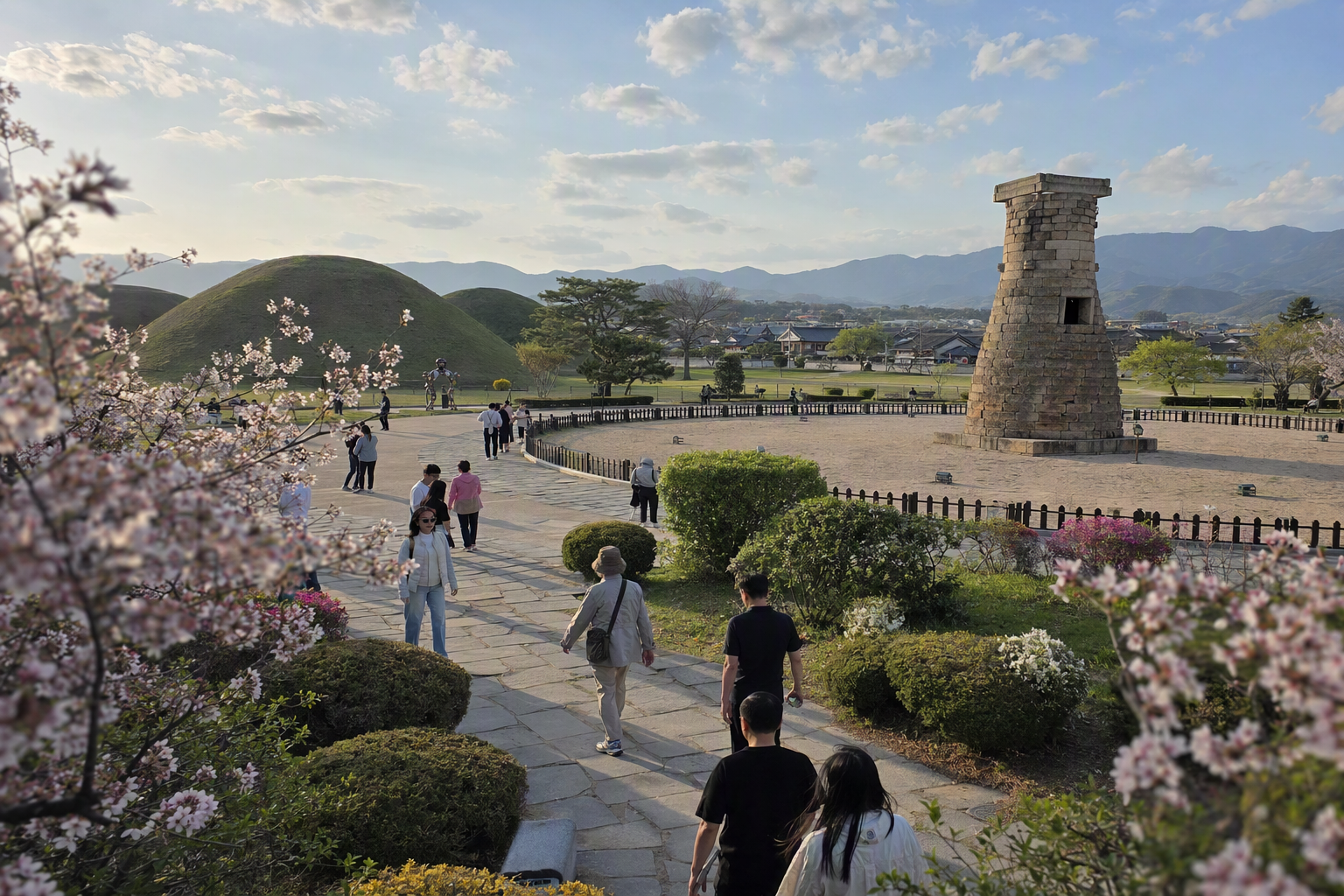
Central Gyeongju is wonderfully walkable by Korean intercity standards. Daereungwon Tumuli Park is famous for its smooth grassy royal tombs, with Cheonmachong open inside for a small admission fee often listed around KRW 2,000–3,000. Nearby Cheomseongdae Observatory adds one of Korea’s most recognizable ancient science landmarks.
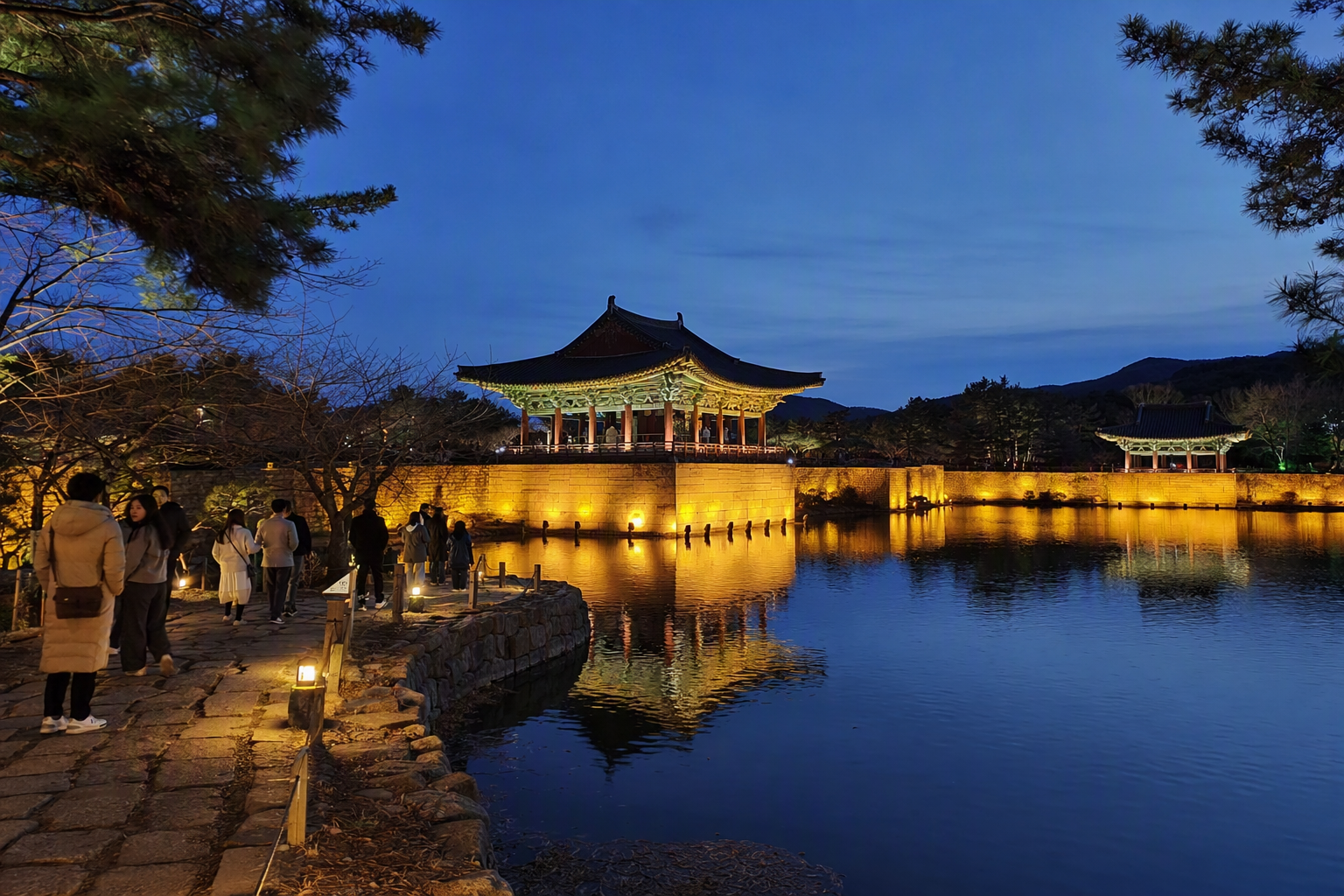
At night, Donggung Palace & Wolji Pond is the place to save energy for. The reflection of palace architecture on the pond is one of Gyeongju’s prettiest evening scenes. It is a good reminder that Korea’s famous heritage sites are not only daytime museum stops; many come alive after dark.
King Munmu’s Tomb: a coastal extension for Silla history lovers
Travelers with extra time can continue the Silla story to the coast at the Tomb of King Munmu, an offshore rocky islet about 200 meters from Bonggil-ri coast. It is associated with King Munmu, whose cremated remains may lie beneath a central granite slab, though scholarly debate remains around the exact burial practice. Access from the shore area is year-round and free in available visitor information.
This is not the most efficient stop for a short Gyeongju day, but it is meaningful for travelers who like historical context and quieter coastal scenery.
Busan: Korea’s coastal city, with beaches, cliffs, and a temple by the sea
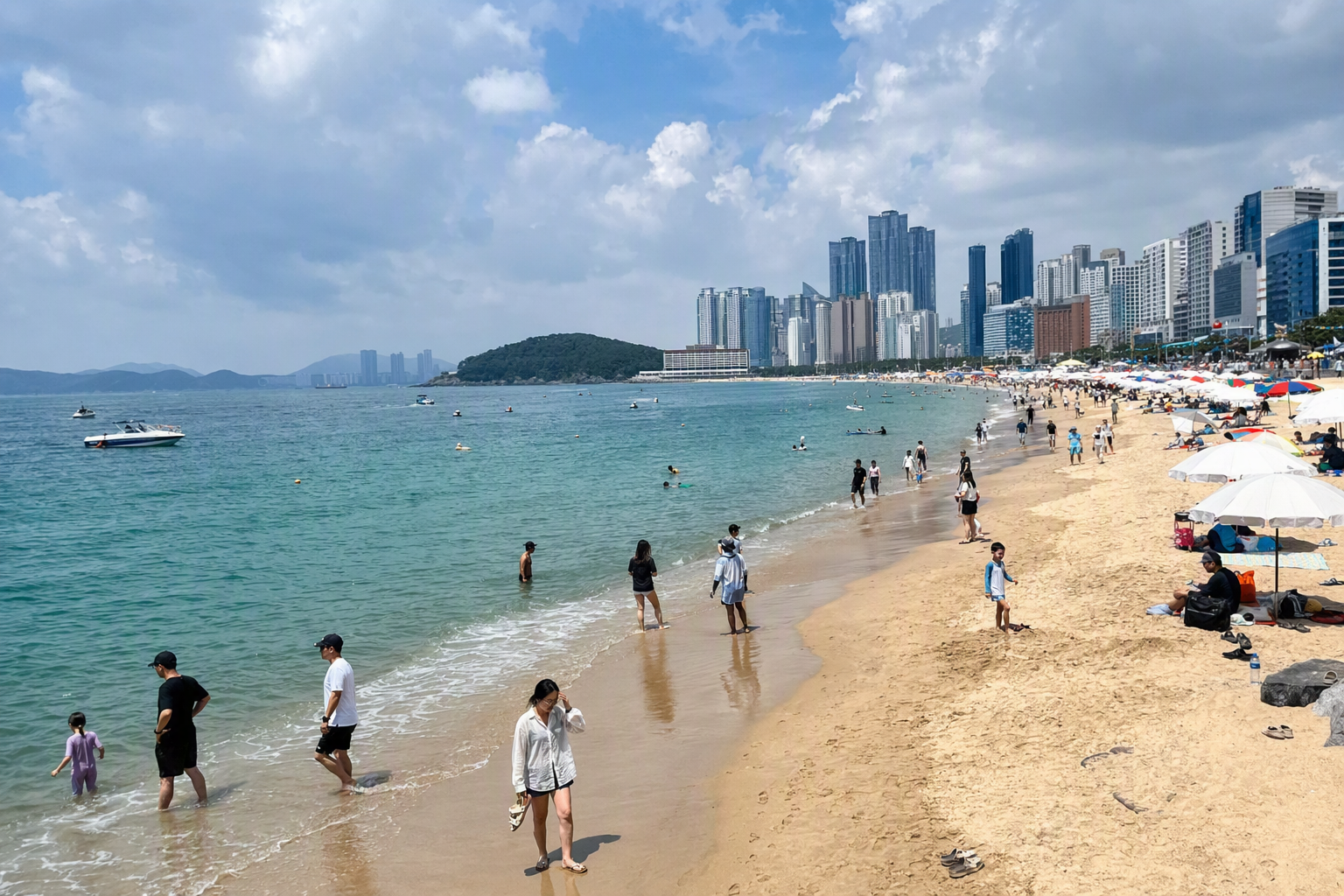
Busan is Korea’s second city and the country’s easiest major coastal escape. It is famous for beaches like Haeundae and Gwangalli, colorful hillside views at Gamcheon Culture Village, seafood energy, and coastal landmarks that feel very different from Seoul.
Haedong Yonggungsa Temple: the sea-view temple everyone talks about
Most Korean Buddhist temples sit in the mountains, which is part of why Haedong Yonggungsa Temple feels so memorable. It stands along the Gijang coast, with ocean views, sunrise appeal, and a dramatic approach toward the water. Admission is free in current visitor information, and operating hours are commonly listed as 04:30–19:20, with last entry around 18:50, though travelers should verify before visiting.
It is also connected with coastal walking routes such as Haeparang Trail Route 1 and the Galmaetgil network. That makes it more than a quick photo stop if you enjoy walking by the sea.

The temple’s trade-off is location. It sits away from central Busan, so it can take more time than expected. Pairing it with other eastern Busan plans works better than squeezing it between far-apart stops.
Taejongdae: cliffs, sea caves, and a geologic side of Busan
Taejongdae on Yeongdo is another coastal classic. It was designated Scenic Site No. 17 and later included in Busan’s National Geopark. The landscape includes wave-cut terraces, sea caves, sedimentary cliffs, and unusual rock formations tied to deep geologic history.
A small Danubi train loop is available, with adult fare listed around KRW 2,000 in visitor information. It is useful for saving energy, especially in hot weather or when traveling with family.

Taejongdae is best when treated as a slow coastal outing. On a tight Busan schedule, choose between Taejongdae and Haedong Yonggungsa rather than forcing both in one rushed day.
Jeju Island: volcanic landscapes, UNESCO status, and nature under pressure
Jeju is famous for being Korea’s island escape, but it is not just beaches and cafés. Jeju has overlapping international designations: UNESCO Biosphere Reserve, World Natural Heritage, and Global Geopark. Its volcanic terrain, lava tubes, cliffs, trails, and Hallasan-centered landscapes make it one of Korea’s most distinctive destinations.
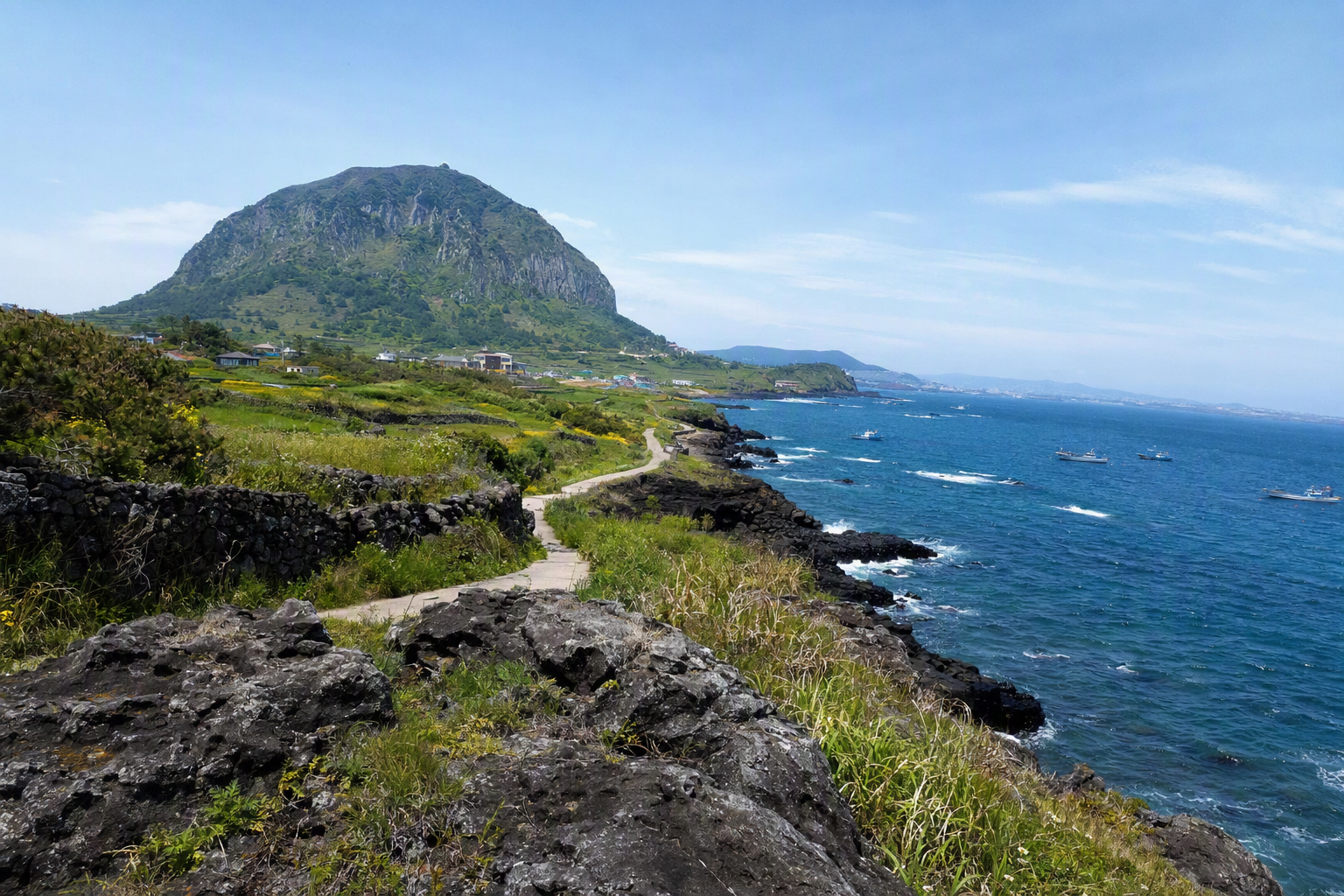
Jeju is also where travelers should be most aware of conservation pressure. Visitor numbers have grown enormously, and sensitive natural sites now use more controlled access than casual travelers may expect. That is a good thing for the island, but it means Jeju rewards advance planning.
Manjanggul Lava Tube: Jeju’s famous underground world
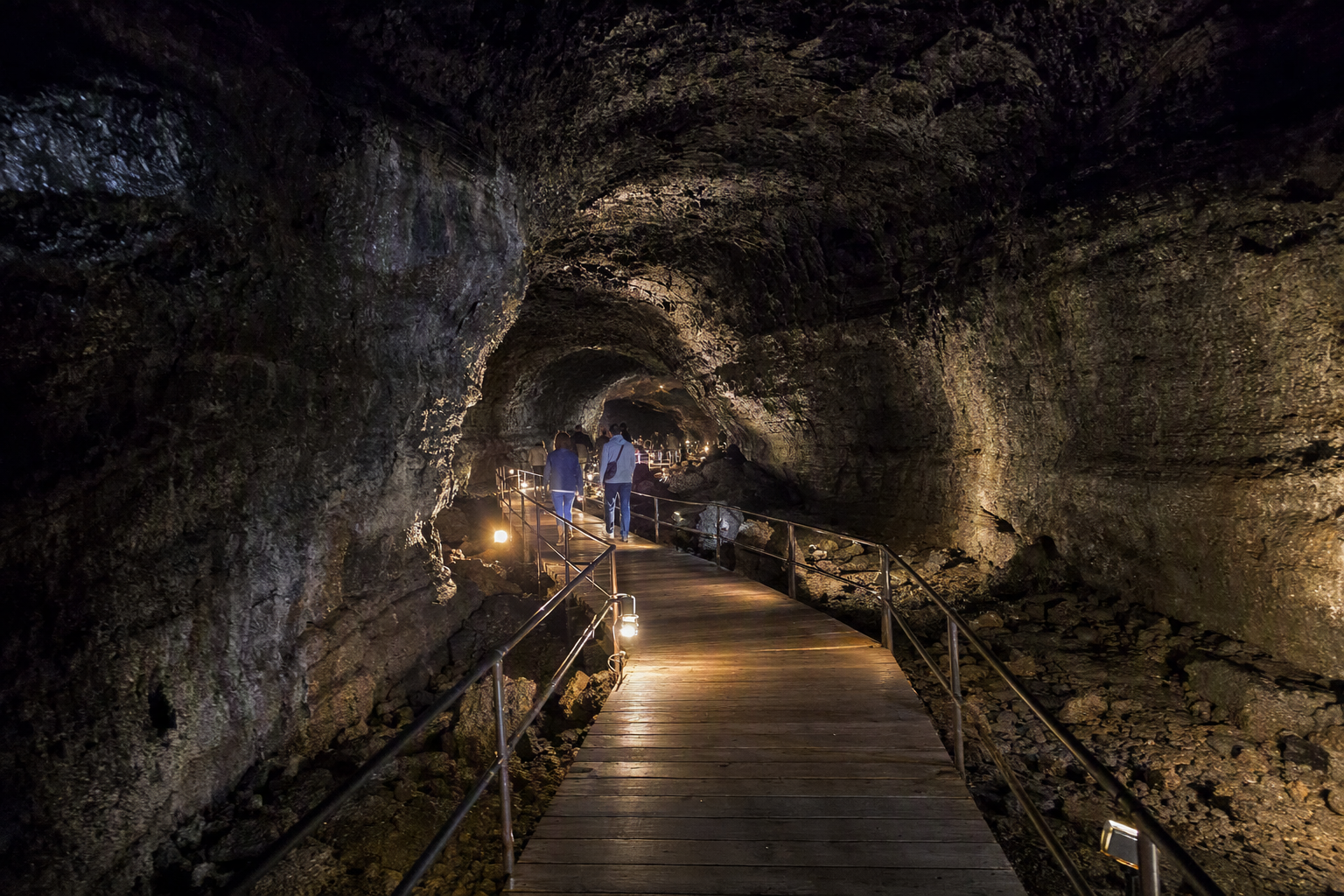
Manjanggul Lava Tube is one of Jeju’s flagship geosites. The lava tube is about 7.4 km long, though public tourist access is limited to roughly 1 km. Its main tunnel reaches enormous dimensions, and it is known for a 7.6 m-high lava column often described as one of the world’s tallest.
Because lava tubes are delicate environments, access rules can change. Visitor caps and reservation systems are being used for key geosites, including a 2026 cave visitation limit of 1,800 people per day noted in conservation planning. Before building a Jeju day around Manjanggul, check the latest official operating status, reservation rules, and closures.
Jusangjeolli Cliff: columnar basalt and wild waves
Jusangjeolli Cliff is famous for its hexagonal columnar joints, shaped by cooling lava and battered by waves. It was designated Natural Monument No. 443 in 2004, and waves there can reach dramatic heights in rough conditions.
This is a strong choice for travelers who want a very “Jeju” landscape without committing to a long hike. It is also a reminder that Jeju’s beauty is not soft and tropical in the usual resort sense. The island’s best scenery often feels volcanic, wind-carved, and rugged.

Hallasan and Jeju Olle Trail: for walkers and nature-focused travelers
Hallasan National Park is one of Jeju’s great natural symbols, and summit hiking has required advance reservations since 2020. The park received more than 900,000 visitors in 2023, so the reservation approach is not just bureaucracy—it helps manage real pressure on the mountain.
For a gentler way to experience the island, Jeju Olle Trail offers a ring-shaped walking route culture around Jeju. It is one of the Korean tourism sites that has repeatedly appeared in national “100 Must-Visit Tourist Spots” selections, along with Hallasan National Park.
Jeju is best with at least 2–3 days, and even then, it helps to choose a side of the island rather than chasing every famous site. Weather, driving distances, and reservation rules can all reshape the day.
The DMZ: Korea’s most unusual border experience
The DMZ is one of the most famous and sobering places associated with Korea. Tours from Seoul typically include places such as Imjingak, the Third Infiltration Tunnel, Dora Observatory, and Dorasan Station. Access is regulated, passport details are required, and tours should be booked in advance.
Standard DMZ tours are commonly priced around KRW 55,000–95,000 for a half-day or full-day schedule, depending on operator and inclusions. The Third Infiltration Tunnel can be physically demanding: it goes underground and includes a steep incline, so it is not ideal for everyone.
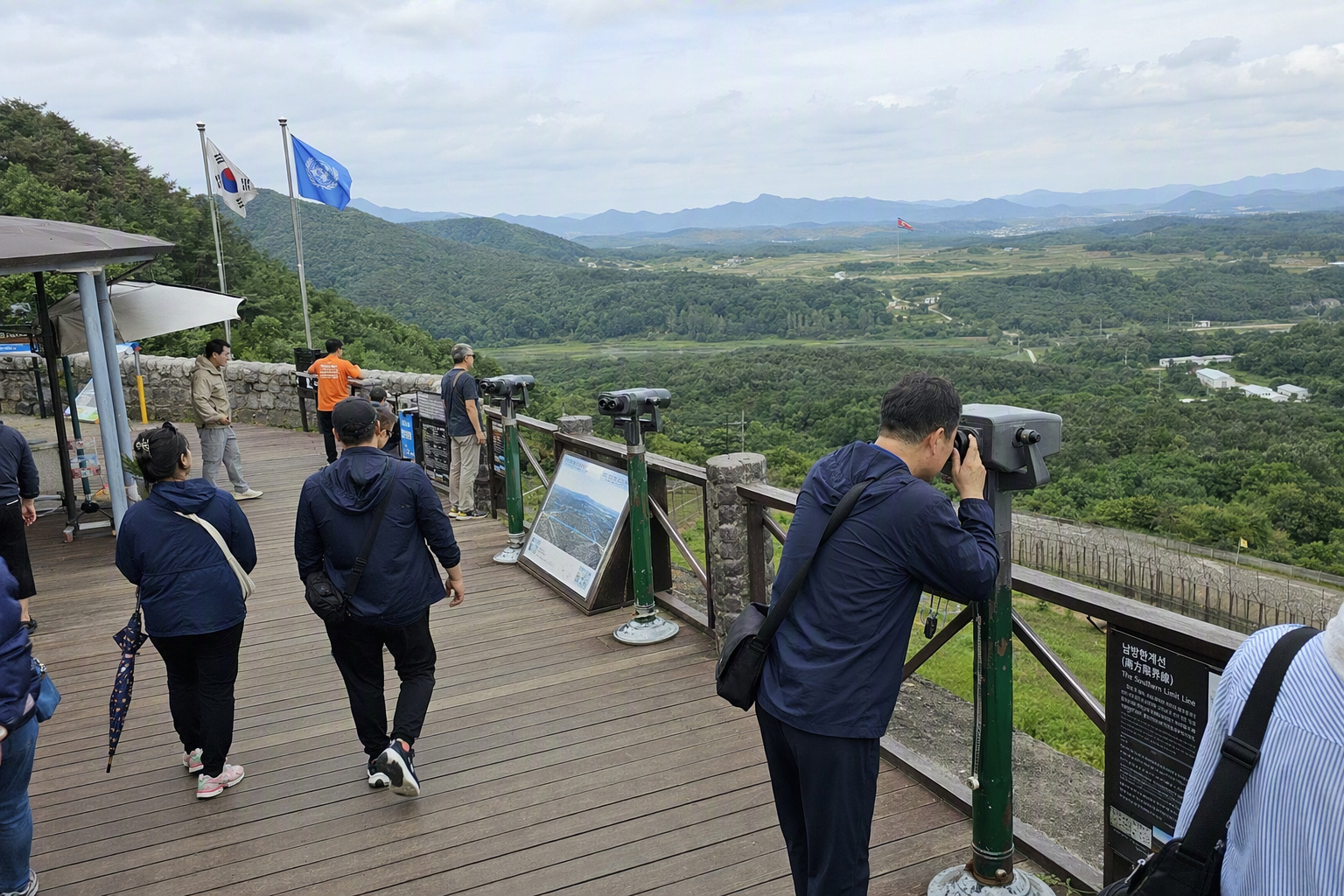
The JSA/Panmunjom area is more complicated. Access has been volatile in recent years, with restrictions, partial reopening reports, and security-related suspensions. When JSA-inclusive tours operate, they usually require earlier passport submission, stricter rules, and higher prices. For most travelers, the safer base plan is a DMZ tour centered on the Third Infiltration Tunnel and Dora Observatory, with JSA treated as a bonus only if official access is clearly confirmed.
Korea’s UNESCO and official “100 Must-Visit” spots: useful, but not a checklist
Korea has many famous destinations beyond the first-trip route. The Ministry of Culture, Sports and Tourism and Korea Tourism Organization run the biennial “100 Must-Visit Tourist Spots of Korea” project, selecting sites through tourism data and expert review. The list includes both natural and cultural attractions, and long-running names include Seoul’s royal palaces, Suwon Hwaseong Fortress, Seoraksan National Park, Andong Hahoe Folk Village, Suncheonman Bay Wetland, Jeju Olle Trail, Hallasan, Bulguksa and Seokguram, and Jeonju Hanok Village.
For travelers, the list is most helpful as a map of Korea’s variety. It shows that Korea is not only Seoul-plus-Jeju. There are mountain parks, fortress walls, wetlands, hanok villages, islands, temple complexes, and regional walking trails all over the country.
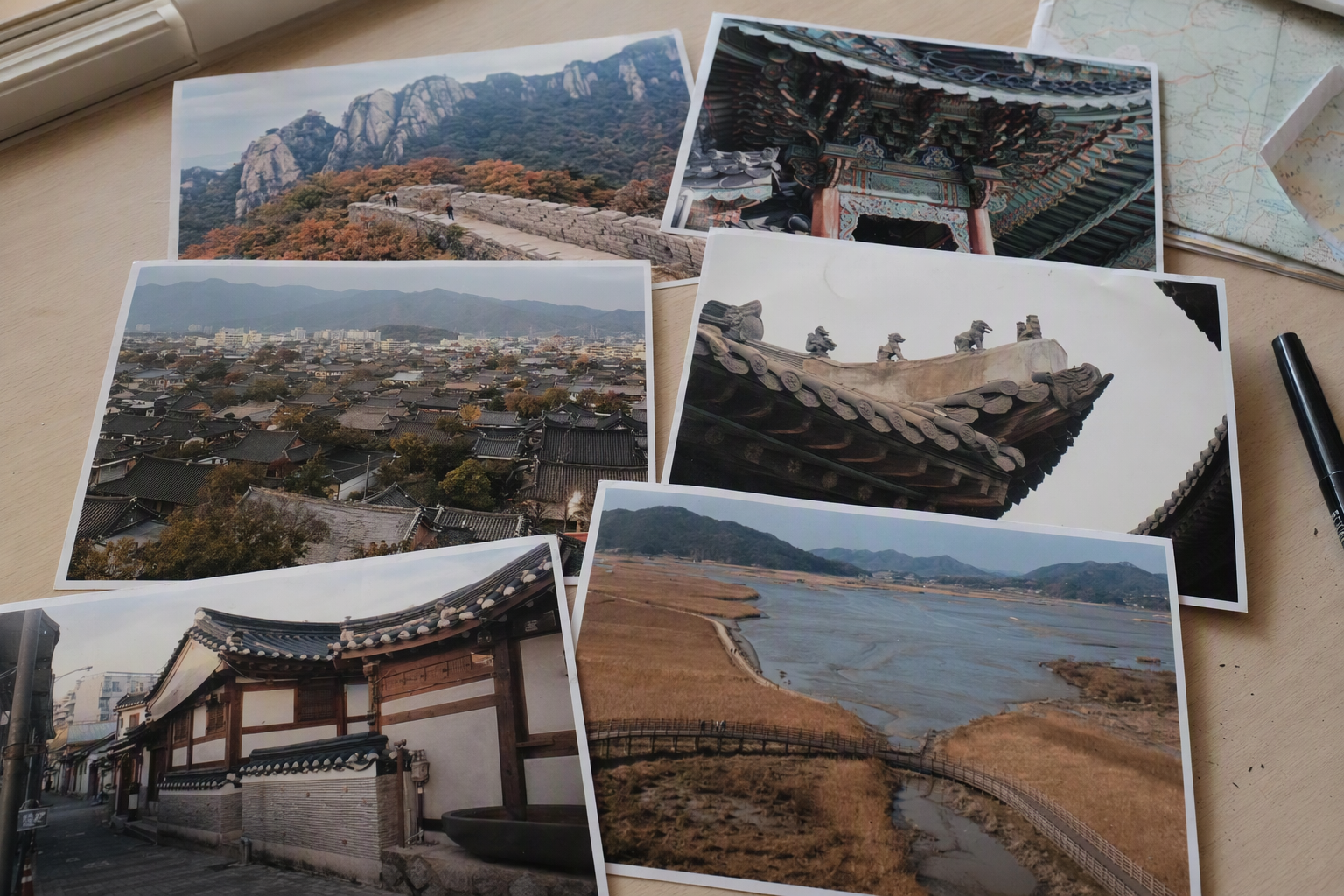
The mistake is treating the official list like a stamp rally. A better approach is to pick a theme:
- History and architecture: Seoul palaces, Suwon Hwaseong, Gyeongju, Andong Hahoe Folk Village
- Nature and walking: Seoraksan, Hallasan, Jeju Olle Trail, Suncheonman Bay Wetland
- Classic first trip: Seoul, Gyeongju, Busan, Jeju
- Culture and lifestyle: Seoul neighborhoods, K-beauty, cafés, food, photo booths, music-related stops
- Border history: DMZ tour from Seoul
The easiest first-time route: Seoul, Gyeongju, Busan, Jeju
For a first Korea trip, the most balanced route is usually:
Seoul 3–4 days → Gyeongju 1–2 days → Busan 2–3 days → Jeju 2–3 days
That is a comfortable 7–10 day structure, depending on whether Jeju is included and how quickly you like to travel. Optional day trips from Seoul can include the DMZ, Suwon, or Nami Island, but each one takes time away from Seoul itself.

Why KTX usually beats the express bus
For the classic Seoul–Gyeongju–Busan spine, KTX is usually worth it. Seoul to Busan takes about 2.5 hours, while Seoul to Singyeongju is around 2 hours, and Singyeongju to Busan can be around 30–50 minutes. Express buses are usually cheaper but roughly twice as long on major routes.
Typical KTX prices vary by route and seat, but Seoul–Busan is commonly listed from around KRW 59,800, and Seoul–Singyeongju around the KRW 45,000–50,000 range. Korail Passes exist, but for a simple three-city route, individual tickets are often cheaper and more flexible.
During peak travel seasons—especially April–May, September–October, and major holidays—popular KTX seats can sell out 2–3 weeks in advance. That is one of the few parts of Korea travel where last-minute planning can genuinely hurt the itinerary.
Where Jeju fits
Jeju is usually reached by domestic flight. Busan to Jeju flights take roughly 50–60 minutes, with fares often ranging widely by timing and demand. Seoul also has frequent Jeju flights, so travelers can place Jeju at the beginning or end of the route depending on international flight plans.
Jeju deserves space. A one-night visit can feel like airport-to-car-to-hotel logistics with a view. Two to three days gives you time for either volcanic scenery, a Hallasan or Olle walking focus, or a more relaxed coastal stay.
Best seasons for Korea’s famous spots
Korea’s famous places change a lot by season. The most reliable travel windows for a broad sightseeing trip are spring from March to May and autumn from September to November.
Late March to early April is cherry blossom season for many palace, temple, and park settings, though exact bloom timing varies each year. October to November brings foliage to palaces, Gyeongju, temples, and national parks. These are beautiful periods, but also peak travel periods, so trains, popular hotels, and guided tours need earlier booking.

Summer, from June to August, can be hot, humid, crowded, and affected by monsoon rains. Busan beaches are lively then, but outdoor-heavy itineraries in Gyeongju, Seoul palaces, or Jeju can feel tiring. Winter is quieter and can be atmospheric, especially for city food, cafés, and palace photos, but nature-focused plans need more flexibility.
Common planning mistakes that make Korea harder than it needs to be
The biggest mistake is trying to make Korea too efficient. On paper, the country looks small. In real travel time, palace visits, station transfers, coastal detours, café waits, and weather all matter.
A few points save a lot of friction:
- Do not overpack Seoul. Palace districts, shopping areas, nightlife neighborhoods, and river views are not all next door to each other.
- Book peak KTX trains early. Spring, autumn, and holidays are not the time to gamble on last-minute seats.
- Treat Jeju as nature travel, not just another city stop. Reservations, driving distances, weather, and conservation rules affect the day.
- Check official hours for palaces and temples. Closures differ: Gyeongbokgung is usually closed Tuesdays, Changdeokgung Mondays, and temple hours can vary by month.
- Be realistic about the DMZ. Standard DMZ tours are much more reliable than JSA-inclusive tours.
- Leave room for food and lifestyle moments. Korea is famous for experiences that do not fit neatly into sightseeing blocks: barbecue dinners, beauty shopping, photo booths, cafés, and late-night snacks.
A Creatrip-style final take
South Korea is famous because it layers so many identities into one trip. It is a royal palace country, a K-pop country, a temple-and-mountain country, a skincare and café country, a fried-chicken-at-midnight country, and a volcanic island country. The best itinerary does not try to prove all of that at once.
For most international visitors, Seoul gives the strongest opening, Gyeongju adds the historical soul, Busan brings the coast, and Jeju turns the trip toward nature. Add one DMZ tour or one extra regional stop only if the schedule still feels breathable.
Korea rewards travelers who balance the famous with the everyday. See the palace. Ride the KTX. Eat the barbecue. Walk by the sea. Buy the skincare if your suitcase allows it. And give yourself at least one evening with no plan except dinner, lights, and whatever small Korean moment finds you on the way back to the hotel.