
Diore Clinic | Ultherapy vs Sofwave: Key Differences Between Two Ultrasound Treatments in Seoul
How lifting and tightening differ, which treatment fits each skin concern, and what to check before treatment
If you’re planning skin treatments during your trip to Korea, you’ll almost certainly come across these two names. Both use ultrasound, and both promise firmer, more lifted-looking skin. But they work at different depths, which means they produce different results. Choosing the one that doesn’t match your concern is a common, and expensive, mistake.
Here are the key points that truly separate the two.
The difference in one line
Ultherapy delivers focused ultrasound energy down to the SMAS layer at a depth of 4.5 mm. This is the exact layer surgeons actually lift during a facelift. It is a lifting treatment.
Sofwave delivers parallel ultrasound beams to the mid-dermis at a depth of 1.5 mm. It is a tightening treatment.
Different depth, different target, different outcome. Neither one is “better.”
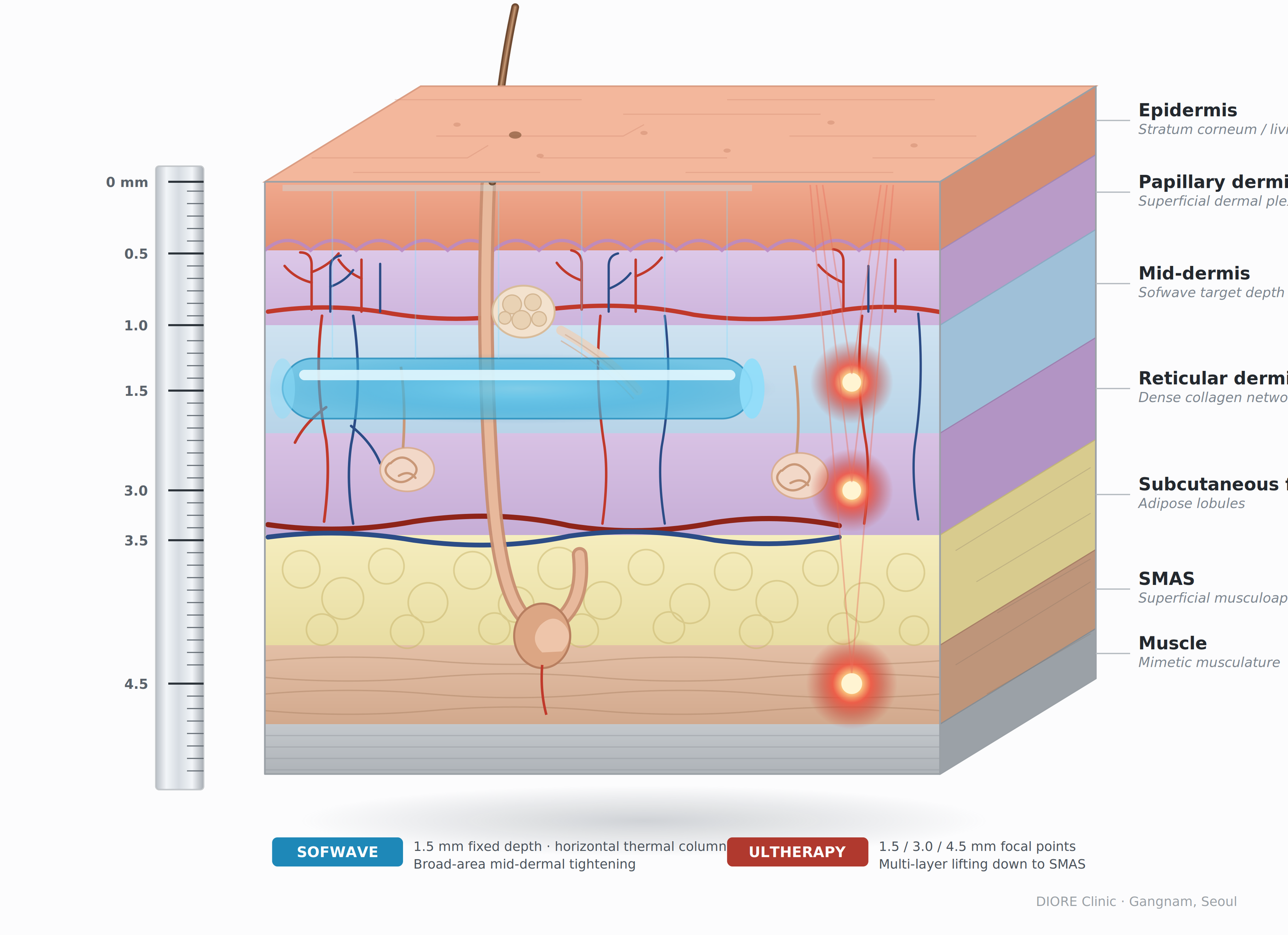
[Figure 1] Skin cross-section structure and energy penetration depth by treatment
How Ultherapy works
Ultherapy uses HIFU (high-intensity focused ultrasound). As energy converges at a precise focal point deep in the tissue, it creates tiny thermal coagulation points, and this stimulus triggers a wound-healing response that induces new collagen production over the following months.
The defining feature of Ultherapy is real-time ultrasound imaging. During treatment, the provider can directly visualize tissue layers on a monitor. This makes it possible to identify where the SMAS layer actually is on the face and avoid bony structures and blood vessels. This matters far more than most patients think, and I’ll return to it later.
Transducers are available in three depths, 1.5 mm, 3.0 mm, and 4.5 mm, allowing multiple layers to be treated in a single session.
It has received approval from the U.S. FDA for non-invasive lifting of the eyebrow, under-chin area, and neck, and there are more than 50 published studies along with millions of treatments performed worldwide.
Timeline of results: You’ll begin to see changes around 1 to 2 months, with peak results at about 6 months. Results typically last 0.5 to 1 year.
How Sofwave works
Sofwave uses SUPERB™ technology. Seven parallel ultrasound beams are fired simultaneously, delivering energy to a fixed depth of 1.5 mm.
The difference from HIFU lies in the pattern of thermal injury. While focused ultrasound creates isolated point-shaped coagulation, parallel beams create long, cylindrical columns of heat, providing more uniform coverage across the treatment area. Tissue is heated to approximately 60 to 70°C, during which collagen partially denatures, inducing both neocollagenesis and neoelastogenesis. The latter is especially notable because elastin regeneration is harder to achieve than collagen.
A study published by Gold et al. in the Journal of Cosmetic Dermatology in 2024 reported meaningful improvement in brow position, under-chin contour, and neck sagging, with pain at a tolerable level. A histologic study published in 2025 confirmed increased collagen fiber density in the mid-dermis two months after treatment, along with regeneration and alignment of elastin fibers.
This device includes a built-in cooling system that protects the epidermis during treatment and greatly reduces the risk of burns.
Timeline of results: You’ll begin to see changes within 1 to 3 weeks, with peak results at about 3 months. Results typically last 0.5 to 1 year.
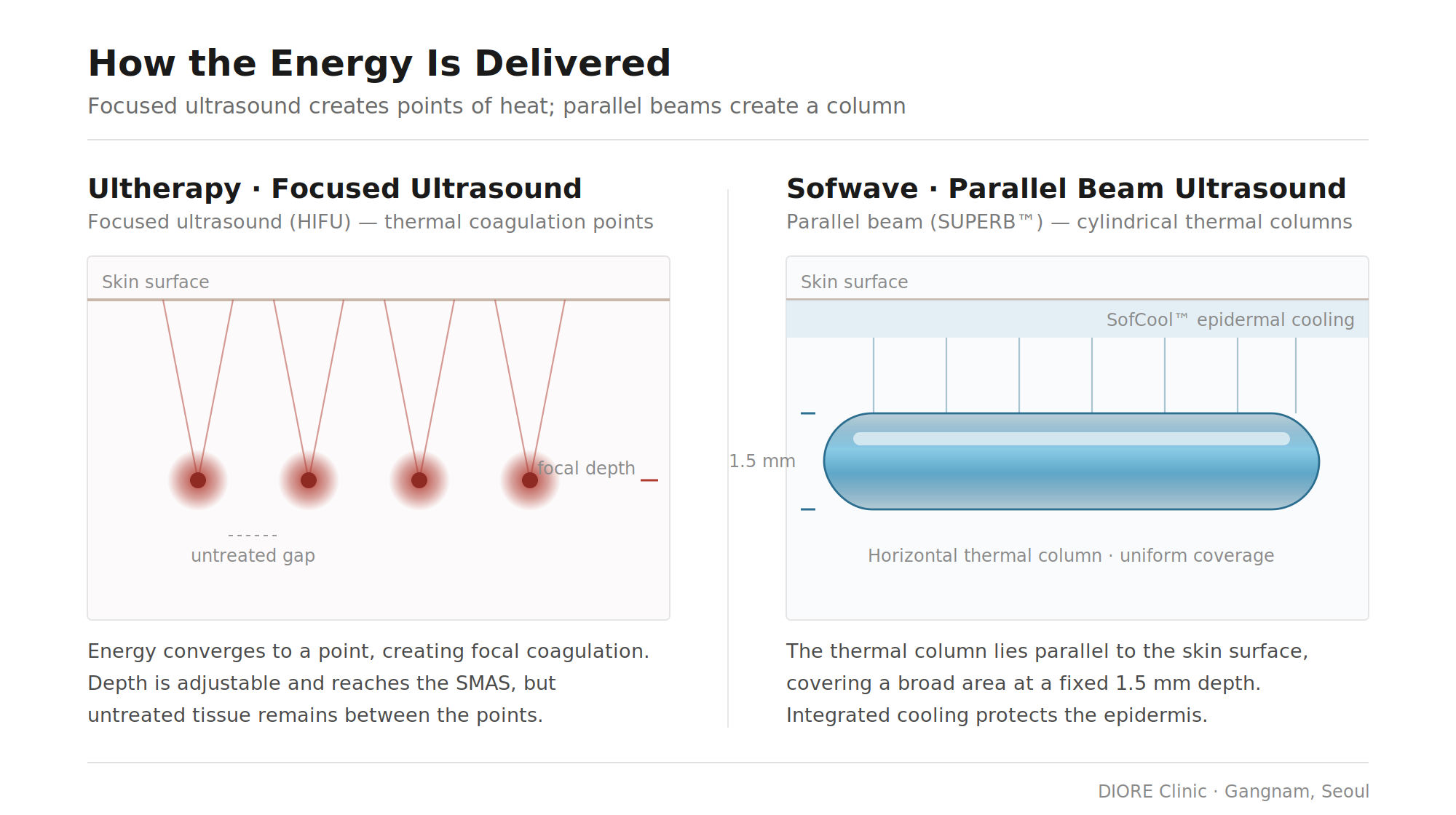
[Figure 2] Difference in energy delivery between focused ultrasound and parallel beams
At-a-glance comparison
| Ultherapy | Sofwave | |
|---|---|---|
| Energy type | High-intensity focused ultrasound (HIFU) | Parallel ultrasound beams (SUPERB) |
| Depth | 1.5 / 3.0 / 4.5 mm | Fixed at 1.5 mm |
| Main target layer | SMAS + subcutaneous fat + dermis | Mid-dermis |
| Key benefits | Deep lifting, sharper jawline definition | Fine lines, tightening, skin texture |
| Real-time imaging | Yes | No |
| Built-in cooling | No | Yes |
| Treatment time | 45 to 60 min (based on 600 shots) | 30 to 45 min (based on 200 shots) |
| Downtime | Minimal | Minimal |
| Onset of results | 1 to 2 months | 1 to 3 weeks |
| Peak results | 3 months | 3 months |
| Duration | 0.5 to 1 year | 0.5 to 1 year |
| FDA approval | Lifting (brow, under-chin, neck) | Lifting + wrinkle improvement |
Which one is right for me?
Ultherapy is a better fit if
- Your jawline definition has softened or your cheeks are sagging downward
- You have noticeable submental fullness (double chin) or neck sagging
- You want the strongest lifting effect available among non-surgical options
- You want results that are close to surgical outcomes, without surgery
Sofwave is a better fit if
- Your main concern is fine lines on the forehead, around the eyes, or around the mouth
- You want overall firmness and improved texture rather than a contour change
- Your schedule is tight and you need faster visible onset
- You’re concerned about laxity in thin-skin areas (forehead, around the eyes, neck)
The simplest summary: contour and jawline, Ultherapy, fine lines and firmness, Sofwave.
The two treatments are not mutually exclusive. Because they target different depths, they are often performed together in a single visit, and combining them with radiofrequency (Thermage), botulinum toxin, or fillers is also a common layer-by-layer approach.
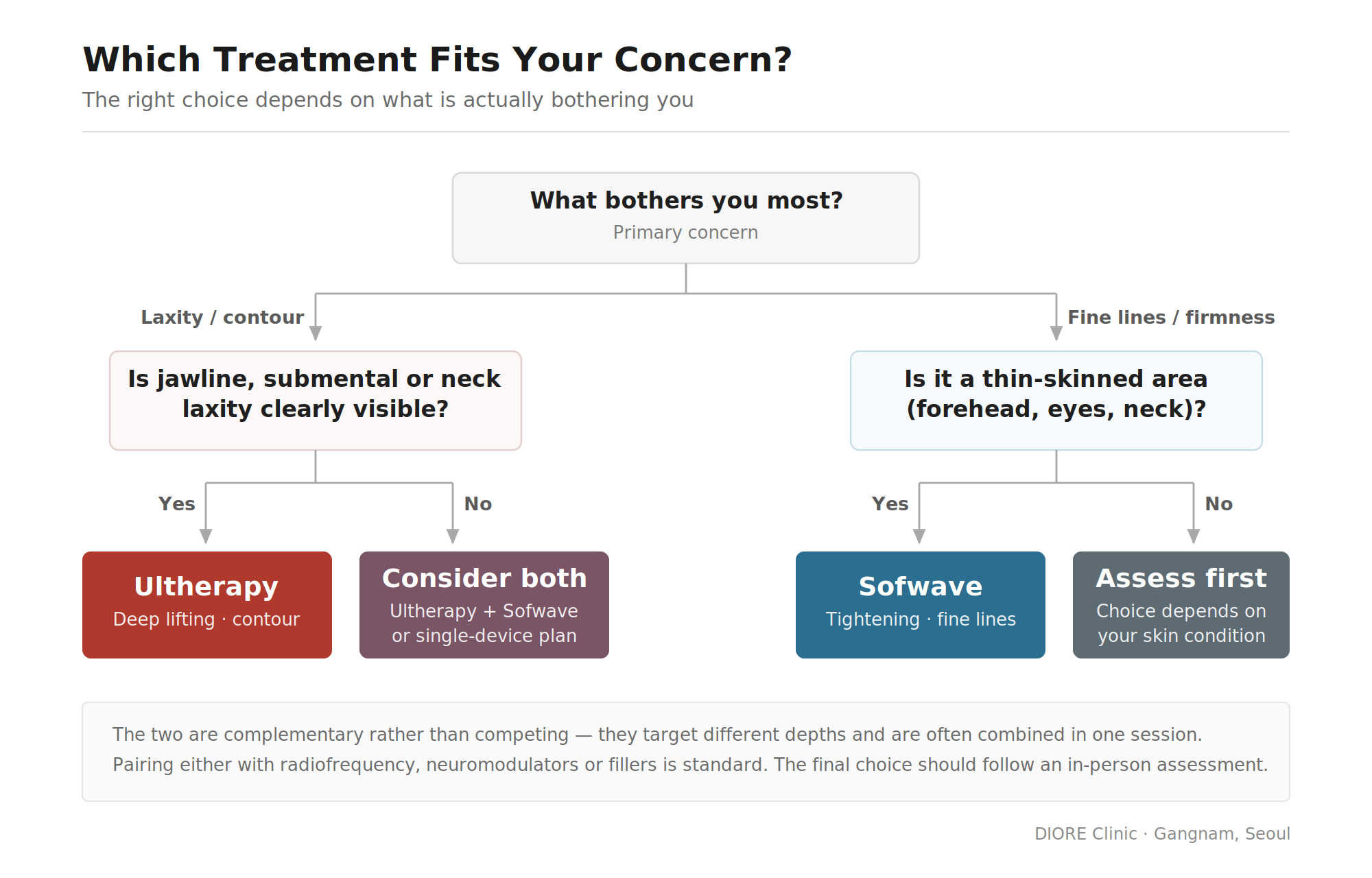
[Figure 3] Treatment selection flow by concern type
What actually determines your results
This is what most comparison posts skip, but it matters more than the device itself.
The provider matters more than the device. The most commonly discussed complication with Ultherapy is fat atrophy, meaning a hollowed look in the cheeks. Ultherapy can intentionally target not only the SMAS layer but also the subcutaneous fat layer, and in cases where volume reduction in the lower face is needed, that can actually be part of the treatment goal. The problem is when that judgment is wrong. If energy is delivered into the fat layer in a face that needs volume preserved, or if the area is treated more aggressively than necessary, it can lead to unwanted hollowing. In other words, this is not a device defect, it’s an issue of indication assessment and treatment design. Real-time imaging exists precisely to control this, but it only has value when used by a provider who can interpret the imaging properly. Ask directly whether imaging is actually used and who will perform the procedure.
Verify authenticity. In the aesthetic medical market, counterfeit devices and gray-import devices exist. Authentic Ultherapy uses official transducers with a designated number of lines, and the clinic should be able to show you the transducer being used and its line count. Asking to confirm this is normal, and a legitimate clinic will answer without hesitation.
Confirm the number of shots in writing. Ultrasound procedures are priced per “line” or per “shot.” A 300-shot treatment and a 600-shot treatment are different procedures with different pricing. Confirm the number before the procedure, not after.
Realistic expectations are better than overly aggressive settings. Neither device can replicate the results of a surgical facelift. A clinic that promises dramatic same-day changes is either exaggerating or planning overtreatment, and most complications come from overtreatment.
Practical guidance for visitors
Both are same-day procedures. Downtime is minimal. Temporary redness, swelling, or tenderness can occur, but usually settles within 24 to 48 hours. You can continue with your plans the same day.
If you want follow-up while you’re still in Korea, book early in your trip. Neither procedure typically requires an additional visit, but if you have questions or an unexpected reaction, it’s better to still be in Korea than to handle it by email after returning home.
Results are not immediate. If you’re planning around a specific event, keep in mind that Sofwave typically starts showing changes in 1 to 3 weeks, and Ultherapy generally needs at least 1 month before changes become noticeable. Booking one week before a wedding leads to disappointment.
Anesthesia is topical. Both procedures are performed after applying a numbing cream, and IV sedation is not necessary. Plan an additional 30 minutes for numbing time on top of the procedure time.
Bring a list of medications and medical history. Active skin infection in the treatment area, certain autoimmune diseases, and specific medications can affect eligibility. A consultation that doesn’t ask about these is not a proper consultation.
Summary
Neither device is inherently superior. Ultherapy reaches the layer responsible for structural lifting, and Sofwave treats the layer responsible for surface firmness and fine lines. The right choice depends entirely on which of those concerns is actually bothering you, and that’s a question that can be answered not by a website, but by a proper in-person assessment.
Results may vary by individual. All treatment decisions should be made after examination and consultation with a medical professional.
References
- Gold MH et al. Efficacy and safety of high-intensity, high-frequency, non-focused ultrasound parallel beams for facial skin laxity. Journal of Cosmetic Dermatology. 2024.
- High-Intensity, Parallel Ultrasound Tightening of Facial Skin: Clinical and Pathologic Results. PMC. 2025.
- The efficacy and safety of the high-intensity parallel beam ultrasound device at the depth of 1.5 mm for skin tightening. Aesthetic Plastic Surgery. 2023.
Written by, Director Dr. Kwangryul Lee
Diore Clinic, Gangnam, Seoul