South Korea Weather in November and December: Seoul Winter Temperatures, Snow, and What to Pack
Late autumn turns into real winter quickly in Korea. Use this Creatrip weather breakdown to dress well, plan better days, and avoid the cold-weather mistakes travelers make in Seoul.

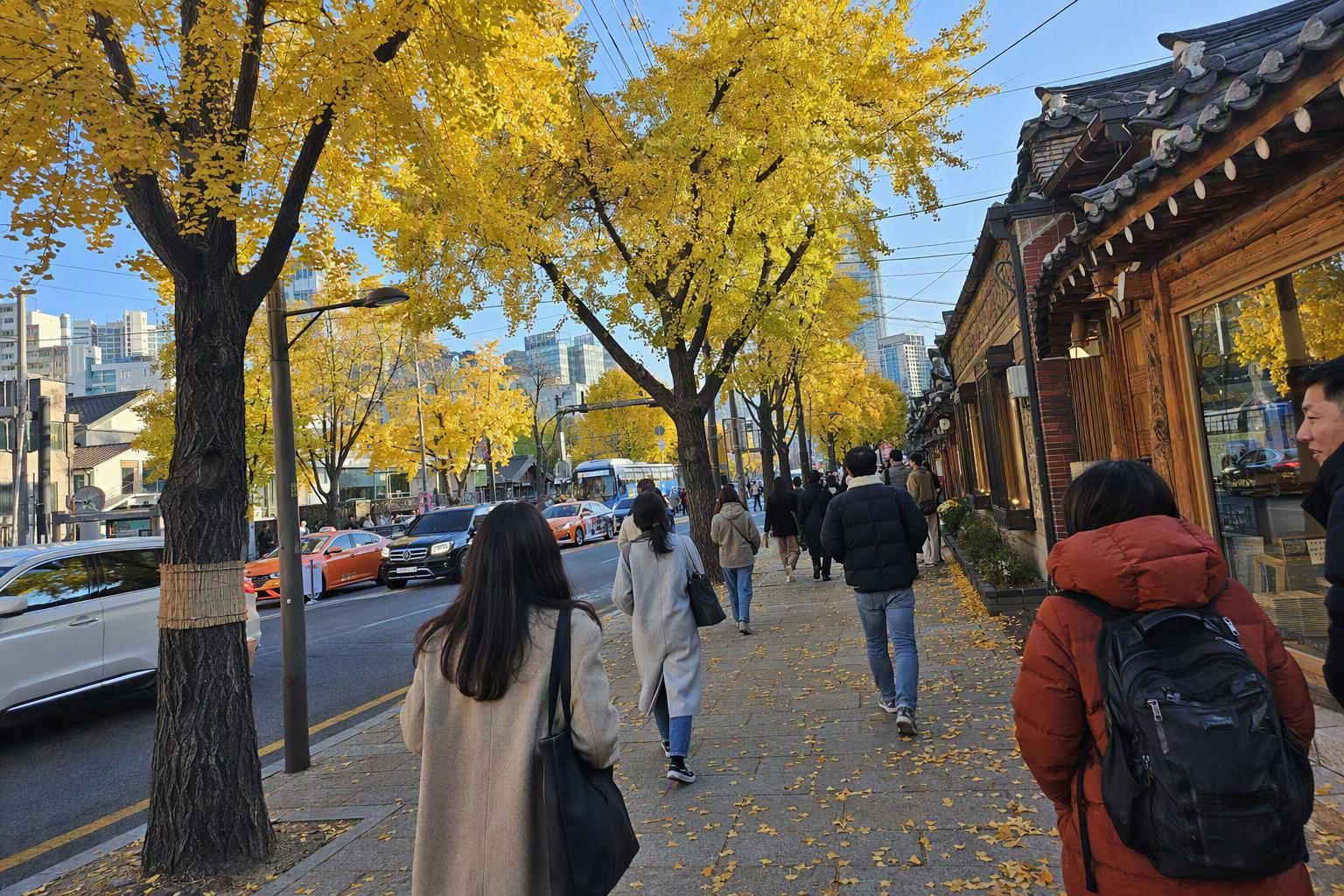
November and December in Korea sit on either side of a very real seasonal door. November still gives you golden ginkgo trees, crisp palace walks, and café windows glowing in the early dark. December, especially in Seoul, is winter with no hesitation: dry air, sharp wind, short days, and everyone suddenly wrapped in long padded coats.
The tricky part is that the change does not happen gently. A trip in early November can feel like late autumn. A trip in late November can feel one cold snap away from January. By December, Seoul is cold enough that a pretty wool coat may look perfect in photos but feel very optimistic after ten minutes near the Han River.

The seasonal shift at a glance
Korea has four distinct seasons, but November into December is one of the fastest-feeling transitions of the year. Seoul’s 1991–2020 climate normals show the jump clearly: November averages about 7.5°C, while December averages about 0.2°C. That is the difference between a chilly autumn trip and a proper winter trip.
| Period | Seoul weather personality | What it means for your trip |
|---|---|---|
| Early November | Late autumn, chilly mornings and evenings | Great for foliage walks with a medium coat, knitwear, and comfortable shoes |
| Late November | Winter begins to edge in | Add warmer outerwear, scarf, gloves, and shoes that can handle cold pavement |
| December | Cold, dry, windy winter | Dress for sub-zero mornings and nights, especially for outdoor markets, palaces, riverside walks, and night views |
Seoul’s average first frost falls around October 28, first ice around November 3, and first snowfall around November 20. These are averages, not promises, but they explain why late November can surprise travelers who packed for a mild autumn city break.
At Creatrip, we usually think of November as a month that needs flexibility, and December as a month that needs commitment. November lets you adjust with layers. December asks for real winter gear.
November in Korea: late autumn with winter at the edges
November is one of Korea’s most photogenic months, especially in the first half. The air is crisp, the light is clean, and the last autumn colors can be beautiful around palace grounds, university streets, parks, and neighborhoods with ginkgo trees. Temperatures in Seoul are often described around 2–13°C, but the range matters more than the monthly average. A sunny afternoon may feel gentle, then the temperature drops quickly after dark.
Early November is usually comfortable with a sweater, medium-weight coat, and closed shoes. If your day is mostly cafés, shopping streets, museums, and palace visits, you can still dress in autumn layers. Late November is different. Nights can feel close to winter, and open places such as Han River parks, Namsan, Cheonggyecheon, and Nami Island often feel colder than the number on your weather app because of wind and exposure.

What to wear in November
For most November trips, think warm autumn layers that can become winter layers by evening.
Good pieces to pack include:
- A medium coat or light insulated jacket
- Sweaters, cardigans, or fleece layers
- Long pants rather than thin skirts or shorts unless styled with warm tights
- A scarf for evenings and windy areas
- Comfortable closed shoes
- A light down vest or thermal inner layer for late November
A common November mistake is packing only for daytime café weather. Seoul after sunset in late November can feel completely different, especially when you are waiting outside a restaurant, walking between subway exits, or taking night photos.
December in Korea: dry cold, pale sun, and serious coats
By December, Korea feels firmly in winter. Seoul begins its climatological cold season around the start of the month, with average highs below about 7°C and many days dropping below freezing. The cold is not usually wet and slushy in the way some travelers imagine winter. It is often dry, bright, and wind-sharp.
That dryness is important. December is one of Seoul’s driest months, with only a small share of Korea’s annual rainfall arriving in winter. Summer brings most of the country’s rain; winter brings cold air, low moisture, and the kind of dryness that makes lip balm feel less like a beauty item and more like equipment.
Seoul in December: the numbers that matter
For Seoul, the Korea Meteorological Administration’s 1991–2020 normals put December at:
| Seoul in December | Typical climate normal |
|---|---|
| Average daily temperature | 0.2°C |
| Average daily high | 4.2°C |
| Average daily low | -3.4°C |
| Average precipitation | 22.6 mm |
| Precipitation days, including very light precipitation | 7.8 days |
| Precipitation days of at least 1 mm | 4.2 days |
| Snowy days | 6.4 days |
| Daylight near winter solstice | About 9 hours 34 minutes |
Commercial weather summaries may show December averages around 3–5°C by day and -3 to -5°C at night, which lines up well with the official normal. The practical reading is simple: in Seoul, December days are often cold but manageable with the right coat; mornings, nights, and windy outdoor areas can feel much colder.
Some recent historical summaries also show how much December can vary from year to year. One December can be only lightly wet, while another can bring noticeably more precipitation. One winter can feel manageable, and another can bring early cold waves. Averages are useful for packing, but the final forecast close to your travel dates deserves a real look.
Why 0°C in Seoul can feel colder than expected
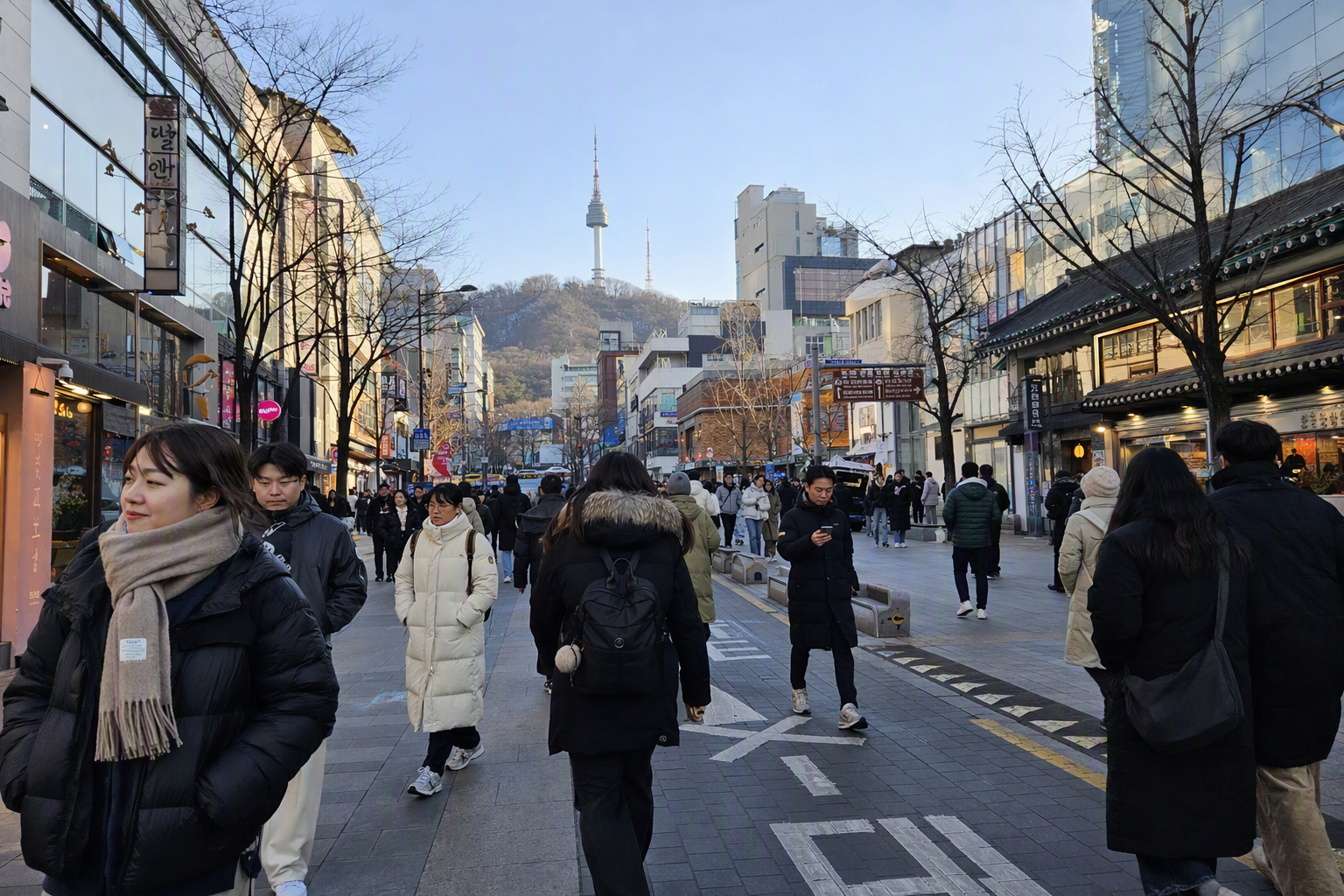
Seoul winter has a dry, northerly bite. The influence of cold continental air means the city can feel harsher than the thermometer suggests, especially in exposed places. Local winter life reflects that: heated bus stops, warm subway platforms, indoor malls, heated floors in homes and accommodations, and the famous long padded coats that turn half the city into a moving black duvet on the coldest days.
Wind is the detail travelers underestimate. A still afternoon at 3°C can feel fine with gloves and a good coat. A windy evening at -3°C near the Han River can make your face, ears, and fingers hurt quickly. Seoul’s winter is not just about temperature; it is about temperature plus wind plus time outdoors.

Will it snow in Seoul in December?
Snow is possible in December, but Seoul is not a guaranteed snow-globe city.
This is where travelers often get confused, because snow statistics can look very different depending on the source. Seoul’s official climate normal lists 6.4 snowy days in December, but a snowy day can include observed snow, flurries, sleet, or light snow phenomena. It does not mean six days of fluffy accumulation on palace rooftops.
Other weather summaries may show fewer snow days or more snow days because they use different stations, time periods, and thresholds. Some count only measurable precipitation. Some include trace snow. Some focus on airport observations, while official Seoul station data may tell a slightly different story. For travelers, the best way to translate all of that is this:
Expect the possibility of flurries or light snow. Do not build your December Seoul plans around guaranteed snow-covered streets.
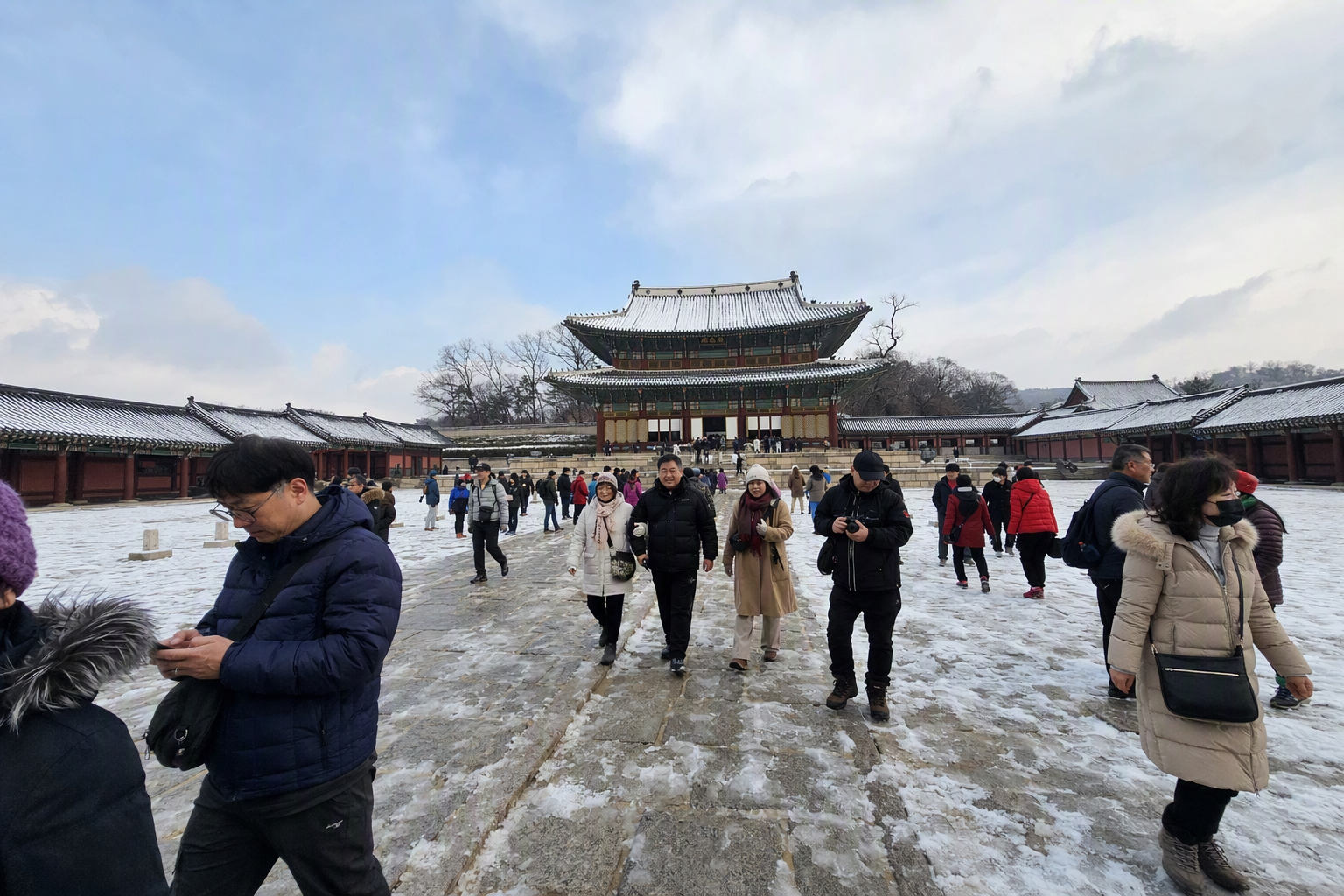
By late December into the core winter period, snow chances improve compared with early December, but accumulation is still limited in many years. A light dusting can look magical at a palace or hanok street, then melt or turn patchy quickly on busy roads and sidewalks. Big snow events can happen, including unusual late-November or early-winter storms, but they are not the normal December experience.
Rain, snow, and dry days in December
December precipitation in Seoul is low. Official normals show 22.6 mm for the month, compared with 51.1 mm in November and far higher totals in Korea’s summer rainy season. That means many December days are simply cold and dry.
The low precipitation does not mean every day is sunny. Seoul can still have cloudy spells, light rain, sleet, or snow showers. But compared with summer or early autumn, December usually gives fewer wet interruptions. When precipitation does arrive, it is often light enough that the experience is more annoying than trip-ruining: damp gloves, slippery steps, wet shoes, and wind that suddenly feels much colder.
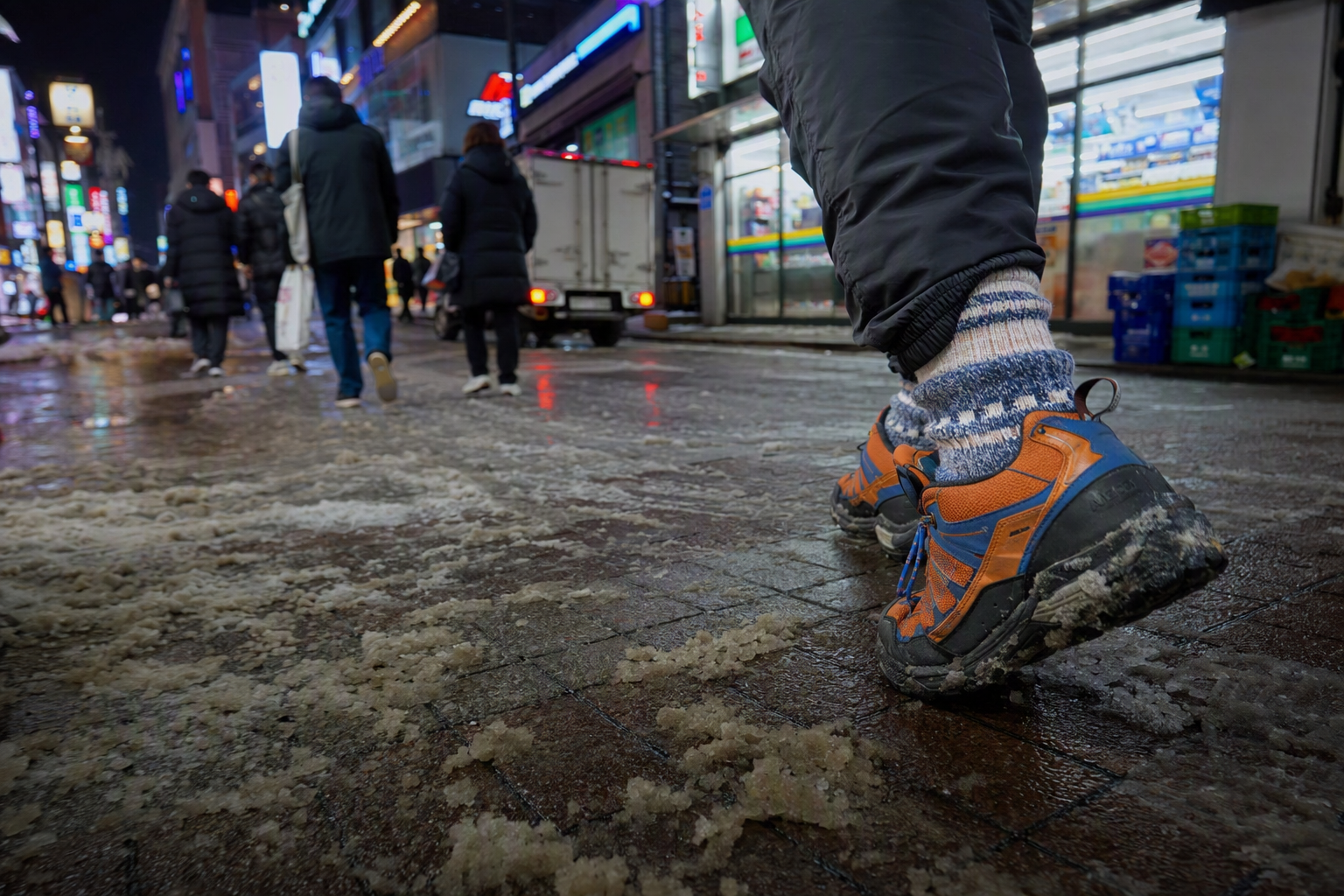
A compact umbrella is useful, but in December we care more about water-resistant shoes and a warm outer layer than about heavy rain gear. If the forecast shows snow or freezing conditions, prioritize traction. Seoul sidewalks, subway stairs, palace stone paths, and shaded alleys can get slick.
Daylight and how it changes your itinerary rhythm
December days are short. Around the winter solstice, Seoul gets only about 9 hours and 34 minutes of daylight. This does not make travel difficult, but it does change the flow of a good day.
Outdoor sightseeing feels best earlier, especially for palaces, Bukchon-style neighborhood walks, parks, and viewpoints. Save longer indoor meals, shopping, exhibitions, cafés, spas, or jjimjilbang time for late afternoon and evening when the cold settles in. Night markets and light displays can still be lovely, but they are much more enjoyable when you are dressed for standing around, not just walking quickly between warm buildings.

Seoul, Busan, and Jeju in December: one country, different winters
A single Korea packing list can be misleading in December. Seoul is often the coldest and driest major city on a typical traveler route, while Busan and Jeju are usually milder.
Seoul and the northwest
Seoul, Incheon, and nearby areas feel like true winter. Expect cold mornings, dry air, and sharp wind. A heavy coat is not extra; it is the base of the outfit. Anyone planning long outdoor days, night views, palace photo sessions, or riverside walks should dress more warmly than the average high suggests.
Busan
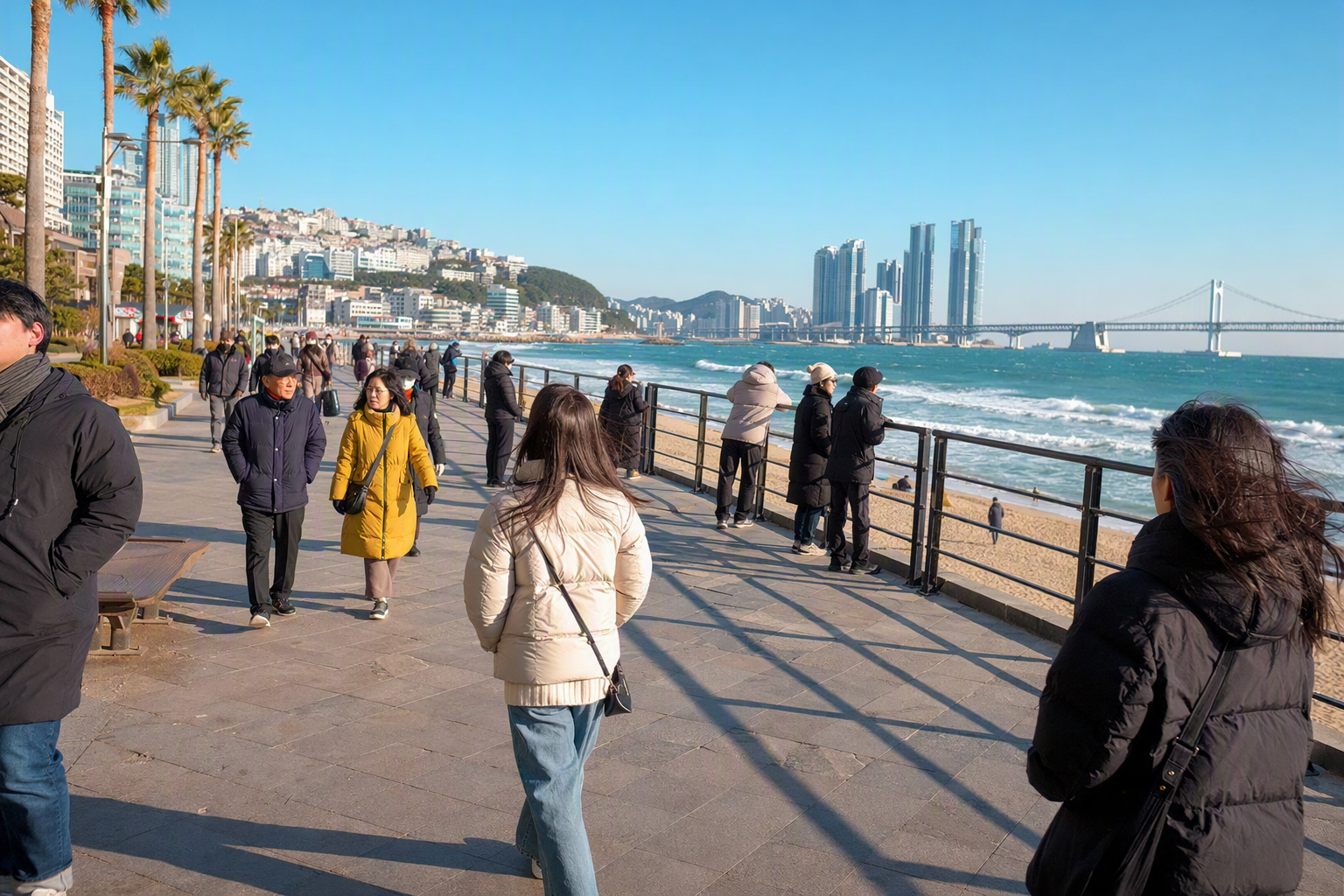
Busan is milder than Seoul and can feel closer to late autumn on some December afternoons, especially in sunny areas. That said, it is still winter, and sea wind can make exposed waterfront spots feel chilly. A lighter insulated coat may work for some travelers in Busan, but pack layers if you are arriving from Seoul or returning there afterward.
Jeju
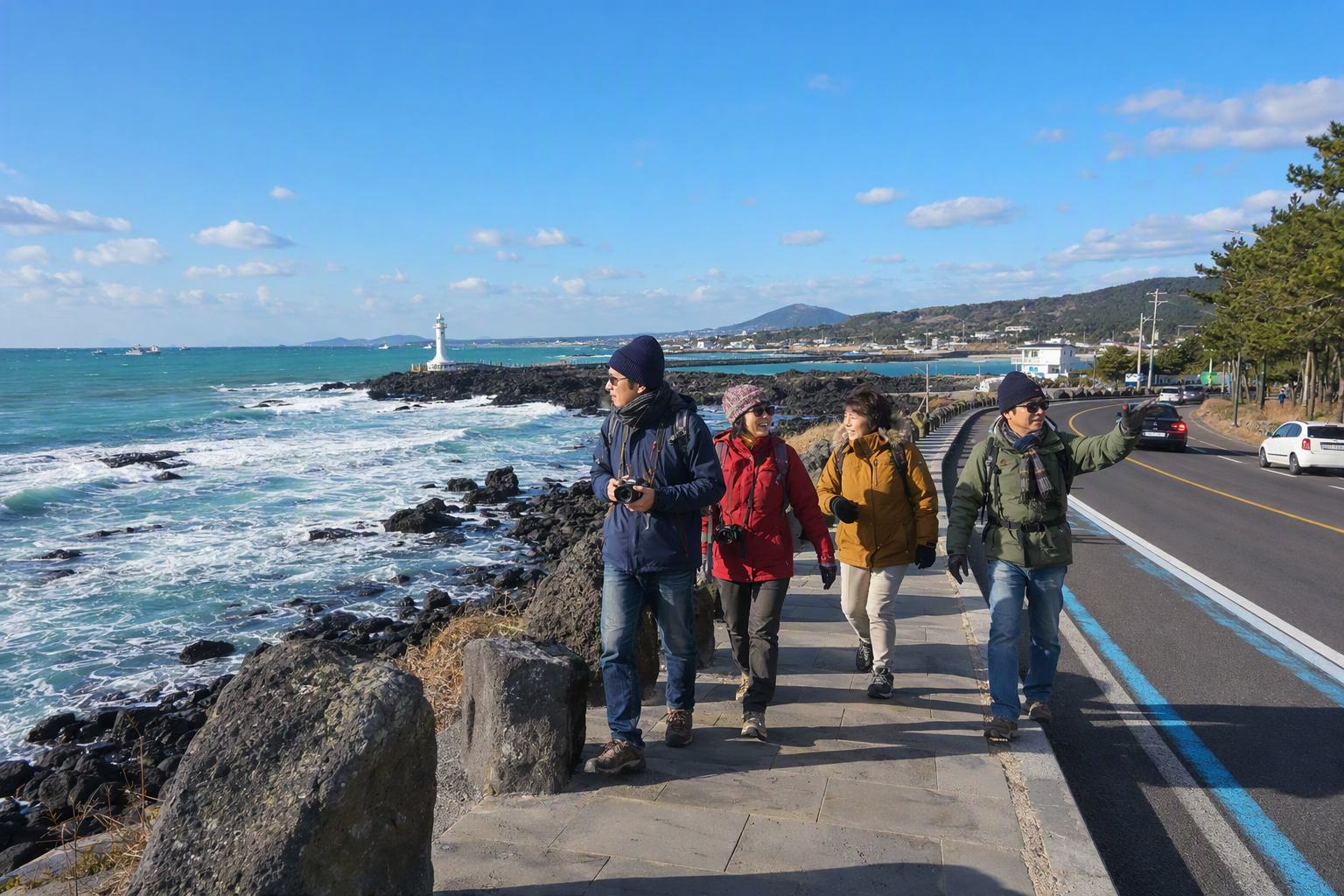
Jeju is also milder, with December often feeling much softer than Seoul. The island can still feel cold when wind picks up, so a layered jacket system is better than assuming spring weather. Travelers moving between Seoul and Jeju should avoid packing only for Jeju’s milder climate, because the same outfit may feel painfully thin once you are back in the capital.
What to pack for Seoul in December
December Seoul rewards practical packing. The goal is not to look like you are climbing a mountain; the goal is to stay warm enough that you can actually enjoy wandering, eating street snacks, taking photos, and waiting for your turn at popular restaurants.
The outer layer
Bring a heavy insulated coat or parka. A long padded coat is especially useful because it protects your thighs and creates a warmer full-body feeling. This style is extremely common in Korea in winter for a reason.
A short wool coat can work for mild afternoons or dressier dinners, but relying on it as your only December outerwear is risky. Wool looks polished, but wind cuts through more easily than many travelers expect. If you love the wool-coat look, wear proper thermal layers underneath and keep outdoor time realistic.
The inner layers
Seoul’s winter has a strange rhythm: outside can be below freezing, while indoor spaces are often strongly heated, sometimes around the low-to-mid 20s°C. Removable layers make the day much more comfortable.
Pack:
- Thermal base layers for top and bottom
- Fleece, wool, or a packable down mid-layer
- Warm trousers or lined pants
- Thick socks
- A hat or ear coverage
- A scarf that protects the neck and lower face
- Gloves you can use with your phone
- Disposable heat packs for long outdoor days
This base–mid–outer system works better than one extremely thick piece, because you can peel layers off inside restaurants, cafés, shops, and subway trains.

Shoes matter more than travelers expect
For December through February, Seoul is much easier with insulated waterproof boots or high-traction winter shoes. They do not need to be dramatic snow boots, but they should protect your feet from cold ground, wet slush, and icy patches.
Thin-soled fashion boots, canvas sneakers, and non-waterproof shoes are the usual regret items. Denim alone can also feel surprisingly cold on the legs during long outdoor stretches, especially at night.
If your itinerary includes shoe-removal places such as certain traditional restaurants, hanok stays, or jjimjilbang, easy-on footwear is convenient. Just make sure convenience does not mean slippery soles.
Skincare, masks, and small winter helpers
December air is dry, and cold wind makes it feel even drier. Lip balm, hand cream, and a richer face moisturizer are small items that make a big difference. Many travelers buy these easily after arrival from drugstores, beauty shops, convenience stores, or Daiso-style shops.
KF94 masks are also useful in winter, both for warmth and for days when fine dust is high. Check air quality along with the weather forecast, especially before long outdoor plans.
Hot packs are easy to buy in Korea and are very popular in winter. Keep one in each coat pocket during night markets, palace visits, theme parks, or outdoor photo sessions. Foot warmers can also help if your shoes are not especially insulated.
Buying winter items in Korea
Korea is a practical place to buy winter accessories after arrival. Gloves, scarves, hot packs, moisturizers, masks, and compact umbrellas are easy to find. Long padded coats and winter outerwear are also widely sold, from budget-friendly daily brands to technical outdoor labels. Prices, stock, and tax-refund rules change by store and season, so check current details before counting on a specific deal.
The items we would rather bring from home are the ones that can become annoying to source quickly: wide-size insulated boots, prescription medication, specific personal-care products, and electronics that need the correct voltage or plug setup. Seoul shopping is excellent, but cold feet on day one are not the best reason to start your vacation with an emergency mall run.
How to plan better days in November and December
The smartest winter itinerary is not necessarily less ambitious. It is simply kinder to your body.
Put outdoor sights earlier in the day
Palaces, traditional neighborhoods, parks, and viewpoints are more pleasant in daylight. In December, that daylight is limited, and the temperature drops quickly after sunset. A good winter day in Seoul might place a palace or neighborhood walk before late afternoon, then move into dinner, shopping, a café, or a spa-style indoor plan.
Treat open-air locations with respect
The Han River, Namsan, Cheonggyecheon, Nami Island, bridges, rooftops, and hilltop viewpoints can feel several degrees colder because of exposure. They are still worth visiting, but do not schedule them as casual add-ons at the end of a long day unless you are dressed for wind.
Keep indoor pivots in your back pocket
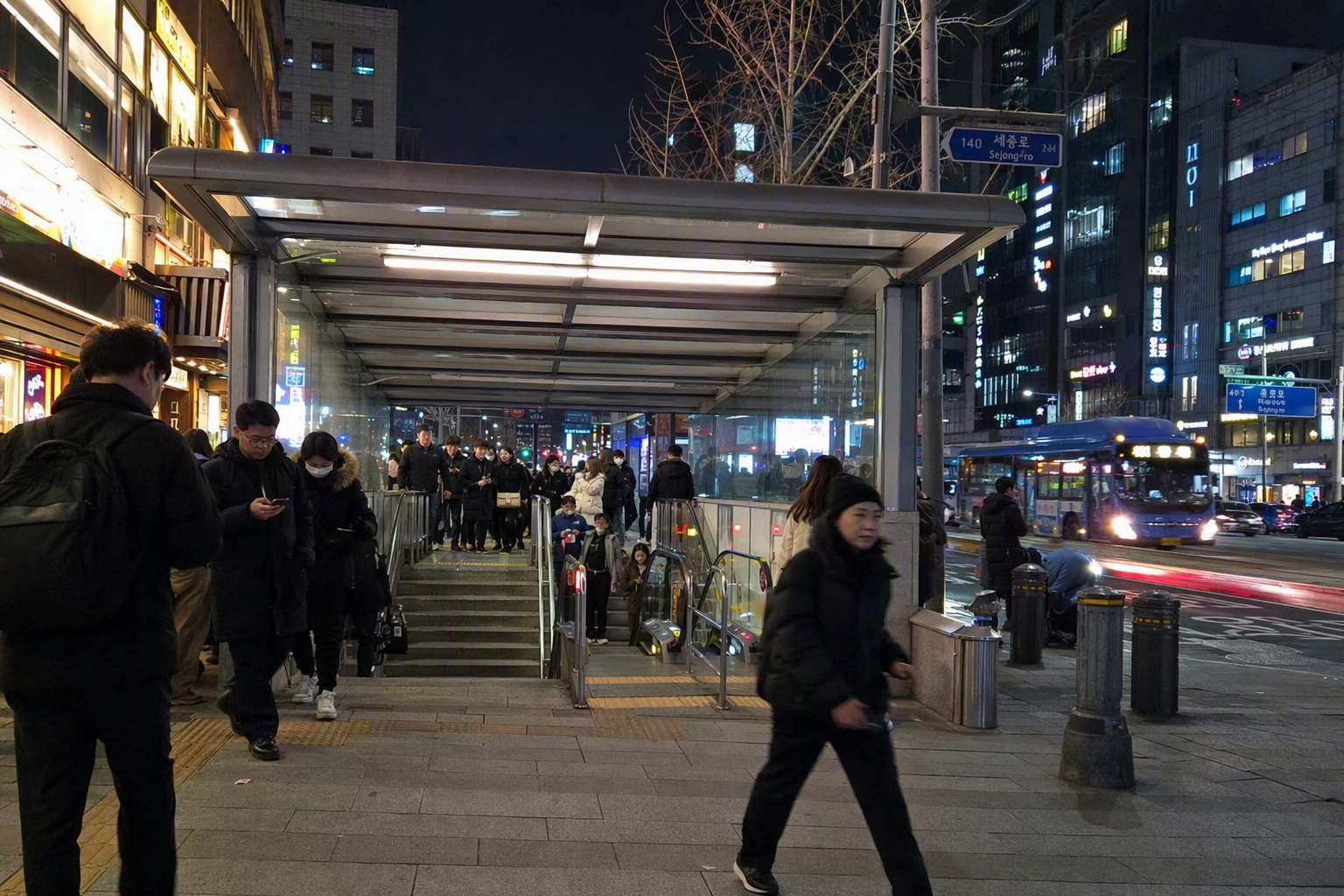
Seoul is built for winter life. Subways connect major neighborhoods, malls are easy to fold into a day, cafés are everywhere, and jjimjilbang culture exists for exactly the kind of evening when your fingers have had enough. Hanok cafés and warm restaurants can turn a freezing walk into a cozy memory instead of a test of endurance.
Common weather mistakes to avoid
Treating all of November as autumn
Early November and late November do not pack the same. The second half of the month can bring frost, ice, and even snow. Add at least one serious warm layer if your trip touches late November.
Expecting December Seoul to be snowy every day
Snow can happen, and Seoul in light snow is beautiful. But December is also dry, and many snowy days are only flurries or brief mixed precipitation. Build photo plans around places you want to see anyway, not around guaranteed snowfall.
Packing for the average high only
A December high of 4°C may not sound extreme. The low, the wind, and the amount of time you spend outdoors are what matter. Dress for the coldest part of your day, then adjust indoors.
Wearing pretty shoes with no grip
Winter sidewalks can be dry one day and slick the next. Shoes with traction are far more valuable than a perfect outfit that makes you nervous on subway stairs.
Forgetting how hot indoor spaces can feel
A giant coat over a thick sweater over another thick sweater can become uncomfortable inside. Layers that open, unzip, or come off easily are the winter traveler’s best friend.
The Creatrip takeaway
November in Korea is a transition month with beautiful autumn moments and a winter edge. December is real winter, especially in Seoul: average temperatures hover around freezing, nights often fall below 0°C, precipitation is low, snow is possible but not guaranteed, and wind can change the entire feel of the day.
For Seoul in December, pack like you are going somewhere cold, dry, and walkable. Bring the heavy coat. Choose warm shoes. Add gloves before you think you need them. Keep your outdoor plans earlier and your indoor escapes close.
Do that, and winter Korea becomes much easier to enjoy: pale palace mornings, steaming bowls of soup, café windows fogged from the heat inside, and that crisp Seoul air that makes the city feel extra sharp around the edges.