Seoul Street Food Markets: Where to Eat in Myeongdong, Namdaemun, Gwangjang and Tongin
A Creatrip edit for choosing the right market, ordering the right snacks, and keeping your Seoul food crawl delicious without overpaying.

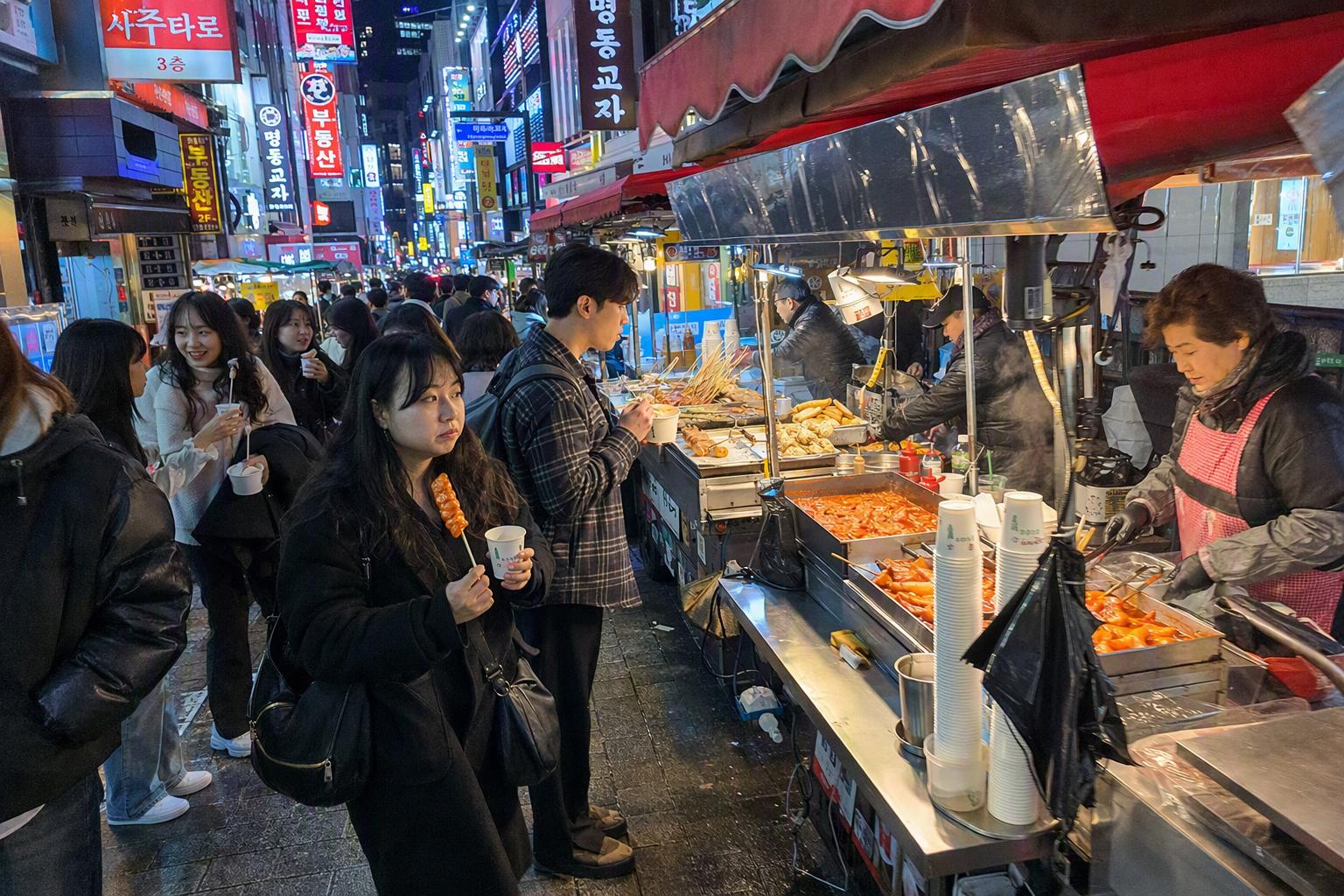
Seoul street food is not one single scene. It can be a paper cup of sweet-spicy tteokbokki under the lights of Myeongdong, a steaming bowl of kalguksu squeezed into Namdaemun’s lunch alleys, or a crisp mung bean pancake sizzling in the middle of Gwangjang Market. The smartest food day in Seoul is less about eating everything and more about choosing the right market for the mood.
At Creatrip, our honest edit is simple: go to Myeongdong for convenience and atmosphere, Namdaemun for value, Gwangjang for the classics, and Tongin when you want a slower lunch near the palaces. Each one has a different rhythm, and the best bites often come from knowing what not to order as much as what to order.

The quick Creatrip market edit
| Market | Best for | Best time | Budget feel | Watch for |
|---|---|---|---|---|
| Myeongdong Night Market | Easy first-night snacks, shopping break, photo-friendly food | 18:00–21:00 | Highest among the main markets | Expensive seafood skewers and oversized fusion snacks |
| Namdaemun Market | Value lunch, local market energy, generous portions | Tue–Fri 10:30–13:30 | Best value | Most stalls close Sundays; goods and food have different hours |
| Gwangjang Market | Bindaetteok, mayak gimbap, yukhoe, classic market visuals | Weekdays late morning to afternoon | Still affordable, but uneven | Confirm prices and portions; carry cash |
| Tongin Market | Custom dosirak lunch near Gyeongbokgung | 11:00–17:00 | Mid-range and playful | Check latest Dosirak Café operation before going |
| Jongno 3-ga Pojangmacha Street | Late-night tent bar atmosphere | After dinner | Varies | Better for adults who are comfortable with casual drinking spots |
Market hours, prices, and payment rules can shift with holidays, weather, and individual vendors. Treat the details below as a reliable planning baseline, then check the latest official notices or map listings before building a whole day around one stop.
What to eat first: Seoul street food classics that rarely disappoint
Before choosing a market, it helps to know the Seoul street food lineup. Some foods taste best as quick snacks while walking; others deserve a proper seat and ten quiet minutes with chopsticks.
Tteokbokki is the red rice cake dish most travelers recognize first. In tourist-heavy areas like Myeongdong, it often leans milder and sweeter than neighborhood versions. Expect around 3,000–5,000 KRW for a street portion in Myeongdong and similar bunsik-style pricing in traditional markets.
Eomuk or odeng is fish cake served on skewers, usually with hot broth. It is cheap, warming, and ideal in winter. Myeongdong prices are commonly around 1,000–3,000 KRW, depending on the stall and size.
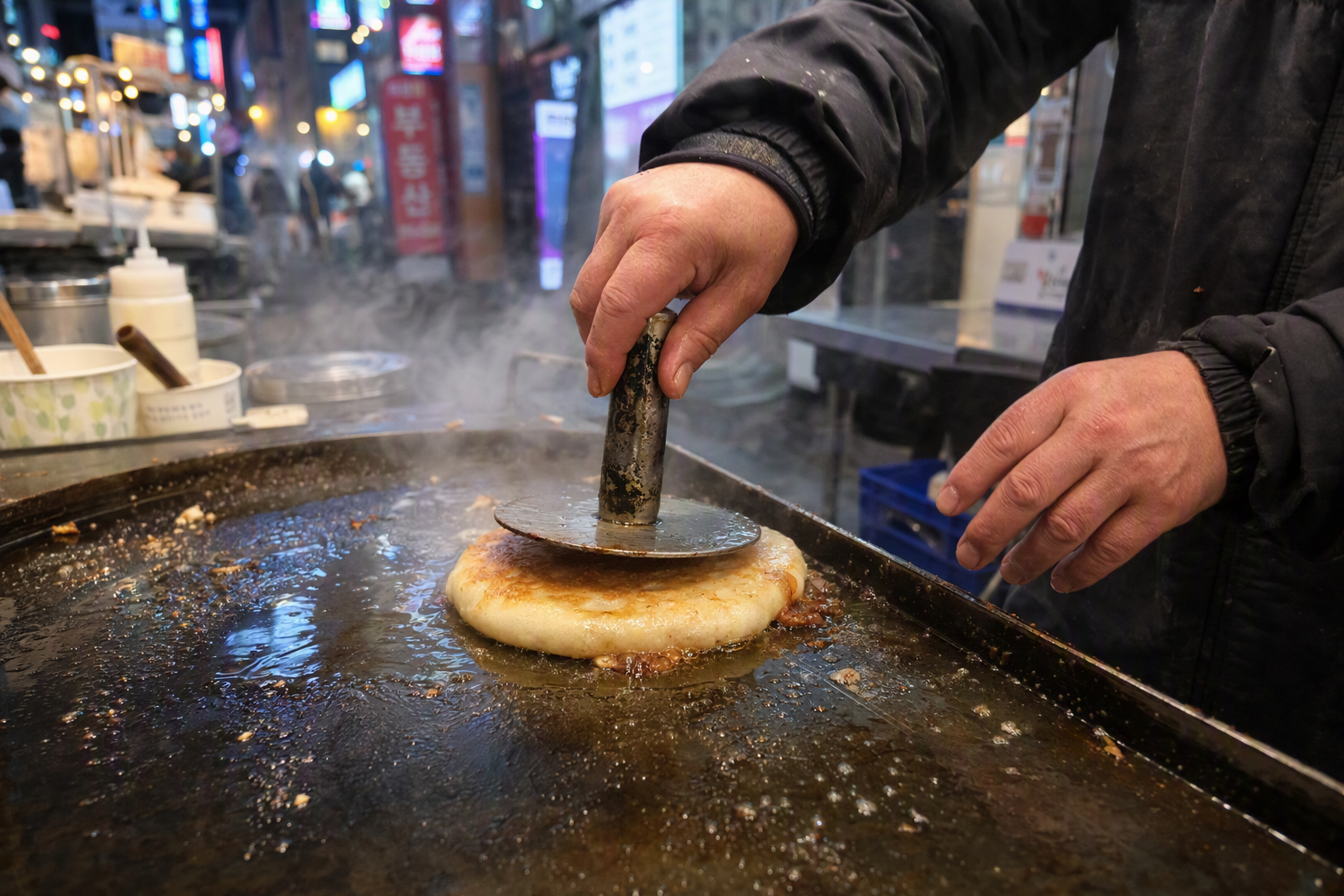
Hotteok is a pan-fried sweet pancake, usually filled with brown sugar syrup and seeds. This is one of the best-value snacks in Seoul, often around 1,500–3,000 KRW in central areas and sometimes cheaper in more local market corners.
Gyeranppang is a small egg bread that feels made for cold evenings. It is simple, soft, and filling without being messy, usually around 1,500–3,000 KRW.
Bindaetteok or nokdujeon is Gwangjang’s signature mung bean pancake. The good ones are crisp at the edges, soft inside, and best with a small cup of makgeolli if you are sitting down. A standard pancake is often around 5,000 KRW, with seafood or meat versions costing more.
Mayak gimbap is the tiny mini gimbap associated with Gwangjang. The name means something like addictive gimbap, but there are no actual narcotics involved; the appeal is the bite-size roll plus mustard-soy dipping sauce. Common prices sit around 3,000–5,000 KRW, though tourist-facing stalls may charge more.
Kalguksu is knife-cut noodle soup, usually in a light anchovy broth. It is not a walk-and-eat snack, but it is one of the most satisfying market meals in Seoul. Namdaemun and Gwangjang both have strong kalguksu options around 7,000–10,000 KRW.
Yukhoe is Korean seasoned raw beef, famously served in Gwangjang Market. It is a sit-down order rather than a street snack, and prices vary widely from casual bowls to full plates, often around 12,000–25,000 KRW depending on portion and shop.

Myeongdong Night Market: the easiest evening snack crawl
Myeongdong is Seoul street food on easy mode: central, bright, walkable, and surrounded by cosmetics shops, fashion stores, cafés, money exchange booths, and hotels. The food carts line the Myeongdong-gil area in Jung-gu, usually setting up from around 16:00, becoming fully active by 17:30–18:00, peaking around 18:00–21:00, and winding down by about 23:00.
This is the best market for travelers who want a lively Seoul night without transferring across town. It is also the most tourist-oriented street food strip in the city, which is both its charm and its trade-off. Prices are commonly 30–60% higher than local markets for similar items, but the convenience is hard to beat after a shopping run or before heading up to Namsan.

What to order in Myeongdong
The best Myeongdong strategy is to stay with the classics and choose two or three small snacks rather than letting every dramatic grill display pull you in.
Good picks include:
- Hotteok: around 1,500–3,000 KRW
- Gyeranppang: around 1,500–3,000 KRW
- Eomuk or odeng: around 1,000–3,000 KRW
- Tteokbokki: around 3,000–5,000 KRW, often mild and sweet
- Tornado potato: around 3,000–6,000 KRW
- Korean corn dog: around 4,000–6,000 KRW
- Dak gangjeong: around 5,000–8,000 KRW
- Kimbap: around 3,000–5,000 KRW per roll
A generous Myeongdong tasting run usually lands around 15,000–25,000 KRW per person, depending on how much you lean into meat skewers and fusion items.
The Myeongdong foods to think twice about
The famous grilled lobster with cheese, giant meat skewers, and blowtorched seafood snacks are fun to photograph, but they are also where the bill jumps quickly. Lobster-style snacks can reach 15,000–20,000 KRW, while large meat skewers often sit around 10,000 KRW. If that is the snack you genuinely want, enjoy it. If the goal is to taste Seoul street food well, the smaller classic items give a much better return.
Another small but useful detail: Myeongdong has very few public trash bins. Most stalls expect customers to return cups, skewers, and trays to the vendor after eating. It feels unusual at first, but it keeps the street manageable during peak hours.
Who Myeongdong is best for
Myeongdong is ideal for a first night in Seoul, a group with mixed tastes, or anyone staying nearby who wants dinner without a reservation. It is not the place we would choose for the cheapest tteokbokki or the deepest local market feeling. Come for the neon, the walkability, and the low-effort fun; save your value hunting for Namdaemun.
Namdaemun Market: the best value pick for a real meal
Namdaemun Market is older, larger, and rougher around the edges in the best way. Dating back to 1414, it is often described as Korea’s oldest and largest traditional market, with around 10,000 vendors and hundreds of thousands of daily visitors. Compared with Myeongdong, it feels less polished and more lived-in: kitchenware shops, children’s clothing streets, accessories wholesalers, optical stores, food alleys, delivery carts, and office workers slipping in for lunch.
The easiest access is Hoehyeon Station, Line 4, Exit 5, about a minute from the market. For food, the sweet spot is usually Tuesday to Friday around 10:30–13:30. General retail often runs roughly 11:00–17:00, food alleys around 11:00–21:00, and many stalls close on Sundays. That Sunday point matters; Namdaemun can feel surprisingly thin if you arrive expecting a full market day.
Kalguksu Alley: the lunch that feels like Seoul generosity
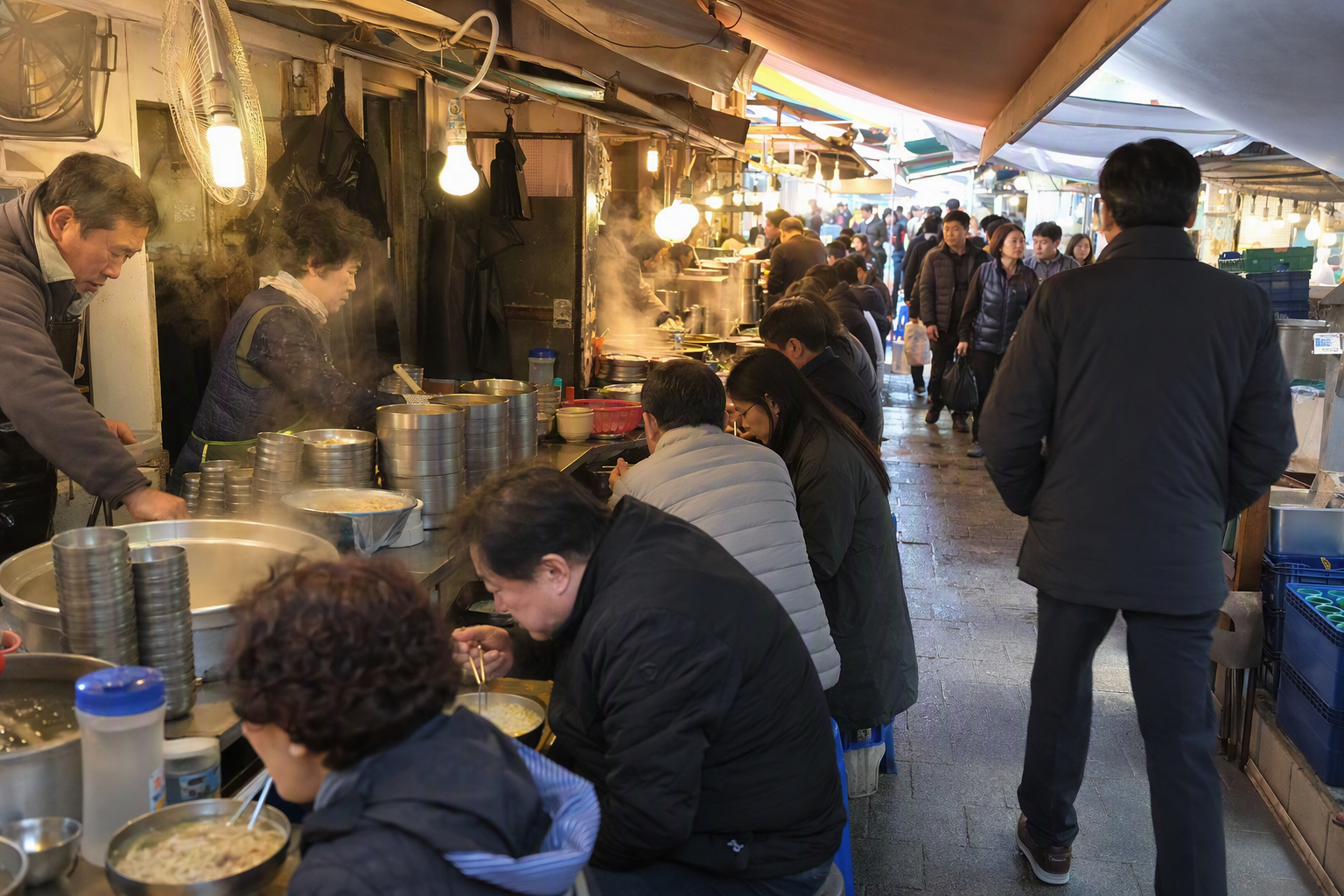
Namdaemun’s Kalguksu Alley is one of the easiest places to understand the Korean idea of insim, or generosity. A bowl of knife-cut noodles in anchovy broth usually costs around 7,000–9,000 KRW, and many stalls add small extras such as bibim-naengmyeon, barley rice, or other side portions as service. Service in Korea means a complimentary extra from the shop, not a required fee.
This alley is not glamorous. Seats are close, steam fogs the air, and lunch moves quickly. That is exactly the point. If Myeongdong is a snack parade, Namdaemun kalguksu is a proper market meal.
Galchi Jorim Alley: spicy braised beltfish in stone pots
For something more distinctly Namdaemun, look for Galchi Jorim Alley, where beltfish is braised in a spicy red sauce and served bubbling in stone pots with banchan. Expect roughly 10,000–15,000 KRW per person, depending on the shop and portion. It is a stronger flavor than noodle soup, a little messier, and more satisfying when shared.

Other good Namdaemun bites
Namdaemun is also excellent for lower-priced market snacks: hotteok, tteokbokki, eomuk, tempura, and dumplings often fall around 2,000–5,000 KRW. Dumpling shops such as the well-known king mandu spots are often cited for strong value, with portions like five large dumplings around 5,000 KRW at some stalls.
Cards are widely accepted in many Namdaemun food alleys and shops, though cash is still useful for small purchases. Haggling is normal for some goods, especially in wholesale-style areas, but not for food. If a noodle bowl has a posted price, that is the price.
Who Namdaemun is best for
Namdaemun is the market we would send hungry friends to first. It gives better value than Myeongdong, feels more everyday than Gwangjang’s central food corridor, and pairs beautifully with nearby sights like Sungnyemun Gate, the Bank of Korea Money Museum, and Myeongdong within a short walk.
It is not as sleek or photogenic as the night market. Some lanes are crowded and practical rather than pretty. But for travelers who care about eating well, spending reasonably, and seeing a market that still functions as a real urban hub, Namdaemun is the strongest all-round choice.
Gwangjang Market: the classic Seoul market, with a sharper eye on prices
Gwangjang Market has the look many travelers imagine before coming to Seoul: sizzling pancakes, metal counters, aunties flipping jeon, bowls of noodles, bright plates of yukhoe, and a constant stream of people moving through the central food corridor. It is Seoul’s first permanent market from the early 20th century, and the easiest entrance for food is usually Jongno 5-ga Station, Line 1, Exit 8.
Food alley hours are commonly listed around 09:00–23:00, while fabric and other shops often run closer to 09:00–18:00 and may close Sundays. For eating, many travelers have the best luck from late morning to mid-afternoon, roughly 11:00–16:00, before the most intense weekend crowding and before some individual stalls begin closing. Saturdays can become extremely dense, so weekday visits feel much better.

What Gwangjang still does very well
Gwangjang remains one of the easiest places to taste several classic Korean market foods in one compact area.
The main orders are:
- Bindaetteok or nokdujeon: usually around 5,000 KRW for a basic mung bean pancake; meat or seafood versions cost more
- Mayak gimbap: commonly 3,000–5,000 KRW depending on stall and portion
- Modum-jeon: assorted pan-fried items, good for sharing
- Sundae and head meat: old-school market fare, better for adventurous eaters
- Kalguksu and mandu: often around 7,000–10,000 KRW
- Yukhoe: often 12,000–25,000 KRW, depending on shop and portion
Buchon Yukhoe, operating since 1965 and long recognized by Michelin Bib Gourmand-style listings, is one of the best-known yukhoe names in the market. A full yukhoe plate is commonly around the high teens in thousands of KRW, while yukhoe bibimbap is often closer to 9,000–10,000 KRW. Waiting times can stretch on weekends, but annex branches and half-portion options may reduce the pressure depending on the day.
Gohyang Kalguksu, also known by many travelers as the Netflix-featured kalguksu stall from Street Food: Asia, can draw waits around 45 minutes. It is part of the market’s modern fame, but nearby stalls serve similar anchovy-broth noodles and kimchi mandu at comparable prices with far shorter lines. If time in Seoul is limited, that trade-off is worth considering.

The Gwangjang price issue, plainly
Gwangjang has had a difficult stretch. From late 2025 into 2026, the food hall faced public criticism over hidden price hikes, aggressive upselling, inconsistent portions, and overcharging aimed especially at tourists. The issue became serious enough to trigger legal conflict among market groups and stronger action from Jongno-gu, including a stall real-name system, mandatory price and quantity displays for street vendors, monitoring, and multilingual menu efforts.
That does not mean Gwangjang is off the list. It does mean the old advice of just sitting at any stall and trusting the flow is no longer the best approach.
A calmer way to enjoy it:
- Choose stalls with clear menu boards showing price and quantity.
- Walk a little beyond the entrance-facing corridor; interior stalls can be 10–30% cheaper for similar items.
- Confirm the price before sitting, especially for assorted platters.
- Do not accept added meat, extra portions, or upgraded sets unless you asked for them.
- Carry small bills, since many food stalls still prefer cash and some remain effectively cash-only for foreign visitors.
- If a stall refuses a single portion or pushes a set that feels wrong for your group, keep walking.

Who Gwangjang is best for
Gwangjang is still wonderful for travelers who want to taste bindaetteok, mayak gimbap, yukhoe, and old-school market foods in one place. It also works well for anyone pairing food with fabric browsing, hanbok textiles, vintage fashion, or a Jongno-area itinerary.
It is no longer our top pick for carefree value. Namdaemun feels more transparent and generous right now. But with cash, patience, and a habit of checking posted prices, Gwangjang can still be a memorable central Seoul food stop.
Tongin Market: a playful dosirak lunch near Gyeongbokgung
Tongin Market is smaller and gentler than the big three above, and that is part of its appeal. Founded in 1941 and located near Gyeongbokgung, it is best known for the Dosirak Café system, where visitors exchange money for traditional brass yeopjeon coins and build a lunchbox by choosing side dishes from participating stalls.
The system usually runs around 11:00–17:00, with typical spending around 5,000–10,000 KRW depending on how many coins you buy. Side dishes often cost 2–4 coins, and the market’s signature snack is gireum tteokbokki, a pan-fried, oil-coated version of tteokbokki that tastes quite different from the saucy red kind in Myeongdong.

Tongin is especially good for families, palace-day lunches, and travelers who like choosing many small things rather than committing to one big bowl. It is more experiential than bargain-basement cheap, but the pace is pleasant and the location makes sense before or after Gyeongbokgung, Seochon, or a café stop.
Because the Dosirak Café depends on participating stalls and operating rules, check the latest market notice before going specifically for the coin lunch.
Jongno 3-ga pojangmacha: late-night Seoul, not quite a market
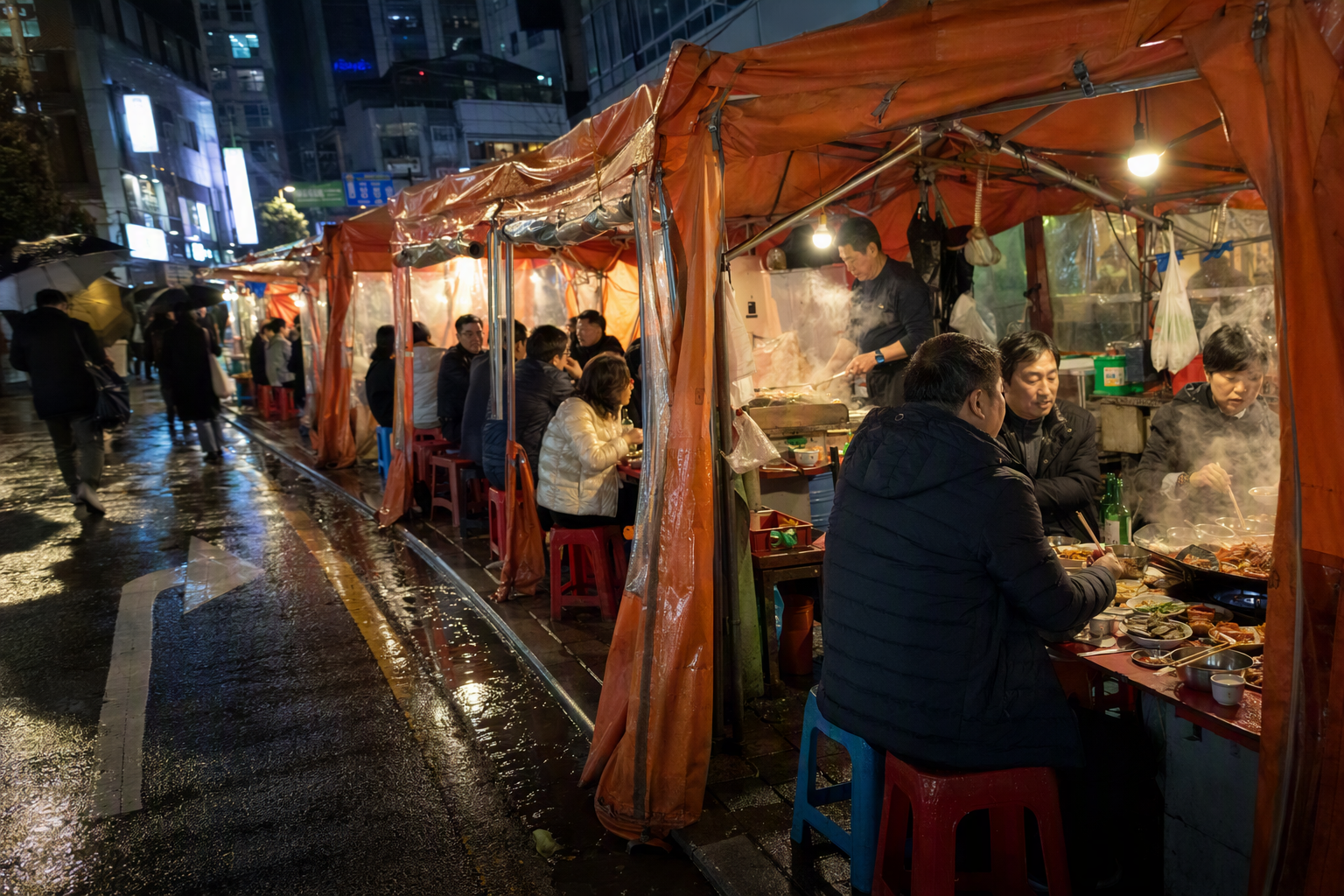
After the markets wind down, Jongno 3-ga’s pojangmacha tents offer a different kind of street food mood. This is less about sightseeing snacks and more about sitting close together over drinks, grilled or stir-fried dishes, and the kind of casual late-night energy that feels very Seoul.
It works best as an optional final stop after Gwangjang or Myeongdong, especially for adult travelers who are comfortable with smoky, crowded, no-frills spaces. Since prices, menus, and payment methods vary by tent, check before ordering and keep the order modest until you understand the setup.
A realistic Seoul street food budget
Street food in Seoul can be cheap, but central tourist zones make it very easy to spend restaurant money while still standing outside.
For a light snack crawl, budget around 10,000–15,000 KRW per person. That covers a few classic items like hotteok, eomuk, tteokbokki, or egg bread.
For a fuller Myeongdong night market tasting, 15,000–25,000 KRW per person is more realistic, especially with corn dogs, dak gangjeong, or tornado potatoes. Add lobster, oversized skewers, or fusion seafood and the total rises fast.
For Namdaemun, a satisfying lunch can stay around 8,000–15,000 KRW per person, depending on whether you choose kalguksu, dumplings, snacks, or galchi jorim.
For Gwangjang, a solo diner can still eat well for under 20,000 KRW with careful ordering. A couple sharing pancakes, gimbap, noodles, and maybe yukhoe may land around 35,000–50,000 KRW.

Payment, cash, and small practical things that save the day
Korea is card-friendly, but markets have their own habits. Myeongdong has become more formalized, with many registered vendors accepting cards and displaying prices. Namdaemun also has broad card acceptance, especially in established shops and food alleys. Gwangjang is more mixed; many food stalls still prefer cash, and foreign cards may not always be smooth even where card payment is technically possible.
A small cash stash makes market eating easier. Think 1,000, 5,000, and 10,000 KRW bills, not only large notes.
A few other details matter more than they sound:
- Do not haggle for food. Haggling belongs to certain goods markets, not noodle bowls or tteokbokki cups.
- Return trash to the stall in Myeongdong. Public bins are scarce.
- Order small at the first stop. Seoul markets are dense, and the second or third stall is often more tempting than the first.
- Check Sunday plans. Namdaemun’s goods sections are mostly closed, and other traditional market operations can be reduced.
- Read the menu board before sitting. This matters most at Gwangjang, especially for platters and add-ons.
The easiest food routes by travel style
For a first Seoul night
Start with shopping or sightseeing in Myeongdong, then eat from the carts between 18:00 and 21:00. Keep the order simple: hotteok, tteokbokki, eomuk, and one fun item like a corn dog or tornado potato. This route is easy, bright, and low-stress, especially after a long flight.
For the best-value lunch
Go to Namdaemun on a weekday around 10:30–11:30, before the lunch alleys hit full pressure. Choose kalguksu if you want comfort, galchi jorim if you want spice and a proper sit-down meal, then walk toward Sungnyemun or Myeongdong after eating.
For the classic market tasting
Visit Gwangjang on a weekday late morning or early afternoon. Share bindaetteok, mayak gimbap, and one noodle or yukhoe order rather than buying full portions at every stall. Walk beyond the entrance corridor before choosing where to sit.
For a palace-area lunch
Pair Gyeongbokgung or Seochon with Tongin Market’s dosirak system. It is not the biggest food market in Seoul, but the lunchbox format is fun, tidy, and easy to share across different tastes.
For an ambitious evening crawl
A compact central-Seoul crawl can begin around 16:00 at Gwangjang, continue toward Dongdaemun Design Plaza, move to Myeongdong for evening snacks, and finish with a late atmosphere stop near Jongno 3-ga. Subway transfers for this kind of route are inexpensive, often only a few thousand won in total, but the real trick is pacing. One pancake too many at the first market can end the night early.

So, which Seoul market is actually best?
For pure value and local feeling, Namdaemun Market is the strongest choice right now. It is generous, practical, and still deeply tied to daily Seoul life.
For a fun first-night street food experience, Myeongdong Night Market wins on convenience. It costs more, but it is easy to navigate and lively every evening.
For iconic dishes and classic visuals, Gwangjang Market still belongs on the Seoul food map. Go with clear expectations, check prices, and avoid being pulled into vague set menus.
For a relaxed lunch near the palaces, Tongin Market adds a softer, more playful rhythm to the trip.
The best Seoul street food day is not about proving anything. Eat one crispy pancake while it is hot, sip fish cake broth when the evening turns cold, skip the overpriced lobster unless it makes you happy, and leave just enough room for the snack you did not know you wanted until you smelled it from the next stall.