Must-Go Places in Seoul for a First Korea Trip
A Creatrip editor’s pick of Seoul’s classic landmarks, current neighborhoods, river nights, and day trips worth building your itinerary around.

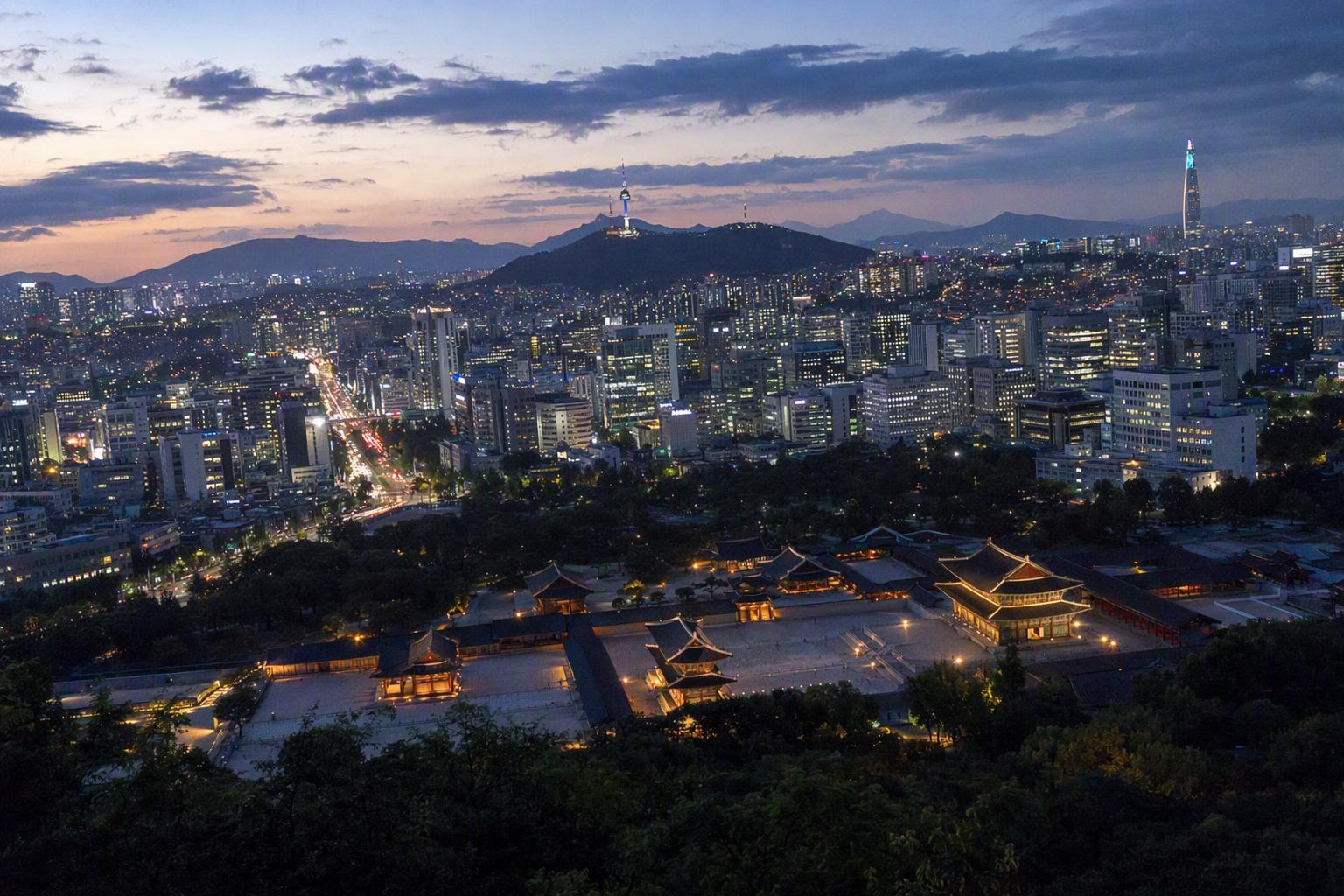
Seoul rewards a little editing. It is very easy to spend a whole trip chasing famous pins across the map and still feel like the city never quite settled into focus. The better version is simpler: one palace morning, one skyline night, one market wander, one neighborhood that feels very now, one river evening, and maybe one day outside the city.
That balance is also close to how Korea officially frames Seoul’s biggest places of interest. The national 100 Must-Visit Tourist Spots of Korea includes the Five Royal Palaces, N Seoul Tower, Gwanghwamun Square and Cheonggye Plaza, the National Museum of Korea, the Seoul Sky–Lotte World–Seokchon Lake area, Seongsu-dong and Seoul Forest, Cheongwadae–Seochon, Hangang Parks, and Hongdae Red Road. In other words, Seoul’s classic list is not just old stone walls and observation decks anymore. It is palaces, design, nightlife, parks, shopping streets, festivals, and the neighborhoods where locals actually spend their weekends.
At Creatrip, this is how we would sort Seoul for a first Korea trip: not by fame alone, but by how much each place adds to your actual days on the ground.
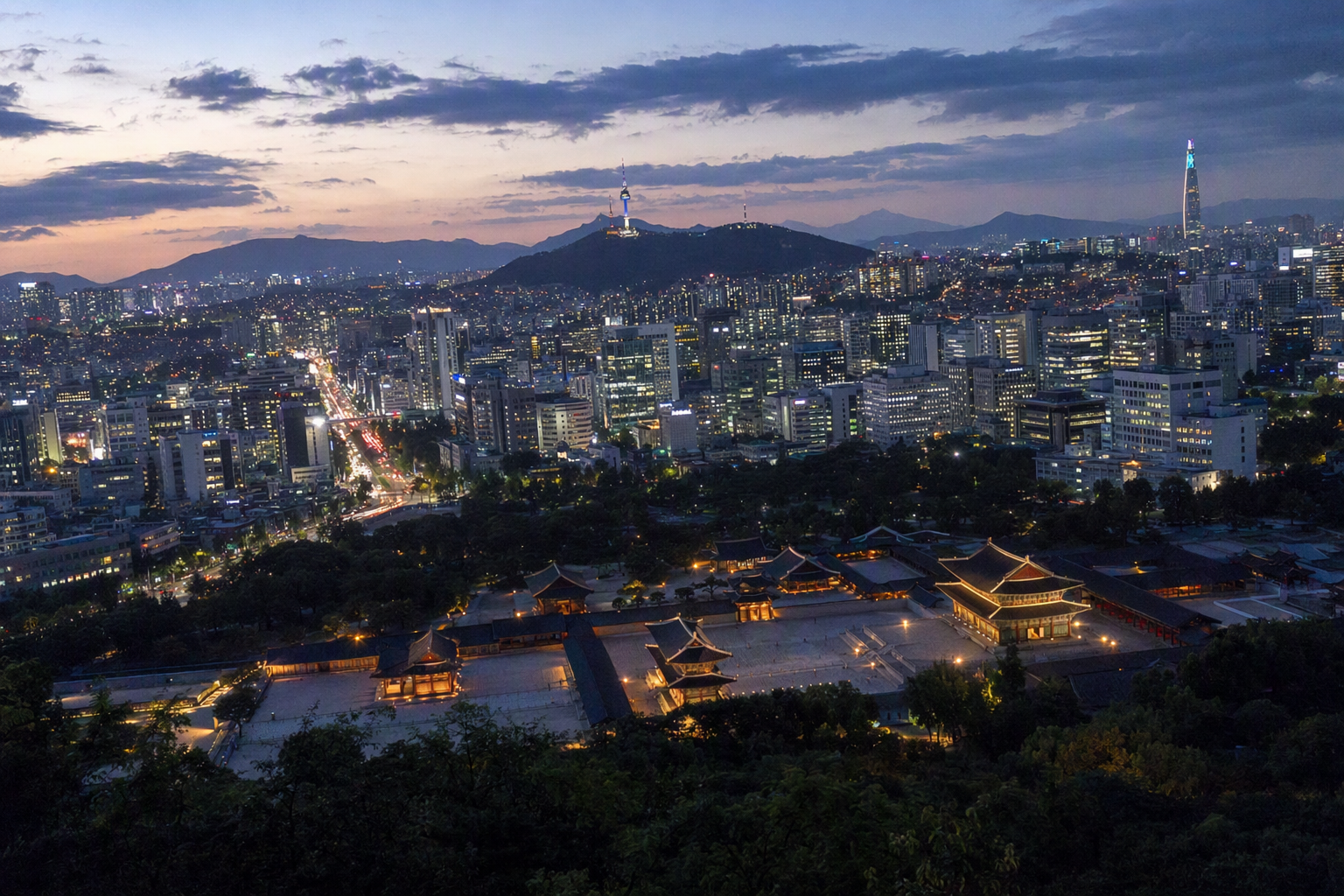
The Creatrip short list: what deserves space on a first Seoul trip
For most travelers, the strongest Seoul itinerary is built around these anchors:
- For royal Korea: Gyeongbokgung, Changdeokgung, Bukchon, Insadong, Ikseon-dong
- For skyline views: N Seoul Tower, Seoul Sky at Lotte World Tower, Naksan or another city viewpoint
- For shopping and street energy: Myeongdong, Namdaemun, Gwangjang Market, Hongdae Red Road
- For current Seoul: Seongsu-dong, Seoul Forest, Yeonnam, Mangwon, Mullae if there is time
- For design and indoor culture: DDP, Starfield Library at COEX, National Museum of Korea, Oil Tank Culture Park
- For river evenings: Banpo, Yeouido, Mangwon, Nanji, or another Hangang Park
- For a Seoul-plus-one-day feeling: DMZ, Nami Island and Garden of Morning Calm, Seoraksan and Naksansa
The trick is not squeezing all of them into three days. Seoul is big, and crossing the Han River more than necessary can quietly eat up your trip. Cluster by area and the city becomes much kinder.
Gyeongbokgung, Gwanghwamun and Seochon: the Seoul postcard that still works
Gyeongbokgung is famous for a reason. Built in 1395, it was the main palace of the Joseon Dynasty and still gives Seoul one of its most cinematic views: palace roofs in the foreground, Bugaksan and Bukhansan rising behind, Gwanghwamun opening toward the city.
Recent official listings put foreign adult admission at KRW 3,000, with free entry for visitors wearing a full hanbok. English guided tours are listed at 11:00, 13:30 and 15:30, except Tuesdays, when the palace is closed. Details can change around holidays and special events, so it is worth checking the official palace page before locking in your morning.
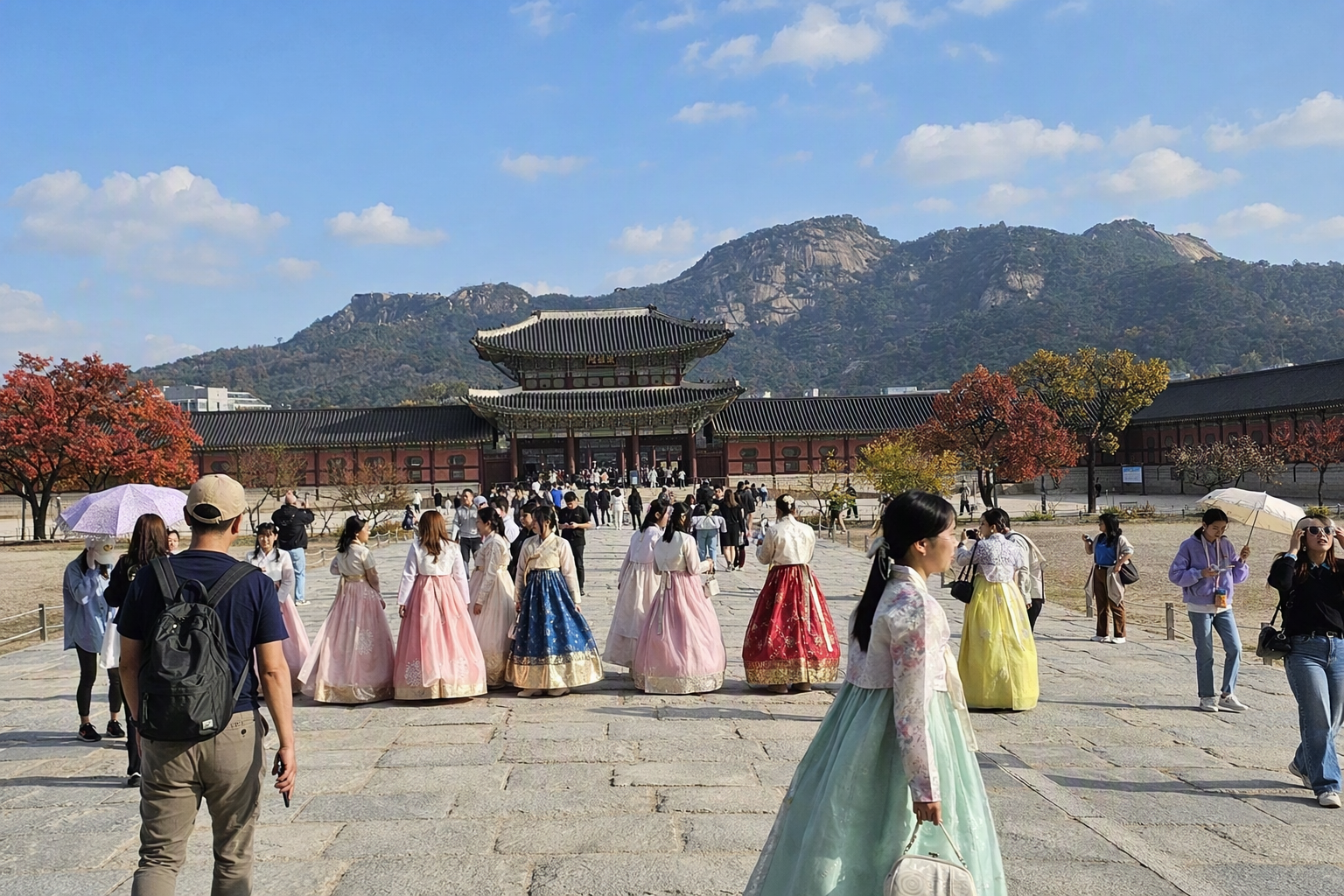
The best way to enjoy this area is not to treat Gyeongbokgung as a single photo stop. Let it stretch into the surrounding district. Walk out toward Gwanghwamun Square, continue along Cheonggyecheon Stream, or slide west into Seochon, where the mood softens into small cafes, galleries, and older residential lanes. The nearby Cheongwadae–Seochon area is also part of Korea’s official national tourism list, which makes this whole pocket feel like one of Seoul’s strongest first-day choices.
Creatrip take: Gyeongbokgung is the palace to pick if it is your first time in Korea and you want the grand, recognizable Seoul image. Go early if possible, especially in hanbok season, because the palace grounds and front gate area get busy quickly.
Changdeokgung and the Secret Garden: slower, greener, more atmospheric
If Gyeongbokgung is Seoul’s big opening scene, Changdeokgung is the quieter second chapter. It is a UNESCO World Heritage palace, loved for the way its buildings sit with the land rather than overpower it. The real prize is Huwon, often called the Secret Garden, a huge landscaped rear garden that covers about 32 hectares, roughly 60 percent of the palace grounds.
Changdeokgung usually closes on Mondays. The Secret Garden is ticketed separately and capacity-controlled, with guided entry rather than free wandering. Recent visitor information lists palace admission around KRW 3,000 for adults and Secret Garden adult admission around KRW 8,000, with English tours commonly listed at 11:30 and 14:30. Reservations are especially useful in peak seasons, and current booking practice opens a limited window several days in advance. Because the garden schedule and language tours matter so much here, confirm the latest times before going.
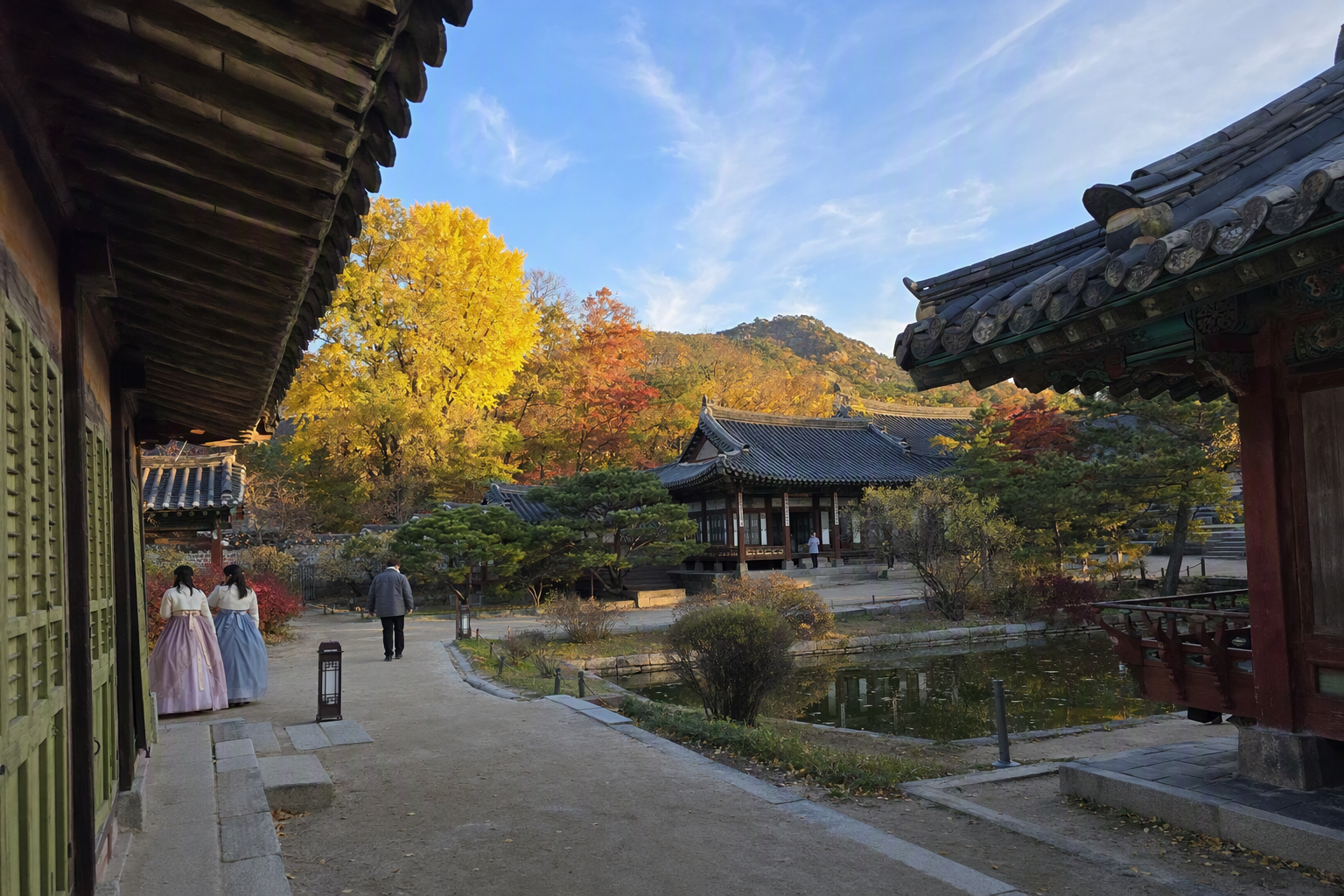
For 2026, Changdeokgung also has extra interest around restoration and seasonal programming. Conservation work has been bringing traditional hanji paper back into the interiors of Yeongyeongdang, and a special opening of the restored Seonhyangjae interior has been planned for the second half of 2026. The Changdeokgung Moonlight Tour is also one of Seoul’s most desired seasonal palace events; for the second half of 2026, it has been scheduled from September 10 to October 17, Thursday to Sunday, with multiple sessions per night. Tickets for these programs tend to be limited, so treat them as a bonus to plan around, not something to improvise at the gate.
Creatrip take: Choose Changdeokgung if you like gardens, architecture, quieter moods, or autumn foliage. Do not try to rush Gyeongbokgung, Changdeokgung, Bukchon, and Insadong all in one exhausted day. Two palace areas in one trip is lovely; two major palaces in one afternoon is usually just sore feet.
Bukchon, Insadong and Ikseon-dong: beautiful, but still lived-in
Bukchon Hanok Village sits between Gyeongbokgung and Changdeokgung, which makes it tempting to squeeze in as a quick walk. The view is gorgeous: tiled roofs, narrow uphill lanes, old Seoul framed by the modern skyline. It is also a real residential neighborhood, and the rules have become stricter for good reason.
The most sensitive lanes around Bukchon-ro 11-gil, often referred to as the Red Zone, enforce visitor hours of roughly 10:00 to 17:00, with fines for violations introduced from 2025. Keep voices low, avoid blocking doorways, and treat the area less like a set and more like a neighborhood that happens to be beautiful.

Nearby Insadong is easier-going for souvenirs, tea, crafts, and gallery browsing. Ikseon-dong adds a more playful layer with narrow hanok-style alleys packed with cafes and small restaurants. Ikseon-dong can get crowded, but it works well when you want a softer landing after palace sightseeing without taking the subway across town.
Creatrip take: Bukchon is best as a respectful morning or mid-afternoon walk, not a loud group-photo mission. Pair it with Insadong or Ikseon-dong for food and shopping, then let the palace day end before your legs quit first.
N Seoul Tower and Namsan: the first-night view
There is something very satisfying about seeing Seoul from above early in the trip. N Seoul Tower sits on Namsan, a 262-meter mountain in central Seoul, with the tower itself rising 236.7 meters. Together, the viewpoint reaches around 480 meters above sea level, which is why the city looks so wide from up there.
The tower is also one of Seoul’s most familiar romantic landmarks, with Locks of Love, photo zones, and the classic cable car approach. Recent visitor pages list the Namsan Cable Car operating around 10:00 to 23:00, with adult round-trip fares around KRW 15,000. Observatory prices have appeared in the low-20,000 to high-20,000 KRW range depending on ticket source and date, so check the official ticket page before going.
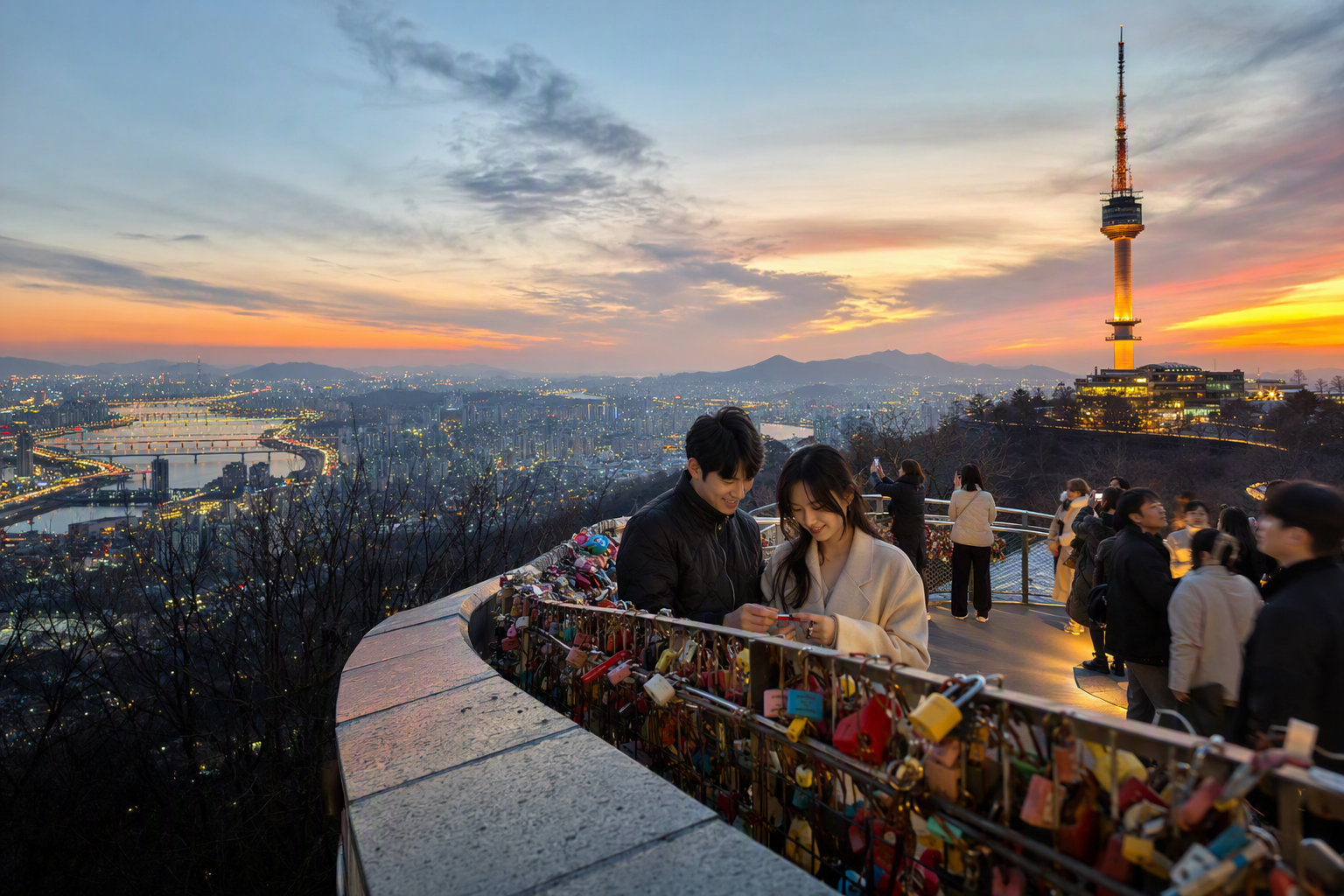
The trade-off is crowds. Sunset is beautiful, but it is also the time everyone thinks of going. If the cable car line looks long, walking part of Namsan can be a nicer choice in good weather. For travelers who prefer less standing and more certainty, arriving before sunset and staying into blue hour feels smoother than racing up at the last minute.
Creatrip take: N Seoul Tower is not just a tourist cliché; it genuinely helps you understand Seoul’s scale. Save it for a clear evening, and do not plan an expensive observatory ticket on a rainy or hazy day unless the atmosphere matters more than the view.
Myeongdong, Namdaemun and Gwangjang: shopping, snacks and the busy Seoul everyone talks about
Myeongdong is still Seoul’s international shopping heavyweight. Recent city analysis of foreign visitor movement placed Myeongdong at the top among major tourist areas, with daily foreign foot traffic far ahead of most neighborhoods. That tracks with what travelers see on the ground: cosmetics shops, fashion chains, snack stalls, currency exchange counters, hotels, and an easy subway connection to many first-time sights.

As a base, Myeongdong is practical. As a place to understand all of Seoul, it is not enough. Pair it with Namdaemun Market for a more old-school shopping mood or Gwangjang Market for the famous traditional market experience. Gwangjang is lively and photogenic, but it is also one of the most tourist-facing markets in the city now. For a calmer, better-value market stop, many Seoul regulars prefer Mangwon Market, especially when paired with Mangwon Hangang Park or Hongdae.
Creatrip take: Stay in Myeongdong if convenience matters. Eat there, shop there, enjoy the glow, but do not let it become your whole Seoul. The city gets much more interesting once you move beyond the main shopping grid.
Hongdae, Yeonnam and Mangwon: youth culture with an easy evening rhythm
Hongdae Red Road is one of Seoul’s official national tourism spots, and it makes sense. Around Hongik University, the mood shifts into busking, fashion, nightlife, character shops, casual restaurants, and groups of friends drifting between streets with no urgent plan. It is one of the easiest areas to enjoy after dark, especially for travelers who want energy without committing to a club night.

The area gets better when you widen the map. Yeonnam-dong is good for cafes and small boutiques, with a slower, leafy feel along the Gyeongui Line Forest Park. Mangwon brings in the neighborhood market and a river park, making it one of the nicest west-side half-day combinations.
Hongdae is also a solid lodging base for travelers who care more about nightlife, cafes, and west Seoul than palace proximity. It is less ideal if every morning starts in Jongno, but for a second or third Seoul visit, it can feel more relaxed than Myeongdong.
Creatrip take: Hongdae is an evening place. Do not judge it at 10 a.m. Go late afternoon, wander into Yeonnam, eat around Hongdae, then decide whether the night keeps going or ends by the river.
Seongsu-dong and Seoul Forest: where current Seoul likes to spend a Saturday
Seongsu-dong has become shorthand for Seoul’s cafe-and-design moment. The neighborhood’s old warehouses and factory buildings now hold cafes, pop-ups, fashion stores, showrooms, and dessert spots. VisitSeoul has highlighted Seongsu Yeonmujang-gil, and Korea’s official national list pairs Seongsu-dong with Seoul Forest as one of the city’s representative places of interest.

The best part is the contrast. You can spend an hour in a polished brand pop-up, then walk toward Seoul Forest for trees, open lawns, and a slower breath. The 2026 Seoul International Garden Show has also been linked to Seoul Forest and Maeheon Citizen’s Forest, which adds another reason to check seasonal listings if you are visiting that year.
Seongsu is not always the best hotel base for first-timers, even though it is trendy. It is fun to visit, but many classic attractions are still easier from Jongno, Myeongdong, Euljiro, Insadong, or Hongdae.
Creatrip take: Seongsu is perfect for travelers who like cafes, branding, design, fashion, and people-watching. It is not the place to rush through between palaces. Give it a relaxed half day or pair it with Seoul Forest and, if you have energy, the Gangnam or Jamsil side later.
Gangnam, COEX, Bongeunsa and Jamsil: Seoul’s polished south side
South of the Han River, Seoul changes texture. Gangnam is busier, wider, glossier, and more spread out. It is not the most convenient base for palace-heavy sightseeing, but it is absolutely worth a day if shopping malls, K-pop-related streets, design spaces, indoor attractions, or modern Seoul appeal to you.
COEX is the easiest anchor. Starfield COEX Mall is known as Asia’s largest underground mall, and Starfield Library is its camera magnet, with curved bookshelves rising about 13 meters and tens of thousands of books arranged under warm indoor light. Nearby Bongeunsa Temple gives the area a beautiful contrast: temple roofs and incense just across from glass towers.

Farther east, Lotte World Tower, Seoul Sky, Lotte World, and Seokchon Lake form another major Seoul cluster on Korea’s national tourism list. This area works well for travelers who want a modern observatory alternative to Namsan, a theme-park day, or a lake walk around Jamsil. In spring and autumn, Seokchon Lake can be especially popular, so expect crowds during peak seasonal scenery.
Creatrip take: Pick either COEX–Bongeunsa–Gangnam or Jamsil–Lotte–Seokchon Lake for one south-side day. Trying to add both after a Jongno morning often looks efficient on a map and feels tiring in real life.
Hangang Parks and Banpo Bridge: Seoul’s easiest reset button
The Han River is not just a line through the city. It is where Seoul goes to cool down, picnic, cycle, jog, watch bridges light up, and sit with convenience-store food like the evening has nowhere better to be. Korea’s official list recognizes Hangang Parks as a major Seoul attraction, and there are 11 parks across the river system, including well-known spots like Yeouido and Banpo.
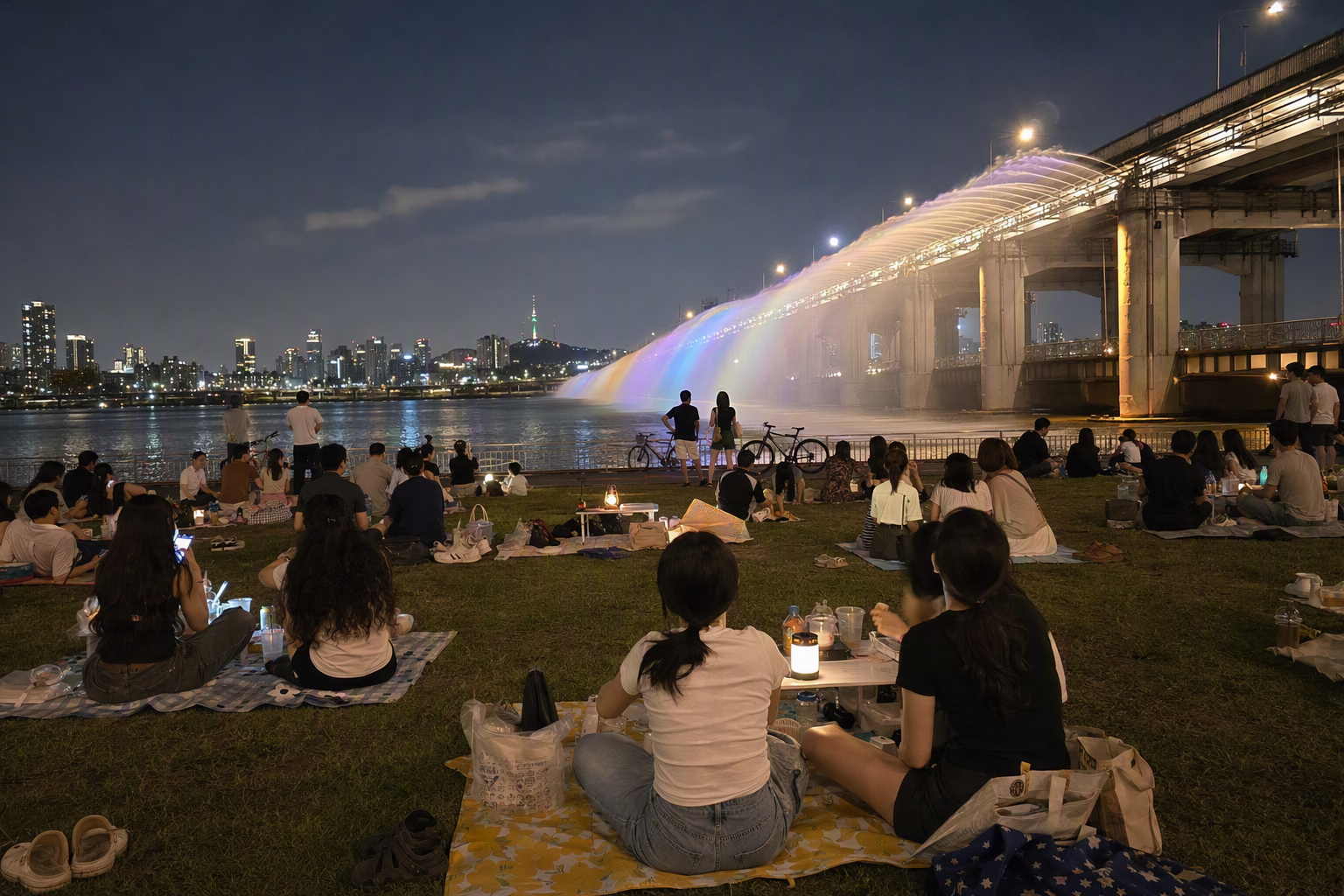
Banpo Hangang Park is the classic choice for the Moonlight Rainbow Fountain. For 2026, the fountain has been scheduled from March 16 to October 31, with a daytime show at 12:00 and evening shows in spring and autumn at 19:30, 20:00, 20:30 and 21:00. In July and August, an extra 21:30 show is scheduled. Each show is around 20 minutes, but operations can be suspended without notice due to rain, strong wind, or other weather issues.
Summer 2026 also brings a bigger river festival mood. The Hangang Festival is scheduled across the Han River and its parks from May to December, with a concentrated summer season from August 1 to 16 under the theme of the Han River as the city’s closest cool-down spot. Programs are spread across several parks, including Nanji, Mangwon, Yanghwa, Jamsil, and Gwangnaru, so check the latest event map rather than assuming everything happens at Banpo or Yeouido.
One future note for repeat visitors: Seoul is redeveloping Yeouido Park into a larger culture–ecology complex connected with the Han River and the planned second Sejong Culture Center, with phased construction expected from 2027 and completion targeted for 2030. That will likely change the feel of Yeouido over the next few years.
Creatrip take: Do not save the Han River only for leftover time. A river evening can be the moment a busy Seoul itinerary finally relaxes.
National Museum, DDP and Seoul’s design spaces: the indoor days that do not feel like backup plans
Seoul has plenty of indoor culture that is worth choosing on purpose, not only when it rains. The National Museum of Korea is on the national tourism list and is one of the strongest places to understand Korean history without trying to decode every palace plaque on your own.
For modern design, Dongdaemun Design Plaza, or DDP, remains one of Seoul’s defining buildings. Designed by Zaha Hadid, it has the smooth, futuristic look that makes Dongdaemun feel like a different city after dark. It hosts exhibitions, fashion events, markets, and seasonal programs, and recent visitor trends show DDP growing fast among foreign travelers.
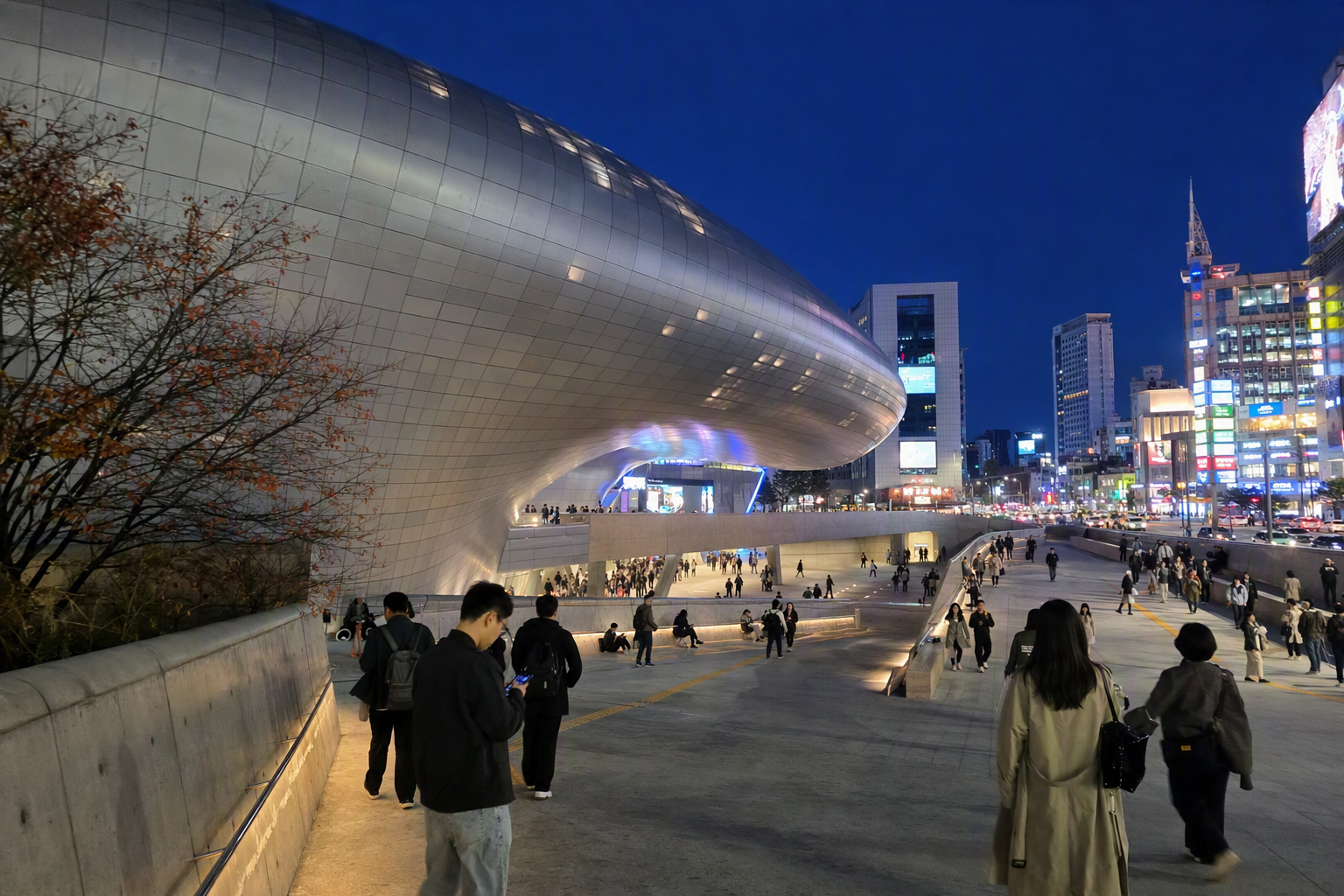
Urban-regeneration spaces add another layer. Seoullo 7017 turned a 1970 overpass near Seoul Station into a pedestrian garden. Oil Tank Culture Park in Mapo transformed old industrial tanks into cultural venues. Sewoon Plaza and related revitalization areas give a more local, textured view of Seoul’s changing city fabric.
Creatrip take: Keep at least one museum or design complex in your back pocket for extreme heat, winter cold, fine dust, or rain. Seoul weather can change the mood of a day quickly, and these places keep the itinerary from feeling compromised.
Itaewon: Seoul’s multicultural street life
Itaewon became Seoul’s first officially designated tourist special zone in 1997, and it still carries a different rhythm from the rest of the city. It is known for international restaurants, halal options, Turkish and Pakistani food, and the Seoul Central Mosque area. The neighborhood is easy to reach on Line 6 via Itaewon and Noksapyeong stations, and the Itaewon Global Village Festival is typically held every October.
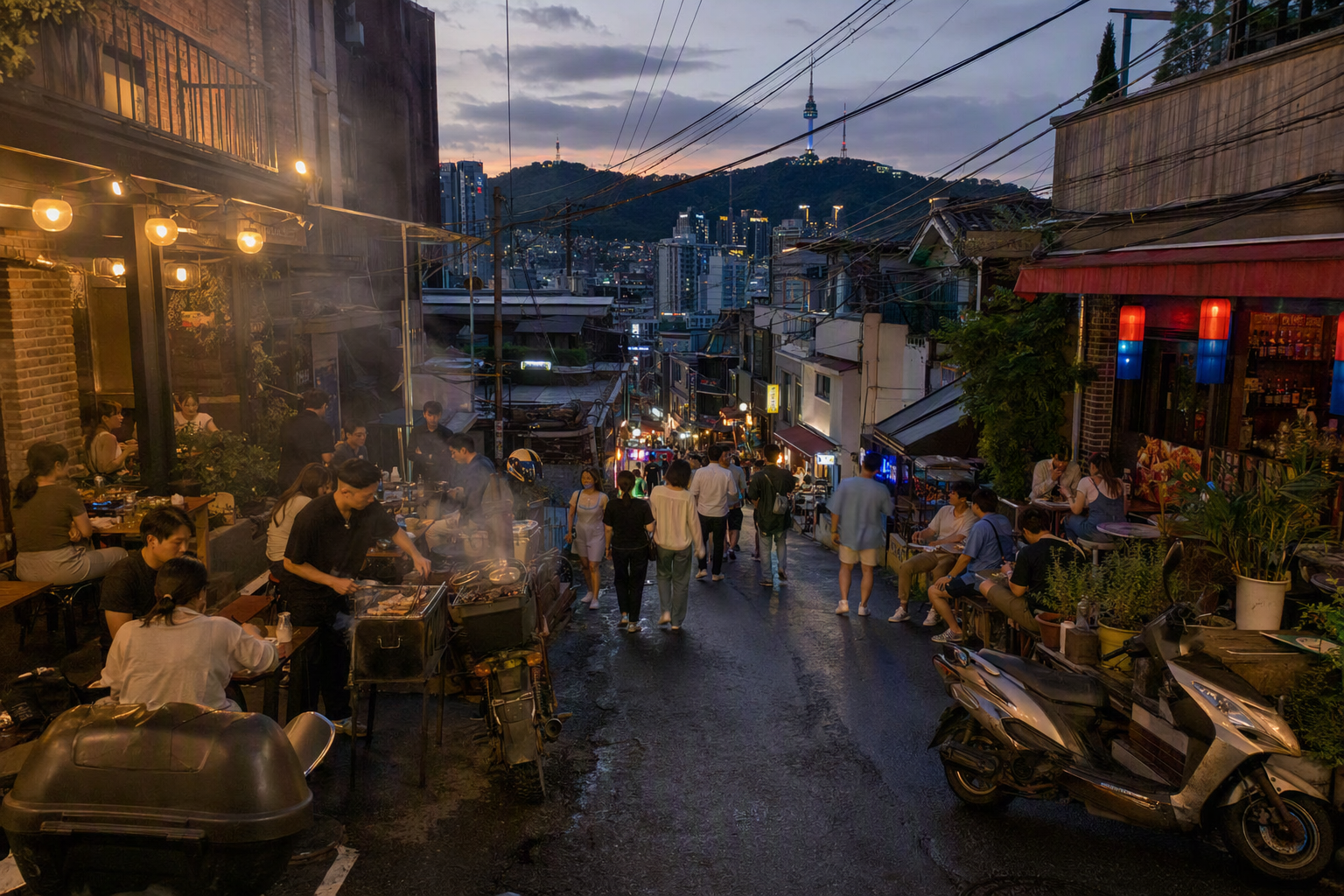
Itaewon is not the place to go for the most traditional Seoul image. That is exactly why it is useful. It shows Seoul as a living, global city rather than a neat postcard of palaces and hanbok. Pair it with Namsan, Hannam, or a relaxed dinner night.
Creatrip take: Itaewon works best when food is the plan. It is especially helpful for travelers looking for halal-friendly meals or a break from Korean-only dining choices.
Seoul’s mountains and viewpoints: the rise of K-hiking
Seoul’s nature is unusually close. You can shop in Myeongdong in the morning and be looking at granite peaks by afternoon. Bukhansan is the best-known hiking name for international travelers, but foreign visitors are also increasingly heading to Bugaksan, Gwanaksan, Achasan, Naksan Park, and other city viewpoints.

This trend is only getting stronger. Seoul has been working on a network of 12 scenic observatories on surrounding mountains by 2026, with additional landmark-style viewpoints planned afterward, including a hanok-style observatory on Bukhansan by 2028. For visitors, that means the skyline experience is expanding beyond N Seoul Tower and Seoul Sky.
For a lighter version, look at Naksan Park and the Seoul City Wall routes. Seoul’s free Guided Walking Tour program includes themed routes through palaces, Hanyangdoseong Seoul City Wall, hanok villages, urban regeneration areas, architecture and arts districts, pilgrimage routes, barrier-free courses, night tours, and K-pop-related landmarks. Reservations are required in advance, and tours can be canceled under weather warnings such as heatwaves, typhoons, heavy rain, or fine dust.
Creatrip take: Hiking in Seoul is real hiking, not just a scenic escalator. Wear proper shoes, check the weather, and avoid starting too late. For a gentle city-view experience, choose Naksan or an official walking tour before committing to Bukhansan.
Popular day trips from Seoul: when the city is not quite enough
Many international travelers treat one near-Seoul excursion as part of the Seoul experience, and the booking patterns are clear. DMZ tours are the most classic choice, followed by combinations like Nami Island and the Garden of Morning Calm, or longer nature days such as Seoraksan and Naksansa.
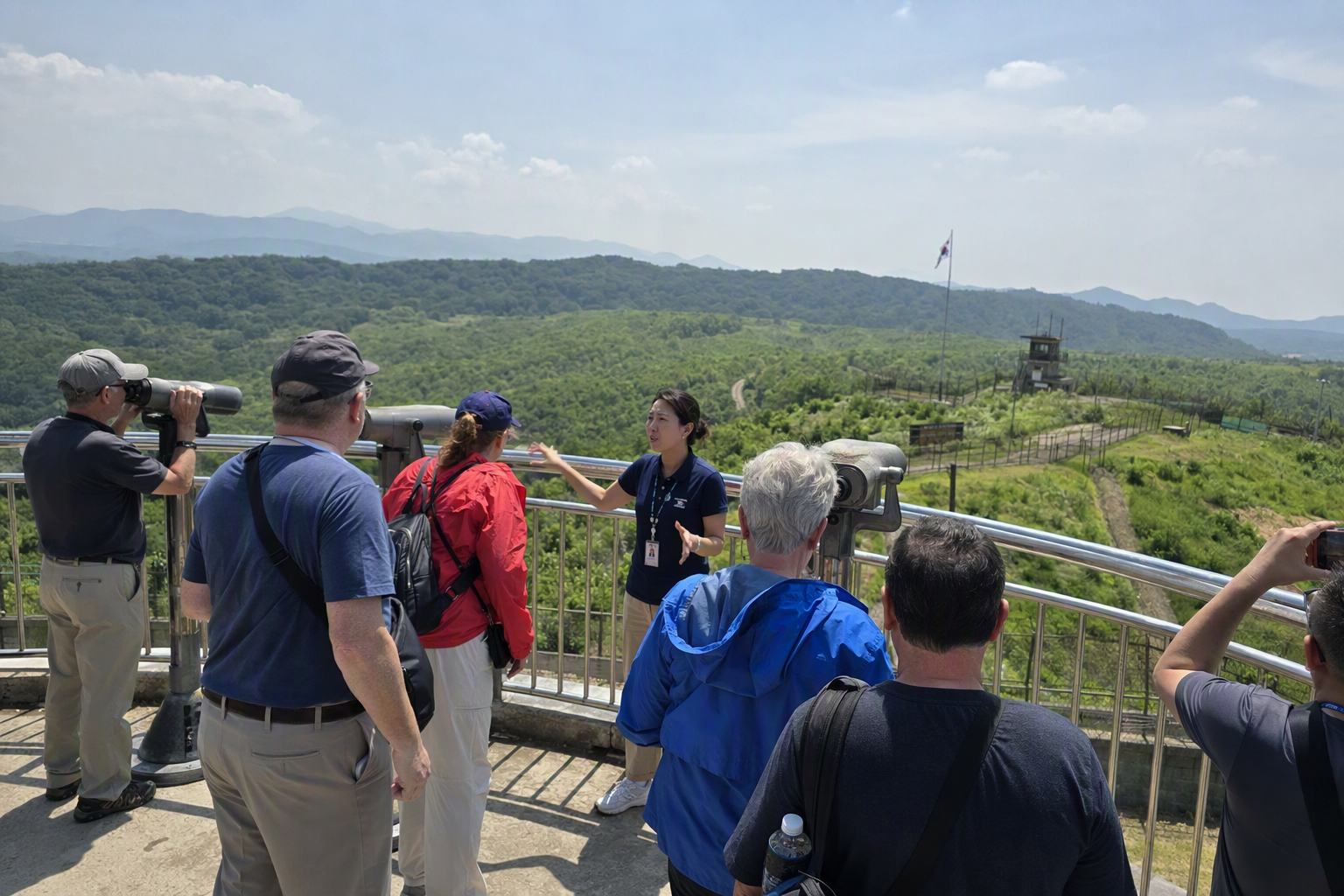
The DMZ needs more planning than a normal attraction. Visits generally require a guided tour and passport, Monday schedules are often limited or unavailable, and access can change for security reasons. As of 2026 guidance, JSA tours remain suspended, so do not book a DMZ product assuming Joint Security Area access unless the operator clearly confirms it through official channels.
Nami Island and Garden of Morning Calm are softer and more seasonal, popular for scenery and photo-friendly walks. Seoraksan and Naksansa are better for travelers who want a bigger nature day, though the travel time makes it a long outing.
Creatrip take: Add one day trip if you have at least four or five full days in Korea. With only two or three days in Seoul, the city itself has more than enough to fill the schedule.
A route we would actually build
A good Seoul route has rhythm. It avoids zigzagging from north to south to west in one day, and it leaves room for cafes, shopping, and the small detours that make Seoul fun.
With 3 full days
Day 1: Jongno and old Seoul
Gyeongbokgung, Gwanghwamun, Bukchon, Insadong or Ikseon-dong. If you prefer gardens and quieter history, swap Gyeongbokgung for Changdeokgung and the Secret Garden, but book ahead.
Day 2: Markets, Myeongdong and Namsan
Namdaemun or Gwangjang in the daytime, Myeongdong for shopping and snacks, N Seoul Tower at sunset or evening. This is the classic first-Seoul day because the areas connect naturally.
Day 3: Choose your Seoul personality
For trendy Seoul, go Seongsu and Seoul Forest. For youthful nightlife, go Hongdae, Yeonnam and Mangwon. For polished modern Seoul, go COEX, Bongeunsa and Jamsil. End at a Hangang Park if the weather is kind.
With 5 full days
Add a second historic day around Changdeokgung, Secret Garden, Changgyeonggung or Deoksugung; give Hangang an unhurried evening; and reserve one day for the DMZ, Nami Island and Garden of Morning Calm, or Seoraksan. Five days is where Seoul starts to feel less like a checklist and more like a city with layers.
Practical Seoul notes that save real time
Stay central for classic sightseeing. Myeongdong, Jongno, Insadong, Euljiro and nearby areas are convenient for palaces, markets, Namsan and older Seoul. Hongdae and Mapo are better for nightlife, cafes, west-side neighborhoods and a younger mood. Gangnam is fun to visit but less efficient as a base if your main plans are north of the river.
Use Naver Map or KakaoMap. Google Maps can be useful for saving pins, but local routing in Korea is much smoother on Korean map apps.
Pick a transport card that fits your pace. Tourist Climate Card options have been listed at KRW 5,000 for 1 day, KRW 10,000 for 3 days and KRW 15,000 for 5 days, plus a separate physical card fee around KRW 3,000. T-money is still the familiar pay-as-you-go option. Airport access from Incheon is commonly via AREX Express to Seoul Station, about 43 to 45 minutes, with fares recently listed around KRW 9,500 to 11,000, or a cheaper all-stop train that takes longer. Fares can change, so confirm current prices before departure.
Tap on and off. On subways and buses, tapping correctly helps transfers register. Seoul’s transfer system is generous, but it only works when the card is used properly.
Respect closure days. Gyeongbokgung closes Tuesdays. Changdeokgung usually closes Mondays. Secret Garden entry is separate and timed. Banpo Bridge fountain is seasonal and weather-dependent. DMZ tours can be affected by security conditions and often do not run normally on Mondays.
Avoid rush-hour crossings when possible. The subway is excellent, but weekday rush hours around 7:30 to 9:00 and 17:30 to 19:30 can be intense. Build your day by neighborhood and you will spend less of your Korea trip wedged between commuters.
Leave space for Seoul to happen. The city’s best moments are often between the famous places: a random bakery in Seochon, a small design shop in Seongsu, a river sunset after an overpacked day, a quiet palace corner you almost skipped. Seoul has enough landmarks. The nicer trip comes from choosing the right ones, in the right order, with enough breathing room to enjoy them.