Things to Do in Seoul at Night: Views, Markets, Palaces, and Nightlife
A practical, neighborhood-minded Creatrip guide to Seoul after dark, from Han River cruises and palace nights to pojangmacha tents, Hongdae clubs, and Euljiro beers.

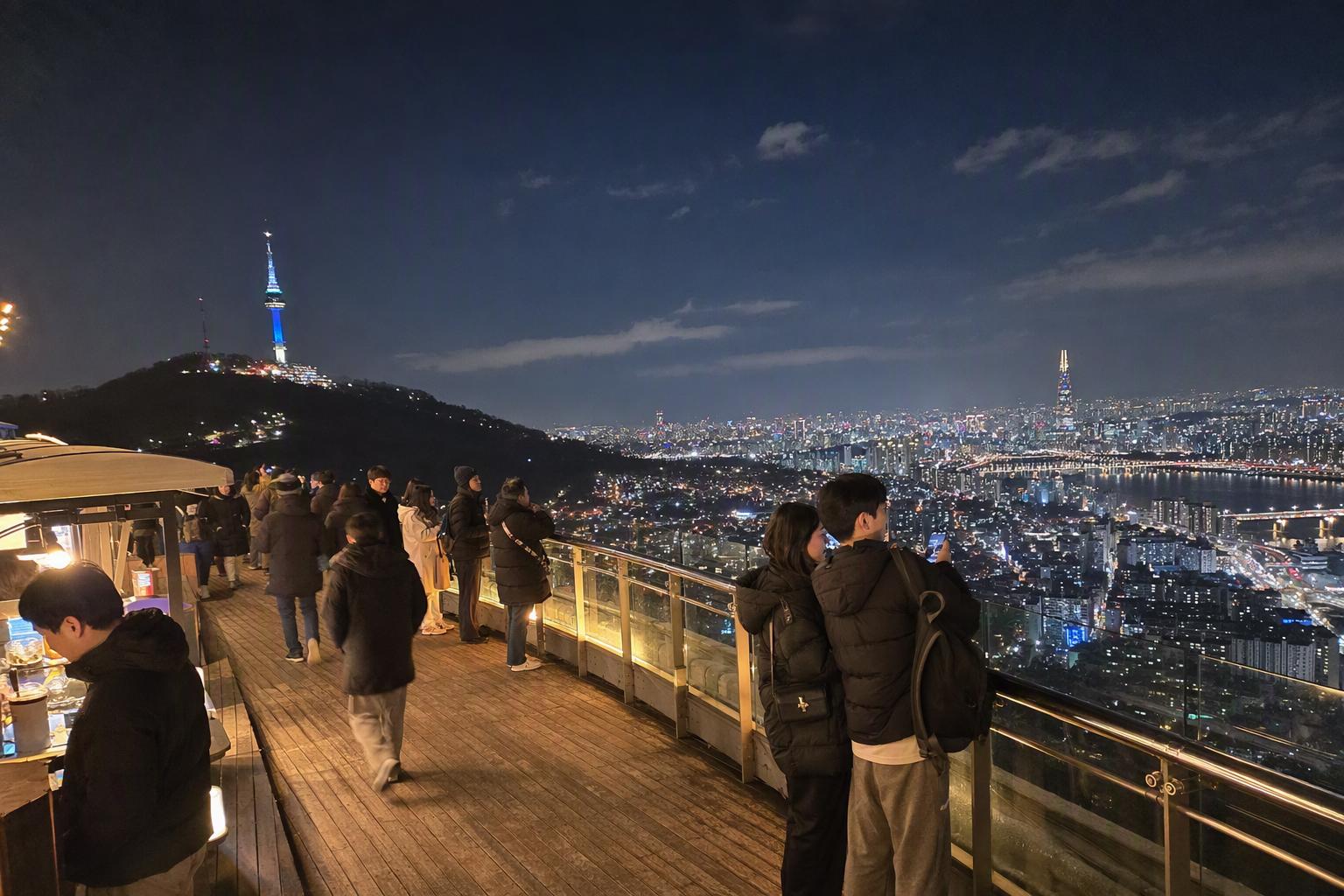
Seoul after dark is not one single scene. It can be a blue-lit techno basement in Itaewon, a paper cup of makgeolli beside sizzling bindaetteok at Gwangjang Market, a palace courtyard glowing under lanterns, or a quiet walk above Seoul Station while the city traffic slides below you.
The trick is not to do everything. Seoul nights work best when you choose one mood, then build the evening around the neighborhood. Cross-river taxi rides, last trains, club entry checks, and seasonal event schedules can turn a dreamy plan into a very expensive zigzag if you pack too much in.
At Creatrip, we like to think of Seoul at night in four lanes: views, culture, food, and nightlife. Pick one as your main course, add one easy side stop nearby, and leave a little space for the kind of spontaneous snack or second round that makes Korea feel like Korea.
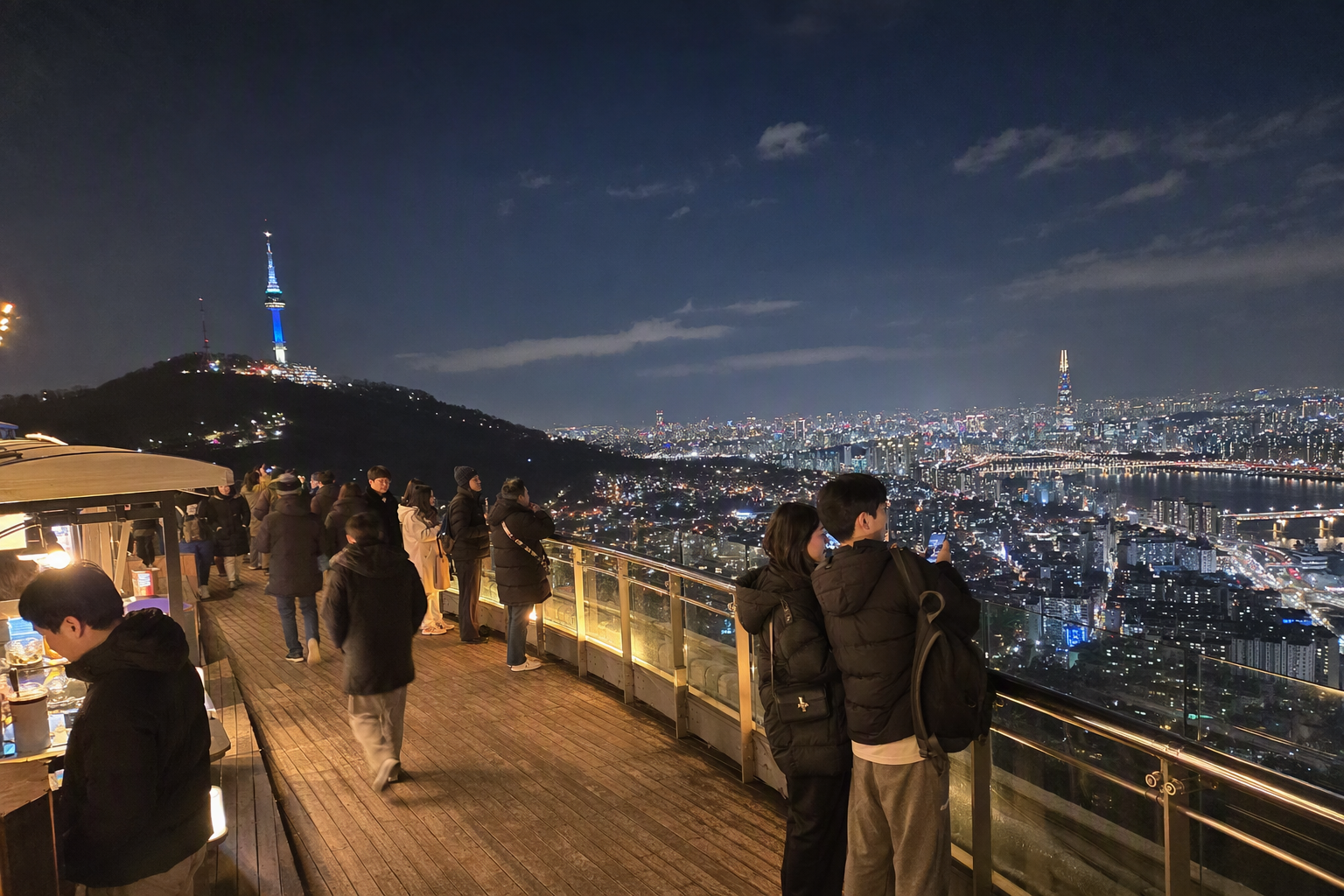
Start with the kind of night you want
A good Seoul night often starts with a very simple question: are you trying to look at the city, eat through it, drink with it, or dance until morning?
For a first-night soft landing, the easiest choices are N Seoul Tower, Seoul Sky at Lotte World Tower, the Seoul City Tour Bus night course, or a Han River evening around Banpo or Yeouido. These give you the city lights without needing to decode club doors or late-night food alleys right away.
For something more atmospheric, palace nights are beautiful but schedule-sensitive. Changgyeonggung is usually the easiest palace to enjoy after dark, while Gyeongbokgung and Changdeokgung night programs can be limited, seasonal, and ticketed in advance.
For food, the central night route around Gwangjang Market, Dongdaemun, Myeongdong, Namdaemun, and Jongno 3-ga is wonderfully efficient. You can snack, walk, take short subway hops, and end at a pojangmacha tent or late-night tteokbokki spot.
For bars and clubs, choose by district before choosing by venue. Hongdae is younger and cheaper, Itaewon is international and music-driven, Gangnam is polished and expensive, and Euljiro/Jongno is better for retro bars, beers, makgeolli, and slower multi-round evenings.
For the big city glow: towers, buses, and sky gardens
Seoul is generous with night views. Some come with observatory tickets and elevators; others are free, breezy, and better with coffee in hand. Weather matters more than people expect, especially for observatories. On hazy or rainy nights, riverside lights and street-level routes can feel more satisfying than paying for a view hidden behind clouded glass.
N Seoul Tower: classic, easy, and very Seoul
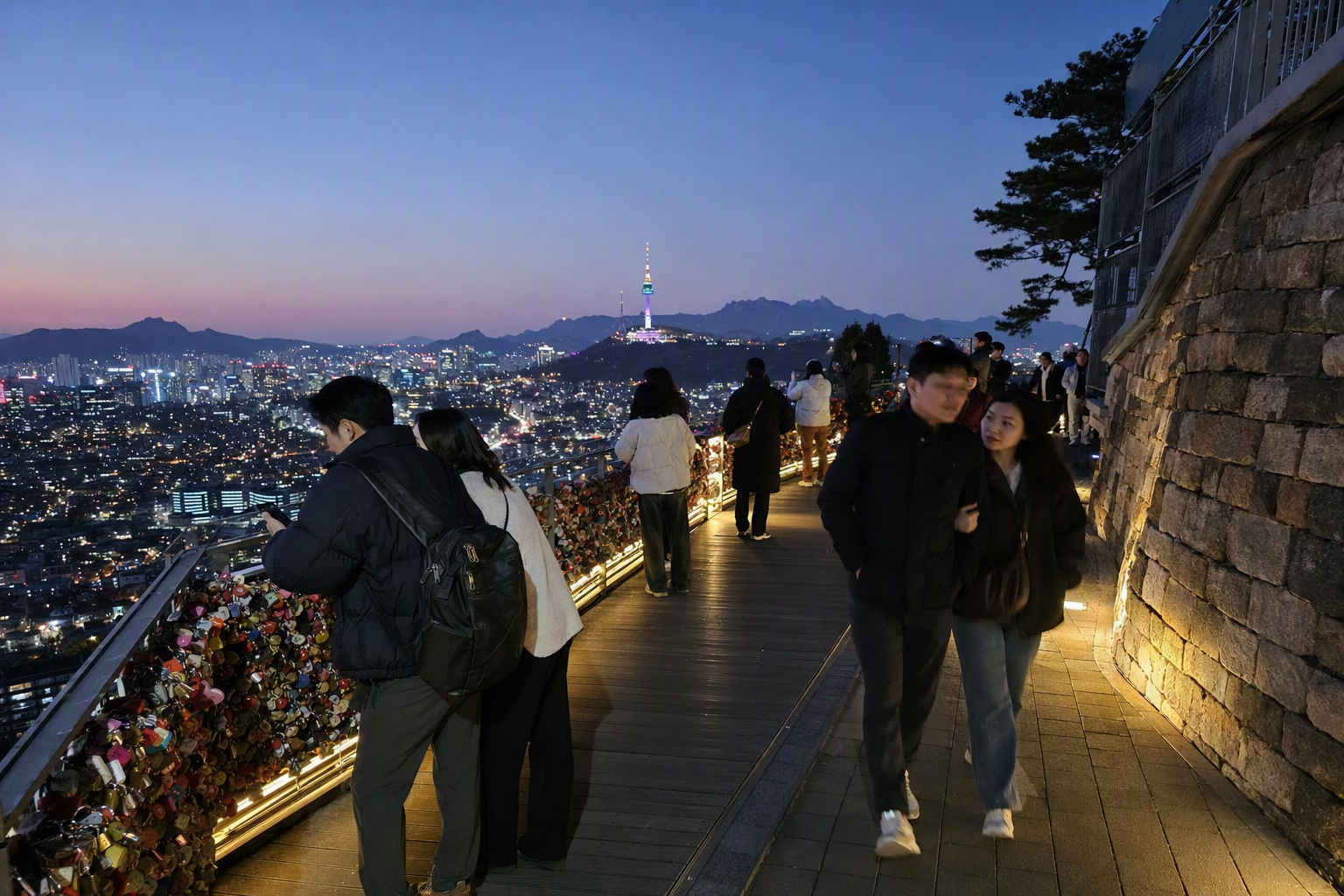
N Seoul Tower on Namsan is the city’s familiar postcard view, and it still works because the setting is more than the observatory. The hill, the locks, the cable car area, the city lights spreading in every direction — it has that very recognizable Seoul-night feeling even before you go up.
The observatory is generally open into the evening, often around 10:00 to 22:30, but opening hours can shift, so check the official schedule before going. It is a strong choice for couples, first-time visitors, K-drama fans, and anyone staying around Myeongdong, Chungmuro, Seoul Station, or Itaewon.
The trade-off is crowding. Sunset through early evening can be busy, and transport down the mountain may take longer than expected. If you are planning dinner after, keep it nearby rather than trying to rush across the city.
Seoul Sky at Lotte World Tower: highest, cleanest, most polished
For a sharper, more vertical version of Seoul, Seoul Sky at Lotte World Tower in Jamsil is the sleek option. The tower is 555 meters tall, with observatory floors around 117F to 123F, and features like the glass Sky Deck and outdoor Sky Terrace make the height feel dramatic.
Standard adult tickets are commonly listed around ₩31,000 on-site, with online deals sometimes lower. Regular hours are usually around 10:30 to 22:00, with some Friday and Saturday schedules running later; last entry may be earlier than closing. Treat these as moving details and confirm before buying.
Seoul Sky pairs nicely with a Lotte World, Seokchon Lake, or Jamsil shopping day. It is less convenient if the rest of your night is in Hongdae or Itaewon, because that cross-city transfer late at night can be tiring and pricey.
Seoul City Tour Bus night course: low-effort, surprisingly useful
The Seoul City Tour Bus night course is a nice choice when you want views without route-planning. The night route has run from Gwanghwamun through major illuminated areas such as Some Sevit, Mapodaegyo Bridge, N Seoul Tower with a short stop, Cheonggyecheon, and back toward Gwanghwamun. Adult tickets have been listed around ₩29,000.
It is not the most local night out, but it is very practical. For travelers with limited time, families, or anyone arriving after a long flight, this can be a gentle way to see Seoul’s scale before choosing where to explore more deeply the next day.
Seoullo 7017 and Nowon Light Garden: free, slower, low-pressure
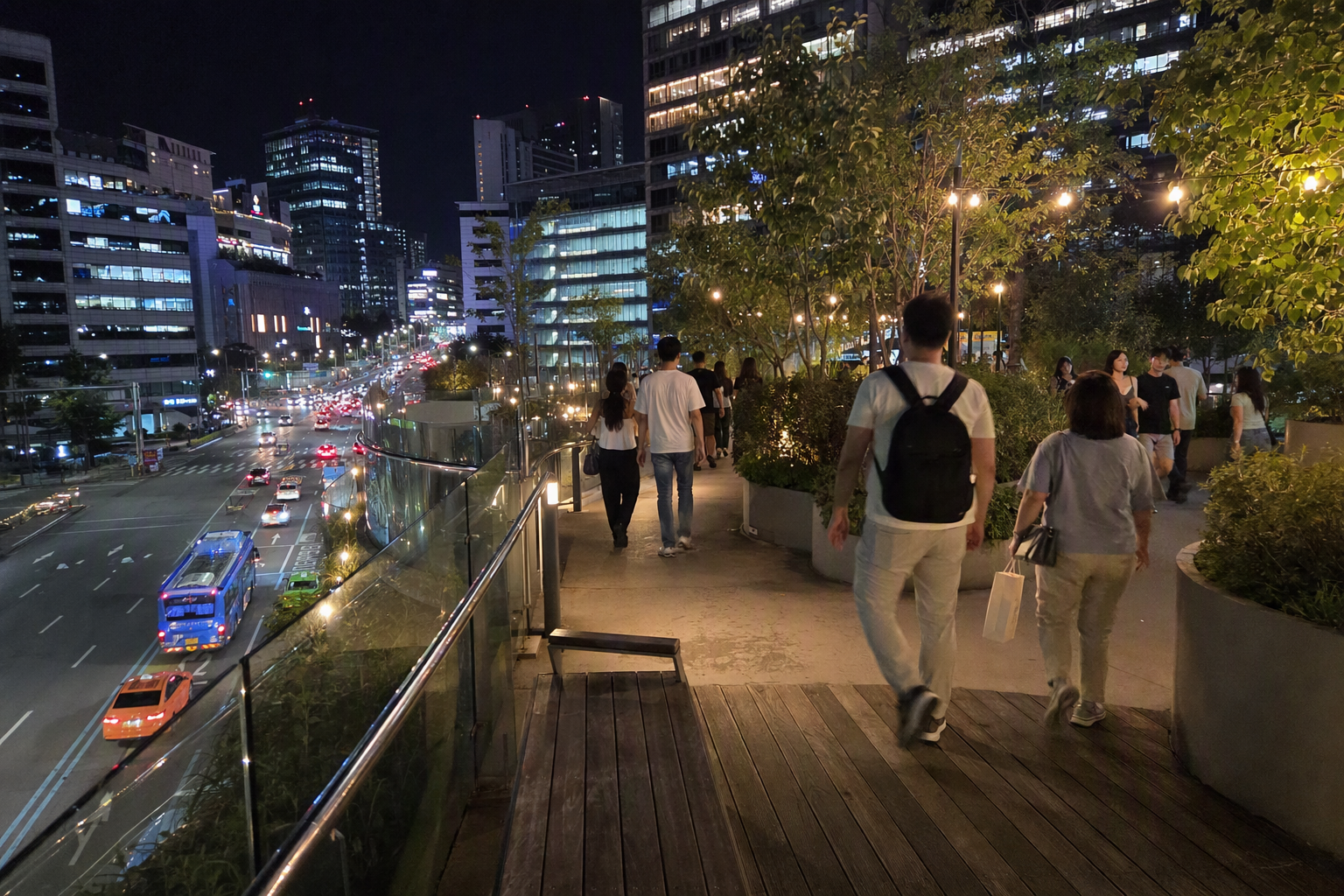
Seoullo 7017, the elevated walkway near Seoul Station and Hoehyeon, is open 24 hours and gives you a pleasant city-walk view rather than a dramatic skyline. It is best as an add-on after Namdaemun, Myeongdong, or a Seoul Station transfer, not as the only destination of the night.
Nowon Light Garden, near the old Hwarangdae Station area, is Seoul’s first dedicated night-time light garden. It is free and has operated Tuesday to Sunday from about 30 minutes before sunset until 22:00, with LED tunnels, light sculptures, and projection-style displays. It is farther from the central tourist belt, so it suits travelers staying in northeast Seoul or anyone who prefers a calm night park over drinking streets.
For the river: Banpo fountain, Yeouido picnics, and Hangang cruises
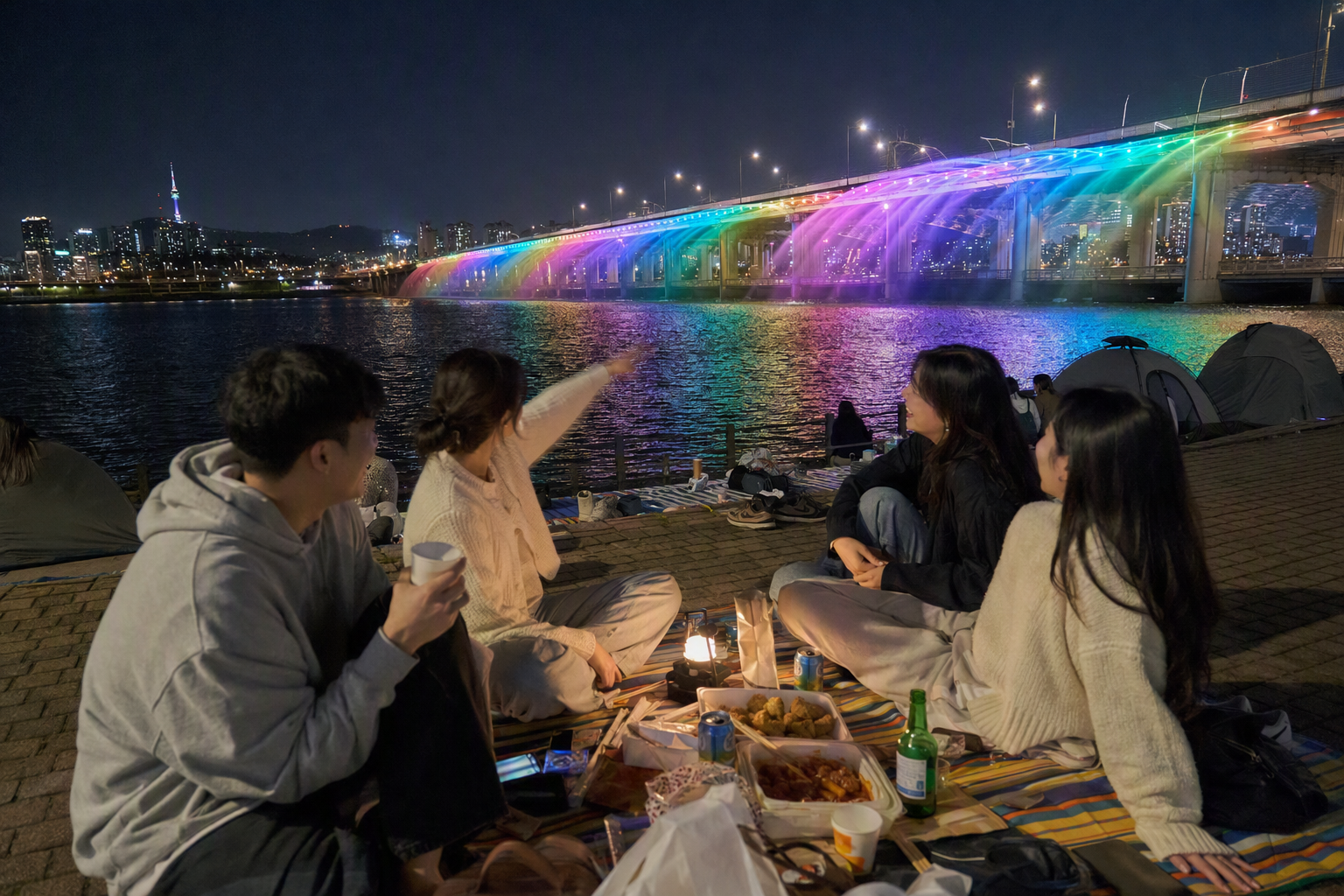
The Han River at night is one of Seoul’s easiest pleasures. It is open, casual, and flexible: convenience-store snacks, chicken delivery, convenience-store ramen, a can of beer where allowed, friends sitting on rental mats, bridges glowing in the distance.
The two easiest zones for visitors are Banpo and Yeouido. Banpo is best for the fountain and Sebitseom lights. Yeouido is better for skyline picnics and river cruises.
Banpo Moonlight Rainbow Fountain: seasonal and weather-dependent
Banpodaegyo Bridge’s Moonlight Rainbow Fountain is the classic Han River night show. It is known for its long bridge fountain system, with hundreds of water jets and colorful lights. The fountain usually runs from April to October, with 20-minute evening shows commonly scheduled around 19:30, 20:00, 20:30, and 21:00. In peak summer periods, later shows may be added.
The important detail: it can be canceled or changed because of weather, river conditions, or water turbidity. Do not make it the only reason for crossing town without checking the latest city notice.
A simple Banpo evening works beautifully: arrive before sunset, walk toward Sebitseom, watch the fountain, then choose a nearby dinner or taxi out before the biggest post-show crowd.
Yeouido: picnic first, cruise second
Yeouido Hangang Park is the more social river night. It works well for a picnic, skyline photos, or a cruise departure. The only catch is transport after 22:00, when crowds leaving the park can make buses, subway entrances, and taxis feel slow.
If you want a relaxed Yeouido night, do the river early rather than treating it as a midnight stop. A sunset picnic followed by a cruise is much smoother than trying to squeeze Yeouido between dinner in Jongno and clubs in Hongdae.
Eland Hangang River Cruise: best when you book around the season
Eland Cruise operates several evening and night cruise products from Yeouido, with Jamsil routes noted to resume in 2026. Options have included a Sunset Cruise, Moonlight Music Cruise, Starlight Cruise, Fireworks Music Cruise, and dinner-style cruises.
For night views, the commonly listed products include:
- Moonlight Music Cruise: around 70 minutes, often Yeouido to Banpo Bridge and back, with live music and possible fountain views during fountain season
- Starlight Cruise: around 50 minutes, later evening atmosphere, often a little calmer
- Fireworks Music Cruise: Friday-focused seasonal product, with July sometimes excluded from fireworks operation
- Dinner Cruise: more polished, higher-cost, better for celebrations than casual sightseeing
Prices vary by product, but adult fares often sit around the ₩25,900 to ₩45,900 range for standard night cruise options, with dinner cruises costing more. Most booking channels require a passport or ID, mobile voucher exchange for a paper ticket, and arrival at least 10 to 20 minutes before departure. Same-day no-shows are usually not refundable.
Cruises are lovely when the timing is right. They are less fun when you arrive late, miss the paper-ticket exchange window, or expect the Banpo fountain outside its operating season.
For culture after dark: palaces and lantern-lit walks
Night palaces are one of Seoul’s most beautiful after-dark experiences, but they are not all equally easy to enter. Some palaces have regular evening access; others open through seasonal programs with competitive reservations.
The mistake many travelers make is assuming all palaces work like daytime sightseeing. At night, the difference between walk-up entry and advance lottery ticketing matters a lot.
Changgyeonggung: the low-friction palace night
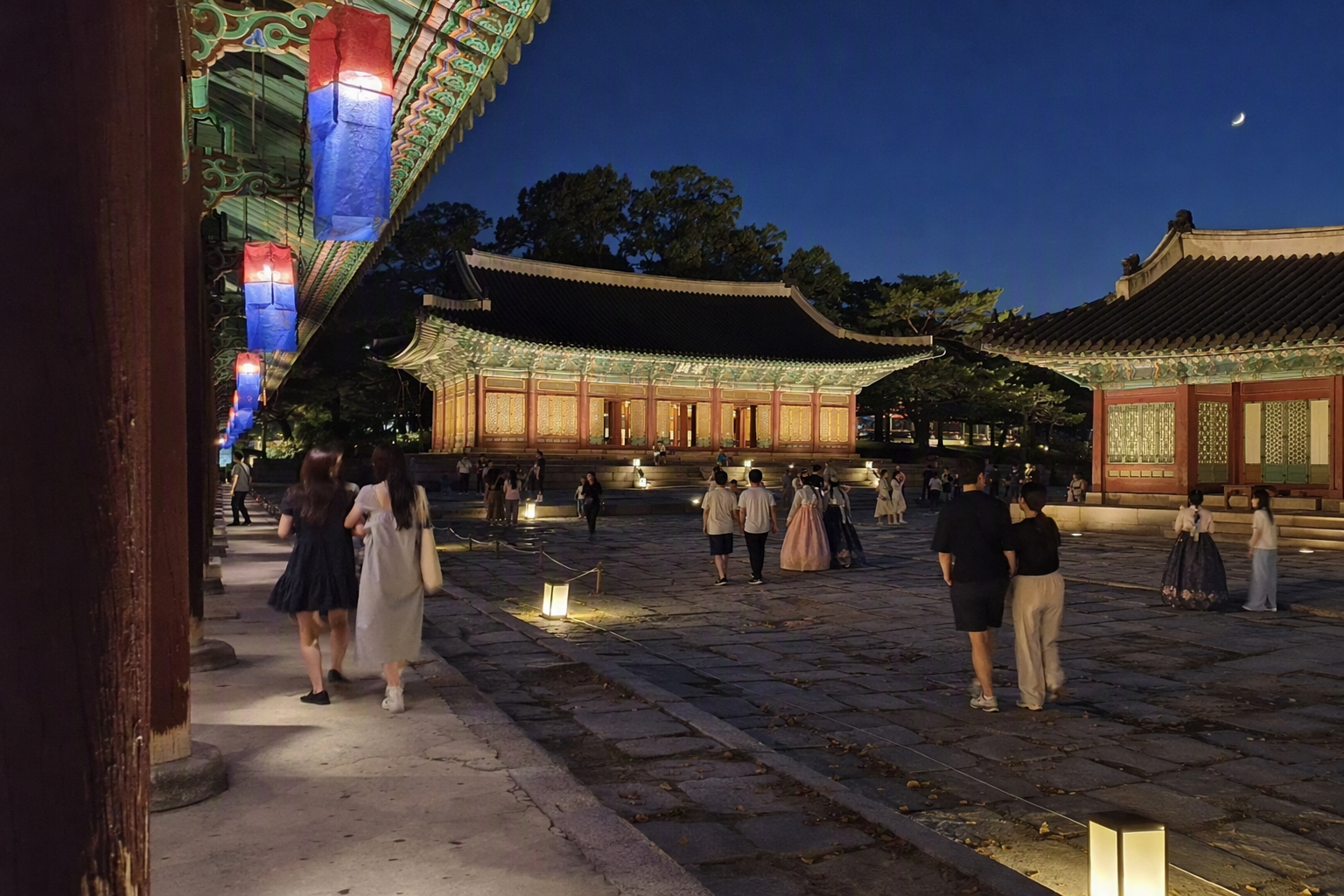
Changgyeonggung Palace is one of the easiest palace options for an evening visit. It has extended daily hours listed around 09:00 to 21:00, with Monday closures, and admission around ₩1,000. Entry is free for some groups, including young children, seniors, and hanbok wearers, though categories can change and should be checked before visiting.
This is a good palace for travelers who want atmosphere without fighting for a reservation. It also pairs naturally with nearby Jongno, Ikseon-dong, and makgeolli or pojangmacha plans afterward.
Gyeongbokgung night viewing: beautiful, but ticket-limited
Gyeongbokgung is the grand palace many visitors picture first, and its seasonal night viewing is gorgeous. For the 2026 spring and summer season, the night viewing period was listed from May 13 to June 14, 19:00 to 21:30, with last entry at 20:30. Admission was around ₩3,000, with free entry for hanbok wearers and certain eligible groups.
Ticketing is the key issue. Seasonal night viewing can include advance online tickets and a limited number of on-site tickets for foreign visitors. The exact system changes by season, so check the official palace notice before building a night around it.
Changdeokgung Moonlight Tour: premium, limited, and worth planning around
Changdeokgung Moonlight Tour is more curated than regular palace entry. In 2026, it has operated in seasonal blocks, including spring dates from April 16 to May 31 and a second-half season from September 10 to October 17, with guided night walks, traditional performances, tea, and lantern-lit routes through key palace areas.
Tickets have been listed around ₩30,000, with limited capacity, fixed entry times, age restrictions, and lottery-style booking. Foreign visitor booking has been handled through Creatrip for the 2026 program, while Korean booking has used domestic ticket channels.
This is not a casual last-minute plan. It is better treated as the centerpiece of the evening, followed by a nearby dinner or quiet drink in Anguk, Ikseon-dong, or Jongno.
Deoksugung and other lower-pressure options
Deoksugung and Changgyeonggung often feel more flexible than Gyeongbokgung or Changdeokgung special programs. Deoksugung also has special events such as Night at Seokjojeon, which can be lottery-based, but regular evening access is generally easier to fit into a Seoul night.
For travelers who do not want ticket stress, a palace walk followed by Cheonggyecheon, Gwanghwamun, or Jongno food is a very Seoul way to spend the evening.
For late-night eating: markets, tents, and the 1-cha rhythm
Food is where Seoul nights become wonderfully layered. One street may be office workers on round two, another tourists comparing skewers, another market vendor selling to wholesale buyers after midnight.
Korean nights often move in rounds, called cha. First round might be barbecue or a proper meal, second round beer and anju, third round a tent bar or club, fourth round hangover soup. You do not need to follow the whole sequence, but understanding it helps explain why Seoul has so many places that feel alive after dinner.

The central night food route: Gwangjang to Jongno
The most convenient visitor-friendly food circuit runs roughly through Gwangjang Market → Dongdaemun → Myeongdong → Namdaemun → Jongno 3-ga. These areas are either walkable in sections or connected by short subway rides on central lines.
A realistic food crawl takes 4 to 5 hours and can cost around ₩15,000 to ₩30,000 per person for snacks and casual food, plus a few thousand won in subway fares. Start around 16:00, when market food is fully awake, and you can keep going toward midnight or later through Jongno and Dongdaemun.
Trying to include every stop is more tiring than it sounds. Choose three: one traditional market, one street-food area, and one late-night sit-down or tent stop.
Gwangjang Market: classic, tasty, and more regulated in 2026
Gwangjang Market is the benchmark traditional food hall, with a food alley that generally runs into the night, often around 09:00 to 23:00. It is famous for bindaetteok, mayak gimbap, yukhoe, noodles, and makgeolli.
Typical reference prices include bindaetteok around ₩5,000, mayak gimbap around ₩3,000 for a small set, and yukhoe around ₩12,000 to ₩20,000, though exact prices vary by stall and portion.
Gwangjang has also had very public overcharging and payment complaints, especially involving foreign visitors. In 2026, Jongno District introduced stronger management measures such as real-name stall operation, QR complaint systems, inspections, and penalties for serious violations. That is a positive step, but on the ground, it is still wise to check displayed prices, confirm the total before ordering, and carry some cash in case a stall does not smoothly accept cards.
This is not meant to scare you away. Gwangjang is still fun and delicious. Just order with the same awareness you would bring to any famous tourist market.
Myeongdong: easy, bright, and more tourist-priced
Myeongdong’s street-food strip is bright, convenient, and easy to navigate. Card acceptance is generally broader than in older markets, flavors are often adjusted to be visitor-friendly, and the location is unbeatable if you are staying nearby.
The trade-off is price. Myeongdong is one of the more tourist-oriented street-food areas, and premium items such as lobster tails can be much pricier than local market snacks. For a quick first-night grazing session, it is perfect. For the best value, mix it with Namdaemun or Gwangjang.
Namdaemun: wholesale energy after dark
Namdaemun Market has a split personality. Retail is mostly daytime, while wholesale activity runs late, often around 23:00 to 04:00, with Sunday closures affecting many operations. It has a more local and workmanlike feel than Myeongdong, especially after 22:00.
Food prices can be friendlier, and the atmosphere is less polished. It is good for travelers who enjoy markets that still feel connected to Seoul’s working rhythm, not just sightseeing.
Jongno 3-ga pojangmacha: orange tents, soju, and serious anju
Jongno 3-ga Pojangmacha Street stretches around the area between exits 5 and 6, near Ikseon-dong. Tents often open around 17:00 to 18:00, with many running to midnight on weekdays and later on weekends, though hours vary by stall and weather.
This is less of a cheap snack street and more of a tent-bar experience. With soju and anju, budgets can land around ₩25,000 to ₩45,000 per person, and cash is still preferred in many tents.
Order dishes meant for drinking: odeng, dubu-kimchi, gamja-jeon, grilled seafood, spicy stir-fries, or a late bowl of haejang-guk if the night has gone long. It is casual, crowded, and very Korean, but not always the cheapest way to eat.

Dongdaemun and Sindang: reliable after midnight
Dongdaemun’s fashion and food district is one of the more dependable late-night zones, with activity tied to wholesale fashion workers and shoppers. Some food options run toward 05:00, making it useful when other areas quiet down.
Sindang-dong Tteokbokki Town is the calmer alternative. Its sit-down, hotpot-style tteokbokki restaurants have long been known for late and even 24-hour operations. It is less flashy than Myeongdong or Gwangjang, but very satisfying when you want something hot, filling, and local-heavy after midnight.
Euljiro Nogari Alley: beer, dried pollack, and Hipjiro texture
Euljiro is one of Seoul’s most interesting night neighborhoods because it still feels half-industrial. By day, printing shops and hardware alleys; by night, beer tables, retro signage, and creative bars tucked into old buildings.
Nogari Alley usually comes alive from early evening and can run toward 02:00, though individual shops vary and some close on Sundays. Reference prices often hover around ₩4,500 for a pint of beer and ₩2,000 for dried pollack, making it one of the easier low-commitment drinking stops.
It is a great bridge between food and bars: start with beer and nogari, then move to a cocktail or wine bar in the surrounding Hipjiro lanes.
For bars and clubs: choose the neighborhood first
Seoul nightlife is highly segmented. That is good news: once you know the district personality, you can avoid spending money on a scene that was never your scene in the first place.
Before any club night, bring a physical government-issued ID, preferably your passport. Many venues accept an ARC for residents, but photos and scans are often rejected, and high-end Gangnam venues may insist on a passport. Some clubs scan or photograph IDs for security. Korea’s legal drinking age is 19; in 2026, venues generally interpret this as people born in 2007 or earlier.
Hongdae: young, loud, cheaper, and easy to start
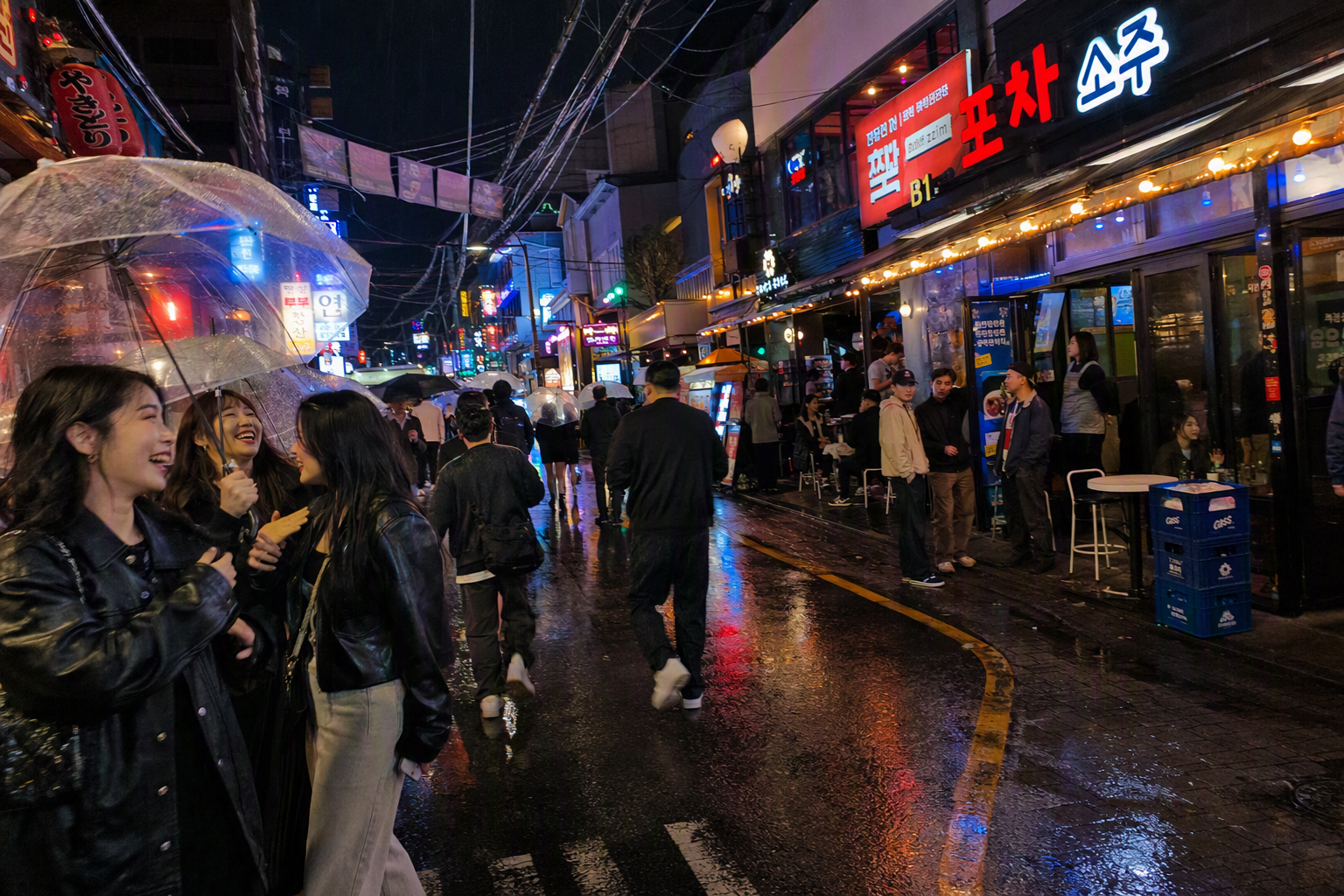
Hongdae is the youth and indie nightlife hub, especially for travelers in their late teens and twenties. It is where you go for packed dance floors, casual dress codes, street energy, and a lower barrier to entry.
Cocktails often fall around ₩8,000 to ₩12,000, and club covers commonly sit around ₩5,000 to ₩20,000, sometimes including one drink. Many clubs reduce or waive cover before 23:00 or midnight, while the real peak may not arrive until 02:00 to 04:00.
Hongdae’s Club Road and 24-hour club street areas include multi-genre and high-energy venues, with names like NB2, Club FF, and La Bamba often coming up in district conversations. Lineups and entry policies move quickly, so check current pages before going.
Hongdae is best for budget-conscious club nights, mixed groups, students, and anyone who wants to wander between bars without dressing up too much. It is not ideal if you want a refined cocktail date or space to breathe.
Itaewon and Haebangchon: international, LGBTQ+ friendly, and music-minded
Itaewon has Seoul’s most international nightlife identity, with Haebangchon adding a neighborhood-bar layer up the hill. You will find expat pubs, rooftop bars, LGBTQ+ nightlife, house and techno venues, and parties that feel less tied to Korean mainstream club culture.
Cocktails often sit around ₩12,000 to ₩18,000, and club covers are commonly around ₩10,000 to ₩20,000. Pubs and large bars such as Shenanigans, The Craic House, Fountain, and Casa Corona serve the social side, while venues such as Faust, Espresso, Paper, and Soap represent the more music-focused side. Soap returned as a permanent Itaewon venue in 2026 after years of roving parties, while Faust remains one of the city’s key techno institutions.
Itaewon is also central to Seoul’s queer nightlife, with Homo Hill and nearby scenes, while Jongno 3-ga has its own long-running queer nightlife identity as well.
The caution is that Itaewon gets more reports of touting, fake international bars, and drink-related issues than some other districts. Choose your venues yourself, avoid being pulled in by street promoters, keep your drink with you, and leave if a place feels off. The good side of Itaewon is excellent; just do not outsource your decision-making to someone shouting from a doorway.

Gangnam, Sinsa, Cheongdam, and Apgujeong: polished, pricey, selective
Gangnam nightlife is Seoul’s luxury lane: EDM-heavy clubs, bottle service, stricter doors, sharper outfits, and much higher spending ceilings. Cocktails can be ₩20,000 or more, covers often start around ₩20,000 to ₩30,000 and may climb much higher at major clubs or special events. Tables can range from roughly ₩300,000 to several million won depending on venue, night, and bottle requirements.
Dress matters more here. So does ID. Smart-casual is the safest baseline, and passport checks can be strict. Some venues have also been known for informal selection or inconsistent foreigner access, so do not build your entire night around one door unless you have checked the venue’s current policy or booked properly.
Gangnam is worth it if you want a polished club night, are comfortable spending, and like the table-service model. It is frustrating if you want a spontaneous, low-budget, backpack-and-sneakers evening.
Euljiro and Jongno: retro bars, makgeolli, and grown-up Seoul nights
Euljiro and Jongno are not about one giant club street. They are about atmosphere: plastic chairs in an alley, makgeolli with pajeon, wine bars in old buildings, cocktail spots above printing shops, and conversations that last longer than the drinks.
Euljiro’s Hipjiro area attracts a slightly older, creative crowd. Bars such as Booth, Nae Bar, and Phantom are often mentioned in the neighborhood’s craft cocktail and wine scene, while Nogari Alley keeps things casual and affordable.
Jongno skews older and more local, especially around pojangmacha and makgeolli bars. It is the best area for travelers who want a Korean-style multi-round night without the pressure of club doors.
Easy Seoul night plans that fit together
The best night routes keep geography on your side. Seoul is big, and the subway clock is real.
The soft first night
Start around Gwanghwamun or Myeongdong, take the Seoul City Tour Bus night course or head to N Seoul Tower, then finish with Myeongdong snacks or a quiet walk along Seoullo 7017.
This is easy on jet lag and does not require deep nightlife decisions. It also keeps you near central hotels and transit.
The Han River evening
Choose either Banpo or Yeouido, not both. At Banpo, arrive before sunset, walk toward Sebitseom, watch the Moonlight Rainbow Fountain if it is operating, then leave before the post-show crowd thickens. At Yeouido, picnic first, then take a Moonlight or Starlight cruise if you have booked ahead.
This plan is best from April to October, when the fountain season adds extra sparkle.
The palace and pojangmacha night
Visit Changgyeonggung or a reserved palace night program, then walk or take a short ride toward Ikseon-dong and Jongno 3-ga. Have dinner, then settle into a pojangmacha tent for one proper anju-and-soju round.
It feels cultural without being stiff, and the whole route stays compact.
The central food crawl
Begin at Gwangjang Market around late afternoon, move toward Dongdaemun or Myeongdong depending on your appetite, then end at Namdaemun, Jongno 3-ga, or Sindang for late-night food.
Budget around ₩15,000 to ₩30,000 for casual eating, more if you add alcohol or pricier dishes like yukhoe and seafood.
The club night
Pick one base: Hongdae for affordable energy, Itaewon for international bars and electronic music, Gangnam for a polished high-spend night. Eat nearby, bring your passport, and decide before midnight whether you are catching the last train or staying out until taxis calm down.
The awkward middle zone is leaving a club at 01:00, exactly when taxis are expensive and scarce but the night is not yet at peak. Either go home early or commit to the late Seoul rhythm.
Transport, ID, and money after midnight
Seoul is wonderfully connected until it suddenly is not. Subways generally stop around midnight to 01:00, with many lines ending service around 00:30 to 01:00 depending on station and direction. After that, you are looking at night buses or taxis.
Night buses, often marked as N-buses, run through the late-night window, generally around 00:00 to 05:00, with fares listed around ₩2,350. They are useful but slower and less intuitive for visitors than the subway.
Taxis are convenient but can sting after midnight. Late-night surcharges are often 20 to 40 percent, and cross-river rides can easily land around ₩15,000 to ₩30,000 depending on distance and demand. Between 00:00 and 02:00, taxis may be scarce in nightlife zones such as Gangnam and Hongdae. Avoid drivers who refuse the meter or push suspicious flat rates.
For club entry, physical ID is non-negotiable in many places. Passport or ARC is safest; phone photos usually do not work. This matters even if you look clearly over 19.
For payment, cards are widely used in Seoul, but older markets and pojangmacha tents can still be cash-preferred. Myeongdong is generally easier for cards, while Jongno tents and some Gwangjang stalls may be less smooth despite improvements. Carrying a modest amount of cash prevents small annoyances from becoming late-night problems.
Budget-wise, neighborhood choice is the biggest lever:
- Under ₩30,000: convenience-store pregame, market snacks, Euljiro beer, budget Hongdae cover
- ₩50,000 to ₩100,000: dinner, craft beer or cocktails, club entry, late taxi split
- ₩500,000 and up: Gangnam table service, premium bottles, rooftop cocktails, taxis without worrying
None of these is the correct Seoul night. They are just different cities wearing the same name.
A few mistakes that quietly ruin Seoul nights
Do not schedule a palace night, Banpo fountain, and Hongdae club as one neat line unless you enjoy watching transit maps more than the city. Seoul rewards compact routes.
Do not assume a screenshot of your passport will get you into clubs. Bring the real ID.
Do not count on the subway after midnight. Check your last train before the first drink, not after the third.
Do not follow touts into bars, especially in nightlife-heavy areas. Choose your own place, keep your drink close, and leave early if the atmosphere feels wrong.
Do not treat Gwangjang or Myeongdong as fixed-price theme parks. Look for displayed menus, confirm prices, and skip stalls that make ordering feel confusing or pressured.
Do not forget that many of Seoul’s prettiest night events are seasonal. Banpo Fountain, palace night openings, drone shows, and certain cruises all depend on dates, weather, or reservations.

The Creatrip take
A memorable Seoul night is rarely the busiest one. It is the one where the pieces fit: a palace near Jongno, a river cruise before the subway rush, a Hongdae club night without a Gangnam detour, an Euljiro beer that turns into makgeolli because nobody is hurrying.
For first-timers, we would choose one of these: N Seoul Tower plus Myeongdong, Banpo Fountain plus a riverside walk, Changgyeonggung plus Jongno 3-ga, or Gwangjang Market plus Euljiro. They give you Seoul’s night texture without making you fight the whole city in one evening.
For returning visitors, go more specific. Pick a techno night in Itaewon, a late Dongdaemun food run, a Changdeokgung Moonlight Tour date, or a slow Hipjiro bar crawl. Seoul after dark has plenty of volume, but its best moments often come from choosing the right corner and staying there long enough for the night to open up.