Seoraksan National Park Guide & 2026 K-Trekking Challenge
Choose the right Seoraksan entrance and hiking route, then learn how international travelers can verify the 2026 K-Trekking Challenge mission.

Last updated: September 22, 2026
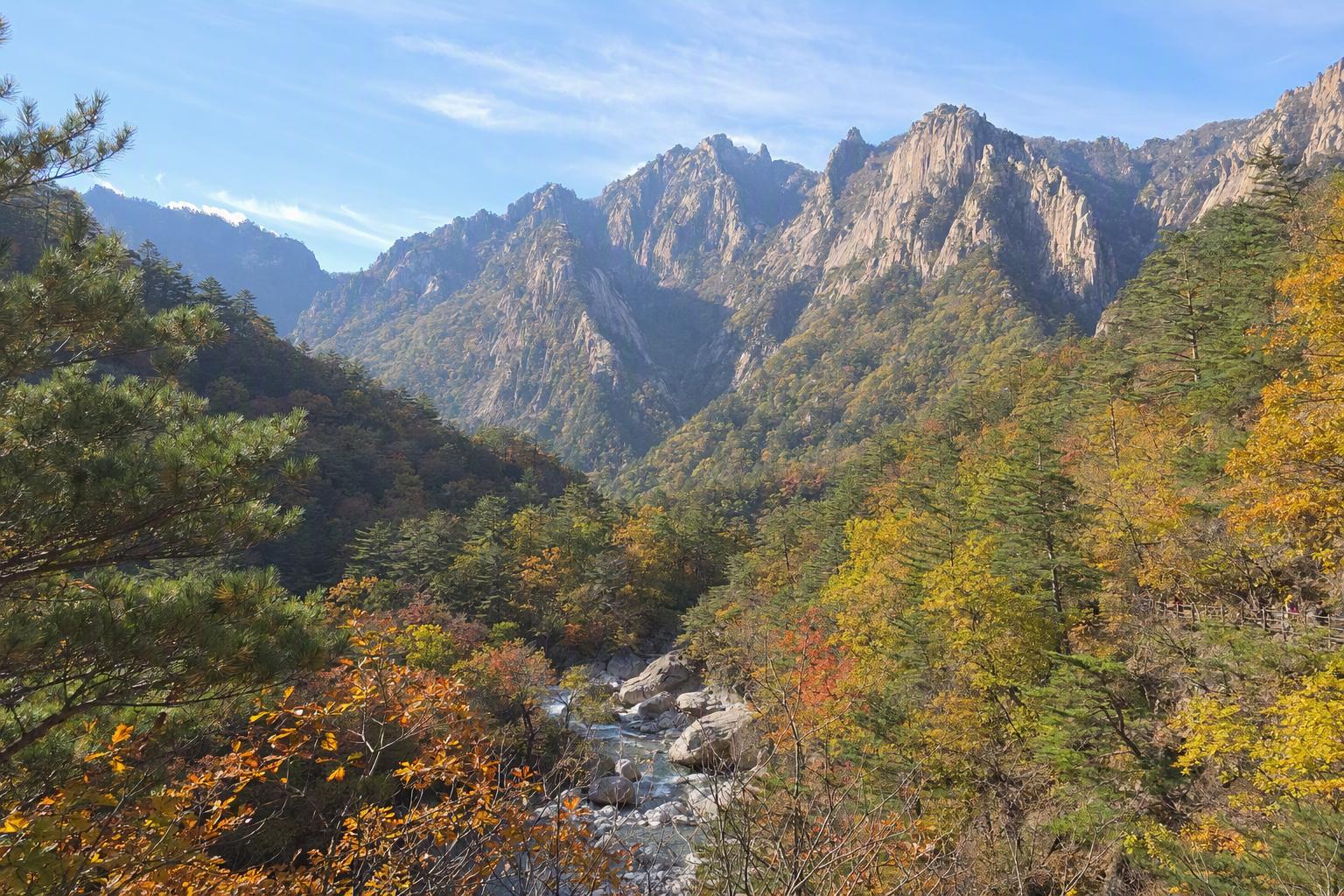
Seoraksan is the kind of place that makes Korea feel suddenly wider. One minute you are in Sokcho with sea air and buses pulling into the terminal; not long after, granite ridges rise over pine forest, temple roofs, cold streams, and stairways that seem to disappear into the rocks.
It is also one of the easiest big mountain trips to reach from Seoul without a car, which is why the main entrance can feel wonderfully lively and slightly chaotic, especially in autumn. The trick is not to treat Seoraksan as one single trail. It is a large national park with different zones, different entrances, and very different levels of effort.

How should you choose a Seoraksan route and entrance?
Most first-time international visitors should start at Sogongwon and match the route to their available time, hiking experience, weather, and current trail status.
| If you want... | Start with... |
|---|---|
| A first visit with major sights and public transport | Sogongwon (Outer Seorak) near Sokcho |
| A shorter scenic outing | Cable car/Gwongeumseong area or a lower-valley walk, subject to current operations |
| A half-day hike | Ulsanbawi or another route that fits your fitness and daylight |
| A summit or long-distance hike | Plan separately, check closures and reservations, and do not treat it as a casual Seoul day trip |
Can international travelers join the 2026 K-Trekking Challenge at Seoraksan?
Yes. The published 2026 campaign guide lists Seoraksan National Park as a designated visit-verification location for international travelers, with the campaign scheduled for July 8–November 30, 2026.
The K-Trekking Challenge combines a national-park visit mission with optional social media and Creatrip user-blog review missions. For the basic Seoraksan visit mission, the campaign guide says to make a free Creatrip reservation, visit the designated verification spot, and present the reservation QR code with your passport. Uploading a review alone is not enough for review missions: participants must also submit the post link through the campaign landing page and satisfy the stated format, hashtag, tagging, and public-post requirements.
| 2026 campaign item | Verified published details |
|---|---|
| Who can join | International visitors; Korean nationals may be restricted and benefits may be reclaimed |
| Campaign period | July 8–November 30, 2026 |
| Seoraksan mission | Seoraksan is listed as a designated national-park visit-verification location |
| Basic verification | Free Creatrip reservation, designated on-site verification, reservation QR code, and passport |
| Published visit reward | National Park × Korea Tourism Organization co-branded goods, limited to the first 5,000 participants across the published mission |
| Optional review rewards | The campaign guide lists 30,000P for the first 300 qualifying social posts and 100,000P for the first 50 qualifying Creatrip user-blog reviews, plus a judged Best Review event |
Official campaign confirmation: Creatrip’s 2026 K-Trekking Challenge mission guide. For broader official tourism context on Seoraksan routes, see VISITKOREA’s national-park hiking guide, which was last updated in September 2024 and advises travelers to reconfirm current details.
Why Seoraksan feels different from other Korea day trips
Seoraksan National Park covers roughly 398 to 400 km² across Sokcho, Inje, Goseong, and Yangyang. It is usually discussed in three broad areas: Oeseorak, or Outer Seorak on the east near Sokcho; Naeseorak, or Inner Seorak on the west; and Namseorak, or South Seorak around Osaek and related southern valleys.
The park has about 30 major peaks, including Daecheongbong, the 1,708 m summit that is commonly listed as Korea’s third-highest mountain. Seoraksan was designated Korea’s first UNESCO Biosphere Reserve and is also protected as a national park and IUCN-listed conservation area. Those labels sound official, but they also explain what travelers feel on the ground: this is not a small scenic hill. Weather, trail controls, and travel time can change the whole shape of your day.
For most international visitors, Seoraksan means the Seorakdong or Sogongwon entrance near Sokcho. That is the entrance with the cable car, Sinheungsa Temple, Ulsanbawi, Biryong Falls, Biseondae, and the easiest public transport connection. At Creatrip, we usually recommend starting there unless you already have a specific Inner or South Seorak route in mind.
Start with the right entrance: Sogongwon is the classic first choice
On Korean map apps, search for Seoraksan Sogongwon. This is the main Outer Seorak hub and the last stop for Sokcho city buses 7 and 7-1. Some databases show nearby addresses such as 833 or 1039 Seoraksan-ro, but the most useful search handle is Sogongwon.

From Sogongwon, you can reach:
- Seorak Cable Car to Gwongeumseong
- Sinheungsa Temple
- Ulsanbawi Rock
- Biryong Falls and Towangseong Falls Observatory
- Biseondae and Cheonbuldong Valley
- The early sections of longer mountain routes toward higher Seorak
Park admission has been free since May 4, 2023, so ignore older posts mentioning an adult cultural-area entrance fee. Free entry does not mean a free day overall: parking, the cable car, shuttle buses in other zones, and shelter reservations are separate.
At the Sogongwon area, small-vehicle parking has recently been listed around ₩4,000 to ₩5,000, with peak-season variations possible. Cable car prices and parking operations can change, so check the latest official information close to your visit, especially in October.
Outer, Inner, and South Seorak in plain traveler terms
Outer Seorak, near Sokcho, is dramatic, accessible, and crowded. It is best for first-timers, travelers without a car, cable car riders, and same-day hikers.
Inner Seorak, including the Baekdamsa and Suryeomdong area, is calmer and more valley-focused. Access is usually through Yongdae-ri, where a shuttle runs about 6.5 km to Baekdamsa in roughly 15 minutes. Recent fares have been around ₩2,500, with separate parking fees in the Yongdae-ri area.
South Seorak, including Osaek, Hullymgol, and Gombaegol, is better for travelers targeting Daecheongbong or reservation-only valley routes. It is not something to casually combine with the Sogongwon cable car area on the same relaxed day.
Getting to Seoraksan from Seoul without a car
Public transport to Seoraksan usually means Seoul to Sokcho by express or intercity bus, then a local bus or taxi from Sokcho to Sogongwon.

Seoul to Sokcho
From Seoul, buses to Sokcho commonly leave from:
- Seoul Express Bus Terminal, also called Seoul Gyeongbu, in Gangnam
- Dong Seoul Terminal, useful for travelers staying north of the Han River or near Line 2
Typical travel time is around 2 hours 10 minutes to 2 hours 30 minutes, though traffic and route class can stretch this. Recent adult fares have ranged roughly from ₩16,400 to ₩34,600, depending on terminal, operator, seat class, and schedule. Premium buses cost more; standard or excellent buses cost less.
For booking, use KOBUS for express bus routes and TxBus for many intercity routes. Korean bus schedules are often loaded about a month in advance, and holidays or foliage season can bring extra buses or changed departure patterns. It is worth checking again a day or two before you move.
Which Sokcho terminal is better?
Sokcho has two terminals, and the difference matters more than travelers expect.
Sokcho Express Bus Terminal is closer to Sokcho Beach and slightly closer to Seoraksan. Buses 7 and 7-1 both connect this terminal area to Sogongwon, usually in about 25 to 30 minutes.
Sokcho Intercity Bus Terminal is closer to Sokcho Tourist and Fishery Market and serves a wider regional network. From here, bus 7-1 is the direct option to Sogongwon, and the ride is often closer to 35 to 40 minutes.
Neither is wrong. If you are coming from Gangnam, the express terminal route often feels straightforward. If you are staying around eastern or northern Seoul, Dong Seoul can save cross-city travel time before your bus even leaves Seoul.
Sokcho to Seoraksan Sogongwon
From Sokcho, take city bus 7 or 7-1 to Seoraksan Sogongwon. As of mid-2026 listings, the in-city adult fare is ₩1,530 by transport card or ₩1,700 cash. The ride usually takes around 25 to 38 minutes, depending on which terminal area you board from and traffic near the park.
Bus 7-1 generally runs more frequently and later than 7, but neither feels like a Seoul subway line. Use KakaoMap, Naver Map, or the Sokcho bus information system on the day. For early hikes, a taxi is often worth considering; recent taxi estimates from Sokcho to Sogongwon are roughly ₩12,000 to ₩15,000 and about 15 to 25 minutes in normal conditions.
Choosing your Seoraksan route by effort, not just scenery
Seoraksan is very good at making a short distance feel bigger than it looks on a map. The park’s signature routes are not all extreme, but many include steep stairs, slippery rocks, or time controls. Pick the day you actually want, not the day that looks impressive in someone else’s photos.

| Route or attraction | Best for | Typical distance and time | Real feel |
|---|---|---|---|
| Seorak Cable Car to Gwongeumseong | Big views with minimal hiking | Around 5 to 7 min ride each way, plus short walks | Easy, but queues can be long |
| Biseondae | Easy valley walk | Around 3 km round trip for the simple walk | Gentle, scenic, good for mixed groups |
| Biseondae to Geumganggul | A stronger half-day walk | About 3.5 to 3.6 km one way | Moderate, with rocky steps and some rope-assisted sections |
| Biryong Falls and Towangseong Falls Observatory | Waterfalls and stairs | About 5.6 km round trip to Towangseong area | Moderate, final steel stairs are the sting |
| Ulsanbawi | Classic active day hike | Around 6.2 to 7.6 km round trip, 4 to 5 hours | Short but steep, with 800-plus stairs |
| Baekdamsa to Suryeomdong Valley | Quieter Inner Seorak | Around 4.7 km one way, often 3 to 4 hours round trip | Mostly gentle valley walking |
| Osaek to Daecheongbong | Serious summit goal | Around 9.5 to 10 km round trip, 5 to 8 hours | Hard, steep, and time-controlled |
| Dinosaur Ridge | Experienced mountain hikers | About 17.5 to 21 km or more | Expert-level, long, exposed, and seasonal |
Seorak Cable Car: the easy drama, with one big catch
The Seorak Cable Car runs from the Sogongwon area up toward Gwongeumseong, covering a line of about 1,132 m and rising to roughly the 700 to 800 m level. The ride itself is short, around 5 to 7 minutes, and cabins carry about 50 people. From the upper station, travelers can walk toward the Beacon Tower area and Anrakarm Temple, where an old pine is often noted as being about 800 years old.
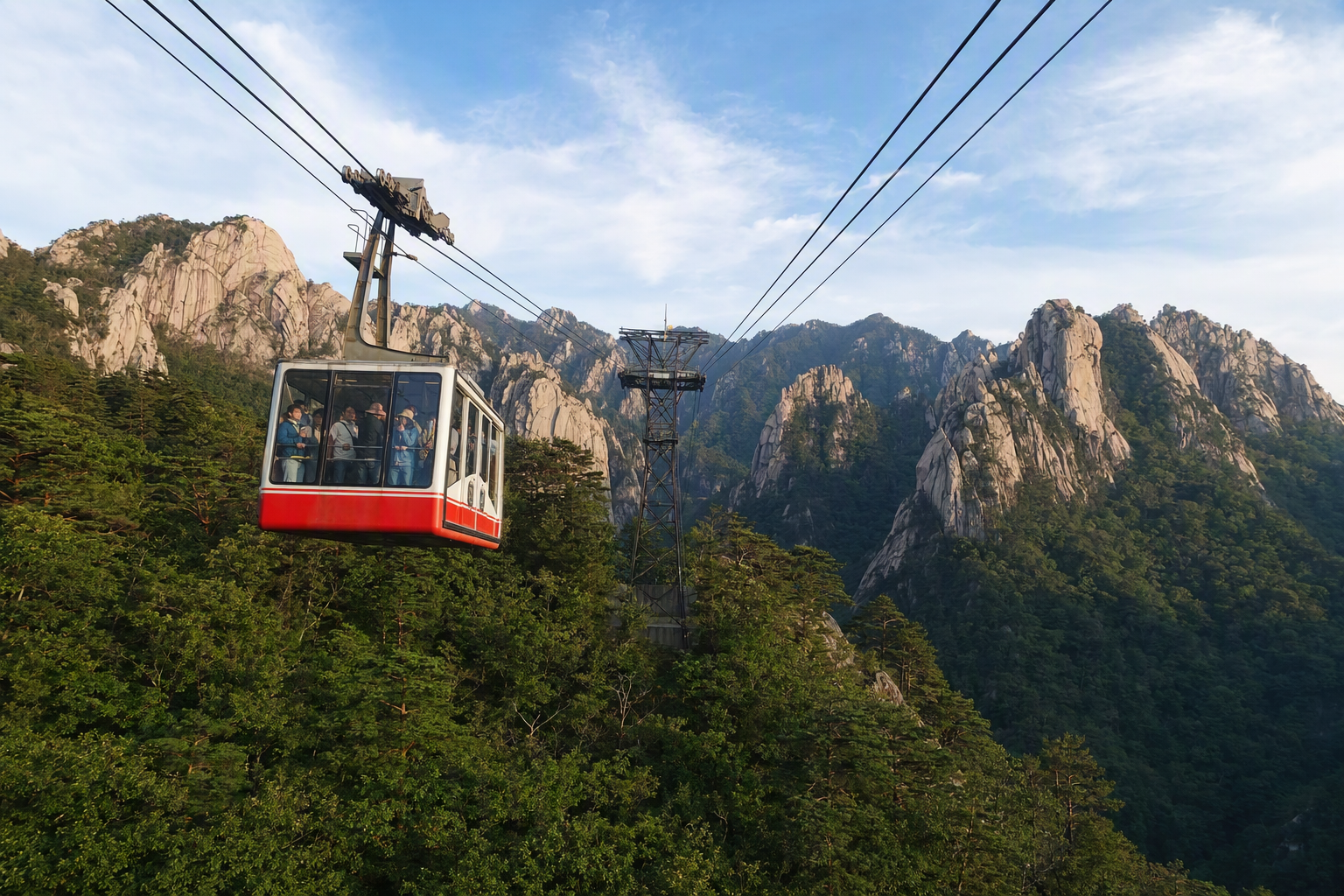
The catch is simple: tickets are sold on site for same-day use only, and the cable car is popular in every season. Recent prices have been listed around ₩15,000 to ₩16,000 for adults round trip and around ₩11,000 to ₩12,000 for children, depending on the listing and year. The operating window is often around 08:30 or 09:00 to 17:30, but weather can stop or delay operations.
In autumn, the cable car can become the center of the crowd. On peak foliage weekends, queues of one to three hours are possible by mid-morning. If the cable car is your priority, arrive very early and try for a weekday. If you reach the park late and the wait looks painful, the temple and valley walks are a much better use of your mood.
Biseondae: the easiest beautiful walk from Sogongwon
Biseondae is the route we like for groups with different fitness levels. The simple valley walk follows Cheonbuldong’s stream scenery with minimal elevation gain. Depending on your exact turnaround point, expect around 1.4 to 2.4 km one way, or roughly 3 km round trip for the easiest version.
Parts of the Sogongwon area include barrier-free or easier-access sections, including Biseondae-related paths and a stroller or wheelchair-friendly section on the Biryong Falls course. Conditions can still change with weather and maintenance, so it is best to confirm at the information center if accessibility is important for your group.
The mood changes if you continue to Geumganggul Cave. That extension becomes a moderate hike of about 3.5 to 3.6 km one way, with a total gain reported around 500 m, rocky steps, and short assisted sections. It is not the same outing as a flat riverside stroll.
Biryong Falls and Towangseong Falls: great payoff without a summit
For travelers who want a proper hiking feeling but do not want Ulsanbawi’s long staircase finish, the Biryong Falls and Towangseong Falls route is a strong choice. The full Towangseong Falls route is about 2.8 km one way, or 5.6 km round trip.

Towangseong Falls is a three-tier waterfall listed around 320 m high, with the viewing route opened to the public after decades of restriction. The last section includes steep steel stairs, so it still asks for legs and patience, but the route has a clear destination and a satisfying mountain-valley atmosphere.
This is a good middle option on a first Seoraksan trip: more active than just the cable car, less punishing than Ulsanbawi, and especially pretty when water levels and foliage cooperate.
Ulsanbawi: Seoraksan’s classic active day hike
Ulsanbawi is the route that tempts almost everyone, and for good reason. The summit area, around 873 m, gives that bold Seoraksan combination of rock, wind, and wide views. The round trip from Sogongwon is usually described as 6.2 to 7.6 km, taking about 4 to 5 hours for many hikers.
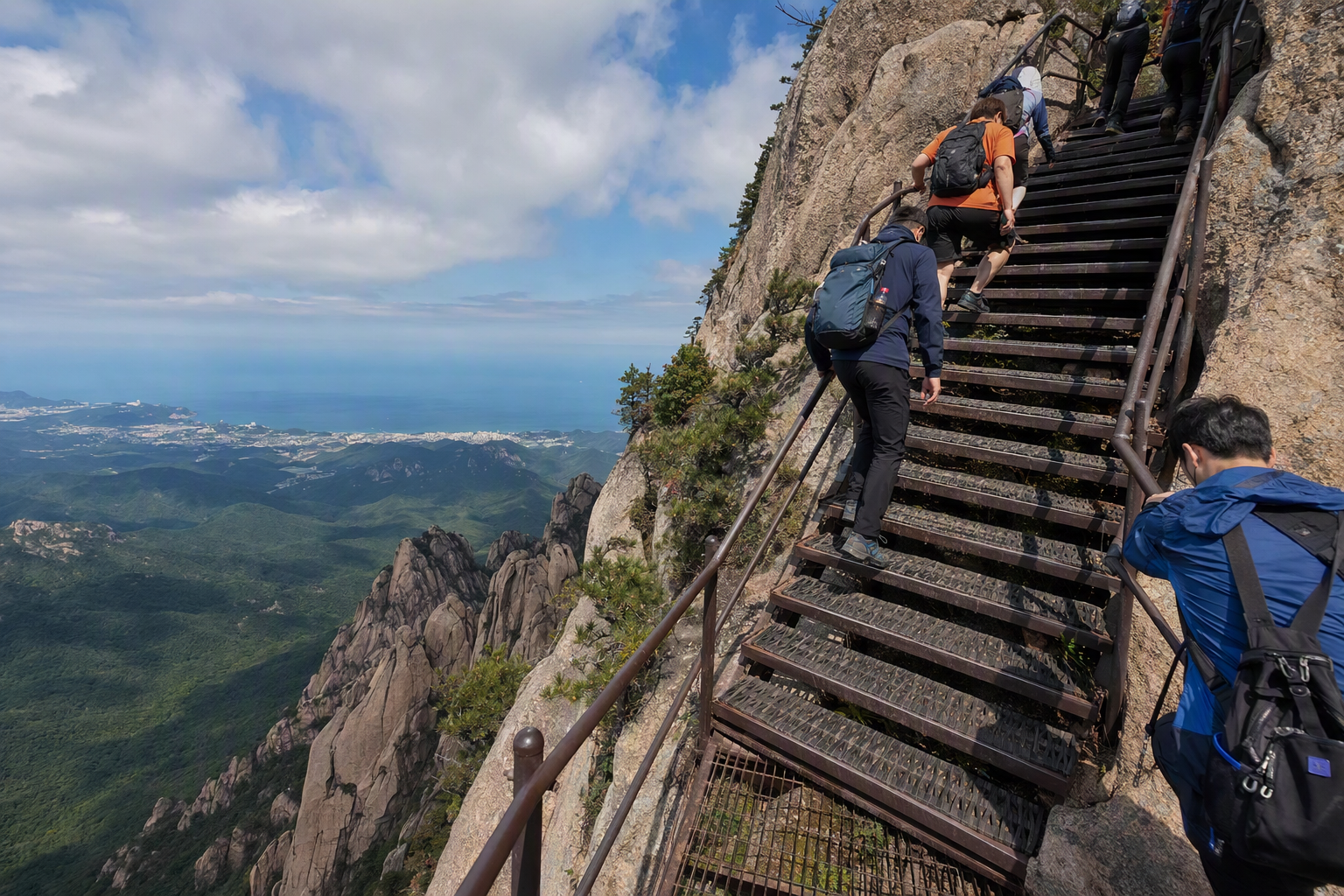
The number to respect is not the distance. It is the stairs. The final section includes roughly 800 to 888 metal stairs, depending on how they are counted, and they arrive when your legs already know they have been hiking. It is a moderate route for active travelers, but it can feel tough for anyone with knee issues, vertigo, or a dislike of crowded staircases.
There is no park entrance fee or route reservation for the standard Ulsanbawi hike from Sogongwon, but starting early makes the whole experience better. In autumn, an early start is less about athletic ambition and more about escaping traffic, parking saturation, and stairway bottlenecks.
Inner Seorak: Baekdamsa and Suryeomdong for a quieter valley day
Inner Seorak is less convenient from Sokcho but beautiful in a calmer way. The usual access pattern is to go to Yongdae-ri, then take the shuttle about 6.5 km to Baekdamsa Temple. From there, the Baekdamsa to Suryeomdong Valley route is about 4.7 km one way, with a gentle elevation change compared with the summit routes.

This area suits travelers with a car, those staying near Inje or Yongdae-ri, or anyone who has already seen the Sogongwon side and wants a less crowded valley. It is also a better match for slow walkers than for travelers trying to squeeze cable car, Ulsanbawi, and Inner Seorak into one day.
Daecheongbong and Dinosaur Ridge are not casual add-ons
Daecheongbong, Seoraksan’s 1,708 m high point, is a serious mountain objective. The Osaek route is relatively short on paper, around 4.6 to 5 km one way, but it gains roughly 1,300 m and is steep enough to make that distance feel very honest. Many hikers need about 3 to 5 hours up, with the full out-and-back often landing around 5 to 8 hours depending on pace, conditions, and rest.
Dinosaur Ridge is in a different category again: long, rugged, and better suited to experienced hikers who are comfortable with a very early start, steep terrain, and changing mountain weather. Routes are often listed around 17.5 to 21 km or more, with large elevation gain and hiking times that can reach 10 to 13 hours.
High-altitude trails such as Daecheongbong approaches and Dinosaur Ridge are subject to seasonal closures and strict entry controls. For example, spring 2026 controls included closures on high routes from March 4 to May 15. KNPS rangers also enforce route-specific entry cut-off times. During the April to October season, listed cutoffs have included 12:00 for Osaek to Daecheongbong, 11:00 for Biseondae to Madeungnyeong, and 12:00 for Hangyeryeong to Hangyeryeong Samgeori. Shelter reservation holders may receive a one to two hour extension on some controlled routes, but that is not something to improvise at the trailhead.
For these routes, check the latest KNPS access-control notices, weather advisories, and shelter reservation rules before committing your travel dates.
Reservation-only trails: Hullymgol and Gombaegol
Some Seoraksan routes operate under a reservation system rather than open walk-in access. This is especially important for South Seorak and Jeombongsan-side routes such as Hullymgol and Gombaegol.
Hullymgol is a one-way route from the Hullymgol Support Center toward the Yongso Falls junction, about 3.1 km and roughly 2.5 hours. It uses mandatory online reservations with time-slot entry. Recent rules list operations from 09:00 to 14:00 for most months, extended to 08:00 to 15:00 in October peak season. Reservations close at 14:00 the day before, with remaining slots sometimes available on site.
Gombaegol has been listed as a reservation route with a daily capacity of about 350 people, operating 09:00 to 14:00 with last entry around 11:00. It is described as a roughly 3.7 km route taking about 4 hours round trip in the reservation system.
Spring wildfire controls can fully or partially close these routes, and the reopening dates vary by year and section. In 2026, Seoraksan’s spring controls shifted during April, with some Gombaegol and Hullymgol sections reopening before the broader spring controls were lifted. The practical point is simple: for reservation-only trails, use the KNPS reservation page as your source of truth, not an old itinerary.
Overnight shelters: useful, basic, and very regulated
For long traverses and summit routes, shelters can make Seoraksan safer and more realistic. They also require planning. KNPS shelter reservations open on set cycles, peak seasons bring higher demand, and shelter availability may disappear during wildfire or trail-control periods.
Recent Seoraksan shelter details list capacities such as around 69 for Socheong Shelter and 115 for Jungcheong Shelter, with fees varying by weekday, weekend, and peak season. Peak periods commonly include July 1 to August 31 and October 1 to November 15. Supplies at shelters are limited; one recent listing for Socheong included items like water, instant rice, gas, and crampons, not full meals.
Think of a shelter as a protected place to sleep, not a mountain hotel. Bring the gear, food, and timing your route actually needs.
When to visit Seoraksan
Seoraksan is open in spirit year-round, but the best season depends on what you want from the park.

Spring
Spring is fresh and quieter than autumn, but it often overlaps with wildfire prevention and spring-thaw trail controls. Lower routes may be pleasant while high-altitude routes are still closed. If your dream is Daecheongbong, do not assume April or early May will work.
Summer
Summer brings lush valleys and longer daylight, but also humidity, rain risk, slippery rocks, and heavier shelter demand. Waterfall and valley routes can be rewarding, while high routes need extra weather caution.
Autumn
Autumn is Seoraksan’s celebrity season. Color usually begins at higher elevations around late September and moves down into valleys through October. For 2026, some forecasts point to first high-elevation color around September 27 to 30 and a broader park peak around mid-October, but recent official seasons have also seen Seoraksan’s strongest lower-elevation color push toward late October. Foliage timing is shifting later over the years, and exact dates depend on weather.
For travel planning, treat early to late October as the main Seoraksan foliage window, then check official forecasts from Korean tourism and forestry agencies closer to September. Peak color often holds about 7 to 10 days, but rain and wind can shorten the best moment.
The crowds are real. Sokcho accommodation and places near the park can book up one to three months ahead in October. Cable car waits can reach multiple hours on peak weekends. In recent foliage seasons, local authorities have used traffic measures such as free shuttles between lower parking areas and Sogongwon on busy October weekends, but these operations change by year. Arriving early on a weekday is still the cleanest strategy.
Winter
Winter Seoraksan is sharp and beautiful, but trails can become icy and serious very quickly. Crampons may be needed, and the cable car can be affected by wind or weather. The Sogongwon Information Center has offered free gear rental, including items such as boots, packs, poles, knee pads, sticks, and crampons, from 09:00 to 14:00, but size and availability are not guaranteed. Check before depending on it.

A few easy Seoraksan plans that actually make sense
A Seoul day trip to Seoraksan is possible, but it is a long day. Once you add a Seoul-to-Sokcho bus, the Sokcho-to-park transfer, trail time, meals, and the return bus, your margin gets thin. For autumn, Ulsanbawi, or anything involving early trail cutoffs, spending the night in Sokcho is much more comfortable.
Soft first visit from Sokcho
Start at Sogongwon in the morning. Visit Sinheungsa Temple, decide whether the cable car queue is reasonable, then choose Biseondae or Biryong Falls depending on your group’s energy. This day gives you the Seoraksan atmosphere without turning the trip into a fitness test.
Active first visit
Arrive early and hike Ulsanbawi before the stairs become crowded. Keep the afternoon flexible for a slow return through Sogongwon, a temple stop, or dinner back in Sokcho. This is one of the best one-day balances of effort and reward.
Autumn crowd-smart day
Avoid making the cable car your only plan. Arrive between 6:00 and 8:00 if you can, especially on weekends. If the cable car wait is already long, switch to Biseondae, Cheonbuldong Valley, or Biryong Falls. Valley color and rock scenery are part of Seoraksan’s autumn beauty, not a consolation prize.
Quieter second Seoraksan day
Use Inner Seorak for Baekdamsa and Suryeomdong Valley. This works especially well if you have a car or are staying somewhere that makes Yongdae-ri access easier. It is less flashy than Ulsanbawi, but the slower valley mood is lovely.
What to bring, and what to rent
Even the easier Seoraksan routes deserve better preparation than a city park walk. Comfortable walking shoes are fine for the simplest Biseondae stroll in good weather, but hiking shoes are a better call for Ulsanbawi, Towangseong, Geumganggul, and anything after rain.
Bring water, snacks, a light layer, sun protection, and a charged phone with offline-friendly map access. For longer hikes, add a headlamp, extra food, and weather-appropriate layers. Mountain weather can feel very different from Sokcho’s coast.
The Seorakdong Information Center at the main entrance has offered free rental gear from 09:00 to 14:00, including hiking boots, packs, poles, knee pads, sticks, and crampons. It is a helpful service, especially for travelers who did not pack mountain gear, but do not build a hard route around the hope that the exact size or item you need will be waiting.
Small mistakes that can make Seoraksan harder than it needs to be
Searching only for Seoraksan on a map can send you into vague mountain territory. For the classic entrance, search Seoraksan Sogongwon.
Arriving at 10:00 on an October weekend and expecting an easy cable car ride is optimistic. By then, traffic, parking, and queues may already be the main event.
Underestimating Ulsanbawi is common. It is not long, but the stairs are memorable in both directions.
Assuming free admission means everything is open can cause trouble. Trail closures, entry cutoffs, reservation-only sections, shelter rules, and weather controls still apply.
Mixing up the zones leads to unrealistic plans. Sogongwon, Baekdamsa, Osaek, Hullymgol, and Gombaegol are not interchangeable trailheads.
Using old price posts can be misleading. Admission changed in 2023, cable car fares have varied in recent listings, and bus timetables shift by season. Check KNPS, the cable car operator, KOBUS or TxBus, and live map apps before you go.
Creatrip’s take
For a first Seoraksan trip, choose the Sogongwon entrance and keep the day clean. Cable car plus Biseondae is lovely for a relaxed visit; Ulsanbawi is the stronger choice if you want a real hike; Biryong and Towangseong sit nicely in the middle. Save Daecheongbong, Dinosaur Ridge, and reservation-only southern trails for a trip built around hiking rather than a quick mountain add-on.
Seoraksan rewards early mornings, flexible plans, and a little humility. The park is easy to reach, but it is still a real mountain. Give it enough time, and the day feels less like checking off a famous place and more like stepping into one of Korea’s grandest natural scenes.
[Spot] K-Trekking Challenge | Seoraksan National Park | Free Plushie & Hiking Gear Rental 🎁