
Hanyang University Korean Language Institute Student Interview | Classes, Dorm & Life in Korea
From classes to everyday life, hear real learning experiences from students at Hanyang Univ. Language Education Center, and get insights to help you prepare for studying in Korea.


Hello everyone, we are Creatrip, bringing you the latest Korea news every day.
Today, our editor visited Hanyang University’s Korean Language Institute in person and interviewed three students who are currently enrolled!
From why they chose Hanyang University’s Korean Language Institute to what the classes and teaching format are really like, plus what life in Korea is like, we want to share a deeper, more real look at the school from a variety of perspectives.
There is a lot of information about Korean language programs online, but when you actually read it, it often feels incomplete, and it can be hard to find honest reviews from students who have truly attended. Creatrip carefully gathered first-hand details so that anyone considering a Korean language program can compare options more specifically and use it as a practical reference.
In this post, we will introduce Hanyang University’s Korean Language Institute’s class format and curriculum structure, the Mentoring Program (student mentoring system), and even the advantages and challenges students have experienced while actually living in Korea.
So, shall we head into Hanyang University’s Korean Language Institute with our editor and check out students’ most honest study-abroad reviews?
Student Information
Interview date: June 2026
Student | Student A | Student B | Student C |
Level | Level 3 | Level 2 | Level 3 |
Time Living in Korea | 8 months | 4 months | 8 months |
Introduction to Hanyang University Korean Language Institute
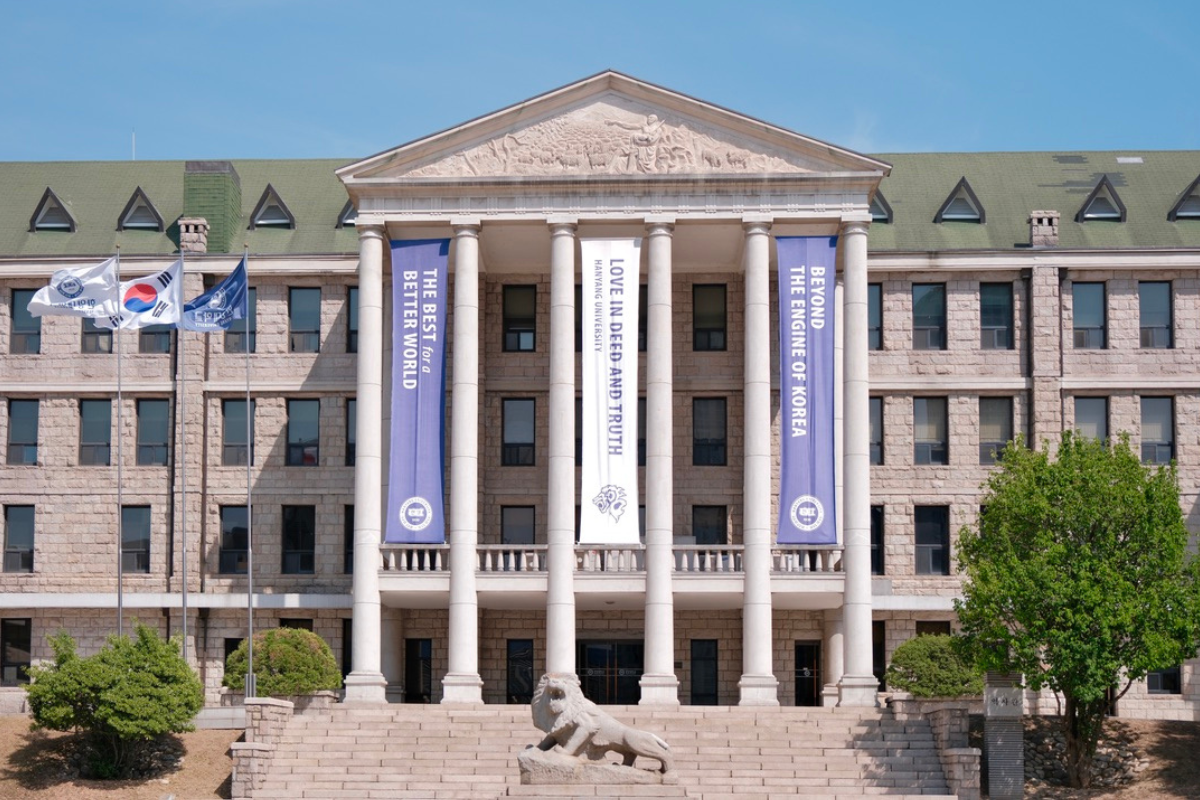
Hello, everyone! Thanks so much for joining us for today’s interview :)
First, could you tell us what made you decide to study abroad in Korea in the first place?
Student A: At first, I became interested in Korea because I liked K-pop idols. Korea has such a well-developed entertainment industry. Later, after I return home, I want to try working in hands-on or operations roles that support artists at an entertainment agency, so I thought studying a related major in Korea would be even more helpful.
Student B: I’d always wanted to live in another country, and I was also considering transferring to a Korean university later on. So I decided to first try living and studying in Korea in person.
Student C: I’ve always really loved Korea, so I’d been thinking for a long time that I wanted to study here. At first, I worked and saved money diligently, and once I was ready, I came to Korea.
Right now I’m studying in Korea on a language training visa, and later I’m planning to apply for an H-1 visa and try working here too!
🙋🏻♀️ Why did you choose Hanyang University Korean Language Institute?
Student A: I also considered Korea University’s language program at the time, but in the end I chose Hanyang University because of the location.
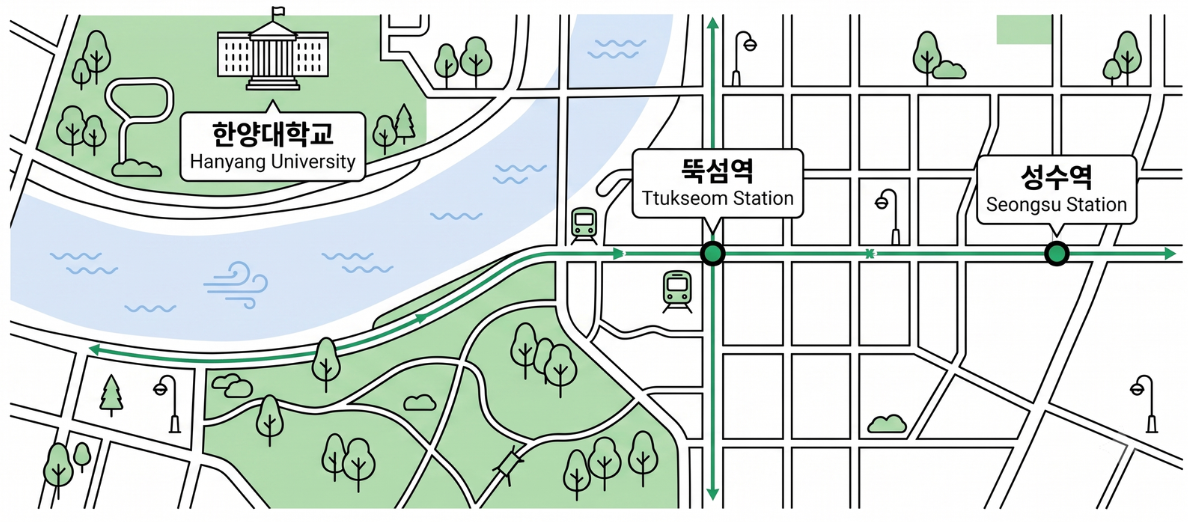
Korea University is in Seongbuk-gu, and for me it felt a bit out of the way. On the other hand, Hanyang University is in Wangsimni and it’s close to Seongsu and Gangnam too, so getting around was much more convenient. I usually like shopping and exploring different places, so that felt like a big plus.
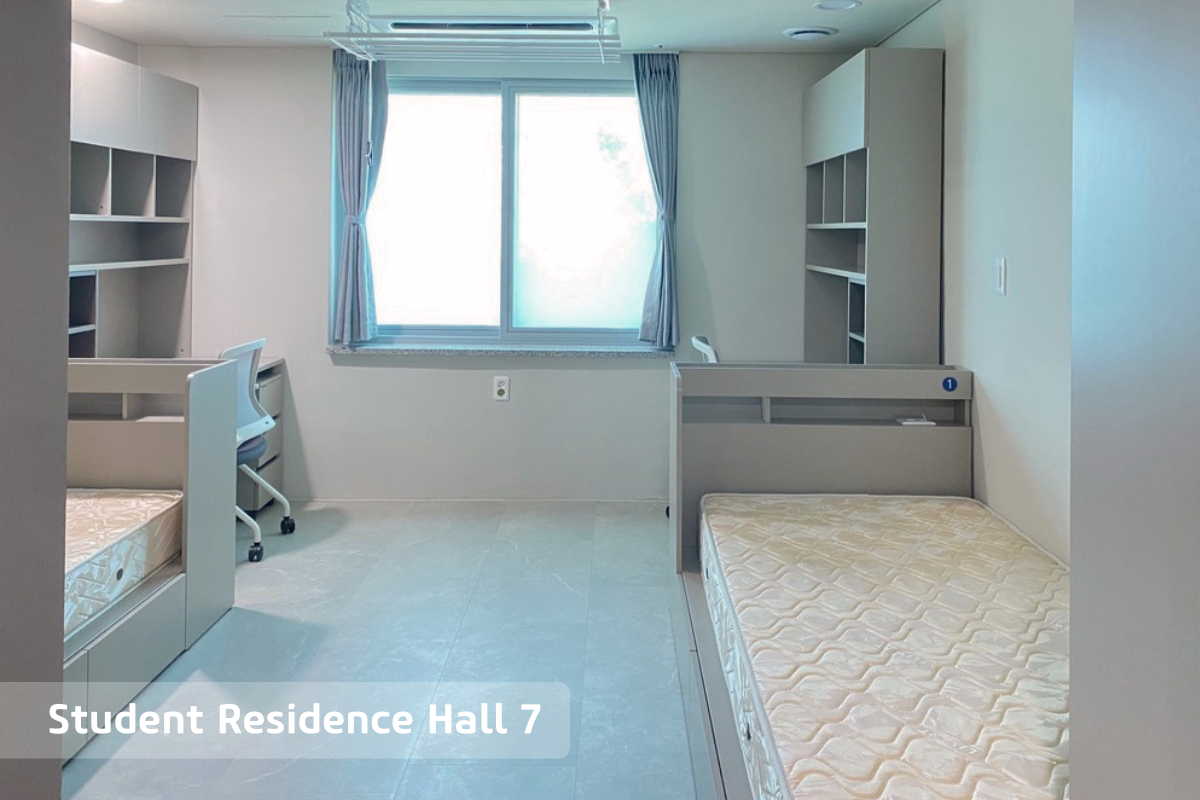
The dorms were also one of the factors I considered when choosing a school. Hanyang University’s women’s dorm is a double room, but there’s a partition and a door in the middle, so the space is divided, kind of like two small single rooms put together. I liked that it guarantees personal space and privacy better than a typical double room.
Another important reason is that I’m planning to apply to Hanyang University’s undergraduate program in the future. To apply to Hanyang University undergrad, you have to prove Korean proficiency of at least Level 4, through a TOPIK score or a certificate of completion from a language program. So I thought if I completed up to Level 4 at Hanyang University’s language program first, I could use that study history when applying to undergrad later. Considering all that, I felt it would be more secure to attend Hanyang University’s language program from the start.
Student B: I mainly looked up information online, and I chose Hanyang University’s language program because the class atmosphere seemed more fun and relaxed.
Location was also one of the key reasons. I wanted to avoid schools that are too far out, and since Hanyang University is in Wangsimni, it’s relatively central within Seoul and transportation is convenient. After considering everything together, I decided on Hanyang University.
Student C: I set my preferred conditions first, then chose a language program that matched them.
My conditions were, not too many students from Greater China, and transportation had to be convenient no matter what. Also, I’m not really into the Hongdae area, I actually prefer places like Seongsu or around Seoul Forest, and Hanyang University happens to be close to all of them.
On top of that, one of the SEVENTEEN members is also an alumnus of Hanyang University, so after considering even points like that, I ultimately chose Hanyang University’s language program.

🙋🏻♀️ What’s the class format like at Hanyang University’s language program?
There are usually 4 class periods a day, and the overall structure goes roughly like this.
- Period 1: Review what you learned the day before, introduce the unit, learn vocabulary
- Period 2: Learn grammar and practice using it
- Period 3: Learn grammar and practice using it
- Period 4: Conversation, presentations, and various activities
Student A:
‣ Class flow
Period 1 usually starts by introducing a new unit. The teacher asks a few questions related to the unit topic, and the class kicks off as students answer freely. After that, everyone learns the new vocabulary that appears in the unit together.
Periods 2 and 3 are mainly for grammar, and you typically learn about 2 to 3 grammar points per day. It’s not just listening to explanations, you also get time to apply what you learned by making your own sentences or working through practice problems.
Period 4 has a bigger focus on conversation, presentations, and activity-based lessons. Because you can use that day’s vocabulary and grammar in real situations, it really helped with speaking practice.
‣ Speaking and presentations
Presentations usually start increasing from Level 3, but it doesn’t feel like an overwhelming amount. Still, toward the end of each class, the textbook often has unit questions, so the teacher has everyone organize their answers and then either come to the front or share with the class.
Period 4 is almost entirely centered on conversations and presentations. Writing or workbook-style exercises are added in here and there during class, and starting from Period 2, there’s also a bit of writing practice where you make sentences as you learn grammar. Personally, I felt this was where I had the most chances to interact with the teacher, and there was quite a lot of time for speaking practice!
‣ Tests and homework
Tests are divided into a midterm and a final. There are three main parts, listening, reading and writing, and speaking.
Homework didn’t feel too burdensome. Most of it could be finished during class, and even when there were writing or essay assignments, it was usually something you could complete at home in under an hour.
Student B: The Level 2 class order feels roughly like this: review yesterday’s lesson → learn new words → learn 2 to 3 grammar points → conversation practice
After reviewing what you learned earlier, you learn new vocabulary and grammar, and at the end you practice having real conversations using the expressions you just learned.
Student C: Level 3 classes are similar overall. To explain the Period 4 conversation class in a bit more detail, you first practice by following the dialogue in the textbook, then use the expressions you learned to create a brand-new dialogue yourselves.
Sometimes the teacher gives you time to organize your thoughts on the topic and then asks you to prepare a short presentation. So I felt like I actually had quite a lot of chances to present, more than I expected.
For example, in one class, the presentation topic was “Choose an existing product and think of a new feature you’d like to add.” After organizing ideas about the product and the new feature, we presented them in front of our classmates.
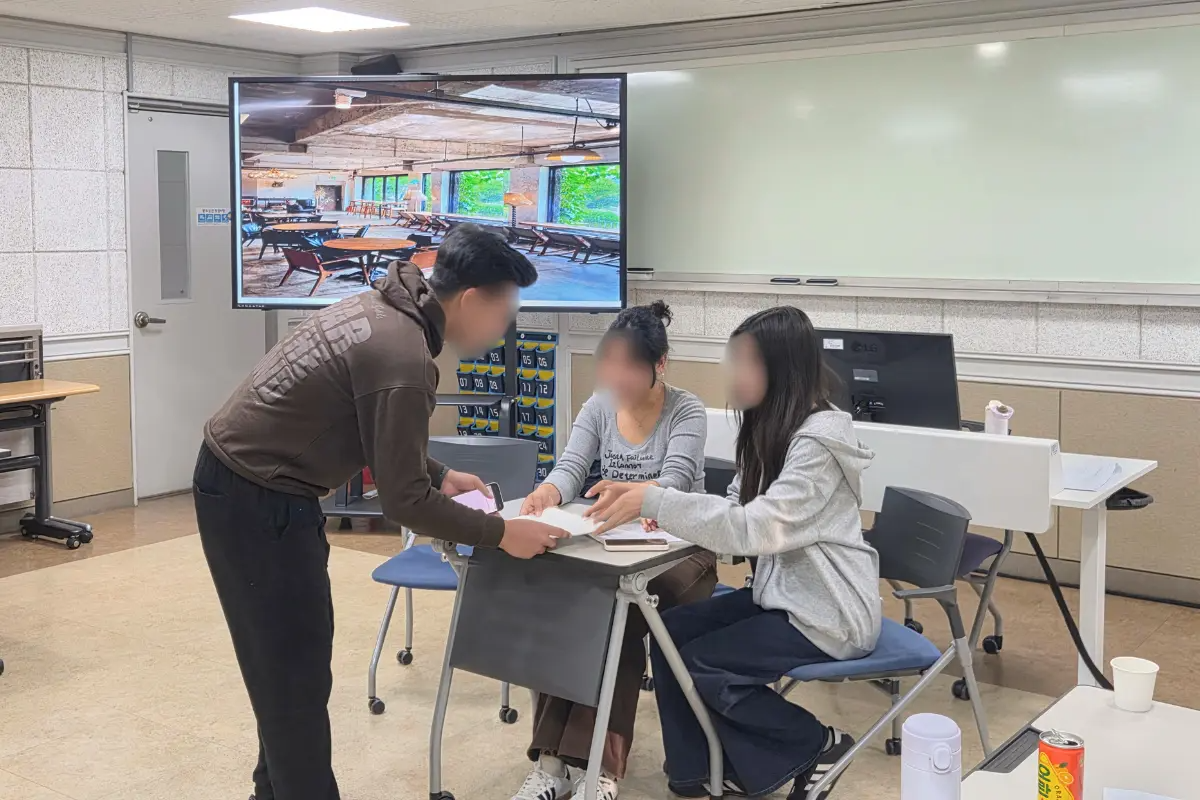
🙋🏻♀️ What’s the class breakdown like for listening, speaking, reading, and writing?
Student A: If you break it down into listening, speaking, reading, and writing, I personally think I spent the most time practicing speaking.
Student B: I think listening, speaking, and reading were each about 25%. Writing had a relatively smaller share of class time.
Student C: Overall, it felt pretty well balanced to me, but the writing portion was slightly lower.
🙋🏻♀️ After completing language school, which area of your Korean improved the most?
Student A: My speaking skills definitely improved the most, and it was the most noticeable!
If you learn Korean in your home country, you don’t really have enough opportunities or an environment where you can actually use Korean, and you don’t get many chances to have conversations in Korean. But at the language institute, the teacher keeps asking questions throughout class, so you naturally end up answering in Korean. It can feel a bit overwhelming at first, but as you try to express yourself in Korean no matter what, you end up getting a ton of speaking practice.
Speaking classes are mainly run as a Q&A format where the teacher and students ask and answer questions. When the teacher asks a question, students who want to respond can answer freely, so it feels pretty open. Rather than constantly calling on specific students, the teacher guides the class so everyone can naturally participate.
In Levels 1 and 2, most people answer pretty actively, but from Level 3, as the material gets harder, the classroom can actually get quiet sometimes. Still, if you move up step by step from the lower levels, the teacher gives lots of encouragement so students can build confidence in Korean. Instead of rushing you to answer, they wait patiently and guide you gently, so it didn’t feel too stressful.
Student B: My listening, speaking, reading, and writing all improved overall, but among them, I think my speaking and listening skills improved the most.
Student C: For me, if I rank the skills by how much they improved, it would be >>speaking, listening, and writing ≥ reading. Overall, writing and reading feel pretty similar, but if I look more closely, I felt my writing improved more than my reading.
🙋🏻♀️ What is Hanyang University Language Institute’s buddy system like?
Student C: I’ve signed up for the Mentoring Program a few times! Reservations usually open a week in advance, and to participate, you have to apply online yourself.
That said, I think how satisfied you feel with the program can vary depending on which mentor you get. If you meet a mentor who proactively asks questions or suggests conversation topics first, it’s easy to keep the conversation flowing naturally, and it’s really helpful for practicing spoken Korean. And if you really click, it can even turn into a real friendship after the program ends!

🙋🏻♀️ Does the Hanyang University Korean Language Institute have cultural experience classes?
Student A: The most memorable activity for me was the Hangang River cruise experience we joined last semester. We got to take a big cruise ship and enjoy the views along the Hangang River, and we could also watch a performance prepared by the school. The boat was almost full of Hanyang University students, so it really felt like we were all enjoying a school event together.
Lunch was provided, and the whole program lasted about 2 to 3 hours. Students participated in either a morning group or an afternoon group.
Student B: We also took a Hangang River cruise as a cultural experience activity last semester.
Student C: It seems like the cultural experience class happens about once per semester. The semester before last, we watched a movie, and last semester we did the Hangang River cruise experience.
🙋🏻♀️ What do you think are the strengths of the Hanyang University Korean Language Program?
Student A: At Hanyang University’s Korean Language Institute, I felt the teachers were generally very responsible and guided students well. If you have questions or run into problems, the teachers and the administrative office try their best to help. Even when I emailed with questions, I was able to get a reply relatively quickly.
The school also supports administrative processes such as applying for your Alien Registration Card by allowing group submissions. For international students who have just arrived in Korea, admin tasks can feel unfamiliar, so it was much more convenient to have the school’s help.
The living infrastructure is also well set up. Facilities you use often, including the language institute classrooms and the student cafeteria, are close by, and there are also lots of restaurants around campus. It’s also near the Wangsimni commercial area, so overall it has a lively vibe.
Student B: Hanyang University is in a great location, and the campus atmosphere is pretty pleasant. Classes at the Korean Language Institute also run in a relatively relaxed setting, so it didn’t feel too overwhelming.
Student C: At Hanyang University’s Korean Language Institute, classes seem to be well balanced overall. They cover listening, speaking, reading, and writing. Most of all, the location is really great. Transportation is convenient, and you can get to Seongsu in about 5 minutes. Hannam-dong and Gangnam are also relatively close, so it’s easy to visit different areas after class.
Life in Korea
🙋🏻♀️ While studying abroad, were there any parts you found difficult?
Student A: The biggest thing I really felt after starting to live on my own was sorting trash and recycling. It was such a clear cultural difference in everyday life in Korea.
Korea’s recycling system is incredibly detailed, so I was asking AI almost every day, “How do I throw this away?” There are so many items that are confusing, and I wasn’t sure how to sort them. If you’re living in Korea for the first time, I think it takes some time to get used to how separated disposal works.
Student B: So far, there hasn’t been anything that feels especially difficult.
Student C: Sometimes I find it difficult when I have to handle things at outside institutions, like government offices. There are times when they respond a bit unkindly to foreigners, or when you meet staff who don’t explain things well enough even if your Korean isn’t great.
Maybe because I came to learn Korean, they assume I can manage to some extent, so there were cases where they didn’t explain things slowly. From an international student’s point of view, situations like this can feel burdensome at times.
🙋🏻♀️ Are there any apps you’d recommend for studying abroad in Korea, or any must-have daily essentials that are good to bring?
Student A: For delivery apps, I recommend “Baedal Minjok”! If you sign up for the membership, you can get free delivery fees for 1,900 won a month, so it felt like a really good deal.
At first, I tried Foodpanda too, but it was a bit disappointing that delivery could take a long time. I once ordered mala tang and it didn’t arrive until a full 2 to 3 hours later. Comparing the two, Baedal Minjok felt much more convenient.
Student B: In Korea, KakaoTalk is a must-have app. Koreans use KakaoTalk for almost all everyday communication, so you’ll end up using it all the time, whether you’re chatting with friends, getting school announcements, or handling day-to-day matters.
Student C: For map apps, you should definitely download Naver Map. In Korea, it makes everything convenient, finding directions, taking public transportation, and even looking up shops.
And I also use the Mega Coffee app often. If I order coffee in advance before class, I can arrive at the store and pick it up right away, which saves a lot of time. If you’re a woman, you’ll probably use the Olive Young app pretty often too, it’s super handy for buying skincare and cosmetics or checking discount deals.
🙋🏻♀️ About how much do you usually need for monthly living expenses?
Student A: I’m currently living in an officetel off campus. Not only is the rent relatively expensive, but I also eat out most of the time and order delivery pretty often. I also enjoy shopping, so I don’t really live on a tight budget, and including housing costs, I think I spend about 4,000,000 KRW per month.
When I lived in the dorm, the burden of living expenses was definitely lower than it is now. For me, Hanyang University’s dorm fees were fairly reasonable, about 2,000,000 KRW per semester (based on 10 weeks).
Student B: The men’s dorm fee is about 1,800,000 KRW per semester (based on 10 weeks). I don’t shop much and I usually eat at the student cafeteria, so my spending isn’t that high. Excluding the dorm fee, I spend about 500,000 KRW per month on living expenses.
Student C: I’m also currently living in the women’s dorm. Adding everything up, like food, shopping, and leisure, I think I spend around 1,000,000 to 1,200,000 KRW per month.
About half of that goes toward food, and the rest goes to shopping, fandom activities, and other everyday expenses.
[Image Slider] 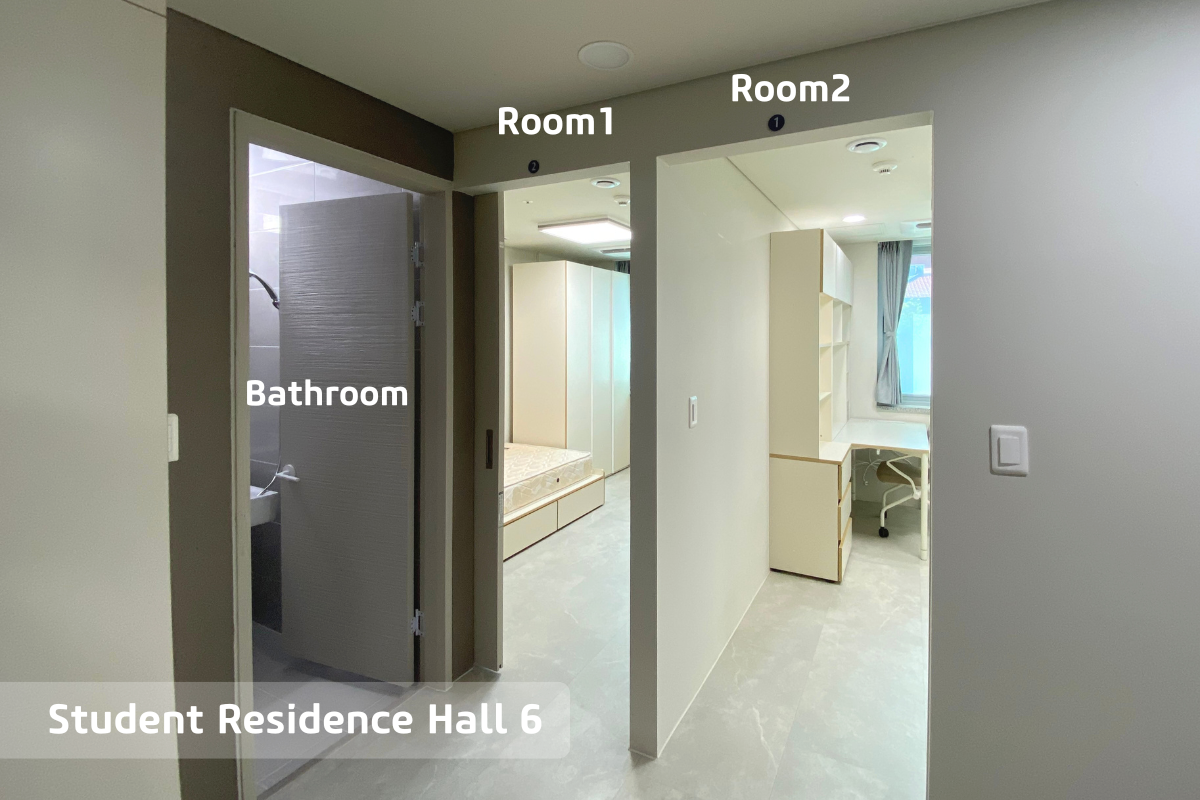
🙋🏻♀️ Where are you living right now? (School dorm / living off campus)
Student A: For the first semester, I lived in the school dorm, and now I’m living on my own in an officetel near Wangsimni. It’s a duplex-style officetel, the deposit is 10 million KRW, and the monthly rent is 1.1 million KRW. On top of that, about 200,000 KRW is added each month for maintenance fees and other costs.
When looking for a place, I first searched listings on real estate apps like Jikbang and Dabang. After that, I had someone check the place in person for me to confirm the on-site condition, and they also sent videos they filmed during the visit, so I could thoroughly look around the inside. After making a final check through the video, I signed the contract for the place I’m living in now.
Student B: I currently live in the men’s dorm (Dormitory No. 7). The men’s dorm is a typical room shared by two people, and there isn’t a divider in the middle. The school usually tries to assign students of the same nationality to the same room as much as possible.
Student C: I live in the women’s dorm(Dormitory No. 6), and it takes about 13 minutes to walk from the dorm to the language school classrooms. The women’s dorm rooms are all double rooms, but there is a divider installed in the middle of the room. It’s set up almost like two small single rooms within one room, so personal space and privacy are relatively well protected. There’s also a private bathroom in the room, so overall I’m satisfied living here.
The laundry room and lounge, refrigerator, study room, and so on are provided as shared spaces, and the gym is used by both men and women.
However, it’s a bit of a shame that the maximum stay in the dorm is 6 months, and cooking isn’t allowed. For people who want to cook for themselves regularly, it can be somewhat inconvenient.
That wraps up this Hanyang University Korean Language Program student interview.
If you have been looking for reviews, class evaluations, or related information about the Hanyang University Korean Language Program, I hope this post helped you understand the program better, and use it as a reference when choosing a school.
Want more details on how to apply to the Hanyang University Korean Language Program? Click the button below to check it out right away!
Application | Hanyang University Korean Language Program 🏫
If you have any thoughts on this post or any questions, feel free to leave a comment anytime. You can also contact Creatrip’s 24/7 Customer Support via WhatsApp(+82 10-8818-2915, English support) or LINE(@creatrip, Chinese and Japanese support), or email us at help@creatrip.com and we will be happy to help. To make sure you do not miss the latest news from Korea, please follow our Instagram and Threads too!