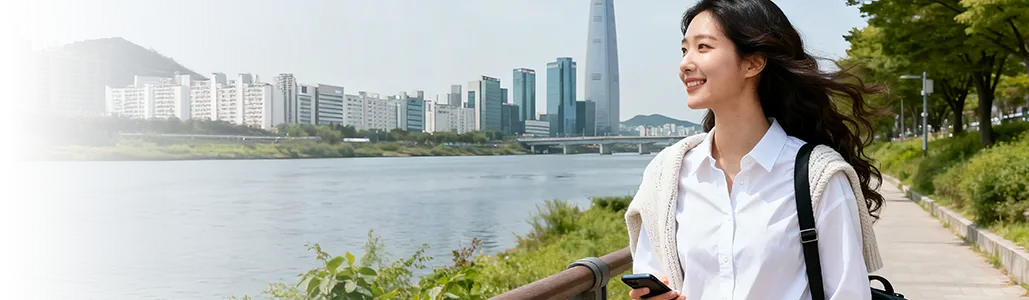
Where to Go in South Korea: A First-Trip Route That Actually Works
A Creatrip editor’s practical route through Seoul, Gyeongju, Busan, Jeju, and the smart add-ons worth considering.

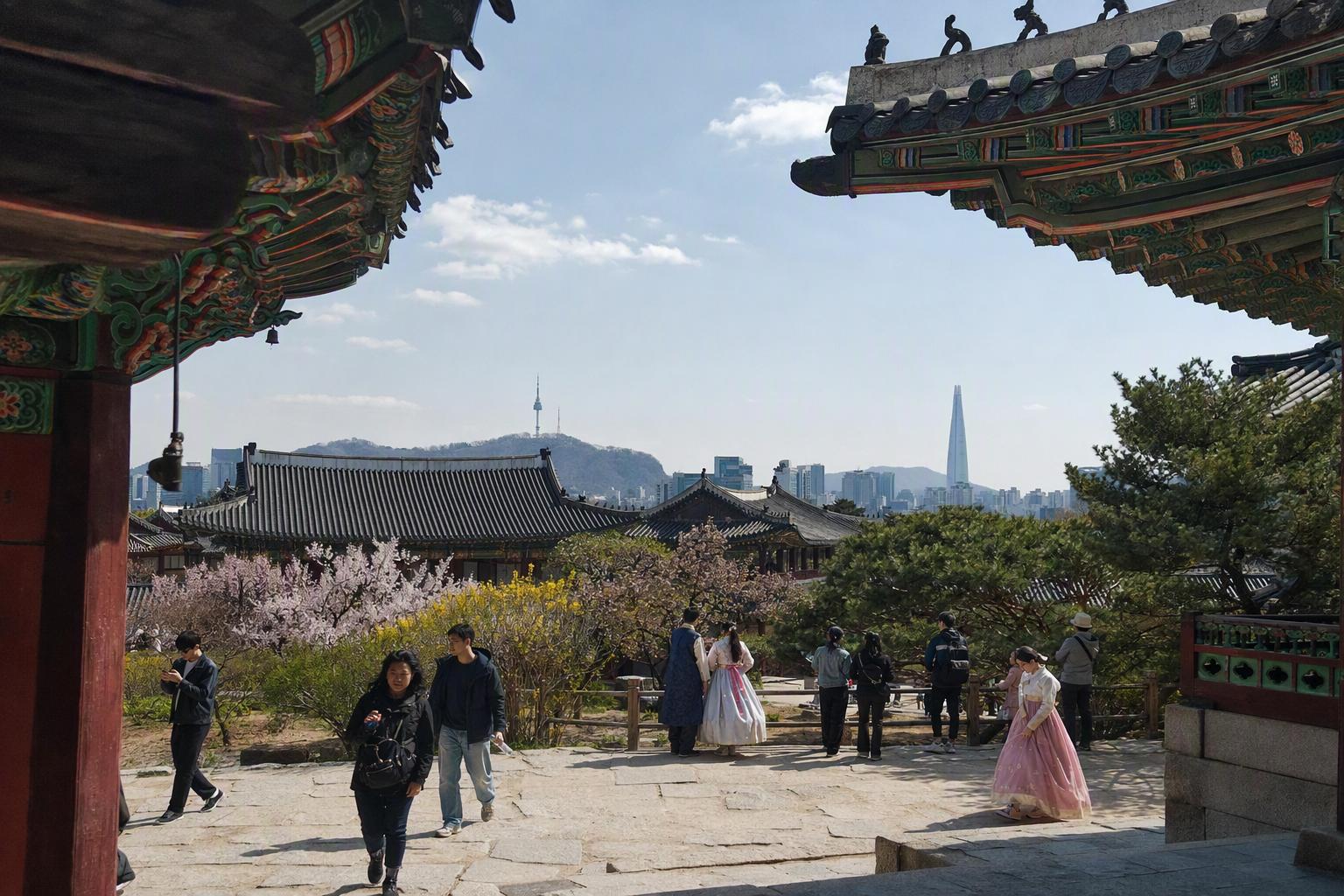
South Korea is one of those countries where a trip can look simple on paper and still become surprisingly tiring if the route is too greedy. The trains are fast, domestic flights are frequent, cafés seem to appear exactly when you need one, and the cities are wonderfully easy to enjoy without over-planning every meal. Still, Korea rewards a little restraint.
For most first-time visitors, the strongest route is not to race everywhere. It is to build a clean line through the country: Seoul → Gyeongju → Busan → Jeju → Seoul, with Jeonju added if food and hanok streets are high on your list. This gives you the capital, royal palaces, markets, ancient Silla history, the sea, and volcanic island scenery without turning the trip into a luggage workout.
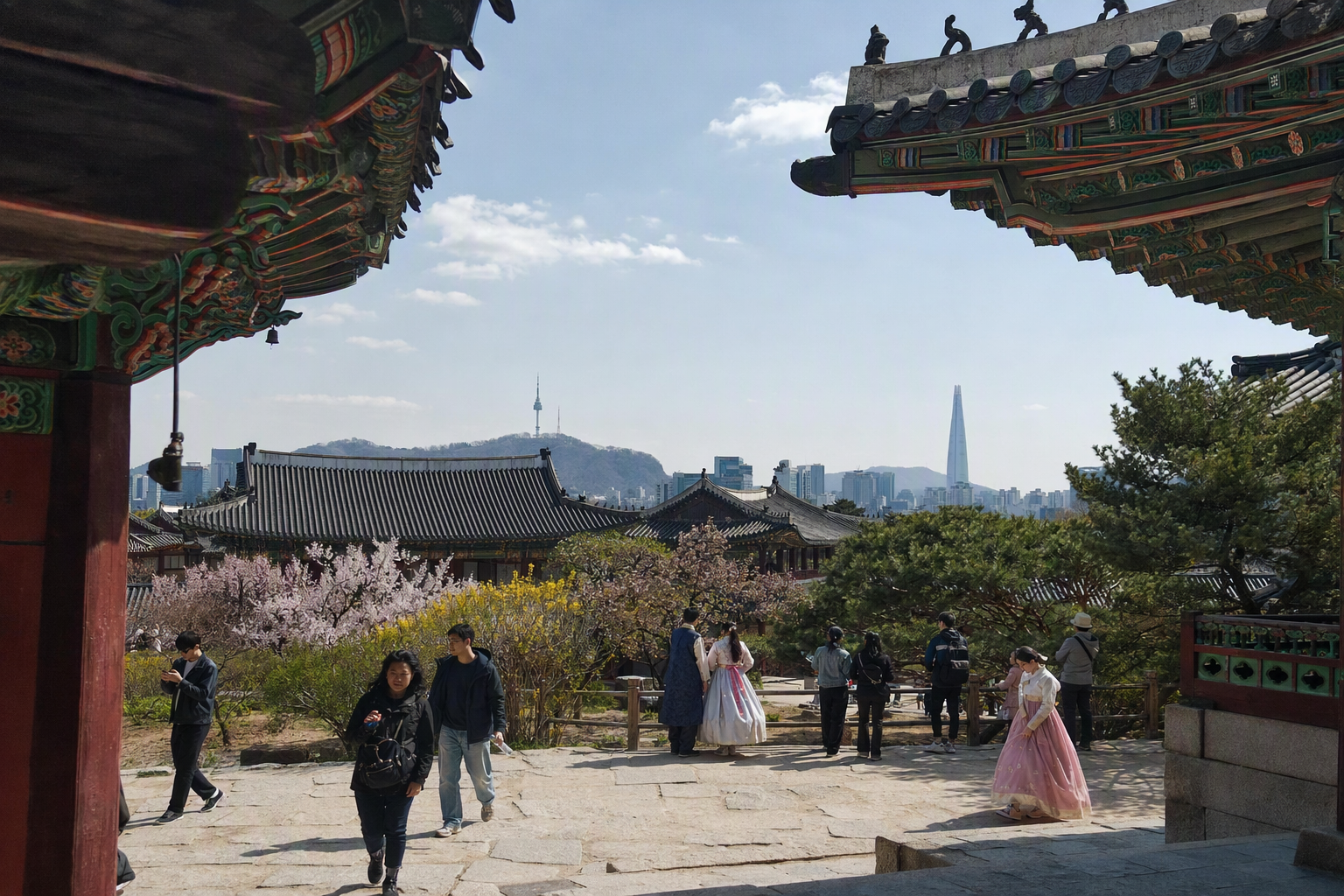
The best first-trip route: Seoul, Gyeongju, Busan, Jeju
For a first trip to Korea, 10 to 14 days is the sweet spot. It gives each place enough breathing room to feel different from the last, which is the whole point of leaving Seoul in the first place.
A balanced 12 to 14 day version looks like this:
| Stop | Good length | Why it belongs |
|---|---|---|
| Seoul | 3–5 nights | Palaces, neighborhoods, markets, shopping, design, nightlife, DMZ access |
| Jeonju | 1 night | Hanok streets, bibimbap, makgeolli, slower local atmosphere |
| Gyeongju | 1–2 nights | Silla heritage, royal tombs, UNESCO sites, evening scenery |
| Busan | 2–3 nights | Beaches, seafood markets, hillside villages, coastal temples and city views |
| Jeju | 3–4 nights | Volcanic landscapes, Hallasan, Seongsan Ilchulbong, Udo, Olle trails |
The cleanest movement is southward by train, then over to Jeju by domestic flight. If your international flights allow an open-jaw route, finishing from Jeju can save a final backtrack. If not, fly Jeju back to Seoul and keep a little buffer before your flight home, especially in summer or typhoon season.
A classic 14-day rhythm could feel like this:
| Day | Base | Focus |
|---|---|---|
| 1 | Seoul | Arrival, easy evening in Myeongdong, Ikseondong, or Insadong |
| 2 | Seoul | Gyeongbokgung, Bukchon, Changdeokgung, Gwangjang Market |
| 3 | Seoul | DMZ tour or modern Seoul with DDP, Hongdae, Seongsu, Seoul Forest |
| 4 | Seoul | N Seoul Tower, Lotte World Tower Seoul Sky, COEX, Gangnam |
| 5 | Jeonju | Hanok Village, bibimbap, makgeolli street |
| 6 | Gyeongju | Daereungwon, Cheomseongdae, Hwangnidan-gil, Donggung and Wolji at night |
| 7 | Gyeongju → Busan | Bulguksa, Seokguram, then train to Busan |
| 8 | Busan | Gamcheon Culture Village, Jagalchi Market, BIFF Square, Yongdusan area |
| 9 | Busan | Haeundae, Haeundae Green Railway, Busan X the Sky, Gwangalli at night |
| 10 | Busan | Haedong Yonggungsa, Taejongdae, Songdo, or Osiria area |
| 11 | Jeju | Fly to Jeju, settle into the east or north side |
| 12 | Jeju | Seongsan Ilchulbong, Udo, Seongeup Folk Village |
| 13 | Jeju | Hallasan, Olle trail, forest, waterfalls, or coastal drive |
| 14 | Seoul or Jeju departure | Fly back to Seoul or continue from Jeju if your route allows |
The part we would protect most strongly is one night in Gyeongju. It is often treated as a quick day trip, but the city’s best rhythm is slower: tombs and stone observatory in the afternoon, Hwangnidan-gil when the lights come on, then Donggung and Wolji after dark. Compressing that into a same-day train run from Seoul makes the whole experience feel oddly flat.
If you have fewer days, cut cleanly
Korea tempts people into packing Seoul, Busan, Jeju, and Gyeongju into one week. Technically possible? Sometimes. Pleasant? Usually not.
For 5 days, stay in Seoul and use one day for a DMZ tour or a nearby cultural day trip. You will still have more than enough: palaces, markets, shopping districts, cafés, museums, river walks, and neighborhoods with totally different moods.
For 7 days, choose one strong pairing:
- Seoul + Busan for city contrast, seafood, markets, beaches, and easier rail logistics.
- Seoul + Jeju for nature, volcanic scenery, hiking, and a slower island finish.
- Seoul only with day trips for the least stressful first visit, especially if food, shopping, beauty, or K-pop culture is a big part of the trip.
For 10 days, we like Seoul 3–4 nights → Gyeongju 1–2 nights → Busan 2 nights → Jeju 2–3 nights. It is active, but the movement still makes sense.
When Korea is at its best
Spring and autumn are the easiest seasons to love. The country looks good, the weather behaves more often, and outdoor sightseeing does not feel like an endurance sport.
Late March to May brings cherry blossoms, canola fields, softer city temperatures, and good Jeju hiking windows. In Seoul, average highs around April and May sit roughly in the 18–23°C range, which is almost perfect for long walking days.
October to November is our favorite window for travelers who care less about blossoms and more about comfort. The air is usually drier, skies are clearer, hiking conditions are better, and the typhoon risk is lower than in late summer. Seoul’s October highs are around 19°C, which is ideal for palace days, markets, and evening walks.

Cherry blossom season is beautiful, but fragile
Cherry blossoms move roughly south to north. Jeju usually starts first around late March, followed by Busan and Jinhae, then Gyeongju, then Seoul in early April. Full bloom can last only a few days, and one heavy rain can strip a huge amount of petals overnight.
That does not mean you should avoid cherry blossom season. It means you should treat it like a high-reward, high-variance trip. Build in two or three flexible days, book trains and hotels early, and avoid assuming one exact date will work perfectly.
The biggest blossom spots can be intensely crowded. Jinhae’s famous festival draws enormous numbers, Seoul’s Yeouido cherry blossom road can feel as dense as rush hour, and hotels near blossom areas often jump in price. For a smoother trip, aim for weekdays and consider nearby bases instead of sleeping right on top of the busiest festival zone.
Watch early May in 2026
The area around May 1 Labor Day and May 5 Children’s Day can create a busy holiday stretch in 2026. Popular places like Gyeongbokgung, Seongsan Ilchulbong, Hallasan trailheads, and Gamcheon Culture Village may feel much heavier than usual. If your dates fall there, reserve long-distance transport early and save the most exposed outdoor sights for morning.
Summer is possible, but not the easiest first trip
July and August are hot, humid, and wet. Seoul’s rainfall can reach around 380mm in July and 330mm in August, and the monsoon season can stretch longer than expected. Late summer also brings typhoon risk, especially relevant if Jeju flights are part of your route.
Summer works best for travelers who specifically want beaches, festivals, and a lively vacation atmosphere. For a first broad Korea trip with palaces, walking neighborhoods, hiking, and island scenery, spring or autumn is usually kinder.
Winter has a sharper charm
Winter Korea can be gorgeous: crisp palace photos, hot soups, fewer crowds, and ski add-ons. The trade-off is real cold. Seoul can drop below –10°C, so long outdoor days require proper layers and a bit of stubbornness.
Seoul: the anchor of the trip
Seoul earns its place at the center of almost every first Korea itinerary. It is not just the capital; it is the place where royal architecture, street food, design, shopping, mountain views, nightlife, and hyper-modern city life overlap in one subway map.
Give Seoul at least three nights, and four or five if you want to enjoy it rather than skim it.
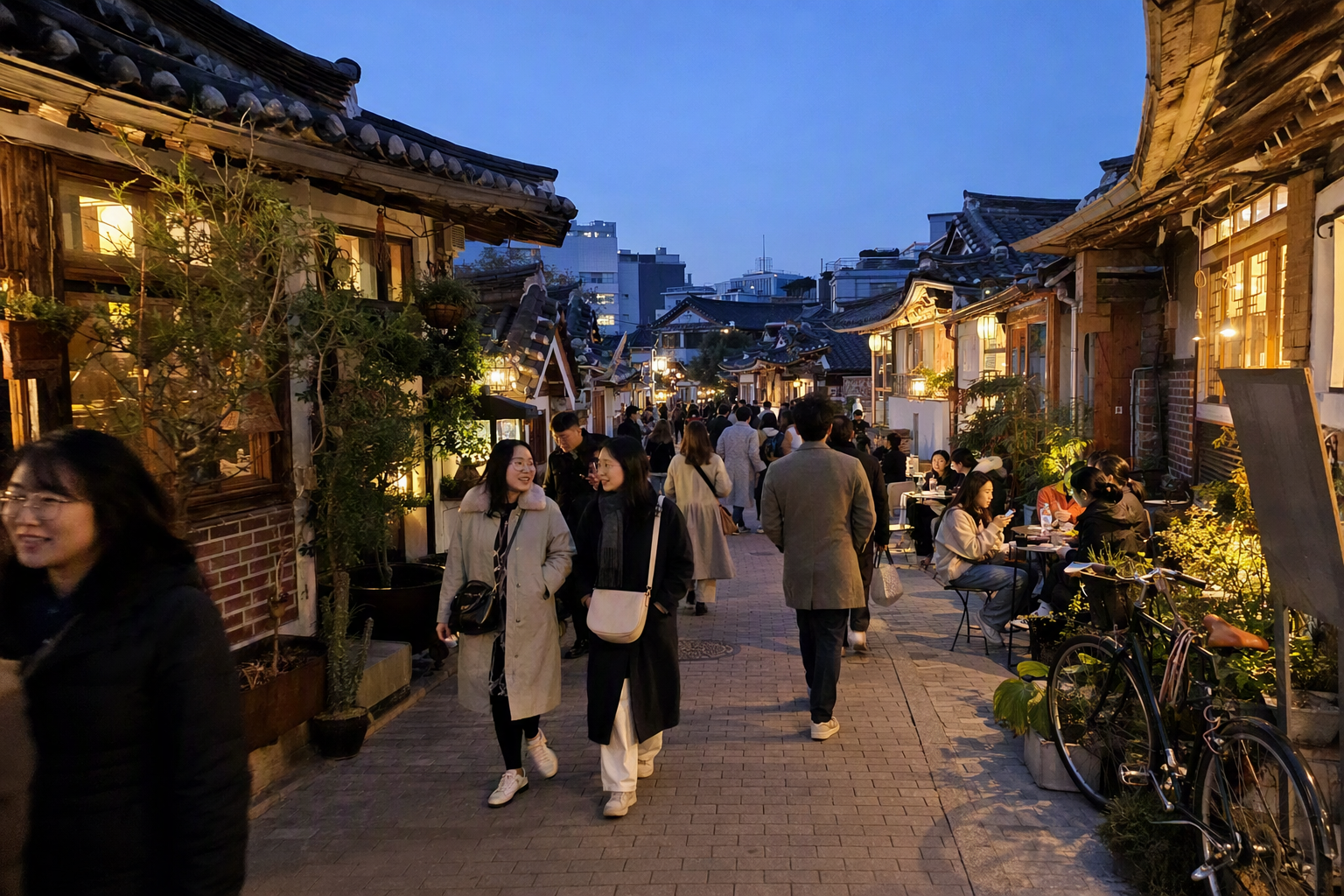
A good Seoul structure is not about chasing every famous neighborhood. It is about grouping the city by mood.
Historic northern Seoul
Spend one day around Gyeongbokgung, Bukchon, Changdeokgung, Insadong, and nearby Jongno streets. Gyeongbokgung is one of the strongest first stops in the country, with a general adult foreign visitor ticket around 3,000 won. It is usually closed on Tuesdays, and English guided tours are commonly listed at 11:00, 13:30, and 15:30 except on closure days, but palace hours and tour operations can change, so check the latest official schedule before locking the day.
Hanbok rental is not only photogenic; wearing hanbok can also qualify visitors for free palace entry under current rules. It is a fun choice if you actually want the photos, but do not feel pressured into it. The palace is beautiful either way.
Markets, towers, and the evening city
Gwangjang Market is a natural food stop, especially if you want a lively introduction to bindaetteok, mayak gimbap, noodles, and market energy. For views, N Seoul Tower gives the classic mountain-and-city angle, while Lotte World Tower Seoul Sky is the sleeker, higher modern skyline version at around 500 meters.
N Seoul Tower observatory pricing has been listed around 16,000 won for adults, but attraction prices shift, so verify before going. The tower lights are also known for reflecting fine dust levels by color, a very Seoul detail.
Contemporary Seoul
Use another day for DDP, Seongsu, Seoul Forest, Hongdae, COEX Starfield, or Gangnam depending on your taste. Seongsu works well for cafés and boutiques, Hongdae for younger nightlife and street culture, DDP for design and architecture, and COEX for a polished indoor break when the weather turns.
DMZ day trip
A DMZ tour is one of the easiest day trips from Seoul, but it is not a casual self-guided outing. Access is through licensed tours, with early departures often around 07:30–08:00 and returns later in the day. The JSA or Panmunjom portion can be suspended depending on conditions, so choose a tour with clear current details rather than relying on an old itinerary screenshot.
Jeonju: the soft food-and-hanok stop
Jeonju is not mandatory, which is exactly why it can feel so nice. It breaks the Seoul-to-southeast journey with a gentler rhythm: hanok roofs, small craft shops, bibimbap, makgeolli alleys, and streets that invite wandering rather than sprinting.
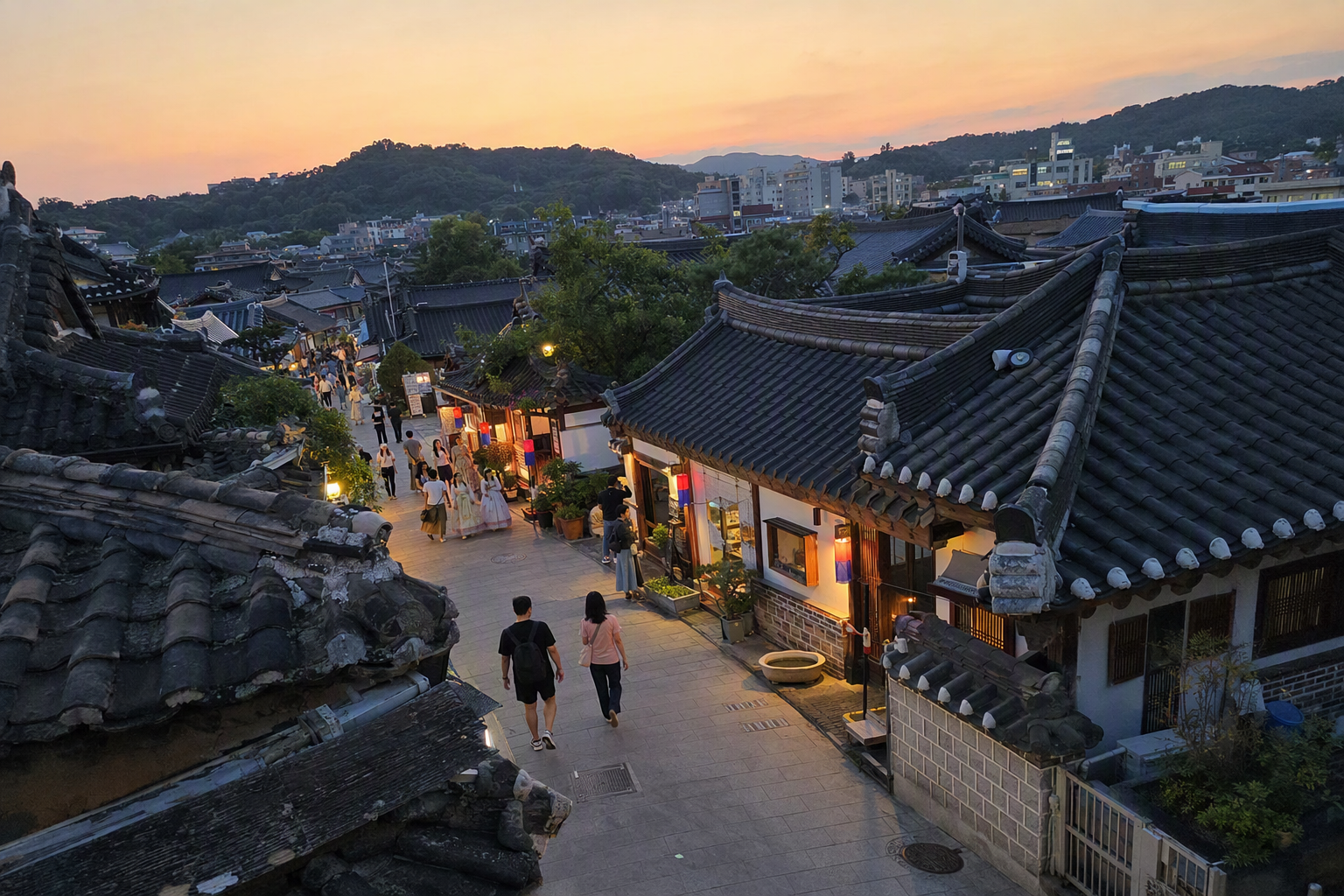
One night is usually enough for a first trip. Arrive from Seoul by KTX, drop bags, explore the Hanok Village area, eat properly, and continue toward Gyeongju or Busan the next day. Seoul to Jeonju by KTX is often around 1 hour 40 minutes to 2 hours, with fares commonly cited in the mid 30,000 won range, though exact times and prices vary by train.
Jeonju is best for travelers who care about food and atmosphere more than ticking off grand landmarks. If your trip is only 10 days and you are already including Jeju, this is the first stop we would cut. If you have 12 to 14 days, it adds a lovely texture.
Gyeongju: Korea’s ancient capital, best after sunset
Gyeongju is the place that gives a Korea trip historical depth beyond palaces. Once the capital of the Silla kingdom, it feels spacious, low-rise, and quietly dramatic, with grassy royal tombs sitting near cafés and pedestrian streets.
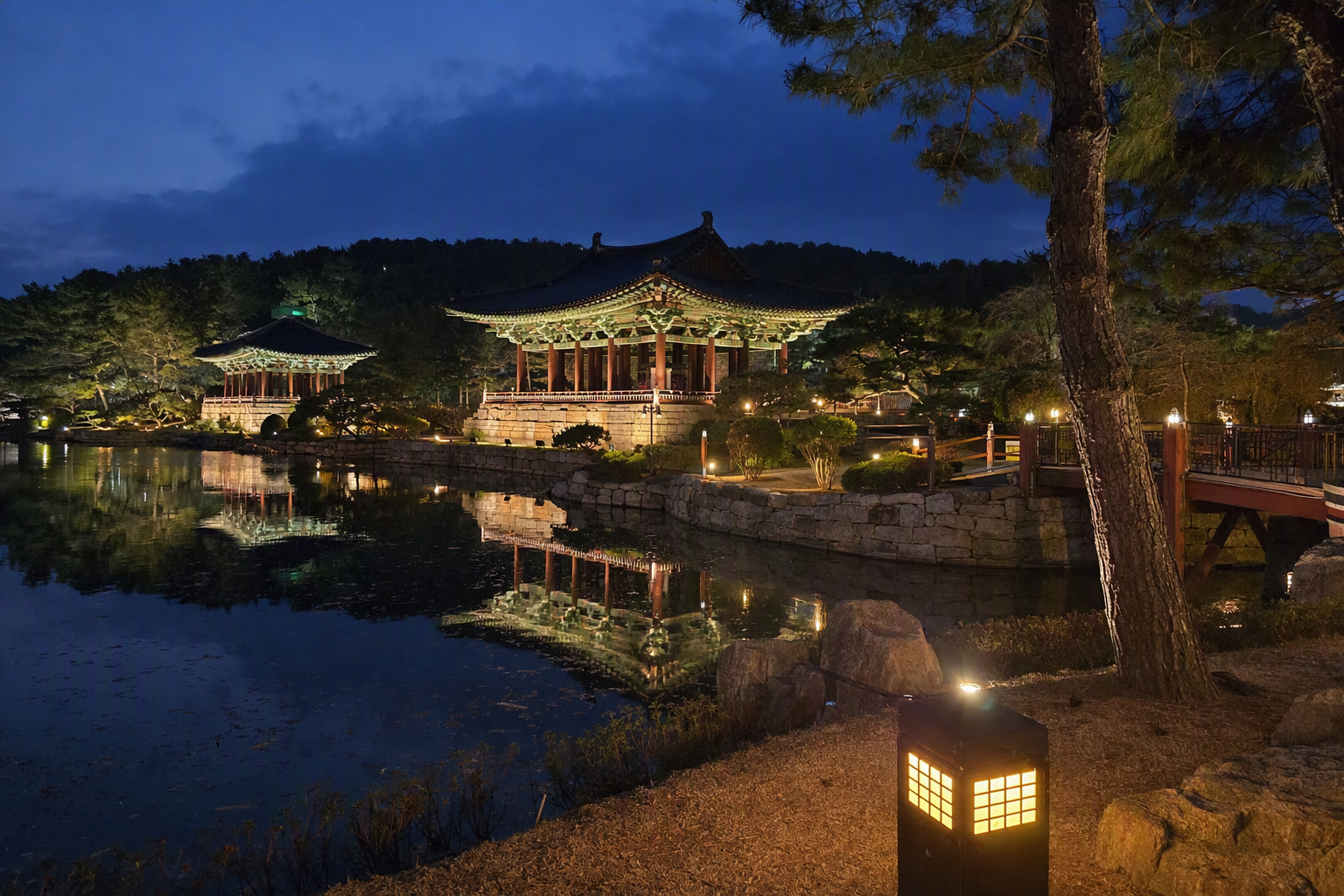
The city has an exceptional heritage portfolio: Bulguksa, Seokguram, the Gyeongju Historic Areas, and Yangdong Village are all part of its UNESCO story. The historic areas alone include dozens of designated assets across multiple zones.
For a first visit, a strong one-night plan is:
- Arrive in the afternoon and visit Daereungwon Tomb Complex and Cheomseongdae.
- Walk Hwangnidan-gil for cafés, snacks, and a more current local mood.
- See Donggung and Wolji at night.
- Visit Bulguksa and Seokguram the next morning before continuing to Busan.
If you love heritage landscapes, add a second night and include Yangdong Village, a living clan village with more than 150 hanok and centuries of history. It pairs beautifully with Andong Hahoe Village on a more culture-heavy itinerary, but adding both to a first trip works best when you have at least 12 days.
Busan: sea air, markets, hills, and night views
Busan is the easiest way to make Korea feel bigger than Seoul. The city is stretched along the coast, full of slopes and sea views, and it has a completely different tempo from the capital. Spend two to three nights if you can.
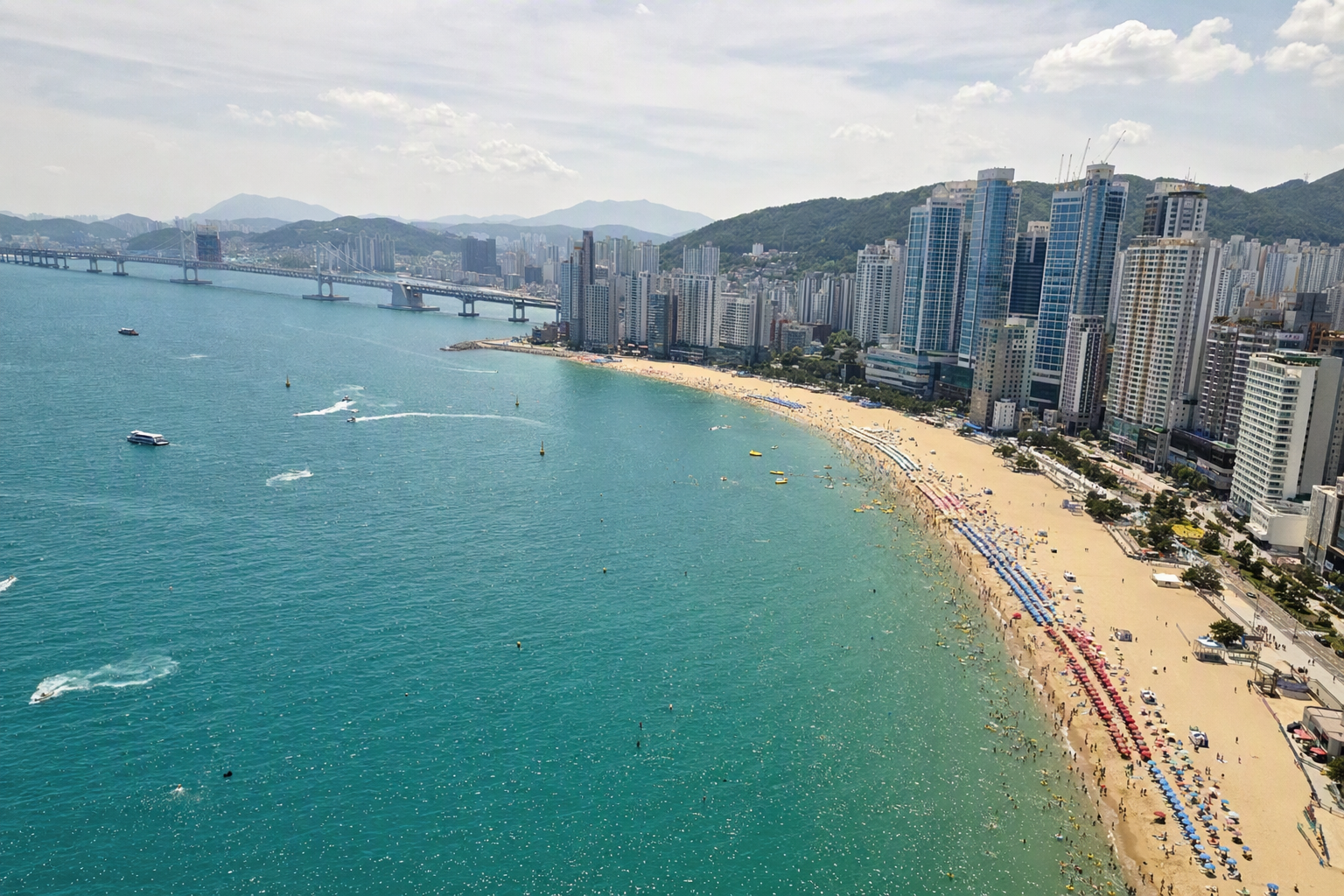
Start with the classic old-city side: Jagalchi Market, BIFF Square, Yongdusan area, and Gamcheon Culture Village. Gamcheon is colorful and very photogenic, but it is also a real residential hillside village. Keep voices low in narrow lanes, avoid blocking doorways, and be thoughtful with photos.
Then switch to the beach side. Haeundae is polished and busy, with nearby attractions like Busan X the Sky and the Haeundae Green Railway. Gwangalli is especially good at night, when the bridge lights turn the beach into one of Busan’s best low-effort evenings.
For a third day, choose by mood:
- Haedong Yonggungsa for a sea-facing temple experience.
- Taejongdae for coastal cliffs and walking.
- Songdo for beach and bridge scenery.
- Osiria for a more attraction-heavy day.
Is the Visit Busan Pass worth it?
It can be, but only if your day is attraction-heavy. For foreign visitors, recent pass options have included 24-hour, 48-hour, BIG3, and BIG5 styles, with the 24-hour pass listed around 55,000 won and the 48-hour around 85,000 won. A packed day combining higher-priced attractions can save meaningful money. A relaxed market-and-beach day probably will not.
Physical versions may also work as a rechargeable transport card, but product details and eligible attractions change, so check the latest Visit Busan Pass information before buying.
Jeju: give the island enough time
Jeju is not just a beach ending. It is volcanic cones, black rock coastlines, forests, lava tubes, wind, oranges, sunrise peaks, and walking trails that make you slow down whether you meant to or not.

For a first trip, three to four nights is the most satisfying range. Two nights can work if you only want a taste, but Jeju’s distances are longer than they look, and the island is much less fun when every day becomes a cross-island transfer.
The strongest first-visit set includes:
- Seongsan Ilchulbong for sunrise or morning views.
- Udo for a small-island day if weather and ferry operations cooperate.
- Hallasan National Park for serious hiking and mountain scenery.
- Jeju Olle trails for slower coastal walking.
- Bijarim, waterfalls, forests, or east-side villages for softer days.
- Seongeup Folk Village if you want a traditional village stop on the island.
Car or no car?
Jeju can be done by bus, but a rental car changes the trip. Public transport works best for patient travelers with lighter plans. Some routes require transfers, taxis, or demand-responsive local buses. Manjanggul, for example, has public transport approaches through areas like Hamdeok or Gimnyeong, but it is not as frictionless as hopping on a subway in Seoul.
A car is especially useful if you want sunrise at Seongsan, multiple nature stops in one day, or accommodation outside Jeju City. If you do not drive, stay realistic and choose one area per day rather than trying to circle the island.
Manjanggul lava tube note for 2026
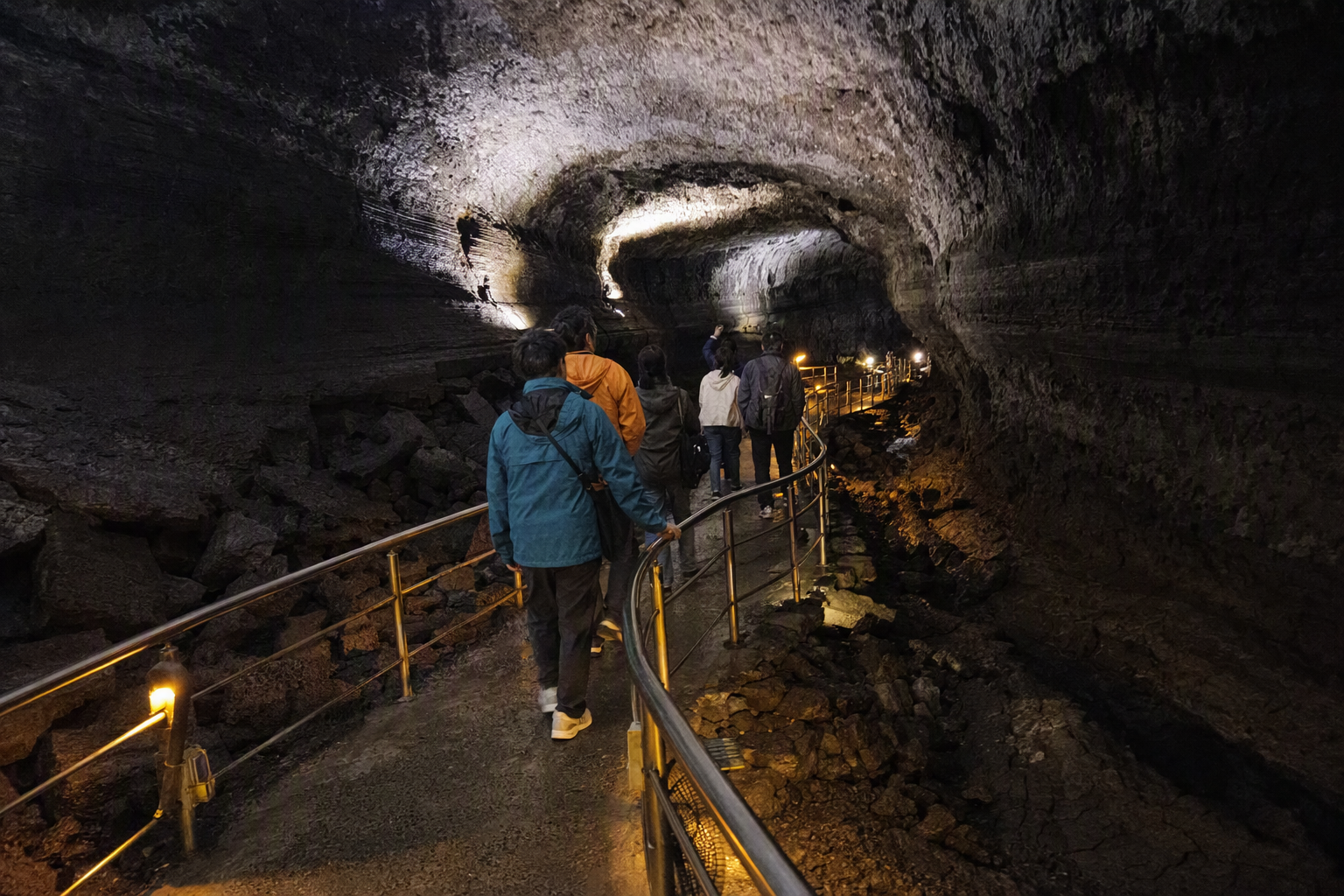
Manjanggul Lava Tube is one of Jeju’s major geological sights, part of the island’s volcanic heritage. The full cave is about 7.4km, with roughly 1km typically open to the public. It has been listed for official reopening on May 30, 2026 after a closure following a rockfall incident, with adult admission around 4,000 won, youth and child admission around 2,000 won, and hours around 09:00–18:00 with last entry around 17:10. Because reopening schedules and safety operations can change, verify the current official status before building a day around it.
How to move around without losing half your trip
Korea’s transport is one of the reasons the golden route works. The mainland is best handled by KTX and other rail, while Jeju is best reached by domestic flight.
Airport to Seoul
From Incheon International Airport to Seoul, the AREX train is the usual rail choice.
- AREX Express to Seoul Station: roughly 43–51 minutes, commonly around 11,000–13,000 won depending on current pricing. T-money is not used for the express train.
- AREX All-stop: roughly 59–66 minutes, often around 4,500–5,350 won, useful if your accommodation is near an intermediate transfer point.
If you are staying near Seoul Station or want the simplest first ride, the express is clean and easy. If you are transferring elsewhere anyway, the all-stop can make more sense.
KTX routes that matter
For first-trip planning, these are the big ones:
| Route | Typical time | Rough fare range |
|---|---|---|
| Seoul → Busan | 2 hr 15 min–2 hr 40 min | Around 59,800–60,000 won |
| Seoul → Jeonju | 1 hr 40 min–2 hr 30 min | Around 34,600–35,000 won |
| Seoul → Singyeongju | Around 2 hr | Around 45,000–49,000 won |
| Singyeongju → Busan | 27–35 min | Around 11,000–16,000 won |
The Korail Pass is not automatically a bargain. For a simple Seoul–Gyeongju–Busan route, point-to-point tickets are often better value unless you are stacking several long-distance rides into a short period.
Jeju flights need breathing room
Flights from Seoul or Busan to Jeju are short, usually around 50–70 minutes, and fares vary widely by date and airline. Low-cost carriers can be very reasonable, but holidays, weekends, and peak seasons change the equation quickly.
The main mistake is connecting Jeju straight to an international departure too tightly. In normal weather it may work. During monsoon or typhoon periods, a delay can make the whole final day stressful. A conservative plan is to return to Seoul the day before an international flight, especially from July to September.
Apps that make Korea easier
Download these before you arrive:
- Naver Map or KakaoMap for walking, driving, and transit routes.
- Papago for translation.
- T-money or a physical T-money card for city transport.
Google Maps is not reliable for detailed Korea routing in the way many travelers expect, especially for walking and transit. Treat Naver Map or KakaoMap as your default from day one.
Budget: what a realistic first trip costs
Korea can be friendly to different budgets, but your route matters. Seoul subway days are cheap. Jeju rental cars, domestic flights, and peak-season hotels are where totals shift.
A rough daily picture, excluding international flights:
| Travel style | Approximate daily budget |
|---|---|
| Backpacker or low budget | Around USD 55/day |
| Comfortable mid-range | Around USD 115–200/day |
| Higher comfort | Around USD 260/day |
For a 10 to 14 day mid-range trip, many travelers land somewhere around USD 1,500–2,500 per person, excluding international airfare. That assumes sensible hotels, regular restaurants, KTX or domestic flights, and some paid attractions. Add more for luxury hotels, theme parks, private tours, peak cherry blossom weekends, or Jeju car rental with fuller insurance.

Small costs are often pleasantly low: palace tickets, subway rides, local meals, convenience store snacks. The expensive-feeling parts are usually not individual sights, but timing: holidays, weekend beach hotels, cherry blossom hotspots, and last-minute trains.
Entry, tax refund, and small admin details
Entry rules change, so always check the official Korean immigration and K-ETA channels close to your departure date.
For 2026, a temporary K-ETA exemption for 67 countries is listed through December 31, 2026, including countries such as the United States, United Kingdom, EU member states, Australia, Canada, Japan, and Singapore. After the exemption period, K-ETA is expected to apply again for eligible visitors, with a fee commonly listed at 10,000 won and validity often cited as 2–3 years.
A free e-Arrival Card is also part of the entry process and should be submitted online within three days before departure. Paper arrival cards have been in the process of being phased out, so it is worth checking the current system before you fly.
For shopping, Korea’s VAT is 10%, and tourist tax refunds may apply to eligible purchases from a single receipt of 15,000 won or more. One important 2026 change: VAT refunds for beauty and cosmetic medical procedures have been abolished from January 1, 2026.
Crowd timing that actually helps
You do not need to wake up at dawn every day in Korea. But a few timing choices can make a huge difference.
For palaces, go earlier in the day or late afternoon, especially during warmer months. Gyeongbokgung in summer midday is exposed and can be punishing.
For Gamcheon Culture Village, avoid late, noisy wandering. It is still a lived-in neighborhood.
For Seongsan Ilchulbong and Hallasan, start early for weather, parking or access, and crowd reasons. Mountain and sunrise plans are much less forgiving when pushed to the middle of the day.
For cherry blossoms, weekdays are your friend. Weekend trains, hotels, and famous bloom roads can become the whole story if you are not careful.
For Gyeongju, use the evening well. Donggung and Wolji is exactly the kind of night sight that justifies sleeping in town.
Add-ons for travelers with extra days
Once the main route is set, Korea has several quieter extensions that work beautifully for second trips or longer first visits.
Andong Hahoe and Yangdong villages
For living heritage villages, Andong Hahoe Village and Gyeongju Yangdong Village are the heavyweight pair. They are jointly listed as Historic Villages of Korea: Hahoe and Yangdong. Hahoe sits in a curved river landscape and is tied to the Pungsan Ryu clan; Yangdong is connected to long-established clan families and has a large collection of traditional houses.
This is a strong cultural extension, but it does add logistical weight. Best for travelers who enjoy slower heritage landscapes more than beach time.
Suncheon Naganeupseong
Naganeupseong in Suncheon is a lived-in walled village, with around 100 households and a fortress wall about 1,410 meters around. It gives a different feeling from restored city hanok streets because people still live within the historic setting. It pairs well with a southern Korea route, especially for travelers leaning toward culture and landscape rather than big-city shopping.
Ganghwa Island
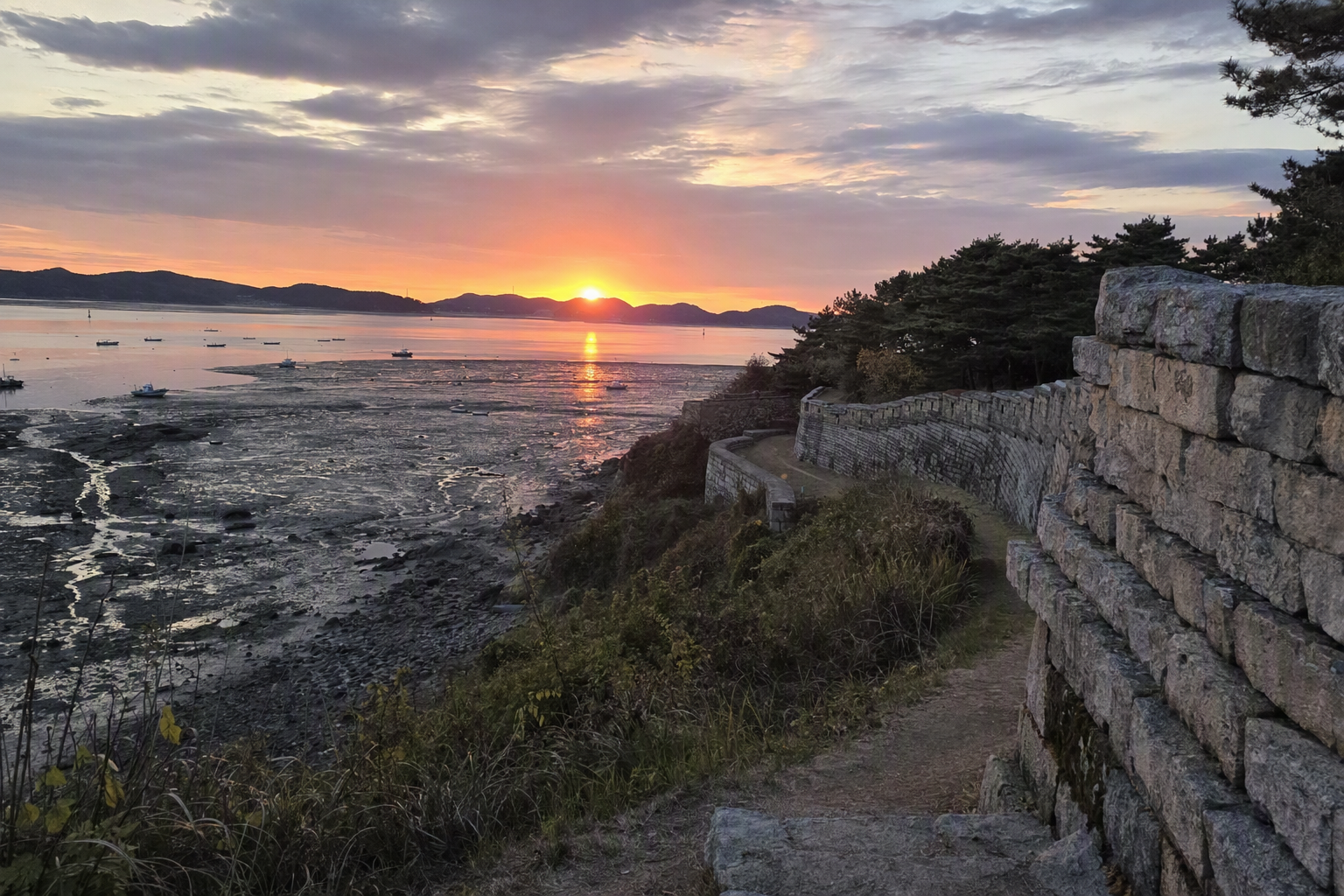
Ganghwa Island near Incheon is a rewarding history-and-nature add-on within roughly two hours of Seoul, depending on traffic and transport. It brings together Manisan, Jeondeungsa Temple, tidal flats at Dongmak Beach, sunset spots, and old fortifications. The catch is transport frequency. Buses can be spaced out, so a car or very relaxed bus plan makes the day much better.
Naesosa and Byeonsanbando National Park
For temple forests and coastal scenery, Naesosa inside Byeonsanbando National Park is a lovely choice. The approach includes a 600-meter fir tree path with around 700 trees, and the area can become a cherry blossom tunnel in early to mid-April. The temple’s Daeungbojeon is known for its historic wooden architecture and flower-patterned doors. Pair it with nearby coastal cliffs or canola fields for a nature-heavy regional day.
Wanju Oseong Hanok Village
Oseong Hanok Village in Wanju is a smaller hanok destination with around 20 hanok, a reservoir, cafés, galleries, stays, and nearby cherry blossom roads. It is less of a big checklist destination and more of a slow-travel choice, especially for repeat visitors or anyone who wants a quieter hanok mood than Jeonju.
Dongseo Trail
For hikers and backpackers looking beyond day hikes, the Dongseo Trail is an emerging long-distance forest route planned to connect Uljin and Taean over 849km and 55 sections. Full opening is targeted for 2027, with expanded pilot operations planned before then. In 2026, public access and pilot sections may be limited or seasonal, so treat it as a specialist outdoor option and verify current trail operations before making plans.
Our favorite route by travel style
If you want the strongest all-round first trip, choose:
Seoul 4 nights → Jeonju 1 night → Gyeongju 2 nights → Busan 3 nights → Jeju 3–4 nights
This is the fullest version without feeling absurd. It has royal Korea, food Korea, ancient Korea, coastal Korea, and volcanic Korea.
If you are short on time, choose:
Seoul 4 nights → Busan 3 nights
It is simple, satisfying, and easy to execute by KTX.
If nature is the point, choose:
Seoul 3 nights → Busan 2 nights → Jeju 4–5 nights → Seoul 1 night
This gives Jeju the space it deserves and keeps the final departure safer.
If you are chasing cherry blossoms, think south to north:
Jeju or Busan/Jinhae → Gyeongju → Seoul
Keep flexible days, book early, and accept that blossoms run on weather, not wishful thinking.
If you want comfort and lower stress, aim for:
Late April after blossom peak, late October, or early November
The weather is usually kind, crowds are less dramatic, and the country feels easier to move through.
Final Creatrip note
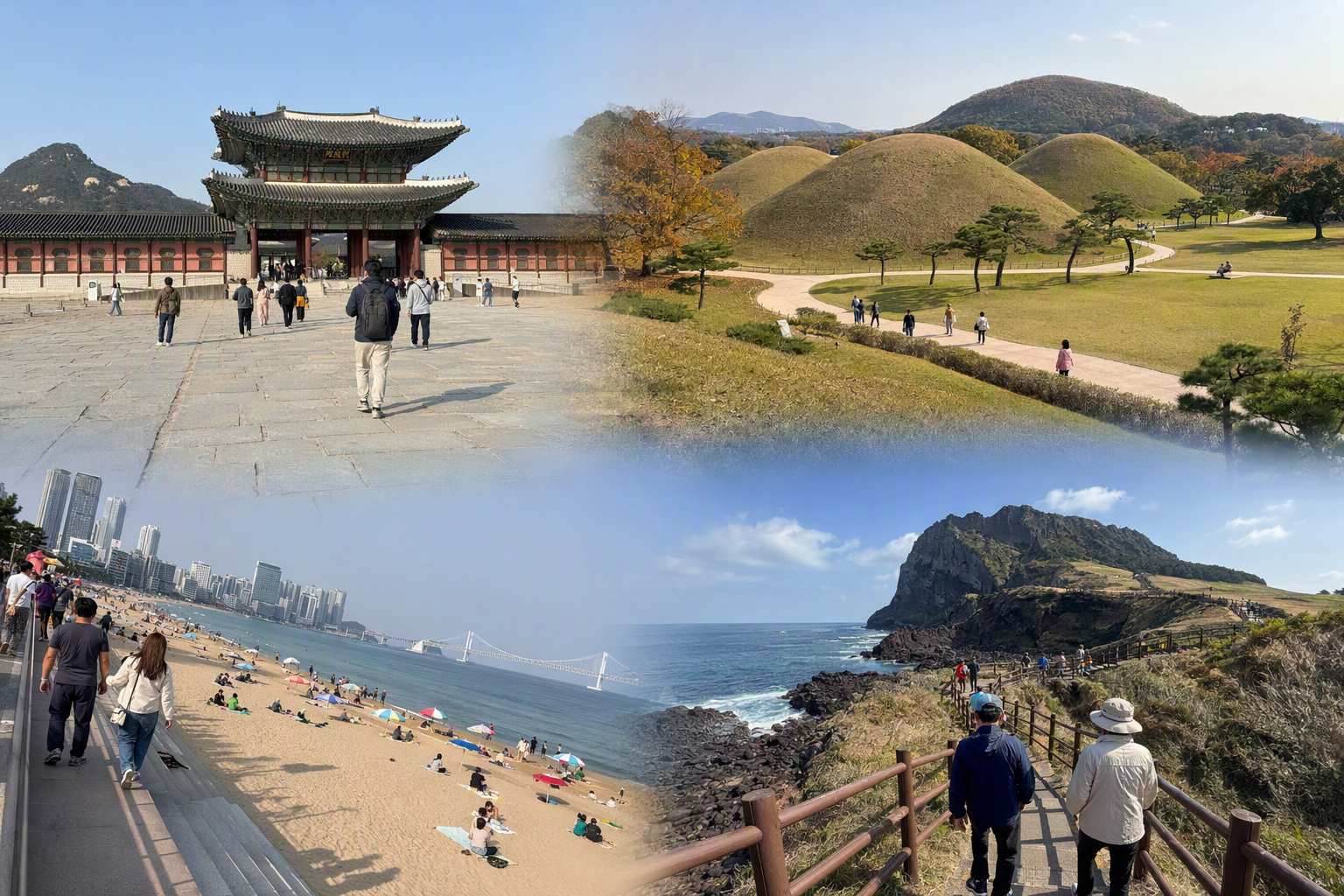
The best Korea trip is not the one with the longest city list. It is the one where each stop has a reason to be there. Seoul gives the energy. Gyeongju gives the depth. Busan opens the horizon. Jeju slows the whole trip down in the best way. Add Jeonju if you want food and hanok atmosphere between the big chapters.
Plan the route cleanly, respect the seasons, leave room for weather, and use the right local apps. Korea will do the rest very well.