Cities in South Korea to Visit and How to Choose Your Route
A practical Creatrip take on pairing Seoul and Busan with Gyeongju, Jeonju, Jeju, and slower regional stops.

South Korea rewards focus. It is tempting to look at the map, see how compact the country is, and start collecting cities like passport stamps. Seoul on Monday, Jeonju on Tuesday, Gyeongju on Wednesday, Busan by Thursday, Jeju by the weekend. Technically possible? Often, yes. Enjoyable? Not always.
The better Korean city trip usually has a spine: Seoul and Busan. From there, add one or two places that give the trip a clear personality. Choose Gyeongju for ancient Silla history and UNESCO heritage, Jeonju for hanok stays and food, Jeju for volcanic coastlines and driving routes, or slower regional stops like Andong, Suncheon, Gwangju, Daegu, Incheon, Daejeon, Sejong, Ulsan, and emerging nature routes when you have more time.
At Creatrip, we like routes that feel good on the ground, not just on a spreadsheet. Korea has excellent trains and short domestic flights, but the magic comes when you give each city enough room to breathe.
The Creatrip way to think about Korean cities
For most international travelers, Korean cities fall into three very useful groups.
The anchors are Seoul and Busan. They are the easiest to connect, the richest in daily options, and the two cities most first-time visitors regret cutting short.
The character cities are Gyeongju, Jeonju, and Jeju. They change the whole mood of the trip: ancient capital, food-and-hanok city, or island nature.
The deeper Korea layer is where repeat visitors and slower travelers get rewarded: Andong and Hahoe for Confucian and folk culture, Suncheon for wetlands and folk village scenery, Gwangju for art and modern history, Daegu for inland food and regional culture, Incheon for a smart airport-side buffer, and the Dongseo Trail for a new coast-to-coast walking route.
| City or region | Best for | Comfortable stay | The honest trade-off |
|---|---|---|---|
| Seoul | K-culture, palaces, shopping, food, museums, nightlife | 3–5 nights | Easy to overpack because every district feels like its own city |
| Busan | Coast, seafood, beaches, night views, film culture | 2–3 nights | Attractions are spread out, so location matters |
| Gyeongju | Silla heritage, tombs, temples, UNESCO sites | 1–2 nights | Less big-city energy, more history-focused |
| Jeonju | Hanok, bibimbap, makgeolli, slow food | 1–2 nights | Best with an overnight stay, not just a rushed stop |
| Jeju | Volcanic scenery, coastal drives, hiking, island food | 2–4 nights | Weather and transport planning matter much more |
| Andong / Hahoe | Folk village, Confucian heritage, mask culture | 1 night | Better for specific cultural interests than casual sightseeing |
| Suncheon | Wetlands, gardens, Naganeupseong folk village | 1–2 nights | Requires more patience with regional routing |
| Incheon | Arrival or departure buffer, Chinatown, islands, Songdo | 0–1 night | Not usually a first-trip centerpiece |
| Gwangju / Daegu | Regional food, art, history, inland city texture | 1–2 nights | Best when connected to nearby regional stops |
Seoul: the city that sets the rhythm
Seoul is not just Korea's capital. For travelers, it is the city where almost every version of Korea overlaps: royal palaces and hanok lanes, glossy department stores, late-night barbecue, riverside parks, beauty clinics, design cafés, baseball crowds, underground shopping malls, galleries, and K-pop-adjacent neighborhoods that keep changing faster than most guidebooks can keep up.
A first visit deserves at least 3–4 nights. Five nights does not feel excessive if you want a slower pace, a day trip, or more time for shopping, food, performances, wellness, or museums.
How Seoul works on an actual trip
Rather than treating Seoul as one giant checklist, it helps to think in clusters.
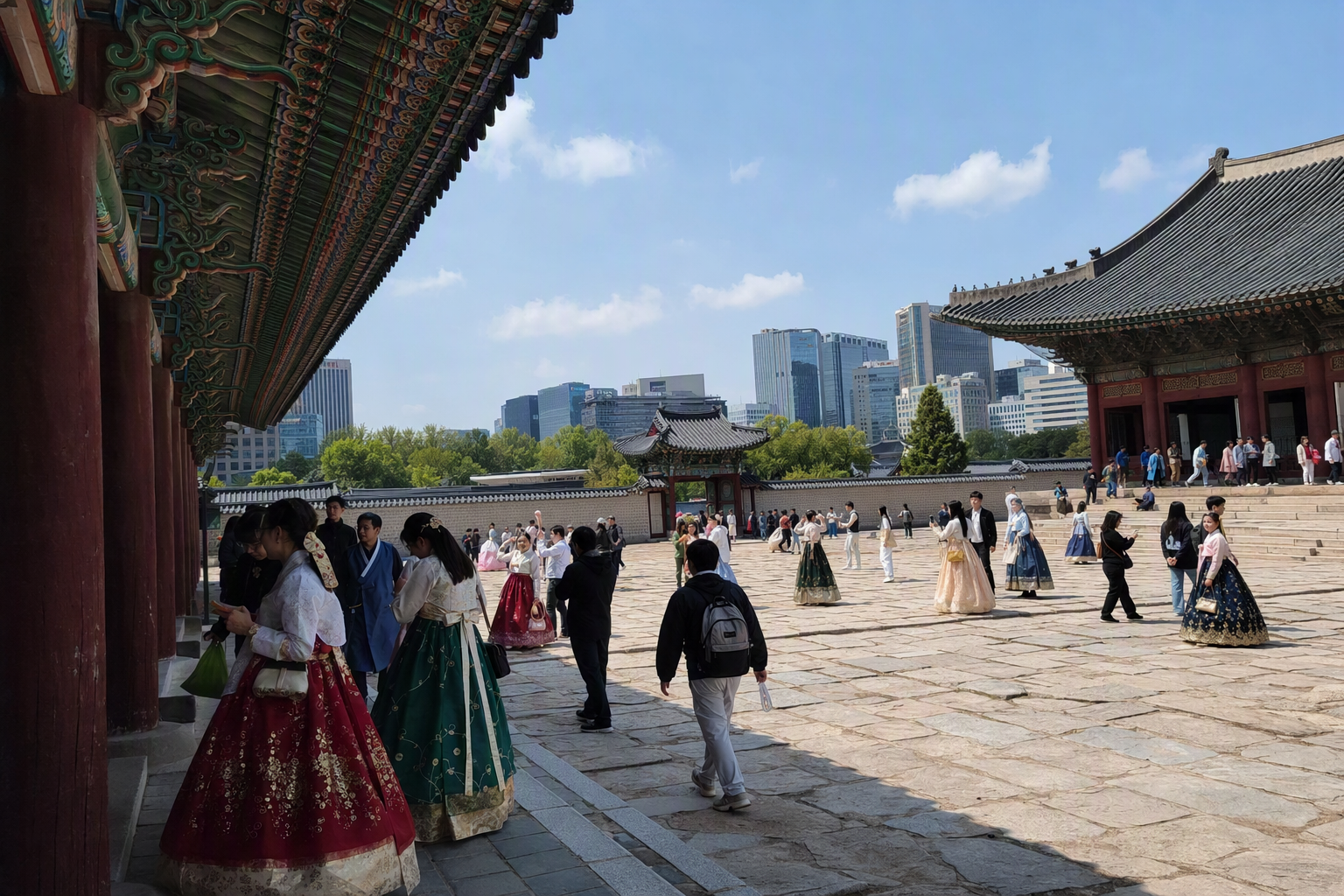
Jongno, Jung-gu, and the old center are where the royal and historic Seoul lives: Gyeongbokgung, Changdeokgung, Deoksugung, Jongmyo, Bukchon, Insadong, and the city wall walking routes. Palace admission for foreign adults is often around 3,000 KRW, and wearing hanbok can allow free palace entry, but prices and policies can change, so check official details before going.
Hongdae, Yeonnam, Seongsu, and nearby youth-culture areas are better for cafés, shopping, pop-ups, street energy, and a younger nightlife mood.
Gangnam, COEX, Seongsu, Yeouido, and Jamsil show the polished, high-density side of the city: big retail, offices, lifestyle brands, riverside walks, sports, and nightlife with a different texture from Hongdae.
The Han River has become more important for visitors than it used to be. Seoul has been leaning into festival-style tourism, and large river events can transform an ordinary evening into a very local-feeling city moment. Schedules change by season, so it is worth checking Seoul's official tourism calendar close to your dates.
What Seoul is especially good for
Seoul is the safest bet for travelers who want variety every day. You can build a palace-and-museum day, a beauty-and-shopping day, a market-and-food day, then a completely different evening in Hongdae, Euljiro, Itaewon, or by the Han River.
It is also the best base for easy side trips. Suwon Hwaseong, Incheon, and DMZ-related tours are common add-ons, and they make sense when you have five Seoul nights rather than three.
Common Seoul mistake: booking accommodation only by price. Seoul's subway is excellent, but the city is big. A cheaper room far from your main interests can quietly eat up an hour or more every day.
Busan: Korea's sea-city counterpoint
If Seoul is dense and electric, Busan opens the windows. It is still a major city, but the rhythm changes: sea air, fish markets, beach walks, hillside villages, coastal temples, bridge views, and a softer evening pace around Gwangalli or Haeundae.
For a first Korea trip, 2–3 nights in Busan is the sweet spot. Seoul to Busan by KTX usually takes roughly 2 hours 15 minutes to 3 hours, depending on train type and route. Tickets are often quoted around 59,800 KRW for standard KTX seats, but always verify current fares and book early around weekends, holidays, cherry blossoms, summer vacation, and October events.

What to see in Busan
Busan's strongest days usually mix coast, food, and night views.
Around the sea, travelers often look at Haeundae, Gwangalli, Haeundae Blue Line Park, Songdo, Oryukdo Skywalk, and Haedong Yonggungsa, one of Korea's most dramatic coastal temple settings. For a more old-downtown feel, Nampo-dong, Jagalchi, and nearby markets add seafood, street food, and port-city texture. Gamcheon Culture Village, Huinnyeoul Culture Village, and Hocheon Village bring color, slopes, and photo-friendly streets.
At night, Gwangandaegyo Bridge, The Bay 101, and high-view spots such as BUSAN X the SKY show why Busan works so well after dark.
Busan is also Korea's cinema city. The Busan International Film Festival takes place every October, and the city often leans into Hallyu-related promotions and cultural programming around major seasons.
Busan Pass, neighborhoods, and pace
The BUSAN PASS comes in formats such as 24-hour, 48-hour, Big3, and Big5 options, with mobile and physical versions. Benefits have included free admission to around 40 attractions and discounts at many partner locations, though the exact list changes. It is useful when your Busan days are attraction-heavy, less so if you mostly want cafés, beaches, markets, and slow meals.
Common Busan mistake: underestimating distance. Haeundae and Gwangalli feel like beach-Busan. Nampo and Jagalchi feel like old port-Busan. Both are worth seeing, but bouncing between them several times a day can get tiring. Choose your hotel according to the Busan you want to wake up in.
Gyeongju: ancient Korea in the open air
Gyeongju is where Korea's ancient Silla kingdom becomes visible in the landscape. The city is not just a museum stop; tomb mounds, temple sites, observatories, ponds, and historic zones sit inside and around the modern city in a way that feels very different from Seoul's palace districts.
For travelers who care about history, Gyeongju is one of the strongest additions to a Korea route. It pairs beautifully with Busan because the KTX between Busan and Singyeongju can take about 30 minutes, making Gyeongju possible as a full day trip or, better, a 1-night stay.

What Gyeongju is for
Go for Bulguksa, Seokguram, Daereungwon Tomb Complex, Cheomseongdae, and Donggung Palace and Wolji Pond. Gyeongju's value comes from the density and coherence of its heritage: temples, tombs, astronomy, royal sites, and archaeological atmosphere all telling the same long story.
Spring cherry blossom season and autumn festival periods are especially attractive. Gyeongju's cherry blossoms usually arrive earlier than Seoul's, and the city runs seasonal cultural events such as its spring blossom festival and the Silla Cultural Festival in autumn. Festival dates and programs vary by year, so confirm the latest official schedule.
One night or two?
One night works if your main goal is heritage highlights. Two nights are better if you want to slow down, photograph sites at softer hours, visit temples without rushing, or line up with a seasonal festival.
Gyeongju and Jeonju are sometimes treated like interchangeable traditional stops, but they are not. Gyeongju is ancient, archaeological, and monumental. Jeonju is lived-in, food-centered, and hanok-focused. Choosing between them depends on the mood you want.
Jeonju: hanok, bibimbap, makgeolli, and a slower table
Jeonju is Korea's food-and-hanok city, and it works best when you stay overnight. The historic center is anchored by Jeonju Hanok Village, a large urban cluster of around 700 hanok buildings around places such as Gyeonggijeon, Omokdae, and Jeonju Hyanggyo. It is one of Korea's most accessible places to experience hanok architecture without leaving the city.
Seoul to Jeonju by KTX is often around 1 hour 40 minutes, with fares commonly referenced around 34,600 KRW, though fares and schedules should be checked before booking.

Why Jeonju deserves a night
Jeonju's strongest moments are not only daytime sightseeing. A good Jeonju stay might include a hanok guesthouse, bibimbap, market snacks, traditional alcohol culture, craft shops, and a makgeolli dinner that stretches longer than planned. The city has also been developing night tourism programs around the hanok village, walking routes, late-night food, and performance-style events.
It is tempting to make Jeonju a quick stop between Seoul and somewhere else, but that often flattens the experience. The city is less about one blockbuster sight and more about atmosphere, eating well, and moving slowly through a compact traditional district.
The routing catch
Jeonju is easy from Seoul. The awkward part is what comes next. Jeonju to Gyeongju or Busan can be more practical by express bus, often around 3–3.5 hours, while train routes may involve transfers that look neat online but feel clunky in reality. This is one reason we only recommend Jeonju on shorter trips when food and hanok are genuinely high priorities.
Jeju: the island module that changes everything
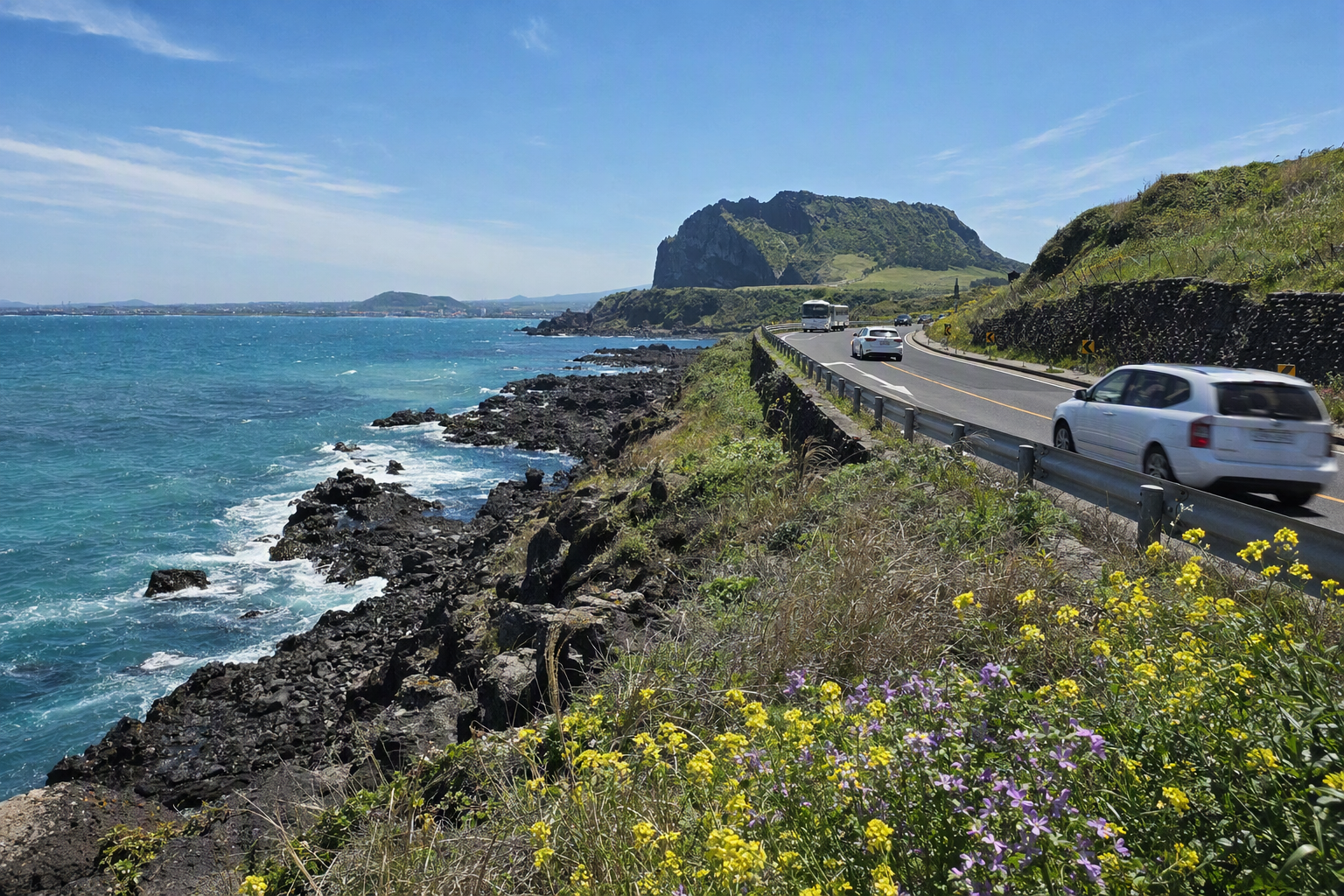
Jeju is not a city stop in the same way Seoul or Busan is. It is an island module: volcanic peaks, coastal roads, lava landscapes, forests, beaches, seafood, stone walls, and long scenic drives. Add Jeju when you want Korea to feel wider and more elemental.
Most routes give Jeju 2–4 nights. Flights from Seoul's Gimpo Airport or Busan's Gimhae Airport to Jeju are short, usually around an hour in the air. Domestic flight prices vary heavily by date and demand; many travel references place them roughly in the 30,000–90,000 KRW range, but the real price can shift quickly.
What makes Jeju worth the detour
Jeju's big draws include Hallasan, Seongsan Ilchulbong, lava-tube landscapes, beaches, cliffs, forests, and island food culture. Hallasan rises to 1,947 meters, and even travelers who do not summit the mountain can feel how strongly Jeju's volcanic geography shapes the island.
The island is also becoming more structured for heritage and eco-focused travel. The 2026 Jeju National Heritage Visit Year runs from March 27 to November 22, with island-wide programs connected to national heritage sites. Jeju's official promotion also highlights places like Gujwa Sumbi Coastal Road, a 24.7 km scenic route, Biyangdo, a small low-carbon island reached by a short ferry from Hallim Port, and the Jeju Olle Trail, a long-distance walking network totaling 437 km across 27 routes.
For active travelers, Jeju can easily become the favorite part of the trip. For travelers without a car, short on time, or visiting during unstable weather, it can become the most stressful part.
The Jeju reality check
Jeju is easy to fly into and harder to cover efficiently. A rental car is close to essential for many 2–3 day routes that try to combine eastern, western, inland, and southern sights. Typical rental car references often fall around 30,000–80,000 KRW per day, and international drivers generally need an International Driving Permit. Confirm rental rules, license requirements, insurance, and pickup details before committing.
Weather matters more here than in Seoul or Busan. Summer monsoon rain, strong winds, and typhoons can affect flights and ferries, especially from July to September. In April 2026, strong winds and heavy rain caused large-scale flight cancellations and delays at Jeju, a reminder that island buffers are not wasted time. Avoid putting an important international departure immediately after a tight Jeju flight whenever possible.
The regional cities that make a second Korea trip richer
Once Seoul, Busan, Gyeongju, Jeonju, and Jeju are on your radar, Korea starts opening in more interesting directions. These cities are not always the most efficient choices for a first seven-day trip, but they are exactly where slower travelers can feel the country becoming less predictable.

Incheon: more than an airport, but best used strategically
Incheon is one of Korea's largest cities and the country's main international gateway. For most travelers, its best role is practical: an arrival-day buffer, a departure-eve stay, or a light day around Chinatown, Songdo, islands, and the waterfront before or after a flight.
It is not usually where we would spend precious first-trip sightseeing time over Seoul or Busan, but for awkward flight times, Incheon can make a trip feel far less rushed.
Daegu: inland city texture and a useful regional hinge
Daegu is a major inland metropolitan city and a useful hinge for travelers looking toward Gyeongju, Andong, or Korea's central and southeastern interior. It has its own food culture, modern history, and local-city rhythm, but it usually belongs in a more regional itinerary rather than the classic first-time route.
Choose Daegu when you are interested in inland Korea, local markets, regional food, or a more grounded city stop between headline destinations.
Gwangju: art, democratic history, and the Jeolla gateway
Gwangju is the main city of the Honam region and carries deep importance in modern Korean democratic history. It also works well for travelers interested in art, Jeolla food, and routes toward Suncheon, Boseong, Damyang, or Mokpo.
It is less convenient on a short Seoul-Busan trip, but it becomes meaningful when your route leans southwest.
Andong and Hahoe: Confucian heritage and folk culture
Andong and Hahoe are for travelers who want a more specific cultural layer: Confucian heritage, traditional village life, scholar-gentry history, and mask culture. This is not a big-city energy stop. It is calmer, more rooted, and best for people who already know they enjoy heritage travel.
It can be added as a one-night stay or connected through regional inland travel, especially for repeat visitors.
Suncheon and Naganeupseong: wetlands, gardens, and folk village scenery
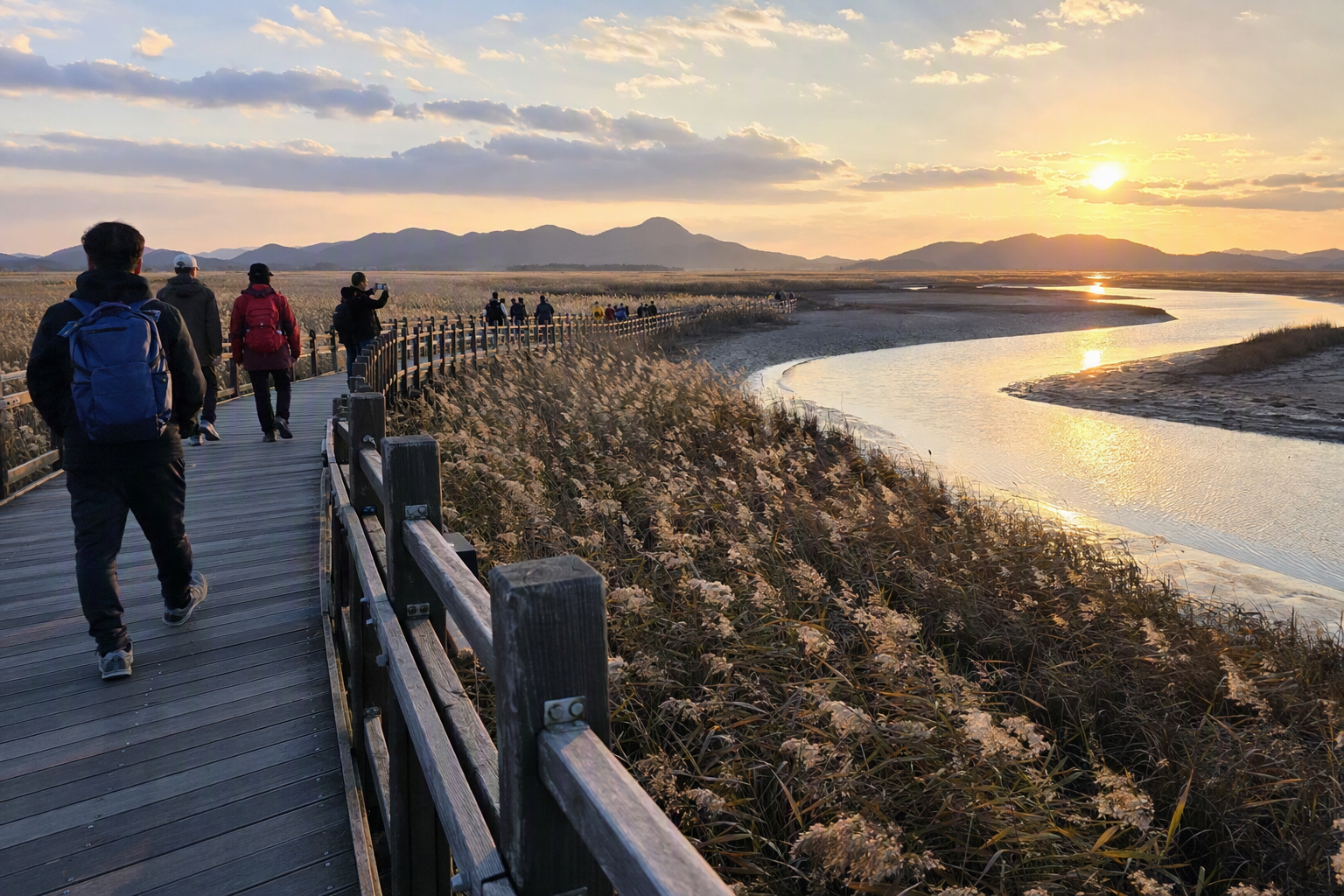
Suncheon combines ecological scenery with heritage texture. Travelers often pair it with wetlands, garden landscapes, and Naganeupseong, a folk village setting that feels very different from the palace-and-hanok scenes of Seoul and Jeonju.
This is a strong choice for spring or autumn, especially for travelers who would rather trade another big city for southern landscapes and slower regional days.
Daejeon and Sejong: science, administration, and planned-city curiosity
Daejeon is Korea's central science and transport hub. Sejong, built to ease the concentration around Seoul, functions as an administrative capital with many government offices. For leisure travelers, these are not usually priority stops. For visitors interested in city planning, policy, architecture, or the way Korea organizes its modern state, they can be genuinely interesting.
Ulsan: industrial Korea and southeastern coast themes
Ulsan is a large industrial city associated with shipbuilding, cars, energy, and coastal industry. It has value for travelers with specific interests in industrial geography, whale-related themes, or southeastern coastal movement between Busan and Gyeongju. For a first trip, though, Busan and Gyeongju will usually offer more travel reward per day.
The Dongseo Trail: Korea's new long-distance nature axis
Korea's city travel is expanding beyond trains, cafés, and heritage districts. The Dongseo Trail is the country's first coast-to-coast long-distance walking route, designed to connect Taean's Anmyeondo on the west coast with Uljin and Mangyangjeong Beach on the east coast. The planned full route is about 849 km, divided into main and branch sections, with a full walk designed to take around 40–50 days.

Sections began opening in stages from 2025, with more areas added through 2026 and full-route completion targeted around late 2026 to early 2027. Infrastructure includes base villages, official camping areas, and forest-service facilities, but hikers need to follow designated camping and cooking rules to protect forests.
For most travelers, the Dongseo Trail will not replace Seoul or Busan. Its best use is as a 2–5 day nature insert for repeat visitors, hikers, and slow travelers who want Korea outside the usual urban triangle. Check official trail openings, facility reservations, and local transport before building an itinerary around it, because availability is still evolving.
Route ideas that actually make sense
There is no single best Korean city route. The right one depends on whether you care more about urban energy, food, ancient history, beaches, hiking, or simply not feeling exhausted by day four.

7 days: Seoul and Busan
This is the cleanest first-timer route.
- Seoul: 3–4 nights
- Busan: 2–3 nights
It gives you the capital and the coast without forcing extra transfers. Use Seoul for palaces, neighborhoods, shopping, food, and one possible day trip. Use Busan for the beach-city mood, seafood, Gamcheon or Huinnyeoul, coastal sights, and night views.
We would not squeeze Jeju into a seven-day trip unless you have a very specific reason. The flights are short, but the airport time, weather risk, and island transport make the trip feel chopped up.
10 days with nature: Seoul, Busan, Jeju
This is the classic city-plus-island version.
- Seoul: 3–4 nights
- Busan: 2 nights
- Jeju: 3 nights
- Final buffer or return to Seoul: 1 night, depending on flights
This route works best for travelers who want contrast: Seoul's cultural density, Busan's coast, and Jeju's volcanic landscapes. The main caution is weather. Keep Jeju away from a same-day international connection whenever possible.
10 days with culture: Seoul, Jeonju, Gyeongju, Busan
This is our favorite non-Jeju route for travelers who care about food and heritage.
- Seoul: 3–4 nights
- Jeonju: 1 night
- Gyeongju: 1–2 nights
- Busan: 2–3 nights
The reward is excellent variety: royal Seoul, hanok-and-food Jeonju, ancient Silla Gyeongju, and coastal Busan. The trade-off is the less elegant Jeonju-to-Gyeongju or Jeonju-to-Busan transfer. Build that travel day honestly instead of pretending it is nothing.
14 days: the balanced big trip
With two weeks, Korea becomes much easier to shape beautifully.
- Seoul: 4 nights
- Optional day trip: Suwon, Incheon, or DMZ-related tour
- Jeonju: 1–2 nights
- Gyeongju: 1–2 nights
- Busan: 3 nights
- Jeju: 3 nights
This route gives you Korea's biggest contrasts without turning the trip into pure transit. If you prefer slow regional travel, replace Jeju with Suncheon, Gwangju, Andong, or a short trail section.
Repeat visitor route: Seoul plus the southwest or inland Korea
For a second trip, we would be tempted by one of these:
- Seoul → Jeonju → Gwangju → Suncheon → Busan
- Seoul → Andong → Daegu → Gyeongju → Busan
- Seoul → Dongseo Trail section → Gyeongju or Busan
These routes are not as frictionless as Seoul-Busan, but they show a broader Korea: regional food, smaller-city pride, wetlands, folk villages, inland history, and nature corridors.
Transport details that quietly shape the whole trip
Korea's transport is excellent, but the easiest route is not always the one that looks shortest on a map.
KTX is the backbone
For most multi-city travelers, KTX is the default for long inland jumps. Seoul to Busan is the star route. Seoul to Jeonju is also straightforward. Busan to Gyeongju is quick enough to make Gyeongju an easy add-on.
Book ahead for weekends, holidays, school breaks, cherry blossom periods, Chuseok, and major autumn events. On peak dates, KTX trains can sell out, and standing-room travel is not the romantic train adventure anyone imagines with luggage.
Some regional links are clumsy
The awkward classics are Jeonju to Gyeongju and Jeonju to Busan. Buses can be more sensible than trying to force a train route with transfers. This does not mean you should skip Jeonju; it just means Jeonju needs a route that respects the transfer time.
Jeju needs its own logic
Domestic flights are short, but Jeju is not a tiny island you can effortlessly cover from one base without planning. Rental car availability, IDP rules, weather, and flight buffers matter. If you do not drive, build a simpler Jeju plan instead of scattering sights across all four sides of the island.
When to visit which cities
Korea's best travel seasons are usually spring from April to early June and autumn from September to early November. These are also popular seasons, so trains and hotels deserve earlier attention.

Spring
Spring is excellent for Seoul, Gyeongju, Jeonju, Busan, and Jeju. Cherry blossoms generally start earlier in Jeju and Busan, then move north toward Seoul. Gyeongju is especially beautiful in blossom season because the historical landscape and spring flowers work so naturally together.
Summer
Summer is possible, but it is the most complicated season. Expect heat, humidity, heavy rain, and monsoon conditions around late June and July, with typhoon risk affecting Jeju and coastal travel from roughly July to September. Seoul and Busan still work in summer if you build in indoor time, but Jeju needs more weather flexibility.
Autumn
Autumn is arguably Korea's most comfortable travel season. Seoul is lively, Busan is pleasant, Gyeongju feels warm and golden, Jeonju's food-and-walking rhythm makes sense, and Jeju has good conditions for coast roads and trails. Mountain and foliage timing moves from north to south, so exact peak dates vary each year.
Winter
Winter is underrated for city travelers who like food, museums, spas, night views, and fewer crowds. Seoul and Busan can still be rewarding. Island and coastal plans need more caution because wind, cold snaps, and transport disruption can matter more.
Our honest Creatrip picks
For a first trip under one week, choose Seoul and Busan. It is simple, satisfying, and gives you Korea's strongest urban contrast.
For 10 days with nature, add Jeju. Just give the island enough time and do not gamble with tight flight connections.
For 10 days with culture and food, choose Seoul, Jeonju, Gyeongju, and Busan. This route has more character than a city-only trip and avoids Jeju's weather and car-planning issues.
For two weeks, combine Seoul, Jeonju, Gyeongju, Busan, and Jeju, then add one day trip or regional stop according to your interests.
For repeat travelers, start looking at Andong, Suncheon, Gwangju, Daegu, and the Dongseo Trail. Korea is far more than Seoul, and the country's regional travel scene is becoming more rewarding each year.
The best Korean city route is not the one with the most pins. It is the one where each stop has a reason to be there: Seoul for density, Busan for the sea, Gyeongju for ancient memory, Jeonju for the table, Jeju for volcanic air, and the smaller cities for the parts of Korea that reveal themselves only when you stop rushing.