
Traditional Korean Desserts to Try in Korea
A Creatrip editor’s guide to tteok, hangwa, bingsu, hotteok, and the modern sweets bringing old flavors back into Korean cafés and gift boxes.

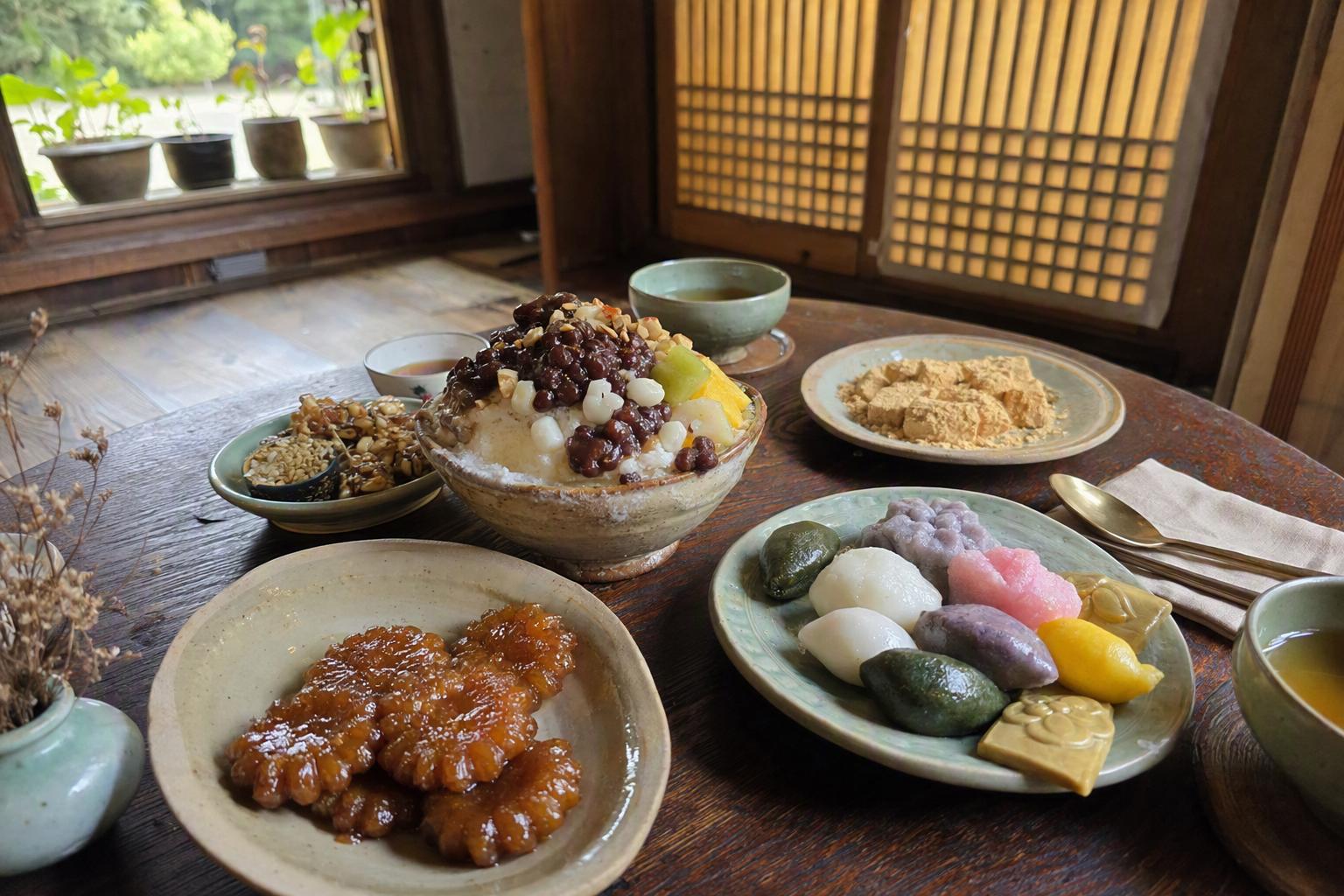
Korean desserts are quieter than they look — and that is the charm
Korean desserts do not always announce themselves with towering frosting, heavy cream, or dramatic sugar rushes. More often, they arrive as a chewy rice cake dusted in roasted soybean powder, a glossy fried cookie soaked in ginger syrup, a cup of cold cinnamon punch, or shaved ice layered with sweet red beans and soft pieces of tteok.
That softer rhythm is exactly what makes them worth paying attention to on a trip to Korea. Traditional Korean sweets are built around texture, grains, restrained sweetness, seasonal color, and meaning. A good yakgwa is fragrant with sesame oil and syrup. A good injeolmi stretches gently before it melts into nutty soybean powder. A good bingsu is not only cold and sweet, but milky, chewy, fruity, and spoonable all at once.

At Creatrip, we think Korean desserts are easiest to enjoy once you stop comparing them to Western cakes and pastries. They have their own logic. Once that clicks, a tteok shop, department store food hall, café dessert case, or street stall suddenly becomes much more exciting.
The two big families: hangwa and tteok
Korean dessert culture is broad, but two words make the whole category easier to read: hangwa and tteok.
Hangwa: traditional Korean confectionery
Hangwa refers to traditional Korean sweets that are not rice cakes. This family includes yakgwa, yugwa, gangjeong, dasik, jeonggwa, and many other sweets made by frying, drying, pressing, molding, or binding ingredients with honey, grain syrup, or jocheong.
Historically, hangwa was not an everyday snack for everyone. Ingredients like grain, oil, and honey were valuable, and these sweets were closely tied to rituals, celebrations, weddings, ancestral rites, and upper-class tables. That history is one reason premium hangwa still feels so naturally suited to gift boxes today.

For travelers, hangwa is also one of the easier traditional dessert categories to bring home. Many versions are sold in packaging designed for gifts, and some items such as yakgwa can have a relatively long shelf life depending on the recipe and packaging. Always check the label and storage instructions before packing them into your suitcase.
Tteok: Korean rice cakes
Tteok is the world of Korean rice cakes, usually made from glutinous rice or non-glutinous rice flour that is steamed, pounded, shaped, layered, or filled. Famous examples include songpyeon, injeolmi, chapssaltteok, and baekseolgi.
Tteok can be a dessert, snack, ceremonial food, street food ingredient, or even a base for savory dishes like tteokbokki. Its chewy texture carries a lot of symbolism in Korea: good fortune sticking, relationships sticking, knowledge sticking before exams, prosperity staying close. That may sound poetic, but it is very real in how tteok appears at holidays, birthdays, weddings, ancestral rites, school events, and seasonal gatherings.

For visitors, tteok is best approached with curiosity about texture. Some are soft and powdery, some are stretchy and dense, some are filled with sweet red bean, sesame, chestnut, or honey-like syrup. Not every tteok is meant to travel far, so enjoy fresh pieces during the day and choose packaged or frozen products only when storage is clear.
Why Korean desserts are often less sweet
One common mistake is tasting Korean desserts and thinking, ‘This is not sweet enough.’ Korean sweets often aim for balance rather than impact. The sweetness may come from honey, jocheong, grain syrup, red bean, fruit, or sweet rice, but it usually shares the spotlight with roasted grain aroma, nutty powders, herbal notes, chewy starch, or crisp fried layers.
Korean dessert aesthetics also draw from obangsaek, the traditional five-color system connected to direction and balance. You see this in colorful songpyeon, rainbow rice cakes, natural green from mugwort, yellow from pumpkin, pink-red tones from omija, and deep black from black sesame. Color is not only decoration; it carries ideas of season, blessing, and harmony.

This is why Korean desserts feel so different from sugar-first sweets. The pleasure is in the chew, the fragrance of sesame oil, the coolness of omija punch, the grainy softness of steamed rice flour, the snap of gangjeong, and the way a mild sweetness keeps you going back for one more bite.
Yakgwa: the glossy traditional cookie everyone is talking about
If there is one traditional sweet that has fully crossed into modern Korean café culture, it is yakgwa. These golden, flower-shaped fried cookies are usually made from wheat flour dough mixed with sesame oil and honey or syrup, then fried and soaked again in syrup. The name contains the character for medicine because honey and sesame oil were once valued as medicinal ingredients.
A well-made yakgwa is not just sweet. It is layered, slightly dense, aromatic, and glossy, with a gentle chew after the first bite. Traditional preparation can be surprisingly technical, often involving careful dough handling, frying at different temperatures, and soaking in ginger-flavored syrup or jocheong.

Yakgwa has had a major revival in Korea since around 2021–2022. You will now find it not only in traditional shops, but also in convenience store snacks, café desserts, ice cream pairings, lattes, and premium gift sets. Some modern versions are softer and richer, while others are crispier, smaller, or filled. The fun is comparing styles.
Creatrip note: Yakgwa is a strong souvenir candidate because many packaged versions are shelf-stable, but shelf life varies widely. Some products may last weeks or months depending on packaging and recipe, so check the date and storage label before buying several boxes.
Yugwa, gangjeong, dasik, jeonggwa: the hangwa shelf to slow down for
Yakgwa gets most of the modern spotlight, but hangwa has many quieter stars.
Yugwa is a light, puffed rice confection made through a demanding process: glutinous rice is soaked, steamed, dried, fried until airy, then coated with syrup and rolled in rice grains, sesame, soybean powder, or other toppings. It can look delicate, almost cloud-like, but it carries serious craft.
Gangjeong is crisp and nutty, often made by binding grains, seeds, or nuts with honey or grain syrup. It is the kind of sweet that feels easy to snack on because it is more about crunch and aroma than heavy sugar.
Dasik is pressed into molds, often from roasted grain powder, sesame powder, starch, pollen, or similar ingredients mixed with honey. It is traditionally served with tea, and its charm is subtle: compact, fragrant, and pretty.
Jeonggwa is fruit, roots, or peels preserved in sugar, honey, or syrup. Think of it less like candy and more like a glossy preserved bite designed for a tea table.

When browsing a food hall or gift shop, hangwa can be easy to pass over because it may look formal or old-fashioned. Do not rush. The best boxes are about variety: airy, crisp, chewy, syrupy, nutty, and floral-looking pieces together.
Tteok to know before you order
Tteok is not one dessert; it is a whole language. These are the pieces travelers are most likely to meet.
Songpyeon
Songpyeon is a half-moon rice cake strongly associated with Chuseok, Korea’s harvest holiday. It is often filled with sesame, beans, or chestnuts, and colored with natural ingredients such as mugwort or gardenia. The shape and colors make it one of the most meaningful seasonal rice cakes in Korea.

Songpyeon is most special around the holiday season, though availability can vary by shop and time of year. Around Chuseok, it is worth seeking out from a proper tteok shop rather than treating it as just another rice cake.
Injeolmi
Injeolmi is made by pounding glutinous rice until chewy, then coating it in roasted soybean powder. It is nutty, soft, and deeply Korean in flavor. Modern cafés often use injeolmi as a flavor inspiration for toast, bingsu, lattes, and cream desserts.
This is a good first tteok for travelers who want something approachable but still traditional. The roasted soybean powder gives it a warm, almost peanut-like aroma without being as sweet as candy.
Chapssaltteok
Chapssaltteok is a glutinous rice cake often filled with sweet red bean paste. International visitors sometimes compare it to mochi, which makes sense structurally, but the Korean context is different: it appears as a snack, gift, and symbolic food in its own right.
If you like chewy desserts with a soft filling, start here. Just be ready for the texture to be more important than the sweetness.
Baekseolgi
Baekseolgi is a white steamed rice cake closely connected to purity and good fortune. It appears at life events such as a baby’s 100th day or first birthday. The texture is more crumbly and cloud-like than stretchy, showing another side of tteok beyond chewiness.
Pat-sirutteok
Pat-sirutteok is layered rice cake steamed with red beans. It is earthy, lightly sweet, and wonderfully old-school. Rather than cream or butter, the structure comes from rice flour, beans, and steam.

Red bean: the quiet backbone of Korean sweets
Red bean appears everywhere in Korean dessert culture: chapssaltteok, pat-sirutteok, bingsu, sweet buns, glutinous rice doughnuts, and more. Korean red bean desserts often keep some earthy bean flavor instead of masking everything with sugar.
That balance can surprise travelers. Red bean is not trying to be chocolate. It is soft, nutty, lightly sweet, and comforting. Once you get used to it, it becomes one of the easiest flavors to recognize across Korean dessert menus.
Patbingsu and modern bingsu: Korea’s spoonable summer dessert
Patbingsu is one of Korea’s best-known desserts internationally: finely shaved or crushed ice topped with sweet red beans, milk, condensed milk, fruit, and chewy rice cake pieces. A classic bowl brings together cold ice, creamy sweetness, soft beans, and tteok in one spoon.

Modern bingsu goes far beyond red bean. You may see mango, melon, injeolmi, black sesame, matcha, tiramisu, chocolate, and hotel-style luxury versions. The toppings change, but the Korean structure remains: cold ice, a grain or bean element, chewy pieces, milkiness, and a generous visual finish.
Best for: sharing after a meal or cooling down during warm weather.
Trade-off: classic patbingsu gives you the clearest Korean flavor profile, while fruit or café-style bingsu may feel more familiar and photogenic. Both are valid; they just tell different stories.
Sikhye, sujeonggwa, hwachae, and omija drinks
Korean dessert is not only something you chew. It can also be something you sip.
Sikhye is a sweet rice drink often served cold. Sujeonggwa is a cinnamon-ginger punch, also commonly enjoyed chilled. Hwachae refers to punch-style fruit drinks, and omija brings a bright, tart-sweet berry flavor often associated with the idea of five tastes.
There is also tteok-sudan, a refined cold dessert where thin slices of rice cake are coated with starch, briefly cooked, then floated in chilled omija or honey water with pine nuts and ice.

These drinks are especially nice when a meal ends heavily. Instead of ordering another rich dessert, a cold traditional drink can feel refreshing without leaving the table abruptly sweetened out.
Hotteok: the street sweet with molten filling
Hotteok sits somewhere between pancake, doughnut, and street dessert. The classic sweet version is filled with brown sugar, cinnamon, and nuts, then pan-fried so the filling melts into syrup. It is best when hot enough to be slightly dangerous — delicious, but not something to bite into carelessly.

There are also savory versions such as yachae hotteok, filled with vegetables and often fried for a crisper shell. Compared with sweet hotteok, vegetable hotteok leans more snack-meal than dessert, but it shows how flexible the dough can be.
Creatrip tip: Eat sweet hotteok soon after buying it. The appeal is the contrast between crisp outside, soft dough, and molten syrup inside. Waiting too long takes away the best part.
Dalgona, hoppang, honey bread, and other modern Korean sweets
Not every Korean dessert is ancient, and that is part of the fun. Korea has a lively category of localized sweets that sit between nostalgia, convenience-store culture, café culture, and street food.
You may run into dalgona, the crisp sugar candy that became globally famous again through Korean pop culture; hoppang, a warm steamed bun often seen in convenience stores during colder months; injeolmi toast; café-style honey bread; Melona ice cream; and packaged snacks such as Pepero.
There are also regional bakery-style classics such as Hwangnam-ppang, Cheonan walnut pastries, and Tongyeong honey bread. Some are more modern than traditional, but they are part of how Koreans actually snack, gift, and queue today.

Regional Korean desserts worth recognizing
Korea’s rice cakes and sweets are deeply regional. Local ingredients, farming conditions, and food memories shape what each area becomes known for.
A few names to watch for:
- Jeongeup gijeongtteok: a fermented rice cake linked to makgeolli yeast and local rice.
- Haenam mosi tteok: rice cake made with ramie leaves, connected to the region’s ramie culture.
- Pyeongchang gamja tteok: potato rice cake reflecting the highland potato culture of Gangwon-do.
- Busan and Gijang sweet pumpkin sirutteok: layered steamed rice cake using sweet pumpkin associated with the coastal local harvest.
- Yeonggwang mosi leaf songpyeon and Uiryeong manggae tteok: examples of regional rice cakes with stronger place identity.

These are not always as easy to find in central Seoul as yakgwa or injeolmi, but they are worth paying attention to when traveling outside the capital or browsing regional specialty corners in larger food halls. For regional products, packaging, availability, and freshness can vary, so check current store information before making a detour.
The new wave: halmaennial desserts, Gaeseong juak, and premium gift boxes
One of the most interesting Korean dessert trends is the rise of halmaennial taste — a blend of grandmother-era nostalgia and Millennial/Gen Z retro curiosity. It explains why desserts once associated with holidays or older relatives now appear in stylish cafés, pop-ups, and department store food halls.
The clearest example after yakgwa is Gaeseong juak. Often described as a kind of Korean doughnut, it is made with glutinous rice, a little wheat flour, and makgeolli in the dough, then fried and soaked in ginger-cinnamon syrup or jocheong. The result is chewy, glossy, rich, and very pretty.

Some specialty shops have sold Gaeseong juak at premium prices, often around 2,500–5,000 KRW per piece depending on the shop and product. Prices change quickly, especially at pop-ups and department store counters, so treat that as a rough reference rather than a fixed rule.
Premium hangwa brands have also leaned into luxury gift culture. Gift sets in the 30,000–50,000 KRW range have become part of the modern Korean dessert scene, especially around holidays and at department stores. These are not the cheapest way to taste traditional sweets, but they make sense for travelers who want elegant packaging, variety, and better suitcase potential.
Golden Piece and the airport-souvenir direction
A good example of this premium shift is Golden Piece, a Korean dessert brand known for polished yakgwa and giftable sets. After opening a showroom in Hannam-dong, the brand has appeared through premium retail channels, including department store and online platforms, and entered an Incheon Airport Terminal 2 duty-free channel in 2024.
The brand’s appeal is easy to understand from a traveler’s perspective: small-format Korean sweets, elegant packaging, heritage-inspired storytelling, and airport accessibility. Availability can change by season and retail channel, so check the latest store or airport information before relying on it for last-minute gifts.

What to choose by mood
Sometimes the easiest way to order Korean dessert is not by name, but by craving.
When you want chewy
Go for injeolmi, chapssaltteok, honey-filled tteok, or tteok toppings in bingsu. This is the texture that makes Korean rice desserts so distinctive.
When you want crisp
Try gangjeong, yugwa, or a freshly fried hotteok. Gangjeong is cleaner and nuttier; yugwa is lighter and more delicate; hotteok is richer and messier in the best way.
When you want tea-table elegance
Choose dasik, jeonggwa, or a mixed hangwa set. These are gentle sweets, better enjoyed slowly than eaten while walking.
When you want something trendy
Look for yakgwa desserts, Gaeseong juak, injeolmi café desserts, or modern bingsu flavors. The traditional base is still there, but the styling feels very current.
When you want a souvenir
Packaged yakgwa, gangjeong, and premium hangwa gift sets are usually less stressful than fresh tteok. Frozen rice cakes can be excellent products, but they are not ideal for casual sightseeing unless you have a clear plan for storage and transport.

Common mistakes travelers make with Korean desserts
The first mistake is expecting everything to be very sweet. Korean desserts often lead with grain, chew, nuttiness, syrup aroma, or herbal notes. Let them be subtle.
The second is buying too much fresh tteok too early in the day. Tteok texture matters, and storage instructions matter even more. If you are carrying it around between cafés, palaces, subway transfers, and dinner reservations, choose small portions.
The third is treating all bingsu as the same dessert. A classic patbingsu with red bean and rice cake is very different from mango bingsu or tiramisu bingsu. Try at least one traditional-leaning version before deciding what bingsu is to you.
The fourth is overlooking department store food halls. They can be pricier than neighborhood shops, but they are convenient for comparing premium yakgwa, hangwa sets, modern rice cake desserts, and seasonal gift items in one place.
The fifth is forgetting to verify practical details. Pop-ups move, airport counters change, seasonal rice cakes come and go, and prices for trendy desserts can shift quickly. For anything you are crossing town to buy, check the latest official shop or retailer information.
A small tasting route for your first few days in Korea
For a balanced introduction, spread Korean desserts across your trip rather than trying to eat them all in one afternoon.
Start with injeolmi or chapssaltteok from a tteok shop or food hall to understand the chewy rice-cake side. Then try yakgwa in both a traditional packaged form and a modern café-style form if you come across one. On a warm day, share patbingsu or injeolmi bingsu. Save hotteok for a street-snack moment when you can eat it hot. Before leaving Korea, browse hangwa gift sets or packaged yakgwa for souvenirs.

That mix gives you the core of Korean dessert culture: rice, syrup, beans, roasted grain, cold shaved ice, hot street dough, and beautiful packaging. It also keeps the experience enjoyable instead of turning dessert into a checklist.
Final bite
Traditional Korean desserts are not frozen in the past. They move between ancestral tables, holiday trays, neighborhood tteok shops, department store counters, airport gift boxes, convenience stores, and stylish cafés. A single trip can take you from a soft piece of songpyeon to a glossy premium yakgwa, from red bean bingsu to a hot street-side hotteok.
The best way to enjoy them is to pay attention to what Korean sweets do especially well: chewiness, grain aroma, restrained sweetness, natural color, and seasonal feeling. Once you taste with that in mind, Korean dessert becomes less of a side note after barbecue or noodles — and more like one of the loveliest ways to understand Korean food culture.