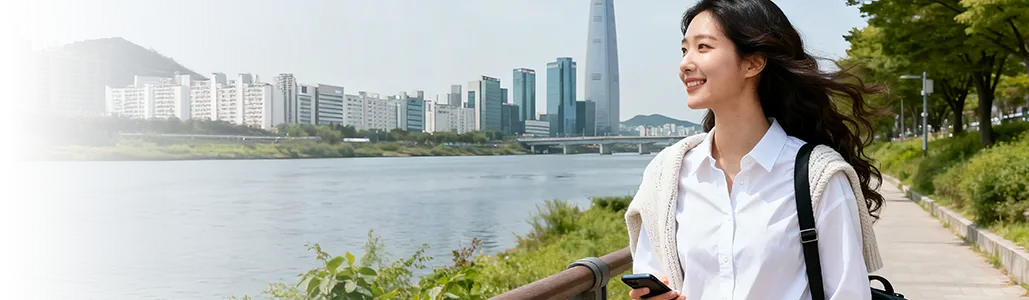
Dongdaemun Shopping Complex and Dongdaemun Market in Seoul
A Creatrip editor’s guide to fabrics, beads, DIY parts, home textiles, and the night fashion district without mixing up the markets

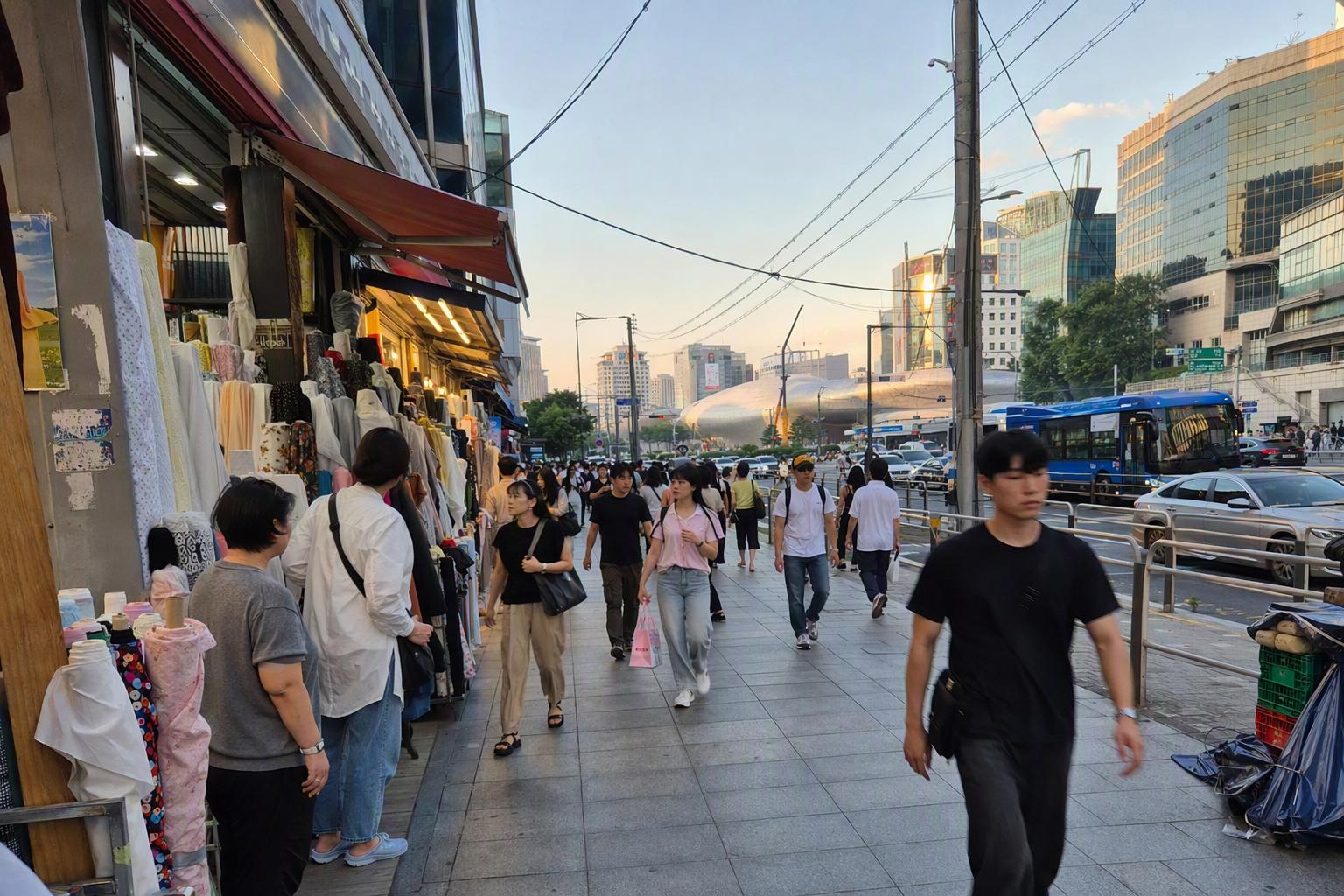
Dongdaemun can feel like Seoul’s fashion brain: fabric by day, wholesale clothes by night, delivery bikes outside, buyers moving fast, and entire floors where one tiny button seems to come in fifty versions.
The part that trips up many travelers is the name. Dongdaemun Market usually means the wider fashion district around Heunginjimun Gate, with malls, wholesale buildings, shoes, bags, clothes, accessories, and late-night trading. Dongdaemun Shopping Complex, also called Dongdaemun General Market or 동대문종합시장, is one specific complex inside that district — and it is much more about materials than finished outfits.
So if your Seoul shopping mood is beads, charms, ribbons, fabric, zippers, lace, yarn, curtain fabric, handmade accessories, or tiny DIY parts for keyrings and phone decorations, this is the place to circle on your map. If you want racks of ready-to-wear clothing, you are probably looking for the nearby night wholesale malls instead.

Dongdaemun Market and Dongdaemun Shopping Complex are not the same place
The names are often used loosely, even by people who know Seoul well, but the difference matters once you start planning your route.
Dongdaemun Market is the broader fashion town. It includes many buildings across the district, such as apM, apM Luxe, apM Place, NuZZon, Designer Club, DDP Fashion Mall, Queen’s Square, Pyounghwa Market, and other day and night wholesale spaces. This is where the rhythm turns nocturnal: many fashion wholesale buildings run around the evening-to-early-morning window, often roughly from 20:00 into the next morning, depending on the building.
Dongdaemun Shopping Complex is the materials core. Opened in 1970, it has grown into one of Asia’s major textile and sewing-material markets, with around 4,300 to 5,000 shops depending on how the connected buildings are counted. It is known as a huge node in Korea’s fabric supply chain, with a large share of domestic fabric trading passing through this area.
That sounds very industry-heavy, but travelers can enjoy it too — especially the 5th floor accessory and DIY market, where the mood becomes much more hands-on and playful.
| What you want | Better place to go | Best timing |
|---|---|---|
| Fabric, trims, buttons, zippers, lace, ribbons | Dongdaemun Shopping Complex | Daytime |
| Beads, charms, keyring parts, DIY accessory supplies | Dongdaemun Shopping Complex 5F | Late morning to afternoon |
| Curtains, bedding, home textile materials | Dongdaemun Shopping Complex B1 and 1F | Daytime |
| Finished clothes, shoes, bags, wholesale fashion | Wider Dongdaemun Market buildings | Evening to early morning, varies by building |
| A casual tourist clothing-shopping stroll | Select retail-friendly malls nearby | Day or evening, check each mall |
Why travelers actually like Dongdaemun Shopping Complex
At first glance, Dongdaemun Shopping Complex can feel less polished than a department store and less obvious than a souvenir street. That is part of the charm. It is a working market, not a set designed for visitors. Rolls of fabric are stacked high, shop signs compete for attention, elevators are busy, and many vendors are serving designers, small brands, crafters, and regulars who know exactly what they need.
For international visitors, the best reason to go is that it offers a side of Seoul shopping that feels very close to how Korean fashion gets made. You are not just buying a necklace; you can buy the chain, charm, clasp, ribbon, pouch, and label. You are not just seeing K-fashion in a boutique; you are walking through the raw materials behind it.

It is especially good for:
- DIY lovers making keyrings, phone straps, bag charms, beaded jewelry, or decorated photo-card holders
- K-pop fans who want materials for photocard, keyring, and bag decorating projects
- Fashion students and small-brand owners looking for fabric, trims, labels, packaging, and sample inspiration
- Home textile shoppers interested in curtains, bedding, sofa covers, and custom-feeling fabric options
- Travelers who enjoy real working markets, even when they are a little chaotic
It is less ideal for travelers who only want easy, finished clothing shopping. Dongdaemun Shopping Complex is not the place to browse rows of complete outfits; for that, the wider Dongdaemun fashion district makes more sense.
The basic location and access
The official address most commonly used is 266 Jong-ro, Jongno-gu, Seoul, 03198. Some newer-building references may show 272 Jong-ro, but for navigation apps, Dongdaemun Shopping Complex or 동대문종합시장 will usually get you to the right area.
The easiest route is beautifully simple: take Subway Line 1 or Line 4 to Dongdaemun Station, then use Exit 9. The complex is connected through the underground passage, so you do not need to wander far above ground before entering the market.

Driving is possible, with rooftop and underground parking connected to the complex and nearby facilities, but it is not our favorite choice unless you are carrying bulky fabric or home goods. Reported parking fees have been around 3,000 KRW for the first 30 minutes, then about 1,000 KRW every 10 to 15 minutes, though parking rates and rules can change. The building layout can also feel tight if you are not used to Seoul market parking. For most visitors, the subway is calmer, cheaper, and faster.
Hours are category-based, not one neat schedule
Dongdaemun Shopping Complex is a daytime market, but the exact hours depend on the product category. Treat the times below as a practical planning frame, then check the latest official information before making a special trip.
| Category | Common operating hours |
|---|---|
| Fabric and clothing materials | 08:00–18:00 |
| Wedding goods and home interior | 08:00–19:00 |
| Accessories and accessory materials | 09:30–19:00 |
| B building restaurant area | 08:00–19:00 |
| N building food court | 07:00–18:00, often shorter on Saturdays |
The most important closure pattern is Sunday. Most of the complex is closed on Sundays. Some wedding and home interior shops may open partially on the 1st, 3rd, and 5th Sundays, but the 2nd and 4th Sundays are generally full-building closure days. There are also closures around summer vacation periods, Chuseok, Seollal, and New Year holidays.
For a traveler’s itinerary, weekday late morning to early afternoon is the sweet spot. You avoid the earliest business rush, still have plenty of time before closing, and can pair the visit with DDP or the night fashion district later.
A floor-by-floor feel for the complex
The complex is usually described as a connected group of buildings, including A, B, C, and N or D sections, plus shopping town areas. The naming can be confusing, and different guides sometimes divide the buildings slightly differently. Inside, the more useful way to think is by floor.

B1: yarn, crafts, home textiles, and making supplies
The basement level is useful for people who like textile crafts and home projects. You can find yarn, knitting materials, sewing and craft supplies, cutting tools, curtain-related goods, bedding, and home fashion items. This floor has become more interesting as home DIY and knitting trends have grown, and parts of the home textile zone have been undergoing renovation to make the area easier to browse.
For travelers, B1 is worth a look if you are shopping for craft materials that pack well, or if you are curious about Korean home textile production. For large custom curtains or sofa covers, you will need more time, measurements, and usually a practical plan for pickup or delivery.
1F: basic fabrics, notions, wedding, and home goods
The first floor is a mix of fabric, clothing materials, wedding-related goods, bedding, curtains, towels, tableware, carpets, and home fashion stores. It is also one of the floors being shaped into a more curated discovery space, with trend-focused fabric displays and showroom-style functions developing as part of the complex’s newer direction.
For casual visitors, the first floor can feel like the gateway: enough market energy to be exciting, but not as specialized as the upper wholesale fabric floors.
2F: hanbok fabrics, silk, knits, lace, and buttons
The second floor is often associated with hanbok fabric, silk and satin-like materials, knit fabrics, lace, buttons, and general fabric shops. Anyone interested in Korean traditional clothing materials will enjoy seeing the textures here, even without buying. It is also a good reminder that Dongdaemun is not just fast fashion — it is connected to older textile traditions too.
3F and 4F: serious fabric sourcing
The 3rd and 4th floors are more wholesale in feeling. Expect fabric sellers dealing in woven materials, wool, shirt and coat fabrics, synthetic fabrics, special materials, and other production-oriented textiles. This is where designers and buyers come with swatches, reference photos, composition preferences, target quantities, and price ranges.
A tourist can still walk through, of course, but this is not always a slow browse-and-touch-everything environment. Some stores are working with swatches, warehouse cutting, phone orders, or specific customer requests. If you are sourcing for a brand, bring clear details: fabric type, weight, color reference, composition, order quantity, target price, shipping address, and sample needs.

5F: the accessory and DIY floor everyone talks about
The 5th floor is the easiest floor for most travelers to love. A, B, C, and N or D areas connect on this level, so once you are up there, you can keep moving through rows of stalls selling beads, charms, chains, metal parts, stones, ribbons, labels, stickers, packaging, keyring parts, phone decoration pieces, keycap materials, and handmade accessory supplies.
This is where Dongdaemun Shopping Complex becomes very 2020s Seoul. The rise of decorating culture — keyrings, bags, phone cases, photocard holders, pens, keycaps, and little personal items — has brought younger shoppers and international visitors into a market that was once much more strongly B2B.

Tiny parts may cost anywhere from the low hundreds to a couple thousand won depending on material and shop, but prices vary widely. Because the unit prices can be small, cash is very useful, especially for purchases under 10,000 KRW. Cards may be accepted at some shops, especially for larger totals, but do not count on card payment for every tiny purchase.
This floor can get crowded, particularly around holidays and trendy DIY seasons. Keep your bag close, avoid blocking narrow aisles while comparing charms, and take your time before buying multiples. It is very easy to leave with ten versions of the same tiny bear charm because each one is slightly cuter than the last.
6F and food areas: more important than they sound
Some guides include restaurant, lounge, food court, or service functions around the upper levels and N building. As the complex shifts toward a more all-day production and sourcing platform, food and rest areas matter more. As of 2026, new food-and-beverage infrastructure has been introduced on the 6th floor, including services designed to support people spending long hours in the building.
For a casual visitor, the takeaway is simple: there are food options, but this is not a food destination in the way Gwangjang Market is. Eat if it fits your route; do not build the whole day around the restaurants.
The 5th floor DIY route: the most tourist-friendly part
If you only have one hour, go straight to the 5th floor. It has the clearest fun-to-effort ratio for travelers.
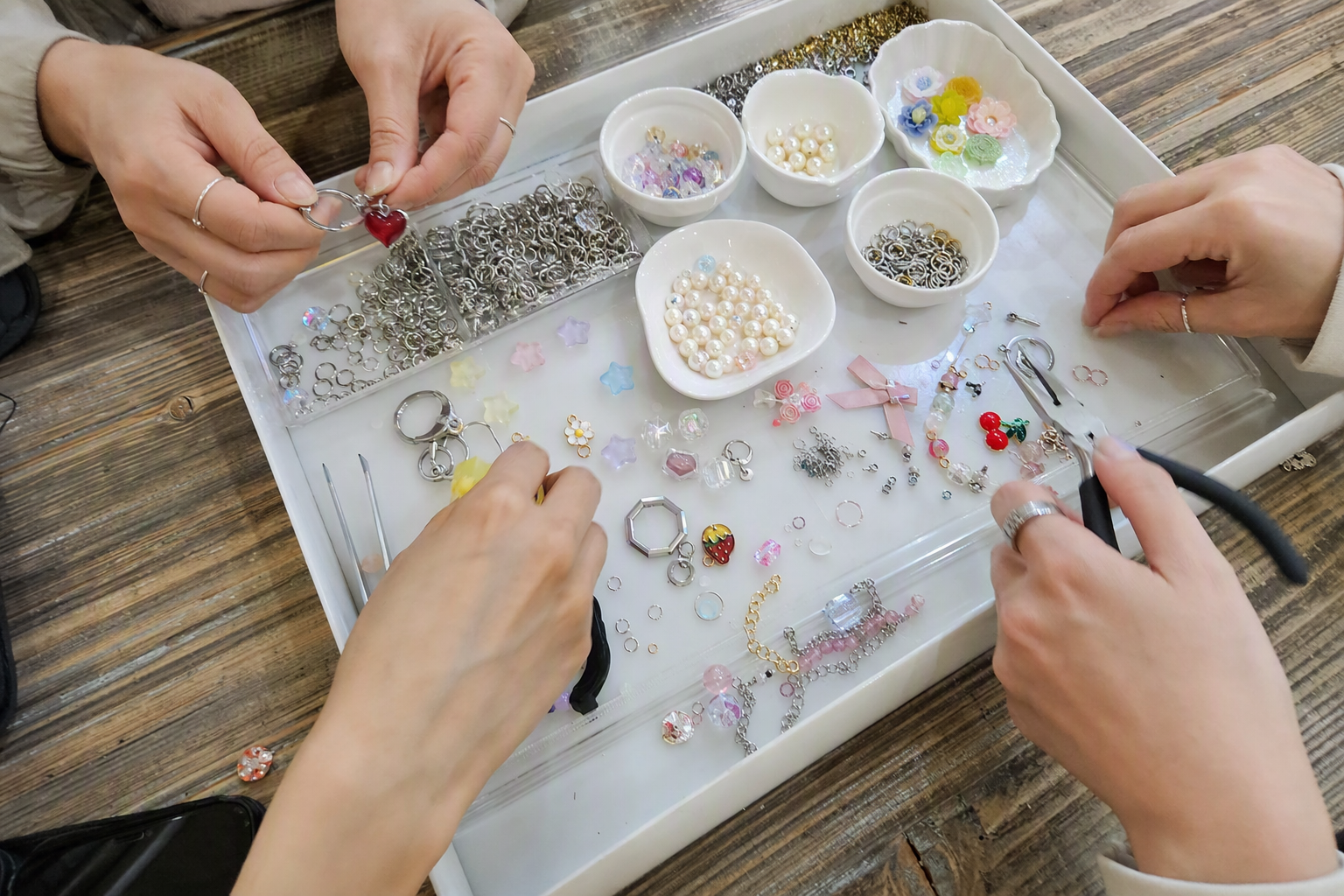
Good things to look for:
- Beads, pearls, crystals, and stones
- Metal charms and pendants
- Chains, clasps, jump rings, hooks, and keyring hardware
- Ribbons, lace trims, and decorative cords
- Phone strap and bag charm parts
- Photocard holder and keyring decorating pieces
- Labels, stickers, small packaging, and display cards
- Keycap and small object decoration materials
A small tip from the Creatrip side: decide on a loose theme before you start — silver and blue, soft pink and pearls, sporty black, fruit charms, ribbon-core, whatever makes sense for your project. The floor is so dense that walking in with no direction can be fun for ten minutes, then strangely exhausting.
Most stalls are not laid out like lifestyle boutiques. They are supply shops. Products may be in bins, trays, wall racks, or boxes. Some items are priced individually, some by pack, and some may have minimums. Ask politely, use a translation app if needed, and do not assume every shop has the same rule.
Fabric shopping: wonderful, but better with a purpose
Fabric floors are where Dongdaemun Shopping Complex becomes impressive in a different way. The density is the point. This is the place Korean designers, small brands, and production people can compare textures and suppliers quickly instead of crossing the city for every material.
For travelers who sew, it can be heaven. For travelers who do not, it may feel overwhelming. Many shops are working suppliers, so they are not always set up for slow, tourist-style browsing. That does not mean you should avoid the fabric floors; it just means the experience improves when you bring a purpose.

Useful things to prepare if you are buying fabric seriously:
- Reference photos of the garment or item you want to make
- A color reference or screenshot, ideally with backup shades
- Approximate fabric type, such as cotton, knit, wool, lace, lining, or synthetic
- Quantity range, even if it is only for sampling
- Whether you need a swatch, cut length, or production quantity
- A Korean address or shipping plan for larger purchases
- A translation app or Korean-speaking friend for detailed questions
The common mistake is arriving with only a vague idea like nice summer dress fabric. That can work if you enjoy wandering, but it is not how the market operates at its best. The more specific you are, the better the vendors can help.
Home textiles: useful, but plan around size and delivery
B1 and 1F are the areas to explore for curtains, bedding, carpets, sofa covers, and home textile materials. This part of the complex is especially practical for people living in Korea, exchange students setting up a room, or long-stay travelers with an apartment.

For short-term tourists, home textile shopping is more of a browse unless you have luggage space or a local delivery plan. Custom curtains and sofa covers often require measurements, discussion, production time, and pickup or delivery. If you are buying for a home outside Korea, confirm fabric width, care instructions, timing, and shipping options before paying.
Some wedding and home interior shops may have partial Sunday openings on the 1st, 3rd, and 5th Sundays, but this is not a reason to gamble your only market day. Check directly if you are going for a specific shop.
Payment, language, and market manners
Dongdaemun Shopping Complex still has a strong cash culture. Bring enough cash for small purchases, especially on the accessory floor. For larger purchases, some vendors may accept cards, but payment rules vary. Small transactions under 10,000 KRW can be where card payment becomes difficult.
A few practical habits make the visit smoother:
- Keep small bills ready for beads, charms, and craft parts.
- Bring a sturdy tote bag; tiny items multiply quickly.
- Use a translation app for material names, quantities, and pickup questions.
- Ask before taking close-up photos of products, especially on sourcing floors.
- Move to the side before sorting purchases or checking your phone.
- For serious sourcing, prepare specs instead of asking open-ended questions.
There is no need to perform a dramatic bargain scene. Many shops operate on volume, category, and supplier relationships, so prices may be less flexible than a tourist souvenir market. If you are buying many pieces or wholesale quantities, the conversation may naturally change, but exact rules depend on the shop.
What has been changing in 2025–2026
Dongdaemun Shopping Complex is not frozen in time. Around 2025 and 2026, the complex has been moving toward a broader role: not only a place to buy fabric, but a more connected fashion production platform where materials, design, sampling, production, packaging, logistics, showrooms, and buyer matching can sit closer together.
For travelers, that may sound like industry talk, but it changes the atmosphere. Parts of the market are becoming easier to read, more curated, and more welcoming to younger creators and international buyers.
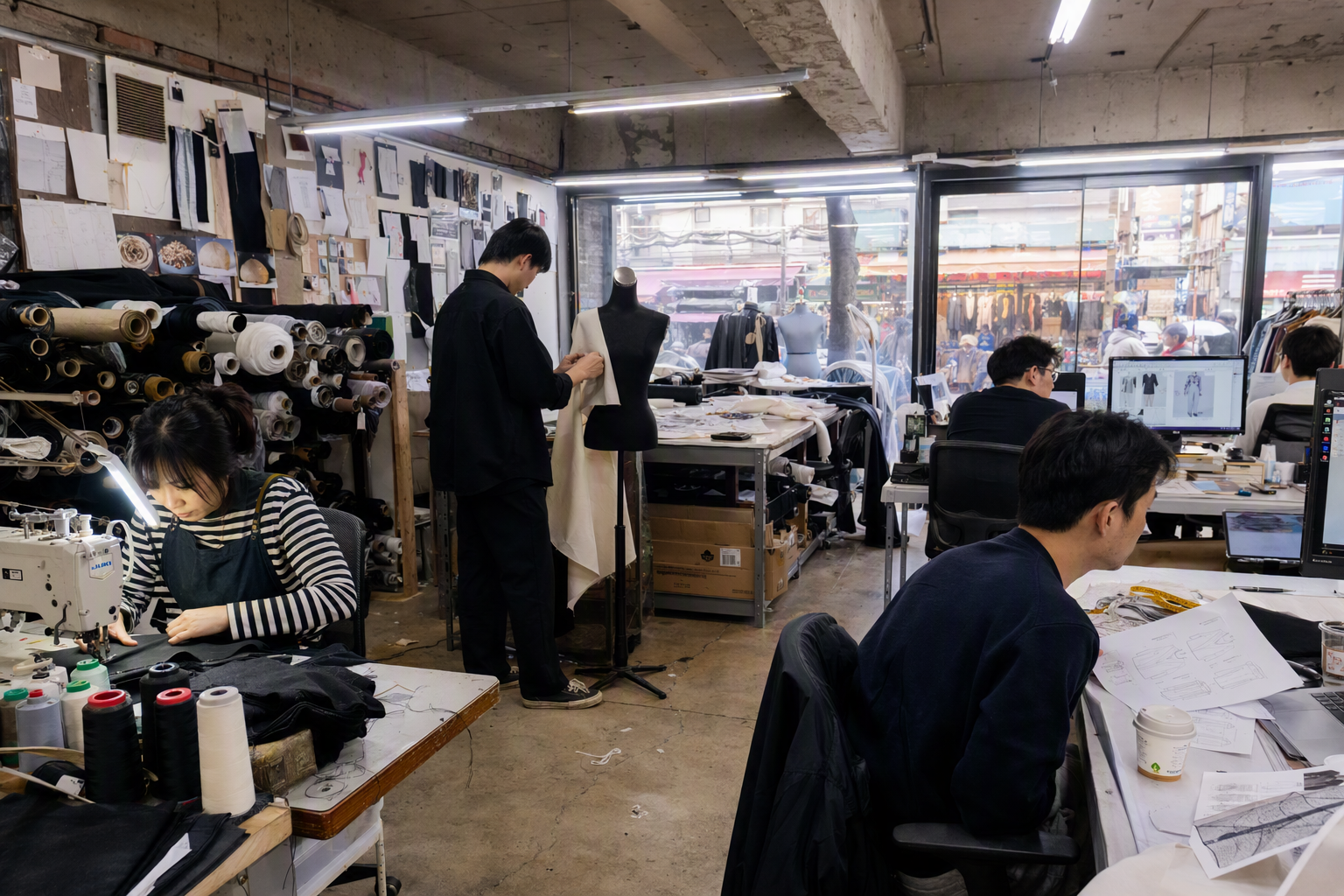
Notable changes include:
- A developing Trend Forum Hall and curated fabric discovery spaces on the 1st floor
- A Global Showroom direction for premium textile brands and buyer meetings
- Musinsa Studio on the 4th floor, opened in 2025 in A and C buildings, supporting designers and small brands with offices and work infrastructure
- A Production Showroom layer with services such as pattern, sample, sewing, printing or embroidery, labels, and logistics support
- Renovation plans and upgrades around the B1 home textile zone
- Expanded food-and-rest infrastructure to support longer stays in the building
Some of these areas are more relevant to designers than casual tourists, and exact access or services can change. Still, the direction is interesting: Dongdaemun is trying to make its old strength — incredible density — easier for new shoppers, creators, and overseas buyers to use.
How to pair it with the wider Dongdaemun Market
A very satisfying Dongdaemun day has two different moods. Start with the materials market during the day, then shift toward the fashion district after dark.

The wider Dongdaemun Market area includes wholesale fashion buildings such as apM, apM Luxe, apM Place, NuZZon, Designer Club, DDP Fashion Mall, Queen’s Square, and Pyounghwa Market. Many of these buildings are geared toward buyers and operate at night, often around 20:00 to early morning. Some focus on women’s fashion, others on men’s fashion, accessories, shoes, bags, or different price and quality levels.
This is where expectations matter. A wholesale building is not always the same as a tourist retail mall. Some shops may prefer bulk orders, some may have minimum quantities, and some may be less interested in single-piece browsing. Other nearby shopping spaces are easier for casual buying. Before heading out late at night, check the current hours and style of the specific building you want.
For a first-time visitor, a balanced route could look like this in spirit:
- Late morning: Dongdaemun Shopping Complex 5F for DIY parts
- Early afternoon: Fabric or home textile floors, depending on your interests
- Late afternoon: Coffee or a walk around DDP
- Evening: Explore the wider Dongdaemun fashion district once the night buildings start waking up
This way, you avoid the classic mistake of arriving at Dongdaemun Shopping Complex at night expecting wholesale clothes, or arriving at apM in the morning expecting the night market energy.
Common mistakes to avoid
Mistaking the materials market for a clothing mall
Dongdaemun Shopping Complex is mostly about inputs: fabric, trims, parts, textiles, and supplies. For finished outfits, head to other Dongdaemun fashion buildings.
Going on a Sunday without checking
Most areas close on Sundays, and the 2nd and 4th Sundays are especially risky because they are generally full closure days. Holiday seasons can bring extra closures.
Arriving too late
The accessory floor may run until around 19:00, but fabric and materials shops often close earlier. This market rewards daytime energy.
Bringing no cash
Small accessory and DIY purchases are much easier with cash. Cards are not guaranteed for tiny totals.
Trying to cover every floor in one visit
The complex is dense. Pick a goal: 5F DIY, fabric sourcing, home textiles, or a quick overview. Trying to do everything can turn the visit into an indoor maze with sore feet.
Driving when the subway would be easier
Parking exists, but fees and building flow can be inconvenient. Subway Line 1 or 4 to Dongdaemun Station Exit 9 is usually the cleaner choice.
Who will enjoy it most
Dongdaemun Shopping Complex is not a soft, curated Seoul shopping stop. It is practical, crowded, layered, and sometimes confusing. That is exactly why it is worth visiting for the right traveler.
Go if you love making things, sourcing materials, seeing how fashion is built, or collecting tiny parts for DIY projects. Go if you want a Seoul shopping experience that feels closer to the city’s production culture than its display windows. Go with patience, cash, comfortable shoes, and a little room in your bag.
Skip it, or keep the visit short, if you only want simple clothing shopping or a relaxed department-store afternoon. Dongdaemun has that nearby too — just not inside this particular complex.

At Creatrip, we like Dongdaemun Shopping Complex because it shows a different side of Seoul’s style. Not the finished look, but the raw ingredients: the ribbon before the bow, the fabric before the jacket, the charm before the keyring. For travelers who enjoy that kind of behind-the-scenes shopping, Dongdaemun is still one of the city’s most fascinating places to wander.