Where to Stay and What to See in Seoul: Best Neighborhoods, Hotels, and Trip Routes
A practical Creatrip edit for choosing the right Seoul base, building a smooth sightseeing route, and picking a hotel that actually fits your trip.

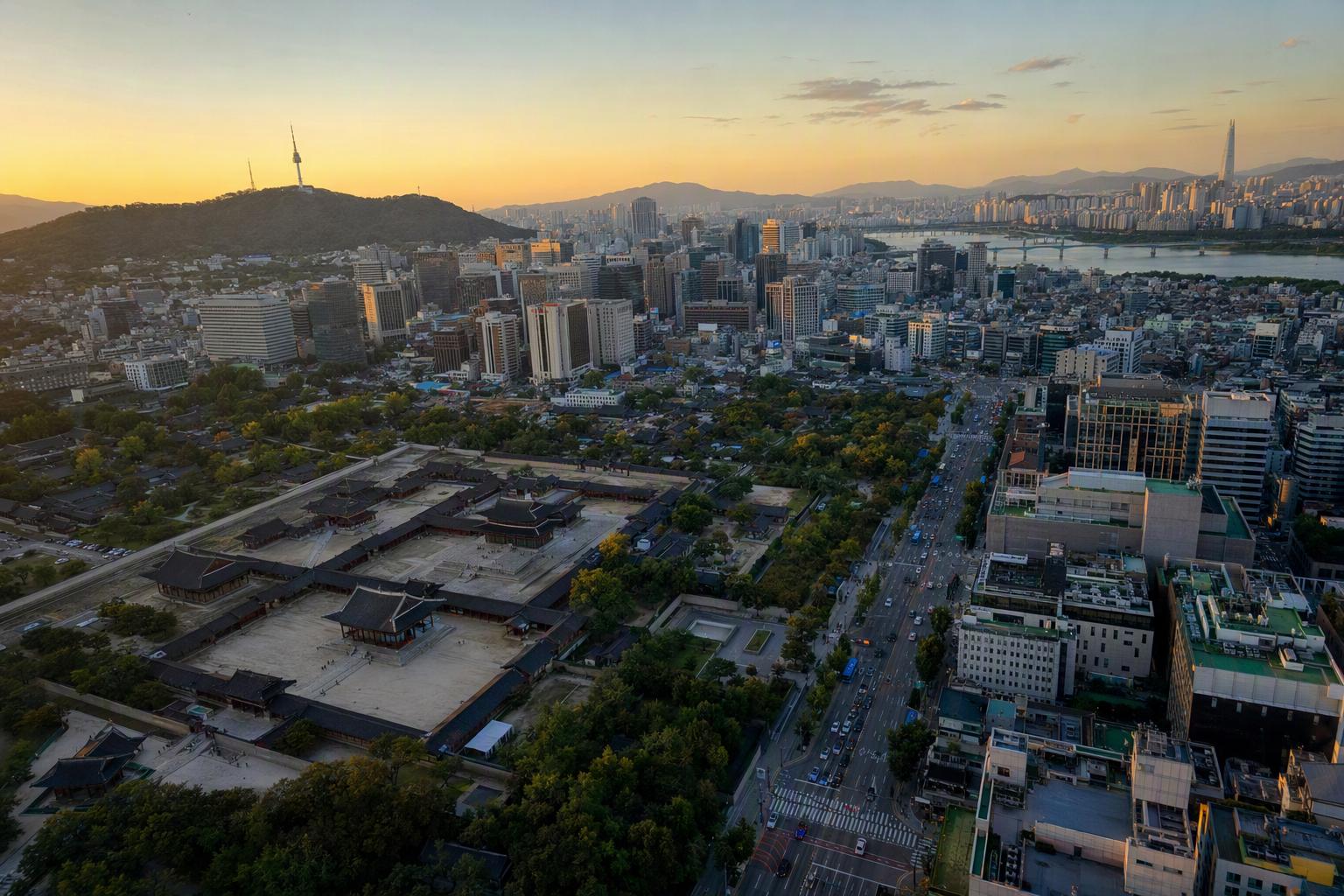
Seoul works best when your hotel does half the work
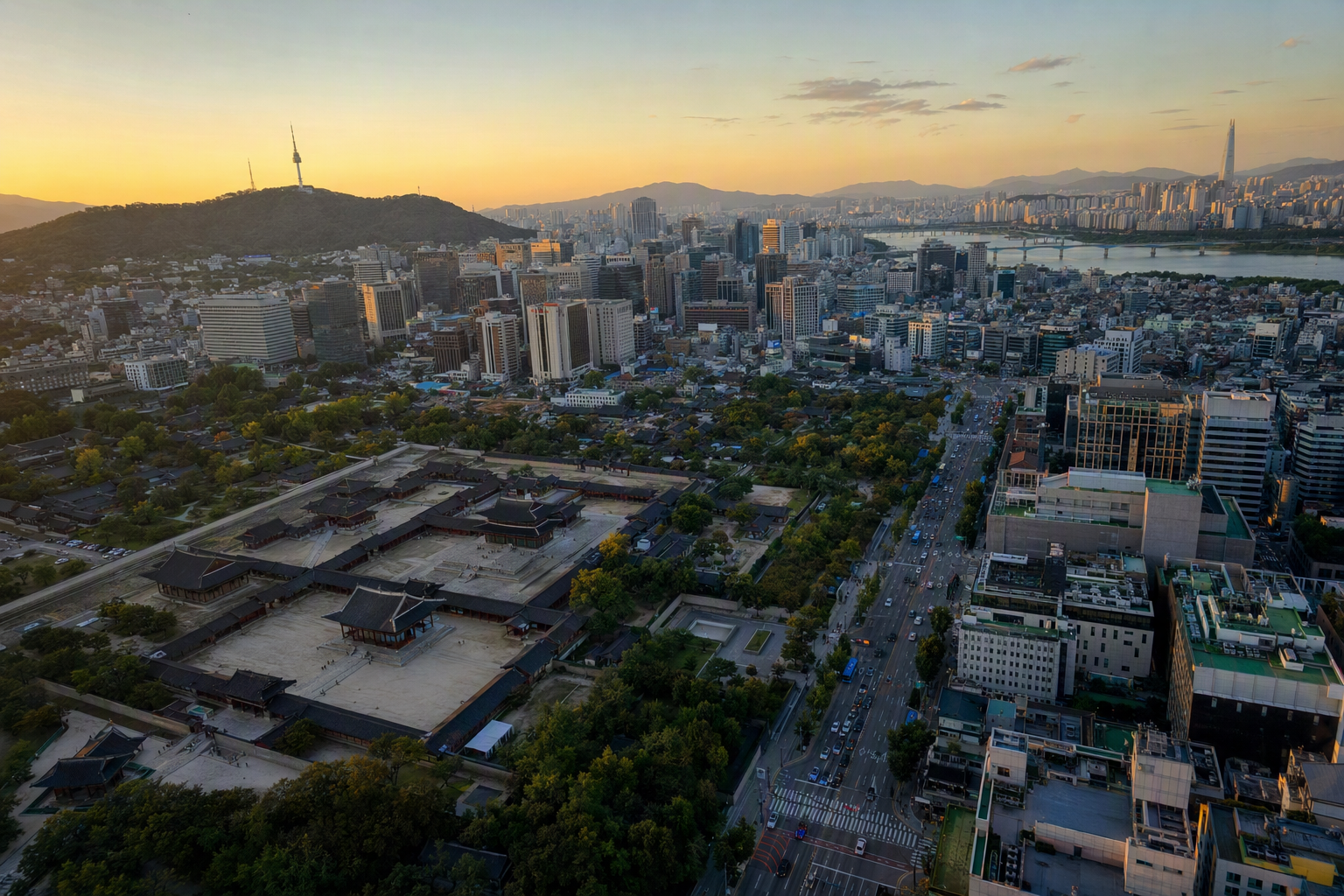
Seoul looks easy on a map until a single cross-city ride eats the softest part of your morning. The city is big, the river matters, and the difference between staying near Gwanghwamun and staying in deep Gangnam can quietly reshape your whole trip.
For most first Seoul visits, the smartest move is still simple: stay north of the Han River, then group your days by neighborhood. The classic central bases are Myeongdong, Euljiro, City Hall, Jongno, Anguk, and Gwanghwamun. They keep you close to palaces, markets, shopping, old Seoul, airport rail links, and the subway lines visitors use again and again.
Gangnam is stylish and useful for COEX, clinics, business, luxury shopping, and South-of-the-river dining, but it is not automatically the best base for a first sightseeing trip. From Gangnam to the palace and Bukchon area, a one-way trip can easily take around 30 to 50 minutes. That is fine once or twice. It gets tiring when it becomes the rhythm of every day.
The best areas to stay in Seoul
Myeongdong, Euljiro, and City Hall: the easiest all-round base

Myeongdong is not Seoul’s quietest or most local-feeling neighborhood, but for a short trip it is wonderfully practical. You get shopping, K-beauty, street food, department stores, easy subway access, and quick routes to Seoul Station for the airport railroad.
From here, it is painless to reach Gyeongbokgung, Changdeokgung, Bukchon, Insadong, Namdaemun Market, Cheonggyecheon, Deoksugung, Namsan, and N Seoul Tower. After dinner, you can still wander into a convenience store, pharmacy, cosmetics shop, or late snack without making a plan of it.
Recent planning ranges put Myeongdong accommodation roughly around KRW 50,000 to 80,000 for budget stays, KRW 120,000 to 200,000 for mid-range hotels, and KRW 280,000 to 600,000 or more for luxury hotels, though rates move heavily with season, room type, and events.
Good hotel fits: Lotte Hotel Seoul and Executive Tower, The Westin Josun Seoul, L’Escape Hotel, L7 Myeongdong, Hotel28 Myeongdong, Hotel PJ Myeongdong. For airport and rail convenience over neighborhood charm, Four Points by Sheraton Josun Seoul Station is also worth a look.
Insadong, Jongno, Anguk, and Gwanghwamun: the culture-first choice

This is our favorite zone for travelers who want Seoul to feel older, slower, and more textured. Gyeongbokgung, Changdeokgung, Bukchon Hanok Village, Jogyesa Temple, Insadong, Ikseondong, Cheonggyecheon, and museum-heavy Gwanghwamun all sit naturally together.
It is especially lovely if your ideal Seoul evening is not a neon shopping street but a teahouse, gallery, temple courtyard, or narrow alley meal. Jongno also has excellent subway coverage, especially around Jongno and Jongno 3-ga.
Hotel prices in the Insadong and Jongno area are often more forgiving than Myeongdong or Gangnam, with many stays falling around KRW 70,000 to 220,000, depending on the date and category.
Good hotel fits: Four Seasons Hotel Seoul, Rakkojae Hanok Jongno, Nine Tree Premier Hotel Insadong, Orakai Insadong Suites, Amid Hotel Seoul.
Hongdae, Yeonnam, and Mapo: nightlife, cafes, and better value

Hongdae is not the best place for palace-hopping on foot, but it is a brilliant base for travelers who care about cafes, indie culture, shopping, casual food, late nights, and a younger street energy. Yeonnam’s cafe lanes and Gyeongui Line Forest Park add a softer side, while Mangwon Market and Hangang parks are easy to fold into a west-Seoul day.
A major bonus: Hongik University Station is directly connected to Incheon Airport by AREX all-stop train. That makes arrivals and departures pleasantly simple.
Hongdae is often around 15 to 20 percent cheaper than Myeongdong. Hostels and guesthouses may fall around KRW 20,000 to 70,000, while mid-range hotels often sit around KRW 80,000 to 180,000, though popular weekends can jump.
Good hotel fits: RYSE, Autograph Collection, L7 Hongdae, Mercure Ambassador Seoul Hongdae, Holiday Inn Express Seoul Hongdae.
Gangnam, Samseong, Apgujeong, and Cheongdam: polished, but not always practical
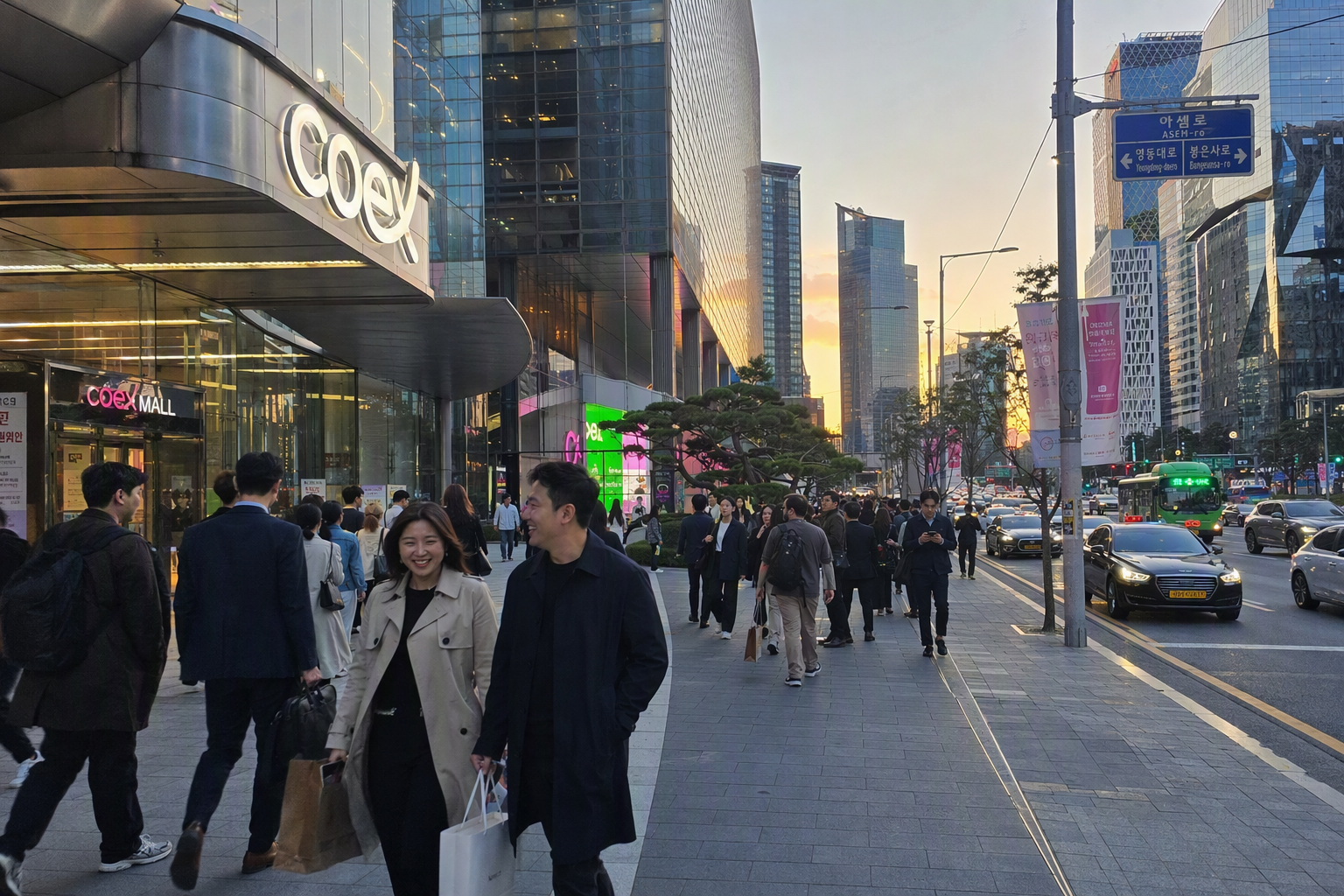
Gangnam is the right answer when your trip is built around COEX, business meetings, dermatology or clinic appointments, Apgujeong and Cheongdam shopping, South-of-river dining, K-pop agency areas, or Jamsil extensions. It is sleek, efficient, and packed with high-end hotels.
It is the wrong default if most of your wish list is Gyeongbokgung, Bukchon, Insadong, Myeongdong, and old Seoul. The commute is not impossible, just repetitive. A hotel that saves KRW 30,000 per night but adds an hour of transit every day is not always a bargain.
Gangnam prices tend to run high: KRW 120,000 to 250,000 for many business and mid-range hotels, KRW 300,000 to 800,000 or more for luxury, and top-end properties can climb much higher.
Good hotel fits: Josun Palace Gangnam, Park Hyatt Seoul, Grand InterContinental Seoul Parnas, Oakwood Premier COEX, Andaz Seoul Gangnam, Ananti at Gangnam.
Itaewon, Hannam, and Yongsan: global dining and nightlife
Itaewon and Hannam are great for international restaurants, bars, galleries, LGBTQ+ nightlife, and a more global social atmosphere. They suit repeat visitors better than first-timers who want frictionless palace and market access. The neighborhood has hills, airport access is less smooth than Hongdae or Seoul Station, and hotel choices are more limited.
Good hotel fits: Mondrian Seoul Itaewon, Grand Hyatt Seoul, Imperial Palace Boutique Hotel Itaewon.
Dongdaemun: fashion, DDP, and late-night shopping
Dongdaemun is useful for Dongdaemun Design Plaza, late-night fashion markets, and east-side routes. It can work well if you already know why you want to be there. For a first general sightseeing trip, Myeongdong or Jongno usually feels more central and easier.
Seoul’s best places to visit, grouped the way they actually work
The palace morning: Gyeongbokgung, museums, and the guard ceremony
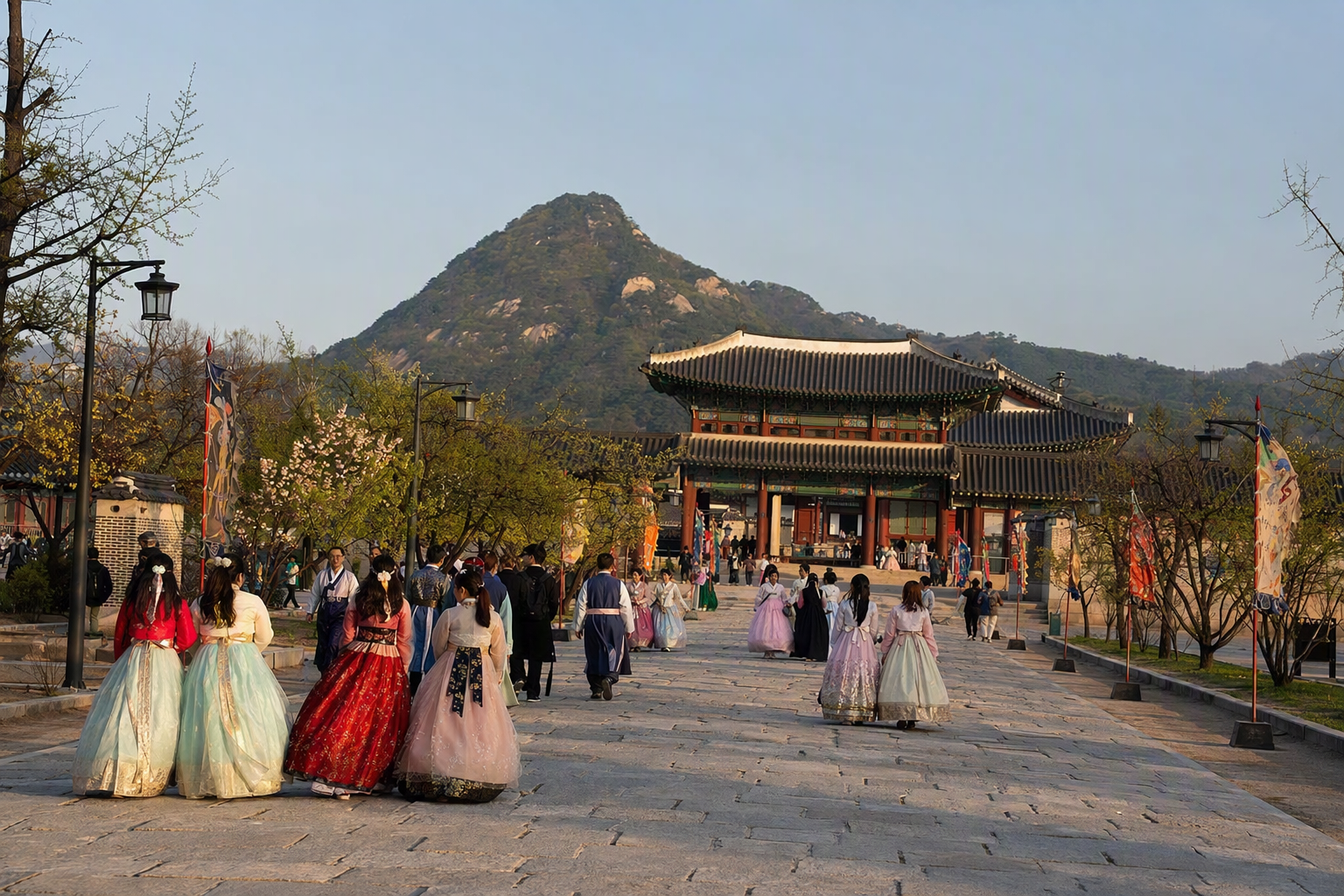
Gyeongbokgung is the grand opening scene for classic Seoul. Built in 1395, it is the first and largest Joseon palace in the city, and it pairs beautifully with the National Palace Museum of Korea and the National Folk Museum of Korea.
The palace usually opens at 09:00. Seasonal closing times are listed as 17:00 from January to February and November to December, 18:00 from March to May and September to October, and 18:30 from June to August, with last entry one hour before closing. It is normally closed on Tuesdays, though holiday rules can shift that closure, so confirm before you go.
Adult admission for ages 19 to 64 is listed at KRW 3,000, and full hanbok wearers can enter for free. Visitors aged 18 and under, visitors aged 65 and above, and travelers visiting on Culture Day, the last Wednesday of the month, may also enter free under the official rules. The guard changing ceremony is commonly held around 10:00 and 14:00, lasting about 20 minutes.
Free official English palace tours are listed Wednesday to Monday at 11:00, 13:30, and 15:30, departing from the information office inside Heungnyemun and taking around 60 to 90 minutes. Palace schedules can change for weather, events, or restoration work, so check the official palace page close to your visit.
A smooth morning looks like this: arrive just before 09:00, see the main palace grounds while it is still calm, catch the 10:00 ceremony, then drift toward Bukchon or Insadong before lunch.
Changdeokgung and the Secret Garden: beautiful, but bookable for a reason

Changdeokgung, built in 1405, is a UNESCO-listed palace loved for the way its architecture sits into the natural landscape. The famous Huwon Secret Garden is the part travelers dream about, especially in cherry blossom and autumn foliage seasons.
The catch is access. Secret Garden visits generally require timed guided admission and advance reservation. Some planning information notes that reservations open six days before at 10:00 and that the Secret Garden ticket has been listed at KRW 5,000, but these details can change. Treat the Secret Garden as something to reserve, not something to wander into casually.
For peak spring and fall dates, do not leave this to the day itself. Check the official palace booking page, especially for English tour times and capacity.
Bukchon Hanok Village: beautiful streets, real neighbors
Bukchon has survived more than 600 years and is known for around 900 hanok houses. Its location between Gyeongbokgung and Changdeokgung makes it easy to add to a palace day.
The important part: Bukchon is a residential neighborhood, not a set. Visitor-friendly hours are often framed around 10:00 to 17:00, and specific areas such as Bukchon-ro 11-gil have had stricter visitor controls, including evening-to-morning restrictions in sensitive zones. Keep voices low, avoid blocking doors, and skip doorway photo sessions. The prettiest way to enjoy Bukchon is also the most respectful one: slow, quiet, and brief.
Insadong, Ssamziegil, Jogyesa, and Ikseondong

Insadong is Seoul’s easy half-day for traditional crafts, teahouses, galleries, calligraphy supplies, ceramics, and antique-style browsing. Ssamziegil gives the area a compact design-shopping anchor, while Jogyesa Temple adds a calm pause nearby.
From Insadong, it is a short wander to Ikseondong, where renovated hanok alleys now hold cafes, restaurants, desserts, and small shops. It is not untouched old Seoul, but it is atmospheric in a way visitors usually enjoy, especially in the evening.
Myeongdong, Myeongdong Cathedral, and Namdaemun Market
Myeongdong is Seoul in easy mode: K-beauty, fashion chains, snack carts, money changers, bright signs, and plenty of English-friendly service. It became a major shopping and beauty hub from the 1980s and sits close to Myeongdong Cathedral, a historic Catholic landmark of about 120 years.
Food-wise, Myeongdong is not always the cheapest or most local-feeling choice. Still, it is convenient, energetic, and home to dependable classics such as Myeongdong Kyoja, which has been operating since 1966.
Nearby Namdaemun Market is Korea’s largest traditional market and a useful stop for snacks, souvenirs, kitchen goods, children’s items, and casual meals. Pair it with City Hall, Deoksugung, Myeongdong, or Seoul Station rather than treating it as a separate faraway outing.
Gwangjang Market and Mangwon Market

Gwangjang Market is one of Seoul’s most famous food markets and is often described as Korea’s first permanent market. It is more tourist-heavy than it used to be, but it still works well for bindaetteok, mayak kimbap, kalguksu, and yukhoe.
For a more local-feeling market day, Mangwon Market is the west-side favorite to pair with Hongdae, Yeonnam, and Mangwon Hangang Park. It feels less like a one-stop tourist rite and more like a neighborhood eating route.
Namsan and N Seoul Tower: the easiest city view from central Seoul
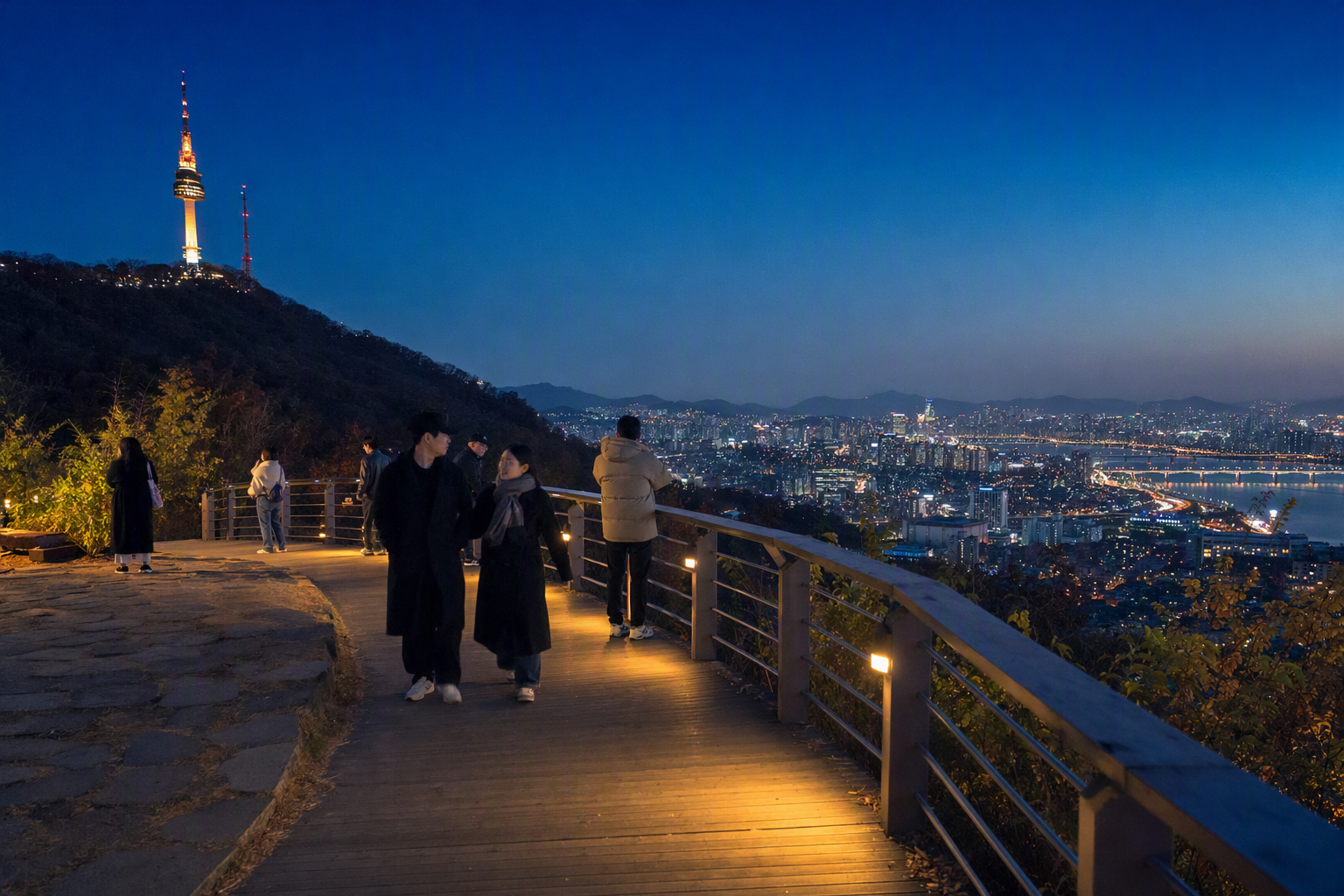
N Seoul Tower sits on 262-meter-high Namsan, with the tower itself rising 236.7 meters. The result is one of Seoul’s best all-around city views, especially around sunset and blue hour.
Recent visitor information lists the observatory at KRW 26,000 for adults and KRW 20,000 for children, with the cable car listed at KRW 15,000 round trip or KRW 12,000 one way for adults. Prices can change, so check the latest before buying.
If you stay in Myeongdong, Namsan is one of the easiest evening add-ons in the city. Go too late on a busy weekend and the romantic skyline may come with a lot of queueing, but the view still earns its place.
Hongdae, Yeonnam, Mangwon, and the Han River
Hongdae gives you street energy, fashion, casual restaurants, music, and nightlife. Yeonnam softens the day with cafes and Gyeongui Line Forest Park. Mangwon brings market snacks, then the Han River gives the whole route room to breathe.
This is the day for convenience-store picnics, instant ramyeon by the river, and a slower evening after palace-heavy sightseeing. Self-cooking ramyeon at Han River parks is often mentioned around KRW 1,500, though prices vary by store and product.
Seongsu and Seoul Forest
Seongsu is Seoul’s warehouse-to-cafe district, full of fashion pop-ups, design shops, bakeries, and brand showrooms. Seoul Forest nearby makes the area feel less cramped than other cafe neighborhoods. It is not as historically important as Jongno, but it is one of the easiest ways to see current Seoul style without committing to Gangnam.
COEX Starfield Library and Bongeunsa

COEX is the anchor of a Gangnam or Samseong day. Starfield Library is famous for its 13-meter-high two-story bookshelves and more than 70,000 books. Across the street, Bongeunsa Temple gives the area a striking contrast: glass towers on one side, temple calm on the other.
For a two-day Seoul trip, we would not cross the city just for COEX. For a five-day trip, or any itinerary already touching Gangnam, it is an easy and photogenic stop.
Lotte World Tower and Seoul Sky
Lotte World Tower in Jamsil is Seoul’s grand high-rise alternative to Namsan. Seoul Sky is often listed around the high KRW 20,000s to low KRW 30,000s, depending on source and date, so verify the current official price before booking.
This stop works best with Lotte World Mall, Seokchon Lake, Jamsil, Lotte World, or a stay at Signiel Seoul. It is less convenient as a random add-on from Bukchon or Hongdae.
Yeouido Hangang Park, Seoul Moon, Hangang Bus, and river events
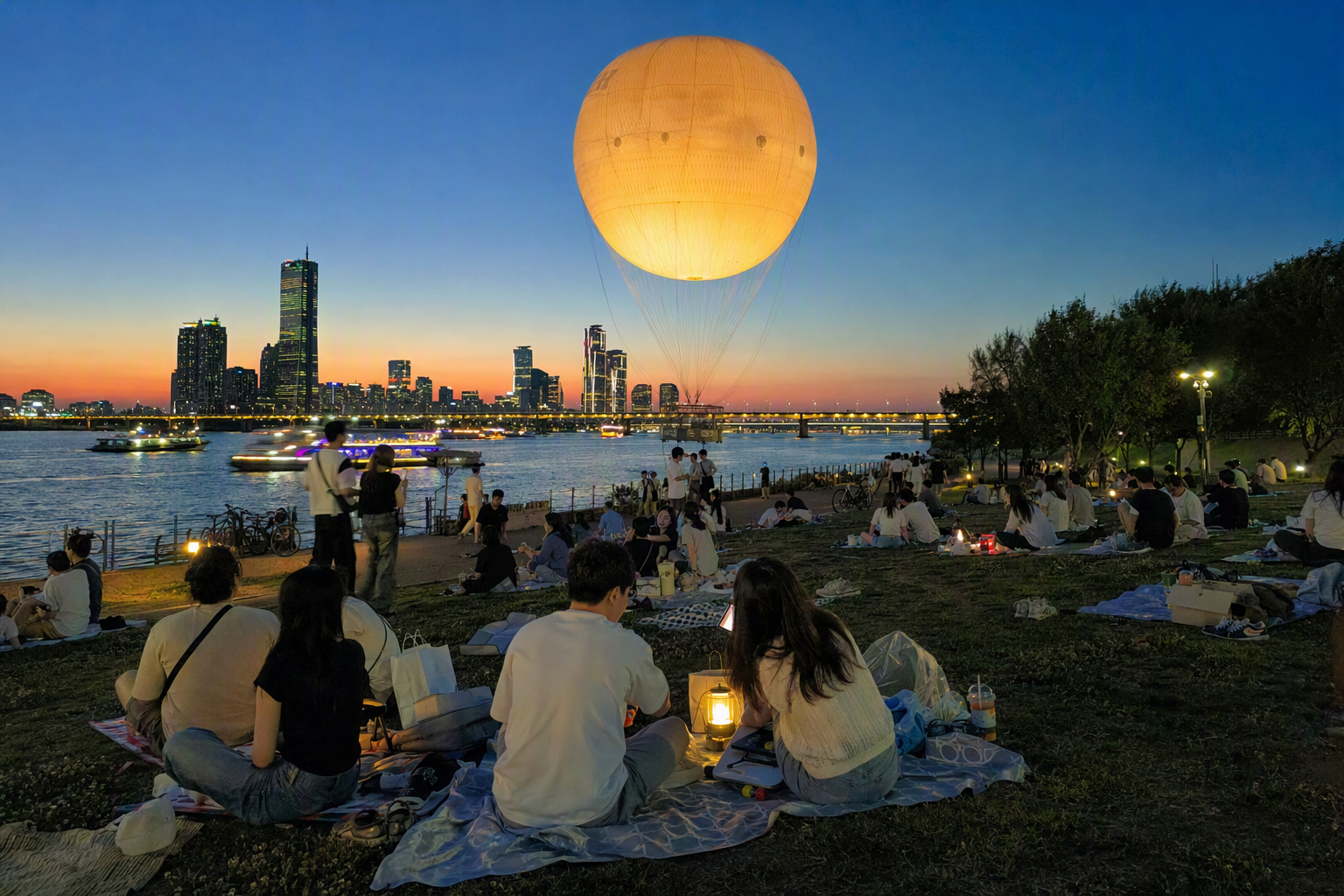
Yeouido has become a very useful river-day hub. Seoul Moon, the tethered helium balloon in Yeouido Park, rises up to 130 meters and has been listed as operating daily from 12:00 to 22:00, with weekend openings from 10:00 in April to June and September to November. The ride is around 15 minutes, with an adult fare listed at KRW 25,000 and a Climate Card discount noted in official information. Weather can affect operations, so check before going.
The Hangang Bus connects seven river piers, including Magok, Mangwon, Yeouido, Apgujeong, Oksu, Ttukseom, and Jamsil. A single ride is listed at KRW 3,000, and Yeouido to Jamsil express service has been described at around 30 minutes. Inclusion in Climate Card products depends on card type, so read the fine print.
Seasonal river events can be excellent low-cost evening plans. For 2026, the spring drone light show has been listed from April 10 to June 5, with drone performances around 20:30 to 20:45 on event nights and possible cancellation for rain or strong wind. Festival calendars change every year, so check official Seoul event pages before locking in a river night.
DMZ and JSA day tours
The DMZ cannot be visited independently; it requires a tour. Popular dates sell out, especially in spring and autumn. JSA access is even more variable and depends on current conditions, so treat it as conditional, not guaranteed. Book early, keep your schedule flexible, and read the tour cancellation policy carefully.
A smooth 5-day Seoul route without zigzagging

Five days is a lovely amount of time for Seoul when the route is grouped well. The point is not to race through every famous name. It is to avoid crossing the city for one snack, then crossing back for one palace.
Day 1: Gyeongbokgung, Bukchon, Insadong, Ikseondong
Start at Gyeongbokgung at 09:00, stay for the guard ceremony if it is running, then choose one museum depending on your energy. Walk or take a short ride toward Bukchon, keeping the residential rules in mind. Spend the afternoon around Insadong, Ssamziegil, and Jogyesa, then let Ikseondong handle dinner or drinks.
Day 2: Changdeokgung, Secret Garden, Changgyeonggung, Gwangjang Market
Build the day around your Secret Garden reservation. Add Changgyeonggung if you are enjoying the palace rhythm, then move toward Gwangjang Market for lunch or snacks. Cheonggyecheon and Dongdaemun Design Plaza fit naturally afterward.
Day 3: Myeongdong, Namdaemun, Namsan
Use this as your central Seoul shopping and view day. Myeongdong for beauty shopping, Myeongdong Cathedral for a quick historic pause, Namdaemun for market browsing, then Namsan around sunset.
Day 4: Yeonnam, Hongdae, Mangwon, Han River
Keep the west side together. Cafe-hop in Yeonnam, browse Hongdae, eat through Mangwon Market, then end at Mangwon, Yeouido, or another Han River park depending on weather and events.
Day 5: Gangnam, COEX, Bongeunsa, Apgujeong or Jamsil
Go south once and make it count. Start with Bongeunsa and COEX Starfield Library. If shopping, clinics, or K-pop agency areas matter, continue to Apgujeong and Cheongdam. If views and malls sound better, move to Jamsil for Lotte World Tower, Seoul Sky, Seokchon Lake, or Lotte World Mall.
The best hotels in Seoul, by the kind of trip you are taking
Quick Creatrip picks
| Best for | Hotel | Why it works |
|---|---|---|
| Best luxury hotel for a first Seoul trip | Four Seasons Hotel Seoul | Gwanghwamun location, palace access, dining, spa, indoor pool |
| Central shopping and convenience | Lotte Hotel Seoul Executive Tower | Connected to Euljiro 1-ga and Lotte Department Store area |
| Classic central luxury | The Westin Josun Seoul | Strong location near City Hall and Myeongdong, airport limousine convenience |
| Iconic Korean luxury | The Shilla Seoul | Service-led luxury with more of a resort feel near central Seoul |
| Best skyline hotel experience | Signiel Seoul | High floors inside Lotte World Tower, serious views |
| Best Gangnam luxury | Josun Palace Gangnam | Strong fit when the trip is actually Gangnam-centered |
| Best COEX business base | Grand InterContinental Seoul Parnas | Practical for conventions and Samseong schedules |
| Best boutique in Myeongdong | Hotel28 Myeongdong | Small, cinematic, central |
| Best design stay in Hongdae | RYSE, Autograph Collection | Art-focused hotel in the middle of Hongdae energy |
| Best airport and rail convenience | Four Points by Sheraton Josun Seoul Station | Near Seoul Station, AREX, buses, and trains |
Four Seasons Hotel Seoul: the strongest luxury choice for classic sightseeing
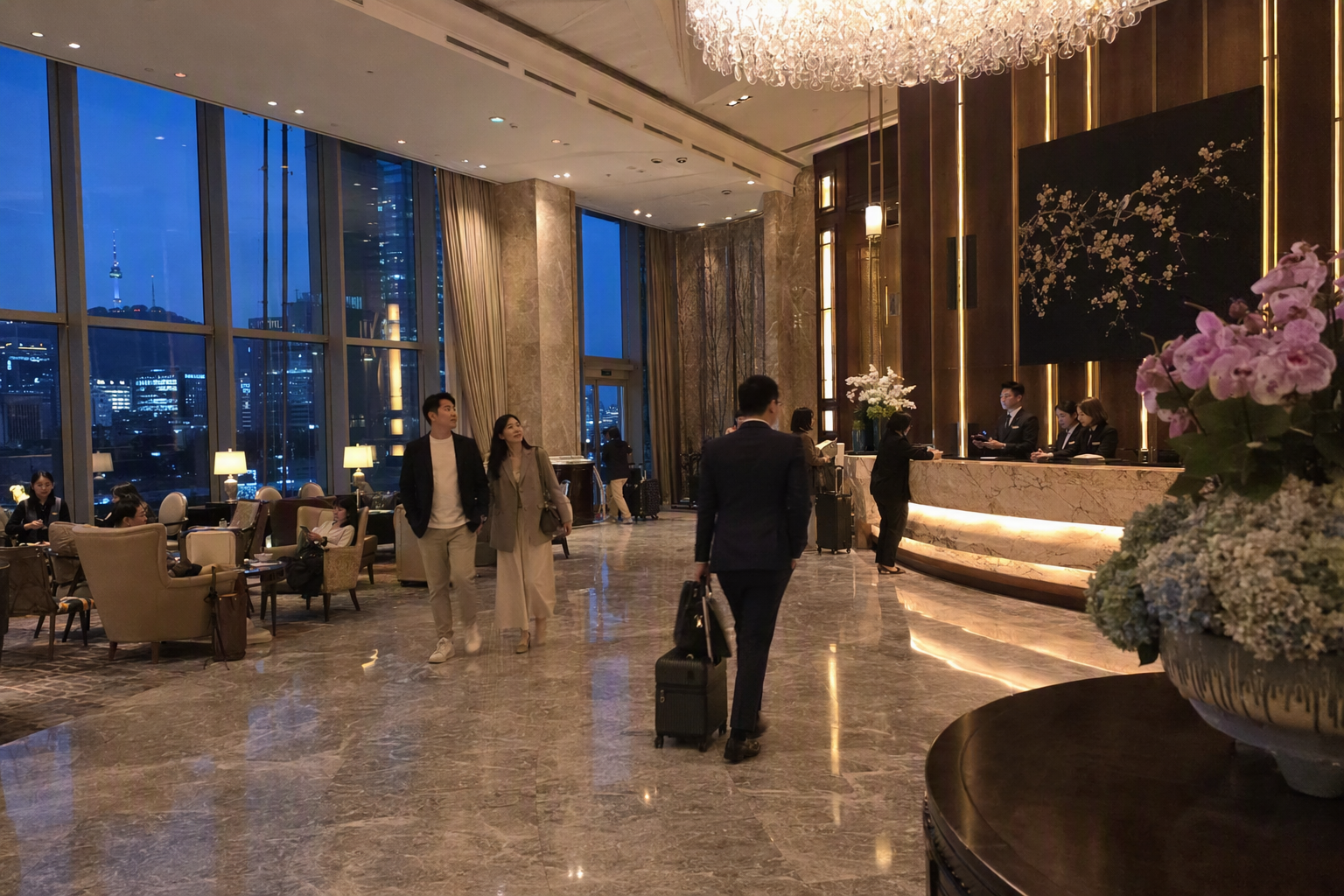
Location: 97 Saemunan-ro, Jongno-gu, near Gwanghwamun and Gyeongbokgung
Best for: luxury travelers, first-time sightseeing, palace access, dining, spa time, business-luxury overlap
Four Seasons Hotel Seoul is the luxury pick that makes the most geographic sense for a classic Seoul itinerary. It has 317 rooms, a spa, indoor year-round pool, and a strong dining lineup including Yu Yuan, Akira Back, Charles H., H Bar, and OUL.
The location is the real gift. You are close to Gwanghwamun, Gyeongbokgung, Jongno, museums, and central business areas without being buried in the most tourist-heavy shopping streets. It is polished, expensive, and very practical.
Check-in is listed at 15:00 and check-out at 12:00. Room categories range from 41 to 45㎡ Deluxe Rooms to large suites, including 45 to 48㎡ Premier Rooms, 66㎡ City-View Executive Suites, and 72㎡ Palace-View Executive Suites.
Official offers can change, but 2026 packages have included flexible rates, bed-and-breakfast options for up to two registered guests, advance purchase discounts up to 20 percent with nonrefundable prepayment conditions, suite credit offers, Korean wellness packages, and family-focused Kids For All Seasons offers. Compare the cancellation rules carefully. A nonrefundable luxury rate only feels smart when flights, dates, and companions are truly fixed.
One booking note worth saving: fourseasonshotelseoul.com is not the official Four Seasons booking site. Use fourseasons.com/seoul for official hotel information and reservations.
Lotte Hotel Seoul and Executive Tower: central, polished, very convenient
Location: Myeongdong and Euljiro, Jung-gu
Best for: shopping, central subway access, department store convenience, classic luxury
Lotte Hotel Seoul is a large central hotel with 1,015 rooms. The Main Tower opened in 1979, while the Executive Tower opened in 2018, which matters when choosing a room. The location is extremely convenient: near Euljiro 1-ga Station, connected to the Lotte shopping ecosystem, and surrounded by restaurants and central sights.
The trade-off is that the Main Tower can feel older in some categories, and large hotels can come with occasional noise or crowding. When budget allows, the Executive Tower or more recently refreshed categories are the safer bet.
Rates move by date, but one recent baseline mentioned Superior rooms from around KRW 425,000 or more and guest breakfast at La Seine around KRW 60,000 instead of the standard KRW 75,000. Always check the exact policy for your booking date.
The Westin Josun Seoul: old-school central luxury
Location: City Hall and Myeongdong area
Best for: travelers who want classic service, central walks, airport limousine convenience
The Westin Josun is a longtime favorite for visitors who want to be central without choosing a flashy new hotel. It works well for palace days, Myeongdong meals, City Hall, Deoksugung, and multiple subway lines. Airport limousine access near the hotel is another practical plus.
It is not the trendiest design stay in Seoul, but that is part of its appeal. Choose it when location, service, and classic comfort matter more than novelty.
The Shilla Seoul: the hotel experience matters here
Location: Jung-gu, near Jangchung and Dongguk University
Best for: luxury travelers who care about service, dining, and a more resort-like city stay
The Shilla is one of Korea’s most respected luxury hotels. It is not quite as frictionless for palace walking as Four Seasons or the most central Myeongdong hotels, but it delivers a polished hotel experience that many travelers choose for the property itself.
Go for The Shilla when you want Seoul luxury with a calmer, more self-contained feel. For a sightseeing-heavy first trip, just budget a little more taxi or transit time.
Signiel Seoul: the view is the reason
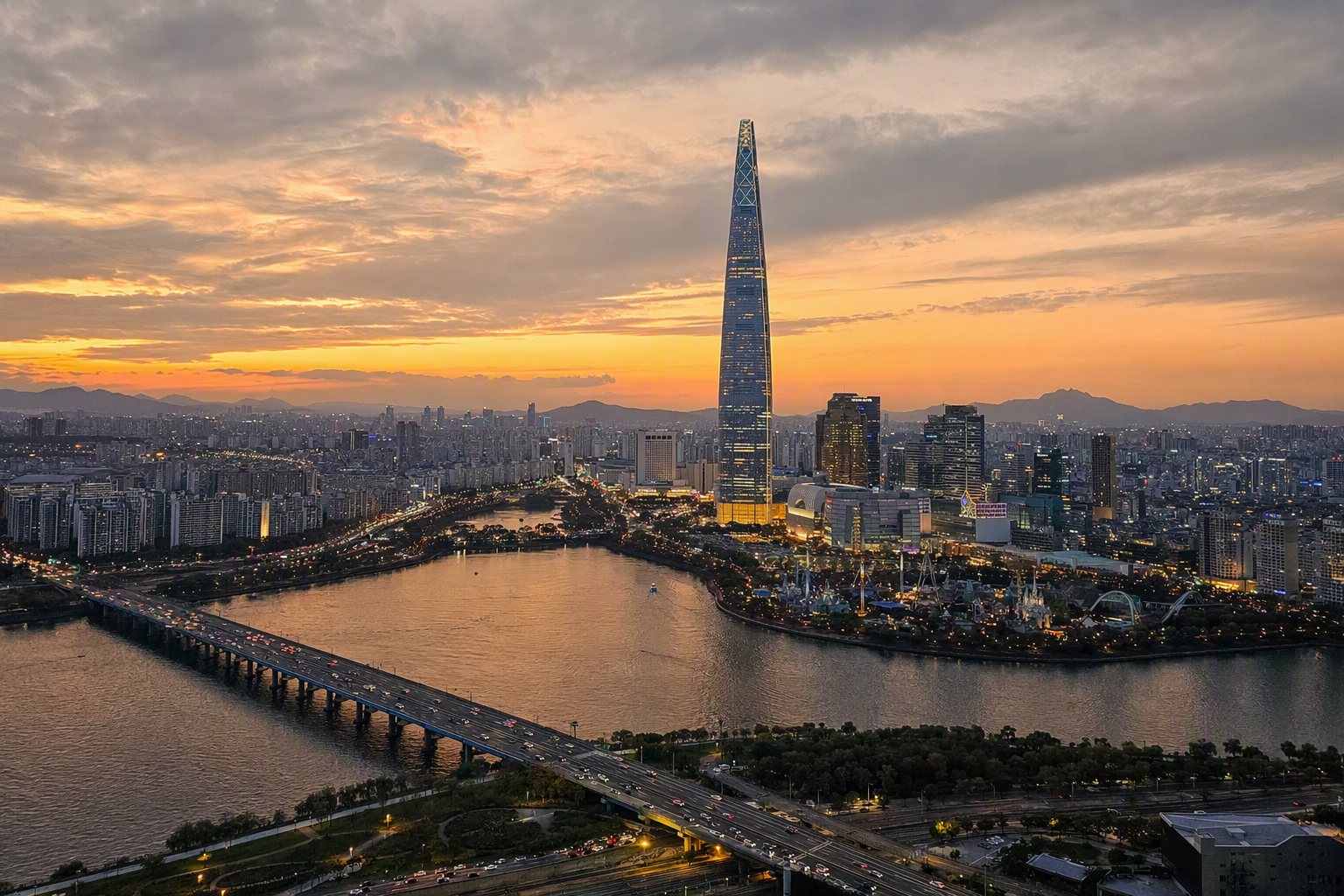
Location: Lotte World Tower, Jamsil and Songpa
Best for: skyline lovers, special occasions, Lotte World, Jamsil, destination-hotel trips
Signiel Seoul sits high inside Lotte World Tower, with hotel floors commonly described in the 76 to 101 or 87 to 101 range depending on listing, and about 235 rooms. The appeal is obvious: huge city and river views, sleek luxury rooms, and easy access to Jamsil Station, Lotte World Mall, and Seoul Sky.
It is not the most efficient base for a first Seoul sightseeing route. From Jamsil to Myeongdong, Jongno, or Hongdae, expect roughly 30 to 60 minutes depending on route and time. Guests also mention the realities of a very high-rise hotel: elevator transfers can take time, views vary by room, and not every room has a full panoramic angle.
Choose Signiel when the hotel is part of the occasion. Choose central Seoul when the city route matters more than the room view.
Gangnam and COEX luxury: Josun Palace, Park Hyatt, Grand InterContinental Parnas
If your schedule is anchored south of the river, Seoul has excellent luxury options.
Josun Palace Gangnam is one of the city’s strongest high-end hotels and a smart fit for a true Gangnam trip: clinics, business, dining, shopping, and South-of-river plans.
Park Hyatt Seoul is the design-forward pick near Samseong and COEX, practical for business travelers and anyone who wants a polished base by the convention and mall district.
Grand InterContinental Seoul Parnas is a very practical large luxury hotel for COEX, conventions, and Samseong meetings. It makes less sense if every day starts in Bukchon or Gwanghwamun.
Oakwood Premier COEX deserves a special mention for longer stays or travelers who want apartment-style space. One-bedroom units, kitchens, laundry, and quiet rooms make it useful for families, business trips, and anyone tired of tiny hotel layouts.
Grand Hyatt Seoul and JW Marriott Dongdaemun
Grand Hyatt Seoul works well for travelers drawn to Namsan views, Itaewon, Hannam, and a more resort-like hilltop atmosphere. The trade-off is weaker subway and airport convenience compared with Myeongdong, Jongno, Hongdae, or Seoul Station.
JW Marriott Dongdaemun Square Seoul is a luxury choice for travelers focused on Dongdaemun Design Plaza, late-night fashion markets, and east-central Seoul. It is especially useful for Marriott loyalists or anyone who already knows Dongdaemun is part of the plan.
Boutique and design hotels with personality
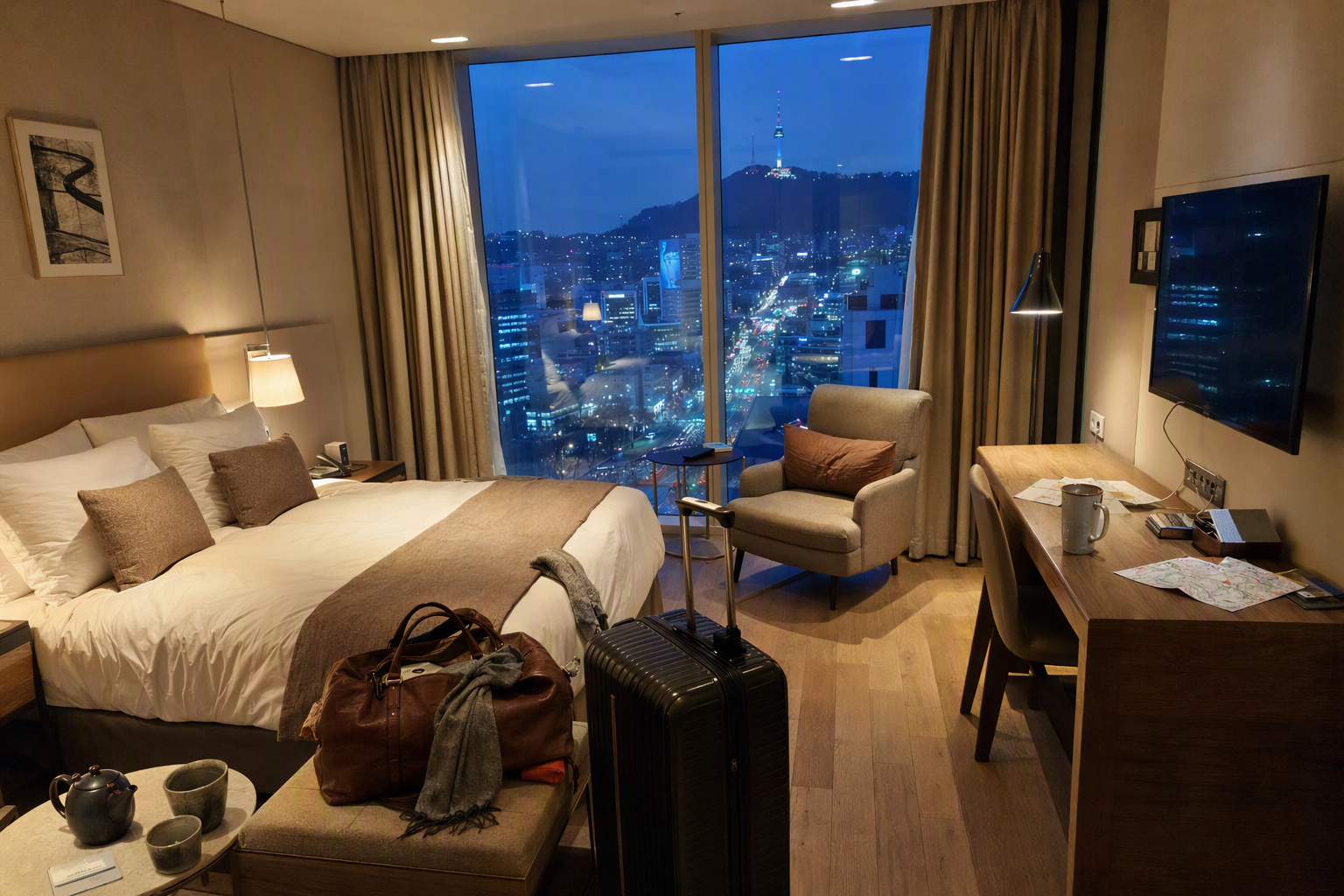
Hotel28 Myeongdong has 83 rooms and a cinema-inspired concept founded by actor Shin Young-kyun. It is one of the best choices for travelers who want Myeongdong convenience without a generic business-hotel feel.
RYSE, Autograph Collection Hongdae has 272 rooms and an art/design focus that fits Hongdae beautifully. It is the hotel to consider when nightlife, cafes, and creative retail matter more than palace proximity.
L7 Myeongdong is a practical lifestyle stay near Myeongdong and Namsan, while Mondrian Seoul Itaewon and Imperial Palace Boutique Hotel Itaewon suit travelers who want Itaewon nightlife, restaurants, and a more international base.
Four Points by Sheraton Josun Seoul Station: not romantic, very useful
Location: Seoul Station area
Best for: early trains, late arrivals, airport rail, practical transfers
Four Points by Sheraton Josun Seoul Station has 342 rooms and sits about 7 minutes from the Seoul Station subway and AREX area via connected routes. Rooms are often described as clean but compact, and train noise can be a factor, so light sleepers may want to request carefully.
This is not the hotel for dreamy Seoul atmosphere. It is the hotel for catching AREX, KTX, subway lines, airport buses, and onward transport without drama.
Airport, transit, and apps that make Seoul easier

Use Naver Map or KakaoMap
In Korea, Google Maps is not the app to lean on for walking and driving routes. Naver Map and KakaoMap are much more useful for local navigation. KakaoMetro is handy for subway checks, and Kakao T is useful for taxis.
T-money or Climate Card
Most visitors are fine with T-money, especially if they are moving around flexibly and not trying to calculate pass value every morning.
The Seoul Climate Card short-term tourist passes are worth checking if your Seoul-only transit use is heavy. Official short-term prices are listed as:
- 1 day: KRW 5,000
- 2 days: KRW 8,000
- 3 days: KRW 10,000
- 5 days: KRW 15,000
- 7 days: KRW 20,000
These short-term passes start from the day of charging and cannot be charged in advance. Short-term tourist versions exclude Ttareungi bikes and Hangang Bus unless using a separate eligible long-term product.
For regular fares, the 2025 official Seoul base fare is listed at KRW 1,550 for adult subway card fare and KRW 1,500 for adult trunk and branch buses. Transfers work when you tap out and board the next vehicle within 30 minutes, or 60 minutes between 21:00 and 07:00, up to 4 transfers and 5 rides.
Even in a card-friendly city, keep some cash. Around KRW 50,000 is a comfortable small reserve for transit card charging, markets, and snacks.
Incheon Airport to Seoul
AREX is the cleanest baseline for airport travel.
The AREX Express Train runs nonstop to Seoul Station and takes about 43 minutes from Terminal 1 and 51 minutes from Terminal 2, with reserved seats and luggage racks. It is commonly listed around KRW 9,500 one way.
The AREX all-stop train is cheaper and stops at stations including Hongik University, Gongdeok, Digital Media City, and Gimpo Airport. It takes about 59 minutes from Terminal 1 and 66 minutes from Terminal 2 to Seoul Station, and roughly 53 to 55 minutes to Hongdae. Fares are often around KRW 4,150 to 4,950, and T-money can be used.
For Myeongdong, take AREX to Seoul Station and transfer one subway stop to Line 4, or use airport buses such as 6015 or 6001, usually around 70 to 90 minutes and KRW 17,000 to 18,000 depending on route and date.
For Gangnam, airport limousine buses such as 6009 or 6703 are often more comfortable with luggage than forcing a Seoul Station subway transfer. Expect roughly 80 to 90 minutes and around KRW 17,000 to 18,000, but always check current schedules.
Late arrivals need a plan. AREX Express service usually ends around 22:35 to 22:40 from the airport, while all-stop trains run later but still not all night. After the last trains, late-night buses can reach central Seoul in around 90 minutes for about KRW 17,000 to 18,000, while taxis to central Seoul may run around KRW 70,000 to 90,000 by day and over KRW 100,000 at night once surcharges and tolls are included.
Seasonal timing and hotel booking notes
Cherry blossom and autumn foliage seasons are expensive for a reason. Hotel rates can rise 20 to 50 percent, and booking 2 to 3 months ahead is a safer rhythm for popular central hotels.
Seoul cherry blossoms typically land around early April; 2026 forecasts pointed to bloom around April 3 and peak around April 10. Autumn has another long demand wave, especially when city festivals overlap with foliage weekends.
Big events can also distort hotel prices by neighborhood. COEX and Gangnam rates can spike around convention weeks. Central Seoul can tighten around fashion weeks, spring festivals, fireworks, lantern events, and winter festival dates. If you are not attending the event, do not accidentally pay event-week pricing in the wrong district.
For luxury hotels, we like booking a refundable rate early, then checking official hotel offers and major booking platforms closer to the date. Advance purchase rates can be attractive, but the savings need to be worth the loss of flexibility.
Easy mistakes to avoid in Seoul
- Booking Gangnam because the name is famous. Stay there when your plans are actually in Gangnam, COEX, clinics, or Jamsil. Otherwise, central north-side Seoul is usually smoother.
- Treating Bukchon like a photo studio. It is residential. Go during visitor-friendly hours, keep quiet, and avoid private doorways.
- Leaving Changdeokgung Secret Garden to chance. Reserve early for spring and autumn.
- Using Google Maps as your main navigator. Naver Map or KakaoMap will save time and confusion.
- Planning late airport transport too casually. Train end times matter after a long flight.
- Choosing the cheapest hotel without checking transit. A cheaper room far from your daily route can cost more in time, taxis, and energy.
- Trying to see every famous place in one day. Seoul is much better in clusters: palaces and Bukchon, Myeongdong and Namsan, Hongdae and Mangwon, COEX and Jamsil.
Our final Seoul shortlist
For a first Seoul trip, stay in Myeongdong, Euljiro, City Hall, Jongno, Anguk, or Gwanghwamun unless your itinerary clearly says otherwise. Start with Gyeongbokgung, Changdeokgung, Bukchon, Insadong, Myeongdong, Namdaemun, Gwangjang Market, and Namsan, then expand west to Hongdae, Yeonnam, Mangwon, and the Han River, east to Seongsu and Seoul Forest, and south to COEX, Bongeunsa, Apgujeong, Cheongdam, or Jamsil.
For one luxury hotel that balances comfort and sightseeing, Four Seasons Hotel Seoul is the cleanest pick. For central shopping convenience, choose Lotte Hotel Seoul Executive Tower or The Westin Josun Seoul. For Korean luxury as a hotel-centered experience, choose The Shilla Seoul. For views and a special occasion, choose Signiel Seoul, understanding the Jamsil location trade-off. For nightlife and design, choose RYSE Hongdae. For airport and train practicality, choose Four Points by Sheraton Josun Seoul Station.
The best Seoul itinerary is not the one with the longest list. It is the one where your hotel, subway line, lunch neighborhood, and evening walk all quietly agree with each other.