Busan Travel Guide: How to Plan Korea’s Coastal City Without Losing Time in Transit
A practical Creatrip guide to Busan’s beaches, markets, temples, night views, food, and the neighborhoods that make the city easier to enjoy.

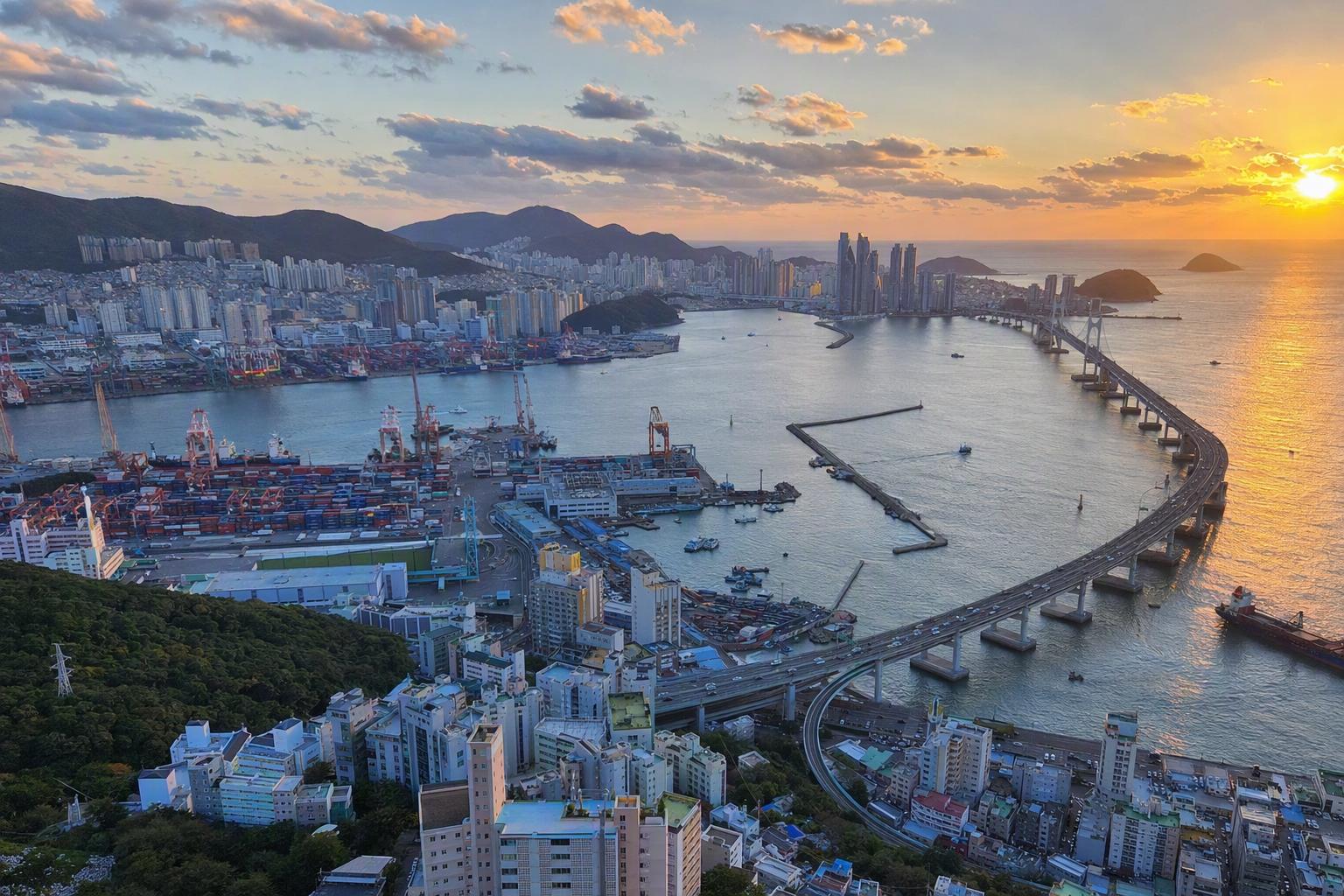
Busan has a way of looking simple from far away: beaches, seafood, a temple by the sea, maybe a colorful hillside village. Then the map opens, and suddenly Haeundae is nowhere near Nampo, Gwangalli is tempting at night, Gamcheon sits on the other side of town, and that cute Sky Capsule slot is already sold out.
That is the real Busan. Formerly romanized as Pusan, Busan is Korea’s second-largest city, a working port, a beach city, a mountain city, and a nightlife city all at once. Around 3.4 million people live here, and the city spreads across the coast in a way that rewards smart planning. At Creatrip, we think Busan is at its best when you stop treating it like a compact top-ten list and start planning it by clusters.

Busan in one sentence
Busan is a coastal port metropolis where old markets, seafood stalls, cliff parks, beach hotels, hillside villages, temples, and late-night bridge views sit in different pockets of the city.
For most international visitors, 3 days is the sweet spot. Two days works if you keep things tight. Four days lets Busan breathe.
A good first trip usually looks like this:
- One day in old Busan: Gamcheon, Nampo, BIFF Square, Gukje Market, Jagalchi Market, Yongdusan Park
- One day on the east coast: Haedong Yonggungsa, Haeundae, Blue Line Park, Dongbaek Island, Busan X the Sky, Spa Land, or Songjeong
- One flexible day: Yeongdo, Taejongdae, Songdo, Oryukdo and Igidae, Dadaepo, or Gwangalli at night
The big planning mistake is zigzagging across the city. Busan looks breezy on Instagram, but the distances are real, the hills are real, and a single cross-city transfer can quietly eat up the best part of an afternoon.
How many days to spend in Busan
2 days: Best for a sharp first taste
With two days, choose one coastal day and one old-downtown day. Do not try to cover every famous spot. A smart two-day trip can feel surprisingly full if you keep Haeundae-side sights together and Nampo-side sights together.
Best structure:
- Day 1: Haedong Yonggungsa → Haeundae → Blue Line Park or Sky Capsule → Gwangalli at night
- Day 2: Gamcheon → Nampo → BIFF Square → Gukje Market → Jagalchi Market → Yongdusan Park or Busan Tower
If your second night is a Saturday, we would happily rearrange the ending for Gwangalli’s drone show.
3 days: Best for most first-time visitors
Three days gives Busan enough room to feel like Busan: not only beaches, not only markets, not only night views. You can enjoy the east coast, the old port area, and one extra side of the city without rushing every meal.
Best structure:
- Day 1: Old downtown and markets
- Day 2: Haeundae and the east coast
- Day 3: Yeongdo, Taejongdae, Songdo, Oryukdo, Igidae, Spa Land, or Gwangalli
4 days: Best for slower travelers, families, and second-time Korea visitors
A fourth day lets you add something more local or more nature-heavy: Beomeosa and Geumjeongsanseong Fortress, Dadaepo and Eulsukdo, Songjeong surfing, or even a day trip to Gyeongju if Busan is part of a wider Korea route.
Where to stay in Busan
Choosing a hotel in Busan is less about star rating and more about where you want your evenings to end. The city has several centers, and each one changes the rhythm of your trip.
Seomyeon: The safest all-round base
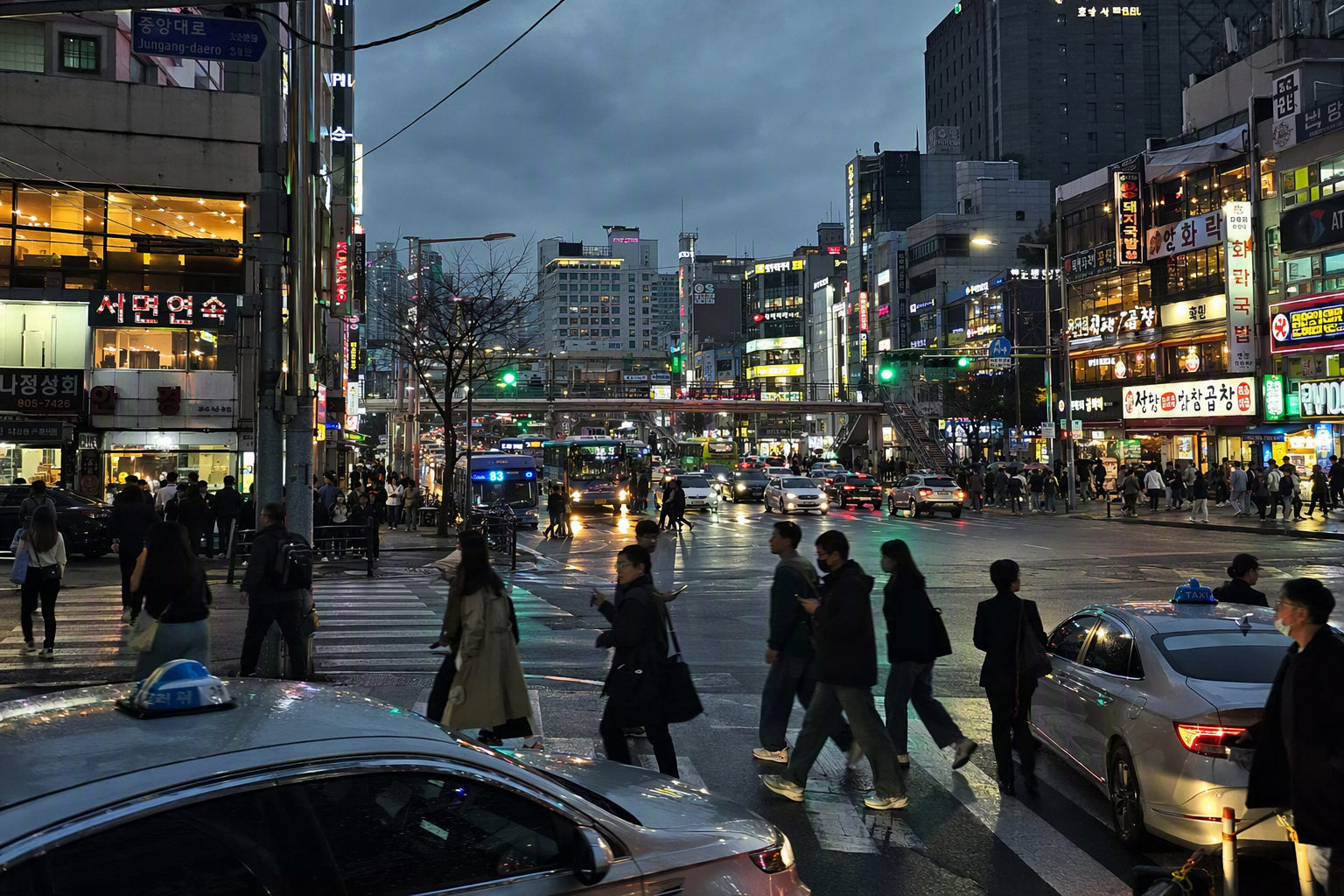
Seomyeon is the practical favorite for many first-time visitors. It sits where subway Lines 1 and 2 meet, which makes it easy to reach both the old downtown side and the Haeundae/Gwangalli side. It also has shopping, late food, bars, and strong taxi access.
Stay in Seomyeon if you want:
- Balanced access across Busan
- Easy nightlife without needing a beach hotel
- A flexible base for a 3-day itinerary
- Fewer painful decisions when plans change
The trade-off is atmosphere. Seomyeon is convenient and energetic, but it does not give you that wake-up-by-the-sea feeling.
Nampo-dong and Jung-gu: Best for markets and old port energy
Nampo is the side of Busan that feels most connected to the city’s port history. Jagalchi Market, Gukje Market, BIFF Square, Bupyeong Kkangtong Market, Yongdusan Park, and Busan Tower are all close. Gamcheon Culture Village and Songdo are also much easier from here than from Haeundae.
Stay in Nampo if you want:
- Street food and seafood markets
- Old downtown atmosphere
- Easy access after arriving at Busan Station
- A short trip focused on western and central Busan
The trade-off is distance from Haeundae, Songjeong, and Haedong Yonggungsa. Those are not impossible, just farther than many travelers expect.
Haeundae: Best for beach hotels and the east coast
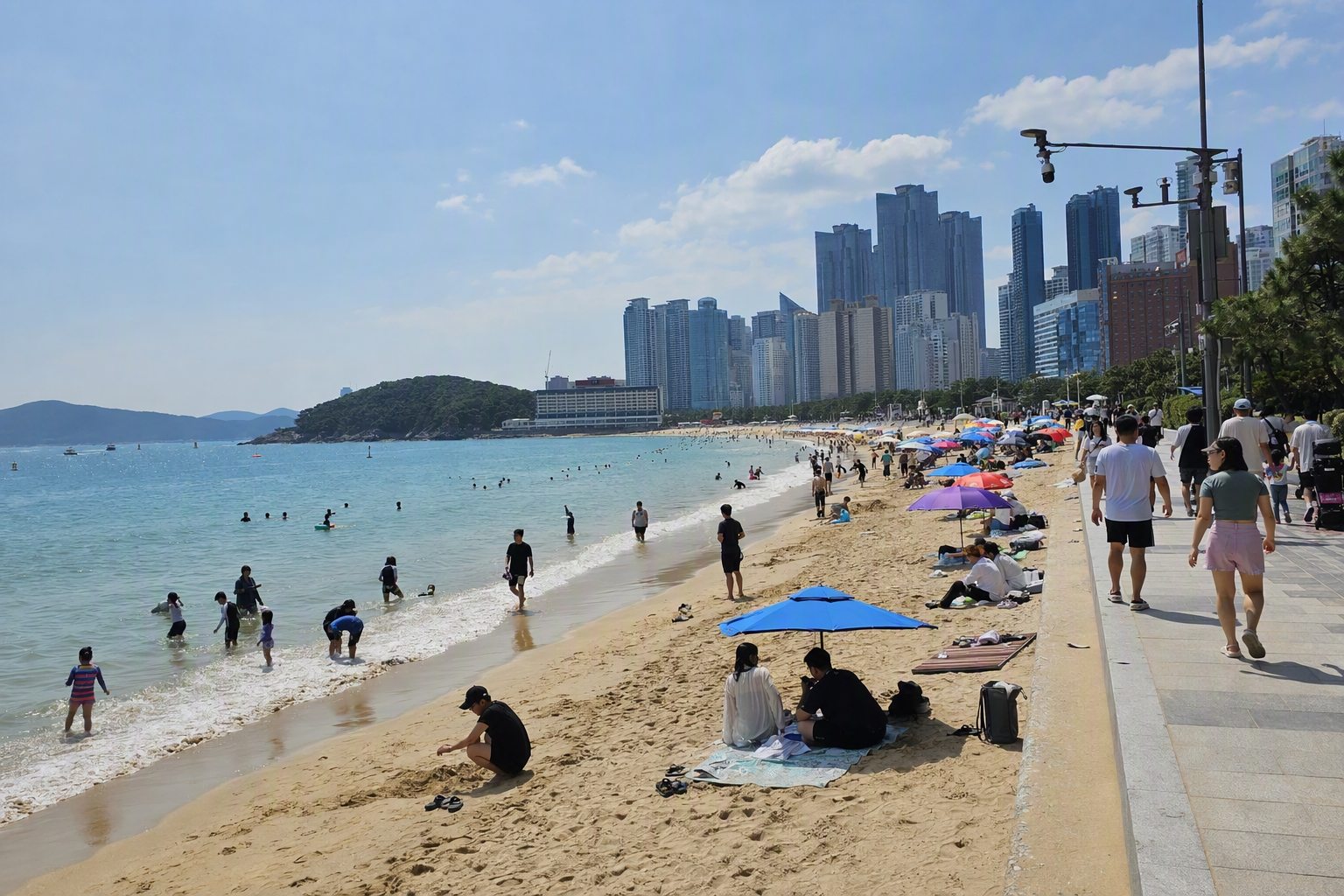
Haeundae is Busan’s most famous beach district, and it feels the most like a resort zone. You have Haeundae Beach, Dongbaek Island, The Bay 101, Busan X the Sky, Blue Line Park, Spa Land in nearby Centum City, and easier access toward Haedong Yonggungsa and Songjeong.
Stay in Haeundae if you want:
- Beach mornings and sea-view hotels
- A polished resort-style stay
- Blue Line Park, Busan X the Sky, Spa Land, and Haedong Yonggungsa nearby
- A slower coastal trip rather than a citywide sprint
The trade-off is that old Busan sits far away. A Nampo/Gamcheon day from Haeundae is still worth it, but it becomes a proper outing.
Gwangalli: Best for night views and weekend energy
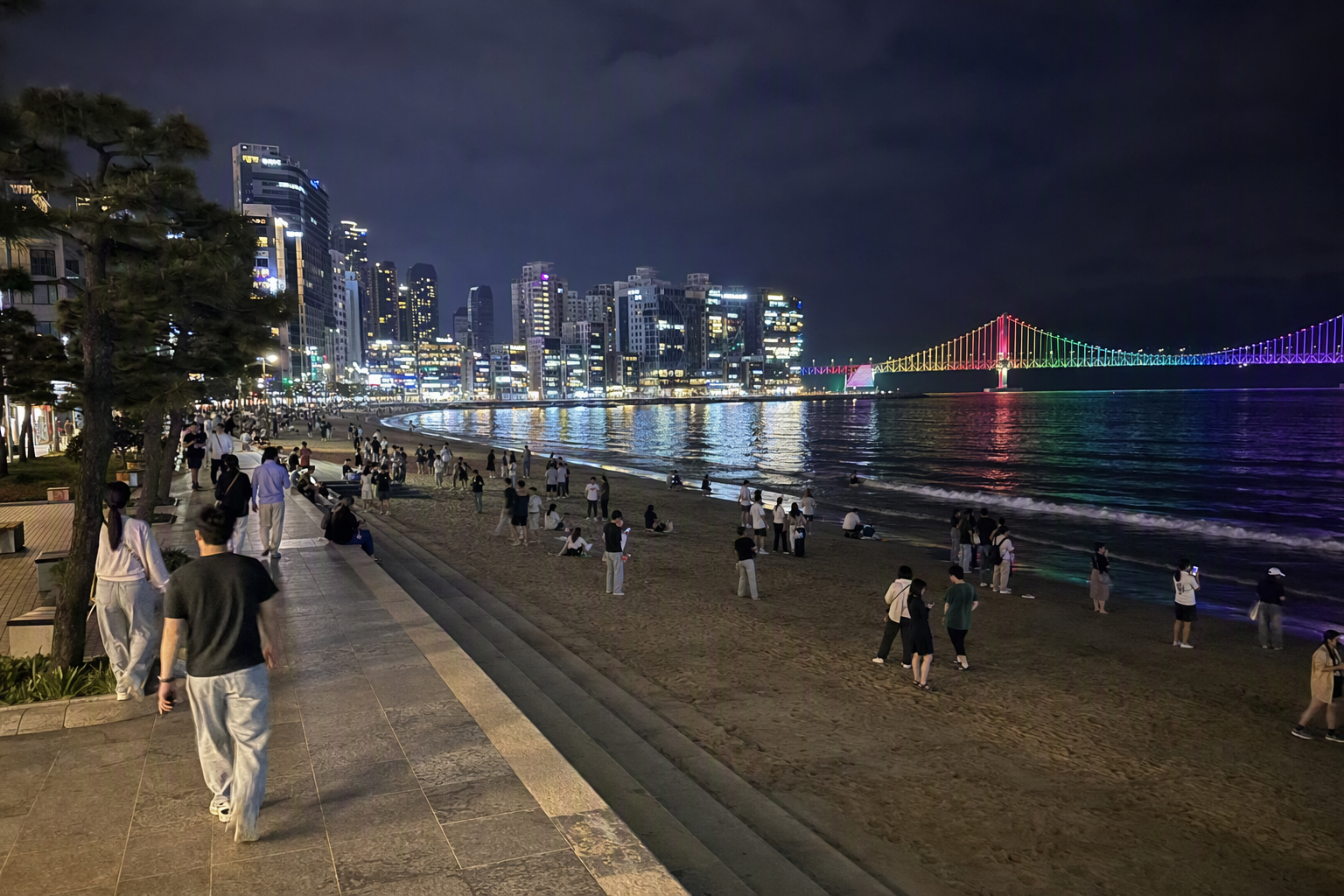
Gwangalli has become one of Busan’s strongest evening neighborhoods. The view of Gwangan Bridge across the water is beautiful, and the area is packed with cafés, bars, restaurants, and beachside photo spots. On Saturdays, the official Gwangalli M Drone Light Show adds a real reason to plan your evening here.
Stay in Gwangalli if you want:
- Night photography
- Gwangan Bridge views
- Bars, cafés, and a beach that feels alive after dark
- Easy access to the Saturday drone show
The trade-off is that Gwangalli is not as central as Seomyeon and not as resort-heavy as Haeundae. For many travelers, though, it is the most memorable place to end a Busan night.
A quick note on North Port
Busan’s North Port redevelopment is gradually changing the waterfront around Jung-gu and Dong-gu. Parts of the area have opened with public spaces and infrastructure, and the project is one to watch. For now, though, we would not treat it as the main first-time hotel base unless your specific hotel or event makes sense. Busan’s classic travel hubs are still Seomyeon, Nampo, Haeundae, and Gwangalli.
Getting to Busan
From Seoul
For most travelers, the KTX is the easiest Seoul-to-Busan option. The ride usually takes around 2.5 to 3 hours, and a standard one-way fare is often referenced at about ₩59,800. Fares and schedules can change, especially around holidays, so check Korail or your booking platform before locking in the rest of your trip.
Express buses are cheaper in many cases, but they usually take around 4 to 5 hours and depend more on traffic. For a short Korea trip, the KTX usually saves enough time to justify the price.
From Gimhae Airport
Gimhae Airport connects to the city by light rail and subway. The light rail reaches Sasang quickly, and from there you can transfer deeper into Busan. As a rough planning reference, airport-to-Busan Station by rail and subway can take about 50 minutes, while airport-to-Haeundae can take around an hour by rail and subway or slightly longer by limousine bus depending on timing.
If you are arriving late, carrying large bags, or staying near the beach, compare taxi fares before deciding. Busan’s public transport is good, but airport transfers are one of those moments when comfort matters.
From Busan Station to Haeundae
Busan Station to Haeundae is a classic reminder that Busan is not tiny. Depending on traffic and route, expect around 40 to 50 minutes by taxi, bus, or subway. If you arrive by KTX and your hotel is in Haeundae or Gwangalli, do not stack too many plans immediately after arrival.
Getting around Busan without making the city feel bigger than it is
Busan’s subway is reliable and easy to use, but it does not erase geography. The city is stretched along the coast, split by hills, and built around several centers. The best transport strategy is a mix of subway, buses, occasional taxis, and smart clustering.

Transport cards
T-money, Cashbee, and Hanaro-style prepaid transport cards work on Busan subways and buses. You can buy cards at convenience stores such as GS25, CU, 7-Eleven, and Emart24. A card itself is often around ₩2,500, and for a short stay, loading ₩20,000 to ₩30,000 is a comfortable starting point.
Single subway fares are commonly around ₩1,400 to ₩1,600, with a small discount when using a transport card. A one-day subway pass for Lines 1 to 4 has been listed at ₩5,000, but always confirm current rules before buying.
Apps that actually help in Korea
Use Naver Map or KakaoMap for routes. Google Maps is useful for general orientation, but Korean map apps are much better for transit, walking routes, and local place details.
For taxis, Kakao T is the standard app. For quick translation, Papago is usually smoother with Korean than general translation tools.
When taxis are worth it
A taxi is worth checking when your route cuts diagonally across Busan or when you are traveling with luggage. A subway route that looks neat on paper may involve transfers, uphill walks, and coastal detours. Splitting a taxi with two or three people can turn a tiring 55-minute transfer into a much better part of the day.
One small caution: some buses are cashless, and large luggage may not be welcomed on regular city buses. Arrival and departure days deserve simpler plans.
Plan Busan by clusters, not by isolated attractions
This is the planning shift that makes Busan feel easy. Instead of picking sights one by one, build each day around a side of the city.
Cluster 1: Old Busan, markets, and hillside views
This is the Nampo/Jagalchi/Gamcheon side of Busan: dense, salty, crowded in the best way, and full of the city’s history as a port and wartime refuge.

Gamcheon Culture Village
Gamcheon Culture Village is often nicknamed Busan’s Machu Picchu, but it is more meaningful when you know its roots. The village grew from refugee and low-income settlements after the Korean War, then became an arts village in 2009. Today it is known for colorful houses, murals, alley views, and steep walking routes.
Go early if you can. The lanes are narrow, tour groups arrive later, and the hills feel kinder before the day warms up. Posted hours are commonly listed as 09:00 to 18:00 from March to October and 09:00 to 17:00 from November to February, but check the latest information before visiting.
Nampo, BIFF Square, Gukje Market, and Bupyeong Kkangtong Market
Nampo is where snack grazing becomes a real meal plan. BIFF Square is famous for street food, Gukje Market adds old-school shopping energy, and Bupyeong Kkangtong Market is a strong evening stop if you want one more round of bites.
Good snacks to look for:
- Ssiat hotteok: sweet seed-filled pancake, often around ₩2,000 to ₩3,000
- Eomuk: fish cake skewers, often around ₩1,000 to ₩1,500 per skewer
- Milmyeon: Busan’s cold wheat noodles, often around ₩6,000 to ₩10,000
- Dwaeji gukbap: pork rice soup, often around ₩8,000 to ₩12,000
Prices vary by shop and season, but these ranges are useful for casual budgeting.

Jagalchi Market
Jagalchi is Korea’s largest seafood market and one of Busan’s signature experiences. The usual rhythm is simple: choose seafood downstairs or nearby, then have it prepared upstairs or at an associated restaurant.
As a rough reference, seafood for two might land around ₩30,000 to ₩60,000, with cooking or table-setting fees often around ₩5,000 to ₩8,000 added. Ask clearly before ordering, especially if you are choosing live seafood by sight. Jagalchi is fun, but it is still a real market, not a fixed-price theme restaurant.
Yongdusan Park and Busan Tower
Yongdusan Park and Busan Tower are easy additions when you are already in Nampo. Busan Tower admission has been referenced around ₩12,000, though prices can change. It is not the only viewpoint in Busan, but it fits beautifully into an old-downtown day without forcing another long transfer.
Cluster 2: Haeundae and the east coast
This is the Busan people often imagine first: pale sand, ocean paths, big hotels, seaside cafés, and one of Korea’s most photogenic temples.

Haedong Yonggungsa
Haedong Yonggungsa is rare among Korean temples because it sits right on the coast. The temple dates back to 1376 in its earliest form, and visitors reach it by descending a set of stone steps toward the sea. The ocean setting makes it especially beautiful early in the morning.
It is generally listed as free to enter. Opening hours vary depending on the source and season, with ranges often listed from early morning to evening. Check the latest official information before going, especially if you want sunrise.
From Haeundae Station, buses such as 181 or 1001 are commonly used, followed by a short walk. A taxi from Haeundae can be worth considering if you want to save energy.
Haeundae Beach and Dongbaek Island
Haeundae Beach is the polished face of Busan’s coast. It is touristy, yes, but in a way that is easy to enjoy: hotels, cafés, restaurants, wide sand, and quick access to several major attractions.
Dongbaek Island and its coastal walking path pair naturally with Haeundae. The walk gives you sea views without requiring a full hiking day, and it connects well with The Bay 101 area for evening marina and skyline views.
Haeundae Blue Line Park and Sky Capsule
Blue Line Park runs along the coast from Mipo toward Cheongsapo and Songjeong. The beach train is the easier, more flexible choice. The Sky Capsule is the cute private capsule that moves above the tracks and photographs beautifully.
The Sky Capsule between Mipo and Cheongsapo covers about 2.3 km and takes roughly 25 to 30 minutes. It is also one of the most commonly sold-out experiences in Busan. Sunset slots can disappear 2 to 4 weeks in advance during busy periods, and some travelers have reported foreign-card payment issues on the official site. Compare the official booking page with authorized platforms before you give up or overpay.

Common reference prices include around ₩40,000 for 1 to 2 people, ₩45,000 for 3 people, and ₩50,000 for 4 people for the capsule, while the beach train has been referenced around ₩8,000 per person. Treat these as planning numbers and confirm before booking.
A nice little route decision: Mipo to Cheongsapo is often preferred for sea-facing photo angles, while some travelers like Cheongsapo to Mipo around sunset because of the direction of the light. Either way, the experience is more about the coastal mood than speed.
Busan X the Sky
Busan X the Sky sits in the LCT tower and rises over 400 meters above the Haeundae skyline. It is a strong choice on clear days, rainy days, or nights when you want a polished indoor view. Hours are commonly listed as 10:00 to 21:00, with last admission around 20:30, and admission has been referenced around ₩27,000. Verify current pricing and hours before going.
Spa Land, Songjeong, and slower east-coast options
If your day is not packed too tightly, Spa Land in Centum City is a lovely way to reset. Songjeong is the beach to consider for surfing or a softer, less hotel-heavy coastal mood. Dalmaji and Moontan Road also work well if you prefer walking and cafés over another paid attraction.
Cluster 3: Gwangalli by night
Gwangalli is lovely in the day, but it becomes much more convincing after sunset. Gwangan Bridge lights up across the water, the beach fills with people, and the cafés and bars feel close enough that you can wander without overplanning.
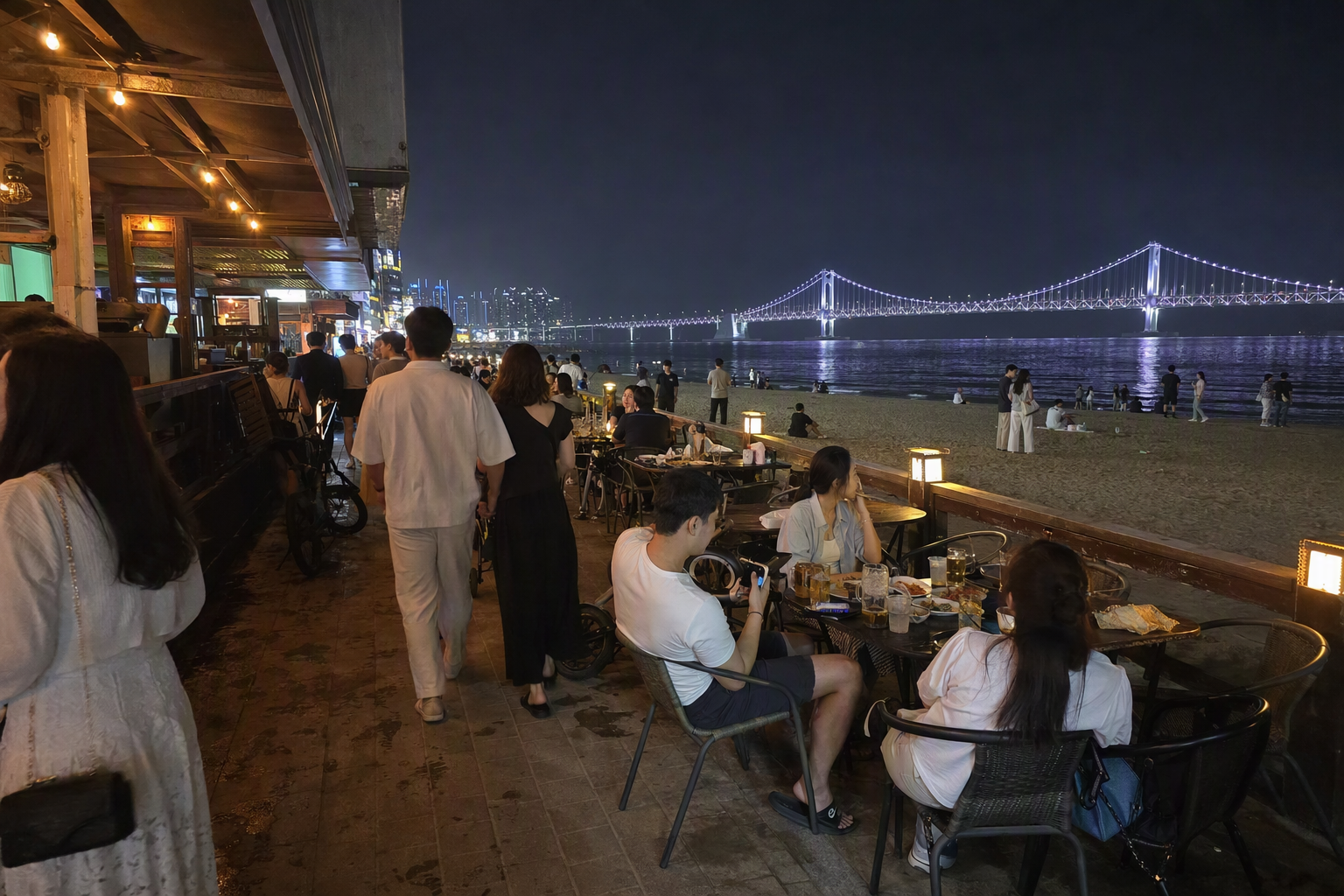
Gwangalli M Drone Light Show
The official Gwangalli M Drone Light Show is held at Gwangalli Beach every Saturday, with two performances per night.
Current official schedule:
- March to September: 20:00 and 22:00
- October to February: 19:00 and 21:00
Regular shows use around 1,000 drones, while special shows may use up to 2,500 drones. The show can be seen from across Gwangalli Beach, so you do not need one exact viewing spot. Arrive earlier if you want a cleaner front-row beach view.
Weather matters. Rain, strong wind, typhoons, or communication issues can lead to same-day cancellation or postponement, so check official notices before crossing the city just for the show.
Yacht views and The Bay 101
For a more polished night-view experience, yacht tours around The Bay 101 and the Marine City/Gwangan Bridge area are popular. The Bay 101 is commonly listed as operating from 09:00 to 22:00, but individual yacht schedules and prices vary. This is one of those experiences where timing matters more than the name of the attraction: blue hour and night views are the point.
Cluster 4: Yeongdo, Taejongdae, Songdo, and wilder coastlines
This side of Busan is for travelers who want cliffs, harbor views, sea bridges, and a less resort-like coastal mood.
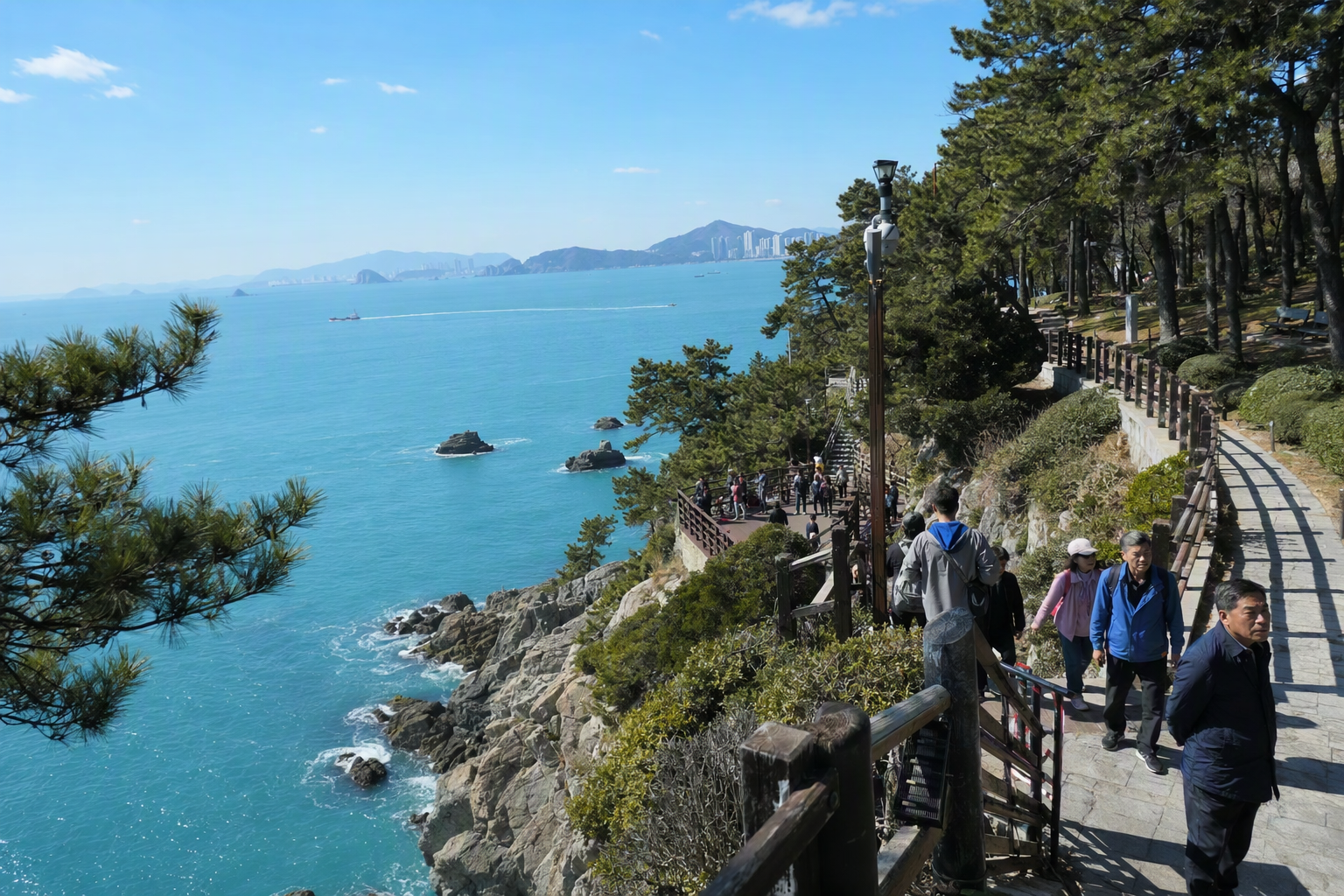
Taejongdae and Yeongdo
Taejongdae is one of Busan’s classic cliff-and-sea parks, located on Yeongdo. The Danubi Train is often used inside the park and is listed among attractions connected to the Visit Busan Pass, though attraction lists can change.
Yeongdo also has Huinnyeoul Culture Village, a seaside village with a more cinematic, breakwater-and-ocean feel than Gamcheon. If Gamcheon is colorful and hillside, Huinnyeoul is softer, windier, and more open to the sea.
Songdo Beach and Songdo Marine Cable Car
Songdo is an easy add-on from the Nampo side. It has Songdo Beach, the marine cable car, skywalk, and access toward Songdo Yonggung Suspension Bridge. The cable car has been referenced around ₩17,000 round trip for a regular cabin and ₩22,000 for a crystal cabin, but check current prices.
Oryukdo, Igidae, Dadaepo, and Eulsukdo
Oryukdo and Igidae are better for coastal walks and cliff views than quick sightseeing. Dadaepo and Eulsukdo pull you toward the Nakdong River estuary, sunset, migratory birds, and a quieter side of Busan’s geography. These are excellent fourth-day choices, or third-day choices for travelers who prefer nature over shopping.
A 3-day Busan itinerary that actually flows
This is our favorite structure for a first visit because it respects the city’s shape.

Day 1: Gamcheon, Nampo, markets, and old downtown
Start with Gamcheon Culture Village in the morning before the narrow lanes get busy. Then move down toward Nampo, where you can graze through BIFF Square, Gukje Market, and Bupyeong Kkangtong Market.
For lunch or snacks, keep it casual: ssiat hotteok, eomuk, milmyeon, or dwaeji gukbap. In the afternoon, visit Jagalchi Market for seafood or just to see the market energy. End at Yongdusan Park and Busan Tower, or stay in the markets for a more local-feeling dinner.
This day works especially well if you are staying in Nampo or Seomyeon.
Day 2: Haedong Yonggungsa, Haeundae, and the east coast
Go early to Haedong Yonggungsa, then return toward Haeundae for beach time, lunch, and a gentler afternoon. Choose one main paid attraction: Sky Capsule or beach train, Busan X the Sky, or Spa Land. Trying to force all three can make the day feel more like ticket collecting than travel.
End with Dongbaek Island, The Bay 101, or Gwangalli depending on your energy. If it is Saturday and the weather looks good, Gwangalli is the stronger night choice.
Day 3: Pick your Busan personality
Choose one of these based on your mood:
- Cliffs and villages: Taejongdae + Huinnyeoul Culture Village
- Easy seaside add-on: Songdo Cable Car + Nampo dinner
- Coastal walking: Oryukdo + Igidae
- Relaxed city day: Spa Land + Centum City + Seomyeon nightlife
- Night-view day: Slow morning + Gwangalli evening
This is the day where Busan starts to feel less like a checklist and more like a city.
A compact 2-day Busan itinerary
When time is tight, resist the urge to add just one more faraway place. Two focused days beat two frantic days.
Day 1: East coast and night views
Haedong Yonggungsa → Haeundae Beach → Blue Line Park beach train or Sky Capsule → Dongbaek Island or Busan X the Sky → Gwangalli or The Bay 101 at night
Day 2: Old downtown and markets
Gamcheon Culture Village → Nampo → BIFF Square → Gukje Market → Jagalchi Market → Yongdusan Park or Busan Tower → departure
If your flight or KTX leaves from Busan Station, this second day is easier than ending in Haeundae.
A 4-day Busan itinerary upgrade
With four days, add one of these instead of stretching every day longer:
Beomeosa, Geumjeongsanseong, and Dongnae
Good for temple atmosphere, mountain scenery, and a more traditional northern Busan mood. Dongnae is also associated with hot spring culture.
Dadaepo and Eulsukdo
Good for sunset, estuary scenery, and travelers who like birds, wetlands, and a calmer end to the city.
Songjeong surfing and Gijang-side activities
Good for families, active travelers, and anyone who wants a beach day that is less centered on Haeundae hotels.
Gyeongju day trip
Good if Busan is part of a wider Korea journey and you want Silla history, royal tombs, and a very different city atmosphere. It is not necessary for a first Busan-only trip, but it pairs nicely with a longer Korea route.
What to eat in Busan
Busan food makes the most sense when you remember the city’s two identities: coast and work. It is seafood, broth, noodles, fish cake, market snacks, and practical meals that taste better after a windy walk.

Dwaeji gukbap
A warm pork rice soup that feels especially right after a long day. Budget around ₩8,000 to ₩12,000 for a casual bowl.
Milmyeon
Cold wheat noodles, often served with icy broth or spicy sauce. It is one of Busan’s best simple lunches, usually around ₩6,000 to ₩10,000.
Eomuk
Busan fish cake is easy to find in markets and snack shops. A skewer may be around ₩1,000 to ₩1,500, depending on the place.
Ssiat hotteok
A sweet pancake filled with seeds, strongly associated with Busan street food culture. Expect around ₩2,000 to ₩3,000 at many stalls.
Jagalchi seafood
Best approached with a flexible budget and clear questions. A seafood meal for two can run around ₩30,000 to ₩60,000, plus preparation or table fees.
Two named food stops worth knowing
Geumsu Bokguk Haeundae Main Branch is listed in the Michelin Guide and is known for pufferfish soup. It is commonly listed as open 24 hours year-round at 23 Jungdong 1-ro 43beon-gil. Confirm hours before visiting, especially around holidays.
Red Lighthouse Yeongdo Main Branch is a seafood restaurant where the seats face the sea and Namhang Bridge. It is commonly listed from 11:30 to 21:30, with a 15:00 to 17:00 break time, at 2F, 40 Namhangseo-ro. Again, check before going.
Visit Busan Pass: When it is worth buying
The Visit Busan Pass can be genuinely useful, but it is not automatically a good deal. It works best when your trip includes several paid attractions in a short period.
Current pass types are commonly listed as:
| Pass type | Reference price | Best for |
|---|---|---|
| 24-hour pass | ₩55,000 | Packing several paid attractions into one day |
| 48-hour pass | ₩85,000 | Two attraction-heavy days in a row |
| Big3 | ₩45,000 | Choosing 3 attractions without rushing the clock |
| Big5 | ₩65,000 | Choosing 5 attractions over a longer stay |
The 24-hour and 48-hour passes activate when you first use a free-entry attraction and then run for the exact time period. Big3 and Big5 are attraction-count passes, with longer validity after first use. Details can change, so check the official Visit Busan Pass page before buying.
Attractions that make the pass more appealing
The pass becomes more attractive if you plan to use paid places such as:
- Busan X the Sky
- Spa Land Centum City
- Club D Oasis Spa
- Busan Diamond Bay Yacht
- Lotte World Busan
- Skyline Luge Busan
- Songdo Marine Cable Car
- Busan Tower
- Taejongdae Danubi Train
- Haeundae Beach Train
Important note: Haeundae Beach Train appears in Visit Busan Pass attraction group information, but the Sky Capsule is not always clearly listed by name in available pass materials. Do not assume the capsule is included unless the current official attraction page says so.
Mobile pass or physical card
The mobile pass is convenient and works by app or QR code, but it does not function as a transport card. The physical card can be used like an EZL/Cashbee-style transport card after charging it, but you need to collect it with your voucher and passport or ID.
Also, pass holders often still need to visit the attraction ticket counter to receive an actual admission ticket. The pass does not magically remove every line.
Creatrip take
Buy the pass if you are intentionally stacking paid attractions. Skip it if your Busan trip is mostly beaches, markets, free temples, walking paths, and casual food. A market-and-coast trip can be wonderful without a pass.
Booking notes that save real travel energy
Reserve the Sky Capsule early
If the Sky Capsule matters to you, book early, especially for sunset. If it is sold out, take the beach train instead and do not let it ruin the day. The train still gives you the coastline, and sometimes less pressure makes for a better afternoon.
Check the drone show notice on the day
Gwangalli’s drone show is one of Busan’s easiest big-wow experiences, but weather can cancel it. Check the official notice before traveling across town, particularly during rainy or windy periods.
Be careful with luggage plans
Busan Station luggage storage has been referenced around ₩7,000 per day, but the bigger issue is backtracking. If you store bags at Busan Station and then go to Haeundae, returning for them can erase the convenience. Storage works best when your sightseeing route naturally passes the station again.
Do not overfill arrival day
A KTX arrival, hotel transfer, and one neighborhood is enough for many travelers. Busan rewards walking, eating, and looking at the sea. It is not a city that improves when every hour has a ticket attached.
Common Busan planning mistakes
Mistake 1: Staying in Haeundae and planning Nampo every night
Haeundae is lovely, but it is far from the old downtown. If your food list, markets, and evening plans are mostly around Nampo, stay in Nampo or Seomyeon instead.
Mistake 2: Treating Gwangalli as a quick photo stop
Gwangalli is much better as an evening. Have dinner nearby, walk the beach, watch the bridge, and catch the drone show if it is Saturday.
Mistake 3: Buying the Visit Busan Pass without adding prices
The pass is useful when your paid attractions add up. It is not necessary for a trip built around Gamcheon, Jagalchi, beaches, and street food.
Mistake 4: Relying only on Google Maps
Use Naver Map or KakaoMap. Busan has hills, alleys, and transit details that Korean map apps handle much better.
Mistake 5: Planning Busan like a small beach town
Busan is a port city with beaches, not a beach town with a few markets attached. That mindset alone makes your itinerary calmer.
Best Busan plans by traveler type
First-time Korea traveler, 3 nights
Stay in Seomyeon. Do one old-downtown day, one Haeundae/east-coast day, and one flexible Yeongdo/Songdo/Gwangalli day. Use taxis selectively, buy a transport card, and only consider the Visit Busan Pass if you are booking several paid attractions.
Beach and resort traveler
Stay in Haeundae. Focus on Haeundae Beach, Dongbaek Island, Blue Line Park, Busan X the Sky, Spa Land, Haedong Yonggungsa, Songjeong, and one night in Gwangalli. Accept that Nampo and Gamcheon will be a longer outing.
Night-view and photography traveler
Stay in Gwangalli or Seomyeon. Plan around Saturday night if possible. Gwangalli gives you bridge views and the drone show, The Bay 101 gives you marina-style night scenery, and Seomyeon keeps late food and bars easy.
Market and food traveler
Stay in Nampo or Seomyeon. Build your trip around Jagalchi, Gukje Market, Bupyeong Kkangtong Market, BIFF Square, dwaeji gukbap, milmyeon, eomuk, ssiat hotteok, and one proper seafood meal.
Family or activity-heavy traveler
Consider Haeundae, Centum City, or a convenient east-side base. Lotte World Busan, Skyline Luge Busan, Busan X the Sky, Spa Land, Club D Oasis, the beach train, Songdo Cable Car, and the Busan City Tour can make the Visit Busan Pass more attractive.
Final Creatrip picks
If we had to simplify Busan planning into a few editorial picks, we would choose:
- Best all-round base: Seomyeon
- Best beach base: Haeundae
- Best night base: Gwangalli
- Best food-and-market base: Nampo
- Best first paid attraction to book early: Haeundae Sky Capsule
- Best free evening plan: Gwangalli Beach and Gwangan Bridge
- Best Saturday plan: Gwangalli M Drone Light Show, weather permitting
- Best low-pressure food day: Nampo, BIFF Square, Gukje Market, Bupyeong Kkangtong Market, and Jagalchi
Busan becomes much easier when you let each part of the city have its own day. Old markets in the west, polished beaches in the east, bridge lights at Gwangalli, cliffs around Yeongdo, and transport convenience in Seomyeon — that is the shape of the city. Plan with that shape, and Busan stops feeling scattered. It starts feeling generous.