Seoul Attractions in 2026: Palaces, Markets, Trendy Districts, and Han River Nights
A Creatrip editor’s practical route through classic Seoul and the newer neighborhoods travelers are adding to their itineraries now.


Seoul is much easier to enjoy when you stop treating it like one long sightseeing line. The city has several centers, each with its own rhythm: palace gates and hanok roofs in the north, shopping streets and mountain views around Myeongdong, polished glass towers in Gangnam, warehouse cafés in Seongsu, and wide river sunsets along the Han.
For a first trip, the classics still matter. Gyeongbokgung, Bukchon, Insadong, Changdeokgung, Myeongdong, Namsan, COEX, and the Han River are popular for good reason. But the Seoul people are building their trips around in 2026 is not only the postcard version. Seongsu, Seoul Forest, Cheonggyecheon, Gwangjang Market, pop-up stores, riverside shows, and neighborhood cafés now carry just as much of the city’s travel energy.
The biggest mistake is trying to cross the city too many times in one day. A palace morning, a Gangnam lunch, a Hongdae afternoon, and a Han River evening sounds exciting on paper, but in real Seoul traffic it becomes a subway marathon. The better move is simple: build each day around one side of the city, then add one evening attraction nearby.

The Seoul attraction map: four versions of the city
A good Seoul itinerary usually blends four layers.
Royal Seoul is the northern historic belt: Gyeongbokgung, Changdeokgung, Bukchon Hanok Village, Insadong, Seochon, Jongno, and nearby temples and galleries. This is the cleanest starting point for first-time visitors because the attractions sit close together and reward slow walking.
Commercial Seoul is where shopping, beauty, malls, and convenience take over: Myeongdong, Namdaemun, Dongdaemun, COEX, Gangnam, Apgujeong, and Cheongdam. It is practical, easy to navigate, and especially useful when beauty shopping or clinic visits are part of the trip.
Lifestyle Seoul is where many repeat travelers now spend more time: Seongsu, Yeonnam, Mangwon, Hongdae, Euljiro, and the café-pop-up-design store circuit. These neighborhoods are less about one grand landmark and more about the way Seoul looks and feels right now.
Blue-green Seoul is the relief valve: Han River parks, Seoul Forest, Cheonggyecheon, Namsan, and the Seoul City Wall. These places make the city feel wider, calmer, and more breathable, especially after a heavy shopping or museum day.
If you only have three days, think of them as: one day for heritage, one for food-shopping-views, and one for modern Seoul plus the river. That shape covers the famous attractions without flattening the city into a checklist.
Day-one Seoul: Gyeongbokgung, Bukchon, Insadong, and Changdeokgung
This is the classic first Seoul route because it actually makes geographic sense. Start near Gwanghwamun and Gyeongbokgung, walk toward Bukchon and Anguk, continue to Insadong, then end at Changdeokgung if you have the energy or a Secret Garden reservation.
Gyeongbokgung Palace
Gyeongbokgung is Seoul’s grand opening scene. Built in 1395, it is the largest of the Five Grand Palaces and still gives that satisfying first view of royal Seoul: broad stone courtyards, painted wooden eaves, mountain lines behind the palace walls, and the city rising beyond them.
Current official information generally lists Gyeongbokgung as closed on Tuesdays, with seasonal daytime hours that change through the year. Entry usually ends one hour before closing. Foreign adult admission is commonly listed at ₩3,000, and visitors wearing hanbok can enter for free. English guided tours have typically been offered several times a day, including late morning and afternoon slots, but schedules can change, so check the current palace notice before locking in your plan.
The Royal Guard Changing Ceremony is one of the easiest palace experiences to add, usually held around 10:00 and 14:00 and lasting about 15 to 20 minutes. We like the 10:00 timing best because it sets up the rest of the day nicely: ceremony, palace grounds, then Bukchon or Seochon for a walk and lunch.
Gyeongbokgung’s seasonal night opening is worth watching for. It is usually limited, ticketed, and very popular, with a separate reservation system and small same-day allotments for international visitors in past seasons. Exact 2026 dates and ticket rules should be checked close to your travel date.

Bukchon Hanok Village
Bukchon sits between Gyeongbokgung and Changdeokgung, which makes it an easy walk rather than a separate expedition. The charm is obvious: sloping lanes, tiled hanok roofs, small galleries, and glimpses of modern Seoul behind traditional walls.
The important part is that Bukchon is still a residential neighborhood. Tourist access hours are often mentioned around 10:00 to 17:00, and visitors are expected to keep noise down, avoid private doorways, and be careful with photos. It is not a theme park, and the best Bukchon visit is quiet, short, and unforced.
For photos, go earlier in the day if possible. For a better mood, avoid crowding the same famous alley and let yourself drift toward nearby cafés, small shops, and the Anguk side streets.

Insadong and Ssamziegil
Insadong is less dramatic than Bukchon in photos, but it is more useful once you are actually traveling. The main street runs for about 700 meters and is known for traditional crafts, tea houses, calligraphy supplies, hanji paper, souvenir shops, galleries, and nearby Jogyesa Temple.
On weekends, the area has often operated as a pedestrian-friendly street during long daytime-to-evening hours, which makes it easier to browse. Insadong is a comfortable lunch or tea stop between the palaces, and it is one of the better places to buy gifts that feel more Korean than airport keychains.
Ssamziegil, the spiral-shaped shopping complex in the middle of Insadong, is easy to fit in if you want craft shops and small design items in one place. It can get busy, but it is convenient and weather-proof enough to save a rainy afternoon.

Changdeokgung Palace and the Secret Garden
Changdeokgung is the palace for travelers who care about atmosphere. Built in 1405 and listed as a UNESCO World Heritage Site in 1997, it feels less rigid than Gyeongbokgung, with architecture shaped around the natural landscape. The Huwon, often called the Secret Garden, covers a large part of the palace grounds and is the reason many people prefer Changdeokgung.
The Secret Garden is usually a separate timed or guided visit with limited capacity, and the additional ticket is often listed around ₩5,000 on top of the regular palace admission. It can sell out, especially in spring and autumn. If the garden matters to you, book ahead rather than hoping for a late walk-in.
One practical note: do not assume all palaces close on the same day. Gyeongbokgung is normally closed on Tuesdays, while Changdeokgung is often listed with a different weekly closure. Palace hours and closure days can shift by season and official page updates, so give the current schedule one last check before you go.

Seoul’s market-and-snack circuit
Seoul’s markets are not all the same, and choosing the right one saves time. Some are food-heavy, some are tied to old commercial streets, and some work best when paired with nearby neighborhoods.
Gwangjang Market
Gwangjang Market is the easiest food market to understand on a first trip. Opened in 1905 and packed with stalls, it is famous for bindaetteok mung bean pancakes, mayak gimbap, and yukhoe beef tartare. Commonly mentioned prices include around ₩5,000 for bindaetteok, ₩4,000 for mayak gimbap, and around ₩15,000 for yukhoe, though market prices can change.
It works well after the palace and Insadong route if you still have energy, or before DDP and Dongdaemun in the late afternoon. The trade-off is crowds. Gwangjang is lively, fun, and very easy for visitors, but it is not a quiet local market moment. Go outside peak meal times if you prefer a softer landing.

Tongin Market and Seochon
Tongin Market, near Gyeongbokgung and Seochon, is smaller and more neighborhood-like. Its best-known feature is the yeopjeon lunchbox café system, where visitors exchange money for old-style brass coins and use them to pick small dishes from participating stalls. The lunchbox system is commonly listed around 11:00 to 16:00 and closed on Tuesdays, while the broader market hours may run longer.
Tongin is a better fit than Gwangjang if your day is already centered on Gyeongbokgung and Seochon, or if you want a lighter lunch with more local pacing. The common mistake is arriving too late for the lunchbox system and expecting the full experience.
Namdaemun and Mangwon
Namdaemun pairs naturally with Myeongdong and Namsan. It is practical for snacks, accessories, children’s goods, and old-school market energy in the middle of the city.
Mangwon belongs with Hongdae and Yeonnam. It has a more residential feel and is a lovely contrast after the café streets and nightlife around Hongdae. If your evening plan is in the west side of Seoul, Mangwon Market makes more sense than forcing a detour to Gwangjang.
Myeongdong, Namsan, and N Seoul Tower
Myeongdong is still one of Seoul’s most convenient tourist bases, but it helps to understand what it is good for. It is excellent for K-beauty shopping, currency exchange, street snacks, quick access to Namdaemun, Namsan, City Hall, Euljiro, and Jongno, and a low-friction first stay in Seoul.
It is not necessarily where you will find the most distinctive version of Seoul in 2026. The city’s travel energy has spread outward to Seongsu, Euljiro, Yeonnam, Mangwon, and the river parks. We would still include Myeongdong on a first visit, but more as a convenient hub than the emotional center of the trip.
Namsan and N Seoul Tower
N Seoul Tower remains one of the classic Seoul views. Sitting on Namsan, it gives a strong sense of the city’s scale: mountains, apartment towers, river lines, and neighborhoods folding into each other.
Official N Seoul Tower information lists the observatory as open year-round, generally 10:00 to 22:30 on weekdays and 10:00 to 23:00 on weekends and holidays, with last admission 30 minutes before closing. Current official observatory prices are listed at ₩29,000 for adults and ₩23,000 for children and seniors. Reservations are not normally required for standard admission, but prices and operating details should always be confirmed on the official site.
The classic approach is the Namsan Cable Car, reached by walking about 10 to 15 minutes from Myeongdong Station Exit 3 toward the boarding station. Operating hours are commonly listed as 10:00 to 23:00, with adult fares currently shown around ₩15,000 round trip or ₩12,000 one way. Weather and operational changes can affect service.
For timing, late afternoon into sunset is the sweet spot. If the cable car line is long, consider walking part of Namsan or using public transport instead of spending your golden hour in a queue.

Dongdaemun Design Plaza and the late-night city
Dongdaemun Design Plaza, usually shortened to DDP, is one of Seoul’s most recognizable contemporary structures. Its curved silver architecture photographs beautifully at night, and the area works well with Gwangjang Market, Euljiro, and Dongdaemun shopping.
DDP is most rewarding when there is an exhibition you actually want to see, or when you enjoy architecture and night photography. Without that, it can feel like a quick stop rather than a full destination. Dongdaemun’s old role as an automatic shopping stop has softened for many visitors, but the district still makes sense for fashion, design, night walks, and travelers staying in the central-east side of Seoul.

Gangnam, COEX Starfield Library, Bongeunsa, Apgujeong, and Cheongdam
Gangnam is not the best base for every first-time visitor, especially if your main interest is palaces and old Seoul. But for COEX events, clinics, luxury shopping, K-pop-related stops, business travel, or a cleaner modern-city mood, it is extremely logical.
The easiest Gangnam cluster is COEX Mall and Starfield Library → Bongeunsa Temple → Apgujeong or Cheongdam. Starfield Library gives you the big visual moment inside COEX, while Bongeunsa, just nearby, adds a calm temple pause among glass towers. It is one of those Seoul contrasts that still works even when you have seen it online.
Apgujeong and Cheongdam are better for luxury, clinics, beauty, and polished dining than for casual sightseeing. If you are not shopping or booking appointments, keep this section of the city to a half-day and save your longer wandering time for Seongsu or the Han River.


Seongsu and Seoul Forest: the neighborhood travelers are adding now
Seongsu may be the most important neighborhood to add to a 2026 Seoul itinerary. It combines converted warehouse cafés, pop-up retail, beauty and fashion flagships, design stores, Seoul Forest, and easy access toward the Han River.
This is not a neighborhood where one landmark defines the visit. The pleasure is in the spacing: coffee, a brand pop-up, a small design shop, another café, a walk toward Seoul Forest, maybe a riverside evening at Ttukseom. Foreign visitor interest in Seongsu has grown dramatically in recent years, especially around fashion, cosmetics, accessories, and eyewear shopping.
Give Seongsu at least half a day. If you only squeeze it between COEX and Hongdae, it becomes another crowded café stop. With more time, it feels like a living snapshot of where Seoul’s retail and lifestyle culture is going.
A strong pairing is Seongsu → Seoul Forest → Ttukseom Han River Park. In spring and autumn, this route is especially easy to love. During the 2026 Seoul International Garden Show, Seoul Forest becomes even more worth prioritizing.

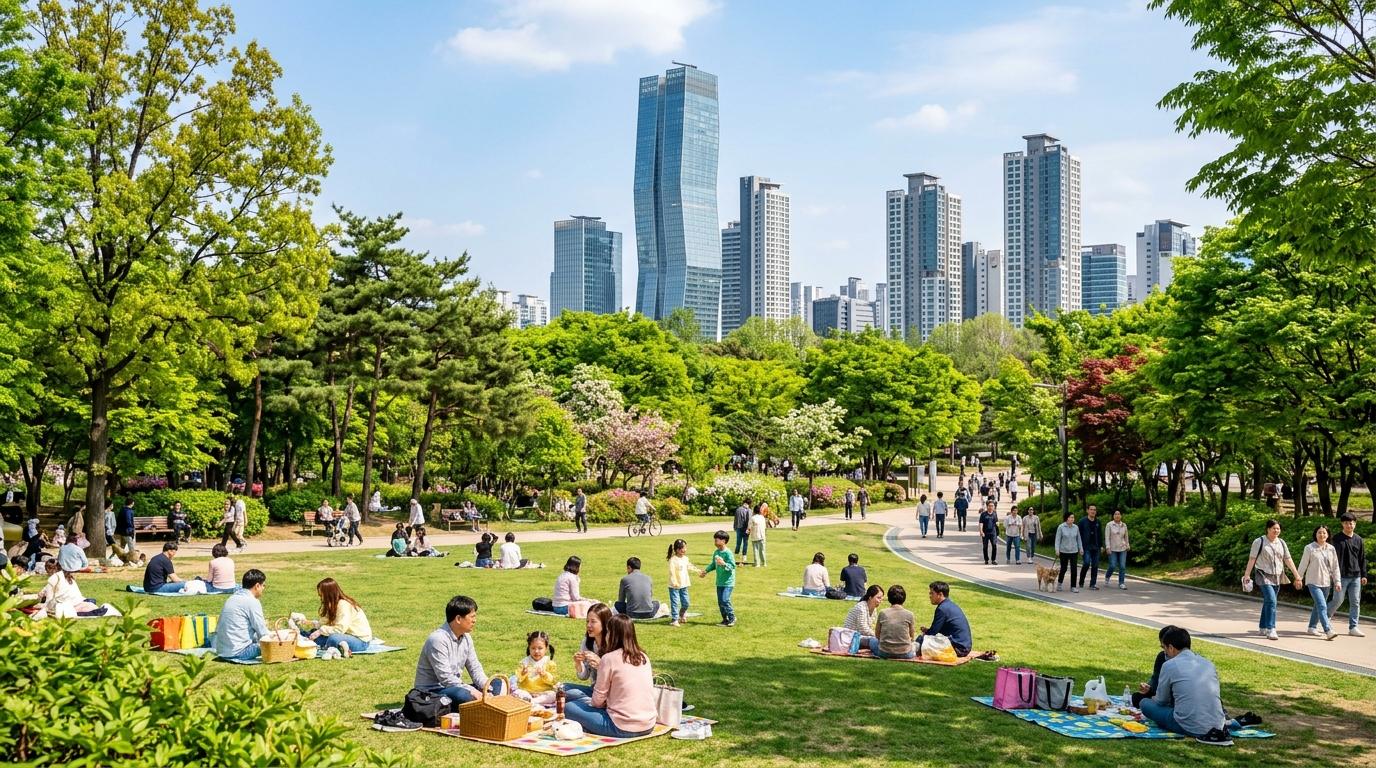
The Han River is not just a background anymore
The Han River used to be treated like a pretty extra at the end of the day. Now it deserves real itinerary space. Yeouido, Banpo, Ttukseom, Jamsil, and Mangwon each have a different feel, and seasonal programs can shift which park is most interesting.
Banpo Bridge Moonlight Rainbow Fountain
Banpo Bridge’s Moonlight Rainbow Fountain is one of Seoul’s signature night scenes, usually paired with Banpo Hangang Park, Some Sevit, Sinsa, or a Gangnam dinner. Fountain schedules are seasonal and weather-dependent, so check the current operation notice on the day.
Banpo works best as a planned evening, not a rushed afterthought. Bring a light layer even in warm months; riverside wind is real.
Yeouido Hangang Park
Yeouido is one of the easiest Han River parks for first-time visitors because it is spacious, central, and frequently used for events. It is good for picnics, skyline photos, cherry blossoms in season, and larger river programs.
In 2026, the Hangang Light Island Drone Show is scheduled from April 10 to June 5 across Yeouido, Ttukseom, and Jamsil Hangang Parks. Dates, locations, and weather policies can change, but if your trip overlaps, it is worth arranging an evening around it.

Hangang Bus
The Hangang Bus is a newer river transport option connecting seven docks: Magok, Mangwon, Yeouido, Apgujeong, Oksu, Ttukseom, and Jamsil. It officially launched in 2025 and resumed full-route operations in March 2026 after safety work and route adjustments.
Fares are listed at ₩3,000 for adults, ₩1,800 for teens, and ₩1,100 for children. Cash is not accepted. Climate Card use is supported, and T-money or K-Pass transfer benefits may apply. Real-time arrival and seat information is available through Naver Map and Kakao Map.
Treat the Hangang Bus as a scenic experience with transport value, not the fastest way across Seoul. It can be a lovely link between Mangwon or Yeouido and Ttukseom, Seongsu, Apgujeong, or Jamsil, but subway lines will often win on speed.
Hongdae, Yeonnam, Mangwon, Itaewon, and Yongsan
Hongdae still owns a certain kind of Seoul night: clubs, live music, busking, coin karaoke, casual restaurants, budget-friendly stays, and the very convenient AREX connection through Hongik University Station. It is especially practical for younger travelers, friend groups, and anyone who wants to stay out late without worrying about a long ride back.
Yeonnam softens the Hongdae energy with cafés, restaurants, and walkable side streets. Mangwon adds market snacks and a more residential west-Seoul mood. These three together make a better west-side day than Hongdae alone.
Itaewon and Yongsan are useful for international dining, bars, museums, and a different nightlife style. Itaewon’s position in the main tourist circuit is not as dominant as it once was, but that does not make it irrelevant. It simply means we would go with a clear reason: a specific restaurant, bar, exhibition, or Yongsan museum plan.

2026 seasonal events worth shaping a day around
Seoul’s event calendar can change the best order of your trip. A normal palace day becomes more special if it overlaps with a night program; a regular Seongsu afternoon becomes stronger during a garden festival; a Han River evening becomes the main event during drone show season.
For 2026, keep an eye on these official event anchors:
- Changdeokgung Moonlight Journey: scheduled for April 16 to May 31, 2026.
- Seoul International Garden Show: scheduled for May 1 to October 27, 2026, at Seoul Forest and Maeheon Citizens’ Forest.
- Seoul Outdoor Library: scheduled for April 23 to November 1, 2026, around Seoul Plaza, Gwanghwamun Square, and Cheonggyecheon.
- Hangang Light Island Drone Show: scheduled for April 10 to June 5, 2026, at Yeouido, Ttukseom, and Jamsil Hangang Parks.
- Lotus Lantern Festival: scheduled for May 16 to 17, 2026, around Jongno and Jogyesa.
These dates are strong planning clues, not promises carved in stone. Weather, crowd control, ticketing, and official program updates can affect the final experience, so confirm details close to your visit.

Smart Seoul itineraries by trip length
A tight but satisfying 2-day Seoul route
Day 1: Historic Seoul
Start at Gyeongbokgung for the morning ceremony and palace visit, then walk to Bukchon. Continue to Insadong for tea, crafts, and lunch, and add Changdeokgung if you can secure the Secret Garden timing. End with Cheonggyecheon, Gwanghwamun Square, or Myeongdong depending on where you stay.
Day 2: Food, trend neighborhoods, and night views
Begin with Gwangjang Market, then move to Seongsu and Seoul Forest. For the evening, choose one: N Seoul Tower for the classic skyline, Banpo or Yeouido for the river, or COEX and Bongeunsa if Gangnam is a priority.
This route sacrifices depth, but it gives you heritage, food, lifestyle Seoul, and a night scene without sending you across the city every two hours.
The balanced 3-day Seoul route for first-time visitors
Day 1: Gyeongbokgung, Bukchon, Insadong, Changdeokgung
This is the heritage day. Wear comfortable shoes, keep Bukchon quiet, and book the Secret Garden if it matters to you.
Day 2: Gwangjang Market, Myeongdong, Namdaemun, Namsan
This is the food-shopping-view day. Have market snacks, shop in Myeongdong or Namdaemun, then go up Namsan for sunset and night views. If nightlife is the goal, continue to Hongdae or Euljiro afterward.
Day 3: COEX, Bongeunsa, Seongsu, Seoul Forest, Han River
This is modern Seoul. Start in Gangnam or Samsung for COEX and Bongeunsa, then cross to Seongsu and Seoul Forest. End at Ttukseom, Yeouido, Banpo, or Jamsil depending on the season’s river events.
A more relaxed 5-day Seoul route
Day 1: Gwanghwamun, Gyeongbokgung, Seochon, Tongin Market, and possibly Cheong Wa Dae if reservations are available.
Day 2: Bukchon, Changdeokgung and the Secret Garden, Insadong, Jogyesa, and Cheonggyecheon.
Day 3: Gwangjang Market, DDP, Euljiro, Myeongdong, Namdaemun, and N Seoul Tower.
Day 4: Seongsu, Seoul Forest, Ttukseom Hangang Park, Hangang Bus, and either Apgujeong or Jamsil.
Day 5: COEX, Starfield Library, Bongeunsa, Gangnam, Apgujeong, Cheongdam, then a west-side evening in Hongdae, Yeonnam, or Mangwon.
Five days is where Seoul starts to feel less like sightseeing and more like a city you can move through at a human pace.
Where to stay for Seoul attractions
Your hotel area changes the whole trip, so choose for your actual travel style rather than whatever neighborhood appears most often on social media.
Myeongdong, Euljiro, or City Hall works best for first-time convenience, K-beauty shopping, Namdaemun, Namsan, central subway access, and easy taxi rides. It is practical rather than romantic, which is exactly why many travelers like it.
Jongno, Insadong, Anguk, or Bukchon is better for palace mornings, hanok lanes, galleries, traditional tea, and walking access to the historic core. Choose this area if you want old Seoul before the tour groups arrive.
Hongdae, Yeonnam, or Mangwon fits nightlife, casual food, younger energy, budget stays, and the AREX airport rail connection. It is less convenient for early palace starts, but much better for late nights.
Gangnam, Samsung, Apgujeong, or Cheongdam suits clinics, COEX, business, luxury shopping, K-pop stops, and polished modern Seoul. It is not the smoothest base for a palace-heavy first visit.
Seongsu is great for repeat visitors, café lovers, pop-up hunters, and Seoul Forest access. For a classic first trip, it can be a little less central; for trend-focused travelers, it may be exactly right.
Transport notes that save real time
Seoul’s subway is excellent, but app choice matters. Use Naver Map or Kakao Map instead of relying on Google Maps for walking routes, transit directions, station exits, and live information. For translation, Papago is often more useful for Korean than general translation apps.
From Incheon Airport, the AREX direct train to Seoul Station is commonly listed around 43 minutes, with fares often around ₩9,500 to ₩11,500. The all-stop train is cheaper, takes longer, and connects directly to Hongik University Station, which is convenient for Hongdae stays. Airport limousine buses, such as routes toward Myeongdong, can be more comfortable with luggage but may take around 80 to 90 minutes depending on traffic.
For city transport, T-money remains the simplest choice for many short trips. The card itself is often around ₩2,500, and a typical 3-day visitor might charge around ₩20,000 to ₩30,000, depending on how much they ride.
The Climate Card is worth comparing if you plan to move a lot within Seoul. Short-term passes are listed at ₩5,000 for 1 day, ₩8,000 for 2 days, ₩10,000 for 3 days, ₩15,000 for 5 days, and ₩20,000 for 7 days. It covers many Seoul subway and bus routes, with some versions including Ttareungi bike use and Hangang Bus access. It does not cover everything, including certain lines or travel outside the Seoul coverage area, so check the details before buying. Foreign-card purchase and charging options have improved at many station machines, though service fees may apply.
The practical Creatrip take: for a relaxed 2- or 3-day first trip, T-money is easy. For a packed Seoul-only trip with many rides, or if Hangang Bus is part of your plan, the Climate Card may be better value.

Budgeting for Seoul attractions
A comfortable mid-range non-hotel budget in Seoul often lands around ₩80,000 to ₩120,000 per person per day, depending on meals, cafés, paid attractions, taxis, and shopping. Budget travelers can spend much less by focusing on markets, convenience stores, free parks, and subway travel. Shoppers can blow past every estimate in one Seongsu or Myeongdong afternoon.
Useful price anchors:
- Gyeongbokgung daytime admission: commonly ₩3,000 for foreign adults; hanbok wearers can enter free.
- Changdeokgung regular admission: commonly around ₩3,000, with Secret Garden often an additional timed ticket around ₩5,000.
- Gwangjang Market snacks: bindaetteok around ₩5,000, mayak gimbap around ₩4,000, yukhoe around ₩15,000.
- Street food: often around ₩2,000 to ₩6,000.
- Namsan Cable Car: currently listed around ₩15,000 round trip for adults.
- N Seoul Tower observatory: currently listed at ₩29,000 for adults.
- Hangang Bus: listed at ₩3,000 for adults.
Shopping is the wild card. Beauty, fashion, eyewear, character goods, and pop-up exclusives can easily become the largest part of the trip budget, especially in Myeongdong, Seongsu, Gangnam, and COEX.
Accessibility and visitor support
Seoul has official accessible tourism resources that are worth using if mobility, wheelchair access, airport assistance, or equipment rental is part of your planning. Accessible Seoul and Seoul Danurim Tourism Center provide information on universal tourism routes, accessible vehicles, airport pickup and drop-off support, and assistive device rental. Operating hours and contact details can change, so confirm through the official Seoul tourism channels before making arrangements.
For downloadable maps and guidebooks, Visit Seoul provides official PDFs in multiple languages, including English. A digital map plus Naver Map or Kakao Map is usually enough for most travelers, but the official guidebook can be helpful for bigger-picture planning.
The Creatrip pick: how we would build a Seoul attractions trip now
For a first visit, we would not skip the classics. Gyeongbokgung, Bukchon, Insadong, Changdeokgung, Gwangjang Market, Myeongdong, Namsan, and COEX still belong on the map. They introduce the city clearly and give you the views, food, and historic texture people come to Seoul hoping to find.
But we would make room for the Seoul that feels current: Seongsu for pop-ups and design retail, Seoul Forest for breathing space, Cheonggyecheon for an easy central walk, and at least one Han River evening. If the dates line up, choose a drone show, garden festival, outdoor library, palace moonlight program, or Lotus Lantern Festival over another generic shopping block.
The best Seoul itinerary in 2026 is not the one with the longest attraction list. It is the one that lets each side of the city have its own moment: a palace morning, a market lunch, a café-lined afternoon, and a river night where the skyline finally slows down.