Seoul Street Food in 2026: Markets, Night Alleys, and Local Snacks Worth Planning Around
From Namdaemun and Gwangjang to Jongno pocha tents, Euljiro beer alleys, Mangwon takeout runs, and Jamsil baseball snacks.

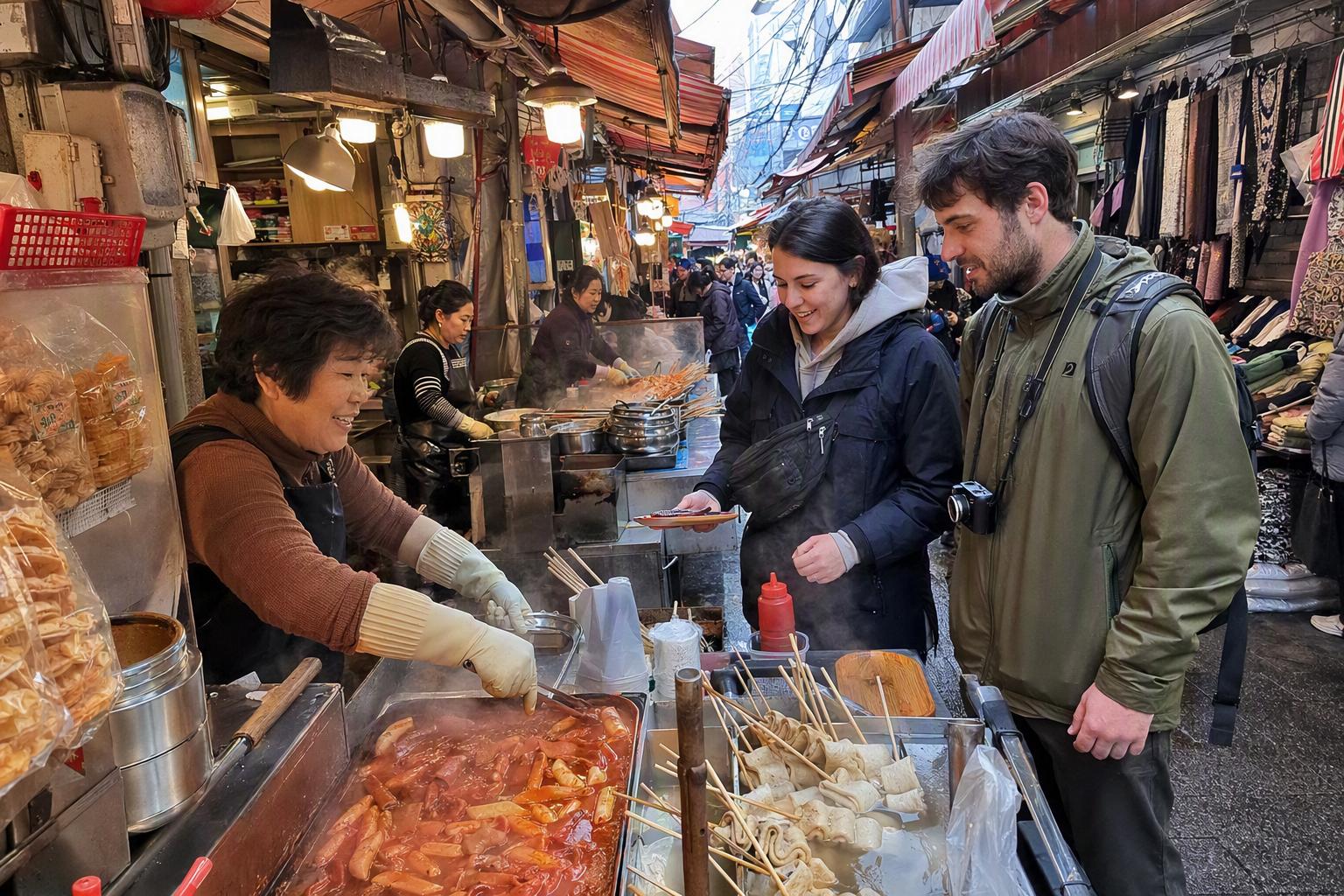
Seoul street food is at its best when you stop looking for one perfect market and start matching the street to your mood. Some days call for a bowl of kalguksu in a narrow market alley. Some nights are better with paper cups of odeng broth under a tent. And sometimes the right move is simply buying crispy chicken, hotteok, and croquettes to eat by the Han River.
The famous names still matter. Gwangjang Market remains one of Seoul’s great food symbols. Myeongdong is still wonderfully easy at night. But in 2026, the smarter street food day often starts somewhere like Namdaemun or Mangwon, then ends in Jongno or Euljiro depending on whether you want soju under canvas or beer in a noisy alley.

Seoul street food is no longer a one-market story
For a long time, visitors were told to go straight to Gwangjang Market and wander. That still sounds romantic, and on the right stall it can be. But Seoul’s street food scene has become more layered. Gwangjang is dense, historic, and delicious, but recent overcharging and forced-ordering controversies mean it rewards a more targeted visit. Namdaemun, meanwhile, has become our strongest first-market recommendation for many travelers: easier prices, classic food alleys, generous portions, and a route that naturally connects to Myeongdong.
The short version is this:
- Best first market for most travelers: Namdaemun Market
- Best historic Korean street food atmosphere: Gwangjang Market, with named stalls and clear prices
- Easiest night snack street: Myeongdong
- Best classic tent-bar night: Jongno 3-ga Pojangmacha Street
- Best beer-and-anjoo alley: Euljiro Nogari Alley, also known as part of Hipjiro
- Best local-value market near Hongdae: Mangwon Market
- Best compact old-Seoul snack alley: Yeongcheon Market near Dongnimmun
- Best pre-baseball snack run: Saemaul Traditional Market near Jamsil
None of these places is trying to be the same experience. That is exactly why Seoul is fun to eat through.
What counts as a fair street food price in Seoul?
Street food prices in Seoul vary by neighborhood, portion size, and how touristy the street is, but most everyday snacks still sit in a fairly familiar range. Myeongdong can jump far above that, especially for flashy seafood, cheese, skewers, and photo-friendly items. Namdaemun and local markets are usually kinder to your wallet.
| Food | Common Seoul range | What to keep in mind |
|---|---|---|
| Hotteok | ₩1,000 to ₩2,000 | Namdaemun vegetable hotteok is often around ₩2,500 now after recent price increases. |
| Odeng or eomuk | ₩500 to ₩1,500 per skewer | The broth is often free, especially at casual stalls. |
| Tteokbokki | ₩3,000 to ₩5,000 | Famous stalls may sit at the upper end. |
| Gimbap | ₩2,000 to ₩5,000 | Gwangjang’s small mayak gimbap is usually in the ₩3,000 range. |
| Mandu | ₩3,000 to ₩6,000 | Some market bun stalls sell by the piece. |
| Korean hot dog or tornado potato | ₩3,000 to ₩5,000 | Tourist zones can be higher. |
| Yukhoe | Around ₩21,000 | This is more of a market restaurant dish than a snack. |
| Yukhoe bibimbap | Around ₩10,000, special versions higher | Gwangjang is the classic area for this. |
| Galchi jorim | Around ₩14,000 per person | Namdaemun’s version often comes with rice and side dishes. |
| Pocha anjoo | ₩15,000 to ₩30,000 | A Jongno tent night often lands around ₩25,000 to ₩45,000 per person with drinks. |
High prices are not always the problem. A premium lobster grilled cheese in Myeongdong can cost around ₩20,000 and still be perfectly clear if the price is posted. The red flags are vaguer: no price sign, sudden minimum orders after you sit down, assorted plates you did not ask for, meat mixed into sundae without confirmation, or a stall that seems to accept cards until payment time.
Namdaemun Market: our safest first pick for a proper food crawl
Namdaemun is the market we would send many first-time Seoul food travelers to before Gwangjang. It is central, busy without feeling impossible, and easy to combine with Myeongdong on foot. The food choices are also more practical than people expect: noodles, braised fish, hotteok, steamed buns, dumplings, and quick snacks all packed around Hoehyeon Station and Sungnyemun.
The easiest entrance for food is around Hoehyeon Station Exit 5. Late morning through afternoon is the sweet spot, especially on weekdays. Some shops close on Sundays or keep shorter hours, so do not save Namdaemun for a quiet Sunday night and expect everything to be glowing.

Kalguksu Alley: warm, generous, and very Seoul
Namdaemun’s Kalguksu Alley sits near Market Gate 5 and Hoehyeon Station Exit 5, around Namdaemun Market 4-gil 42-1. The charm is not just the knife-cut noodles. It is the market-style generosity: order one main dish and you may receive a small taste of another, such as cold noodles alongside kalguksu.
Several stalls in the alley have long histories, and Namhae Sikdang, also known in some listings as Choegang Dalin Namhae Sikdang, is one of the names travelers often look for. Hours are commonly listed from early morning to evening, around 06:00 to 21:00, but individual stall operations can shift. Some reports still mention cash-only payment, so carry small bills.
This is a good place to sit down when you want real food rather than only snacks. It is also one of the best examples of why Namdaemun feels more grounded than flashy.
Vegetable hotteok: the snack with a line for a reason
Namdaemun’s vegetable or japchae hotteok is one of Seoul’s most distinctive market snacks. Instead of the usual brown-sugar filling, this version is packed with vegetables and glass noodles, fried until crisp, then brushed with a sweet-savory soy sauce that may include fruity and spicy notes.
The famous stall is usually found near Namdaemun underground shopping area Gate 2 and Hoehyeon Station Exit 5, around Namdaemun-ro 12. Hours vary across listings, often somewhere from morning to early evening, and Sunday closure is commonly reported. Sell-outs happen.
Recent prices are often around ₩2,500, up from much cheaper years ago. Lines of 20 to 30 minutes are normal during busy periods, and some visitors have reported waiting much longer. The hotteok is worth trying if the line is moving, but we would not build a whole afternoon around it. If the queue is huge, eat noodles or mandu first and circle back.
Galchi Jorim Alley: a proper meal, not just a bite
Namdaemun’s Galchi Jorim Alley is centered around Namdaemun Market-gil 16-17. This is where cutlassfish gets braised in a spicy red sauce and served as a compact Korean meal with rice and side dishes.
Heerak Galchi is the representative name here, with more than half a century of history. A recent cited price for galchi jorim was ₩14,000 per person, including rice, three side dishes, grilled fish, and steamed egg. Weekend lunch waits of 15 to 30 minutes are common, especially around 12:00 to 13:00. Arriving closer to 11:30 is a much better idea.
This is less grab-and-go, more sit-down market lunch. It works beautifully before walking to Myeongdong.
Wangmandu: easy comfort food near the noodle route
For steamed buns and dumplings, Gamegol Son Wangmandu near Namdaemun Market 4-gil 42 is a popular anchor. Hyojason Wangmandu, around Namdaemun Market 4-gil 14-1, is another frequently mentioned stop, with early 2026 references putting buns around ₩1,000 each. Cash is often the smoother choice even when other payment options exist.
The best Namdaemun crawl is not complicated: start at Hoehyeon Exit 5, eat kalguksu or galchi jorim, add hotteok if the line is reasonable, then pick up mandu before walking toward Myeongdong.
Gwangjang Market: go for the icons, not for random ordering
Gwangjang Market still has a pull that other markets cannot fully copy. Opened in 1905 and often described as Korea’s first permanent market, it is tightly packed, loud, smoky, and deeply tied to Seoul’s food memory. The core food area sits around Jongno 5-ga, with access from Jongno 5-ga Station Exit 8 or Euljiro 4-ga Station Exit 4. Food alley hours are often listed around 10:00 to 22:00, though individual stalls vary.
The market is famous for bindaetteok, mayak gimbap, mandu, yukhoe, sundae, jokbal, and old-school pancakes. It is absolutely worth visiting. It just deserves a little more intention now.
The foods that still make Gwangjang special
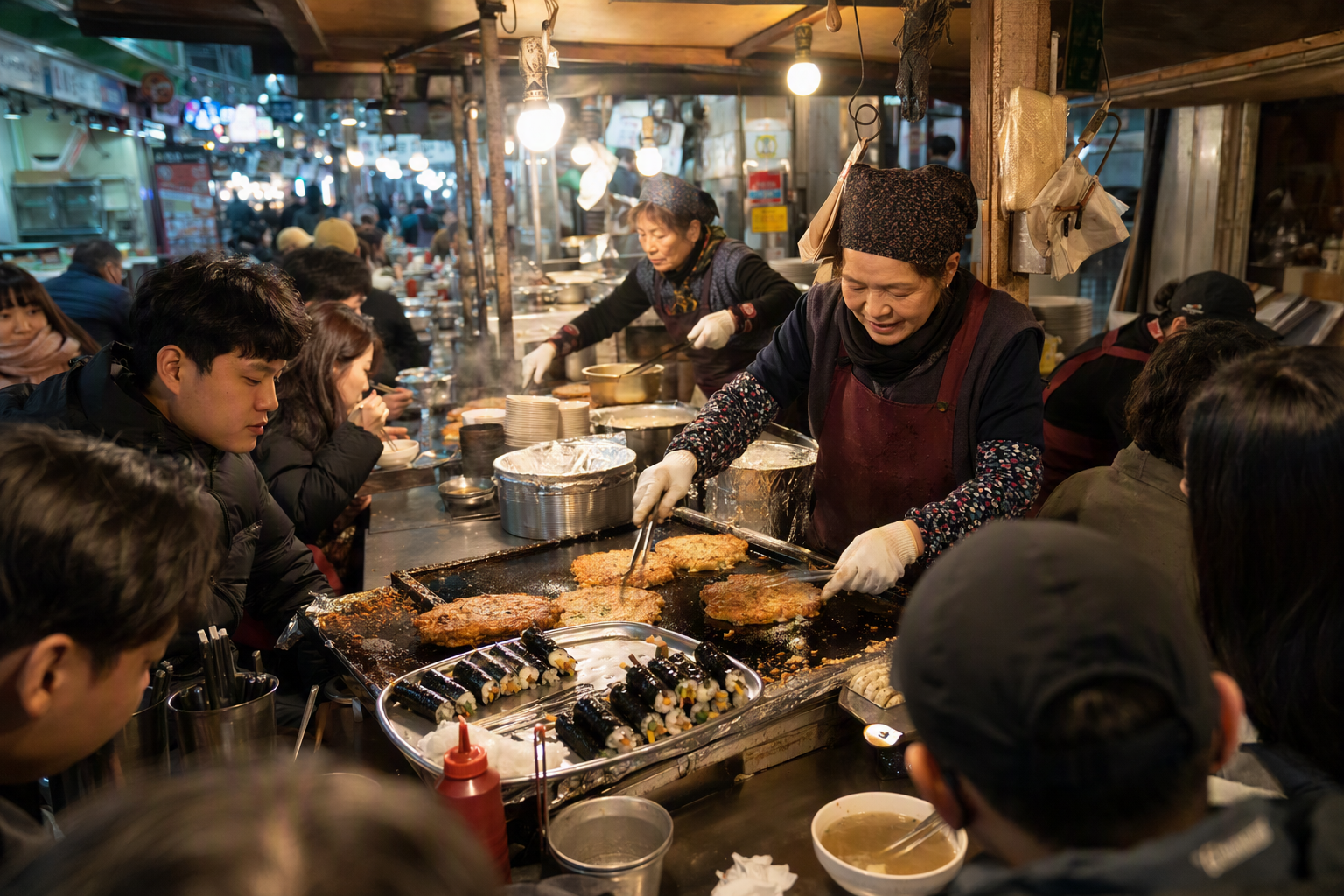
Bindaetteok is the classic. Ground mung beans are fried into thick, savory pancakes with crisp edges and a soft center. Recent prices at major Gwangjang spots are commonly around ₩5,000 to ₩6,000.
Mayak gimbap is the little seaweed rice roll that became almost inseparable from the market. It is usually eaten with a soy-vinegar mustard sauce and works well as a small bite between heavier dishes.
Yukhoe is where Gwangjang becomes more than a snack market. Raw beef with pear, sesame oil, and egg yolk is a proper meal, especially with rice or octopus. Expect around ₩21,000 for yukhoe, around ₩10,000 for yukhoe bibimbap, and more for yukhoe with chopped live octopus.
Tteokbokki and mandu fill in the gaps. A well-known tteokbokki stall like Gangga-ne has been cited around ₩5,000 for tteokbokki and ₩5,000 for fried items, with lunch waits that can stretch during peak time.
Named places that reduce guesswork
For yukhoe, Buchon Yukhoe is the most consistently recognized name. It began as Buchon Sikdang in 1965, later became known for yukhoe, and has been listed in Michelin and Bib Gourmand selections for multiple years through 2025. The main branch is around Jongno 200-12, with another branch about 50 meters away. Hours are generally listed around 10:00 to 21:00 or 21:30. At lunch and dinner peaks, 30 to 60 minutes of waiting is realistic; weekday mid-afternoon or right after opening is calmer.
For bindaetteok, Sunhui-ne Bindaetteok and Parkga-ne Bindaetteok are strong starting points. Sunhui-ne is near the North Gate 2 area, with prices often cited around ₩5,000 for mung bean pancake, ₩3,000 for meat patties, and ₩13,000 for a mixed set. Some recent reviews mention card or ZeroPay options, which is one reason we prefer named places over anonymous stalls.
Parkga-ne Bindaetteok is another familiar stop, with listings around 09:00 to 22:00 and occasional waits of about 30 minutes. Recent menu references include mung bean pancake around ₩5,000, two meat patties around ₩6,000, and a minimum order around ₩10,000.
For mayak gimbap, Monyeo Gimbap has roots going back to 1975 and is often cited as a market classic. Hours are commonly listed around 09:00 to 21:00 or until ingredients sell out. It is a good choice if you want small gimbap with sauce, especially alongside pancakes or yukhoe.

The catch in 2026
Gwangjang has been dealing with repeated complaints about overcharging, forced extra orders, cash-only pressure, and uneven payment practices. Recent viral cases included situations where customers ordered one item and were charged more after extra ingredients were added, or were told to order additional dishes because of a per-person minimum. There have also been reports of stalls refusing cards despite broader efforts to introduce card payment.
The district is responding. A shop real-name system for Gwangjang food stalls is scheduled to officially begin on June 1, 2026, after a trial period. The system is meant to connect stalls with clearer business responsibility, and violations such as overcharging, food reuse, poor hygiene, and unfriendly service may lead to penalty points. A QR complaint system for foreign travelers is also planned. If you are visiting after that date, check whether the system is visibly operating on-site, because reforms can take time to settle into daily habits.
This does not mean skip Gwangjang. It means enjoy Gwangjang like an editor would: with a short list, visible prices, and a willingness to walk away from unclear ordering.
Our Gwangjang ordering style
A few habits keep the experience smooth without killing the fun:
- Choose named restaurants or famous stalls when possible.
- Look for posted prices before sitting down.
- Point to the item and ask 이거 얼마예요? or All together how much? before food is prepared.
- Be careful with assorted plates if you are not sure what is included.
- Ask 카드 돼요? before ordering if you need to pay by card.
- Do not feel awkward leaving if the price suddenly changes or an extra order appears.
The goal is not to be suspicious of everyone. Most vendors are simply working hard in a busy market. But clear ordering protects both sides.
Myeongdong night street food: fun, easy, and not the cheapest
Myeongdong is Seoul’s easiest street food street for visitors. The stalls are central, visual, and close to shopping, hotels, cosmetics stores, and transit. Vendors usually begin setting up around 16:00 to 17:00, with the busiest energy around 19:00 to 21:30. The main action is around Myeongdong Station Exits 5 to 8 and the pedestrian streets near Myeongdong Theater.

Myeongdong is not where we would search for the best value. It is where we would go for convenience, late snacks, and a bit of food-theater. Expect skewers, hot dogs, grilled cheese items, fruit, desserts, and plenty of visually dramatic snacks. Some premium items can be much more expensive than ordinary market food, with flashy seafood-cheese snacks reaching around ₩20,000 in reported examples.
That does not make Myeongdong a bad choice. After a long day, easy can be exactly what you want. Just treat it as a night snack street rather than a budget market meal.
For a sit-down anchor nearby, Myeongdong Kyoja Main Branch at Myeongdong 10-gil 29 is the classic. It was founded in 1966, appears in Michelin Guide Seoul 2024, and keeps the menu tight with kalguksu, mandu, bibim guksu, and kongguksu categories. Hours are commonly listed around 10:30 to 21:00, with last order around 20:30. Check current hours before going, especially around holidays.
After dark in Seoul: tents, beer alleys, and changing rules
Seoul after dark has its own food grammar. The snacks get saltier, the tables get smaller, and suddenly a simple bowl of odeng broth can feel like the whole point of the night.
Jongno 3-ga Pojangmacha Street: the classic tent night
Jongno 3-ga is the most classic choice for a tent-style night out in central Seoul. The main stretch is often described around Jongno 3-ga Station Exits 5 and 6, roughly 200 meters of evening stalls, though nearby exits and streets can also be part of the scene. It wakes up after 18:00.

Arrive around 18:00 to 19:00 if you want a better chance at seating. Come around 20:00 to 22:00 if you want the full atmosphere. Typical orders include soju, odeng, kimchi jeon, chicken feet, tteokbokki, and other anjoo plates. Food plates often run ₩15,000 to ₩30,000, and a relaxed night with drinks may land around ₩25,000 to ₩45,000 per person.
Many tents still lean cash-only, and prices may not be posted as clearly as in markets. Before you settle in, ask the price. It is a tiny moment that can save a very annoying ending.
One more thing: Jongno’s outdoor food streets are sensitive to regulation. Complaints about blocked sidewalks and outdoor seating have led to changing management plans, patrols, table restrictions, and discussion around moving or reorganizing some street operations. The area is still active, but the exact layout can change. Check recent maps, reviews, or official updates if the pocha night is the centerpiece of your trip.
Euljiro Nogari Alley: beer, dried pollack, and old Seoul mood
Euljiro, especially around Euljiro 3-ga, has a different rhythm. It is not the tent-pocha mood of Jongno. It is beer hall energy spilling into an old printing-district alley: plastic tables, cold draft beer, fried chicken, golbaengi muchim, and nogari, the dried young pollack snack that gave the alley its name.

Use Euljiro 3-ga Station Exits 3, 4, or 11, depending on your exact destination. Around Manseon Hof and Munich Hof, outdoor tables traditionally appear after 18:00 when allowed. Recent price references put nogari around ₩2,000 to ₩2,500, draft beer 500cc around ₩4,500 to ₩5,000, fried chicken around ₩19,000, garlic chicken around ₩21,000 to ₩22,000, and golbaengi around ₩29,000 to ₩30,000.
Euljiro’s charm is real, but its future has been complicated by redevelopment and outdoor seating permits. The alley was named a Seoul Future Heritage site in 2015, and outdoor business was once legalized for certain hof-style shops. Later, permits and street operations became contested again because of safety and redevelopment pressure. Translation: go, but do not assume every outdoor table setup you saw in an old video will look the same now.
Hongdae and Itaewon: nightlife first, street food second
Hongdae and Itaewon are great for nightlife, but they are not replacements for Jongno 3-ga’s classic tent streets. Hongdae has late-night snacks, indoor pocha-style restaurants, and club-area food after 21:00. Itaewon has late-night stands, kebabs, and bar-adjacent eating. Use them when you are already going out there, not as your main traditional street food stop.
Local markets when you want less tourist friction
The best Seoul food day does not always need a famous market. Local markets can be cheaper, calmer, and easier to fold into a real itinerary.
Mangwon Market: the Hongdae-side takeout champion
Mangwon Market in Mapo-gu is one of Seoul’s best local alternatives, especially if you are staying around Hongdae, Hapjeong, or Mangwon. It is reached from Mangwon Station Exit 2, about 3 to 5 minutes on foot, and general market hours are often listed around 10:00 to 21:00, though each shop varies.

This is a market that loves takeout. Buy a few things, carry them to Mangwon Hangang Park, or bring them back for a casual hotel-room feast.
Good targets include:
- Q’s Dakgangjeong: Sweet-spicy crispy chicken with multiple flavors. Recent prices were cited from around ₩10,000 for half a chicken to ₩25,000 for two chickens.
- Mangwon Tteokgalbi: Thick beef-rib-style patties, with recent reviews mentioning two large patties around ₩7,000.
- Mangwon Handmade Croquette or Hwang In-ho Croquette: Croquettes, twisted doughnuts, and old-school fried snacks often around ₩1,000 to ₩3,000. Some recent mentions noted two twisted doughnuts for ₩1,000.
- Hoonhoon Hotteok: A basement hotteok shop on Poeun-ro 6-gil 25 B1, with flavors such as corn honey hotteok and cheese-seasoning styles. Recent hours were listed Tuesday to Sunday around 11:00 to 20:30, with Monday closed, but check before going.
Weekends around 12:00 to 14:00 and 18:00 to 20:00 can be packed. If you want the low-stress version, go late morning or mid-afternoon. In winter, Mangwon also gets interesting for takeout raw fish, especially large amberjack-style seasonal plates around ₩30,000 to ₩35,000 in some market seafood spots, often with far less waiting than famous specialty restaurants.
Payment information at small Mangwon stalls can be inconsistent across reviews, so carry cash even if some places accept cards.
Yeongcheon Market: a compact snack street near Dongnimmun
Yeongcheon Market sits between Seodaemun Station and Dongnimmun Station, making it easy to pair with Seodaemun Prison History Hall or Independence Gate. It began around the 1960s with rice cake commerce near the prison area and now feels like a compact old-Seoul snack alley.

The market is often described as a single arcade-style alley of about 250 meters, with stalls selling tteokbokki, twisted doughnuts, rice cakes, meat, fish, produce, and fried snacks. Hours vary by source and shop, with public information ranging from 07:00 to 21:00 to later listings, so treat it as a daytime-to-evening stop rather than a guaranteed late-night plan.
Food targets include Yeongcheon Tteokbokki, also associated in some references with Galhyeon-dong Halmeoni Tteokbokki No. 2, where tteokbokki, sundae, and fried items have been cited around ₩4,000 after recent increases. Yeongcheon Dakgangjeong is another popular name, with small, medium, and large portions around ₩5,000, ₩10,000, and ₩15,000, plus old-style fried chicken around ₩6,000 for one or ₩10,000 for two in some listings.
Yeongcheon is not as big or famous as Gwangjang, and that is the point. It is small enough to understand quickly and local enough to feel useful.
Saemaul Traditional Market: Jamsil baseball logistics done right
Saemaul Traditional Market near Jamsil is not the market we would cross Seoul for on a random afternoon. But on a baseball day, it becomes perfect. It sits near Jamsilsaenae Station Exit 3, about 279 meters away, and works beautifully before or after a game at Jamsil Baseball Stadium.

Official visitor information commonly lists the address around Seokchonhosu-ro 12-gil 24 and general shop hours around 08:00 to 20:00, though individual shops vary. The market offers tteokbokki, mandu, dakgangjeong, produce, and snacks often under ₩10,000.
A frequently mentioned stop is Kkaennip Dakgangjeong around Seokchonhosu-ro 12-gil 13. Hours have been reported differently across years, from around 11:00 or 11:30 until sell-out or evening, with Monday closure noted in older reviews. On game days, expect lines of fans in uniforms. Some reports mention small service extras when paying by cash, bank transfer, or KakaoPay, but those details can change.
The market has the right kind of practicality: buy snacks, walk to the stadium, repeat after the game if you are still hungry.
Easy food routes that actually make sense
A good street food route leaves space to digest, walk, and change plans. Seoul markets can be crowded, and eating five fried foods in a row sounds more charming before it happens.
Low-friction first day
11:00 Namdaemun Market → 14:00 Myeongdong → 19:00 Myeongdong Night Street or Jongno 3-ga
Start at Hoehyeon Station Exit 5. Eat kalguksu or galchi jorim, add vegetable hotteok if the line is fair, then walk to Myeongdong for shopping or Myeongdong Kyoja. Stay in Myeongdong at night if you want convenience, or move to Jongno 3-ga after 18:00 for tent atmosphere.
Classic market plus tent night
11:00 Gwangjang Market → 15:00 Ikseon-dong or Jongno cafe → 18:30 Jongno 3-ga Pojangmacha
This is the high-character version. Use named Gwangjang stops like Buchon Yukhoe, Sunhui-ne Bindaetteok, Monyeo Gimbap, or Gangga-ne Tteokbokki. Do not snack randomly until you are too full; save room for the pocha night.
West Seoul local picnic
11:00 Mangwon Market → Mangwon Hangang Park → 20:00 Hongdae
Buy dakgangjeong, tteokgalbi, croquettes, twisted doughnuts, and hotteok, then take everything toward the Han River. Later, Hongdae gives you bars, music, and nightlife without needing another major food mission.
Baseball day in Jamsil
Before the game: Saemaul Traditional Market → Jamsil Baseball Stadium → repeat after the game
This route is all about timing. Go early enough to beat the biggest uniformed crowd, especially at dakgangjeong stalls.
Old Seoul snack loop
Yeongcheon Market → Seodaemun Prison History Hall or Independence Gate → central Seoul
This is a compact half-day with local snacks and history in the same pocket of the city. It is especially nice when you want something less crowded than the big central markets.
Small things that save money and awkwardness
Street food in Seoul is friendly when the price is clear. A little preparation keeps it that way.
- Carry cash, but do not let cash-only mean unclear pricing. Some tents and market stalls still prefer cash.
- Ask before ordering. 이거 얼마예요? means How much is this? 다 해서 얼마예요? means How much all together?
- Check payment first if you need a card. 카드 돼요? means Can I pay by card?
- Be careful with assorted plates. If you did not choose the items, confirm what is included and the total price.
- Do not rely only on viral lines. Namdaemun hotteok and Mangwon croquettes can be great, but a 50-minute wait changes the math.
- Sundays are weaker for traditional markets. Namdaemun and individual famous stalls may have closures or shorter operations.
- Outdoor night streets can change. Jongno 3-ga and Euljiro are affected by district rules, sidewalk complaints, permits, and redevelopment.
- For Gwangjang, use the new systems if visible. Multilingual QR menus and the planned complaint QR system are meant to make the market easier for international visitors.
Final Creatrip picks by traveler type
| Traveler style | Where to go | Why it works |
|---|---|---|
| First Seoul street food day | Namdaemun Market | Best balance of trust, value, variety, and easy routing to Myeongdong. |
| Historic market atmosphere | Gwangjang Market | Still the city’s iconic traditional food market, best with named stalls. |
| Easy night snacks | Myeongdong | Central, simple, visual, and open into the evening. |
| Classic late-night tents | Jongno 3-ga | The strongest old-school pocha atmosphere in central Seoul. |
| Beer and salty anjoo | Euljiro Nogari Alley | Great alley mood, draft beer, chicken, golbaengi, and dried pollack. |
| Local-value food crawl | Mangwon Market | Cheaper, younger, good for takeout, close to Hongdae and the Han River. |
| Compact snack alley | Yeongcheon Market | Manageable size, rice cake roots, tteokbokki, doughnuts, and dakgangjeong. |
| Baseball-day snacks | Saemaul Traditional Market | Perfect geography for Jamsil games and takeout. |
The best Seoul street food plan in 2026 is not to chase every famous stall. Pick the neighborhood that matches your day. Namdaemun for a confident first market meal, Gwangjang for the historic icons, Myeongdong for easy night snacking, Jongno or Euljiro for atmosphere after dark, and Mangwon, Yeongcheon, or Saemaul when your route points that way. Seoul eats better when you let the city choose the pace a little.