
South Korea Cost of Living and Food Prices in 2026
A practical Creatrip look at what feels expensive in Korea, what still feels reasonable, and how to budget for Seoul, Busan, Incheon, and beyond.

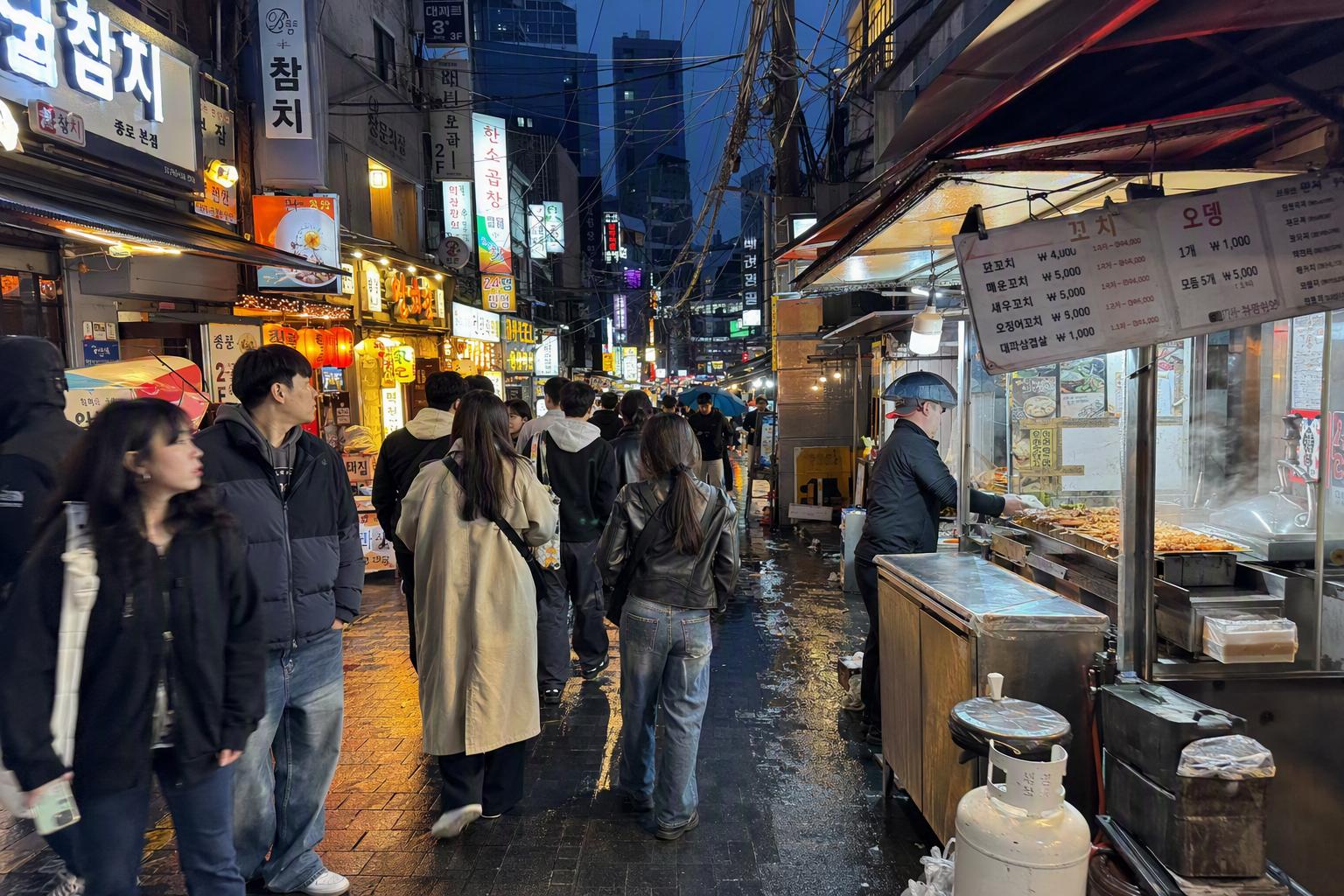
Prices below are in Korean won and should be treated as planning ranges, not promises. Menu prices, rent listings, transit policies, and support programs change often in Korea, so it is always worth checking current listings or official pages before booking, signing, or budgeting too tightly.
Korea Is Selectively Expensive, Not Simply Expensive
Korea can feel wonderfully affordable one hour and oddly expensive the next. A subway ride across Seoul still feels like good value. A simple bowl of noodles can be reasonable. Then you walk into a supermarket, pick up fruit, beef, or a few imported snacks, and suddenly the basket looks much less friendly.
That mix is the real story of the cost of living in South Korea in 2026. Korea is not expensive across the board in the way Switzerland or Singapore can feel expensive across nearly everything. It is more selective. Transportation is still relatively kind to travelers. Rent depends heavily on city, district, and housing type. Food is the category that surprises people most often.

Official inflation has not been runaway. In early 2026, Korea's headline consumer inflation was around 2.0% year on year. But the categories that touch daily travel and living budgets were still firmer: food and non-alcoholic beverages rose about 2.9%, while restaurants and accommodation rose about 2.8%. The number that matters on the ground is not only how fast prices rose this month, but how high the new normal already feels after several years of increases.
For travelers, exchange students, working holiday visitors, and anyone thinking about a longer stay, the smartest way to read Korea's price picture is simple:
| Category | What it feels like in Korea | Creatrip editor note |
|---|---|---|
| Groceries | Often expensive, especially fruit, beef, and some fresh foods | Do not assume cooking every meal will always be cheaper than simple local meals |
| Eating out | Still possible on a modest budget, but everyday menus have risen sharply | Kimbap, tteokbokki, burgers, and jjajangmyeon are no longer as cheap as people remember |
| Rent | The biggest monthly cost in Seoul | District choice changes the whole budget |
| Public transport | Good value compared with many major cities | Monthly passes and rebate programs matter more for long stays |
| Utilities | Manageable for many, but seasonal | Winter heating and summer cooling can shift the bill |
| Busan, Incheon, Daegu | Usually cheaper than Seoul mainly because of rent | Food and coffee do not always drop as much as rent does |
Food Is the Category That Catches Travelers Off Guard
Korea has an amazing food culture, but it is not a cheap-food country in the way some visitors expect from older travel blogs or short-form videos. A major international price comparison placed Korea's food and non-alcoholic beverage prices about 47% above the OECD average, second only to Switzerland among OECD countries in that comparison.
That sounds dramatic, but it makes more sense once you look at the structure behind it. Korea imports a lot of what it eats, especially grains. Its overall food self-sufficiency rate was around 49.3%, and its grain self-sufficiency rate averaged only about 19.5% in recent years. Add exchange-rate pressure, weather swings, logistics, and high distribution costs, and grocery prices become more than a temporary inflation story.

Some 2026 Seoul-style benchmark prices give the feeling clearly:
| Item or meal | Approximate benchmark |
|---|---|
| Inexpensive restaurant meal | Around 10,000 won |
| Mid-range restaurant meal for two | Around 60,000 won |
| Eggs, 12 count | Around 4,221 won |
| Beef round, 1 kg | Around 34,559 won |
| Apples, 1 kg | Around 11,095 won |
The practical takeaway is not that groceries are always a bad idea. A kitchen can still help on a long stay, especially for breakfast, leftovers, and simple meals. But travelers who imagine saving a fortune by cooking every day may be disappointed if their basket leans toward fruit, beef, imported ingredients, cheese, snacks, or convenience foods.
For a short trip, a balanced rhythm usually works better: simple local meals, a few cafe stops, one or two splurge dinners, and light grocery shopping rather than trying to recreate a full home pantry.
Eating Out: Everyday Korean Meals Have Gotten Pricier
Korea still has plenty of casual meals that feel reasonable, but the old mental price list needs updating. From 2020 to May 2025, restaurant prices rose by roughly 24.6% to 24.8%, much faster than overall consumer prices during the same period.
The sharpest increases were not limited to fancy restaurants. The biggest jumps showed up in very ordinary meals:
- Kimbap rose by about 38%
- Hamburgers rose by about 37%
- Tteokbokki rose by about 35%
- Jjajangmyeon rose by about 33%
- Lunch boxes, ramen, galbitang, and haejangguk also saw large increases
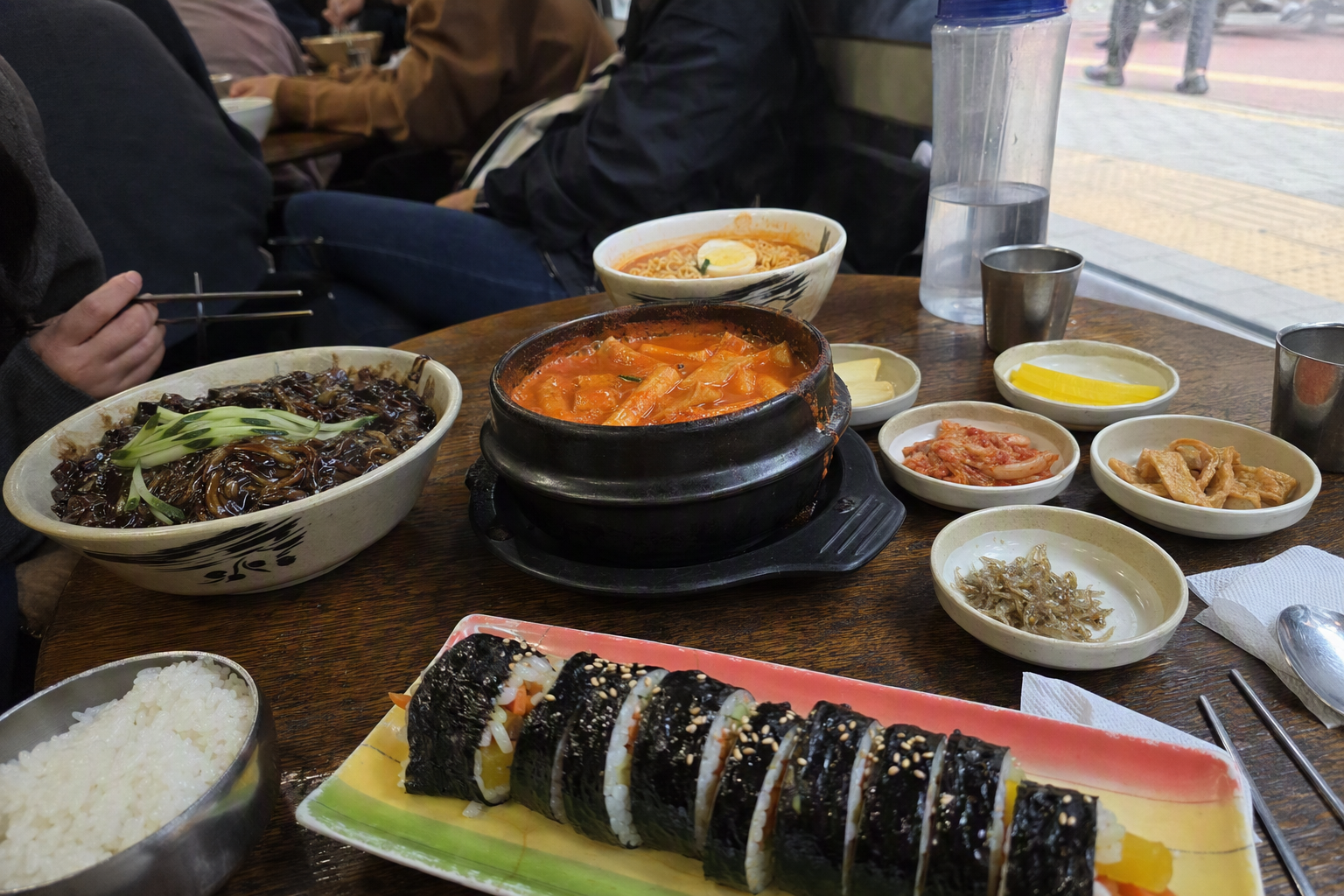
This is why visitors sometimes feel confused. Korea can still serve a filling lunch for less than many Western cities, but the everyday cheap dishes are no longer as low as memory or older online posts suggest.
For a casual food day in Seoul, two simple meals plus a coffee can easily land around 25,000 to 40,000 won before snacks, desserts, drinks, or late-night food. A barbecue, seafood, sashimi, trendy brunch, or wine-bar night pushes the total much higher. In Busan, casual local meals are often mentioned around 7,000 to 12,000 won, with coffee commonly around 4,500 to 6,000 won, but the savings are not dramatic enough to make food the main reason to change cities.
Delivery is another small trap. Delivery platforms, commissions, channel pricing, and labor costs have all been part of Korea's food-price pressure. Ordering in can be convenient, especially after a long day, but dining in or ordering directly at the counter is often the cleaner budget choice.
Seoul: The High-Cost Benchmark
Seoul is where Korea's cost of living feels most intense. It is also where many visitors spend most of their time, so even if the rest of Korea is gentler, Seoul becomes the mental benchmark.
As of May 2026, one widely used Seoul benchmark estimated monthly living costs at about 1,504,575 won for one person excluding rent, and about 5,542,490 won for a family of four excluding rent. Once rent enters the picture, the range widens quickly.

Typical Seoul rent benchmarks looked like this:
| Seoul housing benchmark | Approximate monthly rent |
|---|---|
| 1-bedroom apartment in the city center | 1,313,793 won |
| 1-bedroom apartment outside the center | 892,813 won |
| 3-bedroom apartment in the city center | 3,245,552 won |
| 3-bedroom apartment outside the center | 1,765,517 won |
Utilities and communications add another layer. A basic utilities benchmark for an 85㎡ apartment was around 223,750 won per month, with internet around 28,643 won and a mobile plan around 46,114 won. Smaller studios can be much lower, but season, building insulation, management fees, heating style, and air-conditioning habits all matter.
What a monthly Seoul budget can look like
For travelers staying only a week or two, rent-style monthly budgets may not apply because hotels, guesthouses, and short-term rentals follow a different market. But for exchange students, working holiday travelers, digital nomads on longer stays, or anyone comparing Korea with another country, these monthly ranges are useful.
| Lifestyle in Seoul | Approximate monthly range | What this usually means |
|---|---|---|
| Frugal one-room lifestyle | 1.06 million to 1.75 million won | Local-style room, careful meals, modest transport and spending |
| Standard one-person lifestyle | 1.7 million to 2.6 million won | More comfortable food budget, better location or room, some cafes and nights out |
| Moderate foreigner lifestyle with non-Gangnam studio | 3.2 million to 4.0 million won | Private housing, easier location, more eating out, fewer local-budget compromises |
| Family of four, before rent | Around 5.54 million won | Rent, school costs, car costs, insurance, and savings not included |
The ranges overlap because housing deposits, location, food habits, and lifestyle choices change everything. Someone living in a small outer-district room and eating mostly simple Korean meals can spend far less than someone in a newer studio near a popular area who eats out daily and uses taxis.
Seoul Housing: Monthly Rent Is Only Half the Story
For long stays, Seoul housing deserves more attention than any other category. One-room rent benchmarks in 2026 often clustered around 550,000 to 800,000 won for more budget-conscious local living, while broader Seoul averages placed one-room rent around 720,000 won. District differences are wide: Gangnam-style prices can sit near 970,000 won, while areas like Nowon have been cited closer to 460,000 won in some one-room guides.
In March 2026, Seoul one-room units under 33㎡ averaged around 710,000 won per month, and small-unit monthly rent was showing upward pressure. Separate small-housing analyses placed villa or multiplex-style units and officetels around the low 800,000 won range under standardized deposit assumptions, with premium districts much higher and outer districts much lower.

Korean housing also uses a deposit system that can feel unfamiliar. The three words long-stay visitors hear most often are:
- Wolse: monthly rent plus a deposit
- Jeonse: a very large deposit with little or no monthly rent
- Banjeonse: a hybrid between the two
A room advertised with a low monthly rent may require a large deposit. A room with a smaller deposit may have a higher monthly rent. Management fees can be separate, and utilities may not be included. For anyone considering jeonse or a large deposit, the safer calculation includes deposit opportunity cost, loan interest if borrowing, moving costs, brokerage fees, and whether deposit-return insurance is possible.
A useful mental conversion: at a 4% annual return assumption, 100 million won of deposit has an opportunity cost of about 333,000 won per month. That does not mean every traveler should avoid deposits. It means monthly rent alone can be misleading.
For international visitors, one common mistake is choosing the cheapest room far from daily plans, then losing the savings in commute time, transfers, taxis, and fatigue. Seoul is very connected, but not every commute feels equal after a full day of language class, work, or sightseeing.
Busan, Incheon, and Daegu: Cheaper Mostly Means Cheaper Rent
Leaving Seoul can lower the cost of living in Korea, but the savings are not evenly spread. Rent is the biggest reason other cities feel cheaper. Food, coffee, utilities, and transport may be a little lower, similar, or occasionally even awkward depending on the neighborhood and lifestyle.

Busan
Busan is the easiest comparison because it offers big-city life with lower rent pressure. Modern one-room rent is often mentioned around 450,000 to 650,000 won in Busan, compared with about 850,000 to 1.2 million won for Seoul in many practical comparisons.
A frugal single-person Busan budget is often placed around 1.3 million to 1.8 million won per month. A comfortable couple lifestyle, excluding luxury spending, can sit around 2.0 million to 2.5 million won. One Seoul-Busan comparison found Busan only about 5.2% cheaper excluding rent, but about 13.4% cheaper including rent, because rent was around 41.2% lower.
That is the key: Busan can save real money, but not because every bowl of noodles becomes half-price. It saves money because housing is gentler.
Incheon
Incheon can be attractive for travelers who want access to the Seoul area without paying central Seoul rent. Crowdsourced comparisons have placed Incheon about 27.7% cheaper than Seoul when rent is included, with rent around 44.1% lower. Grocery prices were also reported lower in that comparison, though city-level crowdsourced numbers can vary.
The trade-off is movement. Incheon can work beautifully when daily plans are in western Seoul, airport-related areas, or Incheon itself. It can feel less efficient if every day starts with a long ride to eastern or southern Seoul.
Daegu
Daegu often looks appealing on rent. One-bedroom city-center rents were benchmarked around 563,068 won, with outside-center rents around 365,346 won, far below Seoul's equivalents. At the same time, some reported utility figures for Daegu were surprisingly high, and smaller city datasets can be thin.
Daegu is best read as a city where rent can be very friendly, but current listings and building-specific utility details matter more than broad averages.
Public Transport Still Feels Like Good Value
Among Korea's daily expenses, public transport remains one of the nicer surprises. Basic subway and bus fares in major cities are commonly around 1,500 to 1,550 won, and monthly commuting costs are often estimated around 50,000 to 80,000 won depending on route and frequency.
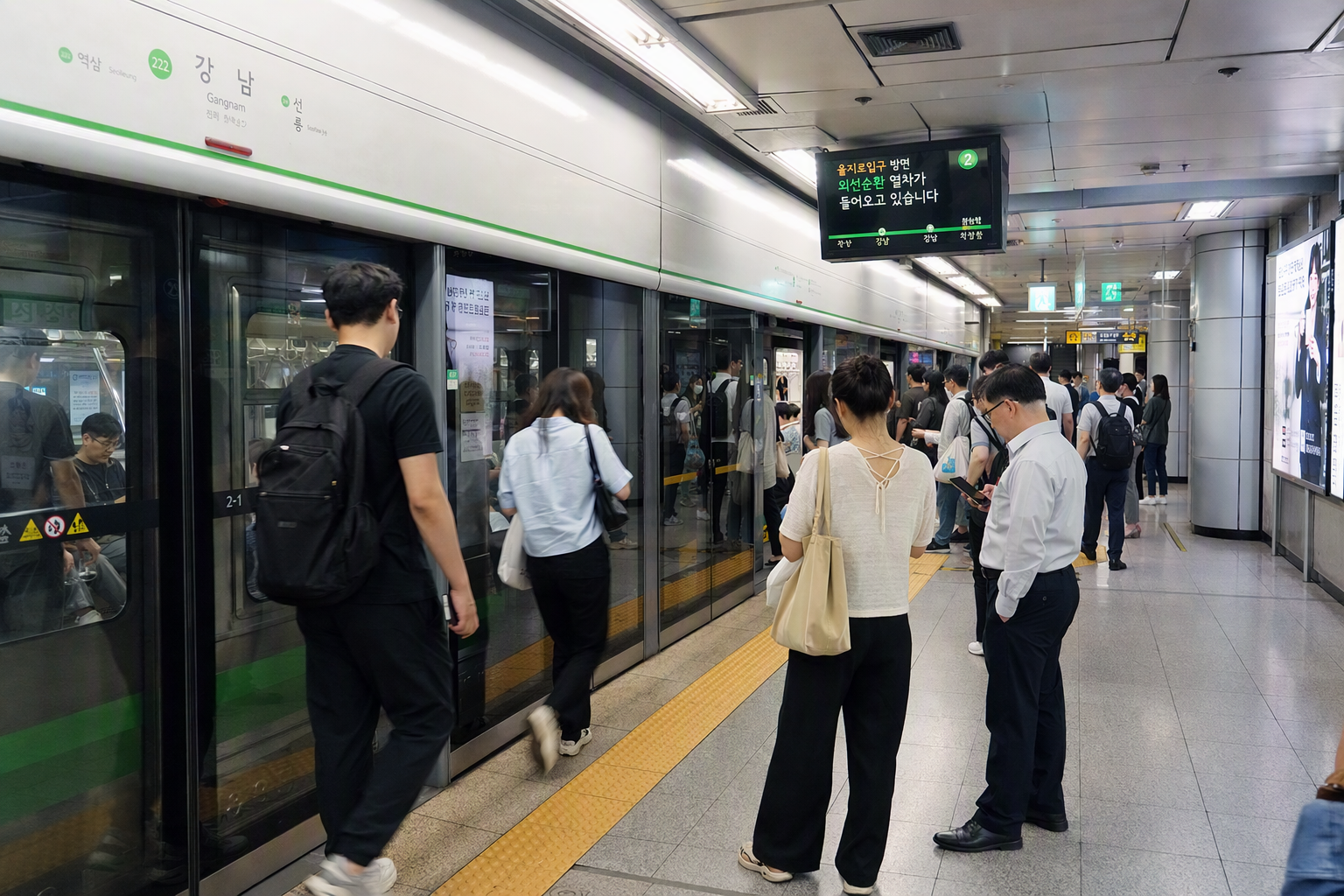
Seoul subway fares did rise noticeably in official price data, but compared with rent and food, transportation is still easier to manage. For long-stay travelers, the pass math can be worth doing:
- K-Pass can refund 20% to 53% of public transport spending for eligible users
- Seoul Climate Card can be attractive for Seoul-centered riders whose monthly transport spending is around the mid-60,000 won range or higher
- Occasional visitors may not need a monthly pass if they are walking a lot or grouping plans by neighborhood
Eligibility, coverage, and rules can change, and some programs are designed more for residents than tourists. Still, transport is one area where Korea rewards a little planning without demanding major lifestyle sacrifice.
Utilities, Phone Plans, and the Quiet Fixed Costs
Utilities do not usually dominate the budget the way rent does, but they can surprise people who arrive during peak winter or summer. Heating, air conditioning, insulation, building age, and whether a room has separate management fees all change the bill.
Seoul benchmarks put basic utilities for an 85㎡ home around 223,750 won per month, while another Seoul estimate placed utilities for a 45㎡ studio around 98,781 won. These are not hotel-room numbers, and they are not guarantees. They are reminders to ask what is included before signing a lease or booking a long-term stay.
Phone costs can also be trimmed. Standard mobile-plan benchmarks in Seoul are around 46,114 won per month, while budget mobile plans can save residents roughly 30,000 to 50,000 won per month compared with pricier plans. For tourists, prepaid SIMs and eSIMs follow a separate travel market, so compare by length of stay rather than copying a resident plan.

A Practical Food Budget Rhythm for Visitors
Korea is a place where food is part of the trip, not just a cost line. The goal is not to spend as little as possible every day. It is to avoid wasting money on categories that do not actually improve the trip.
A nice rhythm for many visitors looks like this:
| Travel style | Food-budget rhythm that works well |
|---|---|
| Short Seoul trip | Simple Korean lunches, cafes you genuinely want, one or two higher-spend dinners |
| Food-focused trip | Keep breakfast and some lunches light so barbecue, seafood, or tasting-style meals feel worth it |
| Long stay with kitchen | Cook breakfast or simple dinners, but do not expect fruit, beef, or imported groceries to be cheap |
| Student or working holiday stay | Rotate school-area meals, markets, simple cooking, and occasional delivery rather than delivery every night |
| Family trip | Plan snack and cafe costs carefully, because small add-ons multiply quickly |
A common mistake is trying to save money by buying Western-style groceries in Korea. Cheese, imported cereal, specialty snacks, beef-heavy meals, and fruit baskets can make home cooking expensive. Local ingredients, simple rice-based meals, eggs, seasonal vegetables, and private-label products tend to work better for long stays, although prices still vary by store and season.

Housing Support and Discounts: Useful, But Not for Every Visitor
Korea has rent-support programs and fixed-cost discounts, but most are not designed for ordinary short-term tourists. Long-term residents with local registration sometimes look into them, especially students and young workers.
For example, national youth monthly rent support has offered up to 200,000 won per month for 24 months for eligible young people. Seoul's 2026 youth rent support program listed up to 200,000 won per month for 12 months, with a detailed application window, age rules, income rules, housing limits, and exclusions.
These programs are worth checking only if you have a real resident-style situation in Korea. Eligibility can be narrow, application windows close quickly, and overlapping benefits are often restricted. Short-term visitors should treat them as local-resident programs, not travel discounts.
More broadly useful fixed-cost tools include:
- Budget mobile plans for longer stays
- Public-transport passes or rebates for eligible frequent riders
- Energy or gas cashback programs for eligible households
- Choosing housing with clear management-fee and utility terms
- Avoiding delivery-platform costs when a nearby dine-in option is easy
Cost of Living Mistakes We See Travelers Make
Assuming Korea is cheap because casual food looks casual
A small restaurant, plastic chairs, and a quick meal do not always mean old-school prices. Korea's casual food inflation has been broad, and several everyday dishes rose more than 30% from 2020 to 2025.
Treating the supermarket as the automatic budget option
Groceries can help, especially for long stays, but Korea's food prices are structurally high. Fruit, beef, imported goods, and some fresh items can turn a simple shop into a surprise.
Comparing cities by food instead of rent
Busan, Incheon, and Daegu can be much cheaper than Seoul, but the biggest savings usually come from housing. Coffee, transport, and groceries may not fall enough to change the whole budget by themselves.
Reading regional CPI as a cheapest-city ranking
A lower CPI index in one region does not mean that region is cheaper in absolute terms. Regional CPI shows how prices changed compared with that region's own past baseline. It is not a clean city-by-city price tag.
Ignoring deposits, management fees, and seasonality
A monthly rent number without deposit, management fee, heating, cooling, internet, and contract conditions is not the full housing cost. This matters especially in Seoul, where small-room rent has been under pressure.
Overusing taxis because transit is cheap but routes feel long
Korea's public transport is good value, but a poorly chosen base can still make daily movement tiring. A slightly more expensive room near the right subway line may beat a cheaper room that turns every day into a transfer puzzle.
Creatrip's Editor Take: How to Budget Without Losing the Fun
For a short Korea trip, food deserves more room in the budget than many travelers expect. Not because every meal is expensive, but because Korea is full of tempting small spends: coffee, dessert, street snacks, convenience-store extras, late-night meals, and one more round at dinner.
For a month or longer, the big three are rent, food habits, and location. A careful person in a modest Seoul one-room can live far below a visitor who chooses a newer studio, eats out daily, and stays in a premium district. Moving to Busan or Incheon can help, but mainly through rent. Cooking helps, but only when the grocery style fits Korea's prices.
Korea's price of living is best summed up like this: transport is friendly, rent is location-sensitive, and food is the sneaky expensive part. Plan around that, keep a little space for the meals that make the trip memorable, and the numbers start to feel much less mysterious.