Jeju Island Itinerary: The Best Things to Do by Region
A practical, region-by-region Jeju plan for first-time visitors, with south Jeju highlights, Hallasan, Udo, transport tips, and 2026 operating notes.

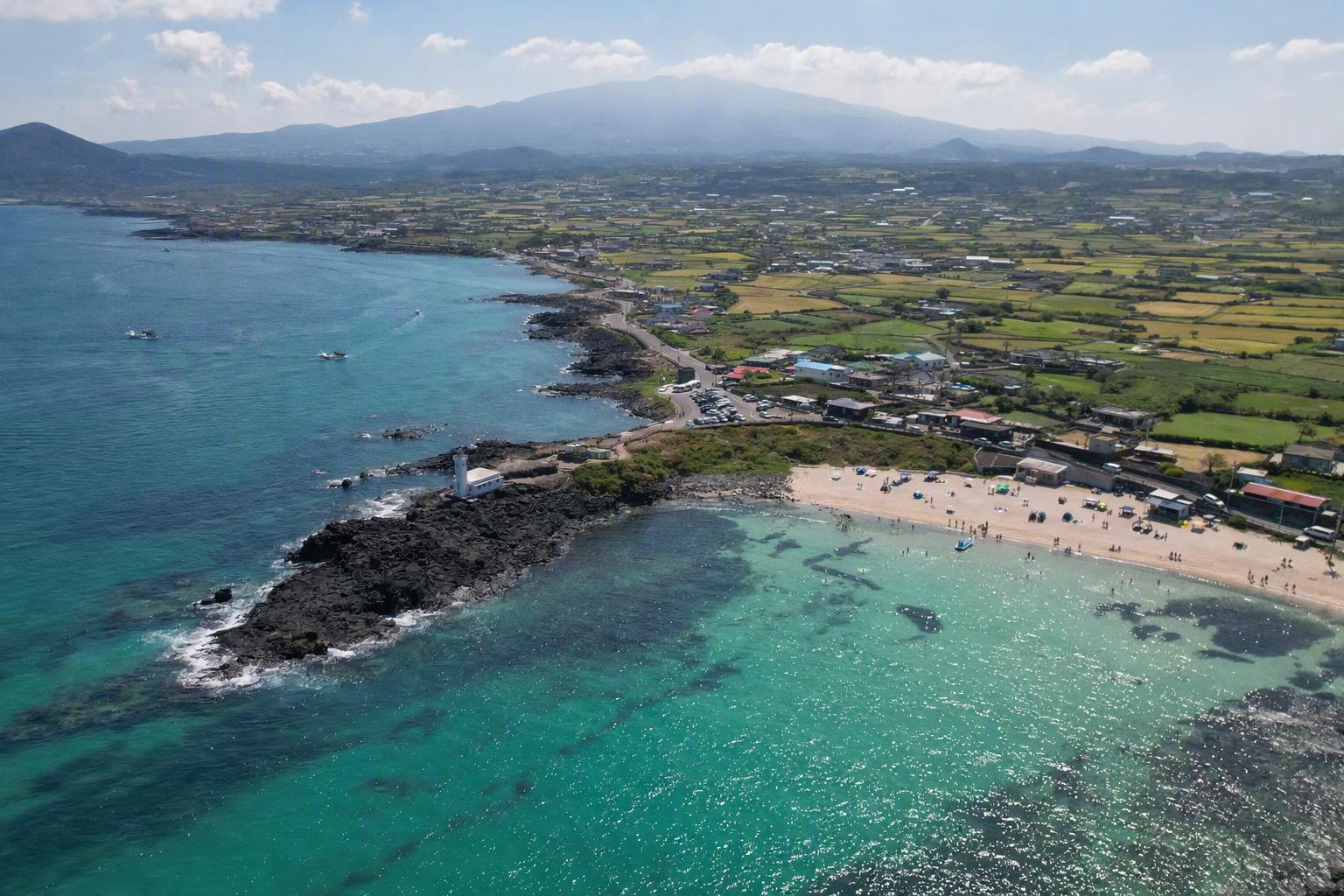
Jeju is one of those places that looks deceptively simple on a map. A beach here, a waterfall there, a volcanic cone on the other side of the island — all very tempting until the driving time starts eating into your day.
The trick is not to collect Jeju attractions one by one. It is to treat the island as a set of regions: west for beaches and cafes, south for waterfalls and basalt cliffs, east for volcanic scenery and Udo, north for airport convenience and markets, and the center for Hallasan. Once the island is arranged this way, your itinerary suddenly feels much calmer.
For most international travelers, 3 days is the realistic minimum for Jeju. It gives you one day each for the west/north, south, and east. With 5 days, Jeju opens up properly: you can add Hallasan, Udo, slower coastal time, or a second base in Seogwipo without turning every day into a race.
Start With the Island, Not the Checklist
Jeju is large — often described as roughly three times the size of Seoul — and there is no subway or train network to rescue an overpacked schedule. A route that looks neat online can become a zigzag of long drives, bus transfers, and parking lots.
At Creatrip, we usually think of Jeju in five travel zones:
North Jeju and Jeju City
This is the practical side of Jeju: Jeju International Airport, Jeju City hotels, Dongmun Market, Tapdong waterfront, bus terminals, and easier access to the rest of the island. Travelers without a rental car often do best staying near Jeju City, especially around the intercity bus terminal area.
The north coast also stretches toward Aewol and the Handam Coastal Walk, which are easy to pair with cafes and a relaxed first day.
South Jeju: Seogwipo and Jungmun
South Jeju is the most satisfying region for a scenic day. Around Seogwipo and Jungmun, you can link together Jeongbang Falls, Cheonjiyeon Falls, Cheonjeyeon Falls, Oedolgae Rock, Daepo Jusangjeolli Cliff, Jungmun Beach, Olle coastal trails, cafes, and Seogwipo Maeil Olle Market.
This is the answer many travelers are really looking for when they search for things to do in south Jeju. The sights are close enough together that a waterfall-and-cliff day works beautifully by car, taxi, or private driver.
East Jeju: Seongsan, Udo, Gujwa
East Jeju is where the volcanic postcard scenery lives: Seongsan Ilchulbong, Seopjikoji, Udo Island, Woljeongri Beach, Hamdeok Beach, and, when open, Manjanggul Cave. It is one of Jeju’s most rewarding regions, but it needs an early start, especially if Udo is involved.
West Jeju: Hallim, Aewol, Andeok
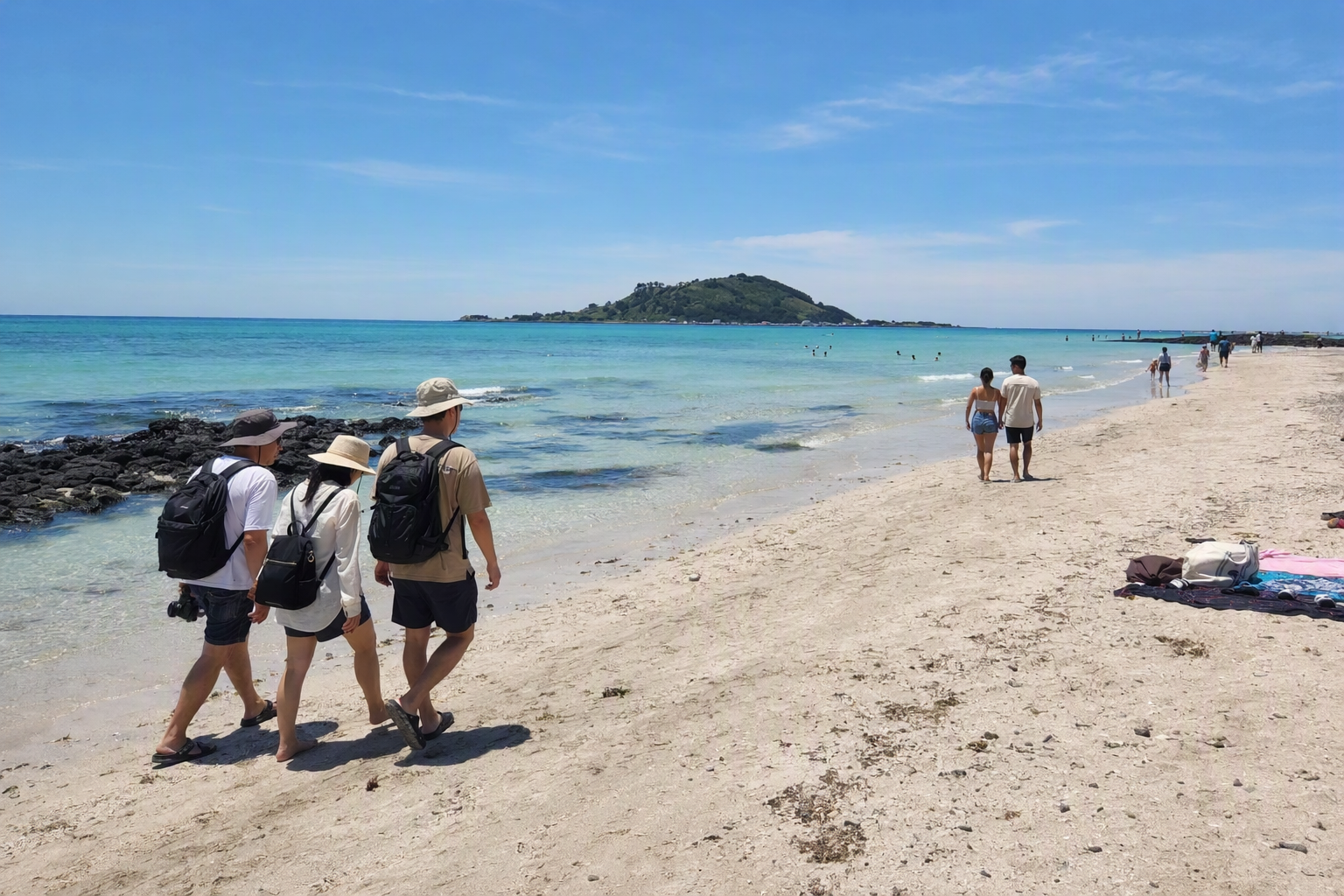
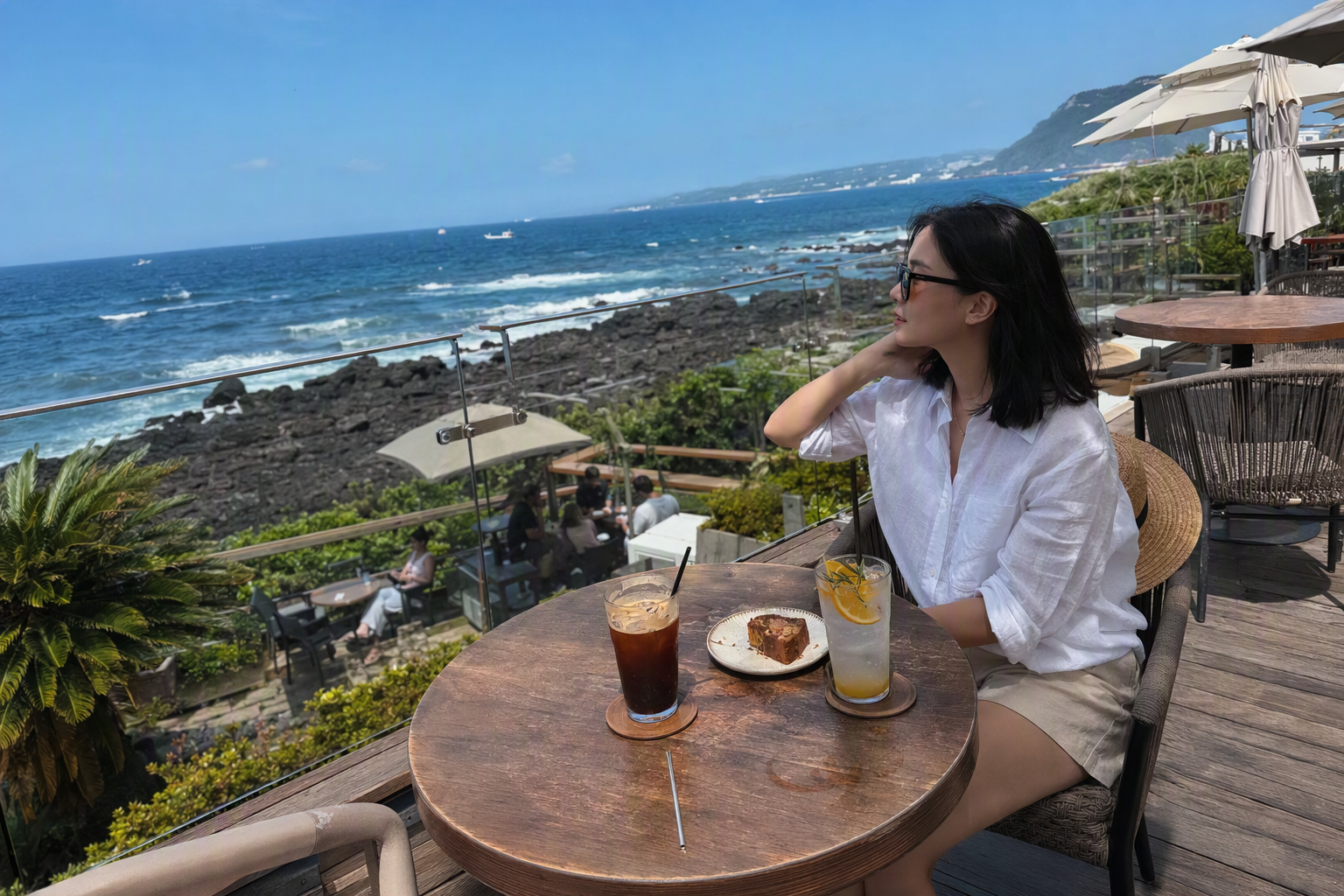
West Jeju is softer and slower: Hyeopjae Beach, Geumneung Beach, Gwakji Beach, Hallim Park, Aewol cafes, Handam Coastal Walk, Osulloc Tea Museum, and the Andeok area. It is a good first-day route because it does not demand sunrise timing or mountain stamina.
Central Jeju: Hallasan and Oreum Country
The center of the island belongs to Hallasan, South Korea’s highest mountain at around 1,950 meters, plus forests and oreum volcanic cones. Hallasan summit hikes are not casual add-ons. They need a dedicated day, route choice, weather awareness, and, for the summit section, reservation planning.

How Many Days Do You Need in Jeju?
A short answer works surprisingly well:
- 2 days: possible, but very selective. Choose either south + east or west + south.
- 3 days: the best minimum for a first visit. West/north, south, east.
- 5 days: much better. Add Hallasan and Udo without sacrificing the classic route.
- 7 days: ideal for travelers who want beaches, hikes, cafes, markets, and slow coastal wandering.
The most common mistake is trying to do Hallasan, Udo, multiple beaches, waterfalls, and cave sightseeing in three days. Jeju is more enjoyable when each day has one clear region and one main mood.
A Classic 3-Day Jeju Itinerary
This version works best with a rental car and moderate energy. Without a car, keep the same regional structure but reduce the number of stops and use taxis for short gaps inside each area.
Day 1: West and North Jeju — Beaches, Cafes, Tea, Sunset
Route idea: Jeju City or airport → Aewol and Handam Coastal Walk → Hyeopjae or Geumneung Beach → Hallim Park or Osulloc Tea Museum → Jeju City or west coast dinner
The west/north route is a gentle way to land in Jeju. Nothing here requires a dawn alarm, and the day can be shaped around weather. If the coast is bright, spend more time at Hyeopjae or Geumneung. If it rains, Hallim Park or Osulloc makes the day feel less wasted.
Hyeopjae and Geumneung are classic west coast beaches with pale sand and views toward Biyangdo Island. Hyeopjae tends to be better known; Geumneung often feels a little more relaxed. Nearby Hallim Park is a structured garden and cultural park, useful for families or travelers who want something more than beach time. Recent visitor information has listed adult admission around 15,000 KRW, with seasonal closing times varying from winter to summer, so check the latest hours before going.
Osulloc Tea Museum is a very easy add-on in the west. It is not the wildest nature stop in Jeju, but it is comfortable, photogenic, and helpful when the weather refuses to cooperate.
Day 2: South Jeju — Waterfalls, Basalt Cliffs, Oedolgae, Market
Route idea: Jeju City or Seogwipo → Jeongbang Falls → Oedolgae or part of Olle Trail 7 → Daepo Jusangjeolli Cliff → Cheonjiyeon or Cheonjeyeon Falls → Seogwipo Maeil Olle Market
This is one of the strongest single-day routes on the island. South Jeju has the rare travel advantage of being both scenic and compact. You can move from a sea-facing waterfall to a coastal rock column viewpoint, then finish with market food in Seogwipo without spending the whole day in transit.
Jeongbang Falls is the headline stop: a roughly 23-meter waterfall that drops directly toward the sea. The visit is usually short, around 30 to 60 minutes, but the setting is dramatic. Wear shoes with grip, especially after rain, because the lower area has stairs and coastal rocks that can get slippery.
Daepo Jusangjeolli Cliff in Jungmun is all black basalt columns and sea spray. It is especially striking when the tide and waves are active, though weather can also affect access. Entry fees for major Seogwipo natural sites are often modest — commonly around 2,000 KRW for adults at places like Jeongbang, Cheonjiyeon, and Jusangjeolli — but prices and hours can change.
End at Seogwipo Maeil Olle Market. Compared with Jeju City’s Dongmun Market, it is smaller and easier to fold into a south coast day. Expect black pork snacks, seafood, citrus drinks, souvenirs, and casual seating in the central area.

Day 3: East Jeju — Seongsan Ilchulbong, Seopjikoji, Beach, Manjanggul if Open
Route idea: Jeju City or Seogwipo → Seongsan Ilchulbong → Seopjikoji → lunch near Seongsan → Woljeongri or Hamdeok Beach → Manjanggul Cave only if confirmed open
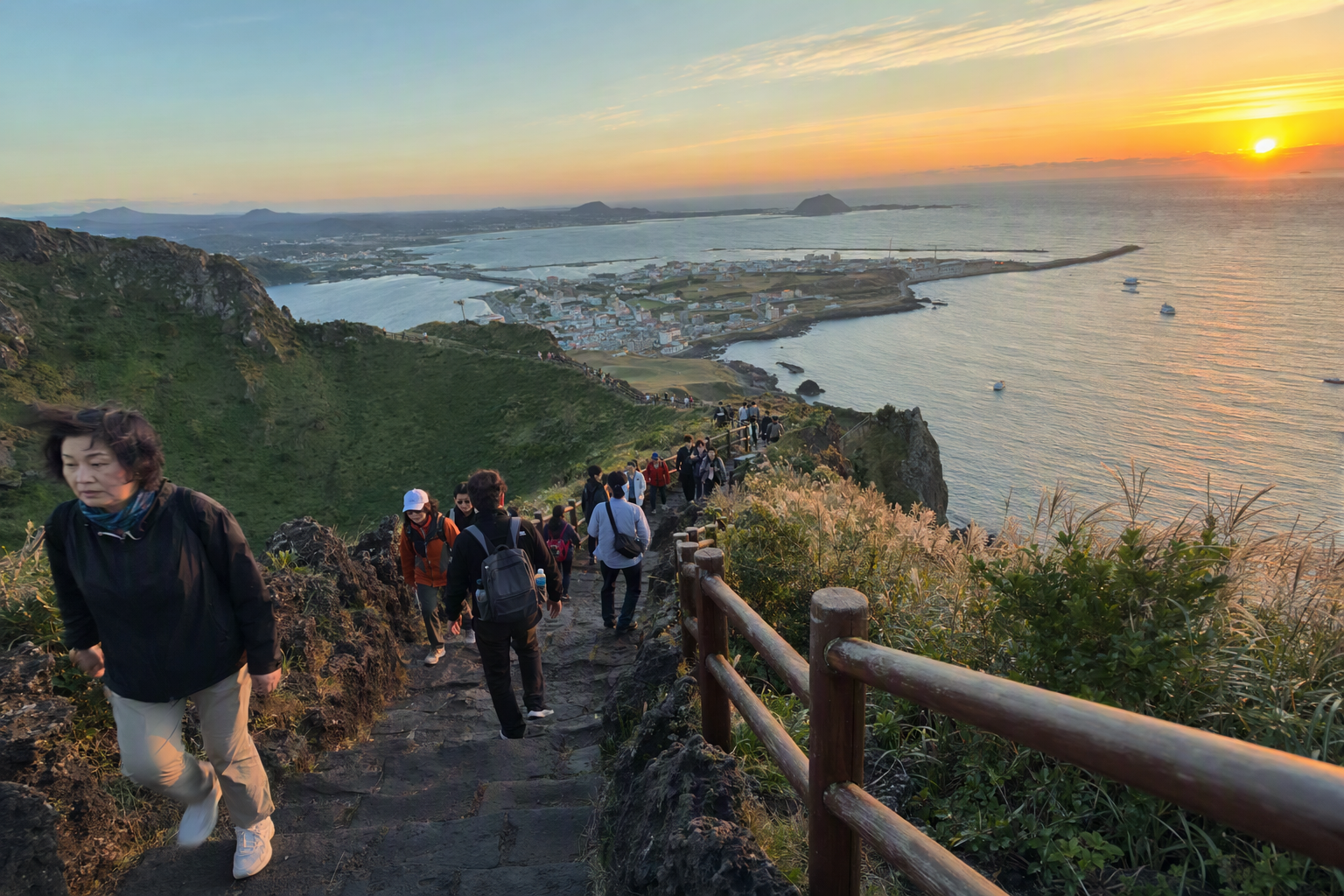
East Jeju deserves an early start. Seongsan Ilchulbong, also called Sunrise Peak, is one of Jeju’s most important volcanic sights and part of the island’s UNESCO-listed natural heritage area. It rises about 180 to 182 meters and the climb is short but stair-heavy. Many travelers finish the climb in around 30 to 50 minutes depending on pace, weather, and crowds.
Recent guidance has listed Seongsan Ilchulbong’s adult fee around 5,000 KRW, with seasonal operating hours and a regular closure on the first Monday of each month. Sunrise access can follow separate timing rules, so confirm the latest information if the sunrise climb is the whole point of your day.
Pair Seongsan with Seopjikoji, a scenic coastal headland nearby. It is not a place to cross the island for on its own, but together with Seongsan it makes perfect sense.
Manjanggul Cave needs special care in 2026. It has been closed due to safety works after a rockfall near the entrance area in late 2023. Current local and official signals have pointed toward a possible spring 2026 reopening after construction and final inspections, but timelines have shifted before. Treat it as a conditional stop and confirm through Jeju World Natural Heritage channels or by calling 064-710-7903 shortly before visiting.
A More Comfortable 5-Day Jeju Itinerary
Five days is where Jeju starts to breathe. You can keep the same regional logic, then add one serious nature day and one island day.
Day 1: Arrival, Jeju City, Dongmun Market, North Coast
Stay in Jeju City if you arrive late or do not plan to drive. Dongmun Market, Tapdong, Yongduam Rock, and Aewol cafes all fit nicely into a low-pressure arrival day.
For travelers using buses, Jeju City is the most functional base because it gives better access to routes heading west, east, and south.
Day 2: West Jeju Beaches and Tea
Use this day for Aewol, Handam Coastal Walk, Hyeopjae or Geumneung Beach, Hallim Park, and Osulloc Tea Museum. If the weather is clear, give the beaches more time. If it is windy or rainy, lean into cafes and indoor-friendly stops.
Day 3: South Jeju and Seogwipo
Spend the full day around Jeongbang Falls, Oedolgae, Jusangjeolli Cliff, Cheonjiyeon or Cheonjeyeon Falls, Jungmun, and Seogwipo Maeil Olle Market. If you are splitting accommodation, this is the perfect night to stay in Seogwipo or Jungmun.
Day 4: East Jeju With Udo or Manjanggul
Choose the day’s anchor based on weather and operating status.
If the sea is calm and you start early, make it a Udo day. Ferries run from the Seongsan area to Udo, with the crossing often described as around 15 minutes. Routes include Seongsan Port to Udo’s terminals such as Haumokdong or Cheonjin, and Jongdal Port to Haumokdong. Once on the island, travelers usually get around by bicycle, scooter, shuttle, or the Udo Olle route.
A small but important detail: rental cars are generally restricted from being brought onto Udo unless travelers meet specific eligibility conditions. Most visitors should plan to park on the mainland and move around Udo locally.
If Udo does not work because of weather or timing, use the day for Seongsan Ilchulbong, Seopjikoji, Woljeongri, Hamdeok, and Manjanggul Cave only if officially open.

Day 5: Hallasan or a Slow Recovery Day
For travelers who want a signature outdoor challenge, dedicate the day to Hallasan. Summit routes need time, stamina, and reservations for the upper summit access section.
Not everyone needs to summit Hallasan to have a good Jeju trip. Yeongsil, Eorimok, and Eoseungsaengak are easier alternatives for mountain scenery without turning the whole day into a major climb. Eoseungsaengak is especially useful when you want a short forest-and-mountain walk rather than a full hiking project.
If the previous four days were packed, a slow final day is not a failure. Jeju rewards a late cafe breakfast, a short beach walk, and one good meal before the airport.
South Jeju Attractions: The Best Region for a Scenic One-Day Route
South Jeju is where we would send anyone who wants maximum scenery with minimum overthinking. The area around Seogwipo and Jungmun has a rare cluster of waterfalls, coastal cliffs, rock formations, markets, and easy cafes.
Jeongbang Falls
Jeongbang Falls is one of Jeju’s signature waterfalls because it drops directly toward the ocean. It is often described as the only waterfall in Korea, or even Asia, with this kind of sea-facing drop. The height is about 23 meters, and the viewing area sits below a short stair descent.
It is a quick stop, but not a flip-flop stop. The rocks near the water can be slick, and rain makes the stairs and coastline less forgiving. Official Seogwipo ticket information for 2026 has listed hours around 09:00 to 17:50, with last admission around 17:30, though opening times can shift with sunset and weather.
Cheonjiyeon Falls vs. Cheonjeyeon Falls
These two names are easy to mix up, and they are not the same place.
Cheonjiyeon Falls is closer to Seogwipo city. It has a roughly 22-meter waterfall, a deep pool, and a flat walking path of about 1 kilometer to the falls. In normal times, it has been popular for evening visits, but 2026 has an important note: night viewing is scheduled to be suspended from February through May 2026 due to lighting work, with operating hours during the work period listed around 09:00 to 18:00. Because some pages may show regular hours while others show temporary hours, verify before planning an evening visit.
Cheonjeyeon Falls is in Jungmun and is a three-tier waterfall system. The first waterfall often flows mainly after rain, while the second waterfall is more consistently impressive. The site also includes Seonimgyo Bridge, a long and high bridge that adds another viewpoint to the visit. Cheonjeyeon is a good choice when you are already in Jungmun, especially after rain.
Daepo Jusangjeolli Cliff
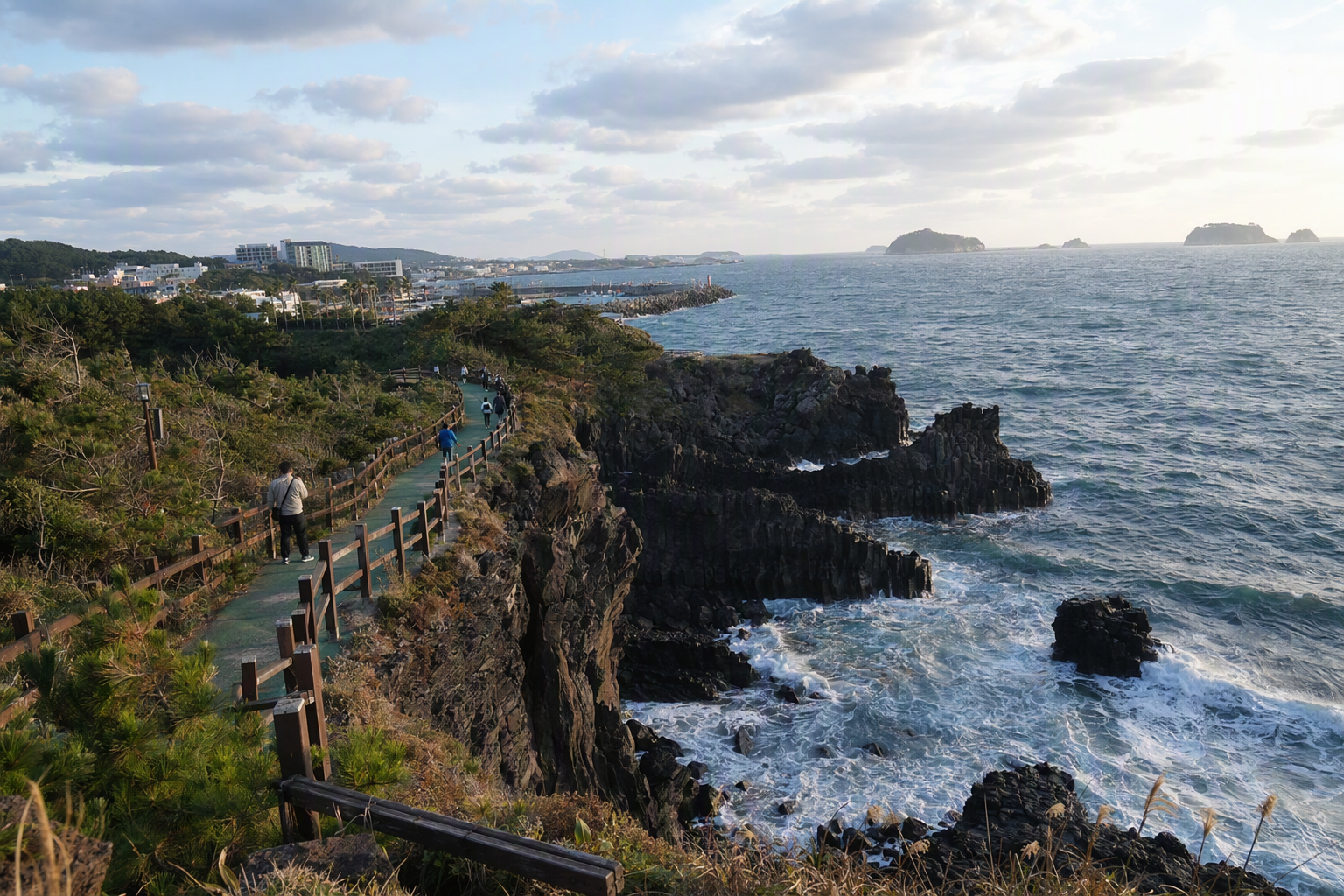
Jusangjeolli is Jeju’s basalt architecture: tall, dark stone columns created when lava cooled against the sea. The viewpoint is not a long visit — often around 30 to 40 minutes is enough — but it is visually strong, especially when waves crash against the columns.
The cliff area is weather-sensitive. Wind, rain, and sea conditions can affect both the atmosphere and access. Admission and parking fees are usually modest, but confirm the latest amounts and last entry time on the day.

Oedolgae and Olle Trail 7
Oedolgae is a sea stack near Seogwipo, and it works well as a scenic pause between waterfalls and the market. If you like walking more than viewpoint-hopping, add a short section of Jeju Olle Trail 7, one of the island’s coastal walking routes.
This is also a good place to slow the day down. The south coast can easily become a sequence of parking, ticket booth, photo, repeat. A coastal walk gives the itinerary some rhythm.
Seogwipo Maeil Olle Market
For dinner, Seogwipo Maeil Olle Market is the natural finish. It is smaller than Dongmun Market in Jeju City and easy to combine with south coast sightseeing. Look for black pork snacks, seafood, citrus drinks, simple souvenirs, and market-style bites you can eat without a formal restaurant plan.
East Jeju Attractions: Volcanic Views, Udo, and One Big 2026 Cave Note
East Jeju can be magical, but it is the region where timing matters most. Sunrise hikers, Udo ferries, coastal winds, and cave operating status all affect the day.
Seongsan Ilchulbong
Seongsan Ilchulbong is a tuff cone formed by volcanic activity, and it is one of Jeju’s most recognized landscapes. The climb is not long, but the steps are real. On hot, windy, or crowded days, it feels tougher than the height suggests.
For sunrise, build in extra time. Entry is usually allowed before sunrise, but exact rules and seasonal hours can vary. Recent operating information has included seasonal hours, ticket cut-off times, and closure on the first Monday of each month, so do not treat old blog hours as fixed.
Seopjikoji
Seopjikoji is best as a companion to Seongsan. The coastal headland gives you open sea views, walking paths, and that wide Jeju feeling that makes the east coast so popular. It is more rewarding in good weather, so if the day is grey and windy, spend less time here and save energy for a beach or cafe.
Udo Island
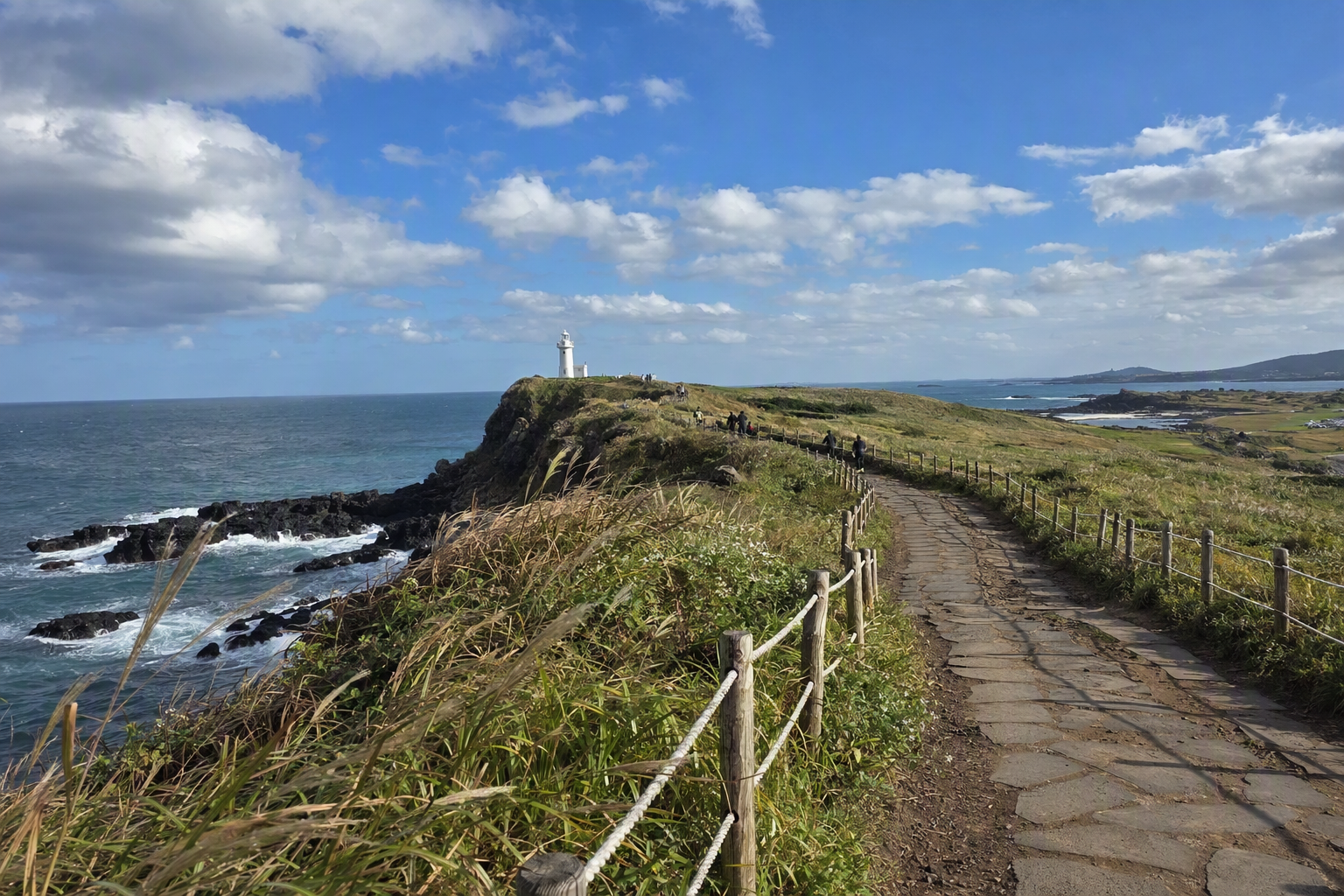
Udo is worth the extra logistics when the weather is kind. It has beaches, low coastal roads, peanut ice cream, and a different pace from the main island. Many travelers visit by bicycle, scooter, local transport, or by walking part of the Udo Olle route.
Do not squeeze Udo into an already full east Jeju day unless you start early. Seongsan Ilchulbong plus Udo is already a generous day. Adding Seopjikoji, Woljeongri, Hamdeok, and Manjanggul on top usually turns the day into transportation management rather than travel.
Useful ferry contacts include Seongsan terminal 064-782-5671, Jongdal terminal 064-782-7719, and Udo terminal 064-783-0448. Ferry operations depend on sea conditions, so checking locally is a good habit.
Manjanggul Cave
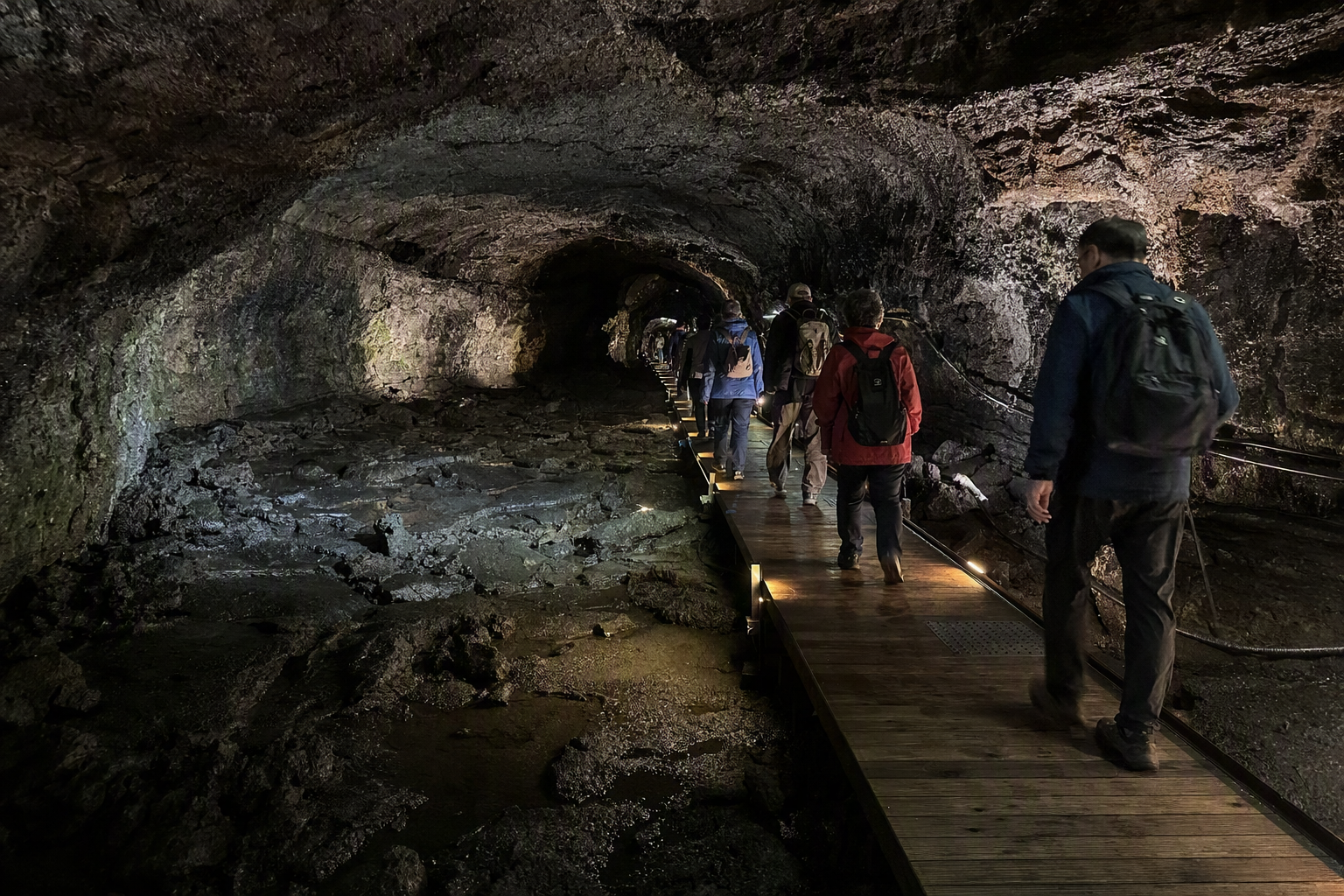
Manjanggul is one of Jeju’s major lava tube sites, with a total length of about 7.4 kilometers and a visitor-accessible section of around 1 kilometer under normal operation. The cave is cool and damp, so a light jacket and proper shoes matter.
The important part: do not assume Manjanggul is open in 2026 just because older pages list hours and fees. It has been closed for safety work since a rockfall near the entrance area in December 2023. Current signals point toward a possible reopening around spring 2026 after final inspection, but the schedule has changed before.
For itinerary planning, mark Manjanggul as conditional and have a backup. Good east-side alternatives include Bijarim Forest, Dongbaekdongsan, Hamdeok Beach, Woljeongri Beach, oreum walks, or stops on the 810 tourist circulation bus route.
Hallasan in 2026: Beautiful, Serious, and Worth Planning Properly
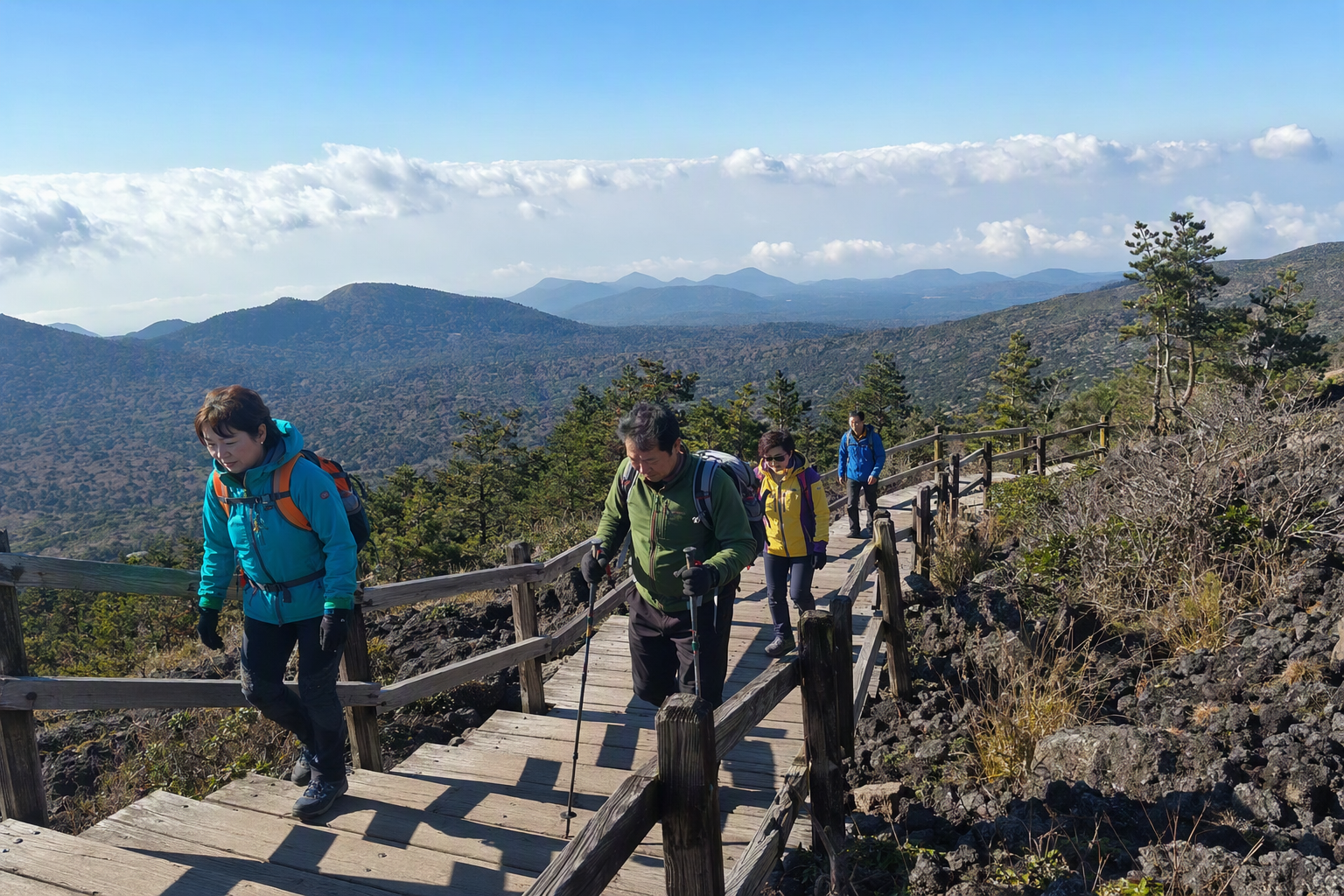
Hallasan is not just another Jeju attraction. Summit routes take most of the day, weather can change quickly, and the upper summit sections have reservation rules.
Which Routes Need Reservations?
For the Hallasan summit, the main routes are Seongpanak and Gwaneumsa. As reflected in 2026 guidance, reservations apply to the upper summit control sections: from Jindallaebat Shelter toward Baengnokdam on Seongpanak, and from Samgakbong toward Baengnokdam on Gwaneumsa.
That means travelers can still access lower sections without a summit reservation, but reaching Baengnokdam crater lake requires the proper reservation and checkpoint confirmation.
Reservations open at 09:00 KST on the first business day of the previous month. One reservation can include up to four people, and no-show penalties apply if cancellation rules are ignored. For high-demand dates, especially New Year sunrise periods, expect competition.
Seongpanak or Gwaneumsa?
Seongpanak is longer at about 9.6 kilometers one way, with a round trip of around 19.2 kilometers. It is often considered more gradual and is commonly used as an ascent route.
Gwaneumsa is shorter at about 8.7 kilometers one way but steeper and more dramatic. Experienced hikers often prefer the scenery, but the descent can be hard on the knees.
Both routes usually open for entry around 05:00, with seasonal cut-off times for entry, checkpoints, and summit descent. In broad terms, summer allows later movement than winter, but the exact control times matter. Check the official Hallasan site before setting your alarm.
Easier Hallasan Alternatives
Not every Jeju trip needs a summit. For many travelers, a shorter Hallasan-area route is the smarter choice.
- Yeongsil: excellent scenery without the summit commitment
- Eorimok: another good non-summit mountain route
- Eoseungsaengak: short, accessible, and useful when you want a taste of Hallasan without spending the day hiking
If the forecast is bad, do not force Hallasan. A mountain day in poor conditions can erase the joy very quickly.
Getting Around Jeju: What Actually Works
Rental Car: The Easiest Option for Most Travelers
A rental car is still the cleanest way to see Jeju efficiently. The island is wide, attractions are spread out, and buses can turn a tidy regional plan into a slow day of transfers.
Foreign drivers generally need an International Driving Permit, original driver’s license, and credit card. Also, Google Maps driving directions are limited in Korea, so install Naver Map, KakaoMap, or Waze before arriving. For taxis, Kakao T is the most useful app; for buses, KakaoBus can help with real-time routes.
Jeju roads are not difficult in the same way as dense Seoul traffic, but speed cameras and 50 km/h zones are common. Build time into the day instead of assuming every drive will be quick.
Bus: Possible, But Edit the Itinerary
Jeju’s bus network is usable, especially from Jeju City, but it rewards patience and realistic expectations. There are express buses, trunk routes, local branch buses, and tourist circulation buses.
Useful route families often mentioned for visitors include:
- 181/182 for Jeju City to Seogwipo connections
- 600 airport limousine for Jungmun and Seogwipo
- 201 for east coast movement toward Seongsan from Seogwipo side
- 111, 211, 212 for Jeju City to Seongsan-area travel
- 102/202 for west-side access such as Hallim and Hyeopjae
- 315 for Dongmun Market from parts of Jeju City
Bus fares are affordable, commonly around the low thousands of won depending on route and distance, with transport cards such as T-money or Cashbee useful. Longer Jeju City–Seogwipo trips can cost more than a local city ride. Always check current fares and transfers inside your app.
Tourist Circulation Buses 810 and 820
The 810 bus circles parts of eastern inland Jeju, including areas linked with the World Natural Heritage Center, Geomun Oreum, Dongbaekdongsan, Bijarim, Darangshi Oreum, and other nature stops. The 820 bus covers parts of western Jeju from Donggwang Transfer Center.
A tourist circulation day pass has been listed at 3,000 KRW for adults, with cheaper youth and child fares. It can be good value if you ride more than a couple of times, but schedules and lunch gaps matter, so do not plan it as if it runs like a subway.
Taxi and Private Driver
For non-drivers, the best rhythm is often bus plus taxi, with a private driver or tour for one wide-ranging day. Use buses for major connections, then taxis between clustered sights in Seogwipo, Jungmun, or Seongsan.
Taxi costs can add up across the island, but they make sense for short gaps: Seogwipo waterfall to market, Seongsan to Seopjikoji, or a hotel to a bus terminal. Private driver days are especially useful for families, groups, or travelers who want to cover south or east Jeju without decoding transfers all day.
Where to Stay in Jeju
Jeju City
Best for short stays, late arrivals, early departures, travelers without a car, Dongmun Market, and access to multiple bus routes. It is not the most romantic base, but it is practical.
Seogwipo City
Best for south coast scenery, waterfalls, Olle walking routes, and a slower Jeju mood. If your dream Jeju day includes Jeongbang Falls, Oedolgae, and Maeil Olle Market, Seogwipo is a strong base.
Jungmun
Best for resorts, families, and easy access to Jusangjeolli, Cheonjeyeon Falls, and Jungmun Beach. It is convenient and polished, but less city-like than Seogwipo.
Split-Stay Strategy
For 5 days or more, split your stay:
- 2 nights in Jeju City, north, or west
- 2–3 nights in Seogwipo or Jungmun
This reduces repeat crossings and makes south coast sightseeing much easier. It also lets you shape one part of the trip around markets and transport, and the other around scenery.
What to Eat in Jeju
Jeju food is simple to plan around because the island’s classics are easy to recognize:
- Black pork BBQ
- Abalone and seafood dishes
- Galchi jorim, braised cutlassfish
- Hallabong and tangerine drinks or desserts
- Udo peanut ice cream
- Market snacks at Dongmun Market or Seogwipo Maeil Olle Market
For a first visit, we like pairing food with geography. Dongmun Market fits an arrival or departure day in Jeju City. Seogwipo Maeil Olle Market fits a south coast sightseeing day. Udo peanut ice cream belongs on Udo, not squeezed into a random cafe stop just to check a box.

2026 Notes Worth Checking Before You Go
Jeju is not difficult to travel, but a few 2026 details can change an itinerary.
Manjanggul Cave: Treat as conditional until confirmed. It has been closed for safety work, with reopening signals pointing toward spring 2026 after inspections. Call 064-710-7903 or check official Jeju World Natural Heritage updates close to your visit.
Hallasan summit access: Reservations are required for upper summit sections on Seongpanak and Gwaneumsa. Check the official Hallasan reservation site for opening dates, QR confirmation, entry cut-offs, and weather closures.
Cheonjiyeon night viewing: Night operation is scheduled to be suspended from February to May 2026 due to lighting work. Verify current hours if planning an evening visit.
Seongsan Ilchulbong: Seasonal hours, ticket cut-off times, sunrise access, and first-Monday closures can affect your plan. Confirm before going, especially for sunrise.
Weather: Waterfalls, sea cliffs, ferries, Hallasan, and coastal viewpoints all respond to wind, rain, snow, or sea conditions. Keep one flexible cafe, market, or indoor-friendly stop in your day.
Useful contacts to keep nearby:
- Jeju Tourism Information Center: 064-740-6000
- Manjanggul inquiry: 064-710-7903
- Hallasan reservation center: 064-713-9953
- Seongpanak office: 064-725-9950
- Gwaneumsa office: 064-756-9950
- Seongsan ferry terminal for Udo: 064-782-5671
- Jongdal ferry terminal: 064-782-7719
- Udo terminal: 064-783-0448
Easy Mistakes to Avoid in Jeju
Do not plan Jeju like Seoul. There is no subway, distances are wider, and the island’s best days are regional.
Do not put Hallasan in the middle of a sightseeing day. A summit hike is the day. Even shorter Hallasan routes deserve weather checks and proper shoes.
Do not assume Manjanggul is open. Older operating hours online can be misleading because the cave has had a long closure period.
Do not combine Udo with too many mainland east Jeju stops. Udo is best when it has breathing room.
Do not stay in one place for a long trip without thinking about drives. For 5 days or more, a Jeju City plus Seogwipo split can save a surprising amount of time.
Do not rely only on Google Maps for driving. Naver Map and KakaoMap are much more useful in Korea.
The Creatrip Take
For a first Jeju trip, the cleanest plan is simple: 3 days means west, south, east. 5 days means add Hallasan and Udo.
The west gives you beaches, cafes, tea fields, and a soft landing. The south gives you Jeju’s easiest high-impact scenery: waterfalls, cliffs, Oedolgae, and Seogwipo’s market. The east gives you volcanic drama at Seongsan, coastal walking at Seopjikoji, and the extra adventure of Udo when the sea is kind. Hallasan sits in its own category — unforgettable, but better when treated with respect.
Jeju becomes much more generous when you stop trying to see everything. Give each region its own day, check the few operating details that matter, and let the island do what it does best: black rock, blue sea, green slopes, citrus in the air, and just enough distance between places to make the journey feel like part of the trip.