Korean Food to Try in Seoul: Classic Dishes, Food Names, and Neighborhoods
A Creatrip editor’s map to Korean BBQ, bibimbap, stews, noodles, market snacks, traditional meals, and the Seoul areas that do each one best.

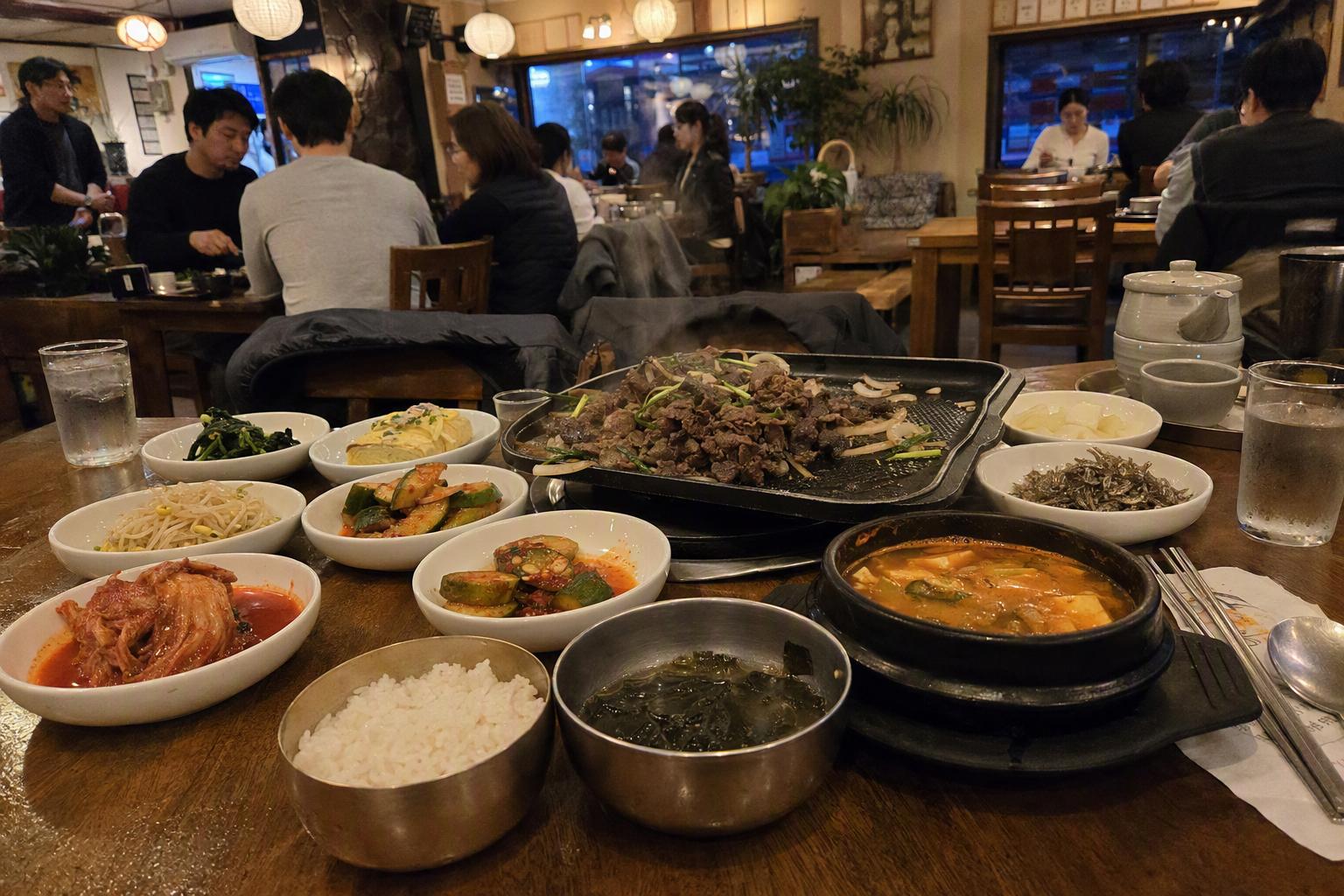
Korean food is much easier to enjoy when it stops being a random checklist and starts looking like a map. A good Seoul food trip usually has a little of everything: one proper grill meal, one market crawl, one comforting bowl of soup, one noodle stop, one stew, one fried chicken night, and maybe a traditional set meal when you want the table to look beautifully full.
At Creatrip, we like to build food days by neighborhood rather than by chasing a single viral restaurant across the city. Seoul rewards that style. Myeongdong is strong for noodles and old-school beef soup, Gwangjang Market is made for snacking, Jongno and Euljiro are full of after-work food alleys, Mapo leans into pork BBQ, and Gangnam or Apgujeong is better for polished hanwoo and reservation-led dining.

Start with the Korean meal rhythm
A classic Korean meal is not only one main dish with a few sides. Hansik, or Korean cuisine, is built around bap rice, guk soup, and banchan side dishes, with fermented flavors doing a lot of quiet work in the background. Kimchi, soy sauce, doenjang soybean paste, and gochujang chili paste are the anchors you meet again and again.
That is why even a casual meal can feel generous. A BBQ dinner is not just meat on a grill. It comes with lettuce or perilla leaves for wraps, ssamjang, garlic, chilies, kimchi, scallion salad, changing banchan, and often rice or doenjang-jjigae. A soup meal looks simple until you start adjusting it with salt, pepper, green onion, kimchi, and rice.
For travelers, this matters because the best Korean meals are usually not the restaurants with the longest menus. They are often places built around one dish, one broth, one cut of meat, or one house style. When in doubt, order the restaurant’s signature instead of trying to cover the whole menu at one table.
Korean food names that make menus less mysterious
Korean menu names are often wonderfully literal. Once you recognize a few endings, the menu starts to open up. Kimchi-jjigae is kimchi stew. Bibimbap is mixed rice. Bulgogi combines fire and meat, though the dish itself is usually thin marinated beef cooked on a grill or pan.
| Menu word | Meaning | What it usually tells you |
|---|---|---|
| -gui | Grilled or roasted | Meat, fish, or vegetables cooked over heat |
| -jjim | Steamed or braised | Often rich, saucy, and good for sharing |
| -bokkeum | Stir-fried | Usually bold, savory, sometimes spicy |
| -jeon | Pan-fried pancake or battered item | Great with makgeolli, especially on rainy days |
| -jorim | Braised or simmered down | Often soy-based or spicy, glossy, and concentrated |
| -guk | Light soup | A thinner soup served with rice |
| -tang | Heartier soup | Broth-focused, often long-simmered |
| -jjigae | Stew | Thicker, saltier, more ingredient-heavy than guk |
| -jeongol | Hot pot | Shared at the table, usually cooked as you eat |
A few everyday words also help: bap means cooked rice or, casually, a meal; banchan are side dishes; namul are seasoned vegetables; muchim means something seasoned or dressed; and jang refers to sauces and pastes like gochujang, doenjang, and ganjang soy sauce.
One small menu-reading note: in Korea, romanized food names are often more useful than awkward English translations. Names like Bibimbap, Bulgogi, Kimchi, and Gimbap are widely used as Korean words in English, and many menus follow that style.
The Korean dishes worth prioritizing in Seoul
There is no single correct list, but for a first strong food pass through Seoul, these dishes give the best mix of flavor, culture, and practicality.
Korean BBQ: samgyeopsal, galbi, bulgogi, and hanwoo
For many visitors, Korean BBQ is the meal that makes the trip feel real. Samgyeopsal is pork belly, usually grilled without marinade and wrapped in lettuce or perilla with ssamjang, garlic, and kimchi. Galbi means ribs and can be pork or beef, often marinated. Bulgogi is thin beef marinated with soy sauce, sugar, garlic, and other aromatics. Hanwoo is premium Korean beef, delicious but much more expensive.

As a 2025–2026 ballpark, samgyeopsal often runs around ₩13,000–20,000 for a 150–200g portion, while a full pork BBQ meal with drinks can land around ₩20,000–50,000 per person. Premium hanwoo can climb to ₩40,000–80,000 per 100g, and high-end beef courses such as Born & Bred are far beyond casual dinner pricing. Prices move quickly, so treat these as planning ranges and confirm current menus before booking or waiting.
For neighborhoods, Mapo and Yonggang-dong are great for pork BBQ and pork galbi. Euljiro and Jongno 3-ga feel more old-Seoul and after-work. Sinsa, Apgujeong, and Gangnam suit polished hanwoo or modern BBQ. Yaksu and Yongsan are tied to some of Seoul’s most talked-about pork and beef places.
A few names travelers often compare:
- Geumdwaeji Sikdang near Yaksu Station is famous for pork and has Michelin Bib Gourmand recognition. As of recent listings, it runs daily with lunch and dinner service, but dinner is heavily wait-based and limited reservations may open through Catch Table. Expect a wait, especially around peak hours.
- Montan in Yongsan is known for straw-smoked beef ribs. It has been famous for long on-site waits and no standard reservation system, with a morning waitlist culture. Prices and waiting rules have changed over time, so check before committing your evening.
- Namyeongdon near Namyeong and Sookmyung Women’s University is another high-demand pork BBQ name. Published opening hours have varied, so verify the current schedule.
- Born & Bred is a premium hanwoo option for travelers who want a splurge meal and can reserve ahead.
The trade-off is simple: famous BBQ can be excellent, but a two-hour wait can eat your Seoul evening. For a short stay, a well-reviewed neighborhood BBQ spot in Mapo, Euljiro, or Sinsa can be the smarter choice than chasing the hardest table in town.
Bibimbap and dolsot-bibimbap
Bibimbap is one of the cleanest introductions to Korean food structure: rice, vegetables, gochujang, often beef and egg, all mixed at the table. Dolsot-bibimbap comes in a hot stone bowl, creating crispy rice at the bottom.

In Seoul, bibimbap is usually an easy lunch choice, often around ₩9,000–12,000 in casual restaurants. For a more regional version, Jeonju is famous for bibimbap with carefully prepared vegetables, beef, gochujang, and yellow mung bean jelly. Jinju-style bibimbap has its own identity too, often associated with colorful toppings and seasoned raw beef.
Bibimbap is friendly for many travelers, but vegetarian and halal travelers still need to ask. Beef, egg, broth, or hidden animal ingredients can appear depending on the restaurant.
Kimchi-jjigae
Kimchi-jjigae is Korea’s comfort stew: ripe kimchi simmered into a spicy, sour, deeply savory broth, often with pork and tofu. It is the kind of food that makes more sense when eaten with rice and banchan, not alone like a Western soup.
This is a great dish when the weather is cold, when you want a normal Korean lunch, or when BBQ and street food have started to feel a little too heavy. The one caution: kimchi-jjigae very often includes pork or anchovy-based broth, so it is not automatically vegetarian, pescatarian, or halal-friendly.
Naengmyeon: mul-naengmyeon and bibim-naengmyeon
Naengmyeon is cold buckwheat noodles, and it comes in two main moods. Mul-naengmyeon is served in chilled broth. Bibim-naengmyeon is mixed with spicy sauce and has less broth.

For a classic Seoul experience, Woo Lae Oak in Euljiro is one of the most important Pyongyang-style naengmyeon restaurants, open since 1946 and known for a clean hanwoo beef broth seasoned simply. It is also known for bulgogi. Recent travel listings put naengmyeon around ₩16,000–17,000, with beef dishes priced much higher and often ordered in minimum portions. Hours are generally listed around late morning to evening with Monday closure, but restaurant hours and last order details should be checked directly.
Pyongyang naengmyeon can taste subtle if you are expecting spicy, punchy noodles. That is part of the appeal. If you want heat and sauce, bibim-naengmyeon or Hamheung-style naengmyeon around Ojang-dong may suit you better.
Tteokbokki, eomuk, hotteok, bindaetteok, and market snacks
Seoul street food is best approached with a little appetite left, not as a full-meal emergency after you are already exhausted. Tteokbokki is chewy rice cakes in a spicy-sweet sauce, often with fish cake. Eomuk is fish cake, usually served on skewers with warm broth. Hotteok is a sweet filled pancake. Bindaetteok is a mung bean pancake, especially beloved at markets. Mayak gimbap is small seaweed rice rolls served with dipping sauce.
Street snacks usually sit around ₩2,000–7,000, though market dishes vary. At Gwangjang Market, recent common prices include bindaetteok around ₩5,000, mayak gimbap around ₩3,000–4,000, tteokbokki around ₩4,000, kalguksu around ₩5,000, hotteok around ₩1,500, and makgeolli around ₩3,000. Yukhoe dishes cost more, often around ₩15,000–20,000+ depending on the order.
Kalguksu and mandu
Kalguksu means knife-cut wheat noodles. The Seoul name everyone knows is Myeongdong Kyoja, located on Myeongdong 10-gil. It is famous for rich noodle soup, mandu dumplings, and a compact menu that has stayed focused for decades.
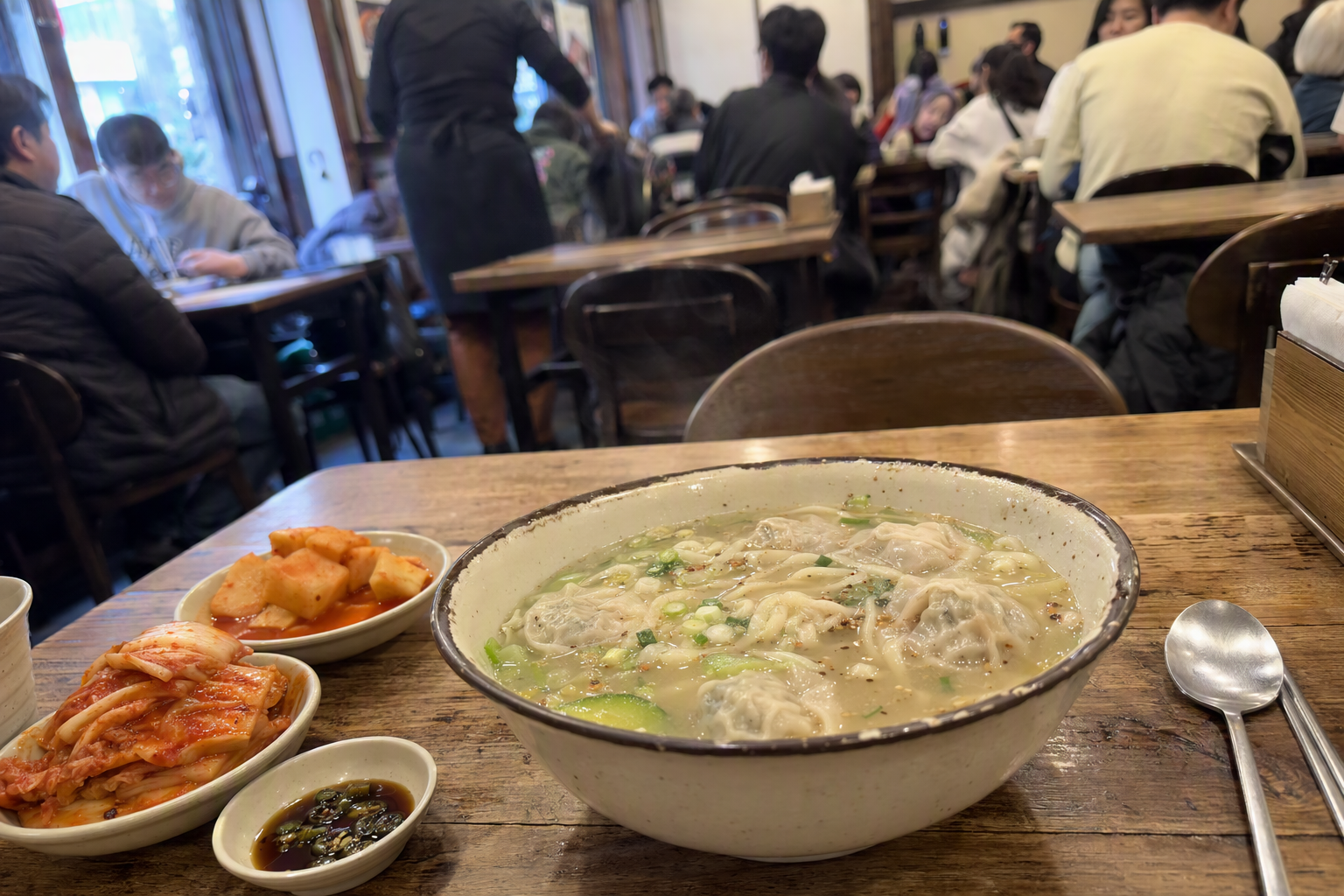
Myeongdong Kyoja is a practical anchor in central Seoul because it is easy to fit between shopping, Namsan, and Namdaemun. Official tourism and Michelin listings commonly show daily hours around 10:30–21:00, though some sources mention slightly different closing times or holiday changes. Expect a fast-moving line at busy times. A typical meal is often around ₩10,000–15,000 per person, but check current prices.
Seolleongtang and gomtang
For breakfast or a gentle lunch, Seoul’s old beef soups are quietly wonderful. Seolleongtang is a milky ox bone soup, usually seasoned by the diner with salt, pepper, and green onion. Gomtang is another beef soup style, often clearer depending on the restaurant and cuts used.

Imun Seolleongtang in Jongno is one of Seoul’s historic food institutions, often introduced as Korea’s oldest officially registered restaurant, with a broth made from long-simmered beef bones. Recent references place seolleongtang roughly around ₩14,000–17,000.
Hadongkwan in Myeongdong is the classic gomtang stop. It has been around since 1939 and is known for beef broth with cuts like brisket and offal. It operates with a daytime rhythm, commonly listed around 07:00–16:00, closed Sundays, and may close when ingredients sell out. This is more of a breakfast or lunch plan than a late dinner plan.
Samgyetang
Samgyetang is ginseng chicken soup, usually a whole small chicken stuffed with rice and simmered with ginseng and other ingredients. It is associated with nourishment and is famously eaten in summer as much as in cold weather.
Near Gyeongbokgung, Tosokchon Samgyetang is the famous name, known for a rich version with ingredients like pine nuts and mung beans. Recent price references place samgyetang around ₩18,000–22,000, but check current menus before going.
Hanjeongsik and royal-style meals
When you want the table to feel ceremonial, look for hanjeongsik. This is a structured Korean set meal with rice, soup or stew, multiple banchan, and often dessert. It is less about one famous bite and more about variety, pacing, and presentation.

In Myeongdong, Myeongdongjeong serves royal and upper-class style Korean set meals with ingredients such as crab, abalone, beef, shrimp, and sweet pumpkin. Listings show lunch and dinner hours with a mid-afternoon break and closures around major Korean holidays, so reservations and current schedules are worth checking.
Chimaek
Chimaek means fried chicken and beer, and it is one of modern Korea’s easiest social meals. After several traditional dishes, crispy chicken with cold beer is a nice change of pace. It is not the oldest dish on this list, but it says a lot about how Koreans eat with friends now.

Where to eat in Seoul by neighborhood
A food plan in Seoul works best when the neighborhood does part of the choosing for you.
Gwangjang Market: market food with energy, noise, and choices
Gwangjang Market is one of Seoul’s essential traditional market food stops, with a history going back to the early 1900s. It is especially good for bindaetteok, mayak gimbap, yukhoe, sundae, tteokbokki, kalguksu, hotteok, twisted doughnuts, and makgeolli.

The market is around 88 Changgyeonggung-ro, Jongno-gu. The easiest subway access is usually Jongno 5-ga Station Exit 8 on Line 1, or Euljiro 4-ga Station Exit 4 on Lines 2 and 5. Give yourself 1–2 hours. Food hours vary by stall, but many guides place the food alley roughly from late morning into evening, with some stalls closed on Mondays.
A good time is late morning, lunch, or the pre-dinner window around 4–6 PM, when you can avoid the heaviest night crowd. Bring cash. Some stalls take cards, but cash still makes market eating smoother.
One practical note: after recent public attention around overcharging, more stalls were reported to post fixed price lists and face checks. Still, read the price before sitting down, especially at very touristy spots or anywhere with aggressive calling from the aisle.
Myeongdong and Namdaemun: noodles, gomtang, kalguksu alleys, and galchi-jorim
Myeongdong is not only cosmetics and shopping bags. It is also useful for Myeongdong Kyoja, Hadongkwan, and traditional set meals like Myeongdongjeong. Nearby Namdaemun Market is strong for Kalguksu Alley and galchi-jorim, spicy braised cutlassfish.
This area is perfect when you want food to fit cleanly into a sightseeing day. Eat noodles, walk to Namdaemun, continue toward Namsan, and you have barely wasted any transit time.
Jongno and Euljiro: old Seoul soups, naengmyeon, beer alleys, and after-work BBQ
Jongno and Euljiro are where Seoul feels wonderfully layered: old restaurants, office workers, narrow alleys, soup shops, grilled meat, and beer tables. Look around here for Imun Seolleongtang, Cheongjinok for haejangguk, Woo Lae Oak for naengmyeon and bulgogi, Ojang-dong for Hamheung-style naengmyeon, and Jongno 3-ga for gul bossam streets.
Euljiro gets especially lively after 6 PM, when office workers pour into BBQ and beer spots. That is fun if you want atmosphere, less fun if you hate waiting.
Mapo and Yonggang-dong: pork BBQ country
Mapo and Yonggang-dong are classic pork BBQ areas, especially for dwaeji-galbi and samgyeopsal. Lines can build after around 6:30 PM, so earlier dinners are easier. The mood is more local and meal-focused than touristy, which is exactly why we like it for a proper grill night.
Gangnam, Apgujeong, and Sinsa: polished BBQ, hanwoo, and reservation dining
South of the Han River, food becomes more reservation-heavy and polished. Gangnam has a high concentration of Michelin-recognized restaurants, while Apgujeong and Sinsa are good for refined BBQ, hanwoo, and modern dining. For fine dining or premium beef, plan early through Catch Table, Naver, or the restaurant directly.
Seongsu, Yeonnam, and Bukchon: the afternoon reset
Not every food stop needs to be meat, broth, or spice. Seongsu, Yeonnam, and Bukchon are useful cafe and dessert neighborhoods between heavier meals. This is not just cute itinerary padding. A good coffee, bakery stop, or light dessert keeps the day from turning into one long salt-and-garlic marathon.

A natural Seoul food route for a short stay
A short food trip does not need to cover everything. It needs balance.
Day 1: Myeongdong, Namdaemun, Gwangjang, and an easy night out
Start around Myeongdong with Myeongdong Kyoja for kalguksu and mandu, or choose Hadongkwan earlier in the day for gomtang. Move toward Namdaemun for Kalguksu Alley or galchi-jorim if you still have room. In the late afternoon, go to Gwangjang Market for bindaetteok, mayak gimbap, tteokbokki, yukhoe, and a small glass of makgeolli.
For dinner, do not force another giant meal unless you are genuinely hungry. A makgeolli bar, chimaek, or a relaxed Yongsan evening can be better than trying to stack BBQ on top of a full market crawl.
Day 2: old Seoul comfort or Gangnam polish
For an old-Seoul day, begin with seolleongtang or haejangguk in Jongno, eat naengmyeon at Woo Lae Oak for lunch, then choose BBQ in Euljiro or Mapo for dinner.
For a south-of-the-river day, build around a reserved lunch or brunch in Gangnam, add a casual mandu or noodle stop, walk or bike near the Han River if the weather cooperates, and finish with hanwoo or modern BBQ in Sinsa, Apgujeong, or Gangnam.
A traditional Korean food day
For travelers who want the classics in a gentler order: beef soup for breakfast, samgyetang near Gyeongbokgung for lunch, a Bukchon cafe break in the afternoon, then naengmyeon and bulgogi or hanjeongsik for dinner.
A market and street food day
Make Gwangjang the center, not an afterthought. Go before peak dinner, eat two or three snacks, sit for one proper dish like kalguksu or yukhoe bibimbap, then leave space for Euljiro beer, BBQ, or fried chicken later.
Korean dishes beyond Seoul
Seoul is the easiest place to sample Korean food, but regional dishes add another layer if your trip goes farther.
- Jeonju bibimbap: the famous regional version, with carefully arranged vegetables, beef, gochujang, and often mung bean jelly.
- Andong jjimdak: soy-braised chicken with vegetables, potato or rice cakes, and glass noodles, born from Andong’s market food culture.
- Tongyeong oysters: served in many forms, from raw oysters and oyster pancakes to oyster rice and porridge.
- Mokpo hongeo: fermented skate, intense and not for every palate, but culturally important.
- Sunchang jang: a region known for traditional gochujang and fermented sauces.
- Busan dwaeji-gukbap: pork and rice soup, especially satisfying after a beach or market day.
- Suwon wang-galbi: large-format beef ribs with a strong local identity.
- Andong soju: a traditional distilled liquor for travelers interested in Korean drinks.
Dietary restrictions: read dish names as clues, not guarantees
Korean food can be wonderful for flexible eaters, but halal, vegetarian, vegan, gluten-free, and allergy-sensitive travelers need to ask dish by dish. A food name alone does not guarantee the ingredients.
Common hidden issues include pork, beef stock, anchovy broth, fish sauce, egg, dairy, wheat noodles, shared frying oil, and seafood-based seasonings. Kimchi may contain fish sauce. Tteokbokki often includes fish cake and fish or anchovy broth. Kalguksu is wheat-based. Mandu often contains pork. Sundae is a blood sausage. Bindaetteok may include pork or be fried in shared oil.
Gwangjang Market is culturally worth seeing, but it is not an easy environment for strict halal, vegan, or gluten-free eating. The pace is fast, cross-contact is possible, and many stalls specialize in foods with animal ingredients.
Useful Korean phrases:
- 이거 고기 들어갔어요? — Does this contain meat?
- 돼지고기 없어요? — No pork?
- 같은 기름에 튀겼어요? — Was it fried in the same oil?
- 우유 들어가요? — Does it contain milk?
- 계란 없어요? — No egg?
- 액젓 없어요? — No fish sauce?
Safer-looking options can still need checking. Vegetable gimbap may include ham, egg, fish cake, imitation crab, or sauce. Sikhye and sujeonggwa are usually more friendly as traditional sweet drinks, but always confirm if your restriction is strict.
Prices, timing, and small mistakes to avoid
Seoul food prices vary by neighborhood and popularity, but these planning ranges are realistic for 2025–2026:
- Street food: around ₩2,000–7,000
- Casual stews, soups, noodles, and neighborhood meals: around ₩7,000–16,000
- Bibimbap: around ₩9,000–12,000
- Tteokbokki: around ₩3,000–7,000
- Samgyeopsal: around ₩13,000–20,000 per 150–200g portion
- Pork BBQ with drinks: often ₩20,000–50,000 per person
- Premium hanwoo: can reach ₩40,000–80,000 per 100g
- High-end beef courses: from around ₩165,000 and far higher for omakase-style meals
A few timing habits make Seoul eating easier:
- Use Naver Map or KakaoMap instead of relying only on Google Maps.
- Check current hours for famous restaurants, especially places with changing schedules, break times, holiday closures, or sold-out broth.
- Book early for fine dining, hanwoo courses, and Michelin-recognized restaurants.
- Eat BBQ slightly early if you hate lines. Mapo and other grill areas get busier after work.
- Bring cash to traditional markets, even if many places now accept cards.
- Do not over-schedule famous waits. One big queue per day is plenty.
- Order the signature dish at specialist restaurants. That is usually where the magic is.
The Creatrip shortlist
For a first Seoul trip, we would build the food plan around this set: samgyeopsal or galbi, bibimbap or dolsot-bibimbap, kimchi-jjigae, naengmyeon, Gwangjang Market snacks, Myeongdong Kyoja kalguksu and mandu, samgyetang, seolleongtang or gomtang, hanjeongsik, and one easy chimaek night.
That mix gives you grilled meat, rice, noodles, soup, stew, fermentation, market food, old Seoul comfort, and modern social eating without turning every meal into a marathon. Seoul has endless food rabbit holes, but this is the kind of foundation that makes the rest of Korean cuisine easier, tastier, and much more fun to understand.