What to Do in Seoul: A Creatrip Area-by-Area Plan
Palaces, markets, trend districts, river nights, and smart route pairings for a first Seoul trip.

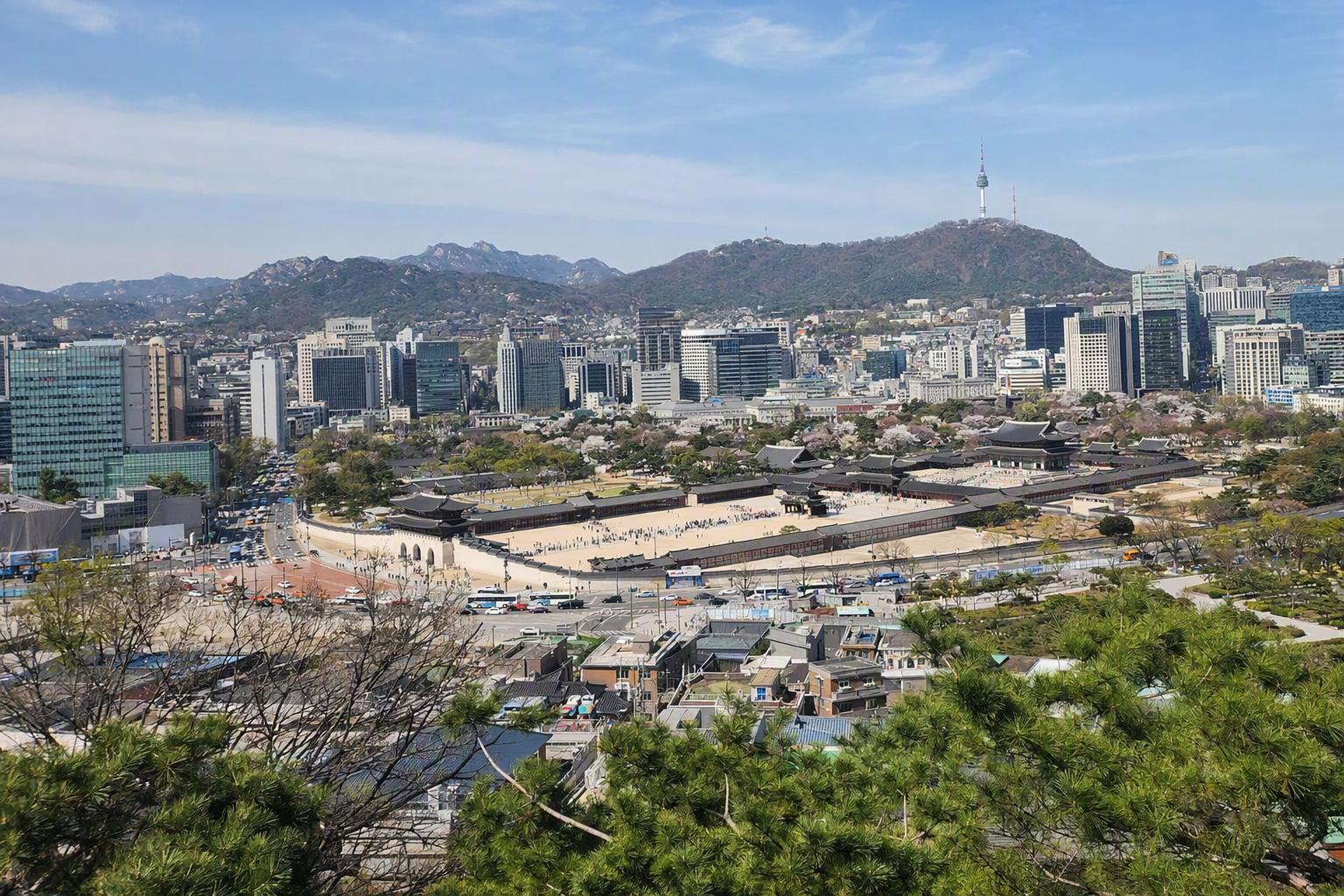
Seoul is not a city that rewards a frantic checklist. It is much better when treated as layers: royal palaces and ritual spaces, residential hanok lanes, food markets, riverside parks, industrial alleys, K-beauty shopping streets, pop-up districts, and late-night pockets that only really wake up after dinner.
The easiest way to enjoy it is not to cross the city five times in one day. Seoul is big, spread across 25 districts, and even a smooth subway ride can quietly eat up your afternoon. At Creatrip, we usually think of a first Seoul trip in clusters: Jongno and Anguk for history, Myeongdong and Namsan for convenience, Hongdae and Mangwon for youth culture and food, Seongsu and Seoul Forest for trends, Gangnam and COEX for polished modern Seoul, then one outdoor or day-trip module if time allows.
That rhythm gives you the Seoul most visitors hope to see, plus the Seoul locals actually use.
Start with the Seoul clusters that matter
For a first trip, build your days around these areas instead of chasing every famous name separately.
- Jongno / Anguk / Seochon: Gyeongbokgung Palace, Bukchon Hanok Village, Changdeokgung Palace, Jongmyo Shrine, Insadong, Ikseon-dong, Jogyesa Temple, Cheonggyecheon Stream, Tongin Market, and Gwangjang Market.
- Myeongdong / Namsan: hotels, cosmetics, convenient shopping, night snacks, and the classic N Seoul Tower option.
- Hongdae / Yeonnam / Mangwon: busking, indie energy, karaoke, casual shopping, local market snacks, and an easy Hangang Park add-on.
- Seongsu / Seoul Forest / Ttukseom: cafes, pop-ups, K-beauty, fashion showrooms, industrial architecture, and a riverside finish.
- Gangnam / COEX / Bongeunsa / Banpo: Starfield Library, COEX Mall, aquarium, K-pop retail, Bongeunsa Temple, and seasonal Banpo Bridge fountain nights.
- Outdoor or day-trip modules: Bukhansan, Inwangsan, Seoul City Wall, Suwon Hwaseong, DMZ tours, or Nami Island.
A packed 3-day trip can cover the classics. Four to five days feels much more balanced, especially for first-timers. With five to seven days, Seoul opens up beautifully: slower neighborhoods, one hike, and a day trip all become realistic.
The historic heart: palaces, hanok lanes, and ritual Seoul

Gyeongbokgung Palace is the best first anchor
Gyeongbokgung is the palace most travelers picture before arriving in Seoul, and it earns that role. Built in 1395, it is the largest of Seoul’s Five Grand Palaces and sits in one of the most efficient travel zones in the city. From here, it is easy to continue to Seochon, Tongin Market, Bukchon, Insadong, Jogyesa Temple, Cheonggyecheon, Changdeokgung, or Jongmyo.
A few details make a real difference on the day:
- Closed: Tuesdays.
- Typical hours: 09:00–17:00 in winter months, 09:00–18:00 in spring and autumn, and 09:00–18:30 in summer. Last entry is usually one hour before closing.
- Admission: commonly around ₩3,000 for foreign adults, with discounts for younger visitors and free admission for eligible hanbok wearers. Always check the latest official palace notice before going.
- English guided tours: commonly offered at 11:00, 13:30, and 15:30, except on Tuesdays.
- Royal guard changing ceremony: usually at 10:00 and 14:00, about 20 minutes, free to watch without entering the palace. It does not run on Tuesdays and can be canceled for heavy rain, snow, or poor air conditions.
Gyeongbokgung is also one of the easiest places to pair with hanbok rental. Shops around Gyeongbokgung Station and Anguk usually offer short rentals, accessories, and hairstyling. Entry-level rentals often start around ₩6,000–₩10,000 for a short session and around ₩12,000–₩25,000 for four hours, though styles, premium designs, and add-ons change the price.
One small but important note: not every costume-like outfit counts for palace free admission. The official rule generally requires a proper hanbok structure with jeogori plus skirt or pants. A jeogori with jeans, a T-shirt with a hanbok-style skirt, only an outer robe, or overly casual novelty pieces may be refused. Gender-mixed hanbok styling is allowed, but the garment still needs to meet the palace standard.
Our favorite way to handle Gyeongbokgung is simple: go early, take your photos before the tour groups fully arrive, catch the 10:00 ceremony if the weather cooperates, then continue into Seochon or Bukchon before lunch.
Bukchon Hanok Village is beautiful, but it is still a neighborhood

Bukchon sits between Gyeongbokgung and Changdeokgung, with around 900 traditional hanok homes in an area that still has residents. It is one of Seoul’s most recognizable scenes, but it is not an open-air photo studio.
Since late 2024, designated areas of Bukchon have had stricter visitor controls. In the red-zone special management area, tourist access is limited to 10:00–17:00, with entry restricted outside those hours. Groups are capped at 10 people, and quiet tourism rules prohibit loud voices, noisy filming, trash dumping, microphones, speakers, and photographing inside private homes.
Bukchon is still worth seeing. It just asks for a slower, quieter mood. If you want a softer hanok view with less pressure on residents, consider Eunpyeong Hanok Village instead. It is farther out, less dense, and has Bukhansan as a backdrop.
Changdeokgung and Huwon are for travelers who like slower beauty
Changdeokgung is often the palace that wins people over after they have already seen Gyeongbokgung. It is more understated, more organic, and its rear garden, Huwon, is one of Seoul’s loveliest heritage experiences.
The catch is that Huwon is not a casual walk-in garden. Entry is through timed guided tours, and slots can sell out.
- Closed: Mondays.
- Palace admission: commonly around ₩3,000 for adults.
- Huwon garden ticket: commonly around ₩5,000 for adults, separate from general palace entry.
- Tour format: guided, language-specific, and limited in capacity.
- Online reservations: usually open six days before the visit at 10:00, with remaining seats sometimes sold on-site.
If you plan to visit several palaces, the Royal Palace Pass can be good value. It is often listed around ₩10,000 for adults and covers one visit each to Gyeongbokgung, Changdeokgung and Huwon, Changgyeonggung, Deoksugung, and Jongmyo within a set period. The pass does not guarantee a Huwon tour slot, so the reservation still matters.
Jongmyo Shrine rewards good timing
Jongmyo is one of Seoul’s most important heritage sites, but it does not operate like a regular palace. On weekdays, visitors usually join a fixed guided route rather than wandering freely. Free viewing is generally available on weekends, public holidays, and Culture Day, the last Wednesday of each month.
English tours are commonly offered at 10:00, 12:00, 14:00, and 16:00, and Jongmyo is usually closed on Tuesdays, with special substitute closure rules when holidays are involved. Admission is modest, often around ₩1,000 for adults.
The best pairing is Changdeokgung plus Jongmyo plus Ikseon-dong, but only if the tour times line up. Otherwise, Jongmyo can become the kind of good idea that derails your afternoon.
Seoul’s food markets: pick the right one for your day

Gwangjang Market for classic energy
Gwangjang Market is loud, crowded, delicious, and very much on the tourist map. It is one of Korea’s oldest traditional markets and a classic first Seoul food stop.
The foods people come for are easy to love: bindaetteok, also called mung bean pancake, mayak gimbap, tteokbokki, sundae, yukhoe, noodles, seasoned beef, and, for adventurous eaters, live octopus dishes. Bindaetteok is often listed around ₩3,000–₩5,000, though prices can change by stall.
The general market is often described as running roughly 09:00–18:00 and closed on Sundays, while the food alley commonly operates longer, around 09:00–23:00. Individual stalls vary. If you mainly want bindaetteok without being swallowed by the crowd, go before 10:00.
Gwangjang is not the calmest meal in Seoul, and that is part of the point. It is best when you want market theater, fast food, and a little chaos.
Tongin Market fits better with Gyeongbokgung and Seochon
Tongin Market is smaller, easier, and very convenient after Gyeongbokgung. Its signature is the yeopjeon lunchbox system, where you exchange money for old-style brass coins and use them to pick small dishes from participating stalls.
It is especially useful when you want a compact palace-and-food loop: Gyeongbokgung, Seochon, Tongin Market, then either Bukchon, Insadong, or Cheonggyecheon.
The lunchbox cafe system is commonly listed at 10 coins for ₩5,000, with each coin worth about ₩500. Hours are usually Wednesday to Monday, 11:00–15:00, extended to around 16:00 on weekends, and closed on Tuesdays and the third Sunday. The general market often runs longer, but the lunchbox experience has its own schedule, so verify before going.
Mangwon Market is the local daytime alternative

Mangwon is the market we would send travelers to when they want something less performance-driven than the famous tourist stops. It is cheaper, more local, and nicely placed for a slower western Seoul day.
The neighborhood works well as a daytime route: brunch or coffee, Mangwon Market, a walk to Mangwon Hangang Park, then Hongdae or Yeonnam later. The market itself is a compact arcade, known for snacks like dakgangjeong, croquettes, hotteok, and tteokbokki.
This is also where Myeongdong’s trade-off becomes obvious. Myeongdong is convenient and fun for cosmetics shopping and night browsing, but street food there can be noticeably pricier than similar snacks in Hongdae, Mangwon, or Sinchon. We like Myeongdong for location and shopping; we would not make it the emotional center of a food trip.
Contemporary Seoul: where the city is changing fastest
Seongsu is Seoul’s trend lab

Seongsu has moved far beyond its old image as an alternative cafe area. Once a shoe and industrial district, it has become one of Seoul’s strongest trend districts, full of converted warehouses, red brick buildings, fashion showrooms, beauty flagships, cafes, galleries, and pop-ups.
The appeal comes from the architecture as much as the shopping. High ceilings, wide factory floors, old freight-style spaces, and industrial textures make Seongsu especially good for large brand events and immersive retail. Pop-ups change constantly, so the exact lineup can be different from one week to the next.
Names that often anchor a Seongsu walk include Cafe Onion, Daelim Changgo, Dior Seongsu, Amore Seongsu, The Seouliteum, Realworld Seongsu, Yeonmujang-gil, Atelier-gil, Sangwon-gil, and the newer cluster around HAUS NOWHERE and Gentle Monster-related spaces. Musinsa and 29CM also have a strong presence in the district, while Olive Young N Seongsu works well for K-beauty browsing.
The strongest half-day pairing is Seongsu plus Seoul Forest plus Ttukseom Hangang Park. Go in the afternoon if you want shopping and cafes, then move toward the river around sunset.
Hongdae is still best after dark
Hongdae is youth culture in high volume: busking, indie music, casual fashion, clubs, cafes, photo booths, arcades, and karaoke. It is fun, convenient, and rarely quiet.
The district works best from late afternoon into the night. For a softer version of the same area, add Yeonnam for cafes and restaurants or Mangwon for market food before heading into Hongdae. If clubbing is not your scene, the combination of dinner, street performances, a few shops, and a karaoke room still makes a good night.
Ikseon-dong is small, photogenic, and often queued
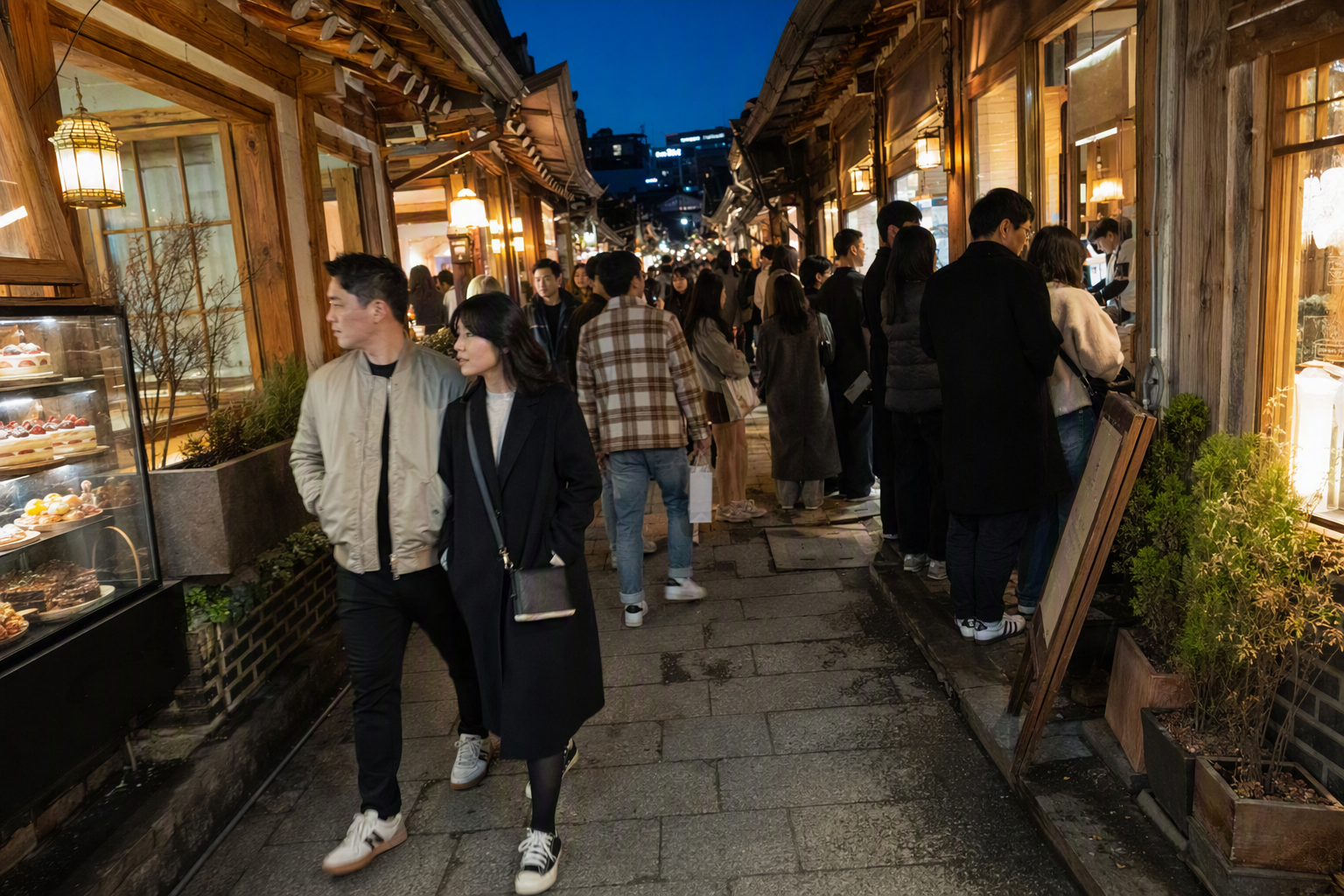
Ikseon-dong is one of Seoul’s most photogenic commercial hanok districts. It began as a planned hanok residential area in the 1920s, and from around 2014–2015, many of its old homes were converted into cafes, restaurants, dessert shops, and small bars.
The area is tiny. You can walk across it in about 10 minutes. The waiting times are not tiny. Popular places such as Cheongsudang Bakery, Nakwon Station, Oncheonjip, Seoul Coffee, Cafe Onhwa, Rain Report Cafe, and salt bread shops often draw lines, especially on weekends.
The calmer windows are usually weekday mornings from 10:00–12:00, weekday mid-afternoons from around 14:00–16:00 or 17:00, or weekend mornings around 09:00–10:00. Weekend afternoons and holidays are the danger zone for anyone who dislikes queues.
Cheongsudang Bakery is a good example of Ikseon-dong’s style: a large hanok cafe with bamboo and pond-like design details, often listed around 10:30–20:00 with last order around 19:30. Signature desserts can be in the ₩15,000–₩20,000 range. It is beautiful, but not a casual cheap coffee stop.
After dark, the mood spills toward Jongno 3-ga, pojangmacha streets, old restaurants, and the area around Nakwon Instrument Arcade. This is one of the easiest places to turn a cafe afternoon into a very Seoul-like evening.
Gangnam and COEX show the polished south side

Gangnam is not where we would send someone for old Seoul, but it is useful for understanding the city’s corporate, retail, medical, and fan-culture side.
The cleanest route is COEX Mall, Starfield Library, COEX Aquarium, Bongeunsa Temple, K-pop retail, and K-Star Road. Starfield Library is free, usually open 10:30–22:00, and known for its tall shelves, public events, and magazine collection. Bongeunsa, just nearby, gives the area a welcome pause from mall lighting and traffic.
This is a good half day for shoppers, K-pop fans, families, and travelers staying south of the river. If your Seoul time is short and you care more about palaces, markets, and older neighborhoods, Gangnam can wait for a second visit.
Euljiro is not a theme. That is why it matters.
Euljiro, often nicknamed Hipjiro, is one of the most interesting areas in Seoul because it is still a working industrial district. Hardware shops, printing businesses, tool stores, older restaurants, beer alleys, and small bars sit side by side. The mood feels rougher and more layered than districts designed for easy browsing.
Look around Euljiro 3-ga, Nogari Alley, old Chinese-Korean restaurants, coffee shops in worn buildings, and small bars tucked above or behind industrial storefronts. It is not always polished, and that is the charm.
There is a serious caveat: redevelopment pressure is changing the area quickly. Old restaurants and alleys have already been closing in parts of Euljiro, and the future of nearby Sewoon Sangga has been debated for years. Travelers interested in urban change, old Seoul, or industrial nightlife may want to place Euljiro higher on the list rather than saving it vaguely for later.
Mullae is production plus art, not polished retail
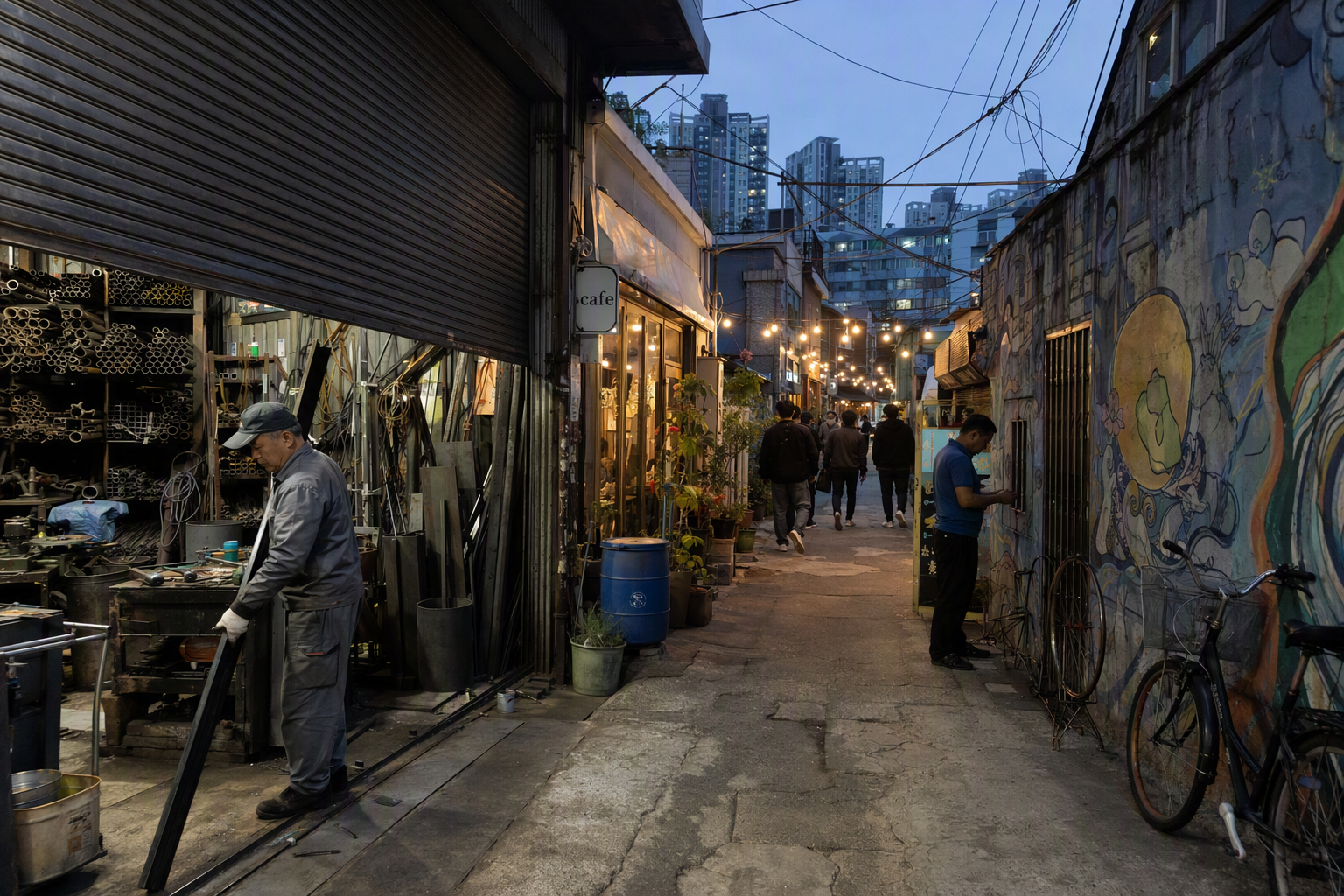
Mullae-dong is often compared with Seongsu, but the texture is different. Seongsu is now brand-heavy and polished. Mullae still feels closer to live production.
The district grew around steel and metalwork in the 1970s and 1980s, and it still has a dense network of metal workshops alongside studios, galleries, cafes, bars, and small creative spaces. Workshops and classes, when available, are commonly around 2–3 hours and roughly ₩30,000–₩50,000, depending on the activity.
Mullae is best for travelers who like street texture, working alleys, and the overlap between making things and showing art. It is less convenient than Seongsu for a first trip, but more satisfying for anyone who wants Seoul without the gloss.
Views, river nights, and the outdoors
Bukhansan is Seoul’s best high-effort reward

Bukhansan National Park is one of Seoul’s great advantages: a real mountain escape inside the city’s orbit. The park covers around 78 square kilometers, and Baegundae Peak rises to 836 meters.
A common Baegundae round trip via Gupabal and bus connections takes about 4–5 hours, with some summit routes closer to 5–6 hours depending on starting point, pace, crowds, and weather. Buses such as 704 or 34 are often used from the Gupabal area.
This is not a casual sandal walk. Start early, check the weather, bring water, and be extra cautious on crowded spring weekends. If you want a lighter city view instead, consider Inwangsan, Naksan and the Seoul City Wall, or Eungbongsan.
Hangang Park is best when you choose the right stretch
Seoul’s river parks are at their best when the plan is loose: convenience store snacks, a walk, sunset, rented bikes if available, and no rush.
For visitors, the most useful Hangang choices are often:
- Ttukseom Hangang Park after Seongsu or Seoul Forest.
- Mangwon Hangang Park after Mangwon Market.
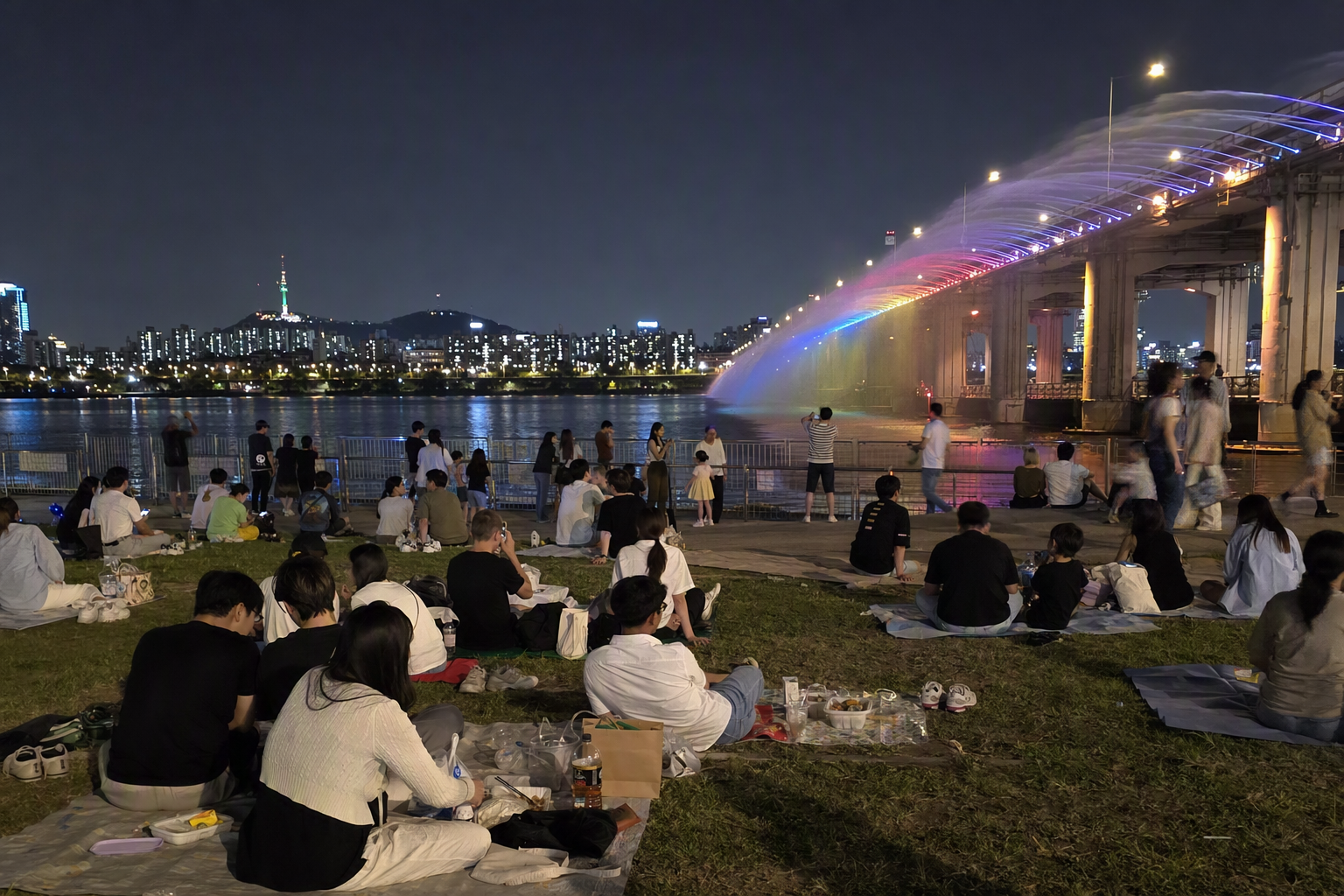
- Banpo Hangang Park for the seasonal Moonlight Rainbow Fountain.
The Banpo Bridge Moonlight Rainbow Fountain usually runs from April to October, with evening shows often listed around 19:30, 20:00, 20:30, and 21:00. Bad weather can cancel it, and schedules can shift, so check the latest city notice. Avoid Yeouido on peak cherry blossom weekends unless you genuinely enjoy crowds.
N Seoul Tower is iconic, but not always the best view
N Seoul Tower has the postcard value: Namsan, cable car atmosphere, city lights, and love locks. For some travelers, that is enough.
The trade-off is also real. Lines can be long, the observatory is paid, often around ₩16,000–₩21,000, elevator areas get crowded, and haze can flatten the view. If you mainly want a skyline, we prefer Inwangsan, Naksan at night, Eungbongsan, a weekday Bukhansan hike, or even Suwon Hwaseong for a historical city-wall view.
N Seoul Tower makes sense if the symbolism matters. It is less essential if your schedule is tight.
Day trips from Seoul that are worth the full day

A day trip is not a quick add-on in Seoul. It takes the space of a full travel day, and that is fine if the experience matches your interests.
DMZ and JSA tours require approved operators and advance booking. Expect ID requirements, security rules, itinerary changes, and possible cancellations due to border conditions. Common DMZ tour stops include Dora Observatory and the Third Tunnel. Treat it as a structured full-day module, not something to squeeze after a late night.
Suwon Hwaseong is excellent for travelers who like walls, military architecture, long walks, and historical city views. It can feel more rewarding than paying for another observatory in Seoul.
Nami Island is a familiar day trip for seasonal scenery and drama-related landscapes. It is best when autumn leaves, spring greenery, or a Korea-drama mood is part of the appeal.
A 3-day Seoul plan that does not waste your subway time
Three days is tight, but workable if each day has a clear area.
Day 1: Royal Jongno and Anguk
Begin with Gyeongbokgung, ideally early. Add the guard ceremony if the timing and weather work. Move to Bukchon during the allowed daytime window and keep it quiet. Continue to Insadong and Jogyesa Temple, then choose either Changdeokgung, Jongmyo, or Ikseon-dong depending on reservations and energy. End with Cheonggyecheon Stream or a simple dinner near Jongno.
This day is where many people overpack. Gyeongbokgung, Bukchon, Changdeokgung, Jongmyo, Insadong, Ikseon-dong, and Gwangjang can technically sit near each other, but they do not all fit comfortably unless you are moving fast and skipping depth.
Day 2: Market food, Myeongdong, and a view
Go to Gwangjang Market early for bindaetteok, gimbap, yukhoe, or noodles. In the afternoon, shift to Myeongdong for K-beauty, shopping, and convenient street snacks.
For the evening, choose your view: N Seoul Tower if you want the classic symbol, or Naksan and the Seoul City Wall if you prefer a less commercial walk. In good seasons, Banpo is another strong night option.
Day 3: Contemporary Seoul
Pick one main modern cluster instead of trying to see all of them.
- Seongsu plus Seoul Forest plus Ttukseom: best for cafes, pop-ups, K-beauty, fashion, and a river finish.
- Mangwon plus Hongdae plus Yeonnam: best for snacks, youth culture, casual shopping, busking, and karaoke.
- Gangnam plus COEX plus Bongeunsa: best for polished commercial Seoul, K-pop retail, malls, and families.
A 5-day Seoul plan with more breathing room

Five days is the sweet spot for many first visits. You can see the classic side of Seoul without sacrificing the neighborhoods that make the city feel current.
Day 1: Gyeongbokgung, Seochon, Tongin Market, Bukchon, Insadong
Use this as your royal-and-neighborhood day. Gyeongbokgung in the morning, Seochon and Tongin Market for lunch, then Bukchon or Insadong in the afternoon. If you rented hanbok, keep walking distances and return time in mind.
Day 2: Changdeokgung, Huwon, Jongmyo, Ikseon-dong
This day depends on reservations. Secure Huwon if possible, then build around the tour time. Jongmyo only works smoothly if the language tour aligns. Ikseon-dong is the easy buffer before or after, especially if you avoid peak weekend afternoon queues.
Day 3: Seongsu, Seoul Forest, Ttukseom
Let Seongsu take time. Browse pop-ups, beauty spaces, cafes, and showrooms, then walk toward Seoul Forest or the river. The district changes so often that it is better to explore a few blocks well than to chase a fixed list of storefronts.
Day 4: Mangwon, Hongdae, Yeonnam, Hangang
Start in Mangwon for food and a local daytime pace. Continue to Mangwon Hangang Park or Yeonnam, then save Hongdae for evening. Karaoke after dinner is almost never a bad idea here.
Day 5: Choose your Seoul bonus
- Bukhansan for a full outdoor day.
- Gangnam, COEX, Bongeunsa, and Banpo for polished south-of-river Seoul.
- Euljiro and Mullae for industrial alleys, old restaurants, and urban texture.
- DMZ, Suwon, or Nami Island for a full day outside central Seoul.
Practical planning notes that quietly save the trip
Apps matter more than people expect
Google Maps is still limited for walking and public transit directions in Korea. Use Naver Map or KakaoMap for navigation, and Papago for translation. This is one of those small choices that makes Seoul much easier from day one.
T-money is the easiest transit base
A T-money card works on subways, buses, and many taxis. The card itself is often around ₩2,500, and a basic subway fare is commonly around ₩1,400, though transport fares can change.
For heavier transit days, the tourist version of the Climate Card may be worth comparing. Recent tourist pass prices have been listed around ₩5,000 for 1 day, ₩10,000 for 3 days, and ₩15,000 for 5 days, plus a card issue fee of around ₩3,000. It only makes sense if your routes and ride count match the pass conditions.
From Incheon Airport, the AREX direct train to Seoul Station is often the cleanest entry, commonly taking about 43 minutes and costing roughly ₩9,500–₩11,000. Airport buses and taxis may be better depending on your hotel location and luggage.
Watch Monday and Tuesday closures
This is the classic heritage-day mistake. Many royal and cultural sites close on either Monday or Tuesday.
- Gyeongbokgung: closed Tuesday.
- Changdeokgung: closed Monday.
- Jongmyo: closed Tuesday, with substitute closure rules when holidays are involved.
- Cheong Wa Dae / Blue House: free but reservation-based, usually closed Tuesday. In 2026, tour availability needs extra checking because official functions and access schedules may change.
Before locking your itinerary, check official sites for palace hours, garden reservations, fountain schedules, and any special closures.
Where to stay in Seoul
For a first visit, Myeongdong and Jongno remain the safest choices.
Myeongdong is best for convenience: hotels, cosmetics, central transport, shopping, and easy access to Namsan. It is practical, even if the food value is not Seoul’s best.
Jongno, Anguk, and Insadong are better for travelers who want palaces, hanok streets, tea houses, galleries, and heritage sites within walking distance. This is our favorite area for a culture-focused first trip.
Hongdae suits younger travelers, nightlife, casual shopping, and late evenings. It is lively, social, and easy to enjoy without much planning.
Gangnam works well for business, clinics, premium shopping, COEX, and south-of-river plans. It is less convenient for palace-heavy days.
Seongsu is exciting if cafes, pop-ups, design, and fashion are the whole point of your trip. For a first-timer who wants classic Seoul, it may feel less central than expected.
Our Creatrip take: the Seoul trip that feels complete
A satisfying Seoul trip usually has three identities woven together.
Royal and ritual Seoul: Gyeongbokgung, Changdeokgung, Jongmyo, Bukchon, hanbok, Insadong.
Market and food Seoul: Tongin Market, Gwangjang Market, Mangwon Market, Euljiro beer alleys, Jongno pojangmacha streets.
Contemporary Seoul: Seongsu, Hongdae, Gangnam and COEX, Ikseon-dong, Mullae.
If you only have three days, keep it geographic: one day in historic Jongno, one day for markets and a view, one day for modern neighborhoods. With five days, add Seongsu, Mangwon and Hongdae, plus either Bukhansan, Gangnam, Euljiro, or a day trip.
The point is not to collect every famous stop. Seoul is more memorable when each day has a shape: palace morning, market lunch, hanok afternoon, river night; or cafe district, forest walk, pop-up shopping, late barbecue. Plan the city in layers, leave a little room for the unexpected, and Seoul starts to feel less like a list and more like a place you can actually return to.