Where to Stay in Seoul: Best Areas and Hotel Picks for International Travelers
A friendly Creatrip editor’s guide to choosing between Myeongdong, Jongno, Hongdae, Gangnam, and the Seoul neighborhoods that actually fit your trip.

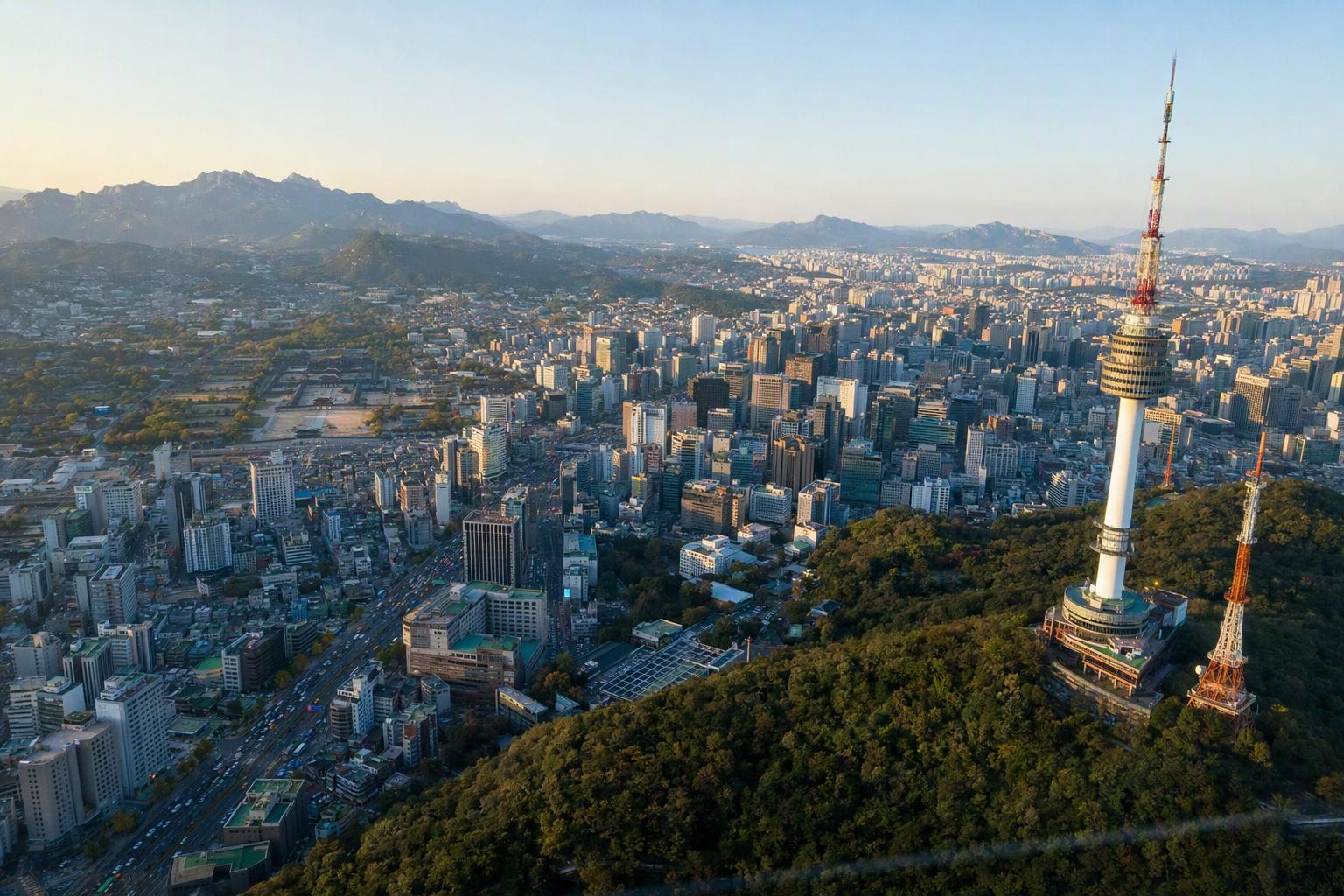
Seoul is not a city where one perfect hotel location works for everyone. A first-time traveler who wants palaces, shopping, and easy taxis will have a very different best area from someone flying in late, sleeping in Hongdae, and chasing cafes until midnight.
Still, if we had to give one safe answer for most international visitors, we would keep it simple: stay north of the Han River, and choose between Myeongdong or Euljiro, Insadong or Jongno, and Hongdae or Yeonnam. These three bases cover most travel styles without making you spend half the trip underground.
The quick Creatrip answer
For the easiest first Seoul trip, Myeongdong, Euljiro, City Hall, and Namdaemun are the most forgiving. You get hotels everywhere, shopping, K-beauty, late food, convenience stores, airport options, and quick access to Seoul Station.
For a prettier, more cultural stay, Insadong, Jongno, Anguk, and Bukchon are hard to beat. Palaces, temples, tea houses, galleries, hanok lanes, Ikseondong, and Cheonggyecheon all sit close together.
For nightlife, value, cafes, and simple airport access, Hongdae, Yeonnam, Sinchon, and Mangwon make the most sense. Hongik Univ. Station connects directly to Incheon Airport on the AREX all-stop train, and the area stays awake much later than most tourist districts.
For business, COEX, luxury shopping, clinics, K-pop agency geography, or a polished south-of-the-river stay, Gangnam, Samseong, Apgujeong, and Cheongdam are the right fit. For classic first-time sightseeing, though, Gangnam often adds commute time without adding much convenience.
A few other areas are excellent for specific trips: Jamsil for Lotte World and families, Itaewon or Hannam for international dining and nightlife, Dongdaemun for late-night fashion shopping, Seongsu for trendy cafes and pop-ups, and Bukchon for a hanok stay with quiet mornings and suitcase-related compromises.
Why your Seoul hotel area matters more than it looks on a map
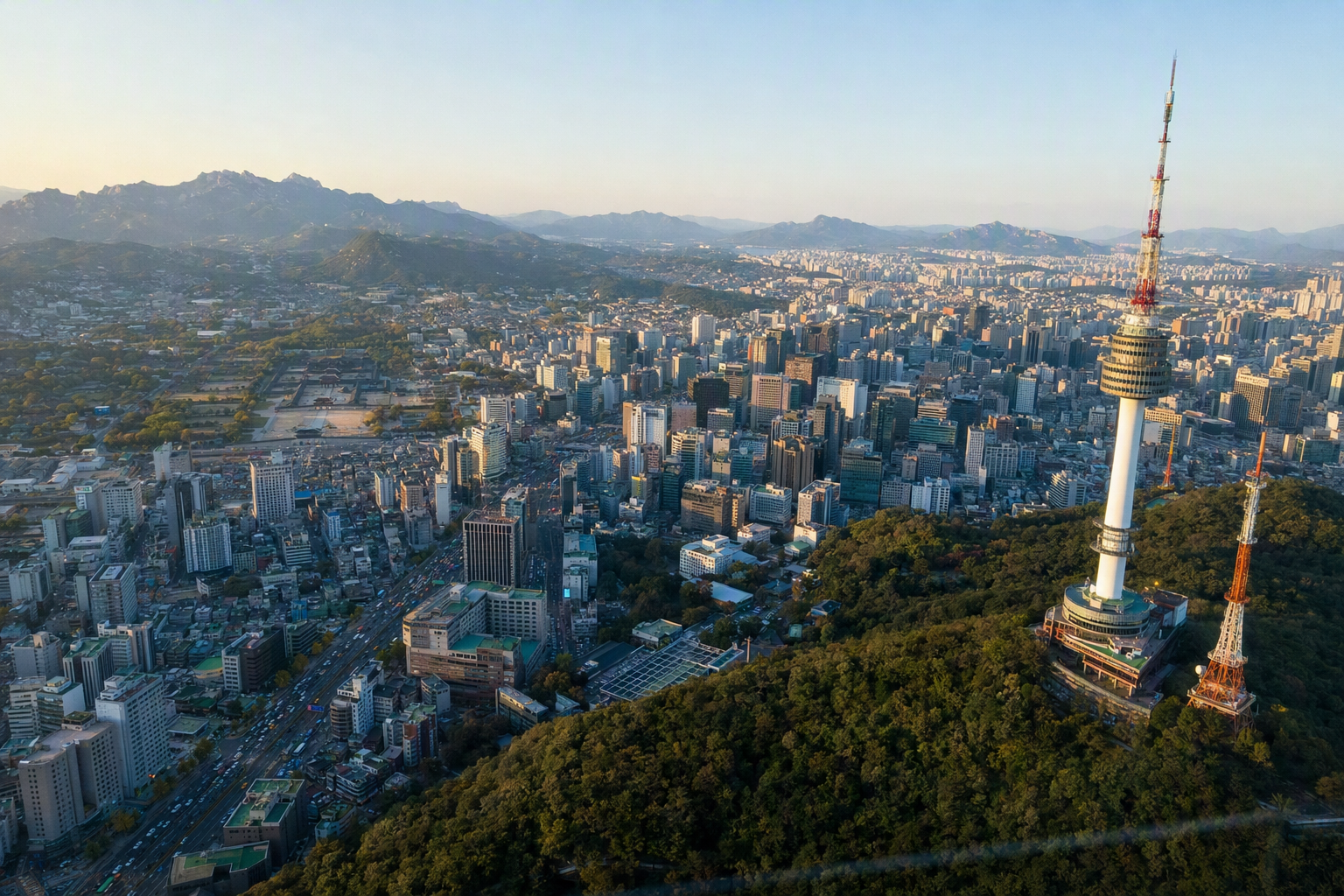
Seoul public transport is excellent, but the city is big enough to quietly steal your time. Many first-time landmarks sit north of the Han River: Gyeongbokgung, Changdeokgung, Bukchon Hanok Village, Insadong, Jongno, Ikseondong, Jogyesa, Cheonggyecheon, Myeongdong, Namdaemun, City Hall, Gwanghwamun, Namsan, and N Seoul Tower. If those are the places filling your itinerary, staying nearby makes the whole trip softer around the edges.
A good Seoul hotel location usually has three things going for it.
First, it should be within about 5 to 10 minutes on foot from a subway entrance. Even better if it is near a transfer station or Line 2, the big loop line that connects many useful neighborhoods. A hotel can look central on a map and still feel annoying if you are dragging luggage 18 minutes from the station.
Second, it should match your actual daily route. Gangnam is famous, stylish, and full of excellent hotels, but if your first two days are palaces, Bukchon, Insadong, and Myeongdong, you may spend 30 to 50 minutes each way crossing town.
Third, it should match your nights. Hongdae is fun after 10 PM. Insadong is calmer and more atmospheric. Myeongdong is practical and busy, but also touristy. Itaewon is international and lively, but hillier and less subway-efficient than the big three.
A small Seoul transport note: subway fares are usually reasonable by major-city standards, often around ₩1,400 to ₩1,800 for regular trips. Short-term Climate Card options have also been listed for Seoul-only travel, such as 1-day, 3-day, and 5-day passes, but they do not cover airport lines. Conditions can change, so check the latest official details before buying. For maps, international travelers should plan around Naver Map or KakaoMap, as Google Maps walking directions are limited in Korea.

Myeongdong, Euljiro, City Hall, and Namdaemun: the easiest first base
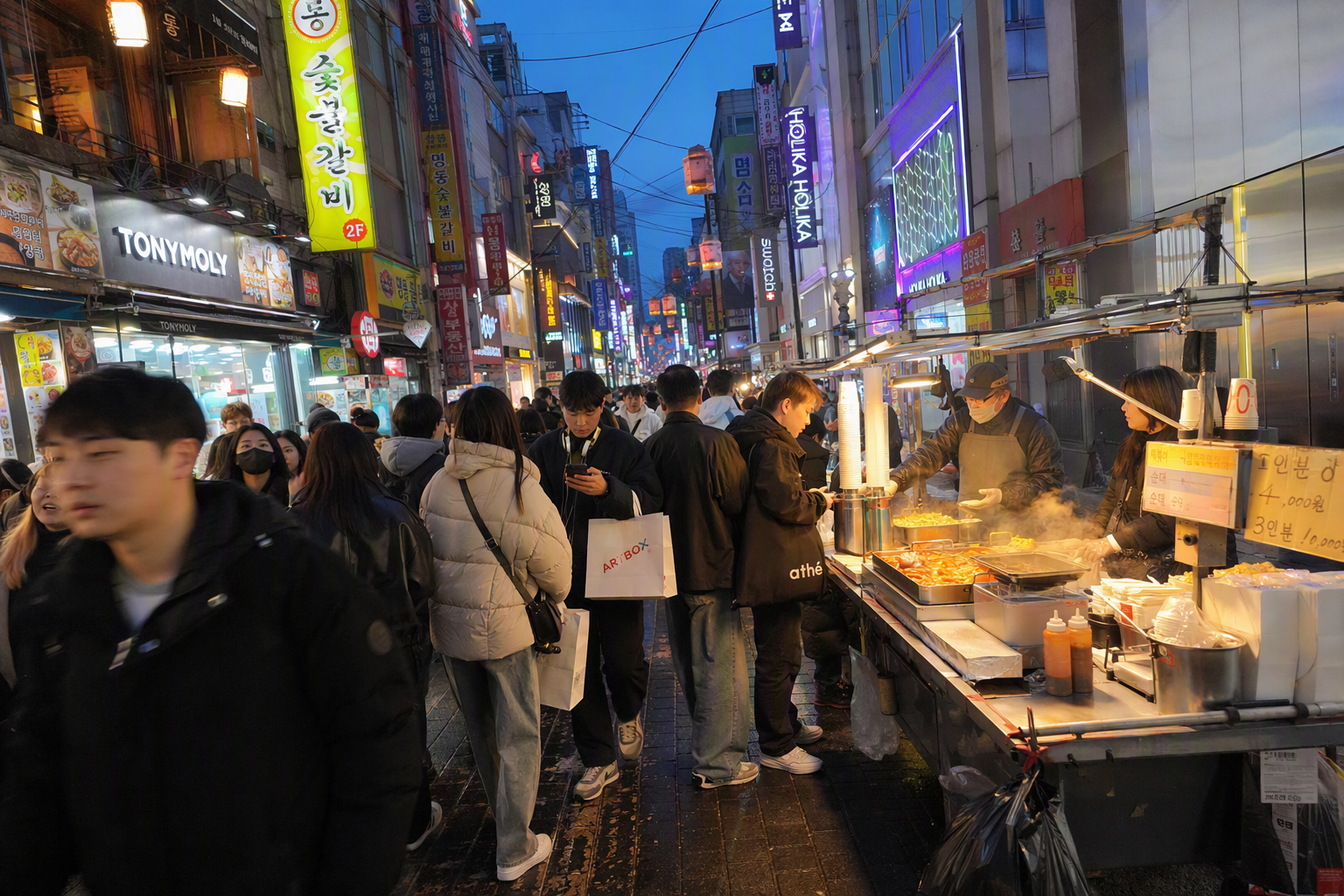
Myeongdong gets recommended so often that some travelers start to doubt it. We understand the hesitation. It is busy, tourist-facing, and not the quietest slice of Seoul. But as a base, it works beautifully because it removes friction.
You have Myeongdong Station on Line 4, Euljiro stations with Line 2 access, City Hall nearby, Seoul Station close enough for AREX and KTX plans, and Namdaemun Market right next door. Restaurants, cafes, convenience stores, cosmetic shops, money exchange, street food, pharmacies, and English-friendly tourism services are all easy to find. Even if you do not care much about shopping in Myeongdong, the location still saves energy.
Who will like staying here
Myeongdong and Euljiro are especially good for first-time visitors, couples, families, shoppers, K-beauty fans, and travelers who want many hotel choices. It is also convenient if you are taking day trips by train, since Seoul Station is close.
This area suits travelers who like being able to walk out after dinner and still find dessert, convenience stores, and taxis without thinking too hard. It is not the most poetic part of Seoul, but it is one of the easiest.
The trade-offs
Rooms can be smaller or more expensive than similar places in Hongdae or parts of Jongno. The area also has a strong tourist-shopping feel, especially around the main Myeongdong streets. Street food here is fun, but prices are often noticeably higher than in places like Hongdae, Mangwon, or Sinchon, sometimes around 30 to 50 percent more.
If your dream is a quiet lane, traditional tea, and hanok rooftops outside the window, Insadong or Anguk will feel better. If your dream is cheap drinks, indie energy, and late-night music, Hongdae wins.
Myeongdong hotel price mood
Rates change by date, room type, and season, but broad planning ranges often look like this:
- Budget stays: around ₩50,000 to ₩80,000
- Mid-range hotels: around ₩120,000 to ₩200,000
- Luxury hotels: around ₩280,000 to ₩600,000+
Cherry blossom weeks, autumn foliage, concerts, and long weekends can push these up quickly, so use the numbers as a planning reference rather than a quote.
Hotel picks around Myeongdong and Euljiro
Hotel28 Myeongdong is one of the more charming boutique choices in the heart of the area. It is a film-themed Small Luxury Hotels affiliated property on Myeongdong 7-gil, with around 80 rooms depending on the listing. Travelers often like the central location, friendly staff, surprisingly quiet rooms for the neighborhood, and very short walk to the subway. The catch is that some rooms can be compact or face less exciting views, so it is worth checking the room category carefully. Some recent guest notes mention perks such as stocked minibar items, but inclusions can vary.
The Westin Josun Seoul is a classic upscale pick near Myeongdong and City Hall. It is polished, convenient, and especially appealing for travelers who want a luxury stay without moving far from the main first-visit routes. It also has a reputation for strong walkability, access to several subway lines, and an airport limousine bus stop nearby.
Lotte City Hotel Myeongdong is a dependable mid-range benchmark. It works well for travelers who prefer a predictable hotel experience, solid location, and easy walk to Myeongdong shopping without paying full luxury rates.
Four Points by Sheraton Josun Seoul Myeongdong is actually closer to Euljiro 3-ga than the middle of Myeongdong, and that is part of the appeal. The subway entrance is extremely close, while the shopping streets are still about a 10-minute walk away. It is a practical choice for Marriott loyalists and transit-minded travelers. A few guest comments mention traffic noise, elevator waits, and room temperature quirks, so light sleepers may want to compare reviews for their exact room type.
Nine Tree Premier Hotel Myeongdong II is a larger, more business-style option near Euljiro 3-ga. It has a central location, good room count, and the kind of straightforward setup that works well when you plan to be out all day.
Nine Tree Hotel Myeongdong is the more hyper-central choice, close to Myeongdong Station. The trade-off is room size; standard rooms can feel compact, but the location is hard to argue with.
Daeyoung Hotel Myeongdong is a value-friendly option near Hoehyeon, Myeongdong, and Namdaemun. It is a smart place to compare if you care more about location and price than hotel extras.
Hotel Gracery Seoul near Namdaemun and City Hall is a nice alternative for travelers who want central access without sleeping right in the busiest Myeongdong streets. Namdaemun Market and City Hall Station are close, and Myeongdong is still walkable.
Insadong, Jongno, Anguk, and Bukchon: the best base for palaces and old Seoul
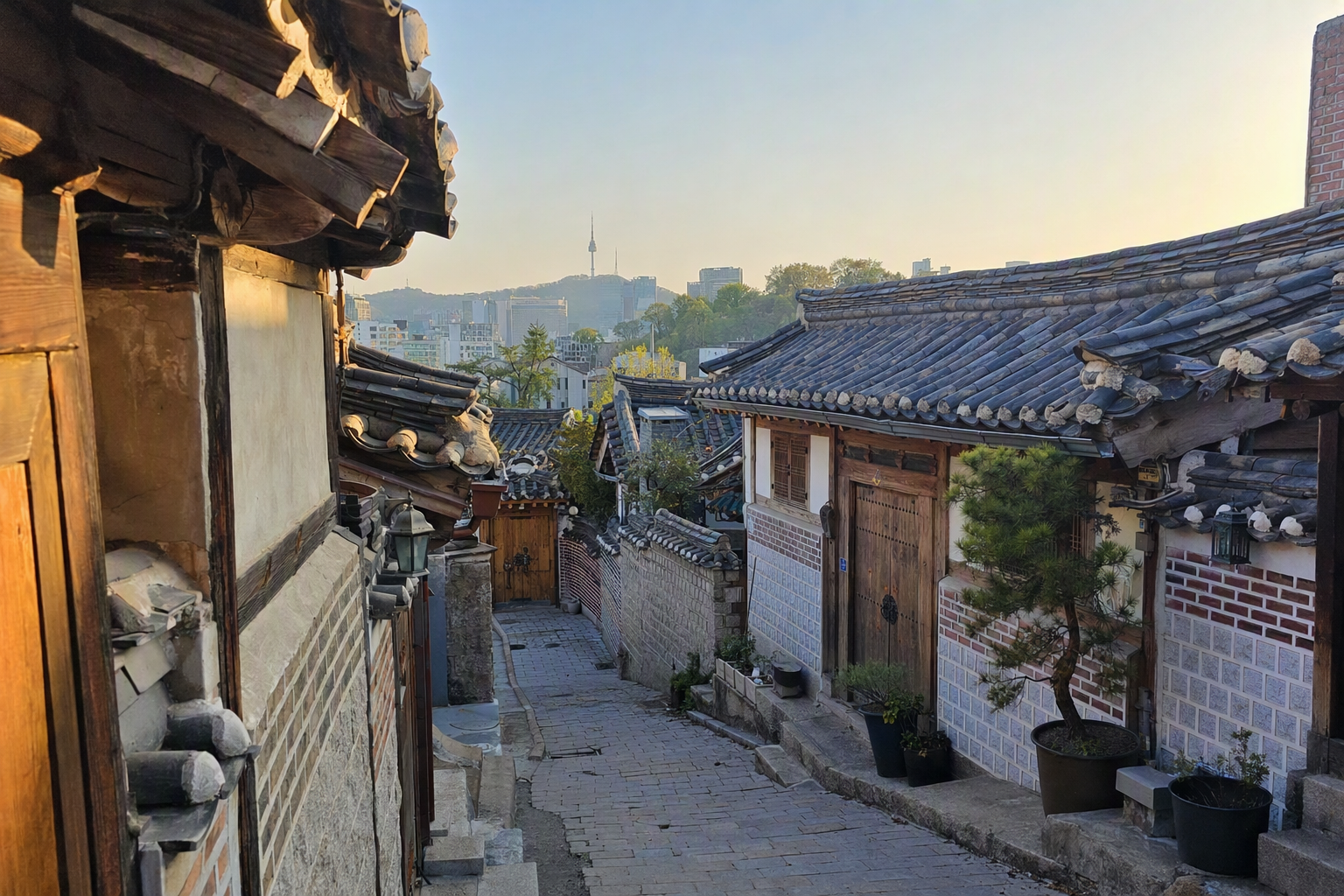
If Myeongdong is the easy answer, Insadong and Jongno are the atmospheric one. This is where Seoul feels layered: palace walls, temple courtyards, narrow tea-house lanes, galleries, hanok roofs, craft shops, old restaurants, and the soft evening glow of Ikseondong.
From this base, you can walk or take short rides to Gyeongbokgung, Changdeokgung, Bukchon Hanok Village, Jogyesa Temple, Ssamziegil, Jongno 3-ga, Ikseondong, Jongmyo, Cheonggyecheon, and the Anguk area. For travelers whose first Seoul days are built around culture and history, this area can be more satisfying than Myeongdong.

Who will like staying here
Stay around Insadong, Jongno, or Anguk if you care most about palaces, hanok lanes, Korean souvenirs, tea houses, galleries, temples, and a gentler night scene. It is lovely for couples, photographers, older travelers, and anyone who prefers waking up near history rather than retail neon.
Jongno 3-ga is especially useful because multiple subway lines meet there. Anguk is prettier and closer to Bukchon and the palaces, while Insadong gives you an easy mix of culture, food, and central access.
The trade-offs
The area is usually quieter at night than Myeongdong or Hongdae. That can feel romantic or boring depending on your travel style. Bukchon itself is beautiful but hilly, with limited accommodation supply. Hanok stays can be memorable, but they may come with smaller rooms, stricter house rules, less sound insulation, or less luggage-friendly access than a normal hotel.
Insadong and Jongno hotel price mood
A broad planning range is often around ₩70,000 to ₩220,000, with many hanok-style and mid-range stays around ₩80,000 to ₩200,000. Luxury or special hanok stays can go higher, especially in spring and autumn.
Hotel picks around Insadong and Jongno
Moxy Seoul Insadong is one of the most practical modern choices in the area. It sits close to Jongno 3-ga Station, with around 140 rooms and a renovation noted in 2023. Travelers often praise the location, and it is well placed for Jongmyo, Changdeokgung, Ikseondong, and Insadong. The mood is young and compact rather than grand, which fits travelers who want convenience more than old-school luxury.
Nine Tree Premier Hotel Insadong is a strong cultural-base option on Insadong-gil, close to Anguk Station. It is well positioned for Insadong, Bukchon, Gyeongbokgung, and Myeongdong by foot or short transit. The hotel is often liked for location, cleanliness, value, and room practicality. A few recurring complaints mention weaker soundproofing, water temperature or pressure issues, parking costs, and kiosk confusion, so it is worth reading recent reviews before booking.
Hotel Sunbee Insadong is a good independent-hotel candidate for travelers who want a highly rated location without a big-chain feel. It often appears in the strong-location cluster for Insadong and Jongno.
Dormy Inn EXPRESS Seoul Insadong suits travelers who appreciate Japanese-style practicality and bath or sauna facilities. It is a comfortable idea if you want a simple base with extra end-of-day comfort.
Hotel Dada Insadong is more budget-oriented. The appeal is location and price rather than polish, making it better for travelers who plan to spend most of the day outside.
Hongdae, Yeonnam, Sinchon, and Mangwon: nightlife, value, and easy airport access
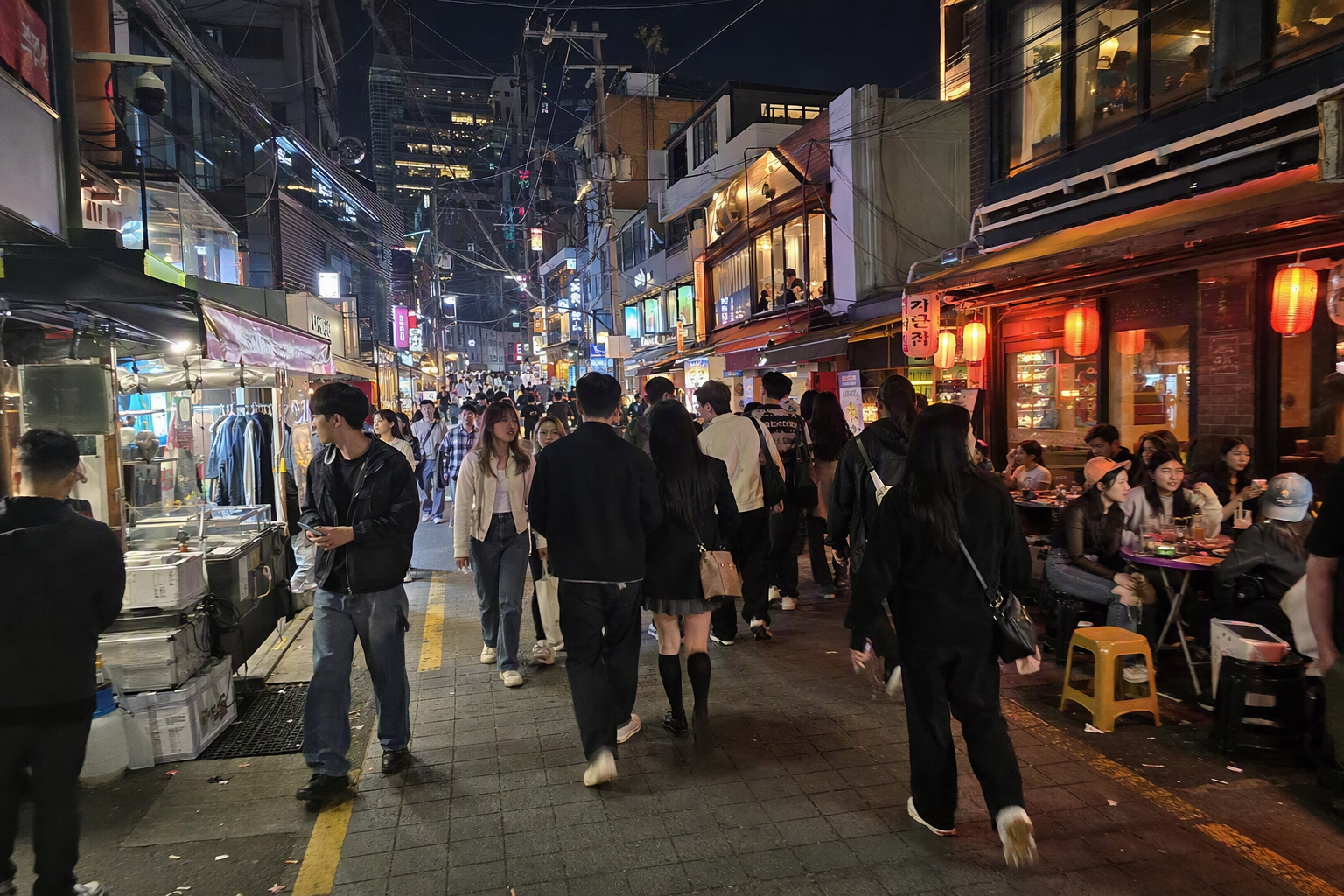
Hongdae has a very different rhythm from Myeongdong and Jongno. It is younger, louder, more casual, and more alive late at night. You get cafes, street energy, music, small shops, clubs, restaurants, and easy walks into Yeonnam, Hapjeong, Sinchon, and Mangwon.
The big practical advantage is Hongik Univ. Station. It connects to Line 2 and the AREX all-stop train, so you can reach Incheon Airport directly without changing trains. Many travelers find the airport journey lands around 43 to 51 minutes depending on terminal and service details.
Who will like staying here
Hongdae is excellent for solo travelers, budget travelers, younger visitors, nightlife fans, cafe lovers, and anyone arriving from or leaving for Incheon Airport. Yeonnam gives the area a softer, cafe-filled side, while Mangwon adds a more local market and neighborhood feel.
If you want to come back late, grab food after midnight, and still feel that the neighborhood is awake, Hongdae is one of Seoul’s best bases.
The trade-offs
For palace-heavy sightseeing, Hongdae is less efficient than Myeongdong or Jongno. It is not impossibly far, but you will feel the difference if you are doing early museum mornings and full historical days. Friday and Saturday nights can also be noisy, and accommodation quality varies widely, especially among cheaper guesthouses.
Our Creatrip-style filter for Hongdae is simple: prioritize walking distance to Hongik Univ. Station or a quieter Yeonnam side street over a random low price. A cheaper stay 18 minutes from the station loses its charm quickly when you have luggage or rain.
Hongdae hotel price mood
Hongdae is often cheaper than Myeongdong, sometimes by around 15 to 20 percent. Broad planning ranges:
- Hostels and guesthouses: around ₩20,000 to ₩70,000
- Mid-range hotels: around ₩80,000 to ₩180,000
- Budget-friendly hotel rooms in the wider area: often around ₩35,000 to ₩80,000 at the lower end, depending on season
For this area, reviews matter as much as price. Check recent noise comments, elevator access, bathroom setup, and whether the property is actually near the station you expect.
Gangnam, Samseong, Apgujeong, and Cheongdam: polished, expensive, and best when your plans are south
Gangnam is not a mistake. It is just often chosen for the wrong trip.
If your Seoul plans revolve around COEX, Starfield Library, Bongeunsa Temple, business meetings, clinics, luxury shopping, Apgujeong, Cheongdam, high-end dining, clubs, or K-pop agency neighborhoods, then Gangnam makes sense. Hotels are plentiful, polished, and often business-friendly.
If your first trip is mostly Gyeongbokgung, Bukchon, Insadong, Myeongdong, Namdaemun, and N Seoul Tower, Gangnam can feel like you chose a beautiful hotel and then paid for it in commute time.

Who will like staying here
Gangnam is good for business travelers, luxury-hotel loyalists, COEX event visitors, clinic appointments, shoppers focused on Apgujeong and Cheongdam, and repeat visitors who already know central Seoul.
It is less ideal for budget travelers and first-timers who want traditional Seoul outside the door.
Gangnam hotel price mood
Gangnam is one of Seoul’s pricier hotel zones. Broad planning ranges often look like:
- Mid-range and business hotels: around ₩120,000 to ₩250,000
- Wider Gangnam hotel range: around ₩120,000 to ₩500,000+
- Luxury hotels: often around ₩300,000 to ₩800,000+, and sometimes higher in peak periods
Luxury and business hotel picks
Grand InterContinental Seoul Parnas is a major COEX and Samseong anchor. It has direct access to Parnas Mall and COEX Mall, sits close to Samseong Station, and has the big-hotel scale business travelers often want. With hundreds of rooms, several restaurants, indoor pool facilities, parking, and event convenience, it makes the most sense when COEX is actually part of your trip.
Josun Palace, a Luxury Collection Hotel, Seoul Gangnam is one of the strongest high-end choices in Gangnam, with excellent guest-score signals and a polished luxury feel. It is closer to the Gangnam business corridor than to the palace-and-hanok side of Seoul. Breakfast pricing at luxury hotels can be steep; for Josun Palace, an adult breakfast price change to KRW 80,000 from March 2026 has been noted, so check current add-on rates before deciding.
Park Hyatt Seoul is another key Samseong and COEX luxury option. It is a good fit for travelers who want a more intimate high-end stay near the business and shopping side of Gangnam.
Four Seasons Hotel Seoul deserves a special mention because it is not in Gangnam. It is in the Gwanghwamun area, and that is exactly why it can be a better luxury choice for sightseeing. If you want a top-tier hotel but your days are focused on palaces, Bukchon, Insadong, and Myeongdong, a central luxury hotel like Four Seasons or The Westin Josun may make the trip smoother than a gorgeous hotel in Samseong or Jamsil.
Other Seoul areas worth considering
Itaewon and Hannam
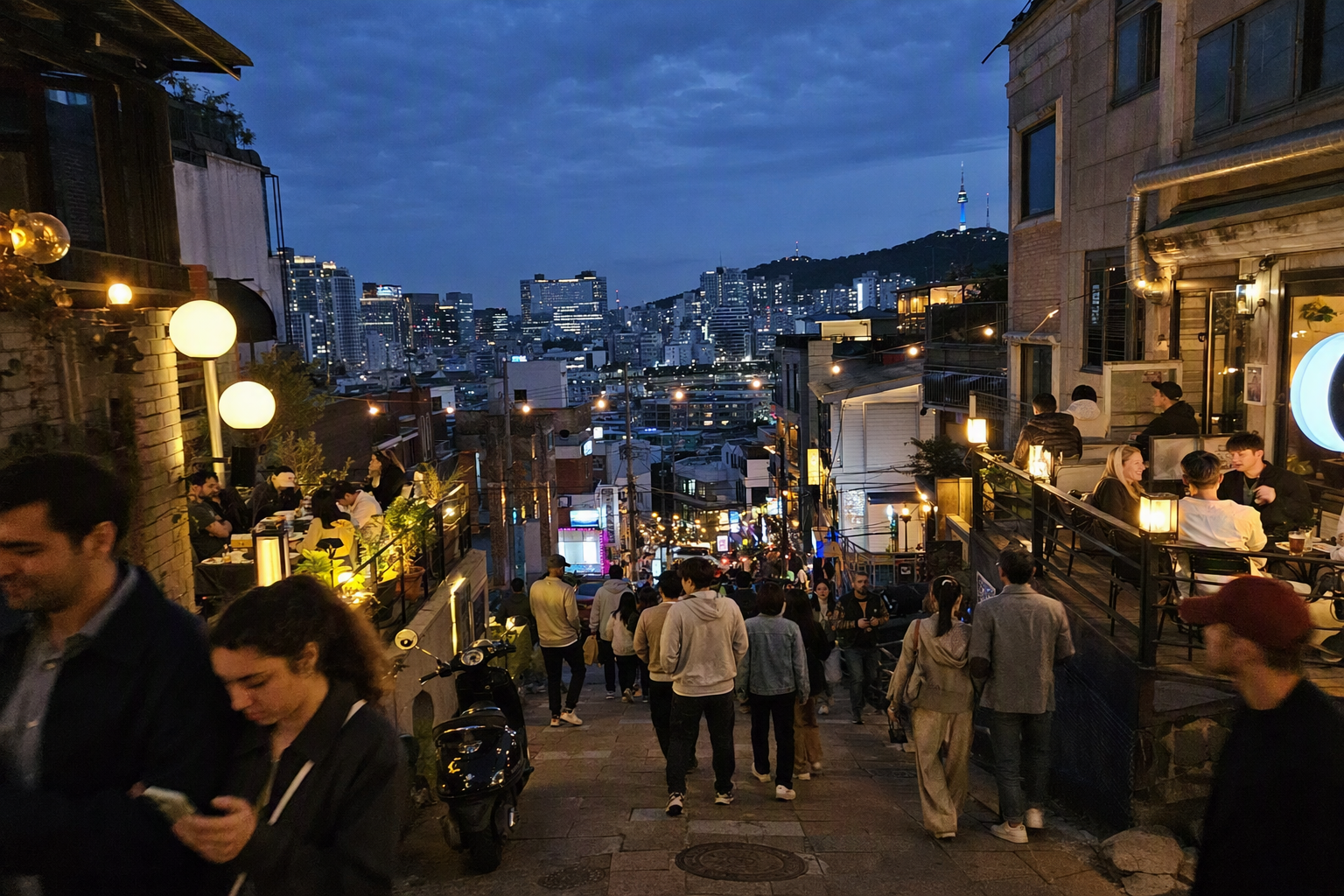
Itaewon and Hannam are Seoul’s international dining and nightlife pocket. They work well for global restaurants, bars, English-friendly venues, halal options, foreigner communities, and LGBTQ+ friendly nightlife. The drawbacks are real: hills, less efficient subway connections than Myeongdong or Jongno, and fewer standout hotel choices. Choose it for the social and food scene, not maximum sightseeing efficiency.
Dongdaemun
Dongdaemun is useful for late-night fashion shopping, wholesale markets, Dongdaemun Design Plaza, and strong subway access. It can be a good-value practical base if your hotel is close to a station. For a first visit, it usually feels less charming than Jongno and less effortless than Myeongdong, but night shoppers may love it.
Seongsu
Seongsu is trendy, design-heavy, and cafe-rich, with pop-ups, fashion shops, and converted industrial spaces. We like it more as a repeat-visitor base or a day-to-evening outing than as a first Seoul hotel location. Hotel supply is more limited, and the big first-time sights are not right outside your door.

Jamsil
Jamsil is the right call when Lotte World, Lotte World Tower, Seokchon Lake, Olympic Park, or a family theme-park day is central to the trip. If Lotte World is only one day out of five, Myeongdong or Jongno may still be more versatile.
Yeouido
Yeouido is strong for business, finance, Han River access, and cherry blossoms in season. For a leisure traveler on a first Seoul trip, it usually needs a specific reason.
Bukchon
Bukchon is one of the most beautiful accommodation ideas in Seoul, especially if you want a hanok stay near Gyeongbokgung and Changdeokgung. It is also hilly, quiet at night, limited in supply, and often less convenient with big luggage. For many travelers, staying in Anguk or Insadong and walking into Bukchon gives a better balance.
Best area by traveler type
| Traveler style | Best Seoul base | Why it works |
|---|---|---|
| First visit, classic sightseeing | Myeongdong, Euljiro, City Hall | Easy transport, hotels, shopping, food, airport options, and central access |
| Palaces and culture | Insadong, Jongno, Anguk | Walkable to Gyeongbokgung, Changdeokgung, Bukchon, Jogyesa, galleries, tea houses |
| Nightlife and value | Hongdae, Yeonnam | Cheaper stays, late-night energy, cafes, music, direct AREX access |
| Luxury sightseeing | Gwanghwamun or Myeongdong luxury hotels | High-end stay without long rides to historical districts |
| COEX and business | Gangnam, Samseong | Best for meetings, events, Starfield Library, Bongeunsa, business hotels |
| Clinics and luxury shopping | Gangnam, Apgujeong, Cheongdam | Easy access to clinics, high-end retail, dining |
| Family with Lotte World focus | Jamsil | Lotte World, Lotte Tower, Seokchon Lake, Olympic Park |
| International dining and bars | Itaewon, Hannam | Global food, bars, English-friendly venues, diverse nightlife |
| Late-night fashion shopping | Dongdaemun | Markets, DDP, late shopping, transport |
| Trendy repeat trip | Seongsu | Cafes, pop-ups, design retail, creative energy |
Airport access: choose your base with luggage in mind
Incheon Airport is far enough that your first and last day can feel very different depending on your hotel area.
AREX Express Train runs between Incheon Airport and Seoul Station in about 43 minutes. Fares are often listed around ₩9,500 to ₩11,500, but check the latest price. This is a clean option if you are staying near Seoul Station, City Hall, Myeongdong, or transferring to another line with manageable luggage.
AREX all-stop train is slower to Seoul Station, often around 66 minutes, and is cheaper, around ₩4,150 in common references. Its best trick is that it stops directly at Hongik Univ. Station, which makes Hongdae one of the easiest neighborhoods for airport access.
Airport limousine bus 6015 is commonly used for Myeongdong. It is often listed around 80 to 90 minutes and about ₩17,000 to ₩17,300, with multiple departures per hour at busier times. Schedules and stops can change, so check the latest timetable before your arrival day.
Taxis are comfortable but traffic-sensitive. Typical planning estimates place rides from Incheon at around 45 minutes to Hongdae, 60 minutes to Myeongdong or Insadong, 60 minutes to Gangnam, and 70 minutes to Jamsil, with fares often around ₩55,000 to ₩70,000 depending on destination, traffic, tolls, vehicle type, and time.

When to book Seoul hotels
Seoul hotel prices rise fast during the two prettiest travel seasons: cherry blossoms from late March to mid-April and autumn foliage from October to November. A 20 to 50 percent jump is common in popular areas, and special dates can go even higher.
For those periods, booking 2 to 3 months ahead is sensible. Concerts, fan events, spring breaks, and good-weather weekends can also distort prices, especially around Jongno, Myeongdong, Hongdae, and Jamsil.
For better value, look at December to February if you do not mind the cold, or the shoulder months around May to June and September. Summer in Hongdae can also become more expensive because of nightlife and festival demand.
Always check your exact dates before getting attached to a hotel. OTA pages and hotel websites can show very different rates once cancellation rules, breakfast, taxes, and room categories are selected.
Common Seoul hotel mistakes we would avoid
Booking Gangnam only because the name sounds famous. Gangnam is great for the right trip. It is not automatically great for palaces, Bukchon, Insadong, or Myeongdong.
Choosing a hotel far from the subway to save a little money. In Seoul, a 5-minute station walk is a luxury that pays you back every day.
Ignoring weekend noise in Hongdae. If you are a light sleeper, stay on a quieter Yeonnam side street or read recent noise reviews carefully.
Expecting a hanok stay to behave like a modern hotel. Hanok rooms can be beautiful, but they may be smaller, quieter, more rule-based, and less luggage-friendly.
Relying only on Google Maps. Use Naver Map or KakaoMap for walking and transit details in Korea.
Forgetting breakfast prices at luxury hotels. Some Seoul luxury hotel breakfasts cost as much as a very nice meal outside. Check before adding it automatically.
Eating every snack in Myeongdong if you are on a budget. The street food atmosphere is fun, but prices are often higher than in more local areas.
Easy itinerary pairings by where you stay
If you stay in Myeongdong or Euljiro
Use the central location to spread your days without backtracking too much.
- Day 1: Myeongdong, Namdaemun, Namsan, N Seoul Tower, Cheonggyecheon
- Day 2: Gyeongbokgung, Bukchon, Insadong, Ikseondong
- Day 3: Changdeokgung, Jongmyo, Gwangjang Market, Dongdaemun Design Plaza
- Day 4: Hongdae and Yeonnam, or Gangnam and COEX
This is the classic first Seoul rhythm: a little shopping, a little old city, a little night market energy, and one day to cross town.
If you stay in Insadong or Jongno
Let the neighborhood do the work.
- Day 1: Gyeongbokgung, Bukchon, Anguk, Insadong
- Day 2: Changdeokgung, Jongmyo, Ikseondong, Cheonggyecheon
- Day 3: Myeongdong, Namdaemun, Namsan
- Day 4: Hongdae, Mangwon, Seongsu, or COEX
This base is especially nice if you want to see palace areas early before the busiest daytime crowds.
If you stay in Hongdae
Lean into the airport and nightlife advantages.
- Day 1: Arrive by AREX, explore Hongdae, Yeonnam, and Gyeongui Line Forest Park
- Day 2: Full cultural day around Gyeongbokgung, Bukchon, Insadong, and Changdeokgung
- Day 3: Mangwon Market, Hapjeong, Seongsu, or Myeongdong and Namsan
- Day 4: Slow cafe morning, then direct AREX airport departure
Hongdae works best when you do not mind dedicating one full day to the historical center rather than popping back and forth repeatedly.
If you stay in Gangnam
Make Gangnam the point, not an accident.
- Day 1: COEX, Starfield Library, Bongeunsa, Samseong
- Day 2: Apgujeong, Cheongdam, clinics, K-pop-related areas, luxury shopping
- Day 3: Full north-of-the-Han history day around palaces, Bukchon, and Insadong
- Day 4: Seongsu, Jamsil, Lotte World, or Han River plans
If your first two days are actually Gyeongbokgung and Bukchon, move your hotel north. Your future self will be grateful.
Our final neighborhood pick
For most first-time visitors, we would choose Myeongdong or Euljiro. It is not the most local-feeling choice, but it is easy, central, well connected, and full of practical support. A first Seoul trip already has enough decisions; this area makes the small ones easier.
For travelers who care more about atmosphere than shopping, we would choose Insadong, Jongno, or Anguk. It gives you the Seoul of palace walls, tea houses, craft shops, and hanok roofs, with excellent access to the historical core.
For travelers who want youth culture, lower prices, late nights, and the smoothest Incheon Airport connection, we would choose Hongdae or Yeonnam.
And for Gangnam, the answer is yes only when your itinerary says yes. COEX, clinics, business, luxury shopping, Apgujeong, Cheongdam, and high-end hotels are all good reasons. Palace-hopping on a first visit is usually not.
The best place to stay in Seoul is not the fanciest neighborhood. It is the one that makes your version of Seoul feel close, walkable, and easy to come home to at night.